

Prevent Mold with HVAC: Protecting Tampa Homes
Tampa Bay’s heat and humidity make it all too easy for mold to find a home indoors. For local homeowners, keeping indoor air fresh and healthy is more than just a comfort, it is about protecting your family’s well-being. Since the key to mold control is moisture control, knowing what triggers mold growth and how your HVAC system can help is your best defense against this stubborn problem.
Table of Contents
- What Causes Mold Growth In Homes
- How HVAC Systems Control Indoor Humidity
- Mold Risks And Health Effects In Tampa
- Key HVAC Maintenance For Mold Prevention
- Mistakes To Avoid For Lasting Protection
Key Takeaways
| Point | Details |
|---|---|
| Moisture Control is Essential | Mold requires moisture to grow; controlling humidity is the key to preventing mold in your home. |
| Regular HVAC Maintenance is Crucial | Schedule inspections and maintenance to ensure your HVAC system effectively removes humidity and prevents mold growth. |
| Monitor Indoor Humidity | Use a hygrometer to track humidity levels; keep them below 55 percent to inhibit mold development. |
| Address Moisture Problems Promptly | Repair leaks and address any water damage immediately to prevent mold colonization within 24 hours. |
What Causes Mold Growth in Homes
Mold doesn’t just appear out of nowhere in Tampa homes. It needs specific conditions to thrive, and understanding what triggers growth is your first line of defense against it.
The moisture factor is everything. The key to mold control is moisture control. Without it, mold simply cannot develop, no matter what else is present.
Four Conditions Mold Requires
Mold growth actually depends on four critical factors working together: mold spores, food source, appropriate temperature, and moisture. Here’s what matters:
- Mold spores float everywhere in both outdoor and indoor air, you cannot eliminate them completely
- Food source can be almost any organic material: drywall, wood, insulation, dust, or fabric
- Temperature ranges broadly; most homes naturally fall into the comfort zone where mold thrives (around 60, 80°F)
- Moisture is the one factor you actually control
Think of moisture as the gatekeeper. Remove it, and mold cannot grow.
Where Moisture Problems Start in Tampa Homes
Your Tampa home faces specific moisture challenges. High humidity is common here, especially during summer months when outdoor air carries significant moisture.
Common moisture sources include:
- Air conditioning condensation buildup
- Leaky pipes and plumbing fixtures
- Roof leaks from heavy rain or storm damage
- Flooding or water intrusion from doors and windows
- Poor ventilation in bathrooms and kitchens
- Foundation cracks allowing groundwater seepage
- Inadequate drainage around your foundation
Mold spores land on wet surfaces and begin reproducing within 24 to 48 hours. Speed matters when addressing moisture problems.
Your HVAC system plays a crucial role here. If your air conditioning isn’t properly maintained or sized for Tampa’s humid climate, it won’t effectively remove moisture from indoor air. Clogged filters, refrigerant leaks, or improper drainage from your AC unit can allow humidity to accumulate.
Basements and crawl spaces are particularly vulnerable. These areas naturally collect moisture from the ground and are often poorly ventilated. Bathrooms without exhaust fans or inadequate venting send moisture directly into wall cavities where mold thrives unseen.
Pro tip: Have your HVAC system professionally inspected before Tampa’s humid season begins, focusing on condensation drainage and humidity control capacity to prevent moisture buildup in your home.
How HVAC Systems Control Indoor Humidity
Your air conditioning system does far more than cool your home, it actively removes moisture from the air. This dehumidification process is your strongest defense against mold in Tampa’s humid climate.
When warm, humid air passes through your AC unit, the refrigerant cools the evaporator coil. Moisture condenses on this cold surface, just like water droplets form on a cold glass of iced tea. That water drains away through condensation lines, effectively pulling humidity out of your indoor air.
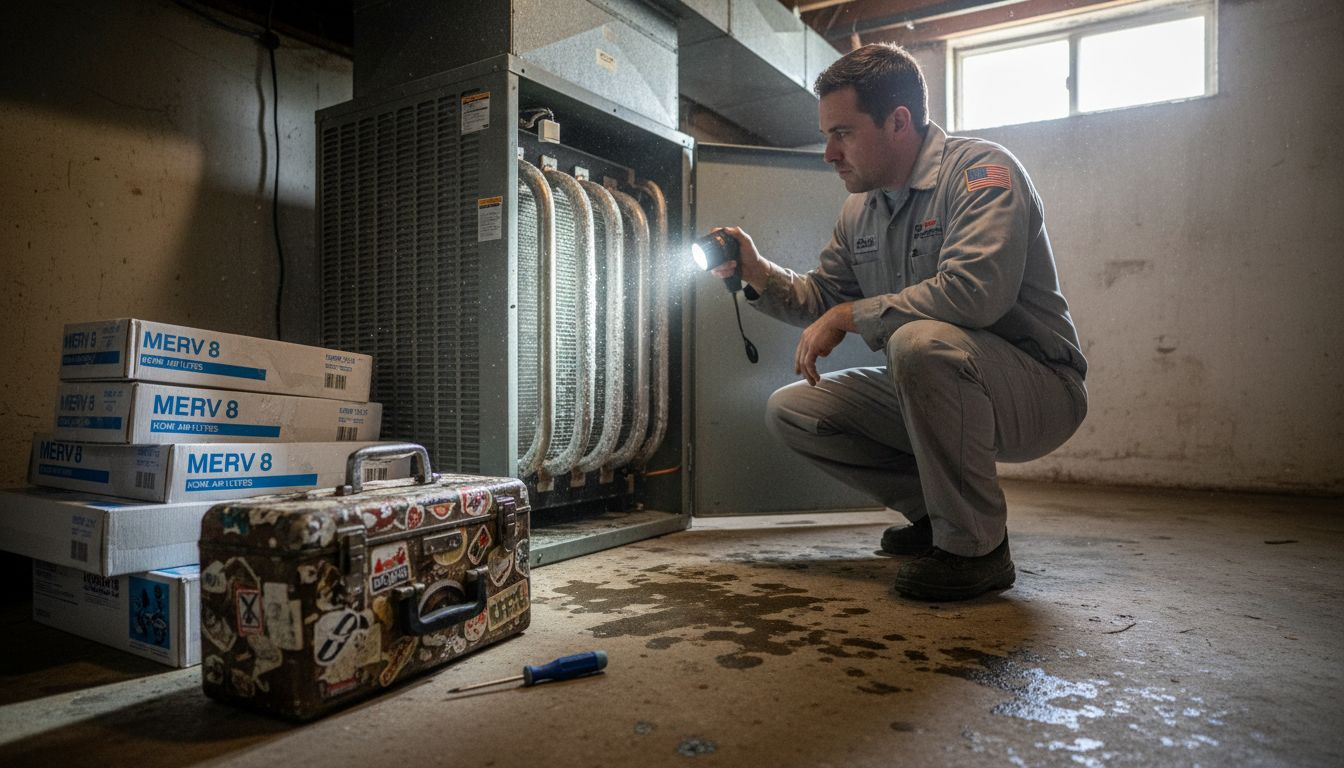
How Dehumidification Works
Proper humidity control maintains levels between 30 and 50 percent, which prevents mold growth while keeping your home comfortable. Your HVAC system achieves this through three main mechanisms:
- Air conditioning removes moisture as it cools indoor air
- Ventilation exchanges stale, humid indoor air with drier outdoor air
- Exhaust fans in bathrooms and kitchens pull moisture-heavy air directly outside
Without proper dehumidification, humidity levels in Tampa can easily exceed 60 percent during summer months. At that point, mold has everything it needs to flourish.
The Role of Proper Ventilation
Ventilation is critical because AC units alone cannot handle extreme humidity loads. Your system needs to exchange indoor air with the outside environment regularly. Mechanical ventilation systems following industry standards ensure consistent moisture removal and acceptable indoor air quality.
Bathroom exhaust fans are part of this strategy. They directly remove moisture at the source before it spreads throughout your home. Without them, shower steam infiltrates walls and attic spaces where mold grows hidden from view.
A properly maintained HVAC system can reduce indoor humidity by up to 30 percent compared to homes without adequate dehumidification.
Common HVAC Issues That Allow Humidity to Build
Your system can only work effectively if maintained properly. Several problems allow humidity to accumulate:
- Clogged air filters restrict airflow and reduce cooling efficiency
- Blocked condensation drain lines prevent water removal
- Low refrigerant levels reduce the system’s cooling capacity
- Undersized units cannot handle Tampa’s moisture load
- Improper ductwork sealing allows humid air to bypass the system
When any of these issues occur, humidity levels rise and mold risk increases dramatically. That’s why professional maintenance matters.
To better understand how HVAC issues affect mold growth, review these common problems and their consequences:
| HVAC Issue | Impact on Humidity | Mold Risk Level |
|---|---|---|
| Clogged air filters | Restricts airflow, less cooling | Significantly increased |
| Blocked drain lines | Prevents water removal | Extremely high |
| Low refrigerant | Less moisture removed | High |
| Undersized unit | Cannot keep up with humidity | Very high |
| Leaky ductwork | Humid air bypasses system | Moderately increased |
Pro tip: Schedule HVAC maintenance every spring before Tampa’s humid season peaks, ensuring your system operates at full dehumidification capacity and condensation drains freely.
Mold Risks and Health Effects in Tampa
Mold isn’t just an aesthetic problem or a structural concern. It poses real health risks to you and your family, especially in Tampa’s warm, humid climate where mold thrives year-round.
When you breathe in mold spores, your body can react immediately or develop problems over time. The health impact depends on your individual susceptibility, the amount of exposure, and the type of mold present in your home.
Immediate Health Effects From Mold Exposure
Exposure to mold causes respiratory symptoms including nasal congestion, coughing, and wheezing. You might also experience eye and skin irritation that feels like an allergic reaction. People with asthma or mold allergies face heightened risks and more severe responses.
Common immediate symptoms include:
- Persistent coughing or throat irritation
- Nasal congestion and sinus pressure
- Itchy, watery eyes
- Skin rashes or hives
- Wheezing or shortness of breath
- Sneezing and runny nose
These symptoms often appear within hours of mold exposure and may improve when you leave the affected area. But if you live with mold daily, symptoms become chronic.
Long-Term Health Consequences
Prolonged mold exposure creates serious long-term health problems. Prolonged exposure increases risks of asthma, respiratory issues, stress, depression, and anxiety, particularly in children and vulnerable populations.
Children face particular vulnerability. Their developing immune systems and growing lungs make them susceptible to mold-related illnesses. Parents often notice their children’s asthma worsens during humid months when indoor mold levels peak.
Here is a comparison of immediate and long-term health effects of household mold exposure:
| Effect Type | Typical Symptoms | Duration |
|---|---|---|
| Immediate | Sneezing, coughing, itchy eyes | Hours to days |
| Long-Term | Asthma, chronic sinusitis, lung issues | Months to years |
| Psychological | Stress, anxiety, depression | Potentially ongoing |
| Vulnerable Groups | Children, elderly, immune-compromised | Most severe impact |
Immune-compromised individuals and those with lung disease can develop serious mold infections from household exposure, making mold prevention critical for vulnerable family members.
Who Faces the Greatest Risk
Certain groups experience more severe health effects from mold:
- People with asthma or allergies
- Children and elderly family members
- Individuals with compromised immune systems
- Those with chronic lung disease
- People with chronic sinusitis
If your family includes anyone in these categories, mold prevention becomes a health priority, not just a maintenance task. Tampa’s climate makes this especially important since outdoor moisture constantly challenges your home’s ability to stay dry.
Pro tip: If family members develop persistent respiratory symptoms or coughing during humid months, have your home professionally inspected for hidden mold before symptoms escalate into serious health issues.
Key HVAC Maintenance for Mold Prevention
Your HVAC system only prevents mold when it operates at peak performance. Neglected maintenance allows humidity to accumulate, creating perfect conditions for mold growth. Regular upkeep is non-negotiable in Tampa’s humid environment.
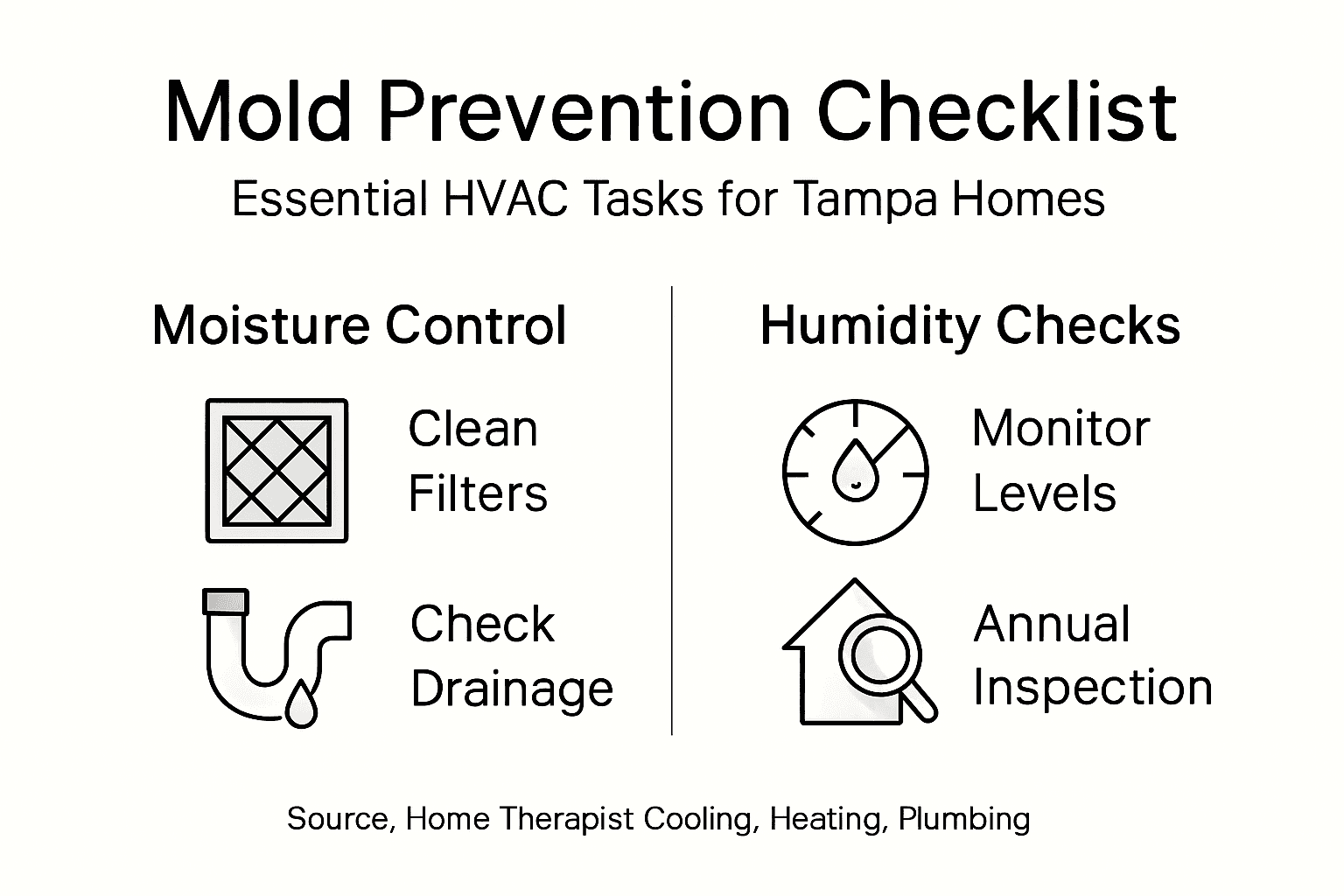
Think of HVAC maintenance as an investment in your home’s health. Every task directly impacts your system’s ability to control moisture and protect your family from mold-related illness.
Critical Maintenance Tasks
Regular HVAC maintenance is critical for mold prevention, including timely filter changes, cleaning coils, ensuring proper drainage, and inspecting ducts. These tasks directly reduce conditions that allow mold to thrive.
Your essential maintenance checklist includes:
- Replace air filters every 1-3 months depending on usage
- Clean evaporator coils annually to prevent moisture buildup
- Clear condensation drain lines to prevent water accumulation
- Inspect ductwork for leaks or moisture damage
- Check refrigerant levels to ensure proper cooling
- Seal any gaps or cracks in ductwork
- Verify proper airflow throughout your home
Neglecting any of these tasks compromises your system’s dehumidification ability. A clogged filter forces your AC to work harder while cooling less effectively. Blocked drain lines trap water inside your system where mold colonies establish themselves.
Condensation Drainage: The Mold Prevention Linchpin
Your air conditioning system removes roughly 5-20 gallons of water daily from indoor air. All that water must drain away completely, or it becomes a mold breeding ground.
Condensation drain lines frequently clog with algae, dirt, and debris. When blocked, water backs up into your AC unit and spreads through ductwork. Preventative mold control measures in HVAC systems include routine inspections and maintenance of condensate drains to reduce moisture accumulation and inhibit mold growth.
Have your drain lines professionally flushed every spring before cooling season begins. This single task prevents the majority of moisture-related HVAC problems.
A blocked condensation drain can allow water to accumulate inside your AC unit within hours, creating active mold growth in 24-48 hours.
Professional Inspection Frequency
Schedule professional HVAC inspections twice yearly: spring before cooling season and fall before heating season. Technicians identify problems homeowners miss, including:
- Refrigerant leaks reducing cooling capacity
- Corroded coils preventing proper dehumidification
- Ductwork separation allowing humid air to bypass filtration
- Improper insulation allowing condensation on cold surfaces
Pro tip: Request that your HVAC technician specifically check your condensation drain lines and evaporator coils during maintenance visits, as these are the primary locations where mold establishes in AC systems.
Mistakes to Avoid for Lasting Protection
Mold prevention fails when homeowners make critical errors that undermine their HVAC system’s effectiveness. Understanding these mistakes helps you protect your Tampa home from becoming a mold breeding ground.
Many homeowners think they’re doing everything right, yet mold still appears. Often, a single mistake unravels months of preventive effort.
Delaying Moisture Repairs
Common mistakes include delaying moisture repairs, neglecting ventilation, and ignoring signs of mold growth. These delays allow mold to establish deep in walls and ductwork where it becomes expensive and dangerous to remove.
Water damage from a roof leak or burst pipe doesn’t wait. Mold begins colonizing within 24 hours. Every day you postpone repairs, mold spreads deeper.
Don’t make these postponement mistakes:
- Ignoring water stains on ceilings or walls
- Delaying HVAC duct cleaning after flooding
- Putting off condensation drain repairs
- Waiting for “better weather” to fix roof leaks
- Postponing basement moisture control improvements
Temporary fixes like opening windows or using fans are not solutions. They address symptoms, not causes. Your AC system needs professional attention immediately when moisture problems occur.
Ignoring Humidity Monitoring
You cannot control what you don’t measure. Without tracking indoor humidity levels, you won’t know when conditions favor mold growth. Failing to control moisture sources and ignoring humidity control can result in lasting mold issues that become entrenched in your home.
Many Tampa homeowners assume their AC is handling humidity adequately. But without measurement, problems go undetected until visible mold appears. By then, hidden mold has already colonized wall cavities and HVAC ducts.
Invest in a basic hygrometer to monitor humidity in key areas: bedrooms, bathrooms, and basements. Humidity consistently above 55 percent signals that your HVAC system needs attention.
Mishandling Mold Test Kits
Do-it-yourself mold test kits often produce unreliable results. Misusing mold test kits and relying on visual mold inspection alone can lead you to incorrect conclusions about your home’s mold situation.
Test kits don’t identify hidden mold in walls or ductwork. Visible patches are usually just the tip of an iceberg. Professional mold assessments use air quality testing and thermal imaging to locate problems you cannot see.
Mold testing at home is tempting because it’s inexpensive, but inaccurate results lead to missed problems that compound over time.
Neglecting HVAC Maintenance
Skipping seasonal HVAC inspections is perhaps the costliest mistake. An unmaintained system cannot control humidity effectively, making mold prevention impossible.
Common neglect patterns include:
- Missing spring maintenance before cooling season begins
- Not replacing filters until visibly clogged
- Ignoring unusual system sounds or reduced airflow
- Skipping professional inspections for several years
- Assuming your system is fine if it still runs
An HVAC system that runs is not necessarily an HVAC system that prevents mold. Performance degrades gradually, so you might not notice until humidity levels spike.
Pro tip: Mark your calendar now for spring and fall HVAC maintenance appointments, scheduling them before humid and cold seasons arrive rather than waiting until problems force emergency service calls.
Protect Your Tampa Home from Mold with Expert HVAC Solutions
Moisture control is the key to preventing mold growth in Tampa homes especially in a humid climate where your HVAC system must work hard to keep indoor humidity between 30 and 50 percent. Ignoring HVAC maintenance or delaying repairs on clogged drainage and low refrigerant can create the perfect conditions for mold to spread rapidly throughout your home. Don’t let clogged condensate drains or poor ventilation threaten the health of your family and the integrity of your property.

Take control today with Home Therapist Cooling, Heating, and Plumbing Our certified technicians specialize in comprehensive HVAC inspections and maintenance that target mold-friendly problems like clogged filters and blocked drain lines. Act now to schedule professional service that keeps your cooling system functioning perfectly through Tampa’s humid seasons. Visit Home Therapist Cooling, Heating, and Plumbing to get expert advice and reliable solutions designed to protect your home and loved ones from the dangers of mold before it starts.
Frequently Asked Questions
- How to prevent mold from growing in air ducts?
Keep indoor humidity below 50%, change filters every 30 days, schedule annual duct inspections, and ensure drain lines are clear. In Tampa Bay's high-humidity climate, a UV germicidal light installed inside the air handler kills mold spores before they colonize ductwork. Home Therapist has completed 330+ jobs across Tampa homes addressing exactly these issues.
- Is Florida a high mold state?
Yes. Florida's combination of year-round heat, humidity regularly above 70%, and frequent rain makes it one of the highest-risk states for indoor mold growth. Tampa Bay homes run their AC systems almost continuously, meaning a dirty coil or clogged drain line can create mold conditions inside the air handler within days.
- How common is mold in HVAC ducts?
Mold in ductwork is very common in Florida homes, particularly in systems with aging insulation, oversized units that short-cycle, or drain pans that do not fully clear. Short-cycling leaves moisture on the evaporator coil without drying it out, and that standing moisture is the primary driver of mold growth inside Tampa Bay HVAC systems.
- Does insurance cover mold in ductwork?
Standard homeowners insurance typically does not cover mold in ductwork unless it results directly from a sudden, covered peril such as a burst pipe. Gradual moisture buildup from deferred HVAC maintenance is almost always excluded. Home Therapist offers FREE estimates and FREE diagnosis so you know the full scope before committing to any repair.
What causes mold growth in Tampa homes?
Mold growth in Tampa homes is primarily caused by four factors: mold spores, a food source (like drywall or wood), appropriate temperatures (usually between 60-80°F), and most importantly, moisture. High humidity and specific moisture sources, such as leaky pipes or poor ventilation, make homes particularly vulnerable to mold.
How can HVAC systems help prevent mold?
HVAC systems help prevent mold by controlling indoor humidity levels through dehumidification. When warm, humid air passes through the AC unit, moisture condenses and drains away, maintaining humidity levels ideally between 30% and 50%, which is essential for mold prevention.
What are common HVAC issues that lead to higher humidity?
Common HVAC issues that can lead to increased humidity include clogged air filters, blocked condensation drain lines, low refrigerant levels, and undersized units. These problems reduce the system’s ability to cool and dehumidify the air effectively, increasing the risk of mold growth.
What maintenance tasks are essential for mold prevention in HVAC systems?
Essential maintenance tasks for mold prevention include replacing air filters every 1-3 months, cleaning evaporator coils annually, ensuring condensation drain lines are clear, inspecting ductwork for leaks, and checking refrigerant levels. Regular professional inspections are also crucial to maintaining optimal system performance.
About This Guide
Written and reviewed by the Home Therapist Cooling, Heating & Plumbing team, a family-owned Tampa Bay HVAC and plumbing company serving the area since 2011. Our licensed techs hold Florida HVAC license CAC1819196 and Plumbing license CFC1431159, with over 1,100 five-star reviews across Tampa, St. Petersburg, Clearwater, Wesley Chapel, Lutz, Riverview, Brandon, Valrico, Apollo Beach, Palm Harbor, Land O’ Lakes, Plant City, New Port Richey, and surrounding Tampa Bay zip codes.
Honest pricing:. Upfront quotes, no high-pressure sales, no surprise fees.
Questions about your home? Call (813) 343-2212 for a real tech, or request a callback. Available 7 days a week including evenings and weekends for emergencies.
Recommended
- Why Clean Air Ducts Matter for Tampa Homes
- Role of HVAC in Comfort, What Tampa Homeowners Need
- HVAC Zoning System Installation in Tampa, FL: What You Need to Know for Your Home Home Therapist Cooling, Heating, and Plumbing
- 7 Must-Have HVAC Upgrades 2025 for Tampa Homeowners
More Related Articles
- Warranty Blower Motor Replacement Plus Same-Visit Tune-Up on Mathog Rd, Riverview, FL 33578
- Hidden-in-Wall Dryer Duct Run on Grantwood Ave: Code-Compliant Installation in Clearwater, FL 33759
- Third Visit, Zero Issues: Premium HVAC Maintenance on Butterfly Kiss Dr in Land O’ Lakes, FL 34637
- Drifting Capacitor and Uneven Cooling Found During AC Tune-Up on Old Sycamore Lp, Land O’ Lakes, FL 34638
- Air Conditioner Installation Repair Tampa FL Bay FL Services Review from Bonnie Wakefield


