
AC Low-Voltage Transformer and Thermostat Repair in St. Petersburg, FL 33703
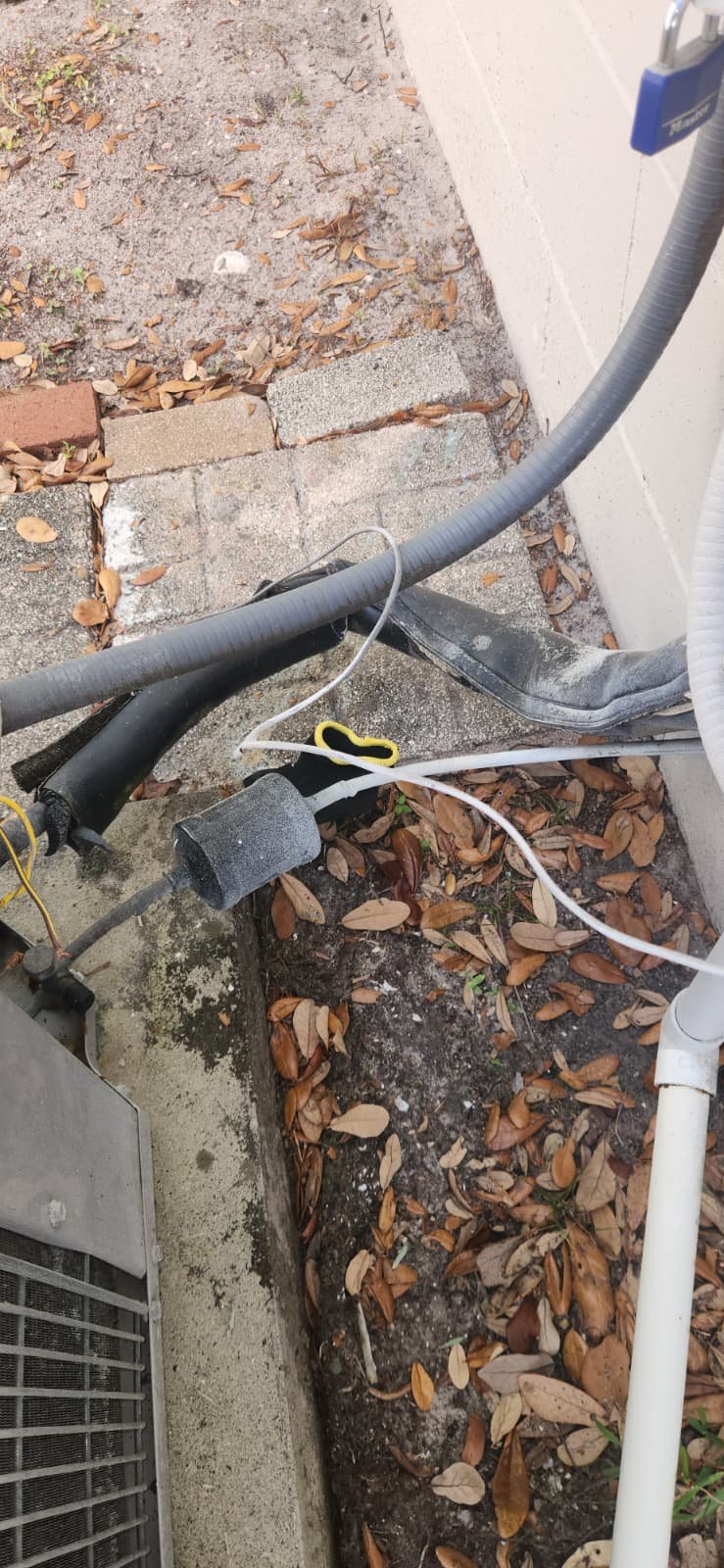
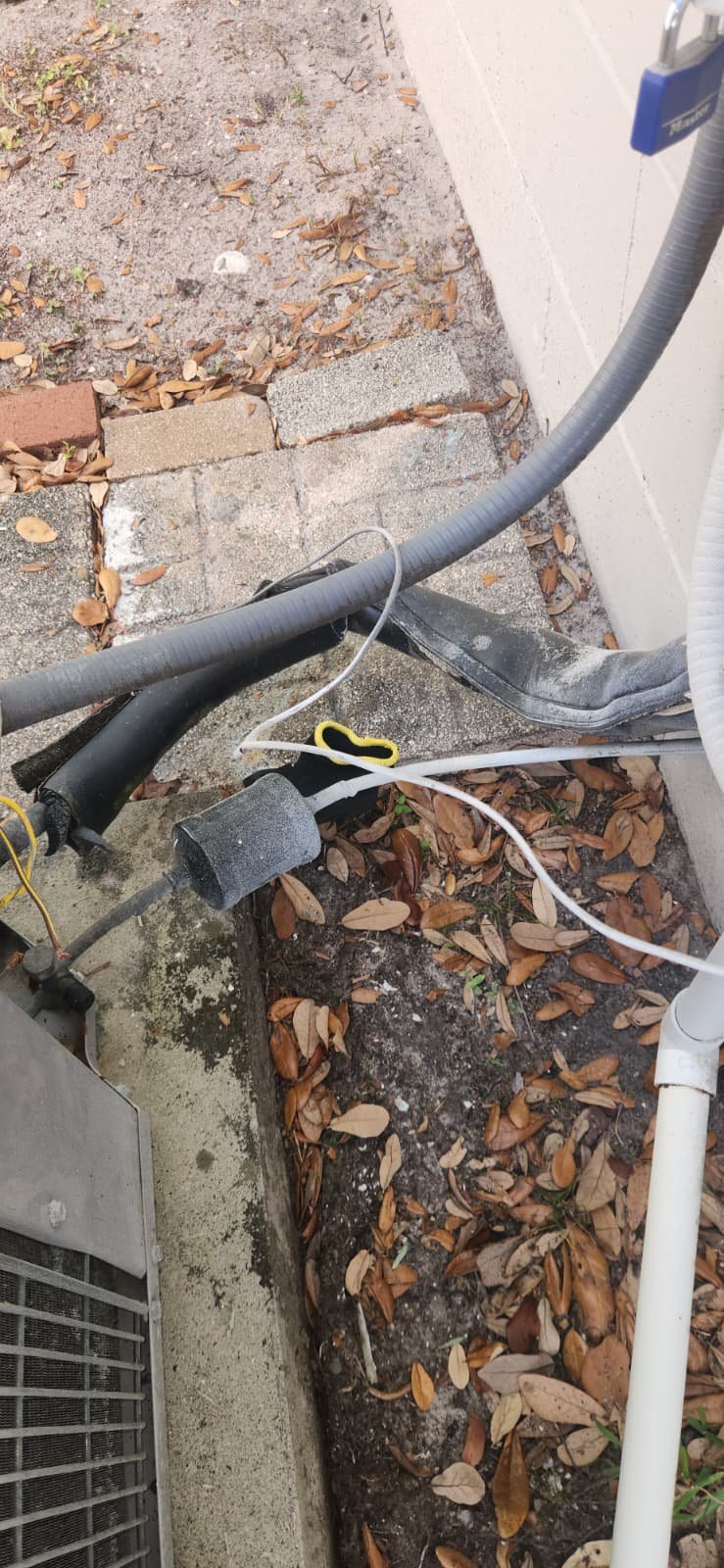
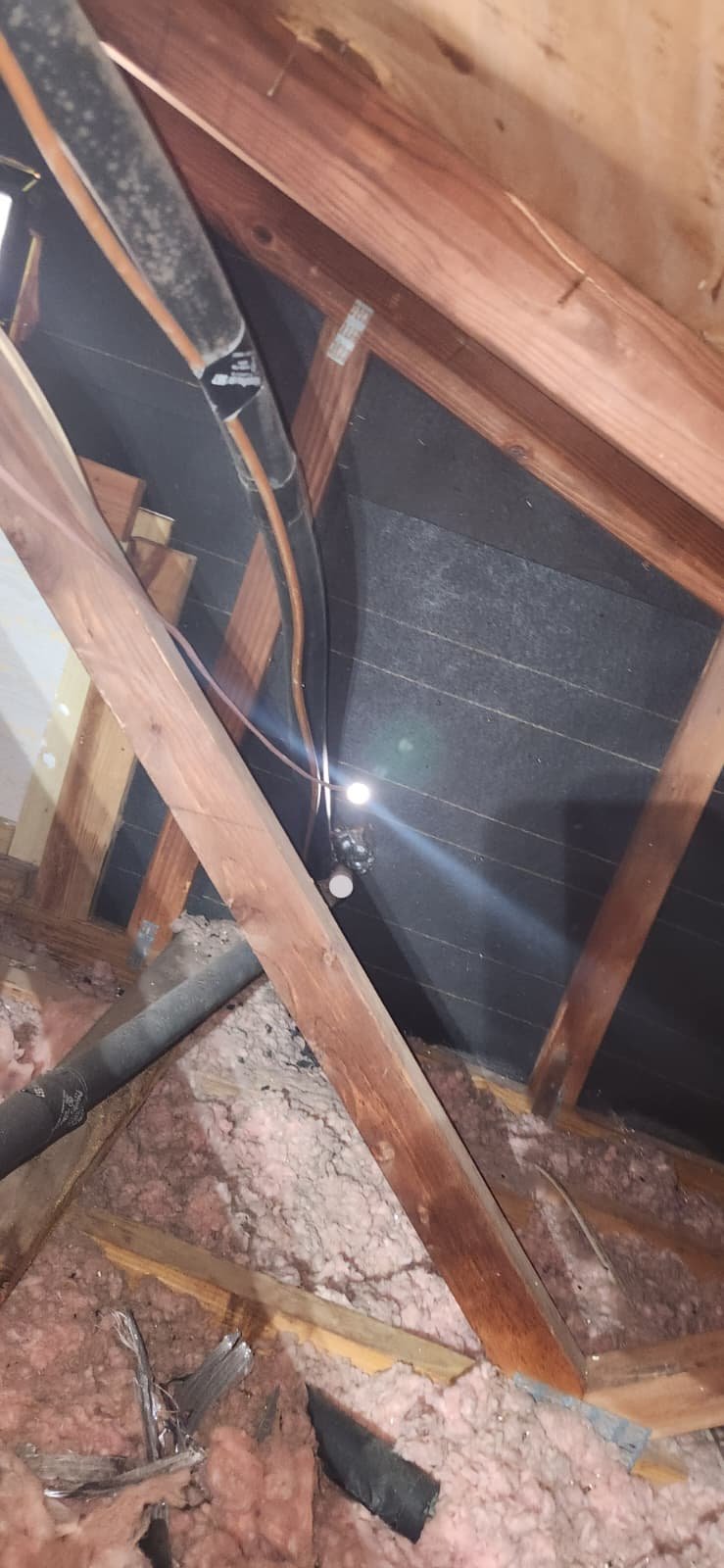
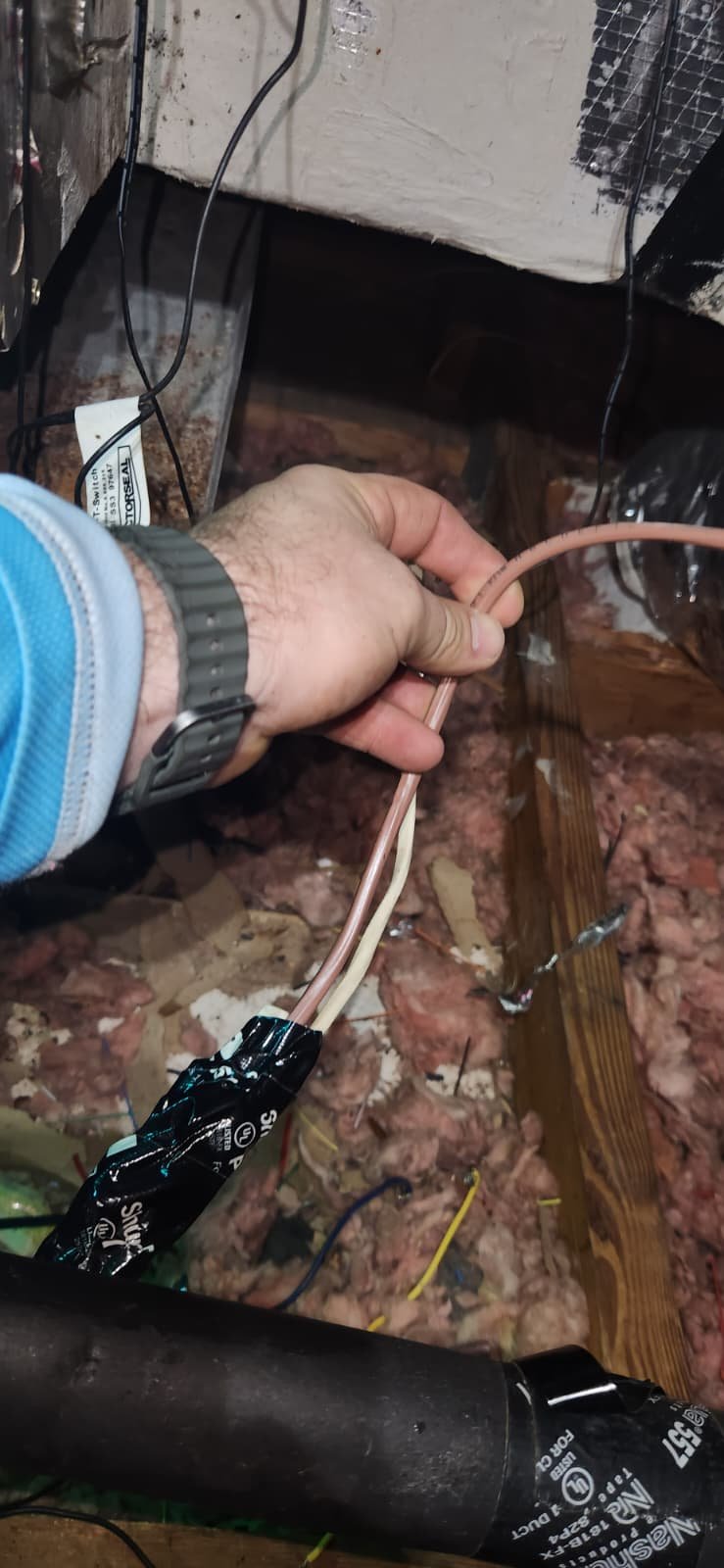
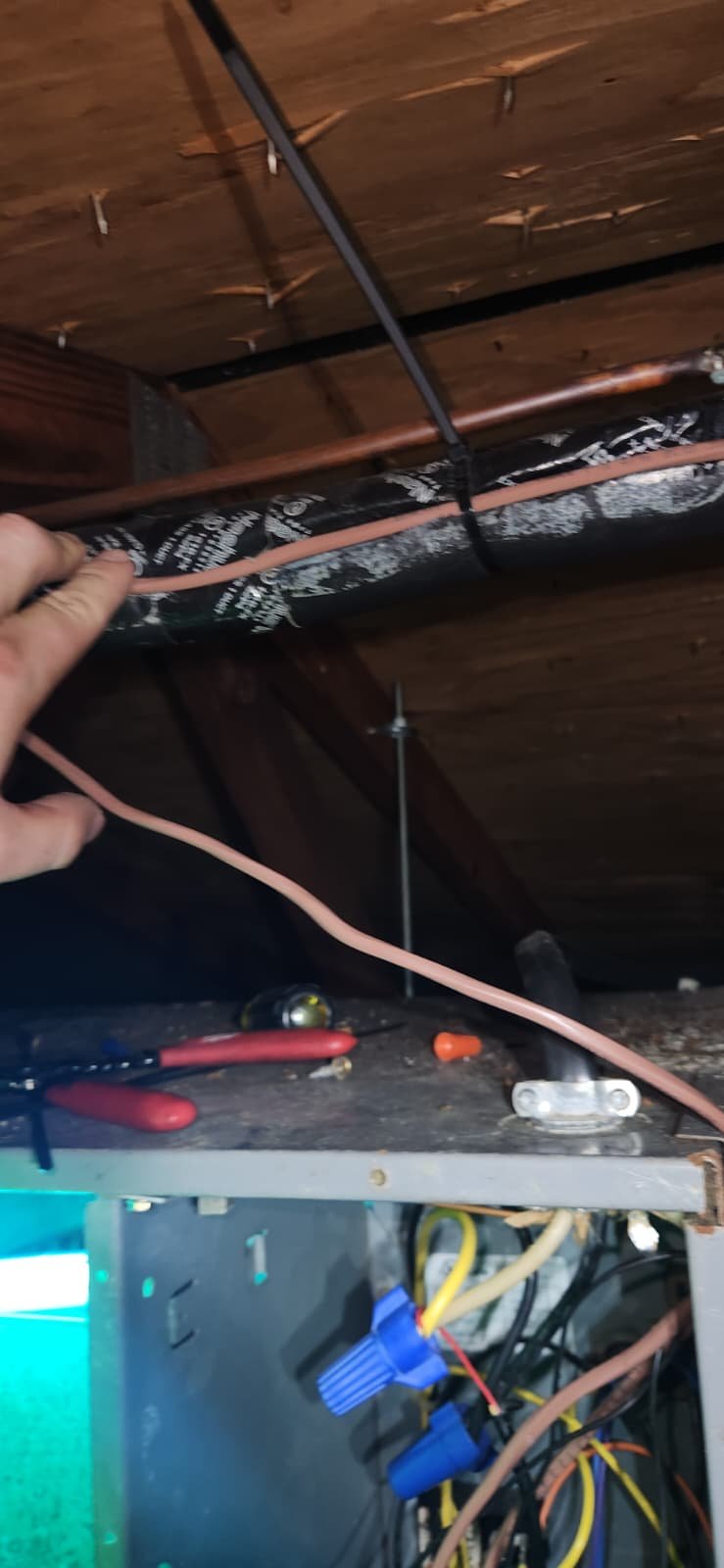
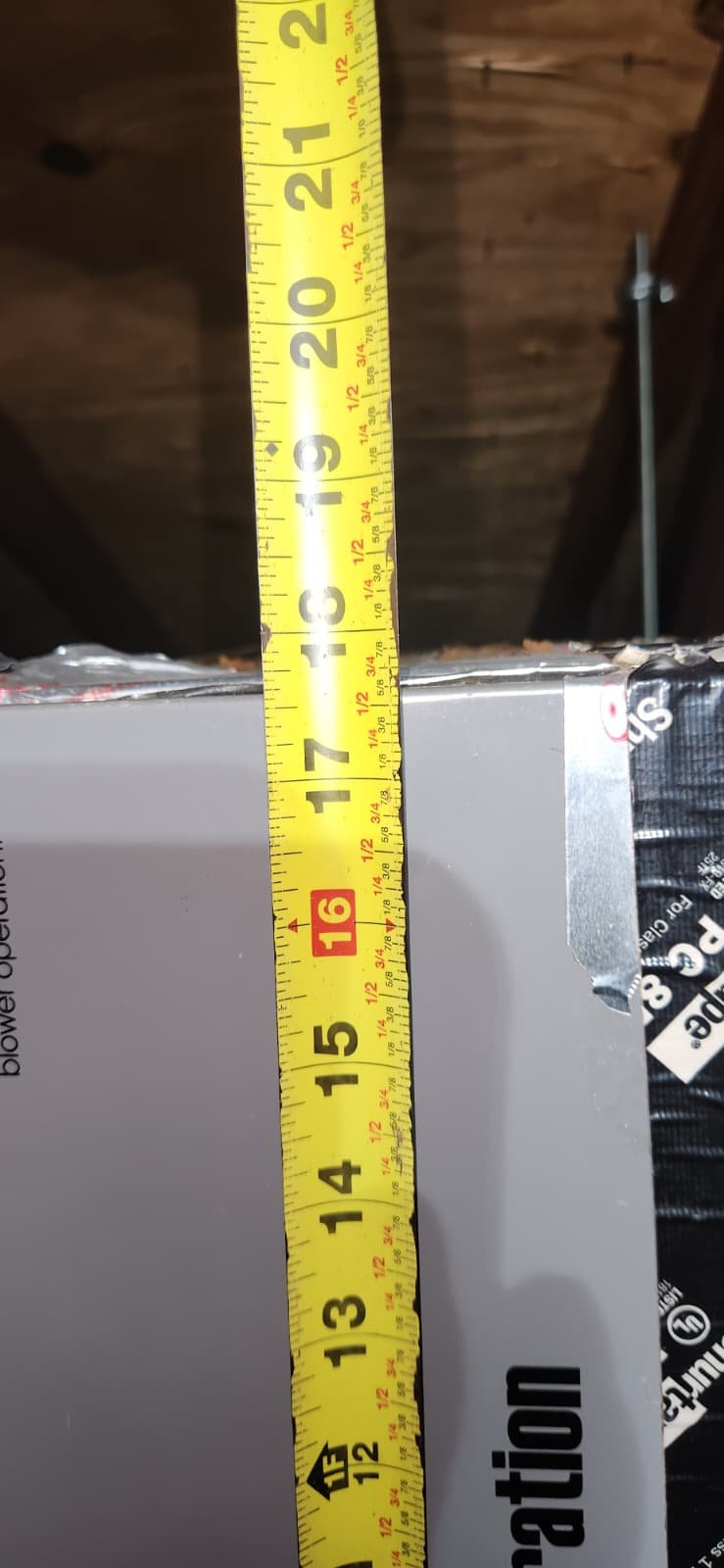
When your thermostat suddenly flashes an error and the air conditioning won’t come on, it’s frustrating—especially in our Florida heat. That’s exactly what happened for a homeowner in St. Petersburg, FL 33703. After returning home, she found her Nest thermostat reporting a low-voltage problem, even though we had just completed a routine AC maintenance visit the week before.
We came back out to diagnose the issue, and what we found was a damaged low-voltage circuit that had taken out both the transformer and the low-voltage cable, plus a contactor at the outdoor unit. In this walkthrough, we’ll explain what went wrong, how we fixed it, and what homeowners in St. Petersburg can watch for if they ever see a similar thermostat error.
Case Recap
- Nest thermostat displayed a low-voltage error and the AC would not run.
- Inspection revealed a failed transformer and shorted low-voltage wiring.
- We replaced the air handler transformer, ran new low-voltage cable, and installed a new condenser contactor.
- System communication between thermostat, air handler, and condenser was restored.
- Homeowner chose our Premium Therapy Plan for ongoing protection and maintenance.
Customer Problem: Thermostat Error and No Cooling
The homeowner in St. Petersburg, FL 33703 reached out because her Nest thermostat was showing a low-voltage error and the air conditioner would not turn on. This issue appeared a few days after a routine AC maintenance we had performed, so understandably she was concerned about what had changed.
From the homeowner’s point of view, the symptoms were simple but serious:
- Thermostat displaying a low-voltage or power-related error message
- AC system not responding to thermostat commands
- Comfort in the home quickly dropping in the Florida heat
Low-voltage problems can be tricky because nothing obvious may look broken at the thermostat itself. Yet, behind the scenes, that low-voltage circuit is what allows the thermostat, air handler, and outdoor condenser to “talk” to each other. When that circuit fails, the system simply doesn’t run.
Inspection and Diagnosis
Our job in a situation like this is to trace the low-voltage circuit step by step until we find the failure. For this St. Petersburg home, we started at the most visible point—the thermostat—and worked our way back through the system.
Here’s what we checked and why:
- Thermostat power and wiring: We confirmed the Nest thermostat wasn’t getting the proper low-voltage power it needed to operate the system. That told us the problem wasn’t just a thermostat setting.
- Transformer at the air handler: The transformer is the component that takes standard household voltage and converts it down to the low voltage used by the thermostat and control wiring. We inspected the transformer and found that it had failed, showing signs consistent with damage from a short circuit on the low-voltage side.
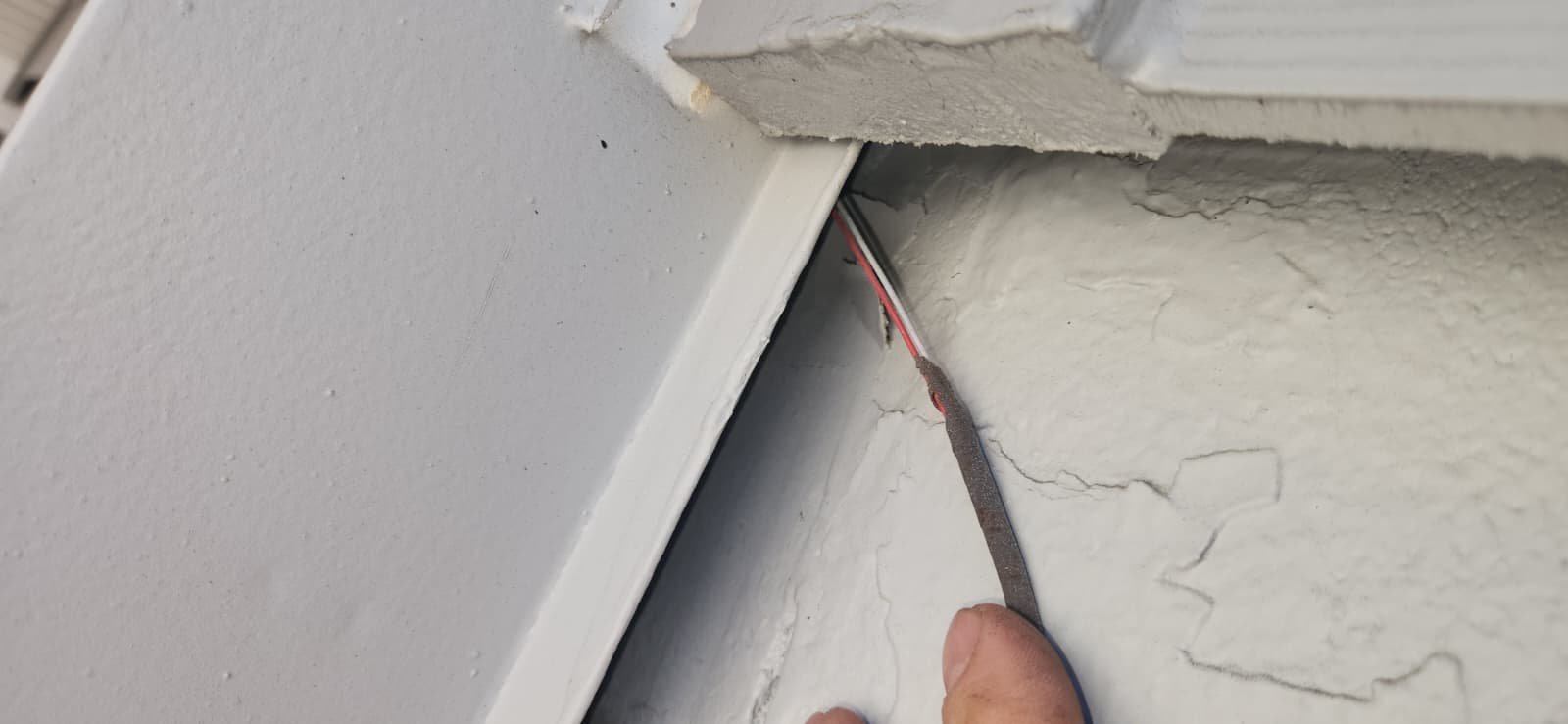
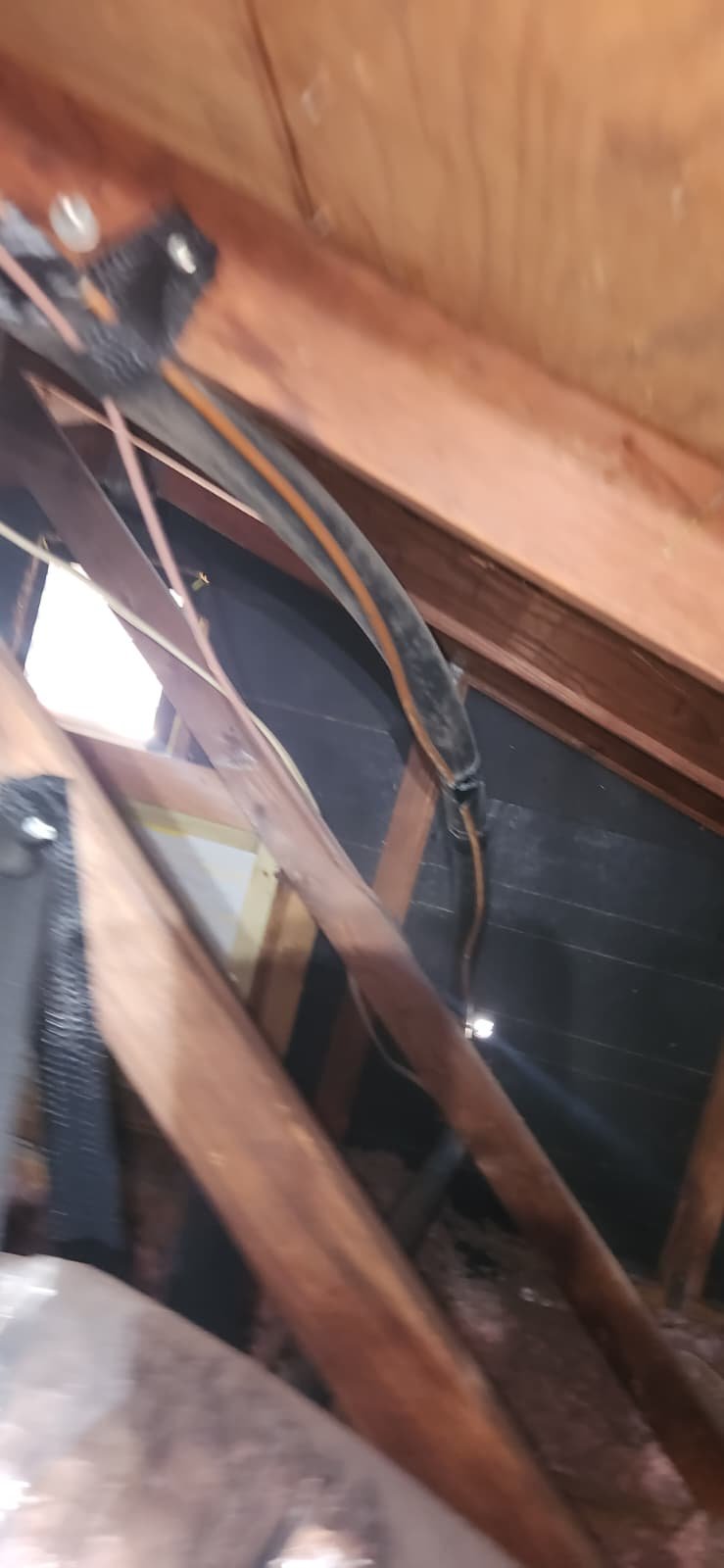
- Low-voltage cable runs: We then followed the low-voltage wiring between the outdoor condenser, the air handler, and the thermostat. The existing cable was no longer reliable and showed evidence of a short. When low-voltage wires short out, they can overload and burn out the transformer.
- Outdoor condenser controls: At the condenser, we inspected the contactor—the electrical switch that allows the outdoor unit to turn on when the thermostat calls for cooling. The contactor was due for replacement and was already approved through a prior estimate, so we planned that work as part of the complete repair.
With this inspection, we had a clear picture: a shorted low-voltage cable had damaged the transformer and compromised the control circuit. Just resetting or replacing one item would not be enough; the underlying wiring issue had to be corrected.
Repair and Service Process
Once we understood the full extent of the low-voltage problem, we walked the homeowner through our recommended repairs and why each piece mattered. Our goal was to restore safe, reliable operation and prevent a repeat failure.
1. Replacing the Air Handler Transformer
The transformer in the air handler is the heart of the low-voltage circuit. Because the damaged cable had caused a short, the original transformer had burned out and could no longer supply power to the thermostat and control system.
We removed the failed transformer and installed a new one rated appropriately for the system. All connections were secured, routed cleanly, and double-checked to ensure there were no loose or exposed conductors that could cause future shorts.
2. Running New Low-Voltage Cable
Replacing the transformer alone would not have solved the problem, because the wiring that caused the original failure would still be in place. That’s why we also replaced the low-voltage cable itself.
We ran new low-voltage wiring:
- From the outdoor condenser to the air handler
- From the air handler to the thermostat inside the home
The new cable included up to 100 feet of wire, giving us enough length to route it properly and neatly. We carefully secured the new wiring to avoid rubbing, pinching, or exposure to sharp edges—common issues that can lead to shorts in Florida attics and equipment spaces.
After running the new cable, we matched each wire to its correct terminal (R, Y, G, etc., depending on the system) so that signals between the thermostat, air handler, and condenser would be clear and reliable.
3. Installing a New Condenser Contactor
The condenser’s contactor had already been approved for replacement under a separate estimate. Since the system was already powered down and we were working on the control circuit, this was the right time to take care of it.
The contactor is an electrical relay that allows the outdoor unit to turn on when the thermostat calls for cooling. A worn or failing contactor can lead to intermittent cooling, hard starts, or even prevent the condenser from turning on entirely.
We removed the old contactor and installed a new one, tightening all connections and ensuring the control wires from the new low-voltage cable landed securely on the proper terminals.
4. Restoring Power and Testing
With the new transformer, new low-voltage cable, and new contactor in place, we restored power to the system and closely monitored startup.
We verified that:
- The thermostat powered on normally without low-voltage errors.
- The air handler responded correctly when the thermostat called for cooling.
- The outdoor condenser engaged through the new contactor and ran as expected.
We let the system run to confirm steady operation, normal cycling, and reliable communication across the entire low-voltage circuit.
5. Enrolling in the Premium Therapy Plan
After seeing how a hidden wiring issue could take down the whole system, the homeowner chose our Premium Therapy Plan. That plan helps homeowners in St. Petersburg and across Tampa Bay stay ahead of issues with routine inspections, cleaning, and priority service when something does go wrong.
It’s a proactive way to protect comfort and avoid surprise breakdowns—especially during peak cooling season here in Florida.
Why This Fix Works
Low-voltage control circuits are the “nervous system” of your AC. They don’t move a lot of power, but they carry critical signals: when to turn on, when to shut off, and what mode to run in.
In this St. Petersburg, FL 33703 home, the shorted low-voltage cable overloaded the transformer. Once the transformer failed, the thermostat lost its power source and could no longer communicate with the air handler or the condenser. That’s why the Nest displayed a low-voltage error and the system never turned on.
By replacing both the transformer and the damaged low-voltage cable, we restored:
- Stable low-voltage power from the new transformer
- Clean signal paths through fresh, properly routed cable
- Reliable outdoor operation through the new condenser contactor
This combination gives the thermostat a clean, dependable way to control the entire system. Instead of just swapping one part and hoping for the best, we addressed the root cause and the resulting damage together, which is the most reliable and cost-effective approach.
Pro Tips for Homeowners in St. Petersburg
If you live in St. Petersburg or anywhere in Tampa Bay, your AC works hard almost year-round. Here are some practical tips to help reduce the chances of low-voltage issues and other comfort interruptions:
- Keep an eye on thermostat errors. If your smart thermostat reports low-voltage, power, or “no equipment detected” errors, don’t ignore them. They’re often early signs of wiring or transformer issues.
- Schedule regular AC maintenance. Routine maintenance helps catch loose connections, early wire damage, and stressed components before they fail. Our AC maintenance and cleaning specials in Tampa Bay are designed around local conditions.
- Protect wiring in hot spaces. Attics and outdoor areas in St. Petersburg can get extremely hot and humid. Properly secured and protected low-voltage wiring is less likely to rub, crack, or short in these environments.
- Use compatible smart thermostats. Not every thermostat is right for every system. If you’re upgrading or changing to a smart thermostat, our smart thermostat installation and upgrades guide explains what to expect when we handle the installation.
- Don’t ignore intermittent issues. If your AC sometimes runs and sometimes doesn’t, or you have to reset breakers or the thermostat often, it’s worth a professional look before something fails completely.
- Consider a service plan. A plan like our Premium Therapy Plan gives homeowners in St. Petersburg, FL 33703 consistent checkups, priority scheduling, and a structured way to care for their system long-term.
FAQ: Low-Voltage and Thermostat Problems
Why did the transformer fail in this St. Petersburg home?
In this case, the transformer failed because a short in the low-voltage wiring overloaded it. When low-voltage wires touch each other or grounded metal where they shouldn’t, the transformer can overheat and burn out. That’s why we replaced both the transformer and the damaged cable.
Is it enough to just replace the thermostat when I see a low-voltage error?
Usually not. A low-voltage error often points to a problem with the power supply or wiring, not just the thermostat itself. We always verify that the transformer, wiring, and connections are healthy before calling a thermostat replacement the full fix.
What are signs of low-voltage wiring problems in my AC?
Common signs include intermittent operation, thermostat power loss, error messages about equipment not being detected, or the system not responding at all to thermostat changes. Any of these in a St. Petersburg home are a good reason to have a licensed technician inspect the system.
How long does it take to replace a transformer and low-voltage cable?
Every home is different, but a typical visit includes diagnosis, replacement of the failed components, running new wiring where needed, and full testing. We stay on-site until we’re confident the system is operating normally again.
Will this kind of repair prevent future breakdowns?
Replacing a failed transformer, damaged low-voltage wiring, and a worn contactor removes the immediate causes of the breakdown and greatly improves reliability. Paired with regular maintenance, it reduces the chances of similar failures, especially in the demanding Tampa Bay climate.
Why Choose Home Therapist for AC Service in Tampa Bay
When something as small as a low-voltage wire can shut down your whole system, you want a team that takes the time to find the real cause and explain it clearly. That’s how we approach every visit in St. Petersburg, FL 33703 and across Tampa Bay.
Here’s what you can expect when you call Home Therapist Cooling, Heating, and Plumbing:
- Licensed, professional technicians: Our team is trained to handle electrical, control, and mechanical issues safely and correctly, not just swap parts.
- Transparent communication: We explain what we find, why it failed, and what your options are before moving ahead—just as we did with this transformer and low-voltage cable replacement.
- Clean, respectful work: We treat your home as if it were our own, keeping work areas neat and minimizing disruption while we service your HVAC system.
- Focus on long-term reliability: Instead of band-aid fixes, we address the underlying issues so your system runs consistently through our hot, humid seasons.
- Commitment to Tampa Bay homeowners: We live and work here too, so we design our services, maintenance plans, and recommendations around real conditions in our area.
If you’d like to see more of what we do and how we serve local homeowners, you can connect with us on social platforms like Pinterest and Reddit. You can also review independent perspectives on sites such as the Better Business Bureau and the Tampa Bay Chamber of Commerce.
For a broader overview of how we approach repairs, installations, and ongoing care, you can also explore our AC repairs, installs, and maintenance services overview and our article on smart thermostat upgrades in Tampa Bay.
Need AC Help in St. Petersburg, FL 33703?
If your thermostat is showing a low-voltage error, your AC isn’t responding, or something just doesn’t feel right with your system, we’re here to help. Our local Tampa Bay technicians have hands-on experience with the exact kind of low-voltage, transformer, and contactor issues we resolved in this St. Petersburg, FL 33703 home.
Reach out to schedule a visit, and we’ll carefully inspect your system, explain what we find in plain language, and get your home comfortable again—safely and reliably.