
Definition of Plenum in HVAC: Airflow and Efficiency
Florida homeowners know that keeping every room comfortable can feel like a challenge, especially during Tampa Bay’s hot and humid months. When your HVAC system struggles with uneven cooling or rising energy bills, the problem often starts with the hidden chambers called plenums. These enclosed spaces are the heart of your ventilation system, affecting how efficiently air circulates and how much you spend. Discover how a well-designed plenum can transform airflow and energy use for your home.
Table of Contents
- Definition Of Plenum In HVAC Systems
- Types Of HVAC Plenums And Key Differences
- How Plenums Affect Airflow And Efficiency
- Common Plenum Problems And Homeowner Solutions
- Plenums Vs. Alternative Air Distribution Methods
Key Takeaways
| Point | Details |
|---|---|
| Plenum Importance | Plenums are crucial for efficient air distribution in HVAC systems, impacting comfort and energy bills. |
| Types of Plenums | Supply and return plenums work together, with supply plenums distributing air and return plenums collecting it for reconditioning. |
| Common Issues | Many Tampa Bay homes face problems from undersized or leaky plenums, leading to uneven airflow and wasted energy. |
| Maintenance Advice | Regular inspections and sealing of plenums can enhance HVAC efficiency, significantly reducing energy costs and improving home comfort. |
Definition of Plenum in HVAC Systems
A plenum is an enclosed space that serves as the collection and distribution point for conditioned air in your HVAC system. Think of it as the central hub where your air conditioning or heating moves before it travels through ducts to different rooms in your Tampa Bay home. A plenum space facilitates air circulation by operating at greater than atmospheric pressure, pushing air efficiently throughout your home.
Most homeowners have plenums without realizing it. The space above your drop ceiling or below a raised floor in your home is typically a plenum area. This hidden space is specifically designed for air handling and plays a critical role in how effectively your HVAC system distributes temperature-controlled air.
Plenums exist in two main locations:
- Above suspended ceilings (drop ceiling plenum) where return and supply air travels
- Below raised floors in homes with concrete slabs, directing airflow upward
Your HVAC system relies on plenums to function at peak performance. Without these spaces, ductwork would need to run through visible walls and ceilings, wasting energy and reducing efficiency.
How Plenums Work in Your Home
When your air conditioner or heater runs, it sends conditioned air to the plenum. The plenum then acts as a pressure chamber, holding that air momentarily before distributing it evenly through supply ducts. This process prevents pressure imbalances that would make some rooms too hot or cold.
Return air plenums work the opposite way. They collect warm or cool air from your rooms and send it back to your system for reconditioning. This continuous cycle keeps your home comfortable year-round in Florida’s demanding climate.
Proper plenum design directly impacts your energy bills and comfort levels—poor airflow means your HVAC works harder and costs you more.
The plenum area is specifically defined as any enclosed space used for air handling in HVAC systems, making it one of the most important components of your system’s overall efficiency.
Why This Matters for Tampa Bay Homeowners
Florida’s heat and humidity mean your HVAC system runs constantly. A well-designed plenum ensures your system cycles efficiently instead of fighting against poor airflow. Blocked or damaged plenums force your equipment to work harder, shortening its lifespan and increasing energy consumption.
Many older Tampa Bay homes have undersized or improperly sealed plenums. This common issue causes uneven cooling, hot spots in bedrooms, and wasted energy running through gaps and leaks.
Pro tip: Schedule a professional HVAC inspection to check your plenum condition—leaks, blockages, or improper sealing could be costing you hundreds yearly in wasted cooling power.
Types of HVAC Plenums and Key Differences
Your HVAC system uses two distinct plenum types, and understanding the difference matters for your home’s comfort and efficiency. Supply plenums and return plenums work together as a team, each handling different parts of your air circulation cycle.
Supply Plenums
A supply plenum is where your conditioned air goes after leaving your air handler or furnace. This chamber collects all the cooled or heated air and pressurizes it before distributing it through supply ducts to individual rooms throughout your Tampa Bay home.
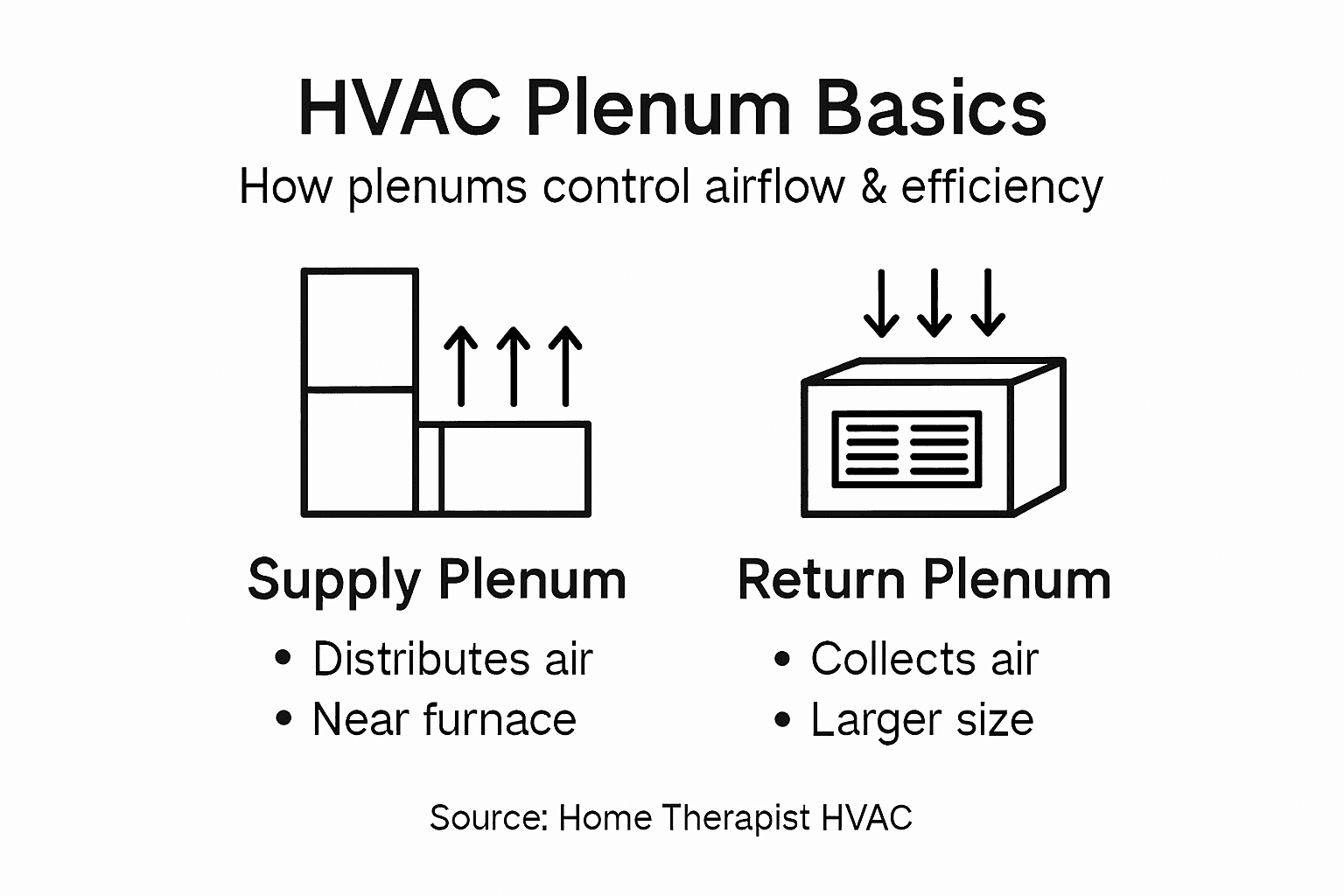
Supply plenums sit directly after your HVAC unit’s main output. They act as a staging area, ensuring air moves evenly across all supply ducts rather than favoring certain branches. This prevents some rooms from getting too much air while others get too little.
Key characteristics of supply plenums:
- Receive conditioned air directly from your HVAC equipment
- Operate at higher pressure to push air through the ductwork
- Prevent uneven airflow and temperature imbalances
- Located in basements, attics, or crawlspaces near your main unit
Return Plenums
A return plenum does the opposite job. It collects warm or cool air from your rooms and channels it back to your HVAC system for reconditioning. Supply plenums deliver conditioned air while return plenums collect air from your home to complete the cycle.
Return plenums are typically larger than supply plenums because return air moves more slowly. Your air handler pulls air back through return ducts at lower pressure, making the return plenum chamber more spacious to accommodate this flow pattern.
Key characteristics of return plenums:
Here is a summary of key differences between supply and return plenums:
| Aspect | Supply Plenum | Return Plenum |
|---|---|---|
| Main Function | Distributes conditioned air to rooms | Collects air from rooms for reconditioning |
| Pressure Level | Higher, for pushing air through ducts | Lower, to allow smooth air return |
| Typical Size | More compact | Larger to slow air movement |
| Airflow Direction | From HVAC unit outward | From rooms back to system |
| Location | Next to air handler or furnace | Positioned before air handler intake |
- Collect air from multiple rooms via return ducts
- Operate at lower pressure than supply plenums
- Typically larger to handle slower return airflow
- Located where air enters your HVAC equipment
Both plenum types must work seamlessly together—if one fails, your entire system’s efficiency drops dramatically.
Critical Material and Installation Differences
Proper HVAC airflow impact on comfort and efficiency depends heavily on correct plenum construction. Both plenum types require plenum-rated materials for safety and performance. Standard drywall or materials don’t meet fire codes or airflow requirements in Florida.
Supply plenums need tighter sealing because they operate at higher pressure. Any leaks in a supply plenum waste conditioned air before it reaches your rooms. Return plenums allow slightly more flexibility but still require professional-grade sealing.
Maintenance considerations differ too:
- Supply plenums need regular duct sealing checks
- Return plenums require filter changes and obstruction removal
- Both need annual professional inspection in Florida’s humid climate
Pro tip: Ask your HVAC technician to inspect both plenum types during maintenance—a leaking supply plenum or clogged return plenum could waste 15-20% of your cooling costs yearly.
How Plenums Affect Airflow and Efficiency
Plenums directly control how effectively your HVAC system distributes air throughout your home. A poorly designed or maintained plenum wastes energy, creates uncomfortable hot and cold spots, and forces your equipment to work overtime in Florida’s demanding climate.
Think of your plenum as the traffic controller for airflow. If it’s functioning properly, air moves smoothly and evenly. If it’s leaking, blocked, or undersized, your entire system struggles.
The Airflow Impact
A well-designed plenum improves airflow and HVAC efficiency by providing smooth and even distribution of conditioned air throughout your home. When air enters your supply plenum at the right pressure, it splits evenly among all supply ducts, reaching every room with consistent temperature control.
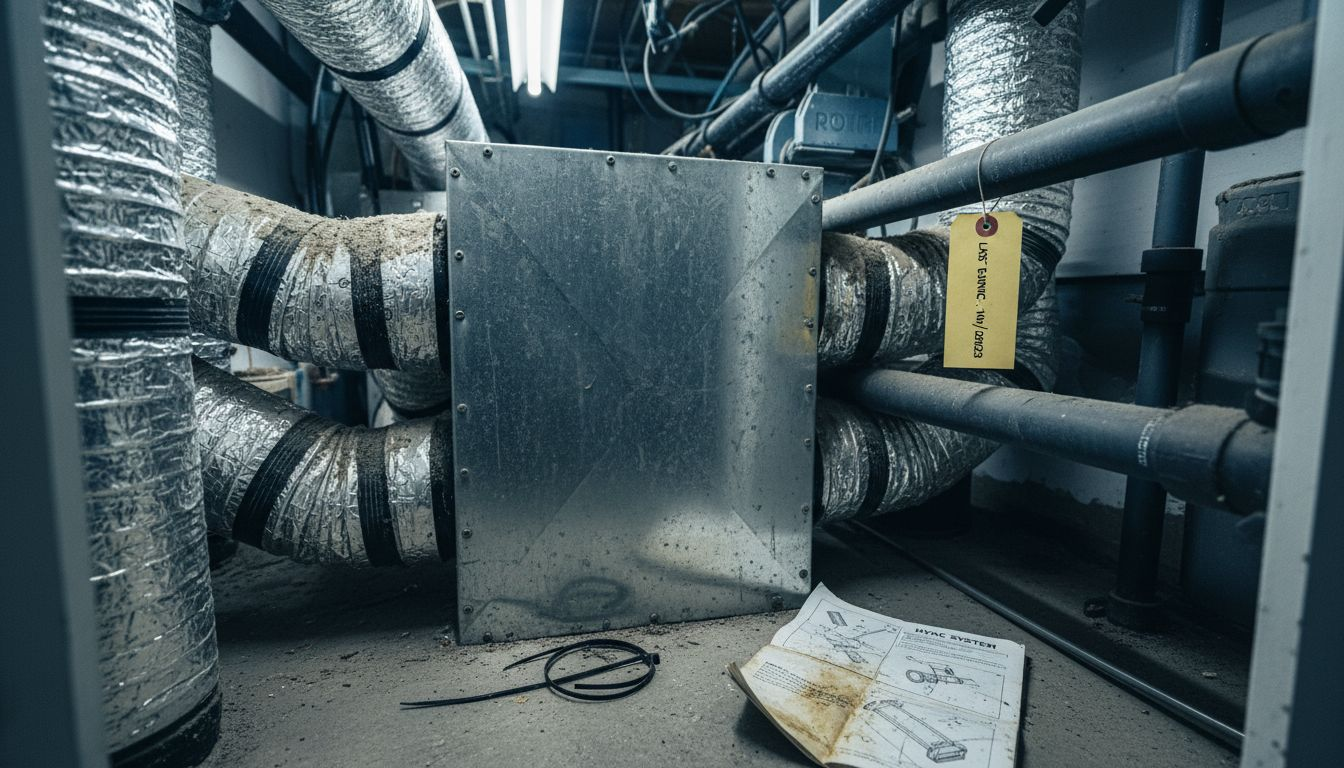
Without proper plenum design, airflow becomes unbalanced. Some ducts receive more pressure than others, causing rooms closer to the HVAC unit to cool faster while distant rooms lag behind.
Airflow problems show up as:
- Hot or cold spots in specific rooms
- Certain areas never reaching set temperature
- Constant thermostat adjustments
- Uneven humidity levels throughout your home
Energy Efficiency Gains
Proper plenum management reduces system strain significantly. When air distribution is balanced, your HVAC equipment doesn’t need to run longer cycles to compensate for weak airflow in distant rooms. Your system reaches desired temperatures faster and maintains them more efficiently.
Leaky plenums waste conditioned air before it enters your rooms. Energy loss through supply plenum leaks typically ranges from 10-20% of total cooling output. Return plenum blockages force your system to work harder pulling air back, increasing runtime and energy consumption.
Efficiency improvements from proper plenum maintenance:
- Reduced system runtime
- Lower monthly energy bills
- Extended equipment lifespan
- More consistent home comfort
Sealed, properly sized plenums can reduce your HVAC energy consumption by 15-25%—that’s substantial savings over a cooling season.
Pressure Balance Benefits
Your plenum maintains pressure balance throughout your ductwork. This prevents the system from forcing excessive air into some ducts while starving others. Plenums facilitate improved airflow performance and energy savings by managing air stratification and pressure distribution effectively.
When pressure stays balanced, your air handler doesn’t need to fight resistance. Lower resistance means lower fan energy requirements, which translates directly to reduced electricity use.
Indoor Air Quality Connection
Proper airflow through plenums also impacts air quality. Stagnant air in return plenums allows dust and contaminants to settle. Well-designed plenums with adequate circulation keep air moving, preventing buildup and improving filtration effectiveness.
Pro tip: Have your plenum sealed and inspected annually before cooling season—Tampa Bay’s humidity makes plenum leaks worse, and catching problems early prevents energy waste and comfort issues.
Common Plenum Problems and Homeowner Solutions
Plenum issues often hide behind walls and ceilings, making them easy to miss until they damage your system or comfort. Tampa Bay homeowners face unique challenges from humidity, heat, and older construction methods that compromise plenum performance.
Recognizing plenum problems early prevents expensive repairs and energy waste. Most issues follow predictable patterns that you can identify and address.
Undersized Plenums
An undersized plenum restricts airflow and causes increased static pressure, leading to uneven air distribution throughout your home. Older Tampa Bay homes often have plenums built for smaller HVAC systems that are now inadequate for modern equipment.
Signs of undersized plenums include uneven cooling, excessive noise, and higher energy bills. Your system works harder to push air through restricted spaces, reducing efficiency significantly.
Common symptoms of undersized plenums:
- Popping or cracking sounds from metal ductwork expanding
- Certain rooms stay warmer than others despite thermostat settings
- Increased energy consumption without improved comfort
- System runs constantly without reaching desired temperature
Plenum Leaks and Seal Failures
Leaky plenums waste 10-20% of your conditioned air before it reaches rooms. Florida’s humidity and temperature fluctuations cause seals to deteriorate, creating gaps where air escapes into attics or crawlspaces.
You can’t see most plenum leaks directly, but their effects are obvious. Return plenum leaks pull unconditioned air into your system, forcing it to recondition already-cooled air. Supply plenum leaks waste expensive conditioned air.
Warning signs of leaking plenums:
- Humid air being pulled into return system
- Hot spots near supply ducts in attic or crawlspace
- Higher energy bills with no change in usage patterns
- Dust accumulation around ductwork connections
Safety Concerns in Plenum Spaces
Fire safety risks and air quality concerns exist when improper materials appear in plenum spaces. Florida building codes require fire-resistant materials in plenums because these spaces distribute air throughout your entire home.
Plastic piping and combustible materials pose serious hazards if fire occurs. Using standard materials instead of plenum-rated ones violates code and creates dangerous conditions.
Plenum-rated materials aren’t optional—they’re safety requirements that protect your home and family from fire spread and toxic fumes.
Quick Homeowner Solutions
Some plenum issues are manageable DIY fixes. Others require professional expertise. Know when to handle problems yourself and when to call experienced technicians.
Homeowner-friendly fixes:
- Check return air grilles for blockages and clean them
- Inspect visible plenum areas for obvious leaks or damage
- Ensure nothing blocks supply or return duct openings
- Keep storage items away from plenum spaces
Problems requiring professional service:
- Sealing leaks in concealed plenums
- Resizing undersized plenums
- Replacing damaged or non-code-compliant materials
- Balancing airflow across multiple rooms
- Addressing safety or code violations
When to Call a Professional
Plenum problems often need professional diagnosis and repair. Technicians use specialized equipment to detect leaks you can’t see and balance airflow precisely.
Home Therapist Cooling, Heating, and Plumbing offers professional plenum inspection and sealing in Tampa Bay. Our certified technicians identify problems and implement lasting solutions that restore efficiency and comfort.
Pro tip: Schedule annual plenum inspection before cooling season—catching leaks, blockages, or undersizing early prevents emergency repairs and keeps your energy bills manageable year-round.
Plenums vs. Alternative Air Distribution Methods
Traditional plenum-based systems aren’t the only way to distribute conditioned air through your home. Modern alternatives offer different benefits and tradeoffs that may suit some Tampa Bay homes better than conventional overhead duct systems.
Understanding your options helps you make informed decisions about new installations or retrofits. Each method has specific advantages depending on your home’s layout and your comfort priorities.
Traditional Plenum Systems
Traditional plenums remain the most common air distribution method in Florida homes. Air flows from your HVAC unit into a supply plenum, splits across multiple ducts, and reaches individual rooms. Return air reverses the path, traveling through return plenums back to your system.
This proven method works reliably when properly designed and maintained. Existing homes already have plenums in place, making this the default for most renovations.
Strengths of traditional plenums:
- Proven performance across decades
- Relatively low installation cost in existing homes
- Straightforward maintenance and repairs
- Compatible with most HVAC equipment
Underfloor Air Distribution Systems
Underfloor Air Distribution (UFAD) uses plenums beneath raised floors to deliver conditioned air directly to occupied spaces. Underfloor air distribution systems offer improved energy efficiency and enhanced thermal comfort through room air stratification compared to overhead systems.
UFAD systems work best in modern buildings with concrete floors and office environments. They allow air to rise naturally through the space, creating better temperature distribution than overhead ducts pushing air downward.
UFAD advantages include:
- Greater energy efficiency through better temperature control
- Improved thermal comfort with personalized air delivery
- More flexibility for office layouts and reconfigurations
- Reduced overhead ductwork needs
UFAD challenges for residential Tampa Bay homes:
- Requires raised floor construction or significant retrofitting
- Higher initial installation costs
- More complex system design and commissioning
- Less common service expertise in residential HVAC
Air-Mixing Plenums
Air-mixing plenums recirculate conditioned air while rejecting exhaust air, optimizing energy use and maintaining indoor air quality. Dampers controlled by building management systems balance fresh air intake with conditioned air recirculation.
This method works well in commercial buildings where energy recovery matters significantly. Residential applications are less common because homes typically don’t generate the waste heat that makes mixing plenums valuable.
Air-mixing plenums save energy by reusing conditioned air, but they require automated controls and regular maintenance that residential homeowners may not need.
Direct Duct Distribution
Some modern systems eliminate plenums entirely, routing ducts directly from the HVAC unit to rooms. This simplified approach reduces cost but removes the pressure-buffering benefits plenums provide.
Direct ducting works for small homes or single-zone systems but creates problems in larger homes with multiple rooms requiring balanced airflow.
Compare common air distribution methods for Tampa Bay homes:
| Method | Installation Complexity | Energy Efficiency | Best For |
|---|---|---|---|
| Traditional Plenum | Moderate, fits existing homes | High with proper sealing | Most residential homes |
| Underfloor (UFAD) | High, needs raised floors | Very high in open layouts | Modern/new constructions |
| Air-Mixing Plenum | High, needs advanced controls | Excellent in large buildings | Commercial use |
| Direct Ducting | Low, simple setup | Moderate, may have imbalances | Small or single-zone homes |
Which Method Fits Your Tampa Bay Home?
Most Florida residential homes use traditional plenum systems because they’re proven, affordable, and compatible with existing construction. Unless you’re building new or doing major renovations, switching to alternative methods rarely makes financial sense.
Talk with experienced HVAC technicians about whether your current system is performing properly. Upgrading an existing plenum often costs less than replacing the entire distribution method.
Pro tip: Before considering alternative systems, have your current plenum inspected and sealed—better plenum performance may already be the most affordable solution for improving your comfort and efficiency.
Optimize Your Home’s Comfort with Expert Plenum Solutions
Understanding the critical role a plenum plays in your HVAC system is the first step toward improved comfort and energy savings in your Tampa Bay home. If you are facing uneven temperatures, high energy bills, or suspect leaks and airflow issues in your plenum spaces, you are not alone. These common problems can force your HVAC equipment to work harder and cost you more every month. Expert inspection and sealing of your supply and return plenums can restore airflow balance and reduce wasted energy.
Don’t let hidden plenum issues drain your comfort or wallet. Trust Home Therapist Cooling, Heating, and Plumbing for professional plenum inspections, maintenance, and repairs designed specifically for Florida’s demanding climate. Our certified technicians use proven methods to identify leaks and airflow blockages before they escalate into costly repairs. Start enhancing your home’s efficiency today by visiting Home Therapist and scheduling your plenum evaluation. Take control of your indoor comfort and energy costs now.
Frequently Asked Questions
What is a plenum in an HVAC system?
A plenum is an enclosed space that acts as the collection and distribution point for conditioned air in an HVAC system. It helps facilitate efficient air circulation by maintaining pressure and directing airflow to different rooms.
Why are plenum spaces important for HVAC efficiency?
Plenum spaces are crucial for HVAC efficiency because they optimize air distribution throughout a home. A well-designed plenum reduces pressure imbalances, prevents hot or cold spots, and minimizes energy waste, leading to lower energy bills and better comfort.
What are the main types of plenums in HVAC systems?
The two main types of plenums are supply plenums, which distribute conditioned air to rooms, and return plenums, which collect air from rooms to be reconditioned. Both work together to ensure balanced airflow and efficiency in the system.
How can I tell if my HVAC plenum is causing issues?
Signs of plenum issues include uneven cooling throughout your home, higher energy bills, and noises from the ductwork. If you notice hot or cold spots, constant thermostat adjustments, or excessive system runtime, it may be time to inspect your plenum for leaks or sizing problems.