Drain traps explained: essential guide for Tampa Bay homes
Your home has a silent guardian working around the clock, and most homeowners never give it a second thought. Drain traps, those curved pipe sections tucked beneath every sink, tub, and shower, are your first line of defense against hazardous sewer gases, foul odors, and even pests creeping up through your pipes. In Tampa Bay, where humidity already challenges indoor air quality, a failing drain trap can make your home feel and smell far worse than it should. This guide breaks down exactly how drain traps work, what can go wrong, and what every Tampa homeowner should know to stay safe and code-compliant.
Table of Contents
- What is a drain trap and why does it matter?
- How drain traps work: simple mechanics, big results
- Types of drain traps and where you’ll find them
- Common drain trap problems and homeowner solutions
- Drain traps and Tampa Bay plumbing codes: what you need to know
- Expert help for drain traps and plumbing maintenance
- Frequently asked questions
Key Takeaways
| Point | Details |
|---|---|
| Drain trap prevents odors | A properly functioning drain trap blocks sewer gases and pests from entering your home. |
| Water seal is key | Keeping 2-4 inches of water in your trap ensures plumbing code compliance and safety. |
| Simple maintenance matters | Inspecting and servicing drain traps regularly prevents costly plumbing problems. |
| Trap type affects performance | Choosing the right trap shape for each fixture improves function and ease of maintenance. |
| Expert help is available | Local plumbing professionals offer inspections and maintenance to prevent emergencies. |
What is a drain trap and why does it matter?
A drain trap is a curved section of pipe installed beneath every drain-connected fixture in your home. The curve is intentional. It holds a small pocket of water at all times, and that water does something surprisingly powerful: it blocks the path between your living space and the sewer system running beneath your home.
The primary function is to hold a small amount of water, typically 2 to 4 inches, in the bend, creating a water seal that prevents sewer gases, odors, and pests from entering the home while allowing wastewater to flow out. Without that seal, your drains become open channels for hydrogen sulfide gas, methane, and other harmful substances to rise directly into your kitchen or bathroom.
Here is what a functioning drain trap protects you from:
- Sewer gases like hydrogen sulfide, which can cause headaches and nausea at low concentrations
- Methane, which is flammable and dangerous in enclosed spaces
- Cockroaches and other pests that travel through sewer lines
- Persistent musty odors that no amount of air freshener will fix
A dry or missing drain trap is not just an inconvenience. It is a health and safety issue that needs immediate attention.
Many homeowners assume a bad smell means a dirty drain. Often, the real culprit is a dry trap, especially in guest bathrooms or utility sinks that rarely get used. Understanding the role of drain cleaning and trap maintenance together is key to keeping your home fresh and safe. You can also learn more about drain cleaning common issues that often go hand in hand with trap problems.
How drain traps work: simple mechanics, big results
The beauty of a drain trap is its simplicity. There are no moving parts, no electricity, and no complicated controls. It works entirely on gravity.
When water flows down your drain, it fills the curved section of pipe and pushes the previous water forward into the main drain line. A fresh pocket of water stays behind in the curve, refreshing the seal automatically. P-traps work via gravity: water flows through, filling the curve and leaving a barrier, and each use refreshes the seal. Plumbing codes require 2 to 4 inches of water seal to ensure effectiveness.
Here is how the process works step by step:
- Water enters the drain from your sink, tub, or shower.
- Gravity pulls it through the curved trap section.
- The curve fills and the old water is pushed into the drain line.
- A fresh 2 to 4 inch water barrier remains in the bend.
- The seal blocks gases and pests until the next use.
One important detail many homeowners miss is venting. Without a vent pipe connected to the drain system, the rushing water can create a vacuum that sucks the water right out of the trap. This is called siphoning, and it is especially common in multi-story homes where water falls a greater distance. A properly vented system prevents this from happening.
Pro Tip: If you notice a gurgling sound after water drains, that is often a sign of a venting problem. Left unchecked, it can lead to a siphoned trap and sewer gas entering your home. A sink P-trap repair or a P-trap replacement may be needed sooner than you think.
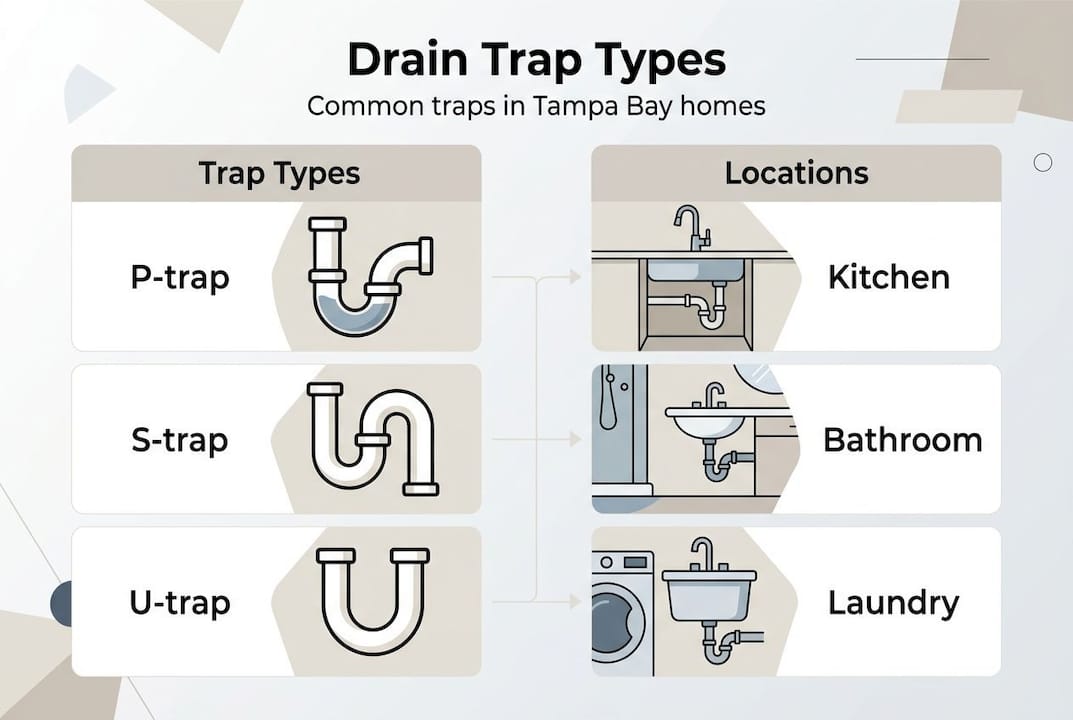
| Trap type | Shape | Common location | Code status |
|---|---|---|---|
| P-trap | P-shaped curve | Sinks, showers, tubs | Preferred by most codes |
| S-trap | S-shaped double curve | Older sinks without wall venting | Largely prohibited in new builds |
| U-trap | Deep U-bend | Floor drains, older systems | Allowed in specific applications |
Types of drain traps and where you’ll find them
Not every fixture uses the same trap design. The shape and placement depend on where the drain connects to the wall or floor, and whether proper venting is available.
P-traps are the most common type in modern Tampa Bay homes. The horizontal outlet connects directly to a wall drain, making venting straightforward. You will find them under bathroom and kitchen sinks, in shower stalls, and behind washing machines.
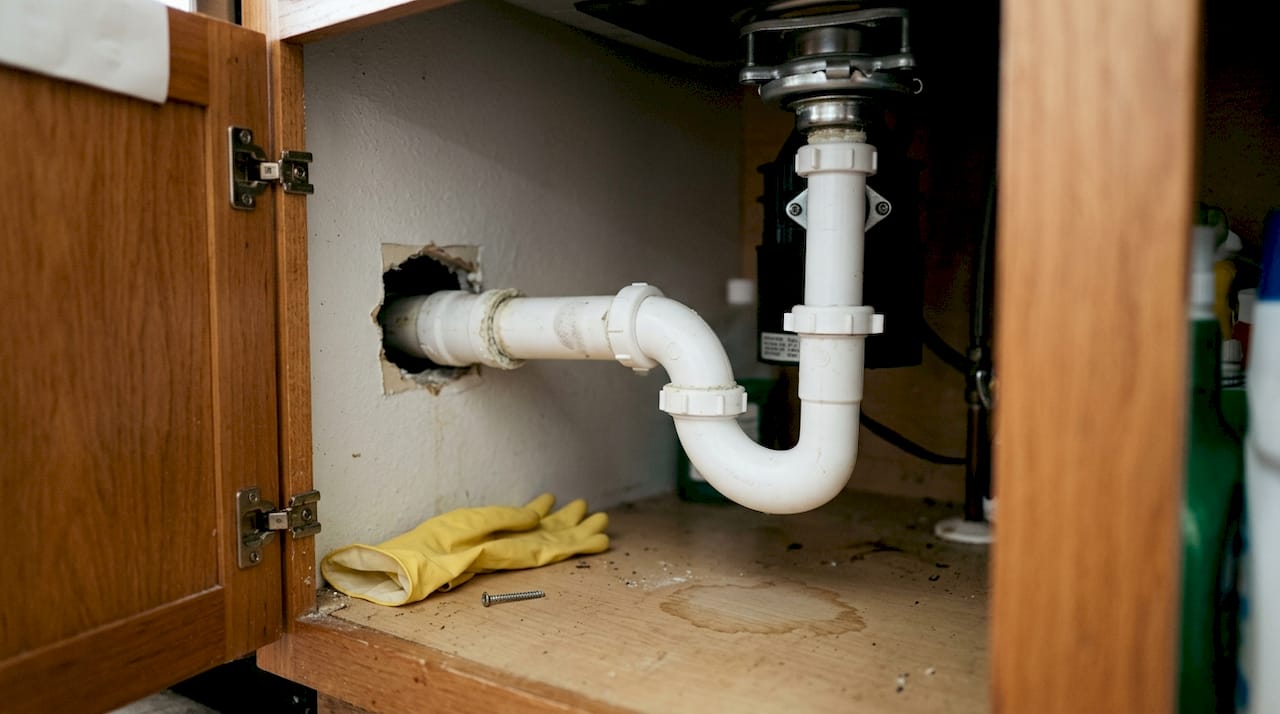
S-traps were common in older homes where the drain exits through the floor rather than the wall. The double curve makes them prone to self-siphoning, which is why most local codes now prohibit them in new construction. If your home was built before the 1970s, you may still have S-traps in place.
U-traps appear in floor drains and some older utility setups. They hold more water than a P-trap, which can be useful in drains that go weeks without use, but they are also harder to clean.
Here is a quick breakdown by fixture:
- Kitchen sink: P-trap, usually visible under the cabinet
- Bathroom sink: P-trap, often behind a decorative panel
- Bathtub: Built-in P-trap below the floor
- Shower: P-trap or drum trap below the floor
- Washing machine: Standpipe with a P-trap
- Dishwasher: Drains through the sink P-trap; learn more about drain cleaning for dishwashers
Venting prevents vacuum siphoning, which is a critical nuance for multi-story homes. Without adequate venting, even a perfectly installed P-trap can fail. For a broader look at what can go wrong throughout your system, our guide on common plumbing issues is a great resource.
Common drain trap problems and homeowner solutions
Knowing your trap types puts you ahead of most homeowners. Now let’s talk about what actually goes wrong and what you can do about it.
The most common problem is a dry trap. This happens when a drain goes unused long enough for the water seal to evaporate. In Tampa Bay’s warm climate, evaporation can happen faster than you might expect, sometimes within a few weeks in a guest bathroom. Each use refreshes the seal, and plumbing codes require 2 to 4 inches of water seal, so a drain that sits idle loses its protection quickly.
Watch for these warning signs:
- Musty or sewage-like odors coming from a drain, especially in rooms that are rarely used
- Small insects or cockroaches appearing near floor drains or utility sinks
- Gurgling sounds after flushing or draining nearby fixtures
- Slow drainage that does not improve with basic cleaning
- Visible moisture or staining under sink cabinets, which may indicate a leaking trap
For a dry trap, the fix is simple: run water for 30 seconds to refill the seal. For guest bathrooms, make it a habit to run each drain once a month. Our monthly drain cleaning tips walk you through a simple routine that keeps every trap in your home working properly.
Pro Tip: Add a small amount of mineral oil to rarely used drains. It floats on top of the water seal and slows evaporation significantly, buying you extra weeks of protection between uses.
For leaks, cracks, or traps that are completely missing, do not attempt a repair unless you are comfortable working with PVC fittings. A poorly sealed trap is worse than a dry one because it can leak sewer gas continuously. Check out our drain cleaning solutions page for guidance on when a professional is the right call.
Drain traps and Tampa Bay plumbing codes: what you need to know
Tampa Bay follows the Florida Plumbing Code, which aligns closely with the Uniform Plumbing Code used across much of the country. The rules around drain traps are clear and non-negotiable.
Plumbing codes require a minimum 2 to 4 inch water seal in every trap. This is not a suggestion. It is a baseline standard that every fixture in your home must meet.
Here is what compliance looks like in practice:
- Every drain-connected fixture must have a trap installed.
- The trap must maintain a water seal of at least 2 inches at all times.
- P-traps are the preferred design for most residential fixtures.
- Each trap must be properly vented to prevent siphoning.
- Traps must be accessible for inspection and cleaning.
Non-compliance carries real consequences. During a home sale or renovation permit inspection, a missing or improper trap can delay closing, trigger required repairs, or result in failed inspections. Beyond the legal side, a non-compliant trap puts your family’s health at risk every single day.
A camera-assisted drain inspection is one of the best ways to verify that every trap in your home is properly installed and functioning. Our team can identify issues that are completely invisible to the naked eye. For a full overview of what professional drain cleaning services include, we have you covered.
Expert help for drain traps and plumbing maintenance
Understanding your drain traps is the first step. Keeping them in top shape is where professional support makes a real difference. A single inspection can catch a dry trap, a cracked fitting, or a venting issue before it turns into an emergency repair or a health concern for your family.
At Home Therapist Cooling, Heating, and Plumbing, our certified technicians serve Tampa Bay homeowners with honest, thorough plumbing inspection services that cover every fixture in your home. We also offer flexible maintenance plans designed to keep your plumbing system running smoothly year-round, so you are never caught off guard by a problem that could have been prevented. Visit Home Therapist to schedule your inspection or learn more about how we protect Tampa Bay homes every day.
Frequently asked questions
What does a drain trap actually do?
A drain trap holds 2 to 4 inches of water in a curved pipe section, creating a seal that blocks sewer gases, odors, and pests from entering your home while letting wastewater flow out normally.
How can I tell if my drain trap isn’t working?
Musty or sewage-like odors, slow drainage, or pests near floor drains are strong indicators of a dry, missing, or faulty trap. Each use refreshes the water seal, so a drain that sits idle for weeks is especially vulnerable.
Are all drain traps the same?
No. P-traps, S-traps, and U-traps each have different shapes and applications. Venting prevents siphoning in all trap types, but P-traps are the most widely accepted design under current plumbing codes.
How often should drain traps be checked or maintained?
Inspect your traps every few months for leaks, odors, and slow drainage. For rarely used drains, run water monthly to keep the seal intact and prevent evaporation-related failures.
Do Tampa Bay plumbing codes require specific types of traps?
Yes. Most local codes favor P-traps with a 2 to 4 inch water seal because they are reliable, easy to vent, and simple to inspect. S-traps are generally prohibited in new construction.
Recommended
- Role of Drain Cleaning: Protecting Tampa Bay Homes
- Step by Step Drain Cleaning for Tampa Bay Homeowners
- Effective Drain Inspection Tips for Tampa Property Owners Home Therapist Cooling, Heating, and Plumbing
- Drain Replacement and Installation Services in Tampa, FL: What You Need to Know Home Therapist Cooling, Heating, and Plumbing