
Why plumbing codes matter for Tampa Bay homeowners
Plumbing codes reduce water contamination incidents by up to 40%, yet most Tampa Bay homeowners remain unaware of how these regulations protect their families and property. Many see codes as red tape rather than safety standards designed specifically for Florida’s flood risks and water quality challenges. This guide explains why plumbing codes are essential for Tampa Bay homes, covering safety benefits, legal requirements, and practical compliance steps to help you maintain a safe, efficient plumbing system.
Table of Contents
- Introduction To Plumbing Codes
- Safety And Sanitation Benefits Of Plumbing Codes
- Legal And Financial Consequences Of Non-Compliance
- Water Efficiency And Sustainability Benefits
- Comparison Between Local And National Plumbing Codes
- Common Misconceptions About Plumbing Codes
- Practical Tips For Homeowners To Comply
- Conclusion And Next Steps
- Trusted Plumbing Services And Resources In Tampa Bay
Key takeaways
| Point | Details |
|---|---|
| Plumbing codes protect health | Regulatory standards prevent water contamination and reduce hazardous plumbing failures by 40%. |
| Legal compliance prevents penalties | Non-compliance risks fines, insurance complications, and resale obstacles in Tampa Bay. |
| Water efficiency saves money | Code-compliant fixtures reduce water consumption by up to 30%, lowering utility bills. |
| Tampa Bay codes include local amendments | Florida Building Code applies statewide, but Tampa Bay adds flood risk and water quality requirements. |
| Professional inspections ensure compliance | Licensed plumbers and regular inspections maintain safety and legal protection for homeowners. |
Introduction to plumbing codes
Plumbing codes are regulatory standards that govern the design, installation, and maintenance of plumbing systems to ensure they function safely and reliably. These codes originated in the early 20th century when cities recognized that unregulated plumbing caused widespread disease outbreaks. Today, the International Plumbing Code and state-level adaptations like Florida’s Building Code establish minimum requirements for water supply, drainage, and fixture installation.
In Tampa Bay, local building authorities enforce the Florida Building Code with jurisdiction-specific amendments. The Florida Building Code updates every three years to incorporate new technologies and address emerging risks. Tampa Bay’s amendments focus heavily on flood mitigation and water quality protection because the region faces unique environmental challenges including storm surge vulnerability and coastal groundwater contamination.
Plumbing codes vary by location because each jurisdiction confronts different environmental factors, water sources, and infrastructure needs. What works in Arizona’s desert climate may fail catastrophically in Florida’s humid, flood-prone environment. Local amendments address specific concerns:
- Enhanced backflow prevention requirements protect drinking water from storm surge contamination
- Elevated fixture installations in flood-prone zones prevent sewage backup during hurricanes
- Stricter water heater anchoring standards account for Florida’s seismic activity and high winds
- Special drainage requirements manage Tampa Bay’s heavy rainfall and high water table
- Material restrictions prevent corrosion from saltwater exposure in coastal areas
Understanding these location-specific requirements helps homeowners recognize that plumbing codes aren’t arbitrary bureaucracy. They represent decades of engineering expertise tailored to protect Tampa Bay residents from the specific hazards your community faces.
Safety and sanitation benefits of plumbing codes
Plumbing codes directly prevent water contamination and protect public health by establishing barriers between clean water supplies and waste systems. Code-compliant plumbing installations reduce home water contamination incidents by up to 40% compared to outdated or non-compliant systems. This protection matters especially in Tampa Bay, where hurricanes and flooding can compromise plumbing systems and introduce contaminants into drinking water.
Compliance eliminates several dangerous plumbing hazards:
- Backflow incidents that allow sewage to enter drinking water lines during pressure changes
- Cross-connections between potable and non-potable water sources that spread bacteria
- Inadequate venting that allows sewer gases containing methane and hydrogen sulfide to accumulate indoors
- Improper drainage that creates standing water where disease-carrying mosquitoes breed
- Corroded pipes that leach lead and other heavy metals into drinking water
Tampa Bay’s inspection system enforces these sanitation standards through mandatory reviews at critical installation stages. When you obtain permits for plumbing work, inspectors verify that licensed professionals installed systems according to code requirements before approving the project. This oversight catches errors that could cause health emergencies years later.
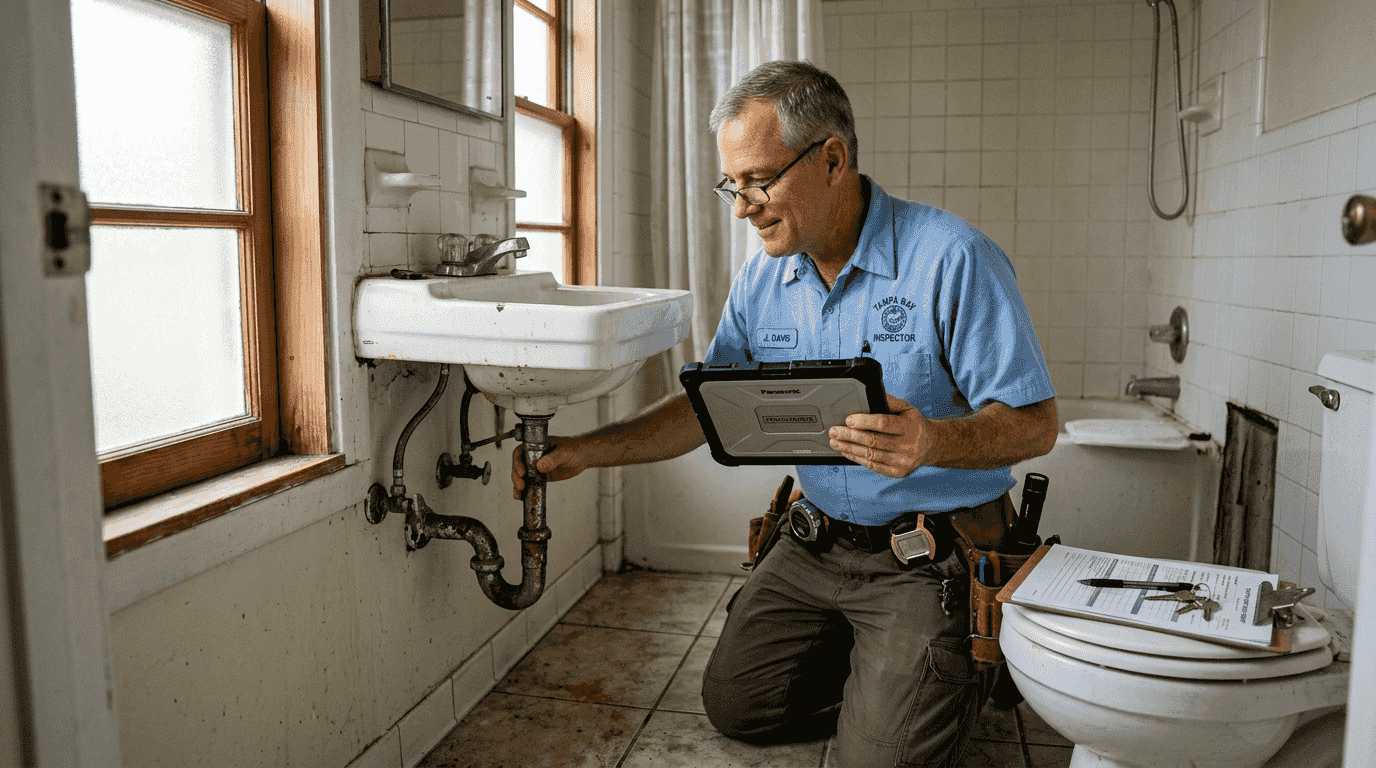
Research demonstrates measurable health benefits from code compliance. Communities with strict plumbing code enforcement report significantly lower rates of waterborne illness outbreaks. Properly installed plumbing prevents the growth of Legionella bacteria in water heaters and reduces exposure to harmful pathogens that cause gastroenteritis and respiratory infections.
Pro Tip: Schedule plumbing inspections in Tampa FL every 3-5 years even without visible problems. Inspectors identify code violations and aging components before they fail, preventing emergency repairs and protecting your family’s health.
The EPA water efficiency and plumbing codes framework demonstrates how modern standards integrate safety with resource conservation, creating dual benefits for homeowners who maintain compliant systems.
Legal and financial consequences of non-compliance
Tampa Bay enforces plumbing codes through a permit and inspection system administered by local building departments. Any plumbing work beyond minor repairs requires permits, and completed work must pass inspection before authorities issue certificates of occupancy or completion. This enforcement protects homeowners but creates legal liability when you skip permits or ignore code requirements.
Florida building departments impose substantial penalties for code violations. First-time violations typically result in fines ranging from $250 to $500, but repeat offenses or serious safety hazards can trigger fines exceeding $5,000. Beyond monetary penalties, authorities may:
- Issue stop-work orders that halt construction projects until you correct violations
- Require demolition and reinstallation of non-compliant plumbing at your expense
- Place liens on your property until you resolve outstanding violations and fines
- Refer criminal charges to prosecutors for willful code violations that endanger public safety
- Notify your homeowner’s insurance carrier about unpermitted work
The financial impact extends far beyond initial fines. Insurance companies routinely deny claims related to damage caused by unpermitted plumbing work, leaving you personally liable for repairs that could cost tens of thousands of dollars. When you sell your home, title companies discover unpermitted work during due diligence, forcing you to obtain retroactive permits, pay penalties, and potentially reduce your asking price.
Home resale complications create the largest financial risk. Buyers obtain home inspections that identify code violations, then demand sellers correct issues or reduce the purchase price. Some violations are so serious that mortgage lenders refuse financing until you bring systems into compliance. This scenario can derail sales and cost you months of carrying costs while you resolve plumbing problems.
Common non-compliance pitfalls Tampa homeowners face include installing water heaters without permits, adding bathroom fixtures without capacity upgrades, and hiring unlicensed handymen for major plumbing renovations. Each shortcut seems like a cost-saving measure until enforcement actions multiply your expenses. Ensuring plumbing inspections access in Tampa BAY remains straightforward by obtaining proper permits protects your investment and legal standing.
Water efficiency and sustainability benefits
Tampa Bay’s plumbing codes mandate water-saving fixtures that reduce consumption without sacrificing performance. Since 1992, federal and Florida codes have required low-flow toilets using 1.6 gallons per flush compared to older models that waste 3.5 to 7 gallons. Showerheads must limit flow to 2.5 gallons per minute, and faucet aerators cannot exceed 2.2 gallons per minute under current standards.

These requirements translate into substantial financial savings for homeowners. Compliant plumbing fixtures can reduce water use by up to 30% compared to older installations, cutting both water and sewer bills. Consider this comparison of monthly costs for a typical four-person household:
| Fixture Type | Traditional Usage | Code-Compliant Usage | Monthly Cost Traditional | Monthly Cost Compliant | Annual Savings |
|---|---|---|---|---|---|
| Toilets | 18,000 gallons | 8,800 gallons | $108 | $53 | $660 |
| Showers | 7,300 gallons | 4,600 gallons | $44 | $28 | $192 |
| Faucets | 3,600 gallons | 2,400 gallons | $22 | $14 | $96 |
| Total | 28,900 gallons | 15,800 gallons | $174 | $95 | $948 |
Beyond personal savings, water-efficient plumbing supports Tampa Bay’s environmental sustainability. The region faces increasing water supply challenges as population growth strains aquifer resources. Every gallon conserved through code-compliant fixtures reduces the demand on Hillsborough River withdrawals and groundwater pumping that can cause sinkholes and saltwater intrusion into aquifers.
Reduced water consumption also decreases wastewater treatment loads, lowering the energy required to process sewage and reducing pollution discharge into Tampa Bay’s sensitive estuary ecosystem. This environmental protection preserves fisheries, recreational water quality, and the economic value of waterfront properties throughout the region.
Pro Tip: When selecting fixtures for renovations, look for WaterSense labels on products that exceed minimum code requirements. These EPA water-saving plumbing fixtures deliver 20% greater efficiency than standard compliant models while maintaining performance, maximizing your utility savings and environmental impact.
Modern Tampa Bay codes recognize that efficiency and compliance work together. Homeowners who embrace water-saving standards enjoy lower operating costs while contributing to regional water security.
Comparison between local and national plumbing codes
The Florida Building Code serves as the baseline plumbing standard for all jurisdictions statewide, updated every three years to incorporate the latest International Plumbing Code provisions and Florida-specific requirements. This statewide code addresses general plumbing safety, fixture standards, and installation practices applicable across diverse Florida environments from panhandle to Keys.
Tampa Bay’s local amendments modify this baseline to address region-specific risks. The Tampa Bay area encompasses multiple jurisdictions including Tampa, St. Petersburg, and Clearwater, each with authority to adopt stricter requirements than state minimums. These amendments focus primarily on flood risk mitigation and water quality protection due to the region’s vulnerability to hurricanes, storm surge, and coastal contamination.
Key differences between national standards and Tampa Bay requirements include:
| Requirement Category | National/State Code | Tampa Bay Local Amendment |
|---|---|---|
| Backflow prevention | Required for irrigation systems | Required for all outdoor connections within 1 mile of coast |
| Fixture elevation | Standard height installations | Minimum 2 feet above base flood elevation in FEMA zones |
| Water heater anchoring | Earthquake zones only | Required for all installations due to hurricane winds |
| Sewer line materials | PVC, ABS, cast iron approved | Enhanced corrosion-resistant materials in coastal areas |
| Drainage capacity | Standard sizing calculations | Increased capacity for 100-year storm events |
Local codes integrate with national standards rather than replacing them. Tampa Bay amendments add requirements on top of Florida Building Code minimums, creating a layered regulatory framework. When conflicts arise, the stricter requirement always applies, ensuring maximum protection for homeowners.
This jurisdictional complexity makes consulting local amendments essential before planning plumbing projects. What passes inspection in Orlando may fail in Tampa Bay due to coastal proximity. Licensed plumbers familiar with Tampa Bay requirements understand these distinctions and design systems that satisfy both state and local codes. Resources like Tampa Bay plumbing tips and guides on plumbing venting Tampa homes help homeowners navigate these location-specific requirements.
Understanding the relationship between code levels prevents costly mistakes. Always verify that your plumbing plans account for Tampa Bay’s enhanced standards, not just statewide minimums.
Common misconceptions about plumbing codes
Many Tampa Bay homeowners believe plumbing codes are optional suggestions rather than mandatory legal requirements. This misconception leads to serious problems when building departments discover unpermitted work or when insurance companies deny claims. Codes carry the force of law, and ignorance provides no legal protection when violations surface during inspections or home sales.
Another widespread myth portrays codes as bureaucratic red tape that unnecessarily complicates simple repairs. In reality, code requirements represent engineering solutions to documented hazards. Each regulation addresses specific failure modes that caused property damage, injuries, or deaths in real-world incidents. The paperwork and inspections exist because unregulated plumbing historically created public health crises.
Some homeowners assume codes only matter for new construction, not existing homes. This belief causes problems during renovations when outdated plumbing fails to meet current standards. While grandfather clauses exempt some existing installations, any modifications trigger requirements to bring affected systems into compliance. Touching old plumbing often necessitates upgrades beyond the immediate work area.
The misconception that code compliance doesn’t affect home insurance creates financial vulnerability. Insurance policies typically contain exclusions for damage resulting from code violations or unpermitted work. When burst pipes flood your home and adjusters discover unpermitted plumbing modifications, they may deny your entire claim despite years of premium payments.
Reality contradicts these myths:
- Codes prevent documented hazards including contaminated drinking water, gas leaks, and structural damage from improper drainage
- Compliance protects your family’s health and safety through proven engineering standards
- Code-compliant homes maintain higher resale values and avoid transaction complications
- Insurance coverage depends on following building codes and obtaining proper permits
- Professional inspections cost far less than emergency repairs from failed non-compliant plumbing
Understanding why codes exist helps homeowners recognize their value. These regulations aren’t obstacles but protective standards developed through decades of engineering experience and real-world failures. Informed homeowners who comply with codes gain legal protection, insurance coverage, and peace of mind that their plumbing systems meet safety standards designed specifically for Tampa Bay’s environment.
Practical tips for homeowners to comply
Following this systematic approach ensures your plumbing projects meet Tampa Bay code requirements:
Research applicable codes before planning work by visiting your local building department’s website or calling their permit office to understand current requirements and recent amendments specific to your property’s location and flood zone designation.
Hire licensed plumbers who demonstrate knowledge of Tampa Bay codes by asking candidates about local amendments, checking their license status through Florida’s Department of Business and Professional Regulation database, and requesting references from recent Tampa Bay projects.
Obtain all required permits before starting work by submitting detailed plans to your building department, paying permit fees, and scheduling inspections at appropriate project milestones rather than attempting unpermitted installations that create legal liability.
Schedule mandatory inspections at roughing stages before covering plumbing with walls or concrete, and at final completion before using new fixtures, ensuring inspectors approve each phase before proceeding to avoid costly demolition if violations require corrections.
Maintain comprehensive records including permit applications, approved plans, inspection certificates, contractor invoices, and warranty documents in a dedicated file that stays with your property to facilitate future sales and demonstrate compliance history.
Document all work with photographs showing installations at each inspection stage, providing visual evidence of code-compliant methods if questions arise during home sales or insurance claims years after project completion.
Pro Tip: Common compliance pitfalls include failing to upsize water supply lines when adding fixtures, neglecting proper venting for new drains, and installing water heaters without required expansion tanks or temperature/pressure relief valves. Review hiring plumbers Tampa Bay guides to find professionals who prevent these errors, and understand plumbing inspections expectations Tampa Bay to prepare for the review process.
This methodical approach transforms code compliance from a confusing obstacle into a straightforward process. Investing time in proper permits and professional installation prevents the far greater expense of correcting violations discovered during home sales or after plumbing failures cause damage.
Conclusion and next steps
Plumbing codes provide essential protection for Tampa Bay homeowners through regulations designed specifically for Florida’s flood risks, water quality challenges, and environmental conditions. Compliance ensures your family’s health and safety while avoiding legal penalties, insurance complications, and resale obstacles that plague homes with unpermitted plumbing work.
The efficiency requirements built into modern codes deliver financial benefits through reduced water consumption, lowering monthly utility bills while supporting Tampa Bay’s environmental sustainability. Code-compliant plumbing systems function reliably, maintain property values, and provide legal protection when properly permitted and inspected.
Take proactive steps to maintain compliance by consulting local building departments before planning plumbing projects, hiring only licensed professionals familiar with Tampa Bay amendments, and obtaining required permits for all work beyond minor repairs. These simple practices protect your investment and ensure your home’s plumbing meets safety standards.
Trusted plumbing services and resources in Tampa Bay
Working with licensed, experienced plumbers ensures your projects meet Tampa Bay’s code requirements from initial planning through final inspection. Professional plumbers understand local amendments, navigate permit processes efficiently, and install systems that pass inspections on the first attempt.
Home Therapist brings decades of expertise to Tampa Bay plumbing projects, with certified technicians who stay current on code updates and local requirements. Our comprehensive services include repiping and plumbing service involvement for major system upgrades and plumbing leak inspection and diagnosis to identify code violations before they cause damage. Whether you need compliance assessments, permit-ready installation plans, or emergency repairs that meet current standards, our family-owned business delivers reliable solutions backed by customer satisfaction guarantees. Visit Home Therapist to explore resources and schedule consultations that protect your home and family.
FAQ
What are plumbing codes and who sets them?
Plumbing codes are regulations establishing minimum standards for safe plumbing system design, installation, and maintenance. State and local building authorities set these requirements, with Tampa Bay following the Florida Building Code plus jurisdiction-specific amendments addressing flood risk and coastal water quality protection.
How can I verify if my plumbing meets Tampa Bay codes?
Schedule professional plumbing inspections in Tampa Bay with licensed plumbers who understand local requirements. Check that previous work has proper permits and certificates of completion from building departments. Consult with certified technicians familiar with Tampa Bay’s coastal amendments and flood zone requirements.
What happens if I ignore plumbing codes during renovations?
You risk substantial fines ranging from $250 to over $5,000, legal actions including stop-work orders and property liens, and costly requirements to demolish and reinstall non-compliant work. Insurance companies may void coverage for damage from unpermitted plumbing, and code violations complicate home sales by deterring buyers and preventing mortgage approvals.
Are plumbing codes only about safety or do they include efficiency?
Codes enforce both safety and efficiency standards. Modern requirements mandate water-saving fixtures that reduce water use by up to 30% compared to older installations. These efficiency provisions lower homeowner utility bills while protecting Tampa Bay’s water resources and reducing wastewater treatment loads. Review EPA plumbing codes efficiency guidelines to understand how compliance delivers environmental and financial benefits.
Recommended
- Plumbing Venting: Why It Matters for Tampa Homes
- My Insights on Town ‘N’ Country HVAC Plumbing Regulations Home Therapist Cooling, Heating, and Plumbing
- Do Plumbers Need Inside Access for Plumbing Services in Tampa, FL? Home Therapist Cooling, Heating, and Plumbing
- Annual Plumbing Inspections Cut Tampa Bay Repairs 65%