Seasonal HVAC Maintenance Steps for Tampa Homeowners

Over one third of American households experience HVAC breakdowns that could be prevented with simple seasonal maintenance. Keeping your heating and cooling system running smoothly protects your comfort and your wallet, reducing emergency repairs and energy waste. With clear steps that make safety and reliability your priority, you will learn how to handle essential HVAC maintenance like a pro and keep your American home comfortable year-round.

Table of Contents

Quick Summary

Key InsightExplanation
1. Always prioritize safety firstSafely shut down your HVAC system by turning off power and gas before maintenance to prevent accidents.
2. Regularly replace air filtersChange your HVAC air filters every 30 days to boost efficiency and improve indoor air quality.
3. Inspect electrical connectionsCheck and secure all electrical connections to avoid system malfunctions and hazards during operation.
4. Clean outdoor unit periodicallyRinse condenser coils and clear debris around the outdoor unit every three months to maintain performance.
5. Test system functionality effectivelyEnsure the HVAC system is functioning properly by testing controls and observing air output after maintenance.

Step 1: Prepare your tools and safely shut down the system

Before diving into your seasonal HVAC maintenance, you need to prepare and protect yourself by properly shutting down the system. Safety comes first when working with complex home systems. According to Energy Star guidelines, turning off power and gas is critical to prevent potential electrical or mechanical accidents during your maintenance work.

To get started, gather essential tools like a screwdriver, adjustable wrench, work gloves, safety glasses, and a voltage tester. Head to your electrical panel and locate the circuit breaker connected to your HVAC system. Carefully switch the breaker to the off position to completely cut power. If you have a gas furnace, locate the gas shutoff valve near the unit and turn it to the closed position. These steps ensure no unexpected electrical current or gas flow can occur while you work.

Here is a quick reference for essential HVAC maintenance tools and their purposes:

ToolPurposeSafety Benefit
ScrewdriverRemove panels and tighten connectionsPrevents loose parts and hazards
Adjustable wrenchLoosen or tighten nuts and boltsEnsures secure fittings
Work glovesProtect hands from sharp edges and debrisReduces cuts and abrasions
Safety glassesShield eyes from dust and debrisPrevents eye injuries
Voltage testerCheck for electrical current before workConfirms system is de-energized

Angi recommends double checking that the system is fully powered down by attempting to turn on the thermostat or unit controls. If nothing activates, you have successfully isolated the system and can proceed with confidence.

Pro tip: Take a quick photo of your circuit breaker and gas valve settings before switching them off. This will help you remember the original configuration when you are ready to restart your HVAC system.

Step 2: Replace air filters and clean vents thoroughly

Now that your HVAC system is safely powered down, it is time to focus on one of the most important maintenance tasks: replacing air filters and thoroughly cleaning your vents. According to Forbes home improvement experts, regularly replacing air filters every 30 days can significantly improve indoor air quality and system efficiency, reducing energy consumption and preventing unnecessary strain on your equipment.

Start by locating your HVAC system’s air filter. For most Tampa homes, this is found near the return air duct or inside the air handler unit. Remove the old filter carefully, noting the size and airflow direction printed on the side. Select a replacement filter with the same dimensions and MERV rating appropriate for your system. When inserting the new filter, ensure it is facing the correct direction the arrows or markings indicate.

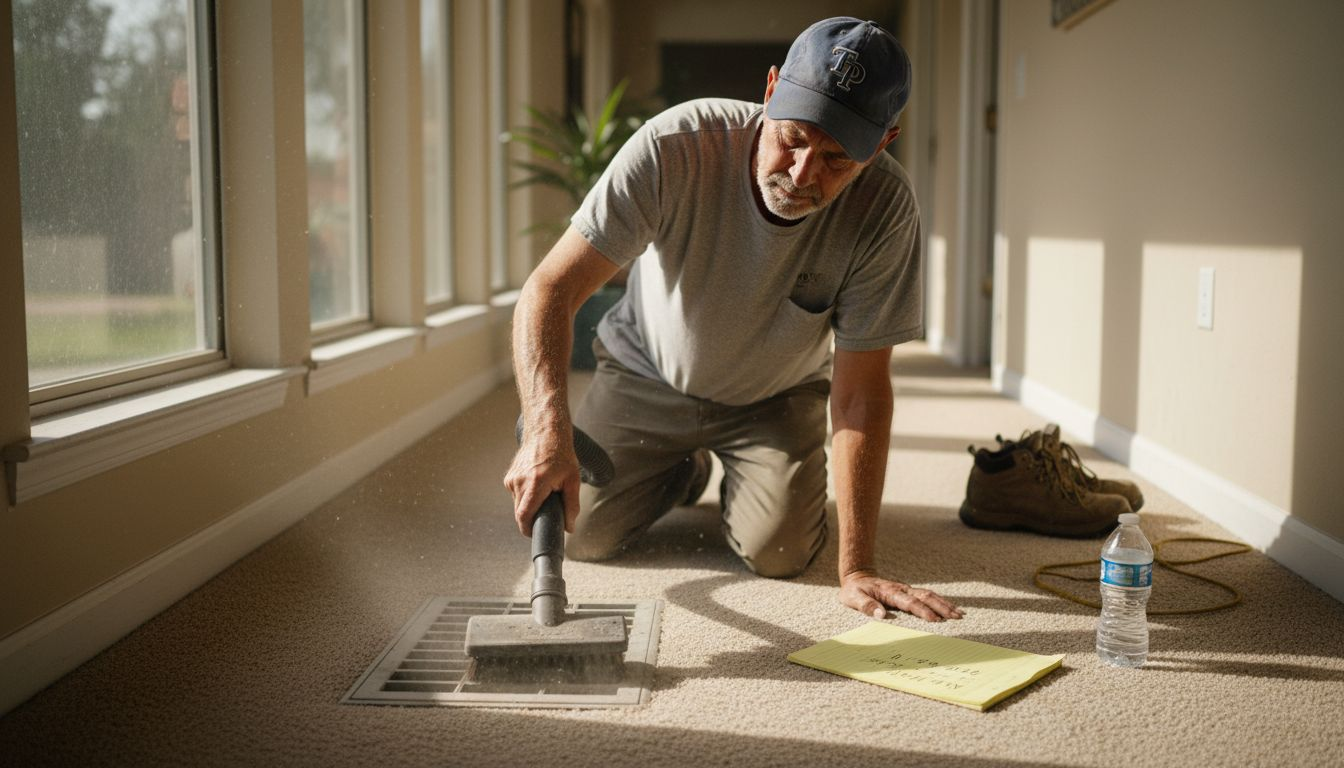
With the filter replaced, move on to cleaning your vents. Use a vacuum with a brush attachment to remove dust and debris from vent covers and surrounding areas. For a deeper clean, remove the vent covers and use a damp microfiber cloth to wipe down the interior surfaces. Pay special attention to any visible dust buildup or potential mold spots.

Man vacuuming dusty air vent in hallway

Pro tip: Keep a log of your filter replacement dates and take before and after photos of your vents to track your maintenance progress and identify any recurring issues.

Step 3: Inspect electrical connections and secure components

With your HVAC system powered down, it is critical to carefully inspect and secure all electrical connections to ensure safe and efficient operation. According to equipment maintenance experts, regularly examining wiring and electrical components before seasonal transitions can prevent potential hazards and maintain system reliability.

Begin by visually inspecting all visible wiring and electrical connections around your HVAC unit. Look for signs of wear such as frayed wires, loose connections, or any discoloration that might indicate overheating. Use a screwdriver to gently tighten any loose electrical terminal connections. As Forbes home improvement experts note, loose connections can lead to system malfunctions and create significant safety risks if left unaddressed.

When checking connections, wear rubber gloves and use a non contact voltage tester to confirm no electrical current is present. Pay special attention to areas around capacitors, contactor points, and circuit board connections. If you notice any significant damage or are unsure about a particular connection, it is best to contact a professional HVAC technician who can perform a comprehensive electrical system inspection.

Pro tip: Take a smartphone photo of your electrical connections before and after tightening to create a visual record and help you remember the original configuration.

Step 4: Clean coils and remove debris from the outdoor unit

According to home maintenance experts, clearing debris from your outdoor HVAC unit is crucial for maintaining optimal system performance. Your outdoor unit works hard throughout Tampa’s intense summer months, accumulating leaves, grass clippings, and other environmental debris that can significantly impact its efficiency.

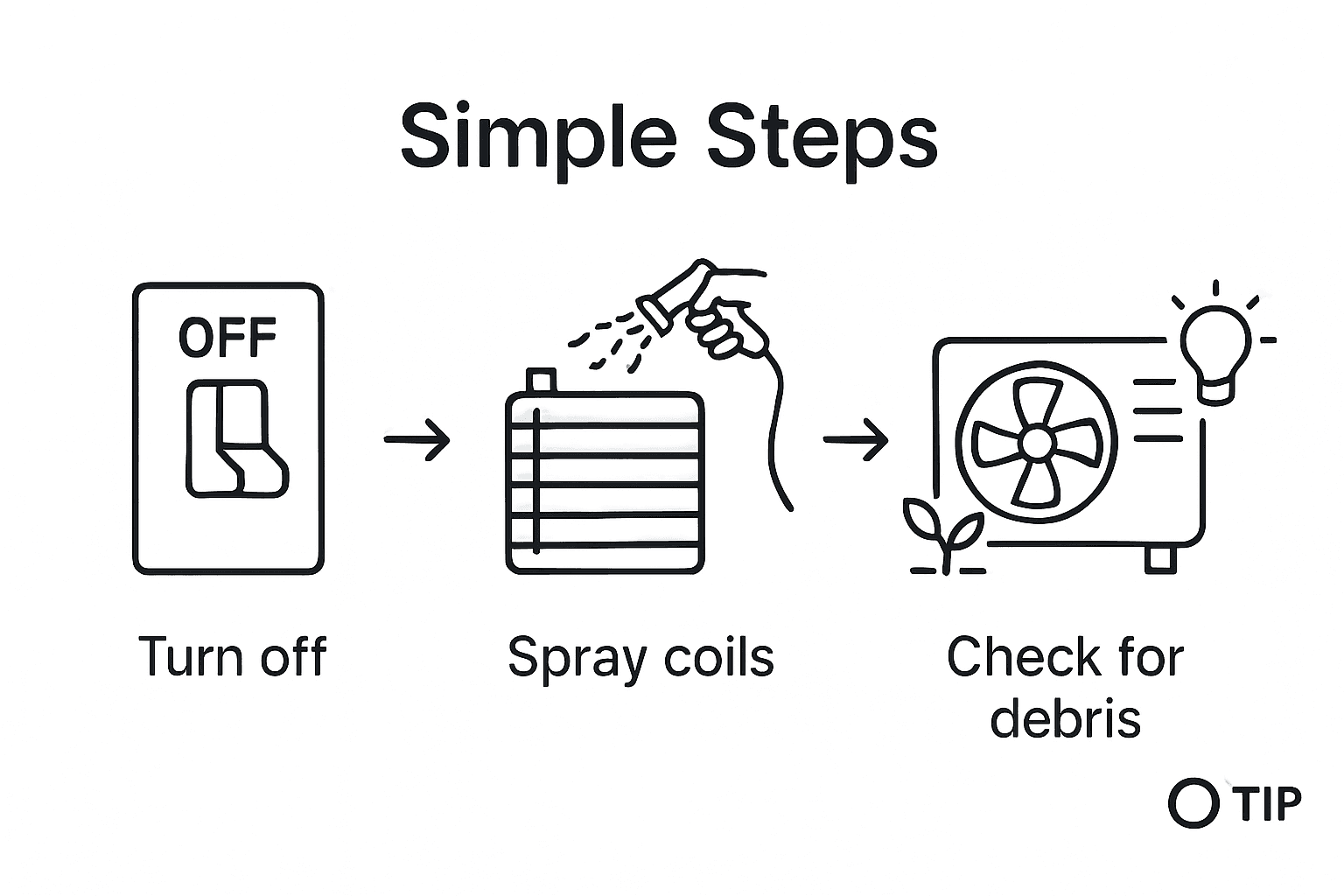
Start by turning off power to the unit at the circuit breaker. Use a garden hose with a gentle spray to carefully rinse the exterior condenser coils, removing dirt and dust buildup. For stubborn debris, use a soft brush to gently clean between the aluminum fins without bending them. Trim any vegetation within two feet of the unit to ensure proper airflow and prevent potential damage from overgrown plants or branches.

Infographic showing steps for outdoor HVAC cleaning

Carefully inspect the unit for any signs of physical damage or corrosion. Check that the protective metal cover is securely in place and that no leaves or small debris are trapped inside the unit. If you notice any significant damage or are unsure about the cleaning process, consider contacting a professional HVAC technician who can perform a more thorough inspection and cleaning.

Pro tip: Create a seasonal reminder on your phone to clean the outdoor unit every three months, helping you maintain consistent HVAC system performance throughout the year.

Step 5: Test system functionality and verify optimal performance

According to Energy Star guidelines, maintaining your HVAC system at peak performance involves thorough functionality testing before seasonal changes. After completing the previous maintenance steps, it is time to power up your system and verify that everything is working correctly.

Equipment maintenance experts recommend carefully testing your thermostat and safety controls to ensure precise calibration and operation. Start by turning the power back on and setting your thermostat to cooling mode. Listen for any unusual sounds during startup and observe the system cycling on and off. Check that cool air is flowing consistently from all vents and that the temperature matches your thermostat settings. Pay attention to airflow strength and temperature consistency across different rooms.

Perform a complete system test by running the air conditioning for at least 15 minutes. Monitor the outdoor unit to confirm it is operating smoothly without excessive vibration or strange noises. Check that the system maintains your desired temperature without frequent cycling or unexplained shutdowns. If you notice any performance irregularities such as weak airflow, inconsistent cooling, or strange sounds, it may be time to contact a professional HVAC technician for a more comprehensive evaluation.

This table summarizes common HVAC performance issues and what they might indicate:

SymptomPossible CauseRecommended Action
Weak airflowDirty filters or blocked ventsClean vents, replace filters
Unusual noisesLoose components or debrisInspect and tighten, clean
Inconsistent coolingFaulty thermostat or ductsTest controls, call technician
Frequent cyclingIncorrect settings or issuesCheck thermostat, inspect unit
No coolingElectrical or refrigerant issueContact HVAC professional

Pro tip: Record a short video of your system running during this test. This can provide valuable visual documentation if you need to describe any issues to a professional technician later.

Keep Your Tampa Home Comfortable with Expert Seasonal HVAC Care

Proper seasonal maintenance of your HVAC system is key to avoiding issues like weak airflow, inconsistent cooling, or electrical hazards as highlighted in the article. If replacing filters, cleaning vents, and inspecting electrical connections feel overwhelming or if you want to ensure your unit runs smoothly through Tampa’s hot summers, help is available. Do not let hidden problems ruin your comfort or increase your energy bills.

https://callhometherapist.com

Trust the certified technicians at Home Therapist Cooling, Heating, and Plumbing to provide thorough HVAC services tailored to your home’s unique needs. From professional filter replacement to detailed system inspections and outdoor unit cleanings, we protect your investment and enhance your comfort year-round. Act now to schedule a seasonal tune-up or repair visit and avoid costly breakdowns before they start. Explore reliable solutions at Home Therapist Cooling, Heating, and Plumbing today and experience peace of mind in every season.

Frequently Asked Questions

How do I safely shut down my HVAC system for seasonal maintenance?

To safely shut down your HVAC system, locate the circuit breaker and switch it to the off position. If you have a gas unit, also close the gas shutoff valve. This prevents unexpected electrical current or gas flow while you work on the system.

What tools do I need for HVAC maintenance?

Essential tools for HVAC maintenance include a screwdriver, adjustable wrench, work gloves, safety glasses, and a voltage tester. Gather these tools before starting your seasonal maintenance to ensure a smooth and safe process.

How often should I replace my HVAC air filters?

You should replace your HVAC air filters every 30 days to maintain indoor air quality and system efficiency. Keeping track of replacement dates can help extend the life of your system and improve energy consumption.

What should I do if I notice weak airflow from my HVAC system?

If you experience weak airflow, check and clean your air filters and vents to eliminate any blockages. Replace dirty filters and clear debris from the vents to restore optimal airflow and enhance system performance.

How can I test my HVAC system after maintenance?

After completing your maintenance, turn your HVAC system back on and set the thermostat to cooling mode. Monitor the system for unusual sounds or vibrations and check that cool air flows consistently from all vents for at least 15 minutes.

When should I contact a professional HVAC technician?

You should contact a professional HVAC technician if you notice significant damage, strange noises, or persistent cooling issues after your maintenance. Seeking expert help can ensure your system receives a comprehensive evaluation and necessary repairs.

Tampa, FL
–°F
Humidity: –%
Rain Chance: –%
Updating…

Popular Articles

From the Airport ✈️

Skip the layover—your AC needs therapy ASAP.

Get directions from TPA →

From Home Depot 🧰

You got tools, we’ve got therapy for your AC.

Get directions from Home Depot →

From Lowe’s 🔧

When DIY ends, HVAC therapy begins.

Get directions from Lowe’s →

From Costco 🛒

Bulk paper towels won’t fix that leak—we will.

Get directions from Costco →

From Daikin Comfort ❄️

Right equipment, right technicians—perfect combo.

Get directions from Daikin →

From AND Services 🧊

If they can’t help you, we definitely can.

Get directions from AND →

From Rolando’s HVAC 🔥

Just a short drive to better service.

Get directions from Rolando’s →

From ACS Home Services 🏠

When you want service without the pitch.

Get directions from ACS →

From Raymond James Stadium 🏈

Defense wins games. Maintenance wins summers.

Get directions from the Bucs’ home →

From Tampa Convention Center 🏙️

Done networking? Now let’s network your ducts.

Get directions from downtown →

From WestShore Plaza 🛍️

Your AC deserves a shopping spree too.

Get directions from WestShore →

From University of Tampa 🎓

Smart choice—your system will thank you.

Get directions from UT →