

AC Maintenance Schedule for Tampa Bay Homeowners: When to DIY and When to Call
Tampa Bay’s brutal heat puts more annual runtime on a residential AC than almost any market in the country. The right ac maintenance schedule tampa bay homeowners actually need is different from a generic national checklist: filter changes happen monthly (not quarterly), coil cleaning is a twice-a-year job, and the condensate drain requires specific attention because of our humidity. Here is exactly what to do yourself, what to leave to a licensed tech, and how to catch small problems before they become $1,200 emergencies.
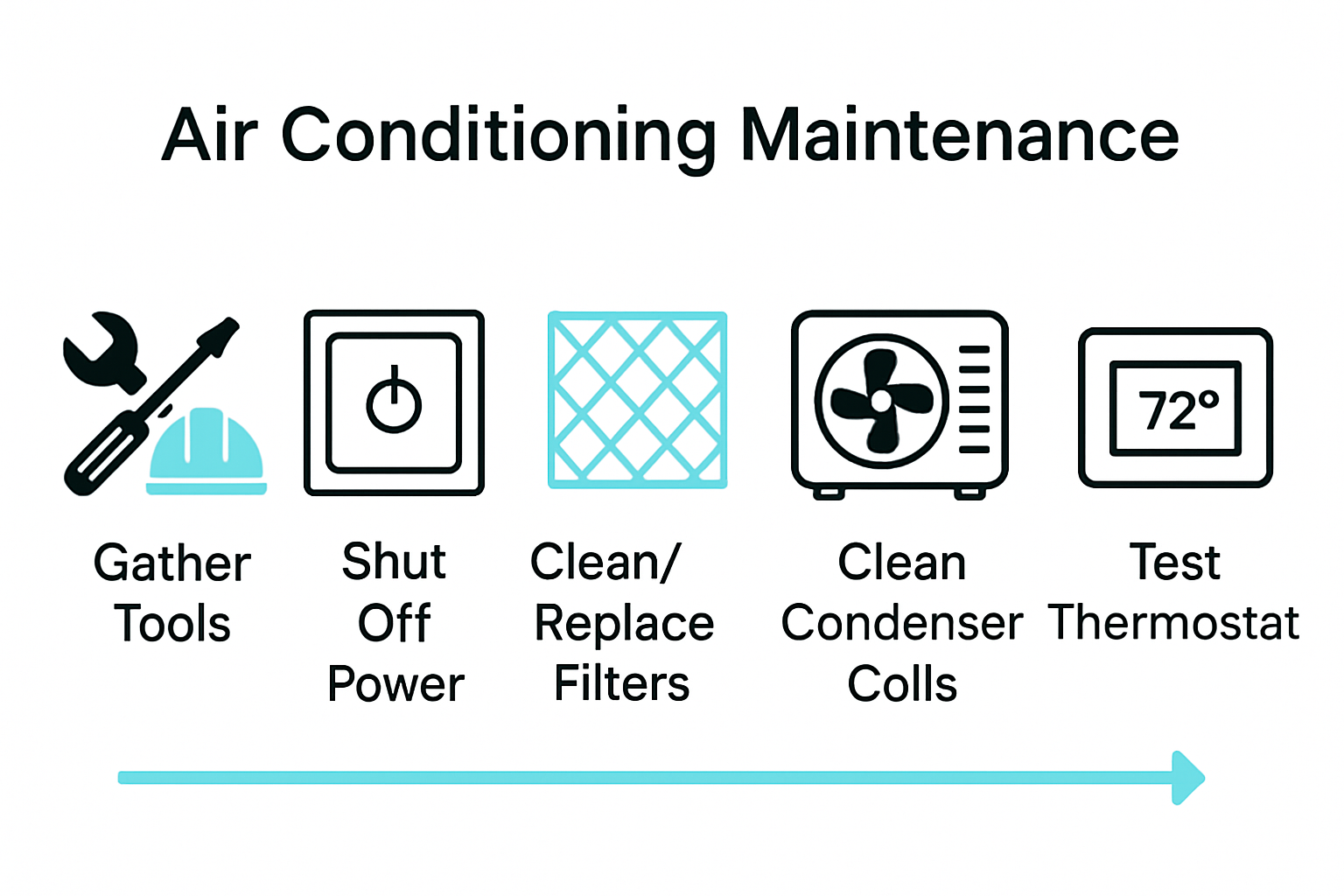
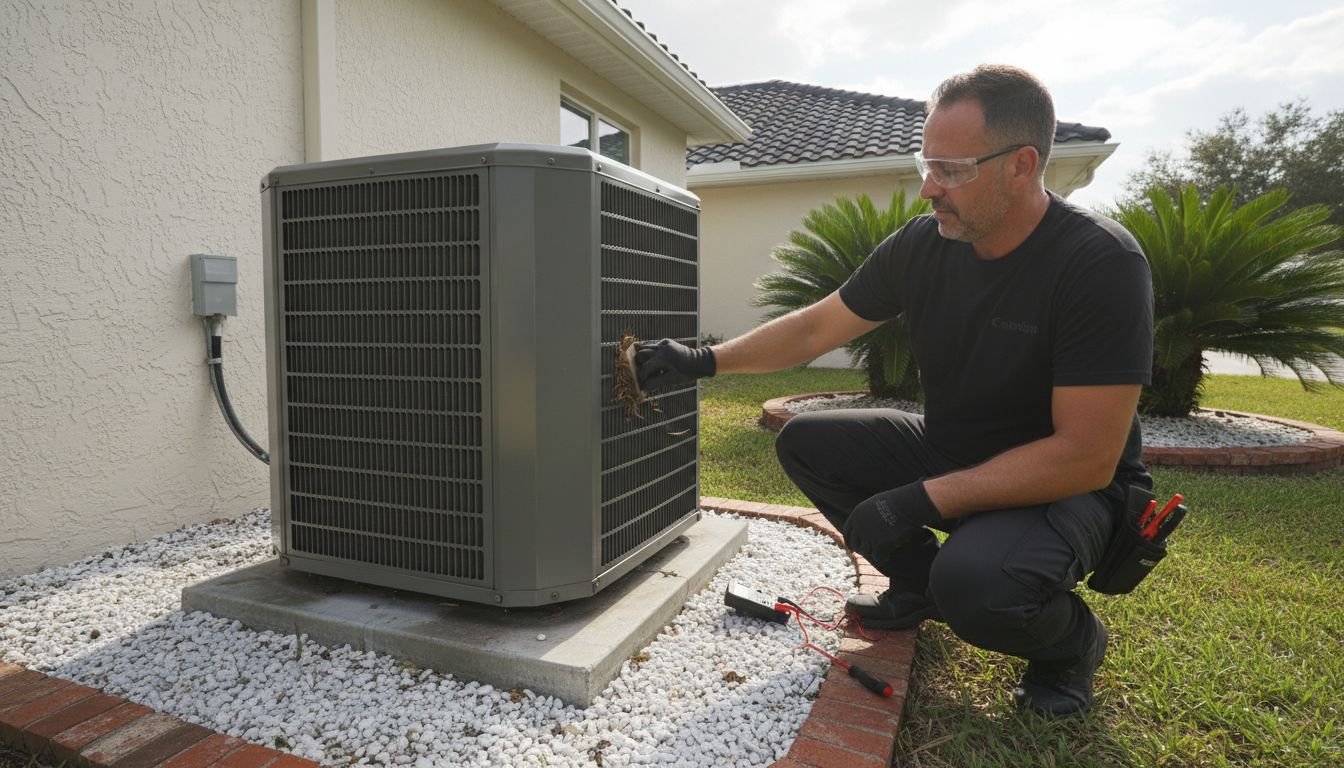
Key Takeaways
- Change or inspect your filter every 30 days during cooling season (May through October).
- Schedule professional AC maintenance twice per year: once in spring before the heat hits, and once in fall to close out the season.
- Clear the condensate drain line quarterly with diluted bleach to prevent algae backups common in Florida’s humidity.
- A dirty condenser coil can cut efficiency by 30 percent; clean it or call us if fins are visibly clogged.
- Any refrigerant issue, electrical component failure, or unusual noise requires a licensed tech. FREE diagnosis on all service calls.
- Home Therapist installs Goodman and Daikin systems; we service all brands.
Why Does Tampa Bay Need a Different AC Maintenance Schedule?
Most national HVAC guides assume a system runs six months per year. In the Tampa Bay area, most homes run their AC ten to eleven months annually. According to the U.S. Department of Energy, a well-maintained AC uses 5 to 15 percent less energy than a neglected one. But in Florida, a neglected system is not just less efficient; it is running double the hours of systems in cooler markets, which means wear compounds faster.
Three Tampa-specific factors change the maintenance math:
- High humidity: Mold and algae grow inside condensate drain pans and drain lines faster than in dry climates. Drain clogs are the single most common AC service call we see in Tampa Bay.
- Salt air near the coast: Communities like Apollo Beach, St. Pete Beach, and Indian Rocks Beach deal with accelerated coil corrosion. E-coated condenser coils (available on Goodman GVXC and Daikin coastal models) last significantly longer in these zones.
- Pollen and debris: Central Florida’s oak and pine pollen seasons, plus grass clippings from year-round lawn care, clog outdoor condenser coils faster than in northern states.
What Does a Monthly AC Maintenance Checklist Include?
Monthly tasks are quick and do not require tools or any technical knowledge. They take 10 minutes or less.
| Monthly Task | What to Check | Action If Problem Found |
|---|---|---|
| Air filter | Hold up to a light source; if you cannot see light through it, replace it | Replace with same size (arrow pointing toward air handler) |
| Thermostat display | Confirm the set temperature and actual temperature match within 2 degrees | Replace batteries; call if gap persists |
| Condensate drain pan | Look for standing water or discoloration under the air handler | Pour 1/4 cup of diluted bleach solution into drain access port |
| Outdoor unit clearance | 18 to 24 inches of clear space on all sides; no grass, vines, or debris on top | Trim vegetation; rinse unit exterior with a garden hose (low pressure) |
| Vents and registers | All supply and return vents open and unobstructed | Move furniture; open closed vents |
The filter is the most impactful monthly task. According to ENERGY STAR, dirty filters force your system to work harder, shortening the life of the blower motor and coils. In Tampa Bay’s cooling season, a filter that might last three months in a northern climate can clog in three to four weeks, especially in homes with pets or tile/wood floors that generate more airborne debris.
Our AC filter replacement guide walks through the exact steps to choose the right MERV rating and install the filter correctly. For condensate drain details, see our condensate drain guide for Tampa Bay homes.
What Should You Do for Seasonal AC Maintenance in Tampa Bay?
Seasonal maintenance goes deeper than monthly tasks and involves components most homeowners should not touch without training. This is where the DIY line gets drawn.
Spring Pre-Season (March to April): Professional Tune-Up
Schedule this before Memorial Day weekend, when Tampa Bay temperatures consistently hit the mid-90s and AC demand peaks. A professional spring tune-up covers:
- Refrigerant pressure check and leak inspection
- Electrical component testing: capacitors, contactors, disconnect
- Blower wheel cleaning (often skipped by DIYers but critical for airflow)
- Evaporator and condenser coil inspection and cleaning if needed
- Condensate drain flush and float switch test
- Thermostat calibration and system performance check
An AC maintenance visit in Tampa from Home Therapist includes all of the above. We document everything we find so you have a written record of your system’s condition. This is especially useful for Goodman and Daikin systems under manufacturer warranty, which often require documented annual maintenance to keep the warranty valid.
Fall Post-Season (October to November): Quick Inspection
After the heavy cooling season, a fall check identifies wear from ten months of use before the mild winter months. DIY tasks include:
- Visual inspection of all wiring connections at the disconnect box (look for discoloration or melted insulation)
- Rinse the outdoor condenser unit with a garden hose to remove pollen and debris before it bakes on
- Check the air handler for signs of moisture or condensation damage around the drain pan
What Does Annual Professional AC Service Include?
Once per year, a certified technician should perform a full system inspection. In Tampa Bay, most homeowners time this with the spring visit since that is the highest-stakes maintenance period.
Licensed techs carry tools homeowners do not: manifold gauges to check refrigerant charge, amp meters to test compressor and blower motor draw, and leak detectors. Attempting to check refrigerant levels without certification violates federal EPA Section 608 rules and can void your equipment warranty.
According to the Air Conditioning Contractors of America (ACCA), systems that receive annual professional maintenance last an average of two to three years longer than those that do not. On a system costing $7,000 to $12,000 to replace, that extension pays for years of maintenance visits.
For our full 7-warning-signs checklist, see 7 Signs Your HVAC Needs Repair. If your system is over 12 years old, also review our HVAC lifespan tips to decide whether maintenance or replacement makes more sense financially.
When Should Tampa Bay Homeowners Call a Technician Instead of DIYing?
The clearest DIY vs. call-a-tech dividing line is refrigerant and electrical work. Beyond that, here are the decision rules our techs use:
| Symptom | DIY or Call? | Why |
|---|---|---|
| AC not cooling but fan is running | Call | Likely refrigerant, capacitor, or compressor issue |
| Condensate drain clogged | DIY (minor) or Call (severe) | Light bleach flush is DIY; standing water or backup into the home needs a pro |
| Filter clogged or missing | DIY | No tools or training required |
| Outdoor unit running but no cold air | Call | Frozen coil or low refrigerant; shut system off first to avoid compressor damage |
| Strange noise (grinding, banging, squealing) | Call | Blower motor, fan blade, or compressor problem |
| Thermostat not responding | DIY first (check batteries and breaker) | Often batteries or a tripped breaker; if those are fine, call |
| Burning smell from vents | Shut off and call immediately | Potential electrical fire or failed component |
All Home Therapist service calls include a FREE diagnosis. You will know the exact problem and cost before we do any work. $279 is the minimum labor charge on approved repair work; we never charge that just to show up and look.
For a complete overview of what our professional service visits include, see The Essential Guide to Regular HVAC Maintenance and 7 Essential HVAC Maintenance Checklist Tips for Homeowners.
How Much Does AC Maintenance Cost in Tampa Bay?
Professional AC tune-up pricing in Tampa Bay ranges from $89 to $149 for a standard visit. Home Therapist’s Elite Plan provides two annual maintenance visits plus priority scheduling and discounts on repairs. A single visit costs $89. For context, the most common repair we find during a neglected system visit, a failed capacitor, runs $150 to $250 for parts and labor. Catching it during a $89 tune-up versus an emergency call on a 95-degree July afternoon is a significant difference in both cost and stress.
Call us at (813) 343-2212 or book online to schedule your next maintenance visit. We serve Tampa, Brandon, Riverview, Wesley Chapel, Lutz, Apollo Beach, and all surrounding Tampa Bay communities.
Frequently Asked Questions
- What is the $5000 AC rule?
The $5000 rule helps decide whether to repair or replace: multiply the repair cost by the unit's age, and if that number exceeds $5000, replacement is usually the smarter investment. In Tampa Bay's intense heat and humidity, an aging system works harder than average, making replacement savings even more significant.
- Can AC cause sinus issues?
Yes, a poorly maintained AC can trigger sinus issues by circulating dust, mold spores, and bacteria through dirty filters or coils. Tampa Bay's high humidity accelerates mold growth inside units. Regular maintenance, including coil cleaning and filter changes, keeps your indoor air quality healthy. Call Home Therapist at (813) 343-2212 to schedule service.
How often should I schedule professional AC maintenance in Tampa Bay?
Twice per year is the standard in Tampa Bay because of the long cooling season. Schedule a spring tune-up in March or April before peak summer heat, and a lighter fall inspection in October or November. If your system is over 10 years old or under a manufacturer warranty, twice-yearly service helps preserve the warranty and catch age-related failures early.
What is included in an ac maintenance schedule tampa bay homeowners should follow?
Monthly tasks cover filter checks, condensate pan inspection, and outdoor unit clearance. Quarterly tasks include a condensate drain flush with diluted bleach. Twice-yearly professional visits cover refrigerant pressure, electrical component testing, coil cleaning, blower wheel inspection, and system performance verification. Annual pro visits include everything above plus a full written system report.
Can I clean my own AC condenser coils in Tampa?
You can rinse the outside of the condenser fins with a garden hose at low pressure to remove loose debris. Deeper coil cleaning using foam coil cleaner is a DIY option for handy homeowners, but bent or damaged fins and heavily soiled coils are better left to a tech who has the right brushes and coil cleaner. Improper cleaning can bend delicate aluminum fins, which reduces airflow and efficiency.
Why does my AC drain line clog so often in Florida?
Tampa Bay’s high humidity keeps the condensate drain wet almost year-round, which creates ideal conditions for algae and mold growth inside the drain line. A monthly preventive pour of diluted bleach (one cup to one gallon of water) into the drain access port kills algae before it can form a blockage. Most clogged drain calls we handle could have been prevented with this simple monthly habit.
What is the difference between an AC tune-up and an AC service call?
A tune-up is scheduled preventive maintenance: the system is running, we inspect and clean all accessible components, check performance metrics, and report findings. A service call is diagnostic: the system has a specific problem and we identify and fix the cause. Both include a FREE diagnosis at Home Therapist. Tune-up pricing starts at $89; service call labor starts at $279 on approved repair work.
Does Home Therapist service all AC brands?
Yes. We service all brands including Carrier, Lennox, Trane, Rheem, and American Standard. For installations and replacements, we install Goodman (Value and Premium lines) and Daikin (Elite line) systems. Both brands offer strong warranty coverage and are well-suited to Tampa Bay’s coastal heat load.
More AC Maintenance Articles
- HVAC Maintenance Checklist for Florida Homeowners: What Tampa Bay Techs Actually Do Each Visit
- HVAC Maintenance Schedule for Tampa: How Often and When
- How Often to Schedule HVAC Maintenance in Tampa Bay
- Dirty AC Coil Masking a False Refrigerant Reading in Tampa, FL 33610: What Stephen Found on Bally Money Road
- Blower Motor Dead, Float Switch Gone, Drain Line Cracked: Alejandro R. Restores a Rooftop HVAC System on Johns Rd, Tampa FL 33634
Hard water in Hillsborough County (180-220 ppm) causes scale buildup in plumbing fixtures and water heaters faster than most U.S. markets.
AC Service in Tampa: What You Need to Know Before You Call
Home Therapist technicians have serviced AC systems throughout Tampa long enough to recognize the patterns local systems develop. Florida's climate creates failure modes that northern technicians rarely encounter.
- FREE diagnosis and FREE estimates on all AC calls. Repair work starts at $279 minimum labor on approved work only.
- Home Therapist installs Goodman and Daikin systems, selected for Florida climate performance and backed by manufacturer warranties.
- Capacitor and contactor failures are the two most common AC component replacements in Tampa Bay and are diagnosable within minutes of arrival.


