

Role of HVAC Filters, boosting Air Quality at Home
Most American homes lose up to 40 percent of their energy efficiency through poor HVAC filter choices. Tampa Bay homeowners face unique air quality challenges, from high humidity to year-round pollen. Choosing and maintaining the right filter helps families breathe cleaner air while protecting expensive equipment. This guide breaks down myths and essentials so you can improve health, save energy, and make smart decisions about your home’s air system.
Table of Contents
- HVAC Filters Explained: Functions And Myths
- Types Of Filters For Home HVAC Systems
- How Filter Ratings Impact Air Quality
- Selecting The Best Filter For Your Needs
- Maintenance Tips To Maximize Performance
- Common Mistakes That Harm Air Quality
Key Takeaways
| Point | Details |
|---|---|
| Importance of HVAC Filters | HVAC filters are essential for maintaining indoor air quality and protecting HVAC systems from airborne contaminants. |
| Understanding MERV Ratings | MERV ratings are crucial for selecting the appropriate filter, indicating effectiveness in trapping particles of various sizes. |
| Choosing the Right Filter | Select filters based on specific household needs, such as allergies or pet dander, and ensure compatibility with your HVAC system. |
| Regular Maintenance is Key | Establish a filter replacement schedule based on your home’s conditions to maximize efficiency and air quality. |
HVAC Filters Explained: Functions and Myths
HVAC filters play a critical role in maintaining indoor air quality and protecting your home’s heating and cooling system. These essential components do far more than simply block dust and debris. They serve as the first line of defense against airborne contaminants that can impact your family’s health and your HVAC system’s efficiency.
The science behind air filtration is complex and multifaceted. Particle capture mechanisms like mechanical, electrostatic, and absorption filtration demonstrate how modern filters work to trap different types of pollutants. Mechanical filtration uses physical barriers to capture large particles, while electrostatic methods attract smaller particles through electrical charges. Absorption techniques can even trap odors and gaseous contaminants.
Despite their importance, several myths persist about HVAC filters. Many homeowners mistakenly believe that any filter will suffice or that more expensive always means better protection. In reality, MERV ratings provide a more accurate measure of a filter’s effectiveness. A filter’s performance depends on its ability to trap particles of various sizes, not just its price point. The right filter depends on specific household needs, such as managing pet dander, addressing allergy concerns, or controlling dust levels.
Pro tip: Select an HVAC filter with a MERV rating between 8 and 13 for optimal home air quality, balancing filtration efficiency with system airflow.
Types of Filters for Home HVAC Systems
Homeowners have multiple options when selecting HVAC filters, each designed to address specific air quality challenges. Different HVAC filter types offer unique advantages for managing indoor air contaminants, ranging from basic dust protection to advanced allergen and odor elimination.
The most common filter varieties include fiberglass filters, which are economical but provide minimal filtration, and pleated filters that offer more surface area for trapping particles. More advanced options like HEPA filters can remove up to 99.97% of airborne particles as small as 0.3 microns, making them ideal for households with allergy sufferers or individuals with respiratory sensitivities. Electrostatic filters use electrical charges to attract and trap particles, while activated carbon filters excel at removing odors and chemical pollutants.
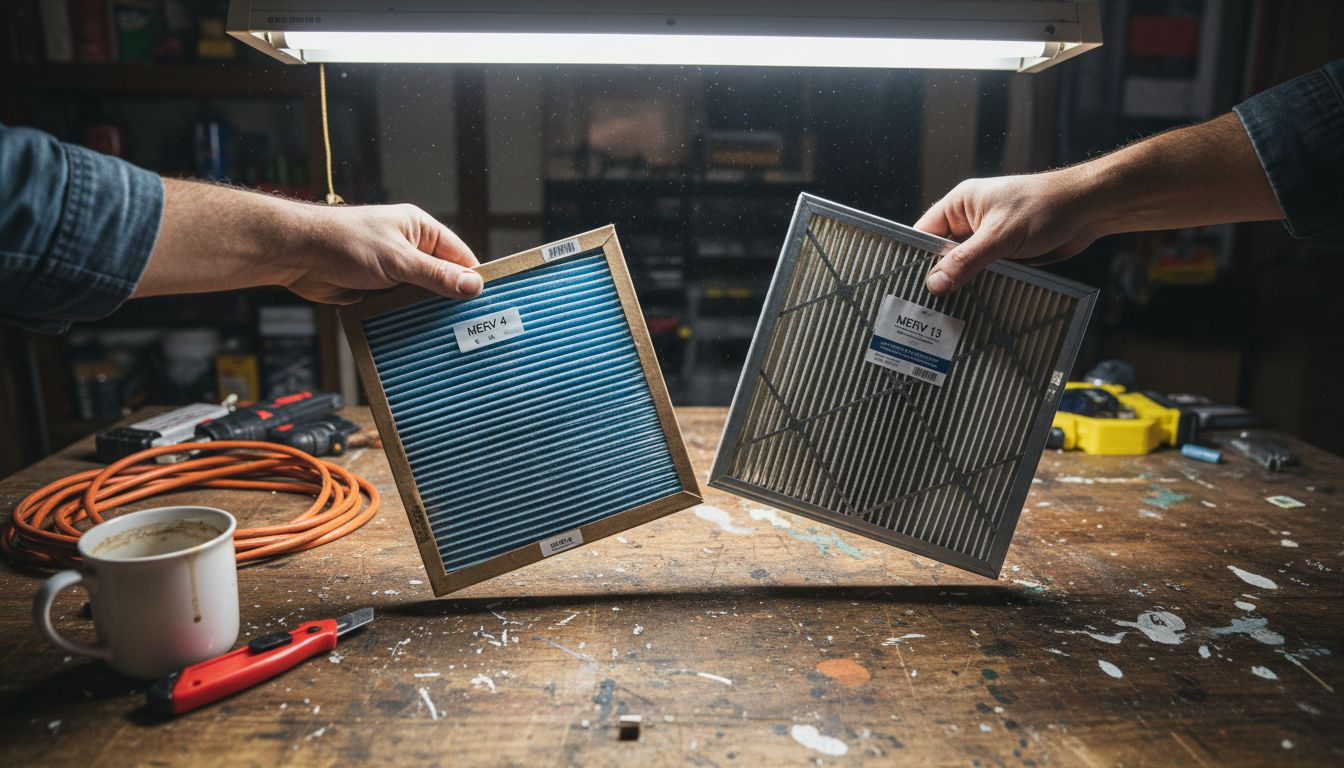
Choosing the right filter depends on several factors, including your home’s specific air quality needs, HVAC system compatibility, and maintenance preferences. Some filters, like washable models, can be reused, while others require regular replacement. The MERV rating (Minimum Efficiency Reporting Value) provides a standardized way to compare filter effectiveness, with higher ratings indicating more comprehensive particle removal.
Here’s a comparison of common HVAC filter types and their primary strengths:
| Filter Type | Main Advantage | Best for Households With |
|---|---|---|
| Fiberglass | Low cost, easy replacement | Minimal filtration needs |
| Pleated | Captures small particles well | Pets, mild allergies |
| HEPA | Highest filtration efficiency | Allergies, respiratory issues |
| Electrostatic | Attracts small airborne particles | Reusable filter preference |
| Activated Carbon | Removes odors, chemical pollutants | Concerned about indoor smells |
Pro tip: Consult your HVAC system manufacturer’s recommendations and have your indoor air quality professionally assessed to select the most appropriate filter for your home’s unique requirements.
How Filter Ratings Impact Air Quality
Understanding filter ratings is crucial for maintaining optimal indoor air quality and protecting your home’s HVAC system. ASHRAE’s technical resources provide comprehensive insights into filtration performance standards, revealing how different rating systems evaluate a filter’s effectiveness at trapping airborne particles.
The Minimum Efficiency Reporting Value (MERV) serves as the primary rating system for residential HVAC filters, ranging from 1 to 16. Lower MERV ratings (1-4) capture only larger particles like dust and pollen, while mid-range ratings (5-8) trap smaller pollutants such as mold spores and pet dander. High-efficiency filters with MERV ratings between 9 and 12 can capture microscopic particles including bacteria and smoke, providing significantly improved air quality for homes with allergy sufferers or respiratory concerns.
However, higher MERV ratings aren’t always better. Extremely high-rated filters can restrict airflow, potentially causing system strain and reduced energy efficiency. Homeowners must balance filtration effectiveness with their HVAC system’s specific airflow requirements. Consulting with a professional can help determine the optimal filter rating that maintains air quality without compromising system performance or increasing energy consumption.
The following table summarizes recommended MERV ratings by air quality need:
| MERV Rating Range | Typical Uses | Captures |
|---|---|---|
| 1, 4 | Basic residential | Large dust, lint, pollen |
| 5, 8 | Improved residential | Mold spores, pet dander |
| 9, 12 | Allergy, health-focused | Fine dust, legionella, smoke |
| 13, 16 | Medical, sensitive homes | Bacteria, virus carriers, smog |
Pro tip: Consult your HVAC manufacturer’s recommendations and have a professional assess your home’s specific air quality needs before selecting a high-MERV filter.
Selecting the Best Filter for Your Needs
Choosing the right HVAC filter requires careful evaluation of your home’s unique air quality challenges, considering factors like household composition, respiratory sensitivities, and system specifications. Homeowners must balance multiple considerations to find an optimal filtration solution that protects both health and HVAC equipment.
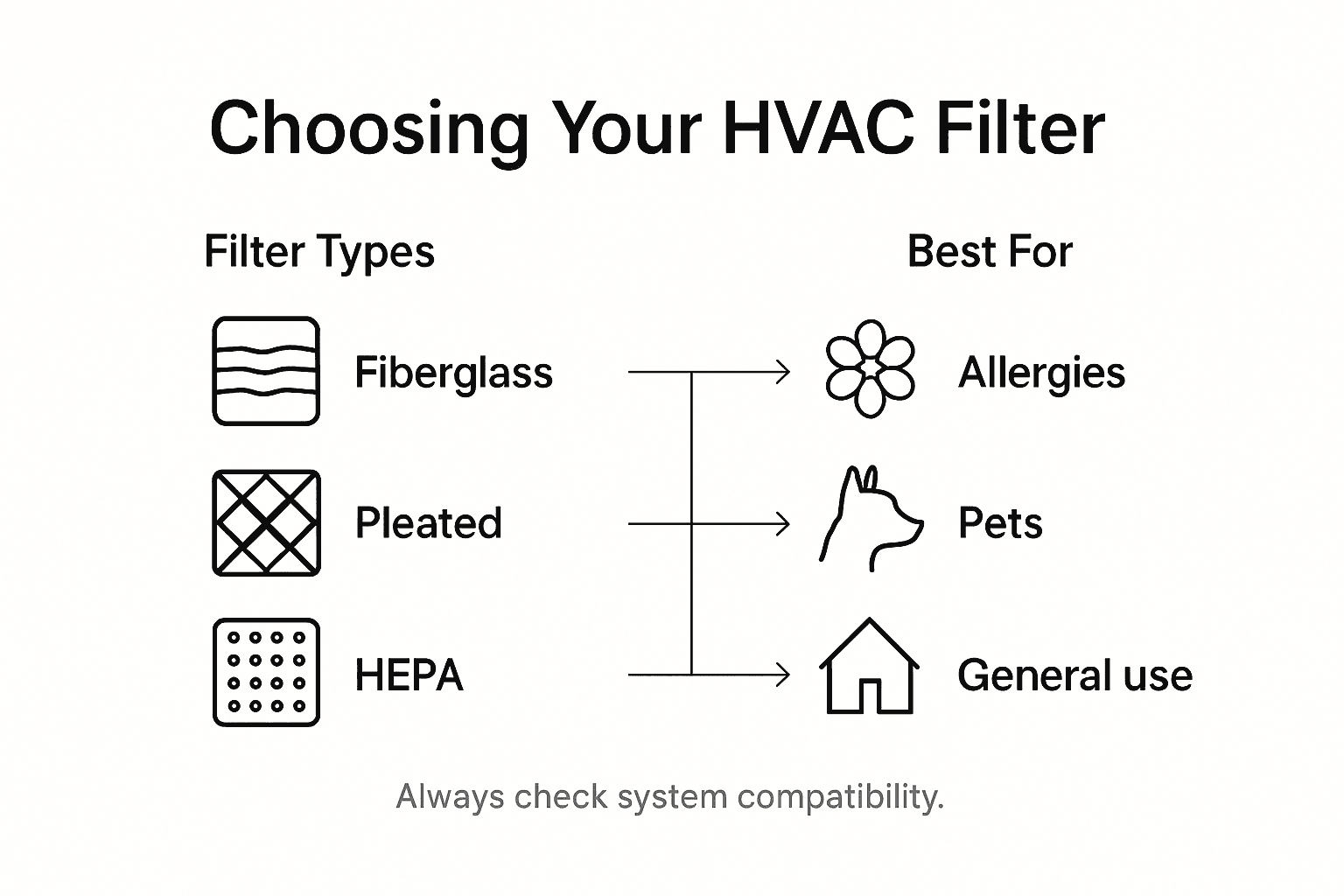
Key selection criteria include assessing your specific indoor air quality needs. Households with pets, smokers, or allergy sufferers typically require higher-efficiency filters with MERV ratings between 8 and 13. For families with individuals experiencing respiratory conditions like asthma, HEPA filters might provide the most comprehensive protection, capturing up to 99.97% of microscopic particles. Homes with minimal air quality challenges can often manage effectively with standard pleated filters that offer a balance between performance and system airflow.
Beyond efficiency ratings, compatibility with your HVAC system is critical. Not all high-performance filters work seamlessly with every system. Some advanced filters can restrict airflow, potentially causing increased energy consumption or even system damage. Professional HVAC technicians can help evaluate your system’s specific requirements, recommending filters that maintain optimal performance while improving air quality. Factors like filter thickness, material composition, and precise MERV rating all play crucial roles in achieving the right balance.
Pro tip: Schedule an annual HVAC system assessment to ensure your filter selection continues to meet your home’s evolving air quality and equipment performance needs.
Maintenance Tips to Maximize Performance
Regular HVAC filter maintenance is crucial for preserving indoor air quality and system efficiency, requiring proactive attention from homeowners to prevent potential performance issues and unexpected breakdowns.
The frequency of filter maintenance depends on several household-specific factors. High-traffic homes with pets, smokers, or significant dust exposure may need filter checks every 30 days, while standard households can typically manage with 60-90 day intervals. Professional HVAC technicians recommend establishing a consistent replacement schedule based on manufacturer guidelines and your specific indoor environment. Visual inspection provides a quick way to determine filter condition – signs like visible dust accumulation, discoloration, or reduced airflow indicate an immediate need for replacement.
Beyond regular replacement, proper filter maintenance involves careful handling and selection. Always install filters with the correct airflow direction, ensuring the arrow printed on the filter’s frame points toward the furnace or air handler. When selecting replacement filters, match the exact size and MERV rating recommended by your system’s manufacturer. Oversized or undersized filters can create air leakage, reducing filtration efficiency and potentially introducing unfiltered contaminants into your living space.
Pro tip: Set digital calendar reminders or subscribe to filter replacement services to maintain a consistent and reliable HVAC filter maintenance routine.
Common Mistakes That Harm Air Quality
Homeowners often unknowingly compromise their indoor air quality through common HVAC filter mistakes that can significantly impact system performance and respiratory health. Understanding these critical errors is the first step toward maintaining a cleaner, healthier home environment.
One of the most prevalent mistakes is selecting the wrong filter type or size for your specific HVAC system. Many homeowners choose filters based solely on price, overlooking critical factors like MERV rating, airflow compatibility, and household air quality needs. Undersized or improperly rated filters can create air leakage points, allowing unfiltered contaminants to circulate freely. Similarly, using filters with extremely high MERV ratings in systems not designed for them can restrict airflow, causing unnecessary strain on your HVAC equipment and potentially leading to increased energy consumption.
Neglecting regular filter maintenance represents another significant error that can dramatically reduce indoor air quality. Filters accumulate dust, allergens, and microscopic particles over time, becoming progressively less effective if not replaced or cleaned consistently. Homeowners should establish a regular replacement schedule tailored to their specific living conditions. Factors like pet ownership, proximity to construction sites, or having family members with respiratory sensitivities can necessitate more frequent filter changes. Visual inspection and tracking filter performance can help identify when replacement becomes crucial.
Pro tip: Create a digital calendar reminder system that tracks your HVAC filter replacement schedule and sends alerts before the filter becomes critically clogged.
Enhance Your Home’s Air Quality with Expert HVAC Solutions
Maintaining optimal indoor air quality starts with using the right HVAC filters to protect your family’s health and your home’s comfort. The article highlights common challenges such as choosing the correct MERV rating and avoiding filter maintenance mistakes that can impact system efficiency and air quality. If you struggle with balancing filtration needs and system performance, or want to ensure your HVAC system supports a healthier living environment, professional help is essential.
Take control of your home’s air quality today by partnering with Home Therapist Cooling, Heating, and Plumbing. Our certified technicians in the Tampa Bay area specialize in tailoring heating, ventilation, and air conditioning solutions to your unique needs. Whether you need filter advice to reduce allergens or a full HVAC system inspection, rely on us for trusted guidance and reliable service. Don’t wait until poor air quality affects your family’s wellbeing. Visit Home Therapist now to schedule your consultation and breathe easier with expert care.
Frequently Asked Questions
How do HVAC filters improve indoor air quality?
HVAC filters trap airborne contaminants such as dust, pollen, mold spores, and pet dander, preventing them from circulating in your home and thus enhancing indoor air quality.
What factors should I consider when choosing an HVAC filter?
When selecting an HVAC filter, consider your household’s specific air quality needs, the MERV rating, compatibility with your HVAC system, and whether you prefer a washable or disposable model.
What is the MERV rating, and why is it important?
The MERV (Minimum Efficiency Reporting Value) rating indicates a filter’s effectiveness in capturing particles of various sizes. Higher MERV ratings indicate better filtration but may restrict airflow if not suited for your HVAC system.
How often should I change my HVAC filter for optimal performance?
Typically, filters should be replaced every 30 to 90 days, depending on factors like household activity, number of pets, and air quality needs. Regular maintenance ensures optimal air quality and system efficiency.
About This Guide
Written and reviewed by the Home Therapist Cooling, Heating & Plumbing team, a family-owned Tampa Bay HVAC and plumbing company serving the area since 2011. Our licensed techs hold Florida HVAC license CAC1819196 and Plumbing license CFC1431159, with over 1,100 five-star reviews across Tampa, St. Petersburg, Clearwater, Wesley Chapel, Lutz, Riverview, Brandon, Valrico, Apollo Beach, Palm Harbor, Land O’ Lakes, Plant City, New Port Richey, and surrounding Tampa Bay zip codes.
Honest pricing: Upfront quotes, no high-pressure sales, no surprise fees.
Questions about your home? Call (813) 343-2212 for a real tech, or request a callback. Available 7 days a week including evenings and weekends for emergencies.
Recommended
- Complete Guide to HVAC’s Role in Air Quality – Home Therapist Cooling, Heating, and Plumbing
- Complete Guide to HVAC’s Role in Air Quality – Home Therapist Cooling, Heating, and Plumbing
- 7 Essential HVAC Maintenance Checklist Tips for Homeowners – Home Therapist Cooling, Heating, and Plumbing
- HVAC Retrofitting Explained: Enhancing Home Comfort – Home Therapist Cooling, Heating, and Plumbing
- Problemas respiratorios de la humedad por condensación
More Indoor Air Quality Articles
- Christmas Eve AC Tune-Up on 10th Ave S: Elite Plan Visit #3 in St. Petersburg, FL 33705
- Clogged AC Filter Causing Stuffy Rooms on West Rio Vista Ave, Tampa, FL 33634
- Why Coil Placement Makes or Breaks a UV Light Install: Indoor Air Quality Service on 49th St N, St. Petersburg, FL 33710
- AC Filter Replacement Workflow for Optimal Home Comfort
- Mini Split Installation for Florida Rooms and Garages in Tampa, FL: What to Expect


