How to clean AC condenser for efficient cooling Tampa Bay
Rising energy bills can frustrate any Tampa Bay homeowner, especially when your air conditioner runs constantly but barely cools your home. The culprit is often a dirty AC condenser clogged with debris, salt spray, and coastal grime. A clean condenser transfers heat efficiently, lowering your utility costs and extending your system’s lifespan. This guide walks you through practical steps to clean your AC condenser safely, tailored specifically for Tampa Bay’s unique coastal climate challenges.
Table of Contents
- Understanding Why Cleaning Your AC Condenser Matters
- Preparation: Tools, Safety, And Timing For Cleaning Your AC Condenser
- Step-By-Step Guide To Safely Clean Your AC Condenser Unit
- Maintaining Your AC Condenser In Tampa Bay’s Coastal Climate
- Keep Your AC Running Smoothly With Expert HVAC Services
- Frequently Asked Questions
Key takeaways
| Point | Details |
|---|---|
| Efficiency boost | Regular cleaning improves efficiency by up to 15% and reduces monthly utility costs. |
| Gentle approach | Use garden hose with gentle spray to avoid damaging delicate condenser fins. |
| Coastal protection | Strategic placement and protective coatings reduce salt air corrosion damage. |
| Professional support | Annual deep cleaning by certified technicians complements your DIY maintenance efforts. |
| Safety priority | Always disconnect power at the breaker before starting any cleaning work. |
Understanding why cleaning your AC condenser matters
Your AC condenser works hard to expel heat from your home, but dirt and debris act like insulation on the coils. When grime builds up, heat transfer becomes inefficient, forcing your compressor to work harder and consume more electricity. Regular cleaning can improve efficiency by up to 15%, translating to noticeable savings on your monthly bills.
In Florida homes, air conditioning can account for over 40% of total utility costs during peak summer months. Every percentage point of efficiency you recover puts money back in your pocket. Beyond immediate savings, maintaining clean coils prevents premature wear on your compressor, the most expensive component to replace.
Tampa Bay’s coastal environment creates unique challenges for AC systems. Salt spray, humidity, and airborne debris accelerate buildup on outdoor units. Dirty coils significantly impact performance and increase energy costs, making regular maintenance especially critical for homes near the water. Understanding how to clean AC coils properly protects your investment.
Pro Tip: Schedule condenser cleaning during spring before peak cooling season begins. This timing ensures your system operates at maximum efficiency when you need it most.
The benefits extend beyond energy savings. A well-maintained condenser experiences fewer breakdowns, maintains consistent cooling, and lasts years longer than neglected units. Learning about regular AC maintenance benefits helps you appreciate why this simple task matters so much for your comfort and budget.
Regular condenser maintenance is the single most cost-effective action homeowners can take to extend AC lifespan and reduce operating costs.
Preparation: Tools, safety, and timing for cleaning your AC condenser
Gathering the right tools makes condenser cleaning straightforward and safe. You need a garden hose with an adjustable spray nozzle, a specialized AC coil cleaner from your local hardware store, a fin comb for straightening bent fins, work gloves, and safety glasses. These basic supplies cost less than $50 and last for multiple cleaning sessions.
Safety comes first when working with electrical equipment. Always turn off power to your AC unit at the circuit breaker before touching the condenser. Verify the power is off by attempting to start your thermostat. This simple step prevents electrical shock and protects you from injury while cleaning.
Timing your cleaning frequency depends on your proximity to the coast. Homeowners within five miles should rinse every two weeks, while those further inland can maintain effectiveness with monthly cleanings. Salt buildup accelerates corrosion and reduces efficiency faster than typical dirt accumulation.
Essential cleaning supplies:
- Garden hose with gentle spray nozzle
- AC-specific coil cleaner solution
- Fin comb for straightening aluminum fins
- Work gloves and safety glasses
- Soft brush for stubborn debris
- Screwdriver for removing protective grilles
When cleaning, avoid high-pressure water or harsh household chemicals that damage delicate fins and coil coatings. Pressure washers bend fins easily, restricting airflow and reducing efficiency. Stick with products designed specifically for AC condenser maintenance.
Choose early morning or late afternoon for cleaning when temperatures are cooler and you can work comfortably. Avoid midday heat, which makes the task unnecessarily difficult and causes cleaning solutions to evaporate too quickly. Following seasonal AC maintenance tips ensures you clean at optimal times throughout the year.
| Supply | Purpose | Cost Range |
|---|---|---|
| Garden hose nozzle | Gentle rinsing | $10-$20 |
| Coil cleaner | Dissolving grime | $15-$25 |
| Fin comb | Straightening fins | $8-$15 |
| Safety gear | Protection | $5-$10 |
Pro Tip: Take photos of your condenser before cleaning to track improvement and document any damage that develops over time.
Step-by-step guide to safely clean your AC condenser unit
Follow this systematic approach to clean your condenser thoroughly without causing damage:
Power down completely. Turn off your AC at the thermostat, then flip the breaker switch labeled for your outdoor unit. Wait five minutes for capacitors to discharge safely.
Clear surrounding debris. Remove leaves, grass clippings, and vegetation within two feet of the unit. Trim back plants that restrict airflow around the condenser.
Remove protective grille. Unscrew the top grille or fan guard to access the coils directly. Set screws aside in a container so you don’t lose them.
Rinse exterior surfaces. Using your garden hose with gentle spray, rinse the outside of the condenser from top to bottom. Work methodically around all four sides to remove loose dirt and pollen.
Apply coil cleaner. Spray AC coil cleaner according to manufacturer instructions, typically letting it sit for 5-10 minutes. The foam penetrates between fins to dissolve stubborn grime.
Rinse thoroughly. Spray from inside the unit outward to push dirt away from coils. Avoid high-pressure water that damages fins, using only gentle garden hose pressure.
Straighten bent fins. Carefully run your fin comb through any bent sections. Using a fin comb restores airflow and improves efficiency by eliminating restrictions.
Inspect for damage. Look for signs of corrosion, refrigerant leaks (oily residue), or loose components. Note any issues for professional evaluation.
Common mistakes to avoid:
- Using pressure washers that bend delicate aluminum fins
- Skipping the power disconnect step
- Wrapping units in plastic covers during summer (traps moisture)
- Ignoring bent fins that restrict airflow
- Cleaning only one side instead of all four
Pro Tip: Work from the inside out when rinsing to push debris away from the coil core rather than forcing it deeper between fins.
After reassembling the grille and restoring power, let your system run for 15 minutes. You should notice improved airflow and quieter operation immediately. Regular cleaning using this method, combined with guidance from your HVAC maintenance guide, keeps your system running efficiently year-round.
Proper cleaning technique matters more than frequency. Gentle, thorough cleaning beats aggressive methods that cause damage.
Maintaining your AC condenser in Tampa Bay’s coastal climate
Coastal homes face accelerated corrosion challenges that inland properties rarely encounter. Salt particles carried by sea breezes settle on condenser coils, attracting moisture and speeding up oxidation. This corrosive process degrades aluminum fins and copper tubing faster than normal weathering.
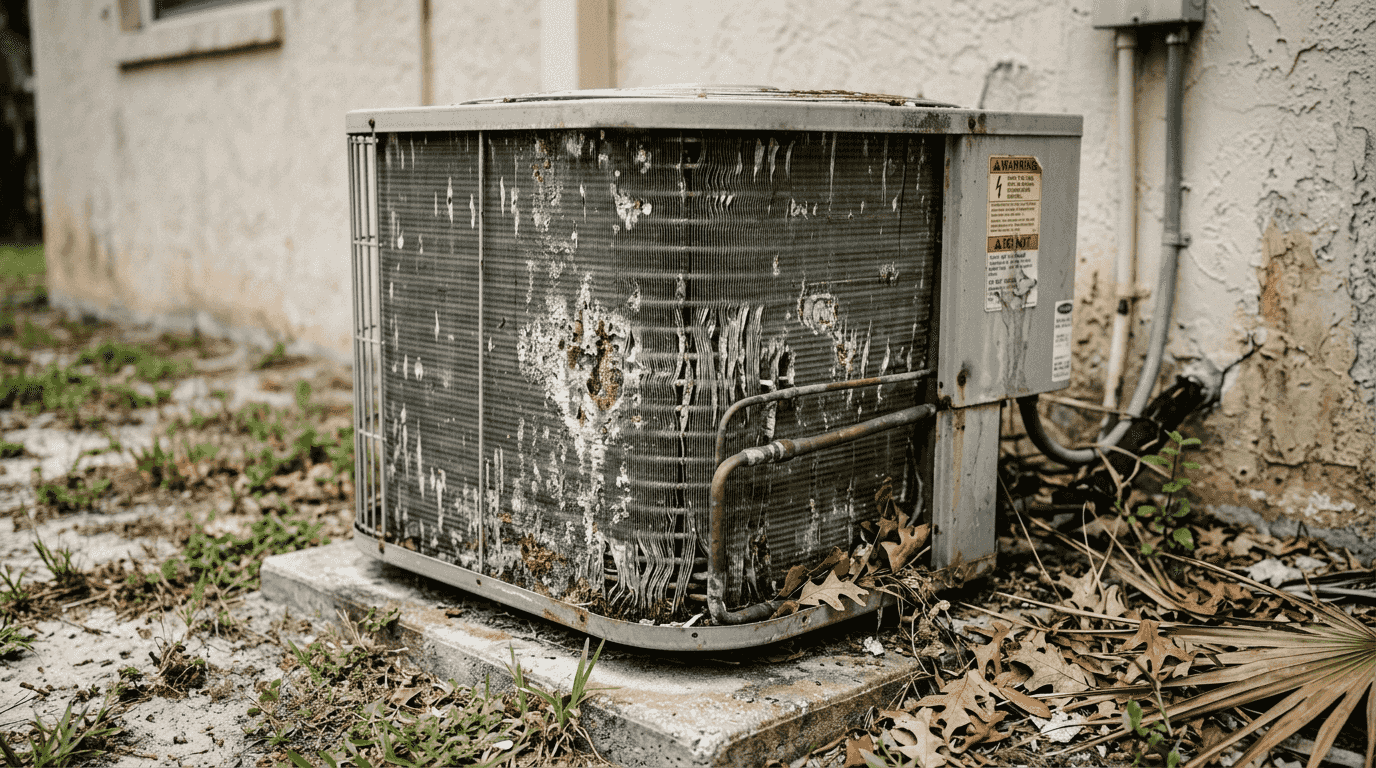
Strategic placement significantly reduces salt air corrosion by using your home as a windbreak. Installing your condenser on the leeward side, away from prevailing winds, shields it from direct salt spray. If relocation isn’t feasible, protective enclosures or strategically placed privacy fencing can deflect corrosive air currents.
Specialized coastal coatings provide a moisture barrier that protects aluminum and copper components. Epoxy or polyurethane treatments applied by professionals create a thin protective layer without restricting heat transfer. These coatings typically last 3-5 years before requiring reapplication.
Advanced protection methods:
- Leeward placement to minimize direct salt exposure
- Protective enclosures with adequate ventilation
- Professional anti-corrosion coatings
- Sacrificial anode installation
- Regular freshwater rinsing schedule
Sacrificial anodes corrode instead of your coils, acting like the zinc coating on galvanized steel. These magnesium or zinc rods attach to your condenser and attract corrosive elements, protecting more expensive components. Replacing anodes annually costs far less than repairing corroded coils.
Combining regular cleaning with these protective measures maximizes your unit’s lifespan in harsh coastal conditions. Homes within a mile of the beach should implement at least two protection strategies beyond basic cleaning. The investment pays for itself through extended equipment life and maintained efficiency.
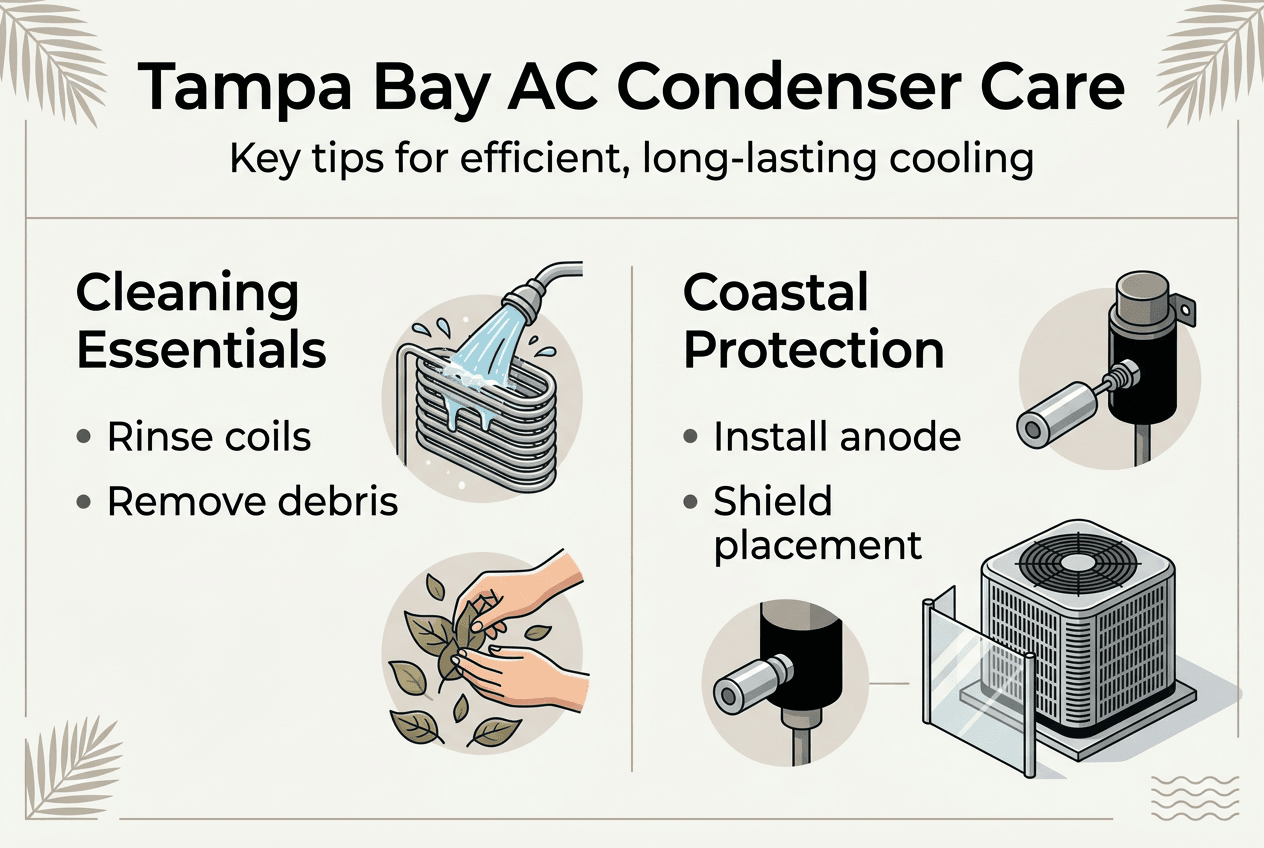
| Protection Method | Primary Benefit | Limitation | Best For |
|---|---|---|---|
| Strategic placement | Reduces direct salt exposure | Requires space and planning | New installations |
| Protective coatings | Creates moisture barrier | Needs reapplication every 3-5 years | All coastal units |
| Enclosures/shields | Physical barrier to salt spray | Must maintain airflow | High-exposure locations |
| Sacrificial anodes | Attracts corrosion away from coils | Requires annual replacement | Severe coastal conditions |
Pro Tip: Document your condenser’s condition with annual photos. Visual records help you track corrosion progression and justify protective investments to family members questioning the expense.
Exploring AC maintenance plans that include coastal-specific protection ensures professionals address your unique environmental challenges during regular service visits.
Keep your AC running smoothly with expert HVAC services
While DIY cleaning maintains your condenser between professional visits, annual deep cleaning by certified technicians ensures optimal performance and safety. Professional service includes pressure testing, refrigerant level checks, electrical connection inspection, and thorough coil cleaning that reaches areas homeowners can’t safely access.
Home Therapist Cooling, Heating, and Plumbing offers customized maintenance plans designed specifically for Tampa Bay’s coastal climate challenges. Our certified technicians understand salt air corrosion, humidity impacts, and seasonal demands on your cooling system. Regular professional care prevents costly breakdowns and maintains peak efficiency year-round.
Whether you need HVAC maintenance in Palm Harbor, HVAC service in Sun City Center, or anywhere throughout Tampa Bay, our family-owned business delivers reliable solutions. Explore our AC maintenance plans to complement your DIY efforts with expert care that protects your investment and keeps your home comfortable.
Frequently asked questions
How often should I clean my AC condenser in Tampa Bay?
Coastal homeowners within five miles of the beach should rinse their condenser every two weeks to prevent salt buildup. Inland residents can maintain efficiency with monthly cleaning during cooling season. Professional deep cleaning annually complements your regular rinsing schedule.
Can I use a pressure washer to clean my AC condenser?
No, pressure washers generate too much force and easily bend delicate aluminum fins. Use a standard garden hose with gentle spray pressure instead. Bent fins restrict airflow and reduce cooling efficiency, requiring professional repair to restore proper function.
What are signs that my AC condenser needs professional cleaning?
Watch for reduced cooling performance, higher than normal energy bills, or visible dirt buildup that DIY cleaning can’t remove. Unusual noises, frequent cycling, or bent fins that you can’t straighten also indicate the need for professional service. Catching these issues early prevents expensive repairs.
How does coastal climate affect my AC condenser maintenance routine?
Salt air accelerates corrosion on aluminum fins and copper coils, requiring more frequent rinsing than inland locations. Coastal units benefit from protective coatings, strategic placement away from prevailing winds, and potentially sacrificial anodes. These adaptations extend equipment life in harsh marine environments.
Recommended
- Air Conditioning Maintenance Guide for Tampa Bay Homes Home Therapist Cooling, Heating, and Plumbing
- Clean AC Coils: Boost Efficiency 30% in Tampa Bay
- Air Conditioning System Maintenance And Cleaning Project in Tampa FL 33615 Home Therapist Cooling, Heating, and Plumbing
- AC Tune-Up and Evaporator Coil Cleaning in Tampa, FL 33613