
What is a high-efficiency furnace? Save energy at home
Most Tampa Bay homeowners assume that buying the most efficient furnace on the market is always the smartest move. That logic makes perfect sense in Minnesota, but Florida is a different story. High-efficiency furnaces can absolutely cut your energy bills and boost comfort, but only when you understand what you’re actually buying and whether it fits your home’s real heating needs. This guide breaks down exactly what high-efficiency furnaces are, how they work, what they cost in Tampa Bay, and when they’re genuinely worth the investment versus when a different system serves you better.
Table of Contents
- What exactly is a high-efficiency furnace?
- How high-efficiency furnaces work: The technology explained
- What are the real energy and cost savings?
- Understanding costs, rebates, and payback periods
- Should you choose a high-efficiency furnace in Tampa Bay?
- Installation and maintenance tips for maximum efficiency
- Get expert help with energy-efficient heating in Tampa Bay
- Frequently asked questions
Key Takeaways
| Point | Details |
|---|---|
| AFUE defines efficiency | A high-efficiency furnace has at least 90% AFUE, which means most of your fuel becomes heat. |
| Climate affects value | In Tampa Bay’s mild winters, high-efficiency furnaces offer lower return on investment compared to heat pumps. |
| Costs and rebates matter | Upfront costs are higher, but rebates can offset the initial price and long-term savings depend on use. |
| Maintenance ensures savings | Proper installation and yearly maintenance are critical to keep a high-efficiency furnace working well. |
| Consider alternatives | Heat pumps often make more sense than gas furnaces in most Tampa Bay homes due to the climate. |
What exactly is a high-efficiency furnace?
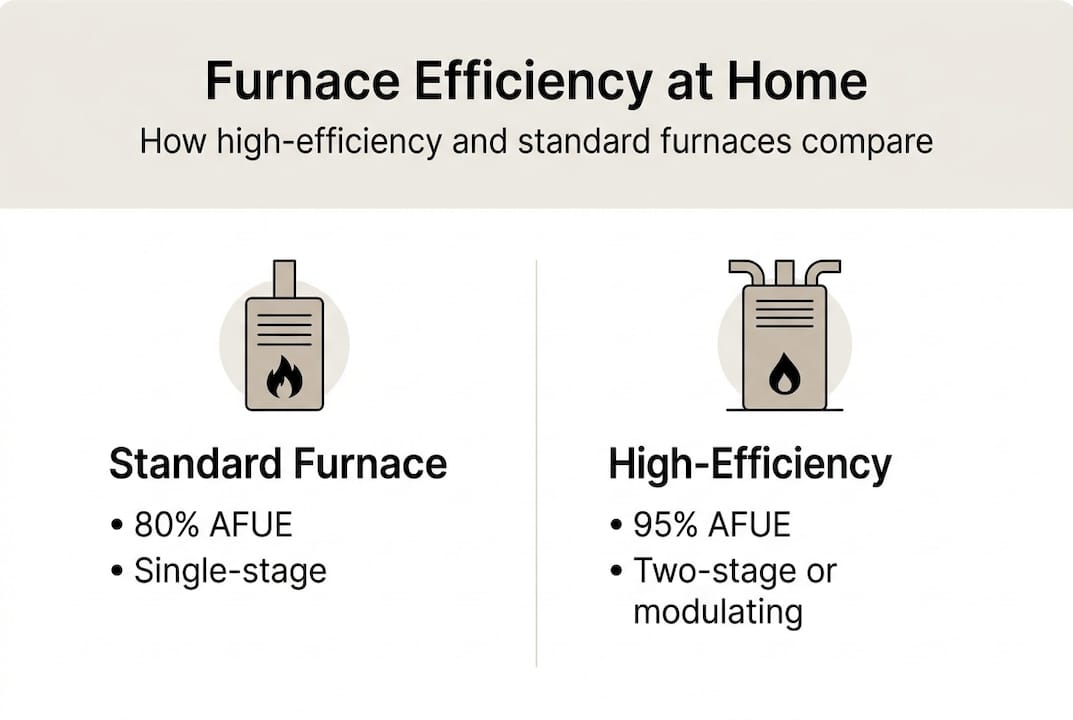
The term “high efficiency” gets thrown around a lot in HVAC marketing, so let’s cut through the noise. A furnace earns that label based on its AFUE rating. AFUE stands for Annualized Fuel Utilization Efficiency, and it measures what percentage of the fuel your furnace burns actually becomes usable heat in your home. An 80% AFUE furnace wastes 20 cents of every dollar you spend on gas. A 90%+ AFUE furnace is officially classified as high efficiency.
What makes these systems reach those numbers is condensing technology. Standard furnaces let hot exhaust gases escape through a metal flue. High-efficiency models add a secondary heat exchanger that captures heat from those exhaust gases before they leave the system. The exhaust cools so much that water vapor condenses out of it, which is where the extra energy comes from.
Here are the key features that define a high-efficiency furnace:
- AFUE rating of 90% or higher (top models reach 98%)
- Secondary heat exchanger to extract latent heat from exhaust
- PVC venting instead of traditional metal flue pipes
- Condensate drain to remove water produced during the condensing process
- Variable-speed blower on premium models for quieter, more consistent airflow
A condensing furnace achieves 90-98% AFUE by extracting latent heat from water vapor in exhaust gases through a secondary heat exchanger, requiring PVC venting and a condensate drain to handle the byproduct moisture.
How high-efficiency furnaces work: The technology explained
Understanding the process helps you appreciate why installation quality matters so much. Here is how air and fuel move through a high-efficiency furnace from start to finish:
- Cold air enters the furnace through the return air duct and passes through the filter.
- The burner ignites natural gas, and combustion happens in the primary heat exchanger, warming the air.
- Hot exhaust gases pass into the secondary heat exchanger instead of going straight to the flue.
- The secondary exchanger extracts remaining heat, cooling the exhaust enough that water vapor condenses into liquid.
- Cooled exhaust exits safely through a PVC pipe, and condensate drains away through a dedicated line.
This two-stage process is what separates a condensing furnace from a standard model. Here’s how the two compare side by side:
| Feature | Standard furnace | High-efficiency furnace |
|---|---|---|
| AFUE rating | 80% | 90-98% |
| Heat exchangers | One | Two (primary + secondary) |
| Venting material | Metal flue | PVC pipe |
| Condensate drain | No | Yes |
| Typical installed price | $2,500-$4,000 | $3,500-$7,500 |
Pro Tip: Even a 98% AFUE furnace will underperform if it’s installed incorrectly. Improper venting, wrong pipe sizing, or a poorly routed condensate drain can cancel out the efficiency gains you paid for. Always use a licensed HVAC technician who has specific experience with condensing systems.
What are the real energy and cost savings?
Here’s where Tampa Bay homeowners need to pay close attention, because the numbers look very different in Florida than they do up north.
Nationally, upgrading from an 80% AFUE furnace to a high-efficiency model can save 15-20% on fuel costs annually. In colder climates, that translates to $200-$500 per year in real savings. That’s a meaningful number when your furnace runs for six months straight.
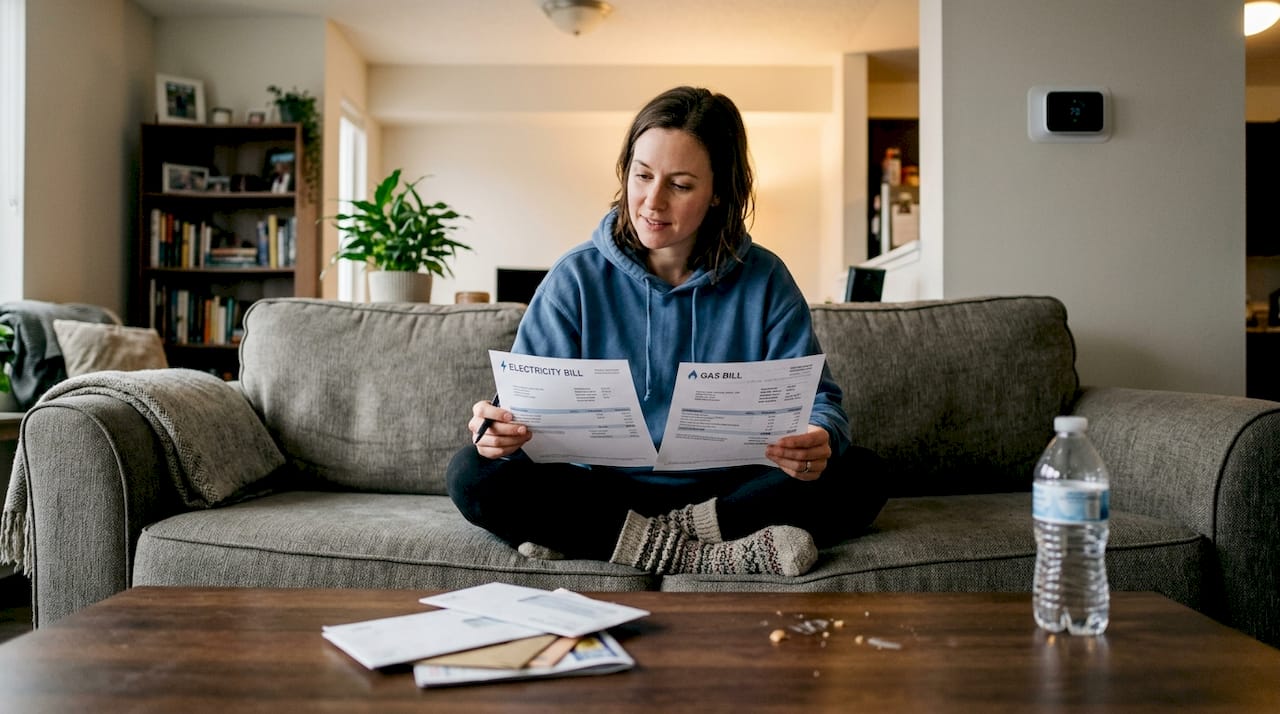
In Tampa Bay, your furnace might run for six weeks total across the entire year. That same 15-20% efficiency gain now saves you a fraction of what a northern homeowner would see. The math changes dramatically.
| Category | Standard furnace (80% AFUE) | High-efficiency furnace (95% AFUE) |
|---|---|---|
| Annual fuel usage (Tampa Bay) | Low, short heating season | Slightly lower, same short season |
| Estimated annual heating cost | $300-$600 | $250-$500 |
| Estimated annual savings | Baseline | $50-$100 |
| Carbon emissions | Higher per BTU | Lower per BTU |
The savings are real, but they’re modest in our climate. Factors that influence your actual return include local natural gas prices, how well your home is insulated, whether you qualify for utility rebates, and how cold Tampa Bay winters actually get in a given year. A particularly cold snap can shift the numbers, but it won’t transform the overall picture.
Understanding costs, rebates, and payback periods
Knowing the savings is only part of the story. You also need to know what you’re spending upfront and how long it takes to break even.
Installed costs for a high-efficiency furnace run $3,500-$7,500 compared to $2,500-$4,000 for a standard model. In Tampa Bay specifically, gas furnace installation typically falls in the $3,200-$6,500 range depending on the model and your home’s existing setup.
On the rebate side, furnaces with 95%+ AFUE qualify for federal tax credits up to $600 under current energy efficiency incentive programs. Some utility companies also offer rebates, so it’s worth checking with TECO or your local provider before you buy.
Factors that determine your payback period:
- Local climate: Shorter heating seasons mean slower payback. Tampa Bay’s mild winters stretch payback timelines significantly.
- Current fuel prices: Higher gas prices accelerate savings and shorten payback.
- Available rebates: A $600 tax credit meaningfully reduces your break-even timeline.
- Home insulation quality: A well-sealed home gets more value from any furnace upgrade.
- Furnace usage habits: Homes that use gas for both heating and water heating see faster returns.
In cold climates, payback runs 5-10 years. In Tampa Bay, you’re realistically looking at 10-15 years or longer without rebates. That’s a long time, and it’s why the decision deserves careful thought.
Should you choose a high-efficiency furnace in Tampa Bay?
Armed with the cost and savings data, here’s the honest answer: for most Tampa Bay homeowners, a heat pump is the smarter primary heating and cooling solution. Heat pumps are highly efficient in mild climates and handle both heating and cooling in one system. You can explore your heat pump installation options to see what fits your home.
That said, high-efficiency furnaces do make sense in specific situations. The condensate drain maintenance requirements and acidic condensate issues are real considerations, but they don’t disqualify the system entirely.
Pros of a high-efficiency furnace for Tampa Bay homes:
- Lower fuel consumption during cold snaps
- Qualifies for federal tax credits
- Excellent backup heat source paired with a heat pump
- Longer equipment lifespan with proper maintenance
Cons for Tampa Bay specifically:
- Long payback period due to short heating season
- Higher upfront cost than standard models
- Condensate drain adds a maintenance requirement
- Heat pumps typically offer better overall value in our climate
If you’re still weighing your options, our guide to choosing an HVAC system walks through the full comparison for Florida homes.
Pro Tip: If you already have a heat pump and want gas backup for rare cold nights, a standard 80% AFUE furnace often makes more financial sense than a high-efficiency model in Tampa Bay. The savings gap simply doesn’t justify the premium when the system runs so infrequently.
Installation and maintenance tips for maximum efficiency
Once you decide on a system, getting the installation right is everything. A poorly installed high-efficiency furnace is just an expensive standard furnace.
Key installation best practices:
- Hire a licensed HVAC contractor with condensing furnace experience
- Ensure PVC venting is properly sized and routed to avoid moisture buildup
- Confirm the condensate drain has a clear path and proper slope
- Verify the system is correctly sized for your home’s actual heating load
- Install a programmable or smart thermostat to maximize real-world efficiency
Ongoing maintenance matters just as much. Variable-speed blowers and modulating burners in premium models only deliver their efficiency advantage when the system is clean and well-maintained. Poor installation or neglected upkeep erases those gains fast.
Here are the maintenance steps to follow each year:
- Replace the air filter every 1-3 months depending on your home’s dust levels.
- Inspect and flush the condensate drain to prevent clogs and water damage.
- Check condensate for acidity and use a neutralizer if needed, since acidic condensate can damage drain lines over time.
- Schedule an annual tune-up with a certified technician before the heating season.
- Test the igniter and burner to confirm clean, efficient combustion.
For a full breakdown of what to check and when, our HVAC maintenance tips page covers everything in detail. You can also review our beginner HVAC maintenance guide or our step-by-step HVAC maintenance steps resource for seasonal checklists.
Pro Tip: Proper sizing is the single most overlooked factor in furnace efficiency. An oversized furnace short-cycles, meaning it turns on and off too frequently, which wastes energy and wears out components faster. Always ask your installer to perform a Manual J load calculation before recommending a unit size.
Get expert help with energy-efficient heating in Tampa Bay
Deciding between a high-efficiency furnace, a standard model, or a heat pump is not a one-size-fits-all answer, especially in Tampa Bay’s unique climate. The right choice depends on your home’s size, existing equipment, insulation, and how you use your heating system through the year.
At Home Therapist Cooling, Heating, and Plumbing, our certified technicians help Tampa Bay homeowners make that call with confidence. We offer personalized system comparisons, upfront installation quotes, and ongoing maintenance plans that keep your equipment running at peak efficiency. Check out our full range of Tampa heating solutions to compare your options, or schedule HVAC maintenance help to keep your current system in top shape. Reach out to the Tampa Bay HVAC pros at Home Therapist today and get the honest advice your home deserves.
Frequently asked questions
What does AFUE mean and why does it matter for furnaces?
AFUE, or Annualized Fuel Utilization Efficiency, measures how much of the fuel your furnace burns actually becomes heat. A 90%+ AFUE rating means less wasted energy and lower monthly gas bills compared to older, less efficient models.
Are high-efficiency furnaces worth it for mild Florida winters?
In Tampa Bay’s climate, the short heating season limits your annual savings, making the payback period much longer than in colder states. They work best as gas backup in mild climates paired with a heat pump, or when federal tax credits and rebates help offset the higher upfront cost.
How much does a high-efficiency furnace cost to install in Tampa Bay?
Installed costs typically range from $3,200 to $6,500 in Tampa Bay, depending on the model, brand, and your home’s existing setup. You can review Tampa Bay install costs for a more detailed local breakdown.
What maintenance does a high-efficiency furnace need?
These systems need annual professional inspections, regular filter changes every one to three months, and consistent condensate drain upkeep to prevent clogs and protect drain lines from acidic buildup.