

HVAC Energy Recovery: Boosting Tampa Bay Home Efficiency
Many American homes waste nearly half their heating and cooling energy through traditional ventilation methods. For Tampa Bay homeowners facing humid summers and rising utility bills, cutting down on this energy loss is more than just an environmental choice. Discover how HVAC energy recovery technology uses advanced engineering to capture and reuse what would be wasted, helping you achieve lower costs, better comfort, and healthier air while keeping your home efficient all year.
Table of Contents
- What Is HVAC Energy Recovery Technology?
- Types of Residential Energy Recovery Systems
- How Energy Recovery Works in HVAC Units
- Benefits and Cost Savings for Homeowners
- Comparing Energy Recovery to Other Solutions
Key Takeaways
| Point | Details |
|---|---|
| Energy Recovery Technology Enhances Efficiency | HVAC Energy Recovery Technology captures waste heat to condition incoming air, improving home comfort and significantly reducing energy consumption. |
| Types of Systems Available | Homeowners can select from Heat Recovery Ventilators (HRVs) or Energy Recovery Ventilators (ERVs) depending on climate needs, with each offering unique benefits. |
| Cost Savings for Homeowners | Implementing these systems can lead to 20-40% lower utility bills while also maintaining indoor air quality and humidity levels. |
| Comparison with Traditional HVAC | Energy recovery solutions outperform traditional methods by reclaiming thermal energy, leading to reduced operational costs and improved indoor environments. |
What Is HVAC Energy Recovery Technology?
HVAC Energy Recovery Technology represents an innovative approach to improving home comfort and energy efficiency by intelligently managing indoor air exchange. This sophisticated system captures waste heat from exhaust air to condition incoming fresh air, dramatically reducing the energy required to heat or cool your home.
At its core, energy recovery ventilation works by transferring thermal energy between outgoing and incoming air streams. When your home’s exhaust air is expelled, the system captures its residual heat or cooling potential before releasing it outside. This captured energy is then used to preheat or precool the incoming fresh air, which means your HVAC system doesn’t have to work as hard to maintain your desired indoor temperature. Modern systems can recover between 60 and 95% of the energy normally lost during standard ventilation processes.
There are several types of energy recovery technologies used in residential HVAC systems. Heat wheels (rotary heat exchangers) can absorb both heat and moisture, while heat pipes transfer thermal energy through phase changes. Plate heat exchangers use metal plates to conduct heat transfer, and enthalpy wheels can move both heat and moisture between air streams. Each technology offers unique advantages depending on your specific home’s climate and architectural characteristics.
Pro tip: When considering an energy recovery ventilation system, consult with a local HVAC professional who understands Tampa Bay’s specific humidity and temperature challenges to select the most appropriate technology for your home.
Types of Residential Energy Recovery Systems
Homeowners in Tampa Bay have several sophisticated residential energy recovery systems available to improve home comfort and efficiency. These advanced technologies help manage indoor air quality while significantly reducing energy consumption by intelligently transferring thermal energy between incoming and outgoing air streams.
Two primary categories of energy recovery systems dominate residential applications: Heat Recovery Ventilators (HRVs) and Energy Recovery Ventilators (ERVs). HRVs focus exclusively on transferring sensible heat, making them ideal for climates with less humidity variation. ERVs offer more comprehensive performance by transferring both sensible and latent heat, which means they can manage moisture levels alongside temperature, providing superior indoor comfort for Tampa Bay homes with high humidity.
The most common residential energy recovery technologies include heat wheels, heat pipes, plate heat exchangers, and run-around coil systems. Heat wheels rotate to transfer heat and moisture between air streams, making them versatile for various climate conditions. Heat pipes use refrigerant phase changes to move thermal energy with minimal maintenance requirements. Plate heat exchangers completely separate air streams to prevent cross-contamination, while run-around coil systems use fluid loops to transfer heat between non-adjacent air streams.
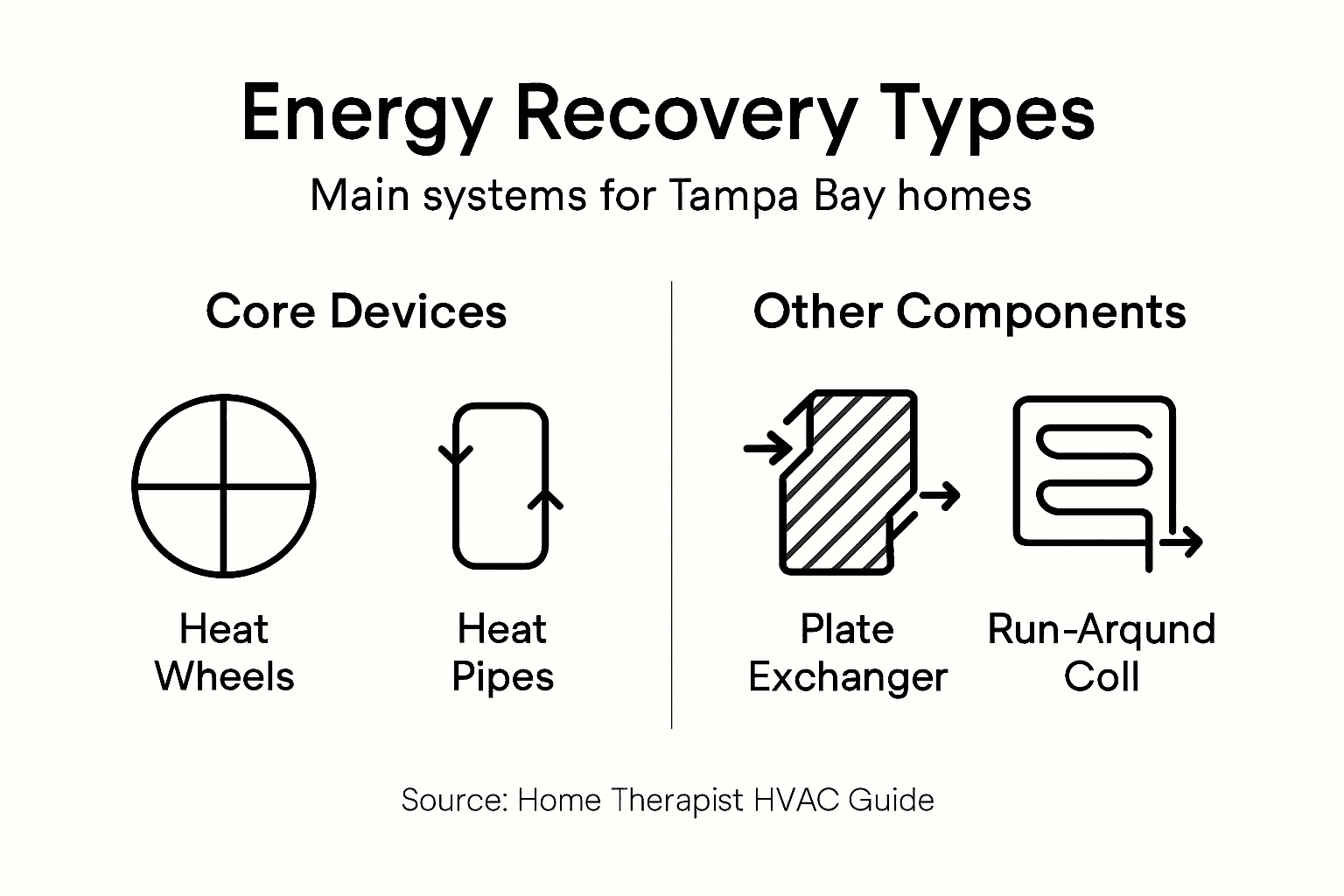
To help homeowners understand the differences between common residential energy recovery technologies, here is a comparative overview:
| Technology Type | Main Function | Maintenance Needs | Best Suited For |
|---|---|---|---|
| Heat Wheel | Transfers heat/moisture | Periodic cleaning | Humid to mixed climates |
| Plate Heat Exchanger | Transfers only heat | Low, occasional dusting | Dry or moderate climates |
| Heat Pipe | Transfers heat | Minimal, no moving parts | Low-maintenance households |
| Run-Around Coil | Transfers heat non-adjacent | Annual inspection | Complex ductwork layouts |
Pro tip: When selecting an energy recovery system for your Tampa Bay home, consider consulting an HVAC professional who can assess your specific humidity levels, home layout, and energy efficiency goals to recommend the most suitable technology.
How Energy Recovery Works in HVAC Units
Energy recovery in HVAC units is a sophisticated process that transfers thermal energy between airstreams without physically mixing the air. At the heart of this technology is a specialized heat exchanger core that captures and redirects energy from exhaust air, dramatically reducing the workload on heating and cooling systems.
The core mechanism involves two distinct air streams moving through separate channels within the heat exchanger. As warm exhaust air passes through one channel, it transfers its thermal energy to the incoming fresh air moving through an adjacent channel. This process works effectively in both winter and summer seasons. During colder months, the system preheats incoming cold air using the warmth from indoor exhaust air. Conversely, in hot Tampa Bay summers, the system pre-cools incoming warm air by extracting coolness from the indoor exhaust air, helping maintain comfortable indoor temperatures while minimizing energy consumption.
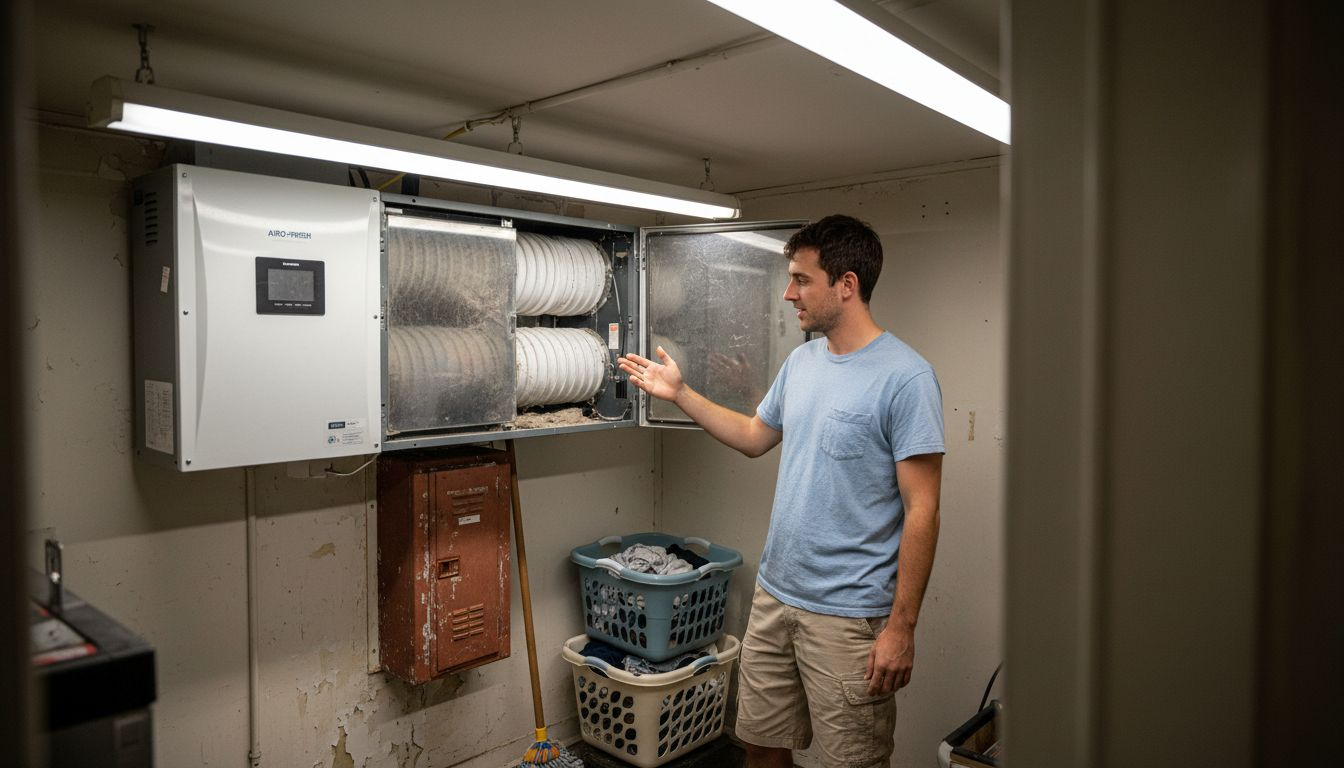
Different energy recovery technologies employ various methods to achieve this thermal transfer. Heat wheels rotate slowly, absorbing and releasing heat as they spin. Plate exchangers use thin metal plates to conduct heat between air streams, ensuring no direct air mixing occurs. Heat pipes use refrigerant phase changes to move thermal energy efficiently, while run-around coil systems use fluid loops to transfer heat between non-adjacent air streams. The efficiency of these systems can range from 60 to 95 percent heat recovery, depending on the specific technology and environmental conditions.
Pro tip: Consider scheduling a professional energy audit to determine which specific energy recovery technology would work best for your Tampa Bay home’s unique climate and architectural characteristics.
Benefits and Cost Savings for Homeowners
Tampa Bay homeowners can achieve substantial financial advantages by implementing energy recovery technologies, with systems recovering up to 95% of thermal energy that would traditionally be lost through standard ventilation processes. These innovative HVAC solutions dramatically reduce energy consumption, translating directly into lower monthly utility bills and improved home efficiency.
The financial benefits extend beyond immediate energy savings. By maintaining consistent indoor humidity levels and preventing extreme temperature fluctuations, energy recovery systems help protect your home’s structural integrity. Reduced moisture means less potential for mold growth, wood warping, and other humidity-related damages that can lead to expensive repairs. Homeowners can expect potential annual savings ranging from 20 to 40 percent on heating and cooling expenses, depending on their specific home configuration and local climate conditions.
Beyond monetary advantages, these systems provide significant quality-of-life improvements. Continuous fresh air circulation helps eliminate indoor pollutants, reduces allergen concentrations, and creates a healthier living environment. Air quality improvements mean fewer respiratory issues, potentially lowering long-term healthcare costs. Consistent temperature management ensures comfortable living spaces year-round, with minimal temperature variations between rooms and reduced strain on traditional HVAC equipment, which can extend the lifespan of your heating and cooling systems.
Here is a summary of key benefits Tampa Bay homeowners can expect from energy recovery systems:
| Benefit Category | Impact | Long-Term Advantage |
|---|---|---|
| Energy Cost Savings | 20–40% lower utility bills | Reduced yearly expenses |
| Indoor Air Quality | Reduces allergens and pollutants | Healthier living environment |
| Humidity Management | Maintains ideal moisture levels | Helps prevent mold and damage |
| HVAC System Lifespan | Lowers wear on equipment | Fewer repairs, longer system life |
Pro tip: Request a professional energy audit to precisely calculate your potential savings and determine the most cost-effective energy recovery solution for your specific Tampa Bay home.
Comparing Energy Recovery to Other Solutions
Traditional HVAC ventilation strategies pale in comparison to advanced energy recovery technologies, with systems dramatically reducing energy waste through intelligent thermal transfer mechanisms. Unlike standard ventilation approaches that simply exhaust conditioned air and introduce unconditioned outdoor air, energy recovery systems actively reclaim and repurpose thermal energy, creating a more efficient and sustainable home environment.
When comparing energy recovery solutions to conventional HVAC methods, several key differences emerge. Traditional systems require separate heating and cooling processes, consuming significantly more energy and generating higher utility costs. Energy recovery ventilators (ERVs) and heat recovery ventilators (HRVs) integrate thermal transfer capabilities, allowing them to precondition incoming air using energy from exhaust streams. This approach reduces the workload on primary heating and cooling equipment, leading to lower energy consumption and enhanced system longevity.
The technological superiority of energy recovery systems becomes particularly evident in their ability to manage both temperature and humidity. While basic ventilation strategies struggle with indoor air quality, advanced energy recovery technologies like enthalpy wheels can transfer moisture alongside thermal energy. This unique capability ensures more consistent indoor environments, reduces potential for mold growth, and maintains optimal humidity levels. Additionally, these systems often comply with stringent energy efficiency codes, providing homeowners with a future-proof solution that aligns with evolving environmental standards.
Pro tip: Request multiple system comparisons from certified HVAC professionals to understand which energy recovery technology best matches your Tampa Bay home’s specific architectural and climate requirements.
Enhance Your Tampa Bay Home’s Efficiency with Expert HVAC Energy Recovery Solutions
The challenge of managing high humidity and energy costs in Tampa Bay homes calls for advanced HVAC energy recovery technology that handles both temperature and moisture efficiently. If you want to reduce your utility bills while improving indoor air quality and comfort, understanding and implementing systems like energy recovery ventilators can be a game-changer. These solutions help transfer heat and moisture to maintain ideal humidity levels and lessen the strain on your heating and cooling system.
Take control of your home’s energy use today by partnering with Home Therapist Cooling, Heating, and Plumbing. Our certified technicians specialize in installing and servicing energy recovery HVAC systems designed for Tampa Bay’s unique climate. Visit our website to learn how we can help you save money and create a healthier living environment. Don’t wait to experience the benefits of cutting-edge comfort technology. Contact us now at Home Therapist Cooling, Heating, and Plumbing and start optimizing your home’s energy efficiency.
Frequently Asked Questions
What is HVAC energy recovery technology?
HVAC energy recovery technology improves home comfort and energy efficiency by capturing waste heat from exhaust air to precondition incoming fresh air, significantly reducing the energy needed to heat or cool your home.
How does energy recovery ventilation work in HVAC systems?
Energy recovery ventilation uses a heat exchanger to transfer thermal energy between outgoing and incoming air streams, allowing systems to maintain indoor temperature more efficiently by reclaiming energy from exhaust air.
What are the main types of energy recovery systems for homes?
The main types of energy recovery systems include Heat Recovery Ventilators (HRVs), which transfer sensible heat, and Energy Recovery Ventilators (ERVs), which manage both sensible and latent heat, providing better indoor comfort, especially in humid climates.
What are the benefits of energy recovery systems for homeowners?
Energy recovery systems can lead to 20-40% savings on energy costs, improved indoor air quality, humidity management, and reduced strain on HVAC systems, extending their lifespan and preventing potential repairs.
About This Guide
Written and reviewed by the Home Therapist Cooling, Heating & Plumbing team, a family-owned Tampa Bay HVAC and plumbing company serving the area since 2011. Our licensed techs hold Florida HVAC license CAC1819196 and Plumbing license CFC1431159, with over 1,100 five-star reviews across Tampa, St. Petersburg, Clearwater, Wesley Chapel, Lutz, Riverview, Brandon, Valrico, Apollo Beach, Palm Harbor, Land O’ Lakes, Plant City, New Port Richey, and surrounding Tampa Bay zip codes.
Honest pricing: $279 labor minimum. Upfront quotes, no high-pressure sales, no surprise fees.
Questions about your home? Call (813) 343-2212 for a real tech, or request a callback. Available 7 days a week including evenings and weekends for emergencies.
Recommended
- HVAC Retrofitting Explained: Enhancing Home Comfort – Home Therapist Cooling, Heating, and Plumbing
- Why Choose Energy Efficient HVAC Systems in Tampa
- HVAC Energy Audit: Lower Bills and Greater Comfort
- New Attic Insulation And System Tune-Up Project in Tampa FL 33603 – Home Therapist Cooling, Heating, and Plumbing
- 8 Indoor Air Quality Tips for a Healthier Home – Coway Water Purifier


