
7 proven ways to prevent mold in your HVAC system
Florida’s heat and humidity make Tampa Bay one of the most mold-prone regions in the country. Your HVAC system runs almost year-round, pulling in warm, moisture-heavy air and cycling it through your home. That constant exposure creates the perfect conditions for mold to take hold inside your ducts, coils, and drain pans. The good news? Keeping indoor humidity below 60% is one of the most effective ways to stop mold before it starts. This guide walks you through seven proven strategies to protect your home and your family.
Table of Contents
- How to control moisture and humidity in your home
- Change your HVAC filters regularly
- Schedule annual professional HVAC maintenance
- Seal and insulate your ducts to prevent condensation
- Install UV-C lights for ongoing HVAC mold prevention
- When and why to call in a certified HVAC mold remediation team
- Summary: Comparing all methods to prevent HVAC mold
- Keep your Tampa Bay home mold-free with expert HVAC support
- Frequently asked questions
Key Takeaways
| Point | Details |
|---|---|
| Control humidity | Keep your home’s humidity between 30% and 50% to block mold growth in HVAC systems. |
| Replace filters often | Install MERV-13 or better filters and change them every 1-3 months, especially in humid weather. |
| Annual professional maintenance | Hire certified HVAC pros yearly to clean coils, pans, and condensate lines and prevent hidden mold. |
| Seal and insulate ducts | Well-insulated, sealed ducts prevent condensation and stop mold from forming in unconditioned spaces. |
| Supplement with UV-C | UV-C lights add protection on coils but should complement moisture and filter strategies for best results. |
How to control moisture and humidity in your home
Moisture is the single biggest reason mold grows inside HVAC systems. Tampa Bay summers push outdoor humidity into the 80-90% range, and that air finds its way inside every time a door opens or a window leaks. Once indoor humidity climbs, mold spores that are always floating in the air find a surface and settle in.
The EPA recommends keeping indoor humidity between 30-50%, and never letting it exceed 60%. Staying in that range is your first and most powerful line of defense against preventing HVAC mold in your home.
Here are practical steps to keep moisture under control:
- Install a whole-home or portable dehumidifier, especially in bedrooms and living areas
- Use exhaust fans in bathrooms and kitchens every time you cook or shower
- Seal gaps around windows and doors where humid outdoor air sneaks in
- Check your indoor moisture control levels with a smart hygrometer, which costs under $20 at most hardware stores
- Keep interior doors open to allow airflow between rooms
Pro Tip: Run your AC even on mild days. Your air conditioner removes moisture from the air as it cools, so keeping it running at a moderate setting during humid stretches does more for mold prevention than you might expect.
Change your HVAC filters regularly
With moisture managed, the next line of defense is keeping airborne spores from getting established inside your system. Your HVAC filter is the first barrier between outdoor air and your home’s air supply. When it gets clogged, airflow drops, humidity builds up inside the unit, and mold gets a foothold.
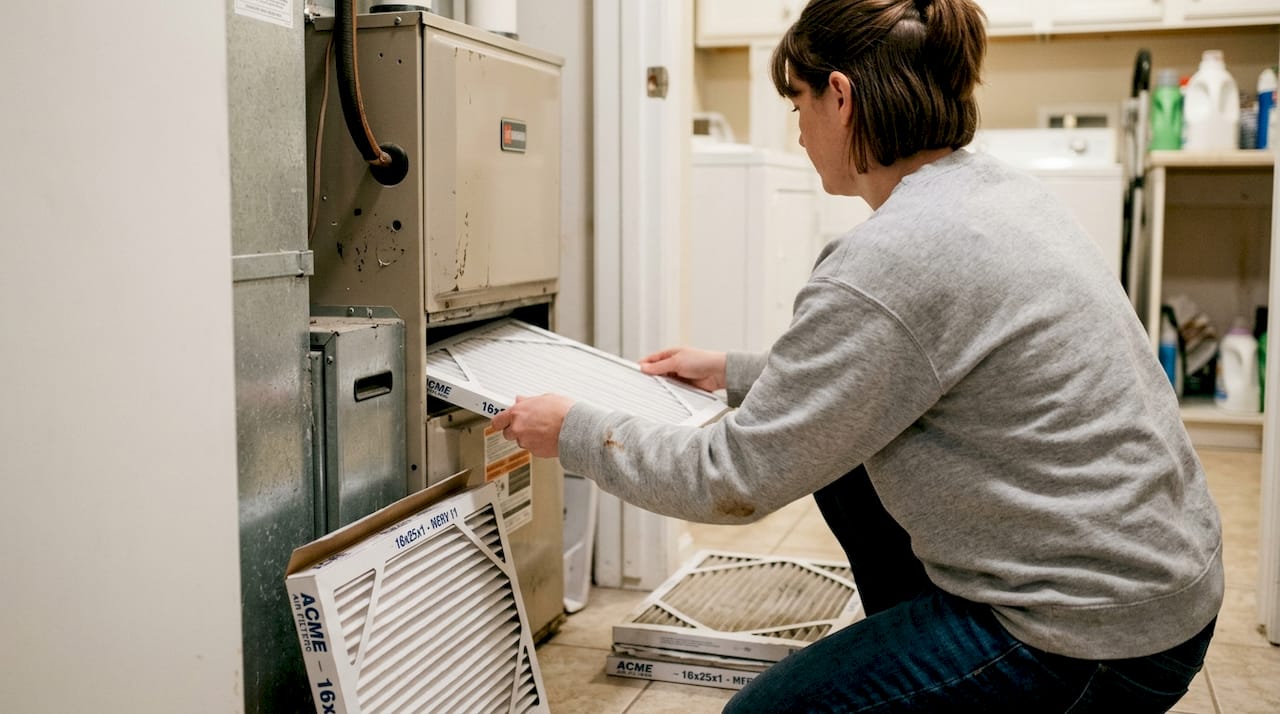
Experts recommend changing filters every 1-3 months, with monthly replacements being the smart call during Tampa’s peak summer months. For filter type, look for a MERV-13 rating or higher. These filters capture mold spores effectively without restricting airflow enough to strain your system.
Here’s how to stay on top of filter maintenance:
- Check your filter every 30 days during summer, even if you just replaced it
- Hold the filter up to light. If you can’t see through it, replace it immediately
- Look for musty smells near vents or visible dust buildup around registers as early warning signs
- Stock up on filters at the start of each season so you always have a replacement ready
- Note the filter size on your phone so you never buy the wrong one
For more guidance, our HVAC maintenance tips page covers filter selection in detail, and our beginners HVAC guide is a great starting point if you’re new to home maintenance.
Pro Tip: Set a recurring phone reminder for the first of each month to check your filter. It takes two minutes and can save you hundreds in mold remediation costs.
Schedule annual professional HVAC maintenance
Routine filter changes are vital, but some tasks require expert tools and know-how. The parts of your HVAC system most vulnerable to mold, including the evaporator coils, drain pan, and condensate line, are not accessible without proper equipment.
The EPA recommends annual professional cleaning of coils and drain pans to eliminate the moisture sources that feed mold growth. A trained technician will inspect and clean every component that traps water, check refrigerant levels, and verify that your system is draining properly.
Here’s what a professional maintenance visit typically covers:
- Evaporator coil cleaning: Removes biofilm and mold colonies that form on the cold, wet surface
- Drain pan inspection: Clears standing water and algae buildup that feeds mold
- Condensate line flush: Prevents clogs that cause water to back up into the unit
- Airflow and efficiency check: Confirms the system isn’t working harder than it should
- Duct inspection: Identifies leaks or damage that allow humid air to enter
Our HVAC maintenance steps guide explains what each step involves, and you can learn how regular service connects to HVAC system life expectancy in Tampa Bay homes.
Seal and insulate your ducts to prevent condensation
Annual professional maintenance should also include checks on ducts, but targeted insulation delivers year-round results. In Tampa Bay, attics can reach 140°F in summer. When cool air from your AC travels through ducts in that heat, the duct surface sweats, just like a cold glass of water on a humid day.
That condensation soaks into duct insulation and liner material, creating a damp environment where mold thrives. The EPA specifically recommends insulating ducts in unconditioned spaces like attics and garages to prevent this problem in Florida’s climate.
Steps you can take to protect your ducts:
- Inspect visible duct runs in your attic or garage for gaps, cracks, or peeling insulation
- Use foil tape (not standard duct tape, which fails in heat) to seal seams and small gaps
- Wrap exposed ducts with fresh insulation if the existing wrap is torn or compressed
- Ask your HVAC technician to check for negative pressure issues that pull humid attic air into the system
Pro Tip: If your home was built before 1990, pay extra attention to duct liner condition. Older porous liners absorb moisture and harbor mold in ways that cleaning alone cannot fix. Replacement is often the better call.
For more on protecting your equipment long-term, see our guide on extending HVAC lifespan.
Install UV-C lights for ongoing HVAC mold prevention
While insulation fights water on surfaces, UV-C lights tackle spores at the source for sensitive households. UV-C light destroys the DNA of mold spores and bacteria, preventing them from reproducing on your evaporator coils and drain pan.
When installed correctly inside the air handler, UV-C systems can reduce mold on exposed surfaces by up to 99%. That’s a significant improvement for households with allergy sufferers or anyone with respiratory sensitivities. Learn more about using UV-C lights in HVAC systems and whether they’re right for your home.
Before you invest, here’s what to know:
- UV-C lights work best on surfaces they can directly reach. Spores hiding in duct shadows or behind components are largely unaffected
- Bulbs need replacement every 1-2 years to maintain effectiveness
- The lights themselves require periodic cleaning to prevent dust from blocking output
- UV-C is a supplement, not a replacement, for moisture control and filter maintenance
“Moisture control is always the first priority. UV-C lights and HEPA filtration are valuable secondary tools, but they cannot compensate for an HVAC system that is chronically wet.” — Industry consensus supported by EPA mold guidance
When and why to call in a certified HVAC mold remediation team
Even the best habits can’t always prevent all mold growth, which brings us to handling small vs. significant contamination. Knowing when to handle something yourself and when to call a professional is critical for your safety and your home’s air quality.
For small issues, like a dusty filter or a minor musty smell near a vent, you can often address the problem yourself. But the EPA is clear: mold exceeding 10 square feet or any mold growth inside your ductwork requires a certified professional.
Here’s a quick breakdown of what each situation calls for:
- DIY appropriate: Replacing filters, wiping outer vent covers, cleaning minor surface mold on accessible areas under 10 sq ft
- Call a pro: Any mold inside ducts, on coils, or covering more than 10 sq ft of surface area
| Situation | DIY or pro? | Why |
|---|---|---|
| Dirty or clogged filter | DIY | Simple swap, no mold risk |
| Musty smell from vents | Pro inspection | Could indicate duct or coil mold |
| Visible mold on vent cover | DIY (clean with solution) | Surface only, contained |
| Mold inside ductwork | Pro only | Requires HEPA equipment and containment |
| Mold over 10 sq ft | Pro only | EPA threshold for professional remediation |
A NADCA-certified team uses HEPA vacuums, containment barriers, and antimicrobial treatments to safely remove mold without spreading spores through your home. Watch for HVAC mold warning signs so you know when to make the call.
Summary: Comparing all methods to prevent HVAC mold
Now that you know the specifics, here’s a side-by-side look at all the top strategies so you can build the right prevention plan for your home. All major sources, including EPA mold guidance, agree that moisture control comes first, with UV-C and HEPA filtration as valuable secondary tools.
| Method | Best for | Limitation |
|---|---|---|
| Humidity control | All homes | Requires monitoring and equipment |
| Filter replacement | All homes | Must be done consistently |
| Professional maintenance | All homes | Annual cost |
| Duct sealing and insulation | Older homes, attic ducts | One-time project with lasting results |
| UV-C lights | Allergy-prone households | Supplement only, not standalone |
| Professional remediation | Active mold growth | Needed when prevention has already failed |
If your budget or time is limited, start with humidity control and filter changes. Those two steps alone eliminate the conditions mold needs to survive. Add professional maintenance annually, and you’ve covered the vast majority of risk.
Watch for these warning signs that mean you need to act now:
- A persistent musty or earthy smell when the AC runs
- Visible dark spots near vents or on duct surfaces
- Increased allergy symptoms or respiratory irritation at home
- Water stains near your air handler or on ceiling tiles below ducts
- Reduced airflow from registers despite a clean filter
Keep your Tampa Bay home mold-free with expert HVAC support
Ready to put these strategies into action? At Home Therapist Cooling, Heating, and Plumbing, we’ve helped hundreds of Tampa Bay homeowners protect their HVAC systems from mold before it becomes a costly problem. Whether you want to understand HVAC comfort in Tampa Bay or explore HVAC retrofitting in Tampa Bay to upgrade older ductwork and equipment, our certified technicians are ready to help.

Our family-owned team brings local expertise and genuine care to every job. From annual tune-ups to full mold remediation support, we make it easy to keep your home safe and comfortable year-round. If you’re just getting started, our HVAC maintenance made easy guide is a great first step. Or call us today to schedule a visit from a technician who knows Tampa Bay homes inside and out.
Frequently asked questions
What humidity level prevents mold in my HVAC?
Keeping indoor humidity between 30% and 50%, and always below 60%, prevents mold growth in HVAC systems and throughout your home.
How often should I change my HVAC filter in Tampa Bay?
Change your HVAC filter every 1-3 months, with monthly changes recommended during peak summer humidity when your system runs hardest.
Are UV-C lights worth it for mold prevention?
UV-C lights can reduce mold by up to 99% on exposed coil and drain pan surfaces, but they work best as a supplement to moisture control and regular filter changes, not as a standalone solution.
Do I really need professional mold remediation for my HVAC?
Yes, if you have more than 10 square feet of mold or any growth inside your ductwork, professional remediation with HEPA equipment is required for safe and effective removal.
Recommended
- 7 Smart Ways to Extend Your HVAC Lifespan
- 7 Essential Spring HVAC Maintenance Tips for Homeowners
- 7 Essential HVAC Maintenance Checklist Tips for Homeowners Home Therapist Cooling, Heating, and Plumbing
- 7 Essential Steps for an Effective HVAC Checklist for Spring
- Controlo eficaz de humidade e condensação em Portugal