
Water Heater Maintenance and Plumbing Decisions in Tampa, FL 33625
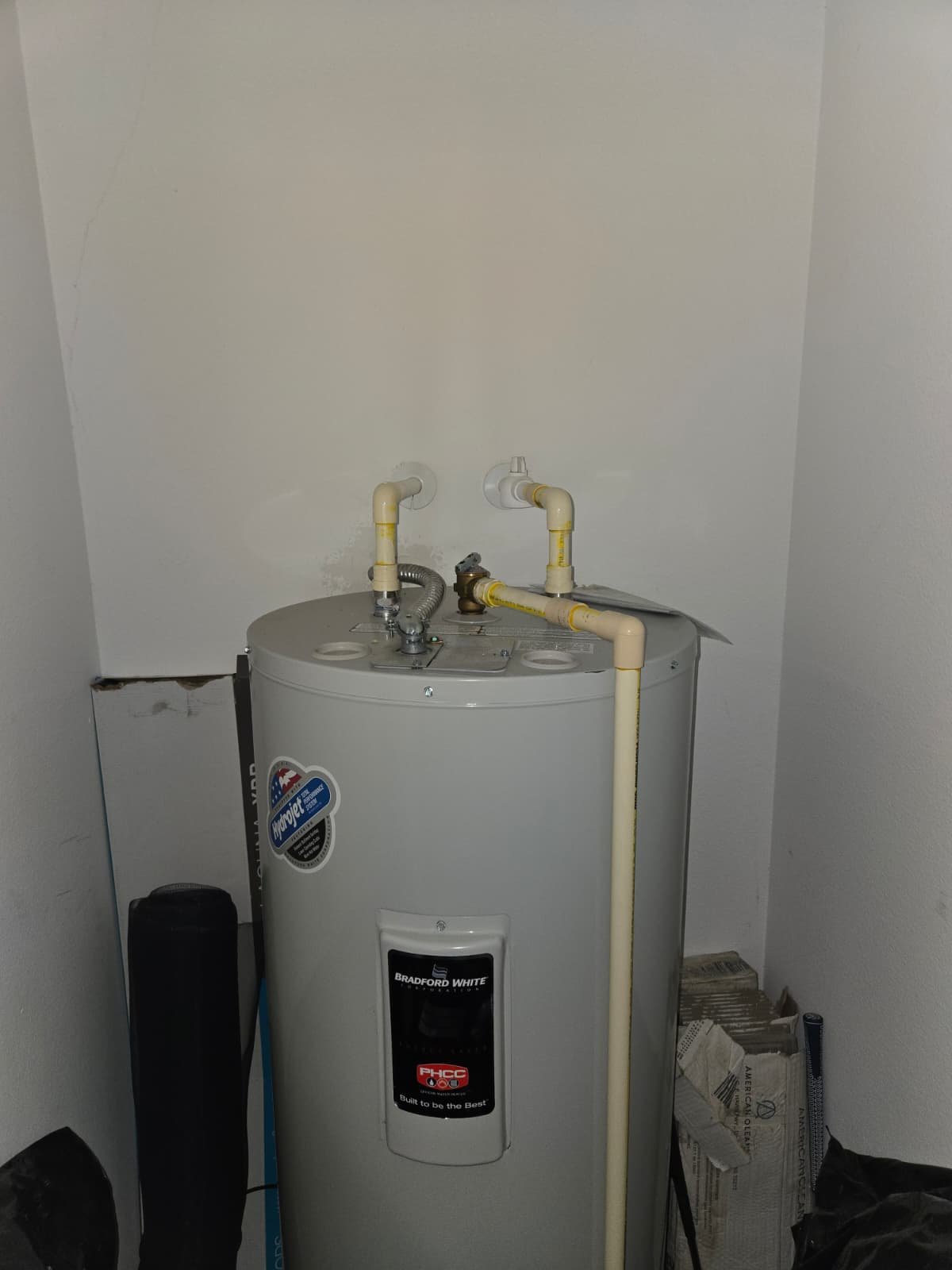
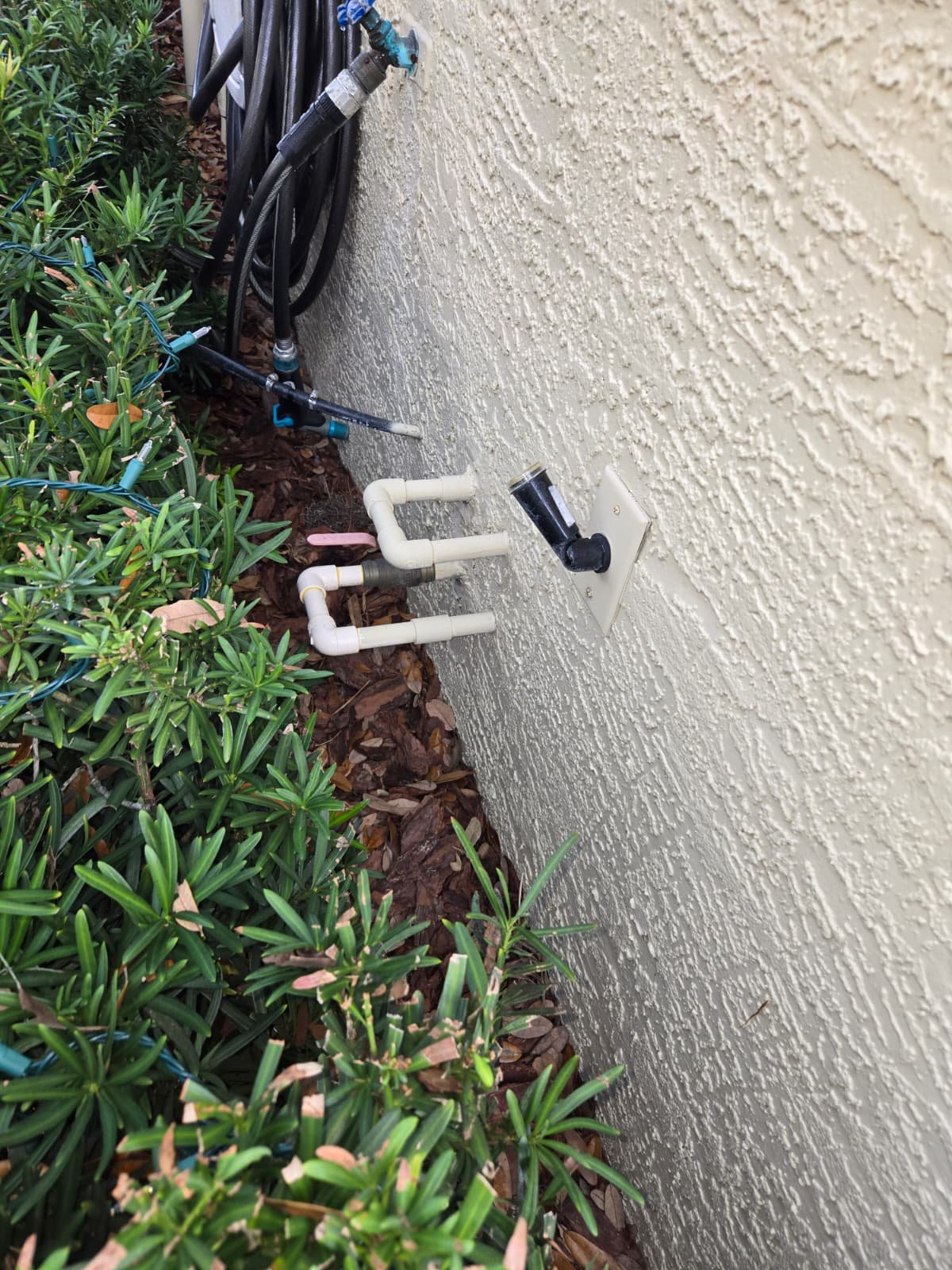
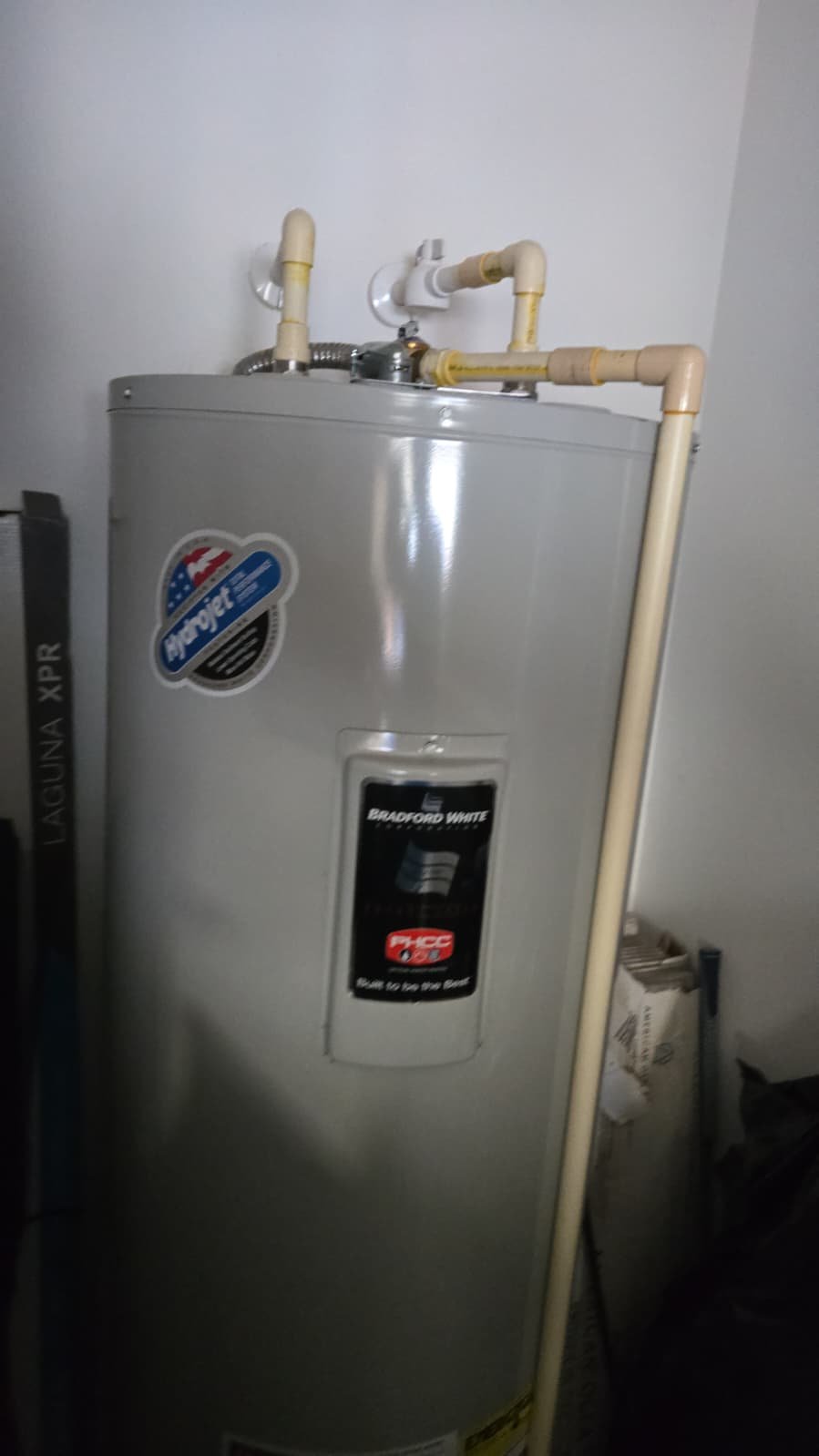
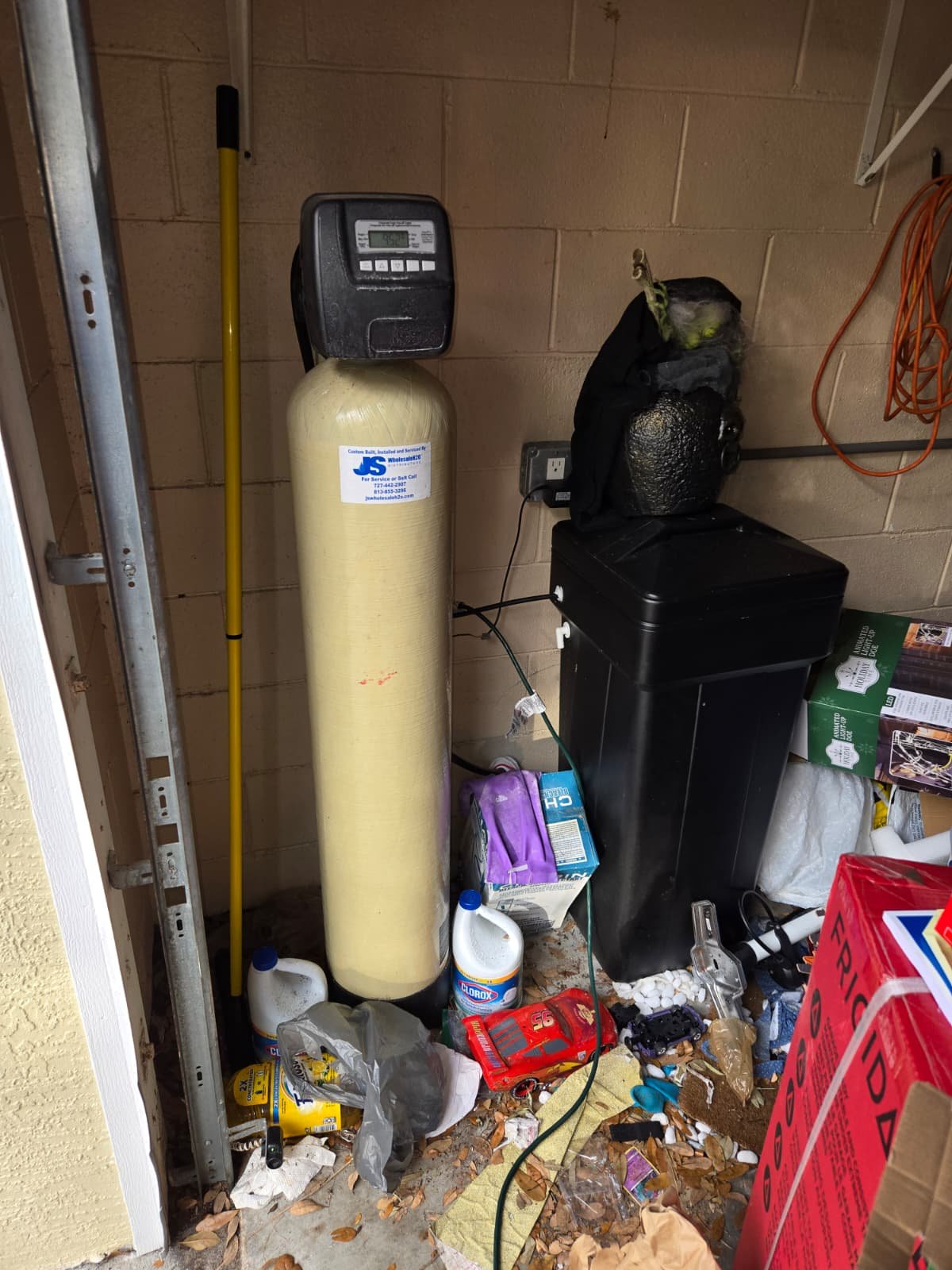
For this visit, we were called out to help a homeowner in Tampa, FL 33625 with routine water heater maintenance. The original plan was simple: flush the water heater and possibly perform a full plumbing inspection. Once we arrived and evaluated the system, we determined that flushing this particular water heater could actually create more risk than benefit because of its age. Instead, we walked the homeowner through a safer, step-by-step plan to monitor the unit and decide when future plumbing services might be needed.
Case Recap
- Location: Single-family home in Tampa, FL 33625
- Service requested: Water heater flush and optional whole-home plumbing inspection
- System condition: Tank-style water heater manufactured in 2016 (about 9 years old)
- What we did: Evaluated the age and risk, recommended against flushing, and reviewed options
- Customer decision: Declined both the flush and plumbing inspection after understanding the risks
- Outcome: Safe, informed plan to monitor the water heater and schedule inspection if any issues appear
Customer Problem: Routine Maintenance with Some Big Questions
Our Tampa, FL 33625 homeowner had done exactly what we like to see: they scheduled service before anything major went wrong. The goal was to have the water heater flushed as part of routine maintenance. While setting up the appointment, they also asked whether a full plumbing inspection would be a good idea.
From the homeowner’s perspective, everything inside the home seemed to be working fine. Hot water was available, there were no obvious leaks, and no fixtures were acting up. This is a common situation for many homeowners in Tampa Bay — the system seems OK on the surface, but you want to stay ahead of potential problems.
The main concerns the homeowner had were:
- Is it smart to flush a water heater that’s been in service for years?
- Could maintenance actually cause problems with an older unit?
- Is a full plumbing inspection worthwhile if nothing appears to be wrong?
Our job was to give an honest, clear answer based on what we saw at the home in Tampa, FL 33625, and based on our experience with water heaters in the local Florida climate.
Inspection and Diagnosis: Evaluating an Older Water Heater
When we arrived, our technician Adalberto started with a basic visual and informational check on the water heater rather than jumping straight into any flush or cleaning. Before we open valves, connect hoses, or move water through an older tank, we want to know exactly what we’re working with.
Here is what we focused on during the visit:
- Manufacture date and age: We confirmed the water heater was manufactured in 2016, making it roughly 9 years old at the time of service.
- General exterior condition: We looked for visible rust, corrosion at the fittings, and any signs of past or active leaks around the unit.
- Current performance: We asked the homeowner about hot water availability, recovery time, and any noises or changes they may have noticed.
- Plumbing system status: We discussed the option of a full plumbing inspection, but the homeowner reported that all fixtures, drains, and toilets were working normally.
Based on this initial assessment, the biggest factor was the age of the water heater. Flushing a newer tank is usually straightforward. Flushing an older tank, especially one that may have significant sediment buildup, can introduce additional risk.
Because we had not yet opened the tank or performed a full internal inspection, we also had to be upfront about diagnostic limitations: there could be hidden issues inside the water heater or in the home’s plumbing system that were not visible during this visit. That’s an important point for any homeowner in Tampa, FL 33625 to understand when deciding how aggressively to maintain an older system.
Repair or Service Process: Why We Recommended Not Flushing
After confirming the water heater was about 9 years old, we explained to the homeowner why we did not recommend a flush at this stage in the unit’s life. Sediment tends to settle and harden at the bottom of the tank over time, especially in areas with mineral content in the water. In an older tank, that sediment can sometimes act like a “plug.”
On a newer system, a flush helps clear out that buildup while components are still in good condition. On an older system, there’s a higher chance that:
- Dislodged sediment can get trapped in small passages and valves inside the heater.
- Moving that sediment can expose thin spots in the tank that have been quietly corroding.
- A previously stable but weakened area may start to leak shortly after a flush.
Here’s how we approached the decision step-by-step:
- Explain the risk clearly: We told the homeowner that flushing a 9-year-old water heater can, in some cases, speed up the failure of a tank that’s already near the end of its normal service life.
- Discuss the homeowner’s priorities: We asked whether they were more focused on squeezing a bit more life out of the current tank, or whether they were ready to accept the risk of an earlier replacement.
- Recommend a conservative approach: Given that the unit was still working and not showing obvious external problems, we recommended not flushing the tank.
- Offer options for added peace of mind: We suggested monitoring the water heater for any signs of leakage or changes in performance and scheduling a future plumbing inspection if concerns arise.
The homeowner in Tampa, FL 33625 appreciated the transparency and ultimately chose not to proceed with either the flush or the optional whole-home plumbing inspection at this time. Our role was to support that decision with clear information, not to pressure them into a service they weren’t comfortable with.
For homeowners who want to take a more proactive approach, we do offer structured water heater maintenance plans and promotions and broader plumbing maintenance plan options that can be tailored to the age and condition of your equipment.
Why This Conservative Fix Works
With plumbing and water heaters, doing less can sometimes be the safest choice. At around 9 years old, many tank-style water heaters are already in the later half of their expected service life. In the Tampa Bay area’s warm, humid climate, tanks can experience added wear from both water quality and environmental conditions.
Here’s the basic principle behind our recommendation:
- Water pressure and integrity: A tank with internal corrosion may be stable as long as the internal conditions don’t change much. Flushing alters those conditions suddenly, which can stress already-weakened metal.
- Sediment movement: Sediment often accumulates at the bottom of the tank. In an older unit, this buildup may be extensive and hardened. A flush that breaks up this material can send it into valves or create turbulence that exposes thin spots.
- Risk vs. reward: On a younger system, the reward of flushing (better efficiency, less noise, longer life) usually outweighs the risk. On a 9-year-old tank, the potential benefit becomes smaller while the risk of triggering a leak becomes higher.
By choosing not to flush, we prioritized the homeowner’s immediate safety and comfort. The system continues to operate as it has been, and the homeowner now knows exactly what to watch for. If any signs of leakage, rust, or performance issues appear, they can call us for a focused evaluation or a full whole-home plumbing inspection when the timing is right.
Pro Tips for Homeowners in Tampa, FL 33625
If you live in Tampa, FL 33625 or anywhere in the Tampa Bay area, here are some practical tips for managing an older water heater and your plumbing system in general:
- Know your water heater’s age. Look for the manufacture date on the label. Once your tank gets close to 8–10 years, it’s time to start thinking about replacement planning and weighing the risks of certain maintenance tasks like flushing.
- Check around the base regularly. Every month or so, take a quick look at the area around your water heater. Any pooling water, rust stains, or dampness is a sign to call for service promptly.
- Listen for changes. Popping or rumbling noises can indicate built-up sediment. On a younger tank, that might be a cue for maintenance. On an older one, it may be a signal that it’s time to evaluate replacement options instead of aggressive cleaning.
- Use your nose and eyes in humid months. Tampa’s humidity can make it hard to tell condensation from leaks. If you notice ongoing moisture, rust, or a metallic smell near the water heater, it’s worth having it checked.
- Schedule preventive plumbing inspections on your terms. Even if everything appears fine, a periodic plumbing inspection can catch hidden issues early. Our drain and line cleaning services and routine inspections are designed to be preventive, not just reactive.
- Plan ahead for replacement. Once your water heater is in that 8–10+ year range, start budgeting and exploring options instead of waiting for an emergency leak. That way, you can replace it on your own schedule rather than during an urgent situation.
FAQ: Water Heater Maintenance Choices for Older Systems
Is it always a bad idea to flush an older water heater?
Not always, but once a tank gets to the age of the unit we saw in Tampa, FL 33625 (around 9 years), the balance of risk versus benefit changes. Flushing can still be appropriate in some cases, but it has to be evaluated based on the specific tank’s condition, age, and history. In this visit, we recommended against flushing because the potential for causing leaks or internal damage was higher than the likely benefit.
What should I watch for if I decide not to flush my older water heater?
Keep an eye out for any water around the base of the heater, rust on the exterior, changes in hot water temperature or recovery time, or new noises coming from the tank. If you notice any of these signs, it’s a good idea to call for service so we can evaluate whether repair or replacement makes the most sense.
Is a plumbing inspection still worth it if everything seems to be working?
Yes, a plumbing inspection can be valuable even when there are no obvious symptoms. In this visit, the homeowner in Tampa, FL 33625 chose to decline the inspection because everything appeared fine and they were comfortable monitoring for now. But as a preventive tool, a whole-home plumbing inspection can help catch small issues before they turn into leaks, clogs, or water damage.
Can you check my water heater without doing a flush?
Absolutely. We can visually inspect your water heater, review its age and general condition, and discuss performance without performing a flush. From there, we’ll explain your options clearly — including leaving it as-is, planning for future replacement, or, in some cases, performing maintenance if the risk is low enough.
What are the limitations when no flush or inspection is performed?
When we don’t perform a flush or a full plumbing inspection, we can’t see inside the tank or inside your pipes. That means there may be hidden corrosion, sediment buildup, or early-stage issues that remain undetected. We’re always transparent about those diagnostic limitations so you understand that future service may be needed if problems develop later.
How often should I think about water heater maintenance in Tampa?
In general, it’s a good idea to have your water heater looked at every year or two, especially in our Tampa Bay climate. The exact maintenance approach depends on the unit’s age and condition. Newer systems benefit more from regular flushing and tune-ups, while older ones may require a more cautious strategy and a focus on planning for replacement.
Why Tampa Bay Homeowners Choose Home Therapist
When you invite us into your home in Tampa, FL 33625, you’re trusting us with your comfort, safety, and plumbing system. We take that seriously. Our team is made up of licensed, professional technicians who approach every visit with the same mindset we used on this call: explain the risks, lay out the options, and respect the homeowner’s decision.
Here’s what you can expect when you work with Home Therapist Cooling, Heating, and Plumbing:
- Licensed, experienced technicians: We bring real-world plumbing and HVAC experience to every job, whether it’s a simple tune-up or a complex system evaluation.
- Transparent communication: We explain what we see, what it means for your home, and what your options are — without pressure or scare tactics.
- Clean, respectful work: We treat your home like our own. That means neat work areas, clear walkways, and respect for your schedule.
- Long-term reliability: Our recommendations focus on what will keep your plumbing and HVAC systems reliable over the long run, not just what can be done today.
- Commitment to Tampa Bay homeowners: We live and work in this community, so we build relationships that last beyond a single service call.
If you’d like to see more of what we do and how we serve families across Tampa Bay, you can follow us on social and review platforms like Pinterest and Reddit. For added peace of mind, you can also check our standing with trusted organizations such as the Better Business Bureau, the Tampa Bay Chamber of Commerce, and our customer reviews on ProvenExpert.
Need Water Heater or Plumbing Help in Tampa, FL 33625?
If you’re in Tampa, FL 33625 and you’re unsure whether to flush an older water heater, schedule a plumbing inspection, or start planning for replacement, we’re here to help. We’ll take the time to understand your system, explain what we find in plain English, and recommend the safest, most practical options for your home.
Whether you want to set up a proactive maintenance plan, explore ongoing plumbing services, or simply get a second opinion on your water heater, our local Tampa Bay team is ready to help you make a confident decision. Schedule your visit today and let Home Therapist Cooling, Heating, and Plumbing keep your home’s hot water and plumbing running the way it should.