

Emergency Plumbing Workflow: Act Fast, Save 80% Damage
Plumbing emergencies strike Tampa Bay homes without warning, threatening safety and racking up costs fast. When a pipe bursts or sewage backs up, every minute counts. Shutting off your main water valve immediately can reduce damage by up to 80%, saving you thousands in repairs. This guide walks you through a clear emergency workflow, from preparing your toolkit to cleanup, so you can respond confidently and protect your home.
Table of Contents
- Immediate Safety Measures Upon Detecting An Emergency
- Step-By-Step Emergency Actions For Common Plumbing Problems
- Contacting Professional Emergency Plumbing Services
- Common Mistakes And Troubleshooting During Emergency Repairs
- Expected Results And Outcomes: Timelines And Costs
- Post-Emergency Cleanup And Prevention Strategies
- Get Professional Emergency Plumbing Help In Tampa Bay
- Frequently Asked Questions
Key takeaways
| Point | Details |
|---|---|
| Immediate water shutoff reduces damage by up to 80% | Turn off the main valve as soon as you detect flooding or leaks to prevent extensive water damage. |
| Temporary fixes can contain leaks up to 48 hours | Use pipe clamps or rubber patches to seal small leaks until professional help arrives. |
| Contact licensed plumbers within 2 hours to reduce costs | Early response lowers repair expenses by 30% and prevents escalation of damage. |
| Common DIY mistakes increase repair costs by 25% | Skipping the water shutoff or attempting permanent fixes yourself worsens damage and voids warranties. |
| Post-repair cleanup prevents mold and health risks | Begin sanitizing and drying within 24 hours to avoid long-term health hazards. |
Prerequisites: what you need before starting
Before any emergency hits, preparation cuts your response time in half. You need specific tools and knowledge ready so you can act without hesitation when water starts flooding your kitchen or bathroom.
Gather these must-have tools and store them in an accessible location. An adjustable wrench lets you shut off valves quickly. Plumber’s tape and pipe clamps provide temporary leak containment. Keep a sturdy bucket nearby to catch drips and minimize floor damage. A flashlight is essential since emergencies often happen in dark crawl spaces or during power outages.
Know exactly where your main water shutoff valve sits. Walk through your home right now and locate it, usually near the water meter, in the basement, or by the street. Test the valve to confirm it turns smoothly. If it’s stuck or corroded, call a plumber to replace it before you face an emergency. Also identify your electrical panel and know which breakers control outlets near plumbing fixtures.
Having a plumbing emergency preparedness kit reduces damage risk by 40%. Assemble a kit with the tools above, plus waterproof tape, rubber gloves, and towels. Add a printed list of emergency contacts, including licensed Tampa Bay plumbers you can reach 24/7.
Pro Tip: Tape a laminated card with shutoff valve locations and emergency numbers to the inside of a kitchen cabinet door so every household member can find it fast.
Here’s your essential toolkit checklist:
- Adjustable wrench (10-inch or larger)
- Plumber’s tape and pipe clamps
- Heavy-duty bucket
- Flashlight with fresh batteries
- Waterproof tape and rubber patches
- Rubber gloves and absorbent towels
- Emergency contact list
| Tool | Purpose | Typical Cost |
|---|---|---|
| Adjustable wrench | Valve operation | $15-$30 |
| Pipe clamps | Temporary leak sealing | $8-$20 |
| Plumber’s tape | Thread sealing | $3-$8 |
| Flashlight | Visibility in dark areas | $10-$25 |
Understanding the basics now means you won’t panic when water starts spraying. Take 30 minutes this weekend to schedule a plumbing appointment for a preventive inspection. Technicians can show you valve locations and identify weak points before they fail.
Immediate safety measures upon detecting an emergency
The moment you spot water pooling, hear a burst, or smell sewage, your first move determines how much damage your home suffers. Safety comes before everything, including saving belongings or attempting repairs.
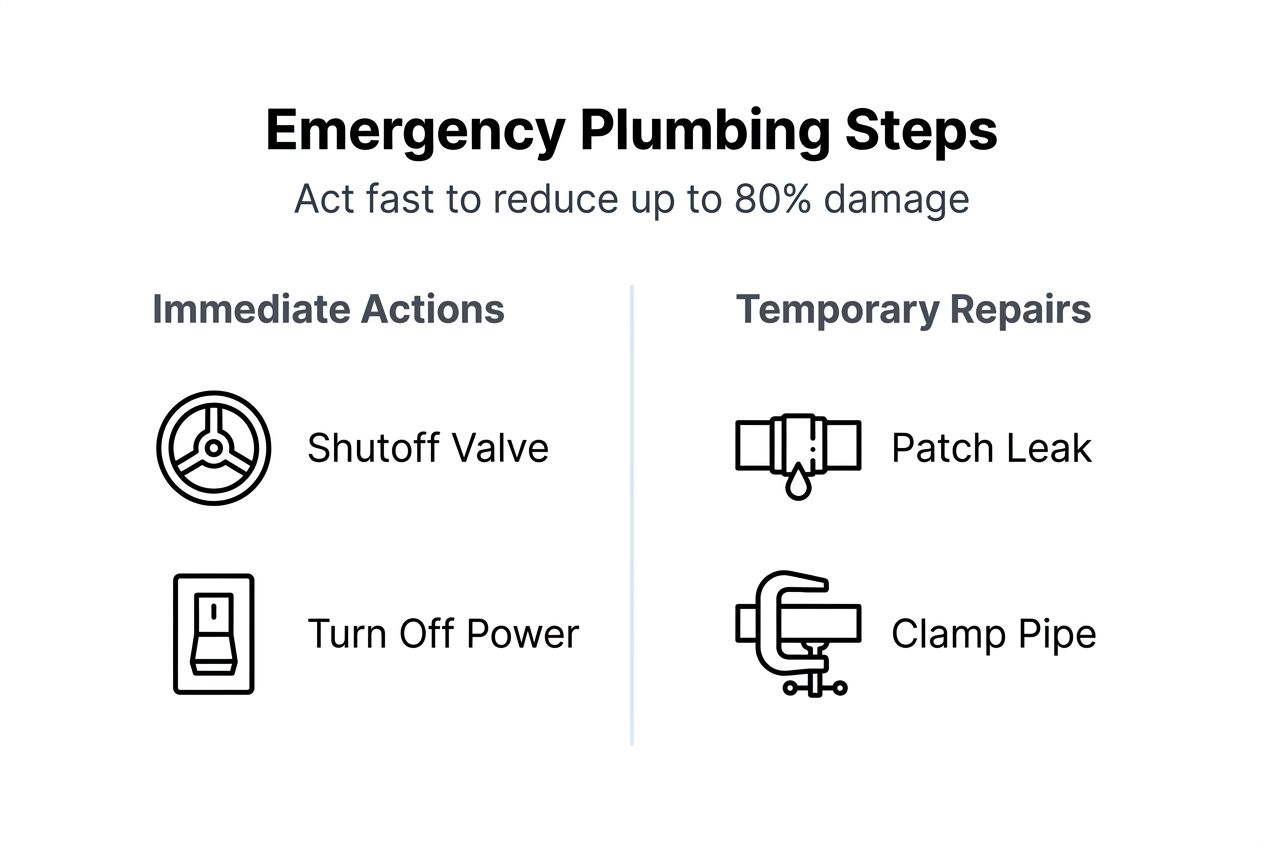
Shut off the main water valve immediately to reduce damage by up to 80%. Turn the valve clockwise until it stops. If you can’t reach the main valve safely due to flooding, shut off the water supply at the street meter using your wrench. Don’t wade through standing water if you’re unsure about electrical hazards.
Turn off electrical power to affected areas next. Water and electricity create lethal conditions. If the leak is near outlets, switches, or appliances, flip the corresponding breaker at your electrical panel. Never touch electrical devices or outlets with wet hands or while standing in water.
Avoid contact with flooded areas until you’ve confirmed the power is off. Contaminated water from sewage backups poses serious health risks. Keep children and pets away from the emergency zone. Open windows if safe to do so, improving ventilation and reducing moisture buildup.
Pro Tip: If you smell gas along with the water leak, evacuate immediately and call 911 from outside. Gas leaks combined with plumbing failures require professional emergency response.
Follow this immediate action sequence:
- Locate and shut off the main water valve
- Turn off electrical breakers for affected rooms
- Move valuable items to dry areas if safely accessible
- Place buckets under active drips or leaks
- Call your emergency plumber while the situation is contained
Speed matters because fast action in plumbing emergencies prevents secondary damage like ceiling collapse, mold growth, and structural deterioration. Every minute of flooding adds exponentially to repair bills.
“The difference between a $500 repair and a $5,000 disaster often comes down to shutting off water within the first five minutes. Homeowners who hesitate see costs triple.”, Licensed plumbing contractor, Tampa Bay
Once safety measures are in place and water flow has stopped, you can assess the damage and apply temporary containment while waiting for professional help.
Step-by-step emergency actions for common plumbing problems
After securing safety, identifying your specific emergency type guides your next moves. Different problems need different temporary fixes to prevent worsening damage until a plumber arrives.
First, identify what you’re dealing with. Burst pipes spray water forcefully and require immediate main shutoff. Slow leaks under sinks or around toilets may only need fixture valve closure. Sewage backups demand no contact and professional handling only. Overflowing toilets need both fixture shutoff and quick plunging.
If accessible without safety risk, turn off individual fixture valves instead of the whole house supply. Under-sink valves usually turn clockwise. Toilet supply lines have a small valve near the floor behind the toilet. This approach keeps water flowing to other areas of your home while containing the problem.
Use pipe clamps or rubber patches to temporarily stop leaks for up to 48 hours. Dry the pipe surface as much as possible, wrap it with rubber patching material, and secure it tightly with the clamp. For pinhole leaks, plumber’s tape wrapped multiple times can slow the drip significantly. These are temporary measures only, never permanent solutions.
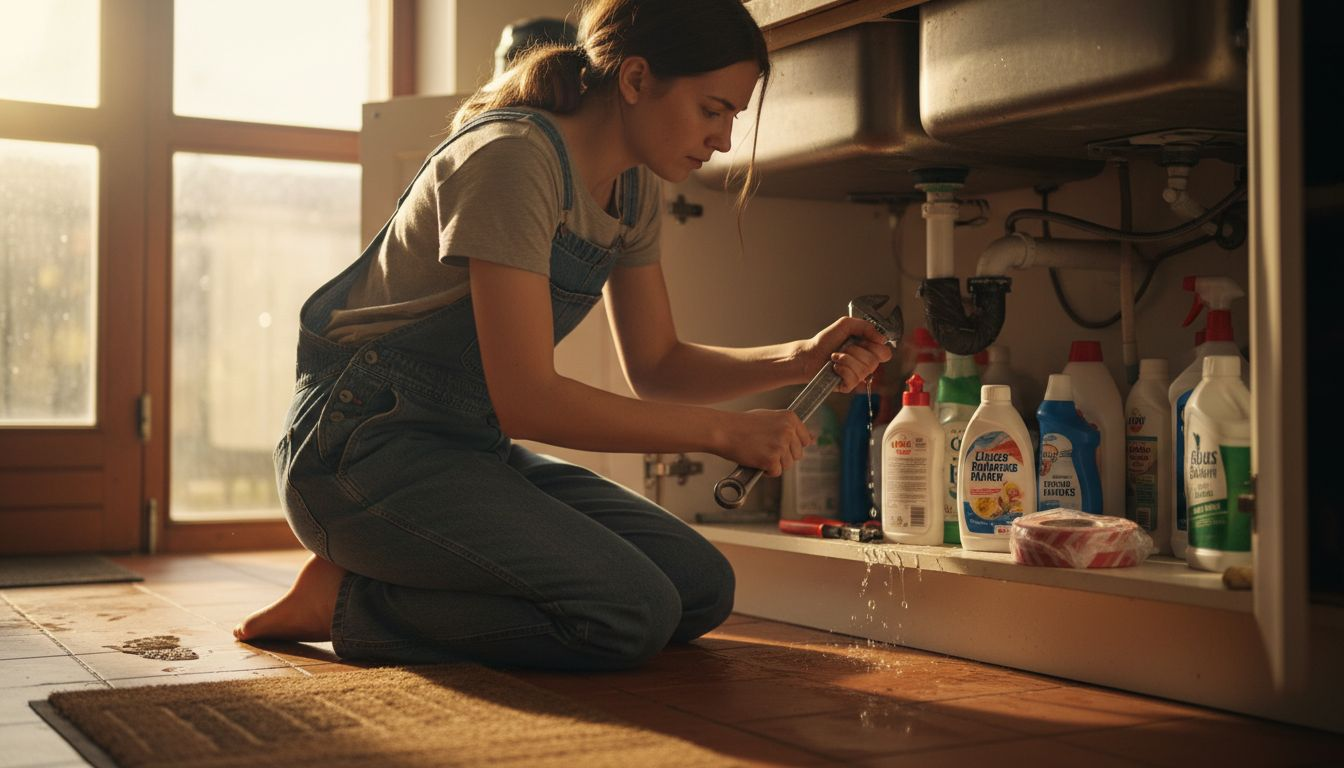
Here’s how fixture shutoff compares to main water shutoff:
| Method | Advantages | Best Used When |
|---|---|---|
| Main water shutoff | Stops all water flow instantly, prevents catastrophic flooding | Burst pipes, multiple leaks, or inaccessible fixtures |
| Fixture valve shutoff | Maintains water to rest of house, easier access | Single fixture leaking, accessible valves, minor issues |
Pro Tip: Photograph the damage before applying temporary fixes. Documentation helps with insurance claims and gives the plumber visual context when you call.
Follow these temporary containment steps:
- Identify the leak source and type
- Choose fixture valve closure or main shutoff based on severity
- Dry the affected pipe or connection point
- Apply rubber patches or plumber’s tape to seal small leaks
- Secure with pipe clamps or waterproof tape
- Place absorbent towels and buckets to catch residual drips
- Monitor the temporary fix every 30 minutes
Call a professional plumber within 2 hours after applying temporary fixes. Delaying beyond this window doubles costs as temporary patches fail and damage spreads. While your fixes buy time, they aren’t replacements for expert repair.
For emergency plumbing solutions in Tampa, keep multiple licensed contractors in your phone. Response time varies, so having backup contacts ensures you get help fast when your first choice is unavailable.
Contacting professional emergency plumbing services
Once you’ve contained the immediate crisis with temporary measures, getting a licensed plumber onsite becomes your top priority. Professional repair restores your plumbing safely and prevents recurring failures that DIY fixes often miss.
Contact your emergency plumber immediately after applying temporary containment. Don’t wait to see if your patch holds. Early plumber response under 2 hours lowers repair costs by 30% by preventing additional water damage and structural issues.
When you call, clearly describe the problem type, location, and what temporary fixes you applied. Mention any safety concerns like nearby electrical hazards or gas lines. This information helps the plumber bring the right tools and arrive prepared to work immediately.
Prepare specific details before calling:
- Exact location of the leak or backup (bathroom, kitchen, basement)
- Whether main water or fixture valve is shut off
- Visible damage extent (ceiling staining, floor saturation)
- When the emergency started
- Any unusual sounds, smells, or water discoloration
Keep your emergency plumbing services in Tampa Bay contacts easily accessible. Store numbers in your phone and on your emergency kit card. Verify that contractors offer true 24/7 service, not just answering services that delay dispatch until morning.
Ask about response time when you call. Reputable services commit to arrival windows and communicate if delays occur. If your first contact can’t arrive within two hours, call your backup immediately. Avoiding delays prevents your temporary fixes from failing and costs from escalating.
Understand that emergency rates typically run higher than scheduled service, but the cost of delaying far exceeds the premium. A $200 emergency call fee beats a $2,000 repair bill from water damage that spreads overnight.
Common mistakes and troubleshooting during emergency repairs
Even prepared homeowners make critical errors during plumbing emergencies that transform manageable situations into expensive disasters. Recognizing these pitfalls helps you avoid them when stress runs high.
Failing to shut off the water main increases costs by 25%. Some homeowners try fixing leaks with water still flowing, which makes temporary containment impossible and allows damage to spread. Always shut off water first, even if you think the leak is small.
Attempting permanent DIY repairs ranks as another costly mistake. Pipe replacement, fixture installation, and drain line work require specialized tools and expertise. Improper repairs often fail within days, causing renewed flooding. Worse, DIY work may void manufacturer warranties and complicate professional repairs when you finally call for help.
Delaying your professional call beyond four hours doubles expenses. Temporary fixes degrade, water seeps into walls and subfloors, and mold begins growing within 24 to 48 hours. What starts as a $300 leak repair becomes $1,500 in water damage restoration.
Ignoring electrical safety creates injury risk. Homeowners sometimes ignore visible water near outlets or attempt repairs in flooded areas without cutting power. Electrocution is a real danger. If you’re unsure whether power is off, stay out of the area until an electrician verifies safety.
Pro Tip: Never use space heaters or fans to dry flooded areas before turning off water and assessing electrical safety. These devices can spark fires or cause electrocution in wet conditions.
Watch for these common errors:
- Leaving water supply on while attempting repairs
- Using improper materials like duct tape instead of plumber’s tape
- Overtightening clamps or connections, causing pipe cracks
- Assuming small leaks will stop on their own
- Mixing incompatible metals in temporary patches
- Waiting for business hours to save on emergency fees
Troubleshoot carefully if your temporary fix isn’t holding. Check that you’ve completely shut off water flow. Verify clamps are positioned directly over the leak point. Ensure rubber patches cover the entire damaged area with at least one inch of overlap. If you can’t stabilize the situation, evacuate the area and wait for professional help rather than risking worsening damage.
Understanding common emergency plumbing mistakes before crisis hits gives you confidence to make smart decisions under pressure. Review this list now so it’s familiar when you need it.
Expected results and outcomes: timelines and costs
Knowing what to expect financially and practically helps you make informed decisions during emergencies. Tampa Bay plumbing repair costs and timelines vary based on problem severity and how quickly you act.
Typical emergency plumbing repair costs in Tampa Bay range from $150 to $800, with average repair durations of 2-4 hours depending on severity. Simple fixes like replacing a burst supply line run $150 to $300. Complex repairs involving sewer lines or multiple fixtures reach $500 to $800 or more.
Repair duration depends on the problem and parts availability. Replacing a toilet wax ring takes 1 to 2 hours. Repairing a burst main line may require 3 to 4 hours plus time for cleanup. Most emergency calls resolve within a single visit, but extensive damage may need follow-up appointments for drywall repair and repainting.
Delays in calling professionals dramatically increase both time and cost. Water damage spreads through walls, floors, and ceilings. What starts as a contained pipe leak becomes a major restoration project requiring mold remediation, subfloor replacement, and structural repairs. Acting within the first two hours keeps most jobs in the lower cost range.
| Problem Type | Typical Cost Range | Average Repair Time | Cost if Delayed 12+ Hours |
|---|---|---|---|
| Burst supply line | $150-$300 | 1-2 hours | $800-$2,000 |
| Toilet overflow | $200-$400 | 1-2 hours | $600-$1,500 |
| Under-sink leak | $175-$350 | 1-2 hours | $500-$1,200 |
| Main line backup | $400-$800 | 2-4 hours | $1,500-$5,000 |
Prompt action reduces damage and related expenses significantly. Homeowners who act within the first hour typically pay only for the plumbing repair itself. Those who wait often face additional charges for water extraction, structural drying, mold treatment, and reconstruction.
Understand that insurance may cover some emergency repairs, but most policies require you to mitigate damage promptly. Failing to shut off water or delaying professional help can result in claim denials. Document everything with photos and keep receipts from emergency service calls.
Knowing emergency repair timelines and costs helps you budget and plan. Set aside emergency funds specifically for home repairs so you can act immediately without financial hesitation.
Post-emergency cleanup and prevention strategies
Once repairs are complete, your work isn’t finished. Proper cleanup and ongoing maintenance prevent mold growth, protect your family’s health, and reduce the chance of future emergencies.
Post-emergency cleanup including mold prevention and sanitization should begin within 24 hours after repairs to avoid long-term health risks. Mold spores start growing on damp surfaces within 24 to 48 hours. Even small amounts of residual moisture create breeding grounds for harmful mold that damages your home and causes respiratory problems.
Follow this cleanup sequence:
- Remove all standing water using a wet vacuum or pump
- Open windows and run fans to promote air circulation and drying
- Remove and discard porous materials like carpet padding, insulation, or drywall that stayed wet more than 48 hours
- Scrub hard surfaces with disinfectant cleaners to kill bacteria
- Monitor humidity levels with a meter, keeping indoor levels below 50%
- Inspect for mold growth daily for the first week
Use proper cleaning agents and drying techniques. Bleach solutions work on hard surfaces but damage porous materials. Commercial antimicrobial cleaners designed for flood cleanup are most effective. Dehumidifiers speed drying in enclosed spaces like basements.
Sanitize affected areas thoroughly to protect family health. Sewage backups require professional biohazard cleanup due to dangerous pathogens. Never attempt DIY cleanup after sewage exposure without proper protective equipment and training.
Develop regular maintenance routines to prevent recurring issues:
- Inspect under sinks monthly for drips or water stains
- Test your main water shutoff valve quarterly
- Have professional inspections annually
- Replace worn supply lines before they fail
- Keep drains clear with routine cleaning
Pro Tip: Set phone reminders for quarterly maintenance checks. Fifteen minutes of inspection every three months catches small problems before they become emergencies.
Monitor repaired areas for leaks or moisture buildup for at least 30 days. Check walls, ceilings, and floors for new stains, soft spots, or musty odors. If you notice any concerning changes, call your plumber immediately. Early detection prevents repeat emergencies.
For detailed guidance on sanitizing and preventing mold, consult the EPA mold remediation guidance. This resource provides comprehensive protocols for safe cleanup after water damage.
Preventive maintenance significantly reduces emergency risk. Schedule routine plumbing inspections and address small issues before they escalate. Find helpful post-emergency cleanup tips to maintain your system long-term.
Get professional emergency plumbing help in Tampa Bay
When plumbing emergencies strike your Tampa Bay home, you need reliable professionals who respond fast and fix problems right the first time. Home Therapist Cooling, Heating, and Plumbing delivers expert emergency services 24/7, helping homeowners minimize damage and restore safety quickly.
Our licensed technicians arrive prepared with specialized tools and extensive experience handling burst pipes, sewage backups, and water heater failures. We understand Tampa Bay’s unique plumbing challenges, from aging pipe systems to high water pressure issues. You get transparent pricing, quality workmanship, and guaranteed repairs that last.
Beyond emergency response, we offer plumbing services and backup solutions including comprehensive inspections that identify vulnerabilities before they fail. Our plumbing maintenance plans provide routine service, priority emergency scheduling, and discounts that save you money while protecting your home year-round.
Trusted by Tampa Bay homeowners for reliable, cost-effective plumbing solutions, Home Therapist combines fast response with lasting quality. Don’t wait for the next emergency to find a plumber you can trust. Contact Home Therapist Tampa Bay plumbing services today to schedule your preventive inspection and join our maintenance program.
Frequently asked questions
How do I locate my main water shutoff valve?
Your main water shutoff valve typically sits near the water meter, often in the basement, utility room, or outside near the property line. Look for a round wheel valve or a lever-style ball valve. If you can’t find it, check your home inspection report or call your water utility for guidance.
What temporary fixes can I safely apply before a plumber arrives?
Use pipe clamps or rubber patches to seal small leaks temporarily. Wrap plumber’s tape tightly around threaded connections that drip. Turn off individual fixture valves when accessible to limit water flow. Place buckets and towels to contain water while you wait for professional repair.
When should I call an emergency plumber instead of waiting?
Call immediately after applying temporary containment measures or if water damage is extensive and spreading. Delays beyond 2 hours significantly increase repair costs and structural damage. Never wait until business hours to save money, early response always costs less than dealing with escalated damage.
How can I prevent mold after a plumbing emergency?
Start cleaning and drying within 24 hours to avoid health risks. Remove standing water immediately and run fans for air circulation. Use disinfectants on hard surfaces and dispose of porous materials that stayed wet more than 48 hours. Keep indoor humidity below 50% and monitor for mold growth daily during the first week. For comprehensive protocols, review the EPA mold remediation guidance.
About This Guide
Written and reviewed by the Home Therapist Cooling, Heating & Plumbing team, a family-owned Tampa Bay HVAC and plumbing company serving the area since 2011. Our licensed techs hold Florida HVAC license CAC1819196 and Plumbing license CFC1431159, with over 1,100 five-star reviews across Tampa, St. Petersburg, Clearwater, Wesley Chapel, Lutz, Riverview, Brandon, Valrico, Apollo Beach, Palm Harbor, Land O’ Lakes, Plant City, New Port Richey, and surrounding Tampa Bay zip codes.
Honest pricing:. Upfront quotes, no high-pressure sales, no surprise fees.
Questions about your home? Call (813) 343-2212 for a real tech, or request a callback. Available 7 days a week including evenings and weekends for emergencies.
Recommended
- Emergent Plumbing Repairs: Why Fast Action Matters
- Emergency Plumbing Explained: Fast Solutions for Tampa Home Therapist Cooling, Heating, and Plumbing
- Emergency Plumbing Services for Dripping Water Issues Home Therapist Cooling, Heating, and Plumbing
- Availability of Plumbing Services for Emergency Requests Home Therapist Cooling, Heating, and Plumbing


