How to locate plumbing leaks: step-by-step guide
TL;DR:
- Hidden plumbing leaks are common and costly in Tampa Bay due to regional climate and aging infrastructure.
- DIY detection methods like water meter tests help confirm leaks, but professional tools are often needed for difficult or hidden leaks.
- Prompt action and professional inspection are crucial to prevent mold, structural damage, and high repair costs.
Hidden plumbing leaks are one of the most stressful and expensive problems a Tampa Bay homeowner can face. Water quietly seeps behind walls, under floors, and through slab foundations long before you notice the damage. Plumbing leaks cause 45% of water damage claims, with average repair costs hitting $10,500. In a humid, storm-prone region like Tampa Bay, that risk is even higher. This guide walks you through exactly how to spot, confirm, and respond to plumbing leaks in your home, so you can act fast and avoid the kind of damage that turns a small drip into a major disaster.
Table of Contents
- Why finding plumbing leaks matters in Tampa Bay homes
- What you need before starting leak detection
- How to spot the most common plumbing leak signs
- Confirming a leak: the water meter test and next steps
- What to do after finding or suspecting a leak
- What most Tampa Bay homeowners get wrong about leak detection
- Get professional help for plumbing leaks in Tampa Bay
- Frequently asked questions
Key Takeaways
| Point | Details |
|---|---|
| Act quickly | Early leak detection in Tampa Bay saves you from expensive repairs and health risks. |
| DIY then verify | Homeowners can spot and confirm most leaks, but call a pro for complex or hidden cases. |
| Watch for local risks | Tampa Bay humidity and storms make certain leaks harder to spot and more costly if untreated. |
| Use your water meter | The water meter test provides a simple way to confirm hidden plumbing leaks at home. |
Why finding plumbing leaks matters in Tampa Bay homes
Tampa Bay is not your average American city when it comes to plumbing risk. The combination of high humidity, frequent storms, aging infrastructure, and slab foundations creates a perfect environment for leaks to develop and spread fast. If you ignore a leak here, you are not just dealing with a wet spot. You are looking at mold growth within 24 to 48 hours, foundation shifts, and structural damage that compounds every day.
The numbers tell a clear story. Plumbing leaks account for 45% of all water damage insurance claims, with repairs averaging $10,500. That is not a small bill. And if you factor in mold remediation, flooring replacement, and drywall repair, costs climb even higher. Beyond damage, 1 trillion gallons are wasted across the US every year from household leaks, with 10% of homes losing more than 90 gallons per day.
Here are the key risk factors that make Tampa Bay homes especially vulnerable:
- Older pipes: Many Tampa Bay homes built before the 1980s still have galvanized steel or polybutylene pipes that corrode and crack over time.
- Slab foundations: Pipes run beneath concrete slabs in most local homes. A slab leak is invisible until serious damage is done.
- High humidity: Moisture in the air masks early warning signs like condensation and damp smells.
- Storm exposure: Heavy rain and wind pressure can shift soil and stress underground pipes.
- Water pressure swings: Pressure fluctuations from municipal systems can weaken pipe joints over time.
Knowing what to do in a water leak emergency before one happens can mean the difference between a quick fix and a five-figure repair bill.
Understanding local leak detection factors specific to Tampa Bay helps you prioritize where to look first. Now that you know the cost and risk, let’s look at how to prepare for leak checks.
What you need before starting leak detection
You do not need a plumber’s toolkit to start hunting for leaks. Most of what you need is already in your home. The goal at this stage is to gather the right tools, dress appropriately, and set up safely before you start poking around tight spaces.
Here is a simple checklist of what to grab before you begin:
- Flashlight or phone torch
- Dry towels and a mop
- Rubber gloves
- Notepad and pen
- Your phone or a camera for photos
- A meter key (available at hardware stores) to access your water meter box
| Tool | Use | Alternative |
|---|---|---|
| Flashlight | Inspect dark cabinets, crawlspaces | Phone torch |
| Rubber gloves | Protect hands from mold/moisture | Latex dishwashing gloves |
| Notepad | Log readings and observations | Notes app on phone |
| Meter key | Open water meter box | Flathead screwdriver |
| Camera/phone | Document evidence | Tablet or digital camera |
The water meter test is the most reliable DIY method to confirm a plumbing leak, and you will need access to your meter to do it. Before heading outside, shut off all water-using appliances including dishwashers, washing machines, and ice makers.
If you plan to check your attic or crawlspace, wear long sleeves, pants, and closed-toe shoes. These areas can have sharp edges, insulation fibers, and standing water. Review essential Tampa plumbing tips if you want a broader picture of home plumbing maintenance before diving in.
Pro Tip: Photograph every suspicious area you find, even if you are not sure it is a leak. These photos can support an insurance claim or help a plumber diagnose the problem faster.
One important safety note: do not attempt to inspect areas under your slab, inside major ceiling cavities, or anywhere that requires cutting into walls. Those situations call for a professional. Reviewing preventing leaks in Tampa homes can also help you avoid common mistakes before they become problems. With your gear ready, it’s time to spot the tell-tale signs of leaks around your home.
How to spot the most common plumbing leak signs
Leaks rarely announce themselves. They hide behind drywall, under tile, and inside cabinet bases. Knowing what to look and listen for gives you a real advantage before damage spreads.
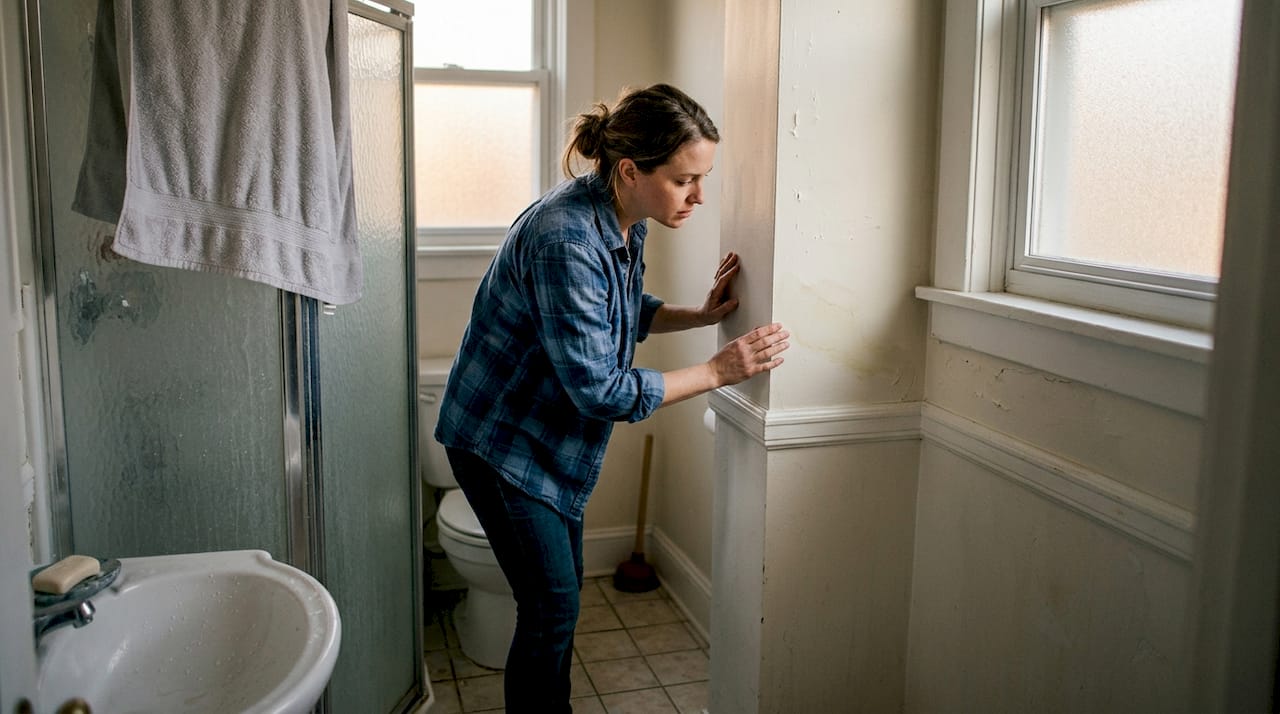
Visual and auditory signs include water stains, damp spots, musty odors, hissing or dripping sounds, warm floors from hot water line leaks, and sudden spikes in your water bill. Each of these is a clue worth investigating.
Here is where to check, room by room:
- Kitchen: Look under the sink for moisture, staining, or warped cabinet wood. Check around the dishwasher base and refrigerator water line.
- Bathrooms: Inspect toilet bases, under-sink pipes, shower pan edges, and around the tub caulk line.
- Laundry room: Check hose connections at the back of the washing machine and look for rust or mineral staining.
- Attic: After any storm, scan for wet insulation, staining on rafters, or dripping near HVAC lines.
- Outside: Look for soggy patches of grass that stay wet even without rain. This can signal an underground pipe leak.
A dripping faucet wastes 3,000 gallons per year, and homes with multiple small leaks can lose far more. Compare your current water bill to the same month last year. A jump of 20% or more with no obvious reason is a red flag.
Pro Tip: Tampa Bay’s humidity can make it hard to tell condensation from a real leak. Use your phone camera to take a photo of a suspicious wet surface, then check again in 30 minutes. If the moisture has grown or spread, it is likely a leak, not just condensation.
For a deeper look at what different leaks look like, check out types of plumbing leaks and how much water they can waste. You can also learn more about identifying hidden leaks in floors if you suspect something beneath your tile or hardwood. After identifying possible signs, you need to confirm whether there is an actual leak with a simple test.
Confirming a leak: the water meter test and next steps
Spotting signs of a leak is step one. Confirming it is step two. The water meter test is the most reliable way to do this without any special equipment.
Here is how to run the test:
- Turn off every water source in your home. This includes faucets, appliances, and outdoor hoses.
- Locate your water meter, usually near the street in a covered box.
- Write down the exact reading on the meter dial or digital display.
- Wait at least one hour without using any water.
- Check the meter again. If the reading has changed, water is moving through your system. That means a leak.
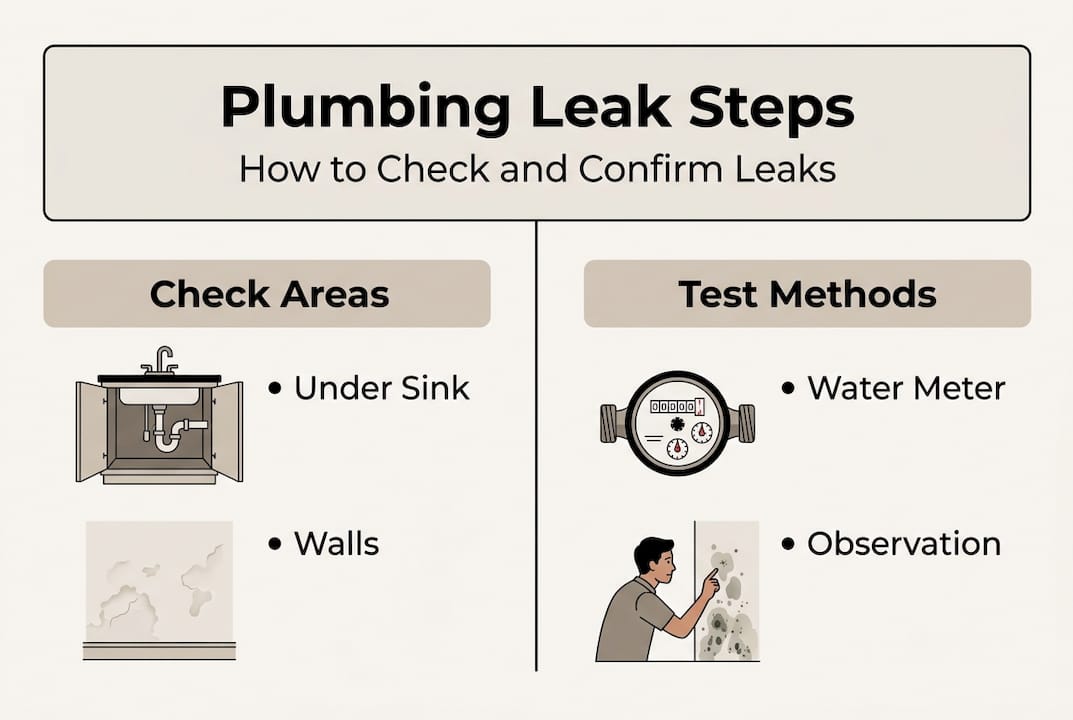
The water meter test is the primary DIY method for confirming a plumbing leak, but it tells you that a leak exists, not where it is. That is where the DIY versus professional decision comes in.
| Factor | DIY approach | Professional approach |
|---|---|---|
| Tools needed | Meter key, flashlight | Acoustic sensors, thermal cameras |
| Accuracy | Confirms leak exists | Pinpoints exact location |
| Best for | Visible, accessible leaks | Slab, underground, hidden leaks |
| Cost | Free | Varies by service |
Slab and hidden leaks require professional acoustic or thermal tools to locate safely. Trying to find them yourself often means unnecessary damage to flooring or walls.
Safety reminder: If your meter shows movement and you cannot find any visible source, do not start cutting into walls or floors. Call a professional. Foundation and ceiling leaks can become structural hazards quickly.
Explore professional leak inspection services if your meter test comes back positive and you cannot trace the source. You can also learn about advanced leak detection tools that pros use to find leaks without tearing up your home. Once you have confirmed a leak and know roughly where it is, understanding when to tackle it or call a pro becomes crucial.
What to do after finding or suspecting a leak
Once you find or strongly suspect a leak, speed matters. Tampa Bay’s humidity means mold can begin growing within a day or two. Here is what to do right away.
- Shut off the main water valve if the leak is active or you cannot isolate the source. Your main shutoff is usually near the water meter or where the main line enters your home.
- Contain the water. Place towels, buckets, or plastic sheeting to limit spread and protect flooring.
- Document everything. Take photos and videos of all visible damage before you clean anything up.
- Contact your insurance company if damage is significant. Provide your meter readings, photos, and a timeline of when you noticed the issue.
- Call a licensed plumber for anything beyond a simple faucet or visible pipe repair.
Pro Tip: In Tampa Bay’s humid climate, drying out a wet area within the first 24 hours dramatically reduces your mold risk. Run fans, open windows if weather allows, and use a dehumidifier if you have one.
When you do call a plumber, give them as much information as possible. Here is what to have ready:
- Your water meter readings before and after the test
- Photos of all visible signs
- The location of any wet spots, stains, or sounds
- When you first noticed the issue
- Any recent storms or plumbing work done
Review the emergency water leak steps for a full response plan, and check out plumbing prevention tips to reduce the chance of this happening again. Early action prevents mold and foundation problems that cost far more to fix later. Now that you know what to do after finding a leak, let’s reflect on how DIY and professional strategies can be balanced.
What most Tampa Bay homeowners get wrong about leak detection
Here is the honest truth: most homeowners either do too little or too much. They either ignore a suspicious wet spot for weeks, or they start pulling up tile and cutting into drywall without any real idea of what they are looking for.
DIY leak detection is genuinely useful for initial checks and confirming that a leak exists. But when the source is unclear, when the leak is persistent, or when it involves anything near your slab or foundation, hesitation and guesswork cost you far more than a professional inspection ever would. Tampa Bay’s climate does not give you time to wait and see. Mold, structural damage, and failed insurance claims are the real consequences of inaction.
The most expensive mistakes we see are not from homeowners who called too soon. They are from homeowners who waited too long or misdiagnosed the problem and made it worse. Trust your gut. If you cannot find the source, or if the leak is behind a wall or under your floor, stop and consult a pro before doing anything else. Specialized leak detection services exist precisely for these situations.
Get professional help for plumbing leaks in Tampa Bay
Sometimes a leak is straightforward. Sometimes it is not. When you cannot trace the source, or when the meter keeps moving no matter what you shut off, it is time to bring in someone with the right tools and local knowledge.
At Home Therapist Cooling, Heating, and Plumbing, our certified technicians use advanced detection equipment to find leaks fast without unnecessary damage to your home. We know Tampa Bay homes inside and out, from aging pipe systems to slab foundations. Schedule local plumbing leak inspections with our team for a thorough diagnosis and lasting repair. If your pipes are older or repeatedly causing issues, ask us about Tampa repiping services for a long-term solution that protects your home for years to come.
Frequently asked questions
How can I use my water meter to check for a leak?
Turn off all water in your house, record the meter reading, wait one to two hours without using any water, then check again. If the numbers changed, you likely have a leak somewhere in your system.
What are the most common signs of a hidden plumbing leak?
Water stains, musty smells, damp spots, bubbling or peeling paint, and unexplained spikes in your water bill are the most reliable warning signs to watch for.
Are plumbing leaks more common in Tampa Bay homes?
Yes. Tampa Bay’s humid climate, frequent storms, and widespread use of slab foundations make plumbing leaks and their resulting damage more common here than in many other regions.
When should I call a plumber instead of trying to fix a leak myself?
Call a plumber if the leak is behind walls, under slabs, near your foundation, or if you simply cannot locate the source after a meter test.
Recommended
- 6 Common Plumbing Issues Every Homeowner Should Know
- How to Fix Leaky Faucet: Step-by-Step Home Repair Guide
- Types of Plumbing Leaks: 14,000 Gallons Lost & Fixes
- Plumbing Services Leak Inspection and Diagnosis Home Therapist Cooling, Heating, and Plumbing
- How to Identify Roof Leaks for Effective Repairs