★★★★★ 4.8 · 1,300+ reviews
Lic. CAC1819196 · CFC1431159
✓ FREE Estimates   |   ✓ FREE Diagnosis
No diagnostic fee. No trip charge. You only pay if you approve the repair. Call (813) 343-2212

EMERGENCY

AC Smells Burning? Turn It OFF

If your AC smells burning, turn it OFF immediately. This is an electrical issue that can become a fire. Call Home Therapist for same-day diagnosis. CAC1819196.

Quick Answer

Burning smell from AC in Tampa = electrical short somewhere. Turn OFF at the breaker immediately. Causes: (1) burned motor winding, (2) burned capacitor/contactor, (3) wiring insulation melting, or (4) dust burning off heat strips (first-use of heat, normal for ~1 hour). If smell continues or is strong, don’t restart AC. Call (813) 343-2212. Diagnosis is FREE.

Causes of Burning AC Smell

Burned Motor

Call a tech

Symptom: Strong ongoing burning smell, unit may smoke. Motor has shorted.

Motor replacement $499-$899. Don’t run AC until replaced.

Burned Capacitor/Contactor

Call a tech

Symptom: Electrical burning smell from outdoor unit. Capacitor may be visibly swollen or leaking.

Capacitor/contactor replacement $279 each.

Melting Wiring Insulation

Call a tech

Symptom: Plastic/rubber burning smell, unit cycling erratically.

Low voltage cable replacement $779 or electrical circuit repair $799.

Dust on Heat Strips (First Use)

DIY possible

Symptom: Burning smell first time heating kicks on in fall, normal. Lasts 1-2 hours.

No action needed. Ventilate. If smell persists >2 hours, call.

First Signs Something Is Wrong Before the Smell Arrives

  • The air handler runs louder than usual, with a low grinding or whining undertone — blower motor bearings failing and generating friction heat before the burning smell begins
  • Airflow at the vents is weaker than before — a motor that is overheating and slowing down before it burns out completely
  • The air handler closet is noticeably warmer than the rest of the house — a motor or electrical component generating excess heat that is radiating into the mechanical space
  • The system runs but the air feels only slightly cool despite a strong airflow — a weak capacitor forcing the blower motor to work harder and hotter than it should
  • Electric bills creeping up without a change in usage — an overworking motor drawing above its rated amperage before it fails
Sound familiar? Get a FREE Tampa Bay diagnosis today. Call (813) 343-2212 Book Online

Burning Smell AC Repair Costs in Tampa

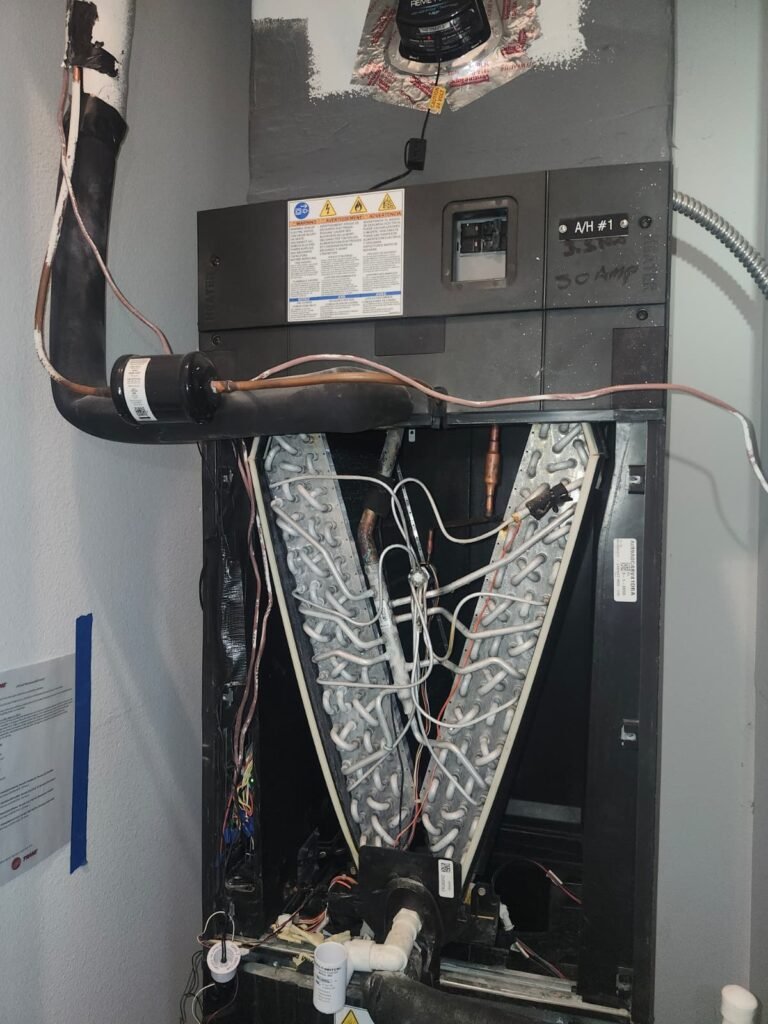
Open HVAC unit showing components in Wesley Chapel, FL 32317.
Open HVAC Unit Components – Wesley Chapel, FL 32317
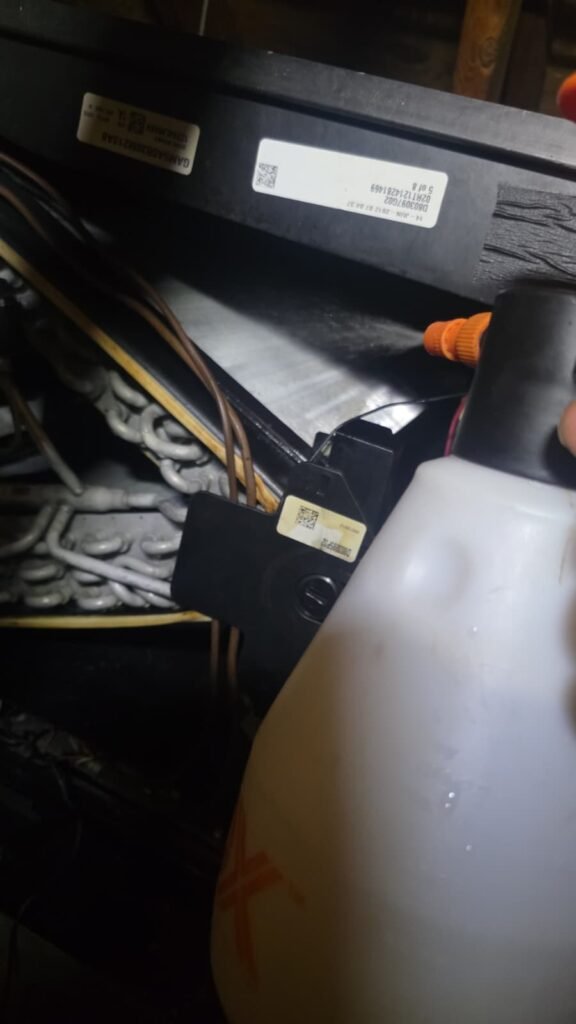
Close-up of HVAC components with spray bottle in St. Petersburg, FL 33703.
HVAC Components in St. Petersburg, FL 33703
RepairTampa LowTampa HighWhat’s Included
Blower motor capacitor replacement$245$425New capacitor, motor amp draw tested under load
Blower motor replacement (PSC standard)$495$995New motor, belt-check if applicable, airflow verified after
Blower motor replacement (ECM variable-speed)$695$1,395OEM or compatible module, full commissioning and programming
Wiring repair or connection tightening$145$495Arc damage repaired, all terminations torque-checked
Control board replacement$395$875OEM or aftermarket board, full relay and terminal test
Condenser coil cleaning (outdoor smell)$295$495Chemical flush, compressor amp draw verified after

Ready to get this fixed? FREE diagnosis. No trip charge.

You only pay if you approve the repair. Same-day service across Tampa Bay.

Call (813) 343-2212 Book Online

Licensed CAC1819196 (HVAC)  |  CFC1431159 (Plumbing)  |  1,300+ Five-Star Reviews

FREE diagnosis on every call. $279 minimum labor on approved repairs. Safety concerns always get same-day priority.

The Tampa Burning Smell Rule: 60 Seconds to Decide

Here is a simple rule for every Tampa homeowner: if a burning smell from your AC does not go away within 60 seconds of the system running, shut the system off at the breaker immediately. Not at the thermostat — at the breaker. A thermostat-off command still leaves 240 volts at the air handler and outdoor unit. The breaker cut removes all power from both. A burning electrical smell that persists or intensifies means active arcing or overheating in a live circuit, and that is a fire risk. The dusty first-heat smell in October that clears in 10 minutes is the only burning smell that earns a wait-and-see response. Everything else gets the breaker off first and a same-day service call.

Florida Code Corner: Electrical Repairs and Safety Requirements

In Florida, HVAC technicians holding CAC licenses are authorized to repair and replace electrical components within the HVAC system: blower motors, capacitors, control boards, and low-voltage wiring. High-voltage wiring runs to the equipment from the panel require a licensed electrician and, if new circuits are added, a Hillsborough County permit at the Falkenburg Road Land Use Hub. If a burning smell investigation reveals that the wiring inside the walls or from the panel to the disconnect box is damaged, that portion of the repair falls outside the CAC scope and requires a licensed electrician. We will diagnose the full scope of the problem and be transparent about which portions require different licensed trades. Homeowners should know that electrical repairs done without the required permits or by unlicensed contractors void insurance coverage for fire damage originating from those repairs.

Tampa Seasonal Timing: When Burning Smell Calls Peak

Burning electrical smells from blower motors and capacitors peak in June and July, when systems first run extended back-to-back cycles in 93-to-96-degree heat and marginal components reach their thermal limits. A blower motor capacitor that was at 85 percent of rated output in April may fail completely by the third week of June under sustained load. The October and November window brings a second smaller peak: first-heat-of-season calls where dust burning off the heating strips is normal but occasionally masks a more serious issue like a wiring fault that went undetected all summer. Do not dismiss a burning smell just because it is the first day you ran heat — if it does not clear in 15 minutes, call us.

Maintenance Schedule to Prevent Burning Smell Emergencies

  • March (pre-season): Have blower motor amperage tested and documented. A motor drawing above its rated full-load amperage is overheating and will produce a burning smell before the season ends. Catching this in March avoids a June emergency.
  • April: Test blower capacitor microfarads. A weak capacitor is the leading cause of blower motor overheating — it forces the motor to draw excess amps on every startup. Replacing a $50 capacitor in April is far better than a $700 motor replacement in August.
  • October (first heat use): Run the system in heat mode for a full 20-minute cycle before the first cold night you need it. Any burning smell that does not clear by the second cycle is a sign the heating elements or motor need inspection before winter.
  • After any power surge or lightning event: Listen and smell on the next AC startup. Surge damage to capacitors and control boards often produces a burning smell on the first run after the event, then may run fine until the damaged component fails completely under load.

What to Do Right Now

  1. Turn off AC at thermostat AND breaker immediately.
  2. Ventilate the house.
  3. If smoke visible: evacuate + call 911.
  4. If just smell: call us. FREE diagnosis.
  5. Don’t restart AC until inspected.

FREE diagnosis. Electrical repairs $279-$899 typical. Burned motors $499-$899. Full pricing.

Get a FREE Diagnosis From a Licensed Tampa Bay Tech

No diagnostic fee. No trip charge. We tell you exactly what is wrong and what it costs before you approve anything.

Call (813) 343-2212   Book Online

Available 7 days a week  |  Same-day service  |  Licensed & insured

FAQ

Is burning smell dangerous?

Potentially yes, electrical fires start this way. Shut off at breaker. If smoke visible, evacuate + 911.

Can I just ignore it?

No. Short that causes burning smell today starts a fire tomorrow. Fix immediately.

First time heat smells burning?

Normal for electric heat strips, dust burning off. If smell lasts more than 2 hours, call.

How quick can you get here?

Same-day Tampa Bay. Burning smell = prioritized dispatch.

Will insurance cover fire damage?

Usually yes for sudden electrical fires. Document photos + keep receipts.

Does repairing a burned blower motor or wiring need a permit in Hillsborough County?

Replacing a blower motor, capacitor, or control board does not require a Hillsborough County permit — these are component repairs under Florida Statute 489.105. If the repair also involves replacing the high-voltage wiring between the panel and the equipment because it was damaged, a licensed electrician and a permit may be required for that specific wiring work. We diagnose the full scope and tell you exactly what requires each licensed trade before any work begins.

Will my homeowner’s insurance cover fire damage from an AC electrical fault?

Generally yes, if the HVAC work was done by licensed contractors with required permits. Homeowner’s insurance typically covers sudden and accidental fire damage. However, if an investigation reveals that unlicensed work was performed or that work requiring a permit was done without one, the insurer can deny the claim on the grounds that the installation did not meet code requirements. This is one of the strongest practical reasons to verify CAC and EC licenses before any electrical work on your AC system.

Can Tampa’s summer heat actually cause a blower motor to overheat and burn out?

Yes. Blower motors have thermal overloads that trip before the windings burn, but a motor that is running hot on every cycle — because of a weak capacitor, restricted airflow from a clogged filter, or worn bearings — accumulates heat damage cycle by cycle. Tampa systems run four to six hours per day during peak season, giving a marginally failing motor dozens of thermal stress events each week. A motor that might last another two years in a northern climate with 1,200 annual cooling hours may fail in one Tampa season with 2,800-plus hours. Annual blower amperage checks are the best early warning.

My AC smells like burning rubber. What does that mean?

Burning rubber from a residential AC system is uncommon on modern direct-drive blower motors. If you smell it, the most likely source is a piece of debris — a rubber gasket, a foam strip, or insulation material — that has been drawn against the blower wheel or heating element. With the system off and the breaker isolated, open the air handler cabinet and check the blower housing for any foreign material. If the rubber smell is persistent and nothing visible is the cause, it may indicate blower motor bearing failure producing a friction heat smell that reads as rubber. That warrants a diagnostic visit. Call (813) 343-2212. Licensed CAC1819196.

How quickly can Home Therapist respond to a burning smell call?

For active burning smell calls — meaning the smell is sharp, electrical, and persisting with the system on — we treat these as same-day priority service calls across Hillsborough, Pinellas, and Pasco Counties. Our technicians carry replacement capacitors, blower motors, and common board components on every truck. In most cases, we can diagnose and repair the cause in a single visit. Call (813) 343-2212. Licensed CAC1819196.

Does a burning smell from my AC mean I have a refrigerant leak?

Not directly. Refrigerant itself is odorless and does not produce a burning smell. However, a refrigerant leak that causes the compressor to overheat can produce a hot-metal or chemical odor from the compressor housing. The more common burning smells from Tampa AC systems trace to electrical components: capacitors, contactors, motor windings, and wiring insulation. If the burning smell is accompanied by warm air output and hissing sounds, the compressor overheating from a refrigerant issue is possible, but an electrical fault is still statistically more likely. A FREE diagnosis will identify the source within minutes. Licensed CAC1819196.

My system smells like burning only during the first hour after a power outage is restored. Is that normal?

A faint burning or warm-dust smell for the first few minutes after power is restored can be normal as capacitors and motor windings come back up to operating temperature after being cold. However, if the smell is sharp, electrical, or does not clear within 10 minutes of the system running after power restoration, that is a warning sign. Lightning-associated voltage surges during storms are one of the leading causes of HVAC electrical component damage in Tampa. A smell on first startup after an outage can mean a capacitor or board absorbed a surge. Have the system checked before peak daily cooling hours resume. Licensed CAC1819196.

Can the air filter cause a burning smell from my AC?

Yes, indirectly. A severely clogged filter restricts airflow across the evaporator coil and forces the blower motor to work significantly harder than its design load. Under that sustained overload, the blower motor windings heat up and can produce a burning smell before the motor’s internal thermal overload trips. If you smell burning and have not changed the filter in more than 6 to 8 weeks during a Tampa summer, change the filter immediately and run the system again. If the smell stops within 10 minutes, the filter was the trigger. If the smell returns or never clears, have the motor amperage checked at the next visit. Licensed CAC1819196.

Smell Burning? Call NOW.

24/7 Tampa Bay emergency dispatch. FREE diagnosis. (813) 343-2212.

★★★★ 4.8 (1,373 verified reviews)
Verified4.8★ · 1,373 reviews
🛡 FL Licensed: CAC1819196 · CFC1431159💼 $1M General Liability + Workers’ Comp🏠 Family-owned since 2017⚡ Same-day service
★★★★★

From the first call, the service was top tier. They listened to my issue and concern. Helped with understanding my options for replacement of my HVAC and external unit. Best quote out…

Mihail Balan · · Google
★★★★★

Fantastic and professional job installing a new unit

Erin Fitzpatrick · · Google
★★★★★Water heater

Had a new water heater installed and the job was done perfectly. Micheal took extra care because we just had new carpet installed. He was extremely professional and did an excellent job.…

Ralph Burgos · · Google
★★★★★AC install

I was in need of air conditioning for my detached garage. My AI search for the most trustworthy mini-split AC installer led me to Home Therapist; my expectations were exceeded. Scheduling a…

Ricardo Gonzalez, M.D. · · Google
★★★★★

Alex did an outstanding job. He was prompt, attacked the issue, kept me informed and finally insured everything was completed and functioning properly.

Art Betts · · Google
★★★★★AC repair

I had a great experience with Home Therapist AC Repair. Alejandro arrived on time to diagnose why my AC wasn't cooling and quickly found the problem that the previous company had missed.…

AK · · Google
★★★★★Plumbing

Highly recommend Home Therapist AC. We had been given a quote for duct replacement from another company and decided to reach out to Home Therapist AC for a quote. Their rates were…

Lisa B · · Google
★★★★★

The technician Dusty from Home Therapist was extremely professional and truly went above and beyond. He was knowledgeable, courteous, and took the time to explain everything clearly while making sure the job…

N · · Google
★★★★★Plumbing

Home therapist is the best. My experience with them has been amazing. Everyone who has been coming to my home are well knowledge and they explain everything in details and give advices…

P G · · Google
Latest review: July 2026 · auto-refreshed daily
Call (813) 343-2212 Read all 902 on Google
Reviewed by Richard MoralesCo-Owner & FL Class B Air Conditioning Contractor, Home Therapist

Richard co-owns Home Therapist Cooling, Heating, and Plumbing and holds the FL Class B Air Conditioning Contractor license (CAC1819196) since 2017. The company holds licenses CAC1819196 (FL Class B AC Contractor, Richard Morales) and CFC1431159 (FL Plumbing Contractor, Alex Morales), serving the Tampa Bay metro with a six-technician field team and 1,378+ verified five-star reviews.

Published: Last reviewed: