Hard start kit vs new capacitor?
Capacitor: replaces failed starting cap. Hard start: adds extra starting torque to help older compressors. Both $279. We diagnose which you need.
When is compressor replacement worth it?
If under 10 years + warranty-covered: yes. If 12+ years: usually replace whole system.
Can a compressor be repaired?
Compressor overhaul kit ($699) sometimes revives borderline units. Usually replacement is the durable fix.
Is trying to restart damaging?
Yes, each failed start puts extreme stress on compressor windings. 3-5 failed starts can finish a marginal compressor.
Is compressor under warranty?
Goodman/Daikin: 10-year parts. Check serial number or call us to look up.
Hard start kit vs new capacitor?
A run capacitor provides the sustained phase-shift voltage the compressor motor needs throughout each cycle. A hard start kit adds a separate start capacitor and potential relay that delivers extra starting torque for the first fraction of a second of each startup, then disconnects. They solve different problems. If the capacitor tests weak, replace the capacitor. If the capacitor tests fine but the compressor still struggles to start (especially in hot afternoon conditions when the system must restart against high head pressure), a hard start kit is the right addition. Both can be installed at the same visit. Call (813) 343-2212.
When is compressor replacement worth it?
Replace the compressor when the system is under 12 years old, the coils are clean, the duct work is sound, and the quote is under 50 percent of a full system replacement cost. If the system is over 14 years old or has had multiple component failures in the past two seasons, a full system replacement is usually the more financially sound choice. A new Goodman or Daikin system starts at approximately $4,800 installed and comes with a 5 to 10 year manufacturer warranty. Call (813) 343-2212 for an honest assessment.
Can a compressor be repaired?
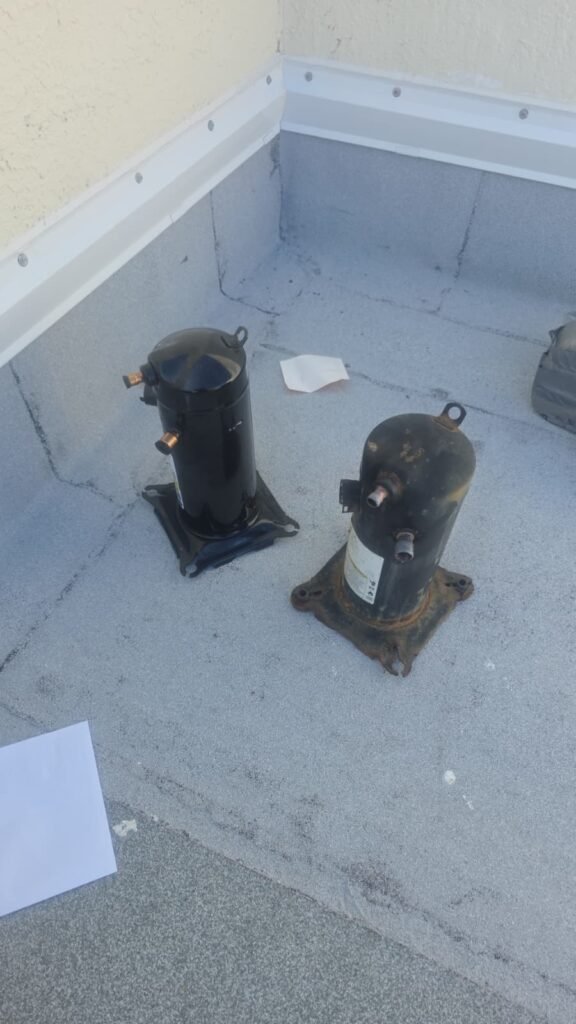
No. Compressors are hermetically sealed from the factory. There is no field-repairable component inside. When a compressor fails due to open windings, stuck valves, seized bearings, or liquid slugging damage, replacement is the only option. The compressor overhaul kits you may see referenced online apply to large commercial scroll compressors, not residential units. On residential systems, a failed compressor means a new compressor or a new system.
Is trying to restart damaging?
Yes if you force it. If the compressor trips its thermal overload or the breaker trips, the system is protecting itself from damage. Repeatedly resetting the breaker or thermostat and attempting restarts adds heat to already-stressed motor windings. The thermal overload will reset on its own after 30 to 90 minutes of cool-down. Attempting to force the issue before then accelerates winding failure. Wait for the cool-down period, attempt one restart, and call for service if it trips again.
Is compressor under warranty?
Most residential compressors carry a 5-year parts warranty from the manufacturer and a 10-year warranty on registered units. Registration must typically be completed within 60 to 90 days of installation. Labor is not covered under parts warranties. If your system was installed as part of new construction and you never received registration paperwork, check with the builder. Warranty is transferable to a new owner in most manufacturer programs. Call (813) 343-2212 and bring your model and serial number for a warranty check before authorizing any compressor repair. Licensed CAC1819196.
Does Florida require a permit to replace just the compressor?
No permit is required in Hillsborough County for a like-for-like compressor swap within an existing permitted condensing unit, provided the same refrigerant type is used and the unit is not relocated. All refrigerant handling requires EPA Section 608 certification. If the full condenser unit is replaced, a change-out permit is required. Call (813) 343-2212. Licensed CAC1819196.
Why do Tampa compressors fail sooner than rated lifespan?
Compressors are rated for approximately 15 to 20 years in laboratory conditions. Tampa’s combination of long runtime hours (2,800-plus cooling hours per year), high ambient temperatures that increase head pressure, salt-air corrosion on coastal homes, and frequent voltage sags from lightning-caused grid events collectively shorten real-world lifespan to 10 to 14 years in many Tampa homes. Systems that receive annual maintenance and coil cleaning consistently outlast neglected systems by 3 to 5 years.
How does high head pressure from a dirty condenser coil affect my compressor?
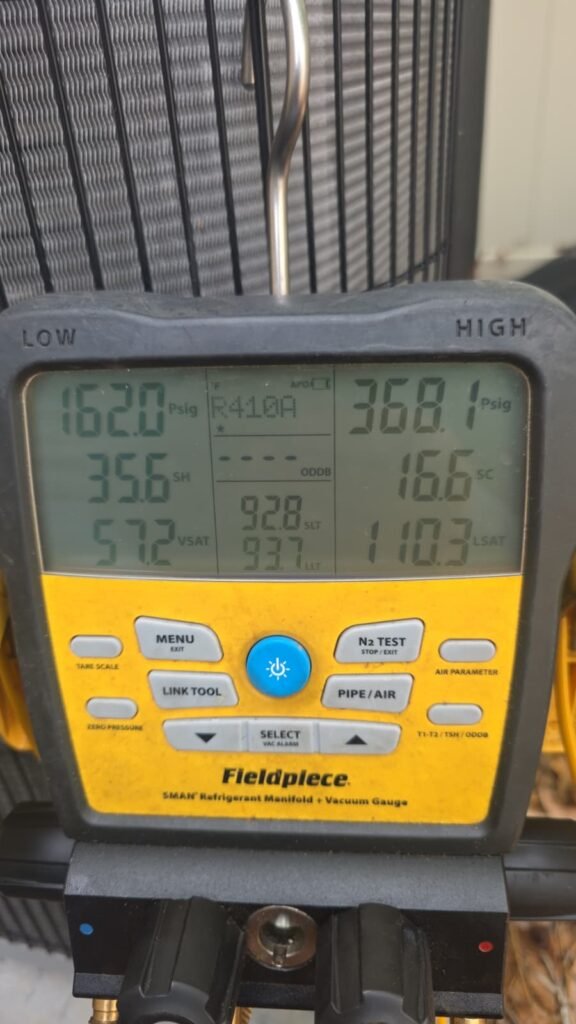
A condenser coil clogged with Tampa oak pollen, seed fluff, or general dust reduces the coil’s ability to reject heat from the refrigerant. When the coil cannot shed heat efficiently, refrigerant leaving the condenser is hotter than designed, which raises condensing pressure throughout the system. The compressor must work against that elevated pressure on every compression stroke, increasing motor amp draw, heat buildup in the windings, and mechanical wear on the valves. Over a Tampa summer, a dirty coil can raise compressor discharge pressure by 15 to 25 percent and shorten compressor service life by years. Annual coil cleaning in April is the single most cost-effective compressor maintenance step. Licensed CAC1819196.
What is liquid slugging and how does it damage a compressor in Tampa?
Liquid slugging occurs when liquid refrigerant instead of vapor refrigerant enters the compressor. Compressors are designed to compress gas, and liquid is incompressible. When liquid refrigerant reaches the compressor, typically from a frozen evaporator coil thawing too quickly or from a refrigerant overcharge, it bends or breaks the compressor valves on impact. Tampa systems are particularly vulnerable because frozen line set events are common from low refrigerant and restricted airflow. Running the system in cooling mode while the evaporator is frozen and then thawing rapidly creates exactly the liquid slugging scenario. The correct response when you discover ice is fan-only mode for two or more hours before restarting in cooling mode. Licensed CAC1819196.
My compressor kicks on but trips the breaker after running for a few minutes. Is that the same problem?
Not exactly. A compressor that starts and then trips the breaker after a few minutes is usually overheating rather than failing to start. The most common causes are a refrigerant system problem driving abnormally high head pressure (often a dirty condenser coil or a low refrigerant charge with the remaining refrigerant overcompressed), a compressor that is drawing above its rated load amps due to worn valves, or a breaker that has become thermally sensitive from age. Each cause requires a different fix. The diagnosis starts with measuring amp draw at the compressor terminals and checking refrigerant pressures. Do not continue to reset the breaker and attempt restarts. Call (813) 343-2212. Licensed CAC1819196.