
HVAC noise reduction tips for a quieter Tampa Bay home
TL;DR:
- Most HVAC noise issues can be reduced with affordable DIY fixes and proper maintenance.
- Combining solutions like pads, blankets, and duct liners achieves the best long-term noise reduction.
- Upgrading to variable-speed systems offers the most significant and lasting quietness.
If your HVAC system sounds more like a construction site than a comfort appliance, you’re not alone. Many Tampa Bay homeowners deal with rattling, humming, and whooshing sounds that make it hard to relax, sleep, or focus. The good news is that most HVAC noise problems have practical, affordable solutions, and you don’t always need to replace your whole system to get results. This article walks you through how to diagnose what’s causing the noise, what you can fix yourself this weekend, and when it makes sense to call in a pro.
Table of Contents
- Diagnose your HVAC noise: Types and causes
- Quick DIY fixes: Pads, blankets, and maintenance
- Advanced solutions: Duct liners, sound walls, and pro upgrades
- Upgrade your system: Variable-speed and combined solutions
- What homeowners often overlook: The hidden impact of HVAC upgrades
- Next steps for Tampa Bay homeowners: Professional help and resources
- Frequently asked questions
Key Takeaways
| Point | Details |
|---|---|
| Diagnose before fixing | Identify the type and source of HVAC noise to select the most effective solution. |
| Start with quick DIY options | Pads, blankets, and regular cleaning deliver immediate noise reduction at low cost. |
| Combine methods for best results | Combining several strategies achieves a substantial noise reduction, making your home much quieter. |
| Consider advanced upgrades | Variable-speed HVAC systems and professional duct treatments offer lasting tranquility. |
| Weatherproof for Tampa Bay | Choose corrosion-resistant materials and weatherproof options to withstand local humidity. |
Diagnose your HVAC noise: Types and causes
Before you spend a dime on fixes, you need to know what kind of noise you’re dealing with. Not all HVAC noise is the same, and the wrong solution won’t help. There are three main categories, and each one points to a different fix.
HVAC noise types break down into airborne, structure-borne, and duct-borne, and diagnosing the right one first is what separates a smart fix from a wasted afternoon.
- Airborne noise travels through the air from the compressor or fan. You’ll hear it as a steady hum or buzz from the outdoor unit.
- Structure-borne noise moves through the physical parts of your home, like walls and floors, from vibrating equipment. Rattling and shaking are the telltale signs.
- Duct-borne noise travels through your ductwork and comes out the vents. Whistling or whooshing sounds usually point here.
To figure out which type is bothering you, walk around your home while the system runs. Stand near the outdoor unit, then move inside near the vents, and finally press your hand lightly against the wall near the air handler. Each location gives you a clue.
Check for common HVAC problems like loose panels, clogged filters, or worn fan blades before assuming you need a major fix. Sometimes a single loose screw causes the whole racket.
“A noisy HVAC system is almost always trying to tell you something. The sound is the symptom. Your job is to find the source.”
Pro Tip: Download a free decibel meter app on your smartphone and take readings at different spots around your system. Log the numbers before and after any fix so you can actually measure your progress instead of guessing.
Quick DIY fixes: Pads, blankets, and maintenance
Once you know the noise type, you can tackle it fast without spending a lot of money. These DIY solutions work well for most Tampa Bay homes and are designed to hold up in our humid, hot climate.
Here’s how to work through the most effective options in order:
- Install vibration isolation pads. Place these rubber or neoprene pads under your outdoor unit. Isolation pads reduce structure-borne noise by 3 to 8 dB and cost between $20 and $60. That’s a meaningful difference for the price of a dinner out.
- Add a compressor sound blanket. These wrap around the compressor inside your outdoor unit. Sound blankets cut airborne compressor noise by 2 to 5 dB and typically cost $80 to $200.
- Clean your system quarterly. Dirty filters and coils force your system to work harder and louder. Skipping maintenance causes a 5 to 12 dB noise increase over time from dirt buildup and loose parts.
- Tighten loose panels and screws. This takes five minutes and can eliminate rattling immediately.
- Check and replace worn fan blades. An unbalanced blade creates vibration that travels through the whole unit.
Follow a solid HVAC maintenance checklist to stay on top of these tasks every season. If you’re newer to this, a beginner HVAC maintenance guide can walk you through each step without the guesswork.
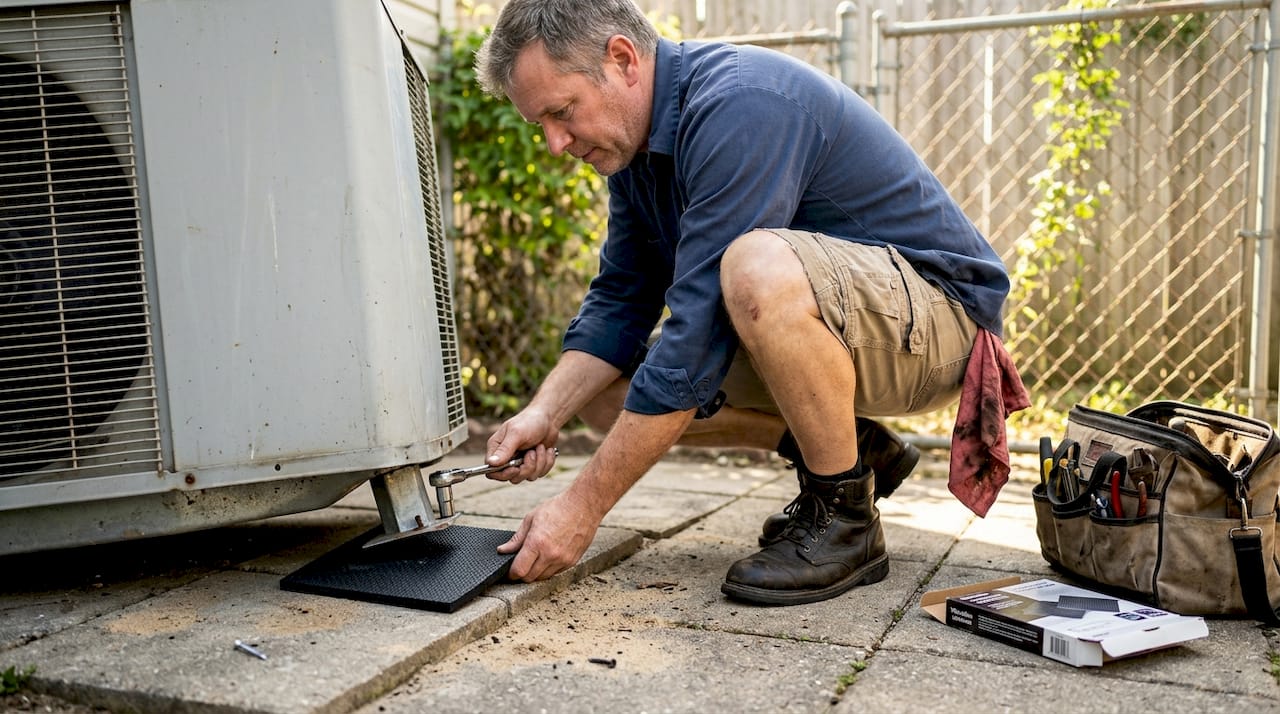
Quick cost comparison:
| Fix | Estimated cost | Noise reduction |
|---|---|---|
| Vibration isolation pads | $20 to $60 | 3 to 8 dB |
| Compressor sound blanket | $80 to $200 | 2 to 5 dB |
| Filter and coil cleaning | $0 to $50 | Up to 12 dB |
Pro Tip: In Tampa’s humidity, standard rubber pads can degrade quickly. Look for neoprene pads and UV-resistant sound blankets specifically rated for outdoor use. They cost a little more but last years longer in Florida’s climate.
Advanced solutions: Duct liners, sound walls, and pro upgrades
When the simple fixes aren’t enough or you want a bigger impact, it’s time to look at professional and advanced noise reduction solutions. These options cost more but deliver results that DIY methods simply can’t match.
Acoustic duct liners are installed on the first 10 to 15 feet of your supply ducts. Duct liners reduce duct-borne noise by 5 to 12 dB and typically cost between $300 and $1,500 depending on your system size and duct layout. If you hear whooshing or rushing air every time the system kicks on, this is your fix.
Sound barrier walls or fences placed between your outdoor unit and your living areas can make a real difference. Sound barrier walls reduce airborne noise by 5 to 15 dB and cost $200 to $2,000 depending on materials and size. Florida-specific sound walls reduce noise by 10 to 15 dB, and corrosion-resistant materials are essential for humid climates like ours.
Here’s what to look for when choosing advanced solutions:
- Use fiberglass or foam duct liners that resist moisture, since Tampa’s humidity can cause mold in the wrong materials
- Choose vinyl or composite fencing over wood for outdoor sound walls, as wood warps and loses effectiveness quickly in Florida heat
- Make sure any barrier leaves at least 18 inches of clearance around the unit for airflow
- Ask your contractor about anti-vibration mounts for the air handler if structure-borne noise persists after DIY attempts
“The best noise reduction investments are the ones that solve the actual source, not just add another layer on top of a problem that’s getting worse.”
A detailed HVAC maintenance step-by-step guide can help you understand which components a technician should inspect before you commit to advanced upgrades.
Advanced solution comparison:
| Solution | Cost range | Noise reduction | Best for |
|---|---|---|---|
| Acoustic duct liners | $300 to $1,500 | 5 to 12 dB | Duct-borne whooshing |
| Sound barrier wall | $200 to $2,000 | 5 to 15 dB | Outdoor unit noise |
| Anti-vibration mounts | $100 to $400 | 3 to 8 dB | Structure-borne vibration |
Upgrade your system: Variable-speed and combined solutions
Finally, if peace and quiet are truly your top priorities, system upgrades and combining solutions can transform your indoor environment. This is where the biggest long-term gains live.
Variable-speed HVAC systems are 10 to 25 dB quieter than older single-stage units. To put that in perspective, a standard unit running at 82 to 85 dB drops to around 76 dB or lower with a modern inverter system. That’s not a small difference. It’s the difference between hearing your system constantly and barely noticing it’s on.
For context, premium inverter units operate at or below 50 dBA at 10 feet, while standard units run between 51 and 60 dBA. Many Tampa Bay municipalities set noise limits at 50 to 60 dBA at the property line, so a quieter system also keeps you compliant.
Learn more about variable speed HVAC benefits specific to our climate before making a purchase decision. And if you’re thinking long-term, understanding how to extend HVAC lifespan will protect your investment for years ahead.
The smartest approach combines multiple solutions rather than relying on any single fix. Combining noise solutions achieves a total reduction of 10 to 25 dB, making your home feel 2 to 5 times quieter, for a cost of $400 to $1,760 without replacing the system.
Combined solution results:
| Strategy | Total dB reduction | Perceived result |
|---|---|---|
| Pads plus blanket | 5 to 13 dB | Noticeably quieter |
| Pads plus blanket plus duct liner | 10 to 20 dB | Much quieter |
| All solutions plus variable-speed unit | 15 to 25 dB | Dramatically quieter |
- Aim for indoor ambient noise below 50 dBA for restful sleep and comfortable conversation
- Layer solutions starting with the cheapest and working up to the most expensive
- Reassess with your decibel meter after each step before spending more
Pro Tip: Don’t just pick one fix and hope for the best. Stacking pads, a sound blanket, and duct liners together costs less than $500 in many cases and can cut your noise problem in half before you ever consider a new system.
What homeowners often overlook: The hidden impact of HVAC upgrades
Most homeowners we talk to think noise reduction is about muffling the sound. They want to throw a blanket over the problem and call it done. But in our experience, the real gains come from understanding what’s actually driving the noise and fixing that root cause.
Skipping regular maintenance is the fastest way to turn a quiet system into a loud one. Dirty coils and loose parts don’t just reduce efficiency. They create vibration and turbulence that compound over time. A system that was whisper-quiet two years ago can become genuinely disruptive without seasonal care.
DIY fixes like pads and maintenance deliver quick wins, but professional help is essential for duct work, refrigerant issues, or unbalanced fans that cause vibration a homeowner simply can’t fix alone. Variable-speed systems offer the best long-term result, though the upfront cost is real.
Our honest take: diagnose first, fix the source, then layer solutions. Following a regular HVAC maintenance guide keeps small problems from becoming expensive noise emergencies. The homeowners who get the best results aren’t the ones who spend the most. They’re the ones who stay consistent.
Next steps for Tampa Bay homeowners: Professional help and resources
If you’ve worked through the DIY fixes and still can’t get the peace and quiet you deserve, it’s time to bring in a certified technician who knows Tampa Bay homes inside and out.
At Home Therapist Cooling, Heating, and Plumbing, our team diagnoses HVAC noise at the source and recommends solutions that actually last in Florida’s demanding climate. Whether you need duct work, a system upgrade, or just a thorough tune-up, we’re here to help. Explore everything we offer for HVAC comfort for Tampa Bay homeowners, or walk through our HVAC troubleshooting steps to see if there’s a quick fix you haven’t tried yet. Give us a call and let’s make your home the quiet retreat it should be.
Frequently asked questions
What are the easiest ways to reduce HVAC noise in Tampa Bay homes?
Vibration isolation pads ($20 to $60) and compressor sound blankets ($80 to $200) are the quickest wins, and keeping up with quarterly maintenance prevents noise from creeping back up over time.
How much quieter will my home be after applying noise reduction tips?
Combining multiple solutions delivers a total reduction of 10 to 25 dB, which your ears perceive as 2 to 5 times quieter than before.
What type of HVAC noise is most common in Tampa Bay homes?
Airborne noise from the compressor and structure-borne noise from vibrations are the most frequent complaints, while duct-borne noise tends to show up more in older homes with aging ductwork.
Which upgrades are best for long-term HVAC noise reduction?
Variable-speed HVAC systems offer the largest single improvement, running 10 to 25 dB quieter than older single-stage models and delivering lasting comfort without constant fixes.