

High Electric Bill From AC Tampa: How to Find the Real Cause
A high electric bill from AC Tampa homeowners open in summer is rarely bad luck, it is usually one of a handful of fixable problems hiding in the system. In a climate where the AC runs much of the year, a dirty coil, a refrigerant leak, leaky ductwork, or a thermostat habit can quietly add real money to every bill. This guide shows how to find the actual driver before you spend on the wrong fix.

Quick Answer: What Causes a High Electric Bill From AC Tampa Homeowners See
A high electric bill from your AC in Tampa is usually driven by reduced efficiency, a clogged filter or dirty coil, low refrigerant from a leak, leaky ducts, or an AC that runs constantly because it is undersized, aging, or fighting heat gain. Find the cause first; a single failing part can raise a bill more than any thermostat tweak.
- Dirty filter or coil forces the system to run longer for the same cooling.
- Low refrigerant means a leak, which lengthens runtimes and risks the compressor.
- Leaky or undersized ducts dump cooled air into the attic, so you pay to cool space you never use.
- An AC running constantly points to a real problem, not just hot weather.
- FREE estimates and FREE diagnosis. Our labor on approved repair work is $279, never a fee just to diagnose.
Why Is My Electric Bill So High in Tampa?
Start by separating weather from a fault. A warmer-than-usual month or a new work-from-home schedule naturally raises cooling cost. But a bill that jumps sharply with no lifestyle change, or an AC that seems to run nonstop, usually signals a fixable problem.
Pull two or three recent bills and compare kilowatt-hour usage, not just the dollar amount, since utility rates also shift. According to the U.S. Department of Energy, cooling and heating make up a large share of a typical home’s energy use, and a central AC running at reduced efficiency is one of the most common reasons a bill climbs. In Tampa’s long cooling season, small inefficiencies compound fast.
Below are the causes we find most often when a homeowner calls about a high AC bill, roughly in order of how frequently they turn out to be the culprit.
What Drives a High AC Bill in Tampa Bay Homes?
A clogged filter or dirty evaporator coil
This is the most common and most overlooked cause. A choked filter or a coil caked in dust and biofilm restricts airflow, so the system runs longer to reach the set temperature. Changing the filter every 30 to 90 days and cleaning the coil during service restores efficiency you did not know you lost.
Low refrigerant from a leak
An AC does not consume refrigerant. If it is low, there is a leak. Low charge makes the system run longer, cool poorly, and eventually freeze or strain the compressor, all of which raise the bill while the equipment degrades. This one needs a tech to find and repair the leak, not just top off.
Leaky or poorly designed ductwork
In many Tampa homes, ducts run through a hot attic. Loose joints, crushed sections, or failed insulation leak cooled air into that attic. You pay to cool air that never reaches a room. Sealing and repairing ducts is one of the higher-impact fixes for a runaway bill, which is why a ductwork and air quality check is part of a thorough diagnosis.
An aging, undersized, or constantly running system
An older AC loses efficiency, and an undersized one never quite catches up on hot days, so it runs constantly. If the unit short cycles or never shuts off, that is a problem to diagnose, our AC short cycling guide covers the warning signs. When repairs stack up on an old system, we will honestly compare them against a more efficient replacement.
| Symptom | Likely Bill Driver | Typical Fix |
|---|---|---|
| Weak airflow, long runtimes | Clogged filter or dirty coil | Filter change, coil cleaning |
| Cools poorly, ice on lines | Low refrigerant from a leak | Leak repair, proper charge |
| Some rooms never cool | Leaky or unbalanced ducts | Duct sealing and repair |
| System runs nonstop | Undersized or aging unit | Diagnosis, possible replacement |
| Bill up, comfort unchanged | Thermostat schedule or heat gain | Smart thermostat, sealing |
How Do We Diagnose What Is Driving Your AC Bill?
Rather than guess, we measure. A real diagnosis tells you which problem is actually costing you, so you fix the right thing once.
Step 1: Review usage and comfort
We ask what changed, walk the home for hot rooms and heat gain, and compare your kilowatt-hour trend. A bill spike with no comfort change points one direction; rooms that never cool point another.
Step 2: Check airflow, coil, and refrigerant
We inspect the filter, blower, and evaporator coil, then verify the system is operating within range. A dirty coil or low charge shows up clearly here and explains most surprise bills.
Step 3: Inspect ductwork and the thermostat
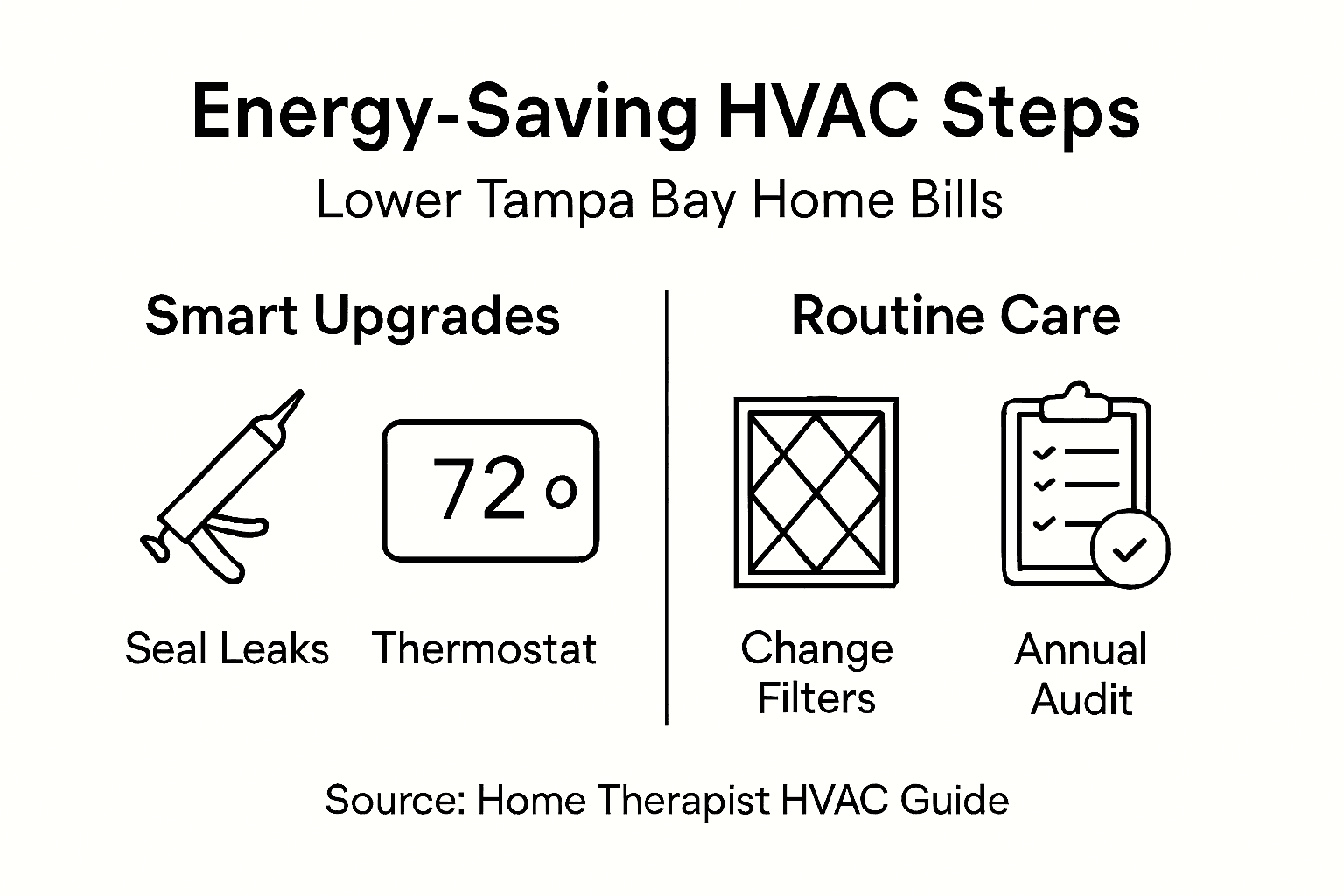
We look for duct leaks, crushed runs, and insulation gaps, and we check the thermostat schedule. Sometimes a smart thermostat installation plus duct sealing is the highest-return combination for a Tampa home.
Step 4: Explain the real driver and your options
We show you what we found in plain language and lay out the fix, from a simple coil cleaning to a leak repair or duct work, so you spend on what actually lowers the bill.
Key Takeaways
- A high electric bill from your AC in Tampa usually traces to a dirty coil, a refrigerant leak, leaky ducts, or a constantly running system, not just hot weather.
- Compare kilowatt-hour usage across bills, not just dollars, since rates change too.
- Low refrigerant always means a leak; topping it off without a repair wastes money and risks the compressor.
- Leaky attic ductwork is a high-impact, often-missed cause of a runaway bill.
- A proper diagnosis tells you which problem is costing you, so you fix the right thing once.
- FREE estimates and FREE diagnosis. $279 is the labor on approved repair work only.
Pro Tips to Lower an AC Bill Without Guesswork
- Change the filter on schedule; a dirty filter is the cheapest cause of a high bill.
- Keep the outdoor unit clear of debris with airflow space around it.
- Set a steady thermostat schedule instead of big swings, and let a smart thermostat handle setbacks.
- Close blinds during peak sun and avoid heat-heavy appliances midday.
- If a room never cools or the unit runs nonstop, get it diagnosed before assuming it is normal.
FAQ About a High Electric Bill From Your AC in Tampa
Why is my electric bill so high all of a sudden in Tampa?
A sudden jump with no lifestyle change usually means a fault: a clogged filter or dirty coil, a refrigerant leak, or a duct problem forcing the AC to run longer. Compare kilowatt-hour usage across bills and have the system checked if usage climbed.
Can a dirty filter really raise my electric bill?
Yes. A severely clogged filter restricts airflow, so the system runs longer for the same cooling and uses more electricity. It can also freeze the coil, which makes things worse. It is the simplest fix to rule out first.
My AC runs constantly. Is that why my bill is high?
Often, yes. A system that never shuts off may be undersized, low on refrigerant, fighting leaky ducts, or aging. Constant running is a signal to diagnose, not a habit to accept, since it both raises bills and wears the equipment.
Is it cheaper to repair my old AC or replace it?
It depends on the age, the failure, and how often it needs repairs. When an old unit needs a major part or runs inefficiently, a more efficient replacement can lower bills enough to be the better long-term value. We compare both honestly.
Do you charge to figure out what is driving my bill?
No. Diagnosis and estimates are free. You only pay for approved repair work, with a $279 labor on that work, and we explain pricing before we begin.
Find Out What Is Driving Your AC Bill in Tampa
Stop guessing at your energy bill. Home Therapist diagnoses the real cause of a high electric bill from your AC and fixes the right thing the first time, across Tampa, St. Petersburg, Clearwater, Wesley Chapel, Brandon, and nearby communities. Regular AC maintenance is the simplest way to keep efficiency, and your bill, in check. Our technicians are licensed and insured (HVAC License CAC1819196 | Plumbing License CFC1431159). Call (813) 343-2212 for FREE estimates and FREE diagnosis. Read homeowner feedback on our Google reviews or verify our standing with the BBB.
More AC Maintenance Articles
- 83-Minute AC Tune-Up on Rocky Shores Dr Reveals Early Warning Signs: AC Maintenance in Tampa, FL 33634
- Salt Air Found on Condenser Fins During AC Maintenance on 11th St N: HVAC Tune-Up in St. Petersburg, FL 33702
- AC Fan Motor High Amp Draw in Tampa FL 33626: What Barbaro Found on Visit 4 at Needlepoint Pl and When to Act
- Third Visit, Zero Issues: Rooftop Package Unit Maintenance on 117th Terrace N in Largo, FL 33773
- Blower Motor Dead, Float Switch Gone, Drain Line Cracked: Alejandro Restores a Rooftop HVAC System on Johns Rd, Tampa FL 33634


