Preventing air leaks: boost comfort & cut Tampa Bay bills
TL;DR:
- Sealing air leaks in attics and ducts saves energy and reduces indoor humidity.
- Modern sealing and ventilation methods improve efficiency and indoor air quality in Florida homes.
- Proper air sealing requires a sequence: first seal leaks, then upgrade insulation and install ventilation systems.
Air leaks are quietly draining your wallet and making your home feel uncomfortable, even when your AC is running full blast. Many Tampa Bay homeowners assume that a tightly sealed home will become stuffy or grow mold, but that belief is costing them real money. The truth is that sealing leaks reduces HVAC strain, extends equipment life, and actually improves indoor air quality. This guide walks you through where leaks hide, why they matter so much in Florida’s climate, and how to fix them without sacrificing fresh air.
Table of Contents
- How air leaks impact your home comfort and energy costs
- Typical air leak locations and why attics and ducts matter most
- Sealing vs. ventilating: debunking the myth of ‘letting your house breathe’
- Air sealing in Florida: handling humidity and tight homes
- Our perspective: practical lessons Tampa homeowners need to know
- Next steps: connect with Tampa’s trusted HVAC and air sealing experts
- Frequently asked questions
Key Takeaways
| Point | Details |
|---|---|
| Stop energy waste | Sealing air leaks prevents up to 40% of HVAC energy loss, cutting utility bills. |
| Improve indoor air quality | Air sealing blocks humidity, pollutants, and allergens from entering your Tampa Bay home. |
| Prioritize attics and ducts | These locations cause the biggest leaks and yield the highest savings when fixed first. |
| Combine sealing with ventilation | Proper sealing plus mechanical ventilation protects comfort and health without sacrificing efficiency. |
| Consult local experts | Professional services deliver thorough detection and tailored solutions for maximum comfort in Tampa Bay. |
How air leaks impact your home comfort and energy costs
Every gap, crack, or unsealed joint in your home’s envelope is an open invitation for Tampa’s heat and humidity to sneak inside. When outdoor air pushes in, your AC has to work harder and longer to maintain a comfortable temperature. That extra strain shows up directly on your utility bill every single month.
Beyond the cost, air leaks bring unwanted guests: allergens, pollen, dust, and outdoor pollutants that degrade your indoor air quality. Florida homes are especially vulnerable because the pressure difference between hot outdoor air and cooled indoor air is so dramatic. This constant exchange also introduces moisture, which creates the perfect conditions for mold growth inside walls and ductwork.
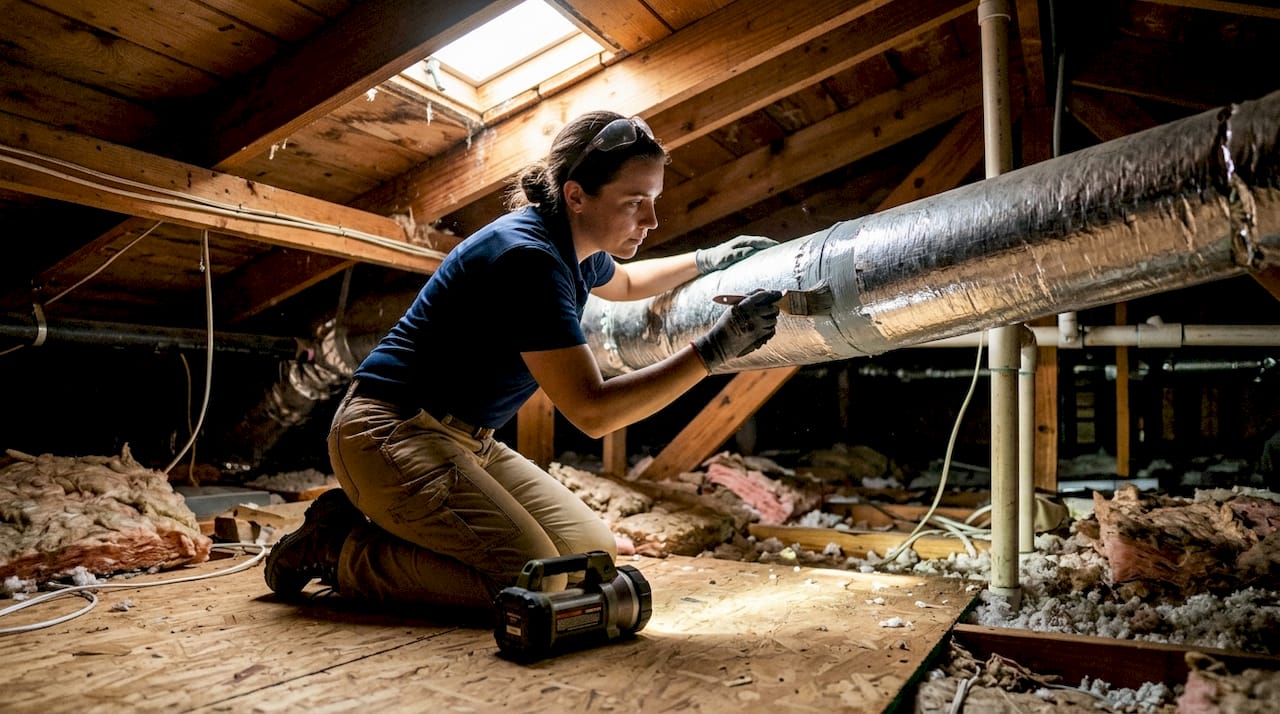
Your duct system is one of the biggest offenders. Ducts lose 25 to 40% of energy through leaks, meaning nearly half of what your HVAC produces never reaches the rooms you’re trying to cool. Leaks in ducts also pull in unconditioned air from attics or crawl spaces, which can introduce mold spores and humidity directly into your living areas.
Knowing the signs of HVAC inefficiency early can save you from a much larger repair bill later. Here are the most common ways air leaks affect your daily comfort:
- Uneven temperatures from room to room, especially on upper floors
- Higher-than-expected utility bills even during mild weather
- Increased dust settling on surfaces faster than normal
- Sticky, humid indoor air that your AC can’t seem to control
- Allergy symptoms that worsen indoors rather than outdoors
For detecting HVAC leaks early, pay attention to rooms that feel warmer or harder to cool than the rest of the house. These are almost always connected to a duct or envelope leak nearby. Following energy saving HVAC tips alongside sealing work gives you the fastest path to lower bills.
Now that you know the scope of the problem, let’s examine where these leaks happen and how to find them.
Typical air leak locations and why attics and ducts matter most
Not all leaks are created equal. Some locations waste far more energy than others, and knowing where to focus your effort first makes a real difference in results. In Tampa Bay homes, the attic and duct system should always be your starting point.
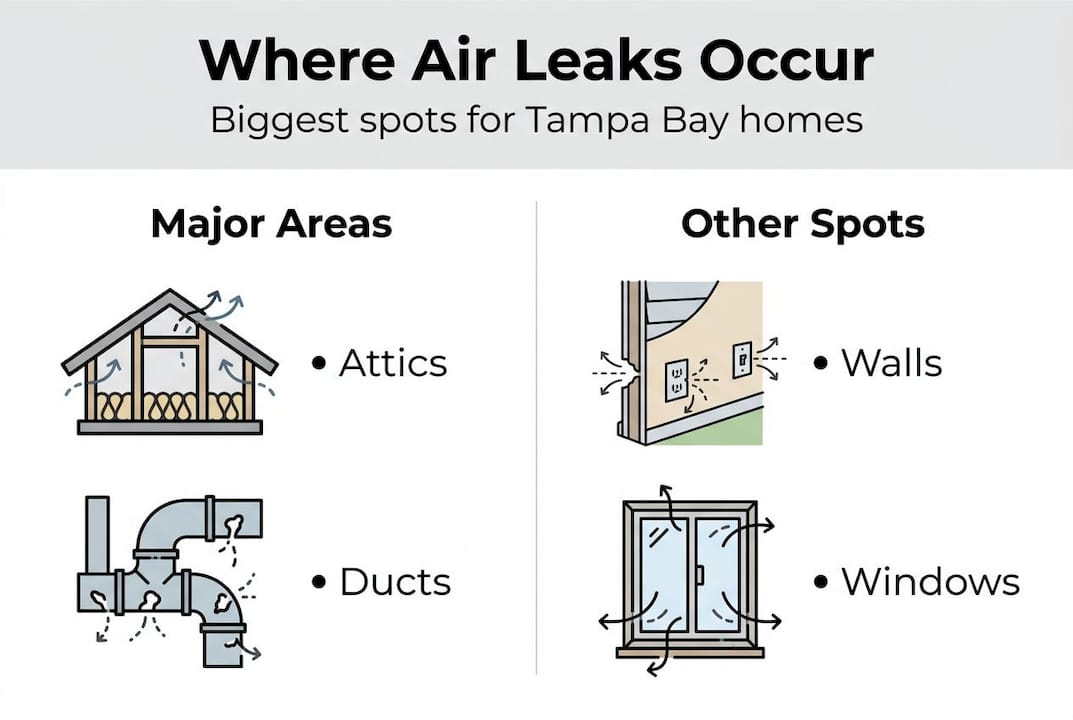
Walls, floors, and ceilings account for 31% of leaks, while ducts contribute another 15%. That means these two areas together represent nearly half of all air leakage in a typical home. Ignoring a roof or attic issue can also compound the problem, since roof leak consequences often include structural damage that creates even more pathways for air and moisture.
| Leak source | Estimated energy loss |
|---|---|
| Attic and ceiling | Up to 31% |
| Ductwork | Up to 15% |
| Windows and doors | 10 to 15% |
| Walls and floors | 10 to 15% |
| Plumbing and wiring penetrations | 5 to 10% |
For Tampa homeowners, repairing leaky ducts is often the single most impactful improvement you can make. Professional duct sealing services use materials like mastic sealant or metal tape to close gaps that standard duct tape simply cannot handle long term.
Here are the most common signs of air leaks specific to Tampa Bay homes:
- Visible daylight around window or door frames
- Dusty rings around ceiling light fixtures or vents
- Attic insulation that looks dirty or discolored (a sign air is moving through it)
- Duct connections that have separated or feel loose when you press on them
- Musty smells near supply or return vents
Pro Tip: Always seal air leaks before upgrading your insulation. Adding insulation over existing leaks traps the problem and reduces the effectiveness of both the insulation and the sealing work you do later.
Once you know where leaks lurk, the next step is smart, targeted sealing, especially in places that matter most.
Sealing vs. ventilating: debunking the myth of ‘letting your house breathe’
One of the most persistent myths in home improvement is that sealing your home too tightly will cause indoor air pollution or mold. This idea made some sense decades ago when homes had no mechanical ventilation at all. Today, it’s simply outdated.
Modern building science is clear: sealing plus controlled ventilation is superior to relying on random air leaks for fresh air. Uncontrolled leaks bring in whatever is outside, including pollen, exhaust fumes, humidity, and insects. Controlled ventilation, by contrast, lets you filter and manage the air entering your home.
“Some old views held that a house should ‘breathe’ through its gaps, but experts now agree that sealing combined with controlled mechanical ventilation is the best approach for both energy efficiency and indoor health.”
Here’s a side-by-side look at how the two approaches compare in Florida’s climate:
| Factor | Unsealed home | Sealed + ventilated home |
|---|---|---|
| Energy use | High, AC runs constantly | Lower, AC cycles less |
| Humidity control | Poor, outdoor humidity enters freely | Good, managed by ventilation system |
| Indoor air quality | Variable, depends on outdoor conditions | Consistent, filtered and controlled |
| Mold risk | High, moisture enters unchecked | Low, moisture managed at source |
| Comfort | Uneven, drafty, sticky | Even temperatures, drier feel |
Understanding HVAC airflow is key to making this work correctly. When your system is designed to bring in fresh air intentionally, you get the benefits of ventilation without the energy penalty of uncontrolled leaks.
Pros of sealing in Florida’s humidity:
- Blocks outdoor humidity from entering walls and ceilings
- Reduces allergen and pollutant infiltration
- Lowers cooling load on your AC system
Cons of relying on leaks for ventilation:
- No control over what enters your home
- Humidity spikes that encourage mold
- Wasted energy that drives up bills year-round
Now that we understand sealing and ventilation, let’s tackle special issues that arise, especially in Florida’s humidity and tight homes.
Air sealing in Florida: handling humidity and tight homes
Florida’s climate adds a layer of complexity that homeowners in drier states don’t face. When you seal a home tightly here, moisture management becomes critical. Without a plan for ventilation, a well-sealed Tampa Bay home can develop humidity problems that lead to mold and poor air quality.
The good news is that the solution is straightforward. Tight homes near zero ACH50 (a measure of how much air leaks through the building envelope per hour) need mechanical ventilation like an energy recovery ventilator (ERV) or heat recovery ventilator (HRV) to avoid humidity buildup. Florida’s humidity makes this even more important than in northern states.
“In Florida’s climate, air sealing without mechanical ventilation is only half the job. Moisture control is the other half, and skipping it can create the exact problems homeowners were trying to avoid.”
Here’s a practical sequence to follow after sealing your home:
- Conduct a blower door test to measure how tight your home is before and after sealing
- Seal attic and duct leaks first, since these deliver the biggest return
- Install or upgrade mechanical ventilation if your home tests below 3 ACH50
- Add a whole-home dehumidifier if your indoor humidity stays above 60% after sealing
- Schedule a follow-up inspection to confirm moisture levels are stable
Pro Tip: Ask your HVAC technician about ERV systems specifically designed for Florida’s climate. Unlike a standard HRV, an ERV transfers moisture as well as heat, which helps keep your indoor humidity at a comfortable level without letting outdoor air overwhelm your system.
For Tampa Bay homeowners, preventing mold in HVAC systems starts with controlling moisture at the source. Understanding the connection between humidity and home comfort helps you make smarter decisions about both sealing and ventilation investments.
With local concerns addressed, you’re ready to take action. Let’s review the key perspective before connecting you to the right services.
Our perspective: practical lessons Tampa homeowners need to know
After years of working in Tampa Bay homes, we’ve noticed a consistent pattern. Homeowners spend money on new windows and doors expecting big savings, but they overlook the attic and ductwork where the real losses are happening. Windows and doors feel obvious because you can see and touch them. Attic bypasses and duct gaps are invisible, but they cost you far more.
The old advice to “let your house breathe” made sense before mechanical ventilation existed. Today, it’s a reason people overpay on energy bills and deal with mold problems they can’t explain. Seal first, then ventilate. That order matters.
We’ve also seen homeowners add insulation before sealing leaks, which is like putting a blanket over a broken window. The insulation gets dirty, the leaks persist, and the savings never materialize. A proper HVAC leak seal application done before any insulation upgrade will always outperform the reverse approach. Hidden leaks consistently waste more energy than the visible gaps most people fixate on.
Next steps: connect with Tampa’s trusted HVAC and air sealing experts
If your home feels harder to cool than it should, or your utility bills keep climbing despite a working AC, air leaks are almost certainly part of the problem. Home Therapist can diagnose exactly where your home is losing conditioned air and seal those pathways for lasting comfort and savings.

Our certified technicians handle everything from air handler and duct replacement to full leak detection assessments across the Tampa Bay area, including HVAC service in Sun City Center. Visit Home Therapist to schedule your inspection before peak summer heat arrives. The sooner you seal, the sooner you start saving.
Frequently asked questions
What are the biggest sources of air leaks in Tampa homes?
Attics and ductwork are the main sources, followed by walls, floors, ceilings, windows, and doors. Prioritizing attics and ducts for sealing delivers the most energy savings per dollar spent.
Will sealing air leaks make my home stuffy or cause mold?
No. Sealing blocks outdoor pollutants and humidity, while controlled mechanical ventilation manages fresh air safely. Experts agree sealing plus ventilation is better for both efficiency and health than relying on random leaks.
How does air sealing reduce my energy bills?
Sealing prevents cooled air from escaping and hot outdoor air from entering, so your AC runs less often and works less hard. Sealing leaks reduces HVAC strain and extends equipment life, which lowers both monthly bills and long-term repair costs.
What happens if my home is too tightly sealed?
Very tight homes require mechanical ventilation to manage humidity and fresh air exchange. Tight homes near zero ACH50 need ERV or HRV systems to avoid humidity buildup, especially in Florida’s climate.
Should I seal air leaks before upgrading insulation?
Yes, always seal first. Sealing before insulating maximizes the effectiveness of both improvements and prevents leaks from making new insulation dirty and ineffective over time.