
What is a condensate drain? Tampa Bay HVAC guide
TL;DR:
- Clogged condensate drains can cause water damage, mold, and system shutdowns in humid climates.
- Regular maintenance, including monthly vinegar flushes and annual inspections, prevents costly repairs.
- Proper installation and vigilance are essential to ensure efficient drainage and protect home integrity.
Your air conditioner quietly removes gallons of moisture from your home every single day, and almost nobody thinks about where that water goes. In Tampa Bay, where the humidity stays brutal for most of the year, your HVAC system works overtime, and that means your condensate drain does too. A clogged or failing condensate drain is one of the most frequent causes of HVAC water damage, yet most homeowners have never even looked at theirs. This guide breaks down exactly what a condensate drain is, how it works, what goes wrong, and how a few simple habits can protect your home from a surprisingly expensive problem.
Table of Contents
- What is a condensate drain and why does it matter?
- How does a condensate drain work?
- Common problems with condensate drains in Tampa Bay homes
- How to maintain your condensate drain for worry-free cooling
- The hidden cost of neglecting your condensate drain
- Need help with your HVAC condensate drain?
- Frequently asked questions
Key Takeaways
| Point | Details |
|---|---|
| Condensate drain basics | A condensate drain safely removes water from your HVAC system, preventing costly water damage. |
| Tampa Bay climate risk | High humidity causes faster drain clogs from algae and mold, especially for local homes. |
| Maintenance essentials | Monthly cleaning and annual professional checks are vital for trouble-free HVAC operation. |
| Prevention saves money | Ignoring a clogged drain can lead to expensive repairs, but simple routines avoid most issues. |
What is a condensate drain and why does it matter?
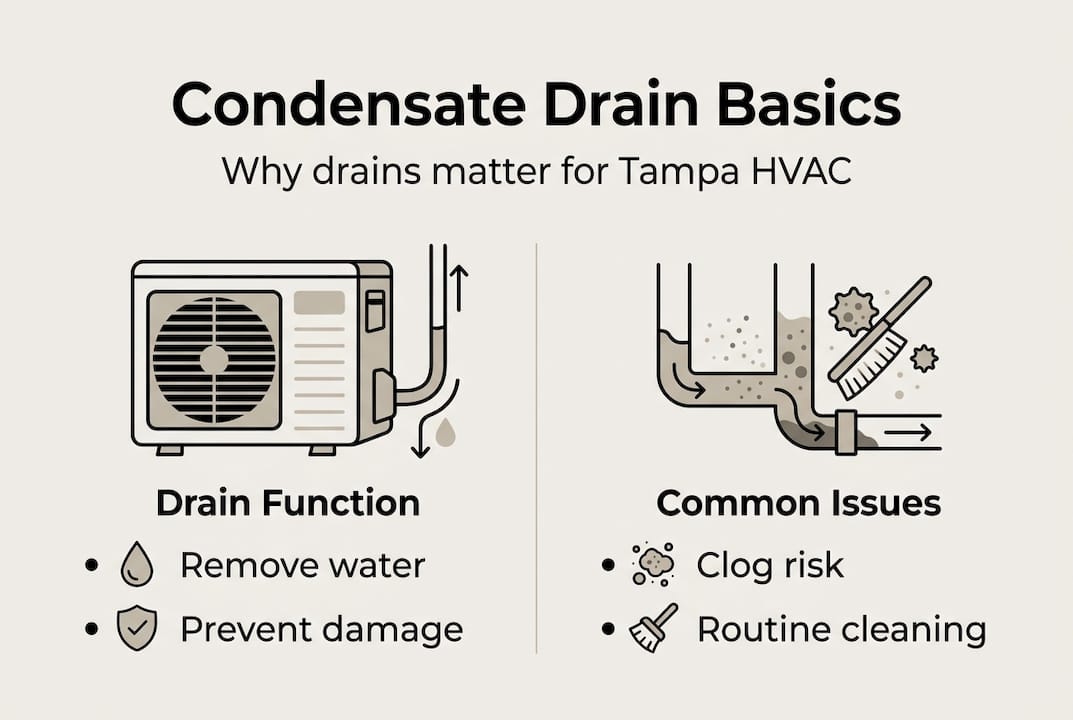
A condensate drain is the pipe and tray system that collects and removes the water your air conditioner pulls out of the air. When warm, humid air passes over your AC’s cold evaporator coils, moisture condenses on the coils, just like a cold glass of water on a hot day. That water drips into a drain pan below the coils, then flows out through a pipe to a safe discharge point outside your home or into a floor drain.
In Tampa Bay, this process is relentless. Our climate keeps air conditioners running for eight or more months a year, and the humidity is among the highest in the country. A 3-ton AC can produce 15-20 gallons of condensate per day in these conditions. That’s not a small trickle. That’s a serious volume of water moving through your system daily.
| System size | Estimated daily condensate output |
|---|---|
| 1.5-ton unit | 7-10 gallons/day |
| 2-ton unit | 10-14 gallons/day |
| 3-ton unit | 15-20 gallons/day |
| 4-ton unit | 20-26 gallons/day |
| 5-ton unit | 25-32 gallons/day |
When the drain gets clogged, all that water has nowhere to go. The pan overflows, water spills onto ceilings, floors, and walls, and mold starts growing fast in Tampa Bay’s warm environment. Many systems have a float switch that shuts the AC off when the pan fills up, which protects your home but also leaves you without cooling in the middle of summer.
Common outcomes of a clogged condensate drain include:
- Water stains on ceilings and drywall
- Mold and mildew growth inside the air handler
- Complete AC shutdown from float switch activation
- Structural damage to floors and framing
- Reduced indoor air quality from mold spores
Industry data shows that clogs are a leading cause of HVAC water damage insurance claims. Regular condensate line cleaning is one of the most important things you can do to protect your home.
How does a condensate drain work?
Now that you know why the condensate drain matters, let’s see how it actually works in your HVAC system.
The process follows a simple path, but each step depends on proper installation to function correctly.
- Moisture forms on the evaporator coils as warm air passes over the cold surface.
- Water droplets fall into the drain pan positioned directly beneath the coil.
- The pan slopes toward the drain opening, directing water into the primary drain pipe.
- Water flows through the pipe by gravity to a discharge point outside or to a floor drain.
- A trap in the line holds a small amount of water to prevent outside air from being pulled back into the system.
Gravity does all the work, which means the pipe has to be installed correctly. The minimum slope is 1/8 inch per foot, and the pipe needs support every 3 to 4 feet to prevent sagging. If the pipe sags, water pools in that low spot and clogs form fast. PVC is the most common material, and 3/4-inch diameter is standard for residential systems.
The trap is often overlooked but critical. In systems where the air handler creates negative pressure (meaning it pulls air in), a dry trap lets outside air rush in, disrupting airflow and potentially pulling sewer gases into your home. Always keep the trap primed with water.
Florida code follows the Florida Building Code Mechanical, Section 307, which requires approved discharge locations, air gaps when draining to a plumbing system, and secondary drain protection when the air handler sits above a finished living space. This secondary pan catches overflow before it reaches your ceiling.
Pro Tip: Check around your indoor air handler for any visible standing water or rust stains on the pan. That’s your earliest warning sign that the drain is struggling before any real damage starts.
If you want to see what ac drain cleaning in Tampa looks like in practice, or learn more about professional drain cleaning options, those resources walk through real local jobs.
Common problems with condensate drains in Tampa Bay homes
Understanding the flow sets the stage for tackling the specific problems homeowners face.
Tampa Bay’s climate is a perfect breeding ground for the most common condensate drain problem: algae and biofilm buildup. Warm temperatures, constant moisture, and darkness inside the drain pipe create ideal conditions. Algae and biofilm clogs form much faster here than in cooler, drier climates.
| Clog cause | Tampa Bay formation time | Cooler/drier climate |
|---|---|---|
| Algae/biofilm | 4-8 weeks | 4-6 months |
| Dirt and debris | 2-4 months | 6-12 months |
| Insect nests | Anytime, year-round | Seasonal only |
| Mold growth | 2-6 weeks | 3-6 months |
Beyond algae, dirt carried in by the air handler, small insects nesting in the pipe opening, and mold colonies all contribute to blockages. The warm, wet environment means you simply cannot ignore this system the way homeowners in northern states might.
Early warning signs to watch for:
- Water pooling near your indoor air handler
- Rust or discoloration on the drain pan
- Musty or moldy smell coming from vents
- AC shutting off unexpectedly on hot days
- Gurgling sounds from the drain line
If left unaddressed, the consequences escalate quickly. Clogs are the leading preventable cause of HVAC water damage claims, and the repair bills reflect that. Water damage to drywall, insulation, and framing can easily run into thousands of dollars, and mold remediation adds even more.
One thing many homeowners don’t realize: a clogged drain can trigger your AC’s safety float switch, shutting the system down completely. It’s a protective feature, but discovering it on a 95-degree Tampa afternoon is not a fun experience. Staying on top of AC drain line cleaning prevents that scenario entirely. It’s also worth knowing that restricted drainage can contribute to coil freezing, so learning how to prevent AC ice build-up connects directly to drain health.
How to maintain your condensate drain for worry-free cooling
Now let’s make sure you’re prepared to keep your system healthy with simple, high-impact habits.
The good news is that maintaining your condensate drain is genuinely easy. It takes less time than doing the dishes, and it can save you thousands of dollars in damage. Here’s the routine that HVAC maintenance professionals recommend for Tampa Bay homeowners:
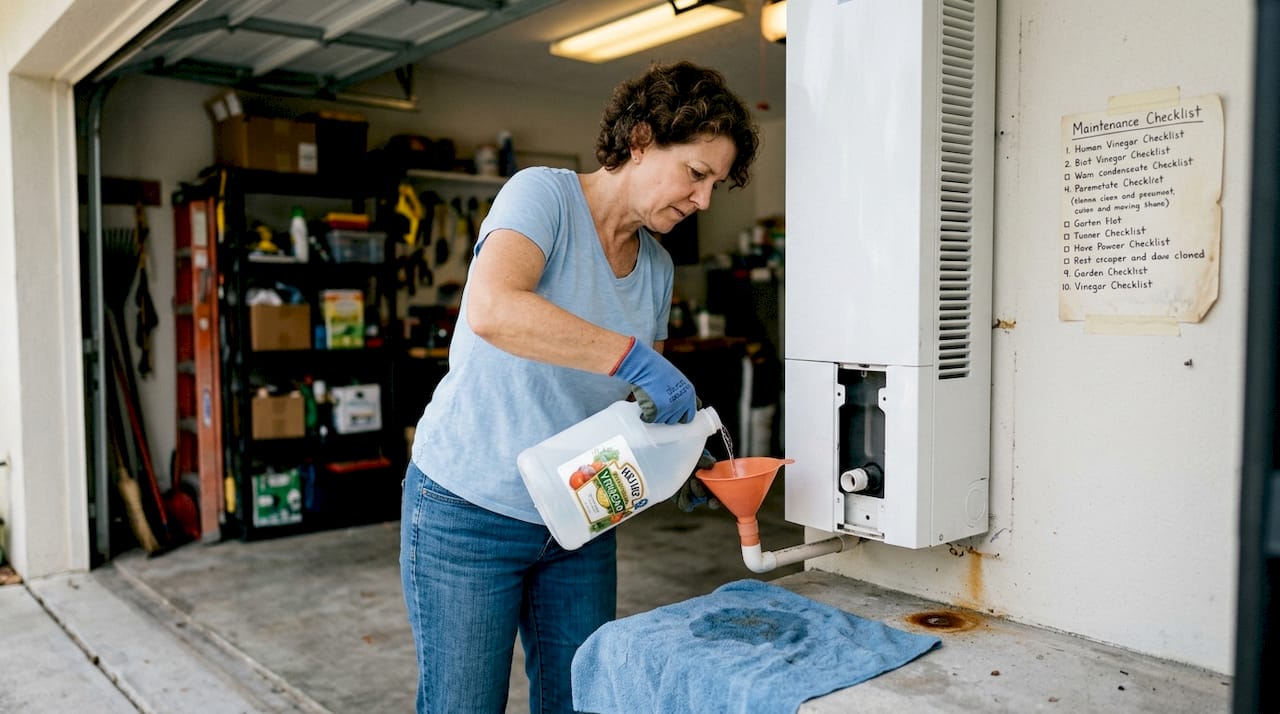
- Monthly flush: Pour 1/4 cup of white vinegar into the drain line access port (the small capped pipe near your air handler). Let it sit for 30 minutes, then flush with water. This kills algae before it builds up.
- Check the drain pan: Every month, look at the pan under your air handler. If you see standing water, the drain is already slow. Address it immediately.
- Clear minor clogs with a wet/dry vac: Attach the vacuum to the outdoor end of the drain line and run it for 1-2 minutes. This pulls out soft blockages effectively.
- Prime the trap: After any cleaning, pour a cup of water into the access port to make sure the trap stays full and sealed.
- Annual professional inspection: Have a certified technician inspect the full drain system, check the float switch, and clear any buildup you may have missed.
Pro Tip: Always prime the trap after cleaning your drain line. A dry trap is an open door for outside air to be pulled into your system, which can cause pressure issues and even allow odors to enter your home.
For more detail on cleaning condensate lines yourself, or to understand when you need AC drain line repair for a float switch issue, those guides cover the specifics. If you want a professional to handle a full drain line sanitizing project, that’s always a smart option before the peak cooling season hits.
The hidden cost of neglecting your condensate drain
Most homeowners pay close attention to their thermostat settings and air filters. Almost nobody thinks about the condensate drain until water is dripping from the ceiling. That gap in attention is where thousands of dollars in damage quietly begin.
Here’s something the insurance industry doesn’t advertise loudly: many homeowner policies exclude gradual water damage and mold caused by a slow, unaddressed leak. If your drain has been seeping for weeks before you notice, you may be on the hook for the full repair cost. That’s not a rare situation. It’s what we see regularly in Tampa Bay homes.
The math is simple. Spending ten minutes a month on a vinegar flush and a visual check costs you nothing but a little time. Ignoring it can mean ceiling repairs, mold remediation, and a service call all at once. Understanding why clean condensate lines matter is the first step, but actually doing it is where the real savings happen.
In our experience working across Tampa Bay, the homes that avoid major HVAC water damage are not the ones with the newest systems. They’re the ones where someone checks the drain pan once a month. That simple habit is genuinely the most cost-effective HVAC upgrade available to any homeowner.
Need help with your HVAC condensate drain?
If you’ve read this far, you’re already ahead of most Tampa Bay homeowners when it comes to understanding your HVAC system. Putting that knowledge to work is the next step, and we’re here to help.
Whether you want to start with our beginner HVAC maintenance guide or work through our HVAC troubleshooting steps on your own, those resources are built specifically for Tampa Bay homeowners. If you’re dealing with a slow drain, recurring clogs, or just want a professional set of eyes on your system before summer, our certified technicians are ready to help. Explore more about HVAC basics for Tampa Bay or call us directly at the first sign of trouble. Don’t wait for the ceiling to tell you there’s a problem.
Frequently asked questions
What happens if my condensate drain gets clogged?
A clogged drain causes water to back up into the pan and overflow, leading to water damage, mold growth, and often a complete AC shutdown triggered by the float switch. In Tampa Bay’s climate, algae and biofilm clogs can develop within weeks if the drain isn’t maintained.
How often should I clean my HVAC condensate drain?
Flush the drain line with vinegar every month and schedule a professional annual inspection to catch any buildup or mechanical issues before they become serious problems.
Can I use bleach in my condensate drain line?
Yes, bleach works well for clearing stubborn algae, but a monthly vinegar flush is gentler on pipes and still highly effective for routine prevention.
What size is a typical residential condensate drain pipe?
3/4-inch PVC is the standard size for residential HVAC condensate drain lines, though larger commercial systems may use wider pipe.
Is a secondary drain pan required by code in Florida?
Yes, secondary protection is required under Florida Building Code when the air handler is installed above a finished living space, protecting ceilings and floors from overflow damage.