
Why Clean Condensate Lines – Prevent Costly AC Damage
A blocked AC drain line can surprise Tampa Bay homeowners with sudden water leaks and costly damage. Too often, neglected condensate lines let bacteria, slime, and sediment build up—leading to mold growth, higher energy bills, or even full system failure. Understanding how condensate forms and why drain lines clog could save you thousands in repairs. Discover practical steps to keep your HVAC system running efficiently all summer long.
Table of Contents
- Condensate Lines Explained And Common Myths
- Types Of Clogs And How They Form
- How Blocked Lines Impact AC Performance
- Risks Of Water Damage And Mold Growth
- Practical Tips For Preventing Drain Line Issues
Key Takeaways
| Point | Details |
|---|---|
| Understanding Condensate | Proper management of condensate is crucial to prevent damage to your AC system. Ignoring it can lead to expensive repairs and health hazards due to mold and water damage. |
| Myth Busters | Homeowners often believe misconceptions about condensate lines, such as a lack of maintenance or improper drainage connections. Clarifying these myths is essential to ensure system efficiency and safety. |
| Preventive Maintenance | Regular cleaning and inspections of the condensate line can prevent clogs, mold growth, and costly repairs. Monthly flushing with a bleach solution is an effective preventative measure. |
| Professional Help | Schedule annual professional maintenance to ensure your condensate system is functioning correctly, which can prevent significant issues and extend the lifespan of your AC unit. |
Condensate Lines Explained and Common Myths
Your AC system produces water constantly. This water, called condensate, forms when humid air passes over your cooling coils and turns back into liquid. Understanding this process helps you avoid expensive repairs down the road.
What Is Condensate?
Condensate is exactly what it sounds like: moisture that has cooled enough to return to liquid form. Your Tampa Bay AC works hard during summer, and as it cools air, water vapor condenses inside the unit. This water needs somewhere to go, or your system suffers damage.
Condensate is corrosive due to dissolved oxygen in the water, meaning it can degrade pipes and components over time if not properly managed. The longer condensate sits or backs up, the worse the damage becomes.
How Condensate Drains Work
Your AC system uses condensate drain lines to remove this water safely from the unit. Here’s what typically happens:
- Water collects in a pan beneath the cooling coil
- Gravity pulls the water through a drain line (usually a PVC pipe)
- Water exits outside your home or into an approved drain system
- The system repeats every time your AC runs
Sounds simple, right? In theory, yes. In practice, things go wrong fast.
Clogged condensate lines cause more damage than most homeowners realize, often leading to water damage, mold growth, and system failure.
Common Myths About Condensate Lines
Many homeowners believe things about condensate that simply aren’t true. Let’s clear these up.
Myth #1: “Condensate should connect to my main drain.”
This is wrong. Proper condensate handling requires avoiding direct connections to plumbing drains and ensuring traps or air gaps prevent sewer gas from entering your home. Direct connections allow foul odors and gases to backflow into your AC system.
Myth #2: “A drain line doesn’t need maintenance.”
Incorrect. Drain lines clog with algae, mold, and debris regularly in Tampa’s humid climate. Without regular cleaning, backups happen within months, not years.
Myth #3: “I can just ignore a slow drain.”
Danger zone. Slow drains lead to water pooling inside your AC unit, causing rust, mold, and electrical problems. What starts as a minor annoyance becomes a $3,000 replacement.
What Condensate Drains Actually Need
Building code requires specific things from your condensate system:
- A minimum slope (typically 1/4 inch per 10 feet) so water flows downhill
- Proper pipe diameter (usually 3/4 inch) to handle water volume
- Visible discharge location so you can see water leaving the system
- Easy access for cleaning without disassembly
- A secondary drain line or overflow switch as backup protection
If your system lacks any of these, you’re at risk.
Pro tip: Schedule condensate line cleaning annually before summer heat arrives, and flush the line with a mixture of water and a small amount of bleach to prevent algae buildup.
Types of Clogs and How They Form
Not all condensate clogs are created equal. Understanding what actually blocks your drain line helps you prevent the problem before it starts. Tampa’s humid climate makes certain clogs more likely than others.
The Slime Problem
The most common clog in condensate lines is biological growth. Bacteria produce slime buildup that accumulates on drain pipe walls over time. This isn’t just gross—it actively reduces water flow.
The warm, wet environment inside your drain line is perfect for bacteria colonies. They feed on dust, organic matter, and debris trapped in the line. As colonies grow, they create a slimy biofilm that sticks to everything.
Biological growth clogs form faster in humid climates like Tampa Bay, sometimes blocking lines completely within a few months.
Sediment and Sludge Buildup
Dust from your home’s air gets pulled into your AC system. When that dust mixes with condensate water, it creates sediment that settles in your drain line. Over time, this sediment hardens and narrows the pipe opening.
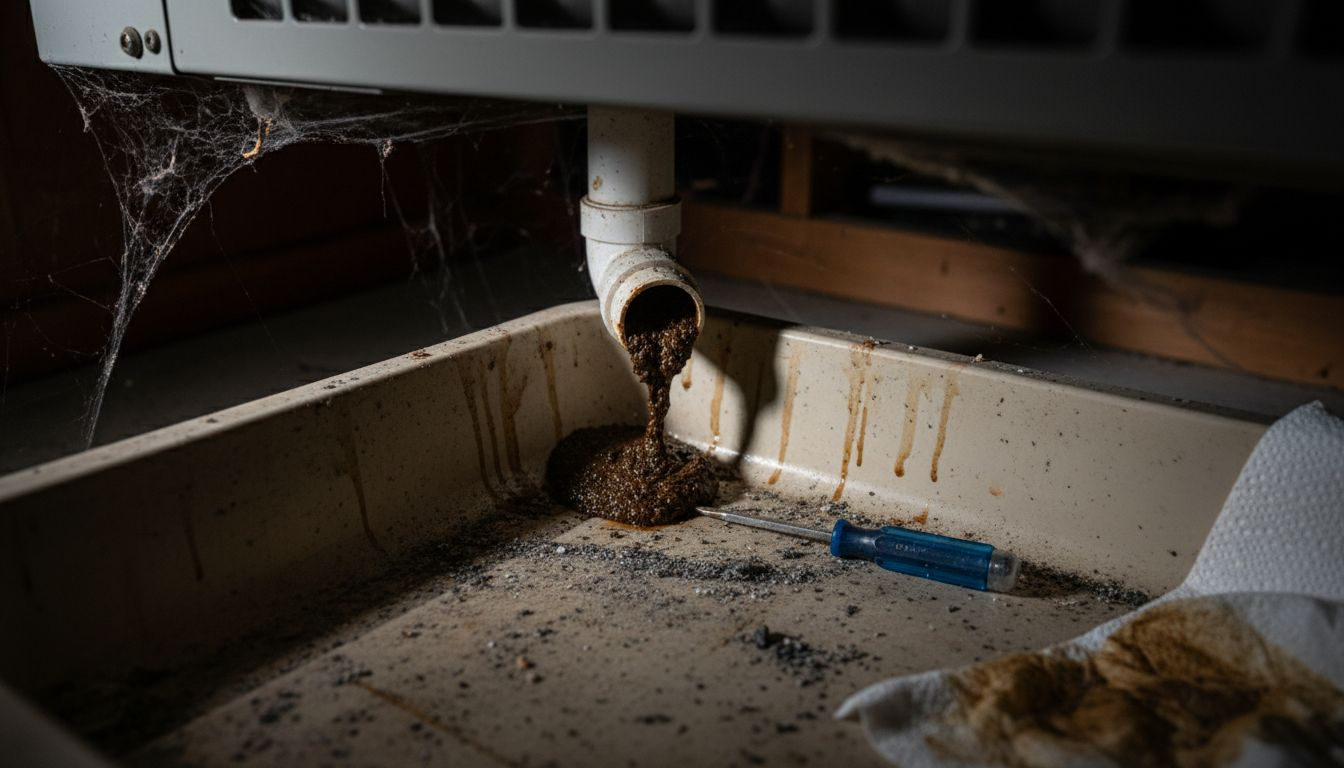
Sludge accumulation reduces flow capacity significantly, causing water to back up into your AC unit’s pan. The longer sediment sits, the worse it gets. Your drain line essentially becomes narrower and narrower.
Algae Growth
Algae thrives in standing water and low-flow conditions. If your drain line slopes improperly or water moves slowly, algae blooms inside the pipe. Green or black algae buildup clogs the line and prevents water from draining.
This is especially common when condensate discharge happens near shaded areas or where water pools before leaving your property.
Here’s a look at common types of condensate drain clogs and what conditions make them most likely:
| Clog Type | Main Cause | Most Likely Conditions |
|---|---|---|
| Biological Slime | Bacteria feeding on dust/debris | High humidity, summer months |
| Sediment and Sludge | Dust mixing with condensate water | Dirty air filters, heavy AC use |
| Algae Growth | Algae in standing/slow-moving water | Poor pipe slope, shaded discharge |
How These Clogs Actually Develop
Clogging rarely happens overnight. Here’s the typical progression:
- Bacteria or algae spores enter your drain line
- Organisms colonize the wet PVC pipe surface
- Biofilm or algae layer forms over weeks
- Water flow slows as the opening narrows
- Sediment and dust get trapped behind the growing clog
- Water backs up into your AC unit
- Overflow occurs, causing damage
Prevention Starts with Understanding
These clogs form because of three conditions:
- Moisture (always present in condensate lines)
- Organic food sources (dust, debris, bacteria)
- Warm temperatures (especially in summer Tampa heat)
You can’t eliminate moisture, but you can disrupt the other two conditions through regular maintenance.
Pro tip: Flush your condensate line monthly with a bleach and water solution (1 part bleach to 16 parts water) to kill bacteria and algae before they form clogs.
How Blocked Lines Impact AC Performance
A clogged condensate line doesn’t just slow your AC down. It creates a cascade of problems that damage your entire system. Understanding these impacts helps you see why prevention matters so much.
Water Backup and Overflow
When your drain line clogs, water has nowhere to go. It backs up into the condensate pan beneath your cooling coil, filling faster than it can escape. Within hours or days, the pan overflows.
This overflow spills water directly into your AC unit and surrounding areas. Drywall gets wet. Insulation absorbs moisture. Electrical components sit in standing water. The damage happens fast.
Water overflow from blocked condensate lines causes mold growth, structural damage, and system failures that can cost $3,000 or more to repair.
Mold Growth and Indoor Air Quality
Mold loves the warm, wet environment inside an overflowing AC unit. Once mold takes hold, it spreads rapidly through your system’s ducts and into your home’s air. Your family breathes in mold spores every time the AC runs.
This isn’t just uncomfortable—it’s a health hazard. Mold exposure causes respiratory issues, allergies, and asthma flare-ups. The longer the line stays blocked, the worse the mold problem becomes.
System Inefficiency and Higher Energy Bills
Blocked condensate lines reduce HVAC efficiency by forcing your AC to work harder. Your system can’t remove humidity properly when the drain is clogged. The evaporator coil becomes less effective at cooling air.
Your thermostat demands more cooling cycles to reach the set temperature. Your compressor runs longer. Your energy consumption climbs. That translates to higher cooling bills during Tampa’s brutal summer months.
Component Damage and Premature Failure
Water accumulation inside your AC unit corrodes metal components and damages electrical parts. Corrosion from condensate buildup causes component degradation that shortens equipment lifespan significantly.
Your system ages faster and fails sooner. What should last 12-15 years might only make it 8-10 years. That’s a premature replacement cost of $5,000 to $10,000.
The Compressor Problem
Your AC’s compressor is the most expensive component to replace. When water sits in your system, it can get pulled into the compressor during operation. Water doesn’t compress like refrigerant does.
This causes internal damage that either destroys the compressor immediately or weakens it over time. A new compressor costs $1,500 to $3,000 installed.
Performance Issues You’ll Actually Notice
Before total failure, you’ll experience warning signs:
- AC runs constantly but doesn’t cool well
- Unpleasant musty odors from vents
- Visible water pooling near the indoor unit
- Strange noises from the AC system
- Uneven cooling throughout your home
- Humidity levels that won’t drop
Pro tip: Check your condensate pan weekly during summer by looking at the area under your indoor AC unit—if you see standing water, shut off your system and call a technician immediately to prevent cascading damage.
Risks of Water Damage and Mold Growth
Water damage and mold from blocked condensate lines are more than just inconveniences. They threaten your home’s structure, your family’s health, and your wallet. These risks develop faster in Tampa’s humid climate than most homeowners realize.
Standing Water Creates Structural Damage
When condensate backs up, water pools inside your AC unit and surrounding areas. Clogged condensate lines cause standing water that seeps into ceilings, walls, attics, and insulation. This moisture damage weakens structural materials over time.
Wood rots. Drywall deteriorates. Insulation loses its effectiveness. Electrical wiring corrodes. What starts as a small leak becomes a serious structural problem requiring thousands in repairs.
Mold Thrives in Your AC System
Mold growth inside HVAC units occurs from moisture buildup in blocked condensate lines. Standing water and poor airflow create the perfect breeding ground for mold spores. Within days, mold colonizes your cooling coils and spreads through your ductwork.
Your AC becomes a mold delivery system. Every time the system runs, it pushes mold spores into every room of your home. The musty smell tells you mold is already established.
Mold from AC systems causes allergies, respiratory infections, and asthma attacks—especially in children and elderly family members.
Health Impacts on Your Family
Mold exposure triggers serious health problems. Symptoms include persistent coughing, wheezing, nasal congestion, and skin irritation. People with asthma experience severe attacks. Those with compromised immune systems face dangerous infections.
Young children and seniors are most vulnerable. Symptoms often appear gradually, making it hard to connect them to the mold source. By the time you realize the problem, mold has spread extensively.
Bacterial Growth and Odors
Standing water doesn’t just grow mold. Bacteria colonies thrive in the same conditions, producing foul odors that permeate your home. These smells indicate dangerous biological activity inside your system.
Bacterial growth also accelerates corrosion of metal components, compounding equipment damage.
The Real Cost of Ignoring Water Damage
Early mold or water damage might seem minor. But costs escalate rapidly:
- Small water stain removal: $200-500
- Mold remediation: $2,000-6,000
- Drywall and insulation replacement: $1,500-4,000
- Ceiling repair or replacement: $2,000-10,000
- HVAC system replacement: $5,000-12,000
A $30 drain cleaning becomes a $20,000 disaster.
Compare the estimated costs of ignoring versus preventing condensate line problems:
| Scenario | Estimated Cost | Typical Action Required |
|---|---|---|
| Monthly self-cleaning | Free | DIY bleach/water flush |
| Professional cleaning | $150–$300/year | Annual technician visit |
| Mold remediation | $2,000–$6,000 | Extensive cleanup/removal |
| Full HVAC replacement | $5,000–$12,000 | Major equipment upgrade |
Prevention Stops Damage Before It Starts
Regular condensate line maintenance prevents standing water, mold growth, and structural damage. Cleaning your drain line monthly takes 30 minutes and costs nothing if you do it yourself.
Pro tip: Install a wet/dry vacuum near your indoor AC unit and test your condensate pan monthly by pouring a cup of water into it—if water doesn’t drain within 30 seconds, have your line professionally cleaned before mold develops.
Practical Tips for Preventing Drain Line Issues
Preventing condensate line problems is far cheaper than fixing them. Most prevention strategies take just minutes and cost almost nothing. Start these practices now before Tampa’s summer heat arrives.
Monthly Cleaning and Flushing
The simplest preventive maintenance is a monthly flush. Mix one part bleach with 16 parts water and pour it slowly down your condensate drain. This kills bacteria and algae before they form clogs.
Do this during the cooling season when your AC runs regularly. The bleach solution travels through the line, disinfects the interior, and prevents biofilm growth. Many homeowners skip this step and pay thousands later.
Regular condensate line flushing prevents 90 percent of clogs that homeowners experience in humid climates.
Inspect Your Drain Pan Regularly
Look at the area under your indoor AC unit monthly. Your condensate pan should be dry or have only a small amount of water flowing out. Standing water in the pan signals a blockage developing.
If you see water pooling, pour a cup of water into the pan and watch it drain. Water should flow out within 30 seconds. If it sits longer, call for professional cleaning immediately.
Ensure Proper Drain Line Slope
Condensate lines require proper slope for drainage to function correctly. The pipe should slope downward at a minimum 1/4 inch drop per 10 feet of horizontal run. Without this slope, water pools and clogs develop.
If your line has a visible low spot where water collects, it needs repositioning. This is a professional job worth the investment.
Install a Backup Drain System
Your AC should have either a secondary drain line or an overflow switch installed. These backup systems catch water if the primary line clogs. An overflow switch triggers an alarm alerting you to the problem before damage occurs.
Backup overflow systems prevent costly water damage when primary drains fail unexpectedly. Many Tampa homes lack these protections. Adding one costs $200-400 and protects your entire system.
Schedule Professional Cleaning Annually
Once yearly before summer cooling season, have a technician professionally clean your entire condensate system. They inspect the pan, clear the drain line completely, test float switches, and verify proper function.
This preventive visit costs $150-300 and eliminates problems before they start.
Keep the Discharge Area Clear
Your condensate line discharges water outside, usually near your AC unit or foundation. Keep this area free of leaves, debris, and standing water. Make sure nothing blocks the drain exit where you can see water flowing.
Visible discharge means the system is working. No visible flow means you have a problem.
Prevention Checklist
Do these things monthly during cooling season:
- Flush the drain line with bleach solution
- Inspect the condensate pan for standing water
- Check the outdoor discharge location
- Listen for unusual AC noises or smells
- Verify your overflow switch is functional
Pro tip: Set a phone reminder for the first of each month during cooling season to flush your condensate line—this one 5-minute task prevents nearly all clogging issues that lead to expensive repairs.
Protect Your Home with Expert Condensate Line Care Today
Blocked condensate lines can lead to costly water damage, mold growth, and premature AC system failure. If you are worried about slow drains, musty odors, or frequent AC inefficiency it is crucial to address these issues before they escalate. Your home deserves a reliable, professional solution to maintain proper condensate drainage and avoid expensive repairs.
Trust Home Therapist Cooling, Heating, and Plumbing for expert maintenance and cleaning of your AC system’s condensate lines in Tampa Bay. Our certified technicians understand how a clogged drain impacts your entire HVAC setup and offer thorough inspections, professional cleanings, and emergency repairs. Don’t wait for water damage or mold to disrupt your comfort Act now to protect your investment with our trusted HVAC services. Visit us at Home Therapist and schedule your condensate line service today.
Frequently Asked Questions
Why is it important to clean condensate lines regularly?
Regularly cleaning condensate lines prevents clogs caused by biological growth, sediment, and sludge, which can lead to overflowing water, mold growth, and costly damage to your AC system.
What are common signs that my condensate line is clogged?
Signs of a clogged condensate line include water pooling around the AC unit, a musty smell, unusual noises from the system, and decreased cooling efficiency. If you notice these, check the condensate pan for standing water.
How often should I clean my condensate lines?
It’s recommended to flush your condensate lines monthly during the cooling season to prevent clogs, and have a professional cleaning at least once a year before the summer heat begins.
What should I use to clean my condensate lines?
A mixture of one part bleach to 16 parts water is effective for flushing condensate lines. This solution helps kill bacteria and algae, while also preventing biofilm buildup that can cause clogs.
Recommended
- Air Conditioner Not Cooling in Certain Areas – What Should I Do? Home Therapist Cooling, Heating, and Plumbing
- Ac Drain Line Cleaning And Sanitization Project in Land O’ Lakes FL 34638 Home Therapist Cooling, Heating, and Plumbing
- Air Conditioning Maintenance Guide for Tampa Bay Homes Home Therapist Cooling, Heating, and Plumbing
- Beginner HVAC Maintenance Guide for Homeowners Made Easy