
Radiant Heating Systems: Boost Comfort and Cut Energy Use
TL;DR:
- Radiant heating provides even, comfortable warmth that allows lowering thermostat settings and saves energy.
- It offers allergy-free operation, quieter performance, and addresses cold spots better than forced air systems.
- Installation costs and slow warmup times are drawbacks, especially for retrofits or thick carpeting.
Radiant heating can make a room feel warmer at a thermostat setting 2 to 4 degrees lower than forced air. Most Tampa Bay homeowners never consider it, assuming Florida winters are too mild to justify the investment. That assumption costs them real money and comfort every year. Radiant systems heat your floors, walls, or ceilings directly, so the warmth wraps around you instead of blowing past you. Whether you’re dealing with cold tile floors on a January morning or chasing allergy relief year-round, radiant heating solves problems that traditional HVAC systems simply can’t address the same way.
Table of Contents
- Understanding radiant heating: How it works
- The benefits: Comfort, efficiency, and more
- Drawbacks and limitations homeowners should know
- Is radiant heating right for your Tampa Bay home?
- A local expert’s take: What most Tampa homeowners miss about radiant heating
- Explore Tampa Bay heating solutions with Home Therapist
- Frequently asked questions
Key Takeaways
| Point | Details |
|---|---|
| Efficient heating option | Radiant systems use less energy and offer significant savings over traditional forced-air heating. |
| Improved comfort | Radiant heating delivers even warmth and can make your home feel cozier at lower thermostat settings. |
| Fewer allergens | Without blowing air and dust, radiant heat improves air quality and benefits those with allergies. |
| Best for new builds | Radiant is easiest to install during renovations or new construction, especially with hydronic systems. |
| Worth a local assessment | Tampa Bay homeowners should consult experts to ensure radiant heating matches their home and comfort goals. |
Understanding radiant heating: How it works
Radiant heating is different from every other system you’ve probably lived with. Instead of warming the air and hoping it reaches you, radiant systems heat solid surfaces, which then radiate warmth outward to everything in the room, including you. Think of standing in sunlight on a cool day. The air might be chilly, but you feel warm because the sun is radiating energy directly onto your skin. That’s exactly what radiant heating replicates indoors.
There are two main types every homeowner should understand. Hydronic systems circulate hot water through tubing installed beneath your floors or inside walls. Electric systems use resistance cables or mats embedded under flooring to generate heat. Both approaches deliver the same gentle, even warmth, but they differ significantly in operating cost and installation complexity.
Understanding heating system basics helps clarify why radiant feels so different. Because heat rises naturally from the floor upward, your feet stay warm first, which signals your body that the whole room is comfortable. You end up lowering the thermostat without feeling cold. For Tampa Bay homeowners, this translates to real savings during the brief but noticeable winter months.
Hydronic radiant systems are generally more efficient for larger areas, while electric systems work well for smaller zones like bathrooms or kitchens. The slow warmup with low-temp sources like heat pumps is actually an advantage when paired correctly, since heat pumps deliver steady, low-temperature output that matches hydronic systems perfectly.
Here’s what radiant heating delivers that forced air simply can’t match:
- Even heat distribution with no cold spots near windows or exterior walls
- Allergy-friendly operation since there are no ducts circulating dust or pet dander
- Silent performance with zero fan noise or air movement
- Flexible installation in floors, walls, or ceilings depending on your layout
- Lower perceived temperature needs because surface warmth feels more comfortable
Pro Tip: If you’re planning to install radiant heating, pairing a hydronic system with a high-efficiency heat pump dramatically boosts overall efficiency and keeps operating costs low even during Tampa’s cooler months.
The benefits: Comfort, efficiency, and more
With a firm grasp of how radiant heating works, let’s uncover the real advantages it delivers, especially in Tampa Bay homes.
The efficiency numbers are hard to ignore. Hydronic radiant uses 15-40% less energy compared to forced-air systems, largely because forced air loses 20 to 30 percent of its heat through duct leaks before it ever reaches your living space. Radiant has no ducts, so every unit of energy goes directly where you need it. Real-world cases consistently show 28 to 35 percent savings, and the U.S. Department of Energy confirms hydronic systems run roughly 30 percent more efficiently overall.
For a typical Tampa Bay home, that can mean $600 to $1,200 back in your pocket every year.
| Heating type | Energy efficiency | Comfort level | Air quality impact |
|---|---|---|---|
| Radiant (hydronic) | High (15-40% savings) | Excellent, even warmth | No dust circulation |
| Forced air | Moderate (duct losses 20-30%) | Uneven, drafty at times | Circulates allergens |
| Baseboard electric | Low to moderate | Uneven, zone-limited | Neutral |
Looking at forced air vs. radiant efficiency side by side makes the case even clearer. Forced air heats the air, which stratifies, meaning the warmest air floats to the ceiling while your feet stay cold. Radiant reverses that entirely.
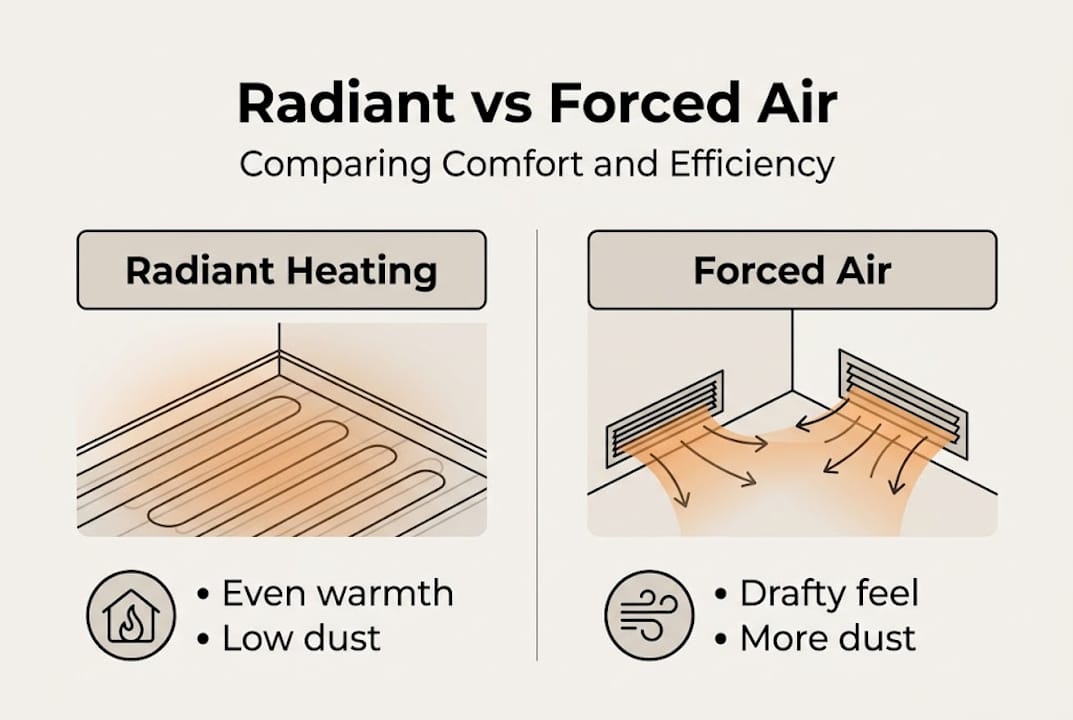
For Tampa Bay specifically, even in climate zone 2, homeowners see 10 to 20 percent energy savings. That might sound modest, but the comfort improvement is anything but. Radiant eliminates the cold spots near sliding glass doors and tile floors that make Florida winters genuinely uncomfortable despite the mild temperatures.
Here’s what else you gain:
- Better indoor air quality since no forced air means no allergy relief concerns from duct-blown particles
- Quieter home environment with no blower motor cycling on and off
- Open floor plan compatibility since radiant works beautifully in large, open spaces
- Lower thermostat settings that still feel comfortable, reducing wear on your system
If you or anyone in your home deals with seasonal allergies, radiant heating may be the single most impactful upgrade you can make. Comparing it to other home heating systems shows just how significant the air quality difference really is.
Drawbacks and limitations homeowners should know
Despite its impressive list of benefits, no heating system is perfect. Here are the potential drawbacks Tampa Bay homeowners should weigh.
Radiant heating comes with real trade-offs, and ignoring them leads to expensive surprises. The most important ones to understand before you commit:
- Slow warmup times. Slab systems especially take time to reach operating temperature. You can’t just flip a switch and feel warm in minutes. Scheduling and smart thermostats help, but it’s a genuine behavioral adjustment.
- Flooring restrictions. Thick carpet acts as insulation and blocks heat transfer significantly. Tile, hardwood, and luxury vinyl work best. If you love plush carpet in every room, radiant may underperform in those spaces.
- Repair difficulty. Hydronic leaks under a concrete slab require locating the problem before any fix can happen, which often means cutting into floors. It’s not a quick or cheap repair.
- Electric system costs. In areas with higher electricity rates, electric radiant can become expensive to run daily. Hydronic is generally the smarter long-term investment for whole-home use.
“Radiant heating retrofits into existing homes are absolutely possible, but the complexity and cost rise sharply compared to new construction installs. The best outcomes happen when radiant is planned from the start.”
The maintenance considerations for radiant systems are also different from what most homeowners are used to. Hydronic systems need periodic fluid checks and pressure monitoring. Electric systems have fewer moving parts but offer less flexibility if something fails.
The slow warmup with best performance from low-temp sources is a real consideration for Tampa homes that only need heat for a few weeks a year. If you’re heating infrequently, the warmup delay matters more than it would in a colder climate.
Pro Tip: If you’re building new or planning a major renovation, that’s your ideal window to install radiant. Retrofitting into an existing finished home multiplies both cost and disruption significantly.
Is radiant heating right for your Tampa Bay home?
Once you’re aware of the pros and cons, it’s time to ask: should you invest in radiant heating for your Tampa Bay home?
The answer depends on several factors specific to your property and lifestyle. Use this quick evaluation framework:
| Question | Radiant is a strong fit if… |
|---|---|
| What’s your flooring type? | Tile, hardwood, or LVP throughout |
| Do you have allergy concerns? | Yes, especially seasonal |
| Are you building or renovating? | Yes, new construction or gut renovation |
| What are your energy goals? | Reduce bills and carbon footprint |
| What’s your budget range? | Willing to invest upfront for long-term savings |
Homes built on slabs are particularly well-suited for radiant because the tubing or cables can be embedded directly in the concrete. Crawlspace homes can also work, but installation requires more planning. If your current flooring is already tile or hardwood, the heat transfer efficiency will be excellent from day one.
Studies show Florida zone 2 homes see 10-20% savings, and the even heat distribution reduces the perceived need for higher thermostat settings. That combination adds up over a 10 to 15 year system lifespan.
Radiant is likely a smart investment in Tampa Bay when:
- You’re building a new home or adding an addition
- You have tile or hard flooring in main living areas
- Allergies or air quality are a household priority
- You want to pair it with energy-efficient HVAC options for a complete system
- You’re interested in heat pump integration for maximum efficiency
For existing homes, a professional assessment is essential before committing. A local HVAC expert can evaluate your slab type, current flooring, insulation levels, and energy usage to give you a realistic picture of what radiant would actually deliver in your specific home.
A local expert’s take: What most Tampa homeowners miss about radiant heating
Here’s the honest truth we share with every Tampa Bay homeowner who asks about radiant: the conventional wisdom that it’s not worth it in Florida is simply wrong, but not for the reason most people think.
It’s not about saving massive amounts on your heating bill. Florida winters are short. The real value is in how radiant heating changes the feel of your home during those 8 to 12 weeks when temperatures dip. Cold tile floors on a January morning are a misery that forced air never fixes. Radiant does.
We’ve also seen homeowners underestimate the humidity factor. Florida’s humidity makes mild cold feel sharper than the thermometer suggests. Radiant warmth counteracts that damp chill in a way that blown air simply can’t replicate. Installing radiant in your main living areas, kitchen, and bathrooms often delivers more noticeable comfort improvement than a whole-home system would in a colder climate.
What expert installers look for that most homeowners overlook: slab insulation beneath the tubing. Without it, you’re heating the ground as much as your home. Getting that detail right is what separates a system that performs from one that disappoints. For more on maximizing home comfort, the fundamentals matter as much as the technology.
Explore Tampa Bay heating solutions with Home Therapist
If radiant heating sounds like the right fit for your home, you don’t have to figure it out alone.
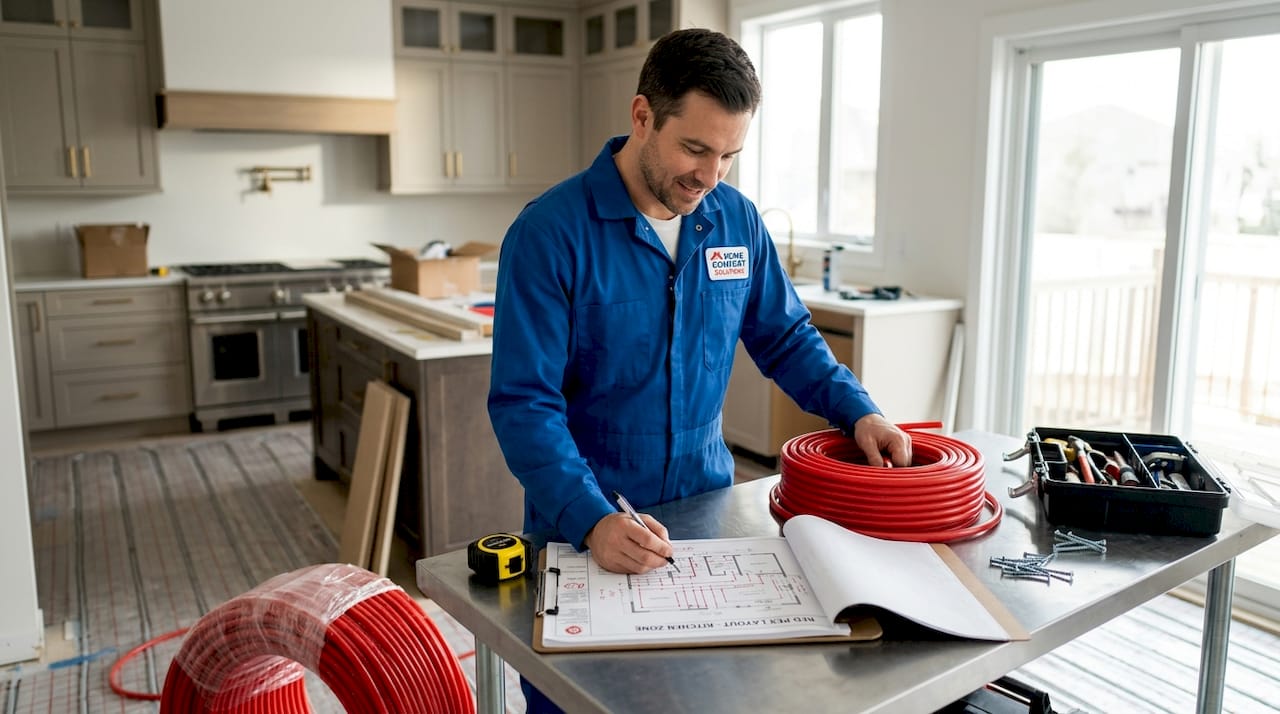
At Home Therapist Cooling, Heating, and Plumbing, our certified technicians help Tampa Bay homeowners evaluate, install, and maintain heating systems that actually match their homes and budgets. Whether you want a full Tampa Bay HVAC overview, need guidance from our HVAC retrofitting guide, or are ready to explore hydronic heating in Tampa, we’re here with local expertise and honest recommendations. Contact us today for a professional assessment tailored to your home.
Frequently asked questions
Does radiant heating work well in Florida’s mild climate?
Yes, Tampa Bay homeowners can still see 10-20% energy savings with radiant heating, plus noticeably improved comfort in open floor plans and for households with allergy concerns.
Is radiant heating more energy-efficient than forced air?
Generally yes. Hydronic radiant uses 15-40% less energy than forced-air systems because it eliminates duct losses and operates at lower thermostat settings.
What is the main downside to radiant heating?
Repairs under floors can be disruptive and costly, and installation is far simpler during new construction. Thick carpet also significantly reduces heat transfer effectiveness.
Can radiant floor heating be retrofitted into existing homes?
Yes, but it typically requires removing existing flooring, which raises both project cost and complexity. Retrofitting existing homes is best planned during a major renovation rather than as a standalone project.
Does radiant heating help with allergies?
Absolutely. Because radiant systems don’t circulate air through ducts, they don’t blow dust, pet dander, or other allergens through your home, making them a strong choice for allergy-sensitive households.