

Forced Air Heating: Efficiency and Comfort Explained
Feeling squeezed by rising utility bills while trying to keep your Tampa Bay home cozy through unpredictable winter snaps? Many homeowners trust forced air heating for fast whole-house warmth, yet misunderstandings about system efficiency and common maintenance oversights can quietly drive up costs. Learn how duct system losses can waste up to 35 percent of generated heat and discover practical solutions to help you maximize comfort and cut expenses this season.
Table of Contents
- Forced Air Heating Basics And Misconceptions
- Major Types Of Forced Air Heating Systems
- How Forced Air Heating Delivers Warmth
- Energy Efficiency And Maintenance Essentials
- Comparing Forced Air Heating To Alternatives
- Cost, Risks, And Common Homeowner Mistakes
Key Takeaways
| Point | Details |
|---|---|
| Efficiency is Key | Regular maintenance, including air filter replacement and duct sealing, can improve system efficiency and reduce energy costs significantly. |
| System Selection Matters | Choose the right forced air heating system based on architectural design and local climate to optimize comfort and efficiency. |
| Avoid Common Mistakes | Homeowners should conduct regular inspections to avoid costly errors, such as neglecting maintenance or ignoring duct leaks. |
| Understanding Costs | Be aware of both initial and ongoing costs, including repair and energy expenses, to make informed decisions regarding your heating system. |
Forced air heating basics and misconceptions
Forced air heating represents the most common central heating system across North America, using air as the primary heat transfer medium. Heat distribution through ducts and vents enables warmth to reach every room efficiently. These systems use various heat sources, including natural gas, electric elements, and heat pumps, making them incredibly versatile for different home configurations.
Key components of a forced air heating system include:
- Air filter
- Blower
- Heat exchanger
- Temperature controls
- Network of ducts and registers
Modern heating systems are rated by annual fuel utilization efficiency (AFUE), which measures how effectively fuel energy converts into usable heat. Efficiency ratings can range dramatically:
- Older systems: 56-70% efficiency
- Mid-efficiency systems: 80-83% efficiency
- High-efficiency systems: Over 90% efficiency
Unfortunately, many homeowners overlook critical efficiency factors. Duct system losses can dramatically reduce overall heating performance, with unconditioned spaces potentially causing up to 35% energy waste. Strategic duct insulation and proper maintenance can significantly improve system effectiveness.
Pro tip: Have a professional conduct an annual inspection of your forced air heating system to identify and address potential efficiency gaps before they become costly problems.
Major types of forced air heating systems
Forced air heating systems offer several distinct configurations to meet diverse home heating needs. Combustion-fueled systems represent the most traditional approach, using natural gas, propane, oil, or coal to generate heat through a dedicated heat exchanger. These systems are widely popular in North American homes due to their reliability and consistent performance.
The primary types of forced air heating systems include:
- Natural gas furnaces
- Propane furnaces
- Electric heating systems
- Heat pump configurations
- Hydronic coil systems
Electric heating systems provide a straightforward alternative, using electrical elements to generate warmth. While simpler in design, they typically have higher operational costs compared to gas-powered alternatives. Central heat furnaces have evolved significantly, with modern condensing models reclaiming heat from exhaust vapor to maximize efficiency.
Heat pump technology represents an innovative forced air heating approach, extracting thermal energy from ambient air or ground sources. These systems use refrigeration cycles to transfer heat, offering remarkable efficiency and versatility across different climate conditions. Modern heat pumps can provide both heating and cooling, making them an attractive option for comprehensive home temperature management.
Pro tip: Consider consulting an HVAC professional to assess which forced air heating system best matches your home’s specific architectural design and regional climate requirements.
How forced air heating delivers warmth
Air circulation mechanics are at the heart of forced air heating systems. The process begins by drawing cooler room air through return registers, which passes through a filter to remove dust and particulate matter. This filtered air then travels into the furnace, where it undergoes a critical transformation.
The heating process involves several key steps:
- Cool air enters the return registers
- Air passes through a filtration system
- Furnace heats the air using fuel combustion
- Blower forces heated air through ductwork
- Warm air emerges from room registers
Heat exchange occurs when the furnace’s heat exchanger warms the incoming air to the desired temperature. Thermostat-controlled heating activates the system, signaling the furnace to ignite and the blower to circulate warm air. The blower plays a crucial role, pushing heated air through a network of ducts and supply branches that lead to registers in each room.
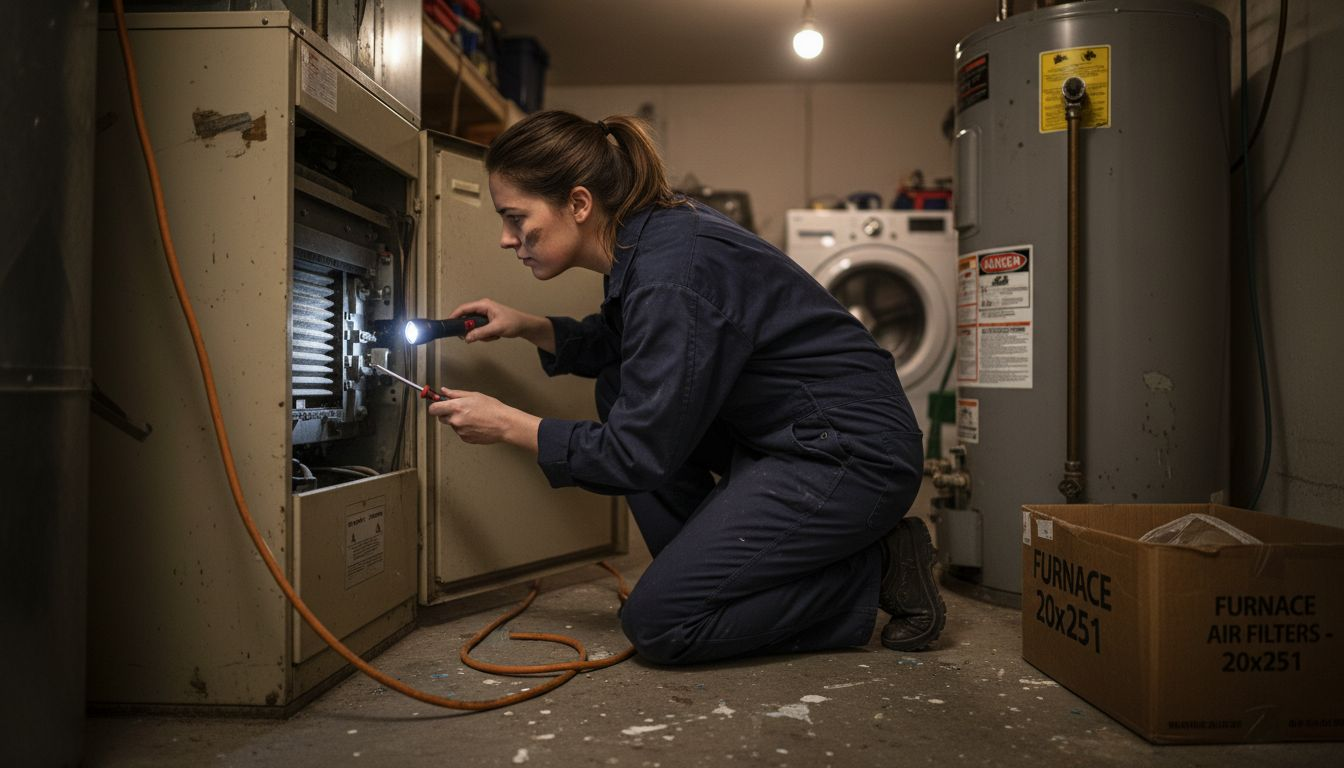
The convection process ensures that warmth is distributed evenly throughout living spaces. As heated air emerges from registers, it rises and gradually fills the room, creating a comfortable and consistent temperature. Safety mechanisms prevent combustion gases from entering living areas, ensuring both efficient heating and household safety.
Pro tip: Regularly clean or replace your system’s air filters to maintain optimal airflow and heating efficiency.
Energy efficiency and maintenance essentials
Annual fuel utilization efficiency represents the critical metric for measuring forced air heating system performance. This standard evaluates how effectively a furnace converts fuel energy into usable heat, with modern high-efficiency systems achieving remarkable rates exceeding 90% efficiency.
Key efficiency maintenance strategies include:
- Regular air filter replacement
- Comprehensive duct system inspection
- Professional annual system tune-ups
- Sealing potential air leakage points
- Calibrating thermostat settings
Efficiency challenges often arise from overlooked maintenance issues. Duct losses can account for substantial energy waste, with some systems losing up to 35% of generated heat through poorly maintained or unsealed ductwork. HVAC maintenance standards recommend routine professional inspections to identify and address potential efficiency barriers.
Homeowners can significantly improve system performance by understanding key maintenance principles. Proper burner servicing, consistent filter replacement, and professional assessments help maintain optimal heating efficiency, reduce energy consumption, and extend equipment lifespan. Strategic maintenance not only saves money but also ensures consistent indoor comfort and air quality.
Pro tip: Schedule a professional HVAC system evaluation before the winter season to identify and address potential efficiency issues proactively.
Comparing forced air heating to alternatives
Heating system configurations vary widely, with forced air heating representing the most common approach in North American homes. Each heating method offers unique advantages and limitations, making the selection process critical for optimal home comfort and energy efficiency.
Key alternative heating system options include:
- Hydronic (boiler) heating systems
- Radiant floor heating
- Ductless heat pump systems
- Electric resistance heating
- Geothermal heat pumps
Heat pump technology provides a particularly intriguing alternative. Energy-efficient heating solutions can transfer heat from outdoor sources, offering both heating and cooling capabilities. Unlike traditional forced air systems that generate heat through combustion, heat pumps move existing thermal energy, potentially reducing overall energy consumption.
Hydronic heating systems present another compelling alternative, using hot water circulated through radiators or in-floor piping. These systems typically operate more quietly than forced air heating and can provide more consistent warmth. The primary trade-offs involve higher installation costs and less flexibility for simultaneous cooling compared to forced air configurations.
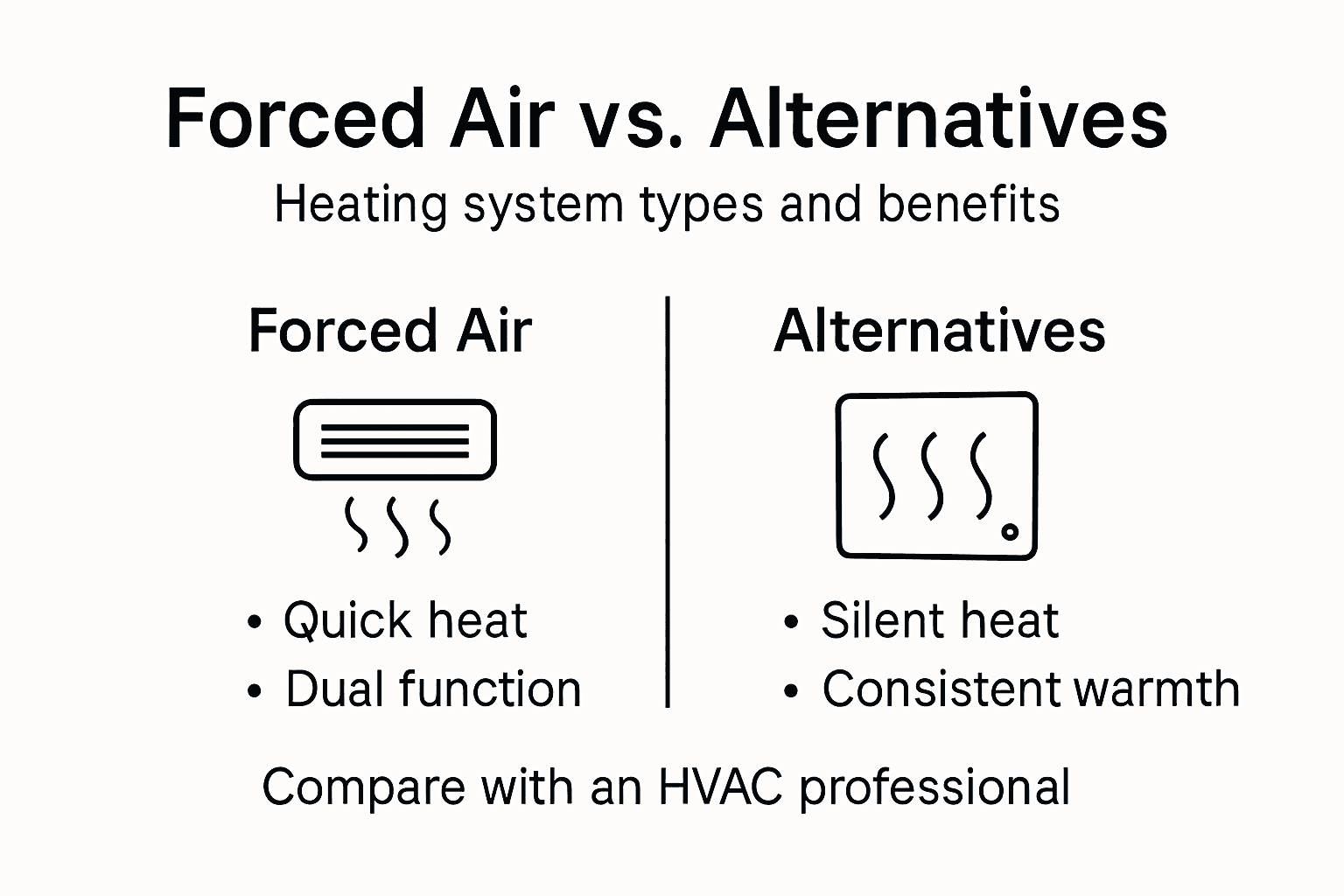
Here’s a summary comparing forced air heating with alternative heating options:
| System Type | Main Benefit | Typical Drawback | Cooling Capability |
|---|---|---|---|
| Forced Air Heating | Fast, whole-house warmth | Duct losses can waste energy | Often included |
| Hydronic Heating | Silent, steady comfort | Expensive installation | Rarely available |
| Radiant Floor Heating | Even floor-level heating | Slow temperature response | Not typical |
| Ductless Heat Pump | Flexible room control | May struggle in very cold | Yes, as AC |
| Geothermal Heat Pump | Extremely efficient | High upfront cost | Yes, all-in-one |
Pro tip: Consult with a local HVAC professional to evaluate your specific home characteristics and climate to determine the most suitable heating system for your needs.
Cost, risks, and common homeowner mistakes
Forced air heating systems represent significant financial investments that require careful management to minimize risks and control operational expenses. Initial installation costs can range from $2,500 to $6,500, with ongoing maintenance and energy consumption adding substantial long-term financial considerations.
Common homeowner mistakes that increase costs and risks include:
- Neglecting regular filter replacements
- Skipping annual professional maintenance
- Ignoring duct system leaks
- Setting inappropriate thermostat temperatures
- Failing to seal home air leakage points
Safety risks are particularly critical in forced air heating systems. Potential hazards include carbon monoxide leaks from malfunctioning heat exchangers, which can occur when systems are not regularly inspected. Heating system financial strategies suggest that proactive maintenance can prevent costly repairs and reduce overall energy consumption by up to 30%.
Financial prudence involves understanding the total cost of ownership. Beyond initial installation, homeowners must factor in fuel costs, potential repair expenses, and efficiency losses from poor maintenance. Electric and high-efficiency gas systems may have higher upfront costs but can provide significant long-term savings through reduced energy consumption and fewer repair requirements.
Below is a quick-reference table outlining common homeowner mistakes and their possible long-term impacts:
| Mistake | Possible Impact |
|---|---|
| Infrequent filter replacement | Poor air quality, low efficiency |
| Skipping professional tune-ups | Higher repair costs, breakdowns |
| Ignoring duct leaks | Uneven heating, higher bills |
| Thermostat mismanagement | Discomfort, wasted energy |
| Failing to seal leaks | Heat loss, increased consumption |
Pro tip: Create an annual maintenance budget and schedule professional inspections to catch potential issues before they become expensive emergencies.
Enhance Your Home Comfort with Expert Forced Air Heating Solutions
Struggling with energy losses, inefficient ductwork, or inconsistent home warmth can be frustrating and costly. This article highlights how forced air heating systems depend on proper maintenance, duct sealing, and professional inspections to deliver maximum efficiency and comfort. Issues like clogged air filters, poorly insulated ducts, and outdated equipment often lead to wasted energy and uneven heating. At Home Therapist Cooling, Heating, and Plumbing, we understand these challenges and offer tailored heating services to ensure your system performs at its best all year round.
Take control of your home’s heating efficiency today by scheduling an expert system evaluation with our certified technicians. Visit Home Therapist to learn how our comprehensive HVAC services can reduce energy waste and increase comfort in your Tampa Bay residence. Don’t wait until the cold season starts to experience costly breakdowns or discomfort. Contact us now and enjoy a warm, safe home with energy savings you can feel.
Frequently Asked Questions
What is forced air heating and how does it work?
Forced air heating is a central heating system that uses air as the primary medium to transfer heat throughout a home. It draws cooler air into return registers, filters it, heats it using a furnace, and then forces the warm air through ducts into various rooms via supply registers.
How can I improve the efficiency of my forced air heating system?
To improve efficiency, regularly replace air filters, conduct annual professional maintenance, inspect and seal ductwork for leaks, and ensure your thermostat settings are appropriate. Insulating ducts in unconditioned spaces can also significantly reduce energy waste.
What are the different types of forced air heating systems available?
The primary types of forced air heating systems include natural gas furnaces, propane furnaces, electric heating systems, heat pumps, and hydronic coil systems. Each type has its own advantages and operational costs, depending on the heat source used.
What common mistakes should I avoid with my forced air heating system?
Common mistakes include neglecting regular filter replacements, skipping annual tune-ups, ignoring duct leaks, setting incorrect thermostat temperatures, and failing to seal air leakage points in your home. These can lead to inefficient heating and increased energy costs.
About This Guide
Written and reviewed by the Home Therapist Cooling, Heating & Plumbing team, a family-owned Tampa Bay HVAC and plumbing company serving the area since 2011. Our licensed techs hold Florida HVAC license CAC1819196 and Plumbing license CFC1431159, with over 1,100 five-star reviews across Tampa, St. Petersburg, Clearwater, Wesley Chapel, Lutz, Riverview, Brandon, Valrico, Apollo Beach, Palm Harbor, Land O’ Lakes, Plant City, New Port Richey, and surrounding Tampa Bay zip codes.
Honest pricing: $279 labor minimum. Upfront quotes, no high-pressure sales, no surprise fees.
Questions about your home? Call (813) 343-2212 for a real tech, or request a callback. Available 7 days a week including evenings and weekends for emergencies.
Recommended
- Role of Heating Systems – Comfort and Efficiency at Home
- HVAC Retrofitting Explained: Enhancing Home Comfort – Home Therapist Cooling, Heating, and Plumbing
- 6 Types of HVAC Systems Every Tampa Bay Homeowner Should Know – Home Therapist Cooling, Heating, and Plumbing
- The Essential Guide to Regular HVAC Maintenance – Home Therapist Cooling, Heating, and Plumbing
More Related Articles
- AC Maintenance Premium Therapy Plan in Tampa, FL 33614
- HVAC Maintenance Plan Service in Valrico, FL 33596
- 7 Types of Home Heating Systems for Efficient Comfort
- HVAC Maintenance and UV Light Inspection in Apollo Beach, FL 33572
- Air Conditioner Installation Repair Tampa FL Bay FL Services Review from Bonnie Wakefield

