
Refrigerant Recycling: What Tampa Bay Homeowners Need
TL;DR:
- Proper refrigerant recycling is essential for environmental safety and HVAC system efficiency.
- Certified technicians handle recovery, recycling, and reclamation to prevent legal and environmental issues.
- Recycling refrigerant supports regulatory compliance and enhances home cooling performance.
Most Tampa Bay homeowners assume old refrigerant just gets drained and tossed like used motor oil. It doesn’t work that way, and the difference matters more than you’d think. Refrigerant is a controlled substance under federal law, and mishandling it carries real environmental and legal consequences. The good news is that proper refrigerant recycling keeps your system running cleaner, helps the environment, and can even save you money over time. This guide walks you through what refrigerant recycling actually is, how the process works during a local service call, what complications can arise, and how it connects to the future of home comfort in Tampa Bay.
Table of Contents
- What is refrigerant recycling and why does it matter?
- How the refrigerant recycling process works in Tampa Bay homes
- What makes refrigerant recycling challenging? Real-world edge cases
- Refrigerant recycling, efficiency, and Tampa Bay’s HVAC future
- Our view: The overlooked upside (and myth) of refrigerant recycling
- How to take the next step for greener HVAC in Tampa Bay
- Frequently asked questions
Key Takeaways
| Point | Details |
|---|---|
| Certified handling required | Only EPA-certified technicians can legally manage refrigerant recycling in your home. |
| Clean refrigerant boosts efficiency | Properly recycled refrigerant helps your HVAC run more efficiently and lowers energy bills. |
| Local options available | Tampa Bay offers local, EPA-approved services for responsible refrigerant recycling. |
| Contaminated refrigerants need special care | Mixed or heavily contaminated refrigerant must be processed by specialized reclaimers, not just recycled on-site. |
What is refrigerant recycling and why does it matter?
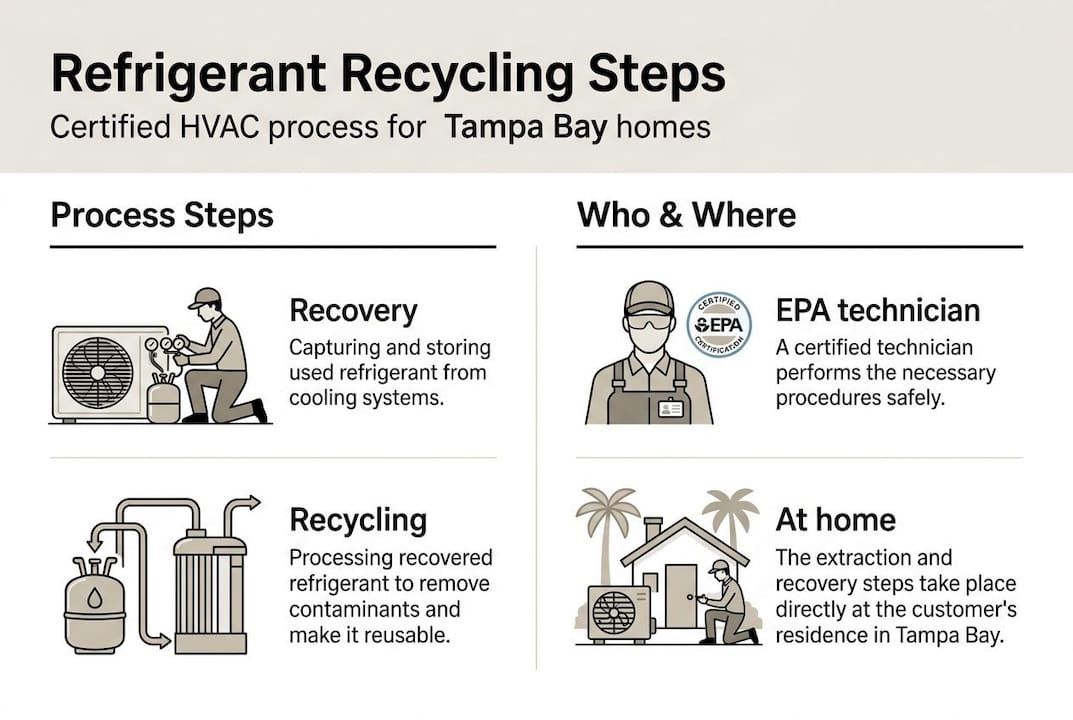
Refrigerant recycling is one of three related processes that certified HVAC technicians use to manage refrigerant responsibly. Many homeowners use these terms interchangeably, but they mean different things in practice.
Recovery means removing refrigerant from your system and storing it in an approved container, without testing or processing it. Recycling means cleaning that recovered refrigerant by removing oil and other contaminants so it can be reused in the same or similar equipment. Reclamation is the most thorough step, where refrigerant is processed to meet manufacturer-grade purity standards, usually at a certified off-site facility. As the EPA refrigerant recycling overview explains, refrigerant recycling involves recovery, recycling, and reclamation steps, each serving a distinct purpose.
| Process | Where it happens | Who performs it | Goal |
|---|---|---|---|
| Recovery | On-site | EPA-certified tech | Remove refrigerant safely |
| Recycling | On-site | EPA-certified tech | Clean for reuse |
| Reclamation | Off-site facility | Certified reclaimer | Restore to virgin-grade purity |
Understanding refrigerant’s HVAC role helps clarify why purity matters so much. Contaminated refrigerant reduces heat transfer efficiency, forces your compressor to work harder, and shortens the life of your system.
There are also several myths floating around that lead homeowners to make costly assumptions:
- Myth: Refrigerant evaporates harmlessly if released into the air.
- Myth: Only old systems need refrigerant recycling.
- Myth: Recycled refrigerant is lower quality than new refrigerant.
- Myth: Recycling is optional if you’re replacing your entire system.
- Myth: Any HVAC tech can handle refrigerant without special credentials.
None of these are true. Releasing refrigerant into the atmosphere is illegal under Section 608 of the Clean Air Act, and it contributes to ozone depletion and climate change regardless of the refrigerant type.
Key EPA fact: Properly recovered and recycled refrigerant reduces the need for newly manufactured refrigerant, cutting greenhouse gas emissions and protecting the ozone layer at the same time.
How the refrigerant recycling process works in Tampa Bay homes
Knowing the definitions is one thing. Seeing how the process plays out during an actual service call is where it gets practical for you as a homeowner.
Here’s what a responsible refrigerant recycling service call looks like step by step:
- System assessment: The technician inspects your unit for leaks, contamination signs, and refrigerant type before touching anything.
- Recovery: Using EPA-approved recovery equipment, the tech removes all refrigerant from your system into a certified recovery cylinder. Nothing is vented.
- Evaluation: The recovered refrigerant is tested for contamination. If it’s clean enough, it moves to recycling. If it’s heavily contaminated, it gets sent to a certified reclaimer.
- Recycling (on-site): The tech runs the refrigerant through a recycling machine that filters out moisture, oil, and non-condensable gases.
- Recharge or transfer: Clean refrigerant is returned to your system or transferred appropriately if you’re replacing the unit.
- Documentation: A good tech logs the refrigerant type, quantity, and disposal method. Ask for this record.
It’s worth knowing that handling refrigerant without certification is illegal for homeowners. This isn’t a gray area. Only EPA-certified technicians can legally perform recovery, recycling, or recharge. If someone offers to do it without credentials, walk away.
For safe refrigerant recovery and proper refrigerant recharge services, always verify your tech’s EPA Section 608 certification before the job starts.
Pro Tip: Before your technician begins, ask three questions: Are you EPA Section 608 certified? What equipment do you use for recovery? Where does contaminated refrigerant go? A qualified tech will answer all three without hesitation.
| Company | Location | Services | EPA-certified |
|---|---|---|---|
| Home Therapist Cooling, Heating, and Plumbing | Tampa Bay | Recovery, recycling, recharge, maintenance | Yes |
| American Refrigerants | Bradenton | Refrigerant buyback, reclamation | Yes |
| Rapp Scrap | Largo, FL | HVAC recycling | Yes |
What makes refrigerant recycling challenging? Real-world edge cases
While the standard process covers most service calls, some situations make recycling more complicated than a straightforward recovery and recharge.
The most common complication is contamination. Refrigerant can become contaminated with compressor oil, moisture, air, or even other refrigerant types. Each type of contamination creates different problems. Oil reduces heat transfer efficiency. Moisture causes acid formation inside the system. Air and other non-condensable gases raise system pressure and cause erratic operation. Heavily contaminated refrigerant may require specialized reclamation that can’t be done on-site.
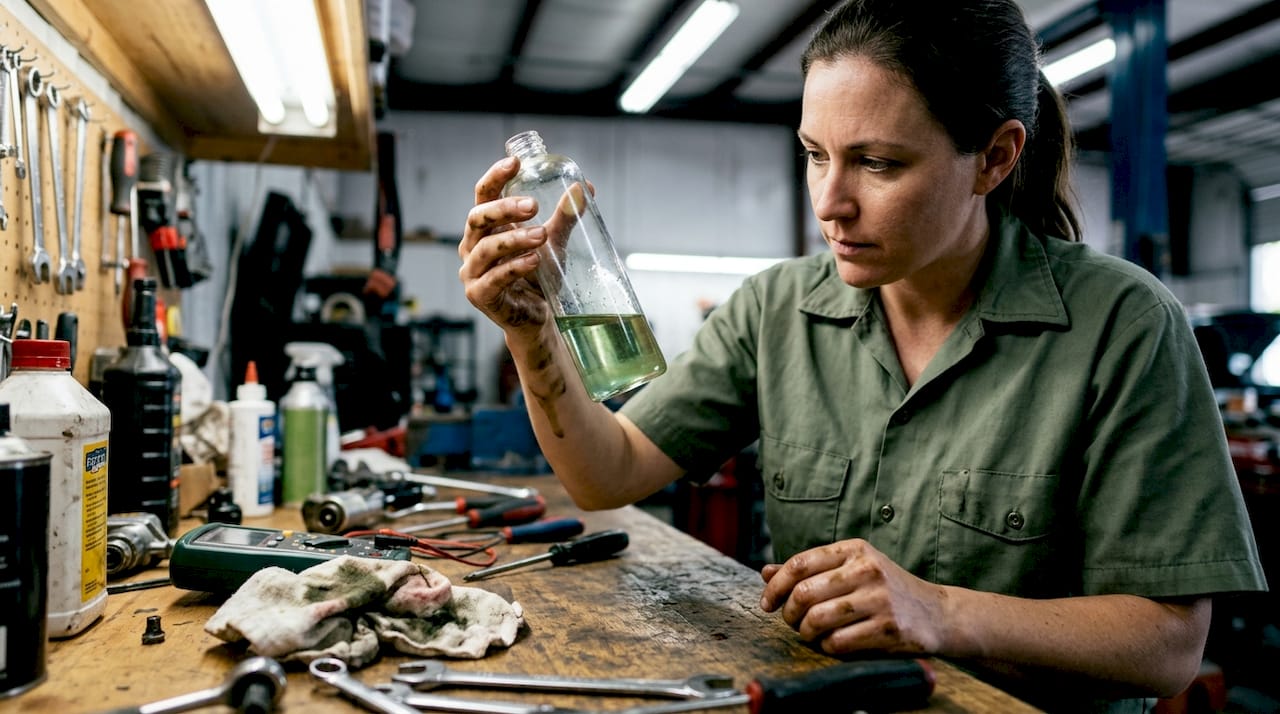
Mixed refrigerants are a growing issue in older Tampa Bay systems. When a previous technician used the wrong refrigerant during a recharge, or when a system has been serviced multiple times without proper documentation, you can end up with a blend that no standard recycling machine can separate. Specialized gas separation is the only solution in those cases.
Here are signs your system might have a refrigerant edge case:
- Unusual pressure readings that don’t match the refrigerant type on the label
- A history of multiple recharges with no documented refrigerant type
- Visible oil staining around fittings or coils
- A system that’s been serviced by multiple companies over many years
- Refrigerant that smells different or behaves unexpectedly during recovery
Pro Tip: If your system is more than 10 years old and has had multiple service providers, ask your tech to test the refrigerant before recycling. A quick analysis can reveal mixed refrigerants before they cause bigger problems.
These edge cases are also why fixing system leaks promptly matters so much. A slow leak that gets topped off repeatedly without proper documentation is a recipe for contamination. Understanding the full AC repair process helps you ask better questions and avoid these situations.
In Tampa Bay’s humid climate, moisture contamination is especially common. High ambient humidity means any refrigerant exposure to open air during a poorly managed service call can introduce water into the system faster than in drier climates. That’s one more reason why proper equipment and technique matter here specifically.
Refrigerant recycling, efficiency, and Tampa Bay’s HVAC future
Beyond troubleshooting, refrigerant recycling connects directly to where the HVAC industry is heading, and what that means for your home’s efficiency and operating costs.
The biggest shift right now is the R-410A phaseout. R-410A has been the dominant residential refrigerant for years, but new regulations are restricting its production. The EPA now limits new or virgin content in reclaimed refrigerant to 15% starting in 2026. That means reclaimed and recycled refrigerant will make up the vast majority of available R-410A supply for existing systems. If your system still uses R-410A, recycled refrigerant isn’t just an eco-friendly option. It’s becoming the primary option.
For homeowners with older R-22 systems, the situation is even more pronounced. R-22 production has been banned for years, making reclaimed refrigerant the only legal source. You can learn more about R-22 recharge services if your system still uses it.
Here’s how refrigerant recycling improves your home’s efficiency and compliance:
- Clean refrigerant transfers heat more effectively, reducing runtime and energy bills
- Proper recycling prevents system contamination that leads to compressor failure
- Staying compliant with EPA regulations protects you from fines and liability
- Using reclaimed refrigerant supports local supply chains and reduces import dependence
- Responsible recycling keeps harmful gases out of Tampa Bay’s atmosphere
| Impact area | Benefit to your home | Environmental benefit |
|---|---|---|
| System efficiency | Lower energy bills, longer equipment life | Reduced electricity demand |
| Refrigerant purity | Better cooling performance | Less need for new production |
| Leak prevention | Fewer repairs, stable refrigerant charge | Fewer emissions |
| Regulatory compliance | No fines or forced shutdowns | Supports clean air standards |
Local reclaimers like American Refrigerants play a vital role in keeping this supply chain functional for Tampa Bay homeowners. A R410A recharge case study from our own service history shows how reclaimed refrigerant performs just as well as virgin product when handled correctly.
Our view: The overlooked upside (and myth) of refrigerant recycling
Here’s something we’ve noticed after years of serving Tampa Bay homeowners: most people think refrigerant recycling is just paperwork and regulation. A box to check so the tech stays legal. That framing misses the real story.
The customers we see with the most efficient, longest-lasting systems are almost always the ones who’ve worked consistently with certified technicians who treat refrigerant handling as a craft, not a formality. Proper recycling means cleaner refrigerant, and cleaner refrigerant means a system that runs closer to its designed performance. That translates to real savings on your monthly electric bill, not just a feel-good environmental story.
We’d also push back on the idea that this is too complicated for homeowners to care about. You don’t need to understand the chemistry. You just need to ask the right questions and choose techs who take it seriously. Exploring HVAC refrigerant insights is a great starting point. When you become an informed consumer, you raise the standard for everyone in your neighborhood.
How to take the next step for greener HVAC in Tampa Bay
Ready to put this knowledge to work for your home and your community?
At Home Therapist Cooling, Heating, and Plumbing, our EPA-certified technicians handle every refrigerant service call with the care and documentation it deserves. Whether you need a routine recharge, a system inspection, or help navigating the R-410A transition, we’re here to make it straightforward. Our team brings local HVAC expertise and a commitment to environmentally responsible practices to every job. If you’re not sure where to start, our troubleshooting HVAC steps guide and beginner HVAC maintenance guide can help you get oriented before your first call.
Frequently asked questions
Can I recycle refrigerant from my home HVAC myself in Tampa Bay?
No. Only EPA-certified professionals can legally handle, recover, or recycle refrigerant. Homeowners who attempt this risk federal fines and equipment damage.
How does refrigerant recycling make my HVAC more efficient?
Clean, recycled refrigerant transfers heat the way your system was designed to, while non-condensables reduce efficiency by raising pressure and making your compressor work harder than necessary.
What should I do if my refrigerant is contaminated or mixed?
Your technician should send it to a certified reclaimer for advanced separation and purification rather than attempting to recycle it on-site, where standard equipment can’t handle complex contamination.
Are there local companies in Tampa Bay that handle refrigerant recycling?
Yes. EPA-certified reclaimers like American Refrigerants in Bradenton and Rapp Scrap in Largo serve Tampa Bay homeowners with recovery, reclamation, and refrigerant buyback services.