

Role of Refrigerant in AC Systems for Tampa Homeowners
Most Tampa Bay homeowners never think about refrigerant until their AC stops cooling. You might assume refrigerant is just another fluid that needs occasional topping off, like oil in your car. That’s a dangerous misconception. Refrigerant doesn’t get consumed during normal operation. It circulates endlessly through your system, making cooling possible. Understanding how refrigerant works, its impact on efficiency, and its environmental footprint empowers you to make smarter decisions about your AC system’s care and performance.
Table of Contents
- How Refrigerants Work In Air Conditioning Systems
- The Impact Of Refrigerants On AC Efficiency And Energy Use
- Refrigerants And Environmental Impact: What Tampa Homeowners Should Know
- Maintaining Refrigerant Health For Long-Lasting, Efficient AC Performance
- Expert AC Maintenance And Refrigerant Services In Tampa Bay
- Frequently Asked Questions
Key takeaways
| Point | Details |
|---|---|
| Refrigerant enables cooling | It absorbs indoor heat and releases it outside through continuous circulation. |
| Type affects efficiency | Modern refrigerants can boost system performance and lower energy bills significantly. |
| Environmental regulations matter | Older refrigerants face phase-outs due to ozone damage and climate impact. |
| Leaks reduce performance | Low refrigerant levels force your AC to work harder and cool less effectively. |
| Professional service is essential | Only certified technicians should handle refrigerant due to safety and legal requirements. |
How refrigerants work in air conditioning systems
Refrigerant is the lifeblood of your air conditioning system. Without it, your AC becomes an expensive fan. The refrigeration cycle relies on refrigerant’s unique ability to change from liquid to gas and back again at specific temperatures and pressures.
Here’s how the cycle works in your home. The compressor pressurizes refrigerant gas, raising its temperature. This hot, high-pressure gas flows to the outdoor condenser coil, where it releases heat to the outside air and condenses into a liquid. The liquid refrigerant then passes through an expansion valve, which dramatically reduces its pressure and temperature. This cold, low-pressure liquid enters the indoor evaporator coil, where it absorbs heat from your indoor air and evaporates back into a gas. The cycle repeats continuously while your AC runs.
Historically, systems used R-22 (Freon), which became the industry standard for decades. Today, most residential systems use R-410A (Puron) or newer alternatives. The transition happened because scientists discovered older refrigerants damaged the ozone layer and contributed to climate change.
What makes refrigerant effective at cooling your home?
- Phase change properties allow heat absorption during evaporation
- High heat capacity enables efficient thermal energy transfer
- Specific boiling points match AC operating temperatures
- Chemical stability prevents breakdown during thousands of cycles
- Low toxicity levels ensure safe operation in occupied spaces
“Refrigerant is the medium that makes air conditioning possible. Without the right refrigerant at the correct charge level, even the most advanced AC system cannot perform its basic function of heat transfer.”, HVAC Technical Standards Board
The refrigerant charge (the amount in your system) must match manufacturer specifications exactly. Too little refrigerant means inadequate cooling. Too much creates excessive pressure that damages components. Either scenario reduces efficiency and shortens equipment life. If you notice common refrigerant issue solutions becoming necessary, your system likely has a leak that needs professional attention.
The impact of refrigerants on AC efficiency and energy use
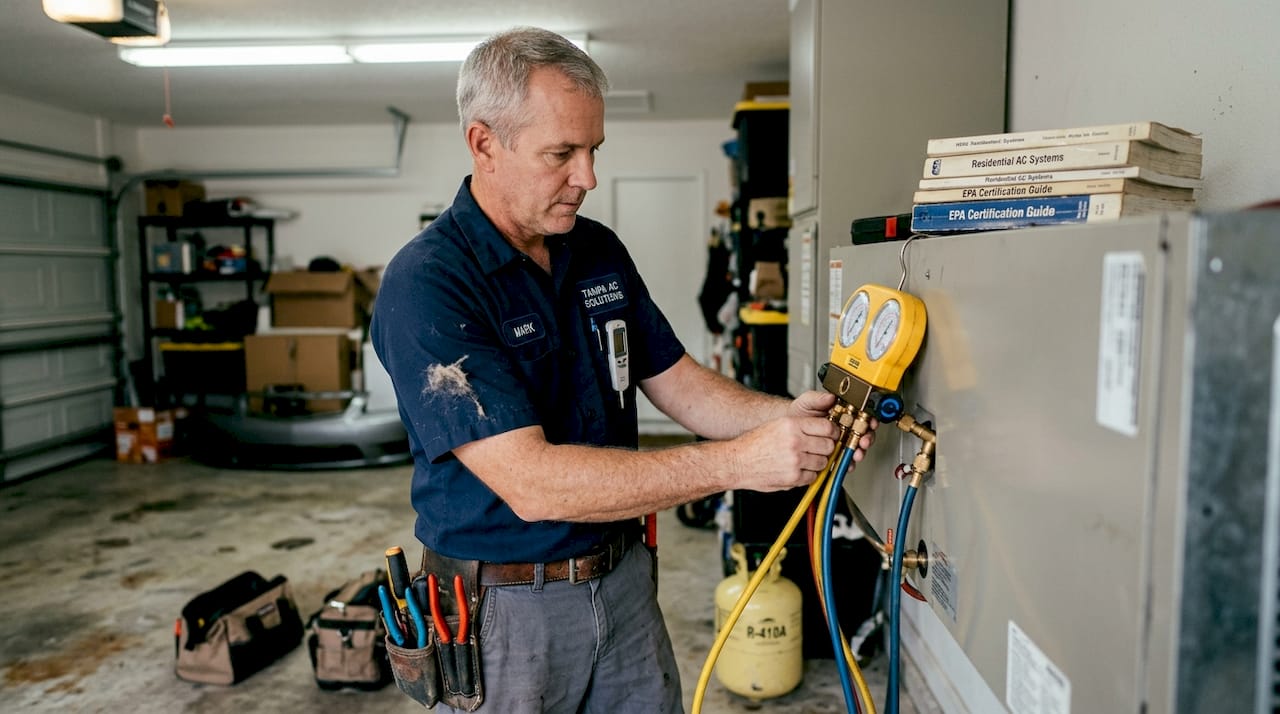
Refrigerant type directly influences how much electricity your AC consumes to cool your home. Modern refrigerants operate at higher pressures and offer better thermodynamic properties than older options. This translates to improved AC efficiency that can reduce your monthly utility bills substantially.
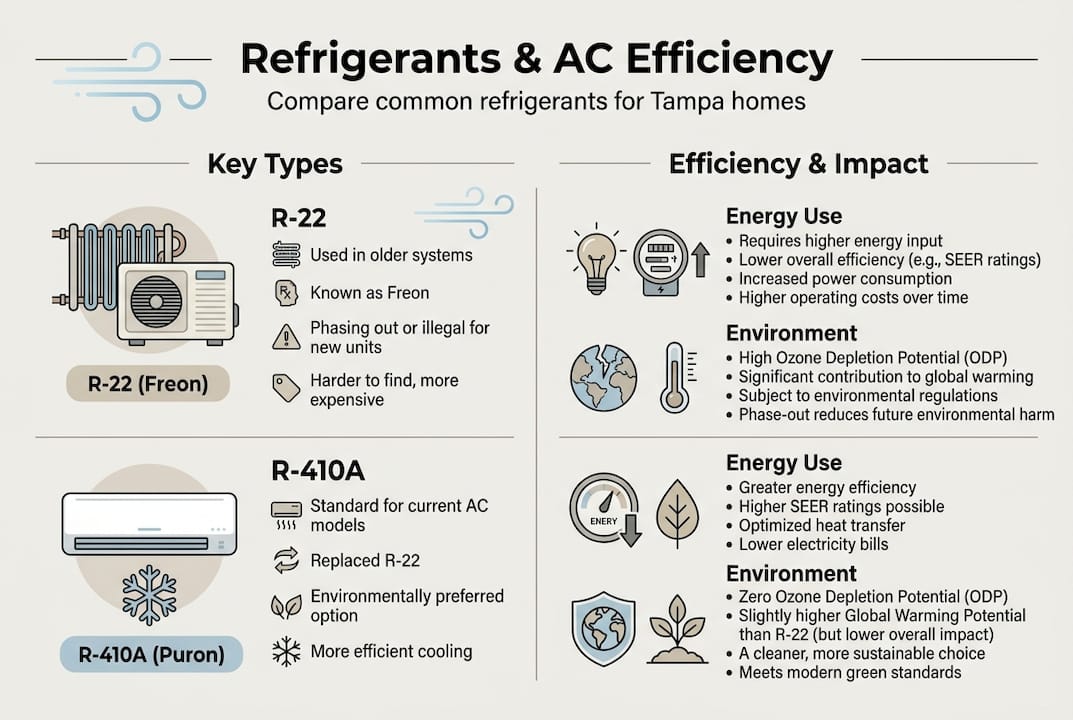
Different refrigerants perform differently in identical systems. Here’s how common options compare:
| Refrigerant | Efficiency Rating | Ozone Depletion | Global Warming Potential | Average Cost |
|---|---|---|---|---|
| R-22 (Freon) | Baseline | High | Moderate | Expensive (limited supply) |
| R-410A (Puron) | 10-15% better | Zero | High | Moderate |
| R-32 | 15-20% better | Zero | Lower | Moderate to high |
| R-454B | 15-20% better | Zero | Very low | Higher (newer) |
Pro Tip: Schedule annual refrigerant level checks during routine maintenance. Catching small leaks early prevents efficiency losses that can increase cooling costs by 20-30% over a single summer season.
Improper refrigerant charge creates cascading problems. When levels drop below optimal, your evaporator coil can’t absorb enough heat. The system runs longer cycles to reach your thermostat setting, consuming more electricity. Ice may form on the coil, further blocking heat transfer. Your compressor works harder, generating excessive heat and wearing out faster.
Overcharging causes different issues but equally damages efficiency. Excess refrigerant increases pressure throughout the system. The compressor strains against this resistance. Liquid refrigerant may reach the compressor (which should only handle gas), causing mechanical damage. High pressure also reduces the temperature difference needed for effective heat transfer.
Following HVAC maintenance tips helps preserve proper refrigerant charge. Clean coils, replace filters regularly, and clear debris from outdoor units. These simple steps prevent many conditions that lead to refrigerant problems. However, refrigerant itself doesn’t degrade or get dirty. If levels drop, you have a leak that requires professional repair before recharging.
The energy savings from proper refrigerant management add up quickly in Tampa’s climate. Running your AC with optimal refrigerant charge versus a 20% undercharge could save you $200-400 annually on cooling costs. Over the typical 15-year lifespan of an AC system, that’s $3,000-6,000 in your pocket instead of the utility company’s.
Refrigerants and environmental impact: What Tampa homeowners should know
Refrigerant environmental concerns drove major regulatory changes affecting your AC system choices. The Montreal Protocol, an international environmental treaty, mandated the phase-out of ozone-depleting substances. The United States implemented these requirements through EPA regulations that directly impact Tampa Bay homeowners.
Traditional refrigerants posed serious environmental threats:
- Chlorofluorocarbons (CFCs) destroyed stratospheric ozone, increasing UV radiation reaching Earth’s surface
- Hydrochlorofluorocarbons (HCFCs) like R-22 contributed to both ozone depletion and global warming
- High global warming potential meant refrigerant releases trapped heat in the atmosphere for decades
- Improper disposal released thousands of pounds of harmful chemicals annually
- Manufacturing processes generated additional environmental pollutants
The EPA phased out R-22 production and importation as of January 1, 2020. Existing R-22 can still be used, but supplies come only from recycled or reclaimed sources. This limited availability drove prices up dramatically. A pound of R-22 that cost $10 in 2010 now exceeds $100 when available.
If your system uses R-22, take these steps:
- Have a certified technician inspect for leaks and repair them immediately to preserve remaining refrigerant
- Consider system replacement if your unit is over 10 years old, as repair costs may exceed replacement value
- Research retrofit options that allow conversion to alternative refrigerants in some systems
- Budget for eventual replacement, as R-22 will become increasingly scarce and expensive
- Never vent refrigerant to the atmosphere, as this violates federal law and carries heavy fines
Newer refrigerants address ozone concerns but vary in global warming potential. R-410A eliminated ozone depletion but has high GWP. The industry now transitions to refrigerants like R-32 and R-454B, which offer zero ozone depletion and significantly lower GWP. These next-generation options balance cooling performance, efficiency, safety, and environmental responsibility.
Tampa homeowners replacing AC systems in 2026 should ask contractors about refrigerant options. Systems designed for newer refrigerants often include efficiency improvements beyond the refrigerant itself. You’ll benefit from lower operating costs and reduced environmental impact while ensuring compliance with current and future regulations.
Professional R-22 recharge services can extend the life of older systems, but weigh this against replacement costs. A single recharge might cost $500-1,000 due to R-22 scarcity. A new system with modern refrigerant costs more upfront but delivers better efficiency, reliability, and environmental performance for 15-20 years.
Maintaining refrigerant health for long-lasting, efficient AC performance
Proactive refrigerant management prevents expensive repairs and keeps your home comfortable through Tampa’s brutal summers. Most refrigerant problems develop gradually, giving you warning signs if you know what to watch for.
Your AC may have refrigerant issues if you notice ice forming on the indoor coil or refrigerant lines, reduced airflow from vents, longer run times to reach desired temperatures, hissing or bubbling sounds near AC components, or unexplained increases in electricity bills. These symptoms often indicate leaks or improper charge levels requiring professional attention.
Routine maintenance tasks that protect refrigerant integrity include:
- Visual inspection of refrigerant lines for damage, corrosion, or oil stains indicating leaks
- Checking insulation on refrigerant lines to prevent condensation and efficiency loss
- Monitoring system pressures during professional service visits
- Cleaning coils to maintain proper heat transfer and prevent ice formation
- Replacing air filters monthly to ensure adequate airflow across the evaporator
Pro Tip: Schedule your annual AC checkup in early spring before cooling season starts. Technicians have more availability, and you’ll catch problems before they leave you sweating during a July heatwave. This timing also locks in better service rates compared to emergency calls during peak summer.
Should you handle refrigerant yourself or hire professionals? Here’s the reality:
| Approach | Advantages | Disadvantages | Best For |
|---|---|---|---|
| DIY Inspection | Free, immediate, builds system knowledge | Cannot measure pressures, cannot add refrigerant legally, limited diagnostic ability | Visual checks, basic maintenance |
| Professional Service | Accurate diagnosis, proper equipment, legal refrigerant handling, warranty protection | Costs $100-200 for inspection, requires scheduling | All refrigerant work, annual maintenance |
Federal law requires EPA certification to purchase and handle refrigerants. This isn’t arbitrary bureaucracy. Refrigerants under pressure can cause frostbite. Improper handling creates safety hazards. Incorrect charging damages expensive equipment. Releasing refrigerant to atmosphere violates environmental regulations and carries fines up to $37,500 per day.
Professional technicians use specialized tools you don’t have access to. Manifold gauges measure system pressures on both high and low sides. Electronic leak detectors find tiny leaks invisible to the naked eye. Vacuum pumps remove air and moisture before recharging. Refrigerant scales ensure precise charging to manufacturer specifications. Recovery machines capture old refrigerant for proper recycling or disposal.
Following HVAC maintenance checklist tips and addressing common HVAC problems and solutions prevents many refrigerant issues. Clean systems with good airflow rarely develop the conditions that lead to leaks or performance problems. You control many factors affecting refrigerant health through basic homeowner maintenance.
Annual professional inspections cost $100-200 but typically save you money. Technicians catch small leaks before they empty your system. They identify efficiency problems reducing your cooling costs. They spot component wear that could cause catastrophic failures. Most importantly, they verify your refrigerant charge remains optimal for peak performance and longevity.
Expert AC maintenance and refrigerant services in Tampa Bay
Home Therapist Cooling, Heating, and Plumbing brings decades of refrigerant expertise to Tampa Bay homeowners. Our certified technicians understand the unique demands of Florida’s climate and how proper refrigerant management keeps your home comfortable year-round.
We offer comprehensive refrigerant services including leak detection and repair, system recharging with proper refrigerants, pressure testing and performance optimization, and refrigerant conversion for older systems. Our team stays current with environmental regulations and new refrigerant technologies, ensuring your system meets all requirements while delivering maximum efficiency. Whether you need routine HVAC maintenance in Palm Harbor, specialized R-22 recharge services in Tampa, or complete AC repair and maintenance in Tampa, we provide reliable service that extends equipment life and reduces operating costs. Call (813) 343-2212 to schedule your refrigerant inspection and experience the difference professional care makes.
Frequently asked questions
What is the role of refrigerant in an AC system?
Refrigerant circulates continuously through your AC, absorbing heat from indoor air at the evaporator coil and releasing it outdoors at the condenser coil. This heat transfer process makes cooling possible. Without refrigerant, your AC cannot remove heat from your home.
Why do refrigerant leaks reduce cooling and efficiency?
Leaks lower refrigerant levels below optimal charge, reducing the system’s heat absorption capacity. Your AC runs longer to reach desired temperatures, consuming more electricity while delivering less cooling. Low refrigerant also causes ice formation on coils, further blocking heat transfer.
What newer refrigerants are better for the environment?
R-32 and R-454B represent the latest generation of environmentally responsible refrigerants. Both offer zero ozone depletion potential and significantly lower global warming potential compared to R-410A. They also provide equal or better cooling efficiency in properly designed systems.
What signs indicate refrigerant problems in my AC?
Watch for ice on indoor coils or refrigerant lines, reduced airflow from vents, longer run times to cool your home, hissing or bubbling sounds near AC components, and unexplained increases in electricity bills. These symptoms often indicate leaks or improper refrigerant charge requiring professional diagnosis.
When do I need professional refrigerant services?
Call a certified technician whenever you suspect refrigerant issues, during annual maintenance visits, before cooling season starts, if your system uses R-22 and needs service, or when replacing an old AC system. Federal law requires EPA certification for refrigerant handling, making professional service legally necessary for any refrigerant work.
About This Guide
Written and reviewed by the Home Therapist Cooling, Heating & Plumbing team, a family-owned Tampa Bay HVAC and plumbing company serving the area since 2011. Our licensed techs hold Florida HVAC license CAC1819196 and Plumbing license CFC1431159, with over 1,100 five-star reviews across Tampa, St. Petersburg, Clearwater, Wesley Chapel, Lutz, Riverview, Brandon, Valrico, Apollo Beach, Palm Harbor, Land O’ Lakes, Plant City, New Port Richey, and surrounding Tampa Bay zip codes.
Honest pricing: $279 labor minimum. Upfront quotes, no high-pressure sales, no surprise fees.
Questions about your home? Call (813) 343-2212 for a real tech, or request a callback. Available 7 days a week including evenings and weekends for emergencies.
Recommended
- Air Conditioner Recharge Services with R-22 in Tampa, FL Home Therapist Cooling, Heating, and Plumbing
- Ac Refrigerant Recharge Service Project in Tampa FL 33618 Home Therapist Cooling, Heating, and Plumbing
- AC Tune-Up and Evaporator Coil Cleaning in Tampa, FL 33613
- Air Conditioning Maintenance Guide for Tampa Bay Homes Home Therapist Cooling, Heating, and Plumbing


