

Top Winter Home Heating Tips for Comfort and Lower Bills
TL;DR:
- Proper thermostat use and zone heating can significantly reduce Tampa winter energy costs.
- Heat pumps and dual fuel systems offer high efficiency for Florida’s mild to moderate cold.
- Sealing leaks, upgrading insulation, and regular maintenance improve home warmth and energy savings.
Tampa Bay winters might feel mild compared to the rest of the country, but don’t let that fool you. A few cold snaps are all it takes to send your electric bill through the roof, especially if your heating system isn’t set up to handle them efficiently. Energy use can spike by up to 187% during cold stretches if your heating isn’t optimized. The good news? With the right strategies, you can stay comfortable all winter long without watching your utility costs climb. This guide gives you practical, Tampa-specific tips to heat your home smarter.
Table of Contents
- Set your thermostat smartly for Tampa winters
- Embrace heat pumps and dual fuel systems for efficiency
- Seal air leaks and upgrade insulation wisely
- Smart maintenance habits to keep your system running strong
- What most Tampa homeowners miss about winter heating
- Get expert help to warm your Tampa Bay winter efficiently
- Frequently asked questions
Key Takeaways
| Point | Details |
|---|---|
| Adjust thermostat gradually | Sudden temperature changes can activate inefficient heating and drive up costs. |
| Prioritize heat pumps | Heat pumps are much more efficient than resistance heaters for Tampa Bay winters. |
| Seal and insulate smartly | Sealing leaks can save up to 20% on bills, but insulation must allow for proper ventilation to prevent mold. |
| Maintain your system | Regular professional service and monthly filter changes preserve efficiency and extend equipment life. |
| Take advantage of local rebates | Utility programs help make high-efficiency upgrades and audits more affordable. |
Set your thermostat smartly for Tampa winters
Your thermostat is the command center of your heating system, and how you use it matters more than most homeowners realize. The biggest mistake people make during a cold snap is cranking the heat up fast. That single habit can cost you significantly more than a gradual adjustment would.
Here’s why: big temperature jumps activate inefficient heat strips, consuming far more electricity than your heat pump alone. These supplemental strip heaters are essentially electric resistance coils, similar to a giant toaster inside your air handler. They exist for emergencies, not everyday use. When you jump the thermostat by 5 or more degrees at once, your system may trigger them automatically.
Instead, raise or lower your thermostat by no more than 2 degrees at a time and give the system time to catch up. It’s slower, but your wallet will thank you.
Smart thermostat habits for Tampa winters:
- Set your thermostat to the lowest comfortable temperature, typically around 68°F to 70°F
- Use Duke Energy recommended settings as a baseline for energy savings
- Install a programmable or smart thermostat to automate temperature schedules
- Lower the heat when you’re asleep or away from home
- Focus heating on rooms you actually use, a strategy called zone heating
Zone heating is underused in Tampa homes. If you’re spending most of your evening in the living room, there’s no reason to heat the guest bedroom to the same temperature. Close vents in unused rooms and use a small space heater strategically to reduce the load on your central system.
Another overlooked trick: flip your ceiling fans to run clockwise on low speed. Warm air rises and collects near the ceiling. Running fans clockwise pushes that warm air back down to where you actually feel it. It’s a free efficiency boost that most people forget about in winter.
Pro Tip: Pair your programmable thermostat with a solid HVAC maintenance routine so your system responds accurately to every setting change. A dirty or poorly calibrated system won’t hold temperatures efficiently, no matter how smart your thermostat is.
Embrace heat pumps and dual fuel systems for efficiency
Once your thermostat habits are dialed in, the next question is whether your actual heating equipment is up to the job. For Tampa Bay homeowners, heat pumps are far and away the most cost-effective choice for winter heating.
Unlike a furnace that burns fuel to generate heat, a heat pump moves existing heat from the outdoor air into your home. Even when it feels cold outside, there’s still thermal energy in the air that a heat pump can extract and use. This process is dramatically more efficient than generating heat from scratch.
In fact, heat pumps are 2 to 3 times more efficient than traditional resistance heaters in Tampa’s climate. That efficiency gap translates directly into lower monthly bills during those January and February cold stretches.
Heat pump vs. resistance heating: a quick comparison
| Feature | Heat pump | Resistance heating |
|---|---|---|
| Efficiency rating | 200% to 300% | 100% |
| Ideal temp range | Above 25°F to 30°F | Any temperature |
| Monthly operating cost | Lower | Higher |
| Best for Tampa winters | Yes | No |
| Emergency backup | Yes (strips) | Primary source |
For the rare nights when Tampa dips close to freezing, a dual fuel system offers a smart solution. These setups pair an electric heat pump with a gas furnace. The heat pump handles mild cold efficiently, and the gas furnace kicks in only when temperatures drop low enough that the heat pump loses its efficiency edge. Tampa’s climate design temperature sits around 33°F, which is exactly the range where this handoff becomes valuable.
Why dual fuel makes sense for Tampa:
- Avoids relying on inefficient emergency heat strips during deep freezes
- Maximizes efficiency across the full range of Florida winter temperatures
- Gas furnaces are more cost-effective than resistance strips at extreme lows
- Extends the life of your heat pump by reducing strain during peak cold
If you’re still running an older system with resistance heating as the primary source, upgrading to a modern heat pump could cut your winter heating costs significantly. The upfront investment often pays for itself within a few seasons, especially with available utility rebates.
Seal air leaks and upgrade insulation wisely
Even the most efficient heating system can’t compensate for a leaky home. If warm air is escaping through gaps around your windows, doors, and attic, your system runs longer and works harder just to maintain temperature. That’s wasted energy and wasted money.
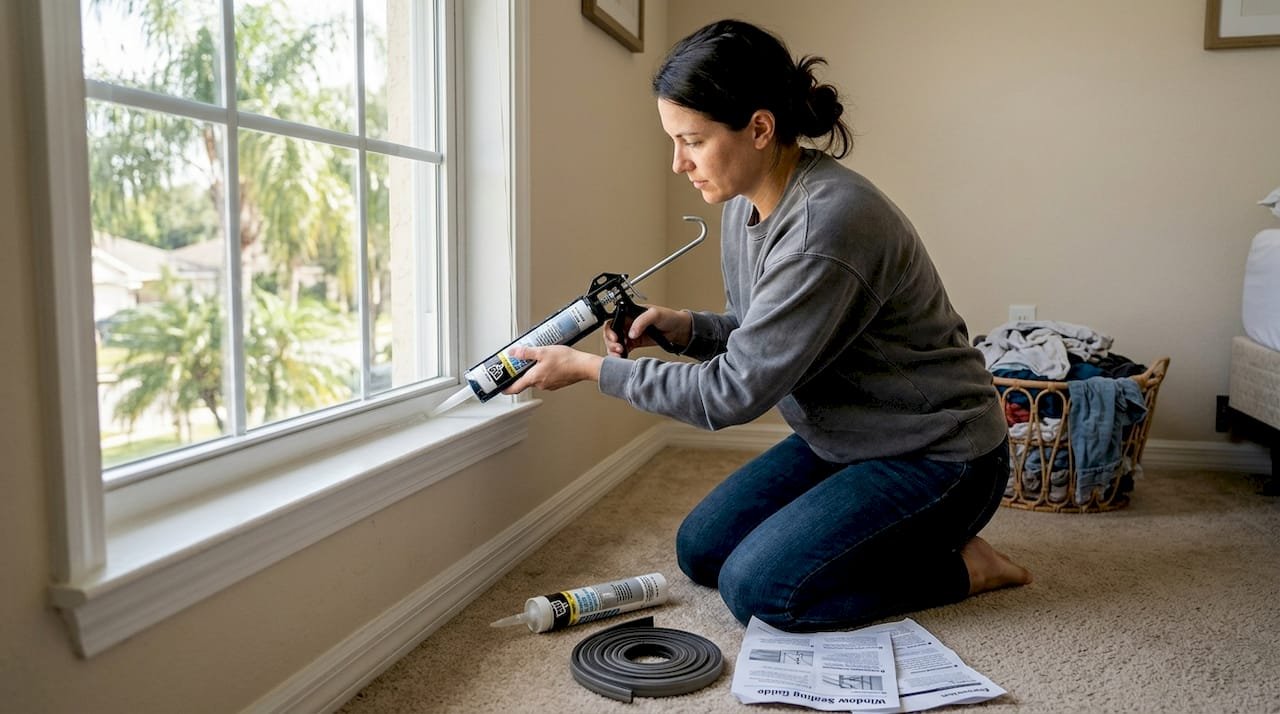
Caulking and sealing leaks can save 10 to 20% on energy bills, which is a significant return for a few hours of weekend work. Start with the obvious spots: window frames, door frames, and any area where pipes or wires enter the home.
Common air leak locations in Tampa homes:
- Around window and door frames
- Along baseboards and where walls meet floors
- Around electrical outlets on exterior walls
- Where plumbing or HVAC lines penetrate walls
- Attic hatch edges and pull-down stairs
Weatherstripping on doors is another quick win. If you can see daylight around a closed door, you’re losing conditioned air every hour of the day. Foam or rubber weatherstripping costs just a few dollars per door and installs in minutes.
Attic insulation is where Tampa homeowners need to be especially thoughtful. More insulation is generally better for keeping heat in, but Florida’s humidity adds a wrinkle. Over-insulating without proper ventilation can cause mold in your attic, which creates a far more expensive problem than a high utility bill. Always balance insulation upgrades with adequate attic ventilation.
| Weatherproofing method | Estimated savings | Difficulty level |
|---|---|---|
| Caulking window frames | 5 to 10% | Easy |
| Door weatherstripping | 3 to 7% | Easy |
| Attic insulation upgrade | 10 to 20% | Moderate |
| Duct sealing | 10 to 15% | Moderate |
Pro Tip: Contact your utility company before starting any insulation project. Duke Energy and TECO both offer free energy audits and sometimes provide rebates for approved air leak repairs. A free audit can pinpoint exactly where your home is losing heat so you don’t spend money guessing.
Smart maintenance habits to keep your system running strong
Weatherproofing and efficient equipment only deliver results when your system is clean and properly maintained. Neglected maintenance is one of the most common reasons heating systems underperform or fail during cold snaps.
Here’s a practical maintenance checklist to follow this winter:
- Check and replace your air filter monthly. Florida’s humidity clogs filters faster than in drier states, so monthly checks during winter are essential. A clogged filter restricts airflow and forces your system to work harder.
- Schedule professional HVAC service twice a year. Spring and fall tune-ups keep your system calibrated, clean, and ready for seasonal demands. TECO offers rebates for high-efficiency upgrades and recommends professional checkups twice yearly.
- Set your water heater to 120°F. Many homeowners leave water heaters at 140°F, which wastes energy. Dropping to 120°F is safe, comfortable, and saves money every month.
- Clear debris from your outdoor unit. After storms or windy days, leaves and debris can block airflow to your heat pump’s outdoor coil, reducing efficiency significantly.
- Test your thermostat’s heating mode before the first cold snap. Don’t wait until you need heat to find out something isn’t working.
“A well-maintained heat pump running on a clean filter can operate up to 15% more efficiently than a neglected system of the same model.” This is the kind of gain that adds up fast over a Tampa winter.
Booking a seasonal HVAC checkup before temperatures drop is the single best investment you can make in your winter comfort. A certified technician can catch refrigerant issues, electrical problems, and airflow restrictions before they become emergency repairs. For a full breakdown of what a proper tune-up includes, the HVAC maintenance guide covers everything you need to know.
What most Tampa homeowners miss about winter heating
Here’s something we see repeatedly: Tampa homeowners often set up their heating systems as if they live in Atlanta or Charlotte. They crank the heat, seal everything tight, and wonder why their bills are still high or why they’re dealing with musty smells by February.
Florida winters are genuinely different. The problem isn’t just cold, it’s the combination of cool temperatures and persistent humidity. Over-sealing a home without accounting for ventilation creates moisture buildup that leads to mold, poor air quality, and eventually structural damage. Heating efficiency in Tampa isn’t just about keeping warm. It’s about managing your indoor environment correctly for a subtropical climate.
Many homeowners also overlook the easiest savings available. Switching to LED bulbs, using smart power strips, and applying for utility rebates are all steps that cost little to nothing but add real savings over a season. The path to improving home heating in Tampa is less about dramatic overhauls and more about layering smart, locally appropriate habits that work together.
Get expert help to warm your Tampa Bay winter efficiently
Knowing what to do is half the battle. Having a trusted team to handle the technical side is the other half. At Home Therapist Cooling, Heating, and Plumbing, we work with Tampa Bay homeowners every winter to make sure their systems are running safely, efficiently, and without surprises.
From HVAC maintenance in Tampa to full system upgrades like the air handler service we completed in St. Petersburg, our certified technicians bring real local experience to every job. We can help you identify rebate opportunities, schedule seasonal tune-ups, and make sure your heating setup is built for Florida winters, not winters somewhere else. Visit Home Therapist to schedule your service today.
Frequently asked questions
How low can I set my thermostat in Tampa winter for savings?
Set your thermostat to the lowest temperature you find comfortable, ideally around 68°F or slightly lower, to reduce heating costs. Avoid big temperature jumps that trigger inefficient strip heating.
Do I need to run my heat pump differently during a Florida cold snap?
Make gradual temperature adjustments of no more than 2 degrees at a time to prevent emergency strip heat from activating. A dual fuel system is the best long-term solution for rare extreme cold events in Tampa.
What is the quickest way to spot and fix heat loss around my home?
Feel for drafts near windows and doors, then apply weatherstripping or caulk to seal gaps. Check attic insulation for thin spots, since sealing leaks can save 10 to 20% on energy bills.
How often should I change my HVAC filter in the Tampa area during winter?
Check your filter every month during winter. Florida’s humidity clogs filters faster than in drier climates, so monthly replacements are often necessary to keep airflow and efficiency at their best.
About This Guide
Written and reviewed by the Home Therapist Cooling, Heating & Plumbing team, a family-owned Tampa Bay HVAC and plumbing company serving the area since 2011. Our licensed techs hold Florida HVAC license CAC1819196 and Plumbing license CFC1431159, with over 1,100 five-star reviews across Tampa, St. Petersburg, Clearwater, Wesley Chapel, Lutz, Riverview, Brandon, Valrico, Apollo Beach, Palm Harbor, Land O’ Lakes, Plant City, New Port Richey, and surrounding Tampa Bay zip codes.
Honest pricing:. Upfront quotes, no high-pressure sales, no surprise fees.
Questions about your home? Call (813) 343-2212 for a real tech, or request a callback. Available 7 days a week including evenings and weekends for emergencies.
Recommended
- How to Improve Home Heating for Maximum Comfort and Savings
- Energy Saving HVAC Tips for Lower Tampa Bay Home Bills
- 7 Types of Home Heating Systems for Efficient Comfort
- How to Detect HVAC Leaks for Lower Energy Bills
- Enhanced Heating: Winter Heating Tips for Your Home (2025)Enhanced Heating and Air Conditioning
More Related Articles
- Emergency Heating Service in Tampa Bay, FL: Fast Help When Heat Fails
- Air Conditioning Contractor in Tampa Bay, FL: What to Look For
- Furnace Maintenance in Tampa Bay, FL: What Our Technicians Check and Why It Matters
- Furnace Maintenance in Tampa Bay, FL: What Homeowners Should Expect
- Air Conditioner Installation Repair Tampa FL Bay FL Services Review from Bonnie Wakefield


