

Air Conditioner Replacement Estimate: Costs, Factors & Tips
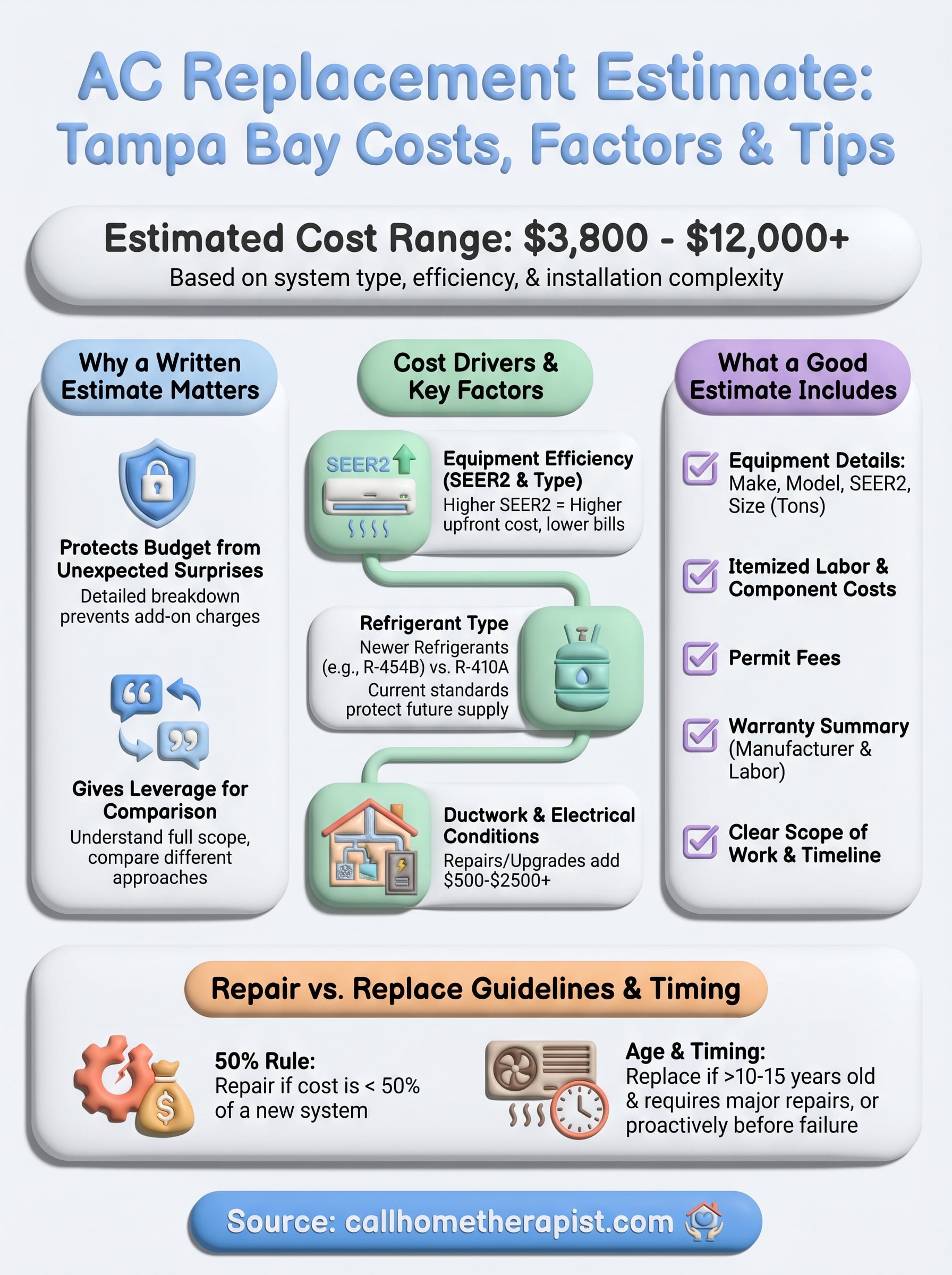
Getting an air conditioner replacement estimate before committing to a new system is one of the smartest moves you can make as a homeowner. In the Tampa Bay Area, where your AC runs hard for most of the year, a replacement can range anywhere from $3,800 to $12,000 or more depending on the system size, efficiency rating, and complexity of the installation.
That’s a wide range, and the gap between the low end and the high end usually comes down to factors most homeowners don’t think about until a technician is standing in their living room. Things like ductwork condition, refrigerant type, and whether your electrical panel can handle a newer unit all play a role in the final number. Understanding these variables ahead of time helps you avoid sticker shock and make a confident decision.
At Home Therapist, we’ve been installing and replacing AC systems across the Greater Tampa Bay Area since 2011, and we provide free estimates with upfront pricing, no hidden fees, no surprises. This guide breaks down everything that goes into a replacement estimate, from average cost ranges to the specific factors that push the price up or bring it down, so you know exactly what to expect before the work begins.
Why a replacement estimate matters
When your AC starts failing in the middle of a Tampa Bay summer, the pressure to act fast is real. But agreeing to a replacement without a written estimate in hand is one of the most expensive mistakes a homeowner can make. Knowing exactly what you’re paying for before work begins puts you in control of the process, not the contractor.
An air conditioner replacement estimate isn’t just a price quote. It’s a documented breakdown of the equipment, labor, and any additional work your specific installation requires. Without it, you have no way to know whether you’re paying a fair price, whether corners are being cut, or whether the contractor even plans to pull the required permits. In Florida, AC installation permits are required by law, and skipping them can cause serious problems when you sell your home or file an insurance claim.
It protects your budget from unexpected surprises
One of the biggest reasons homeowners end up overpaying for AC replacement is that they agree to work without seeing a full cost breakdown first. A contractor might quote you a low equipment price upfront, then add charges for things like disconnect fees, new refrigerant lines, electrical upgrades, or haul-away of the old unit once the job is done. These add-ons can push your total bill hundreds of dollars higher than the number you originally agreed to.
A complete, itemized estimate locks in your total cost before anyone starts work, so there are no surprises waiting for you on the invoice.
When you request a detailed written estimate, each of those line items appears before work begins. You can ask questions, push back on specific charges, or get a second opinion without any time pressure. That level of transparency is especially important for a purchase that regularly runs several thousand dollars, and it separates contractors who operate professionally from those who rely on confusion to pad their margins.
It gives you use when comparing contractors
Getting more than one estimate isn’t just about finding the lowest price. It’s about understanding the full scope of work each contractor is proposing. One quote might include duct inspection and sealing as part of the job. Another might skip it entirely. Without written estimates side by side, you’d never notice the difference, and you could end up with a brand-new system sitting on top of leaky ducts that waste a significant portion of your cooled air before it ever reaches your living space.
Comparing estimates also shows you how different contractors approach the same problem. A company that takes time to assess your ductwork, calculate your home’s cooling load, and recommend the right system size is doing the work upfront that protects your investment. A contractor who glances at your old unit and hands you a number without measuring anything is cutting corners before the job even starts.
When you have two or three written estimates in front of you, you have real information to work with. You can ask each contractor to explain why their numbers differ, and the answers will tell you a lot about their process and whether they’re the right fit for your home. Price alone rarely tells the full story, but a detailed, transparent estimate usually does.
Average AC replacement costs in Tampa Bay in 2026
Before you request an air conditioner replacement estimate, it helps to know what a reasonable number looks like in your area. In the Greater Tampa Bay Area, most homeowners pay between $3,800 and $12,000 for a full system replacement in 2026, with the majority of jobs landing in the $5,500 to $8,500 range once you factor in equipment, labor, and permits. Florida’s climate demands more from residential AC systems than most of the country, which means the equipment needs to be appropriately sized and efficient to handle the workload.
Cost ranges by system type
The type of system you choose is the single biggest variable in your final number. A standard split system with a 14 SEER2-rated unit on the lower end of efficiency starts around $3,800 for smaller homes. Moving up to a 16 or 18 SEER2 system with variable-speed technology can push your total into the $7,000 to $10,000 range, but you’ll recover a portion of that difference through lower monthly energy bills over time.
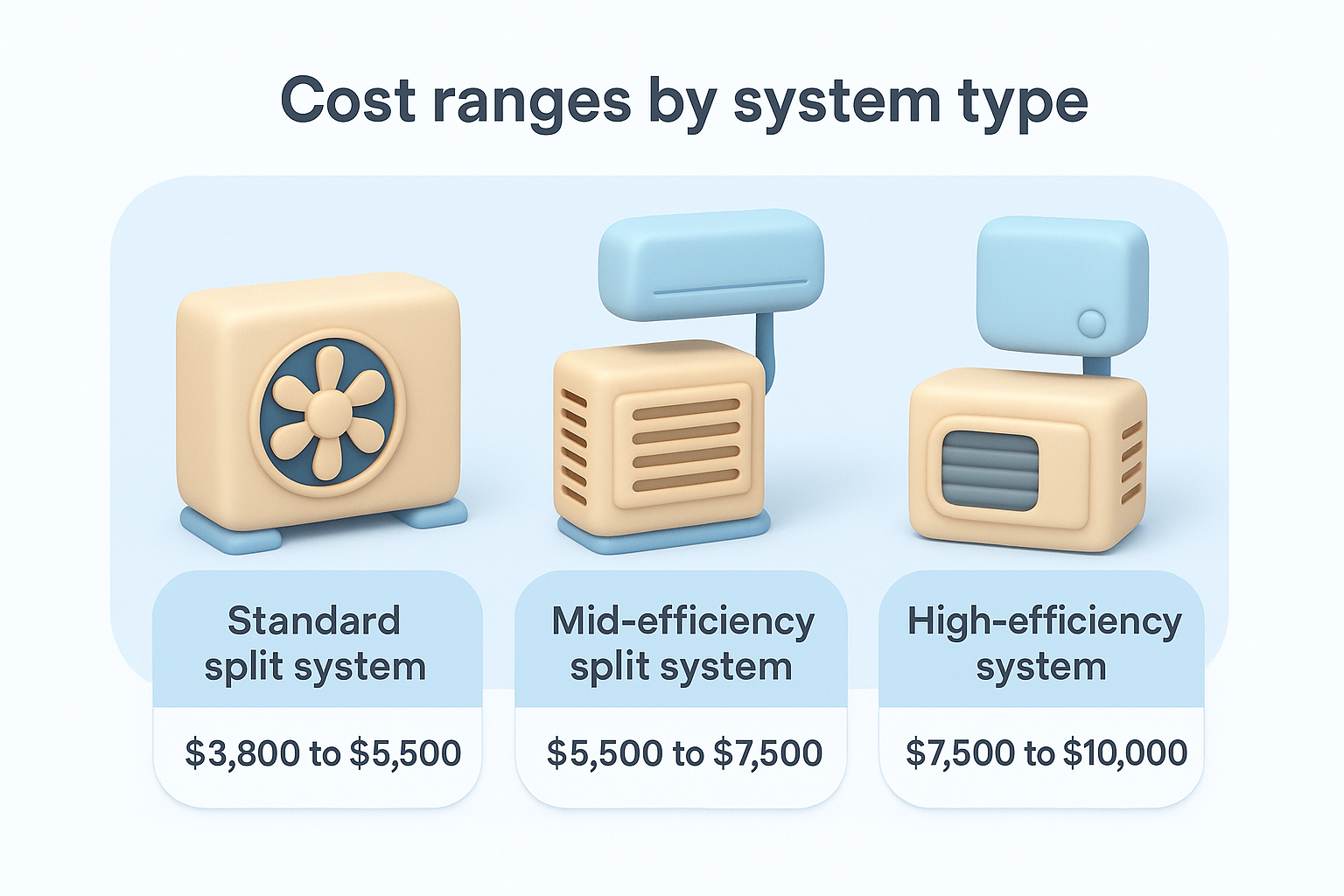
| System Type | Typical Cost Range |
|---|---|
| Standard split system (14 SEER2) | $3,800 to $5,500 |
| Mid-efficiency split system (16 SEER2) | $5,500 to $7,500 |
| High-efficiency system (18+ SEER2) | $7,500 to $10,000 |
| Ductless mini-split system | $4,500 to $12,000 |
These ranges reflect full replacement costs including equipment, labor, and permit fees, not equipment-only prices you might see advertised online.
What affects where your job lands in the range
System size plays a major role in cost. A 2-ton unit for a smaller home costs noticeably less than a 4 or 5-ton unit needed to cool a larger house. Most Tampa Bay homes fall between 2 and 5 tons, and getting the sizing wrong in either direction creates problems with comfort and energy efficiency, so proper load calculation matters.
Labor rates in the Tampa Bay area also carry weight. Expect to pay $1,200 to $2,500 in labor for a standard replacement, depending on the complexity of the job, access to the equipment, and whether additional work is needed before installation can begin.
Cost drivers that move your estimate up or down
Your air conditioner replacement estimate will shift significantly based on a handful of variables that go beyond the base price of the unit itself. Understanding what drives those numbers higher or lower helps you evaluate quotes intelligently and make decisions that match both your budget and your long-term comfort goals.
Equipment efficiency and refrigerant type
SEER2 ratings are one of the clearest cost levers in any AC replacement. Higher-efficiency systems cost more upfront but reduce your monthly energy bill over time, which matters in Tampa Bay where your unit runs for the better part of the year. A 16 or 18 SEER2 variable-speed system can cost $2,000 to $4,000 more than a standard 14 SEER2 unit, though that gap often narrows once you account for energy savings and available manufacturer rebates.
Refrigerant type also plays a growing role in pricing. Systems using R-410A refrigerant are being phased out in favor of newer refrigerants like R-454B. If your current system uses older refrigerant and needs a recharge before replacement, that adds to your total. Newer systems using next-generation refrigerants may carry a slightly higher equipment cost during the transition period, but they protect you from future supply issues as R-410A becomes harder to source.
Choosing a higher-efficiency system with the current refrigerant standard protects your investment from regulatory changes that could increase maintenance costs on older equipment.
Ductwork and electrical conditions in your home
The condition of your existing ductwork has a direct impact on your final cost. If your ducts are leaking, undersized, or damaged, installing a new unit on top of them wastes money because you lose cooled air before it reaches your living spaces. Duct repairs or partial replacement can add $500 to $2,500 to your project depending on how much work is needed.
[Electrical panel capacity](https://callhometherapist.com/air-conditioning-system-replacement-tampa/) is another factor many homeowners overlook. Newer high-efficiency systems sometimes require a dedicated circuit or a panel upgrade to operate safely, particularly in older Tampa Bay homes. Your technician should assess this during the site visit, and the cost of any required electrical work will appear as a separate line item in your estimate. Expect panel upgrades to add $800 to $2,000 if they are necessary.
What a good written estimate should include
Not every quote you receive is a true air conditioner replacement estimate. Some contractors hand you a single number on a piece of paper and call it an estimate. That’s not enough information to make a confident decision. A legitimate written estimate breaks the job into clear sections so you understand exactly what you’re buying, what the contractor is responsible for, and what happens if anything changes once work begins.
Equipment details and system specifications
Your estimate should list the make, model, and SEER2 rating of the equipment being installed. This matters because it lets you verify the unit online, compare it against other quotes, and confirm the system matches what the contractor verbally recommended. Without those specifics in writing, a contractor could swap in a lower-grade unit on installation day and you’d have no documented basis to push back.
An estimate that names specific equipment holds the contractor to exactly what they proposed, not whatever happens to be on the truck that morning.
The estimate should also state the system size in tons and confirm it was determined through a proper load calculation, not a guess based on your old unit’s size. System sizing affects your comfort, energy bill, and equipment lifespan, so it needs to be deliberate.
Labor, permits, and line-item costs
Every cost component should appear as its own line item, not bundled into a vague "installation fee." You want to see labor costs listed separately from equipment costs, along with any additional charges for items like refrigerant lines, electrical work, pad replacement, or haul-away of the old unit. This structure lets you compare quotes accurately and ask specific questions about any number that looks out of place.
Permit fees should appear in the estimate as well. In Florida, AC replacements require a permit from your local building department, and that cost belongs in your quote. An estimate that omits permit fees either means the contractor isn’t planning to pull one, or they intend to add the cost later. Neither situation works in your favor. Confirm the estimate also includes a warranty summary covering both the equipment manufacturer’s warranty and the contractor’s labor warranty.
How to get an accurate estimate for your home
Getting an accurate air conditioner replacement estimate starts before a single technician shows up at your door. The way you prepare for the visit, and the questions you ask during it, directly affect how precise and useful the final number will be. Contractors who work with informed homeowners tend to provide more detailed proposals because they know the customer will read them closely.
Schedule a site visit, not a phone quote
A phone quote is not an estimate. It’s a ballpark built on assumptions about your home that may or may not be accurate. To get a number you can actually budget around, you need a technician inside your home, looking at your current system, your ductwork, your electrical panel, and the physical space where the equipment lives. Any contractor who quotes a firm price over the phone without visiting your property is guessing, and that guess will likely change once they arrive.
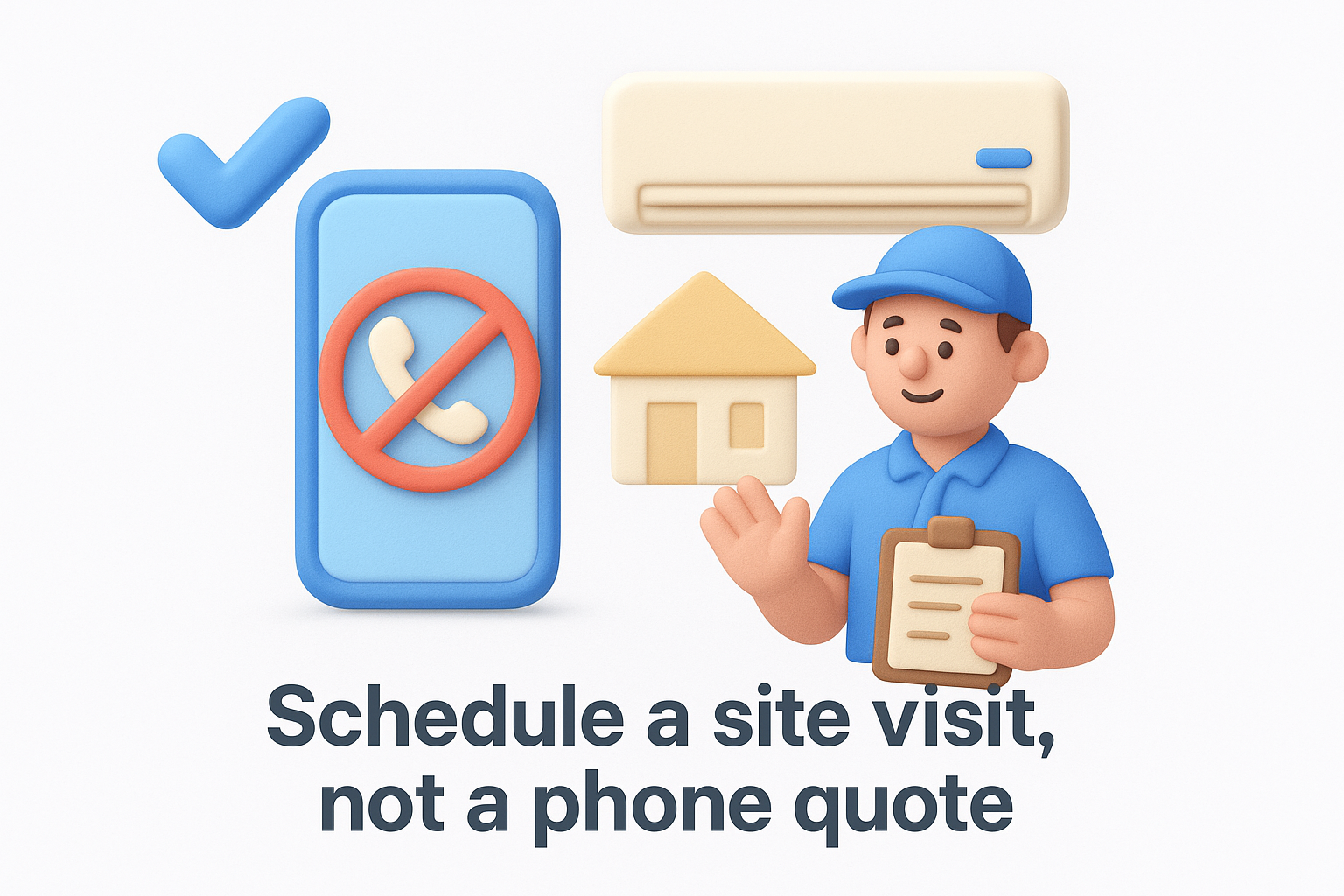
Request a free in-home estimate from at least two contractors so you have a real basis for comparison before making a decision.
During the site visit, a qualified technician should measure your home’s square footage, assess insulation and window exposure, and perform a cooling load calculation to determine the right system size. If they skip these steps and base their recommendation on the tonnage of your existing unit alone, that’s a warning sign worth noting before you sign anything.
Ask the right questions before you commit
Once you have a written proposal in hand, ask the contractor to walk you through each line item. You want to know what equipment they’re proposing, why they selected that system size, whether the price includes permit fees, and what happens if they discover duct issues once work begins. These questions take about ten minutes and give you a much clearer picture of what you’re actually agreeing to.
Also confirm the warranty terms before signing. Ask specifically whether the labor warranty is tied to the contractor or transferable to a new owner if you sell your home. A thorough, itemized proposal from a contractor who answers your questions clearly is far more valuable than the lowest number on the page.
Repair vs replace rules of thumb and timing
Deciding whether to repair your current system or request an air conditioner replacement estimate is one of the more difficult calls you’ll face as a homeowner. The wrong choice in either direction costs you money, whether you sink cash into repairs on a system that fails again in six months, or replace a unit that had years of reliable service left in it.
The 50 percent rule for repair decisions
The most widely used guideline in the HVAC industry is the 50 percent rule: if the cost of the repair exceeds 50 percent of the cost of a new system, replacement is the smarter financial decision. For example, if a new system for your home costs $7,000 and the repair quote comes in at $3,800, putting that money toward a replacement gets you a new system with a full warranty rather than an aging unit that may need additional repairs within the next year or two.
Apply this rule alongside the system’s age, not in isolation, because a costly repair on a relatively new unit can still make sense if the rest of the equipment is in good condition.
This calculation works best when you have a real quote in front of you for both the repair and the replacement. Ask your technician to itemize the repair costs so you can see what you’re actually comparing before you commit.
Age and timing considerations for Tampa Bay homeowners
The average lifespan of a central AC system in Florida runs shorter than national averages because the equipment works harder and longer each year. Most systems in the Tampa Bay Area last between 12 and 15 years with proper maintenance. Once your unit crosses the 10-year mark, the repair versus replace math starts shifting toward replacement because parts availability narrows and efficiency declines.
Timing also matters for your budget. Replacing your system before it completely fails, rather than during an emergency breakdown in July, gives you time to gather multiple estimates, compare options, and avoid paying emergency service premiums. Proactive replacement during the late fall or early winter months often means shorter wait times for installation and more flexibility to choose the right equipment for your home.
Next steps
You now have everything you need to approach an air conditioner replacement estimate with confidence. You know the cost ranges to expect in Tampa Bay, the factors that push prices up or down, what a legitimate written estimate should contain, and how to decide whether repair or replacement makes more financial sense for your situation. That knowledge puts you in a much stronger position when a contractor shows up at your door.
Putting this information to use starts with one action: schedule a free in-home estimate from a contractor who will actually assess your home instead of guessing over the phone. At Home Therapist, we’ve served Greater Tampa Bay homeowners since 2011 with transparent, upfront pricing and no hidden fees. Our licensed technicians will evaluate your current system, calculate the right size for your home, and give you a full written breakdown before any work begins. Request your free AC replacement estimate today and get a number you can actually trust.
About This Guide
Written and reviewed by the Home Therapist Cooling, Heating & Plumbing team, a family-owned Tampa Bay HVAC and plumbing company serving the area since 2011. Our licensed techs hold Florida HVAC license CAC1819196 and Plumbing license CFC1431159, with over 1,100 five-star reviews across Tampa, St. Petersburg, Clearwater, Wesley Chapel, Lutz, Riverview, Brandon, Valrico, Apollo Beach, Palm Harbor, Land O’ Lakes, Plant City, New Port Richey, and surrounding Tampa Bay zip codes.
Honest pricing:. Upfront quotes, no high-pressure sales, no surprise fees.
Questions about your home? Call (813) 343-2212 for a real tech, or request a callback. Available 7 days a week including evenings and weekends for emergencies.
More AC Installation Articles
- Air Conditioning Installation Tampa FL, What Tampa Bay Homeowners Should Expect
- Heat Pump vs Central AC Installation Tampa Bay: Which Wins in Florida?
- Air Conditioner Replacement Cost: 2026 Price Range Guide
- Crane-Set Goodman 2 Ton AC Install on Andover Pl S, Sun City Center, FL 33573
- Air Conditioner Installation Repair Tampa FL Bay FL Services Review from Bonnie Wakefield


