

How to Check for Mold in Your HVAC: Tampa Bay Guide
TL;DR:
- Tampa Bay’s humid climate promotes mold growth in HVAC systems, affecting indoor air quality and health.
- Signs include musty odors, visible mold, excess dust, and moisture in drip pans or insulation.
- Professional inspection and moisture control are essential to prevent widespread mold contamination.
That stale, earthy smell every time your AC kicks on is not just unpleasant. It could be a warning sign that mold is growing inside your HVAC system, circulating spores through every room in your home. Tampa Bay’s relentless heat and humidity create near-perfect conditions for mold to take hold in ductwork, drip pans, and insulation. The good news is that you can spot the early signs before they become a serious problem. This guide walks you through exactly how to check your system safely, what tools you need, and what to do if you find something that concerns you.
Table of Contents
- Why mold in your HVAC matters in Tampa Bay
- Gathering tools and preparing for a safe inspection
- Step-by-step: How to check for mold in your HVAC system
- Next steps: Responding safely if you find mold
- Our take: Why most homeowners underestimate HVAC mold, what actually works
- Need expert help? Protect your home and air quality
- Frequently asked questions
Key Takeaways
| Point | Details |
|---|---|
| Look for key signs | Musty smells, visible spots, and allergy symptoms often mean HVAC mold. |
| Prioritize safety first | Always shut off your system before inspecting and avoid disturbing any mold found. |
| Call professionals for cleanup | DIY cleaning can make things worse, let trained pros handle visible or widespread mold. |
| Prevention is best | Annual checks and humidity control keep Tampa Bay HVAC systems healthier and mold-free. |
Why mold in your HVAC matters in Tampa Bay
Tampa Bay is not like most of the country when it comes to air quality inside your home. The combination of high humidity, frequent afternoon thunderstorms, and an AC system that runs almost year-round creates a moisture-rich environment that mold absolutely thrives in. Your HVAC system pulls warm, humid air through its components constantly, and any place where condensation collects becomes a potential mold hotspot. As annual HVAC checks are recommended for prevention in high-humidity climates like ours, skipping inspections here is a much bigger gamble than it would be in a drier state.
Knowing what to look for is your first line of defense. The most common signs that mold may be present in your system include:
- A musty or earthy odor that appears only when the system is running
- Visible dark or black spots near vents, registers, or return air grilles
- Unexplained increases in dust on surfaces shortly after cleaning
- Allergy flare-ups, sneezing, or itchy eyes that improve when you leave the house
- Respiratory irritation, especially in children, elderly family members, or anyone with asthma
These key signs of HVAC mold are not always obvious at first, which is part of what makes mold in HVAC systems so easy to overlook until it becomes a larger issue.
“Mold can affect your health and your home’s air quality long before you can see it clearly. The smell is often the first clue.”
Beyond the health concerns, mold in your HVAC system forces the unit to work harder, reducing its efficiency and potentially shortening its lifespan. You might notice higher energy bills or uneven cooling as early indicators that something is wrong inside the system. Learning how to prevent mold in your HVAC starts with understanding just how quickly Tampa Bay’s climate can turn a small moisture problem into a full-blown contamination issue.
Gathering tools and preparing for a safe inspection
Before you look at a single vent or duct, there is one step that cannot be skipped: turn off your HVAC system completely. Running the system while you inspect it can spread spores through the ductwork and into rooms you have not checked yet. It also creates airflow that makes it harder to detect odors accurately. Switch the system off at the thermostat and, if you are going to open any panels, shut it off at the breaker as well.
Once the system is off, gather the following before you start:
- Disposable gloves to avoid skin contact with any mold or debris
- N95 face mask to protect against inhaling spores
- Flashlight with a strong beam for looking inside vents and ducts
- Small mirror to see around corners inside ductwork
- Screwdriver if you need to remove vent covers (check first if they unscrew or snap off)
- Phone or camera to photograph anything that looks suspicious
Here is a quick comparison of what you can realistically do on your own versus what requires professional equipment:
| Inspection type | DIY tools | Professional equipment |
|---|---|---|
| Surface mold on vents | Flashlight, eyes | Same, plus lab swabs |
| Moisture inside ducts | Mirror, flashlight | Moisture meters, borescope cameras |
| Hidden mold in insulation | Limited visibility | Thermal imaging cameras |
| Air quality testing | None | Particle counters, spore traps |
| Drip pan condition | Visual check | Moisture sensors, UV lights |
As the EPA cautions, DIY checks can identify surface issues but risk spreading spores if mold is disturbed without proper containment. This is not meant to scare you away from looking. It is meant to remind you that your role during this inspection is to observe and document, not to clean.
Pro Tip: If you spot anything that looks like visible mold growth, stop immediately. Take clear photos and step back. Attempting to wipe or scrub mold without professional containment can release thousands of spores into the air and make the problem significantly worse. Use your HVAC troubleshooting guide to understand when a situation calls for a professional rather than a DIY fix.
Step-by-step: How to check for mold in your HVAC system
With your tools ready and the system off, work through these steps in order. Being methodical helps you avoid missing problem areas.
- Inspect all supply and return vents. Remove vent covers if possible and shine your flashlight inside. Look for dark discoloration, fuzzy growth, or unusual buildup on the interior surfaces.
- Use your mirror and flashlight inside the duct openings. You will not be able to see far, but you can check the first several inches for visible moisture, dust clumps, or dark staining.
- Look for excess dust or debris near registers. Unusual dust accumulation around vents, especially if it has a dark tint, can signal mold growth deeper in the system.
- Smell carefully near each vent. A musty or earthy odor concentrated at a specific vent often points to mold in that branch of the ductwork.
- Inspect the drip pan and drain line. These are the most common mold hotspots in Florida HVAC systems. Standing water, slime, or discoloration in the pan is a red flag that needs immediate attention.
Here is a quick reference for what different symptoms might indicate:
| Symptom | Possible cause |
|---|---|
| Musty odor at vents | Mold in ducts or on coils |
| Visible dark spots on registers | Surface mold growth |
| Standing water in drip pan | Clogged drain line |
| Wet or stained insulation | Condensation leak or moisture intrusion |
| Allergy symptoms indoors | Airborne spores circulating through system |
The key signs of mold you are looking for include musty odors, visible discoloration, and evidence of moisture like wet insulation or clogged drains. If you find any of these, the EPA is clear: do not run the system, as doing so spreads spores throughout your home.
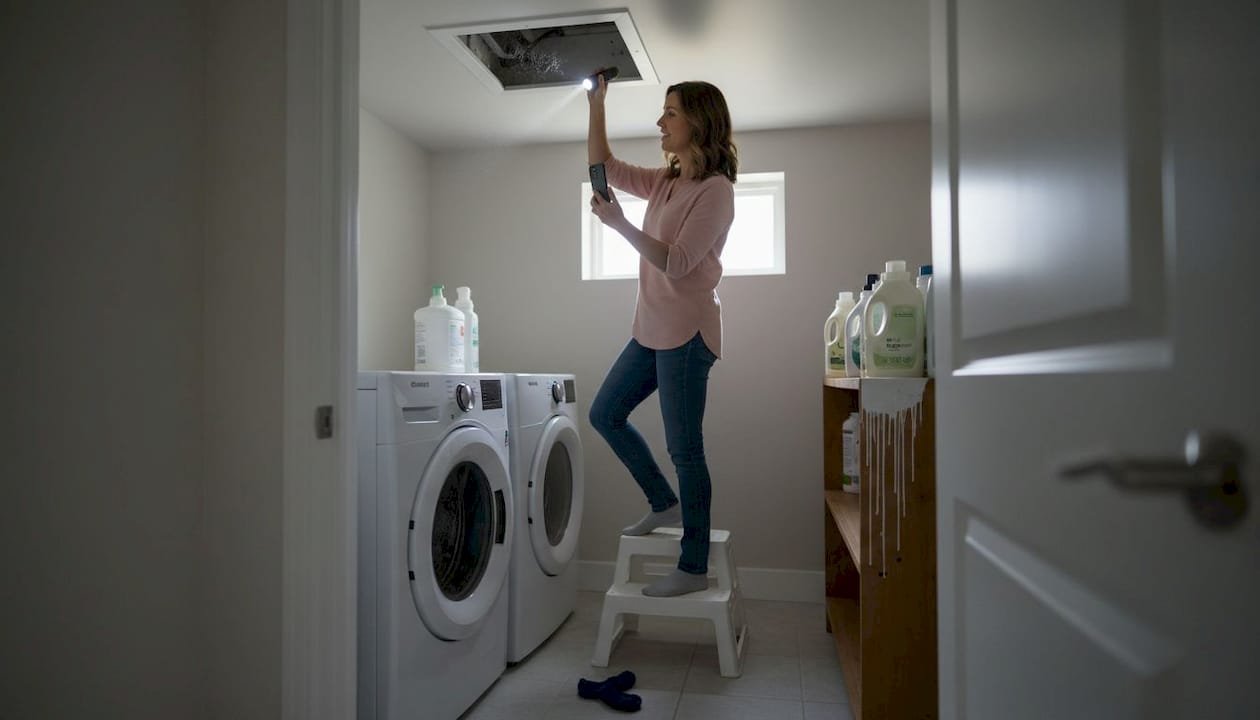
Pro Tip: Resist the urge to clean anything you find during this inspection. Your job right now is to document with photos and notes. Check out these DIY duct cleaning tips and HVAC cleaning steps to understand the scope of what professional remediation involves.
Next steps: Responding safely if you find mold
Finding evidence of mold is not a reason to panic, but it is a reason to act quickly and carefully. The first thing to do is make sure the system stays off. Do not turn it back on to “test” whether the smell is still there or to cool down the house while you figure out next steps.
Here is what to do immediately after finding signs of mold:
- Document everything with photos and notes before touching or moving anything
- Avoid disturbing visible mold by touching, wiping, or blowing air near it
- Keep the system off until a professional has assessed the situation
- Identify and address visible moisture sources such as dripping pipes, condensation leaks, or a clogged drain line
- Ventilate the space by opening windows if weather allows, to reduce indoor humidity
Fixing the moisture source is not optional. It is the most critical first step before any cleanup can be effective. Mold will return within days if the underlying moisture problem is not resolved. This is why routine HVAC maintenance that includes drain line flushing and coil cleaning is so valuable in Tampa Bay.
“If you suspect mold in your HVAC system, do not operate the system. Running it can distribute mold spores throughout the building.”, EPA Mold Course
The EPA guidance on mold cleanup is straightforward: do not run a system you suspect is contaminated, address the moisture source first, and clean up promptly afterward. There are no federal limits on acceptable mold levels, and visible mold is enough reason to act without waiting for air sampling results. Your HVAC maintenance checklist is a useful resource for understanding what a thorough professional inspection should cover.
Our take: Why most homeowners underestimate HVAC mold, what actually works
After years of working in Tampa Bay homes, we have seen the same pattern repeat itself. A homeowner notices a smell, assumes it is just the system being dusty, and waits. By the time they call us, what started as surface mold on a drip pan has spread to insulation and ductwork, turning a simple service call into a major remediation project.
The uncomfortable truth is that most homeowners either try to wipe the mold away themselves or ignore it entirely. Both approaches make things worse. Self-cleaning without containment spreads spores. Ignoring it allows the colony to grow and the moisture problem to worsen.
There is also a real tension between what the EPA recommends and what industry standards from organizations like NADCA and IICRC emphasize. The EPA takes a cautious stance on routine duct cleaning, while industry professionals emphasize verified removal standards when mold is confirmed. Our position is practical: do not clean routinely for the sake of it, but when mold is visible, act immediately and do it right.
The single most effective long-term strategy is humidity control. Keep indoor humidity below 60 percent, schedule annual professional checks, and address any moisture issues the moment you notice them. Ongoing HVAC mold prevention is far less expensive than remediation.
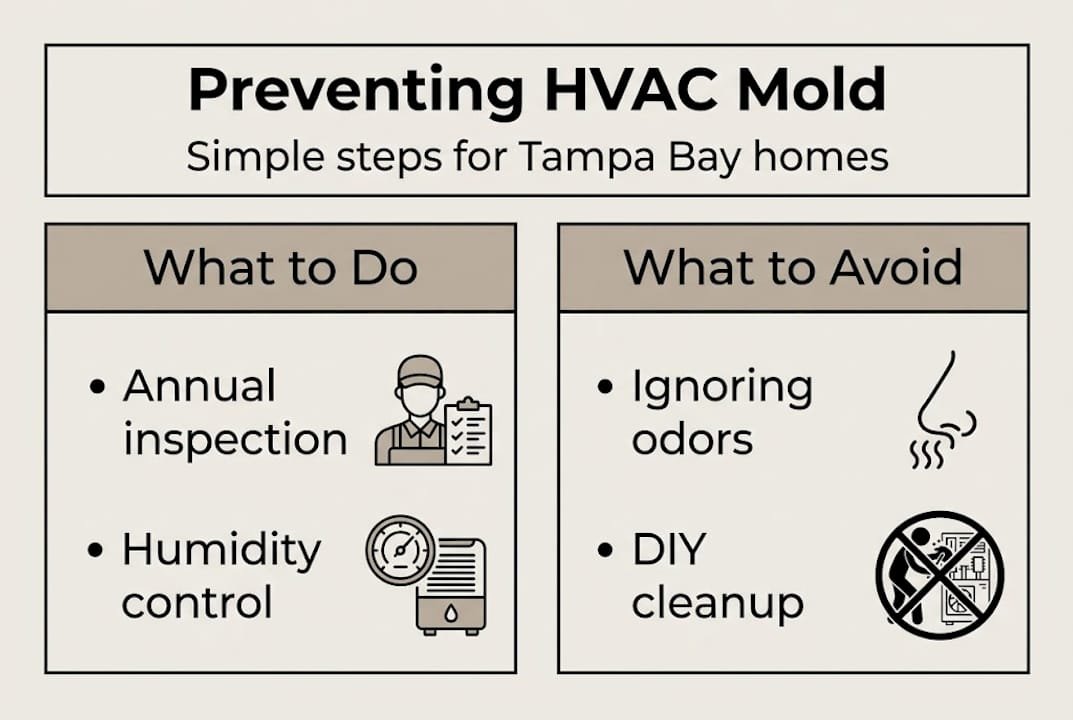
Pro Tip: Schedule a professional HVAC inspection every year before Tampa Bay’s peak humidity season. It is the most cost-effective thing you can do to stay ahead of mold.
Need expert help? Protect your home and air quality
If your inspection turned up anything concerning, or if you would simply rather have a trained technician take a thorough look, we are here to help. At Home Therapist Cooling, Heating, and Plumbing, our certified technicians know exactly what to look for in Tampa Bay homes and how to address it safely.

Start by learning more about what is HVAC in Tampa Bay and how your system works, then use our HVAC troubleshooting guide to understand your system’s current condition. When you are ready for a full evaluation, our HVAC maintenance guide outlines exactly what a professional inspection covers. Do not let uncertain air quality linger in your home. Call (813) 343-2212 to schedule a full system evaluation.
Frequently asked questions
What are the first warning signs of HVAC mold?
Musty odors when the system runs, visible dark spots near vents, increased dust, and indoor allergy symptoms are the key early warning signs that mold may be present in your HVAC system.
Is mold in HVAC ducts dangerous?
Yes, it can worsen allergies, trigger asthma attacks, and degrade indoor air quality. The health risks from spores are especially significant in humid climates like Tampa Bay where systems run constantly.
Should I clean mold from my HVAC myself?
No. DIY cleaning without proper containment risks spreading spores and increasing your exposure. Photograph what you find and contact a professional. The EPA recommends professional cleanup after the moisture source is fixed.
How often should HVAC systems be checked for mold?
At least once a year in Tampa Bay, or sooner if you notice musty odors, extra dust, or health symptoms. Annual checks are recommended for prevention in high-humidity areas like ours.
Can mold just be sampled to check safety?
Visible mold is enough reason to act without waiting for sampling results. The EPA does not recommend routine air sampling for most homes since there are no federal acceptable mold level limits.
About This Guide
Written and reviewed by the Home Therapist Cooling, Heating & Plumbing team, a family-owned Tampa Bay HVAC and plumbing company serving the area since 2011. Our licensed techs hold Florida HVAC license CAC1819196 and Plumbing license CFC1431159, with over 1,100 five-star reviews across Tampa, St. Petersburg, Clearwater, Wesley Chapel, Lutz, Riverview, Brandon, Valrico, Apollo Beach, Palm Harbor, Land O’ Lakes, Plant City, New Port Richey, and surrounding Tampa Bay zip codes.
Honest pricing:. Upfront quotes, no high-pressure sales, no surprise fees.
Questions about your home? Call (813) 343-2212 for a real tech, or request a callback. Available 7 days a week including evenings and weekends for emergencies.
Recommended
- Prevent Mold with HVAC: Protecting Tampa Homes
- 7 proven ways to prevent mold in your HVAC system
- Master HVAC filter maintenance for an efficient Tampa home
- Complete Guide to HVAC’s Role in Air Quality | Home Therapist
More Related Articles
- Air Conditioner Replacement Estimate: Costs, Factors & Tips
- Feather Cove Lane AC Tune-Up: Carrier 2-Ton Inspected and Cleared in Clearwater, FL 33762
- Debunking 4 HVAC Myths That Cost Tampa Homeowners
- Why an A/C Maintenance Plan in St. Petersburg FL Matters for Year Round Comfort
- Air Conditioner Installation Repair Tampa FL Bay FL Services Review from Bonnie Wakefield


