

Your Essential HVAC Checklist for Fall in Tampa Bay
TL;DR:
- Tampa Bay’s climate causes prolonged humidity, pollen, and dust, increasing HVAC maintenance needs.
- Fall HVAC upkeep prevents system failures during unpredictable cold snaps and extends equipment lifespan.
- Professional inspections focus on local threats like salt air corrosion, pest intrusion, and storm debris.
Fall in Tampa Bay doesn’t look like fall anywhere else. While the rest of the country is pulling out sweaters, we’re still running the AC well into October, then scrambling to find the heat settings when a cold snap rolls in overnight. That constant back-and-forth puts serious stress on your HVAC system, and without the right preparation, you’re looking at reduced efficiency, higher energy bills, and potentially costly breakdowns. This guide gives you a practical, Tampa-specific plan to get your system ready, from simple DIY tasks to knowing exactly when to call in a professional.
Table of Contents
- Why fall HVAC upkeep matters in Tampa Bay
- Step-by-step: The ultimate fall HVAC checklist
- Comparing DIY vs. professional HVAC maintenance
- What to expect from a fall HVAC service visit
- Our take: What most fall HVAC checklists overlook
- Get expert HVAC help for Tampa Bay homes
- Frequently asked questions
Key Takeaways
| Point | Details |
|---|---|
| Seasonal maintenance is crucial | A fall-specific checklist prevents breakdowns and keeps Tampa homes comfortable and efficient. |
| Combine DIY with pro service | Simple tasks can be done yourself, but an annual professional inspection is essential for safety and performance. |
| Watch for Tampa-specific hazards | Humidity, salt, and pests require extra vigilance in the fall for Tampa-area HVAC systems. |
| Plan your maintenance early | Tackle your checklist before the first cold snap for best results and contractor availability. |
Why fall HVAC upkeep matters in Tampa Bay
With fall approaching, it’s important to understand why seasonal HVAC preparation is more than just a routine task, especially in our climate. Most national HVAC guides are written for places that actually cool down in September. Tampa Bay is different. Our Gulf Coast humidity lingers deep into the fall, which creates the perfect environment for mold growth inside ductwork and air handlers. Pollen and dust levels stay elevated longer than in northern states, which means your filters are working harder even as you try to cut back on AC use.
There’s another risk that doesn’t get talked about enough: the unpredictable cold snap. Tampa homeowners sometimes go weeks without touching the heat setting, then one December night it drops into the 40s. If your heating system hasn’t been checked since last winter, that’s when failures happen. Being caught off guard with a broken heater is avoidable, and a little fall prep goes a long way.
Here’s why the numbers back this up: neglecting HVAC maintenance can lead to up to a 5% loss in efficiency every single year. That adds up fast on your utility bill. High-efficiency systems are specifically designed to operate within tight tolerances, and when filters clog, coils get dirty, or refrigerant drifts, those tolerances break down quickly.
The DOE maintenance tips from the Department of Energy reinforce what we see in the field: consistent seasonal attention is one of the most cost-effective ways to keep your system performing well year after year. Studies show regular maintenance can extend a system’s life by several years compared to neglected units.
Key reasons fall HVAC upkeep matters in Tampa Bay:
- Humidity and heat persist longer, increasing mold and allergen risks inside your system
- Filters and coils work harder during extended cooling seasons
- Heating systems sit idle for months and may fail without warning
- Small issues compound over time, turning minor repairs into major replacements
- Seasonal steps for Tampa address risks that national guides simply don’t cover
Bottom line: Skipping your fall tune-up in Tampa Bay isn’t just a minor inconvenience. It’s a gamble with your comfort and your wallet during the most unpredictable weather months of the year.
Step-by-step: The ultimate fall HVAC checklist
Knowing why maintenance matters, let’s break down a clear and practical checklist to keep your system running all fall.
These are the tasks every Tampa Bay homeowner should work through before the season shifts. Some you can handle yourself in under an hour. Others need a licensed tech. We’ll get into that split in the next section, but for now, here’s the full picture.
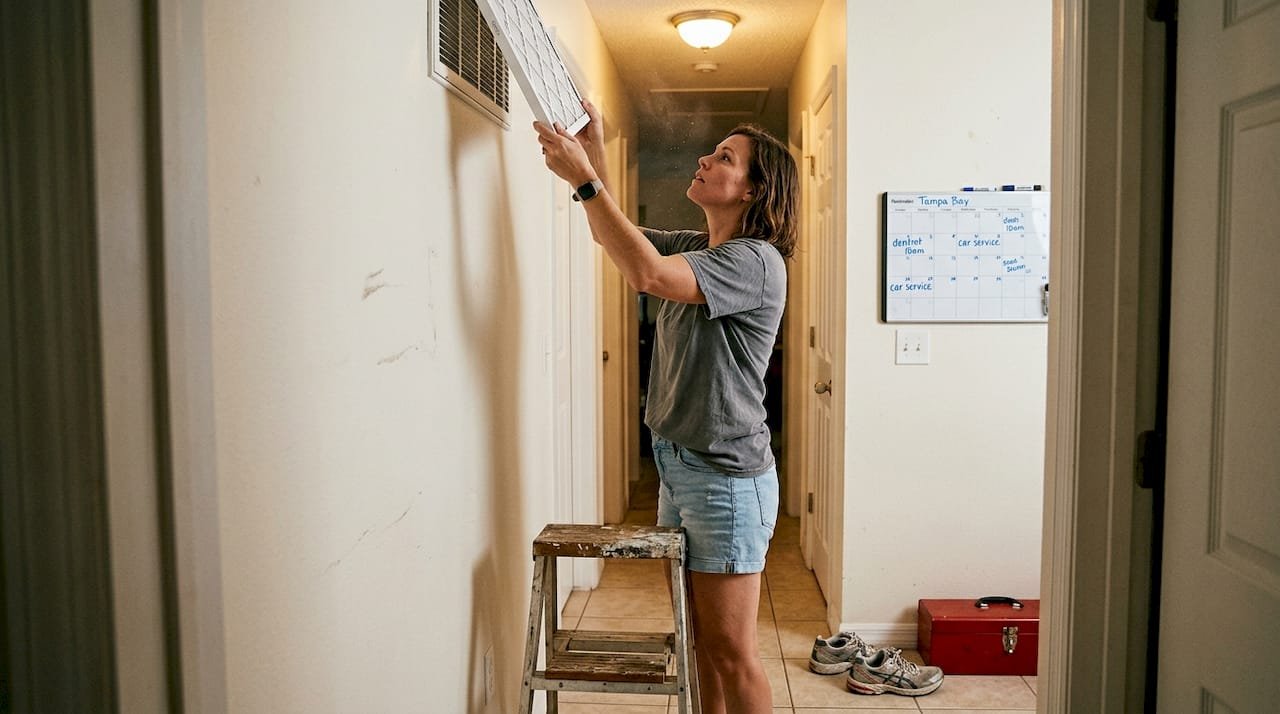
- Change or clean your air filters. Dirty air filters are responsible for a significant portion of HVAC failures. In Tampa, where dust and pollen stay high year-round, filters clog faster than the manufacturer’s standard timeline suggests. Check yours monthly and replace it at least every 60 days during heavy-use periods.
- Clear debris from the outdoor unit. After summer storms and hurricane season, leaves, dirt, and even small branches collect around your condenser. Clear at least 2 feet of clearance on all sides so airflow isn’t restricted.
- Test your thermostat in both modes. Switch it from cool to heat and let each mode run for a few minutes. If there’s a delay, clicking noise, or no response, the thermostat or control board may need attention.
- Clean supply and return vents. Dust-clogged vents reduce airflow and push allergens into your living space. Wipe them down with a damp cloth or vacuum them out. The EPA indoor air guidance links poor vent maintenance directly to reduced indoor air quality.
- Inspect ductwork for visible issues. Look in accessible areas for signs of rust, moisture staining, or disconnected joints. These are early indicators of leaks that reduce efficiency and allow contaminants into your air supply.
- Check condensate drain lines. Tampa’s humidity means these lines see heavy use. A clogged drain can cause water damage and trigger system shutdowns. Pour a small amount of diluted bleach through the line to keep it clear.
- Schedule a professional inspection. Refrigerant levels, electrical connections, blower motor condition, and evaporator coil cleanliness all require certified tools and training. This is not optional if you want your system warranty to stay intact.
Pro Tip: Mark your calendar right now for filter changes every 1 to 3 months. Tampa’s air quality and year-round AC use means your filters work overtime. A recurring reminder takes the guesswork out of it, and you can find more detail in our beginner’s HVAC guide.
Comparing DIY vs. professional HVAC maintenance
With your fall checklist handy, the next decision is what you can safely do yourself and when expert help is essential.
Not every task on that checklist carries the same risk level. Some are genuinely easy and safe for any homeowner. Others involve refrigerant handling, live electrical components, or precision calibration that requires a licensed technician. Getting this split wrong in either direction costs you: either money you didn’t need to spend, or a missed problem that turns into a big repair.
| Task | DIY Safe? | Reason |
|---|---|---|
| Filter replacement | Yes | Simple, no tools needed |
| Thermostat mode testing | Yes | Basic function check |
| Debris removal from outdoor unit | Yes | No system access required |
| Vent and register cleaning | Yes | Surface-level only |
| Condensate line flush | Yes | With proper dilution |
| Refrigerant level check | No | Requires EPA certification |
| Blower motor inspection | No | Involves electrical risk |
| Evaporator and condenser coil cleaning | No | Risk of coil damage |
| Electrical connection testing | No | High shock and fire risk |
| System calibration and safety check | No | Requires diagnostic tools |
DIY tasks save you money and keep you aware of your system’s condition between professional visits. The downside is that without training, it’s easy to miss the early signs of a refrigerant leak, a failing capacitor, or a cracked heat exchanger.
Even skilled DIYers should have yearly professional checks, especially for refrigerant, system calibration, and electrical safety. Skipping professional visits can also void your manufacturer’s warranty, which is a costly mistake if a major component fails.
Benefits of combining both approaches:
- You stay aware of your system’s day-to-day condition
- Pros catch what you can’t see or safely access
- Warranties stay protected
- You save on emergency call-out fees by catching issues early
Pro Tip: Do your own walkthrough two to three weeks before scheduling a pro. That way, you can report specific symptoms (odd smells, sounds, or airflow issues) and help the technician zero in faster. Check the regular maintenance guide for a breakdown of what to look for.
What to expect from a fall HVAC service visit
If you’re considering a pro visit this fall, here’s exactly what’s included and how to get the most value locally.
A lot of homeowners aren’t sure what they’re actually paying for when they book a service visit. Knowing what a quality inspection covers helps you spot the difference between a thorough contractor and one who’s just going through the motions.
A proper service visit includes safety checks, system calibrations, refrigerant measurements, and ensures the unit is winter-ready. That’s the standard to hold any Tampa-area contractor to.
Here’s what a thorough fall service visit typically covers:
| Service item | Why it matters |
|---|---|
| Thermostat calibration | Ensures accurate temperature control |
| Refrigerant level measurement | Low refrigerant reduces cooling and heating capacity |
| Electrical connection tightening | Loose connections cause overheating and failure |
| Evaporator and condenser coil cleaning | Dirty coils reduce heat exchange efficiency |
| Blower motor and belt inspection | Worn components cause airflow issues |
| Condensate drain clearing | Prevents water damage and shutoffs |
| Safety switch and control testing | Confirms the system shuts down safely if needed |
For Tampa Bay homeowners, local experience matters too. A contractor familiar with our Gulf Coast conditions knows to check for salt-air corrosion on outdoor units, post-hurricane debris in coils, and the specific humidity challenges inside Florida homes. Emergency support availability is another factor. If something fails on a warm November night, you want a local team that can respond quickly.
Typical fall service visits run between 60 and 90 minutes and cost anywhere from $75 to $150 depending on the scope. Always ask for a written checklist of completed tasks before you pay. The energy.gov heating and cooling resources also outline what basic system checks should include so you can compare.
Smart move: Ask your technician specifically about your system’s age and estimated remaining life. If it’s over 12 years old, that conversation about replacement planning is one you want now, not when it fails mid-summer.
Our take: What most fall HVAC checklists overlook
Even the most detailed checklists can overlook unique local threats, and after years of serving Tampa Bay homeowners, we’ve seen the same blind spots show up again and again.
Most generic fall maintenance lists were written for climates that actually have a fall. They don’t account for salt air corrosion, which is a real problem for homes within a few miles of Tampa Bay, Old Tampa Bay, or Hillsborough Bay. Outdoor condenser units in coastal zones can show accelerated corrosion on fins and coils within just a few years. We recommend homeowners near the coast inspect their outdoor unit twice yearly, not just once, and ask their technician about protective coatings.
Another overlooked issue is pest intrusion. As temperatures drop even slightly, rodents, insects, and lizards seek warmth inside ductwork and air handlers. A compromised duct connection is basically an open invitation. Checking attic spaces and accessible duct runs during your fall prep can catch this before it becomes a repair or an air quality issue.
Finally, if you’re still using a basic programmable thermostat or no programmable thermostat at all, fall is the ideal time to upgrade. Tampa’s spring and fall temperature swings are dramatic enough that a smart thermostat pays for itself quickly. Our HVAC maintenance insights and return air guide both touch on upgrades worth considering for our specific climate.
The lesson from years in the field: a Tampa-specific technician will catch what a generic checklist never will.
Get expert HVAC help for Tampa Bay homes
Ready to put your checklist into action? Here’s where to turn for expert help and next steps.
At Home Therapist, we specialize in HVAC maintenance built specifically for Tampa Bay’s climate, not a one-size-fits-all approach copied from a northern state service manual. Our certified technicians know the local threats: the humidity, the salt air, the post-storm debris, and the pest risks that come with Florida’s changing seasons.
Whether you need a fall tune-up, a system efficiency check, or you’re thinking about duct replacement services, our team is ready to help. Schedule your HVAC maintenance Tampa appointment today and head into the cooler months with confidence.
Frequently asked questions
How often should I change my HVAC filter in Tampa Bay’s fall season?
Change your filter every 1 to 3 months, because regular filter changes improve both system efficiency and indoor air quality, and Tampa’s year-round dust and pollen levels mean your filter works harder than average.
Can I skip a professional HVAC service if I follow the checklist myself?
DIY tasks help, but an annual professional tune-up catches problems a checklist can miss. Certifications and pro checks also protect your system warranty, which DIY work alone cannot do.
Is it necessary to service both air conditioning and heating in Tampa Bay for fall?
Yes. Split systems require dual check-ups for all climate settings, and even mild Tampa winters can stress a heating system that hasn’t been tested in months.
What signs suggest I need immediate HVAC repair this fall?
Strange noises, weak airflow, frequent on-and-off cycling, or a thermostat that doesn’t respond are all signals that a technician should inspect your system right away.
Are there Tampa-specific HVAC issues to prepare for in fall?
Yes. Persistent humidity, hurricane season debris, and salt air exposure create system problems unique to the Tampa Bay area that standard checklists often fail to address.
Recommended
- Seasonal HVAC Maintenance Steps for Tampa Homeowners
- Prepping HVAC for Summer: Homeowner’s Full Checklist
- Seasonal HVAC Prep: Maximizing Home Comfort in Tampa
- How to prepare your AC for summer: Tampa Bay guide
- Winter Plumbing Checklist | Prevent Frozen Pipes | Stultz Plumbing
More AC Maintenance Articles
- 16-Year-Old Trane With Moisture Concerns: AC Maintenance and Inspection on Wegmann Dr, Tarpon Springs, FL 34689
- 15-Year-Old System Still Running on River Briar Blvd: AC Tune-Up in Ruskin, FL 33570
- Water Heater Flush Couldn’t Happen, Here’s Why: HVAC Maintenance Visit on Deerfield Dr, Tampa, FL 33619
- Elevated Amperage at 8 Years Old: AC Preventive Maintenance on Palmetto Sands Ct, Westchase FL 33626
- Blower Motor Dead, Float Switch Gone, Drain Line Cracked: Alejandro Restores a Rooftop HVAC System on Johns Rd, Tampa FL 33634


