
Open 24 hours, 7 days a week
FREE estimates and FREE diagnosis
Buying Guide
Salt vs Salt-Free Water Softener
Tampa water is hard (10.8 grains/gal, the City of Tampa 2024 average). Both softener types help, but they work very differently. Here’s which is right for your home.
Salt or salt-free softener for Tampa water? We test your water at the tap for FREE and install Rheem, Halo, North Star, Safety Zone or a softener you bought.
Home Therapist serves Tampa Bay, Florida. In the area? FREE estimates and FREE diagnosis.
- Licensed CAC1819196 & CFC1431159
- 4.8 stars from 1,398 reviews
- Background-checked, drug-tested techs
- Hablamos español
At a glance
- Tampa water
- City of Tampa averaged 10.8 grains/gal in 2024 (very hard)
- Salt-based
- True softening: removes calcium and magnesium (ion exchange)
- Salt-free
- Conditions scale; a hardness test reads the same number
- Rheem softener installed
- $1,699 to $2,490
- Halo 5 installed
- $5,500 to $7,500
- Septic or low-sodium diet
- Salt-free avoids brine discharge and added sodium
- Drinking water option
- Bypass to the kitchen cold tap, or RO at the sink
- Water test
- FREE in-home test and written estimate

Reviewed by Alejandro Morales, Co-Owner & FL Certified Plumbing Contractor (FL license CFC1431159)
Salt-Based vs Salt-Free: Ion Exchange vs Crystal Templating
The two technologies share a name on the shelf and almost nothing else under the hood. A salt-based softener is a true ion exchange system. Hard water flows through a tank packed with sulfonated polystyrene resin beads pre-charged with sodium ions. As the water passes over the resin, calcium and magnesium ions (the minerals that cause hardness) are physically pulled out and held by the beads, while sodium ions are released into the water in their place. The water leaving the tank is genuinely soft, typically measuring 0 to 1 grain per gallon on a hardness test, and that soft water is what reaches your faucets, water heater, dishwasher, and skin. Once the resin is saturated with calcium, the system runs an automatic regeneration cycle: brine from the salt tank flushes the resin, strips off the captured hardness minerals, sends them down the drain, and recharges the beads with fresh sodium. On a Tampa Bay home with metered demand control, that cycle fires every 7 to 14 days depending on family size and incoming hardness.
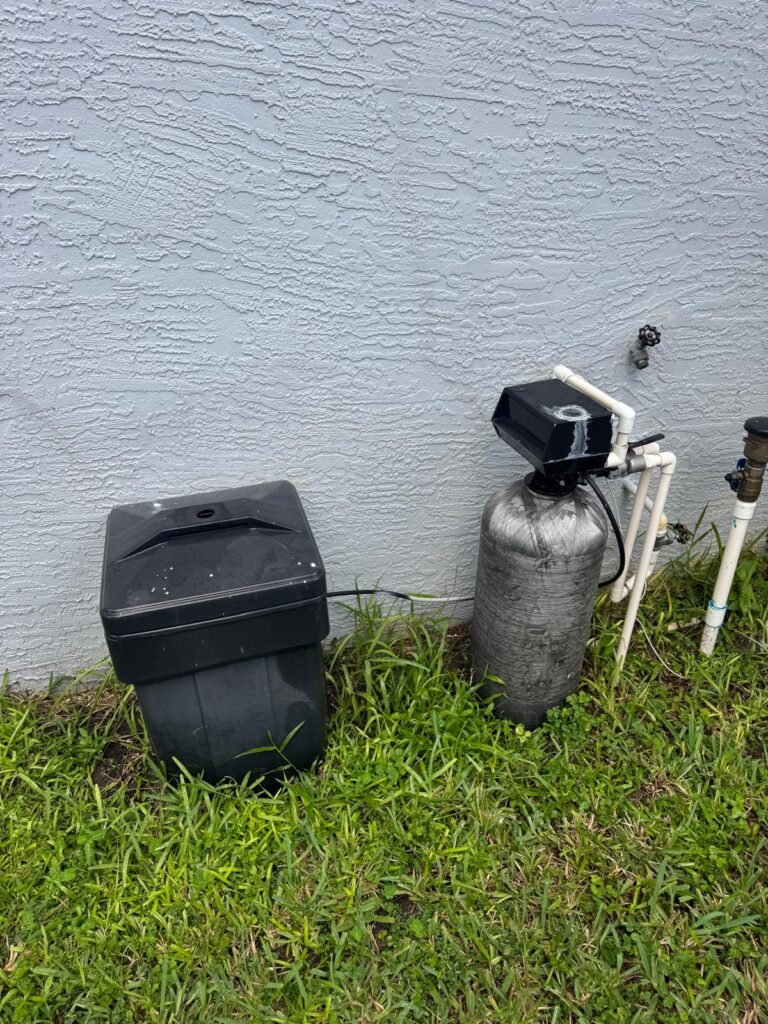
Salt-free systems use a completely different chemistry called Template Assisted Crystallization, or TAC. Inside the tank is a bed of polymeric beads coated with nucleation sites that act as templates. When dissolved calcium and magnesium contact those sites, they convert from ionic form into microscopic, electrically neutral crystal seeds (calcite aragonite). The minerals are still in the water when it leaves the tank, so a hardness test will read the same number you started with, but the crystals no longer have the surface charge that lets them stick to glass, tile, fixtures, or heat exchangers. Scale formation drops dramatically even though hardness, technically, has not. There is no brine, no regeneration cycle, no salt to refill, and no wastewater. The trade-off is that none of the genuine downstream effects of soft water (silky skin feel, soap that lathers easily, longer water heater life from descaled coils) come along for the ride. Different chemistry, different outcomes, and homeowners who skip this distinction usually end up disappointed by whichever system they buy second.
Tampa Install Cost: Salt-Based vs Salt-Free
Home Therapist installs both technologies and the pricing reflects the hardware difference more than the labor. A Rheem Preferred Platinum salt-based softener (single-tank metered demand, 32,000 to 48,000 grain capacity sized to a typical 3 to 5 person Tampa home) runs $1,699 to $2,490 fully installed, including the bypass valve, brine tank, drain line tie-in, and a soft-loop hookup if the home has one stubbed out. Twin-tank systems (which deliver soft water around the clock with no service interruption during regeneration) are quoted in writing after a FREE water test. A Halo 5 salt-free conditioner with the standard pre-filter and post-carbon stage installs at $5,500 to $7,500, and the Halo 5 Ion Plus salt-based hybrid sits in the same range when paired with a brine tank.
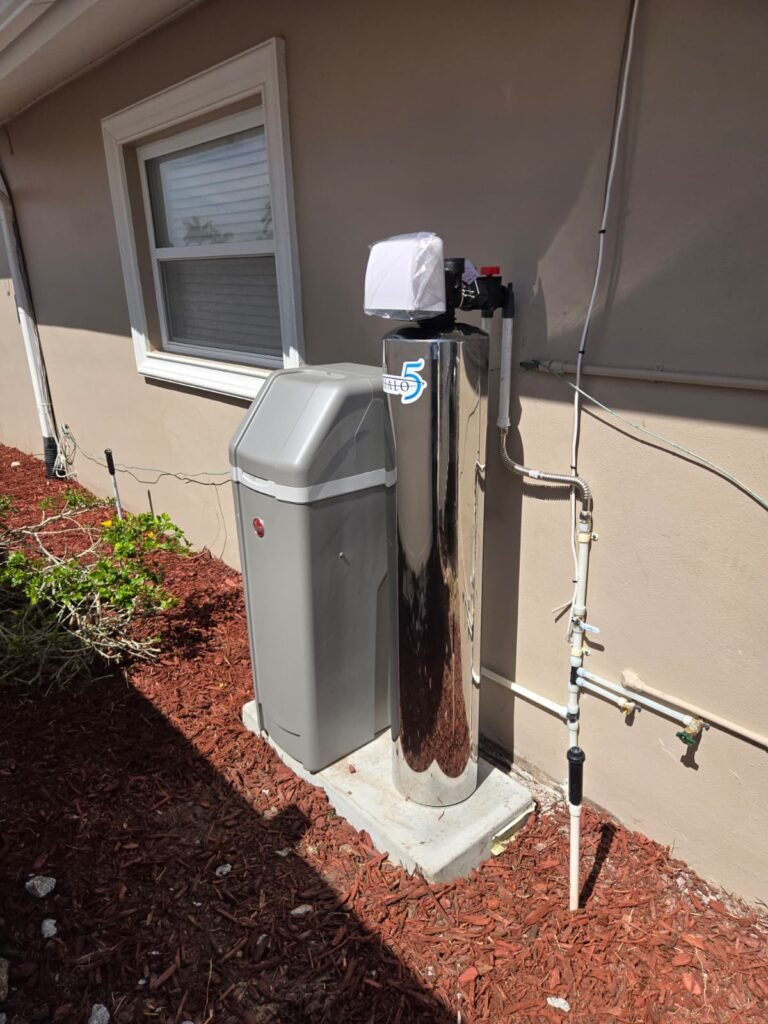
Ongoing cost is where the picture flips. A salt-based system on Tampa city water typically uses 40 to 80 pounds of solar pellets per month, which works out to $60 to $180 per year in salt depending on whether you buy in bulk at Costco or grab bags at a local hardware store. Salt-free systems have no salt cost ever, but the catalytic media bed should be replaced every 5 to 7 years at $300 to $500 to keep crystal conversion efficient. Resin in a salt-based tank lasts for years on Tampa water before it needs swapping, longer if you have a sediment pre-filter protecting it. Home Therapist offers FREE in-home water testing and FREE estimates on every softener install, including a hardness reading taken at your tap, an iron and chlorine check, and pressure verification. Financing is available through our partner lenders with terms that fit either system into a typical Tampa Bay home budget.
What Tampa Bay customers say
“Happy with the service and excellent communication with Home Therapist for help with a plumbing/ drain issue. Can recommend!”
“I had the best experience with this company. From the free estimate to everything in between. I have my beautiful new water heater and more room under my sink when he took the old broken one out. Lester was wonderful and explained everything to me. Highly recommend them.”
4.8 from 1,398 reviews · Read more reviews
Where we work
We serve the three counties of Tampa Bay from our shop at 1408 W Linebaugh Ave in Tampa.
Hillsborough County
Tampa, Brandon, Riverview, Carrollwood, Town ’n’ Country, Plant City, Ruskin, Sun City Center, Apollo Beach, Valrico, Lutz, Seffner
Pinellas County
St. Petersburg, Clearwater, Largo, Dunedin, Oldsmar, Safety Harbor, Pinellas Park, Seminole, Tarpon Springs, Treasure Island, St. Pete Beach
Pasco County
Wesley Chapel, Land O’ Lakes, New Port Richey, Holiday, Hudson, Trinity, Zephyrhills, Dade City
PlumbingHappy with the service and excellent communication with Home Therapist for help with a plumbing/ drain issue. Can recommend!
PlumbingExcellent service and fair pricing from Home Therapist. Their quote was $180 less than similar plumbing company for simple disposal replacement. Plumber arrived promptly, worked efficiently, and answered all of my questions…
MaintenanceGreat Team. Arrive on Time and do complete maintenance on our system. Recommend to anyone looking for quality service.
AC repairI have the Service Maintenance Plan with them for my a/c and plumbing, their visit was pleasant making sure all was clean and functioning properly. I pay monthly $20 of which is…
Water heaterI had the best experience with this company. From the free estimate to everything in between. I have my beautiful new water heater and more room under my sink when he took…
Water heaterI had a great experience with Home Therapist Cooling, Heating, and Plumbing. We were getting our house ready to sell and the home inspection identified several plumbing issues that needed to be…
AC installI was in need of air conditioning for my detached garage. My AI search for the most trustworthy mini-split AC installer led me to Home Therapist; my expectations were exceeded. Scheduling a…
AC installExcellent service from Richard! He was professional, courteous, and very knowledgeable. He fixed my A/C problem quickly and explained everything clearly. I highly recommend Richard for anyone needing A/C service. had a…
AC repairI had a great experience with Home Therapist AC Repair. Alejandro arrived on time to diagnose why my AC wasn't cooling and quickly found the problem that the previous company had missed.…