

Home Water Filtration System Cost: Pricing & Installation
Tampa Bay tap water picks up chlorine, sediment, and minerals on its way to your faucet, and if you’ve noticed a funny taste or white buildup on your fixtures, you’re not imagining things. A whole-home or point-of-use filtration system fixes the problem, but the real question most homeowners ask first is simple: what does a home water filtration system cost? The answer depends on the type of system, the complexity of installation, and whether you need whole-house coverage or just a single tap.
Prices range from under $200 for a basic under-sink filter to $5,000 or more for a whole-house reverse osmosis setup, a wide gap that makes budgeting difficult without the right breakdown. This guide covers national cost averages, system-by-system pricing, and the installation factors that move the number up or down. We’ll also look at ongoing maintenance expenses that many homeowners overlook during the buying process.
At Home Therapist, we install and service water filtration systems across the Greater Tampa Bay Area with upfront pricing and no hidden fees. Our licensed plumbing technicians have helped hundreds of local homeowners choose the right system for their water quality concerns and budget. Everything in this article reflects what we see in the field every day, real costs, real options, honest guidance.
What affects home water filtration system cost
Understanding why quotes vary so much starts with knowing the main cost drivers. System type is the biggest factor, but your home’s water quality, installation complexity, and brand choice all play a role. Before you get a quote, it helps to know which of these factors apply to your situation so you can make sense of the numbers when they come in.
System Type and Filtration Technology
The filtration method you choose determines both the unit price and the ongoing costs you carry over time. A basic sediment filter or carbon block under-sink unit sits at the low end, while a whole-house reverse osmosis system sits at the high end because it requires more components, more pressure management, and more precise installation. Multi-stage systems that combine sediment pre-filters, carbon filters, and UV purification cost more upfront than single-stage units but often deliver better protection against a wider range of contaminants.
Your Home’s Water Quality
Your local water report tells you what’s actually in your water, and that directly shapes the type of system you need. If your water tests high for hardness, chlorine, or dissolved solids, you’ll need a system rated to handle those specific contaminants, which often means a more capable and more expensive unit. Homeowners on well water typically face a wider range of contaminants than those on municipal supply, and they usually need additional treatment stages such as iron filtration or pH balancing, which raises the total cost.
Getting a water quality test before you buy a filtration system can save you from purchasing equipment that doesn’t address your actual problem.
Home Size and Installation Complexity
Whole-house systems require a licensed plumber to cut into your main water line, install bypass valves, and mount the filtration housing in a usable location such as a garage or utility room. Larger homes with more complex plumbing layouts take longer to work on, and that labor time adds directly to your bill. If your existing plumbing needs updates before a system can be installed correctly, such as adding a shut-off valve or rerouting a pipe, those additional tasks get added to the final invoice.
Brand and Certifications
Not all filtration systems are tested the same way. Systems certified by NSF International to remove specific contaminants cost more than uncertified units, but they give you documented proof that the filter does what it claims. Premium brands with longer warranties and higher-grade components carry a higher purchase price but often cost less to maintain over a five- to ten-year window compared to cheaper alternatives that require more frequent filter replacements or break down sooner.
Typical price ranges by system type
Knowing the typical home water filtration system cost for each category helps you narrow your options before you call a contractor. Prices below reflect national averages for equipment only and don’t include labor, which the installation section covers in detail.
Filters for a Single Tap
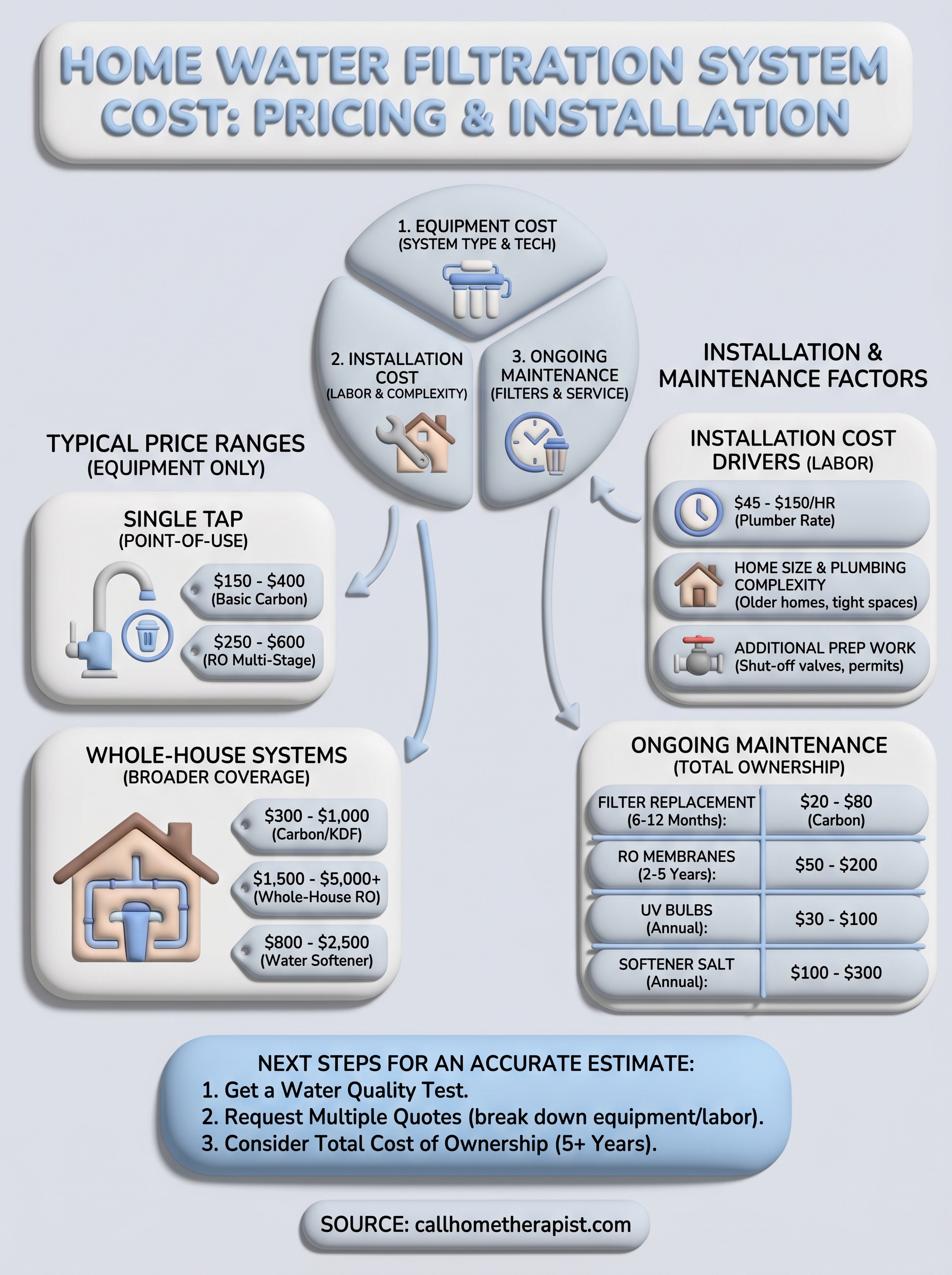
Under-sink filters and countertop units are the most affordable entry point for cleaner drinking water. A basic carbon block under-sink system runs between $150 and $400, while a multi-stage reverse osmosis unit designed for a single faucet typically lands between $250 and $600. Countertop pitchers and filters cost even less, often under $100, but they require frequent cartridge changes and handle far smaller volumes of water than installed systems.
If your only concern is taste and odor at one faucet, a point-of-use filter delivers solid results without a large upfront investment.
Whole-House Systems
Whole-house systems protect every faucet, showerhead, and appliance in your home, and their price reflects that broader scope of coverage. Here’s a quick breakdown of typical equipment costs by system type:
| System Type | Typical Equipment Cost |
|---|---|
| Sediment filter | $50 – $300 |
| Carbon/KDF whole-house filter | $300 – $1,000 |
| UV purification system | $200 – $700 |
| Whole-house RO system | $1,500 – $5,000+ |
| Salt-based water softener | $800 – $2,500 |
These ranges shift depending on the flow rate rating and the number of filtration stages the unit includes. A system rated for a larger home with higher daily water demand will always cost more than a comparable unit designed for a smaller household. Combination systems that pair a water softener with a carbon filter fall at the higher end of the range because they address multiple water quality issues in a single setup.
Whole-house vs point-of-use: costs and tradeoffs
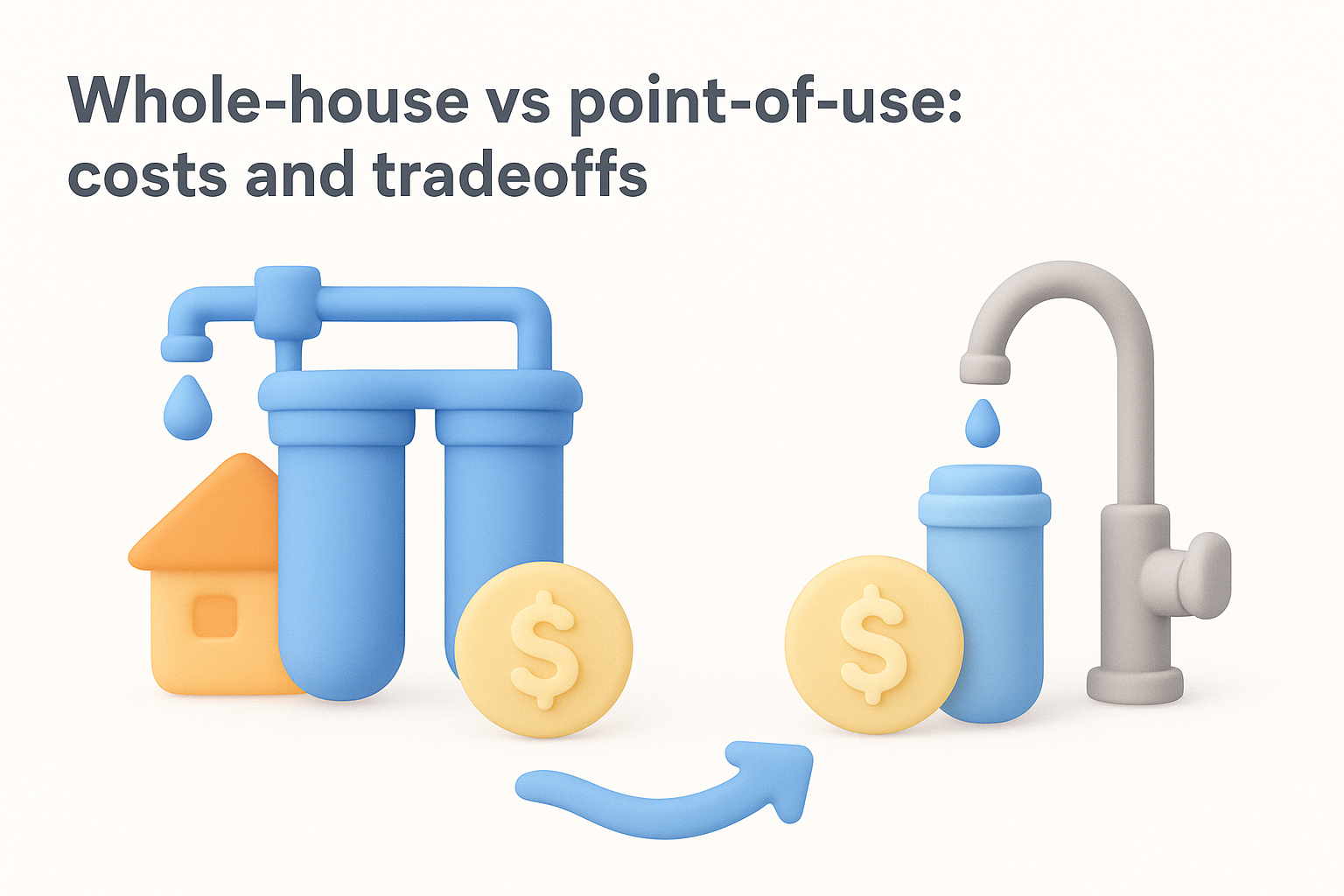
Choosing between a whole-house system and a point-of-use filter is often the biggest budget decision you’ll make when evaluating home water filtration system cost. Whole-house units protect every water outlet in your home but carry a higher price tag, while point-of-use filters address a single tap or appliance at a fraction of the cost. Understanding the practical tradeoffs helps you pick the right scope for your situation.
Whole-house systems: broader coverage, higher upfront cost
A whole-house system connects to your main water supply line, which means filtered water flows to every faucet, shower, toilet, dishwasher, and washing machine in the building. That level of coverage makes sense if your water quality problem affects bathing, laundry, or appliance longevity, not just drinking water. Equipment costs typically run from $300 to $5,000 or more depending on the filtration type, and installation labor adds another $200 to $600 on average. The result is a higher upfront investment, but you protect your entire plumbing system from sediment, chlorine, and mineral buildup at the same time.
If hard water is shortening the life of your water heater or leaving scale on fixtures throughout the house, a whole-house system pays for itself faster than a point-of-use filter ever could.
Point-of-use systems: lower cost, targeted results
Point-of-use filters sit at a specific outlet, most commonly under the kitchen sink or at the refrigerator line, and they only treat water at that location. Equipment costs stay low, often between $150 and $600 for a quality reverse osmosis unit, and installation is straightforward enough to lower your labor cost significantly. For many homeowners, that focused coverage fits both their needs and their budget.
Point-of-use filters work best when:
- Your only concern is drinking and cooking water quality
- Your total budget is under $1,000 installed
- You want a faster, less disruptive installation
- You rent or plan to move within a few years
Installation costs and what can raise the price
Equipment is only part of the total home water filtration system cost. Installation labor adds a meaningful chunk to your final bill, and several job-site conditions can push that number well beyond the baseline estimate. Knowing what drives those costs upward helps you budget more accurately and avoid surprises on the day your technician arrives.
Labor rates and typical installation ranges
A licensed plumber charges between $45 and $150 per hour depending on your location and the complexity of the work. Point-of-use under-sink filters take one to two hours to install, keeping labor costs between $75 and $250 for most jobs. Whole-house systems require more time because the technician needs to locate the main water line, cut into it safely, mount the filtration housing, and test the system for leaks before finishing. That process typically runs two to four hours, putting labor costs for whole-house installs between $200 and $600.
Getting multiple quotes from licensed plumbers before committing gives you a realistic range for your specific home and plumbing layout.
Factors that push installation costs higher
Several conditions on the job site can extend the time your plumber spends on the work, and each one adds to your final labor bill. Older homes with galvanized or corroded pipes often need additional prep work before a filter housing can be connected properly. Tight spaces in utility rooms or crawlspaces slow the job down and may require extra tools or materials. If your home lacks a dedicated shut-off valve near the planned installation point, your plumber will add one before proceeding, which is an extra material and labor cost. Permit requirements vary by municipality, and some local codes require an inspection after installation, which adds both time and a permit fee to your total.
Ongoing maintenance costs and total cost of ownership
Most homeowners focus on the upfront purchase price when evaluating home water filtration system cost, but the ongoing expenses often add up to more than the initial equipment over a five-year period. Filter replacements, annual servicing, and occasional part swaps are predictable costs you should factor into your total budget before committing to a system.
Filter Replacement Costs
Every filtration system requires periodic cartridge or membrane replacement to keep working properly, and the frequency depends on both the system type and your daily water usage. Under-sink carbon filters typically need replacement every six to twelve months, costing between $20 and $80 per cartridge. Reverse osmosis membranes last two to five years but cost $50 to $200 to replace when the time comes. Whole-house sediment pre-filters need swapping every three to six months, and UV bulbs in purification systems require annual replacement at a cost of roughly $30 to $100 per bulb.
Skipping filter replacements on schedule reduces your system’s effectiveness and can allow contaminants to pass through a clogged or spent cartridge.
Here’s a quick summary of typical annual maintenance costs by system type:
| System Type | Estimated Annual Maintenance Cost |
|---|---|
| Under-sink carbon filter | $40 – $100 |
| Reverse osmosis (point-of-use) | $50 – $150 |
| Whole-house carbon/sediment filter | $80 – $200 |
| UV purification system | $30 – $100 |
| Salt-based water softener | $100 – $300 (salt refills) |
Total Cost of Ownership Over Time
Your five-year total cost combines the purchase price, installation labor, and cumulative maintenance expenses. A point-of-use RO system purchased and installed for $800 might cost an additional $500 to $700 in maintenance over five years, bringing your true total to around $1,300 to $1,500. A whole-house system installed for $3,000 with $200 in annual upkeep reaches roughly $4,000 over the same window, which underscores why comparing systems on purchase price alone gives you an incomplete picture.
Next steps for a clear, accurate estimate
Now that you understand the full picture of home water filtration system cost, you’re in a much better position to budget accurately and choose a system that fits your needs. Start with a water quality test to confirm what contaminants are actually present in your water supply. That single step prevents you from buying a system that doesn’t address your actual problem and helps you avoid overspending on filtration capacity you don’t need.
From there, get at least two quotes from licensed plumbers who can assess your home’s plumbing layout and give you a firm number for installation labor. Make sure each quote breaks out equipment, labor, and estimated annual maintenance costs separately so you can compare them accurately. If you’re in the Greater Tampa Bay Area, contact Home Therapist for upfront pricing and same-day availability from licensed technicians who install and service water filtration systems every day.


