

Air duct sealing: improve home air quality by 20%
TL;DR:
- Leaky air ducts cause 20% energy loss and comfort issues in Tampa Bay homes.
- Sealing ducts improves energy efficiency, indoor air quality, and HVAC system longevity.
- Professional duct sealing is a cost-effective solution for better comfort and health.
Most Tampa Bay homeowners blame their HVAC system when rooms feel stuffy, energy bills creep up, or allergies flare. The real culprit is often hiding inside the walls: leaky air ducts quietly draining your comfort and your wallet. The good news is that air duct sealing is one of the most cost-effective fixes available, and it delivers results you can feel immediately. This guide walks you through what duct sealing is, what it costs you when skipped, and exactly how to take action to protect your home’s air quality and efficiency.
Table of Contents
- What is air duct sealing and why does it matter?
- How leaky ducts impact energy bills and comfort
- Indoor air quality and health benefits
- Steps to assess and seal home air ducts
- Our take: Why Tampa Bay homeowners undervalue duct sealing
- Enhance comfort and savings with expert duct sealing
- Frequently asked questions
Key Takeaways
| Point | Details |
|---|---|
| Cuts energy bills | Air duct sealing stops energy waste, trimming utility costs in Florida homes. |
| Boosts indoor air quality | Sealed ducts reduce dust, pollen, and mold for healthier breathing inside your home. |
| Improves comfort | Duct sealing leads to more even heating and cooling, eliminating hot and cold spots. |
| High ROI upgrade | Sealing air ducts offers one of the best returns for home comfort and efficiency investments. |
What is air duct sealing and why does it matter?
Air duct sealing is the process of closing leaks, holes, and gaps in your home’s HVAC ductwork, which is the network of channels that carries conditioned air from your unit to every room. Over time, these channels develop cracks at joints, loose connections, and small holes from settling, pests, or age. When that happens, the air your system works hard to cool or heat simply escapes before it reaches you.
The impact is bigger than most people expect. About 20% of conditioned air is lost through leaks, holes, and poorly connected ducts in homes with forced-air heating and cooling. That’s one in five units of energy you’re paying for, gone before it does a single thing for your comfort.
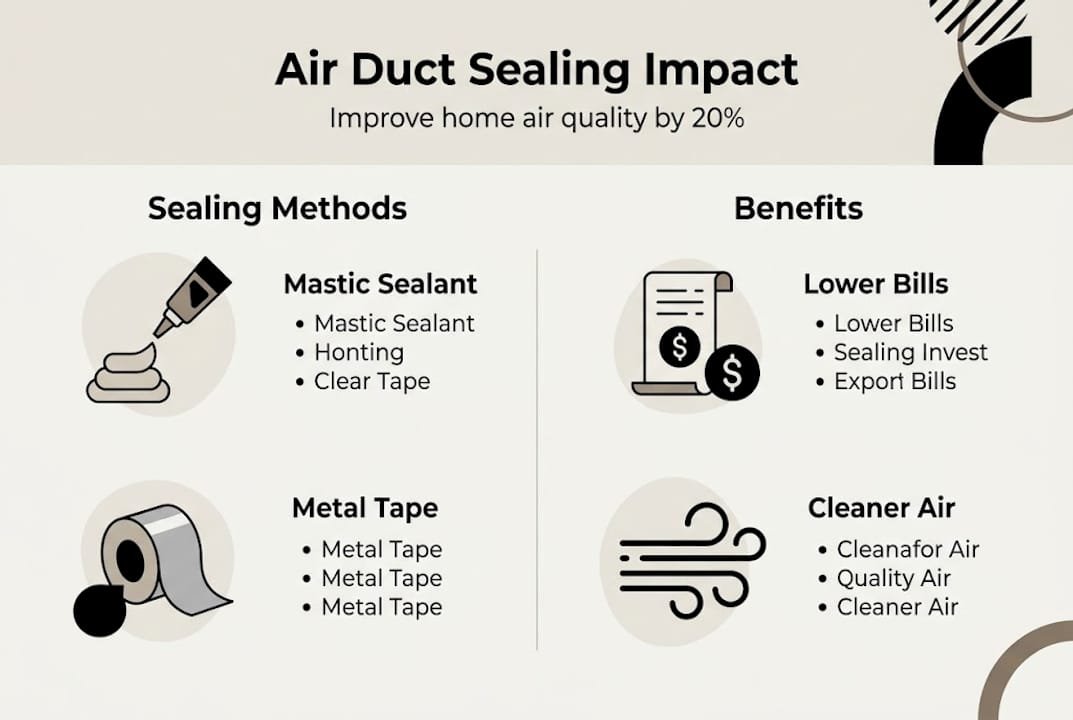
In Tampa Bay, this problem is especially sharp. The region’s heat and humidity put HVAC systems under constant pressure from spring through fall. Leaky ducts don’t just waste energy here; they pull in warm, humid outdoor air that makes your system work even harder and raises indoor humidity levels.
Here are the most common signs your ducts need attention:
- Rooms that are difficult to keep cool, even with the AC running
- Uneven temperatures from room to room
- Dusty air or visible dust buildup around vents
- Musty or stale odors when the system runs
- Energy bills that seem high for your home’s size
- Whistling or hissing sounds near vents
“In homes with forced-air heating and cooling, about 20% of the air moving through the duct system is lost due to leaks, holes, and poorly connected ducts.”, U.S. Department of Energy
Sealing methods range from mastic sealant (a paste-like compound applied to joints) to metal-backed tape specifically designed for ductwork. These materials close gaps permanently and restore your system’s ability to deliver air where it belongs. Understanding leaky duct issues in detail can help you decide whether a quick fix or a full inspection is the right move for your home.
How leaky ducts impact energy bills and comfort
Once you know what duct leaks are, the natural follow-up is: what does this actually cost me? The answer, for most Tampa Bay homeowners, is more than expected.
When conditioned air escapes through duct leaks, your HVAC system has to run longer to reach your thermostat’s target temperature. Longer run times mean more electricity consumed, and in a Florida summer, that adds up fast. Sealed ducts can cut heating and cooling costs by as much as 20%, which is a significant return on a relatively simple service.
Florida’s humidity makes this worse in a specific way. When ducts run through unconditioned spaces like attics or crawl spaces, leaks allow hot, moist air to seep in. Your system then has to work to remove that extra moisture on top of cooling the space, driving up runtime and wear.
Here’s a side-by-side look at what sealed versus unsealed ducts typically mean for homeowners:
| Feature | Sealed ducts | Unsealed ducts |
|---|---|---|
| Energy efficiency | Up to 20% savings | Significant energy waste |
| Room temperature consistency | Even and stable | Hot/cold spots common |
| Indoor humidity control | Better managed | Moisture intrusion likely |
| HVAC system wear | Reduced | Accelerated |
| Air quality | Improved | Contaminants circulate |
Strategies like preventing air leaks throughout your home work best when ductwork is addressed first, since ducts are often the largest single source of energy loss. You can also learn to detect HVAC leaks yourself before calling in a technician.
Pro Tip: Walk through your home during peak afternoon heat and place your hand near each vent. If airflow feels weak or warm, that room may be losing conditioned air before it arrives.
The comfort difference between a sealed and unsealed duct system is not subtle. Homeowners who seal their ducts routinely report that rooms which were always too warm finally hold temperature, and that their system cycles off faster rather than running almost continuously.
Indoor air quality and health benefits
Savings and comfort are important, but for many Tampa Bay families, the strongest reason to seal their ducts is health. Leaky ductwork doesn’t just let conditioned air out; it pulls unfiltered air in.

When ducts run through attics, walls, or crawl spaces, gaps and cracks act like suction points. Dust, insulation fibers, mold spores, and outdoor pollen get drawn into the system and then blown into every room of your home. For anyone with allergies or asthma, this is a serious concern, and Tampa Bay’s year-round growing season means pollen pressure never fully disappears.
Moisture is another issue unique to our climate. Humid air entering through duct leaks can condense inside the ductwork, creating damp conditions where mold and mildew thrive. Once mold takes hold in ductwork, it circulates spores throughout the home every time the system runs.
Here’s a look at the pollutants duct sealing helps reduce:
| Pollutant | Source | Risk level for Tampa Bay homes |
|---|---|---|
| Dust and particulates | Attics, crawl spaces | High |
| Mold spores | Moisture in leaky ducts | Very high in humid climates |
| Pollen | Outdoor air infiltration | High, year-round |
| Insulation fibers | Damaged duct surroundings | Moderate |
| Pest debris | Ductwork infestations | Moderate to high |
Understanding the clean air duct importance for your family’s health is the first step. Sealing alone removes the entry points for most contaminants, while combining sealing with periodic cleaning delivers the best results. Check these air duct cleaning tips to understand what a cleaning routine looks like alongside a sealing project.
It’s also worth noting that outdoor air quality and carpet and air quality interact with what your ducts carry. Sealing your ducts reduces the load on every other air quality measure in your home.
Pro Tip: If anyone in your household has seasonal allergies that seem worse indoors than outside, that’s a red flag for duct leaks pulling in outdoor air. Schedule an inspection before assuming it’s a medication or filtration issue.
Steps to assess and seal home air ducts
Knowing the risks makes the next step clear: you need to find out where your ducts stand. Here’s a practical process for Tampa Bay homeowners to get started.
- Do a visual inspection. Access your attic or any visible duct runs. A visual inspection can reveal disconnected sections, visible holes, or kinked flexible ducts. Look for gaps at joints, torn insulation wrap, or ducts that have separated from their connections.
- Feel for air leaks. Turn your system on and run your hand along accessible duct sections. Warm or cool air escaping at joints or seams is a clear sign of a leak.
- Check your vents and registers. Dust buildup around vent covers often indicates unfiltered air is being pulled through nearby gaps.
- Note problem rooms. Make a list of rooms with comfort complaints. These often point directly to the duct branch serving that area.
- Decide on DIY versus professional help. For minor, accessible leaks, mastic sealant or metal-backed tape applied directly to joints can work well. Avoid standard cloth duct tape; it fails quickly under temperature changes.
- Call a professional for serious issues. If you find mold, pests, major disconnections, or ducts buried inside finished walls, professional service is the right call.
Signs that warrant immediate expert attention:
- Visible mold growth on or near ductwork
- Evidence of rodent or insect activity inside ducts
- Large sections of duct that have separated completely
- Ductwork that is too old, brittle, or damaged to seal effectively
Use these ductwork inspection tips to guide your walkthrough before deciding on next steps. For serious cases, professional duct sealing in Tampa delivers thorough coverage that a DIY approach can’t match.
Pro Tip: Improving air duct sealing is one of the easiest ways to boost HVAC performance without replacing expensive parts. It’s often the first thing certified technicians recommend before suggesting any equipment upgrade.
Our take: Why Tampa Bay homeowners undervalue duct sealing
After years of working with Tampa Bay homeowners, we’ve noticed a pattern: people readily invest in new thermostats, upgraded filters, even full system replacements, but walk right past a duct system that’s bleeding efficiency every single day.
Part of this comes down to visibility. A new thermostat is something you can see and show off. Sealed ductwork inside your walls? Nobody notices. But that invisibility is exactly what makes it so valuable. The benefits, lower bills, fewer breakdowns, steadier temperatures, and cleaner air, show up every month on your utility statement and in how your family feels.
The myth that “duct leaks are minor” is one we push back on firmly. A 20% energy loss is not minor. It’s one-fifth of every dollar you spend on cooling and heating, gone. In a Tampa Bay home running AC nine or ten months a year, that math adds up to real money.
Duct sealing also protects your equipment. When your system doesn’t have to compensate for air losses, it runs fewer cycles, wears more slowly, and lasts longer. Understanding how dampers and duct efficiency work together gives you an even clearer picture of how the whole system benefits. For the cost involved, duct sealing delivers one of the highest returns of any home improvement we see in Florida.
Enhance comfort and savings with expert duct sealing
If any of what you’ve read sounds familiar, such as rooms that never quite cool down, energy bills that surprise you, or family members with persistent allergy symptoms, your ductwork deserves a closer look. The right professional can assess, seal, and verify your system in a single visit, and the results show up immediately.

At Home Therapist Cooling, Heating, and Plumbing, our certified technicians serve Tampa Bay homeowners with thorough duct inspections and sealing services built for Florida’s demanding climate. Explore our full range of HVAC services in Tampa Bay or go straight to our professional duct sealing help page to book a visit. Not sure where to start? Our HVAC troubleshooting guide can help you identify issues before we arrive. Contact us today and let’s get your home breathing better.
Frequently asked questions
How do I know if my air ducts need sealing?
Rooms hard to heat or cool, visible dust buildup near vents, rising energy bills, and whistling sounds from your ductwork are all strong signs your system has leaks that need attention.
Can I seal my air ducts myself, or should I hire a professional?
DIY sealing works for minor, accessible leaks using mastic sealant or metal-backed tape, but a professional is the safer choice when ducts have deeper leaks, disconnections inside walls, or any sign of mold.
How much money can duct sealing save me?
Proper sealing can cut your heating and cooling costs by as much as 20%, depending on how leaky your current ductwork is and how often your system runs.
Does air duct sealing help with allergies and asthma?
Yes. Sealed ducts prevent dust, mold spores, insulation fibers, and pollen from being pulled into the system and circulated throughout your home, which directly supports better indoor air quality.
Recommended
- Preventing air leaks: boost comfort & cut Tampa Bay bills
- How to check ductwork for better home efficiency
- Dampers in ductwork: save up to 40% on energy costs
- DIY Air Duct Cleaning Guide for Cleaner Indoor Air
- Indoor Air Optimization Process for Healthier Homes – Coway Water Purifier
More Ductwork & Airflow Articles
- Top 6 Best Home Ventilation Systems 2026
- Ductwork Damper Balancing: How to Fix That One Hot Room in Your Tampa Home
- Duct Cleaning + UV Light Install on 85th Terrace N: Better Indoor Air in Pinellas Park, FL 33781
- Rat-Damaged Ducts Found During Duct Relocation Inspection on E 18th Ave, Tampa, FL 33605
- AC Tune-Up and Ductwork Inspection on Blossom Ave: What Barbaro Found in Tampa, FL 33614


