

How Heat pumps work: Guide for Tampa Bay homeowners
TL;DR:
- Heat pumps efficiently provide both heating and cooling in Florida’s mild climate.
- Air-source heat pumps are ideal for Tampa Bay due to lower costs and easy installation.
- Proper sizing, maintenance, and professional installation maximize heat pump performance and savings.
Most Tampa Bay homeowners assume they need a separate air conditioner and furnace to keep their home comfortable all year. That assumption costs money. A heat pump handles both jobs in one unit, and it does so with remarkable efficiency in a climate like Florida’s. High-efficiency models can cut electricity use by up to 75% compared to resistance heating. If you’ve been on the fence about heat pump technology, this guide will walk you through exactly how it works, which type fits your home, and what you can realistically expect after installation.
Table of Contents
- What is a heat pump and how does it work?
- Types of heat pumps: Which is best for Tampa Bay?
- Heat pump efficiency: What the numbers really mean
- What to expect: Real-life performance, quirks, and maintenance
- Expert perspective: What most Tampa Bay homeowners miss about heat pumps
- Next steps: upgrade your Tampa Bay home’s comfort and efficiency
- frequently asked questions
Key Takeaways
| Point | Details |
|---|---|
| Dual function system | Heat pumps can both heat and cool your home efficiently using a single system. |
| Best for Tampa climate | Air-source heat pumps offer top efficiency in Tampa Bay’s mild, humid weather. |
| Significant energy savings | Modern heat pumps can lower electricity use by up to 75% versus resistance heaters. |
| Maintenance matters | Proper system sizing and regular care are essential for maximum comfort and savings. |
| Consider rebates | Check for local utility rebates to reduce the upfront cost of heat pump upgrades. |
What is a heat pump and how does it work?
Now that you know heat pumps aren’t just for cold climates, let’s break down how they actually work. The key idea is simple: a heat pump doesn’t create heat. It moves heat from one place to another. In summer, it pulls heat out of your home and dumps it outside, just like a regular air conditioner. In winter, it reverses that process and pulls heat from the outdoor air and brings it inside.
Yes, even Florida’s cool winter air contains usable heat energy. That surprises most people.
As the Department of Energy explains, a heat pump transfers heat rather than generating it, which is why it can provide both heating and cooling far more efficiently than systems that burn fuel or use electric resistance strips.
Here’s a simple breakdown of the main components:
- Indoor unit (air handler): distributes conditioned air through your home
- OutDoor unit (condenser/compressor): exchanges heat with the outside air
- RefriGerant: the fluid that absorbs and releases heat as it cycles
- ReVerSing valve: switches the system between heating and cooling mode
- CompressoR: pressurizes the refrigerant to drive the heat transfer cycle
Think of it like a refrigerator for your whole house. Your fridge pulls heat out of the food compartment and dumps it into your kitchen. A heat pump does the same thing, just on a much bigger scale and with the ability to flip direction depending on the season.
Understanding heat pump operation in both heating and cooling mode makes it clear why the technology is so efficient. In cooling mode, the refrigerant absorbs indoor heat and carries it to the outdoor unit where it’s released. In heating mode, the reversing valve flips the flow, and the refrigerant absorbs outdoor heat and carries it inside.
“The efficiency of a heat pump comes from the physics of heat transfer, not combustion. That’s a fundamentally different and more efficient way to manage home comfort.”
Pro tip: Modern heat pump models have improved dramatically in the last decade. Today’s units are quieter, more reliable, and effective at temperatures that would have stumped older models. If you’re thinking about heat pump installation, you’re working with far better technology than what your neighbors installed ten years ago.
Types of heat pumps: Which is best for Tampa Bay?
Understanding the technology helps, but choosing the right type is just as important for your Florida home. There are three main types of heat pumps on the market today, and they are not all created equal for Tampa Bay conditions.
Air-source heat pumps are by far the most common. They exchange heat with outdoor air, making them straightforward to install and maintain. For Tampa Bay’s humid subtropical climate with mild winters, air-source systems are almost always the smart choice.
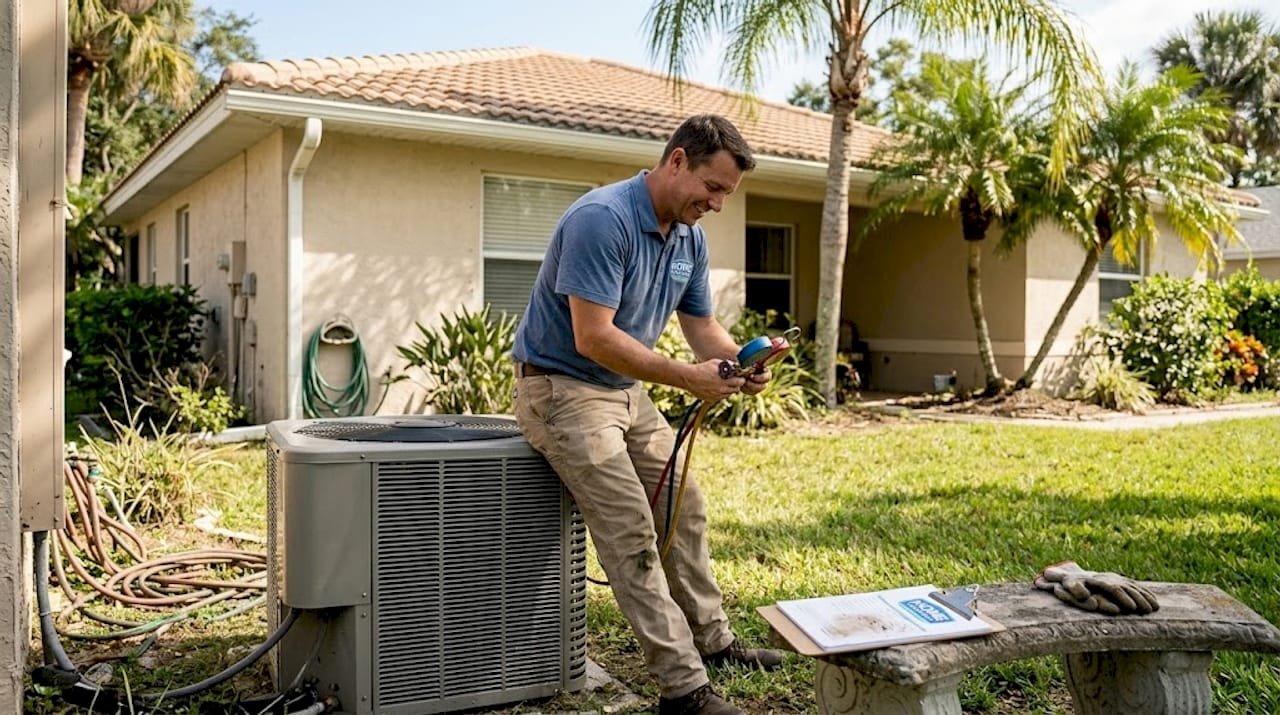
GeOthermal heat pumps (also called ground-source) exchange heat with the earth below the frost line. They’re highly efficient because the ground stays at a stable temperature year-round. The catch is the installation cost, which can be significantly higher, with a payback period of 5 to 10 years depending on your usage and local energy prices.
AbsOrption heat pumps use natural gas or propane instead of electricity as their primary energy source. These are rarely used in residential settings and are more common in large commercial buildings.
Here’s how the three types compare for Tampa Bay homeowners:
| Type | Install Cost | Energy savings | Climate fit for Tampa Bay | Best for ||
|-|-|-|-|-|
| Air-source | Low to moderate | High | excellent | Most homeowners ||
| GeOthermal | High | Very high | Good | Large lots, long-term owners ||
| AbsOrption | moderate | moderate | limited | rarely residential ||
For most Tampa Bay families, air-source heat pumps win on every practical measure. Our winters rarely dip below 40°F, which means air-source systems maintain strong performance without the premium cost of geothermal.
The key advantages of air-source units for Tampa Bay include:
- Low installation cost compared to ground-source systems
- No excavation or drilling required
- Fast installation with minimal home disruption
- Wide variety of brands and models available locally
- Easy maintenance by any certified local technician
Before committing, it’s worth understanding the full range of heat pump cost factors so you can budget realistically and avoid surprises.
Heat pump efficiency: What the numbers really mean
Once you know your options, the next step is understanding how well heat pumps perform, a crucial factor for your investment. The main efficiency metric you’ll hear about is COP, which stands for coefficient of performance. It’s simply the ratio of heat output to electrical energy input.
A COP of 3 means the system delivers three units of heat energy for every one unit of electricity it consumes. Compare that to an electric resistance heater, which has a COP of exactly 1. You pay for one unit of electricity and you get one unit of heat.
High-efficiency heat pumps can use up to 75% less electricity than resistance heating systems, which is one of the most important financial arguments for making the switch.
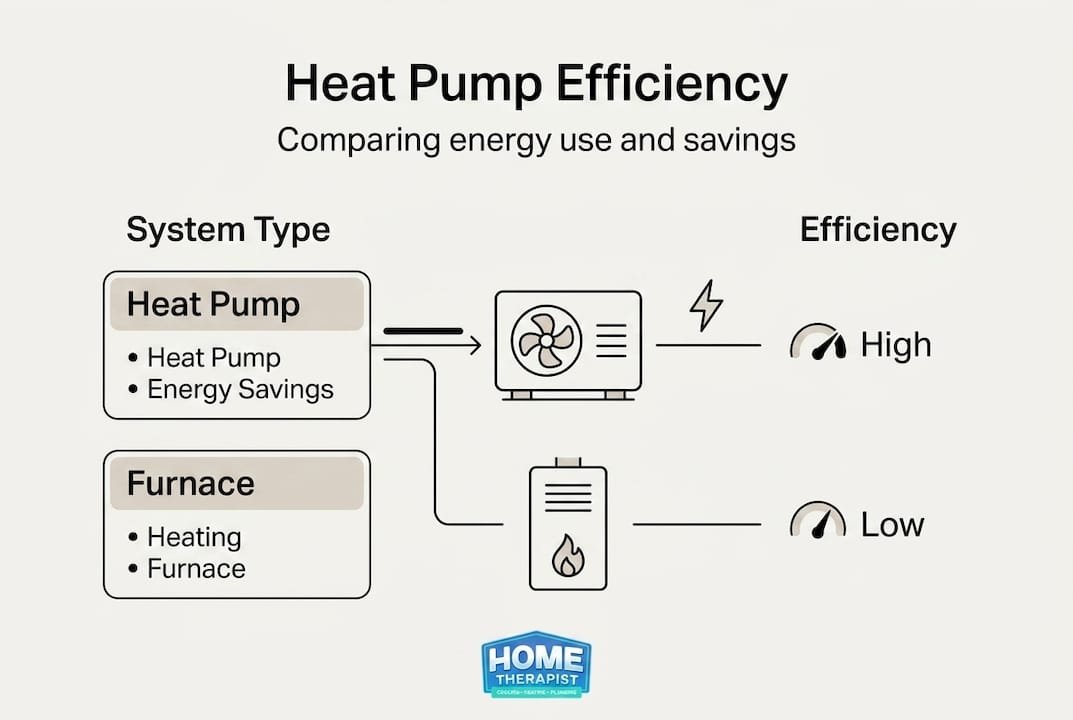
Here’s a quick comparison:
| System | typical COP | relative efficiency | Cost to produce 1 unit of heat ||
|-|-|-|-|
| heat pump | 2.5 to 4 | Very high | low ||
| Electric resistance | 1.0 | baseline | high ||
| central AC (cooling) | 2.5 to 4 | Very high | low ||
But here’s what most guides skip: real-world COP values are often lower than the manufacturer’s rated numbers. Poor sizing, leaky ducts, and improper installation are the main culprits. A system rated at COP 3.5 can perform at COP 2 or less if the installation is rushed or the unit is the wrong size for your home.
To get the most from your investment, pay close attention to these factors:
- Right-size the unit. An oversized system short-cycles and wastes energy. An undersized one runs constantly and still can’t keep up.
- Check your existing ducts. leaky ducts in your attic can waste 20 to 30% of conditioned air before it reaches your living space.
- Choose an energy star-rated model. These meet stricter efficiency standards and often qualify for utility rebates.
- hire a certified installer. proper refrigerant charge and airflow setup are critical for real-world performance.
Tampa Bay’s climate actually helps here. Because our winters are mild, heat pumps spend very little time working hard to extract heat from cold air. That keeps real-world efficiency close to the rated numbers. Review the key installation factors before you sign any contract.
Pro tip: Check with Tampa Electric or Duke Energy Florida before buying. Both utilities offer rebates for qualifying energy-star heat pump models, which can put hundreds of dollars back in your pocket at purchase.
What to expect: Real-life performance, quirks, and maintenance
Beyond numbers and specs, here’s how heat pumps actually fit into Tampa Bay homes. In day-to-day use, most homeowners are pleasantly surprised. The system is quiet. The temperature stays consistent. And come summer, there’s no noticeable difference from running a standard air conditioner, because in cooling mode, it basically is one.
The seasonal energy savings become obvious when the electric bill arrives in February.
One quirk that confuses new heat pump owners is the defrost cycle. In heating mode, the outdoor coil can collect frost when temperatures drop and humidity is high. The system will briefly reverse itself to melt that frost. You might see a small cloud of steam from the outdoor unit and notice slightly less warm air from the vents for a few minutes. That’s completely normal.
As real-world performance data confirms, backup electric resistance strips and defrost cycles have minimal impact on energy use in Tampa Bay because extreme cold is so rare here. Your backup strips may run a handful of hours per year, if ever.
Here are three simple maintenance habits that keep your heat pump running reliably:
- Change or clean air filters every 1 to 3 months. A clogged filter is the single most common cause of reduced efficiency and comfort complaints.
- Use a programmable or smart thermostat. Heat pumps respond better to gradual temperature setbacks than dramatic swings. Set it and leave it.
- Schedule a professional checkup once a year. A technician will check refrigerant levels, clean coils, and catch small issues before they become expensive repairs.
“Most heat pump service calls we handle are not caused by equipment failure. They’re caused by skipped filter changes and thermostat settings that fight the system instead of working with it.”
If you notice frequent cycling, weak airflow, or rooms that won’t reach the set temperature, don’t wait. Review common heat pump issues and if the problem persists, get a professional in quickly. You can also check out practical heating problem solutions specific to Tampa Bay homes before calling for service.
Pro tip: Minor quirks like occasional fan noise or brief defrost cycles are completely normal. But if the outdoor unit freezes solid, the system short-cycles every few minutes, or you see a significant spike in your electric bill, those are signs a certified technician should take a look.
Expert perspective: What most Tampa Bay homeowners miss about heat pumps
It’s clear heat pumps make sense for Florida, but years of working with local homeowners has shown us some patterns most guides never address.
The biggest mistake we see is underestimating sizing and existing infrastructure. A homeowner invests in a great unit, but the ducts are leaky or the system is sized for a different floor plan. The result is disappointing performance and a lot of frustration that gets blamed on the technology when the real culprit is the installation.
We also see Tampa Bay homeowners overspend on cold-climate features they simply do not need here. Models engineered for Minnesota winters cost significantly more and offer zero added benefit in a climate where overnight lows rarely hit freezing. Match the equipment to your actual climate.
The third issue is DIY tweaks. Well-meaning homeowners adjust refrigerant ports, block vents for “zoning,” or set the thermostat in ways that fight the system. Those decisions account for roughly half of our non-emergency service calls.
The smart move is to leverage local energy rebates, get a professional load calculation before buying, and think about financing heat pump upgrades if upfront cost is a concern. One more thing worth noting: the electrical grid is getting cleaner every year. A heat pump you install today will have a lower carbon footprint in 2030 than it does right now, simply because the electricity powering it will be generated more efficiently.
Next steps: upgrade your Tampa Bay home’s comfort and efficiency
If you’ve read this far, you’re already ahead of most homeowners when it comes to understanding heat pump technology. The next step is turning that knowledge into action.
At Home therapist, we work exclusively with Tampa Bay homeowners and know exactly what works in this climate. Whether you’re starting from scratch or replacing an aging system, our team can help you choose the right equipment, size it correctly, and install it for maximum real-world efficiency. We also offer resources on what is hvac for homeowners who want to understand the bigger picture, a detailed hvac retrofitting guide for updating older homes, and step-by-step hvac troubleshooting for when something doesn’t feel right. Give us a call and let’s figure out the right fit for your home.
frequently asked questions
How does a heat pump differ from traditional air conditioning?
A heat pump provides both heating and cooling by reversing its refrigerant cycle, while a traditional central air conditioner only removes heat from your home. In practical terms, a heat pump replaces both your AC and your heater in one unit.
Is a heat pump a good fit for Tampa Bay’s climate?
Absolutely. Tampa Bay’s humid subtropical climate is one of the best matches for air-source heat pump technology, with mild winters that let the system maintain strong heating efficiency without the strain that cold northern climates impose.
Will a heat pump save money on energy bills?
High-efficiency models cut electricity use by up to 75% compared to electric resistance heating, and Tampa Bay’s mild winters mean the system spends most of its time in highly efficient cooling mode rather than working hard to extract heat from frigid outdoor air.
Do heat pumps work during cold spells in Florida?
Yes. In Tampa, extreme cold is rare enough that heat pumps maintain high efficiency throughout the winter. backup strips are rarely needed, which means you get consistent comfort without a spike in your electric bill during those brief cool stretches.
Recommended
- Heat Pump Installation Cost in Tampa Bay | Home Therapist
- Heat Pump Installation in Tampa, FL 33606
- Understanding Warranty Terms for Heat Pump Installation and Repair Services in Tampa, FL and the Bay Area Home Therapist Cooling, Heating, and Plumbing
- Heat Pump Installation and Financing Options in Tampa, FL Bay Area Home Therapist Cooling, Heating, and Plumbing
- Heat Pumps Cut HVAC Costs 30% vs AC: Key Differences – HVAC Service and Repair | Louisville, KY | Project Heating & Cooling
More Heating & Heat Pumps Articles
- Burned Wiring Found During a 133-Minute HVAC Tune-Up on Cricket Hollow Dr, Riverview, FL 33578
- Heat Pump Short Cycling Winter: Tampa Bay Homeowner Guide
- A $89 Tune-Up on Indigo Oasis Ct: Cooling and Heating Maintenance in Gibsonton, FL 33534
- How Two-Stage Furnaces Boost Comfort and Efficiency
- Rental Property Heat Pump Replacement in Tampa: Repair or Replace?


