

11 Best Reverse Osmosis Systems for Home (2026 Reviews)
Tap water in most U.S. homes carries trace contaminants, chlorine, lead, PFAS, microplastics, that a standard carbon filter won’t fully remove. A reverse osmosis (RO) system will. But finding the best reverse osmosis system for home use means sorting through dozens of models with different filtration stages, flow rates, tank designs, and price points. It’s a lot to compare on your own.
At Home Therapist, we install and service water filtration systems across the Greater Tampa Bay Area, so we see firsthand which units hold up and which ones cause headaches. Tampa’s municipal water, while treated, often tests high for chlorine and total dissolved solids, two things RO handles exceptionally well. That hands-on experience with local water quality shaped every recommendation on this list.
Below, we break down 11 top-rated reverse osmosis systems for 2026, covering under-sink, tankless, and countertop models. Each pick includes real performance specs, pros, cons, and the type of household it fits best. Whether you’re upgrading from a pitcher filter or replacing an aging RO unit, this guide will help you spend your money on the right system the first time.
1. Home Therapist under-sink reverse osmosis system installation
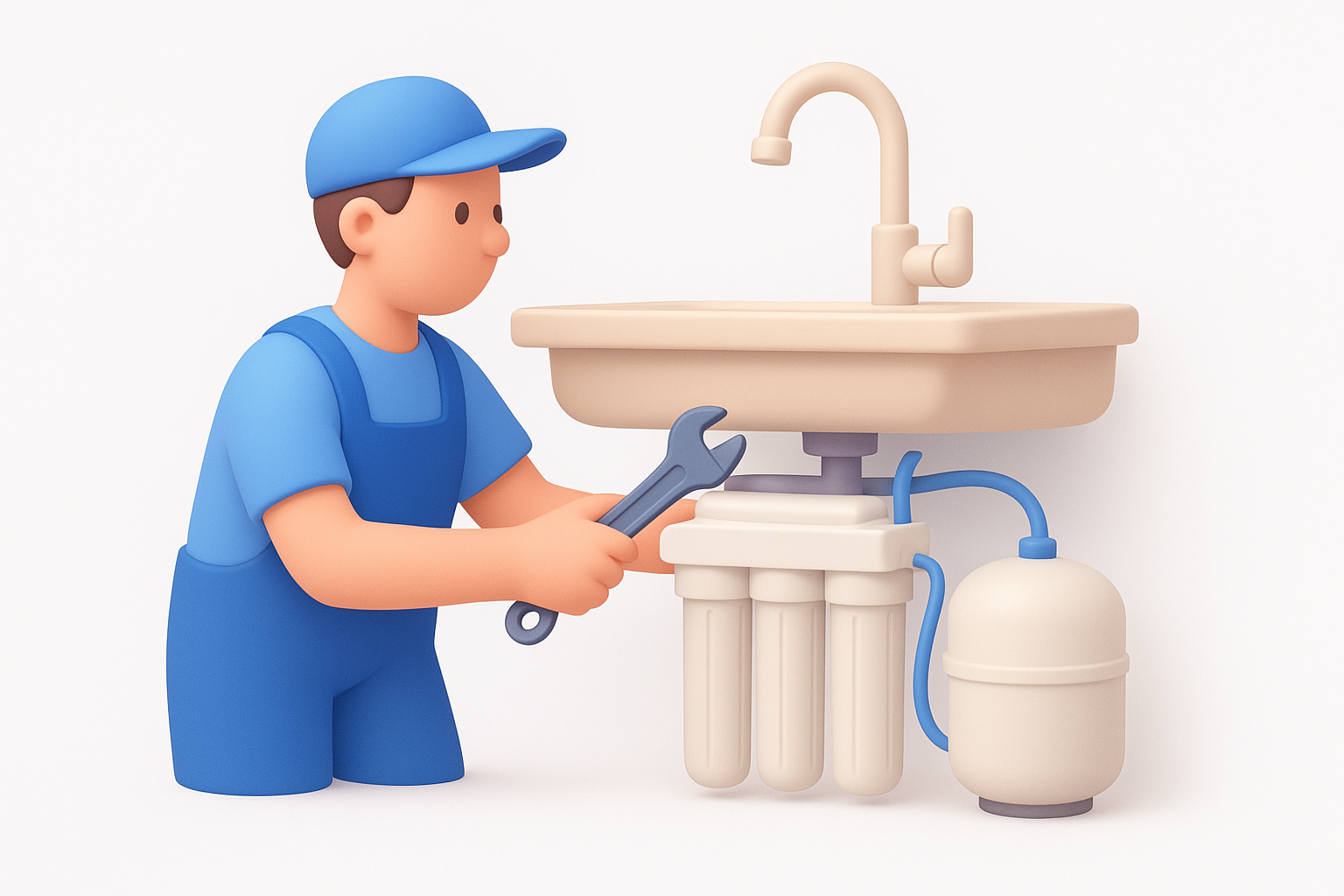
If you live in the Tampa Bay Area and want an RO system that’s professionally sized, installed, and maintained, skipping the DIY route and calling Home Therapist is worth serious consideration. Unlike ordering a box online and spending a weekend under your sink, a professionally installed system gets matched to your home’s water pressure, plumbing layout, and household demand from day one.
What it is and how it works
Home Therapist installs multi-stage reverse osmosis systems that mount under your kitchen sink and connect directly to your cold water supply line. Water passes through a sediment pre-filter, one or more carbon block filters, a high-rejection RO membrane, and a post-filter before reaching your dedicated faucet. The result is water with up to 99% of dissolved solids, chlorine, lead, and PFAS removed, without you touching a wrench.
A professionally installed RO system eliminates the two most common DIY failure points: incorrect pressure connections and improper drain line placement.
Standout features
The biggest advantage of going with Home Therapist is that you get licensed technicians who assess your specific plumbing conditions before selecting the right system. That matters more than most people realize. Tampa’s water pressure varies significantly by neighborhood, and a unit sized for 65 PSI will underperform at 45 PSI. You also get a fully leak-tested installation backed by a satisfaction guarantee, so if something isn’t right, the team returns to fix it.
Ongoing filter replacements and membrane swaps happen on a set maintenance schedule, so your system keeps delivering clean water without you tracking part numbers or remembering service intervals.
Downsides to know
Professional installation costs more upfront than a self-install kit. If you’re comfortable with basic plumbing and your home has consistent water pressure and modern supply lines, a quality DIY unit from this list can work well. The professional route makes the most sense for homes with older plumbing, variable pressure, or households where zero ongoing maintenance involvement is the priority.
Pricing and ongoing costs
Home Therapist provides free estimates with upfront, transparent pricing before any work begins. Installation costs vary based on the system selected, your existing plumbing setup, and whether any line modifications are needed. Ongoing costs include semi-annual filter replacements and membrane changes every two to three years, which the team can schedule and handle for you. If you’re searching for the best reverse osmosis system for home use in the Tampa Bay Area and want it done right the first time, contact Home Therapist directly for a same-day estimate tailored to your home.
2. Waterdrop G3P800 tankless under-sink RO
The Waterdrop G3P800 is one of the most capable tankless under-sink RO systems available for home use in 2026. It fits households that want high output and space efficiency without the bulk of a traditional pressurized storage tank taking up cabinet space.
What it is and how it works
The G3P800 uses a 7-stage filtration process that combines composite filters with a high-rejection RO membrane. Water moves through the system on demand rather than filling a tank, which means you get filtered water almost instantly from a dedicated faucet with no wait for a reservoir to refill. The 800 GPD (gallons per day) flow rate sits among the highest available in a residential under-sink unit.
Standout features
The G3P800 earns its spot on any list of the best reverse osmosis system for home contenders because of its 2.5:1 pure-to-drain ratio, which wastes far less water than older RO designs that commonly ran 3:1 or worse. It also includes a smart display that monitors filter life and TDS levels in real time, so you know exactly when to swap filters without guessing.
A 2.5:1 drain ratio means for every 2.5 gallons of clean water produced, only 1 gallon goes to waste, a significant improvement over older RO systems.
Downsides to know
The G3P800’s higher purchase price puts it out of reach for budget-focused buyers. Installation also requires a powered outlet under your sink since the booster pump runs on electricity, which not every kitchen has conveniently located in that cabinet.
Pricing and ongoing costs
The G3P800 typically retails between $400 and $500. Replacement filter sets run approximately $60 to $100 per year depending on your household water usage and local water quality conditions.
3. Waterdrop X12 tankless under-sink RO
The Waterdrop X12 is a step up from the G3P800 in terms of filtration stages and smart features, making it one of the more complete options when you’re shopping for the best reverse osmosis system for home use with a serious contaminant removal focus.
What it is and how it works
The X12 uses a 12-stage filtration sequence that combines multiple composite filters, an RO membrane, and both a UV sterilization stage and a remineralization filter. It operates tankless, delivering filtered water directly on demand through a dedicated faucet. The 600 GPD flow rate provides more than enough output for most family households running the system throughout the day.
Standout features
The built-in UV sterilization lamp sets the X12 apart from most competitors at this price level. UV light kills bacteria and viruses that survive membrane filtration, which is particularly useful in areas where municipal water quality fluctuates or you use well water as a secondary source. The remineralization filter also adds calcium and magnesium back into the water after the RO stage, which many people prefer for taste and daily mineral intake.
UV sterilization combined with RO membrane filtration addresses both chemical and biological contaminants in a single system, a combination most standalone RO units don’t offer.
Downsides to know
The UV lamp requires annual replacement on top of your standard filter maintenance, adding a step that some buyers overlook when calculating ongoing costs. The system also draws more cabinet space than the G3P800 due to the additional filter stages involved.
Pricing and ongoing costs
The X12 typically retails between $500 and $600. Annual filter and UV lamp replacement costs run approximately $80 to $120, depending on your household water usage.
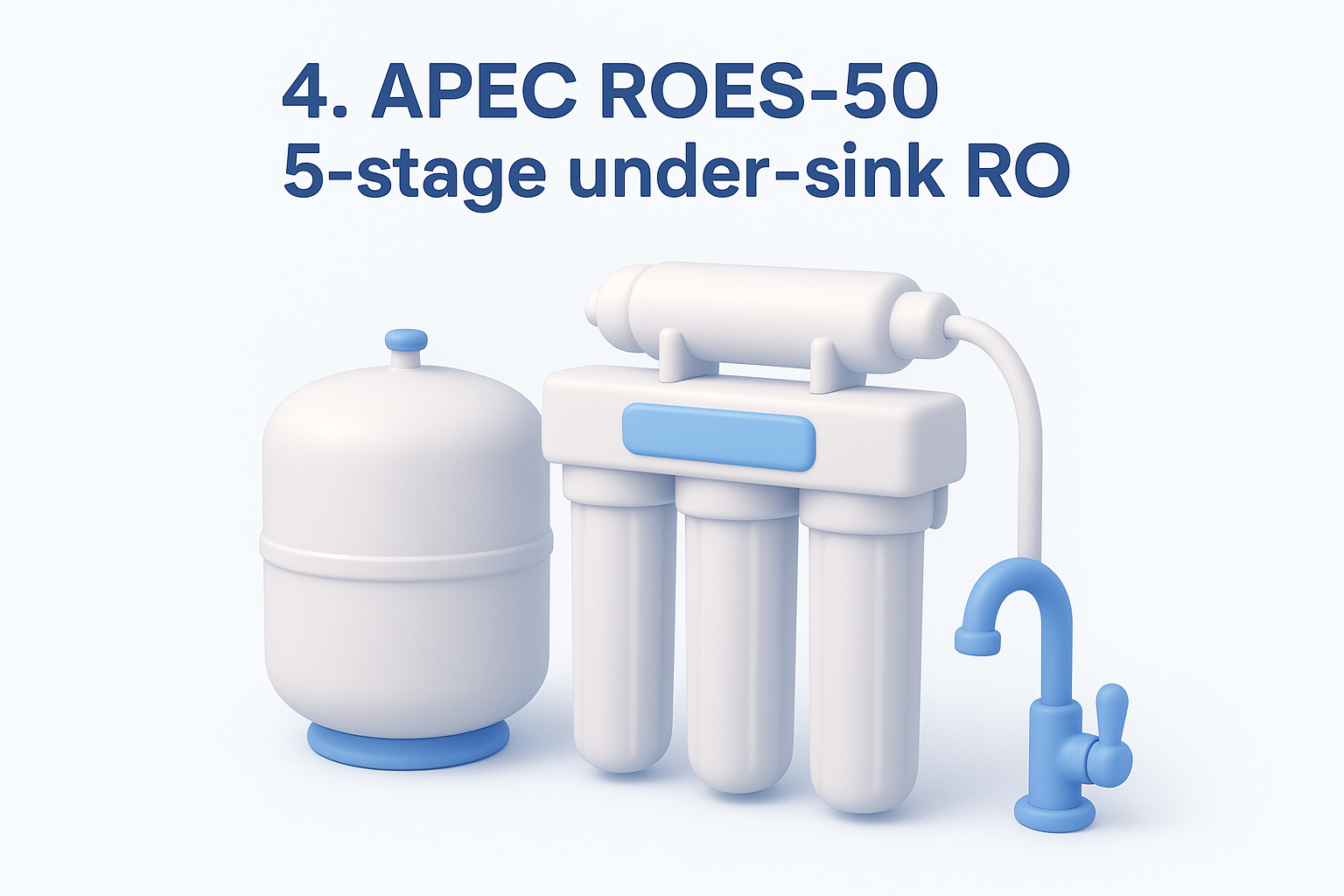
4. APEC ROES-50 5-stage under-sink RO
The APEC ROES-50 has been one of the most consistently recommended under-sink RO systems for years, and it earns that reputation by delivering reliable contaminant removal at a price most households can afford. If you want a proven unit without paying for smart displays or booster pumps, this system belongs on your shortlist for the best reverse osmosis system for home use.
What it is and how it works
The ROES-50 runs water through a 5-stage filtration sequence: a sediment pre-filter, two carbon block filters, a high-rejection RO membrane, and a final coconut shell carbon post-filter that polishes taste before water reaches your faucet. The system fills a pressurized storage tank that sits under your sink, so filtered water is ready on demand without waiting for the membrane to process each pour in real time.
Standout features
APEC manufactures its filters and membranes in the USA, which gives this system a sourcing advantage over many competitors at a similar price. The ROES-50 is also WQA certified, meaning an independent third party has verified its contaminant reduction claims rather than relying on manufacturer testing alone.
Third-party WQA certification confirms the system removes what it claims to remove, a detail worth checking on any RO unit you consider.
Downsides to know
The ROES-50 produces only 50 gallons per day, which can feel limiting for larger households running multiple draws throughout the day. Its drain ratio also runs close to 3:1, meaning it wastes more water per gallon produced than newer tankless designs.
Pricing and ongoing costs
The ROES-50 typically retails between $180 and $220. Annual filter replacement costs run approximately $40 to $60, making it one of the most affordable systems to maintain over time.
5. APEC RO-90 high-flow under-sink RO
The APEC RO-90 is the high-output sibling of the ROES-50, built for households that ran into the 50 GPD capacity ceiling and need more filtered water without switching to a tankless system. If daily demand is your main concern when searching for the best reverse osmosis system for home use, the RO-90 solves that problem without a dramatic jump in cost.
What it is and how it works
The RO-90 uses the same 5-stage filtration sequence as the ROES-50, running water through a sediment filter, two carbon block stages, a high-rejection RO membrane, and a final carbon post-filter before filling a pressurized under-sink storage tank. The key difference is the membrane itself, which APEC rates at 90 gallons per day, nearly double the output of the entry-level model. That higher throughput refills the tank faster between draws, so larger households experience fewer delays during peak usage periods.
Standout features
The RO-90 carries the same WQA certification as the ROES-50, meaning independent testing confirms its contaminant reduction claims. APEC also sources its filters and membranes domestically, which separates this system from many competitors priced in the same range.
Doubling the membrane output from 50 to 90 GPD makes a noticeable difference for households with four or more people drawing filtered water throughout the day.
Downsides to know
Like the ROES-50, the RO-90 still runs a 3:1 drain ratio, so it wastes more water per gallon produced than newer tankless designs. The larger storage tank also takes up more cabinet space, which can be a problem in smaller kitchens with limited undercounter clearance.
Pricing and ongoing costs
The RO-90 typically retails between $220 and $270. Annual filter replacement costs run approximately $50 to $70, keeping long-term ownership costs reasonable.
6. iSpring RCC7AK alkaline under-sink RO
The iSpring RCC7AK adds a remineralization stage to a standard 5-stage RO build, making it a strong contender for anyone searching for the best reverse osmosis system for home use who wants cleaner water without the flat, stripped taste that pure RO can produce. It sits at a mid-range price point that balances performance with accessibility.
What it is and how it works
The RCC7AK runs water through a 6-stage filtration sequence: a sediment pre-filter, two carbon block stages, a high-rejection RO membrane, a post-carbon polishing filter, and a final alkaline remineralization cartridge that reintroduces calcium, magnesium, and potassium after the membrane removes nearly everything dissolved in the water. Filtered water collects in a pressurized storage tank under your sink before reaching a dedicated countertop faucet.
Standout features
The alkaline stage raises the water’s pH slightly above neutral, which many households prefer for both taste and daily mineral intake. iSpring backs the RCC7AK with US-based customer support and a 1-year manufacturer warranty, which is a meaningful advantage if you run into installation questions or need a replacement part quickly.
Adding a remineralization stage after the RO membrane addresses one of the most common complaints about reverse osmosis water: the flat, empty taste that comes from removing all dissolved minerals.
Downsides to know
The RCC7AK produces only 75 gallons per day, which works for most families but may fall short during high-demand periods in larger households. The 6-filter maintenance schedule also adds one more cartridge to track compared to a standard 5-stage system.
Pricing and ongoing costs
The RCC7AK typically retails between $220 and $260. Annual filter replacement costs run approximately $60 to $80, depending on your local water quality and usage volume.
7. iSpring RO500AK tankless under-sink RO
The iSpring RO500AK combines the tankless convenience of modern RO designs with the alkaline remineralization stage that made the RCC7AK popular, giving you higher output and better-tasting water in a single compact unit under your sink.
What it is and how it works
Unlike tank-based designs, the RO500AK pushes water through a 6-stage filtration sequence on demand using a built-in booster pump. Water moves through a sediment pre-filter, two carbon block stages, a high-rejection RO membrane, a post-carbon polishing filter, and a final alkaline remineralization cartridge that adds calcium, magnesium, and potassium back after the membrane strips dissolved solids. The 500 GPD flow rate delivers filtered water almost instantly at your dedicated faucet.
Standout features
For households that want a tankless build without giving up mineral-rich, better-tasting water, the RO500AK earns a strong spot on any shortlist for the best reverse osmosis system for home use. Its built-in booster pump maintains consistent filtration performance even when your home’s water pressure dips below the 40 PSI that most gravity-fed RO systems require.
A built-in booster pump makes the RO500AK reliable for homes with variable or low water pressure, a common issue in older Tampa Bay neighborhoods.
Downsides to know
Running the booster pump requires a powered outlet under your sink, which not every kitchen cabinet has conveniently available. Some users also report that the pump produces low-level operational noise during active filtration cycles, worth considering if your kitchen typically runs quiet.
Pricing and ongoing costs
Retail pricing for the RO500AK typically falls between $300 and $380. Annual filter replacement costs run approximately $60 to $80, keeping ongoing ownership costs consistent with other mid-range iSpring units.
8. AquaTru Classic countertop RO
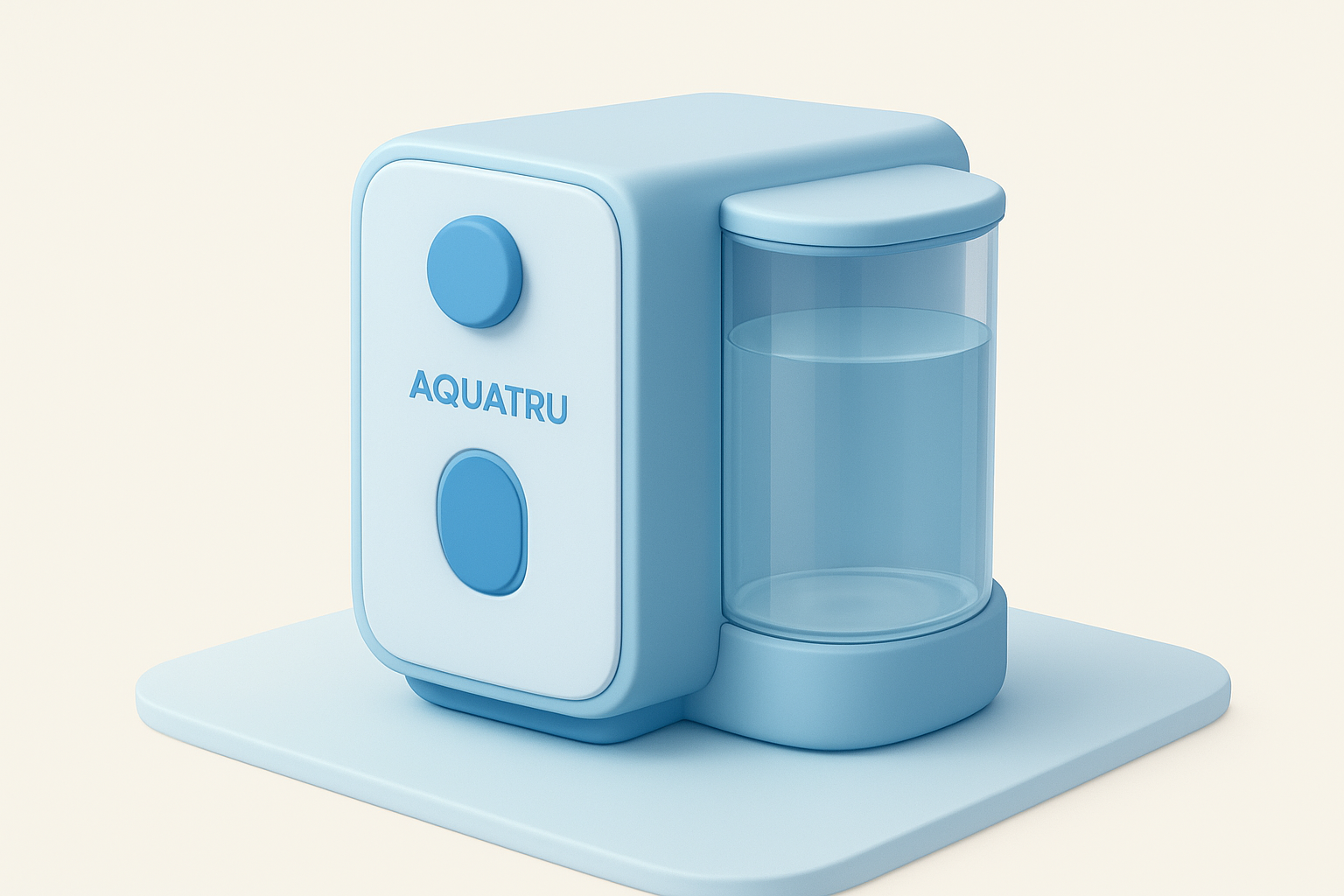
The AquaTru Classic is one of the most recognized countertop RO systems on the market, built for renters, frequent movers, or homeowners who want filtered water without any permanent plumbing changes. It sits on your countertop, plugs into a standard outlet, and requires no drilling or professional installation.
What it is and how it works
This system runs water through a 4-stage filtration sequence using a built-in electric pump: a mechanical pre-filter, a high-rejection RO membrane, and two carbon post-filters. You pour tap water into the input reservoir, and the pump pushes it through the membrane. Filtered water collects in a 1.1-gallon sealed carafe at the front of the unit, ready to pour on demand. The four stages cover:
- Mechanical pre-filter that catches sediment and particulates
- RO membrane that removes dissolved solids, heavy metals, and PFAS
- Two carbon post-filters that polish taste before water reaches the carafe
Standout features
The AquaTru Classic holds NSF/ANSI certification across multiple contaminant categories, which is uncommon for countertop systems at this price point. It removes up to 99% of lead, chlorine, PFAS, and nitrates without any under-sink space or professional help, making it a credible option when evaluating the best reverse osmosis system for home use in a no-plumbing scenario.
NSF/ANSI certification confirms that an independent testing body verified the system’s contaminant removal performance, not just the manufacturer’s internal claims.
Portability is another real advantage. You can move the unit between homes without leaving anything behind, a practical edge for renters or households that relocate frequently.
Downsides to know
The 1.1-gallon carafe capacity limits how much filtered water is available at one time, which creates a bottleneck for larger households. Manually refilling the input reservoir adds an ongoing step that any connected under-sink system eliminates entirely.
Pricing and ongoing costs
Retail pricing for the Classic falls between $350 and $430. Annual filter replacement costs run approximately $60 to $80, depending on your local water quality and daily usage volume.
9. AquaTru Carafe countertop RO
The AquaTru Carafe shares the same core filtration technology as the Classic but packages it in a slimmer countertop profile with a borosilicate glass carafe instead of a plastic reservoir. If you liked the Classic’s no-plumbing setup but want a cleaner aesthetic sitting on your counter, the Carafe is worth comparing directly.
What it is and how it works
The Carafe runs tap water through the same 4-stage filtration sequence as the Classic: a mechanical pre-filter, a high-rejection RO membrane, and two carbon post-filters. You manually fill the input tank, and the built-in pump pushes water through the system and into a 0.8-gallon borosilicate glass carafe at the front. No plumbing connection required.
Standout features
The glass carafe design eliminates plastic contact with your filtered water, which matters to households looking to reduce any risk of plastic leaching. Your Carafe also holds the same NSF/ANSI certifications as the Classic, meaning independent testing backs its contaminant removal claims across lead, PFAS, chlorine, and nitrates. For anyone building a shortlist of the best reverse osmosis system for home use without permanent installation, that certification carries real weight.
NSF/ANSI-certified countertop RO systems are rare, and independent verification sets the AquaTru Carafe apart from most portable filtration options on the market.
Downsides to know
The 0.8-gallon carafe holds less water than the Classic’s 1.1-gallon plastic reservoir, which creates a tighter bottleneck for households with multiple people drawing water throughout the day. Glass also adds fragility that the plastic Classic avoids entirely, something worth considering if your counter space gets heavy daily use.
Pricing and ongoing costs
The Carafe typically retails between $400 and $500. Annual filter replacement costs run approximately $60 to $80, matching the Classic’s ongoing maintenance expense closely.
10. Bluevua ROPOT countertop RO
The Bluevua ROPOT takes a different approach to countertop filtration by combining an RO system with a built-in water dispenser, eliminating the separate carafe entirely. It’s designed for households that want quick access to filtered water without connecting to a supply line or dealing with a removable pour-over reservoir.
What it is and how it works
The ROPOT uses a 4-stage filtration sequence that moves tap water through a pre-filter, a reverse osmosis membrane, and post-filtration stages before storing clean water in an internal tank built directly into the unit. You fill the top reservoir manually, and the built-in pump handles the rest. A touchscreen panel on the front lets you dispense filtered water directly from the unit, similar to a compact countertop water cooler.
Standout features
The ROPOT’s self-contained dispenser design removes the step of pouring from a separate carafe, which most competing countertop systems require. The unit also includes a real-time TDS display that shows water quality before and after filtration, so you can confirm the membrane is performing correctly without guesswork. For households comparing options to find the best reverse osmosis system for home use without any plumbing work, that built-in quality monitoring adds practical value.
A TDS display that shows pre- and post-filtration readings lets you verify your membrane is working correctly rather than relying on taste alone.
Downsides to know
The ROPOT’s internal tank holds only about 1.5 liters, which creates a real bottleneck for larger households drawing filtered water throughout the day. Its retail price also sits above most competing countertop units, making it harder to justify if output volume matters more than the integrated dispenser convenience.
Pricing and ongoing costs
The ROPOT typically retails between $280 and $350. Annual filter replacement costs run approximately $50 to $70, depending on your local water quality and daily usage volume.
11. Waterdrop A1 hot and cold countertop RO
The Waterdrop A1 is the only countertop RO system on this list that delivers both hot and cold filtered water on demand, making it function more like a compact water cooler than a standard filtration unit. If you want filtered RO water for both drinking and tea or coffee without a separate kettle or waiting for water to heat, the A1 solves that in a single countertop footprint.
What it is and how it works
The A1 runs tap water through a 3-stage reverse osmosis filtration sequence that covers a composite pre-filter, a high-rejection RO membrane, and a post-filter. The system stores filtered water in an internal tank and delivers it at your selected temperature through a front-facing dispenser. You manually fill the input reservoir, and the built-in pump handles pressure and filtration automatically, no plumbing connection needed.
Standout features
The A1’s instant hot water function heats filtered water to your selected temperature in seconds, which eliminates the separate step most households run through a kettle. For anyone evaluating the best reverse osmosis system for home use who also drinks hot beverages daily, consolidating filtration and heating into one unit removes a countertop appliance entirely.
The hot water function reaches dispensing temperature in under five seconds, which is faster than most countertop kettles heat to a full boil.
Downsides to know
The A1’s internal tank capacity is small, which limits how much filtered water is available during high-demand periods. The unit also draws more electricity than standard countertop RO systems because of the continuous heating element, which adds a modest amount to your monthly energy bill.
Pricing and ongoing costs
The A1 typically retails between $300 and $400. Annual filter replacement costs run approximately $50 to $80 depending on your local water quality and daily usage volume.
Next steps
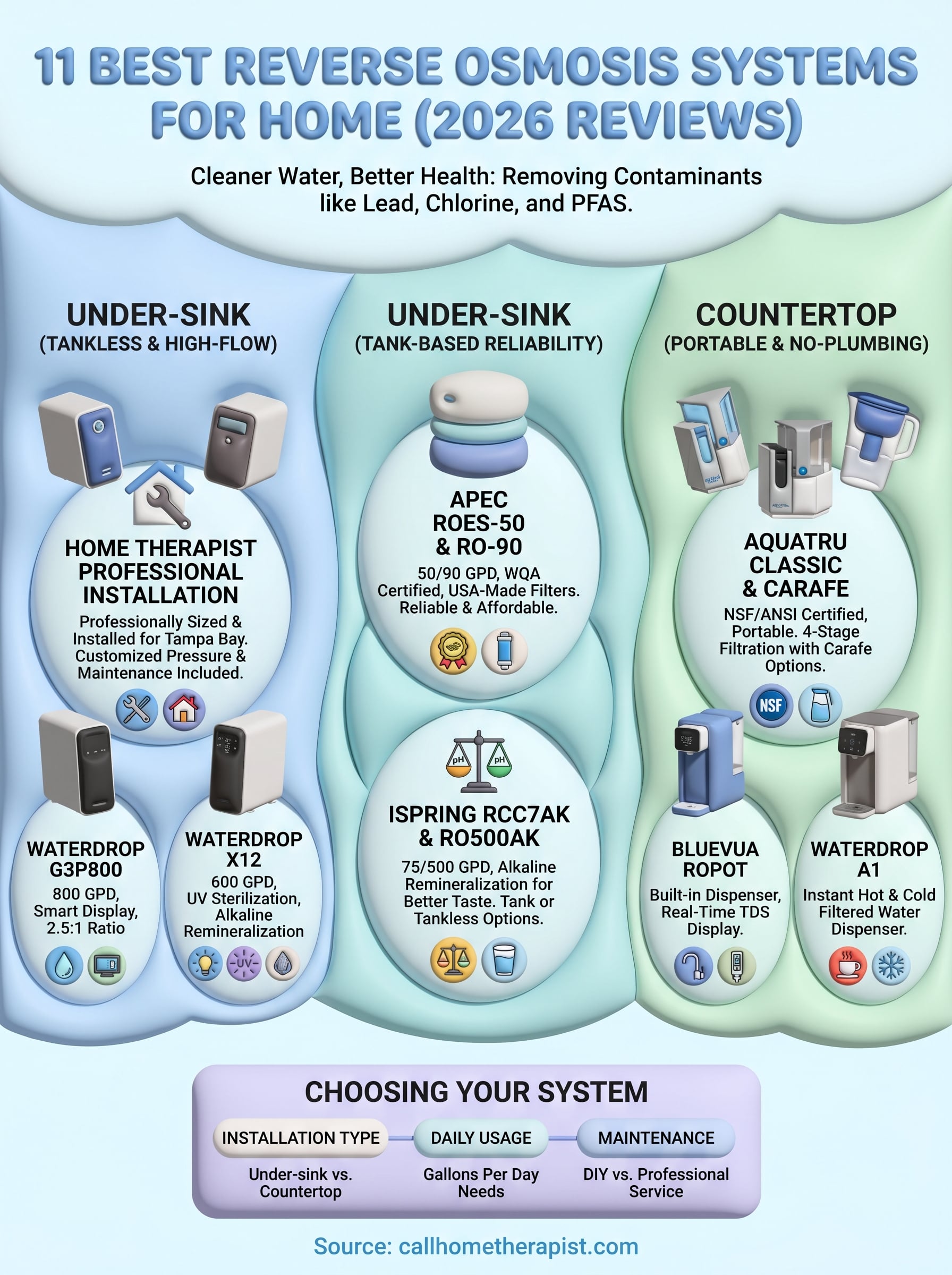
Picking the best reverse osmosis system for home use comes down to three things: where you want the unit installed, how much filtered water your household needs daily, and how much ongoing maintenance you’re willing to handle yourself. Countertop models work well for renters or anyone who moves frequently, while under-sink and tankless units deliver higher output with a cleaner setup for long-term homeowners.
If you live in the Greater Tampa Bay Area, the fastest path to clean, reliable water is a professionally installed under-sink RO system matched to your home’s actual plumbing and pressure conditions. You skip the guesswork, get a leak-tested installation backed by a satisfaction guarantee, and hand off filter maintenance to a team that tracks it for you. Contact Home Therapist for a free same-day estimate and find out which system fits your home, your water quality, and your budget.


