
Get a FREE Diagnosis From a Licensed Tampa Bay Tech
No diagnostic fee. No trip charge. We tell you exactly what is wrong and what it costs before you approve anything.
FAQ
- How to fix brown water from a hot water heater?
Flush the tank first: attach a hose to the drain valve, run it to a floor drain, and drain until the water runs clear. If flushing does not clear the discoloration, replace the anode rod. If the tank itself is corroding internally, replacement is the only lasting fix. Home Therapist offers FREE diagnosis to identify the exact cause.
- Is a rusty water heater safe?
Rusty hot water is not safe to drink or cook with. Internal tank corrosion means corroded metal particles are entering your water supply. A failed or depleted anode rod is the most common cause and is replaceable, but a tank with active rust through the lining must be replaced before it leaks or fails completely.
- Can a rusted hot water heater be repaired?
Surface rust on fittings or the exterior can often be addressed, but internal tank corrosion cannot be repaired. Once the steel lining rusts through, the tank will eventually leak. In Tampa Bay's high-humidity environment this deterioration accelerates. Home Therapist provides a FREE estimate so you know whether a repair or full replacement is the right call.
Is rusty hot water dangerous to drink?
Not toxic but not pleasant. More concerning: it means your tank is dying or pipes are degrading.
Can I just flush and run?
Temporary improvement but anode needs replacing. Ignored = tank failure (major water damage from burst).
How often anode replace?
Every 3-5 years in Tampa. Softer water extends it; harder shortens. Part of our Therapy Plan annual maintenance.
Whole-home repipe?
If galvanized is the cause, yes. PEX preferred for Tampa ($4,500-$8,500 typical). See repiping guide.
Is rusty water safe to drink?
Iron in water is not a health hazard at typical residential concentrations, but it tastes metallic and stains fixtures and laundry. The real concern is whether the rust is carrying lead with it, which happens in pre-1986 homes with lead solder joints. We offer FREE water testing on every diagnosis call.
Should I replace my water heater if I have rusty water?
Depends on where the rust is coming from. Hot-only rust means the tank is corroding from inside and replacement is the fix. Cold-only rust means the supply lines are the problem and a new tank will not help. Run the hot-versus-cold test before you spend a dollar.
How long should a Rheem water heater last in Tampa?
8 to 12 years for standard inland installations with annual maintenance. 6 to 8 years for coastal homes. Add 2 to 3 years to either number if you have a water softener and replace the anode rod on schedule.
What is a dip tube and how do I know if mine failed?
The dip tube is a plastic pipe inside the tank that pushes incoming cold water to the bottom so it gets heated. Water heaters manufactured between 1993 and 1997 had a documented defective dip tube that disintegrated into white plastic flakes clogging aerators and faucet screens. If you see small white plastic bits in your aerators, that is a failed dip tube.
Does a water softener prevent rusty water?
A softener extends the life of your anode rod and tank by removing the hardness minerals that accelerate corrosion, but it does not reverse existing rust. If your tank is already corroding internally, a softener installed today will not save that tank.
Can I clean a rusty water heater instead of replacing?
A flush removes loose sediment sitting at the bottom of the tank, which helps with efficiency and noise. It does not remove rust from the tank walls and it does not repair pitting. Once the tank interior is actively corroding, replacement is the only real fix.
Hot rusty water only, should I worry?
Yes. Hot-only rust is active tank corrosion. You have weeks to months before a leak, not years. Get a FREE diagnosis done now so you can replace on your schedule, not at 2 a.m. on a Saturday when the tank bursts.
How much does anode rod replacement cost in Tampa?
Standard aluminum-zinc anode rod replacement runs $279 to $349 installed, including the rod itself, labor, and disposal of the old one. Powered titanium anode upgrade runs about $279 more and comes with a 20-year warranty.
Should I get a powered anode or replace with a standard rod?
Powered anodes are the smart choice for well water homes, coastal properties, and anyone who has already replaced a standard rod once. They never wear out, eliminate the sulfur smell problem, and pay for themselves by extending tank life. For city-water inland homes, a standard aluminum rod is fine.
Why does my hot water smell like rotten eggs?
That is a reaction between the magnesium anode rod and sulfur bacteria in the water. Swap the magnesium rod for an aluminum-zinc rod or a powered anode and the smell disappears within a few days. Common issue in Tampa well-water homes.
How often should I replace the anode rod in a Tampa water heater?
In Tampa’s hard water (12 to 18 grains per gallon), anode rods deplete in 2 to 3 years, roughly twice as fast as the 4 to 6 year national guideline. Annual inspection is the right interval here, not the national recommendation of every 3 to 4 years. A fully depleted anode leaves bare steel tank walls exposed to the electrolytic action of hard water, which accelerates corrosion and the rusty hot water that signals internal tank damage. $279 for anode replacement, FREE diagnostic visit. Licensed CFC1431159.
My vacation home sat empty for 4 months and now the hot water is rust-colored. What do I do?
Run the hot tap for 5 to 10 minutes to flush the stagnant water from the tank and lines. If the color clears within that time, the issue is likely oxidized water that sat in the tank and lines and is not yet a structural problem. If discoloration persists after 10 minutes of flushing, or if you see visible flakes or sediment, have a plumber inspect the anode rod immediately. A dormant tank with a depleted anode begins corroding internally within weeks of sitting idle. FREE diagnosis, $279 anode replacement if needed. Call (813) 343-2212. Licensed CFC1431159.
Can I prevent rusty water in a Rheem water heater by adding a water softener?
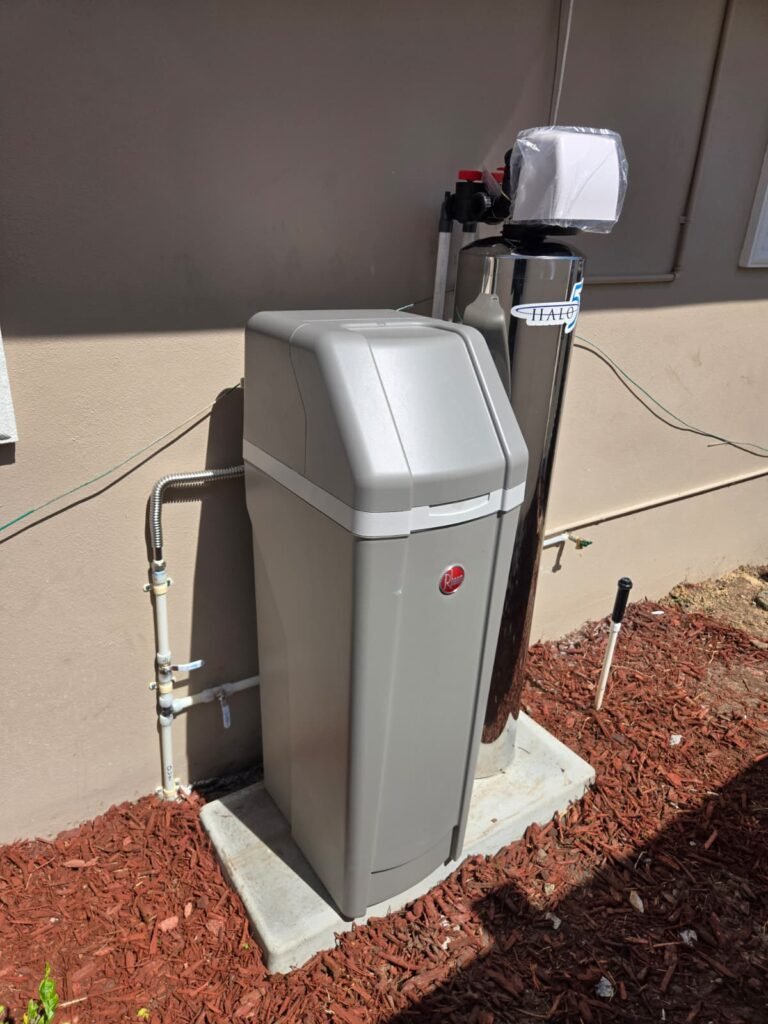
A whole-home water softener significantly slows anode rod depletion by reducing the mineral content that drives the electrolytic reaction inside the tank. With softened water below 3 grains per gallon, anode lifespan can extend to 4 to 6 years even in Tampa. However, a softener does not reverse existing tank corrosion. If your water heater already shows rusty output, the anode is already depleted and the tank may have begun corroding. Address the tank first, then add a softener to protect the replacement unit. Home Therapist installs Rheem and Halo water treatment systems. Licensed CFC1431159.
Related Tampa Bay resources
AC repairI need to move a condenser from the wall due renovation, and HOA hire licenses company to do that and estimate 10 min job, i decide to do that Home Therapist Cooling…
Good and friendly service. Tech was on time and very professional.
PlumbingJandiel did a great job. Very professional and got the job done quick. He also gave me great information on using my unit in the hotter months to prevent my unit from…
David and all other staff I had been in contact with at AC therapist are excellent. David did not try to sale me nothing he showed me my option and I made…
Water heaterI had a great experience with Home Therapist Cooling, Heating, and Plumbing. We were getting our house ready to sell and the home inspection identified several plumbing issues that needed to be…
AC installI was in need of air conditioning for my detached garage. My AI search for the most trustworthy mini-split AC installer led me to Home Therapist; my expectations were exceeded. Scheduling a…
AC installExcellent service from Richard! He was professional, courteous, and very knowledgeable. He fixed my A/C problem quickly and explained everything clearly. I highly recommend Richard for anyone needing A/C service. had a…
AC repairI had a great experience with Home Therapist AC Repair. Alejandro arrived on time to diagnose why my AC wasn't cooling and quickly found the problem that the previous company had missed.…