Air Conditioner Installation Near Me

Air Conditioner Installation Near Me in Tampa Bay, FL, What to Expect From a Local Pro

When homeowners search for air conditioner installation near me, they are usually dealing with the same concern, they need a system that cools well, runs efficiently, and holds up through long Tampa Bay summers. A new AC is a major home decision, and the quality of the installation matters just as much as the equipment itself. In Tampa Bay, FL, where heat and humidity put real pressure on cooling systems, a proper installation can make the difference between steady comfort and ongoing service calls. In this guide, we will walk through how to find a reliable local installer, what happens during the installation process, the benefits of professional work, and the common mistakes we help homeowners avoid every week.

Quick Answer: Air Conditioner Installation Near Me

  • Choosing a local, licensed installer helps protect your comfort, warranty coverage, and long-term system performance.
  • Proper sizing matters. Bigger is not always better for homes in Tampa Bay, FL.
  • A professional installation includes inspection, load considerations, equipment matching, safe electrical and drain setup, and system testing.
  • Most problems after a new AC install come from poor workmanship, not from the brand alone.
  • Homeowners in Tampa, St. Petersburg, Clearwater, Brandon, and Riverview benefit from working with technicians who understand Florida heat, humidity, and home construction.
  • Routine AC maintenance after installation helps protect efficiency and extend system life.

Finding Local Experts for Air Conditioner Installation Near Me

If you type air conditioner installation near me into a search bar, you will likely see a long list of companies. The hard part is figuring out which one will actually do the job right. For homeowners in Tampa Bay, FL, that means looking past ads and focusing on credentials, communication, and local experience.

A local company understands how Florida weather affects cooling performance. Systems here do not just battle high temperatures. They also run long hours dealing with moisture in the air, warm attics, salt exposure near the coast, and older duct systems in many homes. That local knowledge matters when we recommend system size, airflow adjustments, drain protection, and maintenance planning.

You should also look for a licensed and insured team. At Home Therapist, our technicians work under HVAC License: CAC1819196 and Plumbing License: CFC1431159. That matters because AC installation is not just about setting equipment in place. It can involve electrical connections, condensate drainage, refrigerant handling, duct performance, and code considerations.

We also recommend choosing a company that serves your area regularly. We help homeowners throughout Tampa, St. Petersburg, Clearwater, Brandon, Riverview, and nearby communities. That means we are familiar with the mix of newer developments, older block homes, attic layouts, and common cooling issues across Hillsborough and Pinellas County.

If you are comparing options, pay attention to how the company explains the process. A good installer should be able to tell you what they are checking, why they are recommending a certain setup, and what to expect before work begins. Clear communication is usually a sign of careful work.

For homeowners who know they need replacement rather than repair, our AC installation service page gives a closer look at how we approach new system installs. If your current system is still running but struggling, it may also help to compare that with our AC repair services before making a final decision.

What to Expect During Air Conditioner Installation Near Me

One of the biggest worries we hear is simple, what actually happens on installation day? A professional AC installation should feel organized, clean, and easy to follow. Homeowners in Clearwater, St. Petersburg, and the greater Tampa area should not be left guessing.

It starts with an in-home evaluation

Before we install anything, we inspect the home and the existing system. We look at the age and condition of the current equipment, the duct setup, thermostat location, electrical service, drain line path, return airflow, and where the outdoor unit sits. We also discuss comfort issues you may already have, such as hot bedrooms, uneven cooling, high electric bills, or excess indoor humidity.

This is also when sizing becomes important. A system that is too small may run constantly and struggle in peak summer heat. A system that is too large can short cycle, cool unevenly, and remove less humidity than it should. In Tampa Bay, FL, humidity control is a big part of comfort, so proper sizing is never something to rush.

Real technician procedure, step by step

When our technician arrives for an installation, we do not just swap boxes and leave. We follow a process designed to protect performance and reliability.

First, we confirm the scope of work and walk the homeowner through the plan. Then we protect the work area with floor coverings and take care when moving equipment through the home.

Next, we disconnect and remove the old system safely. If the indoor air handler is in the garage or attic, we inspect the platform, drain pan area, and surrounding insulation. We often find signs of wear homeowners never saw, rust around the drain fittings, dark staining from past condensation issues, brittle insulation on the refrigerant lines, or biological growth near a neglected drain line.

At the outdoor condenser, we check the pad, line set condition, disconnect, and visible wiring. Sometimes the old unit shows clear signs of age, oily residue around a coil connection, fan motor noise, a cabinet that has weathered heavily, or a compressor that had been running hot for a long time. Those real-world clues help explain why a system had been losing performance.

After removal, we set the new equipment, connect the refrigerant lines, electrical components, and condensate drain, and make sure the system is properly supported and level. We inspect duct connections at the air handler so conditioned air is not being lost into the attic or garage. If needed, we address sealing concerns before startup.

Then comes testing. We verify airflow, thermostat communication, system operation, temperature performance, drain function, and overall startup behavior. We listen for unusual vibration, check that the condensate is draining correctly, and confirm the system is cycling as it should. Before leaving, we explain filter access, thermostat basics, and what normal operation should sound and feel like. That way the homeowner knows what to expect after the installation is complete.

Once the new system is in place, ongoing preventive maintenance helps keep the installation performing the way it should over time.

Benefits of Professional Air Conditioner Installation Near Me

Professional installation protects more than just the equipment. It protects your comfort, your energy use, and your confidence that the system was set up correctly from day one.

Better efficiency in Florida conditions

In most Tampa Bay homes, the AC works hard for much of the year. Even a high-quality system can waste energy if airflow is poor, refrigerant charge is off, or the installation ignores duct and drainage issues. A well-installed system has a better chance of delivering the efficiency the manufacturer intended.

Warranty support and documentation

Many homeowners do not realize that installation quality can affect warranty protection. Professional installation helps make sure the system is registered properly, matched correctly, and started up according to manufacturer guidelines. If a future issue comes up, that documentation matters.

Safer operation and cleaner workmanship

A new AC installation should not leave a mess behind. It should also not create safety concerns through poor wiring, drain problems, or loose equipment placement. Our approach focuses on clean work, careful testing, and respectful treatment of your home. That matters whether the system is in a tight attic, a garage closet, or a side yard exposed to Florida weather.

More confidence in long-term reliability

We often see a frustrating pattern in HVAC service in Tampa Bay, FL. A homeowner invests in a new system, but the installation was rushed. A few months later, there are airflow complaints, water leaks, noisy operation, or uneven temperatures. In many cases, those are preventable issues tied to workmanship. Professional installation helps reduce those risks and gives the system a stronger start.

Some homeowners also use installation as the right time to improve related comfort issues, such as filtration and air quality. If that applies to your home, our indoor air quality services can be part of a more complete plan.

Common Mistakes to Avoid When Searching Air Conditioner Installation Near Me

There are a few mistakes we see often, especially when homeowners are trying to move quickly during a heat wave.

Choosing based on price alone

Every homeowner wants a fair price. That makes sense. But the lowest bid can leave out important parts of the job, such as line set updates, drain improvements, duct sealing, permitting considerations, or startup testing. A lower number upfront can turn into higher costs later.

Assuming all installations are basically the same

They are not. Two companies can install the same brand of equipment and deliver very different results. The details matter, including sizing, setup, airflow, drainage, electrical work, and follow-through after the job.

Trying DIY or hiring unqualified labor

We understand the temptation, especially when online videos make the work look simple. In reality, AC installation involves technical, safety, and code-related issues that should not be guessed at. A poor installation can lead to reduced efficiency, warranty trouble, drainage leaks, and shortened equipment life.

Ignoring maintenance after the new system is installed

A new AC still needs care. Tampa Bay heat, humidity, pollen, and long cooling seasons can wear on any system. Regular maintenance helps catch small issues before they become repairs.

Cost and Pricing Context for Tampa Bay Homeowners

Cost is one of the most common questions around air conditioner installation near me. The honest answer is that pricing depends on several factors, including system size, equipment efficiency, installation complexity, duct condition, electrical needs, and accessibility of the indoor and outdoor units.

In most cases, AC installation in Florida can range widely depending on the home and the scope of work. A straightforward replacement may cost less than a full system redesign that includes duct or drain upgrades. Older homes in Tampa Bay, FL sometimes require additional adjustments because the original setup does not support modern equipment as well as it should.

For repair and service visits, we are always transparent that our minimum service labor cost is $249. For new installations, the best approach is an on-site evaluation so we can give recommendations that fit the home rather than guessing from a broad online price range.

We believe homeowners in Hillsborough and Pinellas County deserve straight answers. A professional estimate should explain what is included, what is optional, and why the recommendation makes sense for your home.

Pro Tips for Tampa Bay Homeowners

  • Change filters on schedule. A restricted filter can reduce airflow and make a new system work harder than it should.
  • Keep shrubs and debris away from the outdoor unit so it can breathe properly in Florida heat.
  • Ask about humidity control, not just temperature. In Tampa Bay, comfort depends on both.
  • Schedule maintenance before peak summer if possible. You want the system checked before the hottest stretch of the year.
  • If your current home has hot and cold spots, bring that up during the estimate. Installation is the right time to address airflow issues.
  • After major storms, inspect the outdoor unit area for debris or shifting, especially in exposed yards and coastal communities.

Frequently Asked Questions About Air Conditioner Installation Near Me

How do I choose the best company for air conditioner installation near me?

Look for a licensed, insured local company with strong reviews, clear communication, and experience installing systems in Tampa Bay homes. Ask how they size systems, what the installation includes, and how they handle follow-up support.

How long does an AC installation usually take?

It depends on the home and the scope of work. Many standard replacements can be completed in a day, while more complex jobs may take longer if duct, electrical, or placement issues need to be addressed.

Should I replace my AC or repair it?

That depends on the age of the system, the type of problem, repair frequency, and overall performance. If your unit is older, struggling with reliability, or cooling poorly in summer, replacement may be the better long-term value.

Does a bigger air conditioner cool better?

Not necessarily. An oversized system can short cycle and remove less humidity, which is a real problem in Florida. Proper sizing is one of the most important parts of a successful installation.

What should I ask during an installation estimate?

Ask what equipment is being recommended, whether the system is properly matched, what is included in the work, whether any duct or drain improvements are needed, and what kind of maintenance is recommended after installation.

Why Choose Home Therapist

At Home Therapist, we focus on doing the job the right way for Tampa Bay families. Our team is licensed and insured, with HVAC License: CAC1819196 and Plumbing License: CFC1431159. We explain what we are seeing before work begins, communicate clearly during the job, and review the results with you before we leave. That straightforward approach helps homeowners feel informed, not pressured.

We also take pride in clean, respectful work inside your home. Whether we are installing a system in Tampa, troubleshooting a comfort issue in Clearwater, or helping a family in St. Petersburg prepare for the summer season, we aim for long-term reliability rather than a quick fix. That commitment has helped us earn more than 1,100 five-star reviews from Tampa Bay homeowners.

You can learn more about our customer experience on Facebook, follow our team on Instagram, and visit our Google Business profile. For additional trust signals, you can also view our BBB profile and read our Google Reviews.

Schedule Your AC Installation Consultation

If you have been searching for air conditioner installation near me and want a calm, professional team to guide you through the process, Home Therapist is here to help. We provide trusted HVAC service in Tampa Bay, FL and surrounding communities, with clear recommendations and careful installation work designed for long-term comfort. Call us at (813) 343-2212 to schedule your consultation and find the right cooling solution for your home.

Heating Contractor

Heating Contractor in Tampa Bay, FL: How to Choose the Right Team

If you are searching for a heating contractor in Tampa Bay, FL, you probably want more than a company that can simply show up and replace a part. You want someone who can explain the problem clearly, work cleanly in your home, and help you make a smart decision for comfort, safety, and long-term reliability. Even in Florida, heaters matter. Cool mornings, winter cold snaps, and damp indoor air can make a dependable system feel a lot more important than many homeowners expect. In this guide, we will walk through what a heating contractor does, how to choose the right one, what mistakes to avoid, and what homeowners in Clearwater, St. Petersburg, Brandon, Riverview, and the greater Tampa area should expect from professional service.

Quick Answer: What should you expect from a heating contractor?

  • A qualified heating contractor should handle installation, repair, maintenance, and system troubleshooting.
  • In Tampa Bay, FL, local experience matters because homes, ductwork, and seasonal heating needs are different from colder parts of the country.
  • You should verify licensing, insurance, reviews, and communication before approving work.
  • A good contractor explains options clearly instead of pushing the most expensive fix.
  • Routine maintenance often helps prevent breakdowns when temperatures suddenly drop.
  • For many repairs, Tampa Bay homeowners should expect honest pricing guidance, including our $249 minimum service labor cost.

Why hiring a professional heating contractor matters in Tampa Bay

Some homeowners assume heating is a minor issue in Florida because we use air conditioning much more often. That is true for part of the year, but it does not mean your heating system should be ignored. In Tampa Bay homes, heating systems often sit idle for long stretches, then get switched on during the first chilly stretch of the season. That is when hidden issues show up.

We often find dirty burners, weak igniters, tripped safety controls, blocked condensate lines on heat pump systems, aging capacitors, loose electrical connections, and thermostats that are no longer reading accurately. A small problem that went unnoticed during warm weather can quickly become a no-heat call on a cold morning.

A professional heating contractor does more than restore heat. We look at the system as a whole. That includes airflow, electrical safety, thermostat operation, filter condition, outdoor unit performance on heat pumps, and signs of wear that could lead to repeat failures. If your system also struggles with cooling performance, it may make sense to review related services like AC repair, AC installation, or AC maintenance so your home stays comfortable year-round.

For homeowners in older properties across Hillsborough and Pinellas County, the value of a detailed inspection is even higher. Older duct systems, older thermostats, and long-term humidity exposure can affect how well a heating system performs. Choosing a contractor who understands local housing styles can save you from patchwork repairs that never fully solve the problem.

Heating contractor services homeowners usually need

Most people call a heating contractor for one of three reasons: the system stopped working, the equipment is getting old, or they want to prevent problems before winter arrives. Here is what those services usually include.

Heating repair

Repair calls are common when a heater blows cool air, runs nonstop, smells unusual at startup, trips the breaker, or never reaches the thermostat setting. In Tampa Bay, heat pumps are especially common, so repair work often involves defrost controls, reversing valves, contactors, capacitors, thermostat settings, or airflow restrictions. If your system is already showing signs of trouble, our heating repair service is designed to identify the root cause before recommending the next step.

Heating installation and replacement

When repairs become frequent or the system is no longer dependable, replacement may be the better value. A professional contractor should help you compare options based on home size, existing ductwork, electrical setup, and energy goals. That process should never feel rushed. If replacement makes sense, our heating installation team can walk you through equipment choices that fit your home and your budget.

Preventive maintenance

Maintenance is one of the easiest ways to reduce surprise breakdowns. This is especially true in Florida, where systems work hard for cooling most of the year and then must switch modes smoothly when temperatures drop. Regular service helps catch worn parts, airflow issues, clogged drains, corrosion, and thermostat problems before they turn into a no-heat call.

Whole-home comfort support

A heating contractor may also help with air quality and system performance issues that affect comfort even when the heater technically works. If your home feels stuffy, dusty, damp, or uneven from room to room, related solutions may include filter upgrades, duct corrections, thermostat adjustments, and indoor air quality services. In many Tampa Bay homes, comfort issues are not caused by one part alone.

Why a local heating contractor makes a difference

Choosing a local heating contractor is not just about supporting a nearby business. It is about hiring a team that understands how heating systems behave in Tampa, St. Petersburg, Clearwater, Brandon, Riverview, and nearby Florida communities.

Our climate creates a specific pattern of wear. Systems may sit idle for months, then run during short cold spells. Salt air can affect components near the coast. High humidity can contribute to corrosion, drain issues, and indoor comfort problems that overlap with heating and cooling performance. Many homes also rely on heat pumps rather than the furnace setups common in colder states.

That local knowledge changes how a contractor diagnoses problems and recommends solutions. A team familiar with Tampa Bay, FL housing stock knows what tends to fail, what shortcuts to watch for in older installations, and how to balance comfort with efficiency in our climate. Local service also means faster follow-up, clearer accountability, and a better understanding of neighborhood-specific home layouts and system types.

When homeowners tell us a guest room never warms up, the thermostat seems inaccurate, or the system smells dusty every winter, those are not abstract complaints. They are patterns we have seen in real homes across the greater Tampa area. That experience helps us narrow down likely causes quickly and communicate practical options without wasting your time.

Key qualities to look for in a heating contractor

Proper licensing and insurance

Start with credentials. A heating contractor should be properly licensed and insured for the work being performed. That protects both your home and the quality of the job. Home Therapist Cooling, Heating, and Plumbing operates under HVAC License: CAC1819196.

Clear communication

You should know what the technician found, what the recommended options are, and what the next step will cost before work begins. Good contractors do not hide behind vague language. They explain the issue in plain English and answer questions without pressure.

Strong local reputation

Reviews matter because they reveal how a company treats people after the appointment is booked. Look for patterns related to punctuality, cleanliness, professionalism, and whether the fix actually held up over time.

Respect for your home

Technical skill is essential, but so is the way a team works inside your space. Shoe covers, clean work habits, careful handling of equipment, and respectful communication all matter. Your heating contractor should leave your home better, not messier.

Long-term thinking

The cheapest fix is not always the best fix. A good contractor explains whether a repair is likely to last, whether a part failure points to a larger issue, and whether replacement should at least be considered. That kind of honesty helps homeowners in Tampa Bay make decisions with confidence.

What happens when we show up for a heating repair call

Homeowners often want to know what the actual service process looks like. Here is a realistic example of how a heating call often goes in the Tampa Bay area.

We arrive and start by asking what you have noticed. Maybe the thermostat is set to heat, but the air feels cool. Maybe the system starts, shuts off, and starts again. Maybe there is a dusty smell that never seems to clear.

First, we verify thermostat settings and system response. If the thermostat calls for heat but the system does not respond correctly, we move to the air handler and outdoor unit. On a heat pump system, we check whether the unit is switching into heating mode properly. We listen for the contactor pulling in, the fan motor starting normally, and any unusual humming or buzzing that could point to an electrical issue.

Next, we inspect the filter and airflow. A heavily loaded filter can restrict airflow enough to affect system performance and safety controls. We also look for signs of moisture around the air handler, rust on panels, oil streaks near components, burnt wire insulation, or darkened connections that suggest overheating.

Then we test electrical components. In a typical no-heat or weak-heat call, common failures may include a worn capacitor, a failing contactor, a thermostat issue, a loose low-voltage connection, or a control board fault. If the system has electric heat strips, we inspect those components and safety limits as well. We are looking for the reason the system is not producing the heat it should, not just guessing based on the first symptom.

Once we identify the issue, we explain what we found in plain terms. For example, we may find that the blower is running but the heat strips are not energizing because a sequencer failed, or the heat pump is operating but not switching fully into heating mode because of a reversing valve issue. We show you the condition of the part when possible, explain your options, and discuss whether repair or replacement makes more sense based on the age and condition of the system.

If you approve the repair, we complete the work, test the system again, and verify proper operation before we leave. That includes checking that the thermostat responds correctly, the airflow feels right, and the system cycles the way it should. We also clean up the work area and let you know what to watch for going forward. That is what a real heating contractor visit should feel like, clear, thorough, and respectful.

Common mistakes to avoid when hiring a heating contractor

One of the biggest mistakes homeowners make is choosing based on price alone. Low pricing can sound attractive, but it does not tell you whether the diagnosis is accurate, whether the work will be done correctly, or whether the company will stand behind it.

Another common issue is skipping credential checks. If a contractor cannot clearly provide licensing information or explain the scope of work, that is a red flag. The same goes for vague estimates, poor communication, or pressure to make an immediate decision without understanding your options.

Homeowners in Clearwater and St. Petersburg also sometimes wait too long to call because the heater only seems to act up occasionally. Intermittent issues are often early warnings. A system that short cycles, makes unusual noises, or produces inconsistent heat may still be running, but that does not mean it is healthy.

Finally, avoid assuming every comfort problem is a heater problem. In Tampa Bay homes, duct leakage, airflow imbalance, humidity, thermostat placement, and deferred maintenance can all affect how warm the home feels. A good contractor looks at the full picture.

Heating contractor cost and pricing context in Tampa Bay

Pricing depends on the issue, the equipment type, accessibility, parts needed, and whether the repair is minor or points toward larger system concerns. In most cases, typical repair costs in Florida range widely, especially when electrical components, controls, or major replacement parts are involved. Maintenance visits are usually less complex than repair calls, while full system replacement is a much larger investment that depends on equipment selection and installation conditions.

For Tampa Bay homeowners, the most helpful approach is to focus on value and clarity instead of chasing the lowest number. At Home Therapist, our minimum service labor cost is $249. After diagnosis, we explain what we found and what the options are so you can make an informed decision.

If a system is aging, breaking down often, or struggling in both heating and cooling modes, it may be smarter to compare repair against replacement rather than continue paying for short-term fixes. That is where a transparent contractor can save you money over time.

Pro tips for Tampa Bay homeowners

  • Change your filter on schedule. Restricted airflow affects both heating and cooling performance.
  • Test your heater before the first cold snap. It is better to find a problem on a mild day than on the coldest morning of the year.
  • Keep the area around indoor and outdoor equipment clear so airflow and service access are not blocked.
  • Pay attention to humidity and dust. In Florida homes, comfort issues often overlap with air quality and airflow problems.
  • Do not ignore unusual smells at startup. A brief dusty odor can be normal after long inactivity, but persistent burning or electrical smells should be checked.
  • Schedule routine maintenance so worn parts, loose connections, and drain issues are found early.

FAQ about hiring a heating contractor

What does a heating contractor do?

A heating contractor installs, repairs, maintains, and diagnoses residential heating systems. That can include heat pumps, electric heat components, thermostats, airflow issues, and related comfort concerns.

Do homes in Tampa Bay really need heating service?

Yes. Even though Florida homes use cooling more often, heaters still need to work safely and reliably during colder months. Systems that sit unused for long periods can develop problems that only show up when heat is finally needed.

How do I know if I need repair or replacement?

If the system is newer and the issue is isolated, repair is often reasonable. If the unit is older, breaking down repeatedly, or struggling in both heating and cooling modes, replacement may offer better long-term value.

How often should my heating system be serviced?

Most systems benefit from routine professional maintenance at least once a year. In many Tampa Bay homes, homeowners schedule service as part of overall HVAC maintenance so the system is ready for both cooling and heating seasons.

What should I check before calling a heating contractor?

Check the thermostat setting, replace a dirty filter if needed, and confirm the breaker has not tripped. If the system still is not heating properly, professional diagnosis is the safest next step.

Can a heating contractor help with uneven temperatures in my home?

Yes. Uneven temperatures may come from heater performance issues, but they can also relate to airflow, duct design, insulation, thermostat placement, or indoor air quality. A thorough inspection can narrow down the cause.

Why choose Home Therapist

At Home Therapist, we believe a heating contractor should make your home feel more comfortable, not make the process more stressful. Our licensed and insured technicians provide clear communication before and after every job, and we focus on long-term reliability instead of quick fixes that leave you calling again a few weeks later. We work cleanly, respect your home, and take the time to explain what we see so you can feel confident about the decision you make.

We are proud to serve homeowners across Tampa Bay, FL, including Hillsborough and Pinellas County. Our team brings local experience, family-owned values, and more than 1,100 five-star reviews from homeowners who wanted professionalism, honest guidance, and dependable results. Our licenses include HVAC License: CAC1819196 and Plumbing License: CFC1431159.

You can learn more about us on Facebook, follow our work on Instagram, and see our local presence on Google Business. For additional peace of mind, you can also view our BBB profile and browse our Google Reviews.

Schedule service with a trusted heating contractor in Tampa Bay

If your heater is not keeping up, your system is aging, or you simply want an honest opinion before the next cold stretch, Home Therapist is here to help. We provide professional HVAC service in Tampa Bay, FL with a calm, practical approach that puts your comfort first. Call us at (813) 343-2212 to schedule service and speak with a team that knows how to care for homes in Tampa, Clearwater, St. Petersburg, Brandon, Riverview, and surrounding communities. You can also visit our home page to learn more about our services.

Heating Contractor

Heating Contractor in Tampa Bay, FL: How to Choose the Right Team for Your Home

If you are searching for a heating contractor in Tampa Bay, FL, you probably want a company you can trust to keep your home comfortable when temperatures dip. Even in Florida, cool mornings and chilly winter nights can put real demand on a heating system. When that system starts making odd noises, blowing cool air, or struggling to keep up, the right contractor makes a big difference. In this guide, we will walk through what a heating contractor does, which services matter most, what Tampa Bay homeowners should look for, and how our team at Home Therapist approaches heating service with clear communication and practical solutions.

Quick Answer: What a Heating Contractor Helps With

  • A heating contractor installs, repairs, replaces, and maintains home heating equipment.
  • In Tampa Bay, FL, heating service still matters because heat pumps and air handlers work year-round and need seasonal care.
  • A good heating contractor should be licensed, insured, experienced, and able to explain problems in plain English.
  • Homeowners in Clearwater, St. Petersburg, Brandon, Riverview, and the greater Tampa area benefit from working with a local team that understands Florida systems and weather patterns.
  • For many heating calls, the real issue is not the whole system, it is a worn component, airflow problem, thermostat issue, or electrical fault.
  • Typical repair pricing varies by problem, and our minimum service labor cost is $249.

Why Hiring a Heating Contractor Matters in Tampa Bay, FL

Heating may not run as often here as it does in northern states, but that does not make it less important. In fact, Florida heating systems often sit unused for long stretches, then get called into action suddenly during the first cold front. That is when hidden issues show up. A weak capacitor, a dirty blower wheel, a thermostat problem, or a failing heat strip can stay unnoticed until the first time you need warm air.

That is why hiring a professional heating contractor matters. A trained technician does more than swap parts. We check how the full system is operating, how safely it is running, and whether the repair makes sense for the age and condition of the equipment. In many Tampa Bay homes, the heating side is part of a heat pump system, so what affects your winter comfort may also affect cooling performance later.

Professional diagnosis also helps you avoid unnecessary replacements. Sometimes homeowners assume the whole unit is done because the house feels cold. In reality, the fix may be much smaller. Other times, a contractor should tell you honestly that the system is near the end of its useful life and continued repairs may not be the best value. Clear guidance matters.

If your system is having trouble beyond heating season, it can also help to understand the full comfort picture, including AC repair, AC installation, and AC maintenance, since many Tampa Bay systems handle both heating and cooling through the same core equipment.

What Services a Heating Contractor Provides

Not every heating call is the same, and a reliable heating contractor should be able to help whether you need a quick repair or a full system plan.

Heating installation and replacement

When a system is older, unreliable, or no longer efficient, replacement may be the better long-term choice. In Tampa Bay, many homes rely on heat pumps, so installation work often includes reviewing equipment size, duct performance, thermostat compatibility, electrical components, and overall airflow. A good installation is not just about the outdoor unit or air handler. It is about how the whole system works together.

Heating repair

Repairs are common during the first cold spell of the season. We often see systems that turn on but do not heat properly, units that trip breakers, thermostats that are not communicating, or blower motors that struggle to start. A repair should begin with diagnosis, not guessing. That helps protect your time and your budget.

Heating maintenance

Maintenance helps catch small issues before they become uncomfortable surprises. A seasonal visit may include inspecting electrical connections, testing controls, checking airflow, cleaning accessible components, looking for signs of wear, and confirming the system transitions correctly between modes. For many homes in Hillsborough and Pinellas County, preventive service helps reduce strain on equipment that runs through long cooling seasons and then shifts into heating mode when winter weather arrives.

Related comfort services

Heating performance can also be affected by indoor air quality, airflow restrictions, and even neglected plumbing issues around utility spaces. Depending on the home, homeowners may benefit from support with indoor air quality solutions, general heating repair service, or help from our broader home service team when comfort problems overlap.

Why a Local Heating Contractor Is the Better Fit

There is real value in hiring a local heating contractor who works in Tampa, St. Petersburg, Clearwater, Brandon, and Riverview every day. Florida homes have their own patterns. We see systems that battle humidity most of the year, attic heat that affects equipment condition, older duct layouts, coastal wear, and homes where the heating function is easy to ignore until a cold snap arrives.

A local contractor understands that many Tampa Bay homeowners need heating that is dependable, simple to operate, and ready without a lot of warning. We also understand the way local construction styles affect service. Some homes have tight attic access. Some have older electrical setups. Some have air handlers in closets where drainage, airflow, and cleanliness all matter. These details affect how a heating system performs and how a technician should approach the job.

Just as important, local service means local accountability. When you hire a team rooted in Tampa Bay, FL, you are working with people who serve your neighbors, rely on community reputation, and stand behind the work after the visit is over.

What to Look for in a Heating Contractor

If you are comparing companies, focus on the basics that actually protect your home and your wallet.

Proper licensing and insurance

A heating contractor should be properly licensed and insured. That is one of the first things to verify. At Home Therapist, our HVAC License is CAC1819196. Licensing matters because it shows the contractor is operating legally and meeting state requirements.

Clear communication

You should understand what the technician found, what needs attention now, and what can wait. Good service is not rushed or vague. If a contractor cannot explain the problem clearly, that is a concern.

Strong local reputation

Reviews do not tell the whole story, but they do reveal patterns. Look for consistency in comments about professionalism, cleanliness, punctuality, and follow-through.

Real diagnostic process

Be cautious of anyone who jumps straight to replacement or gives a price before performing a proper evaluation. In many cases, the right answer comes from testing components and inspecting the system carefully, not from assumptions.

What a Real Heating Service Visit Looks Like

When we arrive for a heating call, we want you to know what we are doing and why. Here is what a typical visit can look like when a Tampa Bay homeowner says the heat is not working right.

Step 1: We start with your description of the problem

We ask what you noticed first. Maybe the system is blowing room-temperature air. Maybe there is a burnt dust smell at startup. Maybe the outdoor unit is running but the house still feels cold. Those details help narrow the diagnosis.

Step 2: We inspect operation and controls

We check the thermostat settings, verify the system is calling for heat, and observe how the equipment responds. We listen for delayed starts, buzzing contactors, rattling panels, or blower motors that sound strained. If the system is short cycling or not switching modes properly, that tells us a lot.

Step 3: We check common failure points

On a heat pump system, we may inspect electrical components, capacitors, sequencers, relays, sensors, and wiring connections. We look for signs of overheating, corrosion, worn insulation, or loose terminals. We inspect filters and airflow because restricted airflow can affect system performance and comfort.

Step 4: We verify what the equipment is actually doing

We check whether the unit is producing and delivering heat the way it should. If auxiliary heat is involved, we confirm whether it is engaging properly. If we smell a sharp electrical odor, see darkened wire ends, or find components with heat damage, we explain that clearly. If the problem is simpler, like a failed thermostat or clogged filter, we explain that too.

Step 5: We review options before work begins

Once we know the cause, we walk you through the repair options. If a part has failed, we explain what it does and why replacing it should solve the problem. If we find broader wear on an aging system, we tell you honestly what that means so you can decide whether repair or replacement makes more sense.

Step 6: We complete the repair cleanly and test the system again

After the repair, we test operation, confirm the equipment is responding correctly, and make sure the system cycles as expected. We leave the work area clean and answer any questions before we go. That step matters just as much as the repair itself.

Common Mistakes to Avoid When Choosing a Heating Contractor

One of the biggest mistakes is choosing based only on the lowest price. A very low quote can sound appealing, but it may leave out proper diagnosis, quality parts, or the time needed to do the work carefully. Cheap service can turn into repeat service calls.

Another mistake is skipping credential checks. Always verify licensing and ask questions if something feels unclear. You also want to avoid contractors who speak in vague terms, pressure you into immediate replacement, or cannot explain the condition of your system in a straightforward way.

It is also easy to delay service because heating is not used every day in Florida. Unfortunately, waiting often means a small issue becomes a no-heat call during the coldest week of the season. Homeowners in Tampa Bay, FL usually benefit from getting unusual noises, odors, or performance changes checked before the next cold front arrives.

Heating Contractor Cost and Pricing in Tampa Bay

The cost of hiring a heating contractor depends on the type of visit, the age of the system, the failed component, and whether the issue is isolated or part of a larger equipment problem. In most cases, simple repairs cost less than major electrical or component failures, and full system replacement is priced separately based on equipment and installation needs.

For Tampa Bay homeowners, typical repair costs in Florida can range widely depending on diagnosis and parts. The honest way to approach pricing is to inspect the system first and then explain the options. Our minimum service labor cost is $249. Beyond that, total pricing depends on what the system actually needs.

If replacement is the better path, a professional contractor should explain the scope of work, not just hand over a number. Installation pricing may be influenced by system type, efficiency level, duct considerations, electrical requirements, and accessibility inside the home.

Pro Tips for Tampa Bay Homeowners Hiring a Heating Contractor

  • Test your heat before the first real cold spell so you are not discovering a problem on the coldest morning of the year.
  • Change your air filter regularly. In Florida, long cooling seasons mean filters often get dirty faster than homeowners expect.
  • Do not ignore strange smells at startup. A light dust smell can be normal after months of disuse, but persistent burning odors should be checked.
  • Ask your contractor to explain whether your system uses a heat pump, auxiliary heat, or another setup, so you understand how your home is heated.
  • Keep the outdoor unit clear of yard debris and overgrowth, especially after summer storms in the greater Tampa area.
  • Schedule maintenance before winter if your system is older or if you noticed performance changes during the previous season.

Frequently Asked Questions About Hiring a Heating Contractor

Do homes in Tampa Bay really need heating service?

Yes. While heating season is shorter in Florida, homes in Tampa Bay still need reliable heat during colder mornings and winter fronts. Systems that sit unused for long periods can develop issues that only appear when heating is needed.

What does a heating contractor do that a general handyman should not?

A licensed heating contractor diagnoses, repairs, installs, and maintains HVAC equipment safely and correctly. Heating systems involve electrical components, controls, airflow, and equipment-specific procedures that need trained service.

How do I know if I need repair or replacement?

That depends on the age of the system, the condition of key components, repair history, and how reliably the unit is operating. A trustworthy heating contractor should explain both options clearly instead of pushing one path automatically.

What should I ask before hiring a heating contractor?

Ask whether the company is licensed and insured, how they diagnose problems, whether they provide clear repair options, and what local experience they have in communities like Tampa, Clearwater, and St. Petersburg.

Why is my heater blowing cool air?

Possible causes include thermostat problems, airflow restrictions, electrical component failure, heat pump issues, or controls not engaging properly. A proper diagnostic visit is the best way to identify the exact cause.

How often should my heating system be checked?

Most systems benefit from regular professional maintenance, especially before the cooler season starts. In Tampa Bay homes, that can help catch issues early and keep the equipment ready when temperatures drop.

Why Choose Home Therapist as Your Heating Contractor

At Home Therapist, we believe homeowners deserve straightforward answers, clean work, and repairs that hold up over time. Our technicians are licensed and insured, and we take pride in clear communication before and after every job. Our HVAC License is CAC1819196 and our Plumbing License is CFC1431159. Whether you need a repair, maintenance visit, or guidance on replacement, we focus on long-term reliability instead of quick fixes.

We are proud to serve homeowners across Tampa Bay, FL with respectful service that puts comfort first. That means arriving prepared, protecting your home while we work, and explaining what we find in plain language. It also means standing behind our work and treating each call like it matters, because it does.

Home Therapist is family-owned, locally trusted, and backed by 1,100+ five-star reviews from Tampa Bay homeowners. You can connect with us on Facebook, Instagram, and our Google Business profile. For added confidence, you can also view our BBB profile and Google reviews.

Schedule Heating Service With Home Therapist

If you need a dependable heating contractor in Tampa Bay, FL, our team is here to help. We serve homeowners throughout Tampa, Clearwater, St. Petersburg, and surrounding communities with professional heating service, honest recommendations, and clean, respectful work. If your system is not heating properly, or if you want it checked before the next cold front, call Home Therapist at (813) 343-2212 to schedule service.

A O Smith Water Heater Warranty

a o smith water heater warranty: Tampa Bay Homeowner Guide

If you are trying to understand the a o smith water heater warranty, you are probably dealing with one of two things. Either you want to know what your coverage looks like before something goes wrong, or your water heater is already acting up and you need clear answers fast. For homeowners in Tampa Bay, FL, that matters because water heaters work hard year-round, especially in busy households across Tampa, St. Petersburg, Clearwater, and nearby communities. In this guide, we will walk through how A.O. Smith warranties typically work, what they often cover, what they usually exclude, how a claim process works, and when it makes more sense to repair or replace the unit with help from a local plumbing team.

Quick Answer: What Tampa Bay homeowners should know

  • The a o smith water heater warranty usually depends on the model, serial number, installation date, and whether the unit was installed correctly.
  • Many residential A.O. Smith water heaters come with limited tank and parts coverage that often ranges from 6 to 12 years, depending on the product line.
  • Warranties commonly cover manufacturer defects, but they usually do not cover labor, improper installation, neglect, code issues, or damage from water quality problems.
  • To file a claim, homeowners generally need the model number, serial number, proof of purchase, and a clear description of the problem.
  • If the unit is leaking from the tank itself, warranty replacement may be possible. If the problem is a thermostat, element, gas control issue, or another serviceable part, repair may still be the better path.
  • Home Therapist can help Tampa Bay homeowners diagnose the issue, explain options clearly, and handle water heater repair or replacement when needed.

What the a o smith water heater warranty usually covers

A.O. Smith is a well-known water heater manufacturer, and their warranty structure is fairly typical for the industry. The key word is limited. That means the warranty usually covers certain defects in materials or manufacturing, but not every cost tied to the repair.

Typical warranty length

For many residential models, the warranty period often falls into common ranges such as 6-year, 8-year, 10-year, or 12-year coverage. Tank warranty and parts warranty can vary by model. Some products may include a longer tank warranty than budget models, while specialty or commercial units may follow different terms entirely.

That is why we always tell homeowners in Tampa Bay, FL to check the rating plate and paperwork before assuming coverage. Two water heaters from the same brand can have very different warranty terms.

What is often included

In many cases, the manufacturer warranty may cover:

  • A failed tank due to a manufacturing defect during the covered period
  • Specific replacement parts that fail under normal use
  • Components such as thermostats, heating elements, gas controls, or valves, depending on the model and warranty terms

Coverage can also depend on whether the unit was installed in a residential application, whether it was registered if registration was required, and whether the issue is truly a defect rather than wear, abuse, or an outside condition.

What homeowners sometimes misunderstand

The biggest surprise for many people is labor. A manufacturer may provide a replacement part or even a replacement tank, but the homeowner may still be responsible for diagnosis, removal, installation, permit updates if needed, and related plumbing work. That is one reason professional evaluation matters. A warranty can help with part of the cost, but it does not always make the job free.

If you are unsure whether the issue is with the unit itself or with surrounding plumbing, our plumbing services team can inspect the full setup and explain what appears to be warranty-related and what does not.

How to use the a o smith water heater warranty

If your water heater is not working right, it helps to move in an organized way. The claim process is usually much smoother when you gather the right information before calling anyone.

What to prepare before filing a claim

Most homeowners should have these basics ready:

  • Model number
  • Serial number
  • Proof of purchase or installation date if available
  • Description of the problem, including when it started
  • Photos of the unit, rating plate, leak area, or error display if relevant

For homes in Clearwater, St. Petersburg, and the greater Tampa area, we also recommend checking whether the water heater was professionally installed and whether any prior repairs were made. That can affect how easy it is to document the issue.

What a service visit usually looks like

When we show up to diagnose a water heater concern, we do not guess. We inspect the installation and the actual symptoms first. Here is what that often looks like in a real home.

  1. We start by asking what you have noticed. Maybe the hot water runs out too fast, the garage smells slightly metallic, the unit makes a popping sound, or you found water around the base.
  2. We verify the model and serial number on the rating plate and compare that information to the age and type of unit.
  3. We inspect the area around the heater for rust streaks, mineral buildup, soot marks on gas models, loose wiring on electric units, or signs that water is coming from a fitting instead of the tank.
  4. We check the shutoff valves, supply lines, venting if it is a gas heater, and the temperature and pressure relief piping.
  5. On electric units, we may test elements, thermostats, and power supply. On gas units, we may evaluate burner operation, ignition response, flame appearance, and control behavior.
  6. If the tank itself has failed, you often see corrosion around the bottom seam, persistent leaking from the body of the tank, or rusted-through areas that cannot be repaired.
  7. If the problem is a serviceable part, we may find a bad element, a thermostat not cycling properly, a faulty gas control valve, or heavy sediment causing rumbling and reduced efficiency.

This step matters because many issues that seem like “the tank failed” are actually repairable. We have been in Tampa Bay homes where a homeowner expected full replacement, but the real issue was a thermostat failure or leaking connection. We have also seen the opposite, where a small puddle turned out to be a tank leak that justified replacement.

Once we identify the cause, we explain whether it appears to fall under likely manufacturer coverage, what the next steps are, and whether water heater installation makes more sense than another repair.

Common issues that may be covered under warranty

Not every failure is covered, but several common problems may qualify if they happen within the warranty period and meet the manufacturer’s terms.

Tank leaks caused by defects

If the inner tank fails due to a covered defect during the warranty period, the manufacturer may offer a replacement tank or unit. This is one of the more significant warranty scenarios because a leaking tank is generally not repairable.

Faulty thermostats or heating elements

Electric water heaters can develop bad heating elements or thermostat issues. Common symptoms include lukewarm water, inconsistent temperature, or no hot water at all. Some part failures may fall under parts coverage.

Gas control or burner-related component failures

On gas units, trouble with ignition or temperature regulation may sometimes trace back to a covered component. Homeowners may notice the burner not lighting consistently, water turning cool too quickly, or unusual operating behavior.

Pressure relief or related component concerns

Some components tied to safe operation may also be covered depending on the exact model and terms. That said, a problem caused by high water pressure, poor installation, or external plumbing conditions may not be.

In Tampa, St. Petersburg, and Clearwater, we also see mineral scale and wear from local water conditions affect heater performance over time. Those conditions can complicate the warranty discussion because the manufacturer may distinguish between a defect and environmental wear.

What the warranty usually does not cover

This is where homeowners often get frustrated, so it helps to be direct. A manufacturer warranty is not the same as total job coverage.

Exclusions commonly include:

  • Labor to diagnose, remove, repair, or replace the unit
  • Improper installation or code violations
  • Damage from flooding, freezing, external leaks, or power issues
  • Normal wear and tear
  • Damage tied to neglect, lack of maintenance, or misuse
  • Problems caused by water quality, sediment, or corrosion from site conditions
  • Commercial use when the unit was sold for residential use

This is one reason routine inspection matters. Even though water heaters are easy to ignore, sediment buildup, aging anode rods, and neglected flushing can shorten life. If your heater is older and struggling, regular service from a local team can help you avoid preventable failures. Homeowners can also learn more about our full range of solutions through the Home Therapist homepage.

How A.O. Smith warranty terms compare to other brands

Most major residential water heater brands structure warranties in a similar way. You will usually see limited coverage based on model tier, expected service life, and whether the issue involves the tank or a replaceable part.

Where the differences usually show up is in:

  • Length of coverage on standard versus premium models
  • How easy it is to verify warranty status
  • Availability of replacement parts
  • How clear the documentation is
  • Whether extended coverage was offered at purchase

In practical terms, A.O. Smith often compares competitively with other mainstream brands. The real difference for a homeowner is less about marketing claims and more about whether the unit was installed correctly, maintained reasonably, and diagnosed properly when a problem appears.

That is especially true in Tampa Bay, FL, where high humidity, garage installations, heavy household usage, and water quality can all affect long-term performance. Even a good brand benefits from proper setup and maintenance.

Cost and pricing context for Tampa Bay homeowners

If you are dealing with a possible warranty issue, the cost can vary a lot depending on what failed and what the manufacturer covers. In most cases, a warranty does not remove every expense.

For Tampa Bay homeowners, typical costs may include diagnostic labor, part installation labor, permit-related work when replacement is needed, disposal of the old unit, and any code upgrades required during installation. If a covered part is supplied by the manufacturer, that can reduce the total, but the homeowner may still pay for the service side of the job.

At Home Therapist, our minimum service labor cost is $249. From there, final pricing depends on the actual problem, the water heater type, access, and whether the issue is a repair or a full replacement. We do not believe in guessing from a photo or giving a false promise over the phone. We inspect the equipment, explain what we found, and then walk you through the options clearly.

Pro tips for Tampa Bay homeowners dealing with water heater warranty questions

  • Take a photo of the model and serial number now, before you need it. It saves time later.
  • Keep your installation invoice and any registration records in one place.
  • If you see water near the heater, do not assume the tank is bad. A loose fitting or relief valve issue can mimic a tank leak.
  • Have the unit checked if you hear popping or rumbling. In Florida homes, sediment can build up and affect performance.
  • Do not delay if you smell gas near a gas water heater. Turn off the unit if it is safe to do so and call for professional help right away.
  • When replacing an older unit, ask whether the new installation will improve efficiency, reliability, and code compliance for your Tampa Bay home.

Frequently asked questions about A.O. Smith water heater warranty coverage

How long is an A.O. Smith water heater warranty?

It depends on the model. Many residential units fall into 6-year to 12-year limited warranty ranges, but the exact term should be verified using the model, serial number, and original purchase or installation information.

Does the warranty cover labor?

In many cases, manufacturer warranties cover parts or the tank itself, but not the labor to diagnose, remove, or install the replacement. That is why it is important to understand both the manufacturer coverage and the service cost.

Can I file a warranty claim if my water heater is leaking?

Possibly, but the source of the leak matters. A leaking connection, valve, or fitting is different from a leaking tank. A professional inspection helps determine whether the issue appears to be a covered tank failure or a repairable plumbing problem.

What do I need to make a warranty claim?

You will usually need the model number, serial number, proof of purchase if available, and a description of the issue. Photos and a professional diagnosis can also help move the process along.

Is it better to repair or replace a water heater under warranty?

That depends on the age of the unit, what failed, and what the warranty actually covers. If a replaceable part failed, repair may be the best route. If the tank itself failed, replacement is usually necessary.

Can Home Therapist help with warranty-related water heater service in Tampa Bay?

Yes. We can inspect the unit, explain what appears to be happening, help you understand whether the problem may fall under warranty, and complete the repair or replacement work needed for your home.

Why Choose Home Therapist

When a water heater problem turns into a warranty question, homeowners want straight answers and clean work, not pressure. At Home Therapist, our licensed and insured technicians handle both HVAC and plumbing service with a clear, respectful approach. Our HVAC License is CAC1819196 and our Plumbing License is CFC1431159.

We communicate before and after every job, protect your home while we work, and focus on long-term reliability instead of quick fixes. That matters when you are deciding whether to repair a covered part, pursue a warranty replacement, or install a new system that will serve your family better over time. We are proud to have more than 1,100 five-star reviews from Tampa Bay homeowners who value professionalism, honesty, and dependable service.

You can learn more about us and stay connected here: Facebook, Instagram, Google Business, BBB, and Google Reviews.

Need help with a water heater issue in Tampa Bay?

If you are dealing with an A.O. Smith warranty question, no hot water, a leak, or an aging unit that keeps acting up, Home Therapist is here to help. We serve homeowners across Tampa Bay, FL, including Tampa, Clearwater, St. Petersburg, and surrounding communities. Call us at (813) 343-2212 to schedule service. We will inspect the system, explain what we find in plain English, and help you choose the most practical next step for your home.

Homeowner checking HVAC noise level outdoors

HVAC noise reduction tips for a quieter Tampa Bay home


TL;DR:

  • Most HVAC noise issues can be reduced with affordable DIY fixes and proper maintenance.
  • Combining solutions like pads, blankets, and duct liners achieves the best long-term noise reduction.
  • Upgrading to variable-speed systems offers the most significant and lasting quietness.

If your HVAC system sounds more like a construction site than a comfort appliance, you’re not alone. Many Tampa Bay homeowners deal with rattling, humming, and whooshing sounds that make it hard to relax, sleep, or focus. The good news is that most HVAC noise problems have practical, affordable solutions, and you don’t always need to replace your whole system to get results. This article walks you through how to diagnose what’s causing the noise, what you can fix yourself this weekend, and when it makes sense to call in a pro.

Table of Contents

Key Takeaways

PointDetails
Diagnose before fixingIdentify the type and source of HVAC noise to select the most effective solution.
Start with quick DIY optionsPads, blankets, and regular cleaning deliver immediate noise reduction at low cost.
Combine methods for best resultsCombining several strategies achieves a substantial noise reduction, making your home much quieter.
Consider advanced upgradesVariable-speed HVAC systems and professional duct treatments offer lasting tranquility.
Weatherproof for Tampa BayChoose corrosion-resistant materials and weatherproof options to withstand local humidity.

Diagnose your HVAC noise: Types and causes

Before you spend a dime on fixes, you need to know what kind of noise you’re dealing with. Not all HVAC noise is the same, and the wrong solution won’t help. There are three main categories, and each one points to a different fix.

HVAC noise types break down into airborne, structure-borne, and duct-borne, and diagnosing the right one first is what separates a smart fix from a wasted afternoon.

  • Airborne noise travels through the air from the compressor or fan. You’ll hear it as a steady hum or buzz from the outdoor unit.
  • Structure-borne noise moves through the physical parts of your home, like walls and floors, from vibrating equipment. Rattling and shaking are the telltale signs.
  • Duct-borne noise travels through your ductwork and comes out the vents. Whistling or whooshing sounds usually point here.

To figure out which type is bothering you, walk around your home while the system runs. Stand near the outdoor unit, then move inside near the vents, and finally press your hand lightly against the wall near the air handler. Each location gives you a clue.

Check for common HVAC problems like loose panels, clogged filters, or worn fan blades before assuming you need a major fix. Sometimes a single loose screw causes the whole racket.

“A noisy HVAC system is almost always trying to tell you something. The sound is the symptom. Your job is to find the source.”

Pro Tip: Download a free decibel meter app on your smartphone and take readings at different spots around your system. Log the numbers before and after any fix so you can actually measure your progress instead of guessing.

Quick DIY fixes: Pads, blankets, and maintenance

Once you know the noise type, you can tackle it fast without spending a lot of money. These DIY solutions work well for most Tampa Bay homes and are designed to hold up in our humid, hot climate.

Here’s how to work through the most effective options in order:

  1. Install vibration isolation pads. Place these rubber or neoprene pads under your outdoor unit. Isolation pads reduce structure-borne noise by 3 to 8 dB and cost between $20 and $60. That’s a meaningful difference for the price of a dinner out.
  2. Add a compressor sound blanket. These wrap around the compressor inside your outdoor unit. Sound blankets cut airborne compressor noise by 2 to 5 dB and typically cost $80 to $200.
  3. Clean your system quarterly. Dirty filters and coils force your system to work harder and louder. Skipping maintenance causes a 5 to 12 dB noise increase over time from dirt buildup and loose parts.
  4. Tighten loose panels and screws. This takes five minutes and can eliminate rattling immediately.
  5. Check and replace worn fan blades. An unbalanced blade creates vibration that travels through the whole unit.

Follow a solid HVAC maintenance checklist to stay on top of these tasks every season. If you’re newer to this, a beginner HVAC maintenance guide can walk you through each step without the guesswork.

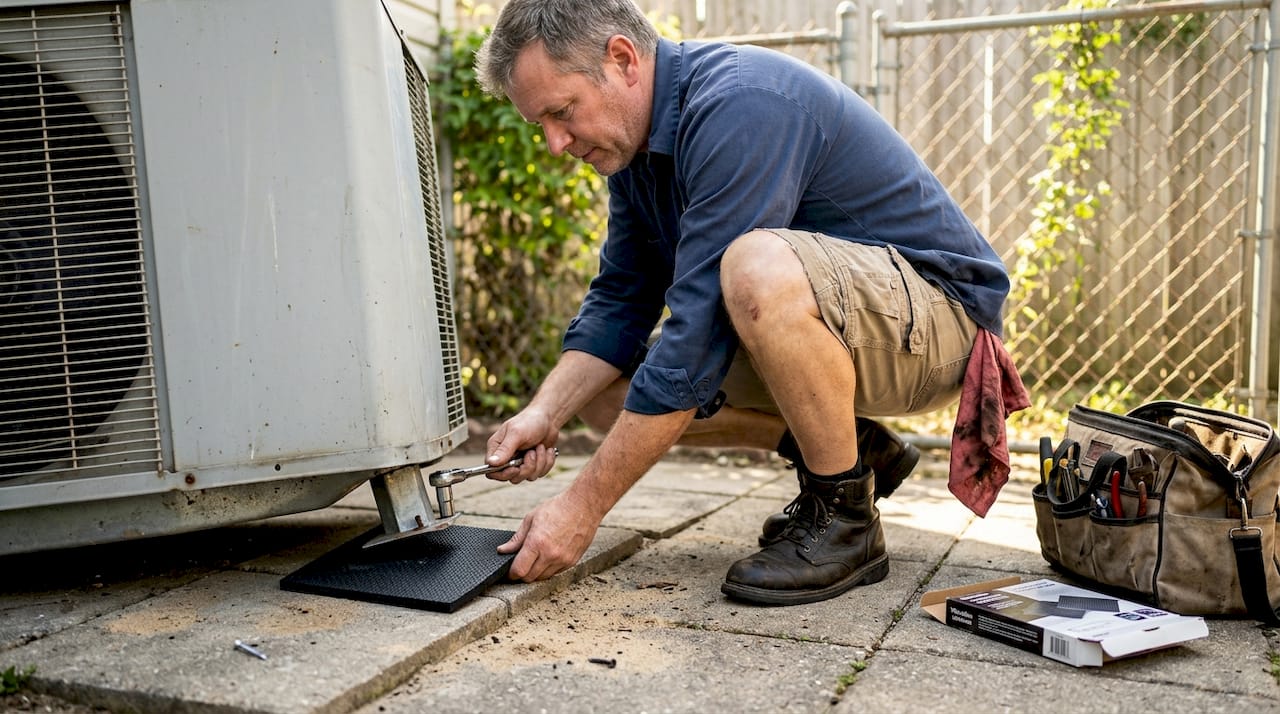
Technician adding vibration pads under HVAC unit

Quick cost comparison:

FixEstimated costNoise reduction
Vibration isolation pads$20 to $603 to 8 dB
Compressor sound blanket$80 to $2002 to 5 dB
Filter and coil cleaning$0 to $50Up to 12 dB

Pro Tip: In Tampa’s humidity, standard rubber pads can degrade quickly. Look for neoprene pads and UV-resistant sound blankets specifically rated for outdoor use. They cost a little more but last years longer in Florida’s climate.

Advanced solutions: Duct liners, sound walls, and pro upgrades

When the simple fixes aren’t enough or you want a bigger impact, it’s time to look at professional and advanced noise reduction solutions. These options cost more but deliver results that DIY methods simply can’t match.

Acoustic duct liners are installed on the first 10 to 15 feet of your supply ducts. Duct liners reduce duct-borne noise by 5 to 12 dB and typically cost between $300 and $1,500 depending on your system size and duct layout. If you hear whooshing or rushing air every time the system kicks on, this is your fix.

Sound barrier walls or fences placed between your outdoor unit and your living areas can make a real difference. Sound barrier walls reduce airborne noise by 5 to 15 dB and cost $200 to $2,000 depending on materials and size. Florida-specific sound walls reduce noise by 10 to 15 dB, and corrosion-resistant materials are essential for humid climates like ours.

Here’s what to look for when choosing advanced solutions:

  • Use fiberglass or foam duct liners that resist moisture, since Tampa’s humidity can cause mold in the wrong materials
  • Choose vinyl or composite fencing over wood for outdoor sound walls, as wood warps and loses effectiveness quickly in Florida heat
  • Make sure any barrier leaves at least 18 inches of clearance around the unit for airflow
  • Ask your contractor about anti-vibration mounts for the air handler if structure-borne noise persists after DIY attempts

“The best noise reduction investments are the ones that solve the actual source, not just add another layer on top of a problem that’s getting worse.”

A detailed HVAC maintenance step-by-step guide can help you understand which components a technician should inspect before you commit to advanced upgrades.

Advanced solution comparison:

SolutionCost rangeNoise reductionBest for
Acoustic duct liners$300 to $1,5005 to 12 dBDuct-borne whooshing
Sound barrier wall$200 to $2,0005 to 15 dBOutdoor unit noise
Anti-vibration mounts$100 to $4003 to 8 dBStructure-borne vibration

Upgrade your system: Variable-speed and combined solutions

Finally, if peace and quiet are truly your top priorities, system upgrades and combining solutions can transform your indoor environment. This is where the biggest long-term gains live.

Variable-speed HVAC systems are 10 to 25 dB quieter than older single-stage units. To put that in perspective, a standard unit running at 82 to 85 dB drops to around 76 dB or lower with a modern inverter system. That’s not a small difference. It’s the difference between hearing your system constantly and barely noticing it’s on.

For context, premium inverter units operate at or below 50 dBA at 10 feet, while standard units run between 51 and 60 dBA. Many Tampa Bay municipalities set noise limits at 50 to 60 dBA at the property line, so a quieter system also keeps you compliant.

Learn more about variable speed HVAC benefits specific to our climate before making a purchase decision. And if you’re thinking long-term, understanding how to extend HVAC lifespan will protect your investment for years ahead.

The smartest approach combines multiple solutions rather than relying on any single fix. Combining noise solutions achieves a total reduction of 10 to 25 dB, making your home feel 2 to 5 times quieter, for a cost of $400 to $1,760 without replacing the system.

Combined solution results:

StrategyTotal dB reductionPerceived result
Pads plus blanket5 to 13 dBNoticeably quieter
Pads plus blanket plus duct liner10 to 20 dBMuch quieter
All solutions plus variable-speed unit15 to 25 dBDramatically quieter
  • Aim for indoor ambient noise below 50 dBA for restful sleep and comfortable conversation
  • Layer solutions starting with the cheapest and working up to the most expensive
  • Reassess with your decibel meter after each step before spending more

Pro Tip: Don’t just pick one fix and hope for the best. Stacking pads, a sound blanket, and duct liners together costs less than $500 in many cases and can cut your noise problem in half before you ever consider a new system.

What homeowners often overlook: The hidden impact of HVAC upgrades

Most homeowners we talk to think noise reduction is about muffling the sound. They want to throw a blanket over the problem and call it done. But in our experience, the real gains come from understanding what’s actually driving the noise and fixing that root cause.

Skipping regular maintenance is the fastest way to turn a quiet system into a loud one. Dirty coils and loose parts don’t just reduce efficiency. They create vibration and turbulence that compound over time. A system that was whisper-quiet two years ago can become genuinely disruptive without seasonal care.

DIY fixes like pads and maintenance deliver quick wins, but professional help is essential for duct work, refrigerant issues, or unbalanced fans that cause vibration a homeowner simply can’t fix alone. Variable-speed systems offer the best long-term result, though the upfront cost is real.

Our honest take: diagnose first, fix the source, then layer solutions. Following a regular HVAC maintenance guide keeps small problems from becoming expensive noise emergencies. The homeowners who get the best results aren’t the ones who spend the most. They’re the ones who stay consistent.

Next steps for Tampa Bay homeowners: Professional help and resources

If you’ve worked through the DIY fixes and still can’t get the peace and quiet you deserve, it’s time to bring in a certified technician who knows Tampa Bay homes inside and out.

https://callhometherapist.com

At Home Therapist Cooling, Heating, and Plumbing, our team diagnoses HVAC noise at the source and recommends solutions that actually last in Florida’s demanding climate. Whether you need duct work, a system upgrade, or just a thorough tune-up, we’re here to help. Explore everything we offer for HVAC comfort for Tampa Bay homeowners, or walk through our HVAC troubleshooting steps to see if there’s a quick fix you haven’t tried yet. Give us a call and let’s make your home the quiet retreat it should be.

Frequently asked questions

What are the easiest ways to reduce HVAC noise in Tampa Bay homes?

Vibration isolation pads ($20 to $60) and compressor sound blankets ($80 to $200) are the quickest wins, and keeping up with quarterly maintenance prevents noise from creeping back up over time.

How much quieter will my home be after applying noise reduction tips?

Combining multiple solutions delivers a total reduction of 10 to 25 dB, which your ears perceive as 2 to 5 times quieter than before.

What type of HVAC noise is most common in Tampa Bay homes?

Airborne noise from the compressor and structure-borne noise from vibrations are the most frequent complaints, while duct-borne noise tends to show up more in older homes with aging ductwork.

Which upgrades are best for long-term HVAC noise reduction?

Variable-speed HVAC systems offer the largest single improvement, running 10 to 25 dB quieter than older single-stage models and delivering lasting comfort without constant fixes.

Garbage Disposal Repair Near Me

Garbage Disposal Repair Near Me in Tampa Bay, FL: What to Check and When to Call

If you are searching for garbage disposal repair near me, there is a good chance your kitchen sink is not draining right, the unit is humming, or you heard a noise that did not sound normal. In Tampa Bay, FL, garbage disposal problems can turn into a bigger kitchen plumbing issue fast, especially when food waste, grease, and heavy daily use all meet an older drain system. At Home Therapist, we help homeowners across Tampa, St. Petersburg, Clearwater, Brandon, and nearby communities get clear answers and dependable repairs without the runaround. We are a family-owned team with more than 1,100 five-star reviews, and in this guide we will walk you through common disposal problems, when a simple reset may help, when professional repair is the safer move, and what it looks like when one of our plumbers shows up to diagnose the issue.

Quick Answer: Garbage Disposal Repair Near Me

  • If your garbage disposal hums, leaks, trips the reset button, or backs up the sink, the problem may be a jam, worn internal parts, a clog, or an electrical issue.
  • You can safely check for a reset button or visible blockage with the power off, but never put your hand inside the unit.
  • If the sink still drains slowly, leaks under the cabinet, or makes grinding noises, it is time for professional plumbing service in Tampa Bay, FL.
  • Fast repair can help prevent cabinet damage, drain clogs, and strain on connected kitchen plumbing.
  • In many cases, a plumber can repair the disposal, clear the connected line, or let you know if replacement makes more sense.

Common Garbage Disposal Problems Tampa Bay Homeowners Run Into

Garbage disposals do a simple job, but they work in a rough environment. Food scraps, moisture, grease, soap residue, and constant use all take a toll. In many Tampa Bay homes, we also see older kitchen plumbing that makes disposal problems more noticeable because the drain line is already slowing down.

Jams and humming sounds

One of the most common calls starts with, “It just hums.” That usually means the motor is trying to run, but the grinding plate cannot turn freely. A small bone, fibrous vegetable scraps, fruit pits, silverware, or hardened buildup may be binding the mechanism. If this keeps happening, the unit may have worn components inside.

Leaks under the sink

Not every leak means the disposal body itself has failed. We often find water at the mounting flange, dishwasher connection, discharge pipe, or nearby sink drain fittings. From the homeowner’s view, it all looks like a disposal leak. A careful inspection matters because the fix may be a seal, a connection, or the disposal housing itself.

Slow draining or standing water

If the disposal runs but the sink fills with water, the problem may be farther down the line. Food sludge, grease, and debris can collect in the trap or branch drain. In that case, the disposal may not be the main problem at all. This is when related services like drain cleaning can be part of the solution.

Grinding, rattling, or metal-on-metal noise

Some noises point to a foreign object stuck inside. Other noises suggest internal wear. If the sound is sharp, irregular, or much louder than normal, shut the unit off. Continued use can damage the motor or crack internal parts.

Burning smell or repeated reset issues

A hot electrical smell, repeated tripping, or a disposal that only runs for a second can mean the motor is overheating or failing. That is not a good DIY situation. At that stage, it is smarter to schedule professional plumbing services and get a real diagnosis.

When DIY Stops Being Safe and Garbage Disposal Repair Near Me Makes Sense

We understand why homeowners search for quick fixes first. A reset button, an Allen wrench slot under the unit, or turning the power off and checking for an obvious obstruction can sometimes help. But there is a clear line between a safe basic check and a repair that should be handled by a licensed plumber.

Call for garbage disposal repair near me if:

  • The unit leaks under the sink and you cannot tell where it starts.
  • The disposal hums but will not turn after a reset attempt.
  • The sink backs up even when the disposal seems to run.
  • The breaker trips or the disposal smells hot.
  • The cabinet area has water damage, swelling, or musty odor.
  • The disposal is older and has started failing repeatedly.

Professional repair matters for two reasons. First, it prevents more damage. A small disposal leak can stain cabinet floors, loosen fittings, and create ongoing moisture problems. Second, it protects your safety. Garbage disposals combine electricity, sharp components, and water in a tight workspace. That is not the place for guesswork.

For homeowners in Clearwater, St. Petersburg, and the greater Tampa area, another factor is the condition of the rest of the kitchen plumbing. A disposal problem can overlap with a drain blockage, hidden leak, or sink connection issue. When we inspect the full setup, we can tell you whether the disposal is the cause, the symptom, or both. If the issue involves a broader drain or leak concern, we may also recommend services like leak detection or additional kitchen plumbing repair.

What Our Technician Actually Does During Garbage Disposal Repair Near Me Calls

When one of our plumbers arrives at your home in Tampa Bay, FL, the first step is not replacing parts at random. We start by listening to what you noticed. Did it stop after a loud clank? Has it leaked for days? Does it hum, smell bad, or only act up when both sink bowls fill? Those details help narrow the problem before we even touch the unit.

Step 1: Safe shutdown and visual inspection

We make sure power to the disposal is off before inspecting anything. Then we check under the sink for active drips, rust marks, swollen cabinet flooring, loose connections, and staining around the mounting ring. If there is a musty smell, we look for signs that the leak has been slow and ongoing rather than sudden.

Step 2: Check the disposal body and connections

Next, we inspect the unit housing, the sink flange, the discharge tube, and the dishwasher drain connection if one is present. It is common to find that the disposal itself is not cracked, but a nearby fitting has loosened or a seal has worn out. In other homes, we find hairline deterioration in an older disposal body, especially where moisture has sat for a long time.

Step 3: Test for jams and motor response

If the disposal has been humming, we check for a jam with the proper tool and rotate the mechanism safely. We are listening for resistance, rough spots, and scraping that suggest something is lodged inside or that internal components are worn. A healthy unit sounds consistent. A damaged one often has a rough, uneven feel and a harsh sound when it finally turns.

Step 4: Evaluate the drain path

Then we run water and check how the sink drains. If water backs up into the basin or the other sink bowl, the problem may include a downstream blockage. In many Tampa Bay kitchens, grease and food waste buildup in the trap arm or branch line can make a disposal seem broken when the real issue is restricted flow. That is why disposal repair and drain cleaning service sometimes go hand in hand.

Step 5: Explain repair versus replacement honestly

Once we know what failed, we explain it in plain English. If a reset, jam removal, reconnection, or minor repair solves the issue reliably, we will say so. If the motor is failing, the housing is leaking, or the unit is at the point where repair is not the best value, we will tell you that too. Our goal is long-term reliability, not squeezing one more week out of a disposal that is already on its way out.

That step-by-step approach matters for homeowners in Hillsborough and Pinellas County because it avoids wasted time and guesswork. You get a real diagnosis, not a rushed opinion.

Why Choosing a Local Tampa Bay Plumbing Team Helps

When you search for garbage disposal repair near me, nearby service really does matter. A local team understands the kinds of plumbing setups common in Tampa, St. Petersburg, Clearwater, Brandon, and surrounding communities. We see the same kitchen layouts, older sink drains, remodeling shortcuts, and wear patterns again and again. That experience makes diagnosis faster and more accurate.

Local service also means better communication. If your kitchen sink is out of commission, you do not want vague arrival windows or a national call center that cannot answer basic questions. You want a team that serves Tampa Bay every day and understands the urgency of getting a busy kitchen back in working order.

We also look at the whole home picture. If your garbage disposal problem is part of a broader plumbing concern, we can help with related services, from full plumbing repairs to kitchen drain issues and even adjacent equipment concerns like water heater repair if you are noticing multiple plumbing symptoms at once.

Cost and Pricing Context for Garbage Disposal Repair in Tampa Bay

Repair cost depends on what is actually wrong. In most cases, Tampa Bay homeowners pay based on the diagnosis, labor involved, whether the issue is a jam, leak, clog, electrical fault, or full unit failure, and whether replacement parts are needed. Simple corrections are usually less involved than a full replacement or a drain problem that extends beyond the disposal.

For honest planning, it helps to know that our minimum service labor cost is $249. Beyond that, total pricing can vary depending on the repair needed and the condition of the unit and surrounding plumbing. We do not believe in throwing out exact numbers before inspection because that usually leads to disappointment or confusion. A disposal that sounds jammed may actually have a failing motor. A “disposal leak” may turn out to be a sink flange or drain assembly issue. The right price starts with the right diagnosis.

If the disposal is older, leaking from the body, or failing repeatedly, replacement may be more practical than continued repair. We will walk you through the options clearly so you can make the decision that fits your home and budget.

Pro Tips for Tampa Bay Homeowners

  • Run cold water before, during, and after disposal use to help move ground food through the drain line.
  • Avoid grease, fibrous foods, coffee grounds, pasta, rice, and bones. In Florida kitchens, warm temperatures can make greasy buildup turn into drain trouble faster than people expect.
  • If the unit stops, turn the power off first. Do not reach inside, even if you think the obstruction is easy to grab.
  • Pay attention to small leaks under the sink. In humid Tampa Bay homes, steady moisture under a cabinet can lead to odor and cabinet damage over time.
  • If your sink drains slowly even when the disposal runs, schedule service sooner rather than later. Early drain cleaning is easier than dealing with a full kitchen backup.
  • Before storm season gets busy, take care of existing plumbing issues. Small kitchen drain problems never seem to improve on their own.

Frequently Asked Questions About Garbage Disposal Repair Near Me

Can a humming garbage disposal be repaired?

Often, yes. A humming sound commonly means the motor has power but the mechanism is jammed. If the jam is removed quickly and the motor has not been damaged, repair may be possible. If the motor has overheated or internal parts are worn, replacement may be the better option.

Why is my garbage disposal leaking from the bottom?

A bottom leak can mean the disposal housing or internal seals have failed. That usually points to wear inside the unit rather than a loose external connection. A plumber can confirm the source and let you know whether repair is realistic.

Should I repair or replace my garbage disposal?

That depends on the age of the unit, the type of failure, and how often problems have been happening. Minor jams or connection issues can often be repaired. If the body is leaking, the motor is failing, or the unit has become unreliable, replacement may make more sense.

Can a clogged sink make it seem like the garbage disposal is broken?

Yes. We see that often in Tampa Bay homes. The disposal may still run, but a partially blocked drain line keeps water and food waste from moving out. In those cases, the disposal is not always the main issue.

Is it safe to use chemical drain cleaners with a garbage disposal?

In most cases, we do not recommend it. Chemical cleaners can sit in the disposal and drain components, and they may not solve the actual blockage. They can also create a harsher environment for anyone working on the system afterward.

How quickly should I call for service?

If the unit is leaking, making loud grinding sounds, tripping power, or leaving the sink unusable, it is best to call promptly. Fast service helps prevent cabinet damage and keeps a drain issue from getting worse.

Why Choose Home Therapist

Home Therapist Cooling, Heating, and Plumbing is a family-owned company serving Tampa Bay with licensed, insured professionals who treat your home with care. Our HVAC License is CAC1819196 and our Plumbing License is CFC1431159. We believe in transparent communication before and after every job, clean and respectful work inside your home, and solutions built for long-term reliability instead of quick temporary fixes.

We are proud to have earned more than 1,100 five-star reviews from Tampa Bay homeowners. The feedback we hear again and again is consistent: people appreciate clear explanations, polite technicians, clean work areas, and repairs that solve the issue without pressure. That reputation matters when you are choosing someone to work in your kitchen.

You can learn more about our reputation and stay connected here: Facebook, Instagram, Google Business, BBB, and Google Reviews.

Schedule Garbage Disposal Repair in Tampa Bay, FL

If your disposal is jammed, leaking, noisy, or backing up the sink, Home Therapist is ready to help with calm, professional service across Tampa Bay, FL and surrounding communities. We serve homeowners in Tampa, Clearwater, St. Petersburg, Brandon, and nearby areas with practical plumbing solutions and clear communication every step of the way. Call (813) 343-2212 to schedule service, or visit our home page to learn more about our team. You can also check our Google Business profile and read our Google Reviews to see why so many local homeowners trust Home Therapist.

Air Conditioning Repair

Air Conditioning Repair in Tampa Bay, FL: Signs, Process, and What to Expect

When your system starts blowing warm air, making strange noises, or struggling to keep up with the Florida heat, air conditioning repair moves from a small inconvenience to a real comfort problem fast. In Tampa Bay, FL, where long cooling seasons and heavy humidity put constant strain on home systems, quick action can prevent a minor issue from turning into a much larger repair. In this guide, we will walk through the signs your AC may need service, what our technicians actually do during a repair visit, what costs typically look like, and why local experience matters for homeowners across Tampa, St. Petersburg, Clearwater, Brandon, and Riverview.

Quick Answer: Air Conditioning Repair Basics

  • Air conditioning repair is usually needed when your system shows signs like weak airflow, warm supply air, short cycling, unusual sounds, or rising indoor humidity.
  • In Tampa Bay, FL, dirty coils, failing capacitors, clogged drain lines, refrigerant issues, and blower problems are some of the most common repair causes.
  • A thorough repair visit should include diagnosis first, not guessing, followed by clear explanations and options before work begins.
  • Prompt repairs often help protect efficiency, reduce wear on major components, and improve comfort during peak summer weather.
  • If your system is older or breaking down often, it may make sense to compare AC repair service with AC installation options.

Common Signs You Need Air Conditioning Repair in Tampa Bay

Most homeowners do not call for air conditioning repair after the first small symptom. Usually, the system gives a few warnings first. The challenge is that in the greater Tampa area, even a small cooling issue can feel much worse because outdoor heat and humidity keep pressing on the house all day.

Weak airflow from vents

If the thermostat is set correctly but rooms feel stuffy, weak airflow may point to a blower problem, a clogged filter, a dirty evaporator coil, or duct restrictions. In older Tampa Bay homes, we also see airflow complaints tied to aging duct systems that leak cooled air into attics or crawl spaces.

Warm air or uneven cooling

If one room feels acceptable and another never cools down, the issue may be more than thermostat settings. Low refrigerant, coil problems, sensor issues, or a struggling compressor can all affect how evenly your system cools. Homeowners in Clearwater and St. Petersburg often notice this first in sun-facing rooms during the afternoon.

Unusual noises

A healthy AC should not bang, grind, buzz loudly, or screech. A buzzing sound can come from an electrical issue or failing component. Grinding can suggest motor wear. Rattling may be as simple as a loose panel, but it can also signal vibration from a part that is beginning to fail. We take those sounds seriously because they help guide the diagnosis.

Short cycling

Short cycling means the AC turns on, runs briefly, and shuts off before the home reaches the desired temperature. This is hard on the system and can increase energy use. In Hillsborough and Pinellas County homes, short cycling may relate to airflow restrictions, electrical control problems, thermostat issues, or an oversized system.

Higher humidity indoors

Your air conditioner does more than cool the air. It also helps remove moisture. If your home feels clammy even when the AC is running, that can be a sign the unit is not operating correctly. In Florida, that matters because indoor moisture can affect comfort, air quality, and how cool your home actually feels.

If these warning signs sound familiar, it is a good time to schedule a professional evaluation. In many cases, a repair paired with regular AC maintenance can help prevent repeat problems.

The Air Conditioning Repair Process: What Our Technician Actually Does

Homeowners often want to know what happens after they schedule air conditioning repair. That is a fair question. A proper visit should feel organized, clean, and easy to understand. Here is how we typically approach it at a Tampa Bay home.

Step 1: Listen to the homeowner and verify the complaint

We start by asking what you have noticed. Maybe the master bedroom is warm at night, the outdoor unit hums but does not start, or water is collecting near the indoor equipment. Those details matter because AC problems do not always show up the same way during a quick inspection.

Step 2: Check thermostat operation and system response

Before opening panels, we confirm thermostat settings, cooling demand, and whether the system responds correctly. If the unit starts, we pay attention to timing, sound, airflow strength, and whether the air coming from the supply vents feels appropriately cool.

Step 3: Inspect the indoor unit

At the air handler or furnace cabinet, we check the filter, blower compartment, evaporator coil area, drain system, and electrical components. A clogged drain line may leave the area damp or trigger a safety switch. A dirty coil can restrict heat transfer and reduce airflow. If a blower capacitor or motor is failing, we may hear strain during startup or notice inconsistent fan operation.

Step 4: Inspect the outdoor condenser

Outside, we examine the condenser coil, fan motor, contactor, capacitor, wiring, and overall condition of the cabinet. In Tampa Bay, FL, outdoor units deal with intense sun, rain, plant debris, and salt air in some coastal areas. It is common to find coil buildup, insect activity in electrical compartments, or worn parts that have been stressed by long summer run times.

Step 5: Take diagnostic readings

We use professional testing tools to evaluate how the system is operating. Depending on the issue, that may include electrical checks, temperature split observations, drain flow checks, or refrigerant performance evaluation. We do not guess. We verify the problem before recommending a fix.

Step 6: Explain what we found in plain English

If a capacitor is weak, we explain what that part does and why the system may struggle to start. If the drain line is clogged, we show you the cause and what needs to be cleared. If we find signs of a larger issue, like a failing blower motor or refrigerant leak concern, we talk through the options clearly so you can make an informed decision.

Step 7: Complete the repair cleanly and test the system

Once approved, we make the repair, secure panels, and retest operation. We confirm that the system starts properly, runs as expected, and delivers improved cooling performance. If we cleared a drain line, we check that it is draining properly. If we replaced an electrical component, we verify stable operation. Before leaving, we review what was done and what to watch for next.

That repair process matters because real air conditioning repair is not just swapping parts. It is solving the comfort problem correctly, with long-term reliability in mind.

Why Local Tampa Bay Experience Matters for AC Repairs

Not every air conditioning issue happens in the same environment. HVAC service in Tampa Bay, FL comes with local conditions that shape how systems wear down and how repairs should be approached.

First, our cooling season is long. Many systems run hard for much of the year, which means contactors, capacitors, blower motors, and drain systems see a lot of use. Second, humidity is constant. A unit that cools but does not control moisture well can still leave a house uncomfortable. Third, many homes in Tampa, Brandon, Riverview, and surrounding areas have a mix of older ductwork, attic heat exposure, and changing insulation conditions that affect performance.

We also know when a repair should be viewed in a bigger context. For example, if your system can be repaired but has ongoing airflow issues, it may be worth pairing the immediate fix with a plan for better upkeep through routine AC maintenance. If the equipment is older and facing repeated breakdowns, we may talk through whether repair or full AC replacement makes more sense.

Local experience also helps us explain what is normal and what is not. Your AC running frequently during a hot Tampa afternoon can be normal. Your AC running constantly without bringing the home down to set temperature is not. That distinction can save homeowners time, money, and frustration.

Air Conditioning Repair Cost and Pricing Context

Air conditioning repair costs depend on the actual problem, system age, access, and parts involved. In most cases, smaller fixes such as electrical component replacement or drain line service cost less than major repairs involving motors, coils, or refrigerant-related issues. Typical repair costs in Florida range widely, so the only honest way to price a job is after diagnosis.

At Home Therapist, our minimum service labor cost is $249. From there, pricing depends on what the system needs. We believe homeowners in Tampa Bay deserve clear communication before work starts, not vague estimates and surprises later.

In some situations, repair is the right move. In others, especially with an aging unit that has frequent issues, it may be smarter to compare immediate repair costs with the value of a newer system. If you are trying to weigh those options, our team can help you compare repair solutions and installation options honestly.

Pro Tips for Tampa Bay Homeowners

  • Change or check your air filter regularly, especially during peak cooling months. A restricted filter can contribute to weak airflow and system strain.
  • Keep the outdoor unit clear of leaves, weeds, and heavy debris so air can move through the condenser properly.
  • Pay attention to humidity indoors. If the house feels sticky, that can be an early warning sign even before cooling performance drops.
  • Do not ignore water near the indoor unit. In Florida, clogged condensate drains are common and should be addressed quickly.
  • Schedule preventive service before the hottest part of summer. It is easier to catch worn parts before they fail during a high-demand period.
  • After storms, check that your system is running normally and that debris has not blocked the outdoor unit. Hurricane season in Tampa Bay can affect HVAC equipment more than many homeowners realize.

Frequently Asked Questions About Air Conditioning Repair

How do I know if I need air conditioning repair or a full replacement?

If the system is relatively repairable, not breaking down often, and the needed fix is limited, repair is usually the first step. If the unit is older, inefficient, or facing repeated issues, replacement may be worth discussing.

Is weak airflow always caused by a dirty filter?

No. A dirty filter is common, but weak airflow can also come from blower issues, dirty coils, duct leaks, or other system restrictions. A proper diagnosis helps narrow it down.

Why is my AC cooling some rooms but not others?

Uneven cooling can be caused by airflow imbalance, duct issues, thermostat placement, insulation differences, or equipment problems. In Tampa Bay homes, sun exposure and attic heat often make the difference more noticeable.

Should I turn my system off if it is making strange noises?

If the noise is loud, sudden, or sounds mechanical, it is a good idea to shut the system off and schedule service. Continuing to run it can sometimes worsen damage.

Can maintenance reduce the chance of future repairs?

Yes. While maintenance cannot prevent every breakdown, it often helps catch wear, drainage problems, dirty coils, and airflow issues earlier. That can lower the chances of a no-cool call later.

Why Choose Home Therapist for Air Conditioning Repair

Home Therapist is a family-owned company serving homeowners across Tampa Bay, FL with licensed, professional HVAC care. We believe repair work should feel straightforward and respectful from start to finish. That means licensed and insured technicians, transparent communication before and after every job, and clean work inside your home. We focus on long-term reliability, not quick fixes that leave you calling again a week later.

Our team is licensed and insured, including HVAC License: CAC1819196 and Plumbing License: CFC1431159. We are proud to have earned more than 1,100 five-star reviews from Tampa Bay homeowners who value professionalism, honesty, and real results. If you want to learn more about our reputation and stay connected, you can visit our Facebook, Instagram, and Google Business profile. For added trust, you can also view our BBB profile and read our Google Reviews.

Schedule Air Conditioning Repair in Tampa Bay, FL

If your system is not cooling the way it should, Home Therapist is here to help with calm, professional air conditioning repair across Tampa Bay, FL and surrounding communities. Whether you are in Tampa, Clearwater, St. Petersburg, Brandon, Riverview, or nearby areas, our team can diagnose the issue, explain your options clearly, and get your comfort back on track. To schedule service, call Home Therapist at (813) 343-2212 today.

Heat Repair

Heat Repair in Tampa Bay, FL: Signs, Fixes, and When to Call a Pro

When you need heat repair, the problem usually shows up before the system stops completely. You may hear a rattling sound at startup, notice one room staying cool while another gets too warm, or realize your heater keeps cycling on and off without ever making the house comfortable. In Tampa Bay, FL, heating systems do not run as often as air conditioners, which means small issues can sit unnoticed until the first cold snap. In this guide, we will walk through the warning signs, why professional repair matters, the most common heating problems we see in local homes, what the repair process looks like when our technician arrives, and how homeowners in Tampa, St. Petersburg, Clearwater, Brandon, and Riverview can make smart decisions about comfort and safety.

Quick Answers About Heat Repair

  • Heat repair is best scheduled early, when you first notice uneven temperatures, odd smells, short cycling, or new noises.
  • In Tampa Bay homes, common heating issues include thermostat problems, ignition or pilot issues, dirty burners, airflow restrictions, and worn electrical components.
  • Professional heat repair protects safety, improves efficiency, and helps prevent repeat breakdowns.
  • Most repairs depend on the age of the system, the failed part, and how long the issue has been affecting operation.
  • For local homeowners, regular tune-ups and filter changes often prevent many avoidable heating problems.
  • If your system is not heating properly, our team can also help you evaluate whether heating repair service or replacement makes more sense.

Why Heat Repair Matters More Than Many Tampa Bay Homeowners Expect

Because Florida winters are shorter and milder than in many parts of the country, heating systems often get ignored. That is understandable, but it can create a different kind of problem. A heater that sits idle for months can develop issues that only show up when you suddenly need it. Dust settles on burners, electrical contacts corrode, drain lines can clog on heat pump systems, and filters get left in place too long.

For homeowners in Clearwater, St. Petersburg, and the greater Tampa area, the first sign is often comfort. The house takes too long to warm up. A bedroom stays chilly. The system runs but the air feels lukewarm. Then there are the more obvious warnings, including buzzing, banging, a burning dust smell that lasts too long, or a thermostat that does not seem to match what the house actually feels like.

Professional heat repair is important for three reasons. First, safety. Gas furnaces, electric heat strips, and heat pumps all involve components that should be checked correctly. Second, efficiency. A struggling heater can run longer than necessary and increase utility costs. Third, reliability. Small failures usually do not fix themselves. They spread stress to other parts and turn a manageable repair into a larger job.

If your comfort issues are tied to airflow or overall system condition, it can also help to look at related services like HVAC maintenance and indoor air quality solutions, especially in homes dealing with dust, humidity, or older duct systems.

Common Heat Repair Problems We See in Tampa Bay, FL

Thermostat issues

Sometimes the heater itself is not the main problem. We often find thermostats with weak batteries, calibration issues, loose wiring, or settings that were changed without anyone realizing it. A thermostat may be calling for heat inconsistently, or it may satisfy too early and shut the system off before the house reaches the set temperature.

In many Tampa Bay homes, especially older homes with updated equipment, thermostat compatibility can also come into play. If the controls are not matched properly to the system, performance suffers.

Pilot light or ignition problems

For gas heating systems, ignition issues are a common reason for no-heat calls. The system may try to start and fail, or it may lock out after repeated attempts. Homeowners sometimes notice clicking sounds, a brief startup, or no warm air at all. On older systems, pilot-related concerns can also show up. These problems require careful diagnosis because the cause can range from a dirty sensor to a faulty ignition component or gas flow issue.

Heat exchanger and burner concerns

Burners need to ignite cleanly and operate consistently. When they are dirty or worn, the system may heat unevenly, shut down unexpectedly, or produce unusual odors. A heat exchanger issue is more serious and must be evaluated by a qualified technician. This is one reason we always recommend professional service rather than trial-and-error repairs.

Airflow restrictions

Restricted airflow affects both comfort and system health. A clogged filter, blocked return, dirty blower wheel, or duct problem can make the heater work harder than it should. Homeowners in Hillsborough and Pinellas County often notice this as weak airflow at the vents, hot and cold spots, or longer run times.

Electrical component failure

Capacitors, relays, sequencers, control boards, and blower motors all play a role in proper heating operation. On electric heat and heat pump systems, these components are common failure points. Sometimes the heater runs but does not produce enough warm air. Other times, the outdoor unit works but the indoor unit is not moving air correctly. In those cases, the issue may overlap with broader system repair needs rather than a heating-only problem.

What a Real Heat Repair Visit Looks Like

When we arrive for a heat repair call, we start with the symptoms you noticed, because that helps narrow the diagnosis. We ask what the system is doing, when the problem started, whether the issue happens all the time or only at certain times of day, and whether you have noticed odors, sounds, or rooms that feel different from the rest of the home.

From there, we move step by step.

Step 1: Confirm the complaint

We operate the thermostat and observe the system response. If the heater is short cycling, we watch how long it runs. If there is no heat, we verify whether the unit is trying to start. If you mentioned a smell, we pay attention to whether it is normal dust burnoff after a long off-season or something that suggests overheating or an electrical issue.

Step 2: Check airflow and basic system condition

Next, we inspect the filter, blower compartment, visible wiring, and accessible duct connections. A heavily loaded filter is a common sight. We also look for dust buildup, signs of moisture, rust around key areas, and anything loose or worn that could affect performance.

Step 3: Test the heating sequence

On a gas furnace, we check the startup sequence from call for heat through ignition, flame sensing, blower operation, and shutdown. We listen for delayed ignition, inconsistent burner operation, or vibration that may point to a mechanical problem. On a heat pump or electric air handler, we test the system through the proper heating cycle and verify whether the heating elements or reversing components are operating as they should.

Step 4: Identify the failed part or condition

This is where experience matters. We may find a thermostat issue, a dirty flame sensor, a worn contactor, a blower capacitor that is no longer performing properly, or a safety switch shutting the system down. Sometimes the problem is not one dramatic failure. It is a combination of neglect, restricted airflow, and a stressed component.

Homeowners often ask what we actually see when something is wrong. In real life, it may look like soot or dust around burners, discolored wiring, a motor that hums before it starts, a blower wheel coated in debris, or insulation around components showing age and wear. It may sound like a metal rattle at startup, a repeated click with no ignition, or a blower that ramps up unevenly.

Step 5: Perform the repair and verify operation

Once we explain the issue, we make the repair if approved and then test the system again. We do not stop at replacing a part. We verify that the unit now starts correctly, heats properly, moves air as it should, and cycles off normally. We also explain what we found, what changed, and whether any other conditions should be monitored.

That process matters in Tampa Bay, FL because many systems here are heat pumps that do most of the heavy lifting year-round. If heating performance is off, cooling performance may not be far behind. If your equipment is aging, we may also discuss whether future planning around heating installation options or even full system replacement would be more cost-effective long term.

Heat Repair in Tampa, St. Petersburg, Clearwater, Brandon, and Riverview

Local experience matters because the way heating systems are used in Florida is different. In Tampa, older homes may have a mix of newer thermostats and older ductwork. In St. Petersburg and Clearwater, salt air and humidity can accelerate wear on exposed components. In Brandon and Riverview, we often see growing neighborhoods with newer heat pump systems that still need regular service to stay efficient.

That local context changes how we approach heat repair. We understand that many homeowners here need a technician who can quickly tell the difference between a simple control issue, a maintenance-related problem, and a repair that needs immediate attention. We also know that one comfort issue often overlaps with another. A home with poor heating airflow may also need help with filtration, duct performance, or broader home comfort solutions. Our goal is to solve the actual problem, not just the symptom that brought us to the house.

What Heat Repair Typically Costs in Tampa Bay

Repair pricing depends on what failed, how accessible the system is, and whether the issue is isolated or part of a larger condition affecting performance. In most cases, Tampa Bay homeowners can expect repair costs to vary widely based on the part involved and the amount of labor required. Minor repairs may stay relatively modest, while electrical, ignition, motor, or control-related repairs can cost more.

We always want homeowners to have a realistic baseline, so our minimum service labor cost is $249. From there, the final price depends on diagnosis and repair scope. We do not believe in guessing before inspection, because the same symptom can come from very different causes. For example, a system that will not heat could be dealing with a thermostat problem, an airflow restriction, a failed component, or a larger equipment issue. The honest answer comes after testing.

If the system is older or the repair is substantial, we will explain your options clearly so you can decide whether repairing the current unit or planning a replacement makes more sense.

How to Choose the Right Heat Repair Service

When you are comparing heating contractors, start with licensing, communication, and local reputation. You want a company that explains what it finds in plain English, tests the system after the repair, and respects your home while working inside it.

Ask whether the technician is licensed and insured. Ask how the diagnosis will be communicated. Ask whether the company has experience with the type of heating system in your home, especially if you have a heat pump or an older gas furnace. Read reviews carefully and look for comments about professionalism, cleanliness, and whether the fix actually held up.

Those details matter more than a flashy sales pitch. A good heat repair visit should leave you with answers, not confusion.

Maintenance Tips to Help Prevent Future Heat Repair Calls

Preventing heating problems in Florida is often about consistency. The system may not run every day in winter, but it still needs attention.

  • Change your air filter on schedule, especially if you have pets, renovations, or high dust levels.
  • Test your heater before the first colder night so you are not discovering a problem when you need the system most.
  • Keep supply and return vents clear of furniture, rugs, and storage items.
  • Schedule routine professional maintenance so worn parts and airflow issues can be caught early.
  • Pay attention to new sounds, odors, and short cycling. Those are often early warnings, not harmless quirks.
  • After storm season, have your HVAC equipment checked if you suspect electrical surges or debris-related damage.

For many homeowners in Tampa Bay, FL, a maintenance visit once a year goes a long way toward avoiding mid-season surprises.

Frequently Asked Questions About Heat Repair

How do I know if I need heat repair or just maintenance?

If your system is making new noises, not heating evenly, shutting off too soon, or not producing warm air at all, you likely need a repair diagnosis. If it is operating normally but overdue for service, maintenance may be enough.

Is it normal to smell something when the heater first turns on?

A light dusty smell can be normal after months of inactivity. If the odor is strong, lingers, or smells electrical or like something is burning, turn the system off and schedule professional service.

Can a thermostat really cause heating problems?

Yes. Thermostat settings, wiring, battery issues, or compatibility problems can all affect whether your system heats correctly. It is one of the first things we check during a service call.

Should I repair or replace an older heating system?

That depends on the age of the equipment, the type of failure, repair cost, and overall condition. In many cases, a repair makes sense. If breakdowns are becoming more frequent, replacement may be the better long-term option.

Do heat pumps need heat repair in Florida?

Absolutely. Many Tampa Bay homes rely on heat pumps for both cooling and heating. If heating mode is not working correctly, the issue still needs to be diagnosed professionally, even if cooling seemed fine recently.

Why Choose Home Therapist for Heat Repair

At Home Therapist, we believe homeowners deserve clear answers and dependable work. Our technicians are licensed and insured, HVAC License: CAC1819196 | Plumbing License: CFC1431159. We communicate before the job starts and after the work is done, so you understand what we found and what your options are. We keep our workspace clean, treat your home with respect, and focus on long-term reliability rather than quick temporary fixes.

We are proud to have 1,100+ five-star reviews from Tampa Bay homeowners who value professionalism, comfort, and honest service. If you want to learn more about our local reputation, you can find us on Facebook, Instagram, and Google Business. For additional trust resources, you can also view our BBB profile and our Google reviews.

Schedule Heat Repair With a Local Tampa Bay Team

If your heater is making strange noises, struggling to keep up, or not heating your home the way it should, our team is here to help. Home Therapist provides professional heat repair for homeowners across Tampa Bay, FL and surrounding communities. Call us at (813) 343-2212 to schedule service and get clear, respectful help from a local team that puts comfort first. You can also learn more through our Google Business profile if you would like to see more about our service in the Tampa Bay area.

Outdoor AC unit installation with greenery at 39926 Harmon Grove Ct, Zephyrhills, FL 33542.

AC Maintenance in Zephyrhills, FL 33540

Routine AC maintenance in Zephyrhills, FL 33540 can make a big difference, especially when a system seems to be working fine on the surface. In this visit, a homeowner scheduled a preventive tune-up because the equipment was operating properly, but it had been a while since the last service. That is a common situation in Florida. Your air conditioner may still be cooling, yet hidden issues can begin developing inside the system. During this maintenance visit, we found that the equipment was operating within normal parameters, but we also discovered organic growth inside the air handler. The good news is that there were no mechanical issues at the time of service, and we were able to explain a practical next step to help protect indoor air quality.

Case Recap

  • Service performed: preventive AC maintenance on one residential system
  • Location: Zephyrhills, FL 33540
  • System type: Carrier 3-ton split system, approximately 5 years old
  • Inspection included system pressures, electrical components, and overall operation
  • Findings: system operating properly, with organic or microbial growth present inside the air handler
  • Recommended next step: UV germicidal light installation to address growth and help prevent recurrence

What the Homeowner Was Experiencing

The homeowner was not dealing with a no-cool emergency or an obvious breakdown. Instead, the goal was simple and smart: schedule maintenance before problems show up. According to the appointment details, only one system needed service, it was believed to be between 1 and 5 years old, and it appeared to be working properly. The homeowner mainly wanted to take advantage of a maintenance visit and make sure the equipment stayed in good shape.

That kind of call is more important than many people realize. In Zephyrhills, Florida 33540, air conditioners work through long cooling seasons, high humidity, and frequent run times. Even when a system still cools the home, moisture inside the equipment can contribute to buildup in places the homeowner never sees. That is especially true inside the air handler, which is the indoor section of the system that moves cooled air through the home.

From the homeowner’s point of view, there may not have been any clear warning signs. No loud noise was reported, no major comfort complaint was noted, and no active malfunction was documented. Still, preventive service gave us the chance to inspect the system closely and catch a condition that could affect indoor air quality if left alone.

Inspection and Diagnosis

When we perform HVAC service in Zephyrhills, FL, our goal is not just to look for a broken part. We want to confirm how the system is operating as a whole. For this visit, the inspection focused on the areas documented in the maintenance report: system pressures, electrical components, and overall operation.

That process matters because each of those checkpoints tells part of the story.

  • System pressures: This helps us confirm the cooling cycle is operating within an acceptable range.
  • Electrical components: These parts control and support normal system operation, so they need to be inspected for safe and reliable performance.
  • Overall operation: We verify that the system starts, runs, and cools as expected.

On this visit, the system was found to be operating within normal parameters. The refrigerant pressures were within an acceptable range, and the compressor along with the condenser fan motor had amperage draws within spec. In plain language, the key operating checks looked normal. We did not find a mechanical failure that required repair that day.

At the same time, the inspection revealed organic or microbial growth inside the air handler. That finding is important because the air handler is where conditioned air passes through the system before it is delivered into the home. In Florida’s humid climate, that indoor section can be a place where moisture and biological buildup develop over time. The equipment may still cool properly, but the condition inside the cabinet can still deserve attention.

Because the operating checks were normal and the main concern was growth inside the air handler, the logical recommendation was not a major repair. Instead, we recommended a UV germicidal light as a targeted indoor air quality improvement.

How the Service Visit Helped

Even when no repair is needed, a maintenance visit provides real value because it confirms the condition of the system and points out issues early. In this case, we were able to do three important things for the homeowner.

First, we verified proper operation. That gave the homeowner confidence that the Carrier split system was currently doing its job without signs of a mechanical problem in the areas checked during the visit.

Second, we identified a condition that might otherwise have gone unnoticed. Organic growth inside an air handler is not something most homeowners can easily see, especially when the indoor unit is located in a closet. Finding it during maintenance is exactly why tune-ups matter.

Third, we offered a practical recommendation tied directly to what we found. Rather than suggesting unnecessary work, we explained that a UV germicidal light may help address the growth present in the air handler and help reduce the chance of it coming back.

For homeowners who want to better understand the value of regular tune-ups, our HVAC maintenance checklist for homeowners and our air conditioning maintenance guide for Tampa Bay give a good overview of what preventive service is meant to accomplish.

Why This Recommendation Makes Sense

When we recommend a UV germicidal light, the reason should be clear and specific. In this job, the reason was the organic growth observed inside the air handler.

A UV germicidal light is designed to shine on targeted interior areas of the HVAC system where biological growth can develop. The idea is straightforward. If moisture and surface conditions inside the air handler allow buildup to form, adding UV treatment can be one way to help manage that environment. It is not a replacement for proper maintenance, but it can be a helpful add-on when growth is already present.

This recommendation also fits the overall condition of the system. Since the unit was otherwise operating properly, there was no sign that the homeowner needed a major repair based on the information documented during the visit. Instead, the next step was focused on indoor air quality and system cleanliness, not on correcting a cooling failure.

If you want to learn more about how HVAC systems affect comfort beyond temperature alone, our article on the role of HVAC in indoor air quality explains why the condition inside the system matters. We also cover this option in more detail in our page about adding UV light to an air conditioning system.

Pro Tips for Homeowners in Florida

Homes in Zephyrhills and across the Tampa Bay area deal with heat, humidity, and long AC run times. That makes preventive care especially important. Here are a few practical tips homeowners can use after a maintenance visit like this one.

  • Do not wait for a breakdown to schedule service. If your AC seems to be running fine, that is often the best time to have it checked. Preventive maintenance helps catch hidden issues before they turn into comfort problems.
  • Pay attention to indoor air quality, not just cooling performance. A system can cool the home and still have buildup inside the air handler. If you notice musty conditions or want cleaner operation, ask whether indoor air quality improvements may help.
  • Know where your air handler is located. In many Florida homes, the indoor unit is tucked into a closet or another enclosed space. Since it is out of sight, conditions inside the cabinet can be easy to miss between service visits.
  • Keep up with filter changes. A clean filter supports airflow and helps your system operate more efficiently. It also reduces the amount of debris moving through the equipment.
  • Schedule maintenance before peak summer strain. AC systems in Zephyrhills, FL 33540 work hard during hot weather. A seasonal check can help confirm the system is ready for long run cycles.
  • Ask questions when recommendations are made. A good technician should explain what was found, why it matters, and what the next step is meant to do. Clear communication is part of quality service.

Frequently Asked Questions

If the system was cooling properly, why was maintenance still worth scheduling?

Because proper cooling does not always mean the system is completely free of issues. In this visit, the operating checks looked normal, but we still found organic growth inside the air handler. Preventive maintenance helps uncover conditions that are easy to miss during everyday use.

What was actually found during this AC maintenance visit?

We found that the system was operating within normal parameters, with acceptable refrigerant pressures and normal documented electrical performance in the areas checked. We also found organic or microbial growth inside the air handler, which led to the UV light recommendation.

Did the homeowner need a repair that day?

Based on the documented findings, no mechanical issues were identified at the time of service. The main recommendation was a UV germicidal light to address the growth found inside the air handler and help improve indoor air quality.

Why recommend a UV germicidal light for this system?

It was recommended because organic growth was present inside the air handler. A UV germicidal light is a targeted indoor air quality improvement that may help address that condition and help reduce recurrence in that part of the system.

Is this kind of issue common in Florida homes?

Florida homes often deal with high humidity and extended cooling seasons, which can create conditions where buildup develops inside HVAC equipment. That is one reason routine AC maintenance in Zephyrhills, Florida is so useful, even when the system appears to be running normally.

What should a homeowner do after a visit like this?

Continue regular maintenance, keep filters changed as needed, and review any recommended indoor air quality improvements. If growth has been identified inside the air handler, it makes sense to discuss the UV light option and decide whether it fits the home’s needs.

Why Homeowners Choose Home Therapist

When homeowners invite us into their homes, they want more than a quick once-over. They want licensed, professional technicians who explain what they see clearly and treat the home with respect. That is how we approach every maintenance visit. We focus on the actual condition of the system, communicate findings in plain English, and recommend only the work that makes sense for the situation.

For homeowners in Zephyrhills, FL 33540 and throughout Tampa Bay, that means showing up prepared, inspecting carefully, and keeping the conversation honest. If the system is operating properly, we say so. If we find something that deserves attention, we explain why. That steady, transparent approach helps homeowners make informed decisions about comfort, air quality, and long-term reliability.

If you want to learn more about our team, visit our About Us page. You can also connect with Home Therapist through our Pinterest profile and our Reddit community profile. For third-party trust and business information, you can find us on the Better Business Bureau, the Tampa Bay Chamber of Commerce, and BuildZoom.

Schedule AC Service in Zephyrhills

If your system has been running but it has been a while since the last tune-up, preventive service is a smart next step. Our team provides AC maintenance and HVAC service for homeowners in Zephyrhills, FL 33540, with a focus on clear answers, careful inspections, and practical recommendations. If you want to make sure your equipment is operating as expected and address concerns like buildup inside the air handler, Home Therapist is here to help with straightforward service you can feel comfortable about.

Heating Maintenance

Heating Maintenance in Tampa Bay, FL: Why It Still Matters

Heating maintenance is easy to overlook in Tampa Bay, FL, because our winters are short and mild compared with other parts of the country. Even so, your heating system still needs regular care. In homes across Tampa, St. Petersburg, Clearwater, Brandon, and Riverview, we often find heaters that sat unused for months, then struggled the first time a cold front moved in. A maintenance visit helps catch wear, dirt buildup, airflow problems, and safety concerns before they turn into an inconvenient breakdown. In this guide, we will walk through what heating maintenance includes, why it matters in Florida, what systems are most common here, what a real service visit looks like, and how Home Therapist helps local homeowners stay comfortable.

Quick Answer: What Tampa Bay Homeowners Should Know About Heating Maintenance

  • Heating maintenance helps your system start reliably after long periods of little or no use.
  • Regular service can improve efficiency, reduce wear, and lower the chance of mid-season repairs.
  • In Tampa Bay homes, heat pumps are common and need careful inspection because they work year-round.
  • A proper visit includes thermostat testing, filter inspection, electrical checks, cleaning, and a full performance review.
  • Maintenance can also uncover safety concerns such as loose wiring, blocked airflow, corrosion, or combustion issues on furnace systems.
  • If your heater already shows signs of trouble, it may be time for heating repair service instead of a tune-up alone.

What Heating Maintenance Involves

When we perform heating maintenance, we are not just giving the system a quick visual check. We are looking at the parts that affect comfort, reliability, efficiency, and safety. That matters in Tampa Bay because many systems sit idle for much of the year. Dust settles, filters get forgotten, electrical components age, and small issues can go unnoticed until a chilly morning puts the whole system to work.

The basics we inspect on most systems

A typical heating maintenance visit starts with the thermostat. We check that it responds properly, switches modes correctly, and calls for heat the way it should. If the thermostat is not calibrated well or has connectivity issues, the rest of the system can appear to be failing when the problem actually starts at the controls.

Next, we inspect the air filter and airflow path. A clogged filter is one of the most common issues we find in Tampa Bay homes. Restricted airflow can make a heat pump run longer than necessary and can strain components. It also affects indoor comfort and can worsen air quality. If your home has persistent dust or humidity concerns, we may also recommend reviewing your indoor air quality options.

We also examine electrical connections, capacitors, contactors, blower components, and safety controls. With heat pumps, we inspect the outdoor unit as well, since it works in both cooling and heating modes. That is one reason many Florida homeowners benefit from ongoing AC maintenance too. On many systems here, heating and cooling performance are closely connected.

What we are looking for during the visit

We check for signs of corrosion, worn insulation on wires, unusual vibration, and dirty coils or blower parts. We listen for rattling panels, hard starts, squealing motors, or buzzing that can point to electrical trouble. We also check the condition of drain components where applicable, because heat pump systems can still involve moisture management concerns in Florida’s humid climate.

If the home uses a furnace, we inspect the burners, ignition sequence, flame behavior, venting, and other safety-related components. In older homes in Hillsborough and Pinellas County, we sometimes find neglected systems with rust, soot, or signs of improper combustion. Those issues need prompt attention, and sometimes the best long-term option is discussing heating system replacement if the equipment is aging and repairs are adding up.

Benefits of Regular Heating Maintenance in Tampa Bay, FL

The biggest benefit of heating maintenance is reliability. Most homeowners do not think much about the heater until the temperature drops. Then suddenly everyone wants warm air at once. A maintained system is more likely to start cleanly, heat evenly, and avoid those first cold-weather service calls that often come from preventable problems.

Better efficiency

Even in Florida, efficiency matters. A dirty filter, weak capacitor, or struggling blower motor can force a system to work harder than it should. Over time, that extra strain can raise energy use and shorten equipment life. A tune-up helps the system operate closer to the way it was designed.

Longer equipment life

Heat pumps in Tampa Bay do not get a true off-season the way northern systems do. They cool most of the year, then switch into heating mode when temperatures dip. That year-round operation means wear adds up. Maintenance helps us spot parts that are aging before they fail completely. Catching a loose wire or a weak component early is usually easier on both the system and the homeowner’s budget.

Improved safety

Safety is a major reason we recommend heating maintenance. Electrical systems need to be checked for secure connections and signs of overheating. Furnace systems need proper combustion review. Even when the heater seems to be working, hidden issues can still be present. We take the time to inspect those details because your family’s comfort should never come at the expense of safety.

Fewer surprise repairs

Regular maintenance does not guarantee that no part will ever fail, but it does reduce the chance of avoidable breakdowns. We often find small issues before they become no-heat calls. That can save time, reduce disruption, and help homeowners in Clearwater, St. Petersburg, and the greater Tampa area plan service on their schedule instead of during an urgent problem.

Common Heating Systems in Tampa Bay and Which Need the Most Attention

Most homes we service in Tampa Bay, FL rely on heat pumps rather than traditional furnaces. That makes sense for our climate. Heat pumps handle cooling in the summer and heating during cooler weather. Because they work through so much of the year, they deserve regular attention.

Heat pumps

Heat pumps are common in Florida because they are efficient in mild winter conditions. They typically need the most routine maintenance simply because they run so often. We inspect both the indoor and outdoor sections, test system operation in heating mode, and look for signs that the equipment may also need AC repair before summer arrives.

Electric air handlers with heat strips

Some homes use electric resistance heat as backup or primary heat. These systems can be reliable, but they still need airflow checks, electrical inspection, and thermostat testing. Loose electrical connections and dirty blower assemblies are common issues.

Gas furnaces

Gas furnaces are less common here than in colder regions, but we still service them in parts of Tampa Bay. They require a careful look at ignition, burner operation, venting, and safety controls. Because they may go unused for long stretches, annual inspection is especially important before the heating season begins.

What a Real Heating Maintenance Visit Looks Like

When our technician arrives for heating maintenance, we start with a conversation. We ask what you have noticed, whether the system has made any odd sounds, whether some rooms feel cooler than others, and whether there was ever a musty smell, a burning dust smell, or a delay before warm air started. Those small details help us focus the inspection.

From there, we begin with the thermostat and system startup. We verify that the unit responds properly when called into heating mode. Then we inspect the filter. In many Tampa Bay homes, that is the first issue we find. A filter may be packed with dust, pet hair, or construction debris, especially if it has been left in place through much of cooling season.

Next, we open the air handler. We check the blower wheel and motor for dirt buildup and signs of wear. A neglected blower often has a gray coating of dust that reduces airflow. We inspect wiring, connections, and electrical components for discoloration, loose terminals, or a burnt smell that can point to overheating. If a capacitor is weakening, the system may still start, but it can struggle or sound rough on startup.

On a heat pump, we then move outside. We inspect the condenser section, clear debris around the cabinet if needed, and check for signs of coil buildup, insect activity, or rubbing wires. We listen while the unit runs. A healthy system has a steady sound. A unit with a tired contactor, fan motor issue, or vibration problem usually sounds uneven, chatters, or hums differently than it should.

After the inspection, we test system operation and temperature performance in a practical, homeowner-friendly way. We are not there to overwhelm you with jargon. We explain what is normal, what is wearing out, and what should be addressed now versus later. If everything looks good, we let you know. If we find a concern, we explain the repair clearly and talk through your options before any work begins.

That step-by-step approach matters because homeowners in Tampa, Brandon, and Riverview deserve more than a quick once-over. They deserve a real service visit that protects comfort and helps avoid preventable repairs.

Heating Maintenance Cost and Value for Tampa Bay Homeowners

Heating maintenance is usually one of the more affordable ways to protect your system. Exact pricing depends on the type of equipment, the condition of the system, and whether any repairs are needed during the visit. If a component has already failed, the conversation shifts from maintenance into repair.

For repair-related visits, we always want homeowners to know that our minimum service labor cost is $249. Beyond that, typical repair costs in Florida can vary based on the part involved, access to the equipment, and the complexity of the work. We keep pricing honest and explain recommendations clearly so you know what you are approving.

For many Tampa Bay households, the real value of heating maintenance is avoiding a more expensive emergency later. Catching a weak motor, dirty blower, failing capacitor, or airflow issue early often gives you more control over timing and budget.

Local Expertise and the Service Calls We See Most Often

Because we work in Tampa Bay every day, we see patterns that national articles often miss. In St. Petersburg and Clearwater, salt air and humidity can speed up corrosion on exposed components. In older Tampa and Brandon homes, we often find aging ductwork, clogged filters, or thermostats that are not communicating well with the system. In Riverview and newer developments, the issue is sometimes less about age and more about heavy year-round use on heat pump equipment.

One common local service call happens right after the first noticeable cold front. A homeowner turns on the heater for the first time in months and smells something dusty or notices the system runs but does not feel quite right. Sometimes that smell is just dust burning off. Other times, it is a sign that the blower is dirty, the filter is heavily restricted, or an electrical component is struggling. A maintenance visit before the season helps sort out those issues early.

If we find that the heating side of a heat pump is affected by a larger system problem, we may recommend broader service through our full HVAC and plumbing team. That local, whole-home perspective is part of what helps homeowners across Hillsborough and Pinellas County make confident decisions.

Pro Tips for Tampa Bay Homeowners

  • Change or check your air filter regularly, especially if you have pets, ongoing remodeling, or allergies.
  • Test heating mode before the first real cold snap so you are not finding problems on the morning you need heat.
  • Keep the area around your outdoor heat pump clear of leaves, plants, and yard debris for better airflow.
  • Do not ignore new sounds such as buzzing, rattling, or hard starts. Small noises often point to wear that is easier to address early.
  • If your system also handles cooling, remember that Florida heat and humidity put year-round strain on the same equipment.
  • Schedule routine service before peak demand periods so you have more flexibility if repairs are needed.

Heating Maintenance FAQ

How often should I schedule heating maintenance in Tampa Bay?

Most homeowners should schedule heating maintenance once a year. In Tampa Bay, that usually means servicing the system before cooler weather arrives, even if the heater is only used occasionally.

Is heating maintenance really necessary in Florida?

Yes. Florida systems may not heat as often as northern systems, but many heat pumps run nearly year-round. Long periods of inactivity can also allow dust, wear, and small electrical problems to go unnoticed until the heater is suddenly needed.

What if my heater seems to work fine?

A system can appear to work normally and still have hidden issues such as restricted airflow, weak electrical components, or safety concerns. Maintenance is designed to catch those problems before they cause a breakdown.

How long does a heating maintenance visit take?

The exact time depends on the type of system and its condition, but a proper visit should allow enough time for inspection, cleaning, testing, and a clear explanation of findings. It should not feel rushed.

Can maintenance help lower my energy bills?

In many cases, yes. Clean components, proper airflow, and better system operation can help reduce unnecessary strain and improve efficiency.

Should I repair or replace an older heating system?

That depends on the age of the system, repair history, and the condition we find during inspection. We will explain whether maintenance and repair make sense or whether replacement would be the better long-term option.

Why Choose Home Therapist

At Home Therapist, we approach heating maintenance the way homeowners want service to be handled. We show up prepared, inspect the system carefully, explain what we find in plain English, and treat your home with respect. Our technicians are licensed and insured, HVAC License: CAC1819196 | Plumbing License: CFC1431159. We focus on long-term reliability, not quick fixes, and we communicate clearly before and after every job.

Homeowners across Tampa Bay trust us because we keep the work clean, professional, and straightforward. That commitment has helped us earn more than 1,100 five-star reviews from local homeowners. If you want to learn more about our reputation and stay connected, you can visit our Facebook page, follow us on Instagram, or view our profile on Google Business. For third-party trust signals, you can also review our BBB profile and browse our Google reviews.

Schedule Heating Maintenance in Tampa Bay, FL

If your system has not been checked recently, now is a good time to schedule heating maintenance with Home Therapist. We serve Tampa Bay, FL and surrounding communities with calm, professional HVAC service that puts your comfort first. Whether you live in Tampa, Clearwater, St. Petersburg, Brandon, Riverview, or a nearby area, our team is ready to help. Call Home Therapist at (813) 343-2212 to schedule service and get honest guidance for your home’s heating system.

Furnace Tune Up

Furnace Tune Up in Tampa Bay, FL, Why It Still Matters

If you are searching for a furnace tune up in Tampa Bay, FL, you may be wondering whether it is really necessary in a warm climate. It is a fair question. Most homes in our area run the air conditioner far more than the heat, but that does not mean the heating side of your system can be ignored. A furnace that sits unused for months can still develop dirty burners, electrical wear, airflow issues, or safety problems. In this guide, we will walk through what a furnace tune-up includes, why it matters for homeowners across Tampa Bay, and what you can expect when our team comes out to service your system.

What Is a Furnace Tune Up?

A furnace tune up is a professional heating maintenance visit designed to make sure your system starts properly, runs safely, and heats your home efficiently when you need it. In Florida, that first cool stretch can reveal problems that have been building quietly all year. A tune-up gives us a chance to catch those issues before they turn into an unexpected repair call.

For many Tampa Bay homes, the heating equipment is part of a split HVAC system, which means your furnace or air handler still affects comfort, airflow, and system performance year-round. That is one reason we often recommend looking at heating maintenance as part of a bigger home comfort plan, alongside AC maintenance and overall system care.

What we typically check during a furnace tune-up

Every system is a little different, but a proper tune-up usually includes:

  • Inspecting electrical components and wiring connections
  • Checking the thermostat for correct operation
  • Testing the system startup and shutdown cycle
  • Inspecting burners, ignition components, and flame quality where applicable
  • Checking blower performance and airflow
  • Looking at the air filter and overall cleanliness inside the cabinet
  • Inspecting safety controls and high-limit switches
  • Listening for unusual noises that may point to wear
  • Watching for signs of rust, corrosion, soot, or overheating

The goal is simple. We want to make sure your heater works when temperatures drop in Tampa, St. Petersburg, Clearwater, and nearby communities, and we want to do it before a small issue becomes an expensive one.

Furnace Tune Up Benefits for Tampa Bay Homes

A lot of homeowners in Tampa Bay, FL assume they can skip heating maintenance because the furnace runs less often than it would in colder states. In practice, that light use can create its own set of problems. Systems that sit idle can collect dust, develop weak electrical connections, and hide wear until the first chilly morning of the season.

Safer operation

One of the biggest reasons to schedule a furnace tune up is safety. Heating systems involve electrical parts, moving components, and in some cases combustion. A maintenance visit gives us a chance to inspect for conditions that do not look right, such as scorching around wires, burner buildup, unusual smells at startup, or signs the system is short cycling.

Better efficiency

Even in a mild climate, efficiency matters. A dirty blower wheel, clogged filter, or weak airflow can force your system to work harder than it should. When your furnace is tuned up and clean, it usually starts more smoothly and heats with less strain.

Fewer surprise repairs

Many no-heat calls start with issues that could have been found earlier, such as a worn capacitor, loose wire, dirty flame sensor, failing igniter, or a blower motor showing early signs of trouble. During a tune-up, we look for the kind of wear that often appears before a breakdown. If you do need repair, we can also help with related HVAC needs like heating repair and AC repair for year-round comfort.

Longer equipment life

Maintenance does not make a system last forever, but it can reduce unnecessary strain. In older Tampa Bay homes, where ductwork and airflow are not always ideal, routine service can help the furnace and blower assembly operate under better conditions.

Peace of mind when the temperature drops

Florida cold snaps may be short, but they still matter. When that first chilly night hits Hillsborough or Pinellas County, homeowners want heat that turns on without a rattle, a burning smell, or repeated thermostat adjustments.

What Happens During a Real Furnace Tune Up Visit

Homeowners often ask what a technician actually does during a furnace tune-up, beyond a basic visual check. Here is what the process commonly looks like when our team arrives at a home in the greater Tampa area.

Step 1: We talk through what you have noticed

We start by asking a few simple questions. Has the heater had a musty smell at startup? Any clicking, humming, or delayed ignition? Has airflow felt weak in certain rooms? Even if the furnace only runs a few days each year, those details help us know where to focus.

Step 2: We inspect the thermostat and startup sequence

Next, we call for heat and watch how the system responds. We look at whether the thermostat is communicating properly, how quickly the unit starts, and whether the blower comes on when it should. If there is a hesitation, repeated clicking, or an unusually rough startup, that tells us something is off.

Step 3: We open the cabinet and inspect the working parts

Once the unit is safely powered down, we inspect the inside of the furnace. On real service calls, we often find fine dust buildup, signs of moisture exposure, dirty burners, or electrical terminals that are beginning to discolor from heat. We also check the filter condition, blower compartment cleanliness, and any visible signs of wear on wiring and controls.

Step 4: We test safety and performance

After the visual inspection, we verify the system is operating safely. Depending on the type of furnace, that can include checking flame appearance, making sure safety switches respond correctly, and confirming the blower and heating cycle complete normally. We listen for bearing noise, cabinet vibration, and air movement issues that homeowners may not notice right away.

Step 5: We explain what we found in plain English

If everything looks good, we will say so. If we find a concern, we explain what it is, what it affects, and whether it needs immediate attention or just monitoring. For example, we may find a weak blower capacitor, a dirty sensor, or a filter that is restricting airflow. Those are common, real-world issues that can affect both heating and cooling performance in Tampa Bay homes.

Step 6: We help you plan the next step

Sometimes a tune-up is all the system needs. Other times, the visit reveals that the heating side is fine but the larger HVAC system would benefit from additional service, such as AC installation planning for an aging system, or improvements to indoor comfort through indoor air quality services. Either way, the process is about clarity, not pressure.

Why Local Tampa Bay Experience Matters

Heating service in Florida is not the same as heating service in a northern climate. Here in Tampa Bay, FL, the challenge is not constant winter use. It is long periods of inactivity, high humidity, and systems that spend most of the year supporting cooling performance.

That local context matters. A technician serving Tampa, St. Petersburg, and Clearwater should understand how coastal humidity, salt exposure in some areas, attic heat, and older duct systems affect performance. We regularly see systems that are technically functional but still struggle because airflow is poor, maintenance has been postponed, or the equipment has been sitting untouched since the previous winter.

Local experience also helps with practical recommendations. In many homes, a furnace tune-up should be paired with broader HVAC planning. If your system is older, uneven, or noisy, we may recommend keeping an eye on cooling-side issues too, since Florida homes depend so heavily on reliable AC service. That is why many homeowners turn to us not just for heating support, but for full-home comfort solutions through our Home Therapist team.

Our Comprehensive Services That Support Year-Round Comfort

A furnace tune up is one piece of a healthy HVAC system. In Tampa Bay, the heating season may be short, but your comfort system works almost all year. That is why it helps to work with a team that can look at the whole picture.

If your heating inspection uncovers airflow issues, thermostat concerns, or signs of a system that is nearing the end of its useful life, we can guide you through options that make sense for your home. Depending on what we find, that may include routine maintenance, targeted repair, or replacement planning. We also help homeowners with connected comfort concerns such as indoor air quality, which can be especially important in humid Florida homes where dust, allergens, and stale airflow often become part of the conversation.

For homeowners with combined HVAC concerns, our heating and cooling services are designed to work together. A system that moves air well in summer usually performs better in winter too. That is one reason maintenance visits often uncover opportunities to improve comfort across every season.

Avoiding Common Furnace Tune Up Mistakes

The most common mistake we see is simple. Homeowners assume that because they rarely use the furnace, it does not need professional attention. Unfortunately, infrequent use does not protect a system from wear.

Mistake 1: Waiting until the first cold night

When you turn the heat on for the first time and something smells off, makes noise, or fails to start, you are already in repair mode. Scheduling service before cooler weather arrives gives you more flexibility and less stress.

Mistake 2: Ignoring minor warning signs

A faint burning odor, weak airflow, frequent thermostat adjustments, or a short heating cycle may not seem urgent in Florida. Still, those are often the small clues that tell us maintenance is overdue.

Mistake 3: Forgetting that heating affects the whole HVAC system

The blower, filter, thermostat, and airflow path all influence comfort. Even if your furnace only gets occasional use, related issues can impact cooling performance too.

Mistake 4: Skipping professional inspection because the system is new

Newer systems still need routine attention. Dust, installation-related issues, drainage concerns, and airflow restrictions can affect performance early if no one checks the equipment.

Cost and Pricing Context for a Furnace Tune Up

Furnace tune-up pricing can vary based on the type of system, accessibility, overall condition, and whether any repairs are needed. In most cases, Tampa Bay homeowners can expect maintenance and minor service pricing to be more affordable than a full no-heat repair visit, especially when problems are caught early.

For honest planning purposes, we always encourage homeowners to ask what is included in the service. If a repair is needed beyond standard maintenance, pricing depends on the part, labor involved, and how much disassembly or testing the system requires. Our minimum service labor cost is $249, and we explain recommendations clearly before moving forward. That way, you know what the next step is and why it matters.

If a tune-up reveals that the heater is aging or repairs are no longer cost-effective, we can talk through practical options without rushing the decision.

Pro Tips for Tampa Bay Homeowners

  • Schedule heating maintenance before the first cold front, not after the system struggles to start.
  • Replace or check your air filter regularly, especially during high-use cooling months, because restricted airflow affects the entire system.
  • If you notice a dusty or slightly burnt smell at first startup, do not ignore it if it lingers. A quick inspection can rule out buildup or electrical concerns.
  • Have uneven rooms looked at early. In many Tampa Bay homes, airflow and duct issues show up in both summer and winter.
  • After storms or long humid stretches, pay attention to musty odors and moisture around HVAC equipment. Florida conditions can be hard on system components.
  • If your system is older, combine seasonal maintenance with long-term planning so you are not forced into a rushed replacement during peak weather.

FAQ About Furnace Tune Up Service

Do I really need a furnace tune up in Tampa Bay?

Yes, in most cases you do. Even though furnaces in Tampa Bay homes do not run constantly, they can still develop dust buildup, airflow restrictions, electrical wear, and startup problems while sitting idle.

How often should I schedule a furnace tune-up?

Once a year is the usual recommendation. For most Florida homeowners, the best time is before cooler weather arrives so the system is ready when you need it.

What are signs my furnace needs maintenance?

Common signs include weak airflow, strange noises, a musty or burning smell at startup, inconsistent heating, or a system that cycles on and off more than usual.

Will a furnace tune up lower my energy bills?

It can help improve efficiency, especially if the system is dirty or struggling with airflow. Savings vary, but maintenance often helps the equipment run with less strain.

How long does a furnace tune-up take?

It depends on the type of equipment and what we find, but a standard maintenance visit is usually straightforward. If we discover worn parts or safety concerns, additional time may be needed for further testing or repair.

What if my tune-up shows I need more than maintenance?

We will explain the issue in plain language and let you know what is urgent, what can wait, and what your options are. Our goal is to help you make a clear decision, not pressure you into one.

Why Choose Home Therapist

When homeowners in Tampa Bay, FL call Home Therapist for a furnace tune up, they are getting licensed and insured professionals who respect their time, home, and comfort. Our HVAC License is CAC1819196 and our Plumbing License is CFC1431159. We focus on transparent communication before and after every job, clean and respectful work inside your home, and repairs that support long-term reliability instead of quick temporary fixes.

We are proud to have earned more than 1,100 five-star reviews from Tampa Bay homeowners across Hillsborough and Pinellas County. If you want to learn more about our reputation and community presence, you can connect with us on Facebook, Instagram, and our Google Business profile. You can also review our standing with the Better Business Bureau and read customer feedback on Google Reviews.

Schedule Your Furnace Tune Up in Tampa Bay

If your heating system has not been checked recently, now is a good time to schedule service with Home Therapist. We help homeowners across Tampa Bay, FL, including Tampa, Clearwater, St. Petersburg, and surrounding communities, make sure their systems are safe, clean, and ready for cooler weather. Call (813) 343-2212 to book your furnace tune up and get clear, professional service from a local team that puts comfort first.

Plumber inspecting pipes under Tampa kitchen sink

Plumbing inspection checklist: Tampa homeowners’ guide


TL;DR:

  • Proper preparation and organization help ensure passing Tampa plumbing inspections.
  • Inspections cover specific stages like underground, rough-in, and final, depending on the project scope.
  • Follow detailed checklists and fix common issues to avoid re-inspections and delays.

A failed plumbing inspection can cost you more than just time. Rescheduling fees, required rework, and project delays add up fast, and many Tampa Bay homeowners don’t realize how preventable most failures are. Whether you’re replacing a water heater, completing a repipe, or building new construction, the City of Tampa has specific inspection stages that must pass before work is approved. This guide gives you a clear, checklist-driven approach to every stage of the process, from understanding what inspectors look for to submitting documentation correctly, so you walk into inspection day with confidence instead of guesswork.

Table of Contents

Key Takeaways

PointDetails
Know your inspection typeUnderstanding the exact inspection required helps you gather the right paperwork and prep your plumbing properly.
Prepare tools and documentsHave the necessary tools, permits, and access ready whether your inspection is in-person or virtual.
Use a detailed checklistFollowing a systematic checklist prevents missed steps that can cause inspection failures.
Address common trouble spotsDouble-check for leaks, code labels, accessible shutoffs, and correct documentation to avoid re-inspections.
Call pros for complex workLicensed local plumbers can ensure fast code compliance and reduce the risk of costly errors or delays.

What Tampa plumbing inspections cover and why they matter

Not every plumbing job triggers the same inspection. Tampa has a structured set of required checkpoints depending on the scope of your project, and knowing which ones apply to your situation is the first step toward passing without a hitch.

According to the City of Tampa, residential new construction plumbing inspections include seven distinct stages: PLB-Underground Rough-In, PLB-Gas Rough-In, PLB-Rough-In, PLB-Tub Set, PLB-Sewer, PLB-Water Service, and PLB-Final. Each stage must be approved before work continues.

Infographic with Tampa plumbing inspection stages

Here’s a quick overview of common inspection types and what triggers them:

Inspection typeWhen it’s required
PLB-Underground Rough-InBefore concrete pour in new construction
PLB-Gas Rough-InBefore gas line concealment
PLB-Rough-InBefore walls are closed in
PLB-Tub SetAfter tub/shower installation, before surround
PLB-SewerSewer line replacement or new installation
PLB-Water ServiceNew or replaced water service line
PLB-FinalAfter all plumbing work is complete
Water Heater ReplacementAny permitted water heater swap

These inspections exist for good reason. Faulty plumbing doesn’t just fail code, it creates real hazards: water damage, gas leaks, contaminated water supply, and structural problems. Passing each stage protects your family, your investment, and your ability to legally occupy or sell the property.

Many homeowners confuse preparing a personal checklist with meeting code requirements. A DIY checklist is a valuable prep tool, but it doesn’t replace a licensed inspection. You can learn what to expect from Tampa plumbing inspections to understand exactly what inspectors assess at each stage.

Only work complying with code will pass inspection. DIY repairs may require rework by licensed professionals before a permit can be closed.

Tampa also offers official virtual inspection resources that walk you through digital submission options, which is increasingly relevant for common permit types like water heater replacements and fixture swaps.

Essential tools, documents, and prep steps for your inspection

Once you know which inspections apply, your next job is showing up prepared. Inspectors notice when a homeowner or contractor has done the groundwork, and that preparation often makes the review go faster and smoother.

Homeowner preparing plumbing inspection documents and tools

Tampa Bay uses virtual inspection tools like VuSpex for several permit types. Virtual inspections cover PLB-Final, Plumbing Fixture Replacement, Water Heater Replacement, Water Distribution Re-Pipe, Gas Piping, and Sewer and Water Service Replacement. Homeowners and contractors submit photos and notes following specific checklists for each permit type. For Hillsborough County properties, check the Hillsborough County virtual inspection info for jurisdiction-specific guidance.

Here’s how in-person and virtual prep requirements compare:

Prep itemIn-person inspectionVirtual inspection
Permit paperwork on-siteRequiredRequired (digital copy)
Fixture accessibilityPhysically clearPhotographed clearly
Water shut-off testedInspector verifiesPhoto or video proof
Access panels openMust be openMust be visible in photos
Gas shutoff accessibleMust be labeled and clearPhoto with label visible

Follow these steps before any inspection:

  1. Pull and review your permit paperwork. Confirm all approved scopes match completed work.
  2. Test every water shut-off valve to confirm it operates without sticking.
  3. Open all access panels to pipes, valves, and the water heater.
  4. Check drain flow at every fixture. Slow drains signal blockages that could flag during inspection.
  5. Verify gas shutoffs are clearly labeled and accessible.
  6. For virtual submissions, photograph each system in good lighting before submitting.
  7. Review the Tampa plumbing maintenance checklist to catch anything you may have overlooked.
  8. Confirm your inspection is scheduled with the correct permit type selected.

Pro Tip: For virtual inspections, use a phone with a quality camera and take photos in natural light or with a flashlight. Blurry or dark photos are a common reason for delayed approvals. Capture labels, connections, and full pipe runs clearly.

Commonly forgotten items include exposed pipe access panels behind walls, anti-siphon devices on outdoor hose bibs, and pipe insulation on hot water lines. These small details catch inspectors’ attention quickly.

The complete homeowner’s plumbing inspection checklist

This checklist is organized by system so you can work through your home methodically. Use it the day before inspection to confirm everything is ready.

Visible piping

  • No visible leaks, corrosion, or staining on supply or drain lines
  • Pipes are properly supported with straps at required intervals
  • All pipe materials are labeled with type and size where required
  • No cross-connections between potable and non-potable lines

Fixtures and drains

  • All faucets, toilets, and showers operate correctly
  • Drain flow is clear at every sink, tub, and floor drain
  • P-traps are installed and not dry or missing
  • Overflow drains on tubs are secure and sealed

Water heater

  • Temperature and pressure relief valve is installed and properly discharged
  • Water heater is strapped or secured per current code
  • Expansion tank is installed if your system has a backflow preventer
  • Permit label is visible on the unit

Sewer and water service

  • Clean-outs are accessible and capped
  • No visible root intrusion or pipe damage at exterior access points
  • Water meter area is clear and accessible

Valves and shutoffs

  • Main water shutoff is clearly labeled and operational
  • Individual fixture shutoffs work without sticking
  • Backflow prevention devices are installed where required

Venting

  • Vent pipes extend through the roof without obstruction
  • No missing vent caps or open vent terminations

Gas lines (if applicable)

  • All gas lines are properly supported and labeled
  • Shutoff valves are accessible and marked
  • No odor of gas near connections

Pro Tip: Double-check for cross-connections and anti-siphon devices. These are among the most common reasons for failed inspections and are easy to miss during a quick walkthrough.

Remember, this checklist prepares you for inspection but does not replace the licensed sign-off required to close a permit. Applying this checklist in a real inspection scenario shows exactly how these steps play out in practice. Homeowners and contractors must still submit photos and notes per the specific permit checklist when using virtual inspection platforms.

Common issues, troubleshooting, and what to expect after your inspection

Even well-prepared homeowners sometimes face a failed item. Knowing the most common failure points in advance lets you fix them before the inspector ever arrives.

Common failure reasonHow to avoid it
Leaking connectionsTest all joints under pressure before inspection
Missing pipe strapsAdd supports every 4 feet on horizontal runs
Unlabeled shutoffsUse adhesive labels on all valves before inspection
Inaccessible access panelsClear all panels and leave them open
Missing expansion tankInstall one if your system has a check valve or PRV
Improper vent terminationConfirm vent caps are secure and unobstructed
No anti-siphon on hose bibsReplace standard bibs with vacuum-breaker models

If an item doesn’t pass, here’s how to respond quickly:

  1. Read the inspection report carefully. Inspectors note the specific code section violated.
  2. Fix the flagged item only. Don’t disturb passing areas.
  3. Document the correction with photos if using virtual inspection.
  4. Schedule a re-inspection through the same permit portal.
  5. Confirm the re-inspection covers only the failed items, not the full scope.

Code compliance is non-negotiable. Failed DIY repairs can lead to increased costs and delays that compound the longer they go unaddressed.

Once your inspection passes, you’ll receive written confirmation through the permit portal. The permit status updates to reflect approval, and you’ll get a final inspection record to keep with your home documents. For more detail on inspection outcomes in Tampa, including what reports look like, review what the process covers from start to finish. If your water heater was part of the inspection, water heater inspection details explain what inspectors specifically check on those units.

Only work that complies with code will pass inspection. DIY repairs that don’t meet current standards may need correction by a licensed plumber before the permit can close.

The overlooked value of proper plumbing preparation

After years of working with Tampa Bay homeowners, we’ve noticed a pattern. Most failed inspections aren’t caused by major technical errors. They happen because of small, easily fixable details that got overlooked in the rush to finish a project.

Homeowners spend hours on the visible work, the new fixtures, the repipe, the water heater install, and then forget to label a shutoff valve or leave an access panel blocked by stored items. Inspectors notice the overall condition of a work zone. A clean, organized, well-labeled space signals that the work was done carefully. That impression matters.

Our honest advice: over-prepare on the documentation side. Keep your permit paperwork in a folder at the job site. Print the checklist. Walk through it the morning of inspection. These steps take 20 minutes and dramatically reduce your re-inspection risk.

Partnering with a licensed plumber for complex work and using a detailed checklist side by side gives you the best shot at a clean pass. Maintenance beyond inspection day is equally important, because a home that stays well-maintained rarely surprises you at inspection time.

Expert help for stress-free plumbing inspections in Tampa

Sometimes the checklist reveals something that needs professional attention before inspection day. That’s exactly where our team at Home Therapist Cooling, Heating, and Plumbing steps in.

https://callhometherapist.com

We offer plumbing leak inspection and diagnosis to catch hidden problems before they become inspection failures. If your home needs a repipe or you’re unclear on what the work involves, our repiping and service explanation breaks down exactly what to expect. We also stand behind our work with clear warranty coverage for plumbing services so you know what’s protected after the job is done. As a family-owned Tampa Bay business, we’re here to make sure your inspection goes smoothly from start to finish.

Frequently asked questions

What are the main types of plumbing inspections required in Tampa?

Tampa requires inspections for each phase of plumbing work, including seven distinct stages such as PLB-Underground Rough-In, PLB-Rough-In, PLB-Final, PLB-Sewer, PLB-Water Service, PLB-Gas Rough-In, and PLB-Tub Set, each tied to a specific permit and work type.

How do I prepare for a Tampa virtual plumbing inspection?

Tampa uses platforms like VuSpex for virtual inspections covering water heater replacements, repiping, gas piping, and more. Gather clear photos of all systems per the permit checklist and submit them with notes through the platform.

Can I pass inspection if I do my own plumbing work?

DIY work must still meet all current code requirements. Work that doesn’t comply will fail inspection and may need correction by a licensed plumber before the permit can close.

What happens if my Tampa plumbing inspection fails?

You’ll receive a report identifying each failed item and the code section it violates. Fix the issues, document corrections, and schedule a re-inspection through the same permit portal.

Are checklists provided by the city available for download?

Yes. Tampa and Hillsborough County both offer downloadable inspection checklists as PDFs for each permit type, including virtual inspection submissions.

Fieldpiece refrigerant manifold gauge set during Premium Quarterly Service in Riverview, FL 33578.

HVAC Maintenance in Riverview, FL 33578

Routine HVAC maintenance in Riverview, FL 33578 can make a big difference when a homeowner wants steady comfort without waiting for a breakdown to happen. In this recent visit, we completed a scheduled appointment under a premium quarterly service agreement for a homeowner in Riverview, Florida 33578. There was no emergency repair involved here. Instead, this was the kind of proactive service that helps keep an HVAC system operating as expected through Florida heat, humidity, and long cooling seasons. Our goal during visits like this is simple. We inspect the system, complete the maintenance included with the agreement, and verify proper operation before we leave.

Case Recap

  • Service performed: Premium quarterly HVAC maintenance visit
  • Location: Riverview, FL 33578
  • Visit type: Scheduled service agreement appointment
  • Focus: Routine system inspection and maintenance
  • Outcome: We completed the visit and verified the system was operating as expected

What the Homeowner Needed

For many homeowners, the biggest concern is not always a system that has already stopped working. Often, it is the uncertainty that comes with wondering whether the air conditioning will keep up as outdoor temperatures rise or humidity starts building indoors. That is exactly why maintenance visits matter so much, especially in Tampa Bay area communities like Riverview.

In this case, the visit was tied to a premium quarterly service agreement, which means the homeowner was staying on top of regular HVAC care instead of waiting for comfort issues to become more noticeable. A scheduled visit like this gives us a chance to look over system operation, address normal wear-related concerns that can develop over time, and confirm that the equipment is running the way it should. For Florida homeowners, that kind of routine attention can be very helpful because cooling systems often run for long stretches of the year.

We approach these appointments with the same care we bring to a service call. Even when there is no active failure, maintenance is still an important part of protecting comfort, airflow, and day to day reliability.

Inspection and Diagnosis

When we perform HVAC service in Riverview, FL 33578 as part of a maintenance agreement, we focus on the system as a whole. The purpose is not to guess at problems or overstate minor issues. The purpose is to examine the equipment, complete the maintenance tasks included in the visit, and verify that everything is functioning normally.

During a routine appointment like this, our inspection process centers on the areas that most often affect comfort and performance in a Florida home:

  • General system operation, to confirm the equipment starts, runs, and cycles as expected
  • Airflow, because restricted airflow can reduce comfort and make the system work harder than necessary
  • Drainage, since Florida humidity can put steady demand on the condensate system
  • Visible condition of accessible components, to look for signs of wear or buildup that could affect operation
  • Overall performance verification after service, to make sure the system is running as expected before we leave

Maintenance visits are also valuable because they create a regular checkpoint. If a homeowner is enrolled in a quarterly agreement, we are able to look at the system at consistent intervals instead of relying on symptoms alone. That helps us monitor normal system condition over time and support more dependable comfort through the seasons.

For homeowners who want to understand the value of regular care, we have also shared helpful information on why scheduling HVAC maintenance matters and what goes into a practical HVAC maintenance checklist.

Repair or Service Process

Because this was a scheduled service agreement visit rather than a major repair appointment, the work centered on routine maintenance and performance verification. That may sound simple, but it is exactly the kind of service that helps homeowners avoid unnecessary stress during high demand months.

We began by reviewing the system during normal operation. This gives us a baseline view of how the equipment is currently performing. If a system is maintaining proper operation, that is important to confirm. If something appears off, routine maintenance is often when we catch it early.

Next, we carried out the maintenance tasks associated with the quarterly visit. The exact importance of this step is that HVAC systems do not perform well when they are ignored for long periods. Dust, moisture, and everyday wear can gradually affect how smoothly a system runs. Regular service helps keep the equipment in a condition where it can continue doing its job without added strain.

We also confirmed normal airflow and drainage. Those two areas are especially important in Florida. Airflow affects how evenly conditioned air moves through the home. Drainage matters because air conditioning removes moisture from indoor air, and that moisture needs a clear path to drain away properly. If either of those areas is overlooked, comfort can suffer even if the system still turns on.

After completing the visit, we tested the system to ensure it was running as expected. That final verification step matters because maintenance is not just about looking things over. It is about leaving the homeowner with confidence that the system is operating properly at the end of the appointment.

If you are comparing maintenance resources, our team has also covered common homeowner questions in this article about AC repairs, installation, and maintenance FAQs. For a broader look at seasonal upkeep, our air conditioning maintenance guide for Tampa Bay is another useful reference.

Why This Fix Works

With a maintenance visit, the benefit comes from keeping the HVAC system operating under normal conditions before small issues become bigger inconveniences. This particular visit worked because it supported the system in the way routine service is supposed to. We inspected it, completed the scheduled maintenance, and verified proper operation afterward.

The basic principle is straightforward. An HVAC system depends on steady airflow, normal drainage, and consistent operation across connected components. When those basics are checked regularly, homeowners are in a better position to maintain comfort and reduce the chance of surprise issues.

In Florida homes, this matters even more because air conditioners do double duty. They cool the home, and they also help remove humidity from indoor air. That means the system often works hard for long periods, especially in warmer months. A quarterly visit supports that workload by giving the system regular attention instead of letting months go by without inspection.

This is why proactive service is so valuable for homeowners in Riverview, FL 33578. Even when there is no urgent complaint, routine maintenance helps confirm that the equipment is ready to keep doing its job.

Pro Tips for Homeowners

Homeowners across Riverview and the greater Tampa Bay area can benefit from a few practical habits between maintenance visits:

  • Keep up with scheduled maintenance. In Florida, long cooling seasons mean your system gets a lot of use, so regular checkups are worth it.
  • Pay attention to airflow changes. If certain rooms feel stuffy or uneven, that is useful information to share at your next service visit.
  • Watch for moisture concerns around the system. Since air conditioners remove humidity, drainage performance is an important part of normal operation.
  • Replace or check filters on schedule recommended for your home. Homes with pets, renovation dust, or heavier system use may need more attention.
  • Do not ignore small comfort changes. A system does not have to fully stop working before it needs service. Reduced comfort is often reason enough to schedule an inspection.
  • Use maintenance visits as a chance to ask questions. Routine appointments are a good time to learn how your system is performing and what to keep an eye on between visits.

Frequently Asked Questions

What was done during this visit in Riverview, FL 33578?

This was a premium quarterly service agreement visit. We completed routine HVAC maintenance and verified the system was operating as expected.

Was this an emergency repair call?

No. This appointment was a scheduled maintenance visit, not an emergency service call. The focus was preventive care and system performance verification.

Why is quarterly HVAC maintenance helpful in Florida?

Florida systems often run for long stretches because of heat and humidity. Quarterly maintenance gives the equipment regular attention and helps homeowners stay ahead of avoidable performance issues.

Does maintenance matter if the system seems to be working fine?

Yes. A system can still be running while developing airflow, drainage, or wear-related issues that are easier to address during a routine visit than after comfort declines.

What do you verify before finishing a maintenance appointment?

We test the system to ensure it is running as expected. We also confirm normal airflow and drainage as part of making sure the visit ends with proper operation.

Who should consider a service agreement for HVAC maintenance?

Homeowners who want regular, scheduled care and fewer surprises during peak cooling season often find a maintenance agreement helpful, especially in climates like Riverview, Florida.

Why Choose Home Therapist

At Home Therapist, we believe routine service should feel clear, professional, and respectful from start to finish. Whether we are responding to a repair need or completing scheduled HVAC maintenance in Riverview, FL 33578, we focus on doing the work carefully, explaining what we found in plain language, and treating the home with respect while we are there.

Homeowners across Tampa Bay count on us because we keep communication straightforward. If something is working properly, we say so. If something needs attention, we explain it in a calm and practical way. That approach helps people make informed decisions about their home comfort systems without pressure.

We also know that trust matters. If you want to learn more about our company and local presence, you can connect with us through our official Pinterest profile and our official Reddit profile. You can also find our business listing on Bing Maps.

For additional third party trust references, homeowners can review our profiles with the Better Business Bureau, the Tampa Bay Chamber, and BuildZoom. We are proud to serve Tampa Bay homeowners with licensed, professional service and a long term view of system reliability.

Schedule HVAC Service in Riverview

If you are looking for dependable HVAC maintenance in Riverview, FL 33578, our team is here to help. Whether you need routine service under a maintenance plan or want us to inspect a system that has not been checked in a while, we bring the same careful approach to every visit. Home Therapist serves homeowners throughout the Tampa Bay area with honest recommendations, thorough service, and a focus on keeping comfort systems running as expected.

Thermostat set to 70°F after Premium Quarterly Service in Riverview, FL 33578.

Commercial HVAC Maintenance in Riverview, FL 33578

Routine commercial HVAC maintenance in Riverview, FL 33578 can make a big difference when a property depends on steady cooling day after day. In this recent quarterly preventive maintenance visit, we serviced two commercial split systems at a property in Riverview and focused on the kind of work that helps equipment stay clean, drain properly, and keep operating as expected. Nothing about this visit pointed to an urgent breakdown, which is exactly the goal of scheduled maintenance. We cleaned the evaporator and condenser coils, cleared and flushed each condensate drain line, checked system operation, and confirmed that both units were cooling properly at the time of service.

Case Recap

  • Service type: Quarterly preventive maintenance for two commercial split HVAC systems
  • Location: Riverview, FL 33578
  • Work performed: Cleaned evaporator and condenser coils on both units
  • Drainage service: Cleared and flushed the condensate drain lines
  • Findings: System pressures and motor amperage draws were within normal range
  • Outcome: Both units were cooling properly, with no immediate repairs recommended

What Was Going On at the Property

This visit was scheduled as part of a premium quarterly maintenance agreement, so the property was not dealing with a sudden no-cooling emergency. Even so, regular service matters because commercial HVAC systems often run hard in Florida weather, especially in areas like Riverview where heat and humidity place steady demand on cooling equipment. When a system is serving an occupied property, even small maintenance issues can turn into comfort complaints, drainage problems, or reduced performance if they are ignored for too long.

In this case, the focus was preventive care. The goal was to inspect both systems, clean the parts that commonly collect dirt and debris, clear the condensate drains, and verify that the equipment was still operating within normal parameters. That kind of visit gives the property owner a clear picture of current system condition without waiting for a problem to announce itself at the worst possible time.

Both units were listed as commercial split systems and were approximately three years old. At that age, equipment can still be performing very well, but it benefits from consistent upkeep. That is especially true in Florida, where coil cleanliness and drain function can affect how smoothly a system handles regular cooling demand.

Inspection and Diagnosis

When we perform HVAC service in Riverview, FL 33578 as part of a scheduled maintenance visit, we are not just checking whether the thermostat calls for cooling. We are looking at the system as a whole and confirming that the main components are working together the way they should.

For each unit, our inspection followed a practical sequence:

  • We reviewed the purpose of the visit, which was scheduled quarterly preventive maintenance.
  • We inspected and serviced the evaporator and condenser coils, since dirty coils can interfere with heat transfer.
  • We cleared and flushed the condensate drain line to help ensure normal drainage.
  • We checked system pressures and confirmed they were within normal range.
  • We checked the amperage draws of the blower motor, compressor, and condenser fan motor and confirmed they were within normal range.
  • We verified that the systems were cooling properly at the time of service.

This step-by-step approach matters because preventive maintenance is about more than a quick visual look. If a coil is dirty, the system may have to work harder to move heat. If a drain line is restricted, water may not leave the system the way it should. If operating readings fall outside normal range, that can point to a developing issue even before comfort is noticeably affected.

In this visit, the findings were reassuring. For both units, the system pressures were within normal range, the blower motor, compressor, and condenser fan motor amperage draws were within normal range, and both systems were cooling properly. No deficiencies were noted at the time of service, and no immediate repairs were recommended.

For readers who want a broader look at ongoing upkeep, our articles on why scheduled HVAC maintenance matters, HVAC maintenance basics, and how often AC service is helpful in Florida give helpful context on what regular care is designed to accomplish.

How We Serviced the Two Systems

Once the inspection confirmed that both systems were generally operating normally, we completed the preventive maintenance work that helps keep them that way. The service itself was straightforward, but each step serves a clear purpose.

First, we cleaned the evaporator and condenser coils on both units. These coils are where heat transfer happens. In simple terms, the system needs clean coil surfaces so it can absorb heat indoors and release it outdoors efficiently. Over time, dirt buildup can interfere with that process. Cleaning the coils helps the equipment do its job with less strain.

Next, we cleared and flushed the condensate drain line on each unit. During cooling, air conditioning systems remove moisture from the air. That moisture has to drain away properly. If the drain line starts collecting buildup, drainage can slow down or stop. Flushing the line during maintenance is one of the practical ways we help reduce the chance of water-related issues.

After cleaning and drain service, we confirmed system operation. On this visit, both systems were cooling properly, and the measured operating conditions that were documented during service were within normal range. That is exactly what we want to see after maintenance. We verified proper operation after the service was completed.

Because there were no noted deficiencies and no immediate repairs were needed, the recommendation was simple: continue with the scheduled quarterly maintenance plan. That kind of consistency is often what helps commercial equipment stay dependable over time.

Home and property owners in the Tampa Bay area often ask what a maintenance visit should include. While every system and property is different, routine care like coil cleaning and drain service is part of what helps support dependable cooling. Readers who want more seasonal guidance can also review our articles on air conditioning maintenance in Tampa Bay and a practical HVAC maintenance checklist.

Why This Fix Works

The main principle behind this visit was heat transfer and drainage. An air conditioning system has to move heat out of the indoor space, and it has to remove indoor moisture as part of the cooling process. When coils stay cleaner and drain lines stay open, the system has a better chance of operating smoothly and consistently.

Clean evaporator and condenser coils matter because the system depends on those surfaces to exchange heat. If the coils become coated with buildup, the equipment can lose efficiency and may need to work harder than necessary. That does not automatically mean a breakdown is coming, but it does mean the system is not being given the best conditions to perform well.

Drain line service matters for a similar reason. Cooling creates condensation. If that water cannot move through the drain line properly, the system may experience drainage issues. By clearing and flushing the line, we help support normal moisture removal.

In this Riverview, FL 33578 maintenance visit, the combination of normal operating findings and preventive cleaning gave us a clear result. The systems were not showing signs of immediate trouble, and the maintenance work supported continued normal operation. That is what good preventive HVAC service should do. It should not be dramatic. It should be steady, practical, and focused on keeping equipment in good working condition.

Pro Tips for Homeowners and Property Managers

Whether you are caring for a home or a light commercial property in the Tampa Bay area, a few simple habits can help your HVAC equipment stay in better shape between service visits.

  • Stay consistent with maintenance intervals. In Florida, cooling systems run often, and quarterly or routine scheduled service can help catch small issues before they interrupt comfort.
  • Pay attention to drainage. If your system removes a lot of humidity, the condensate line is doing real work. Keeping that line part of regular maintenance is a smart move.
  • Do not ignore coil cleanliness. Dust, debris, and outdoor buildup can collect gradually. You may not notice the effect right away, but clean coils support normal cooling operation.
  • Notice changes in performance early. If a system starts cooling unevenly, running longer than usual, or producing signs of drainage trouble, it is worth having it checked.
  • Think seasonally in Florida. Long cooling seasons and high humidity mean HVAC systems in Riverview and across Tampa Bay rarely get much of a break, so routine upkeep matters more here than it does in milder climates.

Frequently Asked Questions

Why was quarterly maintenance recommended instead of waiting for a problem?

This visit was part of a scheduled preventive plan, which is designed to keep the systems clean, check normal operation, and reduce the chance of avoidable issues. For equipment that runs regularly in Florida, routine service is often the better approach.

What did coil cleaning accomplish during this visit?

We cleaned the evaporator and condenser coils on both systems. That helps support the heat transfer process the equipment relies on for cooling. Clean coils are an important part of regular AC performance.

Why was the condensate drain line flushed?

As the systems cool, they remove moisture from the air. That moisture needs to drain away properly. Clearing and flushing the drain line helps support normal drainage and is a common part of preventive maintenance.

Did the systems need any repairs during this appointment?

No immediate repairs were recommended. The service notes showed that both units were operating within normal parameters and that no deficiencies were noted at the time of service.

What does it mean when pressures and amperage draws are within normal range?

It means the operating checks documented during the visit did not show an obvious concern at that time. In simple terms, the systems were running in a normal way based on the readings taken during service.

Were both units cooling properly after maintenance?

Yes. The service notes for both commercial split systems stated that each system was cooling properly at the time of service, and we verified proper operation after the maintenance work was completed.

Why Homeowners and Property Owners Choose Home Therapist

When people schedule HVAC maintenance in Riverview, FL 33578, they usually want the same things. They want clear answers, professional service, clean work, and confidence that the technician is paying attention to long-term reliability, not just checking a box. That is how we approach every visit at Home Therapist Cooling, Heating, and Plumbing.

We believe maintenance should be transparent and useful. If a system is operating normally, we say so. If something needs attention, we explain it in plain language. We also take care to work respectfully in and around the property, because good service is not only about equipment. It is also about how the visit feels for the customer.

For homeowners and property owners who want to learn more about our local presence, you can connect with us on Pinterest and Reddit. You can also review trusted third-party profiles through the Better Business Bureau, the Tampa Bay Chamber, and BuildZoom.

Our focus stays the same whether we are servicing one system or several. We want the customer to understand what we found, what we did, and what the next sensible step is. In this case, that next step was simple and practical: keep up with the quarterly maintenance schedule.

Schedule Commercial HVAC Service in Riverview

If you need commercial HVAC maintenance in Riverview, FL 33578, our team is here to help with steady, professional service that keeps the focus on system condition and dependable cooling. Whether your equipment is part of a regular maintenance plan or you want an inspection because performance has changed, we can take a close look, explain what we find, and help you stay on track with practical next steps. For properties across Riverview and the surrounding Tampa Bay area, routine service is one of the best ways to support comfort, drainage, and overall system reliability.

Digital gauge showing AC pressure readings during Premium Home Therapy in Brandon, FL 33511.

AC Maintenance in Brandon, FL 33510

Routine AC maintenance in Brandon, FL 33510 can make a big difference when a system is working hard through Florida heat and humidity. In this visit, we performed a scheduled preventive maintenance appointment for a homeowner enrolled in our Premium Home Therapy Plan. The goal was simple: inspect the system carefully, clean the components that need regular attention, verify key operating conditions, and make sure everything was running the way it should. By the end of the visit, we confirmed the equipment was operating within normal parameters, the UV germicidal light was working properly, and no immediate repairs were needed.

A quick recap of this maintenance visit

  • Service performed: scheduled preventive AC maintenance under the Premium plan
  • Location: a homeowner in Brandon, FL 33510
  • System checks completed: overall operation, refrigerant pressures, and blower motor amperage draw
  • Cleaning performed: indoor air handler, outdoor condenser unit, and condensate drain line flush
  • Additional finding: UV germicidal light was operational
  • Outcome: system was found to be in satisfactory condition with no immediate repairs recommended

What the homeowner needed from this visit

Most homeowners do not schedule a maintenance appointment because the system has already failed. In many cases, they want reassurance that everything is ready for the demands of daily cooling. That was the purpose of this visit. The homeowner in Brandon wanted a scheduled checkup completed as part of the Premium plan, with the system inspected, cleaned, and tested so any developing issues could be caught early.

That matters in a Florida home. Even when an air conditioning system seems to be cooling normally, buildup on the indoor air handler, debris on the outdoor condenser, or partial blockage in a condensate drain line can slowly reduce efficiency and create extra strain. Those problems do not always show up as a complete breakdown right away. Instead, they often begin as reduced performance, longer run times, extra moisture around the system, or indoor comfort that feels a little less consistent than it should.

Because this was a planned maintenance call rather than an emergency repair, we were able to focus on the full picture. That means not just looking for an obvious failure, but checking the system as a whole and confirming that the major operating conditions still looked normal.

How we inspected and diagnosed the system

When we perform HVAC service in Brandon, FL, we start with the same basic principle every time: verify operation first, then work through the parts of the system that most affect comfort, airflow, cleanliness, and drainage. For this visit, we inspected and tested the overall system operation before moving through the rest of the maintenance checklist.

We verified refrigerant pressures were within normal range. In simple terms, refrigerant is the material that carries heat out of the home through the cooling cycle. Checking that the pressures are where they should be helps us confirm the system is operating properly based on the conditions present at the time of service.

We also verified the electrical amperage draw of the blower motor was within normal range. The blower motor is the part that moves conditioned air through the home. If that motor is working harder than expected, it can be a sign that airflow is restricted or that the motor itself is under stress. In this case, the reading was normal.

From there, we inspected the UV germicidal light and confirmed it was operational. A UV light is designed to support indoor air quality by treating the area where microbial growth is more likely to develop inside the system. Since this home already had that feature in place, part of our job was making sure it was still functioning.

We then completed the cleaning portion of the visit, which included:

  • Cleaning the indoor air handler unit
  • Cleaning the outdoor condenser unit
  • Clearing and flushing the condensate drain line

Those steps are important because even a system that is cooling properly can benefit from regular cleaning. Dirt, dust, and organic buildup can interfere with airflow and drainage over time. Preventive maintenance is meant to address those routine conditions before they turn into a repair call.

Based on the inspection, the overall finding was straightforward. The system, which is approximately 6 years old, was operating within normal parameters. The components inspected were in satisfactory condition, and no immediate repairs were required.

What we did during the maintenance service

Once the inspection confirmed there was no immediate fault condition, we completed the maintenance tasks included with the Premium plan. This type of service is less about replacing failed parts and more about preserving performance and reducing avoidable wear.

First, we cleaned the indoor air handler. The air handler plays a central role in moving cooled air through the home, and keeping it clean supports better airflow and more consistent operation. In practical terms, that means the system can do its job with less unnecessary resistance.

Next, we cleaned the outdoor condenser unit. The condenser is where the system releases heat to the outdoors. In Brandon, Florida, condenser units are exposed to dust, lawn debris, leaves, and general outdoor buildup year-round. When that exterior equipment stays cleaner, heat can leave the system more effectively, which supports normal operation.

We also cleared and flushed the condensate drain line. This is one of the most valuable parts of regular AC maintenance for homeowners in the Tampa Bay area. Air conditioning removes moisture from indoor air, and that moisture has to drain away properly. If the drain line starts collecting buildup, water can back up and create nuisance issues. Flushing the line as part of maintenance helps keep drainage moving the way it should.

Finally, we tested the system after service to make sure it was running as expected. Since the key operating checks were within normal range and the cleaning work was completed, we were able to leave the homeowner with a simple update: the system is in good working condition, the UV germicidal light is functioning properly, and continued scheduled maintenance is the right next step.

For homeowners comparing service options, this kind of visit is exactly why ongoing HVAC maintenance plans can be helpful. Scheduled care keeps the system on a regular inspection and cleaning cycle instead of waiting for comfort problems to build up. It also lines up well with routine services like air conditioning maintenance and seasonal AC tune-ups.

Why this maintenance work matters

Preventive maintenance works because air conditioning systems depend on several basics all working together at the same time. The system needs airflow, heat transfer, drainage, and electrical operation to stay balanced. If one of those areas begins to slip, the equipment can still run, but not as cleanly or efficiently as it should.

In this job, the most relevant principles were airflow, heat transfer, and drainage.

Airflow matters because the blower motor has to move air steadily across the indoor portion of the system. When the air handler is kept clean and the blower motor is operating within normal range, the system is in a better position to deliver even cooling throughout the home.

Heat transfer matters because the outdoor condenser has to release heat that was removed from indoor air. Cleaning that outdoor unit helps support that process. We did not need to make any repair in this case, but routine cleaning still plays an important role in helping the system perform consistently.

Drainage matters because Florida air contains a lot of humidity. As the system cools the home, it also pulls moisture out of the air. That moisture needs a clear path out through the condensate line. Clearing and flushing the drain line is a practical way to help prevent drainage-related interruptions.

This is also where indoor air quality features can support the system. Since we confirmed the UV light was operating properly, the homeowner can continue using that feature as part of the system’s overall air quality setup. Homeowners who want to learn more about that topic often find it helpful to read about the role HVAC plays in indoor air quality and general home HVAC maintenance basics.

Helpful tips for homeowners in Florida

Regular maintenance is important, but there are also a few simple habits that help homeowners get more consistent performance between visits. For homes in Brandon, FL 33510 and across the Tampa Bay area, these are the practical steps we recommend most often:

  • Keep the area around the outdoor condenser clear. Outdoor units work best when airflow is not blocked by plants, leaves, or stacked items.
  • Pay attention to signs of slow drainage. If you notice unusual moisture near the indoor equipment, schedule service so the condensate system can be checked.
  • Stay consistent with scheduled maintenance. Florida systems often run for long stretches of the year, so regular inspections help catch normal wear before it becomes disruptive.
  • Check your indoor comfort, not just thermostat temperature. If some rooms feel more humid or airflow seems weaker, it is worth having the system evaluated.
  • Do not ignore air quality accessories already installed on the system. If your home has a UV light or similar feature, include it in routine service so you know it is still operating properly.
  • Use homeowner education as part of maintenance planning. Resources like our HVAC maintenance checklist and guide on how often to service AC in Florida can help you know what to expect.

Frequently asked questions

Was anything actually wrong with the system during this visit?

No immediate repair issue was identified during this maintenance appointment. We found the system operating within normal parameters, and the components inspected were in satisfactory condition.

Why check refrigerant pressures during a maintenance visit?

That check helps confirm the cooling cycle is operating normally at the time of service. It is one of the ways we evaluate overall system performance without waiting for a comfort problem to develop first.

Why does the condensate drain line need to be flushed if the AC is still cooling?

Because cooling and drainage are related but not identical. A system can appear to cool while a drain line is slowly collecting buildup. Clearing and flushing the line during maintenance helps keep moisture moving out properly.

What does it mean that the blower motor amperage draw was within normal range?

It means the blower motor’s electrical draw looked normal at the time of inspection. That is one of the indicators we use when checking whether the airflow side of the system is operating as expected.

Does a working UV germicidal light replace routine maintenance?

No. A UV light can be a useful part of the system, but it does not replace inspection, cleaning, drainage service, and operational testing. It should be viewed as one component within the overall HVAC setup.

Why was continued maintenance recommended if no repair was needed?

Because maintenance is meant to preserve a system that is currently working well. In a Florida climate, regular service supports long-term reliability and helps reduce the chance of avoidable issues building up over time.

Why homeowners choose Home Therapist

When we provide AC service for homeowners in Brandon and throughout Tampa Bay, our approach stays consistent. We show up ready to inspect carefully, explain findings clearly, and complete the work in a clean and respectful way. If a system is doing well, we say so. If something needs attention, we explain why in plain language. That kind of transparency matters just as much as the maintenance itself.

We believe homeowners should feel informed after a service visit, not pressured. That means practical recommendations, straightforward communication, and a focus on long-term reliability. It also means supporting our work with a visible local presence. You can learn more about Home Therapist through our Pinterest profile and our Reddit presence. You can also review independent business profiles with the Better Business Bureau, the Tampa Bay Chamber, and our BuildZoom listing.

For homeowners who want a local company that handles routine care as well as repair needs, we also serve the area through our Brandon HVAC and plumbing services page. That gives local homeowners one place to start when they need maintenance, diagnostics, or follow-up service.

Schedule service with our team in Brandon

If you are looking for dependable AC maintenance in Brandon, FL 33510, our team is here to help. Whether your system is due for routine preventive care or you want a professional opinion on how it is performing, we can inspect it, explain what we find, and help you keep it running as expected. To set up a visit with Home Therapist, use our contact page and we will help you schedule service for your home.

Newly installed 3 ton AC unit on concrete pad in Tampa, FL 33624. Efficient cooling solution.

3 Ton Goodman HVAC and Ductwork Replacement in Tampa, FL 33616

When a homeowner in Tampa, FL 33616 needed a new HVAC system along with replacement ductwork, our goal was simple. We wanted to give the home a dependable cooling and heating setup, improve airflow, and make sure the installation was built for Florida conditions. In this project, we installed a 3 ton Goodman vertical system, replaced the ductwork with new R6 flex ducts, and addressed important setup details so the new equipment could operate the way it was intended. We also confirmed the correct filter size for the new equipment and made sure the homeowner had the right filters sent out after installation. For homeowners looking into HVAC service in Tampa, FL 33616, this job is a good example of why equipment and ductwork should be looked at together, not as separate issues.

A quick look at this project

  • Service location: Tampa, FL 33616
  • Primary work performed: 3 ton Goodman vertical HVAC installation and ductwork replacement
  • Duct scope: New boots, new R6 flexible ducts, new grilles, new distribution boxes, and duct design
  • System details provided in the job scope: 8 kW heater, R32 refrigerant, and 14.5 SEER2 equipment
  • Important installation details: safety drain protection, programmable thermostat, line and drain sanitation, and hurricane tie-down protection
  • Final follow-up note: the correct filter size for the new system was 16x20x1, and replacement filters were sent to the homeowner

What the homeowner needed help with

In this Tampa, Florida home, the project was more than just swapping out one piece of equipment for another. The job included a full HVAC system installation paired with ductwork replacement, which usually means the comfort issue affects the whole air delivery path inside the home. Even when a new system is selected, the ducts still play a major role in how evenly the home cools, how much air reaches each room, and how efficiently the equipment can operate.

Based on the scope provided for this project, the homeowner was moving forward with a complete upgrade that included the indoor equipment and the duct system that distributes conditioned air through the house. That kind of work is often chosen when older ducts are no longer a good match for the system, when airflow is inconsistent, or when the homeowner wants a more complete reset rather than piecemeal repairs. In this case, the installation package also included protective items that are especially relevant for homes in the Tampa Bay area, such as a concrete pad, tie-down kit, UV-protected copper insulation, and drain safety components.

From the homeowner’s perspective, this kind of project is really about comfort and confidence. You want the system to cool and heat reliably, you want air to move where it should, and you want the setup to reflect the demands of Florida heat, humidity, and storm season. That is exactly why we approached this work as a full system and duct solution instead of focusing on the equipment alone.

How we inspected the setup and planned the work

Before completing an HVAC installation and duct replacement, we look at how the system will function as a whole. That means reviewing the equipment type, the duct path, the supply and return layout, and installation details that support operation after startup. In this project, the written scope already established key parts of the plan, including a vertical 3 ton Goodman system, new R6 flex ductwork, new boots, new grilles, new distribution boxes, and duct design.

For a project like this, our process focuses on the pieces that affect daily performance the most:

  • Matching the new equipment and airflow path so the system can move air properly through the home
  • Reviewing drainage protection, since cooling systems in Florida create condensation that must be handled safely
  • Making sure the line set and drain line are prepared for the new installation through flushing and sanitation, as included in the job scope
  • Confirming support and protection items such as the pad, tie-downs, valve caps, and insulation details
  • Checking accessory details like thermostat compatibility and filter sizing

One especially important detail from the job notes was the filter size. The notes clarified that the new equipment uses a 16x20x1 filter, not a 20x20x1 filter. That matters because the correct filter size helps the system breathe as intended. A wrong filter size can create airflow problems or leave gaps around the filter opening. In this case, the system was left without a filter on site at that moment, but the correct filters were sent to the homeowner afterward.

For homeowners comparing options, this is also why we often recommend reviewing educational resources before or after a project. Articles like our air conditioner installation quote guide for Tampa homeowners and our overview of HVAC system types for Tampa Bay homes can help make the scope easier to understand.

What we installed and why each step mattered

Once the project scope was confirmed, the work centered on installing the new HVAC equipment and replacing the duct system components that distribute air through the home. The equipment listed for this job was a Goodman 3 ton vertical system with an 8 kW heater. The proposal also specified R32 refrigerant and a 14.5 SEER2 efficiency rating. Those are equipment details from the approved scope, and our responsibility in the field is to install and set up the system so it can operate properly within that design.

The ductwork portion of the project included new boots, new R6 flexible ducts, new grilles, new distribution boxes, and duct design, with new plenums included if needed and quoted. Replacing ductwork is important because even strong equipment can struggle if the air path is restricted, undersized, poorly routed, or leaking. New duct components help deliver conditioned air where it needs to go and can support more balanced airflow from room to room.

We also paid attention to installation details that protect the system over time. The scope included a concrete pad and tie-down kit rated for hurricane conditions, UV-protected copper insulation for Florida exposure, locking safety caps on condenser valves, and a secondary drain pan with float switch. Those are not just add-ons. They support the day-to-day reliability of the installation and help address some of the real environmental demands we see in the Tampa Bay area.

The installation package also included a smart programmable thermostat along with flushing and sanitation of the copper lines and drain line. Clean system pathways and proper controls matter because they support stable operation from startup. After the installation work, we verified proper operation after repairs and tested the system to ensure it was running as expected.

Because this project involved air delivery as well as equipment, it connects closely with topics we cover in our HVAC retrofitting guide for Tampa Bay and our HVAC maintenance checklist for homeowners. Both help explain why system performance depends on more than the outdoor unit or indoor cabinet alone.

Why replacing the ductwork along with the system makes a difference

For many homeowners, the easiest way to think about this is to picture the HVAC system as two connected parts. One part conditions the air. The other part delivers that air through the house. If the equipment is new but the ductwork is not doing its job well, comfort can still suffer.

That is why this fix works. New equipment can only perform as intended when airflow is supported from the return side through the supply side. The return side brings air back to the system. The supply side sends conditioned air back into the rooms. Boots, grilles, distribution boxes, plenums, filter sizing, and duct routing all affect how smoothly that happens.

In a Tampa, FL 33616 home, this matters even more because cooling season is long and indoor comfort depends heavily on steady airflow and proper moisture handling. The drain protections listed in the job scope also support this goal. Cooling systems remove humidity as they operate, and condensation needs a safe path out of the home. Features like a secondary drain pan and float switch provide another layer of protection in case drainage conditions change.

The same principle applies to filtration. The corrected filter size of 16x20x1 is not a small detail. Air has to pass through that filter on a regular basis. If the filter is not sized correctly, the system may not move air the way it should. By correcting that detail and sending the proper filters, we helped support normal airflow and everyday maintenance after installation.

Practical tips for homeowners in Florida

If you are planning HVAC or ductwork service in Tampa, FL 33616 or nearby areas, a few practical habits can help you get more from the work:

  • Check your filter size before buying replacements. Even a small sizing mistake can affect airflow and fit. If your system was recently replaced, confirm the size with your installer rather than assuming the old filter still applies.
  • Think about ductwork when replacing equipment. A new system may not solve comfort issues if the duct path is aging, damaged, or not well matched to the home.
  • Keep the area around indoor vents clear. Furniture, rugs, or stored items can block airflow and make some rooms feel less comfortable than others.
  • Pay attention to drainage during heavy cooling months. Florida systems work hard removing indoor moisture, so clean drainage and safety protections are important.
  • Use a programmable thermostat schedule that matches your routine. Steady temperature control usually works better than constant large adjustments.
  • Schedule maintenance consistently. Regular inspections can catch filter issues, drainage concerns, and wear before they lead to avoidable comfort problems. Our maintenance plan information for Tampa homeowners explains what that ongoing care can include.

Questions homeowners often ask about a project like this

Why replace the ductwork at the same time as the HVAC system?

Because the equipment and the duct system work together. New heating and cooling equipment still depends on the ducts to move air through the home. Replacing both at the same time can help support more consistent airflow and a cleaner overall installation.

What does R6 flex duct mean for a homeowner?

It refers to insulated flexible ductwork included in the project scope. The insulation helps support the air path as conditioned air travels through the attic or other spaces before reaching the rooms of the home.

Why was the filter size correction important?

The job notes clarified that the new system uses a 16x20x1 filter rather than a 20x20x1 filter. Using the correct size matters because the filter needs to fit properly for normal airflow and routine maintenance.

What is the purpose of the secondary drain pan and float switch?

Those components add drain safety protection. Air conditioning systems create condensation during operation, and these parts help provide an added layer of protection related to water management.

Does a programmable thermostat really matter on a new installation?

Yes, because the thermostat is how the homeowner communicates with the system. A programmable thermostat can help maintain more consistent comfort and make daily operation easier.

Why include hurricane tie-down protection in a Tampa installation?

That detail reflects local conditions. In Florida, installation choices should account for weather exposure, and the project scope for this home included a durable pad and rated tie-down kit for that reason.

Why homeowners across Tampa Bay choose Home Therapist

When we work in homes across Tampa Bay, we focus on clear communication, professional installation practices, and work that respects the home. Projects like this one require planning, physical labor, attention to details like airflow and drainage, and follow-through on smaller items such as filter sizing. We believe homeowners should understand what was installed, why each part matters, and what to expect next.

We also know trust is earned through consistency. Homeowners want licensed professionals who show up prepared, communicate clearly, keep the work area as orderly as possible, and look at long-term reliability instead of rushing through the visible parts of the job. That is the standard we aim for on HVAC and plumbing projects throughout the area.

If you want to learn more about our reputation and local presence, you can connect with us through our official Pinterest page and our official Reddit profile. You can also review independent business listings through our Better Business Bureau profile and our Tampa Bay Chamber of Commerce listing.

Ready to schedule HVAC service in Tampa, FL 33616?

If your home needs a new HVAC system, replacement ductwork, or a careful review of airflow and comfort issues, our Home Therapist team is here to help. We serve homeowners throughout Tampa, FL 33616 and the surrounding Tampa Bay area with straightforward recommendations, professional installation, and service that is focused on long-term performance. When you are ready to schedule, we will walk you through the condition of the system, explain the work clearly, and help you choose the next step that makes sense for your home.

Emergency Heating Repair

Emergency Heating Repair in Tampa Bay, FL: What to Do First

When your system stops producing heat on a chilly morning, emergency heating repair moves from a search term to a real household problem. Even in Tampa Bay, FL, where winters are usually mild, sudden cold snaps can leave homes uncomfortable fast, especially for families with small children, older adults, or anyone sensitive to temperature swings. In this guide, we will walk through the most common urgent heating issues, what you should do right away, what our technicians check when we arrive, and how homeowners in Tampa, St. Petersburg, Clearwater, and nearby communities can reduce the chances of another surprise breakdown.

Quick Answer: Emergency Heating Repair at a Glance

  • Emergency heating repair is needed when your system stops heating, smells like gas, trips breakers, makes alarming noises, or shows signs of electrical trouble.
  • First, protect your household. Turn the system off if you notice burning smells, gas odors, smoke, or repeated power issues.
  • Common causes include thermostat failures, heat pump malfunctions, worn electrical components, airflow restrictions, and ignition or control problems.
  • In Tampa Bay, FL, cold weather often exposes issues that have been quietly building for months.
  • A professional diagnosis matters because the symptom you notice is not always the actual cause of the failure.
  • Regular system maintenance can catch many of these problems before they turn into an emergency.

When Emergency Heating Repair Cannot Wait

Not every heating issue is a middle-of-the-night emergency, but some warning signs mean you should act quickly. If your system is blowing cool air during a cold spell, that is already a strong sign something is wrong. If you also notice unusual smells, loud sounds, or electrical issues, it is time to stop troubleshooting and call for help.

Common heating problems that often need immediate service

One of the most common emergency calls we see in the greater Tampa area is a heat pump that runs but does not actually heat. A homeowner may hear the outdoor unit operating, yet the air at the vents feels lukewarm or cool. That can point to control board issues, reversing valve problems, low airflow, or electrical component failure.

Thermostat problems are another frequent issue. Sometimes the thermostat screen goes blank, loses communication with the system, or calls for heat but never starts the cycle correctly. In other cases, the thermostat itself is fine and the real issue is in the air handler or outdoor equipment.

We also respond to systems making loud buzzing, rattling, screeching, or humming sounds. Those noises can come from a failing capacitor, a worn blower motor, a loose panel, or contactors that are no longer operating cleanly. If the sound is new and sudden, it should not be ignored.

Gas-related concerns deserve immediate attention. If you smell gas near a furnace or utility area, leave the area, follow safety procedures, and contact the gas utility and emergency services as appropriate before calling for repair. Do not keep trying to restart the system. Safety comes first.

Another urgent sign is a burning odor or repeated breaker trips. A dusty smell at the start of a heating season can be normal for a short time, but a strong burnt electrical smell is different. That can signal overheating wires, failing motors, or other electrical problems that need professional diagnosis.

Homeowners in Clearwater, St. Petersburg, and across Tampa Bay often assume a heating system should not fail because Florida winters are short. In reality, that is part of the problem. Systems may sit for long stretches without heating demand, and weak parts only reveal themselves when the first real cold front arrives.

What to Do During an Emergency Heating Repair Situation

If your heat goes out, the goal is to stay safe, avoid making the problem worse, and give the technician the clearest picture possible when you call.

Step 1: Check the thermostat

Make sure it is set to heat and that the temperature setting is above the current room temperature. If the display is blank, check batteries if your thermostat uses them. This quick step can save time, but do not keep cycling the system repeatedly if it is not responding normally.

Step 2: Look for simple power issues

Check whether the breaker has tripped. If it has tripped once, you can note it. If it keeps tripping again after reset, stop there. Repeated breaker trips usually point to a deeper electrical problem and should be handled by a licensed technician.

Step 3: Shut the system off if you notice danger signs

If you smell burning, hear loud electrical buzzing, see smoke, or suspect a gas leak, turn the system off and keep people away from the equipment area. Do not continue running it just to get a little more heat.

Step 4: Check the filter and vents

A heavily clogged filter can restrict airflow enough to create heating problems. If the filter is visibly dirty, replace it. Also make sure supply and return vents are not blocked by furniture, rugs, or storage items.

Step 5: Call a professional and describe the symptoms clearly

Try to note what happened before the failure. Did the system make a pop, hum, or grinding sound? Did it run all night and slowly lose heat? Did you smell something unusual? Those details help us narrow down likely causes before we even pull up to the home.

If you need prompt help with a system that is not working properly, our heating repair service is designed to diagnose the issue thoroughly and recommend the right fix, not a rushed guess.

Our Emergency Heating Repair Process

Many homeowners feel less stressed once they know what will actually happen when a technician arrives. We keep the process straightforward, communicative, and clean from start to finish.

What we do when we arrive

First, we listen. We ask what you noticed, when it started, and whether the system has had recent issues. A good diagnostic visit begins with the homeowner’s observations. A burning smell, a delay in startup, short cycling, or cold air from the vents can each point us in different directions.

Next, we inspect the thermostat settings and system response. We check whether the thermostat is calling for heat and whether the indoor and outdoor equipment are responding the way they should. If there is no response at all, we move into the electrical side of the system. If the system starts but heats poorly, we look at airflow, controls, and operating sequence.

Then we open the equipment and begin a step-by-step diagnosis. In a typical Tampa Bay heat pump emergency, we may inspect the air handler for loose wiring, signs of overheating, dust buildup around components, and drain issues that could affect safety switches. We look for common wear such as a swollen capacitor, darkened wire connections, pitted contact points, or insulation that looks brittle from age and heat.

At the same time, we listen carefully. A struggling blower motor has a different sound than a clean startup. A contactor that chatters tells a different story than a motor that hums but cannot fully engage. These are the kinds of real details technicians use every day.

If the system is running but not heating correctly, we check the operating sequence. Is the blower coming on at the right time? Is the outdoor unit engaging properly? Is auxiliary heat responding when needed? We verify how the equipment is behaving instead of assuming based on one symptom.

Once we identify the failure, we explain it in plain language. For example, we might find that the thermostat is calling properly, but the indoor blower capacitor has failed, so air is not moving through the system the way it should. Or we may find a control issue that prevents the heat pump from switching modes correctly. We show you what we found, explain the repair options, and talk through the next step before work begins.

After the repair, we test the system again and confirm that it is heating, cycling, and airflowing correctly. We also check for anything else that may have contributed to the breakdown, such as a neglected filter or early signs of wear on related components. Our goal is not just to restore heat for the moment, but to leave you with a system that is operating safely and predictably.

For homes with older equipment or repeated breakdowns, we may also discuss whether repair still makes sense or whether you should start planning for future replacement. If that time comes, we can help you compare options for heating installation or evaluate whether broader HVAC updates are the smarter long-term move.

Emergency Heating Repair Cost in Tampa Bay, FL

Cost matters, especially when a repair was not planned. The exact price depends on the cause of the problem, the parts involved, system accessibility, and how extensive the repair turns out to be. In most cases, Tampa Bay homeowners can expect repair pricing to vary widely depending on whether the fix is a relatively simple electrical component, a thermostat issue, a blower-related repair, or a more complex control failure.

We always want to be honest about the process. Diagnosis comes first. Until a technician inspects the system, nobody can responsibly promise an exact repair total over the phone.

Our minimum service labor cost is $249. From there, total cost depends on the actual issue found and the work required to restore safe operation. We explain the problem clearly before moving forward, so you understand what failed, what it takes to fix it, and what your options are.

If your heating emergency is tied to a broader system problem, it may also make sense to look at related services such as AC repair or a full seasonal tune-up plan, especially in Florida where the same equipment often works hard through long cooling seasons and then gets tested again when colder weather rolls in.

Preventing Future Emergency Heating Repair Calls

No system lasts forever, but many emergency calls start with issues that gave smaller warnings first. The best prevention plan is routine inspection, clean airflow, and paying attention to changes early.

Pro tips for Tampa Bay homeowners

  • Change your air filter on schedule. In Florida homes, long cooling seasons and indoor dust can load a filter faster than people expect.
  • Test the heat before the first real cold front arrives. A quick check in mild weather gives you time to fix small issues before you truly need the system.
  • Keep outdoor equipment clear of leaves, growth, and stored items. Restricted airflow can affect overall system performance.
  • Do not ignore new sounds or smells. A soft hum turning into a louder buzz is often an early warning, not a harmless quirk.
  • Schedule routine maintenance. Professional inspections can catch worn electrical parts, airflow issues, and drainage or control problems before they lead to an urgent failure.
  • If your home also struggles with comfort balance or stale indoor air during closed-window weather, ask about indoor air quality solutions that support healthier airflow throughout the year.

FAQ About Emergency Heating Repair

What counts as emergency heating repair?

Emergency heating repair usually means your system has stopped heating during cold weather, is creating a safety concern, or is showing signs of electrical or gas-related trouble. No heat, burning smells, breaker trips, and suspected gas leaks all deserve prompt attention.

Should I turn my heater off if it smells burnt?

Yes, if the smell is strong, sharp, or clearly electrical, turn the system off and call for service. A brief dusty smell at the start of heating season can happen, but a persistent burning odor should be treated as a warning sign.

Why is my heat pump running but my house still feels cold?

This can happen for several reasons, including thermostat issues, restricted airflow, control problems, electrical component failure, or a system that is not switching into the proper heating mode. A technician needs to test the system to identify the real cause.

Can I fix emergency heating problems myself?

You can safely check thermostat settings, replace a dirty filter, and note breaker status, but most heating repairs should be left to licensed professionals. Electrical components, control circuits, and gas-related concerns require proper diagnosis and safe handling.

How long does emergency heating repair usually take?

It depends on the fault. Some problems can be diagnosed and repaired relatively quickly, while others require more involved testing or parts replacement. The first step is always a clear diagnosis so you know what to expect.

Does regular maintenance really help prevent emergency breakdowns?

Yes. Maintenance helps catch worn parts, airflow restrictions, electrical wear, and other developing issues before they become a no-heat call during a Tampa Bay cold snap.

Why Choose Home Therapist

When homeowners in Tampa, St. Petersburg, Clearwater, and surrounding Tampa Bay communities call us for urgent service, they want more than a fast appointment. They want a team that communicates clearly, treats their home with respect, and focuses on long-term reliability instead of quick temporary fixes.

At Home Therapist, our licensed and insured technicians handle HVAC and plumbing work with professionalism from the first conversation to the final system check. Our HVAC License is CAC1819196 and our Plumbing License is CFC1431159. We explain what we find before and after every job, keep our work area clean, and make recommendations based on what is best for the home, not what sounds dramatic in the moment.

We are proud to have earned 1,100+ five-star reviews from Tampa Bay homeowners, and that trust comes from showing up prepared, doing careful work, and standing behind the service we provide. You can connect with us on Facebook, Instagram, and our Google Business profile. For additional third-party trust, you can also view our BBB profile and read feedback on our Google Reviews.

Schedule Emergency Heating Repair With Home Therapist

If your system has stopped heating and you need dependable help in Tampa Bay, FL, we are here to make the process clear and manageable. Whether you are in Tampa, Clearwater, St. Petersburg, or nearby areas in Hillsborough and Pinellas County, our team can diagnose the issue, explain your options, and get your comfort back on track. Call Home Therapist at (813) 343-2212 to schedule emergency heating repair and speak with a local team that values clean work, honest communication, and reliable results.

Emergency Heating Repair

Emergency Heating Repair in Tampa Bay, FL: What to Do Fast

When your heat suddenly stops working, emergency heating repair becomes a real concern, even here in Tampa Bay, FL. Florida winters are usually mild, but cold snaps can arrive fast, especially overnight, and a home that felt comfortable a few hours ago can quickly turn chilly and stressful. In this guide, we will walk through the heating problems that call for urgent service, what you should do before help arrives, what our technicians check during an emergency visit, and how homeowners in Tampa, St. Petersburg, Clearwater, and nearby communities can reduce the chances of another breakdown.

Quick Answer: Emergency Heating Repair Basics

  • Emergency heating repair is usually needed when your system stops producing heat, trips breakers, gives off a burning smell, leaks gas, or makes loud unusual noises.
  • In Tampa Bay homes, the most common urgent issues involve heat pumps, thermostats, electrical components, airflow problems, and ignition or safety control failures.
  • If you suspect a gas leak, leave the home, avoid switches or flames, and call the gas utility and a licensed professional right away.
  • Before service, check your thermostat settings, air filter, breaker, and return vents, but do not open panels or attempt electrical or gas repairs yourself.
  • Our team diagnoses the problem step by step, explains findings clearly, and focuses on safe, reliable repairs rather than temporary patchwork.

When Emergency Heating Repair Cannot Wait

Not every heating issue is a middle of the night emergency, but some situations should be treated with urgency. In the greater Tampa area, many homes rely on heat pumps. These systems handle both cooling and heating, so when one part of the system fails, comfort can disappear in either season.

No heat at all

If the thermostat is calling for heat and the system runs without warming the home, or nothing turns on at all, that is one of the most common reasons people call for heating repair in Tampa. During a cold stretch, indoor temperatures can drop faster than many homeowners expect, especially in older homes with drafty windows or less insulation.

Burning smells, smoke, or electrical concerns

A dusty smell during the first heating cycle of the season can be normal. A sharp burning odor, visible smoke, melted wire smell, or repeated breaker trips are different. Those signs can point to overheating components, damaged wiring, or motor problems. In that case, turn the system off and call for professional service.

Heat pump issues

Heat pumps in Tampa Bay, FL often run hard year-round because they cool for most of the year and switch to heating when temperatures dip. We often see emergency calls tied to failed capacitors, contactor problems, defrost board issues, blower motor trouble, or a system stuck in the wrong mode. Sometimes the outdoor unit hums but does not start. Sometimes the indoor unit blows room-temperature air. Either way, the system needs a proper diagnostic.

Thermostat malfunctions

A thermostat issue can mimic a much bigger failure. Dead batteries, loose connections, programming problems, or a thermostat that is no longer communicating with the equipment can leave you without heat. If the screen is blank, the settings are incorrect, or the system does not respond, it may be a control issue rather than a full system breakdown.

Gas smell or combustion concerns

Many Florida homes use heat pumps, but some homes still have gas heating equipment. If you smell gas, hear hissing near the unit, or notice soot or unusual combustion odors, leave the area and call the gas utility and emergency professionals first. Gas-related issues are never a wait-and-see problem.

What to Do Before Emergency Heating Repair Arrives

When your system fails, a few safe checks can help you avoid extra downtime and give the technician a better picture of what happened. Homeowners in Clearwater, St. Petersburg, and across Hillsborough and Pinellas County can follow these steps before service arrives.

1. Check the thermostat

Make sure it is set to heat and the temperature setting is above the current room temperature. If it uses batteries, replace them. If you recently changed settings or installed a smart thermostat, check that it is still connected and responding.

2. Look at the air filter

A clogged filter can restrict airflow enough to cause overheating, poor performance, or system shutdowns. If the filter is heavily loaded with dust, pet hair, or debris, replace it with the correct size. This is one of the simplest steps homeowners can take, and it matters in Florida where systems work through long cooling seasons and can collect buildup.

3. Check the breaker

If the heating system or air handler breaker has tripped, you can reset it once. If it trips again, stop there. Repeated trips usually mean the system needs electrical diagnosis.

4. Make sure vents are open

Closed supply vents and blocked returns can affect airflow and system performance. Walk through the home and make sure furniture, rugs, and boxes are not covering return grilles or supply registers.

5. Turn the system off if you notice danger signs

If you smell burning, hear metal grinding, see water where it should not be, or suspect a gas problem, turn the system off. For gas concerns, leave the home and call the proper emergency contact first.

6. Call a licensed professional

Emergency heating issues are not the time for guesswork. Our team handles HVAC service in Tampa Bay, FL with clear communication, clean work habits, and repairs based on what the system actually needs. If your heating problem is tied to a broader heat pump or air handling issue, we can also identify whether it overlaps with your cooling equipment and recommend the right next step. If your system is older and has a long history of breakdowns, you may also want to review options for AC and heat pump repair service or long-term equipment planning.

Our Emergency Heating Repair Process

Many homeowners want to know what actually happens on an emergency call. Here is how it usually looks when one of our technicians arrives at a home in Tampa Bay.

Arrival and initial safety check

We start by listening. We ask what the system was doing before it stopped working, whether there were strange sounds or smells, and whether anyone noticed a thermostat error or breaker trip. Then we inspect the area around the equipment for obvious safety concerns such as water near electrical components, scorched insulation, loose disconnects, or signs of overheating.

System testing and real-world observations

Next, we verify thermostat demand and check whether the indoor and outdoor components are responding correctly. On a heat pump system, we may find the indoor blower running while the outdoor unit is silent, or the outdoor section humming without the fan turning. Sometimes there is a clicking contactor that never fully engages. Sometimes we hear a motor that tries to start and stalls. We also check for dirty coils, failed capacitors, damaged wiring, frost patterns that should not be there, and drain issues that may have triggered a safety switch.

Inside the home, we check airflow at the supply vents and temperature behavior. If the air feels cool instead of warm, that can point us toward a reversing valve issue, electric heat strip problem, control failure, or restricted airflow. If there is a musty or burnt smell, we trace where it is coming from rather than guessing.

Step-by-step repair walkthrough

Here is a common example. A homeowner in St. Petersburg calls because the system is blowing cool air during a cold morning. We arrive, confirm the thermostat is calling for heat, and inspect the air filter first. It is dirty, but not bad enough to explain the full problem. We then check the air handler and find the blower is moving air normally. At the outdoor unit, we hear a low hum but the fan is not turning. After safe electrical checks, we identify a failed capacitor. The top of the capacitor may look swollen or oil-stained, which is a common sign of failure in Florida heat and humidity. We replace the failed part, retest operation, confirm the outdoor unit starts properly, and verify that supply air is warming as expected.

In another case, the system may not respond at all. We might trace that to a tripped float switch caused by drain line blockage, a failed thermostat, or a broken low-voltage connection. When that happens, we explain what failed, what we repaired, and whether there are any related maintenance issues that should be addressed soon.

Clear explanation before and after the repair

Once we find the problem, we explain it in plain language. If the repair is straightforward, we complete it and test the system. If the issue is more extensive, we walk through the options honestly. Our goal is long-term reliability, not a quick fix that leaves you calling again in a week.

Emergency Heating Repair Cost in Tampa Bay, FL

Emergency heating repair costs depend on the problem, the type of system, parts availability, and how much labor the repair requires. In most cases, Tampa Bay homeowners can expect minor issues like a simple electrical or control repair to cost less than major component failures. More involved repairs, such as blower motor replacement, heat strip issues, board failures, or major heat pump component problems, will naturally cost more.

We always want to be transparent, so it helps to know that our minimum service labor cost is $249. Final pricing depends on diagnosis and the work needed to restore safe operation. We do not believe in throwing out exact numbers before inspecting the system, because that usually leads to confusion or unrealistic expectations. The honest approach is to diagnose first, explain clearly, and then review the repair path with you.

If your equipment is older and the repair is significant, we may also talk through whether it makes more sense to repair or start planning for replacement. If you need help comparing options, our team can also point you toward system installation solutions when a repair no longer makes financial sense.

Preventing Future Emergency Heating Repair Calls

Some breakdowns happen without much warning, but many emergency calls start with smaller issues that were easy to miss. In Tampa Bay, heat, salt air, humidity, and long equipment run times all add wear to HVAC systems.

Stay current with maintenance

Routine service gives us a chance to catch loose electrical connections, worn capacitors, airflow restrictions, drain issues, and dirty coils before they turn into a no-heat call. If your heating and cooling system has not been inspected recently, regular HVAC maintenance is one of the best ways to reduce surprise failures.

Change filters on schedule

Do not wait until the filter looks packed. A clean filter supports airflow, protects motors, and helps the system operate more efficiently in both heating and cooling modes.

Pay attention to early warning signs

Weak airflow, odd startup noises, short cycling, thermostat inconsistencies, and a system that struggles on cooler mornings are all worth checking before they become urgent.

Keep the outdoor unit clear

Leaves, overgrowth, and yard debris can affect heat pump performance. Keep the area around the unit open so it can breathe properly.

Think about the whole home

If your indoor comfort feels uneven, air quality feels stale, or humidity remains a problem, it may be worth looking beyond the heating equipment alone. In some homes, comfort problems tie into airflow and filtration issues, which is why we also help with indoor air quality solutions across the Tampa Bay area.

Pro Tips for Tampa Bay Homeowners

  • Test your heating mode before the first real cold front, not on the night temperatures drop.
  • Replace filters more often if you have pets, renovation dust, or allergy concerns.
  • Do not ignore a breaker that trips more than once. That is a service call, not a reset habit.
  • Keep a clear path to your thermostat, electrical panel, and air handler so service is faster if an emergency happens.
  • After heavy rain or stormy weather, check around the air handler for moisture or drain issues.
  • If your system is over ten years old and showing repeat problems, ask about repair versus replacement planning before the next cold snap.

Frequently Asked Questions About Emergency Heating Repair

How do I know if my heating problem is an emergency?

If you have no heat during a cold spell, repeated breaker trips, a burning smell, smoke, a gas odor, or loud mechanical noises, treat it as urgent. Safety-related issues should always be handled right away.

Can a heat pump need emergency heating repair in Florida?

Yes. Heat pumps are common in Florida homes, and when they fail in heating mode, the home can become uncomfortable quickly. Problems with capacitors, controls, blower components, or defrost functions can all lead to urgent service calls.

Should I keep running the system if it is blowing cool air?

Not for long. If the system is not producing proper heat, continued operation can add strain or hide a larger issue. Turn it off and schedule service, especially if there are noises, odors, or electrical concerns.

What if I smell gas near my furnace or heater?

Leave the home immediately, avoid flames or electrical switches, and contact the gas utility and emergency professionals. After the area is safe, a licensed technician can inspect the heating equipment.

Will maintenance really help prevent emergency heating repair?

In many cases, yes. Maintenance helps catch worn parts, airflow restrictions, and drainage or electrical issues before they become sudden no-heat failures.

Why Choose Home Therapist

When homeowners in Tampa, Clearwater, St. Petersburg, and surrounding communities need help fast, they want more than a temporary fix. At Home Therapist, our licensed and insured technicians focus on safe, dependable repairs and clear communication before and after every job. HVAC License: CAC1819196 | Plumbing License: CFC1431159. We work cleanly and respectfully in your home, explain what we find in plain English, and recommend repairs that support long-term reliability. That approach has helped us earn more than 1,100 five-star reviews from Tampa Bay homeowners.

We also make it easy to learn more about our company and reputation. You can connect with us on Facebook, follow us on Instagram, or view our business profile on Google Business. For additional trust and review information, you can visit our BBB profile and read feedback on our Google Reviews. If you want to explore all of our services, you can also visit our Home Therapist website.

Schedule Emergency Heating Repair in Tampa Bay

If your heating system has stopped working or does not feel safe to run, Home Therapist is here to help with calm, professional service throughout Tampa Bay, FL. We serve homeowners across the greater Tampa area with honest diagnostics, clean workmanship, and repairs designed to last. Call us at (813) 343-2212 to schedule emergency heating repair and get your home comfortable again.

Newly installed 2.5 ton AC unit on concrete pad, Apollo Beach, FL 33572.

Heat Pump Installation in Apollo Beach, FL 33572

When a homeowner needs dependable heating and cooling in Apollo Beach, FL 33572, the goal is usually simple. They want steady comfort, clear communication, and an installation plan that makes sense for Florida living. In this project, we helped a homeowner in Apollo Beach move forward with a new 2.5 ton vertical heat pump system and a maintenance plan designed to support long term performance. Just as important, we reviewed the included installation details carefully so the homeowner understood what would be installed, how the system would be protected, and what to expect after the work was complete.

For homes in coastal parts of Tampa Bay, HVAC installation is about more than just replacing equipment. It is also about preparing the system for humidity, heavy seasonal demand, and the day to day reality of cooling a home efficiently. That is why we focus on the full picture, including drainage protection, airflow, filtration, electrical compatibility, and a clean installation approach that supports reliable operation.

A Quick Recap of This Apollo Beach HVAC Project

  • Service type: 2.5 ton vertical heat pump system installation planning
  • Location: Apollo Beach, FL 33572
  • Equipment noted in the job details: Daikin heat pump system with 5 kW supplemental heat listed
  • Included items noted: programmable thermostat, secondary drain pan with float switch, line set and drain line flush, concrete pad, tie downs, and protective accessories
  • Additional service: Premium Therapy Plan sold for ongoing maintenance support
  • Outcome: the homeowner approved the project, the system was ordered, and the installation scope was clearly documented

What the Homeowner Needed

From the job information we received, this was not a small service call. It was a larger comfort decision involving a new heat pump system, installation materials, and warranty information. That tells us the homeowner was looking for a complete solution rather than a temporary patch.

For many homeowners in Apollo Beach, Florida, that kind of decision usually comes down to practical concerns. They want the house to cool properly during long hot stretches, they want heating available for cooler days, and they want the installation completed with the right supporting components rather than only swapping out major equipment. In plain English, they want the system to work together as a system.

That is why projects like this require more than just choosing a brand name or tonnage. We have to look at how the air handler will be configured, how moisture will be managed, how the thermostat will control comfort, and how the installation will hold up in a Florida environment. The job details for this homeowner included those supporting pieces, which is exactly what we want to see on a properly planned HVAC service in Apollo Beach, FL.

How We Evaluated the Installation Scope

Before a new system goes in, we need to make sure the installation plan fits the home and the homeowner’s needs. In this case, the documented scope gave us a clear picture of the equipment style and the accessories that were meant to support it.

Here are the main areas we focused on during the planning and review process:

  • System type. The job listed a 2.5 ton heat pump with a vertical configuration. That matters because system layout affects how air moves through the home and how the equipment fits the available space.
  • Supplemental heat. The job listed 5 kW heat. Supplemental heat is the electric heating side that supports the heat pump when needed.
  • Drainage protection. A secondary drain pan and float switch were included. Those components help protect the home if drainage problems develop.
  • Installation durability. The scope included a concrete pad, tie downs, UV protected copper insulation, and locking valve caps. Those details are especially relevant in Florida weather.
  • Controls and comfort. A programmable thermostat was included, which helps the homeowner manage comfort settings more consistently.
  • System cleanliness at startup. The scope called for flushing and sanitizing copper lines and the drain line to give the installation a clean start.

We also take time to help homeowners understand the difference between equipment features and real world comfort. A higher efficiency rating, brand reputation, and new controls can all be beneficial, but the installation quality still matters just as much. That is why we encourage homeowners to review planning resources like our guide to choosing an HVAC system in Tampa Bay and our HVAC replacement checklist for homeowners when comparing options.

What the Installation Process Included

Once the project was approved, the next step was moving toward installation with the documented equipment and accessories. Even when every home is different, the overall process follows a clear purpose. Each piece of the installation should support comfort, protection, and dependable operation.

For this Apollo Beach heat pump installation, the job details showed several important components that help create a complete setup.

The new heat pump system. The main equipment listed was a Daikin 2.5 ton vertical heat pump system. A heat pump provides cooling and heating from the same system, which can be a practical option for Florida homes that need strong cooling performance and moderate heating capability.

Supplemental electric heat. The job listed 5 kW supplemental heat, with a note that heater size can vary depending on existing electrical wiring. That is an important example of responsible planning. It means the installation has to match the home’s actual electrical conditions rather than forcing a one size fits all approach.

Thermostat installation. The included programmable thermostat helps the homeowner manage indoor comfort more consistently. Better scheduling can also reduce unnecessary system run time when the home is unoccupied.

Drain and leak protection. In Florida, condensate management matters. Air conditioning removes moisture from the air, and that water has to drain properly. Including a secondary drain pan and float switch adds protection by helping address overflow concerns if drainage does not move as it should.

Outdoor installation support. The concrete pad and tie down kit listed in the scope help support a secure outdoor installation. The notes also referenced protection measures intended for Florida conditions, which is important for equipment longevity and stability.

Line and drain preparation. The scope included flushing and sanitizing the copper lines and the drain line. That kind of preparation supports a cleaner installation and helps the new system start off under better conditions.

Protective finishing details. UV protected copper insulation and locking valve caps were also included in the project details. Those additions help protect exposed components and support a more complete finished installation.

For homeowners comparing equipment or trying to understand what comes with a replacement project, articles like our air conditioner installation quote guide and HVAC commissioning overview can help explain why the accessory details matter just as much as the equipment itself.

Why This Type of Fix Works

The reason a properly planned heat pump installation works well comes down to system balance. Cooling and heating equipment does not operate as a single box doing all the work by itself. It depends on several connected functions working together.

First, there is airflow. The system needs to move air consistently so conditioned air can circulate through the home. If airflow is not supported, comfort can suffer even with new equipment.

Second, there is moisture removal. In Apollo Beach, humidity control is a major part of indoor comfort. During cooling operation, the system removes moisture from indoor air. That is why drain components like the drain line, secondary pan, and float switch matter so much.

Third, there is control. The thermostat tells the system when to run and how to respond to the homeowner’s comfort settings. A programmable thermostat helps create more predictable day to day operation.

Fourth, there is installation protection. Florida systems are exposed to strong sun, storms, and long cooling seasons. Features like UV protected insulation, tie downs, and protective accessories help support the system in local conditions.

Finally, there is ongoing care. The maintenance plan noted on this job is important because even a new system needs regular attention. Filters, drains, coils, and operating performance all need to be checked over time. For homeowners wanting to understand that side of ownership better, our guide to HVAC maintenance for homeowners is a helpful next read.

Practical Tips for Homeowners in Florida

After a new HVAC installation in Apollo Beach, FL 33572, a few good habits can make day to day comfort easier and help support long term reliability.

  • Replace filters on schedule. A clean filter supports airflow and helps the system breathe properly. In Florida homes, filters can load up faster because systems run often.
  • Keep an eye on the drain line. If your system is removing humidity, it is creating condensate. Drain issues are easier to manage early than after water backs up.
  • Use thermostat schedules thoughtfully. A programmable thermostat works best when the settings match your household routine instead of changing temperatures constantly.
  • Do not ignore humidity discomfort. If the home feels cool but still damp, mention that during maintenance visits. Comfort is not only about temperature.
  • Keep the area around outdoor equipment clear. Good clearance supports service access and helps the equipment operate without unnecessary obstruction.
  • Stay current with maintenance. Routine service helps catch common issues like dirty filters, drain concerns, and buildup before they affect everyday performance.

Questions Homeowners Commonly Ask About a Project Like This

Why was a heat pump a good fit for this home?

The job was written for a heat pump system, which is a practical choice for many Florida homes because it provides both cooling and heating through the same system.

What does a vertical system mean?

Vertical refers to the air handler configuration. In simple terms, it describes how the indoor equipment is positioned, which can matter for space, airflow, and installation layout.

Why include a secondary drain pan and float switch?

Those components are there to help protect the home if condensate drainage has a problem. Since cooling systems in Florida remove a lot of moisture, drainage protection is important.

Why was a programmable thermostat included?

A programmable thermostat gives the homeowner more control over daily comfort settings and can help keep the system operating more consistently throughout the week.

What is the value of flushing the lines and drain during installation?

Cleaning and preparing the copper lines and drain line helps give the new system a cleaner starting point and supports proper operation after installation.

Why add a maintenance plan to a new system?

New equipment still needs regular care. The maintenance plan supports ongoing checkups for items such as filters, drainage, and overall system condition.

Why Homeowners Across Tampa Bay Choose Home Therapist

When we install or plan a system, we try to keep the process straightforward. Homeowners deserve clear communication about what is included, what is not included, and what each part of the installation is meant to do. That matters whether we are handling HVAC service in Apollo Beach, FL, or helping families elsewhere in the Tampa Bay area.

Our approach is centered on licensed, professional service, respectful work habits, and a long term view of reliability. We want homeowners to understand their system, not feel talked around by technical language. That is also why we stay connected with our community and keep our public profiles easy to review. You can learn more about our work on Facebook, see updates on Instagram, and watch more from our team on YouTube.

For homeowners who like to verify a company through established listings and local organizations, we also maintain profiles with the Better Business Bureau and the Tampa Bay Chamber. Those trust signals matter because inviting a contractor into your home should feel informed and comfortable.

Ready for HVAC Service in Apollo Beach?

If you are considering a heat pump installation or replacement in Apollo Beach, FL 33572, we are here to help you sort through the details in a calm and practical way. Whether you are comparing system options, reviewing included accessories, or looking for ongoing maintenance support after installation, our team can walk you through the process clearly. Home Therapist is proud to serve homeowners throughout Tampa Bay with thoughtful HVAC solutions that prioritize comfort, clean workmanship, and dependable follow through.

Drain Cleaning Wesley Chapel

Drain Cleaning Wesley Chapel, What Tampa Bay Homeowners Should Expect

If you are searching for drain cleaning Wesley Chapel, chances are you are already dealing with a slow sink, a backed-up shower, a gurgling toilet, or a drain that just does not smell right. In Wesley Chapel and across Tampa Bay, FL, drain problems are common because our homes deal with daily buildup, hard water minerals, soap residue, grease, and in some cases tree root intrusion. In this guide, we will walk you through the most common local drain issues, why professional cleaning matters, what our process looks like when we arrive, and what Tampa Bay homeowners can expect from service.

Quick Answer: Drain Cleaning Wesley Chapel Key Takeaways

  • Professional drain cleaning clears more than the visible clog, it also removes buildup deeper in the line.
  • Wesley Chapel homes often deal with grease, hair, soap scum, hard water scale, and occasional root intrusion.
  • DIY drain chemicals can damage pipes, create safety issues, and still leave the main blockage behind.
  • Our technicians may use drain machines, video inspections, and hydro jetting depending on the condition of the line.
  • For Tampa Bay, FL homeowners, early service usually helps prevent repeat backups and water damage.
  • Drain service pricing varies by access, severity, and line condition, and our minimum service labor cost is $249.

Why Drain Cleaning Wesley Chapel Homes Often Need More Than a Quick Fix

In many Wesley Chapel homes, a clog does not start all at once. It builds gradually. Kitchen drains collect grease, food particles, and soap. Bathroom drains catch hair, toothpaste, shaving residue, and products that stick to the pipe wall over time. Laundry drains can collect lint and detergent residue. If your home is older, the inside of the drain line may also have years of mineral scaling or corrosion that gives debris more places to catch.

Local conditions matter too. Homeowners in Wesley Chapel, Clearwater, St. Petersburg, and the greater Tampa area often deal with hard water deposits that narrow the pipe interior little by little. Heavy rain can also reveal drainage weaknesses around the property. In some cases, landscaping roots find their way into small cracks in underground piping and create recurring backups.

That is why a temporary improvement is not always the same as a full fix. If a sink drains slightly better after a plunger or chemical cleaner, the deeper restriction may still be there. We often see situations where water begins moving again, but the pipe wall is still coated with sludge, grease, or scale. A week or two later, the clog comes right back.

If you are noticing more than one slow drain, sewer odors, gurgling sounds, or backups in tubs and toilets at the same time, it may be time to schedule professional drain cleaning service instead of repeating the same short-term fix.

Common Drain Problems We See in Wesley Chapel and Tampa Bay, FL

Kitchen drain blockages

The kitchen sink is one of the most common trouble spots. Grease does not stay liquid for long once it cools in the pipe. It clings to the drain wall and traps everything else passing through. Homeowners may first notice standing water, a sour odor from the disposal side, or a sink that backs up when the dishwasher runs.

Bathroom sink and shower clogs

Hair and soap scum create dense tangles that often sit just past the visible drain opening. In showers, we frequently find thick mats of hair mixed with residue that holds water near the tub floor. In bathroom sinks, toothpaste and grooming products can create a sticky paste that narrows the line.

Main line concerns

When several fixtures act up at once, the issue may be farther down the system. Toilets that bubble when the shower drains, tubs that fill when the washing machine empties, or repeated backups in the lowest drain in the home can all point to a larger blockage. In some Tampa Bay homes, this is where root intrusion or heavy scale buildup becomes part of the problem.

Hard water scale and older piping

Wesley Chapel homeowners are not alone in dealing with mineral-heavy water. Across Tampa Bay, FL, scale can collect on the inside of drain and supply lines. Over time, that rough surface makes it easier for debris to stick. This is especially common in homes with older plumbing materials or long service histories without professional cleaning.

When we inspect these drains, we are not just looking for the clog itself. We are trying to understand why the clog formed, where it is located, and whether there is an underlying pipe condition that could cause repeat problems. That larger view helps us recommend the right next step, whether that means simple cleaning, a camera inspection, or additional plumbing evaluation through our plumbing services.

Benefits of Professional Drain Cleaning Wesley Chapel Homeowners Can Count On

There is a big difference between opening a path through a clog and thoroughly cleaning a drain line. Professional service gives you a more complete answer, especially when the drain issue has been building for a while.

First, it is safer. Store-bought chemical cleaners can create heat inside the pipe, splash back during snaking, and leave harsh residue behind. If the line is already weak or partially damaged, those products can make things worse. They also put the next person working on the line at risk.

Second, it is more accurate. A trained technician can tell the difference between a simple hair clog near the trap and a deeper line issue that requires a different tool. That saves time and helps avoid unnecessary damage.

Third, it is more effective. Mechanical drain cleaning and hydro jetting can remove buildup from the pipe wall instead of just poking a small hole through the blockage. In many cases, that means better flow and fewer repeat service calls.

Finally, it protects your home. A slow drain is annoying, but a full backup can lead to floor damage, cabinet damage, and sanitation concerns. For homeowners in Hillsborough and Pinellas County and nearby communities like Wesley Chapel, dealing with the issue early is usually the cleaner and less stressful option.

If a clog has already led to hidden moisture or concern about a damaged line, we may also recommend related services such as leak detection to rule out additional plumbing problems.

Our Drain Cleaning Process in Wesley Chapel, Step by Step

When we arrive for drain cleaning Wesley Chapel service, we start by listening. We ask what fixture is affected, how long it has been happening, whether the problem is isolated or showing up in other parts of the home, and whether there have been past backups. Those details matter because they help us narrow down whether we are likely dealing with a branch drain issue or something deeper in the system.

Step 1: Initial inspection and testing

We check the affected fixture first. That may include running water, listening for gurgling, checking drain speed, and looking for signs of overflow staining, seepage, or odor. In a kitchen, we may inspect under the sink for trap leaks or signs that grease has been an ongoing issue. In a bathroom, we often remove the stopper or strainer to check for visible hair and residue.

Step 2: Find the blockage location

If the clog appears deeper in the line, we access the drain through the proper opening and use the appropriate machine. Sometimes the first sign of a deeper blockage is the sound and feel through the cable. A technician can often tell when the cable is cutting through soft buildup, meeting a dense obstruction, or reaching a section of pipe with heavy scale.

When conditions call for it, we use a video camera inspection to see what is actually happening inside the line. This helps us identify grease buildup, root intrusion, offsets, or pipe damage instead of guessing.

Step 3: Clear and clean the line

For many common household clogs, mechanical cleaning is enough to break up and remove the obstruction. For more substantial buildup, especially in lines coated with sludge or grease, hydro jetting may be the better option. Hydro jetting uses high-pressure water to scour the inner pipe wall and wash debris out more completely. It is especially useful when the problem keeps coming back because residue was never fully removed.

Step 4: Confirm proper flow

After cleaning, we retest the drain. We run water, check fixture performance, and confirm that the backup or slow drainage condition has improved. If we used a camera, we may reinspect to make sure the line is flowing as expected.

Step 5: Explain what we found

Before we leave, we show you what was going on in plain language. If the problem was a simple hair clog, we will say that. If we found heavy grease, root growth, or signs of line wear, we will explain what that means and what to watch for next. Our goal is to leave you with a working drain and a clear understanding of the condition of the plumbing.

This same careful process is one reason many homeowners across Tampa Bay, FL call us not just for one clog, but for long-term plumbing help through our broader home service team.

Cost and Pricing Context for Drain Cleaning in Wesley Chapel

Drain cleaning costs depend on several factors, including which drain is clogged, how severe the blockage is, whether special access is needed, and whether the line requires camera inspection or hydro jetting. In most cases, Tampa Bay homeowners can expect pricing to vary based on labor time, equipment used, and the actual condition of the plumbing.

We do not believe in guessing from across town or throwing out exact figures without seeing the job. What we can tell you is that our minimum service labor cost is $249. Beyond that, pricing depends on what the drain actually needs. A straightforward bathroom sink clog is different from a main line issue with root intrusion or a kitchen line packed with years of grease buildup.

The honest way to approach drain service is to inspect first, explain what we found, and talk through the options before moving forward. That keeps the process clear and helps you make a decision based on the real condition of your home.

Pro Tips for Wesley Chapel and Tampa Bay Homeowners

  • Use sink strainers in kitchens and bathrooms. They catch hair, food scraps, and debris before they enter the line.
  • Keep grease out of the kitchen drain, even if you run hot water afterward. Once grease cools, it sticks to the pipe wall.
  • Flush drains with hot water regularly, but skip harsh chemical cleaners. Repeated chemical use can create pipe and safety issues.
  • Pay attention to early signs like slow drainage, odors, or gurgling sounds. Those are often early warnings, not random one-time events.
  • In Florida, plan ahead before the rainy season and holiday cooking season. Both tend to put extra strain on household plumbing.
  • If clogs are recurring, ask about a camera inspection. It can reveal whether the real issue is buildup, scale, roots, or pipe damage.

FAQ About Drain Cleaning Wesley Chapel

How do I know if I need professional drain cleaning or just a simple clog removal?

If the drain problem keeps returning, affects more than one fixture, causes odors, or leads to gurgling sounds, it is usually time for professional service. A recurring clog often means there is buildup deeper in the line.

Is hydro jetting safe for residential plumbing?

In many cases, yes, but it depends on the age and condition of the pipe. That is why we inspect first. Hydro jetting is very effective, but it should only be used when the line is suitable for that method.

Can store-bought drain cleaner damage my pipes?

It can. Chemical drain cleaners can create heat, leave harsh residue, and sometimes worsen the condition of already weak piping. They also make future service more hazardous for anyone working on the line.

Why do my drains keep clogging in a newer Wesley Chapel home?

Newer homes can still develop drain issues from grease, hair, wipes, soap residue, and hard water scale. A newer property does not guarantee a clean drain line, especially if buildup has been collecting over time.

Do slow drains always mean there is a major sewer problem?

No. Many slow drains are limited to one fixture or branch line. However, if several drains are acting up together, it may point to a larger issue in the main line and should be checked promptly.

How often should drains be professionally cleaned?

There is no single schedule for every home. Some homes need service only when symptoms appear, while others with heavy kitchen use, older lines, or recurring buildup benefit from more proactive maintenance.

Why Choose Home Therapist

We know that when you call for drain service, you want more than someone to show up with a cable and leave. You want clear answers, respectful work in your home, and a repair approach that focuses on long-term reliability instead of a quick temporary fix. That is how we work every day for homeowners in Wesley Chapel, Tampa Bay, FL, and surrounding communities.

Our technicians are licensed and insured, HVAC License: CAC1819196 | Plumbing License: CFC1431159. We communicate clearly before and after every job, keep the work area clean, and explain what we find in plain language. We are proud to have 1,100+ five-star reviews from Tampa Bay homeowners, and we encourage you to read directly from those public profiles rather than rely on polished marketing language.

To stay accurate, we do not put unverified quotes into a blog post. Instead, you can see current customer feedback and business profiles here: Facebook, Instagram, Google Business, Google Reviews, and BBB.

Schedule Drain Cleaning Service in Wesley Chapel

If your sinks, tubs, toilets, or main drain line are giving you trouble, Home Therapist is here to help with professional, straightforward service for Wesley Chapel and the greater Tampa Bay area. Whether you are dealing with a stubborn kitchen clog, a recurring bathroom backup, or a larger line issue, our team can inspect the problem, explain the options, and get your plumbing moving again. You can also learn more about our full plumbing services if you are dealing with multiple concerns in the home.

Call Home Therapist at (813) 343-2212 to schedule service. For more about our company and customer feedback across Tampa Bay, FL, visit our Facebook page or check our Google Reviews.

In-progress toilet flange replacement during toilet installation in Oldsmar, FL 34677.

Toilet Flange Replacement in Oldsmar, FL 34677

Toilet flange replacement in Oldsmar, FL 34677 usually comes up when a homeowner is already dealing with the inconvenience of replacing an older toilet. In this case, a homeowner in Oldsmar needed more than just a new fixture. During the toilet replacement process, we removed the old toilet flange and glued in a new one so the new toilet would have the right connection at the floor. That extra step matters because the flange helps secure the toilet and supports a proper seal where the fixture meets the drain opening. Once the work was complete, we verified proper operation so the homeowner could move forward with confidence.

A quick recap of the work

  • Service performed: toilet flange replacement completed during a toilet replacement
  • Location: Oldsmar, FL 34677
  • Main issue addressed: the existing toilet flange needed to be removed and replaced
  • Work completed: old flange removed, new flange glued in place
  • Outcome: the toilet installation could move forward with the proper floor connection in place
  • Final step: we checked the setup and verified proper operation after repairs

What the homeowner was dealing with

From the homeowner’s point of view, toilet problems can feel bigger than they sound. Most people expect a toilet replacement to be fairly straightforward. Once the old toilet comes out, though, the condition of the connection point underneath becomes much more important. That connection point is the toilet flange, which is the fitting at the base that connects the toilet to the drain pipe and helps hold the toilet in place.

When the flange is not in usable condition, installing a new toilet on top of it is not the right long-term solution. Even if a toilet looks fine from the outside, the parts hidden at the floor level have to be solid and properly positioned. If they are not, the toilet may not sit or seal the way it should. For a homeowner in Oldsmar, Florida 34677, that means what started as a toilet replacement also required correcting the flange first so the overall installation could be done properly.

This is one reason we always explain that some plumbing work only becomes visible after the existing fixture is removed. In this job, the right move was clear. The old toilet flange needed to come out, and a new flange needed to be glued in before the replacement toilet setup could be completed.

How we inspected the situation and confirmed the next step

Once access was available, we focused on the part of the system that actually supports the toilet at the floor. Our goal was not to overcomplicate the visit. It was to make sure the new toilet would be installed on a proper connection.

During that process, we looked at the elements that matter most in a toilet replacement involving the flange:

  • The condition of the existing flange after the old toilet was removed
  • Whether the flange needed to be removed rather than reused
  • Whether a new flange could be properly installed in its place
  • How the replacement would support the toilet connection at the drain opening

Because the documented scope specifically called for removing the old toilet flange and gluing in a new toilet flange, that became the repair path. We did not treat it as a separate standalone visit. It was part of the toilet replacement process itself, which is often the best time to address a worn or unsuitable flange. Doing it at that point helps avoid putting a new toilet onto an old base connection that is not ready for continued use.

For homeowners trying to understand why this matters, the simplest explanation is that a toilet needs more than a new bowl and tank. It also needs a sound connection underneath. If that lower connection is not addressed when needed, the replacement is incomplete.

Homeowners who want to learn more about related fixture issues can also browse our article on toilet handle replacement in Tampa Bay. While that is a different repair, it shows how even small toilet components can affect performance. We also share planning guidance in our post about early scheduling for toilet installation services, which can be helpful when you are replacing an older bathroom fixture.

How we completed the toilet flange replacement

After confirming the needed scope, we moved through the work in a clear sequence. The old toilet flange was removed first. That step is important because the new flange has to connect correctly at the drain opening, and it cannot do that if the old component is still in place or not suitable for reuse.

Next, we glued in the new toilet flange. In plain terms, this means we installed the new fitting so it could serve as the proper connection point between the toilet and the drain line. This fitting helps the toilet mount at the floor and supports the seal at the base of the fixture.

Once that part of the work was completed, the toilet replacement could continue with the right foundation underneath. That is really the value of handling flange replacement during the toilet install instead of trying to work around it. A new toilet should be set on a connection that is ready for service, not on a part that already needed to be replaced.

At the end of the process, we tested the system to ensure it was running as expected. For a job like this, that means confirming the installation was functioning properly after the flange work was completed. We also confirmed normal drainage and proper operation before wrapping up.

Although this visit was in Oldsmar, FL 34677, the same careful process applies across the Tampa Bay area. Whether the issue is at the fixture itself or at the connection below it, the right repair path starts with seeing what is actually there and correcting the part that needs attention.

Why replacing the flange during a toilet install is the right fix

A toilet flange does two basic jobs. First, it provides the connection point at the drain opening. Second, it helps support where the toilet is secured at the floor. If that part is not in good condition, the toilet installation is missing a reliable base.

That is why this fix works. Instead of placing the new toilet over an existing flange that needed replacement, we removed the old one and installed a new flange in its place. That gives the new toilet the kind of connection it is supposed to have from the beginning.

For homeowners, this is a practical issue more than a technical one. The toilet is one of the most used fixtures in the home. Every flush depends on the fixture being properly connected and positioned. Replacing the flange when needed supports proper operation and helps the installation make sense as a complete job, not just a cosmetic swap.

This is also a good reminder that not every plumbing repair is visible from the outside. Some of the most important parts are below the fixture or behind it. That is one reason we take the time to explain what we find in plain English. If a connection needs to be corrected, we want homeowners to understand why that step matters.

For related plumbing topics, some homeowners also find it helpful to read about drain replacement, installation, and repair in the Tampa Bay area or our guidance on drain inspection tips for Tampa homeowners. Those resources cover different situations, but they point back to the same principle. The hidden parts of a plumbing system matter just as much as the visible fixture.

Helpful toilet and plumbing tips for Florida homeowners

Homes in Florida deal with heavy daily use, seasonal guests, humidity, and year-round plumbing demand. If you want to get the most from a new toilet installation or avoid unnecessary fixture issues, a few simple habits can make a difference.

  • Pay attention to movement at the toilet base. A toilet should feel secure. If it shifts or rocks, it is worth having it checked before the issue gets worse.
  • Do not ignore small signs during a replacement project. Once an old toilet is removed, hidden connection issues can become visible. Addressing them at that stage is usually the better long-term choice.
  • Be selective about what gets flushed. Even a toilet that seems to be working fine can be stressed by items that do not belong in the drain system.
  • Watch for changes after a bathroom update. If a new toilet has just been installed, pay attention to how it sits, flushes, and drains during the first part of regular use.
  • Schedule plumbing work before a minor issue grows. Fixture replacement often goes more smoothly when there is time to address related items like the flange if needed.

In a place like Oldsmar, where homeowners want reliable plumbing without unnecessary disruptions, these basic habits help keep bathroom fixtures working the way they should.

Common questions homeowners ask after this kind of job

What is a toilet flange?

A toilet flange is the fitting at the base of the toilet that connects the fixture to the drain opening and helps support the toilet at the floor.

Why would a flange be replaced during a toilet replacement?

If the existing flange is not suitable to keep in service, replacing it during the toilet replacement is the right time to correct the connection before the new toilet is fully installed.

Was this a separate standalone plumbing service?

No. In this case, the flange replacement was completed while doing the toilet replacement. It was part of that larger fixture installation process.

What exactly was done on this job in Oldsmar, FL 34677?

We removed the old toilet flange and glued in a new toilet flange so the toilet replacement could move forward with the proper connection in place.

How do you know the repair was successful?

After the work was completed, we tested the system to ensure it was running as expected and verified proper operation.

Does a homeowner always know a flange issue is there before the toilet is removed?

Not always. Some parts of a toilet connection are hidden until the existing fixture is removed, which is why the need for flange work often becomes clear during the replacement process.

Why homeowners choose Home Therapist

We approach plumbing work the same way we would want it handled in our own homes. That means showing up professionally, explaining the situation clearly, and doing clean, respectful work without making the process more stressful than it needs to be. When a toilet replacement reveals that another part needs attention, like the flange in this Oldsmar, FL 34677 job, we focus on what is necessary to support reliable operation.

Our team serves Tampa Bay homeowners with a practical mindset. We do not believe in overcomplicating straightforward plumbing work. We believe in identifying the issue, explaining it in plain language, and completing the repair or installation with long-term use in mind. If you want to see more about our company and how we stay connected with local homeowners, you can follow us on Facebook, check out project updates on Instagram, or visit our YouTube channel.

We also know trust matters when you are inviting a plumbing company into your home. That is why many homeowners like to review independent business profiles and community listings before scheduling service. You can find Home Therapist on the Better Business Bureau, see our local business listing through the Tampa Bay Chamber, and view our contractor profile on BuildZoom.

For homeowners planning upcoming plumbing work, we also publish additional resources, including our article on plumbing service maintenance plans and options. The goal is always the same: help people make informed choices about the systems they rely on every day.

Need toilet replacement help in Oldsmar?

If you are planning a toilet replacement or you have a bathroom fixture that may need more than a simple swap, Home Therapist is here to help. We provide plumbing service for homeowners in Oldsmar, FL 34677 and throughout the Tampa Bay area, with careful attention to the details that support proper operation. When a job calls for correcting the connection beneath the toilet, we handle that work so the finished installation makes sense from top to bottom. If you need toilet service in Oldsmar, Florida 34677, reach out to our team and we will help you schedule the next step with clear communication and professional care.

Hot Water Heater Replacement

Hot Water Heater Replacement in Tampa Bay, FL: Signs It Is Time

Hot water heater replacement is one of those home projects most people do not think about until the shower turns cold, the utility room smells damp, or rusty water starts coming out of a faucet. In Tampa Bay, FL, where families rely on dependable hot water every day for showers, laundry, dishes, and cleaning, a failing water heater can disrupt the whole home fast. In this guide, we will walk through the signs that it may be time to replace your unit, the difference between tank and tankless systems, what professional installation actually involves, and what homeowners in Tampa, St. Petersburg, Clearwater, Brandon, Riverview, and nearby communities can expect from our team.

Quick Answer: What Tampa Bay Homeowners Should Know About Hot Water Heater Replacement

  • Most water heaters show replacement warning signs before they fail completely, including age, leaks, rumbling noises, and inconsistent water temperature.
  • Hot water heater replacement is often the better long-term choice when repairs are becoming frequent or the tank itself is deteriorating.
  • Tampa Bay homeowners can choose between traditional tank units and tankless systems, depending on household size, space, and usage habits.
  • Professional installation protects safety, code compliance, and manufacturer warranty coverage.
  • Our team can also help you decide whether water heater repair still makes sense or if replacement is the smarter path.

What a Hot Water Heater Does, and Why Replacement Matters

Your water heater works quietly in the background every day, heating and storing water so it is ready when you need it. In most homes, it supplies hot water to bathrooms, kitchens, laundry areas, and utility sinks. When it starts failing, the effects are hard to miss. You may run out of hot water early, hear banging sounds from the tank, or notice moisture collecting around the base.

In the Tampa Bay area, hard water conditions in some neighborhoods and year-round demand can put added strain on these systems. Sediment buildup inside a tank can reduce efficiency and wear parts down faster. If the unit is older, corrosion and internal deterioration may also become a concern. At that point, replacement is not just about convenience. It is about preventing a bigger plumbing problem inside the home.

If your system is showing signs of trouble, it helps to have a licensed plumber inspect the full setup, including shutoff valves, venting, drain lines, and the surrounding connections. That is part of the reason many homeowners contact us through our plumbing services page when they are not sure whether they need a repair or full replacement.

Signs You Need Hot Water Heater Replacement

Most failing units give homeowners a few warnings before they stop working entirely. The key is knowing which symptoms point to a repairable issue and which ones suggest the water heater is nearing the end of its service life.

Age of the Unit

A standard tank water heater often lasts around 8 to 12 years, depending on water quality, maintenance, and usage. Some last longer, but once a unit gets into that age range, replacement becomes a more common recommendation. If your water heater is older and showing multiple problems at once, investing in another repair may not make financial sense.

Leaks Around the Tank

A leaking connection can sometimes be repaired. A leaking tank is different. If the actual body of the tank is rusting through or seeping, that usually means replacement is necessary. Homeowners in Clearwater and St. Petersburg often call after spotting a small puddle that keeps coming back. Even a minor tank leak can turn into a larger issue quickly.

Inconsistent Water Temperature

If the water gets hot and then goes lukewarm, or if the hot water runs out much faster than it used to, there may be sediment buildup, heating element problems, thermostat issues, or internal wear. Sometimes these can be repaired. Sometimes they point to a water heater that is simply wearing out.

Unusual Noises

Rumbling, popping, or knocking sounds usually mean hardened sediment has collected inside the tank. We often hear homeowners describe it as a low boiling or crackling noise. That buildup makes the heater work harder and can shorten its lifespan. In older systems across Tampa and Riverview, noisy operation is often one of the last stages before replacement becomes the better option.

Rusty Water or Corrosion

If the hot water looks rusty but the cold water does not, the water heater may be corroding inside. Visible rust around the fittings, burner area, or tank shell is another red flag. Once corrosion reaches the tank itself, repair options become limited.

Hot Water Heater Replacement Options for Tampa Bay Homes

When it is time for hot water heater replacement, the next step is choosing the right style of system. The best fit depends on your home, family size, budget, available space, and hot water habits.

Traditional Tank Water Heaters

Tank systems are still the most common choice in Tampa Bay homes. They store a set amount of heated water and keep it ready for use. They are familiar, reliable, and often cost less upfront than tankless systems. For many families, especially in homes that already have a tank setup in place, replacing the old unit with a similar modern model is the simplest path.

Tank units can be a strong fit for households that use a lot of hot water at consistent times, such as in the morning before work and school. They do take up more room, and once the stored hot water runs out, recovery time matters.

Tankless Water Heaters

Tankless systems heat water on demand instead of storing it. They are compact and can be more energy efficient in the right application. They are a popular choice for homeowners in Brandon and newer parts of the greater Tampa area who want to save space or upgrade to a more modern system.

That said, a tankless conversion is not always a direct swap. Gas line sizing, venting, electrical needs, and mounting location all have to be evaluated carefully. It is a good option in many cases, but only after a proper assessment.

If you are comparing your choices, our water heater installation service can help you understand what works best for your specific home.

Why Professional Hot Water Heater Replacement Matters

Water heater installation is not just a matter of swapping one box for another. There are water connections, shutoff valves, drain considerations, venting requirements, gas or electrical components, temperature settings, and local code compliance to think about. A professional installation protects both your safety and your investment.

For gas models, proper venting and connection checks matter. For electric models, safe wiring and correct amperage matter. In either case, the system needs to be installed level, secured correctly, and tested thoroughly. Manufacturer warranties may also depend on proper installation.

We have also seen cases where an old water heater was replaced without addressing worn valves, poor drainage, or corrosion at the connections. The new unit may work at first, but those surrounding issues can cause trouble later. A professional replacement should look at the whole setup, not just the tank itself.

What Our Replacement Process Looks Like

Homeowners often ask what actually happens on installation day. Here is how our team typically handles a hot water heater replacement in Tampa Bay, FL.

Step 1: Inspect the Existing System

When we arrive, we start by looking at the current unit and the surrounding area. We check the age of the heater, look for signs of rust, inspect the water lines, shutoff valve, drain pan, venting if applicable, and the condition of the platform or floor beneath it. If there is a leak, we look closely to see whether it is coming from a connection, the relief valve, or the tank itself.

Sometimes we find obvious clues right away. The metal shell may show rust streaks. The fittings may have mineral buildup around them. The drain pan may be damp, or the area may have that warm metallic smell older heaters can develop when they have been overheating or collecting sediment for a long time.

Step 2: Confirm the Best Replacement Option

Next, we talk through the replacement options with you. We confirm capacity, fuel type, location constraints, and whether you want a similar tank model or want to explore tankless. We explain what will be replaced, what can stay, and whether any code-related updates are needed.

Step 3: Shut Down and Remove the Old Unit

We turn off power or gas to the heater, shut off the water supply, and drain the tank safely. Older tanks often drain slowly because of sediment buildup. In many homes, you can actually hear the gritty material shifting inside as the tank empties. Once disconnected, the old unit is removed carefully to avoid damage to walls, floors, or nearby appliances.

Step 4: Prepare the Connections

Before the new heater goes in, we inspect and prepare the connections. This may include replacing worn supply lines, checking valves, confirming vent alignment, and making sure the area is clean and ready. We do not like installing a new system on top of old weak points if they are likely to cause problems.

Step 5: Install and Test the New Water Heater

We set the new unit in place, make the plumbing and power or gas connections, and fill the system. Then we test it. We check for leaks, verify safe operation, confirm the thermostat setting, and make sure hot water is delivering properly at fixtures in the home. We also walk you through what was installed and answer any questions before we leave.

That step-by-step approach is part of how we keep disruption low for homeowners in Tampa, Clearwater, and surrounding communities.

Hot Water Heater Replacement Cost in Tampa Bay

The cost of hot water heater replacement in Tampa Bay depends on the type of unit, the size, whether it is gas or electric, whether any plumbing updates are needed, and whether you are staying with the same style of system or converting to tankless. In most cases, standard tank replacement costs less upfront than a tankless upgrade, but the right choice depends on your long-term goals.

For homeowners comparing repair and replacement, typical costs in Florida can vary widely based on labor, parts, access, and code requirements. We always want to be honest about that. Our minimum service labor cost is $249, and any full replacement estimate should reflect the actual scope of work in your home, not a one-size-fits-all number.

If your current water heater is still repairable, we will tell you. If replacement is the more reliable path, we will explain why and what factors are affecting the price.

Service Areas for Hot Water Heater Replacement

We provide hot water heater replacement for homeowners across Tampa Bay, FL, including Tampa, St. Petersburg, Clearwater, Brandon, Riverview, and nearby areas in Hillsborough and Pinellas County. Homes in these communities can vary a lot, from older houses with aging plumbing connections to newer homes with tighter utility spaces and updated efficiency expectations.

That local experience matters. A replacement in an older St. Petersburg home may involve different access and plumbing conditions than a replacement in a newer Riverview property. Our team takes that into account so the recommendation fits the home, not just the equipment catalog.

Pro Tips for Tampa Bay Homeowners

  • Pay attention to small changes in hot water performance. Lukewarm showers and shorter hot water cycles often start before a total failure.
  • If your water heater is nearing the end of its lifespan, do not wait for a tank leak to force an emergency decision during a busy week.
  • Ask about the surrounding plumbing connections during replacement. Fresh equipment performs better when the supporting components are in good condition too.
  • In Florida homes, make sure the installation area stays accessible. Crowded utility closets can make service and safety checks harder later.
  • If indoor humidity is already an issue, keeping your mechanical areas in good shape can help prevent moisture-related problems. Our indoor air quality solutions may also help if the home feels damp overall.

FAQ About Hot Water Heater Replacement

How do I know if I need hot water heater replacement or just a repair?

If the issue is isolated to a part like a thermostat, element, or valve, repair may still be worthwhile. If the tank is leaking, heavily corroded, or older and having repeated problems, replacement is usually the better long-term decision.

How long does hot water heater replacement take?

In many cases, a straightforward replacement can be completed the same day. The timeline can change if access is difficult, if code updates are needed, or if you are switching from a tank to a tankless system.

Is tankless better than a traditional tank water heater?

Not always. Tankless systems can offer efficiency and space-saving benefits, but they are not the right fit for every home. The best option depends on your water usage, installation setup, and budget.

Can I keep using my water heater if it is making rumbling noises?

You may still have hot water for a while, but rumbling often means sediment buildup is stressing the system. It is a good idea to have it checked before the problem gets worse.

What areas do you serve for water heater work?

We serve homeowners throughout Tampa Bay, including Tampa, Clearwater, St. Petersburg, Brandon, Riverview, and surrounding communities.

Why Choose Home Therapist

When you call Home Therapist, you are getting licensed and insured professionals who focus on doing the job the right way. Our HVAC License is CAC1819196 and our Plumbing License is CFC1431159. We explain what we find before the work starts, communicate clearly after the job is done, and keep our work areas clean and respectful inside your home. Our goal is long-term reliability, not a quick fix that leaves you with another problem a few months later.

We are proud to have 1,100+ five-star reviews from Tampa Bay homeowners who trust our team for honest recommendations and careful workmanship. You can connect with us on Facebook, Instagram, and Google Business. For added peace of mind, you can also view our BBB profile and read our Google reviews.

Schedule Hot Water Heater Replacement in Tampa Bay, FL

If your current unit is leaking, aging, or struggling to keep up, we are here to help you make a clear and informed decision. Home Therapist provides professional hot water heater replacement throughout Tampa Bay, FL, with service tailored to your home and your comfort. If you are ready to schedule an evaluation or want a second opinion, call us at Home Therapist at (813) 343-2212.

Emergency Air Conditioner Repair

Emergency Air Conditioner Repair in Tampa Bay, FL: What to Do Fast

When your system stops cooling in the middle of a Florida heat wave, emergency air conditioner repair becomes more than an inconvenience. In Tampa Bay, FL, a sudden AC failure can make your home uncomfortable fast, especially during long summer afternoons, high humidity, and warm overnight temperatures. In this guide, we will explain what counts as an AC emergency, the warning signs to watch for, what you can safely do before help arrives, how our team handles urgent calls, and how homeowners in Tampa, Clearwater, St. Petersburg, and surrounding communities can lower the chances of another breakdown.

Quick answer: emergency air conditioner repair key takeaways

  • Emergency air conditioner repair usually means your system has stopped cooling, is creating a safety concern, or is causing active water or electrical damage.
  • Common urgent problems include warm air from the vents, frozen coils, burning smells, loud grinding or buzzing, refrigerant issues, and water leaks around the air handler.
  • Before calling, check the thermostat, breaker, filter, and drain area, but do not open electrical panels or continue running a struggling system.
  • In most Tampa Bay homes, quick action can prevent bigger compressor damage, ceiling stains, indoor humidity problems, and mold growth.
  • Typical repair costs vary by the failed part and after-hours timing, and our minimum service labor cost is $249.
  • Preventive AC maintenance is one of the best ways to avoid emergency calls during peak summer demand.

What emergency air conditioner repair means in a Tampa Bay home

Not every AC issue is a true emergency, but some situations need same-day attention. In our line of work, we treat an issue as urgent when your cooling system can no longer keep the home safe and livable, or when continued operation may cause property damage or a more expensive failure.

That matters in Tampa Bay because our climate puts heavy strain on cooling equipment. Systems in Hillsborough and Pinellas County often run for long stretches, especially from late spring through early fall. Add humidity, salt air in coastal areas, older ductwork, clogged drain lines, or neglected filters, and small issues can escalate quickly.

A few situations that often qualify as urgent include complete loss of cooling, strong electrical odors, ice buildup that shuts down airflow, a blower that will not run, or a backed-up drain line sending water into the home. If your system is struggling and you are not sure whether you need AC repair right away, it is better to have it checked than to let the problem spread.

Common emergency air conditioner repair situations in Tampa Bay

The system is running, but the house is getting hotter

This is one of the most common emergency calls we see during summer in Tampa Bay, FL. The thermostat says cool, the outdoor unit may be humming, but the air coming from the vents feels weak or warm. In many cases, the cause is a failed capacitor, a dirty coil, low refrigerant from a leak, a blower issue, or a compressor that is overheating.

For homeowners, the biggest red flags are rising indoor temperature, sticky indoor air, longer run times, and rooms that never catch up. If you have children, older family members, pets, or anyone with heat sensitivity in the home, this can become urgent very quickly.

Water leaking around the indoor unit

Many people are surprised to learn that water around an air handler can be an emergency. In Florida, your AC removes a large amount of moisture from the air. That water normally drains away through a condensate line. When the line clogs with sludge, algae, or debris, water can back up into the pan and overflow.

What starts as a small puddle can turn into damaged drywall, stained ceilings, wet flooring, and musty odors. If your system is in a closet, attic, or above a finished ceiling, fast service matters.

Burning smells, buzzing, or tripped breakers

If you notice a sharp burning smell, repeated breaker trips, or a loud electrical buzz, turn the system off and call for service. Those symptoms can point to wiring problems, a failing motor, a shorted component, or an overworked compressor. This is not the time for trial and error. Safety comes first.

Ice on the refrigerant lines or indoor coil

We often hear, “My AC is frozen, but it is still kind of running.” A frozen coil is not a sign that the system is working extra hard. It is a sign that something is wrong. Restricted airflow, a very dirty filter, blower trouble, or a refrigerant issue can all lead to icing. In Clearwater, St. Petersburg, and the greater Tampa area, this often shows up after a system has been running continuously in humid weather.

Once the coil freezes, cooling drops off and water can become a problem when the ice melts. Running it longer usually makes the situation worse.

Refrigerant leak symptoms

Homeowners do not always recognize a refrigerant problem right away. You may notice weak cooling, hissing sounds, oil residue near the line set, or an AC that cools for a while and then quits keeping up. Refrigerant issues need professional diagnosis and repair. They are not a DIY fix, and simply adding refrigerant without finding the leak is not a long-term solution.

What to do during an AC emergency before we arrive

If you think you need emergency air conditioner repair, a few simple checks can help you stay safe and may prevent additional damage while you wait for a technician.

1. Check the thermostat settings

Make sure it is set to cool, the temperature is set below the room temperature, and the fan is on auto unless you are trying to thaw a frozen coil. Dead batteries or accidental setting changes cause more calls than people expect.

2. Look at the air filter

A severely clogged filter can choke airflow and push the system into freezing or overheating conditions. If the filter is dirty, replace it. This is a safe first step for most homeowners.

3. Inspect for obvious water around the air handler

If you see active leaking, shut the system off at the thermostat to reduce further overflow. If there is standing water near the unit, avoid electrical contact and let the technician handle the rest.

4. Check the breaker once

If the AC breaker has tripped, you can reset it one time. If it trips again, stop there. Repeated resets can worsen electrical problems and create safety risks.

5. Turn the system off if you smell burning or see ice

Burning smells, heavy buzzing, or visible ice on the refrigerant line are signs to stop running the equipment. Continuing to operate it can damage the compressor, blower motor, or control components.

6. Call a local team that knows Tampa Bay systems

Fast local service matters when temperatures climb. A team that works in Tampa, St. Petersburg, Clearwater, and surrounding neighborhoods every day understands the strain that Florida humidity and long cooling cycles place on residential systems.

Our emergency air conditioner repair process

When we show up for an urgent call, we follow a clear process so you know what is happening and why. We want the repair to be safe, clean, and lasting, not rushed for the sake of appearance.

What we check first

We start by listening to what you noticed. Maybe the house got warm overnight, maybe you heard a hard buzzing sound outside, or maybe there is a musty smell and water around the closet unit. Those details help us narrow the problem quickly.

From there, we inspect the thermostat operation, filter condition, drain system, indoor blower performance, electrical components, and the outdoor condenser. We also look for signs homeowners often notice but cannot identify, such as oil staining near connections, a swollen capacitor, scorched wire insulation, or a contactor with pitted, blackened surfaces.

A real-world example of what happens on an emergency call

Let us say we arrive at a Tampa Bay home in the afternoon and the indoor temperature is climbing even though the thermostat is set to 72. The first thing we notice is weak airflow from the vents and a refrigerant line covered in ice. Inside, the filter is heavily loaded with dust and pet hair. At the air handler, the coil panel is sweating and the secondary drain pan has moisture in it. Outside, the condenser fan is running, but the system sounds strained.

Step by step, we would shut the cooling call down to protect the equipment and allow the ice to start thawing. We verify the thermostat is calling properly, inspect the blower assembly, and check whether airflow has been restricted long enough to freeze the coil. We clear the drain if needed, replace or recommend the correct filter, and examine the evaporator area for signs of dirt buildup. Once conditions are safe to test, we evaluate the refrigerant side and electrical components to see whether the freeze-up came from airflow, a refrigerant issue, or both.

If we find a failed capacitor, weak blower motor, blocked drain, or another confirmed component issue, we explain the problem before doing the work. After the repair, we test operation again, measure system performance, confirm the temperature split is moving in the right direction, check that water is draining properly, and make sure the home is cooling normally before we leave. If the system is older and the repair points to broader wear, we will say that plainly so you can make an informed decision about continued repairs or future AC installation.

Why this process matters

Emergency calls can feel stressful, but the right process prevents misdiagnosis. A unit that is not cooling may have more than one issue. Replacing one failed part without checking the rest of the system can lead to another breakdown days later. That is why we take the time to inspect the whole picture.

Cost and pricing context for emergency AC repair

Emergency repair pricing depends on what failed, how accessible the equipment is, whether water damage is involved, and whether the call happens after normal hours. In most cases, simple issues cost less than major electrical, compressor, or refrigerant-related repairs, but exact pricing depends on the diagnosis.

For Tampa Bay homeowners, our minimum service labor cost is $249. Beyond that, repair costs can range from modest component replacements to larger repairs that run several hundred dollars or more, especially when multiple worn parts are involved. We do not like vague answers, so once we identify the problem, we explain what failed, what it takes to correct it, and what you can expect before moving forward.

If the unit is older or the repair is approaching the point where replacement should be considered, we will tell you honestly. Some emergencies are best solved with repair. Others are a sign that the system is near the end of its service life.

Why choosing a local expert matters

When you need urgent cooling help, local experience makes a difference. Homes in Tampa Bay, FL deal with conditions that are not the same as drier climates. High humidity, long cooling seasons, salt exposure in some coastal areas, and older air handlers tucked into tight closets all shape the way systems fail and the way they should be repaired.

Our technicians work throughout Tampa, St. Petersburg, Clearwater, and surrounding communities, so we see these patterns every day. We know how quickly a clogged drain line can turn into ceiling damage in a humid Florida home. We know that a system short cycling in July needs to be checked carefully before it becomes a compressor call. And we know homeowners need straightforward communication when comfort is already on the line.

Preventing future emergency air conditioner repair calls

Not every breakdown can be prevented, but many emergency calls start as smaller issues that were easy to miss. The best way to cut down on surprise failures is regular service, good airflow, and responding early when the system starts acting differently.

Routine air conditioning maintenance helps us catch weak capacitors, dirty coils, loose wiring, drain line buildup, and worn contactors before they leave you without cooling. If your home also struggles with humidity, dust, or stale air, improving indoor air quality can reduce strain on the system and improve comfort between service visits.

Pro tips for Tampa Bay homeowners

  • Change your filter on a regular schedule, especially during heavy summer use and if you have pets.
  • Pay attention to small changes, such as weak airflow, longer cooling cycles, or new noises. Those are often early warnings.
  • Keep the area around the outdoor unit clear so heat can discharge properly.
  • Flush or inspect the condensate drain line as recommended during maintenance, since Florida humidity creates a lot of condensate.
  • Schedule service before peak heat if your system is older or has needed repairs in the last year.
  • After major storms, check for debris around the condenser and call if cooling performance changes suddenly.

Frequently asked questions about emergency air conditioner repair

What counts as an AC emergency?

A true emergency usually means your system has stopped cooling during hot weather, there is a safety concern such as burning smells or repeated breaker trips, or the unit is leaking water into the home.

Should I turn my AC off if it is blowing warm air?

If the system is blowing warm air and outdoor temperatures are high, you can turn it off while you check the thermostat, filter, and breaker. If you notice ice, burning smells, or loud electrical noises, leave it off and call for service.

Can a clogged drain line be an emergency?

Yes. In many Tampa Bay homes, a clogged condensate line can cause active leaking, ceiling damage, musty odors, and mold concerns if it is not handled quickly.

How fast can an AC issue get worse in Florida?

Very quickly. Because systems run hard in hot, humid weather, a problem that begins as weak airflow or poor cooling can turn into a frozen coil, water leak, or complete loss of cooling within a short time.

Is it better to repair or replace an older unit during an emergency?

It depends on the age of the system, the type of failure, and the overall condition of the equipment. We will explain whether repair makes sense or whether replacement is the more practical long-term choice.

Why choose Home Therapist

When you call Home Therapist, you are getting licensed and insured professionals who focus on clear communication, clean work, and lasting results. Our HVAC License is CAC1819196 and our Plumbing License is CFC1431159. We explain what we find before the repair, we review the results after the work is done, and we treat your home with respect from start to finish.

We are not interested in quick fixes that leave you dealing with the same problem next week. Our goal is long-term reliability, whether you need urgent cooling help, ongoing maintenance, or guidance on system replacement. That approach has helped us earn more than 1,100 five-star reviews from homeowners across Tampa Bay.

You can learn more about our reputation and stay connected here: Facebook, Instagram, Google Business, BBB, and Google Reviews.

Schedule emergency air conditioner repair in Tampa Bay, FL

If your cooling system has stopped working, is leaking, or is showing signs of a serious problem, our team is ready to help. We provide professional HVAC service in Tampa Bay, FL and surrounding areas with calm communication, careful diagnosis, and repairs focused on long-term performance. Call Home Therapist at (813) 343-2212 to schedule emergency air conditioner repair and get your home comfortable again.

Emergency Air Conditioner Repair

Emergency Air Conditioner Repair in Tampa Bay, FL: What to Do Fast

When your cooling system quits in the middle of a Tampa Bay, FL summer, emergency air conditioner repair becomes more than a convenience issue. It can quickly turn into a comfort, indoor air, and safety problem, especially for homes with young children, older adults, pets, or anyone sensitive to heat and humidity. If your AC stops cooling, starts making alarming noises, leaks water, or gives off a burning smell, knowing what counts as an emergency and what to do next can help you stay calm and get the right help faster.

In this guide, we will walk through common emergency situations, the first steps you can take at home, what our technicians actually do during an emergency visit, and how Tampa Bay homeowners can reduce the chances of another breakdown. We will also explain when it makes sense to call for professional AC repair right away and when a maintenance issue may be part of the bigger picture.

  • Emergency air conditioner repair usually means your system is not cooling, is leaking, smells burned, trips breakers, or may be unsafe to run.
  • In Tampa Bay heat and humidity, a same-day AC problem can become urgent quickly, especially during peak afternoon temperatures.
  • You can safely check the thermostat, air filter, breaker, and drain line before calling, but avoid opening electrical panels or handling refrigerant.
  • Our technicians diagnose the full system, explain the issue clearly, and focus on safe, lasting repairs instead of temporary shortcuts.
  • Regular tune-ups and early repairs often help prevent emergency calls during the hottest months in Tampa, Clearwater, and St. Petersburg.

What emergency air conditioner repair means in Tampa Bay homes

Not every AC issue is a true emergency, but some problems should not wait. In most Tampa Bay homes, an emergency air conditioner repair call involves a sudden loss of cooling during very hot weather, an AC that is blowing warm air for hours, visible water leaking where it should not, electrical concerns, or strong odors and sounds that suggest damage is getting worse.

Florida homes put a lot of demand on air conditioning systems. Long cooling seasons, high humidity, salty coastal air in some areas, and heavy daily runtime all add stress. That means a minor part failure can quickly affect comfort across the whole house. In older homes around Tampa Bay, FL and surrounding communities, we also see emergency calls tied to aging capacitors, clogged drain lines, dirty coils, weak blower motors, and worn contactors.

What makes the situation urgent is not just that the home feels warm. It is that the system may be unable to remove humidity, could be at risk of additional component damage, or may be showing signs it is unsafe to continue operating. If you are unsure whether to call, it is better to describe the symptoms clearly and let a trained technician help you decide.

Common emergency air conditioner repair scenarios we see

The system is running but not cooling

This is one of the most common emergency air conditioner repair calls we get in Tampa Bay, FL. The thermostat may be set correctly, the outdoor unit may be humming, and air may still be coming out of the vents, but the air is not cold enough to lower the indoor temperature. In many cases, the cause is a failed capacitor, low airflow, a frozen evaporator coil, or a refrigerant-related issue. Delaying service can strain the compressor and turn a repairable problem into a more expensive one.

The AC will not turn on at all

If the system is completely dead, the issue may involve power loss, a tripped breaker, a safety switch triggered by water backup, a thermostat problem, or an electrical component failure. If your home is heating up quickly, this can become urgent fast, especially during the hottest months in Hillsborough and Pinellas County.

Water is leaking around the indoor unit

Some homeowners assume any AC leak means refrigerant. More often, we find a clogged condensate drain line, a full drain pan, poor drainage, or ice melting off a frozen coil. Water around the air handler can damage flooring, baseboards, drywall, or nearby storage. If the leak is active, shut the system off and schedule service. We also recommend checking whether you may need related help with leak detection if moisture has spread beyond the immediate area.

There is a burning smell, buzzing, or repeated breaker trips

These symptoms should be treated seriously. A hot electrical smell, loud buzzing from the condenser, or breakers that trip repeatedly can point to wiring issues, a failing motor, a compressor problem, or another unsafe condition. Do not keep resetting the breaker and restarting the system. Turn it off and call for professional help.

The system freezes up

Frozen coils are common in Florida when airflow drops or refrigerant problems develop. Homeowners may notice ice on the refrigerant line, weak airflow, or rising indoor humidity. Running the system in this condition can make the damage worse. The unit needs to be evaluated to find the actual cause, not just thawed and restarted.

What to do during an emergency air conditioner repair situation

If your AC fails unexpectedly, a few simple steps can help you protect the system and speed up the repair process.

1. Check the thermostat settings

Make sure the thermostat is set to cool and the temperature is lower than the room temperature. If it has fresh batteries, confirm the display is working properly. We occasionally find the issue starts with an incorrect setting or a thermostat that has lost power.

2. Look at the air filter

A severely clogged filter can restrict airflow enough to freeze the coil or reduce cooling performance. If the filter looks packed with dust, replace it with the correct size and type. Do not use an overly restrictive filter if your system is not designed for it.

3. Check the breaker once

If the breaker has tripped, you can reset it one time. If it trips again, stop there. Repeated trips usually mean a deeper electrical or mechanical issue that needs professional diagnosis.

4. Inspect for visible water

If water is pooling around the indoor unit, turn the system off to limit overflow. This is especially important in closets, attics, garages, and utility spaces where water can spread before you notice it.

5. Do not open panels or handle refrigerant lines

It is fine to observe, but deeper troubleshooting should be left to a licensed technician. Electrical components can hold a charge, and refrigerant issues require proper equipment and handling.

6. Call a local Tampa Bay AC professional

Describe what you are seeing, hearing, and smelling. Helpful details include whether the system is blowing warm air, whether the outdoor unit is running, whether there is ice or water, and whether the breaker has tripped. This helps us prepare for the visit and respond efficiently.

Our emergency repair process, what happens when we show up

When we respond to an emergency air conditioner repair call, we do not guess and we do not jump straight to replacing parts without testing. We start by listening. Homeowners usually tell us some version of the same story: the house felt a little warmer last night, the system ran nonstop this morning, and by afternoon it was blowing room-temperature air. Sometimes they noticed a sharp buzzing outside, a musty smell near the air handler, or water under the unit.

Once we arrive, we confirm the symptoms and inspect the thermostat, filter, indoor air handler, drain system, and outdoor condenser. We check whether the blower is operating correctly, whether the coil appears frozen or dirty, and whether the condensate line is clogged. We look for worn wiring, swollen capacitors, pitted contactors, loose connections, and signs of overheating. If there is standing water, we trace where it is coming from instead of assuming.

A common real-world example in Tampa Bay is a system that is running but not cooling because the capacitor has weakened in the outdoor unit. We may hear the condenser trying to start but not fully engaging, or hear a low humming sound without normal fan operation. In another home, we may find the indoor coil has iced over because airflow dropped from a heavily blocked filter and a dirty evaporator coil. In yet another, the drain line may be packed with sludge from our humid climate, which triggers a float switch and shuts the system down to prevent overflow.

After testing, we explain what failed, what the repair involves, and what condition the rest of the system is in. If the issue is repairable that day, we complete the work, verify operation, and recheck cooling performance before we leave. If the system also needs broader attention, we may recommend follow-up AC maintenance to help prevent a repeat emergency, or talk through whether an aging unit is nearing the point where AC installation makes more financial sense than repeated breakdowns.

The goal is simple. Restore safe, dependable cooling and make sure you understand exactly what happened.

Why choosing a local expert matters for emergency air conditioner repair

Emergency service works best when the company understands local conditions. Tampa Bay systems do not operate in a mild, low-humidity environment. They run hard for long stretches, and that affects how parts wear, how drain lines clog, and how quickly indoor comfort drops when cooling stops.

Local experience matters in Tampa, St. Petersburg, Clearwater, and nearby communities because response priorities are different here. During summer, indoor heat and humidity can build fast. Homes near the coast may deal with extra corrosion. Older properties may have duct or drainage layouts that create recurring issues. A local team is better prepared to recognize these patterns and recommend practical solutions.

It also helps to work with a company that can handle the whole comfort system, not just the emergency symptom. Sometimes a hot house starts with poor airflow, neglected maintenance, or indoor air concerns that have been building quietly in the background. If those issues are part of the problem, we may recommend support such as indoor air quality services or longer-term system planning through our broader home service team.

Cost and pricing context for Tampa Bay emergency AC service

Emergency air conditioner repair costs can vary a lot depending on what failed, whether parts are needed, the age of the system, and whether the issue caused secondary damage. In most cases, Tampa Bay homeowners can expect the final price to depend on diagnosis first, not assumptions over the phone.

We believe pricing should be straightforward. Our minimum service labor cost is $249. Beyond that, total repair cost depends on the component involved, system accessibility, and whether additional work is needed to restore proper operation. Smaller electrical parts and drainage corrections are often less involved than major motor or compressor-related problems, but every system needs to be tested before anyone gives a meaningful answer.

The most helpful approach is to treat emergency service as two questions. First, what does it take to safely get the system working again? Second, is this repair the smart long-term choice for this equipment? We will walk you through both.

Preventing future emergency air conditioner repair calls

No system can be guaranteed never to fail, but many emergency calls start with problems that were already developing. In Tampa Bay, preventative care makes a real difference because AC systems run so often and have to manage both heat and humidity.

Routine maintenance helps catch weak capacitors, dirty coils, poor drainage, airflow restrictions, and electrical wear before they shut the system down on a 95-degree day. Promptly addressing small issues also helps protect the compressor, which is one of the most expensive components in the system.

If your home has recurring drainage issues, rising humidity, longer cooling cycles, or uneven temperatures, do not wait for a full breakdown. Those warning signs often show up weeks or months before an emergency call.

Pro tips for Tampa Bay homeowners

  • Change your filter on schedule, especially during peak cooling season when your system runs longer every day.
  • Keep shrubs, debris, and yard growth away from the outdoor unit so it can breathe properly.
  • Pouring random cleaners into the drain line is not always the best fix. If clogs keep coming back, have the drainage system inspected.
  • Do not ignore new sounds like buzzing, hard starting, rattling, or humming. Those sounds often show up before a summer breakdown.
  • Schedule maintenance before the hottest part of the year, not after the system has already been struggling.
  • If your system is older and needs frequent repairs, start discussing replacement options early so you are not forced into a rushed decision during a heat wave.

Frequently asked questions about emergency air conditioner repair

What qualifies as emergency air conditioner repair?

In most homes, it means the AC is not cooling at all, is leaking heavily, smells burned, trips breakers, freezes up, or appears unsafe to run. In Tampa Bay heat, those problems can become urgent very quickly.

Should I turn my AC off if it is leaking water?

Yes, in most cases you should shut it off until it can be inspected. Running a leaking system can worsen water damage and may point to a clogged drain line, frozen coil, or another issue that needs repair.

Can a dirty filter really cause an emergency AC problem?

Yes. A badly clogged filter can reduce airflow enough to freeze the evaporator coil, strain components, and make the system stop cooling properly. It is a simple issue, but it can lead to a very uncomfortable day.

How fast should I call for help if my AC smells like something is burning?

Right away. Turn the system off and avoid restarting it. A burning smell can point to wiring, motor, or electrical component trouble that should be evaluated by a licensed technician.

Is emergency air conditioner repair always better than replacement?

Not always. If the unit is newer and the problem is isolated, repair is often the right move. If the system is older and facing repeated major issues, replacement may provide better long-term value. The best choice depends on the condition of the whole system.

Why Tampa Bay homeowners choose Home Therapist

At Home Therapist, we believe emergency service should feel calm, clear, and professional from the first phone call to the final system check. Our licensed and insured technicians handle HVAC and plumbing work with the same focus on safety, cleanliness, and long-term reliability. HVAC License: CAC1819196 | Plumbing License: CFC1431159.

We explain what we find before and after every job, and we treat your home with respect while we work. That means clean job practices, honest communication, and repair recommendations built around what actually helps, not quick fixes that leave you dealing with the same problem again. We are proud to serve homeowners across Tampa Bay, including Tampa, Clearwater, St. Petersburg, and surrounding communities, backed by more than 1,100 five-star reviews.

Connect with us on Facebook, Instagram, and our Google Business profile. You can also learn more through our BBB profile and read feedback from local customers on our Google reviews.

Schedule emergency air conditioner repair with Home Therapist

If you need emergency air conditioner repair in Tampa Bay, FL, Home Therapist is ready to help. We serve homeowners across the greater Tampa area with clear communication, professional diagnostics, and repairs focused on restoring safe, dependable cooling. Call us at (813) 343-2212 to schedule service and get your home comfortable again.

Dirty air filters in ceiling vents before Value Quarterly Service in Wesley Chapel, FL 30004.

Commercial HVAC Maintenance in Wesley Chapel, FL 33543

Commercial HVAC maintenance in Wesley Chapel, FL 33543 is often about preventing small issues from turning into larger interruptions later. In this recent service visit, we completed scheduled preventive maintenance on a package unit that is approximately seven years old. The property owner was due for a routine visit under a maintenance agreement, and the goal was straightforward: inspect the system carefully, clean the unit thoroughly, service the condensate drain line, and confirm that everything was operating as expected. After completing the visit, we found the unit running within normal parameters, with no immediate issues identified.

For property owners in Wesley Chapel and across the Tampa Bay area, this kind of appointment matters more than many people realize. A package unit works hard in Florida conditions, where heat, humidity, and long cooling seasons put steady demand on equipment. Regular service helps us keep the system clean, verify normal operation, and spot concerns early so the equipment can continue doing its job reliably.

Quick recap of the visit

  • Service performed: scheduled commercial HVAC preventive maintenance
  • Location: a property in Wesley Chapel, FL 33543
  • Equipment serviced: package unit, approximately seven years old
  • Work completed: full inspection, cleaning of coil surfaces and accessible internal components, and condensate drain line flush
  • Findings: electrical components, refrigerant pressures, and mechanical operation were checked and found within acceptable range
  • Outcome: system was confirmed operational with no immediate issues at the time of service

What prompted this maintenance visit

This was not an emergency repair call. It was a scheduled maintenance visit, which is exactly how many system problems are best handled. Instead of waiting for weak cooling, drainage issues, or an unexpected shutdown, the property owner stayed on schedule with routine service.

That matters because package units in Florida are exposed to a demanding mix of weather conditions and run time. Even when a system appears to be cooling properly, dirt buildup on coil surfaces, restricted drainage, or wear in electrical components can begin quietly. A preventive visit gives us the chance to inspect the equipment while it is still running normally and make sure the basic maintenance items are not being overlooked.

For a property in Wesley Chapel, FL 33543, routine commercial HVAC maintenance is especially useful because long cooling seasons can keep equipment operating for much of the year. That steady use makes regular cleaning and inspection an important part of protecting comfort and reducing avoidable interruptions.

How we approached the inspection and diagnosis

When we perform preventive maintenance on a package unit, we follow a logical process. The goal is not just to look at the equipment quickly. The goal is to understand how the system is operating as a whole and verify that its key functions are still in a healthy range.

During this visit, we completed a comprehensive inspection and cleaning of the unit. That included the coil surfaces and accessible internal components. We also inspected and flushed the condensate drain line to help ensure proper drainage.

We also reviewed the main operating areas noted in the service report:

  • Electrical components were inspected to verify they were operating within acceptable range
  • Refrigerant pressures were checked and found within acceptable range
  • Mechanical operation was inspected to confirm the system was functioning properly
  • Drainage was addressed by inspecting and flushing the condensate line

Each of those steps has a purpose. Electrical components help the system start, run, and cycle correctly. Refrigerant pressure checks help confirm the cooling process is behaving normally. Mechanical inspection helps us verify that moving and operating parts are functioning as expected. Drain line service helps reduce the chance of water backing up where it should not.

In this case, the inspection did not point to any immediate problem that needed correction during the visit. That is a good result, and it is exactly what preventive service is designed to confirm when a system is being maintained properly.

What we did during the service

Once we began hands-on maintenance, the work centered on cleaning, inspection, and basic system care. The unit was cleaned thoroughly, including the coil surfaces and accessible internal components. This step is important because buildup on key surfaces can make the system work harder than necessary over time.

We also serviced the condensate drain line by inspecting and flushing it. In Florida, condensate drainage is something we pay close attention to. Air conditioning systems remove moisture from the air, and that moisture needs a clear path to drain away properly. If the line starts collecting buildup, drainage can become less reliable. A maintenance visit is the right time to address that before it creates inconvenience.

After cleaning and servicing the drainage path, we confirmed the system was operating properly. According to the service report, all inspected operating areas were within acceptable range and no immediate issues were identified. That means the maintenance visit did exactly what it should do: improve cleanliness, support proper drainage, and verify normal function.

For commercial equipment, this type of routine care is one of the most practical ways to support steady performance. It is also why we recommend ongoing visits through a structured plan such as our HVAC maintenance plan options. Regular visits create a service history and keep important inspection items from being missed.

Why this maintenance matters for a package unit

A package unit contains the main heating and cooling components in a single outdoor cabinet. Because the system is consolidated into one unit, cleanliness and airflow are both important to overall operation. When coil surfaces stay cleaner and accessible internal areas are maintained, the equipment has a better chance of operating the way it was intended.

Drainage matters too. During cooling operation, the system removes moisture from indoor air. That water collects as condensation and must drain away properly. When we inspect and flush the condensate line, we are helping protect that normal moisture removal process.

Electrical and mechanical checks matter for a different reason. They help us confirm the system is not showing signs of immediate trouble. In this Wesley Chapel, FL 33543 visit, the inspected components were found to be within acceptable range. We did not identify any immediate issue, which means the system was able to continue operating normally after service.

For business properties and mixed-use buildings, preventive care like this supports continuity. It does not promise that future issues can never happen, but it does provide a practical way to reduce neglect-related problems and keep the equipment under regular observation. Property owners who want consistent upkeep can also learn more about our commercial AC services and our broader AC maintenance services.

Why this fix works

In this case, the “fix” was preventive service rather than a repair tied to a failed part. That distinction matters. Not every successful HVAC visit involves replacing something. Sometimes the most valuable work is cleaning, inspecting, and confirming proper operation before a noticeable problem develops.

The cleaning portion works because HVAC equipment depends on clean surfaces and clear internal pathways to operate efficiently. Dirt and debris can interfere with normal heat transfer and airflow over time. By cleaning the coil surfaces and accessible internal components, we help the unit continue operating under cleaner conditions.

The drain line service works because the cooling process creates condensation. If that water cannot leave the system freely, drainage issues can develop. Inspecting and flushing the line helps maintain a clear path for moisture removal.

The inspection portion works because HVAC performance is not judged by one component alone. Electrical operation, refrigerant behavior, mechanical function, and drainage all play a role. In this visit, those areas were checked and found within acceptable range. That gave the property owner a clear picture of the unit’s current condition and reinforced that the system was running as expected.

Since the unit is approximately seven years old, continued maintenance is especially important. As systems age, regular service becomes one of the best ways to monitor condition and support long-term reliability without making assumptions or waiting for performance to drop. Home and property owners who want to read more about preventive care can also explore our article on why scheduled HVAC maintenance matters and our guide to HVAC maintenance checklist tips.

Helpful tips for Florida property owners

If you manage a home or commercial property in Wesley Chapel or nearby Tampa Bay communities, a few simple habits can support better HVAC performance between visits:

  • Keep up with scheduled maintenance. Florida systems often run for long stretches, and routine inspections help catch developing issues early.
  • Pay attention to drainage. If you notice signs of moisture where they should not be, have the drain system checked promptly.
  • Do not ignore reduced airflow or uneven cooling. Even if the system still runs, those changes can signal that cleaning or inspection is needed.
  • Keep the area around outdoor equipment reasonably clear so the unit can operate without unnecessary obstruction.
  • If your system is moving into the mid-life stage, stay consistent with service visits. Around seven years of age, regular monitoring becomes even more valuable.
  • Before summer demand ramps up, schedule maintenance so your system is entering the hottest part of the year in the best condition possible.

These are not alarm-based recommendations. They are just practical steps that help property owners in Florida deal with heavy HVAC usage, high humidity, and long cooling seasons more effectively.

Frequently asked questions

What type of system was serviced during this visit?

This visit involved preventive maintenance on a package unit that is approximately seven years old.

Was anything wrong with the system during the appointment?

No immediate issues were identified at the time of service. The inspected electrical components, refrigerant pressures, and mechanical operation were all found to be within acceptable range.

What was included in the maintenance work?

We completed a comprehensive inspection and cleaning of the package unit. That included cleaning coil surfaces and accessible internal components, along with inspecting and flushing the condensate drain line.

Why was the condensate drain line flushed?

The drain line is responsible for carrying away moisture removed during cooling. Flushing it helps support proper drainage and is an important part of routine HVAC maintenance in Florida.

Why recommend continued maintenance if the system is working properly?

Because preventive maintenance is meant to help the system stay in good operating condition. Since this unit is approximately seven years old, regular service helps monitor its condition as it continues to age.

Does a normal maintenance result still provide value?

Yes. A visit that confirms proper operation, improves cleanliness, and services the drain line gives the property owner useful information and helps reduce the chance of avoidable maintenance-related problems.

Why property owners choose Home Therapist

At Home Therapist, we approach service visits with a simple mindset. We inspect carefully, explain what we found in plain language, and perform the work with respect for the property. That includes routine maintenance visits like this one, where the value comes from doing the basics thoroughly and documenting the condition of the system clearly.

Our team focuses on long-term reliability, not guesswork. If a system is operating normally, we say so. If a component needs attention, we explain why. That kind of straightforward communication helps property owners make informed decisions without pressure.

We are proud to serve Tampa Bay area homes and businesses with licensed, professional HVAC and plumbing service. If you would like to keep up with our work and community presence, you can connect with Home Therapist on Pinterest and Reddit. For third-party business information, you can also find us through the Better Business Bureau, the Tampa Bay Chamber, and our BuildZoom business profile.

Schedule HVAC maintenance in Wesley Chapel

If you need commercial HVAC maintenance in Wesley Chapel, FL 33543, our team is here to help. Whether your system is due for routine service, needs a drain line checked, or simply has not been inspected in a while, we can take a careful look and walk you through what we find. For property owners who want steady upkeep and a clear maintenance path, Home Therapist provides practical service built around reliability, clean work, and honest communication. If you are ready to set up your next visit, you can schedule service with Home Therapist.

Furnace Repair

Furnace Repair in Tampa Bay, FL: Common Problems, Repairs, and What to Expect

If you are searching for furnace repair in Tampa Bay, FL, chances are your system is making odd noises, blowing cool air, cycling the wrong way, or not turning on at all. Even in Florida, a working furnace still matters during our cooler months, especially on chilly mornings in Tampa, Clearwater, St. Petersburg, Brandon, and Riverview. In this guide, we will walk through common furnace problems, when professional service makes sense, what our repair process looks like, and how local homeowners can protect comfort without jumping straight to replacement.

Quick Answer: What Tampa Bay Homeowners Should Know About Furnace Repair

  • Many furnace problems come down to ignition issues, thermostat errors, airflow restrictions, worn blower components, or safety controls shutting the system down.
  • Prompt furnace repair often prevents more expensive damage and helps extend system life.
  • Basic checks like thermostat settings and filter changes are reasonable, but electrical, gas, and combustion issues should be handled by a licensed technician.
  • In Tampa Bay, FL, heating systems may sit unused for long stretches, which can let small problems show up the first time you need heat.
  • Most repair pricing depends on diagnosis, part failure, labor time, and system condition. Our minimum service labor cost is $249.

Common Furnace Repair Problems We See in Tampa Bay, FL

Florida homeowners do not run their furnaces as often as homeowners up north, but that creates its own set of issues. A system can sit idle through months of heat and humidity, then suddenly need to work on the first cold front. That is when hidden wear shows up.

Pilot light or ignition problems

Older furnaces may have pilot light issues, while newer systems often use electronic ignition. If ignition is not working properly, you may notice the furnace tries to start, clicks a few times, then shuts off. In some cases, the burner never lights. A dirty flame sensor, worn igniter, or control issue is often the cause.

Thermostat malfunctions

Sometimes the furnace itself is not the real problem. A thermostat that is out of calibration, has weak batteries, loose wiring, or incorrect programming can make it seem like the heating system has failed. We see this in older Tampa Bay homes where thermostat upgrades happened years after the original system was installed.

Blower motor and airflow issues

If the blower is weak, noisy, or not starting correctly, warm air may not circulate through the home. Homeowners may hear humming, rattling, or squealing, especially when bearings are worn or a capacitor is struggling. A clogged filter can also strain airflow and cause overheating.

Limit switch and safety shutoff problems

Furnaces have built-in safety controls that shut the system down when something is not right. If a furnace overheats because of restricted airflow or a dirty internal component, the limit switch may stop operation. This protects your home, but it also means the furnace will not run normally until the underlying problem is fixed.

Dirty burners and neglected maintenance

Dust buildup, corrosion, or long gaps between tune-ups can affect combustion and performance. In the greater Tampa area, humidity and long off-seasons can contribute to surface rust, dirt accumulation, and musty startup odors when the unit first turns on.

If your system is also showing cooling-related issues during other times of year, our AC repair services and AC maintenance options can help keep the full HVAC system working more reliably year-round.

Why Professional Furnace Repair Matters

Some furnace problems look small from the outside, but heating equipment includes electrical components, combustion parts, safety controls, and moving mechanical pieces. A furnace that short cycles or blows cool air may not need a major repair, but it does need a correct diagnosis.

Professional furnace repair matters because the goal is not just to make the unit run again for a day. The goal is to understand why it failed, fix it safely, and check for other wear that could cause another shutdown next week.

That is especially important for homeowners in Tampa Bay, FL, where heating systems may not get much attention until the weather changes. A unit that has been sitting for months can have a dirty flame sensor, a weak capacitor, a failed inducer component, loose low-voltage wiring, or airflow restrictions that are easy to miss without testing.

When we diagnose a furnace, we are not guessing. We inspect operation, verify controls, look at ignition behavior, check airflow conditions, inspect visible wiring and connections, and make sure the repair actually addresses the cause of the issue. That kind of process helps homeowners avoid repeat breakdowns and rushed replacement decisions.

For homeowners who want broader system care, regular service can help catch heating and cooling concerns before they turn into emergency calls. If your equipment is aging or showing year-round performance issues, it may also help to review options for system replacement and installation when the time is right.

DIY vs. Professional Furnace Repair

There are a few simple things homeowners can check before scheduling service. Beyond that, most furnace repair work should be left to a licensed professional.

Reasonable DIY checks

  • Confirm the thermostat is set to heat and the temperature is above room temperature.
  • Replace thermostat batteries if needed.
  • Check the breaker if the system is completely unresponsive.
  • Inspect and replace a dirty air filter.
  • Make sure supply vents are open and unobstructed.

Those steps are safe, simple, and sometimes enough to solve the issue.

When to call a professional

If you smell something unusual beyond a brief dusty startup smell, hear metal scraping or loud humming, notice repeated shutdowns, or the furnace is not igniting correctly, it is time for professional help. The same goes for anything involving gas components, electrical testing, control boards, burners, motors, or safety switches.

Trying to force a repair without diagnosis can damage parts that were still good. It can also leave the actual problem unresolved. For local homeowners in Hillsborough and Pinellas County, a service call is often the fastest and safest path back to reliable heat.

What the Furnace Repair Process Looks Like When We Arrive

Homeowners often ask what actually happens during a furnace repair visit. Here is what the process usually looks like when one of our technicians shows up at the door.

Step 1: We listen to what the system has been doing

Before touching the equipment, we ask what you have noticed. Maybe the furnace clicks but never starts. Maybe it runs for a minute and shuts off. Maybe there is a burnt dust smell, weak airflow, or a high-pitched squeal from the air handler closet. Those details matter because they help narrow down the failure pattern.

Step 2: We inspect the thermostat and system response

We call for heat at the thermostat and watch what the furnace does. Does the inducer start? Does the igniter glow? Do the burners light? Does the blower come on at the right time? If the sequence breaks at any point, that tells us where to focus.

Step 3: We check the basics that often cause shutdowns

We inspect the filter, visible wiring, drain setup if applicable, door switches, and general condition of the unit. A severely clogged filter can leave signs of overheating. A loose panel or disconnected safety switch can stop operation completely. In some homes around Clearwater or St. Petersburg, we also find corrosion or dirt buildup from age and storage conditions.

Step 4: We inspect common failure points

Depending on the system, we may find a dirty flame sensor, a weak igniter, a failing capacitor, worn blower parts, or a thermostat communication problem. Sometimes you can hear the difference right away. A struggling blower motor may hum before starting. A worn bearing may squeal. A burner assembly with buildup may not ignite smoothly.

Step 5: We explain what we found before we repair anything

We believe in transparent communication. If the repair is straightforward, we explain the issue in plain English, discuss the recommended fix, and answer questions before moving forward. If we find broader wear or a system near the end of its life, we will tell you that too, without pushing you into a quick decision.

Step 6: We complete the repair and test the system

Once approved, we make the repair, then run the furnace through a full operating cycle. We confirm it starts correctly, heats as expected, and shuts down normally. We also look for signs that another issue could be waiting in the background.

Step 7: We leave the area clean and review next steps

Before we leave, we clean up the work area and walk you through what was done. If there are maintenance steps or future concerns to keep in mind, we explain them clearly so you know what to expect.

Furnace Repair Cost Context in Tampa Bay

Every repair is different, so honest pricing starts with diagnosis. In most cases, furnace repair costs in Florida depend on the failed part, accessibility, labor time, equipment age, and whether additional wear is discovered during testing.

Smaller issues can be less involved than major motor, control, or ignition-related repairs, but no reputable company should quote an exact price without seeing the system. For Tampa Bay homeowners, the most useful thing to know upfront is that our minimum service labor cost is $249. After diagnosis, we explain the repair clearly so you can make an informed decision.

If your furnace is older and repair costs start stacking up, we may also talk through long-term options. Sometimes a repair is still the right call. Sometimes replacement makes more sense based on reliability, condition, and future investment.

Service Areas for Furnace Repair Around Tampa Bay

We provide HVAC service in Tampa Bay, FL and surrounding communities, including Tampa, St. Petersburg, Clearwater, Brandon, and Riverview. We also serve homeowners throughout the greater Tampa area who want straightforward answers, clean workmanship, and dependable scheduling.

Local experience matters. Homes in this region can vary widely, from older properties with aging ductwork and legacy thermostats to newer homes with more integrated HVAC controls. Our technicians understand those local conditions and how Florida weather affects system performance, even when heating season is short.

If indoor comfort issues extend beyond heating alone, some homeowners also benefit from improvements in filtration, airflow, and moisture control. Our indoor air quality services can help address comfort concerns that show up alongside furnace performance problems.

Pro Tips for Tampa Bay Homeowners

  • Change your air filter on schedule, especially if you have pets, recent renovation dust, or high year-round system use.
  • Test your heat before the first real cold snap, so you are not discovering a problem on the morning you need it most.
  • Do not ignore odd sounds. Humming, squealing, rattling, and delayed startup noises often point to wear that can worsen.
  • Keep the area around your indoor unit clean and accessible so airflow and service access are not restricted.
  • Schedule routine maintenance, even in Florida. Our climate still puts HVAC systems through long seasons of operation.
  • After hurricane season or major storms, pay attention to thermostat behavior and system performance if power disruptions occurred.

Frequently Asked Questions About Furnace Repair

Why is my furnace running but not heating the house?

This can happen because of ignition problems, airflow restrictions, thermostat issues, blower trouble, or safety controls shutting the system down early. A professional diagnosis helps pinpoint the cause instead of replacing parts by trial and error.

Is furnace repair worth it in Florida?

In many cases, yes. Even though Florida heating seasons are shorter, homeowners still need dependable heat during cooler weather. If the system is in otherwise solid condition, a targeted repair can be the most practical option.

How do I know if I need repair or replacement?

If the furnace has a single repairable issue and the rest of the system is in good shape, repair usually makes sense. If breakdowns are becoming frequent, the unit is aging, or major components are failing, replacement may be worth discussing.

What should I do before calling for furnace repair?

Check the thermostat settings, replace the filter if it is dirty, make sure the breaker has not tripped, and confirm vents are open. If the problem continues, schedule professional service.

Can a dirty filter really cause furnace problems?

Yes. Restricted airflow can cause overheating, poor performance, and repeated shutdowns. It is one of the simplest issues to prevent and one of the most common things we find.

Do you also work on other home comfort issues?

Yes. Home Therapist provides a full range of HVAC and plumbing support, including plumbing services in Tampa for homeowners dealing with multiple system concerns at once.

Why Choose Home Therapist for Furnace Repair

When you call Home Therapist, you are getting licensed and insured technicians who value clear communication, clean work, and long-term reliability. Our HVAC License is CAC1819196 and our Plumbing License is CFC1431159. We explain what we find before and after every job, and we work to solve the issue properly instead of chasing quick fixes.

We also know how much trust matters when someone is working inside your home. That is why we focus on respectful service, careful workmanship, and leaving the area clean when the job is done. Our team is proud to have earned more than 1,100 five-star reviews from Tampa Bay homeowners who count on us for honest service and dependable results.

You can learn more about us and see what local customers are saying on Facebook, Instagram, and our Google Business profile. For additional trust and review information, you can also visit our BBB profile and read feedback on our Google Reviews page.

Schedule Furnace Repair With Home Therapist

If your heating system is acting up, making strange noises, or not keeping your home comfortable, Home Therapist is here to help with furnace repair across Tampa Bay, FL and nearby communities. We serve homeowners in Tampa, Clearwater, St. Petersburg, Brandon, Riverview, and the surrounding area with calm, professional service and honest recommendations.

Call Home Therapist at (813) 343-2212 to schedule service. You can also connect with us on Facebook or view our Google Reviews to see why so many Tampa Bay homeowners trust our team.

Submersible pump in blue cleaning solution for water heater flush in Lithia, FL 33547.

Water Heater Flush in Lithia, FL 33547

Water heater service in Lithia, FL 33547 often comes down to one simple issue that builds up quietly over time, sediment inside the tank. For this homeowner, the goal was straightforward. They wanted a professional water heater flush along with a plumbing system inspection, so they could better understand the condition of the unit and avoid unnecessary surprises. We walked through the system carefully, checked the main components included with the service, flushed the tank, and verified operation afterward. It was a practical visit focused on maintenance, clear communication, and helping the homeowner get a better picture of how their plumbing system was performing.

What we found at a glance

  • Service performed for a homeowner in Lithia, FL 33547
  • Main visit focused on a water heater flush and a plumbing system inspection
  • We checked the heating components, the anode rod, and the TPR valve
  • The tank was drained and flushed to help remove sediment buildup
  • We also inspected for rust, leaks, and loose connections
  • After service, we verified the water heater was operating as expected

What the homeowner needed help with

A water heater can seem like it is doing its job right up until sediment buildup starts affecting how it runs. In many Florida homes, minerals in the water gradually settle in the bottom of the tank. Over time, that buildup can reduce efficiency, interfere with heating, and add extra wear to parts that already have to work hard every day.

In this case, the homeowner scheduled a maintenance-focused visit rather than waiting for a complete loss of hot water. That is often the smartest time to service a tank-style water heater. Instead of reacting to a major problem, we can inspect key components, clear out accumulated sediment, and look for visible warning signs such as rust, leaking, or connection issues.

For homeowners looking for plumbing help in Lithia, FL 33547, this kind of service is valuable because it combines cleaning with a basic condition review. It is not just about draining water from the tank. It is about understanding how the heater is holding up and whether any components are showing signs that they may need attention.

How we approached the inspection and diagnosis

Before performing the flush, we reviewed the water heater as a whole. With maintenance calls like this, we follow the same common-sense process every time. We want to see how the system looks, how it is set up, and whether there are any visible concerns that should be addressed before or after the flush.

As part of this visit, we checked the items included with the service:

  • The heating elements or ignition system, depending on the type of water heater, to determine whether replacement should be recommended
  • The anode rod, which helps protect the inside of the tank from corrosion
  • The TPR valve, also called the temperature and pressure relief valve, which is a safety component designed to release excess pressure if needed
  • The tank itself for rust, leaks, or loose connections

Each of those steps matters for a different reason. The heating side of the unit is what allows the system to produce hot water consistently. The anode rod is important because it is designed to corrode first, helping preserve the tank. The TPR valve is there for safety. And the visible condition of the tank and fittings tells us a lot about whether the unit is aging normally or showing signs of trouble.

We then moved into the flushing portion of the service. On a water heater, flushing means draining the tank and washing out settled sediment. That buildup is often out of sight, but it can still have a real effect on daily performance. Sediment can create a barrier between the heating source and the water, making the heater work harder than it should. It can also contribute to noise, reduced hot water consistency, and unnecessary strain over time.

If a tank is heavily clogged, sediment can make draining difficult. In the service details for this visit, that possibility was already noted. If water does not flow properly because of excess buildup, additional labor may be required to remove it. That is exactly why a careful inspection and honest discussion matter during water heater maintenance. We want homeowners to know what we are seeing and why it matters, without overstating the issue.

For homeowners comparing different kinds of plumbing service and maintenance options, this is one of the clearest examples of why routine care can be useful. A simple maintenance appointment can reveal whether a tank is in reasonable shape or whether certain parts may be nearing the point where replacement should be discussed.

The water heater flush and inspection process

Once the inspection was underway, we completed the service in a methodical way. Maintenance work should never feel rushed. The homeowner is trusting us with equipment that affects daily comfort, so every step needs to be done with care.

First, we prepared the unit for flushing and drained the tank. The purpose of draining is to carry sediment and debris out of the bottom of the water heater, where those materials commonly collect. Once the water was flowing, we washed out the tank as part of the service. This step is important because simply opening the drain is not always enough to clear settled material effectively.

Next, we checked the condition of the major components listed in the service package. If a heating element, ignition-related component, anode rod, or TPR valve appears to need replacement, that should be recommended based on what is actually observed. In maintenance work, clear recommendations matter more than guessing. We stay focused on what the system shows us during the visit.

We also inspected the water heater for visible rust, leaks, and loose connections. Even a small connection issue can become more noticeable over time, especially around a tank that regularly heats and cools. Expansion and contraction are normal in water heater operation, so secure connections and a clean visual inspection are important parts of overall reliability.

After the service steps were complete, we verified proper operation. That means we tested the system to ensure it was running as expected after the flush and inspection. For a homeowner in Lithia, Florida 33547, that reassurance matters. Maintenance should leave the homeowner with more confidence in the system, not more uncertainty.

Homeowners who want to read more about ongoing care can also look at our water heater maintenance information, which explains how regular service fits into long-term plumbing reliability.

Why this kind of fix works

A tank-style water heater works best when heat can move efficiently into the stored water and when the inside of the tank is protected as much as possible from wear. That is why flushing and component checks matter.

When sediment collects at the bottom of the tank, it creates separation between the water and the part of the system doing the heating. In simple terms, the heater may have to work harder to do the same job. A flush helps remove that settled material so the system can operate more normally.

The anode rod plays a different role. It is designed to help protect the tank lining by attracting corrosion before the tank itself does. That does not make the water heater immune to age or wear, but it is one of the components we check because it affects tank life.

The TPR valve matters for safety. This valve is meant to respond if temperature or pressure inside the tank rises too high. Testing it as part of a maintenance visit helps us confirm whether it should be recommended for replacement.

Finally, visible inspection for rust, leaks, and loose connections helps catch issues early. A flush alone is helpful, but combining it with a full visual review gives the homeowner a more complete picture. That is why this service is especially useful as a form of preventive plumbing care in Lithia, FL 33547.

If you are researching similar service scenarios, our post about a whole-home plumbing inspection and water heater flush project shows how these maintenance visits can help homeowners stay informed about their plumbing systems.

Helpful tips for Florida homeowners

Water heater maintenance does not have to be complicated, but a few good habits can make a real difference for homeowners across the Tampa Bay area.

  • Schedule periodic water heater maintenance instead of waiting for a full breakdown. A flush and inspection can help identify issues before they become more disruptive.
  • Pay attention to changes in hot water performance. If hot water seems less consistent than usual, it may be worth having the tank checked.
  • Look around the water heater occasionally for moisture, rust staining, or connection issues. Even small changes are worth noting and discussing during service.
  • Ask about the condition of the anode rod during maintenance. It is an important part of tank protection, and many homeowners are not aware it needs to be evaluated.
  • In Florida, hard water and mineral content can contribute to buildup over time. That makes routine flushing especially practical in many homes.
  • Keep a record of service visits so you know when the tank was last inspected or flushed. That helps you make better decisions about future plumbing maintenance.

If you have broader questions about repairs and what may or may not need to be addressed, our water heater repair FAQ resource can provide additional context.

Questions homeowners often ask after this type of visit

What does a water heater flush actually do?

A water heater flush drains the tank and helps wash out sediment that has settled inside. The goal is to reduce buildup that can interfere with normal operation over time.

Why inspect the anode rod during a maintenance visit?

The anode rod helps protect the inside of the tank from corrosion. Checking it during service helps determine whether it still appears to be doing its job or whether replacement should be recommended.

What is the TPR valve, and why is it tested?

The TPR valve is the temperature and pressure relief valve. It is a safety component on the water heater, and testing it helps determine whether it appears to be functioning properly or should be recommended for replacement.

Can a water heater be too clogged to flush normally?

Yes, in some cases excess sediment can make water flow difficult during the flushing process. When that happens, additional work may be needed to remove buildup and restore proper drainage from the tank.

Does a flush include checking for leaks or rust?

On this visit, yes. The service included inspecting the water heater for rust, leaks, and loose connections along with the flush and component checks.

How do I know whether my water heater needs maintenance or replacement?

The best first step is an inspection. Maintenance can help when the unit is still operating but needs cleaning or component review. If major concerns are found, we explain what we see so the homeowner can make an informed decision.

Why homeowners choose Home Therapist

When we work on plumbing systems, our approach is simple. We show up ready to inspect the issue carefully, explain what we find in plain language, and do the work cleanly and professionally. Homeowners do not need a sales pitch when they are dealing with a water heater. They need clear answers, respectful service, and work that supports long-term reliability.

That is how we handle plumbing service throughout the Tampa Bay area. We are focused on practical solutions, honest recommendations, and leaving the space as neat as we found it. Whether the visit is for routine maintenance or a specific repair, we want the homeowner to understand what was checked, what was done, and what to keep an eye on next.

If you want to learn more about our reputation and local presence, you can find Home Therapist on Pinterest and Reddit, or view our local profile on Bing Maps. Homeowners can also review our standing with the Better Business Bureau, see our membership with the Tampa Bay Chamber, and read our contractor profile on BuildZoom.

Schedule water heater service in Lithia

If you are dealing with inconsistent hot water, an aging tank, or you simply want to stay ahead of maintenance, we are here to help. We provide practical plumbing support for homeowners in Lithia, FL 33547 and throughout the surrounding Tampa Bay area. If your water heater is due for a flush or you want a professional inspection of the system, Home Therapist can take a careful look, explain the condition of the unit, and recommend the next steps based on what we actually find.

Person relaxing barefoot with radiant floor heating

Radiant Heating Systems: Boost Comfort and Cut Energy Use


TL;DR:

  • Radiant heating provides even, comfortable warmth that allows lowering thermostat settings and saves energy.
  • It offers allergy-free operation, quieter performance, and addresses cold spots better than forced air systems.
  • Installation costs and slow warmup times are drawbacks, especially for retrofits or thick carpeting.

Radiant heating can make a room feel warmer at a thermostat setting 2 to 4 degrees lower than forced air. Most Tampa Bay homeowners never consider it, assuming Florida winters are too mild to justify the investment. That assumption costs them real money and comfort every year. Radiant systems heat your floors, walls, or ceilings directly, so the warmth wraps around you instead of blowing past you. Whether you’re dealing with cold tile floors on a January morning or chasing allergy relief year-round, radiant heating solves problems that traditional HVAC systems simply can’t address the same way.

Table of Contents

Key Takeaways

PointDetails
Efficient heating optionRadiant systems use less energy and offer significant savings over traditional forced-air heating.
Improved comfortRadiant heating delivers even warmth and can make your home feel cozier at lower thermostat settings.
Fewer allergensWithout blowing air and dust, radiant heat improves air quality and benefits those with allergies.
Best for new buildsRadiant is easiest to install during renovations or new construction, especially with hydronic systems.
Worth a local assessmentTampa Bay homeowners should consult experts to ensure radiant heating matches their home and comfort goals.

Understanding radiant heating: How it works

Radiant heating is different from every other system you’ve probably lived with. Instead of warming the air and hoping it reaches you, radiant systems heat solid surfaces, which then radiate warmth outward to everything in the room, including you. Think of standing in sunlight on a cool day. The air might be chilly, but you feel warm because the sun is radiating energy directly onto your skin. That’s exactly what radiant heating replicates indoors.

There are two main types every homeowner should understand. Hydronic systems circulate hot water through tubing installed beneath your floors or inside walls. Electric systems use resistance cables or mats embedded under flooring to generate heat. Both approaches deliver the same gentle, even warmth, but they differ significantly in operating cost and installation complexity.

Understanding heating system basics helps clarify why radiant feels so different. Because heat rises naturally from the floor upward, your feet stay warm first, which signals your body that the whole room is comfortable. You end up lowering the thermostat without feeling cold. For Tampa Bay homeowners, this translates to real savings during the brief but noticeable winter months.

Hydronic radiant systems are generally more efficient for larger areas, while electric systems work well for smaller zones like bathrooms or kitchens. The slow warmup with low-temp sources like heat pumps is actually an advantage when paired correctly, since heat pumps deliver steady, low-temperature output that matches hydronic systems perfectly.

Here’s what radiant heating delivers that forced air simply can’t match:

  • Even heat distribution with no cold spots near windows or exterior walls
  • Allergy-friendly operation since there are no ducts circulating dust or pet dander
  • Silent performance with zero fan noise or air movement
  • Flexible installation in floors, walls, or ceilings depending on your layout
  • Lower perceived temperature needs because surface warmth feels more comfortable

Pro Tip: If you’re planning to install radiant heating, pairing a hydronic system with a high-efficiency heat pump dramatically boosts overall efficiency and keeps operating costs low even during Tampa’s cooler months.

The benefits: Comfort, efficiency, and more

With a firm grasp of how radiant heating works, let’s uncover the real advantages it delivers, especially in Tampa Bay homes.

The efficiency numbers are hard to ignore. Hydronic radiant uses 15-40% less energy compared to forced-air systems, largely because forced air loses 20 to 30 percent of its heat through duct leaks before it ever reaches your living space. Radiant has no ducts, so every unit of energy goes directly where you need it. Real-world cases consistently show 28 to 35 percent savings, and the U.S. Department of Energy confirms hydronic systems run roughly 30 percent more efficiently overall.

For a typical Tampa Bay home, that can mean $600 to $1,200 back in your pocket every year.

Technician installing radiant heating pipes

Heating typeEnergy efficiencyComfort levelAir quality impact
Radiant (hydronic)High (15-40% savings)Excellent, even warmthNo dust circulation
Forced airModerate (duct losses 20-30%)Uneven, drafty at timesCirculates allergens
Baseboard electricLow to moderateUneven, zone-limitedNeutral

Looking at forced air vs. radiant efficiency side by side makes the case even clearer. Forced air heats the air, which stratifies, meaning the warmest air floats to the ceiling while your feet stay cold. Radiant reverses that entirely.

Infographic comparing radiant and forced air heating

For Tampa Bay specifically, even in climate zone 2, homeowners see 10 to 20 percent energy savings. That might sound modest, but the comfort improvement is anything but. Radiant eliminates the cold spots near sliding glass doors and tile floors that make Florida winters genuinely uncomfortable despite the mild temperatures.

Here’s what else you gain:

  • Better indoor air quality since no forced air means no allergy relief concerns from duct-blown particles
  • Quieter home environment with no blower motor cycling on and off
  • Open floor plan compatibility since radiant works beautifully in large, open spaces
  • Lower thermostat settings that still feel comfortable, reducing wear on your system

If you or anyone in your home deals with seasonal allergies, radiant heating may be the single most impactful upgrade you can make. Comparing it to other home heating systems shows just how significant the air quality difference really is.

Drawbacks and limitations homeowners should know

Despite its impressive list of benefits, no heating system is perfect. Here are the potential drawbacks Tampa Bay homeowners should weigh.

Radiant heating comes with real trade-offs, and ignoring them leads to expensive surprises. The most important ones to understand before you commit:

  1. Slow warmup times. Slab systems especially take time to reach operating temperature. You can’t just flip a switch and feel warm in minutes. Scheduling and smart thermostats help, but it’s a genuine behavioral adjustment.
  2. Flooring restrictions. Thick carpet acts as insulation and blocks heat transfer significantly. Tile, hardwood, and luxury vinyl work best. If you love plush carpet in every room, radiant may underperform in those spaces.
  3. Repair difficulty. Hydronic leaks under a concrete slab require locating the problem before any fix can happen, which often means cutting into floors. It’s not a quick or cheap repair.
  4. Electric system costs. In areas with higher electricity rates, electric radiant can become expensive to run daily. Hydronic is generally the smarter long-term investment for whole-home use.

“Radiant heating retrofits into existing homes are absolutely possible, but the complexity and cost rise sharply compared to new construction installs. The best outcomes happen when radiant is planned from the start.”

The maintenance considerations for radiant systems are also different from what most homeowners are used to. Hydronic systems need periodic fluid checks and pressure monitoring. Electric systems have fewer moving parts but offer less flexibility if something fails.

The slow warmup with best performance from low-temp sources is a real consideration for Tampa homes that only need heat for a few weeks a year. If you’re heating infrequently, the warmup delay matters more than it would in a colder climate.

Pro Tip: If you’re building new or planning a major renovation, that’s your ideal window to install radiant. Retrofitting into an existing finished home multiplies both cost and disruption significantly.

Is radiant heating right for your Tampa Bay home?

Once you’re aware of the pros and cons, it’s time to ask: should you invest in radiant heating for your Tampa Bay home?

The answer depends on several factors specific to your property and lifestyle. Use this quick evaluation framework:

QuestionRadiant is a strong fit if…
What’s your flooring type?Tile, hardwood, or LVP throughout
Do you have allergy concerns?Yes, especially seasonal
Are you building or renovating?Yes, new construction or gut renovation
What are your energy goals?Reduce bills and carbon footprint
What’s your budget range?Willing to invest upfront for long-term savings

Homes built on slabs are particularly well-suited for radiant because the tubing or cables can be embedded directly in the concrete. Crawlspace homes can also work, but installation requires more planning. If your current flooring is already tile or hardwood, the heat transfer efficiency will be excellent from day one.

Studies show Florida zone 2 homes see 10-20% savings, and the even heat distribution reduces the perceived need for higher thermostat settings. That combination adds up over a 10 to 15 year system lifespan.

Radiant is likely a smart investment in Tampa Bay when:

  • You’re building a new home or adding an addition
  • You have tile or hard flooring in main living areas
  • Allergies or air quality are a household priority
  • You want to pair it with energy-efficient HVAC options for a complete system
  • You’re interested in heat pump integration for maximum efficiency

For existing homes, a professional assessment is essential before committing. A local HVAC expert can evaluate your slab type, current flooring, insulation levels, and energy usage to give you a realistic picture of what radiant would actually deliver in your specific home.

A local expert’s take: What most Tampa homeowners miss about radiant heating

Here’s the honest truth we share with every Tampa Bay homeowner who asks about radiant: the conventional wisdom that it’s not worth it in Florida is simply wrong, but not for the reason most people think.

It’s not about saving massive amounts on your heating bill. Florida winters are short. The real value is in how radiant heating changes the feel of your home during those 8 to 12 weeks when temperatures dip. Cold tile floors on a January morning are a misery that forced air never fixes. Radiant does.

We’ve also seen homeowners underestimate the humidity factor. Florida’s humidity makes mild cold feel sharper than the thermometer suggests. Radiant warmth counteracts that damp chill in a way that blown air simply can’t replicate. Installing radiant in your main living areas, kitchen, and bathrooms often delivers more noticeable comfort improvement than a whole-home system would in a colder climate.

What expert installers look for that most homeowners overlook: slab insulation beneath the tubing. Without it, you’re heating the ground as much as your home. Getting that detail right is what separates a system that performs from one that disappoints. For more on maximizing home comfort, the fundamentals matter as much as the technology.

Explore Tampa Bay heating solutions with Home Therapist

If radiant heating sounds like the right fit for your home, you don’t have to figure it out alone.

https://callhometherapist.com

At Home Therapist Cooling, Heating, and Plumbing, our certified technicians help Tampa Bay homeowners evaluate, install, and maintain heating systems that actually match their homes and budgets. Whether you want a full Tampa Bay HVAC overview, need guidance from our HVAC retrofitting guide, or are ready to explore hydronic heating in Tampa, we’re here with local expertise and honest recommendations. Contact us today for a professional assessment tailored to your home.

Frequently asked questions

Does radiant heating work well in Florida’s mild climate?

Yes, Tampa Bay homeowners can still see 10-20% energy savings with radiant heating, plus noticeably improved comfort in open floor plans and for households with allergy concerns.

Is radiant heating more energy-efficient than forced air?

Generally yes. Hydronic radiant uses 15-40% less energy than forced-air systems because it eliminates duct losses and operates at lower thermostat settings.

What is the main downside to radiant heating?

Repairs under floors can be disruptive and costly, and installation is far simpler during new construction. Thick carpet also significantly reduces heat transfer effectiveness.

Can radiant floor heating be retrofitted into existing homes?

Yes, but it typically requires removing existing flooring, which raises both project cost and complexity. Retrofitting existing homes is best planned during a major renovation rather than as a standalone project.

Does radiant heating help with allergies?

Absolutely. Because radiant systems don’t circulate air through ducts, they don’t blow dust, pet dander, or other allergens through your home, making them a strong choice for allergy-sensitive households.

Heat Pump Repair

Heat Pump Repair in Tampa Bay, FL, Signs, Service Steps, and What to Expect

If your system is blowing the wrong temperature air, running longer than usual, or making noises that were not there before, you may be dealing with a heat pump repair issue. In Tampa Bay, FL, heat pumps do a lot of work because they handle both cooling and heating duties throughout the year. That makes timely service especially important for comfort, efficiency, and protecting the life of the system. In this guide, we will walk through common heat pump problems, when to call a professional, what our repair process looks like, and how homeowners in Tampa, St. Petersburg, Clearwater, and Brandon can help prevent future breakdowns.

Quick Answer: What should homeowners know about heat pump repair?

  • Heat pump repair is often needed when you notice weak airflow, unusual noises, short cycling, frozen coils, water around the unit, or rising energy bills.
  • In most Tampa Bay homes, common issues include refrigerant leaks, capacitor or contactor failures, dirty coils, drainage problems, and thermostat or electrical faults.
  • Heat pumps should not be treated as a DIY electrical project. Professional diagnosis helps protect safety, warranty coverage, and system reliability.
  • A proper repair visit includes testing electrical components, checking refrigerant performance, inspecting airflow, and confirming the system heats and cools correctly before we leave.
  • Repair pricing depends on the failed part and the time involved. Our minimum service labor cost is $249, and we explain findings before any work moves forward.

Common heat pump repair problems in Tampa Bay homes

A heat pump is designed to move heat rather than create it from scratch. In Florida, that makes it a practical option for year-round comfort. It also means the system depends on several parts working together correctly, including the indoor air handler, outdoor unit, thermostat, refrigerant circuit, electrical components, and drain system.

Because heat pumps in Tampa Bay, FL run through long cooling seasons and still switch into heating mode during colder stretches, a few problems show up more often than others.

Refrigerant leaks

Low refrigerant can cause poor cooling, longer run times, frozen coils, and higher energy use. Homeowners often first notice that the house feels muggy even though the system keeps running. You might also hear a faint hissing near the indoor or outdoor unit. Refrigerant does not get used up like fuel, so if levels are low, there is usually a leak that needs to be found and repaired.

Frozen evaporator coils

A frozen coil can happen because of airflow restrictions, refrigerant issues, or a blower problem. Sometimes a homeowner notices little or no air from the vents. Other times the system seems to run constantly without cooling the home. In the Tampa Bay area, high humidity can make this problem more noticeable because comfort drops fast when the system cannot remove moisture properly.

Electrical failures

Capacitors, contactors, relays, and wiring connections wear down over time. A weak capacitor may cause hard starting, buzzing, or intermittent operation. A failing contactor can keep the outdoor unit from turning on consistently. These are common service calls, especially during periods of heavy summer demand in Hillsborough and Pinellas County.

Defrost and reversing valve issues

Heat pumps switch between heating and cooling modes. If the reversing valve sticks or the controls are not responding correctly, the system may blow air at the wrong temperature or struggle when changing modes. During Florida cold snaps, homeowners may notice the system never seems to warm the home properly.

Drainage and airflow problems

Clogged condensate drains, dirty filters, blocked coils, and blower issues all affect performance. Water near the indoor unit, musty smells, or uneven temperatures between rooms can point to these issues. If indoor humidity feels higher than usual, the problem may be more than just thermostat settings.

If your unit is showing any of these symptoms, it may be time to schedule professional AC and heat pump repair service before the problem spreads to other components.

When to call a professional for heat pump repair

Some basic homeowner steps are reasonable. You can check the thermostat settings, replace a dirty filter, and make sure the outdoor unit is not blocked by debris. Beyond that, most heat pump repair work should be handled by a trained technician.

You should call a professional if:

  • The breaker trips more than once
  • The system hums, clicks, or buzzes but does not start
  • The air feels warm in cooling mode or cool in heating mode
  • You see ice on the coil or refrigerant lines
  • There is water leaking from the air handler
  • The unit starts and stops rapidly
  • Your energy bills rise without a clear reason

Electrical components inside a heat pump can hold a charge even after power is shut off. Refrigerant work also requires specialized tools and licensing. A DIY attempt can turn a smaller repair into a larger one, and in some cases it may affect manufacturer warranty coverage.

For homeowners in Clearwater, St. Petersburg, and the greater Tampa area, another reason to call early is climate. A struggling heat pump in Florida usually does not get much rest. The longer it runs with a fault, the more stress it puts on motors, compressors, and controls.

Our heat pump repair process at Home Therapist

When we perform heat pump repair, we do not guess and swap parts. We test the system, verify the fault, and explain what we are seeing in plain language. Here is what a typical service call looks like when one of our technicians arrives at your home.

Step 1: We start with the homeowner’s experience

First, we ask what you have been noticing. Maybe the house stopped cooling in the afternoon, maybe one room stays warm, or maybe the system makes a sharp clicking noise before it shuts down. Those details matter because they help narrow down whether the issue is airflow, electrical, refrigerant-related, or control-related.

Step 2: We inspect the thermostat and operating mode

We confirm the thermostat is calling properly for heating or cooling and check the programmed settings. Sometimes the problem is not the thermostat itself, but a communication issue between the control and the equipment.

Step 3: We check the indoor unit

At the air handler, we inspect the filter, blower compartment, drain line, evaporator area, wiring, and safety devices. If a drain is clogged, we may find standing water in the pan or signs of moisture around the cabinet. If the blower motor is struggling, we may hear an uneven hum or notice weak airflow at the vents.

Step 4: We test the outdoor unit

Outside, we inspect the coil condition, fan motor, capacitor, contactor, wiring, and general operation. A failed capacitor often shows up when the fan or compressor tries to start but cannot get going cleanly. A pitted contactor may chatter or fail to pull in reliably. Sometimes you can even smell the light burnt odor that comes with overheated electrical parts.

Step 5: We evaluate refrigerant performance and coil condition

If symptoms point toward a refrigerant or airflow problem, we test system performance and look for signs of a leak or restriction. On systems with frozen coils, we also work backward to find out why the ice formed in the first place. The visible ice is the symptom, not always the root cause.

Step 6: We explain what we found before repair work begins

Once we identify the issue, we walk you through it. If the capacitor has failed, we show you that. If the coil is impacted with dirt and the airflow is restricted, we explain how that affects comfort. If there is evidence of a refrigerant leak, we talk through the next steps clearly. We want you to understand what is happening, what the repair involves, and what to expect afterward.

Step 7: We complete the repair and verify system operation

After approval, we complete the repair, then test the system again to make sure it is operating correctly in the right mode. We verify airflow, temperature response, component operation, and drainage. Before we leave, we clean up the work area and answer any questions about ongoing care or follow-up recommendations.

If the system is older and repairs are becoming frequent, we will tell you honestly. In some cases, repair is still the right call. In others, it may be smarter to compare repair costs with the benefits of a new high-efficiency system installation.

Heat pump repair cost and pricing context in Tampa Bay

Repair pricing depends on what has failed, how accessible the equipment is, and how much labor the repair requires. A simple electrical component replacement is very different from tracking down a refrigerant leak or addressing a major compressor-related issue.

For Tampa Bay homeowners, typical repair costs in Florida can range from a few hundred dollars for minor component issues to significantly more for major refrigerant or compressor problems. We do not believe in guessing from a distance or posting one-size-fits-all numbers that do not match the real job. Our minimum service labor cost is $249, and we provide transparent communication before repair work begins.

If we find that poor maintenance contributed to the failure, we may also recommend follow-up cleaning or tune-up services. For systems that need routine upkeep after repair, our AC maintenance service can help reduce repeat problems and improve efficiency.

Heat pump maintenance tips to help prevent future repairs

No system can avoid every breakdown, but regular care does reduce wear and catch smaller issues earlier. In Tampa Bay, FL, where heat and humidity push HVAC systems hard, a few simple habits make a real difference.

  • Change the air filter on schedule. A dirty filter restricts airflow and can lead to frozen coils, poor humidity control, and blower strain.
  • Keep the outdoor unit clear. Leaves, overgrowth, and dirt around the condenser reduce airflow and system efficiency.
  • Watch for drainage issues. If you notice moisture near the indoor unit or musty odors, have the condensate system checked before it turns into water damage.
  • Do not ignore new noises. Clicking, humming, rattling, or buzzing often gives early warning before a complete failure.
  • Schedule professional maintenance. A trained technician can check electrical components, clean coils, inspect drains, and catch wear before it becomes a no-cooling day.

If indoor comfort still feels off even when the heat pump is running, you may also benefit from improving filtration and humidity control with indoor air quality solutions.

Choosing the right heat pump repair service in Tampa Bay

Not every service visit is the same. The right company should be able to diagnose the issue accurately, explain it clearly, and complete the work cleanly and professionally. Homeowners in Tampa, St. Petersburg, Clearwater, and Brandon usually want the same thing, a repair done correctly the first time, without confusion or pressure.

At Home Therapist, we focus on straightforward communication and long-term reliability. That means we explain findings before and after every job, respect your home while we work, and look at the full system rather than chasing symptoms one visit at a time. If your home has other comfort concerns beyond the heat pump itself, we can also help with related HVAC and plumbing services throughout the Tampa Bay area.

Pro tips for Tampa Bay homeowners with heat pumps

  • Set a steady thermostat schedule during peak summer heat. Constant large adjustments can make the system work harder than necessary.
  • After heavy rain, glance at the outdoor unit area to make sure mulch, debris, or standing water are not affecting operation.
  • During cooler Florida mornings, give the system time to transition modes properly before assuming there is a problem.
  • Have the system checked before the hottest part of the year. Preventive service in spring often catches weak capacitors and drainage issues early.
  • If your home still feels damp, do not assume the heat pump is sized or operating correctly. Humidity control matters just as much as temperature in Tampa Bay.

Frequently asked questions about heat pump repair

How do I know if I need heat pump repair or just maintenance?

If the system is still working but airflow is weaker, humidity feels higher, or efficiency has dropped, maintenance may be enough. If it is not heating or cooling properly, making unusual noises, freezing up, leaking water, or tripping breakers, a repair diagnosis is the safer next step.

Can a heat pump run with low refrigerant?

It may continue to run for a while, but performance usually drops and system stress increases. Low refrigerant often leads to poor comfort, coil freezing, and higher wear on major components. It is best to have the leak located and repaired promptly.

Is heat pump repair worth it on an older system?

In many cases, yes. It depends on the age of the equipment, the type of failure, and whether repairs are becoming frequent. We look at the condition of the system and give honest guidance so you can compare repair value against replacement options.

Why is my heat pump blowing cool air in heating mode?

This can happen with thermostat issues, reversing valve problems, low refrigerant, defrost-cycle confusion, or other control faults. A proper inspection is needed to identify the real cause before any repair is recommended.

How often should a heat pump be serviced in Florida?

Because Florida systems run so much of the year, most homes benefit from professional service at least once or twice annually. Regular maintenance helps catch electrical wear, drainage issues, dirty coils, and airflow problems before they become repairs.

Why choose Home Therapist for heat pump repair?

Home Therapist is a licensed and insured local team serving Tampa Bay homeowners with careful, respectful service. Our HVAC License is CAC1819196, and our Plumbing License is CFC1431159. We believe in transparent communication before and after every job, clean work inside your home, and repairs focused on long-term reliability rather than quick temporary fixes. We are also proud to have more than 1,100 five-star reviews from homeowners across Tampa Bay, FL and surrounding communities.

You can connect with us on Facebook, Instagram, and our Google Business profile. For additional trust and review information, visit our BBB profile and read our Google Reviews.

Schedule heat pump repair with Home Therapist

If your system is not keeping up, making unusual noises, or showing signs of a fault, we are here to help. Home Therapist provides professional heat pump repair for homeowners across Tampa Bay, FL, including Tampa, Clearwater, St. Petersburg, Brandon, and nearby communities. Call us at (813) 343-2212 to schedule service. We will take the time to diagnose the issue, explain your options clearly, and get your comfort back with clean, dependable work.

Furnace Cleaning

Furnace Cleaning in Tampa Bay, FL, Why It Matters for Comfort and Safety

If you are searching for furnace cleaning, chances are you want to know whether it really matters in a Tampa Bay, FL home where heating does not run every day. The short answer is yes. Even in Florida, a furnace can collect dust, debris, and wear-related buildup that affects efficiency, comfort, indoor air quality, and safety. In this guide, we will explain why furnace cleaning matters, what the process looks like, which problems it can help prevent, and when it makes sense to call our team at Home Therapist.

Quick Answer: What Tampa Bay Homeowners Should Know About Furnace Cleaning

  • Furnace cleaning helps your system run more efficiently and can reduce unnecessary strain on components.
  • In Tampa Bay homes, dust, humidity, and long off-seasons can make seasonal heating startup harder on older equipment.
  • Professional furnace cleaning includes inspecting burners, blower components, safety controls, airflow, and overall system condition.
  • Regular cleaning can help reduce odors, weak airflow, short cycling, and poor indoor air quality.
  • In some cases, furnace cleaning is part of a larger HVAC maintenance plan that keeps both heating and cooling equipment in better shape year-round.

Why Furnace Cleaning Is Important in Tampa Bay, FL

Many homeowners in Clearwater, St. Petersburg, and the greater Tampa area focus on air conditioning, and that makes sense. Cooling systems work hard here for much of the year. Still, when temperatures dip, you need your heating system to start cleanly, heat evenly, and operate safely.

A furnace that sits unused for long stretches can develop dust buildup on internal components. Return-air dust, pet hair, attic insulation particles, and general household debris can settle inside the cabinet and around the blower assembly. When that buildup is left alone, the furnace can struggle with airflow, make musty startup smells, or run hotter than it should.

Professional furnace cleaning matters for a few key reasons:

Better Efficiency

When blower components, burners, and filters are dirty, the system has to work harder to move air and produce heat. Clean components typically support smoother operation and more consistent performance.

Improved Safety

Gas furnaces have safety controls for a reason. Dirt, corrosion, or neglected wear can interfere with ignition, flame quality, and venting performance. Cleaning alone does not fix every safety issue, but it gives a technician a clear view of what is happening inside the system.

Longer Equipment Life

Heating equipment in Florida may not rack up winter runtime like systems farther north, but age still matters. Dirt, vibration, moisture exposure, and lack of maintenance can shorten the life of motors, switches, and burners.

Cleaner Indoor Air

If your system is circulating dust from a dirty blower compartment or a clogged filter, your indoor air can suffer. For homeowners dealing with allergies or stale indoor air, furnace cleaning can complement broader indoor air quality solutions.

The Furnace Cleaning Process: What Our Technicians Actually Do

When we arrive for furnace cleaning in Tampa Bay, FL, we do more than wipe down the outside of the unit. We walk through the system methodically so you understand what condition it is in and what, if anything, needs attention.

Step 1: Talk Through Symptoms and System History

We start by asking what you have noticed. Maybe the system smells dusty on startup. Maybe certain rooms are heating slowly. Maybe you have heard a light rattling sound, or the furnace has not been serviced in a few years. Those details help point us in the right direction before we even open the cabinet.

Step 2: Shut Off Power and Access the Equipment

Before cleaning begins, we safely shut off power to the unit and open the access panels. In many homes, the first thing we see is a layer of gray dust around the blower compartment, or lint and pet hair gathered near the filter area. In older systems, we may also see rust staining, worn insulation, or signs that the filter has been bypassing dust for a while.

Step 3: Inspect the Filter and Airflow Path

A dirty filter is one of the most common issues. If the filter is loaded with dust, the blower has to pull harder to move air. We check the filter condition, fit, and airflow direction. We also look for dust trails around the filter rack that suggest air has been slipping around the filter instead of through it.

Step 4: Clean the Blower Area and Internal Surfaces

Using professional tools designed for HVAC maintenance, we remove loose debris from the cabinet and blower section. Depending on the system condition, this may involve vacuuming, brushing, and careful surface cleaning. The goal is to remove accumulated dust without damaging wiring, controls, or delicate components.

In real homes, this is often where we find the source of that dusty smell people notice the first cool morning of the year. It is common to see buildup on the blower wheel or around the cabinet base. When it gets thick enough, airflow can suffer and the unit can sound rougher on startup.

Step 5: Inspect Burners and Ignition Components

For gas furnaces, we inspect the burner area, ignition components, and flame sensor. A dirty flame sensor can lead to ignition problems or nuisance shutdowns. Burners with dust or contamination may not light as evenly as they should. We are looking for signs like uneven flame pattern, light corrosion, or soot that could point to a larger issue.

Step 6: Check Safety Controls and Heating Operation

Once cleaning and inspection are complete, we restore power and test operation. We listen to startup sounds, monitor how the blower comes on, and confirm the unit is heating properly. If something sounds off, such as a squealing motor, delayed ignition, or vibration through the cabinet, we explain what we found in plain language.

That step-by-step process is what turns furnace cleaning from a simple chore into a useful service visit. It gives homeowners in Hillsborough and Pinellas County a clearer picture of system health before a cool night turns into a no-heat call.

Common Problems Regular Furnace Cleaning Can Help Prevent

Furnace cleaning does not solve every heating issue, but it can reduce the chances of several common problems, especially in systems that have been sitting through Florida heat and humidity.

Restricted Airflow

Dust-packed filters and dirty blower components can slow airflow through the system. That can leave rooms heating unevenly or make the equipment run longer than necessary.

Dusty or Burning Smells at Startup

Some odor on first startup can be normal after a long off-season, but strong or persistent smells should be checked. Cleaning often removes the dust and debris that burn off when the furnace first heats up.

Ignition Issues

Dirty burners or flame-sensing components can interfere with proper ignition. That may show up as short cycling, delayed lighting, or a system that tries to start and then shuts back down.

Excess Wear on Motors and Moving Parts

When the blower is pulling through a dirty system, it works harder. Over time, that strain can contribute to wear on the motor and related components.

Indoor Air Quality Complaints

If the furnace is moving air through a dirty compartment, that dust can circulate into living spaces. For some households, especially those with pets or allergies, cleaning becomes part of a bigger comfort plan that may also include indoor air quality service.

Safety Concerns

Cleaning is also the right time to spot signs of venting problems, soot, corrosion, or abnormal flame behavior. We never assume a furnace is safe just because it turns on. We inspect it so you have a better understanding of its condition.

Local Expertise for Furnace Cleaning in Tampa, St. Petersburg, and Clearwater

Florida heating service is different from heating service in colder states. In Tampa Bay, FL, many systems spend far more time cooling than heating. That means furnaces can go unnoticed until the first chilly stretch arrives. It also means homeowners may not realize their furnace needs attention until they smell dust, notice weak airflow, or find that the system is not heating at all.

Our technicians work in homes across Tampa, St. Petersburg, Clearwater, and nearby communities, so we know the local challenges. We see systems in older homes with tight utility closets, newer systems tied into high-efficiency air handlers, and homes where the heating side has simply been overlooked because the AC gets most of the attention.

That local experience matters. We look at furnace cleaning as part of the whole HVAC picture. If your system also needs cooling-side care, we may recommend routine AC maintenance in Tampa so both sides of the system are ready for Florida weather. And if cleaning reveals that the heating side is no longer dependable, we can talk through next steps honestly, whether that means a targeted heating repair or planning for eventual replacement.

DIY vs. Professional Furnace Cleaning

There are a few safe maintenance tasks homeowners can handle. You can replace the air filter regularly, keep the area around the furnace clear, and pay attention to new sounds or odors. Those small steps make a difference.

But full furnace cleaning is a different job.

What DIY Can Reasonably Cover

  • Changing the filter
  • Dusting around exterior vents and accessible cabinet surfaces
  • Checking that supply and return vents are not blocked
  • Noting unusual smells, noises, or startup issues

What Professional Cleaning Adds

  • Safe access to internal components
  • Inspection of burners, flame sensor, and ignition area
  • Blower compartment cleaning
  • Evaluation of airflow and operating condition
  • Identification of worn or unsafe components before they fail

The biggest issue with DIY furnace cleaning is that many important parts are not meant to be cleaned casually. A homeowner can unintentionally damage wiring, shift a sensor, or miss a safety concern that only becomes obvious during live operation testing. In most cases, professional service is the safer and more useful option.

Cost and Pricing Context for Furnace Cleaning

Cost depends on the type of system, its condition, how much cleaning is needed, and whether we find other issues during inspection. In most cases, Tampa Bay homeowners should expect pricing to vary based on access, system age, and whether the visit is part of broader maintenance or a no-heat service call.

We always want to keep pricing clear and realistic. Our minimum service labor cost is $249. If your furnace cleaning visit turns into a larger repair discussion, we explain the condition of the equipment, what is urgent, what can wait, and what your options are. We do not believe in vague answers or pressure.

For some homeowners, it also makes sense to compare furnace cleaning with broader system upkeep, especially if the cooling side has not been serviced either. In that case, regular maintenance for your HVAC system can often provide better long-term value than waiting for separate seasonal problems.

Pro Tips for Tampa Bay Homeowners

  • Change your filter on schedule, especially if you have pets, renovation dust, or allergy concerns.
  • Run a heating test before the first cool front. That gives you time to address problems before you actually need heat.
  • Do not ignore a strong burnt-dust smell that lingers. A brief startup odor can be normal, but ongoing smell deserves inspection.
  • Keep the area around your furnace or air handler clean and accessible so airflow is not restricted and service is easier.
  • Pair heating care with cooling maintenance. In Florida, your AC does the heavy lifting, so both sides of the system deserve attention.
  • If your home feels dusty year-round, ask about airflow and indoor air quality improvements, not just furnace cleaning alone.

Frequently Asked Questions About Furnace Cleaning

How often should furnace cleaning be done?

In most cases, annual inspection and cleaning is a smart approach, especially before cooler weather. Even in Tampa Bay, FL, long off-seasons can allow dust to build up inside the system.

Can furnace cleaning help with dust in my home?

It can help if the system is contributing to dust circulation, especially when the blower compartment or filter area is dirty. That said, duct issues, filter fit, and indoor air quality conditions may also play a role.

Is furnace cleaning necessary if my heat still works?

Yes. A system can still produce heat while hiding airflow restrictions, ignition wear, or safety concerns. Cleaning gives us a chance to inspect the furnace before a small issue becomes a larger repair.

What if my furnace smells bad when I first turn it on?

A light dusty smell on first startup can happen after months of non-use. If the odor is strong, lasts more than a short time, or seems unusual, it should be checked by a professional.

Does furnace cleaning include repairs?

Cleaning and inspection are separate from repair work. If we find a worn flame sensor, ignition issue, failing motor, or other problem, we explain it clearly and let you know what repair options are available.

Why Choose Home Therapist

At Home Therapist, we believe homeowners deserve clear answers, clean work, and repairs that make sense for the long term. Our licensed and insured technicians handle HVAC and plumbing with care, and we communicate before and after every job so you know what we found and what we recommend. Our HVAC License is CAC1819196 and our Plumbing License is CFC1431159.

We take pride in respectful service inside your home, from protecting the work area to cleaning up when the job is done. We are not interested in quick fixes that leave you with the same problem a month later. We focus on reliable solutions, thoughtful maintenance, and honest guidance. That approach has helped us earn more than 1,100 five-star reviews from homeowners across Tampa Bay.

You can learn more about our reputation and stay connected here: Facebook, Instagram, Google Business, BBB profile, and Google Reviews.

Schedule Furnace Cleaning with Home Therapist

If your heating system smells dusty, feels inconsistent, or simply has not been checked in a while, our team is here to help. We provide professional furnace cleaning and HVAC service in Tampa Bay, FL, including Tampa, Clearwater, St. Petersburg, and surrounding communities. If you would like a complete maintenance visit, we can also help you stay ahead of year-round system wear with our AC maintenance services.

Call Home Therapist at (813) 343-2212 to schedule service. You can also learn more about us through our Facebook page and read customer feedback on Google Reviews. We are ready to help you keep your home comfortable, clean, and safe.

Grandaire

Grandaire in Tampa Bay, FL: A Practical Guide for Homeowners

If you are researching grandaire for your home in Tampa Bay, FL, you are probably trying to answer a few practical questions. Is it a solid brand, will it hold up in Florida heat and humidity, and is it the best fit for your house compared with other options on the market? We talk through these decisions with homeowners in Tampa, St. Petersburg, Clearwater, and surrounding communities every day. In this guide, we will give you a balanced look at GrandAire systems, explain where they can make sense, and show you why installation quality, maintenance, and local climate matter just as much as the name on the equipment.

Quick Answer: What Tampa Bay Homeowners Should Know About Grandaire

  • GrandAire is generally viewed as a budget-friendly HVAC brand with central air conditioners and heat pump options.
  • For some Tampa Bay, FL homes, a GrandAire system can be a reasonable choice when the goal is basic cooling and heating at a lower upfront cost.
  • Florida performance depends heavily on proper sizing, airflow, drainage, humidity control, and installation quality.
  • In many cases, we also discuss Goodman and Daikin with homeowners who want different efficiency levels, features, warranty support, or long-term upgrade options.
  • Regular maintenance matters in Tampa, St. Petersburg, and Clearwater because salt air, heavy summer demand, and year-round humidity put extra strain on HVAC systems.
  • If you are comparing brands, the best choice is the one that fits your home, budget, comfort expectations, and service needs, not just the lowest equipment price.

Introduction to Grandaire for Tampa Bay, FL Homes

GrandAire is one of the brands homeowners often come across when shopping for a replacement air conditioner or heat pump. It usually appeals to buyers who want a more economical system and do not necessarily need premium communicating features or higher-end comfort add-ons. That does not automatically make it a bad option. It just means the conversation should be honest and specific to your home.

In the greater Tampa area, that matters a lot. Most systems spend long stretches running in high outdoor temperatures, high humidity, and long cooling seasons. Even a decent unit can underperform if it is oversized, undersized, poorly charged, installed on weak ductwork, or paired with a neglected air handler. That is why we focus on the full system, not just the logo on the condenser.

If you are early in your search, it can also help to understand the bigger picture of air conditioning installation in Tampa and what separates a good fit from a frustrating one.

What Grandaire Offers in the Florida Market

When homeowners ask about grandaire, they are usually looking at a few common equipment categories.

Central Air Conditioners

These are split-system air conditioners designed to cool the home by working with an indoor air handler or furnace coil. For many homes in Tampa Bay, FL, a central AC setup is still the standard choice. The main appeal of a GrandAire air conditioner is often straightforward functionality and a lower entry price compared with some premium brands.

Heat Pumps

Heat pumps are especially relevant in Florida because they cool in summer and provide heating during cooler weather without the need for a traditional gas furnace. In our area, many homeowners in Clearwater and St. Petersburg like heat pumps because winters are usually mild, and a heat pump can handle both comfort needs efficiently in the right application.

Matching Indoor Components

Any outdoor unit still depends on a properly matched indoor coil, blower setup, refrigerant charge, and thermostat controls. If those pieces are not selected correctly, even a new system can struggle with humidity, uneven temperatures, or short cycling. This is one reason brand shopping alone does not tell the whole story.

For homeowners comparing replacement options, we often recommend looking at both the equipment and the long-term service plan. Ongoing AC maintenance in Tampa is a major part of how any system performs over time.

Key Features of Grandaire Systems

GrandAire equipment is usually chosen for practical reasons, not flashy marketing. Depending on the specific model, homeowners may find features such as standard efficiency ratings, single-stage operation, and conventional system design that most technicians can service. For some households, that simplicity is a plus.

Budget-Oriented Equipment Design

Many GrandAire models are aimed at homeowners who want dependable basic cooling without stepping into premium pricing tiers. That can be attractive if your current system failed unexpectedly and you need a replacement without a long decision process.

Standard Efficiency Options

Efficiency matters in Florida because systems run so often. While exact ratings vary by model and match-up, budget brands typically center around mainstream efficiency levels rather than the highest available tiers. That can still work well for a smaller home, rental property, or a homeowner prioritizing upfront savings.

Straightforward Serviceability

One practical advantage of simpler systems is that repairs and maintenance can be more straightforward. In the field, that can mean easier access to common components, fewer advanced control boards, and a more familiar setup for routine service. Even so, parts availability and model-specific support should always be part of the buying conversation.

How Grandaire Performs in Tampa Bay, FL, Compared With Goodman and Daikin

This is where the conversation gets more useful. A brand can look fine on paper, but Tampa Bay conditions put real pressure on equipment. Long run times, heavy humidity, salt exposure near the coast, attic heat, and older duct systems can expose weaknesses quickly.

Where Grandaire Can Make Sense

GrandAire may be a reasonable fit when the homeowner wants a basic replacement, the home has modest comfort demands, and the installation is done carefully. In many Tampa homes, a properly sized entry-level system can cool effectively if the ductwork is in decent condition and the indoor airflow is set correctly.

Where Goodman or Daikin May Be Worth Considering

We also speak with many homeowners who want stronger value over the long term, broader equipment choices, or features beyond basic operation. In those cases, Goodman or Daikin may be worth discussing. Depending on the home and budget, those brands can offer more flexibility in efficiency, comfort upgrades, and product lineup depth. That does not mean every home needs a premium setup. It means the right answer depends on whether you care most about lower upfront cost, quieter operation, better humidity control, or longer-term energy performance.

For example, a homeowner in St. Petersburg with hot second-floor rooms and high indoor humidity may benefit more from a system and setup designed around comfort control, not just tonnage. A homeowner in Clearwater replacing an older rental property unit may choose a simpler option if cost control is the priority. These are very different situations.

Installation Matters More Than Brand Debates

We have seen premium systems cool poorly because of bad duct design, poor refrigerant charging, clogged drain lines, or weak static pressure management. We have also seen modest systems perform acceptably because the installation was clean, the airflow was balanced, and the homeowner kept up with service. That is why our recommendations start with the home, not the brochure.

What Our Technician Actually Checks During a Grandaire Evaluation or Installation Visit

When we show up to evaluate a GrandAire system, or any other brand, the process is hands-on and methodical. We do not just glance at the outdoor unit and give you a quick opinion.

Step 1: We Start With the Symptoms

At the door, we ask what you have noticed. Maybe the house feels sticky by late afternoon. Maybe one bedroom never gets cool. Maybe the old system sounds rough on startup, or you smell a dusty, damp odor when the blower kicks on. Those details tell us where to focus first.

Step 2: We Inspect the Existing Equipment

Outside, we check the condenser cabinet condition, coil cleanliness, electrical disconnect, wiring, and signs of corrosion. Near the coast in Tampa Bay, FL, we often see weathering and buildup that shorten equipment life. Inside, we inspect the air handler, evaporator area, drain line, float switch, blower compartment, filter condition, and accessible duct connections.

Step 3: We Check Performance, Not Just Appearance

We take system readings and compare overall operation to what the home is experiencing. If the unit is running, we listen for hard starts, rattling panels, weak airflow, or a blower that sounds strained. We look for water around the air handler, biological growth near the drain setup, dirty coils, burnt wire terminals, and worn capacitors that are starting to bulge or leak. On older systems, we may find oil traces near certain components, insulation breakdown on refrigerant lines, or a condenser fan motor that is running hotter than it should.

Step 4: We Match Equipment Recommendations to the Home

If replacement is the best path, we do not stop at brand preference. We look at home size, insulation, sun load, duct layout, return air limitations, and whether the homeowner wants a basic cooling solution or better humidity control. This is often where the discussion shifts. Sometimes a GrandAire option can work. Other times, we recommend a Goodman or Daikin system because the home would benefit from a different feature set or support structure.

Step 5: We Explain What Happens Next

Before any installation, we walk you through the equipment choice, scope of work, and what to expect. On install day, we protect the work area, remove the old equipment, set the new components, connect refrigerant lines and electrical, verify drainage, evacuate and charge the system properly, test operation, and confirm airflow and thermostat function. Then we clean up and review maintenance steps with you. That process is a big part of why two homes with similar equipment can have very different outcomes.

If your current system is acting up before replacement, our AC repair service in Tampa can help determine whether repair or replacement makes more sense.

Common Homeowner Feedback About Grandaire

Most homeowner feedback around GrandAire tends to follow a familiar pattern. People are often drawn to the brand because it can serve a practical, budget-conscious need. When the system is installed properly and maintained consistently, some homeowners are satisfied with straightforward cooling performance.

On the other hand, homeowners who expect premium quietness, advanced humidity control, or broader feature options may find themselves comparing it to brands that offer more tiers and upgrades. Support experience can also depend on the contractor relationship, local parts access, and how well the original installation was done. In other words, the system itself is only part of the ownership experience.

That is why we try to keep the conversation balanced. We do not push brand opinions without context. We explain where equipment fits, where it may feel limited, and how the Florida climate changes the stakes.

Installation Considerations for Grandaire in Tampa, St. Petersburg, and Clearwater

If you are seriously considering grandaire, installation quality should be a top priority. In Florida, humidity management is not optional. A system that cools the air but leaves the house clammy will never feel truly comfortable.

We pay close attention to equipment matching, drain design, refrigerant setup, thermostat calibration, return air capacity, and duct leakage. Older homes in Tampa Bay often have airflow issues that were there long before the condenser failed. Replacing the box outside without correcting those issues can leave the homeowner disappointed.

That is why we often pair replacement discussions with long-term service planning. A new system benefits from regular tune-ups, clean coils, proper drainage, and early correction of small electrical or airflow problems before they grow into bigger repairs. If moisture control is also a concern, our indoor air quality services may be part of the conversation as well.

Cost and Pricing Context for Tampa Bay Homeowners

When homeowners compare GrandAire with Goodman or Daikin, price is usually part of the reason. In most cases, GrandAire is considered when a homeowner wants to keep replacement costs under tighter control. Total installed cost in Tampa Bay, FL can vary widely based on system size, efficiency level, electrical updates, drain modifications, ductwork needs, line set condition, thermostat upgrades, and labor complexity. A full replacement may range from several thousand dollars to well over ten thousand depending on the project scope.

For repair-related work, we always want homeowners to have clear expectations. Our minimum service labor cost is $249. After diagnosis, we explain what we found, what needs attention now, and what can be monitored. We focus on transparent communication, not pressure.

Pro Tips for Tampa Bay Homeowners Considering Grandaire

  • Ask about humidity performance, not just cooling capacity. In Florida, comfort depends heavily on moisture removal.
  • Have the ductwork evaluated before replacing the equipment. Uneven airflow can make a new system feel underwhelming.
  • Keep the outdoor unit clear of heavy vegetation and debris, especially during the rainy season.
  • Schedule maintenance before peak summer demand. It is easier to catch weak capacitors, clogged drains, and dirty coils early.
  • Think about long-term ownership. If you plan to stay in the home for many years, compare entry-level and mid-tier options carefully.
  • After storms or salt-heavy weather periods in coastal parts of Pinellas County, have the system inspected if you notice unusual noise, corrosion, or reduced performance.

FAQ About Grandaire

Is Grandaire a good AC brand for Florida homes?

It can be a suitable choice for some homes, especially when budget is a major factor and the system is installed correctly. In Florida, performance depends heavily on sizing, airflow, drainage, and humidity control.

How does Grandaire compare to Goodman or Daikin?

GrandAire is often considered a more budget-oriented option. Goodman and Daikin may offer broader product lines or different comfort and efficiency choices, depending on the model. The best fit depends on your home and what you want from the system.

Are heat pumps a good choice in Tampa Bay, FL?

Yes, in many cases. Because winters are generally mild in Tampa Bay, a heat pump can be an effective way to handle both cooling and seasonal heating.

Will a new Grandaire system lower my energy bills?

It may, especially if you are replacing an older, inefficient unit. Actual savings depend on the age of your current system, your thermostat settings, insulation, ductwork condition, and how well the new equipment is installed.

Should I repair my old system or replace it with Grandaire?

That depends on the age of the system, repair history, overall condition, and the cost of the current problem. We evaluate the full picture and explain whether repair or replacement is the more practical path.

Why Choose Home Therapist

When you call Home Therapist, you are working with licensed and insured professionals who take the time to explain the options clearly. Our HVAC License is CAC1819196 and our Plumbing License is CFC1431159. We believe in transparent communication before and after every job, clean and respectful work in your home, and solutions built for long-term reliability rather than quick fixes. We are proud to have 1,100+ five-star reviews from Tampa Bay homeowners who value honest guidance and consistent service.

If you want to learn more about our company, you can visit our Facebook, see recent updates on Instagram, or find us on Google Business. For third-party trust signals, you can also review our profile with the BBB and browse our Google Reviews.

Is Grandaire Right for You?

For some homeowners in Tampa, St. Petersburg, Clearwater, and the greater Tampa area, GrandAire can be a practical fit. For others, it makes more sense to invest in a different brand with a feature set that better matches the home and the way the family uses it. The right decision comes down to your budget, comfort expectations, energy priorities, and how demanding your home is in Florida weather.

If you would like a straightforward recommendation, we are here to help. We will evaluate your system, explain the pros and cons clearly, and guide you toward the option that makes sense for your home. To schedule service with Home Therapist in Tampa Bay, FL, call (813) 343-2212 or visit our website. You can also connect with us on Facebook or view our Google Reviews to see what local homeowners are saying.

Grandaire

Grandaire in Tampa Bay, FL, What Homeowners Should Know Before You Buy

If you are researching grandaire for your home, you are probably trying to answer a practical question, is this a good fit for life in Tampa Bay, FL? That is a fair question. Our climate puts a lot of stress on air conditioning systems, and what works well in one part of the country does not always feel like the right long-term choice in Tampa, St. Petersburg, Clearwater, and nearby communities. In this guide, we will walk through what GrandAire systems typically offer, how they tend to fit Florida homes, what we see during real installation evaluations, and when another option may make more sense.

Quick Answer on Grandaire

  • GrandAire is generally positioned as a value-oriented HVAC brand with central air conditioners and heat pumps for budget-conscious buyers.
  • For many Tampa Bay, FL homes, the right result depends less on the logo and more on system sizing, duct condition, humidity control, and installation quality.
  • GrandAire may work well for some households looking for a straightforward replacement, especially where budget is a major factor.
  • In homes with high humidity concerns, comfort complaints, or plans for long-term ownership, we often compare GrandAire with brands such as Goodman and Daikin.
  • Professional setup, airflow adjustment, and follow-up maintenance matter just as much as equipment features.
  • If you are replacing an aging system, we recommend looking at the whole system, not just the equipment price.

Introduction to Grandaire

GrandAire is a brand many homeowners come across when comparing replacement air conditioning systems. It is usually considered a practical, no-frills option in the HVAC market. In most cases, homeowners looking at GrandAire are focused on getting reliable cooling without stepping into the highest price category.

That can make sense in Florida, especially if your current system is failing and you need a fast decision. Still, there is a difference between a lower upfront price and the best overall value. Around the greater Tampa area, we often talk with homeowners who are balancing monthly budget, energy use, humidity control, repair history, and how long they plan to stay in the home.

That is why we take a balanced approach. We do not believe every house needs the same brand. Some homes are best served by a simpler system. Others benefit from a more refined setup with better comfort control. The goal is not to push a label. The goal is to match the equipment to the house and the people living in it.

What Grandaire Systems Typically Offer

When homeowners ask us about grandaire, they are usually asking about standard cooling and heating options, not specialty equipment. GrandAire products commonly fall into the same broad categories homeowners know from other residential brands.

Central Air Conditioners

A central AC system is the most common replacement option in Tampa Bay homes. These systems are designed to cool the house by moving refrigerant through an outdoor condenser and indoor coil while the air handler circulates conditioned air through the ductwork. For homes with existing duct systems, this is often the starting point for comparison.

Heat Pumps

Heat pumps are also a common option in Florida because they provide both cooling and heating. Since our winters are generally mild, a heat pump can be an efficient choice for year-round comfort. In places like Clearwater and St. Petersburg, where heating demand is usually limited, this type of setup often fits the climate well.

Matched Indoor and Outdoor Equipment

One detail homeowners sometimes miss is that outdoor equipment is only part of the system. The indoor coil, air handler, thermostat, ductwork, and drainage setup all affect how the unit performs. A lower-cost condenser paired with an older or mismatched indoor section can lead to weaker performance, uneven cooling, or humidity issues.

If you are comparing replacement options, this is also a good time to review your broader AC installation options and whether the system should be updated as a complete matched setup rather than piecing together old and new components.

Key Features Homeowners Notice When Comparing Grandaire

GrandAire systems are usually considered straightforward. That is not always a bad thing. In many homes, a simple, properly installed system can deliver dependable cooling. Still, homeowners should understand what features matter most in Florida before making a choice.

Efficiency Ratings

Most buyers first notice efficiency. Higher efficiency can reduce energy use, but the actual savings depend on installation quality, filter condition, attic heat, insulation, and duct leakage. In Tampa Bay, where AC runs for much of the year, efficiency matters. At the same time, the highest efficiency system is not automatically the best value if the home itself has airflow or humidity problems that need attention first.

Single-Stage Simplicity

Many value-focused systems emphasize simple operation. That can mean fewer advanced comfort features, but also easier replacement in homes that already have a basic setup. For some households, that simplicity is appealing. For others, especially homeowners who complain that the house feels cool but still damp, more refined equipment control may be worth considering.

Parts Availability and Support

Homeowners also ask about serviceability. What matters most here is local support. Even a decent system can become frustrating if parts are slow to source or the unit was installed without proper setup. We always encourage people to look at who will install it, maintain it, and stand behind the work. Routine AC maintenance often has more impact on long-term reliability than brand reputation alone.

How Grandaire Performs in Florida Compared With Goodman and Daikin

This is where the conversation gets more specific. Tampa Bay, FL homes deal with intense summer heat, heavy humidity, salt air in some coastal areas, and long cooling seasons. That means comfort is not only about temperature. It is also about how dry the air feels, how steadily the unit runs, and whether the system can recover after the house has been opened up during a hot afternoon.

GrandAire may be a reasonable fit for homeowners who want a simpler replacement and are working within a tighter budget. If the home has decent ductwork, manageable humidity, and no major comfort complaints, a basic system can sometimes do the job well.

That said, we often compare it with Goodman and Daikin because those brands can offer a broader range of solutions depending on the home. In some situations, that matters. For example, if a homeowner in Tampa has hot back bedrooms, lingering indoor humidity, or rising utility bills, we may suggest looking beyond the most basic equipment category. The same goes for older homes in St. Petersburg and Clearwater with aging ducts, air leakage, or rooms that never seem to cool evenly.

We do not frame this as GrandAire being bad and another brand being good. That would not be fair. A lot depends on the house, the equipment match, and the installer. What we do say is that some brands give us more flexibility when we are trying to solve comfort problems instead of simply replacing a broken box.

If your current equipment is already struggling, it may also be worth reviewing whether you need a repair first or a full replacement. For homeowners still deciding, our page on AC repair in Tampa can help clarify when fixing the system makes sense and when replacement is the better path.

What Homeowners Commonly Say About Grandaire

Feedback on GrandAire is usually centered around value. Homeowners who choose it often appreciate having a more budget-conscious replacement option. In general, the most positive experiences tend to come from installations where the sizing was correct, the duct system was in decent shape, and expectations matched the product category.

The more mixed feedback we hear in the field usually has less to do with the brand name and more to do with the full job. Common issues across all brands include oversized systems that short-cycle, poor drainage setup, weak return airflow, dirty evaporator coils, or neglected maintenance. A homeowner may believe the brand itself is the problem when the actual issue is airflow, refrigerant charge, or installation quality.

Support also matters. If the installing contractor disappears, even a good warranty can feel frustrating. That is one reason we focus heavily on communication before and after the job. Homeowners want to know who to call if something sounds off, smells unusual, or is not cooling the house the way it should.

What Installation Looks Like When We Evaluate a Grandaire Replacement

When we show up to evaluate a replacement, we do not start by talking about logos. We start by looking at the house and the system that is already there. This is the part homeowners rarely get to see explained clearly, and it often determines whether a new unit will actually feel better once it is installed.

Step 1, We inspect the existing system

First, we listen and look. Is the outdoor unit grinding on startup? Is the condenser cabinet rusted or shaking? Inside, does the air handler have signs of water staining around the drain pan? Does the evaporator area smell musty when the blower kicks on? These are clues that tell us how the system has been operating and whether humidity has been managed well.

Step 2, We check airflow and comfort patterns

Next, we ask what you have been feeling in the home. Maybe the living room gets comfortable, but the bedrooms stay warm. Maybe the system runs for long stretches and the house still feels sticky. We check filter condition, return airflow, visible duct connections, and the general state of the supply registers. In Tampa Bay homes, airflow issues are incredibly common, especially in older houses or additions.

Step 3, We review the drain and indoor condition

Florida systems remove a lot of moisture, so the condensate drain setup matters. We inspect for sludge, algae growth, drain line issues, and signs of overflow shutoff problems. A neglected drain can turn into a service call even when the equipment itself is fine.

Step 4, We match the equipment to the home

If GrandAire is being considered, we talk honestly about whether the house is a good candidate for a value-oriented system or whether the homeowner would likely benefit from another option. If the home has significant humidity complaints or uneven cooling, we may recommend exploring Goodman or Daikin solutions that better match those comfort goals.

Step 5, We explain the install and next steps

Once a decision is made, the actual installation includes protecting floors, removing old equipment, setting the new components, connecting refrigerant lines and electrical, verifying drainage, testing operation, and checking overall performance. Before we leave, we walk the homeowner through filter access, thermostat use, normal sounds, and what to watch for in the first few days.

That process is one reason professional installation matters so much. Even a respected unit can underperform if the setup is rushed. The right long-term plan usually includes installation quality and ongoing seasonal maintenance service, not just the equipment itself.

Cost and Pricing Context for Tampa Bay Homeowners

If you are comparing GrandAire with other brands, cost will naturally be part of the conversation. In most cases, a value-oriented system may come in lower than a more feature-rich option, but the installed price still depends on several factors. These include system size, indoor equipment match, electrical needs, drain modifications, duct issues, and whether the job is a straightforward swap or a more involved upgrade.

Typical replacement costs in Florida can vary widely, especially when labor, permitting, and system complexity are involved. That is why we avoid giving exact quotes without seeing the home. For repairs and diagnostic work, we are always upfront that our minimum service labor cost is $249. Beyond that, we explain what we find and what options make sense before moving forward.

A lower bid is not always the lower total cost over time. If a cheaper install leaves airflow issues unresolved or humidity control unchanged, homeowners may still deal with comfort complaints and added service calls later. We would rather be direct about that from the start.

Pro Tips for Tampa Bay Homeowners Comparing HVAC Brands

  • Ask whether the proposed system is being selected for your house layout, not just your old unit size.
  • Prioritize humidity control along with temperature, especially in Tampa Bay summers.
  • Have the drain line and condensate setup reviewed during any replacement quote.
  • Do not ignore duct condition. Even a good new unit can struggle with leaking or poorly balanced ducts.
  • Plan for routine maintenance after installation so small issues are caught early.
  • If you are close to the coast, ask about long-term care for outdoor equipment exposed to salty air.

FAQ About Grandaire

Is GrandAire a good AC brand for Florida homes?

It can be a reasonable option for some homes, especially when budget is a primary concern and the system is installed correctly. In Florida, the bigger question is whether the equipment matches the home’s cooling and humidity needs.

How does GrandAire compare with Goodman or Daikin?

GrandAire is often viewed as a more budget-oriented choice. Goodman and Daikin may offer broader options depending on the model and the comfort goals for the home. The best choice depends on installation quality, features needed, and how long you plan to stay in the house.

Will a basic system still keep my home comfortable in Tampa Bay?

In many homes, yes. But if you already deal with uneven cooling, sticky indoor air, or high energy use, a basic replacement may not solve the whole problem. The house and duct system need to be evaluated too.

Should I repair my current AC or replace it with a GrandAire system?

That depends on the age of the system, the repair history, and the condition of key components. If your current setup is relatively repairable, a service visit may be worthwhile. If the system has repeated issues or poor overall performance, replacement may be the better long-term investment.

Does installation matter more than brand?

In many cases, yes. Proper sizing, airflow, drainage, refrigerant setup, and testing have a huge impact on comfort and reliability. A strong installation can make a major difference in how any brand performs.

Why Choose Home Therapist

When homeowners in Tampa Bay, FL ask us for guidance, we keep the conversation honest. We are licensed and insured, with HVAC License: CAC1819196 and Plumbing License: CFC1431159. Our technicians explain what we see before the work starts and review everything again after the job is done. We protect your home, keep the work area clean, and focus on long-term reliability instead of quick fixes that create repeat problems later.

We have earned more than 1,100 five-star reviews from Tampa Bay homeowners by staying consistent, showing up prepared, and treating people with respect. If you want to learn more about our reputation and stay connected, you can visit our Facebook, Instagram, and Google Business profile. You can also review our standing on the BBB and read customer feedback on our Google Reviews.

Is Grandaire Right for You?

For some homeowners, yes. If you want a practical cooling solution and your home does not need advanced comfort control, GrandAire may be worth considering. For others, especially households in Tampa, Clearwater, St. Petersburg, and nearby areas dealing with humidity or uneven temperatures, another brand may offer a better long-term fit.

The best way to decide is to have the home evaluated as a whole. We can help you compare options, explain the tradeoffs clearly, and recommend a path that fits your comfort goals and budget. If you are ready to schedule service or talk through replacement choices in Tampa Bay, call Home Therapist at (813) 343-2212. You can also explore our home services and connect with us through our Facebook or Google Business listing to get started.

Grandaire

Grandaire Systems in Tampa Bay, FL, What Homeowners Should Know

If you are researching grandaire for your home in Tampa Bay, FL, you are probably trying to answer a few practical questions. Is it a dependable brand, will it hold up in Florida heat and humidity, and is it the best value for your budget? We talk through these questions with homeowners in Tampa, St. Petersburg, Clearwater, and nearby communities every day. This guide gives you a balanced look at GrandAire systems, what they offer, how they tend to fit our local climate, and when we may recommend a different option instead.

Quick Answer, Key Takeaways on Grandaire

  • GrandAire is generally considered a budget-friendly HVAC brand with central air conditioners and heat pump options.
  • For some Tampa Bay homes, grandaire can be a reasonable fit when upfront cost matters most and the system is properly installed.
  • In Florida, long cooling seasons, high humidity, and heavy system use make installation quality just as important as brand choice.
  • Some homeowners prefer brands like Goodman or Daikin when they want broader product selection, upgraded features, or a different warranty and support experience.
  • Before choosing any system, we recommend matching equipment size, airflow, duct condition, and humidity control to the home.
  • If you are replacing an older unit, regular AC maintenance and proper setup have a major impact on comfort and system life.

Introduction to Grandaire

GrandAire is a name homeowners often come across while comparing air conditioning systems online or through local equipment distributors. It usually enters the conversation as a value-oriented brand, especially for people who want a straightforward cooling system without paying for extra features they may not need.

That said, brand research can get confusing fast. A homeowner in Tampa Bay may see one review saying a unit works fine for years, while another says a different brand would have been a better long-term choice. In our experience, both can be true depending on the home, the installer, and how well the system was matched to Florida conditions.

In older homes around Clearwater and St. Petersburg, for example, duct leakage, undersized returns, and poor humidity control often create more trouble than the equipment label itself. That is why we look at the whole system, not just the box outside.

What Grandaire Offers for Tampa Bay Homes

When homeowners ask about grandaire, they are usually looking at standard residential comfort systems. The most common equipment categories include central air conditioners and heat pumps.

Central Air Conditioners

A central air conditioner is the most familiar setup in Tampa Bay, FL. It cools the home by moving heat from inside to outside and works with an indoor air handler or furnace-style fan section to circulate conditioned air through the ductwork. GrandAire systems in this category tend to appeal to homeowners looking for a practical replacement for an aging unit.

Heat Pumps

Heat pumps are also common in Florida because they handle both cooling and mild-season heating. Since our winters are usually short and not severely cold, many homes in Hillsborough and Pinellas County use heat pumps efficiently year-round. A GrandAire heat pump can be a reasonable option for homes that want one system for both functions.

System Simplicity

One thing budget-focused brands often do well is keep things simple. That can be appealing if your priority is dependable everyday cooling and not advanced communicating controls or premium-tier features. Still, simple does not automatically mean better for every home. If your house struggles with humidity, inconsistent temperatures, or indoor air quality, it may make sense to compare broader options, including indoor air quality solutions and higher-feature systems.

Key Features of Grandaire and What They Mean

Most homeowners do not need a long engineering breakdown. What matters is how the features affect comfort, operating cost, and long-term expectations.

Efficiency Ratings

GrandAire equipment is often discussed in terms of entry-level or mid-range efficiency. Higher efficiency can help lower power use, but the actual savings depend on your insulation, thermostat habits, duct condition, and how hard the unit runs through the Florida summer.

In Tampa Bay homes, a modestly efficient system that is installed correctly can outperform a higher-rated unit that is oversized, poorly charged, or connected to bad ductwork. That is why we caution homeowners not to shop by efficiency number alone.

Basic, Straightforward Design

Many value-oriented systems are built to offer standard cooling without a long list of premium upgrades. For some households, that is exactly the right fit. If you plan to stay in the home for a shorter period or need to replace a failed system without stretching the budget too far, this kind of equipment may check the boxes.

Warranty and Support Considerations

When comparing GrandAire to Goodman or Daikin, homeowners should also think about local support, parts access, and installer familiarity. A brand can look good on paper, but what really matters during a summer breakdown in the greater Tampa area is whether parts are available and whether the system was installed with careful startup procedures.

How Grandaire Performs in Florida, and When We May Recommend Goodman or Daikin

Florida is tough on air conditioning equipment. Long cooling seasons, salt air in some coastal areas, high humidity, and heavy daily run times all put stress on a system. So the real question is not just whether grandaire works. The better question is whether it is the best fit for your house, your comfort goals, and your long-term plans.

For a home that needs a basic cooling solution and has solid ductwork, proper insulation, and no unusual humidity issues, GrandAire may be worth considering. But in many Tampa, St. Petersburg, and Clearwater homes, we also compare it against Goodman and Daikin because those product lines often give homeowners more flexibility.

Why a Different Brand May Be a Better Fit

We may recommend Goodman or Daikin when a homeowner wants one or more of the following:

  • A wider range of system options
  • More efficiency choices
  • Enhanced comfort features
  • Better alignment with long-term ownership goals
  • A product line we believe better matches the demands of the home

This is not about speaking negatively about GrandAire. It is about matching the equipment to the job. Some households need a straightforward replacement. Others need a more customized comfort solution, especially when the current system has struggled with uneven cooling, high humidity, or repeated repairs. If you are still deciding whether to repair or replace, our AC repair service and replacement guidance can help you compare the options honestly.

Common Homeowner Feedback on Grandaire

When homeowners talk about GrandAire, the most common themes usually involve value, simplicity, and expectations. People who choose a budget-conscious system often want reliable cooling without paying for premium extras. When that expectation is realistic and the installation is done correctly, the feedback can be perfectly reasonable.

On the other hand, complaints in the HVAC world often trace back to issues that are not unique to one brand. Improper sizing, weak airflow, poor refrigerant charge, neglected maintenance, or dirty coils can lead to noise, reduced cooling, short cycling, or higher energy bills on almost any system.

That is why we tell Tampa Bay homeowners to read reviews carefully. Instead of focusing only on whether someone liked or disliked a brand, look for clues about the installation quality and service support behind the system.

What Professional Installation Looks Like, Step by Step

This is where the real difference shows up. Whether you choose grandaire, Goodman, Daikin, or another system, installation quality has a major impact on performance.

When our technician arrives for an AC replacement consultation or install in Tampa Bay, FL, we do not just glance at the outdoor unit and throw out a price. We start by looking at the home as a system.

Step 1, Inspect the existing equipment and duct setup

We check the age and condition of the current condenser, indoor coil, drain line, electrical connections, filter setup, and ductwork. In many Florida homes, we find signs of long-term humidity stress. The insulation around the air handler may look worn. The drain pan may show rust or staining. The return plenum may have dust tracks that suggest air leakage.

Step 2, Ask about comfort issues

We ask what you have been noticing. Is the house sticky by late afternoon? Is one bedroom warmer than the others? Do you hear the system starting and stopping too often? Does the air smell musty near the closet where the handler sits? These details matter because they tell us whether the problem is simply old equipment or a larger airflow and moisture issue.

Step 3, Check the basics that affect brand performance

Before recommending any system, we look at airflow, duct condition, thermostat behavior, electrical requirements, and how the equipment size lines up with the home. A value brand installed on a poorly designed system will not give you value for long.

Step 4, Remove the old system cleanly and prepare the installation area

On installation day, we protect floors and work areas, disconnect the old equipment safely, and inspect the pad, line set, drain, and mounting points. If the existing setup is not in good shape, we explain what needs to be corrected before the new equipment goes in.

Step 5, Install and commission the new system

We set the equipment, complete the refrigerant and electrical connections, verify drainage, and test the system during startup. We listen for abnormal fan noise, check that airflow feels appropriate at the supply vents, and make sure the thermostat is communicating properly. We also review filter access and routine maintenance needs with the homeowner.

That process is one reason we encourage homeowners to think beyond the equipment name. If you are planning a full replacement, our AC installation team focuses on proper setup, clean workmanship, and long-term reliability.

Installation Considerations and Cost Context

If you are comparing GrandAire with other brands, cost will naturally be part of the decision. Typical system replacement pricing in Florida can vary widely based on equipment size, efficiency level, duct modifications, electrical updates, drain work, and installation complexity. Because of that, it would not be honest to give one flat number for every home.

In most cases, a budget-oriented brand may offer a lower upfront equipment cost than premium options. But total value depends on more than the initial price. You should also weigh expected run time in Tampa Bay heat, available features, installation quality, maintenance needs, and how long you plan to stay in the home.

For repair-related visits, we are always transparent that our minimum service labor cost is $249. If the issue turns out to be more extensive, we explain the findings clearly before moving forward. For homeowners trying to keep an older system going while they research replacement, our maintenance services can help identify whether the current equipment is still worth investing in.

Pro Tips for Tampa Bay Homeowners Considering Grandaire

  • Ask about humidity control, not just cooling capacity. In Florida, a house can hit the right temperature and still feel damp.
  • Have your ductwork evaluated if some rooms stay warmer than others. Uneven cooling is not always the equipment brand.
  • Change filters on schedule and keep the outdoor unit clear of heavy plant growth and debris.
  • Think about long-term ownership. If you plan to stay in the home for many years, compare value brands with systems that offer more comfort options.
  • Do not skip maintenance after installation. Salt air, summer storms, and constant runtime are hard on HVAC systems across the greater Tampa area.
  • If your home has air quality complaints, pair system planning with solutions for filtration and moisture control, not just a new condenser.

FAQ About Grandaire

Is grandaire a good AC brand for Florida homes?

It can be a reasonable option for some homes, especially when budget is a top concern and the installation is done properly. In Florida, the right fit depends on humidity control, system sizing, duct condition, and long-term comfort goals.

How does grandaire compare to Goodman or Daikin?

GrandAire is often viewed as a more budget-focused choice. Goodman and Daikin may offer broader product ranges and features that fit certain homes better. The best option depends on the home and what you want from the system.

Does brand matter more than installation quality?

Installation quality is extremely important. A well-installed system from a simpler product line can perform better than a poorly installed premium unit. In Tampa Bay, correct setup and airflow are critical.

Should I repair my old system or replace it with grandaire?

That depends on the age of the unit, repair history, efficiency, and how well it is cooling your home. If the system has recurring issues, replacement may make more sense. If the problem is minor, repair could still be the better value.

Is a heat pump a smart choice in Tampa Bay?

For many homes, yes. Heat pumps work well in Florida because they provide efficient cooling and handle mild winter heating needs without the extreme cold demands seen in northern climates.

Why Choose Home Therapist

At Home Therapist Cooling, Heating, and Plumbing, we believe homeowners deserve clear guidance, not pressure. If you ask us about grandaire, we will give you an honest answer based on your home, your comfort concerns, and your budget. Our licensed and insured technicians, HVAC License: CAC1819196 and Plumbing License: CFC1431159, focus on transparent communication before and after every job, clean and respectful work in your home, and recommendations built for long-term reliability rather than quick fixes.

We are proud to have earned 1,100+ five-star reviews from Tampa Bay homeowners, and we work hard to make every visit feel professional and straightforward. You can learn more about us on Facebook and Instagram, or see local customer feedback on our Google Business profile. For added trust, you can also view our BBB profile and read our Google reviews.

Is Grandaire Right for You?

For some homeowners in Tampa, St. Petersburg, Clearwater, and surrounding areas, grandaire may be a practical fit. For others, Goodman or Daikin may offer a better balance of features, efficiency, and long-term comfort. The right answer usually comes down to how your home is built, how your current system has been performing, and what you want from the next one.

If you would like help comparing options, schedule service with Home Therapist. We serve Tampa Bay, FL with thoughtful recommendations, careful installation practices, and honest answers about repairs and replacements. Call Home Therapist at (813) 343-2212 to talk through your next steps. You can also connect with us on Facebook or check our reputation through our BBB listing.

Clean outdoor AC unit with warranty sticker, part of Premium Therapy Plan in Palm Harbor, FL 34683.

AC Maintenance in Palm Harbor, FL 34683

When a homeowner in Palm Harbor, FL 34683 scheduled a preventive AC maintenance visit through our Premium Therapy Plan, the goal was simple: keep the system clean, reliable, and ready for Florida heat. Regular maintenance is often less about dramatic repairs and more about catching small issues before they turn into inconvenient breakdowns. In this visit, we inspected both the indoor and outdoor equipment, cleaned the system, cleared the condensate drain line, and confirmed that the main operating components were working within normal parameters. We also found one issue worth addressing, the existing UV germicidal light was no longer functioning and was no longer providing the protection it was intended to provide.

A quick recap of the visit

  • Service performed: preventive AC maintenance under the Premium Therapy Plan
  • Location: Palm Harbor, FL 34683
  • System condition: approximately 9 years old and operating properly at the time of service
  • Work completed: inspected indoor and outdoor units, cleaned both units, and cleared the condensate drain line
  • Verification: motor amperage and system pressures were checked and found to be within normal range
  • Main finding: existing UV germicidal light was non-functional, and a replacement estimate was recommended

What the homeowner needed from this visit

Most homeowners do not schedule maintenance because something has already failed. They schedule it because they want confidence that the air conditioner will keep doing its job, especially during long stretches of warm, humid weather. That is exactly what this visit in Palm Harbor was about.

With a scheduled maintenance appointment, the concern is usually not just cooling performance. Homeowners are also thinking about airflow, moisture management, cleanliness inside the system, and whether there are signs of wear that need attention before summer demand increases. In Florida homes, where air conditioners run hard for much of the year, even a system that seems to be cooling normally can benefit from a detailed inspection and cleaning.

In this case, the system was still operating properly. That is good news, but preventive maintenance still matters because it gives us a chance to verify that normal operation is actually being supported by clean equipment, proper drainage, and components that are working as expected. It also gives us a chance to spot add-on equipment, such as indoor air quality accessories, that may no longer be doing their job.

How we inspected and diagnosed the system

During this AC maintenance visit in Palm Harbor, FL 34683, we approached the system the same way we do on every preventive appointment. We start by looking at overall operation, then we work through the system carefully so we can confirm whether the equipment is performing as expected.

For this visit, we inspected both the indoor and outdoor units. That matters because air conditioning performance depends on both sides of the system working together. The indoor section handles airflow and moisture removal inside the home, while the outdoor section supports the cooling process that lets heat leave the house.

We verified amperage draws on the blower motor, compressor, and condenser fan motor. In plain English, that means we checked how those motors were operating under load to make sure they were not showing signs of abnormal strain at the time of service. We also verified system pressures and confirmed they were within normal range. That gave us a broader picture of how the cooling process was performing during the visit.

Beyond performance checks, we also focused on maintenance items that directly affect day to day reliability:

  • Inspecting the indoor unit for general operating condition
  • Inspecting the outdoor unit for overall performance
  • Cleaning both indoor and outdoor equipment
  • Clearing the condensate drain line to support proper drainage
  • Reviewing the condition of the existing UV germicidal light

That last point turned out to be the main finding. The UV germicidal light was non-functional. A UV light is an accessory that is designed to provide added protection in certain parts of the HVAC system. If it is no longer operating, it is no longer offering that intended benefit. The core heating and cooling equipment was functioning properly, but the UV accessory itself was not.

For homeowners who want to learn more about ongoing upkeep, our HVAC maintenance plan options and our air conditioning maintenance service page explain how regular visits help support system performance over time.

What we did during the maintenance visit

Once the inspection confirmed that the system was generally operating well, we completed the preventive maintenance work that helps keep it that way.

First, we cleaned both the indoor and outdoor units. Cleaning matters because air conditioners work best when the equipment is not burdened by buildup that can interfere with normal operation. Even when a system is still cooling, routine cleaning supports better day to day performance and helps reduce unnecessary strain.

Next, we cleared the condensate drain line. In Florida, drain lines deserve special attention because air conditioning systems remove moisture from indoor air on a regular basis. That water has to leave the system properly. When the drain line is kept clear, the system can continue draining as intended. As part of this visit, we confirmed normal drainage after service.

We also verified that the system was operating within normal parameters at the time of the appointment. This is one of the most important parts of maintenance. Cleaning alone is helpful, but maintenance should also include confirming that the system is actually running the way it should after the work is done. In this case, we tested the system to ensure it was running as expected.

The one item that did require a recommendation was the UV germicidal light. Since it was found to be non-functional, we recommended replacement and noted that an estimate would be provided for the homeowner to review. That is an example of what preventive maintenance is supposed to do. It gives homeowners a clear picture of what is working, what needs attention, and what can be planned rather than rushed.

If you are comparing routine upkeep options, our AC tune-up services and our guide on how often to service an AC in Florida offer more detail on what to expect from regular service.

Why this maintenance visit matters

Preventive maintenance works because air conditioning is not just about producing cold air. The system has to move air properly, remove heat, and manage condensation at the same time. If one part of that process is neglected, the whole system can become less dependable even before there is an obvious breakdown.

In this Palm Harbor, FL service visit, the system pressures and motor readings were found to be within normal range, which supported the conclusion that the equipment was functioning properly at the time. Cleaning both units helps support airflow and overall system operation. Clearing the drain line supports proper moisture removal. Together, those steps help the system continue doing what it is supposed to do in a Florida home.

The UV germicidal light finding also matters for a different reason. A UV light is not the same thing as the core cooling equipment. The AC can still run while a UV light is no longer functioning. But if a homeowner installed that accessory to support cleaner system conditions or indoor air quality goals, then a failed light means that added layer of protection is no longer active. That is why it is important to identify it during maintenance instead of assuming everything installed on the system is still operating.

For homeowners interested in that side of HVAC performance, our indoor air quality services and UV light installation information can help explain where those accessories fit into a comfort system.

Helpful tips for homeowners in Florida

Florida homes place a heavy demand on air conditioning systems, so a few simple habits can go a long way.

  • Schedule maintenance regularly. In the Tampa Bay area, long cooling seasons mean systems often need consistent professional attention to stay clean and dependable.
  • Pay attention to drainage. If your AC removes moisture all day, the drain line needs to keep up. Regular service helps confirm that water is leaving the system properly.
  • Do not forget add-on equipment. Accessories like UV lights can stop working even while the main AC still cools the house. During maintenance, ask for those items to be checked too.
  • Keep the area around the outdoor unit clear. Good airflow around the condenser supports normal system operation and makes cleaning and inspection easier.
  • Replace filters on schedule. A clean filter supports airflow and helps the indoor side of the system work more efficiently.
  • Use maintenance visits to plan ahead. If a system is still operating properly, that is the best time to review small recommendations calmly instead of waiting for a peak-season problem.

Questions homeowners often ask after a visit like this

If the system is working properly, why is maintenance still important?

Because maintenance is how we confirm that proper operation is being supported. During this visit, the system was cooling as expected, but we still cleaned the equipment, cleared the drain line, and found that the UV light was no longer functioning.

What does it mean when motor readings and pressures are within normal range?

It means the system checks performed during the appointment did not show an obvious operating problem at that time. We use those checks to help verify that key components are running as expected.

Why does the condensate drain line need to be cleared during AC maintenance?

Your air conditioner removes humidity from the air, and that moisture has to drain away properly. Clearing the drain line helps support normal drainage and is especially important in humid Florida conditions.

Can the AC still run if the UV germicidal light is not working?

Yes, the main cooling system can still operate even if the UV light has failed. In this case, the system was functioning well at the time of service, but the UV light was no longer providing its intended protection.

Should a non-functional UV light be replaced right away?

That depends on the homeowner’s goals for the system, but it should at least be reviewed. If the UV light was installed for added protection inside the HVAC system, replacing it restores that intended benefit.

Is a 9-year-old system too old for maintenance to matter?

No. In fact, regular maintenance becomes even more valuable as a system ages. This visit showed that an approximately 9-year-old system can still be operating properly when it is inspected and maintained consistently.

Why homeowners choose Home Therapist

At Home Therapist, we try to keep service straightforward. We inspect carefully, explain findings in plain language, and do the work cleanly and respectfully. That matters whether we are handling a repair, a routine tune-up, or a preventive maintenance visit like this one in Palm Harbor. Homeowners should be able to understand what we found, what we did, and what deserves attention next.

Our team focuses on long-term reliability, not just the condition of the system for one afternoon. That is why we value maintenance visits so much. They give us the chance to verify proper operation after service, identify accessories that are no longer working, and help homeowners make informed decisions without pressure.

If you want to learn more about how we serve Tampa Bay homeowners, you can connect with us on Facebook, follow our work on Instagram, or browse videos on our YouTube channel. You can also review our standing with the Better Business Bureau and see our membership with the Tampa Bay Chamber.

Schedule AC maintenance in Palm Harbor

If you are looking for AC maintenance in Palm Harbor, FL 34683, our team is here to help keep your system clean, checked, and ready for the demands of Florida weather. Whether you want a routine preventive visit, help with drainage concerns, or guidance on a non-working UV light, we will walk you through what we find and what makes sense next for your home. If it is time to schedule service, reach out through our contact page and we will help you get your next visit on the calendar.

Home Therapist Visit #3: Cleaning outdoor AC unit in Tampa, FL 33619 with hose to remove debris.

AC Preventive Maintenance in Tampa, FL 33611

Routine AC preventive maintenance in Tampa, FL 33611 can make a big difference in day to day comfort, especially when Florida heat and humidity put steady demand on a home cooling system. In this visit, we completed a scheduled Premium plan maintenance appointment for a homeowner in Tampa, FL 33611 who wanted to keep the system operating reliably and catch small issues before they turned into larger problems. After inspecting overall system operation, cleaning key components, checking system performance, and clearing the condensate drain line, we found that the system was operating within normal parameters. We also noted one practical recommendation that could help support indoor air quality and system cleanliness going forward.

A quick look at this maintenance visit

  • Service type: Premium preventive AC maintenance
  • Location: Tampa, FL 33611
  • System age: 8 years old
  • Work completed: overall system inspection, indoor and outdoor cleaning, condensate drain clearing
  • Performance checks: electrical consumption and refrigerant pressures were within normal range
  • Outcome: system functioning properly, with a UV germicidal light recommended for added air handler cleanliness

What the homeowner needed from this visit

For many homeowners, a maintenance appointment is less about a specific breakdown and more about staying ahead of one. That was the case here. This was a scheduled Premium plan visit, which meant the goal was to inspect the system carefully, confirm that it was still operating as expected, and handle the routine service items that help support performance over time.

That kind of visit matters in Tampa, FL 33611 because cooling systems often run for long stretches of the year. Even when an AC unit still turns on and cools the home, dirt buildup, restricted drainage, and normal wear can gradually reduce performance. Homeowners may not notice those changes right away, but they can affect comfort, airflow, moisture control, and overall cleanliness inside the system.

In this case, there was no report of a major failure. Instead, the purpose was preventive care. That gave us the opportunity to inspect the equipment in a calm, methodical way and confirm whether the system was still performing normally for its age.

How we inspected and diagnosed the system

During a maintenance appointment, we do not guess based on appearance alone. We follow a logical process so we can understand how the system is operating as a whole. That starts with overall operation and then moves into the major areas that affect cooling, airflow, and drainage.

For this Tampa AC maintenance visit, we checked:

  • Overall system operation
  • Electrical consumption of the blower, compressor, and condenser fan motor
  • Refrigerant pressures
  • Condition of the indoor and outdoor units
  • Condensate drain line performance

Each of those steps tells part of the story. The blower is the part that moves conditioned air through the home. The compressor and condenser fan motor are key parts of the outdoor cooling process. When we verify electrical consumption, we are looking to see whether those components are operating within a normal range instead of showing signs that something is overworking or underperforming.

We also verified refrigerant pressures. Refrigerant is the material that helps the system absorb heat from inside the home and release it outdoors. Pressure readings help us understand whether the cooling process appears to be functioning normally. In this visit, those readings were within normal range, which supports the conclusion that the system was doing its job properly at the time of service.

Just as important, we cleaned both the indoor and outdoor units and cleared the condensate drain line. In Florida homes, moisture management is a constant part of AC performance. As the system removes humidity from indoor air, that moisture needs a clear path to drain away. If the drain line starts to build up debris, it can lead to water-related issues or interruptions in normal operation. Clearing that line during maintenance is a simple but important part of keeping the system dependable.

Because the system is 8 years old, careful inspection matters even more. An 8-year-old system can still be operating well, and in this case it was, but regular service helps us verify that condition rather than assume it.

Homeowners who want a better sense of what goes into a routine visit can also read our HVAC maintenance checklist for homeowners and our air conditioning maintenance guide for Tampa Bay.

What we did during the service visit

Once inspection confirmed that the system was operating within normal parameters, we completed the maintenance work included in the Premium plan visit. The goal of this kind of service is not just to look things over, but to take practical steps that help the equipment stay clean and continue working as expected.

First, we inspected overall system operation. This gives us a full-picture view before and after maintenance tasks are performed. We want to know how the system is responding as it runs, not just whether individual parts are present.

Next, we verified electrical consumption of the blower, compressor, and condenser fan motor. Those checks help us confirm that the system’s major moving and cooling components are operating in a normal way at the time of service. In this case, all were within normal range.

We then verified refrigerant pressures, which were also within normal range. That matters because cooling performance depends on the refrigerant cycle working correctly as the system moves heat out of the home.

After the performance checks, we cleaned the indoor and outdoor units. Cleaning matters because dirt buildup can interfere with how effectively a system moves air and transfers heat. In an outdoor unit, debris can make it harder for the system to release heat. Inside the home, buildup around the air handling side of the system can affect cleanliness and airflow over time.

We also cleared the condensate drain line. This step is especially important for AC service in Tampa, FL, where systems are often handling both sensible heat and humidity. When the drain line stays clear, moisture removed from the air can leave the system the way it is supposed to.

By the end of the visit, the system was functioning properly. We verified proper operation after service and confirmed that the equipment was operating within normal parameters at that time.

For homeowners wondering why these visits are worth scheduling before problems show up, our article on why regular HVAC maintenance matters explains the value in plain language.

Why this maintenance approach works

Preventive maintenance works because air conditioning systems depend on a few basic things to stay reliable: steady airflow, normal heat transfer, proper moisture removal, and healthy operation of major electrical and mechanical components. When any one of those areas starts to slip, comfort can suffer even before a complete breakdown happens.

Cleaning the indoor and outdoor units supports airflow and heat transfer. If a system cannot move air well indoors or release heat effectively outdoors, it has to work harder to deliver the same comfort. Clearing the condensate drain line supports moisture removal, which is a major part of cooling in Florida. Verifying electrical consumption helps confirm that important motors and components are not showing obvious signs of abnormal operation. Checking refrigerant pressures helps confirm that the cooling cycle appears to be functioning normally.

In this maintenance visit, those pieces lined up well. The system is 8 years old, but it was operating within normal parameters when we inspected it. That is exactly what homeowners want to hear from a maintenance appointment. Not hype, not guesswork, just a clear picture of how the system is doing right now.

We also recommended installation of a UV germicidal light to help prevent microbial and organic growth within the air handler. The air handler is the indoor portion of the system that moves and conditions air. In humid climates, keeping that area cleaner can support better system cleanliness over time. Homeowners interested in learning more can review our article on the role of HVAC in indoor air quality and our post about adding UV light to an air conditioning system.

Helpful tips for homeowners in Florida

If you live in Tampa, FL 33611 or the surrounding Tampa Bay area, a few simple habits can help your AC system stay cleaner and more consistent between professional visits.

  • Schedule maintenance regularly. In Florida, AC systems often work hard for much of the year, so routine inspection and cleaning can help catch buildup and wear early.
  • Pay attention to humidity changes indoors. If the home starts feeling more damp or clammy than usual, it may be worth having the system checked even if it is still cooling.
  • Keep the area around the outdoor unit clear. Leaves, overgrowth, and general debris can affect how easily the system releases heat.
  • Do not ignore drainage concerns. If you notice water where it should not be, ask for service so the condensate system can be checked.
  • Ask about indoor air quality improvements when appropriate. In humid homes, options such as a UV germicidal light may help support cleaner conditions inside the air handler.
  • Use maintenance visits as an opportunity to ask questions. Understanding how your system is performing today can help you plan better for future service needs.

Another good resource for local homeowners is our article on how often to service your AC in Florida, which explains why climate matters so much here.

Questions homeowners often ask after a visit like this

If the system is working, why schedule maintenance at all?

Because maintenance is about verifying operation and taking care of routine cleaning and drainage tasks before they become bigger issues. In this case, the system was working properly, and the visit confirmed that.

What does it mean that electrical consumption was within normal range?

It means the blower, compressor, and condenser fan motor were checked and found to be operating in a normal range at the time of service. That is one way we confirm the system is not showing obvious signs of abnormal load.

Why is clearing the condensate drain line part of AC maintenance?

Your AC removes moisture from indoor air as it cools. That water needs to drain away properly. Clearing the condensate drain line helps support normal drainage and reduces the chance of moisture-related interruptions.

Does an 8-year-old system automatically need replacement?

No. Age alone does not determine that. For this visit, the 8-year-old system was operating within normal parameters, which is why maintenance and inspection are so valuable. They tell you how the system is doing right now.

Why recommend a UV germicidal light if the system is currently working properly?

That recommendation was about helping prevent microbial and organic growth within the air handler and supporting system cleanliness, not about correcting an active system failure.

Why homeowners choose Home Therapist

When homeowners invite us out for HVAC service in Tampa, FL, they want more than a quick look and a vague answer. They want licensed, professional technicians who inspect carefully, explain findings in plain language, and treat the home with respect. That is how we approach every maintenance visit. We focus on transparent communication, clean workmanship, and practical recommendations that support long-term reliability.

We are proud to serve Tampa Bay homeowners with a calm, straightforward approach to cooling, heating, and plumbing service. If you want to learn more about Home Therapist in the community, you can connect with us through our Pinterest profile and our Reddit page. You can also view trusted third-party profiles through the Better Business Bureau listing, our Tampa Bay Chamber membership profile, and our BuildZoom company profile.

Those profiles matter for the same reason maintenance matters. Homeowners deserve clear information, dependable service, and confidence that the company entering their home takes professionalism seriously.

Schedule AC maintenance in Tampa, FL 33611

If your system is due for service, Home Therapist can help with preventive AC maintenance in Tampa, FL 33611 and throughout the surrounding Tampa Bay area. Whether your equipment is running normally and simply needs a routine checkup, or you want answers about airflow, drainage, or indoor air quality, our team is here to provide careful inspection and honest recommendations. We are always glad to help local homeowners keep their systems clean, operating properly, and ready for Florida weather.

Grandaire

Grandaire in Tampa Bay, FL: Features, Value, and What to Expect

If you are researching grandaire for your home, you are probably trying to answer a simple question. Is this a practical HVAC brand for Florida heat and humidity, and what should you expect if you install or service one in Tampa Bay, FL? We talk with homeowners across Tampa, St. Petersburg, Clearwater, Brandon, and Riverview who want straight answers about brand value, comfort, maintenance, and long-term reliability. In this guide, we will walk through what Grandaire systems are, what they typically offer, how they compare with other common brands, and what professional installation and upkeep look like in real homes around the greater Tampa area.

Grandaire quick answer for Tampa Bay homeowners

  • Grandaire is generally known as a value-focused HVAC brand with straightforward equipment options.
  • For many Tampa Bay, FL homes, proper sizing and installation matter more than the name on the cabinet.
  • Grandaire offers common residential equipment types, including air conditioners, heat pumps, and furnaces for homes that need them.
  • Homeowners often like the brand when they want dependable cooling without paying for advanced features they may not need.
  • Routine tune-ups, clean airflow, and correct setup are key to getting the best performance from a Grandaire system in Florida humidity.
  • If your system is struggling, professional AC repair, maintenance, or replacement planning can make a bigger difference than brand marketing alone.

What is Grandaire, and why do homeowners search for grandaire?

Grandaire is a residential HVAC brand that many homeowners come across when comparing replacement systems, builder-grade equipment, and budget-conscious comfort solutions. It is not usually the flashiest name in the conversation, but that is exactly why people search for it. They want to know whether a less heavily advertised brand can still cool their home effectively during a Tampa Bay summer.

In most cases, the answer depends on expectations. If you are looking for a system with basic, dependable cooling and heating performance, Grandaire can be part of that discussion. If you want premium communicating technology, advanced sound packages, or top-tier efficiency options, you may find fewer choices than with higher-priced brands.

That does not make it a bad fit. In many Tampa Bay homes, especially older homes with insulation challenges, ductwork limitations, or aging electrical components, the installation quality has more impact on comfort than the brand name itself. We often remind homeowners in Hillsborough and Pinellas County that even a respected system will underperform if it is oversized, poorly charged, or connected to leaky ducts.

Typical Grandaire product offerings

For most residential applications, Grandaire equipment falls into the categories homeowners expect:

  • Central air conditioners for cooling-only applications
  • Heat pumps that provide both cooling and heating
  • Air handlers and matching indoor components
  • Furnaces in markets where gas heat is common

In Florida, heat pumps are especially relevant because they handle both summer cooling and mild winter heating efficiently for many households. When homeowners ask us about system options, we also talk through home layout, insulation, return airflow, and humidity control. Equipment selection should match the home, not just the sticker.

Grandaire features that matter in Tampa Bay, FL

When we evaluate a brand like grandaire, we focus less on marketing language and more on what affects daily comfort inside the home.

Efficiency and operating cost

Grandaire systems are often chosen by homeowners looking for reasonable efficiency without moving into the highest-priced tier. Exact ratings vary by model, but the practical question is how the system will perform in long cooling seasons. In Tampa Bay, FL, where AC runs hard for much of the year, even a decent efficiency upgrade can help with energy use. That said, a well-installed mid-range system often outperforms a high-rated unit that was installed incorrectly.

Durability and simplicity

One reason some homeowners appreciate Grandaire is simplicity. Straightforward equipment can be easier to service and easier to understand. Fewer advanced features may mean fewer points of complexity, depending on the model. For homeowners who want dependable cooling and do not need every premium add-on, that can be a real advantage.

Technology and comfort expectations

Most value-oriented systems focus on reliable operation more than luxury-level features. That means you may see fewer variable-capacity options or premium communicating controls compared with some higher-end brands. If your main goal is keeping the house comfortable through Clearwater humidity and St. Petersburg heat, a properly matched single-stage or standard heat pump setup may still do the job well.

Indoor comfort also depends on the rest of the system. If humidity is a concern, we sometimes talk with homeowners about airflow adjustments, filtration, and indoor air quality solutions that support healthier, more comfortable air throughout the house.

How homeowners in Tampa Bay often view Grandaire

When people in Tampa, Brandon, Riverview, and nearby communities ask about Grandaire, the feedback usually falls into a few common themes.

What homeowners tend to like

Many appreciate the brand as a practical option. They are often looking for a replacement system that restores reliable cooling without pushing the budget as high as some premium alternatives. Homeowners also tend to value equipment that does not feel overly complicated. If the system cools the house evenly, keeps humidity in check, and starts up consistently during hot afternoons, that goes a long way.

Where concerns usually come from

Most complaints we hear are not really about the cabinet logo. They are about installation quality, sizing mistakes, neglected maintenance, drainage issues, dirty coils, weak airflow, or aging duct systems. That is true for almost every brand. In Florida, a poorly installed system can struggle fast. It may short cycle, freeze up, leave some rooms warm, or run longer than it should.

That is why we encourage homeowners to think beyond brand reputation alone. The best outcome usually comes from pairing the right equipment with skilled AC installation and consistent AC maintenance.

What professional Grandaire service looks like when we arrive

Homeowners often ask what actually happens during a real visit. Here is a realistic example of how one of our technicians would approach a Grandaire cooling complaint in Tampa Bay, FL.

Step 1: We start with the symptoms you noticed

At the door, we ask what the system has been doing. Maybe the home feels sticky even though the thermostat is set low. Maybe the outdoor unit hums loudly before it starts. Maybe there is a musty smell near the return grille, or the supply vents are blowing less air than usual. Those details matter because they point us in the right direction before we open anything up.

Step 2: We inspect airflow, thermostat operation, and filtration

Inside, we check the thermostat settings, filter condition, return airflow, blower performance, drain line condition, and the indoor coil area if accessible. A clogged filter or matted evaporator coil can make a Grandaire system look weak even when the mechanical parts are still sound. In Florida homes, we also pay close attention to condensate drainage because high humidity creates a lot of moisture.

Step 3: We test the outdoor unit

Outside, we listen for hard starting, rattling panels, fan motor noise, and compressor behavior. We inspect the contactor, capacitor, electrical connections, and condenser coil condition. It is common to find dirt packed into the coil fins after months of pollen, yard debris, and salt-air exposure in some coastal areas. That buildup can trap heat and reduce performance.

Step 4: We take readings and compare system performance

We check operating temperatures, electrical draw, refrigerant behavior, and overall system response. We do not guess. We compare what the equipment is doing against normal performance expectations for that system and weather conditions. If a capacitor is weak, a drain is partially blocked, or airflow is restricted, the signs usually show up clearly in the way the system starts, runs, and cools.

Step 5: We explain what we found in plain language

If we find a worn capacitor, for example, we will explain that the part helps the compressor and fan motor start and run properly. A failing one may cause delayed starts, humming, or intermittent cooling. If the drain line is backed up, we will show you how that moisture issue affects safety switches and can shut the system down. If the coil is dirty, we explain how that reduces heat transfer and raises strain on the equipment.

Step 6: We complete the repair or outline next steps

Once you approve the work, we handle the repair, clean up the area, and test the system again. Then we verify temperature split, drain flow, and startup operation before we leave. If the issue points to bigger concerns, such as an aging air handler or repeated refrigerant loss, we talk through repair versus replacement options honestly. That same step-by-step process applies whether the unit is Grandaire, Goodman, Daikin, or another major residential brand.

Grandaire vs. Goodman and Daikin

Because homeowners often compare these names together, it helps to frame the conversation around value and features rather than winners and losers.

Grandaire vs. Goodman

Goodman is a widely recognized brand with strong name visibility and broad market presence. In many homeowner conversations, Goodman and Grandaire both come up as practical choices rather than luxury labels. Depending on the exact model line, Goodman may offer a broader product range and more visibility with consumers. Grandaire can still appeal to homeowners who want a straightforward comfort system and are focused on overall project value.

Grandaire vs. Daikin

Daikin is often associated with a wider range of efficiency and technology options, including premium systems in many markets. Homeowners who want more advanced features may lean that direction. Grandaire often enters the conversation when the priority is dependable cooling and a more budget-conscious approach. For many families in Tampa Bay, the right answer depends on how long they plan to stay in the home, what comfort issues they are trying to solve, and how much they want to invest upfront.

That is why we avoid pushing a brand recommendation before evaluating the home. The better question is not simply, Which brand is best? It is, Which system setup best fits this house, this budget, and this comfort goal?

Installation, maintenance, and pricing context for Tampa Bay homeowners

If you are considering Grandaire, installation quality should be a major part of the decision. In Tampa Bay homes, system sizing, duct performance, electrical condition, drainage setup, refrigerant charging, and thermostat configuration all affect comfort and reliability.

For replacement projects, typical system costs in Florida usually range from the mid-thousands for a more basic changeout to significantly more for higher-efficiency equipment, duct modifications, or major system upgrades. The final number depends on the home and scope of work, so we always recommend an in-person evaluation rather than a guess over the phone.

For repairs and diagnostic visits, we keep communication clear. Our minimum service labor cost is $249. From there, the exact total depends on what the system actually needs. If your current Grandaire unit is still structurally sound, repair may make sense. If it has recurring issues, poor efficiency, or major component wear, replacement may be the more practical long-term move.

Pro tips for getting the most from a Grandaire system in Florida

  • Change or check your air filter regularly, especially during peak cooling season when the system runs longer.
  • Keep the outdoor coil clear of grass clippings, shrubs, and debris so the unit can reject heat properly.
  • Schedule professional maintenance before summer. Preventive service is one of the best ways to reduce surprise breakdowns in Tampa Bay heat.
  • Pay attention to humidity, not just temperature. If the home feels cool but clammy, airflow or drainage may need attention.
  • Do not ignore small warning signs like buzzing, delayed starts, or water near the air handler. Early service is usually simpler than late service.

Frequently asked questions about grandaire

Is Grandaire a good HVAC brand for Tampa Bay homes?

It can be a good fit for homeowners who want a practical, value-focused system. In Tampa Bay, FL, correct sizing, installation, and maintenance usually matter more than brand name alone.

Does Grandaire make heat pumps?

Yes, Grandaire offers heat pump equipment in many residential applications. Heat pumps are common in Florida because they provide both cooling and efficient heating for mild winter conditions.

How long can a Grandaire system last in Florida?

System lifespan depends on installation quality, maintenance, usage, and environmental conditions. In coastal and high-humidity areas, regular service is especially important to protect performance and reliability.

Should I repair or replace my Grandaire AC?

That depends on the age of the system, repair history, part condition, and energy performance. If the issue is isolated and the system is otherwise solid, repair may make sense. If breakdowns are recurring, replacement may be the better investment.

Does Grandaire need regular maintenance?

Absolutely. Routine maintenance helps with airflow, coil cleanliness, drainage, electrical reliability, and overall efficiency. That is especially important in the long cooling season we see across Tampa Bay and surrounding Florida communities.

Why choose Home Therapist

At Home Therapist, we focus on helping homeowners make informed decisions, not rushed ones. Our licensed and insured technicians handle HVAC and plumbing work with professionalism and care. That includes HVAC License: CAC1819196 and Plumbing License: CFC1431159. We communicate clearly before and after every job, we keep our work area clean, and we aim for long-term reliability rather than quick temporary fixes.

We are proud to serve homeowners across Tampa Bay, FL, including Tampa, Clearwater, St. Petersburg, Brandon, and Riverview. More than 1,100 five-star reviews reflect the way we approach service, with respect for your time, your home, and your comfort. You can learn more about us on Facebook, follow our work on Instagram, and visit our Google Business profile. For additional trust and review information, you can also view our BBB profile and Google reviews.

Schedule service with Home Therapist

If you are weighing a Grandaire repair, replacement, or maintenance plan, we are here to help you sort through the options calmly and clearly. Our team provides HVAC service in Tampa Bay, FL and surrounding communities with honest recommendations, clean workmanship, and dependable follow-through. Call Home Therapist at (813) 343-2212 to schedule service and get answers that fit your home.

Grandaire

Grandaire in Tampa Bay, FL, What Homeowners Should Know

If you have been researching grandaire systems for your home, you are probably trying to answer a few practical questions. Is the brand reliable, is it a good fit for Florida heat, and how does it compare with other options on the market? For homeowners across Tampa Bay, FL, including Tampa, St. Petersburg, Clearwater, and Brandon, those are smart questions to ask before making a repair or replacement decision. In this guide, we will walk through what Grandaire is, what these systems typically offer, where they tend to fit in the market, and why installation quality matters just as much as the name on the equipment.

Quick Answer: Key Takeaways About Grandaire

  • Grandaire is generally known as a value-oriented HVAC brand that appeals to homeowners looking for a more budget-conscious option.
  • Most Grandaire systems focus on straightforward cooling and heating performance rather than premium features.
  • In Tampa Bay, FL, system sizing, humidity control, and installation quality matter more than branding alone.
  • A properly installed mid-tier system usually performs better than a poorly installed higher-end system.
  • For some homeowners, brands like Goodman and Daikin may offer stronger long-term value, broader feature sets, or efficiency options.
  • If your current system is struggling, it helps to pair brand research with professional AC repair service or replacement guidance.

Background on Grandaire

Grandaire is a brand many homeowners come across when comparing replacement systems or reviewing contractor proposals. In the HVAC market, it is usually positioned as a practical, lower-cost option. That tends to make it attractive to people who want dependable cooling without paying for advanced communicating technology or premium branding.

From a homeowner perspective, Grandaire often enters the conversation when budget is a major factor. That does not automatically make it a bad choice. It simply means the brand is usually discussed in terms of basic function and affordability, not high-end features. In Florida, where AC systems work hard for much of the year, that distinction matters. A basic unit can cool well when it is matched correctly to the home and installed properly, but it may not offer the same comfort control, efficiency upgrades, or long-term flexibility as a stronger mid-range or premium system.

For homeowners in Tampa, Clearwater, and the greater Tampa area, we always encourage looking beyond the label. The real question is not just who made the equipment. It is whether the system is designed and installed to handle our long cooling season, high humidity, salt exposure in some coastal areas, and the heavy runtime many homes see from spring through late fall.

What Grandaire Offers

Grandaire typically offers the kinds of products homeowners expect from a residential HVAC brand, including central air conditioners, heat pumps, air handlers, and related indoor components. These products are generally intended to cover standard home comfort needs rather than specialized or luxury applications.

Air Conditioners

For many homeowners in St. Petersburg and Brandon, the first concern is cooling performance. Grandaire air conditioners are usually marketed as straightforward systems meant to deliver reliable cooling at a lower entry price. They can be suitable for homes where the main goal is replacing an older failed unit without stretching the budget too far.

Heat Pumps

Heat pumps are common in Florida because they provide both cooling and heating in one system. A Grandaire heat pump may make sense for homeowners who want simple year-round operation and do not need advanced zoning or top-tier efficiency.

Air Handlers and Matching Components

The outdoor unit is only part of the picture. The indoor air handler, refrigerant setup, ductwork condition, and thermostat compatibility all affect performance. That is one reason we talk so much about system matching. Even a decent outdoor unit can disappoint if the indoor setup is not right or if airflow problems are ignored.

If you are comparing replacement options, it also helps to think beyond the box itself. Ongoing AC maintenance plays a big role in how any brand performs over time, especially in humid Tampa Bay conditions where drain issues, dirty coils, and airflow restrictions are common.

Key Features Homeowners Usually Notice

When people ask us about grandaire, they are often not looking for marketing language. They want to know what living with the system is actually like. In most cases, Grandaire systems are chosen for practical reasons rather than technology-heavy upgrades.

Simple Operation

One of the biggest draws is simplicity. Many value-oriented systems use more basic controls and a more traditional design. That can appeal to homeowners who want fewer bells and whistles and prefer an easier replacement path.

Budget-Friendly Positioning

Grandaire is often considered by homeowners who need to keep the initial equipment cost under control. If the alternative is limping along with an aging system that keeps breaking down, a basic new system may feel like a meaningful improvement.

Standard Efficiency Options

Most systems in this category are designed around common residential efficiency expectations, not the highest available ratings. In Tampa Bay, FL, that means they may cool the home adequately, but they may not offer the same moisture control, quieter operation, or energy-saving features that some homeowners want for long-term comfort.

Basic Comfort, Not Premium Comfort

This is an important distinction. Cooling the home and truly controlling comfort are not always the same thing. In Florida, humidity is often what makes a house feel sticky, musty, or uneven from room to room. Equipment with more advanced staging or better airflow control can sometimes manage that better than a very basic setup.

Why Some Homeowners Like Grandaire

There are honest reasons some homeowners choose Grandaire. The biggest one is value. If someone needs a replacement quickly and wants a more affordable entry point, a basic system can be worth considering. For rental properties, older homes with budget limitations, or situations where a homeowner does not plan to stay long term, the lower upfront cost may be the deciding factor.

Another reason is familiarity with straightforward systems. Some homeowners prefer equipment that feels less complicated. They are not necessarily looking for premium communicating controls or the highest efficiency available. They want the home comfortable, the thermostat simple, and the installation handled properly.

That said, the Florida climate asks a lot from HVAC equipment. In Clearwater and across the Tampa Bay area, systems often run for long stretches, and poor humidity control shows up quickly. A homeowner who is highly sensitive to indoor comfort, utility costs, sound levels, or long-term reliability may want to compare Grandaire carefully against stronger options before making a final decision.

Installation Matters More Than Most People Realize

This is the part many homeowners do not hear enough about. Whether you are considering Grandaire or any other brand, installation quality has a huge impact on system performance. We have seen basic systems cool well for years when they were installed carefully, and we have seen better equipment struggle because the setup was rushed.

That is why we always tell homeowners in Tampa, St. Petersburg, and nearby communities to focus on the contractor’s process, not just the equipment brochure. If you are planning a replacement, our AC installation service page explains how we approach proper sizing, setup, and system matching.

What our technician actually checks during a replacement evaluation

When we show up to evaluate a system, we do not start by pushing a brand. We start by looking at how the home is behaving. We ask what rooms stay warm, whether the air feels damp, how old the existing system is, and whether you have noticed higher power bills, odd noises, or water around the air handler.

Then we inspect the equipment. On an older Florida system, we may find a condenser coil packed with debris, insulation worn on the refrigerant lines, rust around the drain assembly, or biological growth in the air handler if moisture has been sitting too long. Sometimes the return duct is undersized, the blower wheel is caked with dust, or the evaporator coil shows signs of restricted airflow. Homeowners may describe a sour smell when the AC starts, a buzzing contactor outside, or weak airflow in back bedrooms. Those are real-world clues that help us understand whether the issue is the equipment itself, the installation, the duct system, or a combination of all three.

If replacement is on the table, we verify the equipment match, inspect electrical components, look at the drain and float protection, evaluate the condition of the pad and disconnect, and talk through efficiency and comfort goals. On install day, the old equipment is removed carefully, refrigerant is handled properly, the new components are set in place, line connections are completed, vacuum and charging procedures are performed correctly, and the system is tested for operation, airflow, and drainage. We also check thermostat function, temperature split behavior, and overall startup performance before wrapping up. Finally, we walk the homeowner through filter changes, maintenance timing, and what normal operation should sound like.

That process matters in Tampa Bay, FL because our systems do not get much rest. If a unit is oversized, it may cool quickly but leave humidity behind. If airflow is off, you can end up with hot rooms, noise, or unnecessary strain. If the drain setup is sloppy, you may not notice a problem until there is water damage. Those are installation issues, not brand issues, and they have a major effect on comfort.

How Grandaire Compares With Goodman and Daikin

When homeowners ask for an honest comparison, we try to keep it practical. Grandaire usually fills the value segment. Goodman and Daikin often give homeowners more room to choose from a wider range of performance levels and feature sets. Depending on the model, that can include stronger efficiency options, improved humidity control, quieter operation, and a better path for homeowners who want to invest in long-term comfort.

In our experience, many Tampa Bay homeowners benefit from considering not just the cheapest replacement, but the best overall fit. A house in Brandon with inconsistent airflow and long summer runtime may do better with a system that offers stronger comfort management. A coastal-area home in St. Petersburg may also benefit from a setup chosen with local wear conditions in mind. The right answer depends on budget, time horizon, comfort expectations, and the condition of the duct system.

That does not mean Grandaire can never be the right fit. It means we would usually view it as a more basic option, not the premium choice. If you want straightforward cooling and a lower entry cost, it may deserve consideration. If you want stronger efficiency and a more robust comfort strategy for Florida living, Goodman or Daikin may offer better long-term value in many cases.

Is Grandaire Right for You?

Grandaire may be worth considering if your main goal is a budget-conscious replacement and your home does not need advanced comfort features. It may also fit situations where a homeowner wants a simple, standard system and understands the tradeoff between upfront cost and premium features.

On the other hand, if your priority is humidity control, quieter performance, efficiency, or long-term comfort in Tampa Bay’s climate, it makes sense to compare other brands carefully. We often help homeowners weigh those tradeoffs based on how they actually use their homes, not just brochure language. Sometimes the best choice is not the least expensive unit. It is the one that gives you fewer headaches over the next several Florida summers.

Cost and Pricing Context

Pricing depends on the size of the system, efficiency level, installation complexity, ductwork condition, electrical needs, and whether other components need to be updated at the same time. In most cases, Tampa Bay homeowners will see a wide range for AC replacement because no two homes are exactly alike.

For repair-related visits, we keep things transparent. Our minimum service labor cost is $249. If a homeowner is trying to decide whether to repair an existing unit or move toward replacement, that evaluation should include the age of the system, the type of failure, how often it breaks down, and whether the current setup is delivering the comfort you actually want.

With any brand, the cheapest estimate is not always the best value. A lower equipment price can be offset quickly if the system is installed poorly, sized incorrectly, or paired with unresolved airflow and drainage issues.

Pro Tips for Tampa Bay Homeowners Considering Grandaire

  • Ask about humidity control, not just temperature. In Florida, a house that reaches the thermostat setting can still feel uncomfortable if moisture removal is poor.
  • Have the duct system evaluated before replacement. In older Tampa Bay homes, duct leakage or poor return design can undermine any brand.
  • Do not judge a system by the outdoor unit alone. Air handler quality, drain design, and airflow setup matter just as much.
  • Keep up with filter changes and seasonal service. Long runtimes in summer make preventive maintenance more important in Clearwater, Tampa, and surrounding areas.
  • Plan around storm season. Power surges, heavy rain, and drainage issues can all affect HVAC equipment in Florida homes.

Frequently Asked Questions About Grandaire

Is Grandaire a good AC brand for Florida homes?

It can be a workable option for homeowners who want a basic, budget-oriented system. In Florida, the more important question is whether the equipment is sized and installed properly for humidity, airflow, and long cooling cycles.

Does Grandaire offer heat pumps?

Yes, Grandaire is commonly associated with residential heat pump options as well as standard air conditioning equipment. Heat pumps are popular in Tampa Bay because they handle both cooling and mild winter heating.

How does Grandaire compare to Goodman or Daikin?

Grandaire is usually viewed as a more basic value option. Goodman and Daikin often provide broader equipment choices and, depending on the model, can offer stronger efficiency and comfort features for homeowners who want to invest more in long-term performance.

Should I repair my current system or replace it with Grandaire?

That depends on the age of the current equipment, the nature of the repair, and your budget. If the system is aging and needs repeated repairs, replacement may make more sense. If the issue is isolated, a professional repair evaluation may be the better first step.

Does installation quality really matter that much?

Absolutely. Poor sizing, bad airflow, improper refrigerant procedures, and weak drainage design can create problems with any brand. A properly installed system usually performs far better and lasts longer.

Why Choose Home Therapist

At Home Therapist, we believe homeowners deserve clear answers, clean workmanship, and options that make sense for their homes. Our licensed and insured technicians handle HVAC service in Tampa Bay, FL with a focus on long-term reliability, not quick fixes. That means explaining what we find before the work starts, showing you the condition of the system when possible, and helping you understand the difference between a budget replacement and a stronger long-term solution.

We are licensed and insured, HVAC License: CAC1819196, Plumbing License: CFC1431159. We treat your home with respect, protect the work area, and communicate before and after every job so you are never left guessing. Homeowners across Hillsborough and Pinellas County have trusted us for professional service, and we are proud to have more than 1,100 five-star reviews from Tampa Bay homeowners.

You can connect with us on Facebook, Instagram, and our Google Business profile. For added peace of mind, you can also view our BBB profile and read our Google Reviews.

Schedule AC Help in Tampa Bay

If you are comparing grandaire systems or trying to decide whether another option may be a better fit, we are here to help. Home Therapist serves homeowners throughout Tampa Bay, including Tampa, Clearwater, St. Petersburg, and Brandon, with honest guidance, repair support, and professional replacement recommendations. Call us at (813) 343-2212 to schedule service and get a clear plan for your home comfort.

Newly installed water heater in Riverview, FL 33578. Premium Therapy Plan by Home Therapist.

Plumbing Inspection and Water Heater Flush in Riverview, FL 33578

Routine plumbing service in Riverview, FL 33578 can make a big difference in how smoothly a home runs day to day. In this visit, we helped a homeowner who wanted an annual plumbing inspection along with water heater maintenance as part of staying ahead of future problems. The good news was simple. After a full inspection, we found the plumbing system operating properly, the water heater in good working condition, and no repair concerns at this time. That kind of visit may sound uneventful, but for homeowners in Florida, a clean bill of health is exactly what maintenance is supposed to deliver.

Case Recap

  • Service performed for a homeowner in Riverview, FL 33578
  • Main visit focus included plumbing inspection and routine maintenance
  • Water heater was inspected and flushed as part of regular upkeep
  • No leaks, corrosion, or performance concerns were found
  • All inspected plumbing components were operating properly at the time of service
  • Our recommendation was to continue annual maintenance and inspections

What the Homeowner Was Experiencing

This service call was not about a major breakdown. It was about protecting a system that was already doing its job well. The homeowner scheduled annual plumbing maintenance to make sure everything stayed in good condition, and they also wanted a water heater flush completed as part of that visit. That is a smart approach, especially in a place like Riverview, where year round system use and normal mineral buildup can gradually wear on household plumbing equipment over time.

From a homeowner’s point of view, maintenance visits like this are about peace of mind. Most people do not want to wait until there is a leak under a sink, reduced hot water, or an unexpected plumbing issue before taking action. They want confirmation that the system is working as expected and that no early warning signs are being missed. That was the purpose of this appointment.

Because this visit was also tied to an ongoing maintenance plan, the goal was not to push repairs that were not needed. It was to inspect the home’s plumbing carefully, service the water heater, and document the condition of the system so the homeowner could continue with confidence.

Inspection and Diagnosis

When we perform plumbing maintenance for homeowners in Riverview, FL, we take a practical approach. We are looking for signs that something is beginning to change, even if the homeowner has not noticed a problem yet. In this case, the inspection showed the plumbing components were operating properly, and the water heater was in good working condition.

During a visit like this, the inspection process matters because it helps separate normal system operation from issues that need follow up. Based on the documented findings from this appointment, we confirmed:

  • The home’s plumbing inspection did not reveal any active issues or concerns at the time of service
  • The water heater showed no signs of leaks
  • The water heater showed no signs of corrosion
  • No performance problems were noted with the water heater during the inspection
  • No repairs or replacements were recommended at this time

That kind of result is important. A maintenance visit is not only valuable when something is wrong. It is also valuable when it confirms that the system is still healthy. For many homeowners, that confirmation helps them avoid unnecessary worry while keeping a solid service history for the future.

We also know that many customers want to understand why a full inspection matters if nothing appears broken. The answer is straightforward. Plumbing systems often show subtle warning signs before a larger issue develops. A small leak, early corrosion, or water heater sediment buildup can start quietly. By checking conditions during a planned service appointment, we can spot changes earlier and help homeowners stay on a steady maintenance path. That is one reason we recommend ongoing care through services like our plumbing maintenance plan options for homes that need regular oversight.

Repair or Service Process

Since no repairs were needed during this visit, the work focused on inspection, routine service, and preventive maintenance. That is still a meaningful part of keeping a home’s plumbing dependable.

First, we completed the annual plumbing inspection. The purpose of that step was to evaluate the condition of the system and verify that the home’s plumbing components were operating properly. According to the service record, no problems were found during that inspection.

Next, we inspected the water heater. This is one of the most important appliances to include in a routine maintenance visit because many homeowners do not think about it until hot water becomes inconsistent or the unit starts showing visible wear. In this case, the water heater was found to be in good working condition, with no signs of leaks, corrosion, or performance issues.

We also performed the requested water heater flush as part of regular maintenance. A flush helps remove sediment that naturally collects inside the tank over time. That buildup comes from minerals in the water and normal use. The flush itself is part of keeping the unit clean internally so it can continue operating as expected.

Once the service steps were complete, we reviewed the condition of the system and recommended continuing with annual inspections and water heater maintenance on a regular schedule. Because no repairs or replacements were needed, the visit ended with a straightforward result. The homeowner’s system was in good shape, and the best next step was continued maintenance rather than unnecessary work.

For homeowners comparing this visit to similar maintenance needs, we often tell people that routine service is one of the clearest ways to protect both comfort and reliability. If you want to see another example of how preventive care fits into normal home ownership, our article on a whole home plumbing inspection and water heater flush shows how these visits help establish a baseline for system health.

Why This Fix Works

Even though this appointment did not involve a repair, the maintenance itself is what makes the visit effective. Plumbing systems and water heaters usually last longer and operate more consistently when they are inspected and serviced on a regular schedule.

The main principle at work here is prevention. Inside a tank style water heater, sediment can settle at the bottom over time. When that material is left in place, it can interfere with normal operation and reduce efficiency. A routine flush helps clear out that buildup. It is a simple maintenance step, but it supports the long term condition of the unit.

The inspection side matters just as much. A plumbing system can appear fine on the surface while small issues begin developing in the background. Checking for leaks, corrosion, and general operating condition helps confirm whether the system is still performing normally. In this Riverview, FL 33578 visit, the inspection showed that the homeowner’s plumbing and water heater were both in good shape, so the correct recommendation was to stay consistent with maintenance rather than move into repairs.

That is why planned service works so well. It is not about fixing what is broken every time. It is about verifying normal operation, reducing the chance of overlooked wear, and keeping reliable equipment on track. For homeowners who want support between major plumbing events, our team also provides water heater maintenance information and local service options through our Riverview plumbing service page.

Pro Tips for Homeowners

Florida homes deal with heavy year round system use, humidity, and hard working household equipment. Here are a few practical ways homeowners can get the most from plumbing maintenance:

  • Schedule annual plumbing inspections even when nothing seems wrong. A quiet system can still benefit from a professional review.
  • Keep water heater maintenance on a routine schedule. Sediment buildup happens gradually, so regular flushing is more useful than waiting for performance changes.
  • Pay attention to small changes in hot water delivery. If water starts taking longer to heat, becomes inconsistent, or looks unusual, mention it during your next service visit.
  • Do not ignore minor moisture around plumbing fixtures or the water heater area. Even small signs can be worth checking before they become larger issues.
  • Use maintenance visits to build a history for your home. Knowing what looked normal this year makes it easier to spot meaningful changes at the next inspection.
  • If your home also receives cooling service, try to group seasonal maintenance when possible. That makes it easier to stay on schedule for the systems you rely on most.

Frequently Asked Questions

Why would a homeowner schedule this type of service if nothing was leaking?

Because the goal was preventive maintenance. The homeowner wanted an annual plumbing inspection and water heater flush to keep the system in good working order and catch any issues early if they appeared.

What did the inspection show during this Riverview visit?

The documented findings showed no plumbing issues or concerns at the time of service. All inspected plumbing components were operating properly, and the water heater was in good working condition.

Did the water heater need repair or replacement?

No. The inspection did not show leaks, corrosion, or performance problems, so no repair or replacement was recommended during this visit.

Why is a water heater flush part of regular maintenance?

A yearly flush helps remove sediment that can build up inside the tank over time. Keeping that buildup under control supports continued operation and is one reason routine maintenance is recommended.

What was the technician’s recommendation after the service was complete?

Our recommendation was to continue with annual plumbing inspections and regular water heater maintenance. Since everything was in good shape, the right next step was ongoing upkeep rather than additional work.

Is it normal for a maintenance visit to end with no repairs needed?

Yes. That is often the best outcome. A maintenance appointment is successful when it confirms the system is operating properly and gives the homeowner confidence about the current condition of the equipment.

Why Homeowners Choose Home Therapist

When homeowners bring us out for plumbing service in Riverview, Florida, they want clear answers and careful work. That is how we approach every visit. We inspect what needs to be inspected, explain what we found in plain language, and avoid recommending work that the system does not need. In this case, that meant confirming the plumbing was operating properly, servicing the water heater, and advising the homeowner to stay on a regular maintenance schedule.

Our team believes professional service should feel straightforward. We show up ready to evaluate the issue, communicate honestly, and leave the work area clean and respected. Whether a home needs maintenance, diagnosis, or repair, we focus on long term reliability rather than short term pressure. That mindset is especially important for Tampa Bay area homeowners who count on steady plumbing and cooling performance throughout the year.

If you want to learn more about how our company stays connected with the community, you can find Home Therapist on Pinterest and Reddit. You can also review our standing through the Better Business Bureau profile, our Tampa Bay Chamber membership listing, and our BuildZoom business profile.

Closing Thoughts

For this homeowner in Riverview, FL 33578, the visit delivered exactly what good maintenance should deliver. We completed the plumbing inspection, serviced the water heater, found no active concerns, and confirmed that the system was in good working condition. That is a solid result, and it gives the homeowner a clear path forward with continued annual care.

If you are looking for routine plumbing service in Riverview, FL 33578, Home Therapist is here to help with honest inspections, water heater maintenance, and practical recommendations based on what your home actually needs. Whether your system needs attention today or you simply want to stay on schedule, we are glad to help you keep things running the way they should.

Plumbing Inspection and Water Heater Flush in Riverview, FL 33578

Routine plumbing service in Riverview, FL 33578 can make a big difference in how confidently a homeowner uses their sinks, showers, toilets, and water heater every day. In this visit, a homeowner contacted our team for an annual plumbing inspection and a water heater flush as part of regular maintenance. The good news was simple and reassuring. After a full inspection, we found that the plumbing system was operating properly, the water heater was in good working condition, and there were no active concerns to address. We completed the maintenance service, confirmed proper operation, and recommended staying on a regular yearly schedule to help keep everything performing as expected.

A Quick Look at the Visit

  • Service performed: annual plumbing inspection and water heater flush
  • Location: a home in Riverview, FL 33578
  • Reason for the visit: routine maintenance and system checkup
  • What we found: no plumbing issues or concerns at this time
  • Water heater condition: good working condition, with no signs of leaks, corrosion, or performance problems noted during the visit
  • Outcome: maintenance completed, normal operation verified, and annual service recommended going forward

What the Homeowner Needed

From the homeowner’s perspective, this was not an emergency visit. It was a preventive maintenance appointment, which is often the best time to catch small concerns before they turn into inconvenient repairs. The request was straightforward. They wanted an annual plumbing inspection for the home and a water heater flush to help keep the plumbing system in good shape.

That kind of request is common for homeowners throughout Riverview and the greater Tampa Bay area. Florida homes deal with year round usage, hard-working water heaters, and plumbing systems that are expected to perform every day without much attention. When everything seems to be working normally, it can be easy to postpone maintenance. Still, a planned visit like this gives us the chance to verify that the system is operating as it should and to complete service that supports long-term reliability.

In this case, the homeowner was doing exactly what we often recommend. Instead of waiting for a leak, reduced hot water performance, or another visible problem, they scheduled service while everything still appeared to be running normally.

How We Inspected the Plumbing System

When we perform an annual plumbing inspection, the goal is not to overcomplicate the visit. Our job is to methodically look over the system, verify that the visible components are operating properly, and identify signs of wear before they become larger problems.

For this home in Riverview, FL 33578, we completed a full plumbing inspection of the property and checked the water heater as part of the visit. Based on the service notes, no issues or concerns were found at this time, and all plumbing components were operating properly.

During a maintenance visit like this, our diagnostic process focuses on a few practical questions:

  • Are the plumbing components operating properly at the time of inspection?
  • Are there visible signs of leaks, corrosion, or developing issues?
  • Is the water heater showing signs that routine maintenance is needed?
  • After service, is the system still running as expected?

In this home, the answers were encouraging. The plumbing system checked out well, and the water heater showed no signs of leaks, corrosion, or performance problems during the visit. That matters because those are exactly the kinds of conditions homeowners want to know about before they turn into service calls at inconvenient times.

We also like to explain the reasoning behind maintenance inspections in plain English. A plumbing inspection is not only about finding problems. It is also about documenting good condition, confirming that equipment is performing normally, and helping the homeowner stay ahead of age-related wear through consistent service. That was especially true here, where the overall condition supported continued routine maintenance rather than repair.

Homeowners who want to stay proactive can also learn more about related maintenance topics through our plumbing service maintenance options and our overview of water heater maintenance planning.

What We Did During the Service

Once the inspection confirmed there were no active plumbing concerns, we completed the scheduled water heater maintenance. In this case, that included the requested water heater flush and a review of the unit’s overall condition.

A water heater flush is one of the most practical maintenance steps for a tank-style water heater. Over time, sediment can settle in the tank. Sediment is the mineral material that can naturally collect from the water supply. The purpose of flushing is to help clear that buildup out so the unit can continue operating more efficiently and with less strain.

For this homeowner in Riverview, the service process was centered on maintenance rather than repair:

  • We completed the annual plumbing inspection across the home’s plumbing system.
  • We inspected the water heater for condition and visible issues.
  • We found no signs of leaks, corrosion, or performance concerns at the time of service.
  • We performed the scheduled water heater flush as part of routine upkeep.
  • We verified proper operation after service.

That final step is important. Even when no repairs are needed, we still test the system to ensure it is running as expected after maintenance is complete. The goal is always to leave the homeowner with a system that has been checked carefully and serviced responsibly.

Because no repairs or replacements were needed here, the value of the visit came from confirming that the home’s plumbing was in good shape and from completing maintenance that supports continued performance. That kind of outcome is often the best result a homeowner can get from a service appointment.

We also publish real examples of similar work, including a whole-home plumbing inspection and water heater flush project, so homeowners can better understand what a maintenance-focused visit looks like.

Why This Maintenance Approach Works

The reason this fix works is simple. Plumbing systems and water heaters do not have to be broken for maintenance to be useful. In fact, regular maintenance is most effective when it is done before visible trouble starts.

With a water heater, sediment buildup is one of the most common reasons routine service matters. As that material settles inside the tank over time, it can interfere with normal operation and put extra strain on the unit. A flush helps remove that buildup so the system can continue working as intended. In practical terms, that means supporting efficiency, helping protect the unit from avoidable wear, and giving the homeowner a clearer picture of the heater’s condition.

The inspection portion matters just as much. A plumbing system can look fine during day to day use while still developing small issues in the background. A yearly inspection gives us a chance to look for warning signs such as visible leaks, corrosion, or functional concerns. In this visit, none of those issues were found, which gave the homeowner confidence that their current plumbing condition remains solid.

For homeowners in Riverview, FL 33578, this kind of service is especially helpful because Florida homes often place steady demand on plumbing systems throughout the year. There is no long off-season for plumbing. Showers, laundry, dishwashing, and daily hot water use continue in every month, so consistency matters.

If homeowners want a few more practical maintenance ideas, our article on drain inspection tips for Tampa homeowners offers another useful look at preventive care, and our page on drain line cleaning and flushing services explains another part of keeping a plumbing system running smoothly.

Helpful Tips for Homeowners in Florida

Even when a plumbing inspection goes well, there are a few smart habits that can help homeowners protect their systems between annual visits. Here are some practical tips we often share with homeowners across Tampa Bay.

  • Schedule yearly plumbing maintenance. A regular inspection helps confirm that everything is operating properly and can reveal early signs of wear before they become larger issues.
  • Do not skip water heater service. If your water heater uses a tank, flushing it on a regular schedule can help reduce sediment buildup and support normal operation.
  • Keep an eye out for small changes. If you notice reduced hot water performance, unusual sounds, or signs of moisture around plumbing fixtures or the water heater, it is worth having the system checked.
  • Pay attention to humidity around utility areas. Florida humidity can make damp spaces harder to notice, so occasional visual checks around plumbing equipment are a good habit.
  • Stay organized with maintenance records. Keeping notes, service dates, and photos on file can make it easier to monitor age-related wear over time.
  • Use routine visits as an opportunity to ask questions. If something in your plumbing system has changed recently, a maintenance appointment is a good time to discuss it before it turns into a repair concern.

Common Questions Homeowners Ask After a Visit Like This

If nothing was wrong, why was the water heater flush still worth doing?

Because maintenance is meant to support the system before a problem appears. In this visit, the water heater was in good working condition, and the flush helped continue that routine care by addressing normal sediment buildup.

Did the inspection find any plumbing repairs that needed to be made?

No. The full plumbing inspection found no issues or concerns at this time, and all plumbing components were operating properly during the visit.

Were there any warning signs on the water heater?

No visible warning signs were noted in the service description. The water heater was found to be in good working condition, with no signs of leaks, corrosion, or performance problems during the inspection.

What was the recommendation after the appointment?

Our recommendation was to continue with annual plumbing inspections and regular water heater maintenance. No repairs or replacements were needed at this time.

Why is annual plumbing maintenance helpful for a home in Riverview, FL 33578?

Annual maintenance gives homeowners a consistent way to check system condition, keep up with water heater care, and catch small issues early if they begin to develop. For homes in Riverview and the Tampa Bay area, that steady approach can help support long-term reliability.

Why Homeowners Choose Home Therapist

When homeowners invite us into their homes, they want clear answers, respectful service, and work that makes sense. That is how we approach every visit. We focus on explaining what we found in plain language, completing the work cleanly, and being honest about whether a repair is needed or not. In this case, the right answer was reassuring the homeowner that their plumbing system was operating properly and that routine annual maintenance remains the best next step.

As a licensed and professional team serving Tampa Bay homeowners, we believe good service includes transparency and consistency. We do not try to force problems that are not there. If a system is in good condition, we say so. If maintenance is the right move, we explain why. That long-term mindset is a big part of how we help homeowners protect comfort and reliability over time.

If you would like to learn more about our company and community presence, you can connect with us on Facebook, follow us on Instagram, or watch updates from our team on YouTube. You can also view independent business profiles through the Better Business Bureau, the Tampa Bay Chamber, and our Google business listing.

Need Plumbing Maintenance in Riverview?

If you are looking for dependable plumbing service in Riverview, FL 33578, our team is here to help with inspections, water heater maintenance, and practical recommendations based on what your home actually needs. Whether you want to stay ahead of wear, schedule your annual plumbing checkup, or have questions about your water heater’s condition, Home Therapist is proud to serve homeowners throughout Riverview and the surrounding Tampa Bay area with calm, professional care.

Hvac Contractor

How to Choose an hvac contractor in Tampa Bay, FL

If you are searching for an hvac contractor in Tampa Bay, FL, you are probably trying to solve two problems at once. You need your air conditioning or heating issue handled correctly, and you want to feel confident about who is coming into your home. In our area, where long cooling seasons, high humidity, salt air, and older equipment can all affect performance, the right contractor matters. In this guide, we will walk through the services an HVAC contractor provides, the qualities that separate a reliable company from the rest, what local experience means for homeowners in Tampa Bay, and the questions worth asking before you schedule service.

Quick Answer: What should you look for in an hvac contractor?

  • Choose a licensed, insured contractor with clear communication and a strong local reputation in Tampa Bay, FL.
  • Look for a company that handles repairs, replacements, maintenance, and indoor comfort concerns, not just quick fixes.
  • Ask how they diagnose problems, explain options, and document their work before and after the job.
  • Check reviews, service area coverage, and whether they understand homes in Tampa, Clearwater, St. Petersburg, Brandon, and Riverview.
  • Expect honest pricing guidance. For service work, our minimum service labor cost is $249.
  • A good HVAC contractor focuses on long-term reliability, safety, cleanliness, and your comfort at home.

Services Offered by an hvac contractor

Most homeowners first call an HVAC company when the AC stops cooling, starts leaking, or makes a strange sound. That is common, but a full-service HVAC contractor does much more than emergency repair.

At Home Therapist, we help homeowners across Tampa Bay, FL with system diagnostics, repair, replacement planning, preventive maintenance, airflow issues, thermostat concerns, and indoor comfort improvements. If your system is short cycling, blowing warm air, struggling with humidity, or running up your electric bill, a contractor should be able to inspect the full picture instead of replacing parts blindly.

Some of the most common service categories include AC repair for systems that are not cooling properly, AC installation when an older unit is no longer dependable, and AC maintenance to keep equipment cleaner, safer, and more efficient through our long Florida cooling season.

Many homeowners also need help beyond the equipment itself. Poor airflow, high indoor humidity, dusty rooms, and musty smells can point to larger home comfort issues. In those situations, indoor air quality solutions may be part of the conversation. A good contractor should explain when the issue is mechanical, when it is airflow-related, and when indoor air quality needs attention too.

In Tampa Bay homes, this broader approach matters. We regularly see systems that technically run, but still leave rooms sticky, unevenly cooled, or uncomfortable in the afternoon. The goal is not just to get the system on. The goal is to make the home feel right again.

Qualities of a Reliable hvac contractor

Not every contractor works the same way, and homeowners can usually feel the difference quickly. A reliable HVAC contractor brings technical skill, but also professionalism, follow-through, and respect for your home.

Proper licensing and insurance

First, verify licensing and insurance. That protects you and helps confirm that the company is qualified to perform the work. Our HVAC license is CAC1819196, and we believe homeowners should always know who they are hiring.

Clear communication

You should understand what the technician found, what the options are, and what happens next. We explain the problem in plain English, not vague technical language. If a repair makes sense, we say so. If a replacement is the more practical long-term option, we explain why without pressure.

Consistent customer feedback

Reviews are not everything, but they do reveal patterns. A company with more than 1,100 five-star reviews from Tampa Bay homeowners has likely built trust one home at a time. We encourage homeowners to read both the positive comments and the detailed ones, because those usually show how a company communicates, cleans up, and follows through.

Respect for your home

Professional service should feel organized and calm. Shoe covers, clean work areas, protected flooring, careful equipment handling, and a tidy finish all matter. Homeowners in Clearwater, St. Petersburg, and the greater Tampa area often tell us they remember how a technician treated their home just as much as they remember the repair itself.

Real diagnosis, not guesswork

A dependable HVAC contractor does not swap parts based on a hunch. We test components, check system operation, and look for the root cause. That can save homeowners money and reduce repeat breakdowns during the hottest part of the Florida summer.

Local expertise in Tampa Bay makes a real difference

Choosing a local HVAC contractor is about more than travel time. Local experience changes how a technician evaluates your equipment, your airflow, and your comfort concerns. Tampa Bay, FL homes deal with long cooling seasons, heavy humidity, salt exposure near the coast, and a mix of newer subdivisions and older homes with aging ductwork or electrical limitations.

For homeowners in Tampa, St. Petersburg, Clearwater, Brandon, and Riverview, that local knowledge matters during both service calls and replacement planning. A system that struggles in a shaded northern climate may completely fail to manage humidity here. An oversized unit might cool the air quickly but leave the house damp and uncomfortable. A contractor familiar with Hillsborough and Pinellas County homes is more likely to notice those patterns early.

Local experience also helps with practical concerns. We know how often clogged condensate drains show up during peak cooling months. We know that attic heat can punish older air handlers. We know that many Tampa Bay systems run nearly year-round, which changes maintenance timing and wear patterns. Those details affect recommendations, service planning, and equipment longevity.

That is one reason many homeowners looking for an HVAC company also ask about ongoing support. If your system needs attention now and seasonal care later, it helps to work with a team that can handle both. Our Home Therapist team serves homeowners throughout the Tampa Bay area with that full-picture approach.

What happens when our technician shows up

Homeowners often ask what a real HVAC diagnostic visit actually looks like. Here is how it usually goes when we arrive for a cooling complaint in Tampa Bay, FL.

Step 1: We start with your experience

Before touching the system, we ask what you have noticed. Is the house warm all day or only in the afternoon? Do you hear a buzzing sound outside, a rattling from the air handler, or a whistle at one vent? Is there a musty smell when the system starts? Has the thermostat been satisfied less often than usual? Your answers help us narrow the issue before we begin testing.

Step 2: We inspect the equipment and visible conditions

We check the thermostat settings, filter condition, drain line, indoor unit, outdoor condenser, and visible wiring. Sometimes the problem is obvious. We may find a heavily impacted filter, standing water in the drain pan, biological growth near the air handler, oil residue around a refrigerant connection, or a condenser coil packed with debris. In older Tampa Bay systems, corrosion and worn electrical components are common findings.

Step 3: We test operation and readings

Next, we run the system and evaluate how it behaves. We listen for hard starts, fan motor noise, contactor chatter, or compressor strain. We check temperature split, electrical draw, capacitor performance, airflow behavior, and drain function. If the complaint is humidity or weak cooling, we also look at how long the system runs and whether airflow restrictions may be affecting comfort.

Step 4: We identify the root cause

In many cases, the issue is not the first symptom you noticed. A homeowner may call about warm air, but the root cause turns out to be a failed capacitor, a clogged condensate line triggering a safety switch, a dirty evaporator coil, low airflow from a restricted filter, or a refrigerant issue that needs deeper evaluation. We explain what we found and show you the condition whenever possible.

Step 5: We review options before doing the work

Once we know the problem, we walk you through the next step. If a repair is straightforward and appropriate, we explain that. If the system is older, has multiple failing parts, or has a history of repeat breakdowns, we may also discuss whether replacement deserves consideration. The point is clarity. You should know what is happening before work begins.

Step 6: We complete the repair carefully and recheck performance

After the approved work is completed, we test the system again. We make sure it starts correctly, drains properly, cools as expected, and leaves the area clean. If we repaired a drain issue, we verify water is moving where it should. If we replaced an electrical component, we confirm the system is operating normally and safely. Then we go over what was done and what to watch going forward.

This process is one reason homeowners who need air conditioning repair often tell us they felt more comfortable after we explained the system in plain language. Good service should leave you informed, not confused.

Cost and pricing context for Tampa Bay homeowners

When people search for an HVAC contractor, they usually want at least some idea of cost. Exact pricing depends on the equipment, the problem, the accessibility of the system, and what the inspection reveals. We do not believe in guessing from a distance or promising numbers before diagnosis.

For service work, our minimum service labor cost is $249. Beyond that, pricing varies based on the repair needed, the parts involved, and the time required to complete the work. In most cases, Florida repair costs can range from smaller electrical or drainage corrections to more significant component repairs. Full system replacement costs vary even more based on system size, efficiency level, installation requirements, and any duct or accessory needs.

The most helpful approach is to get a proper diagnosis first. A contractor who inspects the system thoroughly can tell you whether a repair is reasonable, whether maintenance may restore performance, or whether replacement would be the more dependable long-term investment. That is especially important in Tampa Bay, where a struggling AC system can quickly become a comfort problem during hot, humid weather.

Questions to ask potential contractors

If you are comparing companies, these are smart questions to ask before choosing an HVAC contractor.

  • Are you licensed and insured for HVAC work in Florida?
  • Do you handle repair, maintenance, and replacement, or only one type of service?
  • How will you diagnose the issue before recommending a repair?
  • Will you explain findings and options clearly before starting work?
  • Do you have reviews from homeowners in Tampa Bay, FL and nearby communities?
  • What does your team do to protect and clean up the home during service?
  • Do you focus on long-term reliability or mainly quick fixes?

These questions help you compare more than price. They help you compare process, professionalism, and whether the contractor is prepared to serve your home well over time.

FAQ about hiring an hvac contractor

What does an hvac contractor do?

An HVAC contractor installs, repairs, maintains, and evaluates heating and cooling systems. Many also address airflow, thermostat issues, humidity concerns, and indoor air quality problems in the home.

How do I know if an hvac contractor is reputable?

Check for proper licensing, insurance, clear communication, strong local reviews, and a professional service process. A reputable contractor should explain findings clearly and never rely on pressure to make a sale.

Should I repair or replace my air conditioner?

That depends on the age of the system, the type of failure, repair history, and overall condition. In many Tampa Bay homes, a targeted repair still makes sense. In others, repeated breakdowns or declining performance may make replacement the better long-term choice.

How often should I schedule HVAC maintenance in Florida?

Most systems in Tampa Bay benefit from regular maintenance because they run so often in our climate. Preventive service helps catch drain issues, airflow restrictions, dirty coils, and electrical wear before they create larger problems.

Why is local experience important when choosing an HVAC contractor?

Local contractors understand the stress that Florida heat, humidity, salt exposure, and long cooling seasons place on equipment. That knowledge often leads to better diagnostics, better recommendations, and more practical service for homes in this region.

What if my house cools unevenly even though the AC runs?

Uneven cooling can come from airflow restrictions, duct issues, thermostat placement, insulation challenges, humidity, or equipment sizing problems. A full inspection is usually the best way to identify the root cause instead of guessing.

Why Choose Home Therapist

When homeowners in Tampa Bay, FL call Home Therapist, they are trusting us with their comfort and with their home. We take that seriously. Our technicians are licensed and insured, including HVAC License CAC1819196 and Plumbing License CFC1431159. We believe in transparent communication before and after every job, clean and respectful work inside the home, and recommendations built around long-term reliability instead of quick fixes. We are proud to have earned more than 1,100 five-star reviews from Tampa Bay homeowners, and we work every day to keep that trust.

If you want to learn more about our reputation and stay connected, you can find us on Facebook, Instagram, and our Google Business profile. You can also review third-party trust sources on the BBB and see what customers are saying on our Google Reviews page.

Ready to schedule HVAC service in Tampa Bay?

If you need an HVAC contractor in Tampa Bay, FL, our team is here to help. We serve homeowners across Tampa, Clearwater, St. Petersburg, Brandon, Riverview, and surrounding communities with honest guidance, professional workmanship, and clear communication from start to finish. Call Home Therapist at (813) 343-2212 to schedule service and get the support you need for reliable comfort at home.

Hvac Contractor

Choosing an HVAC Contractor in Tampa Bay, FL: What Really Matters

If you are searching for an hvac contractor, you are probably trying to solve a real problem, not just browse options. Maybe your AC is struggling in the middle of a Tampa Bay summer, maybe your system is aging, or maybe you want a company you can trust before something fails. In Tampa Bay, FL, where heat, humidity, salt air, and long cooling seasons put real strain on home comfort systems, choosing the right contractor matters. In this guide, we will walk through what an HVAC contractor does, which services matter most, how to spot a reliable company, what a real service visit looks like, and what Tampa Bay homeowners should ask before scheduling.

Quick Answer: What Should You Look for in an HVAC Contractor?

  • Choose an HVAC contractor that is properly licensed, insured, and experienced with Florida cooling demands.
  • Look for clear communication, written recommendations, and honest explanations, not pressure.
  • A strong contractor should handle repair, installation, and ongoing maintenance, not just quick fixes.
  • Local experience matters in Tampa, St. Petersburg, Clearwater, Brandon, Riverview, and nearby communities because climate and housing styles affect system performance.
  • Ask about reviews, response process, cleanliness in the home, and whether the company explains options before starting work.
  • For paid service visits, our minimum service labor cost starts at $249, with total pricing depending on the repair or scope of work.

What an HVAC Contractor Actually Helps With

A good HVAC contractor does more than show up when the AC stops cooling. We help homeowners keep their systems safe, efficient, and dependable through every stage of the equipment life cycle.

AC repair when something is already wrong

In most Tampa Bay homes, the most urgent calls involve poor cooling, warm air from the vents, water near the air handler, frozen coils, weak airflow, unusual noises, or a thermostat that is not controlling the system correctly. If your system is acting up, professional AC repair can help identify the root cause instead of just treating the symptom.

System installation and replacement

Sometimes repair makes sense. Sometimes it does not. An experienced contractor should explain both. When a system is older, using outdated refrigerant, breaking down often, or struggling to control humidity, it may be time to discuss AC installation. In Florida, proper sizing and airflow design matter just as much as the equipment brand.

Maintenance and performance checks

Routine tune-ups can catch issues before they become mid-summer emergencies. A quality contractor should inspect electrical components, clean critical parts, check drains, measure operating performance, and look for early signs of wear. Consistent AC maintenance is especially valuable in Tampa Bay because most systems run hard for much of the year.

Indoor comfort beyond temperature

Many homeowners think HVAC is only about hot or cold air. In reality, comfort also includes humidity control, filtration, airflow balance, and air cleanliness. If a home feels damp, dusty, stuffy, or uneven from room to room, an indoor air quality evaluation may be part of the solution.

That broader view is one sign you are dealing with a real HVAC contractor, not someone focused only on the fastest possible repair.

What a Reliable HVAC Contractor Looks Like in Tampa Bay, FL

Not every contractor approaches the job the same way. Homeowners in Clearwater, St. Petersburg, and the greater Tampa area usually feel the difference quickly. The right contractor is organized, respectful, and willing to explain what they see.

Proper licensing and insurance

Licensing is not just a formality. It shows that the company meets state requirements and performs regulated work legally. For HVAC work, our license is CAC1819196. If a company avoids sharing license information or seems vague about credentials, that is a red flag.

Real experience with Florida systems

Florida homes present specific challenges. We see attic heat, high indoor humidity, salt exposure near the coast, aging ductwork, clogged condensate drains, oversized systems, and units that short cycle because they were not set up properly. A contractor with local field experience understands how those issues show up in Hillsborough and Pinellas County homes.

Clear explanations instead of pressure

A trustworthy contractor should tell you what they found, what is causing the issue, what options you have, and what can wait versus what should be handled now. That conversation should happen before work begins whenever possible.

Strong review history and consistent service

Reviews are not everything, but they are useful when patterns show up. We are proud to have 1,100+ five-star reviews from Tampa Bay homeowners. For many families, that level of feedback helps them feel more comfortable inviting a contractor into their home.

Respect for your home

Professionalism is not only technical. It is also arriving on time, wearing shoe covers when needed, protecting work areas, cleaning up, and leaving the home as tidy as we found it. When homeowners call an HVAC contractor, they should not have to worry about a messy experience.

Why Local Knowledge Matters When Hiring an HVAC Contractor

Local expertise makes a difference because HVAC work is shaped by climate, housing stock, and everyday usage patterns. In Tampa Bay, FL, most systems run far longer than they would in cooler parts of the country. That changes maintenance needs, wear patterns, and replacement timing.

In Tampa and Brandon, we often see homes where afternoon heat gain pushes systems hard during peak hours. In St. Petersburg and Clearwater, coastal air and humidity can contribute to corrosion and moisture-related issues. In Riverview and newer growth areas, we may find zoning concerns, airflow imbalances, or rooms that never seem to cool evenly because the system design is not quite matching the home.

A local HVAC contractor should understand these neighborhood patterns and explain them in plain English. That does not mean guessing. It means recognizing common Florida conditions and checking the details that matter most, such as drain performance, duct leakage, insulation quality, thermostat setup, and static pressure concerns.

It also means knowing that comfort in Florida is not just temperature. Two homes can both read 74 degrees, while one feels crisp and comfortable and the other feels sticky. That is why humidity control, filtration, and proper system operation matter so much here.

What a Real Service Visit Looks Like From Our Technician’s Perspective

When homeowners call us for HVAC service in Tampa Bay, FL, we want them to know what actually happens when we arrive. A real visit should feel organized and informative, not rushed or mysterious.

Step 1: We listen to what you have noticed

We start by asking what the system has been doing. Is it blowing warm air, running nonstop, turning on and off too often, making a buzzing sound, or leaving a musty smell near the vents? Homeowners often notice clues that point us in the right direction. A rattling outdoor unit, a sweet or musty odor, water near the closet air handler, or one room staying warm can all help narrow the issue.

Step 2: We inspect the thermostat and basic operation

Before opening equipment, we verify settings, mode, temperature call, and system response. Sometimes a scheduling issue, battery problem, or communication fault is part of the complaint. We also check whether the blower and outdoor unit are responding normally.

Step 3: We check the indoor unit

At the air handler or furnace area, we inspect the filter, blower compartment, evaporator coil area, drain line, float switch, and visible wiring. In Florida, clogged condensate drains are common. We may find algae growth in the line, rust staining near the drain pan, or signs that the float switch shut the system down to prevent overflow. We also look for dirt buildup on the blower wheel or coil, because that can reduce airflow and cooling performance.

Step 4: We test the outdoor unit

Outside, we listen to startup and running sounds. A healthy system sounds different from one with a struggling capacitor, worn contactor, dirty coil, or failing fan motor. We inspect the disconnect, electrical components, coil condition, refrigerant line insulation, and overall cleanliness. It is common to see cottonwood, grass clippings, or heavy dirt on coils in some neighborhoods.

Step 5: We take readings and compare what the system is doing

We use diagnostic tools to check performance and confirm whether the system is operating within a normal range for the conditions present. We are not guessing from one symptom alone. We compare what we hear, see, and measure. For example, if a system is cooling poorly and we find weak airflow, a dirty coil, and signs of freezing, the repair path may be very different than if airflow is fine but an electrical component is failing.

Step 6: We explain the findings clearly

Once we know what is happening, we explain it in straightforward terms. If the issue is a failed capacitor, a blocked drain, a worn contactor, a blower problem, or a larger concern tied to age and condition, we walk you through it. We explain what needs immediate attention, what may be optional, and whether repair or replacement makes more sense based on the system’s condition.

Step 7: We complete the work carefully and recheck operation

After approval, we complete the repair or service, test operation again, and make sure the system is responding correctly. Then we clean up the work area and review what was done. That full process is what homeowners should expect from a professional HVAC contractor, especially in homes across Tampa Bay where cooling reliability matters almost every month of the year.

Questions to Ask Before You Hire an HVAC Contractor

If you are comparing companies, asking a few direct questions can save time and help you avoid frustration later.

  • Are you licensed and insured for HVAC work in Florida?
  • Do you handle repair, installation, and maintenance, or only one part of the job?
  • How do you diagnose comfort issues like weak airflow or high indoor humidity?
  • Will you explain options before starting work?
  • Do you provide recommendations based on long-term reliability, not just the quickest fix?
  • How do you protect the home and clean up after service?
  • What kinds of systems and common issues do you see in Tampa Bay homes?
  • Can I read recent customer reviews before scheduling?

A good contractor should welcome these questions. If answers sound vague, rushed, or defensive, keep looking.

Cost and Pricing Context for Tampa Bay Homeowners

Pricing depends on the type of visit, the condition of the equipment, and whether the job involves repair, replacement, or deeper system corrections. For service calls involving diagnosis and labor, our minimum service labor cost is $249. Beyond that, total cost can vary based on parts, accessibility, equipment age, and how extensive the repair is.

In most cases, simple electrical repairs cost far less than major component failures or system replacement. Installation pricing can vary widely depending on system size, efficiency level, ductwork needs, code requirements, and whether indoor air quality upgrades are included. The honest approach is to inspect the system first, explain the findings, and then give clear next-step recommendations.

That transparency matters to homeowners in Tampa Bay, FL because nobody wants vague pricing or surprises halfway through the job.

Pro Tips for Tampa Bay Homeowners Looking for an HVAC Contractor

  • Change filters on schedule, especially during heavy cooling months. Restricted airflow makes systems work harder in Florida heat.
  • Do not ignore a slow drain issue or water near the air handler. In humid climates, condensate problems can turn into shutdowns quickly.
  • Ask whether your comfort issue is really a humidity, airflow, or duct problem, not just a temperature problem.
  • Schedule maintenance before peak summer if possible. That gives you more time to address wear before the busiest season.
  • Keep the area around the outdoor unit clear of plants and debris so the system can breathe properly.
  • Before hurricane season, ask your contractor about protecting equipment, securing disconnects, and what to inspect after a storm.

FAQ About Hiring an HVAC Contractor

What does an HVAC contractor do that a handyman usually should not?

An HVAC contractor handles licensed heating and cooling work such as diagnostics, refrigerant-related service, electrical testing, equipment replacement, airflow evaluation, and system setup. These jobs require specialized tools, training, and compliance with code and safety requirements.

How do I know if I need repair or replacement?

That depends on the age of the system, repair history, current condition, and how well it is performing. In many cases, repair is still the right move. If the system is older, unreliable, or struggling with comfort and humidity, replacement may be the better long-term option.

Should I choose the cheapest HVAC contractor?

Lowest price alone can be risky. A better approach is to compare licensing, communication, review history, diagnostic process, and whether the contractor explains the work clearly. Good service should feel honest and thorough, not rushed.

Why is local experience important for Tampa Bay HVAC work?

Tampa Bay systems deal with long cooling seasons, high humidity, storm weather, and common drain and airflow issues. A contractor who regularly works in Tampa, Clearwater, St. Petersburg, Brandon, and nearby areas is more likely to recognize these patterns quickly.

How often should my HVAC system be serviced in Florida?

Most Florida systems benefit from regular professional maintenance, typically before heavy cooling season and sometimes more often depending on usage, indoor air quality concerns, pets, or equipment age.

Can an HVAC contractor help with air quality and humidity too?

Yes. A qualified contractor should be able to evaluate filtration, airflow, humidity control, and other comfort factors that affect how your home feels, not just whether cold air is coming from the vents.

Why Choose Home Therapist Cooling, Heating & Plumbing

Home Therapist is a family-owned company serving homeowners across Tampa Bay with licensed, respectful, and detail-focused service. Our technicians are licensed and insured, including HVAC License CAC1819196 and Plumbing License CFC1431159. We believe in transparent communication before and after every job, clean work in your home, and solutions built for long-term reliability, not quick fixes. We are proud to have 1,100+ five-star reviews from Tampa Bay homeowners who trust us with their comfort.

If you want to learn more about our reputation and stay connected, you can visit our Facebook, follow us on Instagram, or find us on Google Business. For third-party trust signals, you can also view our BBB profile and read our Google Reviews.

Schedule Service With a Trusted HVAC Contractor in Tampa Bay

If you need help choosing the right hvac contractor or you are ready to schedule service, Home Therapist is here to help. We serve Tampa Bay, FL and surrounding communities with honest recommendations, careful workmanship, and a calm, professional experience from start to finish. Call us at (813) 343-2212 to schedule service and talk through your HVAC needs with our team.

Close-up of exterior wall with drain pipe for sewer unclogging in Tampa, FL 18318.

Sewer Drain Unclogging in Tampa, FL 33647

Drain problems can disrupt an entire day, especially when multiple fixtures in the home start acting like wastewater has nowhere to go. On this recent sewer drain unclogging job in Tampa, FL 33647, we helped a homeowner dealing with a blocked sewer line by accessing the system through a cleanout and running a drain snake through the line. That approach let us address the clog directly, restore flow, and confirm the system was operating as expected before we wrapped up. For homeowners in this part of Tampa Bay, this type of plumbing issue is frustrating, but it is also something we handle with a calm, methodical process.

Quick Recap

  • Service performed: sewer drain unclogging
  • Location: Tampa, FL 33647
  • Main issue: a sewer drain blockage affecting normal drainage
  • Access used: existing cleanout
  • Work completed: drain snake run through the cleanout to clear the line
  • Result: flow was restored and proper operation was verified after service

What the Homeowner Was Dealing With

When a sewer drain backs up or begins to clog, the problem usually feels bigger than a single fixture. Homeowners often notice slow drainage, recurring backups, or the sense that water is not leaving the home the way it should. In this Tampa, FL 33647 service call, the issue pointed to a sewer drain obstruction that needed to be cleared from the line itself, not just from one sink or one bathroom fixture.

That distinction matters. A small branch drain issue can sometimes stay isolated to one area of the house. A sewer drain clog can affect the larger drainage path that carries wastewater away from the home. From a homeowner’s perspective, that can feel inconvenient and uncertain, because the symptoms may seem to come and go until the line is properly opened.

Our goal in a situation like this is to avoid guesswork. We want to identify the most direct access point, clear the obstruction with the right method, and then verify that drainage has returned to normal. In this case, the available cleanout gave us the access we needed to perform the work efficiently.

How We Inspected and Diagnosed the Issue

For sewer and drain work, the first step is always understanding where and how to access the line. A cleanout is a service opening built into the drainage system that allows a technician to reach the pipe without disturbing fixtures unnecessarily. Because this home had a usable cleanout, we were able to move straight to the part of the system where the blockage needed attention.

Our inspection process focused on the practical questions that matter on a drain call:

  • Was the blockage likely in the sewer drain line rather than in an individual fixture trap or branch line?
  • Was there a proper access point available for mechanical clearing?
  • Could the drain snake be run through the cleanout to reach and break through the obstruction?
  • Would the line return to normal flow once the clog was cleared?

That step by step approach helps us avoid unnecessary disruption. In some drain calls, access may require a different route. Here, running the snake through the cleanout was the appropriate path based on the information from the job itself. That allowed us to address the clog directly and keep the service focused on the actual problem.

For homeowners looking to understand the difference between general drain concerns and larger line issues, our drain line cleaning and flushing services page explains how these systems are approached in real homes across the Tampa Bay area.

The Sewer Drain Unclogging Process

Once access through the cleanout was established, we performed the unclogging service by running the snake through that opening. A drain snake is a mechanical tool designed to move through the line and break through or pull apart material causing the blockage. In plain language, it helps reopen the pathway inside the pipe so wastewater can move out of the home properly again.

Here is what that process looked like on this job in Tampa, FL 33647:

First, we accessed the drain system through the cleanout. This is the preferred approach when available because it creates a more direct path into the sewer line.

Next, we ran the snake through the line to work through the obstruction. The goal at that point is not just to make a small opening, but to clear the blockage enough that the system can drain normally again.

After the line was opened, we verified proper operation. That final step matters because a drain can seem improved at first, but still have partial restriction if the line has not been adequately cleared. We tested the system to ensure it was running as expected.

For a homeowner, that means the repair is not just about using a tool. It is about confirming that the plumbing system is behaving normally again before service is considered complete.

If you are comparing common drainage solutions, you may also find our article on the benefits of choosing drain cleaning services in Tampa helpful, especially for understanding when professional clearing is the better route.

Why This Fix Works

Sewer drain unclogging works when the obstruction is physically opened so water and waste can move through the line the way the plumbing system was designed to function. In a home drainage system, everything depends on having a clear path. Once that path is narrowed or blocked, the system cannot carry wastewater away efficiently.

Running a snake through a cleanout is effective because it targets the line itself. Instead of dealing with a symptom at one fixture, the service addresses the blocked section of the drain path. That is why access matters so much. A cleanout gives us a practical way to work into the line and clear it where the issue exists.

For homeowners in Tampa, Florida, this is especially important because drain systems work hard year round. Daily use, combined with the way households rely on bathrooms, kitchens, and laundry areas, means even a single blockage can quickly become a whole-home inconvenience. When the line is mechanically cleared and normal flow is restored, the plumbing system can return to doing its job quietly in the background.

If you want to read more about related warning signs before a blockage becomes more disruptive, our drain inspection tips for Tampa homeowners article offers a useful overview.

Helpful Tips for Homeowners in Florida

Drain problems are never convenient, but a few practical habits can reduce strain on your plumbing system over time. For homeowners in the Tampa Bay area, these are some of the most useful habits to keep in mind:

  • Use fixture drains carefully. Sinks, tubs, and toilets all connect into the larger drainage system, so what goes down one drain can eventually affect the whole line.
  • Pay attention to early warning signs. Slow drainage, repeated backups, or unusual gurgling can all suggest that a line needs professional attention before the problem gets worse.
  • Know where your cleanout is located. If your home has one, knowing its location can make service more straightforward when a sewer drain issue comes up.
  • Do not rely on repeated temporary fixes. If a drain keeps clogging, that usually means the restriction has not truly been addressed.
  • Schedule plumbing service when symptoms are still manageable. In Florida homes that stay busy year round, it is easier to address a drainage issue early than to wait until normal household use becomes difficult.

For broader plumbing guidance, homeowners can also review our plumbing services FAQ and our information about plumbing service availability in Tampa.

Questions Homeowners Often Ask About a Job Like This

Why was the cleanout used for this sewer drain unclogging service?

The cleanout provided direct access to the drain line, which made it possible to run the snake through the system without using a fixture as the entry point.

What does it mean to run a snake through the line?

It means using a mechanical drain tool that travels through the pipe to break through or clear the blockage so wastewater can move through the line normally again.

Was the toilet removed during this service?

No. The work described for this job was completed by running the snake through a cleanout. Since cleanout access was used, toilet removal was not part of the completed service described here.

How do you know the clog was actually cleared?

After the drain was opened, we verified proper operation. In practical terms, that means we tested the system to ensure it was draining as expected before finishing the visit.

Is this the same as clearing a sink clog?

Not exactly. This job involved sewer drain unclogging, which points to a larger drainage path in the home rather than a simple fixture level blockage.

Why Homeowners Choose Home Therapist

When homeowners need plumbing help in Tampa, FL 33647, they usually want more than a quick visit. They want clear communication, respectful service, and work that is done with long term reliability in mind. That is how we approach every drain and plumbing call at Home Therapist. We show up as licensed, professional technicians, explain what we are seeing in plain English, and keep the process straightforward from start to finish.

We also understand that plumbing service happens inside someone’s home, not in a showroom. That means clean work habits, respect for the property, and honest explanations matter just as much as the repair itself. Whether we are handling a blocked sewer line, general plumbing concerns, or other home service needs, our focus stays on helping Tampa Bay homeowners get back to normal with as little stress as possible.

If you would like to learn more about our company and stay connected, you can follow us on Facebook, see project updates on Instagram, and watch more content on our YouTube channel. Homeowners who want added peace of mind can also find us through the Better Business Bureau, the Tampa Bay Chamber of Commerce, and our BuildZoom business profile.

Need Sewer Drain Help in Tampa?

If you are dealing with a slow or blocked sewer drain and need plumbing service in Tampa, FL 33647, our team is here to help. We provide practical drain and plumbing solutions for homeowners across the Tampa Bay area, and we take the time to explain what is happening and what was done to correct it. When a sewer line issue interrupts your routine, we are ready to restore normal drainage with professional service and a steady, homeowner-focused approach.

Hvac Contractor

How to Choose an HVAC Contractor in Tampa Bay, FL

If you are searching for an hvac contractor, you are probably trying to solve a real comfort problem, a failing air conditioner, uneven cooling, high humidity, or a system that just does not feel reliable anymore. In Tampa Bay, FL, that decision matters more than most homeowners expect. Our cooling systems run hard for much of the year, and the contractor you choose affects comfort, energy use, indoor air quality, and how long your equipment lasts. In this guide, we will walk through what an HVAC contractor actually does, what to look for before you hire one, which services a reliable company should offer, and how local experience helps homeowners in Tampa, Clearwater, St. Petersburg, Brandon, Riverview, and nearby communities make better decisions.

Quick Answer: What Tampa Bay Homeowners Should Know About Hiring an HVAC Contractor

  • A qualified hvac contractor should be properly licensed, insured, experienced, and able to explain options clearly.
  • In Tampa Bay, FL, local climate experience matters because heat, humidity, salt air, and long cooling seasons put extra strain on equipment.
  • A strong contractor should handle repairs, maintenance, replacement recommendations, and airflow or indoor air quality concerns, not just quick fixes.
  • Customer reviews, communication style, and how thoroughly the technician diagnoses the issue can tell you a lot about the company.
  • Price matters, but choosing based on the lowest number alone often leads to repeat problems, poor workmanship, or short-term repairs.
  • For service work, our minimum service labor cost is $249, and any additional recommendations should be explained before work moves forward.

What an HVAC Contractor Does, and Why the Right One Matters

An HVAC contractor is the company you call when your heating, ventilation, or air conditioning system needs professional attention. That might mean diagnosing a breakdown, replacing worn parts, maintaining a system before summer, improving airflow, or planning a full equipment installation.

Good work starts long before a tool comes out of the truck. A dependable hvac contractor looks at the whole system, not just the loudest symptom. If a home feels sticky, for example, the issue may not only be low refrigerant or a dirty coil. It could be oversized equipment, duct leakage, poor return airflow, thermostat placement, or neglected maintenance. If one room stays hot while the rest of the house feels cold, the solution may involve airflow balancing rather than a major replacement.

That is why choosing carefully matters. In homes across Tampa Bay, FL, we often see systems that were installed without enough attention to drainage, static pressure, duct condition, or humidity control. The result is a house that technically has air conditioning, but never feels consistently comfortable.

What to look for before hiring

When you compare companies, start with the basics. A reputable contractor should be licensed and insured, and should be willing to answer questions in plain English. Our team operates with HVAC License: CAC1819196 and Plumbing License: CFC1431159, because many comfort problems in Florida homes overlap with drainage, water heater, or whole-home system concerns.

You should also look at reviews with a practical eye. Do homeowners mention clear communication, on-time service, clean work, and lasting results? Do they describe feeling informed rather than pressured? Those details matter more than flashy promises.

Another sign of a strong contractor is service range. If a company only wants to sell equipment, that is a red flag. Homeowners often need targeted help first, whether that is AC repair, seasonal AC maintenance, or advice on whether a system is truly ready for replacement.

What Services a Reliable HVAC Contractor Should Offer

A top-tier contractor should be able to help at every stage of system ownership. That gives homeowners in St. Petersburg, Clearwater, and the greater Tampa area one reliable point of contact instead of a different company for every issue.

Repairs and diagnostics

Most calls begin with a symptom. The system is running but not cooling. The thermostat is set correctly, but the house feels humid. The outdoor unit is buzzing. Water is collecting near the air handler. A dependable contractor should be able to diagnose these issues methodically and explain what failed, what is worn, and what can wait.

If your system is not keeping up, repair may be the right first step. Our air conditioning repair service is designed around finding the cause of the problem, not guessing at it.

Installation and replacement planning

Sometimes repair is not the smartest long-term choice. Older equipment may still run, but if it needs frequent service, struggles with humidity, or has major component wear, replacement becomes worth discussing. A reliable contractor should explain sizing, expected performance, installation scope, and what changes may improve comfort, such as duct modifications or thermostat upgrades. If that is where your project is headed, our AC installation team can walk you through options without rushing the conversation.

Preventive maintenance

In Florida, maintenance is not a luxury. Long cooling seasons mean coils collect buildup, drains can clog, capacitors weaken, contactors pit, and blower components wear down under steady demand. Routine service helps reduce surprise breakdowns and keeps the system operating more efficiently. Preventive AC maintenance is one of the simplest ways to protect comfort in Tampa Bay homes.

Related plumbing and whole-home support

Many homeowners do not realize how often HVAC and plumbing overlap. Condensate drains, water leaks near equipment, water heater concerns, and indoor humidity issues can all tie into broader home performance. That is one reason we also provide plumbing services when the situation calls for a more complete solution.

Why Local Tampa Bay Experience Makes a Better HVAC Contractor

Experience matters everywhere, but local experience matters even more in Florida. Homeowners in Tampa Bay, FL deal with conditions that create very specific HVAC challenges. High humidity can make a home feel uncomfortable even when the temperature reading looks fine. Salt air near the coast can be tough on outdoor components. Summer storms bring power interruptions, drainage issues, and added strain during recovery periods. Older homes may have limited returns, aging duct systems, or equipment closets with little room for proper service access.

A contractor who works in Tampa, Riverview, Brandon, Clearwater, and St. Petersburg every day understands these patterns. They know what happens when a drain line backs up during the hottest week of the year. They know how attic heat affects duct performance. They know that some homes need better airflow and moisture control more than they need a bigger unit.

That local perspective also helps with realistic recommendations. In most Tampa Bay homes, comfort complaints come from a combination of maintenance condition, airflow, humidity, and equipment age. A contractor with local field experience can prioritize the fixes that make the biggest difference first.

What Happens When Our Technician Arrives for an HVAC Service Call

Homeowners often want to know what an actual visit looks like, not just the general idea. Here is how we typically approach a service call when someone in Hillsborough or Pinellas County contacts us about an HVAC concern.

Step 1: We listen to the symptoms

Before touching the system, we ask questions. Is the home not cooling at all, or just slowly? Has anyone noticed a musty smell, a buzzing sound, warm air from the vents, short cycling, or water around the unit? Did the problem start suddenly or get worse over time? Those details help us narrow the possible causes without jumping to conclusions.

Step 2: We inspect the thermostat and system operation

We verify thermostat settings, make sure the system is calling correctly, and observe how the equipment responds. Sometimes the issue is straightforward, like a thermostat programming problem or a tripped float safety switch from a backed-up drain. Other times, the thermostat is calling normally but the equipment is struggling to satisfy demand.

Step 3: We check the indoor unit

At the air handler, we inspect the filter, blower compartment, evaporator area, drain line, and electrical components. A neglected filter often leaves clear signs, dust buildup, reduced airflow, or a blower that has been working harder than it should. If the drain is restricted, we may find standing water, algae growth, or a damp smell near the unit. If a capacitor or relay is failing, the signs can include delayed starts, humming, or inconsistent blower operation.

Step 4: We inspect the outdoor unit

Outside, we check coil condition, fan operation, electrical connections, and overall system response. It is common in Tampa Bay to find condenser coils matted with debris or outdoor components showing wear from heat and weather exposure. When a capacitor is weak, the unit may struggle to start cleanly. When the contactor is worn, we may hear chattering or see visible pitting. If the system is low on performance, we continue the diagnosis rather than stopping at the first obvious symptom.

Step 5: We explain what we found

This part matters just as much as the technical work. We show the homeowner the issue in plain language and explain the next step. If the problem is a clogged drain, we say that. If we see multiple concerns, such as heavy coil buildup plus a weak electrical component, we separate what needs immediate attention from what should be planned for soon.

Step 6: We complete the repair cleanly and test the system

After approval, we perform the repair, clear the workspace, and test operation again. We make sure the system starts, runs, and responds properly. If there is anything the homeowner should keep an eye on, such as older equipment showing general wear, we explain it clearly without pressure.

That is the difference between a real service process and a rushed visit. Homeowners in Tampa Bay deserve to know what is happening inside their system and why.

Cost and Pricing Context for Hiring an HVAC Contractor

Cost depends on the type of service, the age of the system, the parts involved, and whether the issue is isolated or part of a larger equipment condition problem. In most cases, simple repairs cost less than major component replacements, and maintenance costs less than emergency breakdowns that happen after long-term neglect.

For Tampa Bay homeowners, we always encourage looking at value rather than just the lowest price. A low quote can sound attractive until the diagnosis is incomplete, the repair does not last, or the actual comfort issue remains unresolved. Our minimum service labor cost is $249. Beyond that, the honest answer is that pricing varies by situation. The right contractor should explain the reason for the cost, what work is included, and whether there are options.

If your system is older, it is also reasonable to ask whether repair still makes financial sense compared with replacement planning. A good contractor will help you think through both paths calmly.

Common Mistakes to Avoid When Choosing an HVAC Contractor

One of the biggest mistakes is choosing based on price alone. Low pricing often means corners get cut in diagnostics, installation details, or follow-up support. Another common mistake is assuming all contractors provide the same level of expertise. Some companies focus heavily on sales. Others focus on solving the actual problem and building long-term trust.

Homeowners also get into trouble when they ignore local reputation. If a contractor has little visible track record in Tampa Bay, FL, or reviews repeatedly mention poor communication, delays, or messy workmanship, pay attention.

Another mistake is skipping maintenance until the system fails. In Florida, that approach usually leads to higher costs and more discomfort at the worst possible time. Finally, do not be afraid to ask direct questions. A quality hvac contractor should be comfortable explaining licenses, service process, repair recommendations, and expected next steps.

Pro Tips for Tampa Bay Homeowners

  • Change filters on schedule, especially during heavy summer use. Restricted airflow makes the whole system work harder.
  • Keep the area around the outdoor unit clear so it can move heat properly during long hot stretches.
  • Pay attention to humidity, not just temperature. If the home feels cool but clammy, the system may need professional evaluation.
  • Have your condensate drain checked regularly. In Florida, drain issues are one of the most common reasons systems shut down.
  • Do not ignore new sounds or smells. Buzzing, musty odors, and intermittent cooling are often early warnings.
  • Before hurricane season and peak summer demand, schedule service early so small issues do not turn into emergency calls.

Frequently Asked Questions About Hiring an HVAC Contractor

How do I know if an HVAC contractor is qualified?

Start with licensing, insurance, local experience, and reviews that mention clear communication and lasting results. A qualified contractor should inspect the system thoroughly and explain options without pressure.

Should I repair or replace my air conditioner?

It depends on the system age, repair frequency, overall condition, and how well the equipment is handling Tampa Bay heat and humidity. A trustworthy contractor should explain both options honestly.

Why does local experience matter for HVAC service in Tampa Bay, FL?

Florida homes deal with heat, humidity, coastal conditions, attic strain, and long cooling seasons. A contractor familiar with local homes and weather patterns can make more practical recommendations.

What services should an HVAC contractor offer?

At a minimum, they should provide diagnostics, repair, maintenance, and replacement guidance. It also helps when the company can address related issues like airflow, indoor air quality, and plumbing concerns.

How much does it cost to hire an HVAC contractor?

Pricing varies based on the issue and the work required. Our minimum service labor cost is $249, and any further recommendations should be explained before work begins.

What is the biggest mistake homeowners make when choosing an HVAC contractor?

The most common mistake is choosing the cheapest option without looking at diagnosis quality, reputation, licensing, and communication. The lowest upfront number does not always lead to the best result.

Why Choose Home Therapist

At Home Therapist, we believe homeowners should feel informed and comfortable from the first call to the final walkthrough. Our licensed and insured technicians provide clear communication before and after every job, and we work cleanly and respectfully in your home. We focus on long-term reliability, not quick fixes that leave you calling again a few weeks later.

We are proud to serve Tampa Bay, FL and surrounding communities with HVAC and plumbing support built around real service, not pressure. Our credentials include HVAC License: CAC1819196 and Plumbing License: CFC1431159. We have also earned more than 1,100 five-star reviews from Tampa Bay homeowners who value professionalism, responsiveness, and honest recommendations.

You can learn more about us on Facebook, follow our updates on Instagram, and view our local business profile on Google Business. For third-party trust signals, you can also see our BBB profile and read feedback on our Google Reviews.

Schedule Service With a Trusted HVAC Contractor in Tampa Bay

If you need help choosing an hvac contractor, or your system already needs repair, maintenance, or replacement guidance, our team is here to help. We serve homeowners across Tampa Bay, FL, including Clearwater, St. Petersburg, Brandon, Riverview, and nearby communities with calm, honest service and practical recommendations. Call Home Therapist at (813) 343-2212 to schedule service and speak with a team that puts comfort, safety, and long-term reliability first.

Hvac Contractor

Choosing the Right hvac contractor in Tampa Bay, FL

When you need an hvac contractor, you are not just hiring someone to work on equipment. You are trusting a team with your comfort, air quality, safety, and the long-term health of one of the biggest systems in your home. In Tampa Bay, FL, that decision matters even more because our air conditioners run hard for much of the year, humidity creates extra strain, and older ductwork or aging equipment can hide problems until they become expensive. In this guide, we will walk through what an HVAC contractor actually does, how to compare your options, what services you should expect, and why local experience makes such a difference for homeowners in Tampa, Clearwater, St. Petersburg, Brandon, Riverview, and surrounding communities.

What to Look for in an hvac contractor

The best HVAC contractor is not always the cheapest one, and not always the one with the flashiest ad. A good contractor brings the right credentials, clear communication, and a process that makes sense from start to finish.

Licensing and insurance come first

In Florida, proper licensing matters. You want a company that is qualified to diagnose, repair, install, and maintain residential systems safely and legally. That protects you when work involves refrigerant, electrical components, gas heating equipment, condensate drainage, and code requirements.

Experience with the full system

Many comfort problems are not caused by one failed part alone. Weak airflow might be a blower issue, a dirty evaporator coil, a duct leakage problem, a thermostat issue, or poor system sizing. A strong contractor looks at the whole picture instead of guessing. That is especially important in Tampa Bay homes where heat, moisture, salt air in some coastal areas, and aging insulation can all affect performance.

Clear reviews and a strong local reputation

Reviews help you understand how a company treats people in real homes. Look for consistent feedback about showing up on time, explaining repairs, keeping the work area clean, and solving the problem instead of patching it for a few weeks. Homeowners in Hillsborough and Pinellas County often need a contractor who can work on everything from newer high-efficiency systems to older units still hanging on through another Florida summer.

Honest communication about options

A trustworthy contractor explains what failed, what caused it, and what your options are. If a repair makes sense, they should say that. If the system is near the end of its life, they should explain why replacement may be more practical. You should never feel rushed or confused.

Key Services a Reputable hvac contractor Should Offer

A true HVAC contractor should be able to help throughout the life of your system, not just when it stops cooling. That means offering repair, replacement, maintenance, and related home comfort services that support the entire system.

If your system is not cooling properly, short cycling, leaking, freezing up, or making unusual noises, timely AC repair can prevent bigger damage and help restore comfort faster.

If your equipment is older, inefficient, or facing major component failure, professional AC installation gives you a chance to improve comfort, humidity control, and energy performance with a properly matched system.

Routine AC maintenance is one of the best ways to reduce breakdowns during peak season. In Tampa Bay, FL, where systems can run most months of the year, that preventive care matters.

Indoor comfort is also tied to humidity and air cleanliness. If your home feels sticky, dusty, or uneven from room to room, indoor air concerns may be part of the issue. Our indoor air quality services help address problems that basic cooling alone does not solve.

And because many home comfort calls overlap with water issues, a contractor with broader home service experience can be a real advantage. Condensate drain backups, water heater concerns, and plumbing problems can affect comfort and property condition, which is why many homeowners also rely on our plumbing services.

What a Skilled HVAC Technician Actually Does During a Service Visit

Homeowners often ask what happens when we arrive for a no-cool call. A good HVAC contractor should have a repeatable process, not a guess-and-swap approach.

When we show up at a Tampa Bay home, we usually start with the homeowner’s description of the problem. Maybe the system is running but not cooling. Maybe one side of the house feels warm. Maybe there is a musty smell when the unit turns on, or a buzzing sound from the outdoor condenser. Those details help us narrow down where to start.

Step 1, confirm the symptom

We check thermostat settings, ask when the issue started, and verify whether the system is calling for cooling correctly. Sometimes the problem is obvious right away. Other times the unit is operating, but performance is weak.

Step 2, inspect airflow and temperature behavior

We check supply and return airflow, inspect the filter, and look for signs of restricted movement through the system. A clogged filter, matted evaporator coil, or collapsed duct can reduce comfort fast in Florida heat. If the system sounds strained, we pay attention to blower operation and any vibration or rattling that points to wear.

Step 3, check the indoor unit and drain system

At the air handler, we inspect the coil area, blower components, electrical connections, and condensate drainage. In Tampa Bay homes, drain clogs are common because moisture removal is constant for much of the year. We often find algae buildup, standing water in the pan, or a float switch shutting the system down to prevent overflow. A musty smell near the closet or garage air handler can also point to moisture and biological growth around the drain area.

Step 4, inspect the outdoor unit

Outside, we listen for compressor and fan operation, look for dirty condenser coils, inspect the capacitor and contactor for wear, and check overall condition. A failing capacitor can cause humming, hard starts, or a fan that struggles to get moving. Pitted contacts can create inconsistent operation. In coastal and humid areas around St. Petersburg and Clearwater, corrosion is something we watch closely.

Step 5, test and explain

Once we isolate the cause, we explain what we found in plain language. If a drain line is blocked, we clear it, verify proper drainage, and recheck operation. If a worn electrical component has failed, we replace the bad part if approved and then test the system again. If the issue suggests larger concerns, like coil damage, refrigerant loss, or significant age-related wear, we walk through repair versus replacement options honestly.

The goal is simple. Find the real cause, make the right repair when it makes sense, and help you understand what comes next.

Local Expertise Matters When Choosing an hvac contractor in Tampa Bay

Not every contractor understands how Florida conditions affect home comfort. Local experience matters because the problems we see in Tampa Bay are shaped by our weather, housing styles, and long cooling season.

In Tampa and Brandon, we often see systems that run almost continuously during stretches of summer heat, which exposes weak airflow, failing capacitors, and neglected maintenance. In Clearwater and St. Petersburg, coastal moisture and salt exposure can speed up corrosion on outdoor components. In Riverview and other fast-growing areas, newer homes may have more efficient equipment but still suffer from comfort issues tied to duct design, zoning, or humidity control.

A contractor who works in this region every day understands that cooling is not the only issue. Humidity control, clean airflow, drainage, insulation gaps, and attic heat all affect how your home feels. That local knowledge helps us diagnose faster and recommend solutions that fit Tampa Bay homes instead of using a one-size-fits-all approach.

Cost and Pricing Context for Tampa Bay Homeowners

Cost is part of the decision, and it should be discussed honestly. The right HVAC contractor should not promise unrealistically low pricing before inspecting the system. In most cases, repair costs in Florida vary based on the failed component, system age, accessibility, and whether the issue involves airflow, drainage, electrical parts, or larger mechanical problems.

For Tampa Bay homeowners, minor repairs may cost far less than major component work, while full system replacement depends on equipment size, efficiency, installation complexity, and duct conditions. Our minimum service labor cost is $249, and we believe in explaining the reason behind any recommended work before moving forward.

If you are comparing quotes, make sure you are comparing the same scope of work. A lower number may leave out needed materials, code updates, drain improvements, or other details that affect performance and reliability later.

Common Mistakes to Avoid When Hiring an HVAC Contractor

One of the biggest mistakes is choosing based on price alone. Saving a little upfront does not help if the system is misdiagnosed, installed poorly, or repaired without addressing the root cause.

Another mistake is skipping verification. Homeowners should confirm licensing, insurance, and local reputation. A contractor should also be willing to explain the work clearly, not hide behind jargon.

It is also risky to ignore maintenance history. A good contractor will ask about filter changes, past repairs, drainage issues, and how the system has been performing over time. That context matters.

Finally, avoid companies that jump straight to replacement without a meaningful inspection, or promise a simple repair without testing the system thoroughly. Good work is methodical, especially in Tampa Bay where high humidity can hide multiple issues at once.

Pro Tips for Tampa Bay Homeowners

  • Change or check your filter regularly, especially during heavy summer use when airflow problems show up fast.
  • Keep the outdoor unit clear of plants, leaves, and debris so it can reject heat properly in Florida conditions.
  • Pay attention to musty smells, water near the air handler, or a full drain pan. Those are early signs worth checking before damage spreads.
  • Schedule maintenance before peak summer if possible. That gives you a better chance of catching worn parts before the hottest weeks arrive.
  • If some rooms stay warm while others feel fine, ask about ductwork, insulation, and humidity control, not just the thermostat.
  • After storms, glance at the outdoor unit for debris or visible damage and make sure your system starts and runs normally.

Frequently Asked Questions About Hiring an hvac contractor

What does an HVAC contractor do?

An HVAC contractor installs, repairs, maintains, and evaluates heating and cooling systems. That includes diagnosing performance problems, replacing worn parts, improving airflow, and helping homeowners choose the right equipment when replacement is needed.

How do I know if I need an HVAC contractor or just maintenance?

If your system is cooling normally and you want preventive service, maintenance may be enough. If you notice warm air, weak airflow, unusual noises, high humidity, water leaks, or short cycling, it is time to call an HVAC contractor for diagnosis.

How often should HVAC systems be serviced in Tampa Bay, FL?

Most systems in Tampa Bay benefit from regular service at least once or twice a year because they run so often. Ongoing heat and humidity create more wear than in milder climates.

Should I repair or replace my AC system?

That depends on age, condition, repair history, and the nature of the problem. In many cases, a targeted repair is the right move. If the system is older and facing repeated major issues, replacement may offer better long-term value.

Why is local experience important when choosing an HVAC contractor?

Local contractors understand Tampa Bay weather, common system issues in Florida homes, and the real-world impact of humidity, salt exposure, and long cooling seasons. That experience leads to better diagnosis and more practical recommendations.

Why Choose Home Therapist

At Home Therapist, we believe a great service experience starts with trust. Our licensed and insured technicians handle HVAC and plumbing work with care, professionalism, and respect for your home. We communicate clearly before and after every job, keep our work areas clean, and focus on long-term reliability instead of quick fixes that leave you dealing with the same issue again. Homeowners across Tampa Bay, FL have trusted us to show up prepared, explain what we find, and do the work the right way.

We are fully licensed and insured, HVAC License: CAC1819196 | Plumbing License: CFC1431159. We have earned more than 1,100 five-star reviews from Tampa Bay homeowners, and we are proud of the reputation we have built through steady, honest work. You can connect with us on Facebook, follow along on Instagram, or view our Google Business profile. For additional peace of mind, you can also review our standing with the BBB and read feedback on our Google Reviews.

Schedule Service with a Tampa Bay Team You Can Trust

If you are looking for an hvac contractor in Tampa Bay, FL, we are here to help with honest guidance and quality work. Whether you need a repair, maintenance, a second opinion, or a replacement consultation, Home Therapist serves homeowners across Tampa, St. Petersburg, Clearwater, Brandon, Riverview, and nearby communities. Call us at (813) 343-2212 to schedule service and let our team help you get your home comfortable again.

Hvac Contractor

How to Choose an HVAC Contractor in Tampa Bay, FL

If you are searching for an hvac contractor in Tampa Bay, FL, you are probably trying to solve a real comfort problem. Maybe your AC is struggling through the afternoon heat, your utility bills keep climbing, or you are tired of guessing whether your system needs a repair or a full replacement. Choosing the right contractor matters because the quality of the work affects comfort, energy use, indoor air quality, and the life of your equipment. In this guide, we will walk through what an HVAC contractor does, what to look for before you hire one, which services you should expect, and why local experience makes such a big difference for homeowners across Tampa Bay.

What an HVAC Contractor Actually Does

An HVAC contractor handles the systems that heat, cool, and move air through your home. In Florida, that usually means air conditioning gets most of the attention, but a good contractor also helps with airflow, humidity control, thermostat issues, duct performance, and system maintenance. Many homeowners also benefit from working with a company that can coordinate related plumbing concerns under one roof, especially when comfort issues overlap with water leaks, drain line clogs, or water heater problems.

In homes throughout Clearwater, St. Petersburg, and the greater Tampa area, the job is not just to make cold air come out of the vents. The real goal is to keep the home comfortable, safe, efficient, and reliable through long cooling seasons, high humidity, salt air in some coastal areas, and heavy daily system use.

That is why hiring the right team is different from simply hiring the cheapest option. A strong contractor diagnoses the actual issue, explains what they found in plain language, and gives you a practical recommendation based on your system and your goals.

What to Look For in an HVAC Contractor

Not every contractor offers the same level of care, communication, or technical skill. When you compare companies in Tampa Bay, FL, these are the basics that matter most.

Proper licensing and insurance

Start with the essentials. Your contractor should be properly licensed and insured. That protects your home and gives you confidence that the work is being handled by professionals who meet state requirements.

Clear communication

You should never feel rushed or talked around. A reliable contractor explains what they are checking, what they found, and what your options are. If a company jumps straight to a big recommendation without showing you the issue, that is a red flag.

Strong local reputation

Reviews matter, especially when they come from homeowners in Hillsborough and Pinellas County dealing with the same climate and similar system demands. Look for feedback that mentions timeliness, cleanliness, professionalism, and whether the repair actually lasted.

Repair and replacement experience

A capable contractor should be comfortable with both straightforward repairs and full system planning. If you need AC repair, the company should know how to troubleshoot efficiently. If the system is near the end of its life, they should also be able to guide you through AC installation without pressure.

Maintenance support

Good contractors do not only show up when the system fails. Preventive service matters in Florida. Regular AC maintenance helps reduce breakdowns, protects efficiency, and catches worn parts before they cause bigger issues.

Whole-home comfort awareness

Sometimes the complaint sounds like an air conditioning issue, but the root cause involves airflow restrictions, dirty coils, thermostat communication problems, drain line trouble, or indoor humidity. A contractor who can look at the entire picture tends to solve problems more effectively.

Key Services a Reliable HVAC Contractor Should Offer

Homeowners in Tampa Bay often call for help because the system is not cooling well, runs constantly, leaks water, makes unusual noise, or simply feels unreliable. A dependable contractor should offer support for the full life cycle of your equipment.

Diagnostic repairs

Repairs should start with testing, not guessing. Whether the issue is a weak capacitor, a failed contactor, a clogged condensate line, a dirty evaporator coil, or a refrigerant-related performance problem, the contractor should confirm the cause before recommending a fix.

System replacement planning

When a system is aging, inefficient, or facing repeated repair costs, replacement can make sense. That process should include evaluating the home, discussing comfort goals, and explaining options without pushing a one-size-fits-all answer.

Routine service and tune-ups

In the Florida climate, maintenance is not a luxury. It is part of keeping the system dependable through long, humid summers. A strong maintenance visit can improve performance, reduce strain, and help you avoid emergency calls during the hottest part of the year.

Related comfort and plumbing support

Some comfort problems involve more than air conditioning. Clogged drain lines, water around the air handler, or water heater concerns can all affect the home experience. Working with a company that also provides plumbing services can simplify things when multiple systems need attention.

What It Looks Like When We Show Up at Your Door

One of the best ways to judge an hvac contractor is to understand the actual service process. Here is what a real visit often looks like when a homeowner calls because the AC is not keeping up in Tampa Bay.

We arrive, talk through the symptoms, and ask a few simple questions first. Is the system running constantly, or short cycling on and off? Did you notice warm air from the vents? Is there water near the indoor unit? Any unusual sounds, like buzzing from the outdoor condenser or rattling at startup? Have you noticed a musty smell, which can point to moisture buildup or poor drainage?

From there, we start with the basics that often reveal the story quickly. We check thermostat settings and response, inspect the air filter, look at the indoor drain setup, and examine the air handler for signs of overflow, dirt buildup, or airflow restriction. A clogged filter, a dirty coil, or a backed-up condensate line can cause performance complaints that feel bigger than they are.

Outside, we inspect the condenser coil, electrical components, wiring condition, and overall unit operation. In many Florida homes, we find heavy debris on the outdoor coil, worn contactors from repeated cycling, weak capacitors that struggle to start the compressor or fan motor, or signs that the system has been under strain for a while. Sometimes you can hear it before you see it. A condenser with a loud hum and a slow fan startup often points toward an electrical component issue. Other times, the homeowner mentions a sour or damp smell indoors, and we trace it back to a drain problem or moisture around the air handler.

After that, we take performance readings and compare system behavior to what we would expect under normal conditions. We are not guessing. We are looking for evidence. If the coil is dirty, we show you. If the capacitor is weak, we explain what that means and why it affects startup. If the drain line is restricted, we walk you through where the water is backing up and what needs to be cleared.

Once we have the cause, we explain the repair options in plain English. If the problem is repairable, we complete the work, test operation again, and confirm that the system is cooling properly before we leave. If we find that the unit is aging and the repair would only be a short-term patch, we say that honestly too. Our goal is long-term reliability, not just getting the system to limp along for a few more days.

That practical, step-by-step approach matters in St. Petersburg, Clearwater, Brandon, and Riverview because the climate puts real pressure on HVAC systems. Small problems do not stay small for long during a Florida summer.

Why Local Expertise Matters When Hiring an HVAC Contractor

A contractor who understands Tampa Bay homes brings context that out-of-area companies may miss. Our region has long cooling seasons, high humidity, salt exposure in some neighborhoods, older ductwork in many homes, and systems that run hard for much of the year.

That affects how equipment wears out and how comfort problems show up. In Tampa Bay, FL, homeowners often deal with rooms that never cool evenly, elevated indoor humidity even when the thermostat says the temperature is fine, clogged condensate drains during peak season, and equipment that seems to run all day when the heat index climbs.

Local experience also helps with expectations. In many homes across Hillsborough and Pinellas County, the right answer is not always the biggest system or the cheapest fix. It is the option that fits the house, the duct setup, the family’s comfort needs, and the condition of the existing equipment.

That is one reason homeowners often ask us about related indoor comfort improvements too, including filtration and humidity support through indoor air quality solutions. In Florida, comfort is about temperature and moisture working together.

Cost and Pricing Context for Tampa Bay Homeowners

Costs vary based on the age of the system, the type of problem, the parts involved, and whether the issue is isolated or part of a larger system condition. In most cases, simple repairs cost less than major component failures, and planned replacements cost more upfront but may reduce repeat repair expenses over time.

For Tampa Bay homeowners, typical HVAC repair costs in Florida can range widely depending on the diagnosis. We do not believe in guessing at a price before inspecting the system, because that usually leads to confusion. What we can say clearly is that our minimum service labor cost is $249. After diagnosing the issue, we explain what is needed and what the next step will cost before moving forward.

If you are comparing quotes, make sure you compare more than the final number. Ask what was tested, whether the contractor explained the cause of the issue, what warranty or workmanship support is included, and whether the recommendation matches the age and condition of the system.

Common Mistakes to Avoid When Choosing an HVAC Contractor

The wrong decision usually happens when a homeowner is under pressure and just wants the house cool again. That is understandable, but a few common mistakes can lead to repeat problems.

Choosing on price alone

The lowest quote is not always the best value. If the diagnosis is incomplete or the repair is rushed, you may end up paying again soon.

Ignoring reviews and reputation

A contractor’s local track record tells you a lot. Consistent feedback about professionalism, clean work, and honest communication matters.

Accepting vague recommendations

If a company cannot explain what failed or why they are recommending replacement, ask more questions. You deserve clarity.

Waiting too long on maintenance

In Tampa Bay, neglected systems tend to show it during the hottest months. Dirt buildup, electrical wear, and drainage issues often get worse under heavy summer demand.

Pro Tips for Tampa Bay Homeowners

  • Change filters regularly, especially during peak cooling season when your system runs longer.
  • Keep shrubs, leaves, and yard debris away from the outdoor condenser so airflow stays open.
  • Pay attention to musty odors or water near the indoor unit, because drain issues are common in humid Florida weather.
  • Schedule maintenance before the hottest part of summer if possible, so worn parts can be caught early.
  • Do not ignore uneven cooling in older homes. It may point to airflow or duct issues, not just a thermostat problem.
  • After storms, glance at the outdoor unit for debris, standing water concerns, or anything that looks bent, loose, or blocked.

Frequently Asked Questions About Hiring an HVAC Contractor

What is the difference between an HVAC contractor and a general handyman?

An HVAC contractor is trained and licensed to diagnose, repair, maintain, and install heating and cooling systems. That level of technical work requires testing, electrical knowledge, and system-specific experience that goes beyond general home repair.

How do I know if I need a repair or a replacement?

It depends on the age of the system, the condition of major components, energy performance, and how often repairs are coming up. A trustworthy contractor should inspect the system first and explain both options clearly if replacement is on the table.

Should I hire a local HVAC contractor in Tampa Bay?

Yes. Local contractors understand Florida heat, humidity, storm season, and the kinds of wear we commonly see in homes across Tampa, Clearwater, St. Petersburg, Brandon, and nearby communities.

How often should my HVAC system be serviced in Florida?

Most systems in Florida benefit from regular professional maintenance, usually before heavy cooling demand ramps up. Because AC systems run so often here, preventive care can make a noticeable difference.

What should I ask before hiring an HVAC contractor?

Ask about licensing, insurance, diagnostic process, maintenance options, experience with your type of system, and how they communicate findings and repair recommendations. Reviews from local homeowners are also worth checking.

Why Choose Home Therapist

At Home Therapist Cooling, Heating, and Plumbing, we focus on doing the job the right way for homeowners across Tampa Bay, FL. Our technicians are licensed and insured, and we believe clear communication should be part of every visit from start to finish. That means explaining what we find before the work begins, keeping the workspace clean and respectful while we are in your home, and recommending solutions built for long-term reliability, not quick fixes.

We are proud to serve local families with HVAC License: CAC1819196 and Plumbing License: CFC1431159. We have earned more than 1,100 five-star reviews from Tampa Bay homeowners because we take comfort, professionalism, and follow-through seriously.

You can learn more about our reputation and stay connected here: Facebook, Instagram, Google Business, BBB, and Google Reviews.

Schedule Service With a Local Tampa Bay Team

If you need help choosing the right hvac contractor, or your system is already showing signs of trouble, our team is here to help. We provide calm, honest guidance for homeowners throughout Tampa Bay, including Clearwater, St. Petersburg, Brandon, Riverview, and nearby Florida communities. Call Home Therapist Cooling, Heating, and Plumbing at (813) 343-2212 to schedule service or talk through the next step with a local team that puts your comfort first.

In-progress overview of ductwork installation in attic for R6 Flex replacement in Tampa, FL 33624.

Ductwork Replacement in Tampa, FL 33624

When a homeowner in Tampa, FL 33624 needed ductwork replacement, the main concern was making sure the home stayed comfortable while improving how air was delivered from room to room. In this case, the project involved replacing existing duct runs with new R6 flex ducts, installing new boots and grilles, adding updated distribution components, and including an extra supply near the server room so the final layout would have nine supply drops in total. Just as important, we talked through layout decisions carefully so the homeowner understood what would and would not be included, and we completed the work with a focus on proper airflow, clean installation, and dependable system performance.

Quick recap of the project

  • Service performed: ductwork replacement with new R6 flex duct installation
  • Location: Tampa, FL 33624
  • Main concern: improving air delivery and adding an extra supply near the server room
  • Work completed: new boots, new flexible ducts, new grilles, new distribution boxes, and duct design
  • System layout: nine supply drops total and one plenum listed for the project
  • Final result: we verified proper operation after the ductwork updates were completed

What the homeowner was dealing with

From the start, this was really a comfort and airflow conversation. The homeowner wanted to move forward with replacing the ductwork, but there was also a decision to be made about how the finished system should be laid out. Earlier in the process, three passthroughs had been suggested. We explained that these were important for code and efficiency, but the homeowner chose not to include them. At the same time, the homeowner did agree to add an extra supply near the server room, which brought the total number of supply runs to nine.

That kind of situation is common with air duct service in Tampa and surrounding areas. Homeowners often notice uneven comfort first. One room may feel stuffy, another may stay warmer than expected, or a space with electronics may need better air delivery than the original layout provided. Even when a system seems to be running, the ductwork still has a major effect on how well conditioned air actually reaches the living spaces.

In Florida homes, that matters a lot. High heat, long cooling seasons, and constant humidity put extra pressure on the duct system. If ducts are outdated, poorly routed, or simply not designed for the current needs of the home, comfort can suffer even when the equipment itself is operating. That is why ductwork replacement for homeowners in Tampa is not just about swapping materials. It is about making sure the distribution side of the system supports the way the home is actually used.

How we approached the inspection and diagnosis

Before any replacement work begins, we need to understand the layout, the number of supply runs, and any requested changes. In this project, the job scope already defined the major components of the replacement, including new boots, new flexible ducts, new grilles, distribution boxes, and duct design. We also had to account for the extra supply near the server room and confirm the overall supply count.

Our diagnostic thinking for a duct replacement project like this focuses on a few practical questions:

  • How many supply drops are needed for the agreed layout?
  • Where should those runs be routed for the best practical air delivery?
  • Which existing duct components should be removed and hauled away?
  • Are the boots, grilles, and distribution points matched to the planned duct design?
  • Will the updated layout support more consistent airflow where the homeowner needs it most?

Because the homeowner declined the three passthroughs that had been recommended, it was important to be clear about that decision and continue with the approved scope. Good communication is part of good HVAC service in Tampa, FL. We do not install items a homeowner has not approved, and we do not hide the purpose of recommended changes. We explain what they do, why they matter, and then perform the work that has been authorized.

For this project, the approved direction was to replace the duct system components and include the added supply near the server room. That gave us a clear path for the installation.

The ductwork replacement process

Once the plan was confirmed, we moved into the replacement phase. Ductwork jobs are physically demanding and detail oriented, because the goal is not only to get new material in place, but to make sure the finished system routes air where it should with as few issues as possible.

Here is what the work involved in simple terms.

First, we removed the old ducts that were being replaced. Clearing out worn or outdated duct runs creates room for the new layout and helps prevent old materials from interfering with airflow routing. As listed in the scope, we also hauled away the old ducts after removal.

Next, we installed the new flexible ducts. In this case, the project called for R6 flex duct. That insulation rating matters because insulation around the duct helps protect the conditioned air moving through it as it travels through unconditioned spaces such as an attic. In plain English, insulated ductwork helps the air arriving at the vent stay closer to the temperature the system produced.

We then installed new boots and new grilles. Boots are the transition pieces that connect duct runs to the ceiling, wall, or floor register opening. Grilles are the visible vent covers the homeowner sees from inside the room. These parts matter because airflow depends on more than just the flexible duct itself. The connection points and outlet components also need to be part of a complete, properly planned system.

After that, we handled the distribution side of the layout, including new distribution boxes and the listed plenum arrangement for the job. Distribution components help divide and route air from the main system into the individual supply runs serving each room or area. Since this project was designed around nine supply drops total, those connections had to match the intended layout.

One of the most important parts of this job was the extra supply near the server room. Rooms with electronics can build up heat differently from other parts of a home, so adding a dedicated supply can help direct conditioned air where it is needed. We stayed within the approved scope and made that additional supply part of the final distribution plan.

As with any major duct installation, the value is in the full system coming together correctly. New ducts alone are not the whole story. The routing, the takeoffs, the register connections, and the overall design all work together. That is why projects like this often pair well with broader indoor comfort services such as air filter installation and replacement, since airflow and filtration affect each other in day to day system operation.

After the replacement work was complete, we tested the system to ensure it was running as expected. We verified proper operation after repairs and confirmed normal airflow and drainage where applicable to the system’s normal function.

Why this fix makes a difference

Ductwork controls where the air goes and how effectively it gets there. That is the core principle behind this project. Your heating and cooling equipment can only do part of the job. The duct system is what carries that conditioned air into the living space.

If airflow is not distributed well, some rooms may receive too much air, some too little, and some may not feel comfortable even while the equipment is operating. Replacing old duct runs, updating outlet components, and adjusting the layout with an added supply can improve how air reaches the areas that need it.

In this Tampa, FL 33624 home, the extra supply near the server room was especially relevant because targeted air delivery matters when a particular area tends to hold more heat. Beyond that, replacing duct components as a complete project helps support more consistent airflow through the home overall.

For homeowners comparing options, it can also help to see how duct layout fits into the larger HVAC picture. We have covered related examples in our new ductwork project overview and on our Hillsborough County HVAC service page, where we explain the importance of system design and dependable installation.

Helpful tips for homeowners in Florida

If you are thinking about ductwork replacement or trying to get better comfort from your HVAC system, a few simple habits can help:

  • Pay attention to room by room comfort. If one room is always warmer, more humid, or stuffier than the rest, duct layout may be part of the problem.
  • Replace air filters on schedule. Restricted airflow at the filter can affect how well air moves through the entire system.
  • Keep supply vents open and unobstructed. Furniture, rugs, or stored items can reduce the air reaching the room.
  • Consider how the room is used now. A home office, media room, or server room may have different airflow needs than it did in the past.
  • Schedule service when you notice airflow changes, not only when the system stops cooling. Small comfort issues often show up before major ones.
  • In the Tampa Bay climate, remember that humidity and attic heat can make duct performance especially important during long cooling seasons.

Frequently asked questions

Why was an extra supply added near the server room?

The approved scope included an additional supply near the server room so that area would have dedicated air delivery. Spaces with electronics can have different comfort needs than nearby rooms.

Did this project include complete duct replacement or only a small repair?

This was a full ductwork replacement project based on the listed scope. It included new flexible ducts, new boots, new grilles, new distribution boxes, duct design, and removal of the old ducts.

How many supply runs were part of the final layout?

The job was set up for nine supply drops in total. That total included the extra supply the homeowner approved near the server room.

Were the previously suggested passthroughs installed?

No. Those passthroughs had been suggested and explained as important for code and efficiency, but the homeowner decided not to include them in the final approved work.

What type of duct was installed?

The project called for new R6 flex duct. In simple terms, that means insulated flexible ductwork intended to help carry conditioned air through the duct system.

How do you confirm the ductwork is working properly after installation?

After the installation is complete, we test the system to ensure it is running as expected. We verify proper operation and confirm normal airflow through the completed layout.

Why homeowners choose Home Therapist

When we perform ductwork replacement in Tampa Bay, we try to keep the process straightforward. We explain what we found, what we recommend, and what the approved scope includes. That matters on jobs like this one, where layout decisions affect comfort and where homeowner choices guide the final installation.

Our team focuses on licensed, professional service, clean and respectful work practices, and solutions that support long term reliability instead of quick shortcuts. We know ductwork projects can be disruptive, so we aim to communicate clearly and complete the work with care for the home.

If you want to learn more about who we are, you can visit our About Us page. You can also follow Home Therapist through our official Pinterest profile and Reddit profile. For third party references, homeowners can review our BBB business profile, our Tampa Bay Chamber membership listing, and our BuildZoom company profile.

Schedule ductwork service in Tampa

If you are dealing with uneven airflow, planning duct updates, or need help with ductwork replacement in Tampa, FL 33624, our team is here to help. We serve homeowners across the Tampa Bay area with practical HVAC solutions, clear communication, and workmanship focused on comfort and reliability. If your home needs new duct runs, better air distribution, or a closer look at how your airflow is set up, Home Therapist can schedule service and walk you through the next steps.

Hvac Contractor

hvac contractor in Tampa Bay, FL: What to Look for Before You Hire

If you are searching for an hvac contractor in Tampa Bay, FL, you are probably trying to answer a simple question, who can you trust to work in your home and do the job right. In our area, air conditioning is not a luxury. Between the heat, humidity, salt air, and long cooling season, your system works hard almost every day of the year. Choosing the right contractor matters because the quality of the diagnosis, repair, maintenance, or installation affects comfort, energy use, indoor air quality, and long-term reliability. In this guide, we will walk through what to look for, what mistakes to avoid, how local experience makes a difference in places like Tampa, St. Petersburg, Clearwater, Brandon, and Riverview, and what you can expect when our team shows up at your door.

Quick Answer: What Tampa Bay homeowners should know

  • A qualified hvac contractor should be properly licensed, insured, experienced, and willing to explain the work clearly.
  • In Florida, licensing matters because it helps protect homeowners from unqualified or incomplete work. Our HVAC License is CAC1819196.
  • Reviews and real service history matter. A strong track record often tells you more than a low price alone.
  • Local experience is important in Tampa Bay, where humidity, heavy summer demand, older ductwork, and storm season all affect system performance.
  • A trustworthy contractor gives clear options, explains findings, and avoids pressure tactics.
  • For service visits, repair costs vary by problem, and our minimum service labor cost is $249 before additional parts or deeper repairs if needed.

Licenses and certifications matter when hiring an hvac contractor

One of the first things we recommend checking is whether the company is licensed and insured. That is not paperwork for the sake of paperwork. It is one of the clearest signs that a contractor is operating professionally and meeting Florida requirements.

For air conditioning work, homeowners should know the company’s HVAC license number and be comfortable asking for it. Our HVAC License is CAC1819196. For plumbing work, our Plumbing License is CFC1431159. When a company is licensed, it is more likely to follow code requirements, pull permits when needed, and complete work with the right level of accountability.

Certifications also help, but they should support real field experience, not replace it. A good contractor understands airflow, refrigerant circuits, electrical components, drainage, thermostat control, and system sizing. That matters whether you need AC repair, a full AC installation, or ongoing AC maintenance.

In Tampa Bay, FL, we often see homeowners call us after another company gave a rushed diagnosis or left out part of the picture. Sometimes the system was not the real problem at all. The issue might be a clogged drain line, weak capacitor, dirty coil, leaking duct, or a thermostat setting problem. A licensed contractor should know how to work through those possibilities methodically instead of jumping straight to the biggest recommendation.

Experience, reviews, and what a real service visit should look like

Experience matters because HVAC systems rarely fail in neat textbook ways. A system can cool poorly because of low airflow, high static pressure, a weak blower motor, restricted ductwork, a refrigerant issue, a failing contactor, or a combination of several smaller problems. The longer a technician has worked in real homes across Tampa, Clearwater, and St. Petersburg, the easier it is to spot those patterns.

Reviews matter for a similar reason. They show how a company communicates, how it treats people in their homes, and whether the work holds up. We are proud to have 1,100+ five-star reviews from Tampa Bay homeowners because they reflect consistency over time, not just a single busy season.

What we actually do when we arrive for an HVAC service call

When one of our technicians arrives, we start by listening. We ask what you have noticed. Maybe the house feels muggy even though the thermostat says it is cooling. Maybe you hear a buzzing noise outside, smell a musty odor at the vents, or notice one room in the house stays warmer than the others.

From there, we begin a step-by-step inspection. We check thermostat settings and operation first, because control issues can mimic bigger system problems. Then we inspect the air filter, return airflow, blower performance, drain line, evaporator coil condition if accessible, condenser condition outside, electrical components, and visible duct issues.

In a real Tampa Bay summer service call, a few common findings show up again and again. We may find a condensate drain line backing up from algae growth, which is common in humid Florida weather. We may hear a contactor chattering during startup, see a swollen capacitor, or notice the outdoor coil packed with debris that restricts heat transfer. Sometimes we find biological growth around the air handler area because moisture has been lingering too long. Other times, the system itself is running, but airflow is weak because the filter is heavily loaded or the blower wheel is dirty.

We explain what we found in plain language. If a component has failed, we show you the wear when possible. If the drain line is clogged, we clear it and test for proper flow. If a capacitor has failed, we replace it, verify startup, and monitor operation. If we suspect larger issues, such as coil leakage or duct problems, we tell you what points us in that direction and what the next diagnostic step should be. Our goal is not to overwhelm you. It is to help you understand what is happening, what your options are, and what makes sense for your home.

That process is one of the biggest differences between a dependable contractor and a rushed one. Homeowners in Riverview, Brandon, and the greater Tampa area deserve more than a quick glance and a sales pitch.

Services a dependable hvac contractor should offer

Another good question to ask is whether the company can support your home over time, not just on one visit. A dependable contractor should be able to help with the full life cycle of your comfort system.

For many homeowners, that starts with repairs. If your system stops cooling, short cycles, leaks water, freezes up, or struggles to keep up with the Florida heat, you need an accurate diagnosis and a repair plan that fits the condition of the equipment. It also includes preventive care. Regular maintenance can reduce strain on components and help catch smaller problems before they turn into major failures during the hottest part of the year.

At Home Therapist, we also help homeowners with related services that affect comfort and home performance. That may include plumbing services, indoor comfort concerns, and water heater needs such as water heater repair. In many Tampa Bay homes, HVAC and plumbing issues overlap in practical ways. Drainage, moisture, water quality, and equipment placement can all affect how comfortable and efficient a home feels.

If a contractor only focuses on the quickest possible transaction, you may not get guidance that fits your long-term needs. A company that can support repairs, maintenance, installation, and related home systems is usually better positioned to give balanced advice.

Why local experience matters when choosing an hvac contractor

Tampa Bay is different from many other markets. Our systems run long cooling cycles, humidity control is just as important as temperature control, and salt air can be hard on outdoor equipment in coastal areas. Older homes in St. Petersburg and parts of Clearwater may have aging ductwork, insulation gaps, or return-air limitations that make the AC seem weaker than it really is. Newer homes in Brandon and Riverview may have tighter construction but still struggle with comfort if the system was not set up properly.

A local contractor should understand those patterns. In Hillsborough and Pinellas County, we often help homeowners sort out issues that are not obvious from the thermostat alone. A home can reach set temperature and still feel sticky if airflow, runtime, or drainage is off. Rooms can feel uneven because of duct design, not because the outdoor unit is too small. A unit can be mechanically sound and still work harder than it should because maintenance has been skipped during peak pollen and storm seasons.

That local perspective matters during installation too. Equipment sizing, airflow setup, drainage planning, and condensate protection all need to fit our climate. The right contractor will evaluate the whole system instead of focusing only on the box outside.

Common mistakes Tampa Bay homeowners should avoid

The biggest mistake we see is choosing based on price alone. Everyone wants a fair price, and that is reasonable. But the lowest bid is not always the best value if the diagnosis is incomplete, the scope is vague, or the system recommendation does not match the home.

Another common mistake is not asking enough questions. A good contractor should be able to explain what failed, why it failed, and whether the repair is likely to be worthwhile based on the age and condition of the system. If the explanation feels rushed or unclear, that is a sign to slow down.

We also see homeowners hire companies without checking license status, reviews, or whether the team is actually local to Tampa Bay, FL. That can become a problem later if there are permit questions, warranty concerns, or follow-up service needs.

One more mistake is waiting too long to address small warning signs. Strange noises, weak airflow, rising humidity, short cycling, and water around the air handler rarely fix themselves. Early service often gives homeowners more options and less stress.

Cost and pricing context for HVAC service in Tampa Bay

Costs depend on the problem, the age of the equipment, parts availability, and whether the visit involves repair, maintenance, or replacement planning. In most cases, simple repairs cost less than major component failures, but no honest contractor should quote exact pricing without seeing the system.

For Tampa Bay homeowners, the most practical approach is to expect a diagnostic visit first, followed by clear options based on what the technician finds. Our minimum service labor cost is $249. If additional parts or more extensive repairs are needed, we explain that before moving forward.

For replacement projects, pricing can vary widely based on system size, efficiency, duct condition, electrical requirements, and installation complexity. The right contractor should walk you through those factors instead of throwing out a one-size-fits-all number.

Pro tips for Tampa Bay homeowners

  • Change filters on schedule, especially during heavy cooling months. Restricted airflow can create comfort problems that feel bigger than they are.
  • Pay attention to humidity, not just temperature. If the home feels damp or clammy, tell your technician exactly when it happens and in which rooms.
  • Keep the outdoor unit clear of debris and overgrowth, particularly after storms. Good airflow around the condenser helps the system reject heat properly.
  • Schedule maintenance before the hottest stretch of summer when possible. That gives you more time to catch worn parts before they fail under peak demand.
  • Do not ignore water near the indoor unit. In Florida, clogged condensate lines are common and can lead to shutdowns or water damage if left alone.

Frequently asked questions about hiring an hvac contractor

How do I know if an hvac contractor is qualified?

Start with license and insurance verification, then look at reviews, years of experience, and how clearly the company explains its findings. A qualified contractor should be willing to answer questions and outline the next steps without pressure.

Should I repair my AC or replace it?

That depends on the age of the system, the type of failure, repair history, and overall condition. In many cases, a repair makes sense. If breakdowns are becoming frequent or major components are failing, replacement may be the more practical long-term option.

Why does my house feel humid even when the AC is running?

High indoor humidity can be caused by airflow issues, drainage problems, oversized equipment, duct leakage, maintenance neglect, or operational settings. In Tampa Bay homes, humidity control is a major part of comfort, not a side issue.

What should I ask before hiring an HVAC company?

Ask about licensing, insurance, experience with your type of system, what the diagnostic process includes, whether permit requirements will be handled if needed, and how findings will be explained before work begins.

How often should I schedule AC maintenance in Florida?

Most systems in our area benefit from routine professional maintenance at least once a year, and many homeowners choose more regular service because of the long cooling season and high humidity.

Why Tampa Bay homeowners choose Home Therapist

Homeowners across Tampa, St. Petersburg, Clearwater, Brandon, and Riverview call Home Therapist because they want straightforward help from a team that respects their home. Our technicians are licensed and insured, including HVAC License: CAC1819196 and Plumbing License: CFC1431159. We communicate clearly before and after every job, keep our work areas clean, and focus on long-term reliability instead of quick fixes that do not hold up.

We are also proud of the trust we have built with local homeowners, with 1,100+ five-star reviews across Tampa Bay. If you would like to learn more about our reputation and stay connected, you can find us on Facebook, Instagram, and our Google Business profile. You can also review our standing with the BBB and read our Google Reviews.

Ready to talk with a local team you can trust?

If you need help choosing an HVAC contractor, scheduling a repair, planning maintenance, or exploring replacement options, our team is here to help. We serve homeowners throughout Tampa Bay, FL and surrounding communities with calm, professional service and clear recommendations. You can learn more about Home Therapist on our website, or call us directly at (813) 343-2212 to schedule service.

Hvac Contractor

How to Choose an HVAC Contractor in Tampa Bay, FL

If you are searching for an hvac contractor in Tampa Bay, FL, you are probably trying to answer a simple question, who can safely work on your system and do the job right the first time? In our area, that choice matters. Long cooling seasons, heavy humidity, salt air near the coast, and older ductwork in many homes all put extra strain on HVAC equipment. In this guide, we will walk through what to look for in a contractor, which mistakes to avoid, what a real service visit looks like, and how homeowners in Tampa, St. Petersburg, Clearwater, Brandon, and Riverview can make a confident decision.

Quick Answer: What to Look for in an HVAC Contractor

  • Choose a licensed and insured company with Florida HVAC credentials, not just a handyman offering side work.
  • Look for strong local experience in Tampa Bay, FL, especially with humidity, aging systems, and high summer demand.
  • Read recent customer feedback and look for patterns in communication, cleanliness, and follow-through.
  • Make sure the contractor offers the services you may need, including repair, installation, maintenance, and indoor comfort support.
  • Ask how they diagnose problems, explain options, and document their work before approving major repairs or replacement.
  • For many service calls, pricing starts with a diagnostic visit, and our minimum service labor cost is $249.

Why Licensing Matters When Hiring an HVAC Contractor

Licensing is one of the first things we tell homeowners to check. In Florida, HVAC work involves electrical components, refrigerant handling, airflow design, drainage, and safety controls. That is not work you want performed by someone cutting corners.

Home Therapist Cooling, Heating, and Plumbing is licensed and insured. Our HVAC License is CAC1819196, and that number matters because it shows you are working with a company authorized to perform HVAC work in Florida. A proper contractor should also carry insurance and be willing to communicate clearly about the scope of work.

Licensing alone does not guarantee great service, but it gives you a baseline. It means the contractor has met state requirements and can legally perform the work they are offering. From there, homeowners should look at how the company handles diagnosis, recommendations, and customer care.

If you already know your system needs help, you can learn more about our AC repair services or see what goes into a full AC installation. Those pages give a clearer picture of the type of work a qualified HVAC contractor should be ready to handle.

Experience and Reviews Tell You What Working With an HVAC Contractor Is Really Like

Most homeowners are not hiring an HVAC contractor every day, so reviews help fill in the gaps. We encourage people to look beyond star ratings and pay attention to what customers actually describe. Do they mention technicians arriving on time? Were repair options explained in plain language? Did the crew protect the home and clean up afterward? Those details usually tell you more than a generic five-star score.

At Home Therapist, we are proud to have more than 1,100 five-star reviews from Tampa Bay homeowners. That kind of feedback matters because it reflects consistent performance across many different service calls, from routine maintenance to urgent no-cooling situations during the hottest part of the year.

Experience also matters because Tampa Bay homes are not all the same. Some homes in Clearwater and St. Petersburg have older duct systems or equipment closets with tight access. Homes in Brandon and Riverview may have newer equipment but still deal with high humidity, heavy runtime, and drainage issues during summer storms. An experienced HVAC contractor has seen these patterns before and knows what to check first.

That local perspective helps prevent rushed guesses. Instead of swapping parts without a clear reason, a strong technician follows the symptoms, tests the system, and explains the findings so the homeowner understands what is actually wrong.

Services a Reliable HVAC Contractor Should Offer

When you hire an HVAC contractor, you are not just hiring someone for one moment. You are often choosing a company that may maintain, repair, or replace equipment over the life of the system. That is why service range matters.

A well-rounded contractor should be able to help with:

  • Cooling repair when the system stops keeping up
  • System replacement when repairs are no longer cost-effective
  • Preventive tune-ups to catch wear before it turns into a breakdown
  • Drainage and moisture issues tied to the air handler or condensate system
  • Indoor comfort concerns like airflow and air quality
  • Related home systems that often overlap with HVAC performance

At Home Therapist, we handle cooling, heating, plumbing, and home comfort needs so homeowners are not left coordinating multiple companies for connected problems. If your system is struggling because of restricted airflow or poor maintenance, our AC maintenance service may be the right place to start. If comfort issues involve more than temperature alone, our indoor air quality solutions can also make a real difference.

Many Tampa Bay homeowners also discover that HVAC and plumbing issues overlap more than they expected. A clogged condensate line, water around an air handler, or a water heater problem can all affect comfort and daily routines. That is one reason our team also provides plumbing services and support for water heater repair.

What a Real HVAC Contractor Visit Looks Like in Tampa Bay

Homeowners often ask what actually happens during a service call. A professional visit should feel organized, calm, and easy to follow. Here is what that process often looks like when we arrive at a home in Tampa Bay, FL for a no-cooling or poor-cooling concern.

Step 1: We start with the homeowner’s description

Before touching the equipment, we ask what you have noticed. Is the house warm in the afternoon? Do you hear buzzing outside? Is there a musty smell near the air handler? Has the thermostat been acting strangely? These details matter because they help us narrow down whether we may be dealing with airflow, electrical, drainage, thermostat, or refrigerant-related issues.

Step 2: We check basic operation and visible condition

Next, we inspect the thermostat settings, filter condition, breaker status, return airflow, drain setup, and visible wiring. In many Tampa Bay homes, we find clogged filters, biological growth around the drain area, rust around secondary drain pans, or signs that the system has been running hard for a long time without service.

Step 3: We test the system, not just guess

Once the system is running, we evaluate how it starts, sounds, and cycles. We may hear a contactor chattering, a blower motor struggling on startup, or an outdoor fan motor that sounds rough and worn. We also check temperature split, drain flow, and component operation. If there is a burnt electrical smell near the condenser or air handler, that points us toward specific controls or wiring that need closer inspection.

Step 4: We identify the failure and explain your options

Common findings can include failed capacitors, clogged condensate drains, dirty coils, worn contactors, weak blower performance, thermostat problems, or larger issues related to refrigerant loss or aging equipment. We explain what we found, what it means for comfort and reliability, and whether repair or replacement makes more sense based on the age and condition of the system.

Step 5: We complete the repair cleanly and verify performance

If you approve the work, we complete the repair, secure panels, clear the work area, and test operation again. We do not want to leave after changing one part without confirming the whole system is behaving the way it should. That includes making sure the drain is moving water properly, the equipment is cooling as expected, and the homeowner knows what was done.

This process matters because a good HVAC contractor in Clearwater, St. Petersburg, or the greater Tampa area should never make you feel rushed or confused. You should know what was checked, what was found, and what comes next.

Why Local Expertise Matters for an HVAC Contractor in Tampa Bay

Tampa Bay homes place unique demands on HVAC systems. Our cooling season is long, our humidity is relentless, and many units run hard for most of the year. That means local experience is not a bonus, it is part of doing the job correctly.

For example, a contractor who works regularly in Hillsborough and Pinellas County understands that comfort complaints are not always about temperature alone. A home can technically reach the thermostat setting and still feel sticky because of high indoor humidity, short cycling, oversized equipment, duct leakage, or poor airflow balance.

Local knowledge also matters when storms roll through. Sudden power interruptions, drainage backups during rainy stretches, and corrosion near coastal areas can all affect performance. Homeowners in Tampa, St. Petersburg, Clearwater, Brandon, and Riverview benefit from technicians who understand how Florida conditions affect motors, capacitors, coils, insulation, and condensate systems over time.

That is why choosing a local Tampa Bay HVAC contractor usually leads to better diagnosis and more practical recommendations. We are not applying generic advice from another climate. We are working with the same conditions your system faces every day.

Common Mistakes to Avoid When Hiring an HVAC Contractor

One of the biggest mistakes we see is choosing strictly by the lowest price. A very low quote can leave out key parts of the job, proper testing, warranty support, or the system setup work that affects long-term performance.

Another mistake is skipping the license check. If a contractor cannot clearly provide licensing and insurance information, that is a concern. Homeowners should also be cautious about broad promises without a diagnosis. If someone recommends full replacement within minutes of arrival and without testing, it is fair to ask more questions.

We also recommend avoiding contractors who explain everything in technical jargon but never translate it into plain language. You should not have to guess what is happening with your own system.

Finally, do not overlook communication. Good service includes updates before work starts, clear approval for repairs, and a simple explanation afterward. That is especially important in Tampa Bay, FL, where many homeowners depend on fast service during peak summer conditions and need confidence that the fix is actually complete.

Cost and Pricing Context for Tampa Bay Homeowners

Costs can vary based on the problem, the age of the equipment, accessibility, parts required, and whether the issue involves repair or full replacement. In most cases, small repairs cost much less than major component failures or complete system installation. Larger jobs can also involve duct, electrical, or drainage improvements that affect the final price.

For service work, we believe homeowners should know the baseline. Our minimum service labor cost is $249. Beyond that, pricing depends on what testing reveals and which repair options are appropriate for the system. We do not believe in guessing from a photo or offering exact quotes without seeing the equipment.

If replacement is on the table, a trustworthy HVAC contractor should explain why. Age alone is not always the deciding factor. We look at condition, repair history, efficiency, comfort performance, and whether the system is still a practical long-term fit for the home.

Pro Tips for Tampa Bay Homeowners Looking for an HVAC Contractor

  • Ask how the company diagnoses problems, not just what they charge. A careful process usually leads to better results.
  • Change filters regularly, especially during heavy summer use in Tampa Bay, FL. Restricted airflow can make minor issues look much bigger.
  • Pay attention to drainage around the air handler. In Florida humidity, a slow drain can quickly turn into water damage or biological growth.
  • Schedule maintenance before peak summer if possible. It is easier to address wear before your system is under full seasonal strain.
  • If one room stays warm or damp, mention it during the visit. Uneven comfort can point to duct, airflow, or sizing issues that should not be ignored.
  • Keep shrubs, storage items, and debris away from indoor and outdoor equipment so your technician can inspect and service it properly.

FAQ About Hiring an HVAC Contractor

How do I know if an HVAC contractor is licensed in Florida?

Ask for the license number and verify it. A legitimate contractor should be comfortable sharing that information. Our HVAC License is CAC1819196.

Should I repair or replace my air conditioner?

That depends on the age of the system, the condition of major components, how often it needs repair, and whether it is keeping your home comfortable. A good contractor should explain both options clearly instead of pushing one answer.

What questions should I ask before hiring an HVAC contractor?

Ask about licensing, insurance, diagnostic process, service options, communication during the job, and whether they have experience with homes in your part of Tampa Bay.

Why does local experience matter for HVAC work?

Tampa Bay systems deal with high humidity, long cooling seasons, storm-related wear, and common duct and drainage issues. A local contractor is more likely to recognize those patterns quickly.

Can one company handle both HVAC and related plumbing issues?

Yes, and that can be helpful when comfort issues overlap with drainage, water heater, or moisture concerns. It often saves time and reduces confusion when one team can evaluate connected problems.

Why Choose Home Therapist

When homeowners want an HVAC contractor they can trust, we focus on the things that matter most. Our technicians are licensed and insured, including HVAC License CAC1819196 and Plumbing License CFC1431159. We believe in transparent communication before and after every job, clean and respectful work in your home, and repairs built around long-term reliability instead of quick fixes. We are also proud of our 1,100 plus five-star reviews from homeowners across Tampa Bay.

If you want to learn more about who we are, you can connect with us on Facebook, Instagram, and our Google Business profile. For third-party trust signals, you can also view our BBB profile and read our Google reviews.

Schedule Service With a Trusted HVAC Contractor in Tampa Bay, FL

If you need help choosing the right fix, planning a replacement, or getting answers about your current system, Home Therapist is here to help. We serve homeowners throughout Tampa Bay, including Tampa, Clearwater, St. Petersburg, Brandon, and Riverview, with straightforward recommendations and professional service. Call us at (813) 343-2212 or visit our homepage to schedule service. You can also find us on Facebook and Google Business if you would like to learn more before booking.

Hvac Emergency Repair

HVAC Emergency Repair in Tampa Bay, FL: Fast Steps When Your System Fails

When you need hvac emergency repair, the problem usually feels urgent right away. Maybe the air conditioner stops in the middle of a humid Tampa Bay afternoon, the system starts tripping breakers, or you smell something burning when it kicks on. In Florida, a sudden HVAC failure is more than an inconvenience. It can affect your comfort, indoor air quality, and in some homes, basic safety. In this guide, our team at Home Therapist walks through what counts as an HVAC emergency, what causes sudden breakdowns, what you can do before we arrive, and how Tampa Bay homeowners can reduce the chances of it happening again.

Quick Answer: What Tampa Bay Homeowners Should Know

  • HVAC emergency repair usually means your system has stopped working in unsafe conditions, is making burning smells or loud electrical noises, or is causing water or electrical issues.
  • In Tampa, St. Petersburg, Clearwater, and nearby communities, heat and humidity can turn a breakdown into a serious comfort issue quickly.
  • Shut the system off if you notice smoke, a burning odor, ice buildup, breaker trips, or water leaking near electrical components.
  • Common causes include capacitor failure, clogged drains, blower motor problems, refrigerant issues, dirty coils, and electrical faults.
  • Professional diagnosis matters because emergency symptoms often point to more than one failing part.
  • Routine tune-ups and timely AC maintenance can help prevent many emergency calls.

Understanding HVAC Emergency Repair in Tampa Bay Homes

Not every HVAC problem is an emergency, but some situations should be treated that way. If the system simply is not cooling as well as usual, that may be urgent but not necessarily dangerous. If you have no cooling during extreme heat, a strong burning smell, sparking, repeated breaker trips, or water leaking where it can affect wiring or ceilings, that moves into HVAC emergency repair territory.

In Tampa Bay, FL, fast action matters because our systems work hard for much of the year. Long cooling seasons, salt air in some coastal areas, high humidity, and older duct or electrical setups in established neighborhoods all add stress to air conditioning equipment. Homeowners in Clearwater, St. Petersburg, and the greater Tampa area often deal with systems that run for long stretches, which means weak components can fail without much warning.

What usually counts as an HVAC emergency

We tell homeowners to call right away when they see any of the following:

  • The system will not turn on during very hot weather and the home temperature is climbing fast
  • You smell burning plastic, hot wiring, or something that seems electrical
  • The outdoor unit hums loudly but the fan is not spinning
  • The indoor unit leaks enough water to threaten drywall, flooring, or nearby electrical parts
  • The breaker trips again after being reset once
  • You hear loud buzzing, grinding, or metal-on-metal sounds
  • The system is frozen over and airflow has dropped to almost nothing

Sometimes the emergency is not the temperature alone. It is the combination of heat, humidity, poor airflow, and a system showing signs of electrical or mechanical failure. That is why we approach every emergency call with both comfort and safety in mind.

Common Causes of HVAC Emergency Repair Calls

Most emergency failures do not come out of nowhere. Usually, the system has been showing smaller signs first, such as longer run times, weaker airflow, warm spots, or unusual noises. Then one worn part finally gives out.

Capacitor and contactor failure

This is one of the most common summer issues we see in HVAC service in Tampa Bay, FL. Capacitors help motors start and run. When a capacitor weakens, the outdoor unit may hum but not start, or it may start hard and shut down again. Contactors can also wear out from repeated cycling and electrical arcing.

Clogged condensate drain lines

Florida humidity means your air conditioner removes a lot of moisture. That water has to drain properly. When the drain line clogs with sludge or buildup, the system may shut off on a float switch, leak water around the air handler, or cause staining around ceilings and closets.

If that sounds familiar, our broader AC repair service page explains other cooling issues we commonly solve for local homeowners.

Dirty coils and restricted airflow

A clogged filter, matted evaporator coil, or dirty condenser coil can push the system too hard. That raises pressure, reduces cooling, and may eventually lead to icing or compressor stress. In Hillsborough and Pinellas County homes, we often see this after long periods of heavy summer use.

Refrigerant problems

Low refrigerant does not always mean the system just needs more added. In most cases, it points to a leak that needs to be found and repaired properly. Symptoms can include reduced cooling, ice on the lines, hissing sounds, and long run times.

Electrical faults and blower issues

If the blower motor fails, the system may still try to cool but little or no air comes through the vents. If wiring is loose or overheated, you may notice a sharp electrical smell or intermittent shutdowns. These problems need careful testing, not guesswork.

Immediate Steps to Take Before We Arrive

If you think you need HVAC emergency repair, there are a few safe things you can do right away. The goal is to prevent more damage and help us diagnose the issue faster when we arrive.

  • Check the thermostat first. Make sure it is set to cool and the temperature setting is below the room temperature.
  • Look at the air filter. If it is very dirty, make a note of it. If you can replace it safely, do so.
  • Turn the system off if you smell burning, see ice buildup, hear loud grinding, or notice water near electrical components.
  • Check the breaker once. If it is tripped, reset it one time only. If it trips again, leave it off.
  • Clear the area around the outdoor unit if branches, yard debris, or storm clutter are blocking airflow.
  • If water is leaking, protect nearby flooring or belongings and avoid opening electrical panels.

What should you not do? Do not keep forcing the system to run when it is frozen, tripping the breaker, or making harsh noises. Do not open sealed refrigerant components. Do not keep resetting a breaker over and over. That can worsen damage and create a safety problem.

How Our HVAC Emergency Repair Visit Works

When we show up for an emergency call, we do not just swap a part and hope for the best. We start by checking what the system is doing, what it is not doing, and what signs it is giving us. That helps us find the root cause.

What we check first

After greeting you and confirming the symptoms, we inspect the thermostat settings, the breaker, and the equipment condition. At the indoor unit, we look for water in the drain pan, signs of a clogged condensate line, dirty filters, ice on the coil or suction line, and blower operation. We listen for any unusual rattling or humming and note whether airflow is weak at the vents.

At the outdoor unit, we check whether the fan is spinning normally, whether the compressor is trying to start, and whether there are signs of overheated wiring or worn components. A failed capacitor often shows itself with a unit that hums but struggles to start. Burnt wiring can leave a very distinct hot, acrid smell. In some cases, we find insects or debris inside the control compartment, especially after heavy rain or storm activity.

A real-world example of what we often find

One common Tampa Bay emergency call goes like this. The homeowner says the house is getting warmer, the thermostat is set correctly, and the outdoor unit is making a humming sound. When we arrive, the indoor blower may still be running, but the supply air feels room temperature. Outside, the condenser fan either is not spinning or starts slowly. We test the electrical components and often find a weak or failed capacitor. If the drain line is also partially clogged or the filter is heavily loaded, those issues may have been adding strain for weeks before the failure.

Another common call is a ceiling stain or water around the air handler closet. In that case, we inspect the condensate drain, pan, float switch, and coil condition. Often the drain line is backed up with algae and sludge. We clear the blockage, verify proper drainage, check the switch operation, and inspect the rest of the system to make sure there is not a second issue causing excessive condensation.

What happens next

Once we confirm the problem, we explain what failed, what we recommend, and what the next step looks like before any repair work moves forward. If the system is older and the repair is only a short-term fix, we will tell you that honestly. If replacement makes more sense, we can discuss options for AC installation without pressuring you. If the emergency also involves water damage concerns or a related plumbing issue, we can help through our plumbing services team as well.

Choosing HVAC Emergency Repair You Can Trust

When your system fails unexpectedly, it is easy to focus only on speed. Speed matters, but so does good diagnosis and clear communication. A reliable emergency repair company should tell you what they found, what is urgent, what can wait, and what the repair is expected to accomplish.

Homeowners in Brandon, Riverview, Tampa, and surrounding communities should look for a company that is licensed, insured, and comfortable explaining the problem in plain language. You should know whether the issue is electrical, airflow-related, drainage-related, or part of a larger equipment condition problem.

We also recommend choosing a team that offers both repair and long-term care. Emergency service is important, but preventing the next breakdown matters just as much. That is one reason many local homeowners pair urgent repair with a follow-up maintenance plan or system evaluation through our AC maintenance services.

Cost and Pricing Context for HVAC Emergency Repair

Emergency repair costs vary based on what failed, how accessible the equipment is, whether the issue involves drainage, electrical components, motors, or refrigerant-related diagnosis, and whether additional damage occurred before the system was shut down. In most cases, Tampa Bay homeowners can expect pricing to depend more on the actual repair scope than on the word emergency alone.

At Home Therapist, our minimum service labor cost is $249. Beyond that, total cost depends on the diagnosis and the work required. Smaller repairs may stay relatively moderate, while more complex electrical failures, motor issues, or major component problems can cost more. If a system is near the end of its service life, replacement may be more cost-effective than repeated repairs. We believe it is better to explain those options clearly than to put a quick fix on a system that is likely to fail again.

Preventing Future HVAC Emergencies in Florida

Most systems in Tampa Bay homes work hard for much of the year, so prevention really matters. The goal is to catch wear before it turns into a no-cooling call on a hot day.

  • Change your air filter on schedule, especially during heavy cooling months.
  • Keep the outdoor unit clear of leaves, weeds, and storm debris.
  • Have the drain line checked and cleared as needed in Florida’s humid climate.
  • Schedule routine maintenance before peak summer demand.
  • Pay attention to new sounds, musty smells, longer run times, or weak airflow.

Some homeowners also benefit from checking indoor air quality and airflow issues that can make the system work harder. If humidity, dust, or stale air are part of the bigger picture, our indoor air quality services may help support overall system performance.

Pro Tips for Tampa Bay Homeowners

  • Replace filters more often during summer if you have pets, renovation dust, or long daily run times.
  • After heavy rain, glance at the area around the air handler for early signs of drain trouble.
  • Do not ignore a system that starts harder than usual or makes a new buzzing sound outside.
  • Before hurricane season, clear branches and loose debris from around your condenser.
  • If one room stays muggy even when the system runs, ask for airflow and humidity evaluation before it turns into a larger issue.

Frequently Asked Questions About HVAC Emergency Repair

What counts as an HVAC emergency repair call?

An HVAC issue is usually an emergency when the system stops cooling during extreme heat, trips the breaker repeatedly, leaks water near electrical components, smells like something is burning, or makes loud grinding or buzzing noises.

Should I turn my HVAC system off if it is frozen?

Yes. If you see ice on the refrigerant line or indoor coil area, turn the system off and call for service. Running a frozen system can increase strain and make diagnosis more difficult.

Can a clogged drain line cause an HVAC emergency?

Yes, especially in Florida. A clogged condensate drain can shut the system down, cause water leaks, and damage nearby drywall, flooring, or ceilings if it is not addressed quickly.

Is it safe to reset the breaker when my AC stops working?

You can check and reset the breaker one time. If it trips again, leave it off and call a professional. Repeated resetting can point to an electrical problem that needs proper testing.

How can I lower the chance of needing HVAC emergency repair?

Regular maintenance, clean filters, drain line care, and early attention to weak airflow or unusual noises can prevent many sudden breakdowns. Systems in Tampa Bay benefit from routine checkups because of year-round demand.

Why Choose Home Therapist

When you call Home Therapist, you are working with licensed and insured professionals who believe emergency service should still feel calm, organized, and respectful. We explain what we find before and after the job, protect your home while we work, and focus on long-term reliability instead of quick temporary fixes whenever possible. Our HVAC License is CAC1819196 and our Plumbing License is CFC1431159. We are proud to have earned more than 1,100 five-star reviews from Tampa Bay homeowners who value honest communication and clean workmanship.

You can connect with us on Facebook, Instagram, and our Google Business profile. For added peace of mind, you can also review our standing with the BBB and read customer feedback on Google Reviews.

Schedule HVAC Emergency Repair in Tampa Bay, FL

If your system has stopped cooling, is leaking, or is showing signs of an electrical or mechanical problem, our team is here to help. We provide professional, clear-headed HVAC service for homeowners across Tampa Bay, FL and nearby communities. Call Home Therapist at (813) 343-2212 to schedule service and get your comfort back with a repair plan you can trust.

Hvac Emergency Repair

HVAC Emergency Repair in Tampa Bay, FL: What to Do Before Help Arrives

When you need hvac emergency repair, the situation usually feels urgent for a reason. In Tampa Bay, FL, a sudden air conditioner failure during extreme heat, an electrical burning smell from the unit, or a system that stops moving air altogether can turn a normal day into a serious comfort and safety issue. We help homeowners in Tampa, St. Petersburg, Clearwater, and nearby communities understand what counts as an HVAC emergency, what steps to take right away, and how a professional repair visit actually works.

Florida homes put heavy demand on cooling systems for much of the year. Heat, humidity, salt air in coastal areas, and long run times all add stress to electrical components, motors, capacitors, drain lines, and refrigerant systems. In this guide, we will walk through the most common emergency scenarios, what to do while waiting for service, how to choose the right team, and how to reduce the chances of another unexpected breakdown.

Quick Answer: HVAC Emergency Repair Key Takeaways

  • HVAC emergency repair usually means a sudden loss of cooling or heating tied to safety, extreme indoor temperatures, electrical concerns, or signs of system damage.
  • Shut the system off if you notice burning odors, sparking, loud metal-on-metal sounds, or water leaking near electrical components.
  • Common causes in Tampa Bay homes include failed capacitors, clogged condensate drains, blower motor issues, refrigerant problems, and electrical faults.
  • While waiting for help, check the thermostat, breaker, filter, and drain pan, but avoid opening electrical compartments or handling refrigerant lines.
  • Preventive service lowers the risk of emergency calls, especially during peak summer demand in Tampa, Clearwater, St. Petersburg, Brandon, and Riverview.

Understanding HVAC Emergency Repair in Tampa Bay

Not every uncomfortable HVAC problem is a true emergency, but some situations need fast attention. If your air conditioner is running but not cooling during a stretch of high Florida heat, that can quickly make indoor conditions unsafe for infants, older adults, pets, or anyone with health concerns. If your system trips the breaker repeatedly, gives off a burning smell, or leaks water around wiring or the air handler, the issue moves beyond comfort and into safety.

In our area, emergency calls often happen during the hottest part of the day or after a system has been working hard for weeks without a break. Tampa Bay systems rarely get much downtime. Even a small issue can get worse quickly when the equipment is running almost nonstop.

What usually counts as an HVAC emergency

A true emergency often includes one or more of these conditions:

  • No cooling during dangerous heat
  • Electrical burning odor, smoke, or visible sparking
  • Breaker tripping when the system starts
  • Outdoor unit buzzing loudly but not starting
  • Indoor air handler leaking water near electrical areas
  • Frozen evaporator coil causing total airflow loss
  • Complete system shutdown with no air movement

There are also issues that feel urgent but may not be immediate emergencies, such as uneven cooling, a mildly clogged filter, or a noisy system that still works. Those still deserve attention, but the response can depend on the symptoms.

If your problem is cooling-related, our AC repair service in Tampa is often the right next step. If the system has been struggling for a while before the failure, scheduling regular AC maintenance can help catch those warning signs earlier in the season.

Common Causes of HVAC Emergency Repair Calls

Most emergency breakdowns do not happen out of nowhere. In many cases, the system has been showing clues for days or weeks. A little longer run time, warmer air at the vents, a louder startup, or moisture around the air handler can all point to a failure that is building.

Capacitor and electrical component failure

One of the most common summer emergency issues is a failed capacitor. Homeowners often describe a humming outdoor unit that does not fully start, or a system that clicks but never gets going. Heat is hard on capacitors, contactors, and wiring connections. In Tampa Bay, long cooling seasons make that wear happen faster than many people expect.

Clogged condensate drain lines

High humidity means your system removes a lot of moisture from the air. That water has to drain correctly. Over time, algae, sludge, and debris can clog the condensate line. When that happens, the drain pan may fill, a safety switch may shut the system down, or water may leak around the air handler. This is especially common in older homes in St. Petersburg and Clearwater where systems may be tucked into tight closets or garages.

Refrigerant leaks or low refrigerant conditions

A low refrigerant charge can cause weak cooling, ice on the refrigerant lines, or a frozen indoor coil. Homeowners sometimes notice reduced airflow first, then the house gets warmer even though the thermostat is set low. Refrigerant issues need trained diagnosis and repair, not a quick top-off without finding the source.

Blower motor and airflow problems

If the blower motor fails, the system may stop moving air through the home even if other parts are trying to run. Dirty filters, damaged blower wheels, and worn motors can all contribute. Restricted airflow can also lead to coil freezing, which turns a smaller maintenance issue into an emergency visit.

Age, wear, and heavy Florida run time

Most systems in Tampa Bay homes work much harder than systems in milder climates. That means older equipment has less margin for wear. If your unit has needed several repairs recently, there comes a point where you may need to compare emergency repair with AC installation options for better reliability and efficiency.

Immediate Steps to Take Before the Technician Arrives

If you think you need hvac emergency repair, a few calm steps can protect your system and help us diagnose the issue faster. Safety comes first. If anything smells burnt, looks scorched, or seems electrically unsafe, turn the system off and do not keep resetting it.

Your emergency checklist

  • Set the thermostat to off and then back to cool, only once, to confirm it is calling properly.
  • Check the breaker panel for a tripped HVAC breaker. Reset it once only. If it trips again, leave it off.
  • Inspect the air filter. If it is packed with dust, replace it.
  • Look for ice on the refrigerant line or indoor unit. If you see ice, turn the cooling off and switch the fan to on if the system will run safely.
  • Check around the indoor unit for water in the drain pan or around the base.
  • Make sure the outdoor unit has not been blocked by debris, yard growth, or storm materials.
  • Keep doors, blinds, and curtains closed to hold indoor temperature as steady as possible.

What you should not do matters too. Do not remove access panels, do not touch wiring, and do not try to force a stuck motor or fan blade. HVAC systems combine high voltage, pressurized refrigerant, and moving parts. A fast DIY attempt can turn a repairable issue into a much larger one.

What Our HVAC Emergency Repair Process Looks Like at Your Home

Homeowners often feel better when they know what will actually happen once help is on the way. Here is how a real emergency visit typically goes when one of our technicians arrives at a home in Tampa Bay, FL.

Step 1: We start with the symptoms you noticed

We ask what changed and when. Maybe the house stopped cooling after lunch. Maybe you heard a buzzing sound outside. Maybe there was a musty smell, then no airflow. Those details matter because they point us toward the likely failure before we even open a panel.

Step 2: We check for immediate safety concerns

First we look for signs of electrical heat, damaged wires, standing water, or a frozen coil. If we smell burnt insulation or see a darkened contactor, that tells us the system may have been overheating. If the air handler closet feels damp and the pan is full, we know to inspect the drain line and safety switches right away.

Step 3: We test power, controls, and airflow

From there, we verify the thermostat signal, breaker status, disconnect, and electrical path to the unit. We check whether the blower is moving air and whether the outdoor condenser is actually starting under load. Sometimes the outdoor fan is still but making a low hum. That often points to a capacitor or motor issue. Sometimes the blower comes on, but the air feels room temperature, which can point toward refrigerant, compressor, or control problems.

Step 4: We inspect the components showing stress

In a real service call, worn parts have clues. A failed capacitor may look swollen. A contactor may show pitting or blackened surfaces. A drain line clog may leave a slimy buildup or standing water in the secondary pan. A frozen evaporator coil often pairs with weak return airflow, a dirty filter, or a blower that is not doing its job.

We also use standard diagnostic tools to confirm what the system is doing instead of guessing. That allows us to explain the problem clearly and recommend the right repair path.

Step 5: We explain the repair before we move forward

Transparent communication matters during emergency work. We explain what failed, what likely caused it, and whether the repair should solve the issue or whether the system has broader wear that you should know about. If the problem is isolated, we repair it. If the unit is showing multiple signs of age and stress, we tell you honestly.

Step 6: We repair, test, and verify performance

After the repair, we test the system through a normal cycle and confirm it is operating as expected. We check that airflow has returned, cooling has improved, the drain is clearing properly, and the equipment is starting and stopping correctly. Then we clean up the work area and go over what to watch for over the next day or two.

That step-by-step approach is how emergency service should feel, clear, respectful, and grounded in what your system is actually doing.

How to Choose a Reliable HVAC Emergency Repair Company

When the house is getting hotter by the hour, it is easy to feel pressured. A reliable company should reduce stress, not add to it. In Tampa, St. Petersburg, and Clearwater, we recommend focusing on a few basics.

  • Choose a licensed and insured company.
  • Look for clear communication before and after the visit.
  • Work with technicians who explain findings instead of pushing a rushed decision.
  • Check whether the company offers both repair and long-term system solutions.
  • Read local reviews from homeowners with similar emergency experiences.

It also helps to choose a team that can support the system after the emergency is over. A company that handles air conditioning repair, ongoing AC maintenance, and full system replacement when needed can guide you through the full picture instead of only the immediate fix.

Cost and Pricing Context for HVAC Emergency Repair

Emergency HVAC pricing depends on the failure, the age of the equipment, access to the unit, parts involved, and whether the issue is isolated or part of a larger system condition. In most cases, Tampa Bay homeowners can expect a broad range depending on whether the visit ends with a minor electrical repair, a drain clearing, a motor-related repair, or a recommendation for major system work.

Our minimum service labor cost is $249. Beyond that, total pricing varies by diagnosis and repair scope. We do not believe in guessing over the phone or making promises before a proper inspection. The goal is to identify the problem accurately, explain the options clearly, and help you make a practical decision for your home.

If the emergency is tied to older equipment with repeated failures, we may also discuss whether repair is still the best value compared with replacement. That conversation should always be honest and based on the actual condition of the system.

Preventing Future HVAC Emergencies in Brandon, Riverview, and Across Tampa Bay

The best emergency repair is the one you never need. In Brandon, Riverview, and the greater Tampa area, prevention usually comes down to reducing strain and catching wear early.

Pro Tips for Tampa Bay Homeowners

  • Replace filters on schedule, especially during heavy summer use when systems run longer and collect more dust.
  • Have the condensate drain line checked and cleared regularly because Florida humidity creates a lot of moisture.
  • Keep the outdoor unit free of leaves, mulch, and overgrown landscaping so heat can escape properly.
  • Pay attention to early warning signs such as weak airflow, short cycling, odd startup noises, or rising indoor humidity.
  • Schedule professional maintenance before the hottest months instead of waiting until the first major breakdown.
  • After storms, glance at the outdoor unit for debris, standing water, or visible damage before restarting the system.

Many emergency calls begin as maintenance issues that were easy to miss. A seasonal visit gives us the chance to spot worn contactors, weak capacitors, restricted drains, dirty coils, and airflow problems before they shut the system down on a 95-degree afternoon.

FAQ About HVAC Emergency Repair

What is considered an HVAC emergency?

An HVAC emergency usually involves safety concerns, total loss of cooling during extreme heat, electrical smells, repeated breaker trips, or water leaking near electrical components. If the issue could damage the system further or create unsafe indoor conditions, it should be treated as urgent.

Should I turn my AC off if it is not cooling?

If the system is running but not cooling, and especially if you see ice on the lines or hear unusual sounds, it is usually best to turn cooling off until it can be checked. Continuing to run a struggling system can worsen the damage.

Can a clogged drain line cause an emergency HVAC shutdown?

Yes. Many Florida systems have safety switches that shut the unit off when the condensate drain backs up. In Tampa Bay’s humid climate, clogged drain lines are a common reason for sudden shutdowns and water-related service calls.

How can I tell if my HVAC issue is electrical?

Warning signs include a burning smell, breaker trips, clicking without startup, buzzing, or a unit that loses power completely. Electrical concerns should be inspected by a licensed technician, not handled as a do-it-yourself repair.

Is emergency HVAC repair better than replacement?

That depends on the age and condition of the system. If the problem is isolated, repair often makes sense. If the system is older and has a pattern of breakdowns, replacement may be the more reliable long-term option.

Why Choose Home Therapist

When homeowners call us for hvac emergency repair in Tampa Bay, FL, they want more than a fast arrival. They want licensed professionals who respect their home, explain the situation clearly, and focus on reliable repairs instead of shortcuts. That is how we work every day.

Our technicians are licensed and insured, with HVAC License: CAC1819196 and Plumbing License: CFC1431159. We communicate clearly before and after every job, keep our work areas clean, and aim for long-term reliability instead of temporary fixes. We are also proud to have more than 1,100 five-star reviews from Tampa Bay homeowners who trust us for cooling, heating, and plumbing care.

If your emergency leads to a larger system conversation, we can also help with plumbing services and new AC installation when the time is right. You can learn more about us on Facebook, follow along on Instagram, and see local feedback on our Google Business profile. For added peace of mind, you can also review our BBB profile and read our Google Reviews.

Get Help With HVAC Emergency Repair in Tampa Bay, FL

If your system has stopped cooling, is making alarming noises, or shows signs of an electrical or drain-related problem, we are here to help. Home Therapist serves homeowners across Tampa Bay, including Hillsborough and Pinellas County, with calm, professional service and clear recommendations. Call us at (813) 343-2212 to schedule service. You can also connect with us through our Google Business profile if you want to learn more before booking. When comfort disappears in the Florida heat, we are ready to help you get your home back on track.

Smart thermostat showing current and set temperatures, Visit #3 in Plant City, FL 33566.

HVAC Maintenance in Plant City, FL 33565

Routine HVAC maintenance in Plant City, FL 33565 can make a big difference in day to day comfort, especially during long Florida cooling seasons. In this visit, we performed a scheduled Premium Home Therapy Plan maintenance check on one system for a homeowner in Plant City. The concern was not an active breakdown, but the kind of preventive service that helps keep equipment clean, dependable, and ready for the months ahead. After cleaning the indoor and outdoor units, clearing and treating the drain line, and checking system operation, we confirmed that the system was working properly and did not need immediate repairs.

A quick look at this maintenance visit

  • Service performed: scheduled HVAC maintenance visit under the Premium Home Therapy Plan
  • Location: Plant City, FL 33565
  • Work completed: cleaned indoor and outdoor units
  • Drain service: cleared and treated the drain line
  • System checks: reviewed refrigerant pressures and measured amperage draw on the compressor and condenser fan motor
  • Outcome: system operating properly, with no immediate repairs needed

What the homeowner needed

Many homeowners wait until an air conditioner stops cooling before they think about service. This visit was different, and that is often a good thing. The homeowner had a scheduled maintenance appointment for a second unit in the home, which gave us the opportunity to inspect the system while it was still running normally. In a Florida home, that kind of proactive attention matters because air conditioning systems work hard for much of the year.

Even when a system appears to be cooling well, small issues can build up quietly. Dirt on the indoor or outdoor components can reduce efficiency. A drain line can begin collecting buildup over time. Normal wear can also affect electrical and mechanical parts as the seasons pass. During maintenance service in Plant City, our goal is to look for those conditions early, address what can be handled during the visit, and confirm whether the system is still operating as expected.

In this case, the homeowner was due for a planned maintenance check, and that gave us a clear starting point. We were able to clean, inspect, test, and verify the condition of the system without waiting for a comfort interruption.

How we inspected and diagnosed the system

When we perform HVAC service in Plant City, FL, maintenance is about more than a visual glance. It should follow a logical process so the homeowner gets a clear picture of the system’s present condition. For this visit, we moved through the equipment step by step and focused on the areas specifically noted in the service record.

We started by cleaning the indoor and outdoor units. Clean equipment supports proper airflow and heat transfer, which are both essential for normal cooling operation. If debris or buildup is left in place, the system can be forced to work harder than necessary. Cleaning does not guarantee future performance, but it does help remove common maintenance-related obstacles.

Next, we cleared and treated the drain line. In Florida, drain lines are an important part of air conditioning maintenance because cooling systems remove moisture from indoor air. That moisture needs a clean path to drain away. If a drain line starts to collect buildup, it can eventually lead to drainage problems. On this visit, we confirmed the line was clear and flowing properly after service.

We also checked refrigerant pressures. This is one of the ways we assess whether the cooling system is operating within a normal range. We do not guess based on temperature at the thermostat alone. Pressure readings help us understand how the system is performing as part of its cooling cycle. During this visit, refrigerant pressures were within the normal range.

In addition, we measured amperage draw on the compressor and condenser fan motor. In plain language, amperage draw is the amount of electrical current those components are using while running. Measuring it helps us confirm whether key parts are operating in a normal way. For this system, the amperage draw on both the compressor and the condenser fan motor was within the normal range.

By the end of the inspection, the overall picture was consistent and reassuring:

  • The indoor and outdoor equipment had been cleaned
  • The drain line had been cleared, treated, and verified as flowing properly
  • Refrigerant pressures were within normal range
  • Compressor and condenser fan motor amperage draw were within normal range
  • The system was operating properly, with no immediate repair needs noted

What we did during the maintenance visit

Once the inspection process was underway, we completed the actual maintenance work needed for this scheduled appointment. The service itself was straightforward, but each step had a purpose.

Cleaning the indoor and outdoor units helps the system move heat more effectively. The indoor portion of the system is responsible for absorbing heat from inside the home, while the outdoor portion releases that heat outside. When those sections stay cleaner, the system has a better chance of operating smoothly. That is one reason regular maintenance remains so valuable for homeowners across Plant City and the surrounding Tampa Bay area.

Clearing and treating the drain line was another important part of the visit. Air conditioners in Florida do more than cool the air. They also remove humidity, and that moisture collects as condensation during normal operation. The drain line carries that water away. Keeping the line clear helps support normal drainage and reduces the chance of moisture-related interruptions tied to buildup in the line.

After the cleaning and drain service, we checked the system’s operation. We verified proper operation after repairs and maintenance related tasks were completed, and we tested the system to ensure it was running as expected. In this case, the results were positive. The system was in good working condition, and no immediate repairs were needed.

We also provided one maintenance-related recommendation for future consideration. Because the unit is approaching two years of operation, we recommended a UV light germicidal light upgrade to help reduce the chance of organic growth, bacteria, and viruses developing within the system. This was a recommendation only, not an urgent repair item, and the current system condition remained good at the time of service. Homeowners who want to learn more about the role of system upkeep can read our HVAC maintenance checklist for homeowners and our air conditioning maintenance guide for Tampa Bay homes.

Why this maintenance approach works

For an air conditioning system to cool properly, several basic things need to happen consistently. Air has to move across the indoor portion of the system. Heat has to be released outdoors. Condensation has to drain away. Major components have to run within a normal operating range. When maintenance addresses those basics, it supports reliability.

That is exactly why this HVAC maintenance visit in Plant City, Florida was useful even though no breakdown was reported. Cleaning the equipment supports airflow and heat transfer. Drain line service supports normal moisture removal. Checking refrigerant pressures helps confirm the cooling process is behaving as expected. Measuring amperage draw helps confirm that key electrical and mechanical components are not showing an obvious sign of abnormal operation at the time of inspection.

It is also worth noting what this visit did not show. We did not find an immediate repair need. That matters because maintenance is not just about finding problems. Sometimes the value is in confirming that a system is still doing its job properly and documenting a recommendation for a future upgrade, such as UV light installation, without overstating the situation. If homeowners want more background on why routine service matters, we also cover that in our guide on why HVAC maintenance should be scheduled and in this article about adding UV light to an air conditioning system in Tampa Bay.

Helpful tips for homeowners in Florida

Homes in Plant City, FL 33565 deal with heat, humidity, and long cooling seasons, so a few practical habits can go a long way between service visits.

  • Keep up with scheduled maintenance. Even when your system seems fine, planned service helps catch buildup and confirms normal operation.
  • Pay attention to drainage. If you notice water where it should not be, have the system checked so the drain line can be evaluated.
  • Keep the area around the outdoor unit reasonably clear. Good airflow around the outdoor equipment supports normal cooling performance.
  • Do not ignore indoor humidity changes. If the home starts feeling clammy even when the system is running, it is worth having the unit inspected.
  • Ask about indoor air quality options when appropriate. A UV light recommendation may make sense for some systems, especially in humid climates.
  • Use homeowner education as part of maintenance. Articles like our overview of HVAC and indoor air quality can help you understand how comfort and cleanliness work together.

Questions homeowners often ask after this kind of visit

If the system is working properly, why schedule maintenance at all?

Because maintenance is often most useful before a problem interrupts comfort. In this visit, the system was operating properly, and the appointment allowed us to clean key components, service the drain line, and confirm normal readings without waiting for a breakdown.

What does it mean when refrigerant pressures are within normal range?

It means the system’s cooling process looked normal at the time we tested it. We did not document exact readings in this service summary, but the recorded result was that pressures were within the expected range.

Why was the drain line treated if there was no blockage problem reported?

Drain service is part of preventive maintenance. Air conditioners remove moisture from indoor air, and that moisture has to leave through the drain line. Clearing and treating the line helps support proper flow and reduces the chance of buildup over time.

What does checking amperage draw tell you?

It helps us see whether components like the compressor and condenser fan motor are operating in a normal electrical range while running. On this visit, both were within normal range, which supported the overall finding that the system was operating properly.

Was any repair needed during this Plant City service appointment?

No immediate repairs were needed. The service record showed the system was in good working condition after maintenance was completed.

Why recommend a UV light if nothing is broken?

The UV light was presented as an upgrade recommendation, not a repair. The purpose of the recommendation was to help reduce the chance of organic growth, bacteria, and viruses developing within the system as the unit continues to age and operate in a humid environment.

Why homeowners choose Home Therapist

We believe maintenance visits should leave homeowners better informed, not overwhelmed. That means explaining what we cleaned, what we checked, what we found, and whether any action is actually needed. For homeowners in Plant City and throughout Tampa Bay, our focus stays on licensed, professional service, respectful work inside the home, and practical recommendations based on what the system is showing us.

We also know that trust is built over time. Homeowners want technicians who communicate clearly, keep the work area clean, and focus on long term reliability instead of unnecessary pressure. That is the approach we bring to HVAC maintenance, plumbing service, and indoor comfort work across the region.

If you want to learn more about our company and how we serve local homeowners, you can connect with us on Pinterest and Reddit. You can also review independent business profiles through the Better Business Bureau, the Tampa Bay Chamber, and our BuildZoom business profile.

Schedule HVAC maintenance in Plant City

If you are looking for routine HVAC maintenance in Plant City, FL 33565, our team is here to help keep your system clean, checked, and ready for Florida weather. Whether you need a planned tune up, drain line service, or a professional review of your current system condition, we provide calm, straightforward service for Tampa Bay homeowners. Scheduling maintenance before problems develop is one of the simplest ways to support comfort and system reliability throughout the year.

Technician using a multimeter on AC unit during Visit #3 in Plant City, FL 33566.

HVAC Maintenance in Plant City, FL 33565

Keeping up with HVAC maintenance in Plant City, FL 33565 can make a big difference in day to day comfort, especially when a home relies on more than one system. In this recent visit, we completed a scheduled premium maintenance appointment for a homeowner in Plant City with two HVAC units. The concern was not an active breakdown. Instead, the goal was to keep both systems clean, checked, and running the way they should before small issues had a chance to turn into bigger ones. After inspecting, cleaning, and testing both units, we found that the systems were operating properly, the drain lines were clear, and no immediate repairs were needed.

What we found at a glance

  • Service performed for a homeowner in Plant City, FL 33565
  • Two HVAC units received scheduled premium maintenance
  • Indoor and outdoor units were cleaned
  • Drain lines were cleared and treated
  • Refrigerant pressures and motor amperage draws checked within normal range
  • Both systems were operating properly, with UV light upgrades recommended for added indoor air quality support

What the homeowner needed

In this case, the homeowner was doing what we always encourage people to do, staying ahead of problems with planned maintenance instead of waiting for a system failure. For many families in Florida, that matters because air conditioning does not get much of an off season. Systems in Plant City homes often run hard for long stretches due to heat, humidity, and the general demand placed on indoor comfort equipment.

Because this was a scheduled premium maintenance visit, the purpose was to look closely at both units, clean what needed cleaning, verify normal operation, and make sure important support systems like drainage were still performing as expected. For a homeowner, this kind of visit helps answer some practical questions. Are both systems still operating properly? Is the drain line flowing the way it should? Are there any warning signs that suggest service should be planned soon?

Those are the kinds of concerns we addressed during this appointment. There was no sign in the service report of an urgent failure or immediate repair need. That is a positive outcome, and it is exactly why regular tune ups are so useful.

How we inspected and diagnosed the systems

When we perform HVAC service in Plant City, FL, we focus on the basic operating conditions that tell us whether the system is healthy, clean, and functioning normally. This visit involved two separate units, so each system was checked individually.

For both units, we worked through the same core maintenance steps:

  • Cleaned the indoor unit
  • Cleaned the outdoor unit
  • Cleared and treated the drain line
  • Checked refrigerant pressures
  • Measured amperage draw on the compressor and condenser fan motor

Each of those steps serves a purpose. Cleaning the indoor and outdoor sections helps reduce buildup that can interfere with normal operation. Clearing and treating the drain line helps water leave the system properly, which is especially important in Florida where air conditioning systems remove a lot of moisture from the air. Checking refrigerant pressures gives us a look at how the cooling process is performing. Measuring amperage draw on major components helps confirm that the equipment is operating within normal range rather than showing obvious signs of electrical strain.

For unit number one, the report noted that both units are 2024 models and that the system was operating properly. Refrigerant pressures were within normal range. Amperage draw on the compressor and condenser fan motor was also within normal range. The drain line was clear and flowing properly.

For unit number two, we found the same overall result. The system was operating properly, refrigerant pressures were within normal range, amperage draws were within normal range, and the drain line was clear and flowing properly.

That combination of findings matters because it tells the homeowner that the systems are not just turning on, they are also passing the key maintenance checks documented during the visit.

The service process and why each step mattered

Once the maintenance visit was underway, the work itself focused on the areas that most often affect cooling performance, drainage, and long term reliability. This was not a repair appointment, so the goal was to preserve system health and confirm proper operation.

We started by cleaning the indoor and outdoor units. Dirt and buildup can reduce efficiency and place extra stress on the system over time. Even when a system still seems to be cooling, routine cleaning is one of the most practical ways to support smoother operation. In a Tampa Bay area climate, outdoor equipment is constantly exposed to weather, airborne debris, and seasonal buildup, while indoor sections can accumulate the kinds of contaminants that affect airflow and cleanliness.

Next, we cleared and treated the drain lines. This step is often overlooked by homeowners, but it is important. Air conditioning systems remove humidity from indoor air, and that moisture has to drain away properly. A clear drain line supports normal moisture removal and helps prevent the nuisance problems that can come from restricted drainage. In this home, the drain lines were found to be clear and flowing properly after service.

We also checked refrigerant pressures on both units. Refrigerant is the part of the system that carries heat out of the home as the equipment cools the air. We do not assume a system is fine just because it is running. We verify operation through testing, and in this case the pressures were within normal range on both systems.

After that, we measured amperage draw on the compressor and condenser fan motor. In simple terms, this tells us how those key electrical components are operating under load. Both units showed normal readings according to the service report, which supports the overall finding that the systems were operating properly.

By the end of the visit, we were able to confirm good working condition for both units and note that no immediate repairs were needed. That is a strong result for any homeowner, and it is one of the best outcomes a maintenance visit can provide.

For homeowners wanting to stay on top of routine care, resources like our AC repairs, installs, and maintenance overview and our AC maintenance and cleaning information can help explain how ongoing service fits into long term system care.

Why this maintenance approach works

The reason routine HVAC maintenance works is pretty simple. Air conditioning systems depend on clean surfaces, consistent airflow, proper heat transfer, normal electrical operation, and reliable drainage. If one of those areas starts slipping, the homeowner may not notice it right away, but the system often feels the difference first.

In this Plant City, Florida 33565 visit, the report shows that the systems were cleaned, tested, and verified to be operating properly. That matters because maintenance is not just about wiping equipment down. It is about confirming that the system is still performing within expected operating conditions while correcting small service items, like drain line buildup, before they interfere with comfort.

The drain line is a good example. In Florida homes, air conditioners remove a lot of humidity. If that moisture cannot drain away properly, the system can no longer manage that part of its job as effectively. Clearing and treating the line supports normal drainage.

The same idea applies to refrigerant pressures and amperage draw checks. Those tests help confirm that the cooling process and major component operation still look normal based on the maintenance report. Because both units passed those checks, the homeowner could feel confident there was no immediate repair recommendation attached to the visit.

We did recommend adding a UV light germicidal light to each system. The service report specifically notes this as a way to help prevent organic growth, bacteria, and viruses from developing within the system as the units approach two years of operation. For homeowners interested in indoor air quality improvements, our article on the role of HVAC in air quality and our post about adding a UV light to an air conditioner system offer more background.

Helpful tips for homeowners in Florida

Homes in and around Plant City deal with heavy cooling demand, high humidity, and long run times. A few practical habits can help keep systems in better shape between service visits.

  • Schedule maintenance before peak heat sets in. It is easier to address cleaning and system checks before the hottest stretch of the season arrives.
  • Pay attention to drainage. If you notice signs that condensate is not draining normally, have the system inspected. Drain line care is a routine but important part of AC performance in Florida.
  • Keep the area around the outdoor unit clear. Giving that equipment room to breathe helps support normal operation.
  • Do not ignore one system just because the other seems fine. In two-unit homes, each system should be maintained on its own schedule and inspected individually.
  • Ask about indoor air quality upgrades when the system is still operating properly. Recommendations like UV light installation are easier to consider during planned maintenance than during an emergency service call.

Homeowners can also learn more by reviewing our HVAC maintenance checklist for homeowners and our air conditioning maintenance guide for Tampa Bay.

Frequently asked questions

Why was maintenance still important if neither unit needed repair?

Because maintenance helps verify proper operation before a problem becomes obvious. In this visit, both systems were checked, cleaned, and tested, which confirmed they were in good working condition and did not need immediate repairs.

What was done during this two-unit maintenance appointment?

Both indoor and outdoor units were cleaned, the drain lines were cleared and treated, refrigerant pressures were checked, and amperage draw was measured on the compressor and condenser fan motor for each system.

What does it mean that refrigerant pressures and amperage draws were within normal range?

It means the documented operating checks performed during the visit did not show an obvious problem in those areas. Combined with the other findings, that supported the conclusion that both systems were operating properly.

Why does the drain line matter so much in an AC maintenance visit?

Air conditioning systems remove moisture from the air as they cool the home. That moisture has to drain away correctly. In this visit, the drain lines were cleared, treated, and confirmed to be flowing properly.

Why was a UV light recommended if the systems were already working well?

The recommendation was not because of an immediate failure. It was suggested as an upgrade to help prevent organic growth, bacteria, and viruses from developing within the system as the units approach two years of operation.

Is it common for homes in Plant City to need regular AC maintenance?

Yes. Homes in Plant City, FL 33565 often depend heavily on air conditioning because of the local climate and humidity. Regular maintenance helps keep systems clean, checked, and ready for long cooling seasons.

Why homeowners choose Home Therapist

When homeowners invite us out for HVAC service in Plant City, FL, they are usually looking for clear answers and careful work, not pressure. That is how we approach appointments like this one. We inspect the equipment, document what we find, explain the results in plain language, and focus on what helps the system stay reliable over time. If repairs are needed, we say so. If a system is operating properly, we say that too.

We also understand that maintenance visits are about more than just equipment. Homeowners want technicians who show up professionally, treat the home with respect, and communicate clearly about what was checked and why it matters. That steady, transparent approach is a big part of how we serve families across Tampa Bay.

If you want to learn more about our company and community presence, you can connect with us on Pinterest and Reddit. You can also review third party business profiles through the Better Business Bureau and the Tampa Bay Chamber.

Ready to schedule service in Plant City?

If you are looking for dependable HVAC maintenance in Plant City, FL 33565, our team is here to help. Whether your system needs a routine checkup, drain line service, cleaning, or a professional opinion on upgrades like UV light installation, we take the time to inspect the system carefully and explain what we find. For homeowners in Plant City and the surrounding Tampa Bay area, that means straightforward service, respectful work, and a focus on long term comfort.

In-progress tankless water heater installation with plumbing connections in an attic in Tampa, FL 8715 Cove Ct.

Plumbing Inspection in Tampa, FL 33615

When a homeowner in Tampa, FL 33615 schedules a plumbing inspection, the goal is usually simple. They want clarity about how everything is working and whether any small issues need attention before they turn into larger inconveniences. In this visit, we completed a plumbing inspection as part of a Home Therapy Plan appointment and found one toilet that was not refilling properly. The issue was isolated, the rest of the inspection was completed successfully, and the homeowner let us know he planned to handle that toilet repair himself. Even when the fix is straightforward, an inspection like this gives homeowners a better understanding of what is happening inside the home and what to keep an eye on next.

For many families, plumbing problems are not always dramatic. Sometimes the concern is a fixture that does not behave the way it should, such as a toilet that takes too long to refill or does not refill properly after flushing. That kind of issue can be frustrating because it affects a fixture people use every day. Our role during plumbing service in Tampa, FL is to inspect the system carefully, explain what we found in plain language, and help the homeowner move forward with confidence.

At a Glance

  • Service performed: Plumbing inspection during a Home Therapy Plan visit
  • Location: Tampa, FL 33615
  • Main concern found: One toilet was not refilling properly
  • Inspection status: Plumbing inspection completed successfully
  • Homeowner decision: The homeowner chose to take care of the toilet issue himself
  • Outcome: We documented the finding and completed the visit with clear communication

What the Homeowner Was Dealing With

In this Tampa, Florida home, the main issue noted during the plumbing visit was a toilet that was not refilling properly. From a homeowner’s perspective, that kind of symptom is easy to notice right away. After flushing, the tank should refill normally so the toilet is ready for the next use. When that does not happen the way it should, it can create uncertainty. A homeowner may wonder whether the problem is isolated to the toilet itself, whether it points to a larger plumbing issue, or whether it is something that needs immediate professional repair.

That is one reason routine inspections matter. Not every visit starts with a major leak or a complete loss of function. Sometimes the concern is a smaller operational issue that still deserves a professional set of eyes. During a scheduled plumbing inspection, we can look at the home more broadly, verify whether the issue appears isolated, and help the homeowner understand what comes next.

In this case, the homeowner had already decided he would handle the toilet issue himself. That is completely reasonable for some minor fixture concerns, especially when the homeowner is comfortable with basic maintenance. Our job was not to pressure him into additional work. It was to complete the inspection, note the condition we observed, and make sure the visit was informative and useful.

How We Approached the Inspection

When we perform a plumbing inspection, we follow a practical process. We are looking for visible signs of trouble, fixture performance concerns, and any obvious indicators that a homeowner should monitor. Because the reported issue involved a toilet that was not refilling properly, that fixture naturally became one of the key points of attention during the visit.

In a situation like this, the inspection process typically focuses on clear, observable function rather than guesswork. That means checking how the fixture behaves during normal use and confirming whether the issue appears limited to that toilet.

  • We completed the planned plumbing inspection for the home.
  • We noted that one toilet was not refilling properly.
  • We documented the finding clearly so the homeowner had a record of it.
  • We confirmed the inspection was otherwise completed successfully.

That kind of step by step approach matters because it keeps the visit honest and useful. We do not jump to conclusions, and we do not invent larger problems when the available information points to a specific fixture issue. For homeowners in Tampa, FL 33615, that kind of clear plumbing service can make a big difference in peace of mind.

Homeowners who want a broader overview of available services can also explore our Hillsborough County plumbing and HVAC service area page and learn more about our plumbing maintenance plan options.

What Was Done During the Visit

This appointment was part of a Premium Home Therapy Plan plumbing visit, so the purpose was inspection and evaluation. We completed the plumbing inspection and identified the toilet refill issue that the homeowner had already noticed. Once that finding was discussed, the homeowner chose to take care of that repair himself.

Even when no onsite repair is performed by our team, there is still value in the visit. A completed inspection gives the homeowner a current snapshot of the home’s plumbing condition. It also helps distinguish between a localized fixture issue and a more general concern that might affect other parts of the system.

In practical terms, the service process here involved three important outcomes. First, the plumbing inspection itself was completed successfully. Second, the toilet refill problem was identified and communicated clearly. Third, the homeowner was able to make an informed choice about next steps without pressure.

That may sound simple, but good service often is simple. It means showing up, assessing the situation, being transparent about what we found, and respecting the homeowner’s decision. For many Tampa Bay households, that straightforward approach is exactly what they want from a plumbing company.

For homeowners interested in how routine inspection visits can fit into long term upkeep, our team also shares examples like this whole-home plumbing inspection project in Tampa. If additional drainage maintenance is ever needed, we also offer drain line cleaning and flushing services.

Why a Toilet Refill Issue Matters

A toilet may seem like a basic fixture, but its refill function is essential to normal operation. After a flush, the tank needs to refill correctly so the toilet is ready for the next use. If that refill process is incomplete, too slow, or inconsistent, the homeowner notices it quickly because daily use becomes less predictable.

What makes this type of issue worth noting is not just convenience. It is also about understanding whether the problem is isolated. In this visit, the information available pointed to one toilet that was not refilling properly, not a full-house plumbing failure. That distinction helps the homeowner focus attention where it belongs.

When we explain plumbing concerns to homeowners, we try to keep it practical. A refill issue affects readiness and reliable use of the toilet. If the fixture is not returning to normal condition after each flush, it should be addressed one way or another, whether by the homeowner or by a licensed plumbing professional. In this case, the homeowner chose to handle it himself, and the inspection still served its purpose by identifying and confirming the issue.

That is also why routine plumbing inspection in Tampa, FL can be so useful. Florida homes deal with heavy daily use, humidity, and seasonal household demands. A visit does not always uncover a major failure. Sometimes it confirms that the plumbing is generally in working order while highlighting one smaller item that deserves attention.

Helpful Plumbing Tips for Tampa Bay Homeowners

Even a small finding like a toilet refill issue can be a good reminder that regular observation goes a long way. Here are a few practical tips we share with homeowners in Tampa and surrounding areas.

  • Pay attention to fixture behavior after normal use. If a toilet, faucet, or drain acts differently than usual, it is worth noting early.
  • Do not ignore slow or incomplete toilet tank refill patterns. Even when the issue seems minor, consistent performance matters for daily convenience.
  • Schedule periodic plumbing inspections so small concerns can be identified before they become more disruptive.
  • In Florida’s humid climate, keep an eye on bathrooms and utility areas for signs of moisture and address fixture concerns promptly.
  • If you are comfortable handling a minor fixture issue yourself, make sure you still monitor the result afterward to confirm normal operation.
  • When in doubt, use a licensed professional for troubleshooting so you get a clear explanation of what is happening and what options make sense.

We believe homeowner education is part of the job. The more you understand about your plumbing, the easier it is to decide when something is a simple maintenance task and when it is time to bring in professional help.

Frequently Asked Questions

What was the main issue found during this plumbing inspection?

The main issue noted during this visit was one toilet that was not refilling properly. The rest of the plumbing inspection was completed successfully.

Was a repair completed during this appointment?

No repair was completed for the toilet issue during this visit. The homeowner stated that he would take care of that item himself.

Does a toilet refill problem always mean there is a whole-home plumbing issue?

Not necessarily. In this case, the documented concern was one toilet that was not refilling properly. The available job information did not indicate a larger plumbing failure affecting the entire home.

Why is a plumbing inspection useful if the homeowner plans to handle one issue personally?

An inspection still provides value because it helps identify and document what is going on. It also confirms that the visit was completed and gives the homeowner a clearer picture of the home’s plumbing condition.

Is this type of visit common under a maintenance plan?

Yes, routine inspection visits are a practical part of ongoing home maintenance. They help catch smaller concerns, review fixture performance, and support better long-term care for the home.

Can homeowners in Tampa benefit from routine plumbing checks even without a major problem?

Absolutely. Many plumbing concerns start as minor inconveniences, not emergencies. A routine inspection can help spot those issues early and make everyday plumbing more dependable.

Why Homeowners Choose Home Therapist

When homeowners invite us into their homes for plumbing service in Tampa, FL, they are trusting us with systems they rely on every day. We take that seriously. Our team focuses on licensed, professional service, clear communication, and respectful work from start to finish. That means we explain what we found in plain language, keep the process straightforward, and help homeowners make informed decisions without pressure.

We also believe long term reliability matters more than rushed recommendations. Some visits involve a repair we complete on the spot. Others, like this one, involve an inspection and a clear finding that the homeowner may choose to address on their own. Either way, the goal stays the same. We want Tampa Bay homeowners to understand their systems better and feel comfortable about the next step.

If you want to get to know us better, you can connect with Home Therapist on Facebook, follow us on Instagram, or watch more from our team on YouTube. You can also see our standing with the Better Business Bureau and find our local business presence through the Tampa Bay Chamber of Commerce.

Need Plumbing Service in Tampa, FL 33615?

If you are dealing with a fixture that is not working the way it should, or you simply want a clearer picture of your home’s plumbing, our team is here to help. We provide practical, honest plumbing service for homeowners in Tampa, FL 33615 and across the surrounding Tampa Bay area. Whether you need an inspection, want help troubleshooting a specific issue, or are looking for a dependable maintenance plan, Home Therapist is ready to make the process simple and informative. When you are ready, schedule a visit and let us help you keep your plumbing working the way it should.

Hvac Emergency Repair

HVAC Emergency Repair in Tampa Bay, FL, What Counts as an Emergency and What to Do First

When you need hvac emergency repair, the hardest part is often figuring out whether the problem can wait until morning or needs attention right away. In Tampa Bay, FL, that question matters. Our heat, humidity, and long cooling season can turn a sudden AC shutdown into a real comfort and safety issue fast. In this guide, we will walk through what usually counts as an HVAC emergency, the most common urgent problems we see in Clearwater, St. Petersburg, Tampa, and nearby communities, what you can safely do before we arrive, and how professional repair helps protect your home and equipment.

Quick Answer: HVAC Emergency Repair Key Takeaways

  • HVAC emergency repair usually means a heating or cooling issue that creates a safety concern, major water damage risk, electrical concern, or severe indoor temperature problem.
  • In Tampa Bay, a complete AC failure during extreme heat is one of the most common emergency calls we handle.
  • If you smell burning, see water leaking near the air handler, hear loud electrical buzzing, or your system keeps tripping the breaker, turn the system off and call a licensed professional.
  • Before help arrives, check the thermostat, filter, breaker, and visible drain line, but do not open electrical compartments or force the system to keep running.
  • Repairs vary by cause, and most emergency visits start with diagnosis and safe system stabilization. Our minimum service labor cost is $249.
  • Routine AC maintenance is one of the best ways to reduce emergency breakdowns in Florida homes.

Understanding HVAC Emergency Repair in Tampa Bay, FL

Not every HVAC problem is an emergency, but some absolutely are. We usually treat it as urgent when the issue affects safety, risks damage to your home, or leaves vulnerable people without cooling or heating during severe weather.

What usually counts as an HVAC emergency

A true emergency often includes one or more of these situations:

  • Your AC stops working completely during extreme Tampa Bay heat and the home temperature keeps rising.
  • You smell something burning, or the system gives off a sharp electrical odor when it turns on.
  • The breaker trips repeatedly when the unit tries to start.
  • The air handler or drain system leaks enough water to threaten ceilings, drywall, flooring, or nearby electrical components.
  • You hear loud metal-on-metal scraping, hard buzzing, or a compressor trying and failing to start.
  • Your heater creates a burning smell that does not clear, or the system will not shut off during a cold snap.

In many homes across Hillsborough and Pinellas County, there is also a practical side to the question. If the system is down overnight and someone in the home is elderly, very young, medically sensitive, or recovering from illness, waiting may not be the safest choice.

What may be urgent, but not always an emergency

Weak airflow, uneven cooling, short cycling, and unusual humidity are all problems worth addressing soon, but they do not always need same-day emergency response unless conditions in the home are getting unsafe or the system is showing signs of electrical trouble or water damage.

If your system is still running but struggling, it may be time to schedule AC repair in Tampa before a smaller issue turns into a full breakdown.

Common HVAC Emergency Repair Calls We See Around Tampa Bay

Local weather shapes local repairs. Homeowners in Tampa Bay, FL deal with heavy summer demand, salt air in some coastal areas, high humidity, and older systems that run for long stretches. Those conditions create a few emergency patterns we see again and again.

AC failure during extreme heat

This is the most common reason homeowners call for hvac emergency repair. The system may stop cooling completely, blow warm air, or fail to start. Often the problem traces back to a failed capacitor, contactor issues, a clogged drain safety switch, a blower motor problem, or a system that has been straining for some time and finally gives out during peak demand.

In homes across St. Petersburg and Clearwater, we also see outdoor units packed with debris or indoor evaporator issues caused by restricted airflow and overdue filter changes. Humidity makes these failures feel worse because the house quickly becomes sticky, uncomfortable, and harder to sleep in.

Water leaking from the air handler

In Florida, condensate problems are a big deal. A clogged drain line can trigger a safety switch and shut the system down, which is frustrating but actually helps prevent bigger damage. If the drain pan is full, the line is blocked, or water is already dripping into surrounding materials, that can become an emergency fast.

When homeowners are not sure whether the issue is HVAC or plumbing, our team can also help point them in the right direction through our broader plumbing services when needed.

Electrical smells, buzzing, or repeated breaker trips

If the system hums, buzzes, sparks, or trips the breaker every time it tries to start, shut it off. This is not a wait-and-see situation. The cause might be a failing motor, capacitor, wiring problem, loose electrical connection, or compressor issue. These are cases where trying to restart the unit over and over can make the damage worse.

Heater problems during Florida cold snaps

We do not run heat as often in Tampa Bay, but when temperatures drop, heating issues stand out fast. Emergency calls often involve heat strips not working, burnt wiring smells, outdoor heat pump problems, or systems blowing cool air when the thermostat is set to heat. A heating issue may not sound urgent in Florida until you are dealing with a cold night and an elderly family member in the home.

Immediate Steps to Take Before HVAC Emergency Repair Arrives

If your system fails, there are a few safe things you can do right away. These checks help you avoid unnecessary downtime and also give our technicians useful information when we arrive.

Step 1: Turn the system off if you smell burning or hear harsh electrical noises

Go to the thermostat and set the system to off. If needed, turn off the HVAC breaker as well. Do not keep trying to start it. A burnt smell that gets stronger, or a loud buzzing sound from the condenser or air handler, needs professional diagnosis.

Step 2: Check the thermostat settings

Make sure it is set to cool or heat as intended, the fan setting is correct, and the temperature is actually below or above room temperature depending on mode. It sounds simple, but this solves more service calls than most people expect.

Step 3: Look at the breaker once

If the breaker is tripped, you can reset it one time. If it trips again, stop there. Repeated trips point to a deeper electrical or mechanical problem.

Step 4: Check the filter and airflow

A severely clogged filter can overwork the blower and contribute to freezing, poor cooling, or shutdowns. If it is visibly dirty, replace it. Also make sure supply vents are open and not blocked by furniture.

Step 5: Inspect around the indoor unit for water

If you see standing water near the air handler or secondary drain pan, turn the system off and avoid running it until the cause is found. Water around HVAC equipment can damage ceilings, flooring, and nearby materials quickly in humid Florida conditions.

Step 6: Give us the symptoms you noticed

When you call, details help. Tell us whether the system is blowing warm air, making a noise, giving off a smell, leaking, icing up, or tripping the breaker. Let us know if anyone in the home has health concerns or if indoor temperatures are rising quickly.

What Our Technician Actually Does During an HVAC Emergency Repair Visit

Homeowners often want to know what happens after they call. Here is a realistic example of how one of our technicians approaches an emergency cooling call in the greater Tampa area.

What we check first

When we arrive, we start with the homeowner’s description of the problem. Maybe the AC stopped at 8 p.m., the thermostat is calling for cooling, but only warm air is coming through the vents. We listen before we touch anything. Is the indoor blower running? Is the outdoor unit silent, humming, or trying to start and failing?

Next, we verify power, thermostat command, and the basic operating sequence. We inspect the breaker, disconnect, and visible wiring condition. If there is a burning odor or signs of overheating, that changes the order of operations because safety comes first.

What we often find

In many emergency AC calls, the issue turns out to be a failed capacitor, a pitted contactor, a clogged drain line that triggered a safety switch, a dirty filter that contributed to coil icing, or a blower component that can no longer handle the load. Sometimes we open the air handler and find moisture buildup, biological growth around the drain area, or rust around older components. At the condenser, we may hear a compressor humming without starting, see swollen electrical parts, or find the fan motor running weak and hot.

How the repair process usually unfolds

  1. We shut power off and confirm the system is safe to inspect.
  2. We test critical electrical components and check for obvious failures or damaged wiring.
  3. We inspect airflow conditions, including filter status, blower performance, evaporator condition, and drain function.
  4. We explain what we found in plain language before doing the repair.
  5. If the issue can be resolved safely on the spot, we complete the repair, restore power, and test the full cooling or heating cycle.
  6. We verify temperature split, airflow behavior, drain operation, and overall response at the thermostat.
  7. Before leaving, we show you what failed, what was corrected, and what to watch for next.

That process matters because emergency work should not feel rushed or careless. The goal is not just to get the unit to click on once. The goal is to restore reliable operation and make sure the system is not hiding a bigger problem.

If a repair is no longer the best path, we will tell you honestly. For older systems with repeated breakdowns, some homeowners may be better served by discussing AC installation options instead of putting more money into a failing unit.

Why Professional HVAC Emergency Repair Matters

There is a big difference between a quick online tip and a safe diagnosis inside a live HVAC system. Electrical components, refrigerant circuits, blower assemblies, and drain safety controls all need to be evaluated correctly. A homeowner can usually check the thermostat, breaker, and filter. Beyond that, professional repair protects both the equipment and the people in the home.

For Tampa Bay homeowners, professional service also means understanding local conditions. Long runtimes, attic heat, humidity, salt exposure, and storm-related power issues all affect how systems fail here. A repair approach that works on paper does not always match what we see in real homes in Florida.

When you need fast help, a focused visit from an experienced technician is usually the safest way to stabilize the problem, explain the cause, and prevent repeat breakdowns. If your emergency turns out to be related to drainage, humidity, or poor air movement, we may also recommend solutions tied to indoor air quality and airflow improvement, not just the single failed part.

Cost and Pricing Context for HVAC Emergency Repair

Emergency HVAC costs depend on what failed, whether parts are needed, how accessible the equipment is, and whether the system has underlying issues beyond the immediate symptom. In most cases, Tampa Bay homeowners should expect pricing to vary widely based on the diagnosis rather than the symptom alone.

For example, a simple electrical component failure is very different from a blower motor problem, a refrigerant-related issue, or a repair on aging equipment with multiple worn parts. We do not believe in guessing at an exact price before testing the system. What we can do is give clear findings and explain options before moving forward.

Our minimum service labor cost is $249. After diagnosis, we discuss the next step so you know what the repair involves and whether it makes sense to proceed.

Preventing Future HVAC Emergency Repair Calls

Most emergencies cannot be prevented forever, especially on older equipment, but many can be reduced with routine care. In Tampa Bay, FL, prevention is mostly about lowering strain on the system before summer demand and humidity expose weak points.

Pro Tips for Tampa Bay Homeowners

  • Change your air filter on a regular schedule. In homes with pets, renovation dust, or high usage, it may need attention more often.
  • Flush or inspect the condensate drain line as recommended, especially before summer. Drain backups are one of the most common Florida shutdowns.
  • Keep shrubs, leaves, and yard debris away from the outdoor unit so it can reject heat properly.
  • Schedule professional maintenance before peak cooling season. Preventive service often catches weak capacitors, contactors, airflow problems, and drain issues early.
  • After storms, pay attention to breaker trips, unusual noises, or performance changes. Power events can show up as HVAC problems later.
  • If your home has rooms that stay humid or never seem comfortable, do not ignore it. Those smaller comfort complaints can be early warning signs.

Regular maintenance service is still the most practical way to reduce emergency breakdowns in Florida homes.

What Tampa Bay Homeowners Say After Emergency Calls

While every repair is different, the feedback we hear most often from Tampa Bay homeowners is that they wanted clear answers, respect for their home, and a technician who did not make the situation more stressful. When people leave positive reviews after emergency service, they usually talk about fast communication, clean work, honest recommendations, and the relief of having the system explained in plain English.

That matters to us because an emergency visit is not just about equipment. It is about helping people feel comfortable and informed again.

FAQ About HVAC Emergency Repair

What counts as an HVAC emergency in Florida?

In Florida, an HVAC emergency usually means a problem that creates a safety concern, major water damage risk, electrical issue, or severe indoor temperature problem. A total AC failure during extreme heat can also qualify, especially for medically vulnerable households.

Should I turn my HVAC system off if it smells burnt?

Yes. If you smell burning or hear harsh buzzing or popping sounds, turn the system off and call for professional service. Do not keep resetting the breaker or forcing the unit to run.

Can a clogged drain line cause an emergency HVAC shutdown?

Yes. In many Tampa Bay homes, a clogged condensate drain line triggers a safety switch that shuts the system off. That can feel sudden, but it helps prevent overflow and water damage.

Is no AC always an emergency?

Not always, but it can be. During mild weather, it may be urgent rather than emergency. During extreme heat, especially with children, older adults, or health concerns in the home, a complete loss of cooling may need immediate attention.

How can I reduce the chance of needing HVAC emergency repair?

Replace filters regularly, keep the outdoor unit clear, pay attention to drainage, and schedule routine professional maintenance. Most emergency calls start as smaller issues that went unnoticed or unaddressed.

Do you repair older systems, or do I need replacement right away?

We repair older systems when repair is the practical choice. If the system has repeated failures or the repair no longer makes sense, we will explain that honestly and review your options without pressure.

Why Choose Home Therapist

When homeowners call Home Therapist for urgent heating and cooling issues, they want more than a fast arrival. They want licensed professionals who communicate clearly, work cleanly, and focus on long-term reliability instead of quick temporary fixes. Our technicians are licensed and insured, HVAC License: CAC1819196 and Plumbing License: CFC1431159. We explain what we find before and after every job, and we treat your home with care from the moment we step inside.

We are proud to have more than 1,100 five-star reviews from Tampa Bay homeowners, and that trust comes from doing the basics well, showing up prepared, solving problems safely, and respecting the people we serve. You can learn more about us on Facebook, see recent updates on Instagram, and view our local profile on Google Business. For independent trust signals, you can also visit our BBB profile and read feedback on our Google Reviews.

Schedule HVAC Emergency Repair in Tampa Bay, FL

If your system is down, leaking, making alarming noises, or creating unsafe conditions, our team is here to help with calm, professional service across Tampa Bay, FL and surrounding communities. Call Home Therapist at (813) 343-2212 to schedule hvac emergency repair. We serve homeowners throughout Tampa, Clearwater, St. Petersburg, and nearby areas with clear communication, careful workmanship, and solutions built for Florida homes.

Hvac Emergency Repair

HVAC Emergency Repair in Tampa Bay, FL, What Counts as an Emergency and What to Do First

When your system stops cooling in August, starts smoking at the air handler, or trips the breaker every time it kicks on, HVAC emergency repair becomes more than an inconvenience. In Tampa Bay, FL, where heat, humidity, and sudden weather swings put extra strain on home comfort systems, some problems need fast attention for safety and comfort. In this guide, we will explain what qualifies as an HVAC emergency, what you should do right away, what our technicians check when we arrive, and how homeowners in Clearwater, St. Petersburg, and the greater Tampa area can reduce the chances of another urgent breakdown.

Quick Answer: HVAC Emergency Repair Key Takeaways

  • HVAC emergency repair usually applies when your system creates a safety issue, completely fails during extreme weather, leaks water in a damaging way, or shows electrical warning signs.
  • Common emergency symptoms include burning smells, buzzing from electrical components, warm air during extreme heat, frozen systems that stop airflow, and breakers that keep tripping.
  • Before help arrives, turn the system off, check the thermostat and breaker, replace a clogged filter if needed, and keep the area around the equipment clear.
  • Professional diagnosis matters because refrigerant, electrical faults, condensate issues, and failing motors can all look similar from the outside.
  • For Tampa Bay homeowners, regular AC maintenance is one of the best ways to catch wear before it turns into an emergency.

Understanding HVAC Emergency Repair in Tampa Bay, FL

Not every repair is an emergency, but some situations should move to the top of the list. HVAC emergency repair generally means the problem affects safety, risks property damage, or leaves the home without workable cooling or heating during conditions that can quickly become unsafe.

In Tampa Bay, the most common emergency calls happen during long stretches of heat and humidity. A system that cannot cool the home at all, especially in a house with young children, older adults, or health-sensitive family members, can become urgent very quickly. We also treat electrical concerns seriously. If you smell something burning, see signs of scorching near the disconnect or breaker panel, or hear a sharp buzzing or clicking that does not sound normal, it is time to shut the system down and call for service.

Water can also turn into an HVAC emergency. A clogged condensate drain line may sound minor at first, but if water is pouring through the ceiling, soaking drywall, or threatening flooring and cabinets, it needs immediate attention. In some homes across Hillsborough and Pinellas County, older air handlers and neglected drain systems create repeat overflow problems during the most humid months.

Here are a few situations that usually qualify as HVAC emergency repair:

  • The AC stops working completely during extreme heat.
  • The system gives off a burning or electrical smell.
  • The unit trips the breaker repeatedly.
  • The indoor unit leaks enough water to damage the home.
  • The outdoor unit hums loudly but will not start.
  • The heater shows flame or combustion concerns during a winter cold snap.

If the issue is not urgent but you still need help soon, our AC repair service can often address developing problems before they become more serious.

Common HVAC Emergency Repair Calls We See Around Tampa Bay

Most emergency calls follow a pattern. The symptom feels sudden to the homeowner, but the system often shows signs of strain beforehand. In Florida, heat, salt air in some coastal areas, high humidity, and long cooling seasons all add wear.

AC failure during extreme heat

This is the call we see most often. The thermostat is set to cool, the fan may run, but the air from the vents feels warm or barely cool. Sometimes the outdoor unit is silent. Sometimes it tries to start, clicks, and shuts back down. Common causes include failed capacitors, contactor problems, low refrigerant from a leak, clogged drain safety switches, or a blower issue.

Frozen evaporator coils and weak airflow

A homeowner may notice rooms getting stuffy, a return grille whistling, or very little air movement from the vents. In some cases, the copper line at the outdoor unit is covered in ice. A dirty filter, airflow restriction, blower problem, or refrigerant issue can all cause freeze-ups. Running the system in that condition usually makes things worse.

Electrical smells, buzzing, or breaker trips

If the breaker trips once, there may be a temporary reason. If it trips repeatedly, something is wrong. We often find worn capacitors, failing motors, loose electrical connections, or components overheating under load. A buzzing noise near the air handler or condenser is never something to ignore.

Water leaks from the air handler or ceiling

In Tampa Bay homes, especially in summer, AC systems remove a lot of moisture from the air. If the condensate line clogs, the drain pan can fill and overflow. Sometimes the first sign is water staining on the ceiling below an attic unit. Other times the homeowner sees standing water around a closet air handler. This is where fast action protects both the HVAC system and the home.

Heating issues during Florida cold snaps

Even though heating season is short, emergency heater calls still happen in Tampa, St. Petersburg, and Clearwater when temperatures dip. If a heat pump will not switch modes, the backup heat is not working, or the system blows cold air continuously, the house can become uncomfortable fast. For those issues, our heating repair team can diagnose the problem safely.

Immediate Steps to Take Before HVAC Emergency Repair Arrives

If you think you need HVAC emergency repair, a few calm steps can help protect your equipment and your home while you wait for a technician.

1. Turn the system off

If you smell burning, hear loud buzzing, see water leaking heavily, or notice ice building up, switch the thermostat to off. That stops further strain and helps prevent additional damage.

2. Check the thermostat settings

Make sure the thermostat is set to the correct mode and that the temperature setting calls for cooling or heating. If the display is blank, the thermostat may have lost power.

3. Check the breaker once

If the HVAC breaker has tripped, you can reset it one time. If it trips again, leave it off and call for service. Repeated resets can make an electrical issue worse.

4. Inspect the air filter

A severely clogged filter can choke airflow and contribute to freeze-ups or overheating. If the filter is dirty, replace it with the correct size and type.

5. Look for visible water or ice

If you see a leak, place towels or a pan where practical and keep the area clear. If the system is frozen, do not keep trying to run it. Letting it thaw helps the technician inspect it more accurately.

6. Keep doors and blinds managed for comfort

In a cooling emergency, close blinds and keep exterior doors shut to slow heat gain. In a heating problem during a cold snap, keep rooms closed off to hold warmth where your family needs it most.

If your equipment is older and the problem keeps returning, it may also be worth reviewing whether AC installation makes more sense than repeated emergency repairs.

What Happens During Professional HVAC Emergency Repair

Professional service matters because emergency symptoms often overlap. Warm air could mean a capacitor, a drain safety switch, a refrigerant leak, a failed blower, a bad contactor, or several issues at once. The safest path is a real diagnostic process, not guessing.

What our technician does when we arrive

When we show up for an HVAC emergency repair call in Tampa Bay, we start by listening to what you noticed first. Maybe the house got muggy before it got hot. Maybe you heard a humming sound outside. Maybe there was a musty smell near the closet unit, or water showed up around the air handler. Those details help us narrow the problem quickly.

From there, we inspect the thermostat operation, filter condition, indoor drain setup, electrical components, blower performance, and outdoor unit response. We are looking for the simple causes first, but we are also checking for deeper failures that can hide behind a basic symptom.

A real example of the step-by-step process often looks like this:

  1. We confirm power at the equipment and check whether the thermostat is properly calling for cooling or heating.
  2. We inspect the air filter and return airflow. A heavily loaded filter often tells us the system has been struggling.
  3. At the indoor unit, we look for standing water, rust marks, slime in the drain, or signs that the float switch shut the system down.
  4. We remove panels and inspect components for scorching, oil residue, swollen capacitors, loose wires, and worn insulation.
  5. We test blower operation. If the blower motor is weak, the home may feel humid, airflow may drop room to room, and the coil may start to ice.
  6. At the outdoor unit, we listen for hard starting, humming, fan motor drag, or clicking contactors. A failed capacitor often shows up as a unit that tries to start but cannot get going.
  7. If needed, we check operating conditions to see whether the system is cooling properly or whether a refrigerant issue may be present.
  8. Once we identify the cause, we explain what failed, what the repair involves, and what condition the rest of the system is in before we move forward.

Homeowners appreciate this part because it removes the guesswork. We explain what we found in plain English, not vague language. If the issue is repairable, we focus on a dependable fix. If the system has broader age or reliability concerns, we will tell you honestly.

HVAC Emergency Repair Cost and Pricing Context in Tampa Bay

Emergency pricing depends on the type of failure, the age of the system, the parts involved, and whether water damage or electrical concerns are part of the call. In most cases, Tampa Bay homeowners should expect the final cost to vary based on diagnosis and repair scope rather than the symptom alone.

Our minimum service labor cost is $249. Beyond that, total pricing can range from lower-cost repairs for issues like clogged drains, failed capacitors, or contactors, up to more significant repairs involving blower motors, refrigerant leaks, control boards, or major component replacement. If a system is older and the needed repair is substantial, replacement may sometimes be the better long-term value.

We keep our communication clear before and after the work. You should know what failed, what it takes to fix it, and whether the repair makes sense for your system’s current condition.

Preventing Future HVAC Emergency Repair Calls

The best emergency is the one that never happens. In Florida, cooling equipment runs hard for much of the year, and small problems have less time to rest between cycles. Preventive service is not about overcomplicating things. It is about catching normal wear before it turns into a hot-house call on the worst day of the season.

Routine maintenance helps us clean coils, inspect capacitors and contactors, clear drains, check airflow, tighten electrical connections, and spot warning signs early. For many homeowners in Tampa Bay, that simple consistency cuts down on surprise failures during peak summer demand.

Pro Tips for Tampa Bay Homeowners

  • Change your filter on schedule. High humidity and heavy AC use can load filters faster than many people expect.
  • Flush or inspect the condensate drain regularly if your system has a history of clogs.
  • Keep shrubs, storage, and yard debris away from the outdoor unit so it can breathe properly.
  • Pay attention to new sounds. A louder hum, rattling panel, or delayed startup often appears before a breakdown.
  • Schedule maintenance before peak summer. It is easier to fix a weak part in spring than during a July emergency.
  • If indoor comfort feels more humid than usual, do not ignore it. That is often an early sign that the AC is not operating at full performance.

Homeowners who stay ahead of maintenance often avoid the most stressful calls. If you want ongoing support, our maintenance service is designed for Florida systems that work hard almost year-round.

What Tampa Bay Homeowners Say After Emergency Service

We will not make up testimonials, but we can tell you the feedback themes we hear most often from local homeowners. People want a technician who arrives prepared, explains the problem clearly, respects the home, and does not pressure them into decisions. That matters even more when the house is hot, the family is stressed, and the repair feels urgent.

Across Tampa Bay, our customers regularly mention clear communication, clean work habits, and relief that someone took the time to explain whether the problem was a quick repair or a sign of a larger issue. That kind of trust is built one visit at a time, especially during emergency calls.

FAQ About HVAC Emergency Repair

What counts as an HVAC emergency repair?

An HVAC emergency repair usually involves a safety concern, major loss of cooling or heating during severe weather, repeated breaker trips, electrical smells, or water leaks that can damage the home.

Should I turn my AC off if it is blowing warm air?

If the system is running but not cooling, turning it off is often the safest move until it can be checked, especially if you notice ice, strange noises, or poor airflow. Running it longer can sometimes make the problem worse.

Can a clogged drain line be an HVAC emergency?

Yes, it can be. If the drain line causes water to overflow into ceilings, walls, flooring, or around the air handler, quick service helps prevent further property damage.

Is it safe to reset an HVAC breaker?

You can reset it once. If it trips again, leave it off and call a professional. Repeated trips usually mean there is an electrical or mechanical issue that needs diagnosis.

How can I reduce the chance of emergency HVAC repair in Florida?

Replace filters on time, keep the outdoor unit clear, monitor the drain line, and schedule routine maintenance. In Tampa Bay’s climate, those basic steps go a long way.

Why Choose Home Therapist

When you need HVAC emergency repair, you need a team that shows up ready to solve the problem safely and clearly. At Home Therapist, our licensed and insured technicians focus on careful diagnostics, transparent communication, and clean, respectful work inside your home. We are licensed for HVAC and plumbing work, HVAC License: CAC1819196 and Plumbing License: CFC1431159.

We do not believe in quick fixes that leave you with the same problem a week later. We focus on long-term reliability, explain what we find before and after the job, and treat your home with the same care we would want in our own. With more than 1,100 five-star reviews from Tampa Bay homeowners, families across the area continue to call us when comfort problems cannot wait.

You can connect with us on Facebook, Instagram, and our Google Business profile. For third-party trust and customer feedback, visit our BBB profile and Google Reviews.

Schedule HVAC Emergency Repair in Tampa Bay, FL

If your system has stopped working, is leaking, tripping breakers, or showing other warning signs, Home Therapist is here to help. We serve homeowners across Tampa Bay, FL, including Clearwater, St. Petersburg, Tampa, and nearby communities with professional HVAC service that stays calm, clear, and focused on the right fix. Call us at Home Therapist or speak with our team directly at (813) 343-2212 to schedule service.

Hvac Emergency Repair

hvac emergency repair in Tampa Bay, FL, What Needs Fast Service

When you need hvac emergency repair, you usually do not have time to sort through vague advice. In Tampa Bay, FL, a sudden AC failure in extreme heat, a burning smell from your air handler, or water leaking around equipment can go from inconvenient to serious very quickly. In this guide, we will walk through what actually counts as an HVAC emergency, what steps you can safely take right away, what our technicians look for when we arrive, and how homeowners in Clearwater, St. Petersburg, Tampa, and nearby communities can reduce the chance of another emergency later on.

What Counts as HVAC Emergency Repair in Tampa Bay?

Not every HVAC issue is an emergency, but some problems need prompt professional attention. In Tampa Bay homes, we usually treat a situation as urgent when it affects safety, can damage the home, or leaves vulnerable family members without cooling or heating during extreme conditions.

  • An AC system stops cooling during very hot Florida weather.
  • You smell burning, see smoke, or hear loud electrical buzzing.
  • The system trips the breaker repeatedly.
  • There is water leaking from the air handler that could damage ceilings, floors, or walls.
  • The outdoor unit will not start, or the indoor blower runs but only pushes warm, humid air.
  • A heater issue leaves the home without heat during a cold snap, especially for older adults, infants, or anyone with health concerns.

In many Tampa Bay homes, high humidity makes these problems feel worse. Even when indoor temperatures are not extreme yet, the air can become sticky and uncomfortable fast. That is why prompt diagnosis matters.

Quick Answer, Key Takeaways

  • HVAC emergency repair usually means a problem involving safety, major comfort loss, electrical concerns, or active water damage.
  • In Tampa Bay, the most common emergency calls involve AC failures, frozen systems, electrical faults, clogged drains, and no-airflow conditions.
  • Before help arrives, turn the system off if you smell burning, see water leaks, or hear harsh mechanical noise.
  • Check the thermostat, filter, and breaker once, but do not keep resetting power or forcing the system to run.
  • Typical repair pricing varies by problem and timing, and our minimum service labor cost is $249.
  • Routine AC maintenance is one of the best ways to prevent emergency breakdowns.

Common HVAC Emergencies We See Across Tampa Bay

Homeowners in Hillsborough and Pinellas County deal with a different HVAC workload than homes in milder climates. Long cooling seasons, salt air in some areas, storm activity, and older ductwork all add strain to equipment.

AC quits during peak summer heat

This is the call we hear most often. The thermostat is set correctly, but the house keeps getting hotter. Sometimes the condenser fan is not spinning. Sometimes the blower runs but the air is room temperature. Common causes include failed capacitors, contactor problems, low refrigerant from a leak, clogged drains triggering a safety switch, dirty coils, or blower motor issues. When that happens, fast AC repair can protect comfort and help prevent damage to the compressor or other components.

Burning smell, buzzing, or repeated breaker trips

If you notice a hot electrical smell, sharp buzzing, or the system keeps tripping the breaker, stop using it. These signs can point to a failing motor, loose wiring, a shorted component, or an overamping compressor. This is not a wait-and-see situation.

Water around the indoor unit

In Florida, clogged condensate drains are common. When algae or debris blocks the line, water can back up into the secondary pan or around the air handler. Homeowners often first notice a musty smell, wet drywall, stained ceilings, or water near the closet or garage unit. If you need help with active leaks or water-related HVAC issues, our team also handles leak detection when plumbing and HVAC symptoms overlap.

Frozen evaporator coil

A system can ice over even in very warm weather. You may notice weak airflow, warmer supply air, or visible frost on refrigerant lines. Low airflow from a dirty filter, blower trouble, or low refrigerant can all contribute. Running the system in that condition usually makes the problem worse.

Heating failure during a cold snap

Tampa Bay does not see long winters, but when temperatures drop, heating failures catch people off guard. Heat pumps may struggle if there is a defrost problem, a control issue, or a failed component. If your system will not switch into heating mode or only blows cool air, professional heating repair is the safest path.

Immediate Steps to Take Before Professional Help Arrives

If your system suddenly stops working, a few calm steps can help you protect the equipment and give the technician a clearer starting point.

1. Check for safety issues first

If you smell burning, see smoke, hear loud metal-on-metal noise, or notice sparking, turn the system off at the thermostat. If needed, shut off power at the breaker. Do not try to restart it.

2. Look at the thermostat

Make sure the thermostat is on the correct mode and has a reasonable set point. A dead thermostat screen can point to power issues, tripped float switches, or blown low-voltage fuses.

3. Check the air filter

A severely clogged filter can choke airflow and cause freezing or overheating. If the filter is dirty, replace it with the correct size. Do not use the wrong size or leave the filter slot open.

4. Check the breaker once

If a breaker is tripped, you can reset it one time. If it trips again, leave it off. Repeated resetting can make electrical damage worse.

5. Turn cooling off if the system is frozen

If you see ice on the copper lines or around the indoor coil, switch the thermostat from cool to off and set the fan to on. That can help thaw the coil while you wait for service.

6. Protect the area if there is water

Move nearby items, place towels if needed, and avoid standing water around powered equipment. If the leak seems tied to plumbing, we can also help through our plumbing services.

These steps do not replace diagnosis, but they can limit additional damage and keep your family safer while you wait.

What Our Technician Actually Does During HVAC Emergency Repair

When we show up for an emergency HVAC call in Tampa Bay, the first part of the visit is about safety and facts. We do not guess, and we do not start swapping parts before we know what failed.

Step 1: We listen to your description of what changed

We ask what you noticed first. Was the house warming up slowly? Did the unit start making a humming sound? Did you smell something hot near the air handler? Did water show up overnight? Those details matter because they narrow the failure window.

Step 2: We inspect the thermostat and system operation

We confirm settings, power, and whether the unit is calling properly. Then we observe startup behavior. Sometimes the indoor blower starts but the outdoor unit does not. Sometimes the contactor pulls in and the condenser hums without starting. Those are very different problems.

Step 3: We check airflow and visible condition

We inspect the filter, blower compartment, drain line, and coil condition where accessible. In real homes, a few things show up often: a filter packed with dust, algae in the drain line, rust around the pan, insulation sweating from poor airflow, or a coil that has started to ice over. We also look for signs like oil residue that can point toward refrigerant leak concerns.

Step 4: We test electrical components

Using proper diagnostic tools, we check capacitor performance, contactor condition, control voltage, motor operation, and breaker-related symptoms. A failing capacitor is common in Florida heat. We often find one that is swollen, leaking, or simply too weak to help the compressor or fan start reliably.

Step 5: We evaluate refrigerant and temperature performance when appropriate

If the system is not cooling properly, we inspect coil condition, line temperatures, and operating behavior. If there are signs of a leak, we explain that clearly. We do not recommend topping off refrigerant without addressing the reason it is low.

Step 6: We explain what failed and what your options are

Before work begins, we walk you through the problem in plain language. For example, we might explain that the drain line is clogged and the float switch shut the system off to prevent overflow, or that the condenser fan motor is overheating and shutting down after a few minutes. You will know what we found, what we recommend, and what the next step is.

Step 7: We complete the repair cleanly and test operation

Once approved, we complete the repair, clear the drain if needed, replace failed electrical parts, verify safe startup, and confirm airflow and temperature performance. We clean the workspace and review what to watch for after we leave. If the system is older and the repair is no longer cost-effective, we will say that honestly and discuss whether AC installation makes more sense long term.

This process matters because emergency repair is not just about getting the unit running for the next hour. It is about finding the true cause so the same failure does not come right back.

Why Professional HVAC Emergency Repair Matters

Emergency HVAC issues often involve voltage, moving parts, pressurized refrigerant, or hidden moisture damage. Professional repair protects both safety and system life. A trained technician can tell the difference between a simple drain issue, a control problem, and a failing compressor. That prevents wasted money and repeat breakdowns.

For homeowners in Tampa, St. Petersburg, Clearwater, and nearby areas, professional diagnosis also helps account for local conditions. Salt exposure, attic heat, humidity, older electrical setups, and long cooling runtimes all affect what fails and why. That is one reason many emergency problems are better handled by an experienced local HVAC service team than by temporary DIY fixes.

Cost and Pricing Context for Tampa Bay Homeowners

Emergency repair costs depend on the actual failure, the age of the equipment, part availability, and whether the issue affects cooling, heating, drainage, or controls. In most cases, minor electrical or drainage repairs cost less than major motor, coil, or compressor-related work. Typical repair costs in Florida range widely, so we avoid giving an exact figure before diagnosis.

What we can tell you upfront is that our minimum service labor cost is $249. After we inspect the system, we explain the findings clearly and discuss your options before moving forward. If the unit is older or the repair is approaching replacement territory, we will be direct about that too.

Preventing Future HVAC Emergency Repair Calls

No system lasts forever, but many urgent failures can be reduced with regular upkeep. In Tampa Bay, FL, preventive care matters because systems run hard for much of the year.

  • Replace filters on schedule. Reduced airflow is behind many freeze-ups and strain-related issues.
  • Keep drain lines clear. Condensate problems are common in humid climates.
  • Do not ignore new noises, short cycling, or rising humidity indoors.
  • Have the system inspected before the hottest part of the year.
  • Keep the outdoor unit free of heavy debris and give it room to breathe.
  • Ask about maintenance if your system is older or has needed repeated repairs.

Regular maintenance service helps catch weak capacitors, dirty coils, drainage issues, and worn contactors before they become an emergency on a 95 degree afternoon.

Pro Tips for Tampa Bay Homeowners

  • Set reminders to check your filter monthly during peak cooling season.
  • If your home starts feeling cooler but more humid, do not ignore it. That can be an early warning sign.
  • After heavy rain, glance at the area around your air handler for moisture or overflow.
  • Keep shrubs and clutter away from the outdoor condenser so it can reject heat properly.
  • Before hurricane season, know where your HVAC breakers and disconnect are located.
  • If your system is 10 to 15 years old and repairs are becoming more frequent, ask for honest guidance on repair versus replacement.

FAQ About HVAC Emergency Repair

What is considered an HVAC emergency?

An HVAC emergency usually involves safety risks, active water damage, electrical burning smells, repeated breaker trips, or a total loss of cooling or heating during weather that makes the home unsafe or unlivable.

Should I turn my HVAC system off if it is making a loud noise?

Yes. If you hear grinding, banging, harsh buzzing, or screeching, turn the system off and call for service. Continued operation can cause more damage.

Can a clogged drain line cause an HVAC emergency?

Yes. In Tampa Bay homes, a blocked condensate drain can shut the system down or cause water damage around the air handler. It is one of the most common urgent calls we see.

Why is my AC running but not cooling?

Possible causes include a dirty filter, frozen evaporator coil, capacitor failure, refrigerant leak, thermostat issue, or outdoor unit problem. A technician needs to test the system to confirm the cause.

How much does HVAC emergency repair cost?

It depends on the problem. Minor repairs are usually less expensive than major motor, refrigerant, or compressor issues. Our minimum service labor cost is $249, and we explain repair options after diagnosis.

Is emergency HVAC repair worth it on an older system?

Sometimes yes, sometimes no. If the repair is straightforward and the rest of the system is in decent shape, it may be worthwhile. If the unit is aging and failures are stacking up, replacement may offer better long-term value.

Why Choose Home Therapist

When you call Home Therapist, you are getting a licensed and insured team that treats your home with care. Our HVAC License is CAC1819196 and our Plumbing License is CFC1431159. We focus on transparent communication before and after every job, clean and respectful work inside your home, and repairs aimed at long-term reliability, not quick temporary fixes.

We are proud to have earned 1,100+ five-star reviews from Tampa Bay homeowners, and we encourage you to learn more about us through our Facebook, Instagram, and Google Business profiles. You can also review our reputation on the BBB and browse our Google Reviews to see what local customers say about our service.

We do not use pressure or vague language. We inspect, explain, and help you make the right decision for your home.

Schedule HVAC Emergency Repair With Home Therapist

If your system has stopped cooling, started leaking, or is showing signs of an electrical issue, schedule service with Home Therapist today. We help homeowners across Tampa Bay, FL, including Clearwater, St. Petersburg, Tampa, and surrounding communities. Call (813) 343-2212 to request service, and our team will help you take the next step with calm, honest guidance.

Newly installed AC unit with branding and water spray in Tampa, FL 33624. Premium Home Therapy Plan service.

AC Maintenance Visit in Tampa, FL 33615

When a homeowner in Tampa, FL 33615 schedules an AC maintenance visit, the goal is usually simple. They want clear answers, reliable comfort, and confidence that the system is doing what it should. In this case, the visit centered on a home enrolled in our Premium Home Therapy Plan. By the time we arrived, the original unit had already been replaced by another company. Our role was to complete the maintenance visit, evaluate current operation, and make sure the system was functioning within normal parameters. We also noted the homeowner’s interest in coordinating AC and plumbing service on the same day, which is a practical request for busy households across Tampa Bay.

Even when a system has already been replaced, a maintenance visit still matters. It gives the homeowner a current snapshot of how the equipment is operating, helps confirm that basic performance looks normal, and creates a better foundation for future service decisions. For homeowners looking for dependable AC repair, installation, and maintenance information, this kind of checkup can be especially helpful after recent equipment changes.

At a Glance

  • Service performed: Premium Home Therapy Plan maintenance visit
  • Location: Tampa, FL 33615
  • Homeowner concern: Confirm system condition after the unit had been replaced by another company
  • Key finding: The replacement unit was working within regular parameters at the time of the visit
  • Outcome: Maintenance visit completed successfully, proper operation verified, and future scheduling preferences noted
  • Additional homeowner preference: Interest in having AC and plumbing services on the same day

What the Homeowner Needed

From the homeowner’s perspective, situations like this can feel a little uncertain. A major piece of equipment has already been replaced, but there is still a maintenance visit on the schedule. Naturally, the big question becomes, what now? Is the new system operating the way it should? Does anything need immediate attention? Is there still value in a planned visit even though another company handled the replacement?

Those are reasonable concerns, especially in a place like Tampa, where air conditioning is not a luxury for most of the year. It is part of daily life. Homeowners depend on stable cooling, steady airflow, and predictable system performance through long humid stretches. When a new or recently replaced unit is in place, many people simply want peace of mind that everything is running as expected.

In this visit, the available job information was straightforward. The previous unit had been replaced by another company, and at the time of our maintenance appointment, the system was operating within regular parameters. That gave us a solid, honest starting point. Rather than trying to force a repair that was not needed, we focused on verification, documentation, and homeowner convenience for future care in Tampa, FL 33615.

How We Approached the Inspection

A maintenance visit is not only about finding a problem. Sometimes it is about confirming that no active problem is present. That distinction matters. Good HVAC service in Tampa, FL starts with observation, system checks, and clear communication about what is actually happening.

Because the unit had already been replaced by another company, our diagnostic thinking stayed centered on current operation. We were not there to reconstruct the prior installation history or guess at work we did not perform. Instead, we focused on the condition in front of us during the appointment and verified that the equipment was working within normal expectations based on what could be observed during the visit.

In a maintenance setting like this, the process usually centers on practical checkpoints such as:

  • Confirming the system is running and responding normally during operation
  • Looking for signs that airflow and drainage appear normal
  • Checking for any obvious issues that would affect comfort or reliability
  • Making sure the homeowner understands the current status of the equipment

That kind of approach keeps the visit useful and honest. It also gives the homeowner a clear record that the system was checked and appeared to be working within regular parameters at that time. For people comparing what maintenance includes or wondering about the next steps after a visit, resources like our article on what to expect during AC repair, installation, or maintenance appointments can help answer common planning questions.

What We Did During the Maintenance Visit

Once on site, we completed the scheduled Premium Home Therapy Plan maintenance visit and evaluated the current system condition based on its present operation. Since the unit had already been replaced by another company, the main objective was not corrective repair. It was to verify that the equipment was functioning properly and to document the outcome of the visit clearly.

That matters more than some homeowners realize. After a replacement, especially one handled by another contractor, it is helpful to have an additional service record showing that the system was checked and operating normally. It provides a practical maintenance checkpoint and helps the homeowner stay organized going forward.

During the visit, we confirmed the unit was working within regular parameters. In plain English, that means the system was operating as expected at the time we inspected it. We did not identify an active repair need in the available job details, so we did not create one. Instead, we completed the maintenance visit successfully, verified proper operation after the prior replacement, and noted the homeowner’s preference regarding service scheduling.

That last part is worth mentioning. The technician notes reflected a desire to coordinate both AC and plumbing services on the same day. For many Tampa Bay homeowners, that kind of scheduling is more than a convenience. It reduces interruptions, makes household planning easier, and allows routine service needs to be handled more efficiently. Since Home Therapist provides both HVAC and plumbing support, that coordination can be a helpful option when the schedule allows.

For homeowners trying to make the most of routine service visits, it can also be useful to review maintenance planning topics such as how maintenance plans work and how to manage renewals. Staying informed helps people get better long-term value from routine care.

Why This Outcome Matters

Sometimes the most important result of an HVAC appointment is confirmation. If a system is operating normally, that is meaningful. It tells the homeowner that the cooling equipment is currently doing its job and that no obvious issue was found during the visit that needed immediate correction.

For AC systems, proper operation depends on a few basic ideas that homeowners can easily understand. The equipment has to move air through the home, remove heat as part of the cooling process, and manage moisture so the system stays dependable in Florida’s humid climate. When those basics are working together properly, the home is more likely to stay comfortable and the equipment is less likely to experience avoidable strain.

In this Tampa, FL 33615 maintenance visit, we did not have to solve a newly reported breakdown. Instead, we confirmed the recently replaced unit was operating within regular parameters. That is valuable because it gives the homeowner reassurance without overselling the situation. It also supports better planning for future service. If a concern comes up later, there is already a documented maintenance point showing that the system had been checked and was operating as expected at this visit.

For homeowners who want to understand broader service considerations, our blog also covers related topics such as how to evaluate local air conditioning service and repair options. Education goes a long way in helping people make steady, informed decisions.

Practical Tips for Homeowners in Florida

Even when a maintenance visit ends with a normal operating report, there are still a few smart habits homeowners can follow. In the Tampa Bay area, heat, humidity, salt air in some locations, and long cooling seasons all put steady demand on air conditioning systems.

  • Keep up with regular maintenance visits. A system that seems fine today still benefits from routine checks, especially during long cooling seasons in Florida.
  • Pay attention to changes in comfort. If airflow feels weaker, rooms cool unevenly, or the system starts behaving differently, those are good reasons to schedule service.
  • Do not ignore drainage concerns. In humid climates, clean drainage and normal moisture removal are a key part of dependable AC operation.
  • Bundle services when it makes sense. If your home also needs plumbing attention, asking about same day scheduling can save time and simplify your week.
  • Save records from replacements and maintenance visits. Having a clear service history helps if questions come up later about performance or routine care.
  • Ask for plain language explanations. Homeowners should never feel pressured to guess what was checked or why it matters.

These tips are especially helpful for homeowners in Tampa, FL who want consistency, not surprises. Maintenance is not just about preventing major problems. It is also about understanding the current condition of the system and keeping household comfort more predictable.

Frequently Asked Questions

Is a maintenance visit still useful if the AC unit was replaced by another company?

Yes. A maintenance visit can still confirm current operation, document the system’s status at the time of service, and give the homeowner peace of mind after a recent equipment change.

What was the main result of this visit in Tampa, FL 33615?

The main result was that the maintenance visit was completed successfully and the system was found to be working within regular parameters at the time of inspection.

Did this visit involve a repair?

Based on the available job details, the focus was not on a new repair. The purpose of the visit was to complete scheduled maintenance and verify the condition of the current system after the prior replacement.

Why is it helpful to confirm normal operation after a replacement?

Because homeowners want to know how the system is performing now. Confirming normal operation provides reassurance and creates a useful service record for future reference.

Can AC and plumbing services be scheduled on the same day?

In this case, the technician notes reflected that the homeowner wanted both services the same day. Coordinating HVAC and plumbing visits can be a convenient option for households that want fewer service windows to manage.

What should a homeowner do if the system seems fine now but changes later?

If comfort, airflow, drainage, or general performance changes after a normal maintenance visit, it is a good idea to schedule another evaluation so the issue can be checked based on current symptoms.

Why Homeowners Choose Home Therapist

At Home Therapist, we believe service should feel clear and respectful from start to finish. That means showing up professionally, communicating in plain English, and documenting what we actually found, not what we assume. In this visit, that approach mattered. The system had been replaced by another company, and our job was to complete the maintenance visit honestly and confirm the current operating condition. That is exactly what we did.

Homeowners across Tampa Bay appreciate straightforward service because it helps them make practical decisions without pressure. Whether we are there for cooling, heating, or plumbing support, our focus stays on clean workmanship, transparent communication, and long-term reliability. If there is a problem, we explain it. If the system is operating normally, we say that too.

If you want to learn more about how local homeowners connect with our team, you can follow us on Pinterest and Reddit. You can also review trusted third-party profiles through the Better Business Bureau, the Tampa Bay Chamber, and BuildZoom. Those kinds of public profiles matter because they give homeowners additional ways to evaluate the businesses serving their community.

Scheduling Service in Tampa

If you are looking for dependable AC maintenance in Tampa, FL 33615, our team is here to help. Whether you need a routine plan visit, want a clear check on current system operation, or would like to coordinate HVAC and plumbing service for the same day, we aim to make the process straightforward and comfortable. Home Therapist proudly serves Tampa Bay homeowners with calm, professional care and practical recommendations based on what we actually find in the home.

Close-up of toilet resetting with visible water damage in Tampa, FL 4620.

Toilet Resetting in Tampa, FL 33624

When a toilet needs to be reset, the problem is usually not just about the fixture itself. It is about the connection between the toilet and the drain opening in the floor, and that connection has to be stable, sealed, and properly supported. For this toilet resetting visit in Tampa, FL 33624, we approached the job the same way we do for any homeowner dealing with a bathroom issue. We started with the concern at the toilet base, then worked through the proper inspection steps to determine whether a straightforward reset was appropriate or whether the flange, which is the fitting that anchors the toilet to the drain, would need more attention. The goal was simple, restore a secure installation, verify proper function, and give the homeowner a clear understanding of what we found.

What this visit involved at a glance

  • Service performed for a homeowner in Tampa, FL 33624
  • Main task was toilet resetting
  • The toilet had to be removed so the flange could be inspected
  • The flange inspection focused on condition, height, and visible damage
  • If flange replacement had been necessary, the next step would have been to provide an estimate before additional work
  • The visit centered on making sure the toilet connection could be addressed the right way, not rushed

What the homeowner was dealing with

Bathroom plumbing issues can be frustrating because they affect one of the most frequently used fixtures in the home. When a toilet needs to be reset, homeowners are often concerned about movement at the base, a seal problem, or uncertainty about what is happening below the fixture where they cannot see. Even when the symptom seems simple, the real question is whether the toilet can be securely reinstalled on the existing flange or whether the supporting connection has a problem that needs to be addressed first.

That is why a toilet resetting job in Tampa, FL 33624 needs more than a quick surface fix. In many Florida homes, moisture, age, and long-term use can all affect bathroom plumbing connections over time. A homeowner may notice the toilet does not feel as stable as it should, or they may simply know it is time to correct the installation before the issue gets worse. The important part is not to guess. The only reliable way to evaluate the condition of the connection is to remove the toilet and inspect the flange directly.

In this case, the service scope was clear. We were there to reset the toilet, and once the fixture was removed, we would inspect the flange to make sure it was in good condition and not cracked or sitting too low. If the flange needed replacement, that would be discussed before moving forward with extra work. That kind of process matters because it keeps the homeowner informed and avoids making assumptions about hidden plumbing components.

How we approached the inspection and diagnosis

Whenever we handle plumbing repair work like this, we follow the most logical path first. A toilet reset starts with access. Until the toilet is removed, the flange and surrounding connection points cannot be properly assessed. That means any answer given before removal would be incomplete. We want homeowners to understand that this is not hesitation. It is good plumbing practice.

Once the toilet is removed, the inspection focuses on the parts that determine whether a reset can be completed properly:

  • The flange condition. We look for visible cracking, breakage, or wear that could prevent the toilet from anchoring securely.
  • The flange height. If the flange is too low, the toilet may not seal or sit as intended.
  • The overall fit at the drain opening. The connection needs to support a stable reset, not just a temporary placement.
  • The toilet base alignment. Proper alignment matters so the fixture sits evenly and operates as expected.

This step-by-step process helps narrow the issue to the actual source. If the flange is sound and correctly positioned, the reset can move forward in a straightforward way. If the flange is damaged or too low, that changes the conversation because the homeowner needs accurate information before any added repair is performed.

That careful approach is one reason many homeowners look for a team that handles a broad range of plumbing services throughout Hillsborough County. Even a single toilet issue can involve several components, and the best results come from evaluating the whole connection, not just the visible fixture.

What a toilet resetting service includes

A toilet reset may sound simple, but there is a right order to the work. Each step supports the next one, and skipping ahead can leave the fixture unstable or leave the homeowner without a clear answer about what is happening under the base.

First, we remove the toilet so the area beneath it can be inspected directly. This gives us access to the flange and the connection point at the floor. That is the only way to determine whether the support and sealing surface are in acceptable condition for a reset.

Next, we inspect the flange itself. In this Tampa, FL 33624 visit, that inspection was an important part of the service scope. The reason is straightforward. If the flange is cracked or too low, the toilet may not seat properly, and simply putting it back in place would not address the underlying problem. If the flange appears to be in good condition, the reset can proceed with more confidence. If it does not, we stop and explain the situation before additional work is approved.

After inspection, the toilet can be reset if conditions allow. Resetting means placing the fixture back into position so it sits correctly over the drain opening and can operate as intended. Once that work is complete, we verify proper operation after repairs, confirm the fixture is positioned as expected, and make sure the installation is not leaving the homeowner with unanswered questions.

For homeowners who want to stay ahead of repeated bathroom or whole-home plumbing issues, routine planning can help. Our plumbing maintenance plan options are designed to support long-term reliability and help catch concerns before they become more disruptive.

Why the flange inspection matters so much

The flange is one of those plumbing components most homeowners never see, but it plays a major role in how well the toilet performs. It connects the toilet to the drain system and helps secure the fixture to the floor. If that part is damaged, out of position, or sitting too low, the toilet may not reset correctly even if everything above the floor looks fine.

That is why this kind of service is never just about lifting a toilet and placing it back down. The hidden connection has to support the fixture. A proper reset depends on a sound base connection. In plain terms, the toilet needs a stable mounting point and a reliable seal where it meets the drain opening.

For homeowners in Tampa, FL 33624, this is especially worth understanding because bathroom plumbing gets a lot of daily use. The best long-term result comes from correcting the root condition, not forcing a reset over a questionable flange. If the flange is good, that is reassuring. If it is not, then the next step should be explained clearly before any added repair moves forward.

This same principle applies across many residential plumbing concerns. A visible symptom often points back to a hidden connection, which is why careful inspection matters. We have written about related plumbing evaluation topics in our article on drain inspection tips for Tampa homeowners, and the same mindset applies here. You check the underlying condition first, then you decide on the right repair path.

Why this fix works when done correctly

A toilet reset works because it restores the fixture to a proper connection point at the floor drain. The toilet has to sit level, align with the drain opening, and be supported by a flange that is intact and appropriately positioned. If those conditions are in place, resetting the toilet addresses the installation in a practical, reliable way.

The reason we emphasize removal and inspection is because proper support cannot be confirmed from the outside. You can see the toilet, but you cannot fully evaluate the flange until the fixture is out of the way. Once that hidden connection is visible, the path forward becomes clearer. Either the flange is in condition to support the reset, or it needs additional attention before the toilet should be reinstalled.

That is good plumbing logic, and it helps homeowners make informed decisions. It also supports better long-term results. A secure reset is not about speed. It is about making sure the fixture is seated on a connection that can do its job.

Homeowners looking at larger plumbing upkeep often benefit from a broader look at the system too. A recent whole-home plumbing inspection project in Tampa shows how valuable it can be to evaluate plumbing components before small issues turn into larger interruptions.

Helpful tips for homeowners in Florida

Toilet problems are easier to deal with when homeowners know what to watch for and when to schedule service. Here are a few practical tips we share with homeowners across the Tampa Bay area:

  • Do not ignore movement at the toilet base. A toilet should feel secure. If it shifts or rocks, it is worth having it checked before the connection is stressed further.
  • Understand that the real issue may be below the fixture. What looks like a simple toilet problem can actually involve the flange or mounting point under the base.
  • Avoid repeated temporary fixes. If a toilet needs to be reset, it should be evaluated properly so the fixture is not being reinstalled over an unresolved condition.
  • Pay attention to bathroom moisture. Florida homes deal with humidity year round, and keeping bathroom areas clean and dry helps you notice changes around fixtures sooner.
  • Schedule plumbing service when something feels off. Early evaluation often means clearer options and less disruption to your routine.

These kinds of small steps help homeowners protect both comfort and convenience. In a busy household, a bathroom fixture that is not sitting right can quickly become an everyday frustration.

Common questions about this toilet resetting visit

Why did the toilet need to be removed before you could give a full answer?

Because the flange sits beneath the toilet, and its condition cannot be properly confirmed while the fixture is still in place. Removing the toilet is the only way to inspect that connection directly.

What is a toilet flange in simple terms?

The flange is the fitting at the floor drain that helps connect and secure the toilet. It plays an important role in supporting the installation and helping the fixture sit correctly.

Why would a flange being too low matter?

If the flange sits too low, it can affect how the toilet seats at the floor connection. That is why height is part of the inspection during a toilet reset.

Would you replace the flange automatically during this kind of job?

No. For this visit, the plan was to inspect the flange after removal of the toilet. If replacement was needed, we would provide an estimate at that time before performing additional work.

Is toilet resetting just a quick reinstall?

Not if it is done correctly. A proper reset includes checking the hidden connection first, then moving forward only if the flange condition supports a secure installation.

How do homeowners in Tampa, FL 33624 know when to schedule this kind of service?

If the toilet does not feel stable, if there is concern about how it is seated, or if the fixture needs to be reinstalled properly, it makes sense to schedule a professional evaluation.

Why homeowners choose Home Therapist

We know that inviting a technician into your home requires trust. Our approach is to keep the process clear, respectful, and grounded in what we actually find. We do not guess at hidden components, and we do not push work that has not been explained. For plumbing repair in Tampa Bay homes, that means showing up ready to inspect carefully, communicate plainly, and treat the home with care.

Homeowners choose Home Therapist because we focus on professional service, clean workmanship, and long-term reliability. If a toilet can be reset properly, we handle that with care. If a hidden issue changes the repair path, we explain it and provide next steps before moving forward. That kind of transparency matters, especially with plumbing fixtures that homeowners rely on every day.

If you would like to learn more about our local presence, you can find Home Therapist on Pinterest, browse our community updates on Reddit, or view our local business profile on Bing Maps. For additional third-party trust signals, homeowners can also review our standing with the Better Business Bureau, see our membership listing with the Tampa Bay Chamber, and check our profile on BuildZoom.

Schedule toilet resetting service in Tampa, FL 33624

If you are dealing with a toilet that needs to be reset, we are here to help with a careful, straightforward approach. For homeowners in Tampa, FL 33624, that means removing the fixture, inspecting the flange the right way, and explaining whether the toilet can be reset as planned or whether additional repair should be discussed first. If you need dependable plumbing service from a local Tampa Bay team, Home Therapist is ready to help you restore a secure, properly evaluated bathroom fixture with clear communication from start to finish.

Hvac Emergency Repair

HVAC Emergency Repair in Tampa Bay, FL: Fast Help When Cooling Fails

When your system quits in the middle of a Florida heat wave, HVAC emergency repair stops feeling like a future concern and becomes a right-now problem. In Tampa Bay, FL, a sudden loss of cooling can make your home uncomfortable fast, especially in homes with young children, older adults, pets, or rooms that hold heat all afternoon. This guide explains what counts as an HVAC emergency, the issues we see most often in Tampa, St. Petersburg, Clearwater, Brandon, and Riverview, what to do before help arrives, and how a professional repair visit usually goes.

Quick answer: HVAC emergency repair for Tampa Bay homes

  • HVAC emergency repair usually means your system has stopped cooling, has an electrical issue, is leaking, or is creating a safety concern that cannot wait.
  • In Tampa Bay, FL, fast service matters because heat and humidity can raise indoor temperatures quickly and put extra strain on people and equipment.
  • Common emergency calls involve failed capacitors, frozen evaporator coils, tripped breakers, burnt wiring smells, condensate drainage problems, and compressor-related issues.
  • Shutting the system off, checking the thermostat and breaker, and replacing a clogged filter can help prevent more damage while you wait for service.
  • Professional diagnosis is the safest path, because electrical failures and refrigerant problems should not be handled as DIY repairs.

What counts as HVAC emergency repair in Tampa Bay, FL?

Not every air conditioning problem is a true emergency, but some situations should be addressed as quickly as possible. In our area, we pay close attention to how fast comfort can deteriorate. A system that is struggling at 82 degrees in another climate can become a much more urgent problem in a Tampa Bay summer.

Common emergency issues we respond to

Total loss of cooling. If the outdoor unit is silent, the thermostat is calling, and the house temperature keeps rising, that is often an emergency service call in Florida.

Electrical concerns. If you smell burning plastic, hear buzzing from the disconnect or air handler, or the breaker trips repeatedly, turn the unit off and call for service. Electrical faults can damage components and create safety concerns.

Refrigerant-related problems. Homeowners may notice weak airflow, warm air, hissing sounds, or ice on the refrigerant lines. Refrigerant issues need licensed diagnosis and repair.

Frozen evaporator coil. A system may still run but stop cooling properly. You might see frost on the copper line or notice little airflow from the vents. Running it in that condition can make the problem worse.

Water leaking from the indoor unit. In Clearwater, St. Petersburg, and the greater Tampa area, heavy humidity means condensate systems work hard. A clogged drain line or failed drain safety can lead to ceiling or drywall damage if it is not handled quickly.

Compressor or fan motor failure. If the outdoor unit hums but does not start, or the fan blade is not spinning while the system tries to run, the equipment can overheat and shut down.

Some homes also have indoor air quality equipment tied into the HVAC system. If you have ongoing moisture issues, poor airflow, or comfort complaints between rooms, it may help to look at broader indoor air quality solutions after the emergency repair is complete.

HVAC emergency repair: why a quick response helps

Prompt service is not just about convenience. It can limit damage, reduce downtime, and protect your system from turning a smaller repair into a larger one.

It can prevent added equipment damage

A weak capacitor, failing contactor, dirty coil, or blocked drain line may start as one part failure. If the system keeps trying to run, it can overheat motors, stress the compressor, or shut down multiple components. We often find that homeowners did the right thing by turning the unit off once they noticed unusual sounds, warm air, or a burning smell.

It can protect comfort and safety

Homeowners in Hillsborough and Pinellas County know how quickly indoor conditions change during hot weather. Humidity rises, bedrooms become stuffy, and sleep gets harder. For households with infants, seniors, or medical concerns, waiting too long is not a good plan.

It can reduce water damage risk

Emergency HVAC service in Tampa Bay, FL is not always about no cooling. It is often about water. A backed-up condensate line can soak insulation, stain ceilings, and damage surrounding materials. Early service is often far cheaper than repair work after a leak spreads.

What to do before your HVAC emergency repair technician arrives

There are a few safe steps you can take before a technician gets to your home. These do not replace diagnosis, but they can help you avoid making the issue worse.

  • Set the thermostat to off if you smell something burning, hear loud buzzing, or see ice on the refrigerant line.
  • Check the air filter. A severely clogged filter can restrict airflow and contribute to freezing.
  • Look at the breaker once. If it has tripped, you can note it for the technician. If it trips again after resetting, leave it off.
  • Make sure the condensate drain area is accessible if you have noticed water near the air handler.
  • Do not open electrical panels or attempt to add refrigerant products.

If your system is aging or has had repeat breakdowns, the emergency call may also lead to a bigger conversation about whether you are better served by another AC repair service or by planning for AC installation before the next peak season.

What our HVAC emergency repair visit actually looks like

When we arrive for an emergency call, we do not guess and we do not jump straight to replacing parts. We start by narrowing the problem down safely and methodically.

Step 1: We listen to what happened

First, we ask what you noticed. Did the system stop all at once, or did it cool weakly for a few days first? Did you hear clicking from the outdoor unit? Was there a sharp electrical smell, a musty odor, or water around the air handler? Those details matter because they help us focus on the most likely failure points.

Step 2: We check thermostat call, power, and basic operation

We confirm the thermostat is calling for cooling, then verify power at the air handler and outdoor unit. We inspect the breaker, disconnect, and visible wiring. If a contactor is pitted or wiring shows heat damage, we can usually spot those signs early in the visit.

Step 3: We inspect airflow and coil condition

Next, we check the filter, blower operation, and evaporator condition. A frozen coil often shows itself through weak airflow, sweating lines, visible frost, or an air handler that sounds like it is running without moving much air. In a Tampa Bay attic, we may also find insulation pulled against a return, a heavily impacted filter, or a drain pan with standing water.

Step 4: We test key components

On many summer emergency calls, the issue turns out to be a failed capacitor, a weak condenser fan motor, a bad contactor, or a clogged drain line that triggered a safety switch. Sometimes the outdoor unit hums but does not start. Sometimes the fan blade is still while the compressor tries to engage. Sometimes there is a burnt odor and darkened terminals that show overheating. We test components, confirm the failure, and explain what we found in plain language.

Step 5: We make the repair and verify performance

Once you approve the work, we complete the repair, clear any drain blockage if present, replace failed electrical components as needed, and then run the system through a full cooling cycle. We check that it starts properly, drains correctly, and delivers steady airflow. Before we leave, we go over what failed, what we repaired, and whether there is anything else you should watch for.

That straightforward process is one reason many homeowners use us not only for urgent calls, but also for ongoing AC maintenance to help catch worn parts before they fail on the hottest day of the year.

Cost context for HVAC emergency repair in Tampa Bay

Emergency repair pricing depends on what has failed, how accessible the equipment is, and whether the issue involves one simple component or a larger system problem. In most cases, Tampa Bay homeowners should expect the final cost to vary based on diagnosis, parts, and labor. We keep this part of the process clear and honest.

Our minimum service labor cost is $249. From there, the total can increase depending on the repair needed. A minor electrical component replacement may cost less than a major motor or compressor-related issue. Refrigerant leaks and coil problems can also change the scope quickly, because the technician must locate the problem, repair it correctly, and verify system operation.

If the system is older, has multiple failing parts, or has a repair history that keeps growing, we will let you know. In those cases, some homeowners choose to repair the immediate issue and start planning for replacement, while others move directly toward a new system. The right answer depends on the equipment condition, age, and your goals for reliability.

How to choose the right HVAC emergency repair service

When your air conditioning fails at the wrong time, it is tempting to call the first company you see. We understand that. Still, a little care here can save you frustration later.

Look for local experience

Tampa, St. Petersburg, Clearwater, Brandon, and Riverview homes all deal with heavy humidity, long cooling seasons, and equipment that often runs hard for much of the year. A local company should understand drain line issues, high moisture loads, attic heat, and the wear that Florida summers place on capacitors, motors, and coils.

Ask for clear communication

You should know what the technician found, what repair is recommended, and what the next step looks like if the issue returns. Good emergency service is not rushed or vague. It is calm, specific, and transparent.

Choose licensed professionals

HVAC systems involve refrigerant, electrical components, airflow, and drainage. That is not the place for guesswork. If a visit reveals bigger system concerns, it also helps to have a team that can support repairs, maintenance, and replacement under one roof through our full Home Therapist services.

Preventive measures that help reduce emergency calls

No maintenance plan can eliminate every breakdown, but regular service can reduce surprises. In our Florida climate, preventive care matters because systems run longer, coils collect buildup faster, and condensate systems stay active for much of the year.

  • Change filters on schedule so airflow stays steady.
  • Keep supply and return vents open and unobstructed.
  • Schedule routine professional maintenance before peak summer demand.
  • Pay attention to new sounds, short cycling, weak airflow, or rising humidity indoors.
  • Clear vegetation around the outdoor unit so it can breathe properly.

Maintenance is often the difference between replacing a worn part on your schedule and needing HVAC emergency repair during the hottest week of the season.

Pro tips for Tampa Bay homeowners

  • During extreme heat, do not keep lowering the thermostat in hopes of forcing faster cooling. If the system is failing, that usually adds strain without solving the problem.
  • Check your drain line area during humid months. Water around the indoor unit is an early warning sign in many Florida homes.
  • Replace filters more often if you have pets, construction dust, or long run times in summer.
  • After a storm or power event, pay attention to breaker trips, thermostat errors, or a system that hums but will not start.
  • If one room stays muggy while the rest of the house cools, mention it during service. Comfort issues often point to a larger airflow or system balance problem.

FAQ about HVAC emergency repair

How do I know if my HVAC problem is an emergency?

If the system has stopped cooling completely, is leaking water into the home, smells burnt, trips the breaker repeatedly, or shows signs of an electrical or refrigerant issue, it is smart to call for service right away.

Should I turn my AC off if it is blowing warm air?

If the system is running but not cooling, especially if you hear unusual sounds or see ice on the lines, turning it off can help prevent additional damage until a technician checks it.

Can a clogged filter cause an emergency HVAC call?

Yes, in some cases. A heavily clogged filter can restrict airflow enough to contribute to a frozen coil, poor cooling, and system shutdown.

What is the most common emergency AC repair in Florida?

We often see failed capacitors, contactor problems, frozen evaporator coils, condensate drain issues, and condenser fan failures during high-demand summer weather.

Is HVAC emergency repair always better than replacement?

Not always. If the equipment is older and has multiple issues, repair may restore cooling now, but replacement may offer better long-term reliability. The right choice depends on condition, history, and cost.

Why choose Home Therapist

When you need HVAC emergency repair, you want a team that treats your home with respect and explains the problem clearly. At Home Therapist, our technicians are licensed and insured, HVAC License: CAC1819196 | Plumbing License: CFC1431159. We focus on clean work, transparent communication before and after every job, and repairs built for long-term reliability instead of quick temporary fixes.

We are proud to serve homeowners across Tampa Bay, FL, including Tampa, St. Petersburg, Clearwater, Brandon, and Riverview. Our team has earned more than 1,100 five-star reviews from local homeowners who value professionalism, responsiveness, and honest recommendations.

You can learn more about us on Facebook, see recent updates on Instagram, and find our local profile on Google Business. For additional trust and review information, visit our BBB profile and read our Google Reviews.

Schedule HVAC emergency repair in Tampa Bay, FL

If your system has stopped cooling or you are dealing with a leak, electrical concern, or sudden comfort problem, Home Therapist is here to help. We provide calm, professional HVAC service throughout Tampa Bay, FL and surrounding communities. Call us at (813) 343-2212 to schedule service and get clear answers from a team that respects your home and your time.

Homeowner inspecting sump pump in basement

Best 8 Sump Pumps for Tampa Homeowners 2026

Heavy rainfall and sudden storms can turn Tampa basements into ponds before you know it. Sump pumps play a big role in keeping homes dry and safe. With so many models on the market, choosing the right one can feel overwhelming. Some offer smart features while others promise easy installation or extra power. Wondering which ones hold up against Florida’s weather and unpredictable water levels? The choices ahead will surprise you with unique strengths and clever ways to keep your space protected.

Table of Contents

Home Therapist Cooling, Heating, and Plumbing

Product Screenshot

At a Glance

Home Therapist Cooling, Heating, and Plumbing is our clear top pick for Tampa Bay homeowners who want reliable HVAC and plumbing support with local responsiveness. With over 1100 five star reviews and licensed technicians they emphasize safety and consistent customer satisfaction.

Core Features

The company offers comprehensive services including water heater installation and repair, AC repair and maintenance, and full heating system care for furnaces and heat pumps. They also provide indoor air quality solutions, ductless mini split and HVAC zoning services plus plumbing work like leak detection and drain cleaning.

Pros

  • Licensed and insured professional service: Technicians hold proper credentials which reduces risk and raises confidence in every job performed.
  • Wide range of HVAC and plumbing services: You can address heating cooling and plumbing needs without hiring multiple contractors.
  • High customer satisfaction: More than 1100 five star reviews show repeatable quality and strong local reputation.
  • Transparent pricing and descriptions: Service pages explain tasks and costs so you know what to expect before work begins.
  • Financing and promotions available: Larger projects become more affordable thanks to financing options and regular offers.

Who It’s For

Homeowners in the Tampa Bay area seeking licensed professional and reliable HVAC and plumbing services for installation maintenance or repair will benefit most. Residential and commercial clients who want certified technicians and straightforward pricing will find Home Therapist especially useful.

Unique Value Proposition

Home Therapist combines Tampa Bay focused service with broad technical depth and high social proof which appeals to sophisticated buyers. Their certified technicians handle installations repairs and air quality improvements while transparent pricing and financing make larger projects practical and predictable.

Real World Use Case

A Tampa homeowner who needs a water heater replacement can rely on Home Therapist for professional affordable installation with proper testing and safety checks. The team handles coordination site testing and post installation verification to restore hot water quickly and safely.

Pricing

Water heater replacement installation is listed with $599 in labor costs while the customer provides materials. The site highlights transparent cost descriptions and offers financing options and promotions to spread payment for larger jobs.

Website: https://callhometherapist.com

Product Screenshot

At a Glance

The source returned a rejected URL and a Support ID rather than product details. Bottom line: there is not enough information in the provided content to evaluate features, reliability, or performance for Tampa homeowners.

Core Features

The JSON explicitly states No features available from the provided content, so there are no verified specifications to analyze. The only technical detail is the server response message and Support ID: 7303115943074468090 returned by the site.

Pros

  • No pros available from the provided content is the only verified pros entry in the source. This confirms the provider did not supply positive feature data.
  • No pros available from the provided content appears repeatedly in the supplied information, indicating no published advantages were accessible.
  • No pros available from the provided content is listed again and reflects the same lack of available promotional or technical claims.

Cons

  • No cons available from the provided content is listed in the source and therefore no documented negatives could be confirmed.
  • No cons available from the provided content repeats, showing the content did not include product limitations or user complaints.
  • No cons available from the provided content appears multiple times in the JSON, reinforcing the absence of discoverable weaknesses.

Who It’s For

The JSON contains the line No ideal user profile available from the provided content, so there is no verified user target to match against Tampa homeowners needs. Without product details, you cannot determine compatibility with basement sump pits or local flood risks.

Unique Value Proposition

The supplied content offers no statement of value, described as No features available from the provided content and No ideal user profile available from the provided content. As a result, there is no factual basis to identify a unique strength for Tampa Bay properties.

Real World Use Case

The JSON explicitly lists No real-world use case available from the provided content, so no verified scenario or installation example is available to illustrate how this product performs in a Tampa basement or during a heavy storm.

Pricing

The data field for pricing reads No pricing information available from the provided content, indicating no public price points, plans, or service fees were accessible in the provided response.

Website: https://doanplumbing.com

1-Tom-Plumber

Product Screenshot

At a Glance

1-Tom-Plumber delivers 24/7 emergency service and a broad suite of plumbing offerings for homeowners and businesses in need of fast help. Their reputation for transparent communication and quality workmanship makes them a dependable local option when time matters.

Core Features

Core offerings include emergency plumbing, comprehensive drain cleaning, and full water damage restoration services for both residential and commercial sites. They also provide hydro-jetting, camera inspections, and on-site water softener and filtration services to address recurring problems and hidden blockages.

Pros

  • Always available: They advertise 24/7 emergency response, which shortens downtime after leaks or sewer issues.
  • Full service range: Residential and commercial capabilities let them handle installations, repairs, and maintenance for diverse property types.
  • Restoration expertise: Their water damage restoration and flood response services reduce secondary damage after a major leak or burst pipe.
  • Modern diagnostics: Use of camera inspections and hydro-jetting supports more accurate diagnoses and deeper pipe cleaning.
  • Transparent communication: They emphasize clear pricing and customer communication which improves the repair experience for stressed homeowners.

Cons

  • The website does not list specific pricing, so prospective customers must call for a quote before comparing costs.
  • Limited promotional detail on the site makes it hard to assess value for routine maintenance or bundled services.
  • Public information about individual technicians and step by step service processes is sparse, which can leave homeowners wanting more background before booking.

Who It’s For

Homeowners and business owners who need rapid, reliable plumbing help will find 1-Tom-Plumber well suited to their needs. If you prioritize quick emergency response, modern diagnostic tools, and clear communication when a pipe fails, this company aligns with those priorities.

Unique Value Proposition

The standout offering is a combination of rapid emergency response and integrated restoration services that move a job from repair to recovery. That single-vendor approach reduces coordination hassle when water damage threatens flooring, drywall, or belongings.

Real World Use Case

A Tampa homeowner wakes to a burst pipe at 2 AM and calls 1-Tom-Plumber for immediate repair. Technicians arrive, stop the leak, run a camera inspection to check connected lines, and begin water damage cleanup the same day to limit mold and structural harm.

Pricing

Pricing is not specified on the website, so final costs depend on the scope of work and emergency call timing. Contacting their dispatch line provides an on the spot estimate and clarifies any after hours or restoration fees.

Website: https://1tomplumber.com

Sunshine Plumbers of Tampa

Product Screenshot

At a Glance

Sunshine Plumbers of Tampa delivers 24/7 emergency service and a broad range of residential and commercial plumbing work across Tampa. Their local team emphasizes transparent, flat-rate pricing and modern repair methods, making them a dependable option for urgent plumbing needs.

Core Features

The company offers emergency plumbing services available 24/7, drain cleaning, sewer repair, water heater replacement, and gas line repair. They advertise trenchless sewer repair and hydro-jetting as part of their technology stack and promote flat-rate upfront pricing with no overtime charges.

Pros

  • Reliable 24/7 emergency services: They advertise round the clock availability so homeowners receive prompt response for urgent leaks and backups.
  • Transparent pricing and no overtime charges: Flat-rate pricing is highlighted to reduce surprise fees and simplify decision making for customers.
  • Licensed, insured, and local expertise: The locally owned and operated model supports Tampa knowledge and accountability for work quality.
  • Use of advanced plumbing technology: Trenchless repair and hydro-jetting reduce excavation and speed up sewer fixes compared with older methods.
  • Positive customer reviews and testimonials: Online testimonials reinforce that many customers report timely, professional service.

Cons

  • Limited information on exact pricing for some services: Published prices are general and detailed estimates vary by job which can make budgeting harder.
  • Focus primarily on Tampa area: Service emphasis on Tampa means homeowners outside the immediate region may have limited access.
  • Promotions tied to specific dates or conditions: Coupons such as $35 off online scheduling or $50 off toilet replacement are time sensitive and may not always apply.

Who It’s For

Homeowners and business owners in the Tampa area who want fast emergency response and prefer a local, licensed plumbing team will find this service appropriate. Choose them if you value transparent flat-rate estimates and modern sewer repair options.

Unique Value Proposition

Sunshine Plumbers combines local accountability with modern repair methods so you avoid unnecessary digging and lengthy interruptions. Their promise of licensed and insured technicians plus upfront pricing aims to reduce stress when a sewer or water line problem threatens your home.

Real World Use Case

A Tampa homeowner finds a backed up main drain on a Sunday night and calls for help. Sunshine Plumbers responds quickly, uses hydro-jetting to clear the line, offers a flat-rate quote, and completes the repair overnight to stop further property damage.

Pricing

Details vary depending on service. Special offers include $35 off for scheduling online and coupons for $35 off the first service or $50 off toilet replacement. Prices and coupons are subject to eligibility and end dates shown at booking.

Website: https://thesunshineplumbers.com

Integrity Home Solutions

Product Screenshot

At a Glance

Integrity Home Solutions is a full service home contractor based in Tampa Bay that covers HVAC, electrical, plumbing, and drain work with licensed technicians and community driven values. Their approach focuses on comprehensive services and transparent, flat rate pricing for homeowners who want straightforward, reliable service.

Core Features

The company provides a broad set of trades so you can address multiple home system needs with a single contractor. That reduces scheduling friction and simplifies warranty conversations when multiple systems interact.

  • HVAC services including air conditioning, heating, and mini split installation and repair.
  • Electrical services including repairs, panel work, and EV charger installation.
  • Plumbing services including water heaters, gas lines, leak detection, and fixture repairs.
  • Drain services such as cleaning, rooter work, hydro jetting, and sewer line repair.
  • One roof service model that bundles trades for convenience and reliability.

Pros

  • Licensed and insured technicians provide peace of mind and protect your home investment while work is underway.
  • A wide range of services lets you call one company for HVAC, electrical, plumbing, and drain problems instead of coordinating multiple vendors.
  • Transparent, flat rate pricing reduces surprise charges and helps you compare quotes quickly when planning repairs or replacements.
  • Fast appointment windows and same day repairs when possible help Tampa Bay homeowners get systems back online during critical weather events.
  • A community focused, veteran founded company signals a local presence and an emphasis on customer care.

Cons

  • The website does not list specific pricing which means you will need to request a custom quote for each job to understand total cost.
  • Service areas are limited to the Tampa Bay region which reduces options for homeowners outside that footprint.
  • There is no clear mention of 24 7 emergency service on the site which may be a limitation during off hour failures.

Who It’s For

This provider fits homeowners and property managers in the Tampa Bay area who prefer licensed local contractors that can handle multiple trades. Choose them if you value one phone call to solve HVAC, electrical, plumbing, and drain issues in a coordinated way.

Unique Value Proposition

Integrity Home Solutions stands out by offering multiple home systems under one provider with licensed technicians and a local, community oriented approach. The combination reduces coordination work and keeps communication local and accountable.

Real World Use Case

A homeowner faces an air conditioning failure in July and calls Integrity Home Solutions. The team schedules a fast appointment window performs the repair and explains the flat rate estimate before starting so the customer avoids surprise charges and regains cooling quickly.

Pricing

Pricing is not specified on the website. Interested homeowners should request a quote to get job specific pricing and a clear flat rate estimate before work begins.

Website: https://homeofintegrity.com

Peninsular Plumbing

Product Screenshot

At a Glance

Peninsular Plumbing is a family owned Tampa Bay plumbing company with service history dating to 1967 and reliable local recognition. Their focus on 24/7 emergency services and a broad service list makes them a practical choice for homeowners facing sudden leaks or sewer trouble.

Core Features

Peninsular Plumbing delivers emergency plumbing services available 24/7, routine repair and installation work, and specialized drain and sewer services alongside water heater and water treatment system work. They back their work with licensed and insured technicians and offer discounts for military, first responders, and seniors.

Pros

  • Established local reputation: The company has operated in Tampa Bay since 1967, which signals deep local experience and community knowledge.

  • Comprehensive service offering: They cover residential and commercial repair, installation, maintenance, and water treatment, so you can use one provider for most plumbing needs.

  • Prompt emergency response: Their 24/7 emergency availability reduces the time your home spends at risk after a major leak or backup.

  • Discounts for targeted groups: Military personnel, first responders, and seniors receive discounts which lowers out of pocket costs for those groups.

  • Licensed and insured professionals: Licensing and insurance protect your property and provide recourse if work does not meet expectations.

Cons

  • Specific pricing details are not listed on the website, so you must call for a quote before comparing costs with other providers.

  • No detailed customer reviews or testimonials are included in the supplied content, which makes it harder to evaluate consistent service quality from independent voices.

  • Limited information about service guarantees or warranties is provided, leaving questions about follow up coverage after repairs or installations.

Who It’s For

Homeowners and businesses in Tampa Bay who want a locally rooted plumbing company with decades of service will find Peninsular Plumbing a solid option. You should choose them if you prioritize quick emergency response and the convenience of a broad service portfolio managed by a single vendor.

Unique Value Proposition

Peninsular Plumbing pairs long standing local experience with round the clock emergency availability and a broad scope of plumbing services. That combination helps Tampa homeowners avoid juggling multiple contractors when urgent repairs and system upgrades are needed.

Real World Use Case

A homeowner discovers a burst pipe overnight and calls Peninsular Plumbing for immediate repair and water extraction. The same company later installs a new water heater and a basic water treatment system to improve household water quality.

Pricing

Pricing is not specified on the website. Contact Peninsular Plumbing directly for a quote based on your property size, job complexity, and whether emergency service is required.

Website: https://peninsularplumbing.com

The Clean Plumbers

Product Screenshot

At a Glance

The Clean Plumbers have served Tampa Bay since 1982 and offer friendly, professional plumbing with a strong local reputation. Their combination of 24/7 emergency service and customer-focused membership benefits makes them a reliable choice for homeowners who value fast response and clear communication.

Core Features

The Clean Plumbers provide a full spectrum of residential plumbing work, focusing on cleanliness and professionalism on every job. Their services cover emergency repairs, water heater work, water treatment, and routine maintenance with membership perks for repeat customers.

  • Emergency plumbing services available 24/7 for urgent leaks and failures.
  • Comprehensive repairs including sewer line repair, leak detection, and fixture installation.
  • Water heater services covering tankless and heat pump models for installation and replacement.
  • Water testing, filtration, and softening offered as part of water treatment solutions.
  • Membership program called The Clean Club that offers priority scheduling and discounts.

Pros

  • Established local history since 1982 gives homeowners confidence in consistent service and community knowledge.
  • Wide service scope means you can call the same team for simple fixes, major repairs, or system upgrades.
  • 24/7 emergency service reduces risk of prolonged water damage by delivering immediate response to urgent issues.
  • High customer satisfaction ratings indicate reliable technicians and positive service experiences for Tampa Bay residents.
  • The Clean Club membership provides priority scheduling and discounts, which lowers long-term maintenance costs for regular users.

Cons

  • The website does not list specific pricing, which makes cost planning for repairs or replacements harder for homeowners.
  • The site lacks explicit, detailed warranties for individual services beyond general satisfaction guarantees.
  • Limited public information about specific technician certifications may leave some homeowners wanting clearer proof of credentials.

Who It’s For

Homeowners in Tampa Bay who want a single local company for routine plumbing, emergency repairs, and water quality improvements will find strong alignment here. If you value quick emergency response and a membership for recurring discounts, this team fits your needs well.

Unique Value Proposition

The Clean Plumbers pair long-standing local experience with a cleanliness-first approach and a membership model. That combination delivers fast emergency access plus predictable maintenance savings for homeowners who prefer working with a trusted neighborhood provider.

Real World Use Case

A homeowner discovers a night leak under the sink that risks floor damage. They call for immediate service, and The Clean Plumbers dispatch technicians for a same-night repair. Later the homeowner joins The Clean Club for faster future scheduling and reduced rates on water heater work.

Pricing

Pricing details are not specified on the website, so homeowners should request a written estimate before work begins and compare quotes for major jobs.

Website: https://thecleanplumbers.com

Formula Plumbing Services

Product Screenshot

At a Glance

Formula Plumbing Services has served the Tampa Bay area for over 20 years and delivers fast, local plumbing response with a clear pricing approach. Their combination of same day service, veteran technicians, and a satisfaction guarantee makes them a reliable option for urgent home plumbing needs.

Core Features

Formula Plumbing Services provides a wide range of residential and commercial work including drain cleaning, water heater repairs, leak detection, and emergency calls. They advertise no dispatch fee, upfront pricing, military and first responder discounts, and special promotions that lower out of pocket costs.

Pros

  • Local experience: Over 20 years in Tampa Bay gives them practical knowledge of regional plumbing challenges and municipal code quirks.
  • Broad service menu: They handle routine maintenance, major repairs, and installations for both homes and businesses in a single visit when possible.
  • Fast response: Same day service reduces water damage risk by getting a technician to your property quickly after you call.
  • Transparent pricing: Upfront pricing and no dispatch fee remove surprise charges at the time of service.
  • Strong reputation: A 4.9 star Google rating signals consistent customer satisfaction across many service calls.

Cons

  • Limited information exists about eco friendly or water saving options, which matters for homeowners focused on long term utility savings.
  • The company does not publish detailed price lists, so you must request an estimate for exact costs and timelines.
  • Availability windows are not specified online, so exact service times require a phone call and confirmation.

Who It’s For

This service fits Tampa Bay homeowners and small business owners who want a trusted local plumber that responds quickly and stands behind its work. It appeals to those who value clear pricing and same day fixes for leaks, clogs, and failing water heaters.

Unique Value Proposition

Formula Plumbing Services combines decades of local experience with upfront pricing and no dispatch fee to reduce friction for emergency and scheduled plumbing work. Their promotional discounts for military and first responders offer measurable savings to eligible residents.

Real World Use Case

A homeowner with a failed water heater late in the morning calls Formula Plumbing Services. The company provides a clear estimate, arrives the same day, removes the old unit, installs a replacement, and leaves the job with a satisfaction guarantee so the homeowner can resume normal routines quickly.

Pricing

Pricing is offered via individualized estimates and limited time promotions. Typical savings include up to $200 off or percentage discounts for new services and for military or first responders. Exact costs depend on service type and scope.

Website: https://formulaplumbing.com

{“text”: "## Tampa Bay Plumbing Services Comparison

The following table compares the leading plumbing service providers in the Tampa Bay area, highlighting their key features, advantages, and considerations to assist homeowners in selecting the right solution for their needs.

Service ProviderKey FeaturesUnique StrengthsConsiderationsWebsite
Home Therapist Cooling, Heating, and PlumbingComprehensive HVAC and plumbing servicesLicensed technicians, 1100+ five-star reviews, financing availableCustomer provides materials for servicesHome Therapist
1-Tom-Plumber24/7 emergency plumbing, water damage restorationModern tools like camera inspections, trusted if quick response is criticalSpecific pricing not listed online1-Tom-Plumber
Sunshine Plumbers of TampaHydro-jetting and trenchless sewer repairTransparent flat-rate pricing, licensed professionalsOffers and discounts date-sensitiveSunshine Plumbers
Integrity Home SolutionsOne-provider multiple-system solutionsHVAC, electrical, plumbing integrated services, flat-rate pricing24/7 service not advertisedIntegrity Home Solutions
Peninsular PlumbingEstablished company since 1967Discounts for military/first responders, comprehensive repertoireSpecific pricing and independent reviews not highlightedPeninsular Plumbing
The Clean PlumbersMaintenance membership for customers“The Clean Club” priority scheduling/discounts, renowned since 1982Lacks individual technician credential details onlineThe Clean Plumbers
Formula Plumbing ServicesNo-dispatch-fee policy, upfront pricingSatisfaction guarantee, clear pricing approach, military discountsService availability windows unspecified onlineFormula Plumbing
"}

Protect Your Tampa Home with Reliable Sump Pump Solutions

Flooding and water damage are serious concerns for Tampa homeowners especially during heavy rains and storms The article on the Best 8 Sump Pumps for Tampa Homeowners 2026 highlights the importance of choosing a sump pump that provides consistent and efficient water removal to protect your basement or crawl space From avoiding costly repairs to ensuring your property stays dry these are key challenges many readers face

At Home Therapist Cooling Heating and Plumbing we understand how critical it is to have trustworthy plumbing and water control systems Our licensed technicians offer expert installation repair and maintenance services tailored to the unique needs of your Tampa Bay home With over 1100 five star reviews we emphasize safety reliability and transparent pricing so you can make confident decisions today Learn more about our comprehensive plumbing solutions at Home Therapist Cooling Heating and Plumbing and secure your home against unexpected water damage

https://callhometherapist.com

Don’t wait until water damage disrupts your life Contact us now at Home Therapist Cooling Heating and Plumbing for professional sump pump services and ensure your home stays dry and comfortable year-round Reach out today to schedule your consultation and take the first step toward peace of mind

Frequently Asked Questions

What should I consider when choosing a sump pump for my home?

When selecting a sump pump, consider the capacity, power source, and type of pump (submersible vs. pedestal). Evaluate your basement’s size, potential water influx, and specific drainage needs to ensure you choose one that meets your requirements.

How much maintenance do sump pumps require?

Sump pumps generally require minimal maintenance. Check the pump regularly to ensure it’s functioning properly and clean the sump pit every few months to prevent clogs and buildup.

How do I install a sump pump in my basement?

To install a sump pump, first, choose a suitable location in your basement, typically in a low spot where water collects. Dig a pit, place the pump inside, connect the discharge pipe, and ensure it is properly wired or plugged in before testing its operation.

What size sump pump do I need for my home?

The needed size of a sump pump depends on the volume of water you expect it to handle. A good rule of thumb is to choose a pump that can move at least 30 gallons of water per minute for average residential basements.

Are there energy-efficient sump pump options available?

Yes, there are energy-efficient sump pump options that reduce energy consumption while providing reliable performance. Look for models that feature Energy Star ratings to ensure you are using an efficient pump that may lower your electricity bills.

How can a sump pump protect my home from flooding?

A sump pump protects your home by actively removing accumulated water from your basement or crawl space, preventing potential flooding and water damage. Install a pump with a reliable backup system to ensure operation even during power outages.

Technician using a multimeter on AC unit for diagnosis in St. Petersburg, FL 33704.

AC Maintenance in St. Petersburg, FL 33714

Routine AC maintenance in St. Petersburg, FL 33714 can make a big difference in how a system performs when Florida heat and humidity settle in. In this visit, we completed a scheduled tune-up for a homeowner in St. Petersburg and found that the air conditioning system was generally operating normally, but the refrigerant charge was lower than it should be. That matters because refrigerant is the fluid that allows the system to move heat out of the home. When levels are below the manufacturer's specifications, cooling performance and long-term system reliability can suffer. The good news is that this was found during preventive service, not during a breakdown on a hot day.

Because this appointment started as maintenance, the homeowner was not dealing with an active no-cool emergency. Still, finding a low refrigerant charge during a tune-up is exactly why regular service is so helpful. It gives us the chance to inspect the system carefully, clean key components, verify overall operation, and point out issues before they grow into larger repairs. For homeowners who want to understand what happens during service like this, our team often recommends reading about how often AC service is recommended in Florida and reviewing a broader air conditioning maintenance guide for Tampa Bay homes.

Quick Recap of the Visit

  • Service performed: AC tune-up and preventive maintenance
  • Location: St. Petersburg, FL 33714
  • Main finding: Low refrigerant charge
  • No visible leak was found during this inspection
  • Compressor, fan, temperature controls, and drainage were operating normally during service
  • Recommended next step: Add 5 pounds of refrigerant to restore the system to proper operating specifications

What the Homeowner Was Experiencing

This visit was booked as preventive maintenance, not because the system had fully stopped working. From the start, the goal was to keep the AC in good shape and make sure it was ready for the warmer months ahead. That is a smart approach for homeowners in St. Petersburg, Florida, where air conditioners run hard for much of the year.

In many homes, the challenge with a low refrigerant condition is that it does not always show up as an obvious failure right away. A system can still run, but it may not cool as efficiently or as consistently as it should. It may take longer to bring indoor temperatures down, and it can place more strain on major components over time. Since the homeowner requested maintenance rather than emergency repair, this appointment gave us the opportunity to inspect the system under calmer conditions and identify an issue that might otherwise have gone unnoticed until performance declined further.

That is one of the real benefits of preventive HVAC service in St. Petersburg, FL 33714. Even when a system seems to be working, a tune-up can reveal operating conditions that deserve attention before the hottest part of the season arrives.

What We Checked During Inspection and Diagnosis

During this maintenance visit, we performed a full inspection and service of the air conditioning system. The job description for this appointment included cleaning and sanitizing the evaporator coil, cleaning and sanitizing the condenser coil, flushing and sanitizing the drain line, inspecting refrigerant levels and pressure, checking and adjusting the thermostat, tightening wiring and electrical components, tightening the outdoor disconnect, and inspecting startup operation.

As part of that process, we evaluated the system's overall condition and operation. Here is the basic logic behind the inspection:

  • We checked refrigerant levels because proper charge is essential for cooling performance.
  • We reviewed system operation at startup to confirm the unit was running as expected.
  • We inspected the compressor, fan, temperature controls, and drain system to see whether any other obvious issues were present.
  • We cleaned serviceable components because buildup on coils and in the drain line can affect performance and system health.

The key finding was that the unit was operating with a low refrigerant charge. At the same time, the rest of the system was found to be functioning within normal operating conditions based on the notes from the visit. No visible refrigerant leak was identified during this inspection. That is an important detail. It means we found evidence of low charge, but not a clearly visible source during routine service.

When homeowners read about refrigerant issues, they sometimes assume it always means a major leak or immediate failure. That is not always the case. In this situation, the finding was specific and limited. The system was low on refrigerant, and adding refrigerant was recommended to bring the unit back to its proper operating specifications. Because no visible leak was found, we also noted that if refrigerant levels drop again over the coming months, a deeper diagnostic visit would be needed to locate a possible small leak.

For homeowners who like learning more about routine inspection steps, our team has also shared a practical guide to HVAC maintenance for homeowners and a simple HVAC maintenance checklist that explains what regular service is meant to catch.

How the Service Was Performed

Once the maintenance visit was underway, we followed the tune-up process designed to improve cleanliness, confirm operation, and identify any needed follow-up work.

First, we completed the cleaning and sanitation steps included with the service. Cleaning the evaporator coil and condenser coil helps the system transfer heat more effectively. In simple terms, those coils are where the AC absorbs heat from indoor air and releases it outside. If they are dirty, the system has to work harder to do the same job. We also flushed and sanitized the drain line, which helps support proper drainage and reduce the chance of water-related issues caused by buildup.

Next, we checked operating components and controls. That included reviewing thermostat operation, tightening electrical connections and related components, checking the outdoor disconnect, and inspecting the compressor during startup. This type of preventive work helps confirm that the system is not only cooling, but doing so in a stable and dependable way.

During refrigerant inspection, we found that the charge was below the manufacturer's specifications. Based on that result, we recommended adding 5 pounds of refrigerant. This recommendation was made to bring the unit back to the correct operating range and help protect the system from the strain that can come from running low.

Just as important, we were transparent about the limits of what was found during this visit. We did not identify a visible leak during inspection. Since low refrigerant can sometimes point to a small leak that is not obvious during maintenance, we explained that future diagnostic work may be needed if the charge drops again after refrigerant is added. That kind of clear communication matters. Homeowners deserve to know both what we found and what we did not find.

Why This Fix Makes Sense

Air conditioning systems depend on the right refrigerant charge to move heat efficiently. Refrigerant is not a fuel that gets used up during normal operation. Instead, it circulates through the system, carrying heat from inside the home to the outdoors. When the charge is low, the system cannot perform that heat transfer the way it was designed to.

That can affect more than comfort. It can also place unnecessary stress on the compressor. The compressor is the component that keeps refrigerant moving through the system. In plain language, it is one of the major working parts of the AC. If refrigerant levels stay too low for too long, that operating condition can become harder on the system over time.

In this St. Petersburg, FL 33714 maintenance visit, the reasoning behind the recommendation was straightforward. The system was found low on refrigerant, and the recommended next step was to add 5 pounds to restore proper specifications. Since the compressor, fan, controls, and drainage were otherwise operating normally during the inspection, correcting the refrigerant charge supports the overall performance of a system that was otherwise functioning well at the time of service.

It is also worth noting what we did not claim. We did not tell the homeowner that a visible leak had been found when one was not present. We did not overstate the urgency. Instead, we explained that this was not an emergency at that moment, but it should be addressed in the coming weeks before heavier seasonal demand arrives. That is the kind of honest recommendation homeowners should expect from a local Tampa Bay HVAC team.

Helpful Tips for Homeowners in Florida

Homes in the Tampa Bay area put a lot of demand on air conditioning systems, so a few practical habits can go a long way.

  • Schedule maintenance before peak summer heat. Preventive service gives you a better chance of finding issues like low refrigerant before your system is under maximum strain.
  • Pay attention to cooling changes, even if the unit still runs. Longer run times or less consistent comfort can be early signs that something needs attention.
  • Keep up with filter changes. A clean filter supports airflow, and airflow is a big part of how your AC performs in humid Florida conditions.
  • Do not ignore drainage maintenance. In this climate, drain lines can collect buildup over time, so regular flushing and inspection are important.
  • Make note of repeat issues. If refrigerant levels are corrected and then drop again later, that pattern should be investigated with a deeper diagnostic visit.
  • Use tune-ups as information, not just cleanup. A good maintenance visit should tell you how the system is operating, not only make it look cleaner.

Frequently Asked Questions

If the system was still working, why did low refrigerant matter?

A system can continue running even when the refrigerant charge is below the proper range. The concern is that it may not cool as efficiently as designed, and long-term operation in that condition can place extra strain on major components.

Did this visit confirm that there is a leak?

No. During this inspection, no visible leak was found. However, a low refrigerant charge can suggest that a small leak may be present. If refrigerant levels drop again after service, a deeper diagnostic process would be the next step.

What exactly was recommended during this appointment?

We recommended adding 5 pounds of refrigerant to bring the system back to the manufacturer's proper operating specifications.

Were other parts of the AC having problems too?

Based on the service notes, the compressor, fan, temperature controls, and drainage were all functioning correctly within normal conditions during the visit.

What was included in the tune-up itself?

The maintenance service included coil cleaning and sanitation, drain line flushing and sanitation, refrigerant inspection, thermostat check and adjustment, tightening of wiring and related components, outdoor disconnect tightening, and compressor inspection at startup.

Why is regular AC maintenance so important in St. Petersburg, Florida?

Because local systems run so often in heat and humidity, wear and operating issues can show up gradually. Preventive maintenance helps catch those concerns early and helps homeowners stay ahead of avoidable comfort problems.

Why Homeowners Choose Home Therapist

At Home Therapist, we believe service should feel clear, respectful, and useful. That means showing up as licensed professionals, communicating in plain language, doing clean work, and focusing on what supports long-term system reliability rather than pushing unnecessary repairs. In this case, that meant completing the tune-up, identifying the low refrigerant condition, explaining why it matters, and being honest about the fact that no visible leak was found during the visit.

We are proud to serve homeowners across Tampa Bay with that same approach every day. If you want to learn more about our company and see how we stay connected with local homeowners, you can follow Home Therapist on Pinterest and Reddit. You can also review our standing with the Better Business Bureau and our local membership with the Tampa Bay Chamber.

Schedule AC Service in St. Petersburg

If you need AC maintenance in St. Petersburg, FL 33714, our team is here to help with careful inspections, honest recommendations, and professional service that respects your home. Whether you are planning seasonal maintenance, following up on a refrigerant concern, or simply want to make sure your system is ready for Florida weather, Home Therapist provides practical HVAC service for homeowners throughout the Tampa Bay area. Regular maintenance is one of the best ways to catch small problems early, confirm normal operation, and keep your cooling system working the way it should.

Smart thermostat set to 68 degrees for optimal comfort in Wesley Chapel, FL 33543.

Air Conditioning Diagnosis in Wesley Chapel, FL 33543

When a homeowner in Wesley Chapel, FL 33543 scheduled air conditioning service with our team, the goal was straightforward. They wanted routine maintenance and a professional check of a system that had not had preventive service since they moved in several months earlier. At first glance, this did not appear to be an emergency visit or a breakdown call. The system had not been giving obvious trouble. Even so, regular inspection often brings important issues to light before a homeowner is left dealing with major comfort problems. In this case, our diagnostic inspection uncovered a leak in the evaporator coil, which is the indoor component that absorbs heat from the air. Because the equipment was from 2016 and the leak affected a core cooling component, we recommended full system replacement as the most practical next step.

For homeowners looking into HVAC service in Wesley Chapel, FL 33543, this is a good example of why maintenance visits matter. Sometimes a system seems to be running normally, yet an inspection reveals a condition that changes the long-term outlook of the equipment. Our job is to explain what we found clearly, walk through the reasoning, and help the homeowner understand why a repair may not always be the best path.

Quick Recap of the Visit

  • Service call took place for a homeowner in Wesley Chapel, FL 33543.
  • The original appointment was scheduled as a routine air conditioning maintenance visit.
  • The home had one main system, and the homeowner had not reported active cooling problems.
  • During our inspection, we found a leak in the evaporator coil.
  • The system was identified as a Lennox unit from 2016.
  • Based on the age of the equipment and the coil leak, we recommended full air conditioning system replacement rather than coil repair.

What the Homeowner Was Experiencing

One of the more interesting parts of this call is that the homeowner was not dealing with a dramatic loss of cooling or a major comfort complaint when they booked the appointment. They had recently moved into the home and wanted maintenance on the main and only air conditioning system. From their perspective, this was a smart checkup, not a response to a failure.

That situation is common in Florida homes. A system can appear to be operating well enough day to day, especially if the issue has not yet progressed to the point of causing a full shutdown or severe comfort swing. In Wesley Chapel, where air conditioners work hard against long cooling seasons and high humidity, small problems can stay hidden until a proper inspection is performed. Homeowners often assume that if the unit is still turning on and air is still coming from the vents, everything inside the system must be fine. Unfortunately, that is not always the case.

Here, the homeowner was doing exactly what we encourage people to do. They scheduled maintenance before a larger issue interrupted comfort. That gave us the opportunity to inspect the system carefully and identify a major concern before expectations about future reliability became unrealistic.

How We Inspected and Diagnosed the System

Once we arrived for the maintenance visit, we approached the system like we would any diagnostic inspection. Even if a homeowner reports no active issues, we still look closely at the major components that affect cooling performance, system condition, and long-term dependability.

In plain terms, the evaporator coil is the indoor part of the air conditioner that removes heat from the air passing through the system. If that coil develops a leak, the system can no longer be expected to perform reliably over time. A leak in that component is not the same as a simple housekeeping issue or a minor adjustment. It points to a more serious equipment condition.

During this visit, our inspection led us to the evaporator coil leak as the key finding. Once that was identified, the rest of the diagnosis became less about routine maintenance and more about evaluating whether repair made sense in context. That evaluation included the age of the equipment and the overall practicality of investing further into this particular system.

Our reasoning followed a simple path:

  • The appointment began as a preventive maintenance visit.
  • Inspection revealed a leak in the evaporator coil.
  • The system was a Lennox unit from 2016, placing it in a more mature stage of service life.
  • Because the leak involved a major cooling component, the decision was not just about fixing one isolated symptom.
  • Based on the age of the unit and severity of the issue, replacement was the more appropriate recommendation.

That is an important point for homeowners in Wesley Chapel and across Tampa Bay. Diagnosis is not only about finding what is wrong. It is also about deciding what solution is sensible for the condition and age of the system. In some cases, repair is the right move. In others, replacement is the more practical recommendation because it avoids putting significant effort into aging equipment with a major internal problem.

Homeowners who want to better understand how regular checkups fit into long-term system care can also read our air conditioning maintenance guide for Tampa Bay homeowners and our overview of why scheduling HVAC maintenance matters.

What We Recommended and Why

After identifying the leak, we explained the findings in plain English. The recommendation was full replacement of the air conditioning system with a new high-efficiency unit. That recommendation was not based on guesswork or sales pressure. It was based on two job-specific factors that mattered here: the evaporator coil leak and the age of the current system.

When a major component inside an older system develops this kind of problem, homeowners deserve an honest explanation of the larger picture. A repair can sound appealing because it seems smaller in the moment, but it is not always the best long-term decision. If the equipment is already older and the issue affects a critical cooling component, replacement may offer a more practical path forward.

For this homeowner in Wesley Chapel, FL 33543, our role was to make that logic easy to understand. We were not there to overstate the problem. We were there to inspect the system, document what we found, and provide a recommendation that matched the condition of the equipment. Once the coil leak and system age were considered together, full replacement became the appropriate recommendation.

For homeowners comparing repair, maintenance, and replacement situations, these resources may help provide added context: what to expect during AC repair service, what to expect from air conditioner installation quotes, and how an AC tune-up visit helps uncover system issues.

Why This Recommendation Makes Sense

To understand why this recommendation makes sense, it helps to know what the evaporator coil actually does. Your air conditioner cools the home by moving heat from indoor air to the outside. The evaporator coil is the part inside the home that handles the indoor side of that process. Warm household air passes across the coil, and the system removes heat from that air before sending cooler air back through the home.

If that coil leaks, it affects one of the central parts of the cooling process. This is not a cosmetic issue and it is not simply about routine cleaning. It means the system has a problem in one of the components responsible for delivering cooling. Once that type of leak is found in an older system, the conversation naturally shifts from maintenance to long-term planning.

That is why our recommendation focused on replacement rather than trying to extend the life of the current equipment through a major repair. We based that recommendation on what was actually found during the visit. We did not assume other failures, and we did not invent extra problems. We simply looked at the confirmed coil leak, the age of the Lennox system, and the practical value of putting more money into older equipment.

For many homeowners in Florida, that is a familiar crossroads. Air conditioning systems run through long hot seasons, high humidity, and heavy daily demand. When a major internal component develops a leak later in the unit’s life, replacement often becomes the steadier and more predictable path.

Helpful Tips for Homeowners in Florida

Even when a system seems to be running well, there are a few smart habits that can help homeowners in Wesley Chapel and the surrounding Tampa Bay area stay ahead of hidden issues.

  • Schedule maintenance before peak summer demand. A spring or early season inspection can reveal concerns before the hottest weather puts extra strain on the system.
  • Do not assume normal operation means perfect system health. As this visit showed, a unit may appear to be working fine while still having a significant internal problem.
  • Pay attention after moving into a home. If you recently bought a property and do not know the service history, a professional inspection is one of the best first steps you can take.
  • Keep airflow unrestricted. Clean return grilles, open supply vents, and clear space around equipment help your system operate under better conditions.
  • Ask for the reasoning behind any recommendation. A good technician should explain what was found, why it matters, and why a repair or replacement path makes sense for that specific system.
  • Think long term when major components fail. On an aging air conditioner, a serious component issue may make replacement more practical than investing in an older setup.

If you are looking for more homeowner education, our articles on HVAC maintenance checklist tips and basic HVAC troubleshooting steps for homeowners can help you understand what to watch for between service visits.

Questions Homeowners Often Ask After a Visit Like This

If the system was still running, why did the issue matter?

A system can continue operating even when a serious internal problem is present. In this case, the maintenance inspection revealed an evaporator coil leak. That matters because the coil plays a central role in the cooling process, and a leak there changes the long-term reliability of the system.

Why was replacement recommended instead of a repair?

The recommendation was based on the leak in the evaporator coil and the age of the equipment. Because the system was from 2016 and the issue affected a major component, full replacement was determined to be the more appropriate recommendation.

Does a maintenance visit really help if there are no obvious symptoms?

Yes. This visit is a good example of that. The homeowner had not reported current cooling issues, but the inspection still uncovered an important problem that needed attention. Preventive visits are valuable because they can reveal conditions that are not yet obvious from day-to-day use.

What does the evaporator coil do?

The evaporator coil is the indoor component that absorbs heat from the air inside the home. That process is what allows the system to cool the air before it is sent back through the ductwork.

Is system age part of the recommendation?

Yes. Age does not automatically mean a system must be replaced, but it does matter when a major component develops a leak. In this case, the age of the unit was part of why full replacement was recommended instead of pursuing a repair.

Why Homeowners Choose Home Therapist

When homeowners invite us out for HVAC service in Wesley Chapel, FL 33543, they deserve clear answers and respectful service. That is how we approach every visit. We inspect carefully, explain findings in plain language, and make recommendations that fit the actual condition of the equipment. If something is routine, we say that. If something points to a larger decision, we explain why.

Our team focuses on professional service, clean work habits, and long-term reliability. We know that comfort issues and equipment decisions can feel overwhelming, especially when a visit that started as maintenance turns into a replacement discussion. That is why we take the time to walk homeowners through the situation without pressure and without confusing jargon.

Homeowners who want to learn more about our local presence can connect with us on Pinterest and Reddit. They can also review independent business profiles through the Better Business Bureau and the Tampa Bay Chamber of Commerce. For another third-party listing, our profile on BuildZoom offers additional business information.

Serving Wesley Chapel Homeowners with Straightforward AC Guidance

If you are dealing with questions about an aging system, planning maintenance for a home you recently purchased, or trying to understand whether a repair still makes sense, our team is here to help. We provide air conditioning service for homeowners in Wesley Chapel, FL 33543 and throughout the Tampa Bay area with the same calm, honest approach we brought to this visit. When we inspect your system, we will explain what we find, answer your questions, and help you understand the next step that best fits your home and equipment.

If your air conditioner has gone too long without a checkup, or if you simply want clarity about the condition of your current setup, schedule service with Home Therapist. We are proud to serve Wesley Chapel, Florida 33543 with practical recommendations, professional workmanship, and communication homeowners can trust.

Premium Therapy Plan outdoor AC unit installation in St. Petersburg, FL 10263.

HVAC Maintenance in St. Petersburg, FL 33702

Preventive HVAC maintenance in St. Petersburg, FL 33702 can make a big difference in day to day comfort, especially in a Florida home where cooling systems work hard for much of the year. In this visit, we completed a routine Premium Maintenance appointment for a homeowner in St. Petersburg and found that the system was operating normally for its age. We inspected overall performance, checked key electrical and operating conditions, cleaned the indoor and outdoor equipment, and cleared the condensate drain line. By the end of the visit, we verified proper operation and left the system in good working condition.

A quick recap of this maintenance visit

  • Service performed: Premium preventive HVAC maintenance
  • Location: a home in St. Petersburg, FL 33702
  • System age: approximately 3 years
  • Key checks completed: overall operation, refrigerant pressures, and amperage draw on major components
  • Cleaning completed: indoor unit, outdoor unit, and condensate drain line
  • Outcome: no issues found, system operating normally

What the homeowner needed from this visit

Most maintenance visits are not about a sudden breakdown. They are about making sure the system keeps doing its job before small issues have a chance to grow into larger ones. That was the case here. The homeowner scheduled a planned maintenance visit through the Premium Therapy Plan, which is designed to keep heating and cooling equipment checked, cleaned, and performing as expected.

For homeowners in St. Petersburg, Florida 33702, that kind of preventive service matters. Long cooling seasons, high humidity, and regular system use all put steady demand on HVAC equipment. Even when a system seems to be cooling well, dirt buildup, moisture, and normal wear can slowly affect efficiency and reliability over time. The goal of this visit was straightforward: inspect the system carefully, clean the components that benefit from routine service, and confirm everything was operating within normal parameters.

In this case, there were no reported major problems in the field notes, which is often a good sign. Still, a system that appears to be working normally should be tested and visually inspected rather than assumed to be problem free. That is why we approach maintenance methodically. We do not just give the unit a quick look. We check how it is running, confirm important conditions, and perform the cleaning and drain service that help support consistent operation.

How we inspected and diagnosed the system

Once on site, we started with a full look at overall system operation. During a preventive maintenance appointment, the first priority is understanding whether the system is functioning as a complete system, not just whether one part powers on. Heating and cooling equipment relies on several components working together, including the indoor blower, the outdoor condensing equipment, electrical components, and the drainage path that removes moisture from the home.

For this maintenance visit, we verified the following:

  • Overall system operation was inspected
  • Refrigerant pressures were checked and found to be within acceptable range
  • Amperage draw was measured on the blower motor, compressor, and condenser fan motor
  • Cooling and heating operation were confirmed
  • Indoor and outdoor units were cleaned
  • The condensate drain line was cleared and flushed

Each of those steps serves a purpose. Checking overall operation helps us confirm that the system is responding properly and moving through a normal operating cycle. Verifying refrigerant pressures helps us see whether the air conditioning side of the system is operating in an acceptable range based on what the equipment is doing during service. Measuring amperage draw on the blower motor, compressor, and condenser fan motor helps us confirm those major working parts are not showing signs of abnormal electrical demand during the visit. Confirming both cooling and heating operation is important because even in Florida, homeowners still need confidence that the system can perform in either mode when needed.

The findings here were reassuring. No issues were found, and the equipment was operating normally for its age. That is exactly what homeowners hope to hear during preventive maintenance. Routine service is not only about finding problems. It is also about documenting that the system is in solid condition and helping keep it that way.

Homeowners who want to stay ahead of seasonal wear often benefit from learning more about routine HVAC maintenance and what a consistent service plan can help address over time. We also share practical guidance in our article on why scheduling HVAC maintenance matters for Florida homes.

The maintenance process we performed step by step

After confirming the system status, we completed the hands on service portion of the visit. This part of the appointment is where preventive care really shows its value. A clean system and a clear drain path support the same thing most homeowners want every day, reliable comfort without unnecessary interruption.

We cleaned both the indoor and outdoor units. That matters because HVAC systems do not operate in isolation. The indoor equipment handles airflow and air movement through the home, while the outdoor equipment releases heat during cooling operation. When those areas collect debris and normal buildup, the system can still run, but it may have to work harder than it should. Routine cleaning helps support normal performance and gives us a better view of the system condition during inspection.

We also cleared and flushed the condensate drain line. In Florida, this is an especially important part of air conditioning maintenance. As the system cools the home, it also removes moisture from the air. That moisture has to drain away properly. If the drain line becomes restricted, water can back up and create operating problems. Clearing and flushing the line as part of preventive service helps confirm normal drainage and reduces the chance of moisture related interruptions.

Finally, after inspection and cleaning, we confirmed that the system was running properly. Because no issues were found, there was no need to recommend additional repair at this time. The result was a maintenance visit that accomplished exactly what it should: verify performance, clean the equipment, service the drainage path, and leave the homeowner with a system operating as expected.

For homeowners comparing service options, our broader guide on how often to service your AC in Florida can help explain why regular visits are so useful in this climate. We also provide practical seasonal advice in our air conditioning maintenance guide for Tampa Bay.

Why this kind of maintenance works

At its core, HVAC maintenance works because comfort systems depend on balance. Airflow, heat transfer, electrical operation, and drainage all need to function together. If one area begins to drift out of line, the system may still run, but not as smoothly or as reliably as it should.

In this St. Petersburg, FL 33702 maintenance visit, the system was checked in the exact areas that most directly affect normal operation. Refrigerant pressures were within acceptable range, which supported proper cooling operation during the visit. The amperage draw on the blower motor, compressor, and condenser fan motor was within normal range, which indicated those major components were operating normally at the time of service. Cooling and heating modes were both confirmed, which gave a broader picture of overall system function rather than only one side of operation.

Cleaning also plays a practical role. Indoor and outdoor equipment can gather normal dirt and debris over time. Removing that buildup helps maintain clean operating conditions and supports the system as it moves air and transfers heat. The condensate drain line service is another important part of the bigger picture. Air conditioning in Florida removes a great deal of moisture, and that water has to leave the system properly. A clear drain line supports that process.

So while this visit did not involve a repair, it still delivered real value. The homeowner now has confirmation that the approximately 3-year-old system is in good working condition and has been professionally inspected, cleaned, and tested. For local homeowners seeking dependable HVAC and plumbing service from the Home Therapist team, that kind of honest maintenance visit is an important part of long term home comfort.

Practical tips for homeowners in the Tampa Bay area

Preventive maintenance is most effective when it is paired with a few simple habits at home. For homeowners in St. Petersburg and throughout Tampa Bay, these steps can help support system performance between professional visits.

  • Keep up with scheduled maintenance. Florida systems often run for long stretches, so regular inspection and cleaning can help catch normal wear early.
  • Pay attention to drainage. If you notice water where it should not be, or if the system seems to be struggling with moisture, it is smart to have the condensate system checked.
  • Keep the area around the outdoor unit clear. Leaves, growth, and general debris can collect around outdoor equipment over time.
  • Replace filters on schedule. A clean filter supports airflow, which helps the system do its job more effectively.
  • Do not ignore small changes. A system that sounds different, cycles differently, or seems less consistent than usual is worth checking before the issue grows.
  • Plan ahead for seasonal demand. In the Tampa Bay climate, it helps to schedule service before the hottest periods of the year when the system will be under the most strain.

Frequently asked questions from homeowners reading about this visit

Was anything actually wrong with the system during this maintenance appointment?

No. During this visit, no issues were found. The system was inspected, tested, cleaned, and confirmed to be operating normally for its age.

What does it mean that refrigerant pressures were within acceptable range?

It means we checked system operation on the cooling side and verified that the pressures were where they should be during the visit. We only report what was confirmed on site, and in this case the readings were acceptable.

Why check amperage draw on the blower motor, compressor, and condenser fan motor?

Those are major working components of the HVAC system. Measuring amperage draw helps us confirm they are operating within a normal range at the time of service.

Why is clearing the condensate drain line part of maintenance in Florida?

Air conditioning removes moisture from indoor air, and that water needs a clear path to drain away. In a humid area like St. Petersburg, Florida, keeping the drain line clear is an important part of routine service.

Does a newer system still need preventive maintenance?

Yes. This system was approximately 3 years old and still benefited from inspection, testing, cleaning, and drain line service. Maintenance is not only for older systems. It helps confirm normal operation and supports long term reliability.

What was the overall result of this service visit?

The maintenance was completed successfully, both units were cleaned, the drain line was cleared and flushed, and the system was left running properly with no additional recommendations at that time.

Why homeowners choose Home Therapist

When we service a home, our job is not to pressure anyone or turn a routine visit into something it is not. It is to inspect carefully, explain clearly, work cleanly, and leave the homeowner with an honest picture of the system condition. That is the standard we bring to HVAC service in St. Petersburg, FL 33702 and throughout the Tampa Bay area.

Homeowners often tell us they appreciate straightforward communication. If we find a problem, we explain it in plain English. If we do not find a problem, we say that too. In this visit, the right answer was simple: the system was operating normally, and no additional recommendations were needed at the time of service. That kind of transparency matters.

We also believe professional service should be respectful service. That means showing up ready to inspect the system thoroughly, performing the maintenance that was scheduled, and treating the home with care. If you want to learn more about our team and service approach, you can visit our About Us page.

For homeowners who like to see how we stay connected in the community, you can follow Home Therapist on Pinterest and Reddit. You can also view trusted business profiles through the Better Business Bureau and the Tampa Bay Chamber.

Schedule HVAC maintenance in St. Petersburg

If you are looking for HVAC maintenance in St. Petersburg, FL 33702, our team is here to help keep your system checked, cleaned, and running as expected. Whether your equipment is newer like the system in this visit or has been serving your home for many years, preventive service gives you a clearer picture of how it is performing. At Home Therapist, we focus on careful inspections, honest recommendations, and reliable service for Tampa Bay homeowners who want comfort without the guesswork.

Close-up of pink air filter in HVAC system during Premium Therapy Plan in Plant City, FL 33563.

AC Maintenance in Plant City, FL 33565

When a homeowner in Plant City, FL 33565 schedules preventive AC maintenance, the goal is usually simple: keep the system running reliably, protect indoor comfort, and catch small issues before they turn into larger ones. That was exactly the focus of this visit. The system had been installed in 2021, and during this maintenance appointment we completed a full inspection, changed the filter, and cleaned the evaporator coil as much as possible during the visit. We also identified one important issue, the UV germicidal light was not functioning and would need replacement. For homes in Florida, where heat, humidity, and year-round cooling demand put steady strain on HVAC equipment, routine service like this makes a real difference.

A quick recap of the visit

  • Service performed for a homeowner in Plant City, FL 33565
  • Visit type was preventive AC maintenance under a maintenance plan
  • We inspected the system and completed routine maintenance
  • The air filter was changed during the appointment
  • The evaporator coil was cleaned to the extent possible during the visit
  • We found that the UV germicidal light was not working and recommended replacement

What the homeowner was dealing with

In many homes, maintenance calls happen before there is a full breakdown, and that is a smart approach. Instead of waiting for poor cooling, airflow problems, or indoor air concerns to become obvious, this homeowner scheduled service so the system could be checked, cleaned, and kept on track. That is especially important in Plant City, where AC systems often run for long stretches because of heat and humidity.

One of the biggest factors affecting this system was the home environment. Multiple pets, including cats and dogs, were present in the home. Pet hair and dander can load up filters faster and contribute to buildup on the indoor coil. When that happens, airflow can become more restricted over time, and the system has to work harder to move air through the home. Even when a unit is still cooling, that kind of buildup can reduce efficiency and make routine maintenance more important.

Another concern was indoor air treatment. This system included a UV germicidal light, but during the visit we found that it was not functioning. A UV light is intended to support indoor air quality by operating within the HVAC system, so if it is no longer working, the homeowner is not getting the benefit that component was meant to provide.

Situations like this are common with ongoing AC maintenance service. The system may still be operating, but maintenance helps uncover conditions that deserve attention before they affect comfort more noticeably.

What we inspected and how we diagnosed the concerns

Preventive maintenance is not just a quick visual look. It is a step-by-step process that helps us understand how the system is holding up and whether normal operation is being affected by dirt, wear, or accessory failure. For this Plant City, FL 33565 appointment, we inspected the system and completed the routine maintenance tasks associated with the visit.

Our diagnostic approach focused on the areas most likely to affect airflow, cleanliness, and overall system performance:

  • We checked the condition of the air filter and replaced it.
  • We inspected the evaporator coil and cleaned it to the extent possible during the visit.
  • We evaluated the UV germicidal light and confirmed that it was not functioning.
  • We considered home conditions, including the presence of multiple pets, because that directly affects filter loading and coil contamination.

This process matters because HVAC systems depend on clean airflow. The filter is the first line of defense against airborne debris. When it loads up quickly, more material can collect where it should not, especially around the indoor coil. The evaporator coil is the part of the system that helps remove heat from indoor air. If it gets dirty, airflow and heat transfer can both suffer. In this case, we cleaned the coil as much as possible during the appointment, but the job notes made it clear that regular filter maintenance is going to be essential moving forward.

We also verified the condition of the UV light. Since that component was not operating, replacement was recommended. That recommendation was based on the simple fact that a non-functioning UV light cannot do the job it was installed to do.

For homeowners comparing maintenance options, our maintenance plan services are designed around this kind of practical inspection and follow-through.

How the maintenance service was performed

Once the inspection was underway, we completed the maintenance work that was appropriate for the system during this visit. First, the filter was changed. This is one of the most important routine tasks in any cooling system, especially in a home with pets. A fresh filter helps restore proper airflow and reduces how much dust, dander, and airborne debris can continue moving deeper into the system.

Next, we cleaned the evaporator coil to the extent possible during the visit. That wording matters because it reflects what was actually performed, without overstating the scope of cleaning. In some cases, a coil can be cleaned during maintenance to address surface buildup. In other cases, if contamination becomes severe because filters are not changed regularly, much more extensive cleaning may eventually be needed. Based on the notes from this job, we advised that if filter maintenance is neglected, a full evaporator coil pull-out and deep external cleaning will likely be required in the near future.

That recommendation is not about alarm. It is about being clear and honest. Buildup does not improve on its own. If debris continues collecting on the coil because the filter is overloaded or not replaced on schedule, cleaning becomes more involved later.

We also identified that the UV germicidal light was not functioning and recommended replacement. Since this component is part of the system’s indoor air quality setup, replacing it would restore the accessory to working condition. Homeowners who want to learn more about those options can review our UV light installation services and our broader indoor air quality solutions.

After maintenance, we verified proper operation and confirmed the system was running as expected. That final check is an important part of service because maintenance should leave the system clean, functional, and ready to keep supporting comfort.

Why this maintenance visit matters

The reason this type of service works comes down to airflow and cleanliness. An air conditioning system has to move a steady volume of air across the indoor coil. When the filter becomes loaded with debris, airflow can be reduced. When the coil collects contamination, the system has a harder time doing its job efficiently. In Florida homes, that matters even more because the AC is not just cooling the air, it is also helping manage indoor humidity.

In a home with multiple pets, this becomes even more important. Pet hair and dander can increase the amount of material the filter captures, which means filter replacement may be needed more often than in homes with fewer airborne particles. If that maintenance is delayed, buildup can move downstream and affect the coil. That is why our recommendation centered so strongly on regular filter changes.

The UV light finding also fits into this same picture. While the UV component is separate from filter service and coil cleaning, it is still part of the system setup meant to support cleaner operation within the HVAC equipment. If the light is not functioning, the homeowner is missing that intended benefit until it is replaced.

For homeowners in Plant City, FL 33565 and across the Tampa Bay area, regular tune-ups and inspections can help catch these issues while they are still manageable. Articles like our air conditioning maintenance guide and Florida AC service frequency guide explain why routine upkeep makes such a difference in our climate.

Helpful tips for Florida homeowners

Homes in Plant City and the surrounding Tampa Bay area have to deal with heat, humidity, pollen, and in many cases pet-related indoor debris. A few practical habits can go a long way:

  • Check your filter more often if you have cats or dogs. Homes with pets usually need closer attention because filters can load faster.
  • Do not ignore reduced airflow from vents. Even if the system is still cooling, weaker airflow can be a sign that maintenance is needed.
  • Keep up with scheduled preventive service. Florida systems work hard for much of the year, so routine inspection is one of the best ways to stay ahead of avoidable issues.
  • If your home has a UV light or other indoor air quality accessory, have it checked during maintenance visits so you know it is still operating properly.
  • Do not wait too long on filter changes. Neglected filters can contribute to coil contamination, and deeper cleaning later is usually more involved than simple routine maintenance now.

Questions homeowners often ask after a visit like this

Why would a system need maintenance if it is still cooling?

Because a system can still be running while dirt buildup or accessory issues are developing. In this case, the maintenance visit uncovered a non-functioning UV light and conditions that make regular filter changes especially important.

Why did the presence of pets matter so much on this job?

Multiple pets in the home can increase filter loading and contribute to coil contamination. That does not mean there is a problem with having pets. It simply means the HVAC system may need more consistent filter attention to stay clean and efficient.

What does it mean that the evaporator coil was cleaned to the extent possible during the visit?

It means we performed cleaning that was appropriate during the maintenance appointment, without overstating the result. The job notes also made clear that if filter maintenance is neglected, a more extensive coil pull-out and deep external cleaning may be needed later.

Does a non-working UV germicidal light stop the AC from cooling?

Not necessarily. The UV light is a separate component from the main cooling process. The system may still cool, but the UV light is not providing its intended function if it is no longer working.

What is the most important follow-up after this visit?

The biggest follow-up item is staying consistent with filter changes and replacing the failed UV germicidal light if the homeowner wants that accessory restored to operation.

Why homeowners choose Home Therapist

We approach maintenance the way homeowners want service handled, clearly, professionally, and without guessing. When we inspect a system, we explain what we found, what was done during the visit, and what should be watched going forward. That kind of transparent communication matters, especially on maintenance calls where the goal is to preserve long-term reliability instead of simply reacting to a breakdown.

Our team works with respect for the home, attention to detail, and a practical focus on what will help the system continue operating as expected. For Plant City homeowners and families across Tampa Bay, that means honest recommendations, clean workmanship, and service that fits the real conditions inside the home.

If you want to learn more about our company, you can connect with us on Facebook, follow along on Instagram, or watch updates on YouTube. You can also review trusted business profiles through the Better Business Bureau and the Tampa Bay Chamber of Commerce.

Schedule AC maintenance in Plant City, FL 33565

If your cooling system needs routine service, filter attention, or a closer look at indoor air quality components, our team is here to help. We provide AC maintenance for homeowners in Plant City, FL 33565 and throughout the Tampa Bay area with the same calm, thorough approach shown in this visit. If you would like us to inspect your system, complete preventive maintenance, or discuss options for keeping airflow and indoor comfort on track, you can reach out through our contact page to schedule service.

Evaluate The Plumbing And Drain Cleaning Services Company Thomas & Galbraith On Tampa

Evaluate the Plumbing and Drain Cleaning Services Company Thomas & Galbraith on Tampa, A Practical Guide for Tampa Bay Homeowners

If you are searching to evaluate the plumbing and drain cleaning services company Thomas & Galbraith on Tampa, you are probably trying to answer a simple question before booking, will this company be a good fit for your home, your budget, and your timeline in Tampa Bay, FL? That is a fair question. Plumbing problems in this area move fast, especially when humidity, older piping, hard water, and busy household use all come together. In this guide, we will walk through how to assess Thomas & Galbraith for plumbing and drain work, what to compare against other providers in St. Petersburg, Clearwater, Riverview, and the greater Tampa area, and what a professional service visit should actually look like.

Quick Answer: Evaluate the plumbing and drain cleaning services company Thomas & Galbraith on Tampa

  • Start by confirming current Tampa Bay service availability, response times, and whether they handle your exact plumbing or drain issue.
  • Read recent reviews with an eye for patterns, not just star ratings. Look for comments about communication, cleanliness, and follow-through.
  • Ask how they diagnose drain problems, whether they use camera inspection when appropriate, and whether they explain repair options clearly.
  • Compare them with established local providers on licensing, warranties, transparent pricing, and consistency across Hillsborough and Pinellas County.
  • For any estimate, review scope carefully. A low upfront price can change quickly if the company does not diagnose the root issue.

Introduction to Thomas & Galbraith and why Tampa Bay homeowners research them

Thomas & Galbraith is a name some homeowners come across when researching plumbing and drain cleaning companies. When a company has recognition in search results, that alone can lead homeowners in Tampa Bay, FL to ask whether the brand is dependable locally, whether the service quality matches the marketing, and whether another contractor may be a better fit for day-to-day plumbing needs.

The first thing we recommend is separating brand familiarity from local performance. A company can be well known and still vary by market. That matters in Tampa, Clearwater, and St. Petersburg because local conditions affect plumbing work every day. Older homes may have aging galvanized or cast-iron lines. Newer homes may deal with scale buildup, disposal misuse, and heavy fixture demand. Drain cleaning in Florida also calls for careful evaluation because a recurring backup may be caused by grease, roots, bellies in the line, or a venting problem, not just a simple clog.

If you are comparing options, it helps to start with the basics. Does the company clearly list plumbing services? Do they appear to handle both urgent drain issues and follow-up repairs? Do they explain what happens after the line is cleared if the blockage keeps coming back? Those are better indicators than advertising language alone.

If your issue may go beyond a drain line, it is also smart to see whether the company covers broader plumbing services and related fixture or pipe repairs, instead of only treating the immediate symptom.

Evaluate the plumbing and drain cleaning services company Thomas & Galbraith on Tampa by checking reputation and local fit

Look for review trends, not isolated praise or complaints

Customer reviews can be helpful, but only if you read them carefully. A strong company usually gets positive comments in a few consistent areas. Homeowners mention that the technician arrived on time, explained the issue in plain language, protected the home, and completed the work cleanly. If you see those patterns repeatedly, that is a good sign.

On the other hand, common concerns tend to repeat too. You might notice complaints about unclear pricing, rushed diagnosis, difficulty getting callbacks, or pressure toward larger repairs before the homeowner understands the problem. One negative review does not tell the whole story. Ten reviews describing the same problem usually do.

For Tampa Bay homeowners, local relevance matters. Reviews from cold-weather markets do not tell you much about what happens during a Florida summer when systems are under heavy strain and service demand rises. Look for feedback from Tampa, Riverview, Clearwater, and nearby communities when possible.

Verify the practical details that affect your appointment

Before choosing any plumbing company, including Thomas & Galbraith, ask a few direct questions:

  • Do you currently service my ZIP code in Tampa Bay, FL?
  • Do you provide same-day or next-day drain cleaning when schedules are full?
  • Do you offer camera inspections for recurring backups?
  • Will the technician explain whether the issue is a stoppage, pipe condition problem, or fixture problem?
  • Do you provide written estimates before additional work begins?

That last point matters more than many homeowners realize. A clogged kitchen line can turn out to be a deeper branch-line issue. A slow shower drain may be simple hair buildup, or it may point to a venting or main line concern. Good service depends on getting that distinction right.

Services offered, and what to confirm before you book

When homeowners compare plumbing and drain cleaning companies in Tampa Bay, they are usually trying to match a real problem with the right skill set. The broad categories to ask about are straightforward. Can the company handle drain clearing, fixture drains, sewer line diagnosis, leak-related plumbing repairs, water heater issues, and follow-up corrections if the drain problem points to a larger defect?

If your home also has related comfort issues, it helps to work with a team that understands the whole house. For example, a plumbing issue may overlap with moisture concerns, humidity, or equipment strain. That is one reason many homeowners prefer contractors who can also support services like water heater repair, drain cleaning, and even AC repair when the home has multiple service needs at the same time.

As you evaluate Thomas & Galbraith, ask whether they mainly focus on clearing the immediate blockage or whether they also explain why the blockage formed in the first place. That difference matters. A company may be perfectly fine for a straightforward stoppage, but recurring issues call for a deeper diagnostic approach.

In older Tampa Bay neighborhoods, the best providers pay close attention to signs of repeated buildup, root intrusion, deteriorating pipe walls, or poor drainage pitch. In newer subdivisions, they should still ask questions about what is going down the line, how often backups occur, and whether multiple fixtures are affected at once.

What a real drain service visit should look like in a Tampa Bay home

This is where homeowners can tell the difference between a quick clear and a professional service call. When we arrive at a home for a drain issue, we do not start by guessing. We start by listening. We ask which fixtures are slow, whether there is gurgling, whether any sewer odor is present, and whether the backup happens only during heavy use or all the time.

Then we inspect the affected area. In a bathroom, we may find hair and soap buildup near the trap, staining around old fittings, or signs that the line has been backing up for longer than the homeowner realized. In a kitchen, we often notice grease odor under the sink, sluggish drainage after disposal use, or standing water that drains and then suddenly burps back. In some homes, the first clue is a sound. You hear a hollow glug from the tub when the toilet flushes. In others, it is a smell, a sour odor from the drain opening or a musty smell from cabinets where a slow leak has been hiding.

Next, we test the line. That may include running water at several fixtures, checking whether one branch or the whole system is affected, and determining whether the problem is local or deeper in the home. If the history suggests a recurring issue, we talk about inspection options before doing more than necessary. If a line needs to be mechanically cleared, we explain the process first. We protect the work area, set up the proper machine or tools, clear the obstruction, and then retest flow.

What we look for after clearing matters just as much as the clearing itself. Did the line open fully, or did it only improve partway? Is there evidence of scale, roots, or damaged piping that could bring the problem back? Does the water move freely now, or is it still sluggish? A careful technician explains those findings in plain language so the homeowner understands whether the repair is complete or whether the drain line needs more evaluation.

That is the standard we recommend using when you evaluate any company in Clearwater, St. Petersburg, Riverview, or the greater Tampa area. The best service call is not the one that feels fast. It is the one that gives you a reliable answer.

Customer reviews and local competitor comparison

A balanced evaluation of Thomas & Galbraith should include how they compare with local competitors, especially companies that work in Tampa Bay every day. When you compare providers, keep the focus on a few measurable things: service range, review consistency, communication quality, and how well they explain next steps.

For example, one company may offer broad plumbing support but have mixed feedback on scheduling. Another may get strong marks for courtesy but not provide much information on follow-up diagnostics. A truly dependable local contractor should do both. Homeowners in Hillsborough and Pinellas County usually want a company that answers clearly, arrives prepared, and leaves the home clean.

At Home Therapist, we believe comparison should be straightforward. We want homeowners to ask whether the technician explains the issue before work begins, whether the estimate is clear, and whether the repair plan focuses on long-term reliability rather than a temporary fix. That same standard should be applied to Thomas & Galbraith or any other provider you are considering.

If your plumbing issue overlaps with hot water performance, ask whether the company can also handle repair or replacement through services such as water heater installation. If moisture or home comfort is also becoming a concern, some homeowners prefer a provider with broader capabilities, including indoor air quality support.

Cost and pricing context for Tampa Bay homeowners

Pricing is one of the hardest parts to compare fairly because the final cost depends on access, severity, equipment needed, and whether the issue is isolated or part of a larger repair. In most cases, drain cleaning in Florida can range from a relatively modest service call for a simple stoppage to a much higher cost if camera work, root removal, or line repair is needed.

The key is not chasing the lowest advertised number. The key is understanding what is included. Does the price cover diagnosis, clearing, and retesting? Is there an additional charge if the line needs more work? Are repairs quoted separately if the stoppage turns out to be a broken or deteriorating pipe?

For transparency, our minimum service labor cost is $249. That is not a promise of total job cost for every repair, because every home is different, but it gives Tampa Bay homeowners a clear starting point. If you are comparing Thomas & Galbraith with local providers, ask for the same clarity from them. Honest pricing starts with a clear scope.

Pro tips for Tampa Bay homeowners comparing plumbing and drain companies

  • Ask what caused the clog, not just how it will be removed. In Tampa Bay homes, repeat backups often point to an underlying issue.
  • Do not ignore slow drains during summer. Heavy humidity and high daily use can make hidden plumbing problems more noticeable fast.
  • If you live in an older home in St. Petersburg or Clearwater, ask whether the pipe material and age affect the repair plan.
  • Take sewer odors seriously, especially after rain. They may signal a venting issue, trap problem, or a line that needs deeper inspection.
  • Keep records of past drain work. If the same line has been cleared more than once, that history helps the next technician make a better diagnosis.

FAQ

Is Thomas & Galbraith a good choice for drain cleaning in Tampa?

They may be, but the best way to decide is to confirm current Tampa-area availability, read recent local reviews, and ask how they diagnose recurring drain issues before you schedule.

What should I compare when evaluating a plumbing company in Tampa Bay, FL?

Focus on licensing, communication, review patterns, written estimates, service range, and whether the company explains root causes instead of only clearing the symptom.

Do online reviews tell the full story?

No. Reviews are useful, but they work best when you read for patterns. Repeated feedback about timeliness, cleanliness, and follow-through is more useful than one unusually positive or negative comment.

Should I choose the lowest drain cleaning price?

Usually not. A lower initial price can become more expensive if the diagnosis is incomplete. It is better to understand what is included and what happens if the problem returns.

What if my drain issue is tied to a bigger plumbing problem?

That is common in Tampa Bay homes. A recurring clog may point to pipe condition problems, root intrusion, or a deeper branch-line issue, which is why a proper evaluation matters.

Why choose Home Therapist

When homeowners compare Thomas & Galbraith with local companies, we believe the deciding factors should be trust, clarity, and consistency. At Home Therapist, our licensed and insured technicians handle plumbing, HVAC, and home comfort concerns with the same standards on every visit. Our HVAC License is CAC1819196 and our Plumbing License is CFC1431159.

We communicate clearly before and after every job, we work cleanly and respectfully in your home, and we focus on long-term reliability instead of quick fixes. That matters in Tampa Bay, FL, where small issues can grow quickly in heat, humidity, and heavy daily use. We are proud to have more than 1,100 five-star reviews from local homeowners who value professionalism and honest service.

You can learn more about our reputation and community presence on Facebook, Instagram, and our Google Business profile. For additional trust signals, you can also review our profile with the BBB and see what homeowners are saying on our Google Reviews page.

Final assessment and next step

If you want to evaluate the plumbing and drain cleaning services company Thomas & Galbraith on Tampa fairly, the best approach is to compare local availability, recent review patterns, diagnostic process, and pricing transparency. For some homeowners, they may be a workable option. For others, especially those who want a highly local team serving Tampa, Clearwater, St. Petersburg, Riverview, and nearby communities with broad home-service support, a dedicated Tampa Bay provider may be the better fit.

If you want a calm, honest evaluation of your plumbing or drain issue, schedule service with Home Therapist. We serve Tampa Bay, FL and surrounding communities with professional plumbing, drain, heating, and cooling support. Call us at Home Therapist or speak with our team directly at (813) 343-2212. You can also connect with us on Facebook or view our Google Business profile to learn more before you book.

Hvac Contractor

HVAC Contractor in Tampa Bay, What to Look for Before You Hire

If you are searching for an hvac contractor in Tampa Bay, FL, you are probably trying to solve a real problem. Maybe your AC is struggling in the afternoon heat, maybe your system is older and needs more frequent repairs, or maybe you simply want a company you can trust before the next Florida heat wave hits. Choosing the right contractor matters here. In Tampa Bay, high humidity, long cooling seasons, salt air in some areas, and heavy system demand all put extra pressure on home comfort equipment. In this guide, we will walk through what an HVAC contractor does, what credentials and service standards to look for, how to compare companies, and what homeowners in Tampa, Clearwater, St. Petersburg, and nearby communities should expect from a reliable local team.

Quick Answer, Choosing an HVAC Contractor in Tampa Bay

  • A qualified hvac contractor should be licensed, insured, experienced, and clear about the work being recommended.
  • In Florida, local knowledge matters because heat, humidity, and long run times affect how systems wear out and how repairs should be approached.
  • Look for a contractor that offers repair, installation, and maintenance, not just quick one-time fixes.
  • Reviews, communication, and cleanliness in your home tell you a lot about the kind of service you will receive.
  • For many Tampa Bay homeowners, the best choice is a contractor who explains options clearly and focuses on long-term reliability.

What an HVAC Contractor Does and Why It Matters in Tampa Bay

An HVAC contractor handles the systems that heat, cool, and circulate air through your home. In most Tampa Bay homes, that means the air conditioner gets the most attention, but the full job goes beyond cooling alone. A good contractor diagnoses performance issues, repairs worn components, installs new systems properly, checks airflow, inspects electrical connections, verifies drainage, and helps improve indoor comfort as a whole.

That broad skill set matters in Florida. A system can seem like it is just not cooling enough, when the real problem may involve low airflow, a clogged drain line, poor maintenance history, dirty coils, a weak capacitor, duct leakage, or humidity control issues. An experienced local contractor knows how these problems show up in homes across Hillsborough and Pinellas County.

It also helps when one company can support the full life cycle of your equipment. If you need AC repair today, routine AC maintenance next season, or a complete AC installation when the time comes, continuity matters. You want a team that understands your system history and can make recommendations based on what is actually happening in your home.

What to Look for in an HVAC Contractor

Licensing and insurance come first

Before anything else, confirm the company is properly licensed and insured. That protects your home and gives you confidence that the work is being performed by qualified professionals. At Home Therapist, our HVAC license is CAC1819196. A reputable contractor should never be vague about this.

Clear communication

Homeowners should not have to guess what is wrong with their system or why a repair is being suggested. A strong contractor explains the issue in plain English, tells you what was checked, and reviews your options before moving forward. If a company jumps straight to a replacement without a clear diagnosis, that is a reason to slow down and ask more questions.

Real local experience

Experience is not just about how long a company has existed. It is also about whether they regularly work on homes like yours in the greater Tampa area. Older homes in St. Petersburg may have different duct or insulation challenges than newer homes in expanding neighborhoods around Clearwater or Tampa. Local experience helps technicians spot those patterns faster.

Consistent customer feedback

Reviews can tell you whether a contractor shows up on time, keeps the work area clean, explains repairs honestly, and stands behind the work. It is smart to read beyond the star rating and look for specifics. Do customers mention professionalism, follow-through, respectful service, and good communication? Those details matter more than flashy promises.

Full-service support

A dependable HVAC contractor should be able to help with more than emergency calls. Repairs matter, but so do maintenance, replacement planning, airflow checks, and indoor comfort concerns. If your home also struggles with dust, stale air, or humidity issues, it helps to have access to indoor air quality solutions from the same trusted team.

HVAC Contractor Services Tampa Bay Homeowners Usually Need

When homeowners search for an HVAC contractor, they are often trying to match a company to a specific need. Here are the core services most people should expect.

AC repair

This is the service people call for most often in Tampa Bay, FL. Common issues include systems blowing warm air, weak airflow, unusual noises, water around the indoor unit, short cycling, or high utility bills. Good repair work starts with diagnosis, not guesswork.

AC installation and replacement

When a system becomes unreliable, inefficient, or too expensive to keep repairing, installation may be the better long-term move. A quality contractor helps you compare options based on home size, existing ductwork, comfort goals, and budget. They should also explain what the installation process involves and what changes, if any, are needed around the air handler, drain line, thermostat, or electrical setup.

Routine maintenance

Maintenance matters more in Florida than many homeowners realize. Long run times, humidity, and outdoor debris can all affect performance. Routine service helps catch worn parts early, keeps drain lines cleaner, improves efficiency, and reduces surprise breakdowns during the hottest months.

Heating service

Even though cooling is the main priority in this region, heating still matters during cooler stretches. If your heat pump or furnace is not operating properly, a contractor should be able to assess that as well. For homes needing support during winter cold snaps, our team also offers heating repair.

What a Good HVAC Contractor Actually Does on a Service Call

Homeowners often ask what happens when a technician arrives. A professional visit should feel organized, calm, and thorough. Here is what a real appointment often looks like when we respond to an AC complaint in Tampa Bay.

Step 1, listen to the homeowner

We start by asking what you have noticed. Is the house warming up in the afternoon? Do you hear a buzzing sound at startup? Is there a musty smell near the air handler? Did the thermostat seem normal but the air coming out feel weak? Those details help narrow the search before we even open the equipment.

Step 2, inspect the system and verify the symptom

Next, we check thermostat operation, airflow at the supply vents, filter condition, and visible signs around the indoor and outdoor units. We look for common issues like a dirty evaporator area, water near the drain line, oil marks that can point to a refrigerant issue, burnt wiring, or a contactor that looks pitted and worn. Outside, we may hear a condenser fan motor struggling, or notice the unit humming harder than it should on startup.

Step 3, test core components

From there, we inspect the electrical side, operating condition, and general performance of the equipment. In many cases, we find familiar Tampa Bay wear patterns, such as a swollen capacitor, a dirty condenser coil from heavy outdoor exposure, a partially clogged drain line from algae buildup, or airflow restrictions that force the system to run longer than it should. We explain what we are seeing in simple terms so you know what is urgent and what can be planned.

Step 4, review options before work begins

If the issue is repairable, we explain the repair and what it is meant to solve. If the equipment is showing multiple signs of age or repeated failures, we explain that too. The goal is not to pressure you. The goal is to help you make an informed decision based on the actual condition of the system.

Step 5, complete the repair cleanly and confirm operation

Once approved, we complete the repair, clean the work area, and recheck system operation. That may include clearing the drain, replacing a failed electrical part, cleaning an affected area, or correcting a performance issue that is causing poor cooling. Before leaving, we make sure the system is running properly and we explain what to watch moving forward.

This step-by-step process is one of the clearest signs you are dealing with a solid HVAC contractor, not someone rushing through the call.

Why Local Expertise Matters When Hiring an HVAC Contractor

Tampa Bay is not an average HVAC market. Systems here deal with long cooling seasons, high moisture levels, and a lot of runtime. Homes near the coast may face additional wear from salty air. Older homes sometimes have duct layouts that were never ideal to begin with. Newer homes can still develop airflow imbalances room to room.

That is why local experience matters. A contractor serving Tampa, Clearwater, St. Petersburg, and surrounding communities knows the patterns. We know the common service calls after heavy summer rain. We know how clogged drain lines can become repeat issues in Florida. We know that humidity complaints are not always solved by dropping the thermostat. We also know that many homeowners want practical, cost-aware recommendations, not a complicated sales pitch.

When you hire a local Tampa Bay contractor, you are also more likely to get support that fits your neighborhood, housing style, and long-term comfort goals. That familiarity can make diagnosis faster and recommendations more realistic.

How to Compare HVAC Contractors Without Getting Overwhelmed

If you are comparing multiple companies, keep the process simple and focus on what matters most.

Ask how they diagnose problems

You want a contractor who inspects and explains, not one who leads with assumptions. Diagnostic process tells you a lot about the quality of the company.

Check reviews for patterns

Look for repeated comments about honesty, responsiveness, cleanliness, and whether the company followed through after the visit. One or two reviews can be misleading. Patterns are more useful.

See whether the company supports the full system

If a contractor can only handle one part of the job, you may end up calling someone else later. It helps when the same team can support repairs, replacement recommendations, and preventive maintenance. You can also learn more about our broader services on our Home Therapist website.

Compare communication, not just price

The cheapest option is not always the most cost-effective. A clear explanation, accurate diagnosis, and proper repair often save money over time by preventing repeat calls and unnecessary part swaps.

Cost and Pricing Context for Tampa Bay Homeowners

Pricing depends on the service you need, the age and condition of the equipment, accessibility, and whether the issue involves a simple component failure or a larger system concern. In most cases, Tampa Bay homeowners should expect diagnostic and repair pricing to vary based on the work actually required. For transparency, our minimum service labor cost is $249.

For maintenance, repairs, or replacement planning, the most honest approach is an in-person evaluation. Small issues may be straightforward, while more involved repairs can uncover wear in other connected components. If a system is older and breaking down often, a contractor should explain when repair still makes sense and when replacement may be the better long-term value.

Good pricing conversations should feel clear and pressure-free. You should understand what you are paying for and what result to expect.

Pro Tips for Tampa Bay Homeowners

  • Change or check your air filter regularly, especially during long summer run cycles.
  • Keep the area around the outdoor unit clear so airflow is not restricted by plants, yard debris, or stored items.
  • Do not ignore musty odors or water around the air handler. In Florida, drain issues can escalate if left alone.
  • Schedule maintenance before the hottest part of the year, when appointment availability gets tighter across Tampa Bay, FL.
  • If one room is always warmer than the others, mention it during service. Airflow problems are often fixable when properly diagnosed.
  • After storms or power interruptions, pay attention to unusual startup noises or system behavior and call for service if something sounds off.

Frequently Asked Questions About Hiring an HVAC Contractor

How do I know if an HVAC contractor is licensed in Florida?

You can ask the company directly for its license number and verify it through the state. A reputable contractor should provide that information without hesitation.

What services should a good HVAC contractor offer?

Most homeowners should look for repair, installation, and maintenance services at a minimum. It also helps if the company can assist with airflow and indoor comfort issues.

How often should I have my AC system checked in Tampa Bay?

In most Florida homes, annual maintenance is the minimum. Many systems benefit from regular preventive attention because they run for long periods in heat and humidity.

Should I repair my air conditioner or replace it?

That depends on the age of the system, the condition of major components, repair frequency, and overall performance. A trustworthy contractor should explain both options clearly instead of pushing one outcome.

What should I ask before hiring an HVAC contractor?

Ask about licensing, insurance, experience in Tampa Bay homes, diagnostic process, repair versus replacement philosophy, and what kind of follow-up communication you can expect.

Why does local experience matter so much in Tampa Bay, FL?

Because Florida systems face heavy cooling demand, high humidity, and regional wear patterns that affect performance. Local contractors are more familiar with those conditions and how they impact equipment over time.

Why Choose Home Therapist

At Home Therapist, we believe homeowners deserve straightforward help from licensed professionals who respect both the home and the people in it. Our team is licensed and insured, with HVAC License CAC1819196 and Plumbing License CFC1431159. We focus on transparent communication before and after every job, clean and respectful work in your home, and solutions built for long-term reliability instead of quick fixes.

We are proud to serve homeowners throughout Tampa Bay, including Tampa, Clearwater, St. Petersburg, and surrounding communities. Our reputation has been built on consistent service, careful workmanship, and more than 1,100+ five-star reviews from local homeowners who wanted honest answers and dependable results.

You can connect with us on Facebook, follow us on Instagram, and view our Google Business profile. For additional trust and feedback, you can also visit our BBB profile and read our Google Reviews.

Schedule Service with a Trusted HVAC Contractor in Tampa Bay

If you are looking for an HVAC contractor in Tampa Bay, FL and want clear answers, professional service, and a team that treats your home with care, Home Therapist is here to help. Whether you need a repair, maintenance visit, or guidance on the next step for an aging system, we serve homeowners across the greater Tampa area with calm, dependable support. Call (813) 343-2212 to schedule service with Home Therapist today.

Pressure washing on concrete surface during plumbing service in Tampa, FL 33614.

Water Heater Flush in Tampa, FL 33610

Water heater maintenance in Tampa, FL 33610 can make a big difference when a homeowner wants steady hot water and fewer surprises from the plumbing system. In this visit, we completed a planned plumbing service that included a water heater flush as part of a Home Therapist maintenance plan. The issue was not an emergency, but it was still an important service call because routine water heater care helps keep a system operating the way it should. By the end of the visit, we had completed the flush and verified proper operation so the homeowner could feel confident about the system again.

A quick recap of the visit

  • Service performed: plumbing maintenance visit with a water heater flush
  • Location: Tampa, FL 33610
  • Visit type: scheduled service under a Home Therapist plan
  • Primary focus: flushing the water heater as part of ongoing upkeep
  • Outcome: maintenance completed and proper operation verified after service

What the homeowner needed

For many homeowners, plumbing service is not only about reacting to leaks or breakdowns. It is also about staying ahead of wear and buildup before those issues become disruptive. That was the case on this visit in Tampa, Florida 33610. The homeowner was due for a plumbing visit under the maintenance plan, and the main task noted for the appointment was a water heater flush.

A water heater often works quietly in the background, so it is easy to forget about it until hot water starts feeling less consistent or the system begins showing signs that it needs attention. Even when there is no obvious failure, regular maintenance matters. A scheduled flush helps clear out settled material from the tank and supports normal water heater operation. For homeowners in the Tampa Bay area, keeping up with planned plumbing maintenance is one of the simplest ways to stay comfortable without waiting for a problem to become urgent.

Because this was a plan visit, the goal was straightforward. We came out to perform the flush carefully, check the system after service, and make sure the homeowner had the benefit of preventive care rather than reactive repair. That approach is one reason many local homeowners explore our plumbing maintenance plans and options when they want a more consistent way to care for their home.

How we approached the inspection and diagnosis

Even when a visit is scheduled specifically for maintenance, we still follow a logical process. A water heater flush should never be treated like a rushed, one-step task. We want to understand what we are servicing, work carefully around the plumbing connections, and confirm that the unit is operating as expected once the maintenance is complete.

On a plumbing maintenance visit like this, our inspection process focuses on the basics that support safe and reliable operation:

  • Confirming the purpose of the visit and the planned maintenance task
  • Checking the water heater area before starting service
  • Performing the flush as part of the scheduled plumbing visit
  • Observing system operation after the work was completed
  • Verifying that the water heater was running as expected at the end of the appointment

That kind of step-by-step approach matters. Even a simple maintenance call deserves careful handling because the point is not only to perform the task, but also to make sure the system returns to normal operation afterward. In homes around Tampa, FL, regular plumbing maintenance can be especially helpful because many systems run year-round with little downtime.

For homeowners who want to better understand how routine plumbing care fits into a bigger maintenance strategy, we also share practical resources such as our page on water heater maintenance plans and promotions. The idea is simple. Planned service helps reduce guesswork and keeps important equipment from being overlooked.

The service process from start to finish

Once we confirmed the purpose of the appointment, we moved forward with the plumbing visit and completed the water heater flush under the plan. This kind of service is about maintenance, not drama. There was no need to overcomplicate it. The important thing was to carry out the flush properly and then confirm the system was operating normally afterward.

In plain terms, flushing a water heater is meant to move unwanted settled material out of the tank. Over time, small particles can collect at the bottom. Routine flushing helps clear that out so the system can continue doing its job more effectively. After completing the service, we verified proper operation. That gave the homeowner a clear result from the visit, not just a completed item on a checklist.

What matters most to a homeowner is usually not the maintenance term itself, but what that service supports in daily life. A well-maintained water heater is tied directly to dependable hot water for showers, dishes, laundry, and other normal routines. It also gives the homeowner confidence that the system is being cared for on a schedule rather than ignored until there is a larger issue.

As part of our broader plumbing work for Tampa Bay homeowners, we often remind people that maintenance works best when it is consistent. A single visit can help, but an ongoing care plan makes it easier to keep track of services that should not be skipped. That is one reason scheduled plumbing care can be so valuable for busy households.

Homeowners looking for examples of similar service can also read about another local project on our site, including this whole-home plumbing inspection and water heater flush project in Tampa. Seeing how maintenance visits are handled can help homeowners understand what to expect and why these appointments matter.

Why a water heater flush helps

The reason this fix works is fairly straightforward. A tank-style water heater stores and heats water so it is ready when the home needs it. As the system does that job over time, material can settle inside the tank. A flush is intended to clear out that buildup so the water heater can continue operating more cleanly and efficiently in day-to-day use.

We do not need to overstate it. A flush is not a magic solution for every water heater issue, and it is not a substitute for repairs when a component has failed. But when flushing is part of normal planned maintenance, it supports the equipment by removing what should not stay inside the tank. That is why this service makes sense as part of a routine plumbing visit in Tampa, FL 33610.

The practical benefit is peace of mind. Instead of waiting for performance concerns to raise questions, the homeowner had scheduled maintenance completed on time. After the flush, we tested the system to ensure it was running as expected. That is the right finish for a maintenance appointment because it gives the homeowner reassurance that the equipment was not only serviced, but also checked afterward.

Water heater care also fits into the larger picture of home plumbing reliability. When one important part of the plumbing system gets regular attention, it is easier to keep the whole home functioning smoothly. If you are comparing service approaches or learning more about plumbing upkeep in this area, our drain inspection tips for Tampa homeowners can be helpful alongside water heater maintenance education.

Helpful tips for homeowners in the Tampa Bay area

Homeowners in Florida often deal with year-round system use, high humidity, and busy household routines that put steady demand on plumbing fixtures and water heaters. A few practical habits can help keep things on track between visits.

  • Stay on a maintenance schedule. A planned plumbing visit is easier than trying to remember service only after something feels wrong.
  • Pay attention to hot water changes. If hot water starts feeling less consistent, mention that during service so it can be evaluated in context.
  • Do not ignore routine care just because there is no active leak. Preventive service is still valuable when the system seems to be working normally.
  • Keep the area around the water heater accessible. Clear access makes inspection and service easier and helps us work more safely and efficiently.
  • Think seasonally, even in Florida. Summer humidity, visiting guests, and higher household water use can all put more demand on plumbing systems in the Tampa area.
  • Use a whole-home mindset. Water heater maintenance is important, but it works best as part of broader plumbing care for the home.

These are simple steps, but they add up. In our experience, homeowners who stay consistent with maintenance often feel more confident about how their plumbing system is performing throughout the year.

Questions homeowners often ask after a visit like this

Why would a water heater flush be done during a plumbing maintenance visit?

Because flushing the water heater is a routine maintenance task that supports normal operation. In this Tampa visit, it was included as part of the planned service under the homeowner’s maintenance plan.

Was this visit for a repair or for preventive service?

This appointment was a preventive plumbing service visit. The notes for the job specifically called for a plumbing visit and water heater flush under the plan.

What did Home Therapist do after the flush was completed?

After completing the maintenance, we verified proper operation. That final check is important because it confirms the system was running as expected after service.

Does a water heater flush mean something was seriously wrong?

Not necessarily. In many cases, a flush is simply part of routine care. This visit was scheduled maintenance, which is often the best time to handle water heater service before a larger issue develops.

Why is planned plumbing maintenance helpful for homeowners in Tampa, FL 33610?

Planned maintenance helps homeowners stay ahead of wear, buildup, and overlooked service needs. In a busy Tampa household, that can mean fewer surprises and better long-term reliability from important plumbing equipment.

Can water heater service be part of a larger home plumbing care plan?

Yes. This visit is a good example of that approach. The water heater flush was performed under a maintenance plan, which helps organize important services instead of leaving them to memory.

Why homeowners choose Home Therapist

When we visit a home for plumbing service, our goal is to keep the process clear and comfortable. Homeowners want straightforward communication, clean work, and honest explanations. That is how we approach every maintenance visit, including simple but important services like a water heater flush. We focus on licensed, professional service and on doing the work in a way that respects the home.

We also know that long-term reliability matters more than flashy promises. A maintenance appointment should leave a homeowner better informed, not pressured. That is why we keep our explanations practical and our recommendations grounded in what the system actually needs. For Tampa Bay homeowners, that kind of steady approach is often what builds trust over time.

If you want to learn more about our local presence and reputation, you can connect with Home Therapist through our Pinterest page and our Reddit profile. You can also view independent business listings through the Better Business Bureau profile, our Tampa Bay Chamber membership listing, and our BuildZoom business profile. Those resources give homeowners another way to get familiar with who we are and how we serve the Tampa Bay community.

Schedule plumbing service in Tampa

If you need a plumbing visit or water heater maintenance in Tampa, FL 33610, our team is here to help. We provide practical service, clear communication, and careful workmanship for homeowners across the Tampa Bay area. Whether you are staying on top of a maintenance plan or scheduling a specific plumbing need, we are ready to help you keep your home running smoothly with service that is calm, professional, and focused on what matters.

Does Freon Have A Smell

Does Freon Have a Smell in Tampa Bay, FL? What Homeowners Should Know

If you are asking, does freon have a smell, you are probably noticing something unusual from your air conditioner and trying to figure out whether it is serious. That is a smart question, especially for homeowners in Tampa Bay, FL, where AC systems run hard for much of the year. In this article, we will explain what Freon is, whether it has an odor, what different AC smells can mean, how we inspect a possible refrigerant issue, and when it makes sense to call for professional HVAC service in Tampa, St. Petersburg, Clearwater, and nearby communities.

Quick Answer: Does Freon Have a Smell?

  • Freon and similar refrigerants are generally considered odorless in normal conditions.
  • If you notice a chemical or sweet smell near your AC, it may be related to a refrigerant leak, oil residue, or another system issue.
  • Not every AC odor is refrigerant. Mold, wiring problems, drain issues, and dirty components can create similar smells.
  • If your system is not cooling well and you notice odor, ice, or hissing, it is a good idea to schedule AC repair.
  • Routine tune-ups help catch worn fittings, coil issues, and airflow problems before they turn into bigger repairs.

Background: Does Freon Have a Smell, and What Is Freon?

Freon is a name many homeowners use for air conditioner refrigerant. In older systems, that may refer to R-22. In casual conversation, people also use the word Freon when they really mean refrigerant in general.

Refrigerant is the material that moves heat out of your home. It circulates through the evaporator coil inside, the refrigerant lines, and the outdoor condenser. As pressure changes, it absorbs heat from indoor air and releases that heat outside. That process is what makes your house feel cooler and less humid.

So, does freon have a smell? In most cases, refrigerant itself is not known for having a strong noticeable odor. When homeowners describe a chemical smell, a sweet smell, or something sharp and unusual, we look at the full system. The smell may be connected to leaking refrigerant and compressor oil, but it can also come from other AC problems.

That distinction matters in Tampa Bay, FL because our systems run in high heat and humidity. A unit that is already under seasonal strain can show multiple symptoms at once, including weak cooling, musty air, or electrical smells. That is why diagnosis matters more than guessing.

What Freon Does Inside Your Air Conditioning System

To understand why odors can be confusing, it helps to know what refrigerant actually does. Your AC does not create cold air out of nowhere. It removes heat from indoor air and carries that heat outside.

Here is the basic process:

Indoor heat absorption

Warm air from your home passes over the indoor evaporator coil. Refrigerant inside that coil absorbs heat as the blower moves air across it.

Heat transfer through the refrigerant lines

The refrigerant travels through copper lines between the indoor and outdoor equipment. Pressure changes are a big part of how the cycle works.

Outdoor heat release

At the outdoor condenser, the system releases the heat it removed from your home. Then the cycle repeats.

When refrigerant charge is correct, the system cools efficiently and helps manage indoor humidity. When charge is low because of a leak, the system can struggle. You may notice longer run times, warmer supply air, ice on the refrigerant line, or higher utility bills. If that happens in Tampa, Clearwater, or St. Petersburg during peak summer weather, comfort can drop fast.

If your system is overdue for service, regular AC maintenance can help catch problems before a loss of refrigerant affects cooling performance.

Does Freon Have a Smell, or Is It Something Else?

This is where most homeowners need a clear answer. Does freon have a smell you can recognize right away? Usually, no. Refrigerant itself is typically described as odorless. But in a real home, things are not always that simple.

What people often notice is an unusual chemical scent that seems to come on when the AC runs. That can happen for a few reasons:

Refrigerant leak conditions

If refrigerant escapes through a small leak, homeowners sometimes notice a faint sweet or chemical odor. In many cases, they are detecting a combination of system conditions rather than the pure refrigerant alone. We do not recommend relying on smell alone to decide whether there is a leak.

Dirty evaporator coil or drain issues

Musty or sour odors often come from biological growth on the indoor coil or in the condensate drain system. In Florida homes, humidity makes this very common. If the smell reminds you more of mildew or damp air, refrigerant is less likely to be the cause. Our indoor air quality solutions can help address airflow and cleanliness issues that contribute to recurring odors.

Electrical or overheating parts

A sharp, hot, or burnt smell can point to wiring, a blower motor issue, a contactor problem, or insulation heating up. That is a different situation and should be checked promptly.

Plumbing-related drain backups

In some homes, what seems like an AC odor is actually connected to a clogged condensate line or nearby drain problem. If water is backing up or you notice persistent moisture issues, related drainage or plumbing conditions may need attention. In those cases, homeowners sometimes also need drain cleaning or targeted moisture investigation.

The main point is simple. If you smell something chemical and your AC is acting differently, do not ignore it, but do not assume every odor means Freon either.

Why Homeowners Like Refrigerant-Based Cooling Systems

Even though the word Freon often comes up only when something seems wrong, refrigerant-based AC systems are what make modern Florida comfort possible. Homeowners in the greater Tampa area rely on them because they do two important jobs at the same time.

First, they cool the air. Second, they help remove indoor humidity. In Tampa Bay homes, that humidity control matters almost as much as temperature. A house that is technically cool but still damp will not feel comfortable.

When the system is properly charged and maintained, refrigerant allows the AC to cool steadily, cycle correctly, and support better comfort throughout the day. That is one reason we encourage homeowners to stay ahead of wear, especially in older homes around Clearwater and St. Petersburg where ductwork, insulation, and aging equipment can all affect performance.

If you are dealing with repeated refrigerant problems on an older system, it may also be worth discussing whether repair still makes sense or whether a future AC installation would be more practical long term.

Installation and Maintenance Matter More Than Most Homeowners Realize

Refrigerant does not get used up like fuel. In a sealed system, it should stay where it belongs. When a system is low, that usually means there is a leak, an installation issue, or a component failure.

That is why proper installation and maintenance matter so much.

Correct charging matters

If a system is undercharged or overcharged, performance suffers. The AC may cool unevenly, run longer than it should, or place extra stress on the compressor.

Connections and coils need to stay in good shape

Over time, vibration, corrosion, and wear can affect fittings, service valves, or coil surfaces. Coastal air and heavy runtime in Florida can be tough on equipment.

Airflow problems can make refrigerant issues worse

A dirty filter, clogged coil, or weak blower can create symptoms that overlap with low refrigerant. That is why professional diagnosis is so important.

For homeowners in Tampa Bay, FL, maintenance is not just about efficiency. It is about catching small issues before they turn into compressor strain, comfort complaints, or avoidable repair bills.

What We Actually Do When You Call About a Possible Refrigerant Smell

When one of our technicians arrives for a possible refrigerant issue, we do not walk in assuming the smell is Freon. We start by listening to what you noticed. Was it sweet, musty, sharp, or burnt? Did it happen only when the system started? Is the house cooling normally? Have you seen water around the air handler or ice on the copper line?

From there, a real service visit usually looks like this:

Step 1: Check system operation and comfort complaints

We turn the system on and verify how it is running. We listen for hissing, buzzing, rattling, or hard-start sounds. We pay attention to airflow, supply temperature behavior, and whether the unit seems to be short cycling or running continuously.

Step 2: Inspect the indoor air handler and evaporator area

At the indoor unit, we look for signs of moisture, oil residue, dirt buildup, biological growth, and frozen coil conditions. A dirty evaporator coil can produce odor complaints on its own. If we see oily film near coil connections, that can be one clue that refrigerant may be escaping.

Step 3: Inspect the outdoor condenser

Outside, we examine the condenser coil, service ports, line connections, and general equipment condition. We look for wear, corrosion, damaged insulation, and visible signs of stress from age or weather exposure.

Step 4: Take diagnostic readings

We use professional tools to evaluate pressures and system performance. We do not guess based on smell alone. If readings suggest low charge or abnormal operation, we continue with leak investigation rather than simply adding refrigerant and leaving.

Step 5: Check for leak indicators

Depending on the situation, we may use appropriate leak detection methods to help pinpoint the problem. Common leak areas can include coil sections, braze joints, valves, or line connections. In the field, worn insulation, staining, or oily residue often help tell the story.

Step 6: Explain what we found in plain language

Before any work moves forward, we explain the issue, the repair options, and what is worth doing based on the age and condition of the system. Some problems are straightforward. Others require a bigger conversation about reliability and next steps.

That process is especially important in Tampa Bay homes where high humidity can create multiple overlapping symptoms. A homeowner may report a refrigerant smell, but the actual findings may include a dirty coil, a partially clogged drain, and a system struggling to keep up with heat load.

How Freon Compares With Newer Refrigerants

Many homeowners still use the word Freon, but not every system uses the same refrigerant. Older units often used R-22. Many newer residential systems use R-410A, commonly referred to as Puron.

The biggest differences for homeowners are usually age, serviceability, and environmental regulations. Older R-22 systems can become more expensive to maintain because that refrigerant has been phased out from new production. Newer systems using other refrigerants are generally more practical to support going forward.

From a homeowner standpoint, though, the advice stays similar. If you notice poor cooling, strange odors, or signs of a leak, the right step is proper diagnosis. We do not recommend trying to identify refrigerant type, safety level, or leak severity based on smell alone.

Cost and Pricing Context for Tampa Bay Homeowners

If you call for a concern like, “Does freon have a smell, and is my AC leaking?” the actual cost depends on what we find. In most cases, the service starts with professional diagnosis. Our minimum service labor cost is $249.

After that, pricing depends on the issue. A visit may reveal a non-refrigerant odor problem such as coil cleaning needs, drainage issues, or an electrical component concern. If there is a refrigerant leak, cost can vary based on leak location, repair complexity, refrigerant type, and whether the system is otherwise in good condition.

For many Tampa Bay homeowners, the most helpful approach is not chasing an exact online number. It is getting a clear diagnosis, honest communication, and options that fit the age and condition of the equipment.

Pro Tips for Tampa Bay Homeowners

  • Change your air filter on schedule. Restricted airflow can create symptoms that look like bigger AC problems.
  • Pay attention to odor type. Musty smells often point to moisture or coil cleanliness, while hot or burnt smells can indicate electrical issues.
  • Do not ignore ice on the refrigerant line or indoor coil. In Florida heat, that usually means the system needs professional attention.
  • Schedule maintenance before peak summer demand. It is easier to catch wear early than during a heat wave in Tampa or Clearwater.
  • Keep the area around your outdoor condenser clear so the system can release heat effectively.
  • If your older AC has repeated refrigerant issues, ask whether repair or replacement makes more sense long term.

FAQ

Does Freon have a smell in a house?

In most cases, refrigerant itself is considered odorless. If you notice a chemical or sweet smell in the house, it may be related to a leak condition, oil residue, or another AC issue that needs inspection.

What does an AC refrigerant leak smell like?

Homeowners sometimes describe it as sweet, chemical, or sharp. That said, smell is not a reliable way to confirm a refrigerant leak because dirty coils, drain problems, and electrical issues can create similar concerns.

Can I keep running my AC if I think I smell Freon?

If the system is cooling poorly, icing up, or producing an unusual odor, it is best to have it checked. Continued operation can place extra strain on the equipment, especially during hot Tampa Bay weather.

Is every strange AC smell a refrigerant problem?

No. In Florida homes, musty odors often come from moisture, drain line issues, or buildup on the indoor coil. Burnt smells can point to electrical components. A technician should inspect the system to determine the actual cause.

How do technicians know if there is a refrigerant leak?

We combine system performance checks, visual inspection, professional readings, and leak detection methods when needed. We do not diagnose refrigerant leaks based on smell alone.

Should I repair or replace an older system with a refrigerant leak?

That depends on the age of the equipment, the leak location, repair cost, and overall condition of the system. In some cases, repair is reasonable. In others, replacement may be the better long-term investment.

Why Choose Home Therapist

At Home Therapist, we believe homeowners deserve straight answers, clean work, and repairs that make sense. Our licensed and insured technicians handle HVAC concerns with care, including AC odor complaints, cooling issues, and refrigerant leak diagnosis throughout Tampa Bay. We communicate clearly before and after every job, we respect your home while we work, and we focus on long-term reliability instead of quick fixes.

Homeowners across Hillsborough and Pinellas County trust us because we show up prepared, explain findings in plain English, and stand behind professional workmanship. We are licensed for HVAC and plumbing service, HVAC License: CAC1819196 | Plumbing License: CFC1431159, and we are proud to have 1,100+ five-star reviews from Tampa Bay homeowners.

You can connect with us on Facebook, Instagram, and our Google Business profile. You can also learn more through our BBB profile and read feedback on Google Reviews.

Schedule AC Service in Tampa Bay, FL

If you have been asking, does freon have a smell, and your AC is giving off an unusual odor or not cooling the way it should, our team is here to help. We provide calm, professional HVAC service in Tampa Bay, FL, including Tampa, St. Petersburg, Clearwater, and surrounding communities. Call Home Therapist at (813) 343-2212 to schedule service and get a clear answer about what your system is doing and what it needs next. You can also visit our home page to learn more about our services.

AC unit with protective cover installed after maintenance in Wimauma, FL 33598.

Condenser Cleaning in Wimauma, FL 33598

When a homeowner in Wimauma, FL 33598 asked us to focus on the outdoor air conditioning unit, the concern was simple and practical. The condenser outside the home had collected dirt and debris, and the goal was to have it cleaned so the system could breathe the way it should. We completed the condenser cleaning as requested, removed buildup from the fins and coils, and verified proper operation afterward. Just as important, we were careful to explain that this visit was limited to the outdoor cleaning only, not a full tune-up or whole-system inspection. That kind of clear scope matters, especially for homeowners who want honest HVAC service in Wimauma, FL.

Quick Recap of the Visit

  • Service performed for a homeowner in Wimauma, FL 33598
  • Main request was cleaning the outdoor condenser unit
  • We removed dirt, debris, and buildup from the exterior unit’s fins and coils
  • The purpose was to restore proper airflow through the condenser
  • No additional repairs were recommended at this time
  • This visit did not include a full thermostat, air handler, or temperature diagnostic inspection

What the Homeowner Needed Help With

In this case, the homeowner originally reached out after seeing a promotional tune-up offer. Once we arrived, they clarified that what they really wanted was not a full maintenance visit, but a targeted cleaning of the outdoor condenser. That is a common request in Florida, where outside AC equipment is exposed to heat, rain, lawn debris, dust, and general buildup for much of the year.

For many homeowners, the outdoor unit is easy to overlook until it starts looking visibly dirty. The problem is that a condenser depends on open airflow across its coil surface. When the fins and coils get coated with debris, the system can have a harder time releasing heat outdoors. Even when the equipment is still running, that buildup can work against normal efficiency. In a place like Wimauma, where cooling systems handle a long season of warm and humid weather, keeping the outdoor section clean is one of the more practical maintenance steps a homeowner can take.

Because the request was specific, we stayed focused on the task the homeowner asked for. We did not treat the appointment like something it was not. That means we did not present this as a complete tune-up, and we did not imply that every part of the system had been inspected. Homeowners appreciate that kind of straightforward communication, and it is part of how we approach AC repair, installation, and maintenance services across the Tampa Bay area.

How We Approached the Inspection and Diagnosis

Since this was a limited-service visit, the inspection centered on the outdoor condenser itself. The purpose was not to perform a full diagnostic on the complete cooling system. Instead, we evaluated the condition of the condenser enough to perform the requested cleaning safely and effectively.

During this type of appointment, our reasoning is straightforward. If the homeowner’s concern is outdoor unit buildup, the first question is whether dirt and debris are restricting airflow through the condenser. That is because the condenser is the part of the system that releases heat outside the home. If those coil surfaces are covered over, the system has to work harder to do the same job.

For clarity, the focused inspection on this visit was limited to the outdoor unit and the cleaning task itself. We noted the buildup present on the condenser and addressed it directly. We did not perform a full check of other cooling components, such as:

  • Thermostat operation inside the home
  • Air handler condition
  • Full system temperature diagnostics
  • Broader tune-up items that are part of a complete maintenance appointment

That distinction matters. A homeowner reading this in Wimauma, Florida should know that a condenser cleaning is helpful, but it is not the same thing as a complete maintenance visit. If you want the broader checklist reviewed, that is where a full AC maintenance and cleaning visit becomes the better fit.

The Cleaning Process and Why Each Step Matters

Once we confirmed the scope of work, we cleaned the outdoor condenser unit by removing dirt, debris, and buildup from the fins and coils. That may sound simple, but it is an important service because the condition of those coil surfaces directly affects how well outside air can move through the unit.

The outdoor condenser is designed to exchange heat. In plain English, it takes unwanted heat from inside the home and releases it outside. For that to happen efficiently, air needs to pass through the coil surfaces. When leaves, dust, grass clippings, and grime build up on the unit, airflow is reduced. Cleaning helps reopen that path.

As we worked through the service, the goal was to restore cleaner airflow across the condenser without overstating what had been done. We completed the requested cleaning and then tested the system to ensure it was running as expected. Because no additional repairs were identified during this limited visit, we did not recommend further work at that time.

That kind of focused maintenance can be especially valuable in local conditions. In Wimauma, FL 33598, outdoor equipment deals with sun exposure, moisture, and seasonal debris for much of the year. Even homes that keep the area around the condenser fairly neat can still see buildup settle onto the fins and coil surfaces over time. That is one reason regular HVAC upkeep remains so important for homeowners across the area.

For readers who want to better understand what usually goes into preventive upkeep, we also share guidance in our HVAC maintenance checklist for homeowners and our air conditioning maintenance guide for Tampa Bay.

Why Cleaning the Condenser Helps

The reason this fix works comes down to airflow and heat transfer. The condenser coil outside the home needs exposure to moving air so the system can push heat out efficiently. If the coil is coated with buildup, it becomes harder for that heat to leave the system. The equipment may still cool, but it has to do more work to get there.

Cleaning the condenser supports the system in a very practical way. It helps restore the airflow path through the outdoor unit and reduces the impact of surface debris on normal operation. In simple terms, a cleaner condenser gives the equipment a better chance to do its job without unnecessary strain from blocked coil surfaces.

That does not mean condenser cleaning solves every cooling concern. It is one part of maintenance, not a cure-all. In this visit, it was the right solution because it matched the homeowner’s exact request and addressed the visible buildup on the outdoor unit. We stayed within that scope and verified proper operation after the cleaning was completed.

For some households, the next logical step later on may be a broader maintenance appointment. That is especially true if a homeowner wants the thermostat checked, the indoor equipment reviewed, drainage looked at, or other routine tune-up items addressed. When that time comes, our air conditioning service options can help explain the difference between targeted service and more complete maintenance.

Helpful Tips for Homeowners in Florida

Even when no repair is needed, a visit like this gives us a good chance to share practical advice. For homeowners in Wimauma and the surrounding Tampa Bay area, small maintenance habits can make a noticeable difference over time.

  • Keep the area around the outdoor unit reasonably clear. Leaves, grass clippings, and general yard debris can collect quickly in Florida’s climate.
  • Look at the condenser periodically, especially after storms, mowing, or heavy pollen periods. If the outside coil looks packed with debris, it may be time for service.
  • Remember that outdoor cleaning is helpful, but it is not the same as a full system tune-up. If you want the indoor components reviewed too, ask for complete maintenance.
  • Change or check your air filter on schedule. A clean filter supports airflow indoors, which works together with outdoor system performance.
  • Do not spray the unit aggressively or try to force a deep cleaning without the right approach. The fins on a condenser can be damaged if handled roughly.
  • Plan maintenance before the hottest stretch of the cooling season when possible. That can make it easier to address buildup before the system is under heavier demand.

Frequently Asked Questions

Was this a full AC tune-up?

No. This visit was focused on the homeowner’s request for outdoor condenser cleaning only. It did not include a full thermostat check, air handler inspection, or complete system temperature diagnostics.

What exactly was cleaned during the visit?

We cleaned the outdoor condenser unit and removed dirt, debris, and buildup from the fins and coils so airflow through the unit could be improved.

Were any additional repairs needed?

No additional repairs were recommended at the time of this visit. The requested condenser cleaning was completed as planned.

Why does a dirty outdoor unit matter?

A dirty condenser can restrict airflow through the outdoor unit. When that happens, the cooling system may have to work harder to release heat outside.

Does condenser cleaning improve cooling performance?

A clean condenser supports proper airflow and helps the outdoor unit do its job more efficiently. In this case, the cleaning addressed the buildup that had collected on the unit.

What if a homeowner wants more than outdoor cleaning next time?

Then a complete maintenance visit would be the better choice. That allows us to look at other parts of the cooling system instead of limiting the appointment to the condenser only.

Why Homeowners Choose Home Therapist

When we work in homes across Tampa Bay, our goal is to keep the experience clear and comfortable. That means listening carefully to what the homeowner actually wants, explaining the scope before we begin, and avoiding recommendations that are not supported by the visit. In this Wimauma, FL 33598 appointment, the request was specific, and we handled it that way.

Homeowners also want technicians who respect the property, communicate plainly, and focus on long-term system reliability instead of pressure. That is how we approach our work every day. We want people to understand what we found, what we did, and what was not included, so they can make informed choices about future service.

If you want to learn more about our company and how we serve local homeowners, you can connect with us through our official Pinterest page and our official Reddit profile. You can also see how we are listed in the community through the Better Business Bureau profile and the Tampa Bay Chamber of Commerce listing. For additional company background, homeowners can review our BuildZoom company profile.

Scheduling Service in Wimauma

If your outdoor unit is dirty, your system has been working through a long Florida cooling season, or you simply want a clear picture of what condition your AC is in, we are here to help. We provide straightforward HVAC service for homeowners in Wimauma, FL 33598 and nearby Tampa Bay communities, whether you need targeted condenser cleaning or a more complete maintenance visit. Our approach is simple: explain the work clearly, perform the service carefully, and make sure you understand the next steps if any are needed. When you are ready, schedule service with Home Therapist and we will help you choose the right visit for your system.

Installed Carrier HVAC system in utility closet, Premium Therapy Plan, Tampa, FL 33614.

AC Maintenance in Tampa, FL 33610

Routine AC maintenance in Tampa, FL 33610 can make a big difference in day to day comfort, especially when heat and humidity put extra demand on a system for much of the year. In this recent Premium Plan visit, we helped a homeowner in Tampa who needed scheduled preventive service on the air conditioning system. The goal was straightforward. We wanted to inspect the equipment carefully, clean the system, clear the condensate drain line, and make sure the major components were operating the way they should. By the end of the visit, we confirmed the system was running within normal parameters, the UV germicidal light was working properly, and no active issues were found at that time. We also shared one practical recommendation for added protection going forward, which was a surge protector.

Case Recap

  • Service provided: Premium Plan preventive AC maintenance
  • Location: Tampa, FL 33610
  • Work completed: Full inspection of indoor and outdoor units, system cleaning, and condensate drain line cleaning
  • System status: Operating within normal parameters at the time of service
  • Components checked: Electrical, mechanical, and refrigerant related components were inspected
  • Additional note: UV germicidal light was functioning properly, and we recommended surge protection as a proactive upgrade

What the Homeowner Needed Help With

For this visit, the homeowner was not calling because the system had completely stopped working. This was a scheduled maintenance appointment through our Premium Plan, which is often the best time to catch small concerns before they become disruptive. In Florida, many homeowners wait until cooling performance drops or a drain line backs up before reaching out, but preventive service gives us a chance to review the system while it is still operating normally.

That matters in a place like Tampa, where air conditioning systems often run for long stretches and deal with a combination of heat, humidity, and moisture. Those conditions can affect cleanliness, drainage, and overall wear inside both the indoor and outdoor equipment. During this appointment, the homeowner also noted a preference to keep AC and plumbing maintenance on the same day when possible. That kind of coordination can make home service much easier to manage, and it is one more example of how regular maintenance should fit the homeowner’s routine, not complicate it.

Because this was a maintenance visit rather than an emergency repair, we approached the job with a focus on inspection, cleaning, and verification. The objective was to leave the homeowner with a clear understanding of system condition and confidence that the air conditioner was ready to keep doing its job.

Inspection and Diagnosis

When we perform AC maintenance in Tampa, we are looking at the whole system, not just one isolated part. Cooling equipment depends on multiple components working together, so a proper maintenance visit needs to include the indoor section, the outdoor section, drainage, airflow related parts, and operating controls.

For this home in Tampa, FL 33610, we completed a full inspection on both the indoor and outdoor units. That included cleaning both units and checking the system’s electrical, mechanical, and refrigerant related components. We also cleared and cleaned the condensate drain line.

Our inspection process focused on a few important questions:

  • Is the system operating normally at the time of service?
  • Are the indoor and outdoor sections clean enough to support proper function?
  • Is the condensate drain line clear and able to remove moisture correctly?
  • Are the major motors and cooling components behaving within expected ranges?
  • Is the UV germicidal light still functioning properly?

The findings were positive. The system was operating within normal parameters when checked. Refrigerant pressures were within an acceptable range, and the blower motor, compressor, and condenser fan motor amperage draws were all within specifications. In plain language, that means the key operating parts we checked were behaving as expected during the visit. We did not find an active fault that required repair at that time.

We also verified that the UV germicidal light was functioning properly. That is relevant because indoor air quality accessories need periodic confirmation just like the main cooling system does. If a home already has a UV light installed, it should be included in the overall review rather than ignored.

Since no active issue was found, this visit became exactly what maintenance should be, a careful reset point where the system is cleaned, checked, and documented while still in good working condition.

The Service Process and What We Performed

After reviewing the system condition, we completed the maintenance tasks included in the visit. Each step had a practical purpose tied to efficiency, cleanliness, and dependable operation.

First, we cleaned both the indoor and outdoor units. Cleaning is not just cosmetic. Dust, debris, and buildup can interfere with normal system performance over time. In Florida homes, where systems often run heavily and moisture is a constant factor, routine cleaning supports steadier operation and can help reduce strain on the equipment.

Next, we cleared and cleaned the condensate drain line. This is one of the most important maintenance items for homeowners in the Tampa Bay area. Air conditioners do more than cool the air. They also remove moisture. That moisture has to drain away properly. If the line becomes restricted, water can back up, trigger shutdowns, or create a mess around the indoor equipment. Keeping that line clear is a simple but valuable part of preventive HVAC service in Tampa, FL.

We also inspected the electrical and mechanical portions of the system. That means checking how the equipment is operating as a complete assembly, not simply confirming that it turns on. On this visit, the inspected components were operating normally, which is exactly the kind of result homeowners want from scheduled service.

Because the system had a UV germicidal light installed, we checked that as well and confirmed it was functioning properly. If a homeowner is considering indoor air quality improvements, we often recommend reviewing options like indoor air quality services and UV light installation to understand what may fit their home and equipment.

Finally, we discussed one proactive recommendation, adding a surge protector to help safeguard the system against electrical surges and voltage spikes. This was not presented as an emergency item. It was simply a practical suggestion intended to help protect the homeowner’s investment and support long term equipment life.

That kind of recommendation is a normal part of maintenance. Sometimes the best value in a service visit is not a dramatic repair. It is identifying a sensible improvement before a preventable problem develops.

Why This Maintenance Visit Matters

Preventive AC service works because air conditioning systems rely on steady airflow, reliable electrical operation, and proper moisture removal. If one of those areas starts slipping, the system may still run for a while, but comfort and dependability can slowly decline.

In this Tampa, FL 33610 home, the maintenance visit addressed all three of those basics. Cleaning the equipment supports normal operation. Clearing the condensate drain line supports moisture removal. Inspecting the electrical, mechanical, and refrigerant related components helps confirm that the system is functioning the way it should at the time of service.

This is also why homeowners often benefit from staying on a structured maintenance schedule through programs like our maintenance plans. A visit like this creates a checkpoint. Instead of waiting for a cooling issue in the middle of heavy summer demand, the system gets reviewed while everything is still stable.

The UV light check is another good example of why complete maintenance matters. Accessories tied to air quality and system cleanliness should be verified along with the primary cooling equipment. If they are installed, they should be part of the conversation.

And the surge protector recommendation fits the same logic. Florida weather and electrical activity can be hard on HVAC equipment. Protecting the system from voltage spikes is not about promising perfect outcomes. It is about reducing avoidable risk where possible.

Helpful Tips for Homeowners in Florida

Even when a system is in good shape, a few simple habits can help homeowners get more from their AC service in Tampa and throughout the surrounding area.

  • Keep up with scheduled maintenance. A system that seems fine can still benefit from cleaning, drain line service, and routine operational checks.
  • Pay attention to drainage. In Florida’s humid climate, moisture removal is a major part of air conditioning. If you notice water around the indoor unit or unusual shutdowns, have the drain line checked.
  • Do not overlook indoor air quality accessories. If your home has a UV light or filtration upgrade, ask for it to be checked during regular service.
  • Consider surge protection. It is a practical upgrade for homeowners who want added protection against electrical surges and voltage spikes.
  • Coordinate home services when possible. If you keep up with both HVAC and plumbing maintenance, scheduling them on the same day can make life easier and help keep home systems on track.
  • Review homeowner resources between visits. Articles like our guide on how often to service your AC in Florida and our HVAC maintenance checklist for homeowners can help you know what to expect from routine care.

FAQ

Was anything actually wrong with the system during this visit?

No active issue was found during this maintenance appointment. We inspected the system, cleaned the equipment, cleared the condensate drain line, and confirmed that the checked components were operating within normal parameters at the time of service.

Why was the condensate drain line cleaned if the system was already cooling?

Because proper drainage is part of normal air conditioner operation, especially in a humid area like Tampa, FL 33610. A drain line can become a problem even when the system is still cooling, so cleaning it during preventive maintenance helps support reliable operation.

What did it mean that refrigerant pressures and amperage draws were within specifications?

It means the readings we checked during the visit were within acceptable operating ranges for the system at that time. In simple terms, the cooling equipment and major motors we inspected were behaving normally when tested.

Why was the UV germicidal light mentioned in the report?

The home already had a UV germicidal light installed, so we checked it as part of the maintenance visit. We confirmed that it was functioning properly.

Was the surge protector required right away?

No. We recommended it as a proactive measure, not as an emergency repair. The purpose is to help protect the HVAC system from electrical surges and voltage spikes and support long term equipment protection.

Is preventive maintenance still worth it when no repair is needed?

Yes. In many cases, that is the best outcome. A maintenance visit is valuable when it confirms that the system is clean, draining properly, and operating as expected. It gives the homeowner a clearer picture of system condition without waiting for a breakdown.

Why Homeowners Choose Home Therapist

We know that inviting a service company into your home should feel straightforward and comfortable. Our approach is simple. We send licensed, professional technicians, explain what we find in plain language, and perform clean, respectful work. We focus on long term system reliability, not pressure. For homeowners across Tampa Bay, that means practical recommendations, transparent communication, and maintenance visits that are actually useful.

If you want to learn more about how we serve local homeowners, you can connect with us on Facebook, follow our updates on Instagram, or watch helpful content on our YouTube channel. You can also see our standing with the Better Business Bureau, view our local membership with the Tampa Bay Chamber, or find our business profile on Google Maps.

That local connection matters. Tampa Bay homeowners need service teams who understand how Florida weather, humidity, and long cooling seasons affect home comfort systems. Whether the job is routine maintenance or a more involved repair, the goal stays the same. We want to make sure the homeowner understands the condition of the system and the reason behind every recommendation.

Schedule AC Maintenance in Tampa, FL 33610

If you are looking for dependable AC maintenance in Tampa, FL 33610, our team is here to help. Whether your system is due for a routine check, needs drain line service, or you want a clearer picture of overall condition, we can inspect the equipment, explain what we find, and help you stay ahead of avoidable issues. For homeowners who want steady comfort and a practical maintenance schedule, Home Therapist is proud to provide HVAC service throughout Tampa Bay with a calm, professional approach.

Detailed hand-drawn floor plan with ductwork layout and measurements in Tampa, FL 33624.

Ductwork Design in Tampa, FL 33624

When a homeowner in Tampa, FL 33624 is preparing for new ductwork, the planning stage matters just as much as the installation itself. In this project, we were brought in to design a ductwork layout that matched the home as closely as possible by measuring every room and evaluating the attic space where the new runs would be placed. The homeowner was dealing with the usual concern that comes before major HVAC updates, which is whether the new layout will actually deliver air where it is needed most and whether the finished system will feel more comfortable day to day. Our job was to gather the information needed for a practical ductwork plan, explain what the requested scope included, and make sure the homeowner had a clear understanding of how the layout would affect airflow throughout the house.

A quick look at this ductwork planning visit

  • Service performed: ductwork design for a planned new duct system
  • Location: Tampa, FL 33624
  • Scope included measuring every room and reviewing attic space
  • Planned layout noted 9 supply runs and 1 plenum
  • The requested scope did not include return duct components
  • We documented the layout needs so the new ductwork could be tailored to the home

What the homeowner needed

The homeowner was getting ready for new ductwork and needed a layout designed around the actual home, not a one-size-fits-all approach. That is an important difference. In many homes, comfort problems do not come from the air conditioner alone. They come from how the air is delivered, how far it has to travel, how rooms are sized, and how attic space affects the routing of duct runs.

From the start, this visit was about preparation. The homeowner wanted the new ductwork tailored to the house, so we measured each room and looked at the attic area to understand what was possible. The notes for the project showed a plan for 9 supply runs, including one new supply near the computer server area, along with 1 plenum. That detail matters because rooms with electronics or concentrated heat loads often need special attention when airflow is being planned. Even without getting into assumptions or unsupported technical numbers, it was clear that the layout needed to account for how different spaces in the home were being used.

For homeowners in Tampa, Florida, that kind of planning is especially useful because cooling systems work hard through long stretches of heat and humidity. If ductwork is not laid out thoughtfully, some rooms can feel muggy, others can feel under-conditioned, and the entire system can seem less consistent than it should. That is why proper ductwork design is such an important first step before new materials are installed.

How we approached the inspection and design review

Once we arrived, we focused on the parts of the home that directly affected the duct design. Since this was a design and measurement visit, the goal was not to guess at performance or make broad claims. The goal was to collect the real-world information needed to create a plan that fit the house.

We worked through the home methodically by checking the following:

  • The size and layout of each room so supply locations could be planned around the actual living spaces
  • The attic space so we could understand routing paths for the future ductwork
  • The requested number of supply outlets, which was documented as 9
  • The planned plenum, which would serve as a central distribution point for conditioned air
  • The room near the computer servers, where an added supply location was noted as part of the plan

This kind of visit is where good HVAC planning begins. Before new ductwork is installed, we need to know how the home is arranged, where the air needs to go, and what physical limitations exist in the attic. Measuring rooms is not just about square footage on paper. It is about understanding how the living areas connect, where airflow may need to turn or travel farther, and how to create a layout that supports more even air delivery.

Because the requested scope focused on supply ductwork and a plenum, we also made sure the homeowner understood the limits of that scope. Return-air planning plays an important role in overall HVAC performance, so part of a professional design conversation is making sure homeowners know what is included, what is not included, and how those choices can affect the finished system. Clear communication matters just as much as measurements.

For readers looking into air duct services in Tampa, this is a good example of why ductwork should be treated as a full airflow system, not just a collection of tubes in the attic. The layout, the transitions, and the placement all matter.

What the service process involved

After identifying the scope, we moved through the design process step by step. Since the work at this stage was measurement and planning, the most important part was gathering accurate field information that could be used to support the new ductwork layout.

First, we measured every room in the house. That helps us understand the spaces that will receive conditioned air and how the distribution plan should be organized. A room-by-room approach is important because it avoids treating the house like one open box. Bedrooms, common areas, office spaces, and rooms with equipment loads often need different attention when airflow is being considered.

Next, we reviewed the attic space. Attics often determine how practical a duct design really is. A layout may look simple on paper, but field conditions are what tell the full story. We looked at the available routing area for the future duct runs and the general space needed for the plenum and supply branches. In homes across Tampa Bay, attic conditions can have a major impact on duct routing, so this step helps reduce surprises later.

We also documented the requested supply layout. The notes called for 9 supplies, with one new supply near the computer server area. That tells us the homeowner wanted airflow directed to a specific part of the house where heat buildup could be more noticeable. Even when the planning starts with a simple request, careful documentation helps make sure the future installation aligns with what was discussed onsite.

Finally, we clarified the requested design scope. Since no return components were included in the noted plan, we kept the design discussion centered on the supply side and the plenum while making sure expectations were clear. This is one of the most important parts of any HVAC service in Tampa, FL 33624. Homeowners deserve honest information about what is being planned and how those choices relate to comfort and system operation.

Homeowners comparing duct-related options may also find it helpful to review our air filter services in Tampa Bay, because filter condition and duct layout both influence how air moves through a home. If the airflow path is restricted in one area and the duct layout is limited in another, comfort issues can build over time.

Why this kind of ductwork design matters

Ductwork is the delivery system for conditioned air. In simple terms, the air conditioner can produce cool air, but the duct system is what carries that air to the rooms where people actually live. If the layout is poorly planned, some spaces may not receive the airflow they need, even when the equipment itself is operating.

That is why a design visit like this matters. Measuring every room helps shape where air should be supplied. Reviewing the attic helps determine how realistic and efficient the routing can be. Planning for a plenum matters because the plenum is the section that distributes air from the equipment into the branch ducts. If the layout is not considered carefully from the beginning, the end result may not match the homeowner’s comfort expectations.

For this Tampa, FL 33624 project, the design process was about building the plan around the home instead of trying to force the home into a preselected layout. That is the right order. We start with the structure, the room arrangement, and the homeowner’s stated needs. Then we map the ductwork accordingly.

If you want to see another example of related work, you can read about a ductwork installation project in Tampa or a new HVAC system installation with ductwork. Those projects help show how planning and execution work together.

Helpful tips for homeowners planning new ductwork

If you are considering ductwork updates in the Tampa Bay area, there are a few practical things worth keeping in mind before the work begins.

  • Ask for room-by-room measurements. A duct layout should reflect the actual spaces in your home, not a rough guess based on the overall size of the house.
  • Discuss attic access and routing early. In Florida homes, attic conditions often affect how ductwork can be installed and how cleanly the work can be completed.
  • Mention rooms with unusual heat loads. Home offices, rooms with electronics, and sun-exposed areas may need special attention when airflow is being planned.
  • Make sure you understand the scope. If the project includes supply ductwork, a plenum, or other specific components, it is helpful to know exactly what is and is not part of the plan.
  • Keep filters maintained after installation. Even a good duct layout performs best when airflow is not being restricted by a neglected filter.
  • Think about comfort, not just equipment. In hot and humid Florida conditions, air distribution is a big part of what makes a home feel consistently comfortable.

Common questions homeowners ask about this kind of project

Why did you need to measure every room?

We measured every room so the planned ductwork could be tailored to the actual layout of the home. That helps create a more appropriate supply plan than relying on rough assumptions.

Why was the attic included in the visit?

The attic space affects where future duct runs can go and how the plenum and branch ducts may be arranged. Reviewing that space during the design stage helps support a more realistic installation plan.

What does a plenum do?

A plenum is the section that helps distribute conditioned air into the duct branches. In plain language, it is a central air distribution point that feeds the supply runs going out to different parts of the home.

Why was a supply noted near the computer server area?

The project notes identified one new supply near that area, which suggests the homeowner wanted airflow directed there as part of the design. Rooms with electronics can be a concern for comfort, so noting that location helps guide the plan.

Was this visit for installation or planning?

This visit was for planning and measurement in preparation for new ductwork. The purpose was to document room sizes, attic conditions, and the requested layout so the upcoming work could be based on the home’s actual needs.

Does ductwork design really make a difference in Tampa, FL 33624?

Yes. In a warm and humid climate, air distribution has a direct effect on how comfortable rooms feel. Thoughtful ductwork planning helps support more consistent airflow throughout the home.

Why homeowners choose Home Therapist

When we handle a project like this, our focus is simple. We listen to what the homeowner is trying to accomplish, inspect the space carefully, and explain the work in plain English. That matters whether we are planning new ductwork, solving an airflow issue, or helping with broader HVAC needs in Tampa Bay. Homeowners want licensed, professional technicians who show up prepared, communicate clearly, and respect the home while they work. That is the standard we aim to bring to every visit.

We also believe in being transparent about scope. If a project is focused on a particular part of the system, we say so clearly. If planning decisions affect the bigger picture of airflow and comfort, we explain that too. That kind of communication helps homeowners make informed decisions without pressure.

If you want to learn more about our team, you can visit our About Us page. You can also follow Home Therapist on Pinterest and Reddit, or find our local business profile on Bing Maps. For additional trust and company information, you can review our profiles with the Better Business Bureau, the Tampa Bay Chamber, and BuildZoom.

Schedule ductwork planning in Tampa, FL 33624

If you are preparing for new ductwork and want a layout built around your home’s actual rooms and attic space, Home Therapist is here to help. We provide thoughtful HVAC service for homeowners in Tampa, FL 33624 and throughout the surrounding Tampa Bay area, with a focus on clear communication, careful planning, and practical solutions that make sense for the home. If you need help with ductwork design, airflow concerns, or related HVAC work, we are ready to walk you through the next step and schedule service that fits your needs.

Ac Repair Near Me

AC Repair Near Me in Tampa Bay, FL: Fast Help From Local Experts

When your system stops cooling and you start searching for ac repair near me, you usually need help quickly, not a long list of vague promises. In Tampa Bay, FL, air conditioning is not a luxury for most homes. It is part of staying comfortable through long, humid days and warm nights. In this guide, we will walk through why local experience matters, the AC problems we see most often, the areas we serve around Tampa Bay, and what you can expect when our team arrives for service.

Quick Answer: What to Know About AC Repair Near Me

  • If you are searching for ac repair near me, choose a licensed local company that knows Tampa Bay heat, humidity, and common system issues.
  • Common AC repairs include clogged drain lines, weak airflow, frozen coils, thermostat problems, capacitor failures, and refrigerant-related issues.
  • A professional diagnosis matters because the same symptom, like warm air, can come from several different causes.
  • Homeowners in Tampa, St. Petersburg, Clearwater, Brandon, Riverview, and nearby communities often need fast service during the hottest parts of the year.
  • In many cases, regular AC maintenance helps reduce surprise breakdowns and improves efficiency.

Why Local Experts Matter When You Search for AC Repair Near Me

Not every AC issue is the same, and not every region puts the same strain on equipment. HVAC service in Tampa Bay, FL comes with local factors that matter. We deal with intense summer heat, high humidity, salty coastal air in some neighborhoods, and long cooling seasons that keep systems running hard for much of the year.

That is one reason many homeowners in Clearwater, St. Petersburg, and the greater Tampa area prefer working with a local team. We understand the patterns that show up in Florida homes, from algae-clogged condensate drains to dirty outdoor coils and aging components that fail after months of heavy runtime.

Choosing a local company can also mean faster arrival times and better communication. When your house feels hot and sticky, you want a technician who can explain the issue clearly, talk through repair options, and help you decide whether a repair makes sense or whether it is time to discuss AC installation.

We also know that many Tampa Bay homes have their own quirks. Some have older ductwork. Some have newer thermostats paired with aging air handlers. Some have indoor comfort issues tied to humidity and filtration, which is why indoor comfort conversations sometimes lead to solutions like improved indoor air quality support along with the repair itself.

Common Problems Behind an AC Repair Near Me Search

Most homeowners do not search for AC repair until they notice something is clearly wrong. Sometimes it is a full shutdown. Other times the system still runs, but comfort drops off fast. Here are some of the issues we commonly diagnose in Tampa Bay, FL homes.

Warm air coming from the vents

This is one of the most common complaints. Warm air can come from a thermostat problem, a dirty filter restricting airflow, a failed capacitor, a frozen evaporator coil, low refrigerant, or an outdoor unit issue. The symptom sounds simple, but the cause is not always obvious without testing.

Weak airflow or rooms that never cool down

If airflow feels weak, we may find a clogged filter, blower issue, duct leakage, coil buildup, or a system that is struggling to keep up. In older homes around Hillsborough and Pinellas County, airflow problems can be a combination of equipment wear and duct design.

Water leaks around the indoor unit

In Florida, clogged condensate drains are very common. Algae, sludge, and debris can block the line and cause water to back up. Homeowners often notice damp drywall, a wet drain pan, or a musty smell before they realize the AC is the source.

Strange noises

Buzzing, clicking, rattling, screeching, or humming all point to different possibilities. A loose panel sounds different from a failing motor. A hard-starting compressor sounds different from a bad contactor. We always recommend turning the system off and scheduling service if the sound is new or getting worse.

Short cycling

If the system turns on and off repeatedly without completing a full cooling cycle, it may be dealing with thermostat trouble, electrical component failure, airflow restriction, or an oversized system. Short cycling puts extra wear on parts and can raise energy use.

Bad smells when the AC runs

Musty odors often point to moisture issues, microbial growth, or drain problems. A burning smell can indicate an electrical concern. A sharp chemical-like odor can sometimes be associated with system issues that need prompt professional attention. When smells are involved, a proper inspection matters.

Cities We Serve for AC Repair Across Tampa Bay

When people search for ac repair near me, one of the first questions is whether we actually cover their neighborhood. We proudly serve homeowners throughout Tampa Bay, FL and surrounding communities. That includes:

  • Tampa
  • St. Petersburg
  • Clearwater
  • Brandon
  • Riverview

We also help homeowners across nearby parts of the greater Tampa area. If you are in Hillsborough County or Pinellas County and need professional cooling service, there is a good chance we can help. If your system is blowing warm air, leaking, making unusual noise, or not keeping up with the Florida heat, our team can evaluate the problem and recommend the right next step.

For homeowners who already know they need service, our AC repair service page is a good place to learn more about what we handle.

What Our AC Repair Process Looks Like

When you call us for AC service, we want you to know what actually happens, not just hear general statements about quality. Here is a realistic look at how a typical repair visit goes in a Tampa Bay home.

Step 1: We start with your comfort complaint

When we arrive, we ask what you have been noticing. Maybe the house is stuck at 78 even though the thermostat is set to 72. Maybe one side of the home feels humid. Maybe you heard a buzzing sound from the outdoor unit last night. Those details help us narrow down where to start.

Step 2: We inspect the thermostat and operating conditions

We verify the thermostat settings, check whether the system is calling for cooling, and observe how the equipment responds. If the thermostat screen is blank, slow to respond, or not communicating properly, that can change the entire direction of the diagnosis.

Step 3: We check airflow and visible system condition

Next, we inspect the filter, return airflow, supply airflow, and the condition of the indoor equipment. In real homes, we may find a filter packed with dust, moisture around the drain line, rust in the drain pan, insulation wear, or a coil beginning to ice over. Homeowners sometimes tell us the system sounded normal, but we can hear the blower straining or notice weak air movement at the vents right away.

Step 4: We evaluate the indoor and outdoor units

At the air handler, we check for drainage issues, signs of freezing, electrical concerns, and component wear. At the condenser outside, we listen for hard starts, buzzing contactors, fan motor issues, and other signs of trouble. It is common in Florida for the outdoor coil to collect dirt and debris that reduce heat transfer. We also look for worn wiring, damaged insulation, and signs that a component has overheated.

Step 5: We test key components and identify the cause

This is where professional diagnosis matters. Two systems can both blow warm air for completely different reasons. We test the likely failure points and confirm the root cause before recommending a repair. In many calls, the issue ends up being a failed capacitor, clogged drain line, contactor problem, thermostat issue, blower problem, or another repairable component. In other cases, we may find multiple issues that developed over time.

Step 6: We explain the problem in plain English

Before any work begins, we explain what we found and what your options are. We believe homeowners should understand whether the issue is straightforward, whether there may be related wear to keep an eye on, and whether the system condition suggests repair or replacement is the smarter long-term move.

Step 7: We complete the repair and test operation

Once approved, we complete the repair, clear the drain if needed, replace the failed component, or correct the issue we identified. Then we run the system again and verify operation. We want to hear the unit start cleanly, feel proper airflow, and confirm the cooling cycle is behaving the way it should.

Step 8: We talk through prevention

After the repair, we let you know what can help reduce repeat problems. In many Tampa Bay homes, that means changing filters on time, keeping the outdoor unit clear, and scheduling routine AC maintenance before peak summer demand.

Cost Context for AC Repair in Tampa Bay, FL

Repair cost is one of the biggest questions behind an urgent search for local AC help. The honest answer is that pricing depends on the specific failure, how accessible the equipment is, and whether one worn part has caused related issues. In most cases, simple repairs cost less than major component work, but a diagnosis comes first.

For Tampa Bay homeowners, typical AC repair costs in Florida can range from a lower-cost service call with a minor fix to a more involved repair when electrical components, motors, drainage problems, or refrigerant-related issues are present. We do not believe in guessing from a symptom alone.

What we can say clearly is that our minimum service labor cost is $249. After inspection and diagnosis, we explain what we found and discuss the next step before moving forward. If your system is older and repairs are stacking up, we may also talk honestly about whether continuing to repair it makes sense or whether replacement is the better investment.

Customer Feedback and Reputation Matter

When you are comparing companies after searching for ac repair near me, reviews tell you a lot about what the service experience is really like. Homeowners are usually not just looking for technical skill. They want clear communication, punctuality, respectful service, and confidence that the repair was done right.

We are proud to have more than 1,100 five-star reviews from Tampa Bay homeowners. The feedback we hear most often centers on professionalism, honest explanations, clean work, and technicians who take time to answer questions without making the process feel overwhelming. That reputation matters because AC repair is often urgent, and trust matters even more when your home is uncomfortable.

If your system is having repeated issues, we can also help you think beyond the immediate repair. Sometimes a recurring comfort complaint points to maintenance needs, airflow issues, or a system approaching the end of its useful life. Our goal is not just to get the unit running today, but to help you make a sound long-term decision for your home.

Pro Tips for Tampa Bay Homeowners

  • Change your air filter on schedule. A dirty filter can restrict airflow and make your system work harder in Florida heat.
  • Keep the outdoor unit clear of plants, yard debris, and buildup, especially after storms.
  • Pay attention to water around the indoor unit. In humid Tampa Bay weather, drain line issues are common and should be addressed early.
  • If some rooms feel cool and others feel sticky, mention that during service. Uneven comfort can reveal airflow or humidity problems.
  • Do not ignore new noises. A buzzing or rattling sound may start small but can lead to a larger repair if left alone.
  • Schedule maintenance before the hottest stretch of summer when possible. Preventive service often catches wear before it turns into a no-cooling call.

Frequently Asked Questions About AC Repair Near Me

How fast should I call for AC repair if my system stops cooling?

If the system is blowing warm air, not turning on, or leaking water, it is best to call as soon as you notice it. In Tampa Bay, FL, delays can make the home more uncomfortable quickly, especially during high heat and humidity.

Can I keep running my AC if it is making a strange noise?

It is usually better to shut the system off and schedule service if the noise is new or severe. Running it further can sometimes turn a small issue into a larger repair.

What is the most common AC repair in Florida homes?

There is not just one, but clogged drain lines, capacitor failures, airflow restrictions, thermostat issues, and frozen coils are all common in this climate.

How do I know if I need repair or full replacement?

That depends on the system age, repair history, condition, and type of failure. If the unit is older and repairs are becoming frequent, replacement may be worth discussing. If the issue is isolated and the rest of the system is in solid shape, repair often makes sense.

Do you serve areas outside Tampa itself?

Yes. We serve Tampa Bay and surrounding communities, including St. Petersburg, Clearwater, Brandon, and Riverview, along with nearby areas in Hillsborough and Pinellas County.

Will maintenance help prevent future breakdowns?

In many cases, yes. Regular maintenance helps catch wear, drainage issues, dirty coils, and airflow problems before they become emergency repairs.

Why Choose Home Therapist

At Home Therapist, we focus on doing the job the right way and treating your home with respect while we do it. Our technicians are licensed and insured, HVAC License: CAC1819196 | Plumbing License: CFC1431159. We communicate clearly before and after every job, keep our work area clean, and recommend solutions built for long-term reliability, not quick temporary fixes.

We are also proud of the trust we have built with local homeowners. With more than 1,100 five-star reviews across Tampa Bay, our reputation reflects the way we show up every day, professional, honest, and prepared to help. You can learn more about us on Facebook, follow updates on Instagram, and view our profile on Google Business. For additional peace of mind, you can also check our BBB profile and read feedback on our Google Reviews.

Schedule AC Repair With a Tampa Bay Team You Can Trust

If you are searching for reliable AC repair in Tampa Bay, FL, our team is here to help. Whether you are in Tampa, Clearwater, St. Petersburg, Brandon, Riverview, or a nearby community, we will inspect the issue, explain your options clearly, and help restore comfort to your home. Visit our Home Therapist homepage to learn more, or call us today at (813) 343-2212 to schedule service.

Full system tune-up with indoor HVAC and water heater setup in Land O' Lakes, FL 34638.

AC Tune-Up in Land O’ Lakes, FL 34638

Routine AC tune-up service in Land O’ Lakes, FL 34638 can make a big difference, especially in a Florida home that may sit empty for stretches of time. In this visit, we completed a basic air conditioning maintenance service for a homeowner in Land O’ Lakes who wanted to keep the system in working order without moving forward on larger repair recommendations that same day. During the appointment, we cleaned and serviced the system, checked overall operation, and documented a few important concerns that should be reviewed before future work is approved. The result was a cleaner, better-maintained system and a clearer picture of what the equipment needs next.

A quick recap of the visit

  • Service performed: full system AC tune-up and basic maintenance
  • Location: Land O’ Lakes, FL 34638
  • Home condition: the property was vacant at the time of service
  • Work completed: system cleaning, drain line service, inspection, and standard tune-up tasks
  • Concerns noted: a small leak in copper, low voltage wiring in poor condition, and an outdoor condenser that was not positioned correctly
  • Outcome: maintenance was completed, and additional repair items were identified for later discussion

What the homeowner needed

The request for this visit was straightforward. The homeowner needed basic maintenance for the AC system at a vacant home in Land O’ Lakes, Florida 34638. That kind of service is especially important in our area because heat, humidity, and long cooling seasons put steady strain on air conditioning equipment, even when a house is not actively occupied every day.

From the homeowner’s point of view, the priority was not a major repair visit. The goal was to have the unit looked over, cleaned, and maintained so it could stay in decent working condition. That is a common situation for second homes, rental properties between occupants, or houses that are simply empty for a period of time. Even when a system is not being used heavily, moisture, dirt buildup, and wear on electrical and mechanical components do not stop.

During the appointment, we also communicated that the system had a few issues beyond routine maintenance. We noted a small leak in the copper, low voltage wiring that was in poor condition, and an outdoor condenser that was not set correctly. Since the homeowner wanted only maintenance completed during this visit and needed to discuss the larger concerns before approving anything further, we stayed within that scope and focused on providing a thorough tune-up with honest documentation.

How we inspected the system

For AC maintenance in Land O’ Lakes, FL, we always start by checking the overall condition of the equipment and then working through the tune-up steps methodically. The reason is simple. A tune-up should not just be a quick rinse and a wave. It should give the homeowner a clear picture of how the system is doing today and whether there are visible issues that deserve attention.

On this visit, our inspection followed the normal maintenance path described in the service package. That included cleaning both coils, flushing the drain line, checking controls, and looking over major electrical and operating components. We also reviewed general system condition to see if anything stood out during service.

The inspection included:

  • Checking and adjusting the thermostat as needed
  • Inspecting refrigerant levels and system pressure as part of the tune-up process
  • Tightening wiring, contacts, capacitors, and relays where applicable
  • Tightening the outdoor disconnect
  • Inspecting the condenser fan motor and fan blades
  • Inspecting the compressor at startup
  • Cleaning and sanitizing the evaporator coil
  • Cleaning and sanitizing the condenser coil
  • Flushing and sanitizing the drain line

As we moved through those steps, we found the concerns noted above. The small leak in the copper was something we made sure to point out because any leak in refrigerant piping deserves a proper discussion before being ignored. We also noted that the low voltage wire was in bad condition. Low voltage wiring is what helps the system’s controls communicate, so when that wiring is worn or damaged, it can lead to reliability issues. In addition, we observed that the outdoor condenser was not positioned correctly. That matters because the outside unit needs to sit properly for stable operation and serviceability.

Just as important, we did not overstate the situation. The homeowner had asked for maintenance only, so our role was to complete that work professionally, explain what we found, and leave clear recommendations for the next conversation.

What we did during the tune-up

Once the scope was confirmed, we carried out the maintenance service itself. In many homes around Tampa Bay, the biggest value in a tune-up comes from cleaning, drainage care, and making sure the basic control and electrical connections are checked over carefully. Those are the areas where dirt, humidity, and time tend to show up first.

We cleaned and sanitized the evaporator coil. This indoor coil is where the system absorbs heat from the air moving through the home. When that surface gets dirty, cooling performance can suffer and airflow can become less effective. A clean coil helps the system transfer heat more efficiently.

We also cleaned and sanitized the outdoor condenser coil. This coil releases the heat the system removes from the home. In Florida conditions, outdoor equipment collects dust, debris, and buildup that can interfere with that heat release. Washing the condenser coil is one of the simplest ways to support better operating conditions.

Next, we flushed and sanitized the drain line. AC systems do more than cool the air. They also remove moisture. That water has to leave through the condensate drain line. In our humid climate, drain lines can become a recurring maintenance point, especially if a home is vacant and issues are not noticed right away. Keeping the line clear helps reduce drainage problems and supports normal moisture removal.

We checked the thermostat and system controls, then inspected the startup condition of the compressor and looked over the condenser fan assembly. We also tightened applicable wiring and electrical connection points included in the tune-up. These steps help reduce avoidable wear from loose connections and help us verify that the system is operating as expected after service.

Because only maintenance was approved, we did not move into separate corrective repairs for the copper leak concern, the low voltage wiring issue, or the condenser positioning concern. Instead, we documented those findings so the homeowner can review them and decide how to proceed.

For homeowners comparing services, this is similar to the kind of maintenance work discussed in our air conditioner tune-up service overview. We also share examples of completed maintenance work in posts like this full system tune-up project and this air conditioner maintenance service project.

Why this maintenance matters

A tune-up works because air conditioning systems depend on a few basic things to stay reliable: clean heat-transfer surfaces, stable electrical connections, proper control response, and clear drainage. If any one of those areas is neglected for too long, the system can become less efficient, less dependable, or more prone to nuisance issues.

In this Land O’ Lakes, FL 34638 visit, the maintenance itself addressed the parts of the system that most often benefit from routine service. Cleaning the evaporator and condenser coils supports the refrigeration cycle, which is the process your AC uses to move heat from indoors to outdoors. Flushing the drain line supports moisture removal. Checking controls and connections supports communication and startup.

At the same time, maintenance also helps uncover issues that cleaning alone will not solve. That is exactly what happened here. The service visit brought attention to a small copper leak, low voltage wiring in poor condition, and condenser placement concerns. A tune-up does not erase those problems, but it gives the homeowner useful information before those issues are forgotten or misunderstood.

That is one reason we believe maintenance should be transparent. If the system needs more than basic cleaning and inspection, the homeowner deserves to know. If they choose to wait on further work, they should still have clear notes about what was found. That approach is part of how we handle maintenance records and system history for our customers.

Practical tips for Florida homeowners

If you own a home in Land O’ Lakes or anywhere around Tampa Bay, a few simple habits can help you get more value from AC maintenance:

  • Keep up with regular tune-ups, especially before the hottest part of the year. Florida systems run hard and benefit from consistent cleaning and inspection.
  • Pay attention to vacant or part-time homes. Even when no one is there full time, humidity, drain lines, and outdoor exposure can still affect the equipment.
  • Replace or provide clean filters on schedule. Good airflow helps the system operate more smoothly and reduces strain on indoor components.
  • Do not ignore small concerns noted during maintenance. A leak, damaged low voltage wiring, or equipment placement issue may not stop the system immediately, but it should be reviewed.
  • Watch for signs of drainage trouble, such as moisture near the air handler or unusual musty smells. In our climate, condensate management matters.
  • Ask for written recommendations after service. That way, if you choose to postpone repairs, you still have a clear list of what should be revisited later.

If you want to see another example of maintenance that included cleaning and drainage work, our drain line cleaning and tune-up project shows how those routine service items can fit together in real homes nearby.

Questions homeowners often ask after a visit like this

Why do a tune-up on a home that is vacant?

Vacant homes still need AC maintenance because the equipment remains exposed to humidity, dust, and normal wear. A tune-up helps keep the system cleaner and can catch visible issues before they become bigger concerns.

Did the tune-up fix every issue that was found?

No. During this visit, we completed the approved maintenance service only. We also documented additional concerns, including a small leak in the copper, low voltage wiring in poor condition, and condenser placement concerns, for later discussion.

Why is a drain line flush included in maintenance?

Your AC removes moisture from the air while it cools. That water needs a clear path out of the system. Flushing the drain line helps support normal drainage, which is especially important in humid Florida conditions.

What does low voltage wiring do in an AC system?

Low voltage wiring helps the thermostat and controls communicate with the equipment. If that wiring is in poor condition, the system may become less reliable and should be evaluated before the issue gets worse.

Why does condenser position matter?

The outdoor condenser needs to be set correctly so it can operate as intended and remain serviceable. If it is not positioned properly, that should be reviewed as part of the system’s overall condition.

Is maintenance still worthwhile if repairs are postponed?

Yes. Cleaning the coils, checking controls, and flushing the drain line can still provide value. Maintenance also gives the homeowner a better understanding of what the system needs next, even if larger repair decisions are delayed.

Why homeowners around Tampa Bay choose Home Therapist

When we perform HVAC service in Land O’ Lakes, Florida, our goal is to keep the process clear and practical. We show up ready to do the approved work, communicate what we find, and respect the homeowner’s decision if additional repairs need to wait. That matters just as much as the technical side of the visit.

Homeowners across Tampa Bay count on us because we focus on clean, professional service and long-term reliability. We do not believe in overselling a simple visit, and we do not believe in hiding concerns just because they are outside the original scope. If a system needs maintenance, we complete the maintenance carefully. If it also needs further attention, we explain that plainly.

If you want to learn more about our company and reputation, you can connect with us through our Pinterest profile and our Reddit community page. You can also review our standing with the Better Business Bureau and see our membership with the Tampa Bay Chamber.

Schedule service for your home

If you need AC maintenance, cleaning, or a second look at issues found during a tune-up, Home Therapist is here to help. We provide straightforward air conditioning service for homeowners in Land O’ Lakes, FL 34638 and throughout the Tampa Bay area. Whether your home is occupied full time, part time, or currently vacant, we can help you keep the system maintained, explain what we find, and recommend next steps that make sense for your property.

Hvac Emergency Repair

HVAC Emergency Repair in Tampa Bay, FL, What Counts and What to Do First

When your system stops cooling in the middle of a Tampa Bay heat wave, starts making a loud electrical buzzing sound, or gives off a burning smell, it is reasonable to wonder whether you need hvac emergency repair right away. In Tampa Bay, FL, where heat, humidity, and heavy summer demand can push equipment hard, some HVAC problems can wait a day or two, but others need immediate attention. We are going to walk you through what counts as an HVAC emergency, the most common urgent issues we see in homes around Clearwater, St. Petersburg, Tampa, Brandon, and Riverview, and what steps to take before our technician arrives.

Quick Answer: HVAC emergency repair at a glance

  • HVAC emergency repair usually means a problem involving safety, electrical risk, no cooling during extreme heat, or signs of refrigerant or equipment failure.
  • If you smell burning, see smoke, hear loud popping, or notice ice, water, or refrigerant leaking heavily, turn the system off and call for professional service.
  • Most urgent calls in Tampa Bay involve complete AC shutdowns, tripped breakers, failed capacitors, blower motor problems, frozen coils, and clogged drains causing water damage.
  • Before service, check the thermostat, air filter, breaker, and condensate overflow shutoff if you can do so safely.
  • Prompt repair often prevents compressor damage, indoor comfort issues, and higher repair costs later.

What qualifies as HVAC emergency repair in Tampa Bay homes?

Not every HVAC issue is an emergency, but some situations clearly move into urgent territory. In Florida homes, the line usually comes down to safety, health, and the risk of serious damage to the equipment or home.

Complete system failure during extreme heat

If your AC quits on a mild afternoon, that is frustrating. If it quits during a stretch of high heat and humidity in the greater Tampa area, especially for homes with infants, older adults, or anyone with health concerns, the situation becomes more urgent. Indoor conditions can get uncomfortable fast in Hillsborough and Pinellas County homes, particularly in older properties with less insulation or systems that already run long cycles.

Burning smells, sparking, or electrical noises

A slight dusty smell at the first startup of a season can be normal. A strong burning odor, visible smoke, crackling, popping, or repeated breaker trips are not. Those symptoms can point to wiring issues, motor problems, contactor damage, or overheating electrical components. Shut the system down and call for service.

Refrigerant leaks or frozen components

If the air handler or copper lines are icing over, airflow drops suddenly, or you hear hissing from the system, the problem may involve refrigerant loss or restricted airflow. In many cases, the system will continue running while doing a poor job cooling, which can stress the compressor and drive up wear.

Water leaking from the system

In Tampa Bay, FL, we often see emergency calls caused by blocked condensate drains. Your AC removes a lot of moisture from indoor air, and when that water cannot drain properly, it can back up around the air handler, trigger a safety switch, or damage drywall, flooring, and nearby surfaces. If the leak is active or near electrical components, it should be addressed quickly.

No airflow, weak airflow, or dangerous indoor conditions

If the outdoor unit is running but little to no air is coming from the vents, that may signal a blower issue, frozen evaporator coil, or duct problem. For many homeowners in St. Petersburg and Clearwater, this starts as a comfort issue but can become an urgent repair if indoor temperatures climb quickly.

If your issue is not an immediate safety hazard but your system is struggling, our AC repair service can help diagnose the problem before it turns into a larger failure.

Common HVAC emergency repair calls we see in Tampa Bay, FL

Most emergency service calls follow a few familiar patterns. Florida weather and long cooling seasons tend to expose weak electrical parts, clogged drains, dirty coils, and aging motors.

Failed capacitors and contactors

One of the most common reasons a system stops working without warning is a failed capacitor. Homeowners often notice the thermostat is set correctly, but the unit hums, clicks, or does nothing. Contactors can also wear down, causing the outdoor unit not to engage properly. These are common heat-related failures during the peak cooling season.

Clogged condensate drains and overflow shutoffs

Because AC systems in Tampa Bay pull so much moisture from the air, condensate lines can clog with sludge, algae, and debris. Sometimes the first sign is water around the air handler. Other times the system simply stops because the safety switch shuts it off. If the drain issue is ignored, water damage can follow.

Frozen evaporator coils

A frozen coil usually points to an airflow problem, low refrigerant, or both. Homeowners may notice the house getting warmer even though the system seems to be running nonstop. Supply vents may feel weak. If you open the air handler and see ice buildup, turn the unit off to help prevent further strain.

Blower motor and fan motor problems

When motors wear out, the sounds change. We hear homeowners describe squealing, grinding, rattling, or a rough humming noise before total failure. A blower motor issue can stop conditioned air from moving through the home. An outdoor fan motor problem can cause high pressure and overheating.

Electrical issues and repeated breaker trips

If a breaker keeps tripping, do not keep resetting it. That may indicate an overloaded motor, shorted wiring, or a failing compressor. These are situations where safe diagnosis matters.

In some cases, emergency repair also leads to a bigger conversation about whether the system is worth fixing or whether AC installation makes more sense for an older unit with repeated failures.

Immediate steps to take before calling for HVAC emergency repair

When an HVAC problem feels urgent, a calm first check can help you protect the system and speed up the repair process.

1. Check for signs of danger

If you smell burning, see smoke, or hear sharp electrical popping, turn the system off at the thermostat. If needed, shut off power at the breaker. Keep the area clear and call for service.

2. Look at the thermostat

Make sure the thermostat is set to cool and the temperature is lower than the room temperature. It sounds simple, but thermostat setting issues do happen, especially after power interruptions.

3. Check the air filter

A heavily clogged filter can reduce airflow enough to freeze a coil or overwork the system. If the filter looks loaded with dust or matted over, replace it if you have the correct size available.

4. Inspect the breaker only if safe

If the HVAC breaker has tripped once, you can reset it one time. If it trips again, stop there. Repeated resets can make the problem worse.

5. Look for water around the indoor unit

If there is standing water near the air handler, turn the system off. That may be a condensate backup or a drain issue requiring attention.

6. If the coil is frozen, stop cooling mode

Set the thermostat to off or fan only. Letting the ice melt can help us inspect the system more accurately once we arrive.

What our technician actually does during an HVAC emergency repair visit

When we arrive at a Tampa Bay home for an emergency call, we do not guess and we do not jump straight to replacing parts. We start with safety, then work through the system step by step so you understand what is happening.

First, we talk with you about what you noticed. Did the system stop all at once, or was it gradually cooling less? Did you hear buzzing, squealing, or clicking? Was there a musty smell, a burning smell, or water on the floor? That history matters.

Next, we check thermostat operation, power to the system, breaker status, and whether any safety switches are open. If the indoor unit is off because of a condensate overflow switch, we inspect the drain line and pan for blockage, sludge, or standing water.

Then we move into the equipment itself. On the air handler side, we inspect the filter, blower wheel, evaporator coil condition, wiring, and signs of moisture or ice. A dirty filter often looks packed and gray, sometimes bowed inward from airflow restriction. A frozen coil may show visible ice or heavy condensation around the cabinet and refrigerant lines.

At the outdoor unit, we listen before we touch anything. A healthy system has a consistent operating sound. A unit with a weak capacitor may hum and struggle to start. A damaged fan motor can sound rough or unsteady. Burned electrical parts often have a distinct hot plastic or scorched smell inside the control compartment.

We test the electrical components, inspect the capacitor and contactor, and verify whether the compressor and fan are starting and running correctly. If we find a failed capacitor, worn contactor points, a blocked drain, or another common repair issue, we explain what failed, what caused the symptom you experienced, and what needs to happen next.

If the system shows signs of refrigerant loss, we explain that simply adding refrigerant is not the full answer. We need to find the reason the charge is low and determine the right repair path. If the system is older or has multiple major issues, we will be straightforward about whether repair is still the best value. For homes with recurring breakdowns, regular AC maintenance can often catch these conditions earlier.

Before we leave, we review what we found, what we repaired, and any recommendations for preventing another emergency. That kind of communication matters, especially when you are dealing with an urgent issue in the middle of a hot Florida day.

Cost context for HVAC emergency repair in Tampa Bay

Emergency repair costs vary depending on what failed, system accessibility, equipment age, and whether the issue involves a straightforward electrical part, a drain problem, or a more complex refrigerant or motor repair. In most cases, Tampa Bay homeowners can expect pricing to depend on diagnosis, labor, and parts rather than one flat number for every emergency.

We always believe in being clear about the basics. Our minimum service labor cost is $249. Beyond that, exact pricing depends on what we find after inspection. A clogged drain line and safety switch issue will not be priced the same way as a blower motor replacement or a major compressor-related problem.

For homeowners with older equipment, we also help compare repair value against replacement value so you are not putting repeated money into a system that is near the end of its service life.

Pro tips for Tampa Bay homeowners dealing with HVAC emergency repair risks

  • Change your filter on schedule, especially during long cooling seasons when your system runs hard for months at a time.
  • Keep the area around the outdoor unit clear so airflow is not blocked by plants, debris, or stored items.
  • Pay attention to small changes in sound, cooling performance, or humidity levels inside the home. Early symptoms are often easier to fix.
  • Have your condensate drain checked and cleaned as part of routine service. This is a common issue in Florida’s humid climate.
  • After storms or power fluctuations, monitor the system closely. Electrical stress can show up as delayed startup, breaker trips, or thermostat issues.
  • If your system is aging and needs frequent repairs, start planning ahead before peak summer demand hits.

Service areas for HVAC emergency repair around Tampa Bay

We provide HVAC service in Tampa Bay, FL and the surrounding communities, including Tampa, St. Petersburg, Clearwater, Brandon, and Riverview. We also help homeowners across the greater Tampa area who need prompt troubleshooting, honest communication, and clean, professional work in the home.

Because local weather puts heavy demand on cooling systems, working with technicians who understand Tampa Bay conditions matters. Older homes, high humidity, salt air in some coastal areas, and long summer run times all affect how equipment fails and how repairs should be approached.

If your emergency call reveals other comfort or system concerns, we can also guide you toward related solutions like indoor air quality services or broader home comfort support through our Home Therapist team.

FAQ about HVAC emergency repair

What is considered an HVAC emergency?

An HVAC emergency usually involves safety concerns, complete loss of cooling during extreme heat, electrical smells or smoke, heavy water leakage, repeated breaker trips, or signs the equipment may suffer major damage if it keeps running.

Should I turn off my AC if it is blowing warm air?

If the system is blowing warm air but otherwise seems normal, start with the thermostat, filter, and breaker. If you notice ice, odd noises, burning smells, or water leaks, turn it off and call for service.

Can I reset the breaker if my HVAC system stops working?

You can reset it once if it is safe to do so. If it trips again, stop there. Repeated breaker trips often point to an electrical or motor issue that needs professional diagnosis.

Is a refrigerant leak an emergency?

It can be. A refrigerant issue may lead to poor cooling, frozen coils, and compressor stress. If you hear hissing, see ice buildup, or notice a sharp drop in performance, it is a good idea to have it checked promptly.

How can I reduce the chance of needing emergency HVAC repair?

Routine maintenance, clean filters, drain line care, and paying attention to early warning signs all help. Many emergency calls start with a smaller issue that was easy to miss for a few weeks.

Why choose Home Therapist for HVAC emergency repair?

When you need help fast, you want more than a quick patch. You want a team that shows up prepared, explains the problem clearly, and treats your home with respect. At Home Therapist, our technicians are licensed and insured, with HVAC License: CAC1819196 and Plumbing License: CFC1431159. We believe in transparent communication before and after every job, clean work habits in your home, and repairs that support long-term reliability instead of temporary fixes.

We are proud to be a local, family-owned company serving Tampa Bay homeowners with more than 1,100 five-star reviews. If you would like to learn more about our reputation and community presence, you can visit our Facebook, follow us on Instagram, and view our profile on Google Business. For third-party trust signals, you can also check our BBB listing and read feedback on Google Reviews.

Get trusted HVAC emergency repair in Tampa Bay, FL

If your system has stopped cooling, is leaking, making alarming noises, or showing signs of an electrical problem, do not wait and hope it clears up on its own. Home Therapist provides calm, professional HVAC emergency repair for homeowners across Tampa Bay, FL, including Clearwater, St. Petersburg, Brandon, Riverview, and the greater Tampa area. Call us at (813) 343-2212 to schedule service and get clear answers from a team that puts safety, comfort, and long-term reliability first.

Homeowner fixing dripping kitchen faucet

Why fix dripping faucets: save water, money, and home


TL;DR:

  • A leaking faucet can waste up to 3,000 gallons of water annually, increasing bills and causing damage. Ignoring leaks may lead to mold, wood rot, pests, and structural issues, especially in Tampa Bay’s humid climate. Prompt DIY repairs or calling professional plumbers can prevent costly future problems and protect home value.

A dripping faucet sounds harmless. One small drop every few seconds, easy to tune out, easy to put off. But that quiet drip is quietly draining your wallet, stressing your plumbing, and setting up conditions for real damage inside your Tampa Bay home. Most homeowners assume a slow leak is a minor inconvenience. The reality is far more costly. Between rising water bills, potential mold growth in Florida’s humidity, and the risk of structural damage, ignoring a dripping faucet is one of the most expensive non-decisions you can make as a homeowner.

Table of Contents

Key Takeaways

PointDetails
Dripping costs add upEven slow faucet leaks can waste thousands of gallons annually and spike your water bill.
Risks extend beyond waterIgnored drips can cause mold, home damage, and attract pests in Tampa’s climate.
Fixes are often simpleMost dripping faucets can be fixed with basic parts or DIY steps, but persistent issues need a pro.
Maintenance mattersProactive checkups help catch leaks early and prevent bigger expenses.

Understanding the hidden costs of a dripping faucet

First, let’s uncover just how costly a single dripping faucet really is.

The numbers are surprisingly stark. A single dripping faucet can waste up to 3,000 gallons of water a year. That’s roughly the amount of water you’d need to take 180 showers. Now imagine two or three leaky faucets in your home, which is more common than most people realize. The EPA data on leak waste shows that household leaks collectively waste nearly 1 trillion gallons of water annually across the United States.

Infographic shows costs and risks of faucet leaks

Drip rateGallons wasted per dayGallons wasted per year
10 drips/min~1 gallon~365 gallons
60 drips/min~5 gallons~1,825 gallons
Steady stream~20+ gallons~7,300+ gallons

For Tampa Bay homeowners, this hits the water bill directly. Even at a modest local water rate, wasting 3,000 gallons a year adds up to real dollars. But the water bill is just the beginning. Persistent moisture under a sink or around a faucet base creates conditions for wood rot, cabinet damage, and mold, all of which carry repair costs that dwarf what you’d pay to fix the faucet in the first place.

“Leaks are one of the most overlooked sources of water waste in American homes, yet they’re among the easiest to fix.”

The environmental side matters too. Tampa Bay’s water supply depends on careful management of local aquifers and surface water. Every gallon wasted through a dripping faucet is a gallon that doesn’t stay in that system. Exploring the range of plumbing leak types reveals just how many ways water can escape your home unnoticed. Understanding common plumbing issues in the Tampa Bay area helps homeowners see that faucet drips are rarely isolated problems.

The compounding effect is real. A small drip ignored today becomes a bigger drip next month, and a much more expensive repair six months from now.

Common causes of faucet leaks and why they matter

Understanding the financial impact, now let’s identify what actually causes most dripping faucets.

Most faucet drips result from worn-out washers or seals, corroded valve seats, or loose parts. These are mechanical failures that happen gradually through normal use. The good news is that most of them are fixable without replacing the entire faucet. The bad news is that they don’t fix themselves.

Here are the most common culprits:

  • Worn washers: Every time you turn a faucet off, the washer presses against the valve seat. Over time, friction wears it down and water starts slipping through.
  • Damaged O-rings: These small rubber rings seal the stem of the faucet. When they crack or loosen, dripping starts near the handle.
  • Corroded valve seat: The valve seat connects the faucet to the spout. Sediment buildup causes corrosion, which creates gaps where water leaks.
  • Worn-out cartridges: Cartridge faucets rely on a cartridge to control water flow. When it wears out, dripping follows.
  • Loose packing nuts: The packing nut around the stem can loosen over time, causing leaks near the handle.

Each of these issues, if left alone, accelerates wear on surrounding components. A leaking faucet doesn’t just waste water. It puts stress on the pipes and connections nearby. In Tampa Bay’s humid climate, even a tiny amount of persistent moisture under a sink can trigger mold growth within 24 to 48 hours. Learning about faucet repair options early can help you decide whether a DIY fix or a professional visit makes more sense.

“A faucet that drips once per second wastes more than 3,000 gallons per year. That’s the equivalent of over 180 showers.”

Pro Tip: If you notice water stains, discoloration, or a musty smell under your sink, don’t just dry it out and move on. That’s a sign moisture has been sitting there long enough to cause damage. Check the faucet connections and the supply lines before closing the cabinet.

Guides like fix every faucet type break down repairs by faucet style, which helps you match the fix to what you actually have in your kitchen or bathroom.

Risks of ignoring a dripping faucet in your Tampa Bay home

Beyond the root causes, let’s see what can happen if a drip goes unaddressed in Tampa homes.

Tampa Bay’s heat and humidity create a uniquely unforgiving environment for water damage. What might be a minor inconvenience in a dry climate becomes a serious problem here. Unchecked leaks can cause mold, structural damage, and attract pests such as termites or cockroaches. None of those outcomes are cheap or easy to fix.

Water-stained cabinet under leaky bathroom sink

RiskShort-term impactLong-term impact
Mold growthMusty odors, surface stainsHealth issues, costly remediation
Wood rotSoft cabinet floorsStructural repairs needed
Pest attractionMoisture draws insectsTermite or roach infestation
Higher water billsMonthly cost increaseHundreds wasted annually

Here’s what you’re actually risking by waiting:

  • Floor and cabinet damage: Water pooling under a sink softens wood and warps flooring. Replacing a cabinet base or kitchen floor costs far more than fixing a washer.
  • Mold and mildew: Florida’s humidity means mold doesn’t need much encouragement. A persistently damp cabinet is an ideal environment.
  • Pest problems: Cockroaches and termites are drawn to moisture. A dripping faucet provides exactly the conditions they look for.
  • Lower home value: Visible water damage or a history of mold can reduce your home’s appraised value and complicate a future sale.
  • Insurance complications: Many home insurance policies exclude damage caused by gradual leaks that the homeowner knew about but didn’t fix. Documenting and addressing leaks promptly protects your coverage.

Pro Tip: Take a photo with your phone whenever you notice a drip or moisture under a sink. If you ever need to file an insurance claim, having a timestamped record of when you discovered and addressed the issue can make a real difference.

Reviewing plumbing tips Tampa Bay homeowners rely on and plumbing safety tips for your area gives you a clearer picture of what proactive care actually looks like in this climate. Resources like faucet neglect risks reinforce why prompt action always wins over waiting.

How to address and prevent faucet leaks

Now that you know the risks, here’s how to tackle and prevent faucet leaks efficiently.

Basic fixes like replacing washers or tightening connections can often stop a leak, but persistent issues may require professional help. Here’s a practical approach to handling faucet leaks at home:

  1. Identify the leak source. Watch where the drip comes from. Is it from the spout, the base, or near the handle? Each location points to a different cause.
  2. Shut off the water supply. Turn off the valves under the sink before opening anything. This prevents a small repair from becoming a flood.
  3. Disassemble the faucet handle. Remove the decorative cap, unscrew the handle, and expose the internal components.
  4. Inspect washers, O-rings, and the cartridge. Look for cracks, wear, or mineral buildup. Replace any parts that look damaged or deformed.
  5. Reassemble and test. Put everything back together, turn the water on slowly, and check for drips. If the drip continues, the valve seat or cartridge may need replacement.
  6. Check supply lines while you’re there. Braided supply lines degrade over time. If yours look old or show signs of corrosion, replace them proactively.

“A leaky faucet is rarely just one problem. It’s a signal that other components may be wearing out too.”

Knowing how to locate plumbing leaks beyond the visible drip is a valuable skill. Sometimes the faucet is just the visible symptom of a larger supply line or valve issue. A complete plumbing maintenance checklist helps you stay ahead of these problems before they escalate.

Pro Tip: Keep a small kit under each sink with replacement washers, O-rings, and a basic wrench. Most faucet repairs take under 30 minutes when you have the right parts on hand. The Home Depot faucet fix guide is a solid visual reference if you’re tackling this for the first time.

Our perspective: The real payoff of prompt repairs

We’ve worked with Tampa Bay homeowners long enough to notice a pattern. The ones who delay fixing a dripping faucet almost always end up spending more, not just on the plumbing repair, but on the downstream damage it causes. A $15 washer replacement becomes a $400 cabinet repair. A slow drip becomes a mold remediation project.

What surprises most people is how fast Florida’s humidity turns a minor moisture issue into a major one. This isn’t like a dry climate where a damp cabinet might air out on its own. In Tampa Bay, moisture lingers, and mold follows quickly.

The peace of mind that comes from a fixed faucet is genuinely underrated. You stop hearing the drip at night. You stop worrying about what’s happening inside that cabinet. And you stop watching money disappear down the drain, literally.

Our honest advice: don’t wait for the problem to get louder. Review preventative tips for Tampa Bay homeowners and build a simple maintenance habit. Small actions taken early save real money and real stress.

Tampa Bay’s trusted source for plumbing repairs

When you’re ready for expert help or just want proactive peace of mind, here’s where to turn in Tampa Bay.

At Home Therapist Cooling, Heating, and Plumbing, we help Tampa Bay homeowners catch and fix plumbing issues before they become expensive emergencies. Whether you have a faucet that won’t stop dripping or want a full leak inspection and diagnosis to check your entire home, our certified technicians are ready to help.

https://callhometherapist.com

We also offer maintenance plans and options designed specifically for the Tampa Bay climate, so small issues get caught before they compound. Our plumbing maintenance inspections give you a clear picture of your home’s plumbing health. As a family-owned business, we treat your home the way we’d treat our own. Call us today and let’s fix that drip for good.

Frequently asked questions

How much water can one leaking faucet waste?

One dripping faucet can waste up to 3,000 gallons of water in a single year, which adds up to real costs on your water bill.

Will a leaking faucet increase my water bill?

Yes, even a slow drip leads to higher water bills over time, since leaky faucets cause measurable water waste and higher utility costs month after month.

What damage can a dripping faucet cause in Florida?

Dripping faucets may cause mold, structural damage, and can attract pests, since unchecked leaks invite termites and cockroaches in humid environments like Tampa Bay.

Can I fix a dripping faucet myself or do I need a plumber?

Many faucet leaks can be fixed by replacing worn parts, but persistent drips may need a professional plumber if the valve seat or cartridge is damaged.

How can I prevent faucets from leaking in the future?

Regular maintenance and prompt repairs help prevent leaks, and following a plumbing maintenance checklist keeps small issues from turning into costly home repairs.

Technician comparing old and new air handler coils in Tampa, FL 33624.

Air Handler Coil Replacement in Tampa, FL 33603

When a cooling system starts struggling in Tampa, FL 33603, the problem can quickly turn from a small inconvenience into an uncomfortable day indoors. In this recent HVAC service visit, we helped a homeowner in Tampa, Florida 33603 with an air handler coil replacement and related system repair steps needed to get the equipment back into proper working order. The work included replacing the indoor coil, flushing the copper lines, replacing the filter dryer, pulling a vacuum on the system, checking connections for leaks, and then verifying operation after service. Because Florida homes depend heavily on air conditioning for comfort and humidity control, getting each part of that repair process right matters.

What makes a job like this important is that an air conditioning system works as one connected system. If an indoor coil is replaced, the rest of the refrigerant circuit also needs careful attention. That is why this repair was not only about installing a new part. It also involved cleaning the lines, replacing components that protect the system, and making sure everything was sealed and operating as expected before the job was complete.

Quick recap of the job

  • Service performed for a homeowner in Tampa, FL 33603
  • Primary repair involved replacing the air handler coil
  • Copper lines were flushed as part of the repair scope
  • Filter dryer was replaced and the system was vacuumed
  • Soldered connections were checked for leaks
  • We tested the system to ensure it was running as expected after repairs

What the homeowner was dealing with

From the homeowner’s point of view, a problem like this usually shows up as poor cooling, inconsistent comfort, or a system that is no longer performing the way it should. In Tampa, where air conditioners often run hard for much of the year, even a single weak link in the refrigeration circuit can affect comfort throughout the home.

In this case, the repair scope centered around the indoor air handler coil. That coil plays a major role in how the system removes heat from the air moving through the home. When there is a coil issue, the system may not cool properly, and it can also struggle to manage indoor humidity the way homeowners expect in the Tampa Bay area.

The job also called for flushing the copper lines and replacing the filter dryer, which tells us the repair needed to address more than just swapping one component. Those supporting steps are part of making sure the system is clean internally and ready to operate correctly after the coil replacement. For a homeowner, that means the goal is not just to install a new coil, but to restore the overall cooling process in a careful and complete way.

How we inspected and diagnosed the system

Before and during a repair like this, we follow the path of the system rather than focusing on only one part. The indoor coil, copper refrigerant lines, and outdoor equipment all work together, so our job is to make sure the repair process addresses the whole circuit.

Based on the approved scope, the system required indoor coil replacement along with additional service steps tied to refrigerant flow and system cleanliness. We worked through the repair process in a logical order:

  • Reviewed the coil replacement scope for the air handler
  • Prepared for pump down and service work involving the refrigerant circuit
  • Flushed the copper lines to clear contamination or blockage concerns noted in the repair description
  • Replaced the filter dryer, which helps protect the sealed system
  • Checked soldered connections for leaks after installation work
  • Vacuumed the system before returning it to operation

Each of those steps matters. If a new coil is installed but the lines are not properly cleaned, debris or contamination can continue circulating. If connections are not checked after soldering, a system can lose refrigerant again. If a vacuum is not properly pulled, unwanted moisture and air can remain inside the sealed system. That is why a professional air conditioning repair approach looks at the entire process, not just the part being replaced.

For homeowners in Tampa, FL 33603, this kind of careful diagnostic thinking is especially important because AC systems do so much work through long cooling seasons. A rushed repair can lead to repeat issues. A complete repair process helps support reliability.

The repair process and why each step mattered

Once the scope was confirmed, we moved through the repair in the order needed to protect the system and support proper operation afterward.

First, the air handler coil was replaced. The indoor coil is where the system absorbs heat from the home’s indoor air. If that coil is damaged or no longer serviceable, replacing it is often the key step in restoring cooling performance. In this job, the replacement coil itself was handled under warranty, while the service process still required labor and related repair procedures.

Next, the refrigerant side of the system needed supporting work. The repair description called for pumping the refrigerant to the condenser, flushing the lines, replacing the filter dryer, and addressing the piston as needed. In simple terms, this is about making sure the path the refrigerant travels through is clean and ready for the new coil. The filter dryer helps remove unwanted moisture and contaminants from the sealed system. Replacing it during this kind of repair is an important protective step.

We then vacuumed the system. Pulling a vacuum is part of preparing the sealed refrigerant circuit before returning it to service. This step helps remove air and moisture that do not belong inside the system. After that, we checked soldered connections for leaks. Any time brazed or soldered connections are part of the work, it is important to confirm those joints are sealed properly.

Finally, refrigerant was added as needed within the approved repair scope, and we verified proper operation after repairs. We did not treat this as a simple parts swap. We treated it as a full repair process designed to support normal cooling performance and dependable operation.

Homeowners who want to better understand common cooling system service needs can also explore our articles on HVAC troubleshooting steps for homeowners, how often to service your AC in Florida, and air conditioning maintenance for Tampa Bay homes.

Why this fix works

An air conditioner cools your home by moving heat from indoors to outdoors through a sealed refrigerant circuit. The indoor coil inside the air handler is one of the main places where that heat transfer happens. Warm air from the home passes over the coil, and the system absorbs heat from that air before sending cooled air back through the ductwork.

If the coil is not in good condition, the system cannot do that job the way it should. Replacing the coil restores that part of the heat transfer process. But just as important, the supporting repair steps help the rest of the system work with that new coil. Flushing the lines helps clear the refrigerant path. Replacing the filter dryer helps protect the system internally. Pulling a vacuum helps prepare the sealed circuit. Leak checking helps confirm the repaired system is properly sealed.

That combination is what makes the repair meaningful. It is not just that a new component was installed. It is that the connected parts of the refrigeration circuit were also serviced so the system could return to normal operation in a clean and controlled way. For HVAC service in Tampa, FL 33603, where air conditioners face long periods of demand, that thoroughness can make a real difference.

Helpful tips for homeowners in Florida

After a repair like this, there are a few practical habits that can help homeowners protect comfort and reduce strain on the AC system.

  • Change the air filter on a regular schedule. Restricted airflow can make an air handler work harder than it should.
  • Pay attention to changes in cooling performance. If rooms start feeling warmer or more humid, it is worth scheduling service before the problem grows.
  • Keep supply and return vents open and unobstructed. Good airflow supports better system performance throughout the home.
  • Schedule routine maintenance before the hottest part of the year. Tampa Bay systems often run heavily for long stretches, so seasonal inspection helps catch issues early.
  • Do not ignore signs of repeat refrigerant related problems. If a system needs refrigerant again after a repair, it should be evaluated rather than repeatedly topped off.
  • Ask questions about the full repair process. Good service should include clear explanations about what was replaced, what was cleaned, and how operation was verified.

If you are comparing service recommendations, our article on reading AC repair reviews wisely can also help homeowners know what to look for in a professional HVAC company.

Questions homeowners often ask after this kind of repair

Why replace the air handler coil instead of only adding refrigerant?

In this job, the approved repair scope included replacing the air handler coil. Adding refrigerant alone does not correct a failed or compromised coil. The repair needed to address the actual component involved and then prepare the rest of the system for operation afterward.

Why was the filter dryer replaced too?

The filter dryer helps protect the refrigerant circuit by trapping unwanted moisture and contaminants. During a repair that opens the system and includes coil replacement, replacing the filter dryer is a standard protective step within the approved scope.

What does flushing the copper lines accomplish?

Flushing the lines helps clear the refrigerant pathway. In this repair, line flushing was specifically included so the system could be cleaned and prepared before being returned to service with the replacement coil.

Why did the system need to be vacuumed?

Vacuuming the system is part of preparing the sealed refrigerant circuit after repair work. It helps remove air and moisture before the system is put back into operation.

Why do leak checks matter after soldering connections?

When new connections are made during HVAC repair, those joints need to be checked to make sure they are sealed properly. Leak checking helps confirm the repair is secure before normal operation resumes.

Is this type of repair common in Tampa homes?

Cooling systems in Tampa work hard because of long cooling seasons, high heat, and humidity. That does not mean every home will need the same repair, but it does mean AC systems here benefit from careful service and maintenance when refrigerant circuit issues come up.

Why homeowners choose Home Therapist

We know that inviting an HVAC company into your home is about more than replacing parts. It is about trust, communication, and doing the job the right way. At Home Therapist, we focus on clear explanations, professional workmanship, and respectful service for homeowners across Tampa Bay. When we perform AC repair, we want homeowners to understand what we found, what we repaired, and what we tested before we wrapped up the visit.

That same commitment to professionalism shows up in how we serve the community and maintain our public presence. Homeowners can learn more about us through our official Pinterest profile and our official Reddit profile. For third party trust signals, you can also review our Better Business Bureau profile, our Tampa Bay Chamber membership listing, and our BuildZoom business profile.

We believe good HVAC service should feel steady and straightforward. Show up prepared, communicate clearly, work cleanly, and focus on long term reliability. That is the standard we aim to bring to every repair visit, whether it is a straightforward service call or a more involved air handler coil replacement in the Tampa area.

Need AC repair in Tampa, FL 33603?

If your cooling system is not performing the way it should, Home Therapist is here to help with professional HVAC service in Tampa, FL 33603. Whether you are dealing with airflow issues, component replacement, or a repair involving the refrigerant circuit, we take the time to inspect the system carefully and explain the work in plain language. If you need help from a local Tampa Bay team, schedule service with Home Therapist and we will work to restore your comfort with the same careful approach we brought to this job.

Outdoor water spigot on stucco wall for HVAC service in Tampa, FL 33624.

HVAC and Plumbing Service in Tampa, FL 33624

During a recent HVAC and plumbing service visit in Tampa, FL 33624, we helped a homeowner work through the kind of household disruption that can make a normal day feel inconvenient fast. When comfort systems or plumbing fixtures are not acting the way they should, most homeowners want the same thing. They want a clear explanation, careful work, and confidence that the system is operating as expected before the technician leaves. That is exactly how we approach every appointment. In this visit, our focus was on evaluating the concerns presented at the home, inspecting the related systems, completing the needed service, and verifying proper operation afterward. For homeowners looking for dependable HVAC service in Tampa, FL, and plumbing support from one team, this kind of steady, practical approach matters.

A quick recap of the visit

  • Service provided for a homeowner in Tampa, FL 33624
  • Appointment involved HVAC and plumbing related service support
  • We inspected the affected systems and checked overall operation
  • Our technician worked through the concerns step by step
  • Any service performed was followed by operational testing
  • We verified proper operation after repairs and service

What the homeowner was dealing with

Most service calls begin the same way. A homeowner notices that something in the house is not working the way it normally does. Sometimes the issue affects indoor comfort, such as poor cooling, uneven airflow, or a system that does not seem to respond normally. In other cases, the problem is plumbing related, such as drainage concerns, fixture performance, or a system component that needs professional attention. Even when the symptoms seem small at first, they interrupt routines and raise understandable questions about what is happening behind the scenes.

For this homeowner in Tampa, Florida 33624, the goal was not just to get someone out to the house. The goal was to have the concerns evaluated carefully and addressed in a way that made sense. That is especially important in the Tampa Bay area, where air conditioning systems run hard for much of the year and plumbing systems are used constantly in humid, active households. When something changes, homeowners want to know whether the issue is isolated, whether it can affect other parts of the system, and whether normal operation can be restored without guesswork.

That is why our process starts with listening. Before touching the equipment or fixtures involved, we take time to understand what the homeowner has noticed, when the issue began, and how the system has been behaving. Even when the available symptoms are limited, that first conversation helps guide the inspection and keeps the service focused on the actual concern instead of assumptions.

How we inspected and diagnosed the issue

Inspection is where a good service visit separates itself from a rushed one. We do not jump straight to a conclusion. We begin by checking the system involved, looking for anything that would explain the homeowner’s concern, and confirming whether the issue is localized or affecting broader operation.

On HVAC and plumbing service calls, that usually means working through a practical checklist based on the complaint and the condition of the home systems. Depending on what the homeowner is experiencing, that can include:

  • Checking visible system components for signs of wear, blockage, damage, or abnormal operation
  • Confirming that controls are responding properly and that the system is cycling the way it should
  • Inspecting airflow, drainage, or water movement where relevant to the concern
  • Looking at how one component may be affecting another part of the system
  • Testing the equipment after service to make sure it is working as expected

That method matters because symptoms do not always point neatly to the root cause. A comfort complaint may actually be tied to airflow, drainage, or system controls. A plumbing complaint may seem like a fixture problem at first, but the underlying issue can involve the line serving it or how water is moving through the system. By checking the basics first and then following the evidence, we keep the diagnosis grounded in what the system is actually doing.

For homeowners in Tampa, FL 33624, this is also where local experience helps. Florida homes deal with heavy humidity, long cooling seasons, and steady plumbing use. Those conditions make routine inspection especially important. We want to leave homeowners with more than a quick fix. We want to leave them with a system that has been evaluated carefully and tested for normal operation.

Homeowners who want to learn more about the broader range of support we provide in the area can visit our HVAC and plumbing services in Hillsborough County page for an overview of the types of problems we handle every day.

The service process and what we did

Once the issue is identified, the next step is doing the work in a way that is clean, organized, and easy for the homeowner to understand. We explain what we found in plain English, outline the service needed, and then complete the work with attention to the parts of the home that matter to the customer, including cleanliness, accessibility, and respect for the space.

On a combined HVAC and plumbing service call, that process often includes isolating the affected area, performing the needed repair or service, and then checking the surrounding system to make sure the original concern has been addressed properly. That final verification is important. It is not enough to change one thing and assume the problem is solved. We test the system to ensure it is running as expected.

In practical terms, that can mean confirming normal airflow and drainage on the HVAC side, or confirming expected fixture and line performance on the plumbing side. We also pay attention to whether the service completed improves the way the home functions overall. A successful visit should leave the system operating normally and the homeowner with a clear picture of what was done.

For homeowners in Tampa who are comparing service options, it can also help to understand how related systems affect one another. For example, drainage conditions and moisture control can influence indoor comfort, and plumbing performance can affect day to day convenience in ways that are easy to overlook until something changes. That is one reason we encourage homeowners to stay informed through resources like our article on the role of drain cleaning in Tampa Bay homes and our information on whole home repiping in Tampa when plumbing issues become more widespread.

Why this kind of fix works

Every repair or service call comes back to one simple principle. Systems work best when each part is allowed to do its job without obstruction, excess strain, or hidden interference. In air conditioning, that usually means stable airflow, proper drainage, responsive controls, and clean operation. In plumbing, it means water and waste moving where they should, with fixtures and lines functioning normally and consistently.

When one part of the system is not working correctly, the effects tend to spread. Airflow issues can affect comfort and system response. Drainage problems can create nuisance symptoms that make the system seem unreliable. Plumbing restrictions or fixture problems can interrupt normal daily use and lead to frustration for the homeowner. The reason a careful service visit works is that it focuses on restoring normal function at the source, then confirming that the system as a whole is behaving properly afterward.

That is why our process never ends with the repair itself. We verify operation after service. We confirm that the system is responding the way it should. We make sure the homeowner understands what changed and what to watch going forward. For local residents who want to better understand urgent comfort issues, our blog on the role of emergency HVAC services offers more context on when prompt evaluation is especially important.

Helpful tips for homeowners in Florida

Homeowners in Tampa Bay deal with conditions that put steady demand on both HVAC and plumbing systems. A few simple habits can make a real difference between service visits.

  • Pay attention to small changes early. Reduced comfort, slower drainage, unusual cycling, or a fixture that does not behave normally can all be signs that service is worth scheduling before the problem becomes more disruptive.
  • Keep supply and return areas around your HVAC system unobstructed. Good airflow helps the system operate more consistently, especially during long Florida cooling seasons.
  • Watch for moisture where it should not be. In humid homes, drainage and water management matter. If you notice persistent dampness or water related symptoms, it is smart to have the system checked.
  • Be cautious about what goes down household drains. Everyday buildup can affect performance over time, especially in busy homes with multiple occupants.
  • Schedule professional service when operation changes, even if the system still partly works. Many homeowners in Tampa wait because the equipment has not stopped completely, but partial function does not always mean normal function.
  • Ask questions during the appointment. A good technician should be able to explain what was found, what was done, and what normal operation should look like afterward.

Questions homeowners often have after a visit

What did we focus on during this service appointment?

We focused on the homeowner’s reported concerns, inspected the affected HVAC and plumbing related systems, completed the needed service, and verified proper operation afterward.

Did we confirm that the system was working before leaving?

Yes. After repairs or service, we tested the system to ensure it was running as expected and confirmed normal operation based on the issue addressed during the visit.

Why is an inspection step so important before repairs?

Inspection helps us identify the actual source of the problem instead of guessing from surface symptoms alone. That makes the service more accurate and more useful for the homeowner.

Can a small issue still justify professional service?

Absolutely. Many household comfort and plumbing issues start as smaller changes in performance. Getting them checked early can make the situation easier to understand and less disruptive to daily life.

Why mention both HVAC and plumbing in one visit?

Many homeowners rely on one trusted company for both systems. When a home has comfort concerns and plumbing needs, it helps to work with a team that understands how those systems affect day to day living in Florida homes.

Is this kind of service common in Tampa, FL 33624?

Yes. Homeowners in Tampa often need dependable support for cooling, drainage, and plumbing performance because local weather, humidity, and year round use place steady demand on household systems.

Why homeowners choose Home Therapist

When we enter a home, our job is not just to work on equipment. It is to make the situation easier for the homeowner. That means showing up prepared, communicating clearly, keeping the work area clean, and explaining the findings without pressure or confusion. We believe licensed, professional service should feel calm and straightforward.

Homeowners across Tampa Bay count on us because we focus on long term reliability, not rushed guesswork. If a system is operating normally after service, we say so. If there is something the homeowner should keep an eye on, we explain that too. Clear communication builds trust, and trust is earned by doing the work carefully and respectfully.

If you would like to learn more about our local presence, you can connect with Home Therapist through our Pinterest profile, see local listing information on Bing Maps, or follow updates on our Reddit profile. For third party trust signals, homeowners can also view our Better Business Bureau profile, our Tampa Bay Chamber membership listing, and our BuildZoom profile.

We also know that homeowners often want practical guidance before larger plumbing decisions. Resources such as our page on water filtration installation in Tampa can help homeowners understand related improvements that support day to day comfort and convenience.

Schedule service in Tampa, FL 33624

If you are dealing with HVAC or plumbing concerns at home, our team is here to help with straightforward service in Tampa, FL 33624. We take the time to inspect the issue, explain what we find, complete the work carefully, and verify that the system is operating as expected before we leave. For homeowners who want calm, professional help from a local Tampa Bay team, Home Therapist is ready to provide dependable HVAC and plumbing service with the kind of communication and respect every home deserves.

Hvac Emergency Repair Near Me

hvac emergency repair near me in Tampa Bay, FL, What to Do Fast

When homeowners search for hvac emergency repair near me, they usually are not planning ahead. The AC may have stopped in the middle of a hot Tampa afternoon, the heater may be blowing cold air on a chilly Florida night, or there may be a burning smell, water around the unit, or a loud noise that was not there yesterday. In Tampa Bay, FL, HVAC problems can turn urgent quickly because heat, humidity, and indoor comfort all affect your home fast. In this guide, we will walk through what counts as an HVAC emergency, why local service matters, what our repair process looks like when we arrive, the common emergency issues we handle, and how to reduce the chance of another breakdown.

Quick answer for homeowners searching hvac emergency repair near me

  • An HVAC emergency usually means your system has completely failed, is creating a safety concern, or is causing active water or electrical damage.
  • In Tampa Bay, fast response matters because indoor temperatures and humidity can rise quickly after a breakdown.
  • Common emergency repairs include electrical failures, frozen systems, refrigerant leaks, blower motor problems, and capacitor or contactor failures.
  • If you smell something burning, hear loud metal-on-metal sounds, or see water leaking heavily, turn the system off and call for professional help.
  • Routine tune-ups and early repairs often prevent the late-night or weekend call most homeowners want to avoid.

Understanding hvac emergency repair near me, what actually qualifies as an emergency

Not every HVAC issue is a true emergency, but some situations should be handled right away. A system that is running a little less efficiently can often wait for a scheduled appointment. A system that has stopped cooling during extreme heat in Tampa, St. Petersburg, Clearwater, or Brandon may need much faster attention, especially if there are children, older adults, pets, or health concerns in the home.

Signs the problem may be urgent

Here are the issues that usually move a repair into emergency territory:

  • Complete system failure. The unit will not turn on, or it turns on but does not heat or cool at all.
  • Burning smells or electrical odors. A sharp hot-plastic smell or scorched wiring odor should never be ignored.
  • Loud or sudden mechanical noises. Grinding, screeching, buzzing, or banging can point to failing motors, loose components, or electrical trouble.
  • Water leaking inside the home. A clogged drain line, cracked drain pan, or frozen evaporator coil can lead to active water damage.
  • Short cycling. The system starts and stops every few minutes, which puts extra strain on components.
  • Warm air from the AC during hot weather. In the Florida climate, that can make the house uncomfortable very quickly.

In most Tampa Bay homes, humidity is part of the emergency too. When the AC is down, the air does not just get warmer. It also feels heavier and damp. That is one reason local homeowners often need AC repair quickly during the summer and shoulder seasons.

Why local experts matter when you need hvac emergency repair near me

When your system fails, local knowledge makes a difference. A team that works across Tampa Bay every day understands how Florida heat, salt air, high humidity, and long cooling seasons affect HVAC equipment. Systems here often run hard for much of the year, and that constant demand changes what technicians expect to find.

For example, a local technician in Tampa Bay, FL is already used to seeing:

  • Drain line clogs caused by constant condensate production
  • Frozen evaporator coils from airflow issues or low refrigerant
  • Outdoor unit wear from heat, rain, and coastal conditions
  • Electrical component failure after heavy use or storm activity
  • Older ductwork and insulation issues in long-owned Florida homes

There is also the practical side. Choosing a local company means you are calling technicians who regularly serve Tampa, Clearwater, St. Petersburg, Brandon, and surrounding communities. That usually means better familiarity with neighborhood housing styles, common system setups, and the kinds of repairs homeowners in Hillsborough and Pinellas County face every summer.

It also helps to work with a company that can handle more than one comfort issue under one roof. If your emergency turns out to involve a drain backup, water leak, or indoor air concern, our team can also help with plumbing services and related home comfort needs.

Our emergency repair process, what happens when Home Therapist shows up

One of the biggest concerns homeowners have is not knowing what will happen after they call. We try to keep the process calm, clear, and professional from the start. When we arrive for an urgent HVAC call in the greater Tampa area, we do not guess. We inspect, test, explain, and repair based on what the system is actually doing.

Step 1, we listen to what changed

We start by asking what you noticed first. Did the house stop cooling all at once. Did you hear a buzzing sound before shutdown. Was there a musty smell, a burnt smell, or water around the air handler. Those details matter because they help narrow down whether we are dealing with an airflow issue, a failed electrical part, a refrigerant problem, or something else.

Step 2, we check safety first

If there is any sign of overheating, exposed wiring, or active leaking near electrical components, we focus on making the system safe before anything else. A technician may shut power off at the disconnect, inspect the breaker condition, and check for visible wire damage, scorched insulation, or a swollen capacitor.

Step 3, we inspect the thermostat, filter, airflow, and drain system

Some emergency calls turn out to start with restricted airflow. A heavily impacted filter, a collapsed duct section, or a severely dirty evaporator coil can cause poor cooling and ice buildup. We also inspect the condensate drain because in Tampa Bay homes, a backed-up drain line can trigger shutoffs or create active water problems around the indoor unit.

Step 4, we test the system components

This is where real diagnosis matters. Depending on the symptoms, a technician may check voltage, amp draw, capacitor performance, contactor condition, blower operation, and temperature split across the system. If the outdoor unit hums but the fan does not start, that often points toward a failed capacitor or motor issue. If the system runs but cooling is weak and the coil is icing over, we may be looking at low airflow, low refrigerant, or both.

Homeowners often ask what worn components look or sound like. A failing blower motor may sound strained or uneven. A bad capacitor can appear swollen at the top. A contactor can look pitted or dark from repeated electrical arcing. A clogged drain line may show algae buildup, standing water, or rust marks near the pan.

Step 5, we explain what we found in plain English

Before we do repair work, we walk you through the issue. We explain what failed, why it matters, and what the next step is. If the problem is a straightforward repair, we handle it. If the system has multiple failing components or the equipment is near the end of its service life, we explain the options honestly.

Step 6, we complete the repair and verify operation

After the repair, we test the system again to confirm normal startup, proper airflow, and stable operation. We also make sure the drain is flowing correctly, the thermostat is responding, and the unit is no longer producing the sound, smell, or symptom that brought us out. If your equipment needs follow-up care to avoid repeat issues, we may recommend scheduling AC maintenance once the emergency is resolved.

Common emergency repairs we handle in Tampa Bay homes

Emergency HVAC calls come in many forms, but a few issues show up again and again in Florida homes.

Capacitor and contactor failure

These are common electrical problems, especially during long cooling seasons. The system may click, hum, or fail to start. Sometimes the outdoor fan will not spin even though the thermostat is calling for cooling.

Frozen evaporator coils

If airflow is restricted or refrigerant levels are off, the indoor coil can freeze. Homeowners may notice weak airflow, warm air from the vents, or water after the ice starts melting.

Blower motor problems

A failing blower can leave you with little or no airflow. In some cases, the outdoor unit runs while the house never cools properly because conditioned air is not moving through the duct system.

Refrigerant leaks

Low refrigerant can reduce cooling, cause icing, and put stress on the compressor. This is not a DIY repair. The leak must be found and addressed properly before the system can be charged correctly.

Compressor issues

Compressor trouble can show up as loud noise, hard starting, poor cooling, or repeated breaker trips. This is often one of the more serious repair situations.

Heating issues during cold snaps

Even in Florida, cool nights happen. If your system stops heating or a heat pump is not switching modes correctly, we can also help with heating repair for Tampa Bay homeowners.

What Tampa Bay customers often appreciate most

When homeowners call during an HVAC emergency, they usually want the same things. They want somebody to answer clearly, arrive prepared, diagnose the problem honestly, and treat their home with respect. That is what people tend to remember after the repair is done.

Across more than 1,100 five-star reviews from Tampa Bay homeowners, the feedback we hear most often centers on professionalism, communication, and clean work. Customers often mention that they felt informed instead of pressured, and that the technician explained what failed in a way that made sense. During an emergency call, that kind of calm communication matters just as much as the repair itself.

Cost context for emergency HVAC repair in Tampa Bay

The cost of emergency HVAC service depends on what failed, how accessible the equipment is, whether replacement parts are needed, and how extensive the diagnosis is. In most cases, repair pricing in Florida can range from a relatively modest part replacement to a much larger repair when major components fail.

We always want homeowners to have realistic expectations. Our minimum service labor cost is $249. Beyond that, total pricing depends on the actual repair. A capacitor replacement is very different from a blower motor repair, and both are very different from compressor-related work or larger system decisions.

The most helpful approach is to get a real diagnosis first. Guessing from symptoms alone usually leads to frustration and wasted time. If the system is older and the repair is significant, we will explain whether repair still makes sense or whether it is smarter to start looking at long-term options through our AC installation services.

Preventing future emergencies in Florida homes

Not every breakdown can be prevented, but many urgent calls start with warning signs the system gave weeks earlier. A little attention goes a long way in Tampa Bay, where cooling systems work hard most of the year.

Pro tips for Tampa Bay homeowners

  • Change your air filter on schedule. A clogged filter can reduce airflow, strain the blower, and contribute to frozen coils.
  • Flush or inspect the condensate drain line regularly. Florida humidity means your system removes a lot of moisture, and clogs are common.
  • Do not ignore new sounds. Buzzing, rattling, or screeching usually means something is changing inside the system.
  • Schedule maintenance before peak summer heat. Preventive service often catches weak electrical parts before they fail on the hottest day.
  • Keep the outdoor unit clear of debris and overgrowth so airflow stays consistent.
  • After major storms, pay attention to performance changes. Power events and weather exposure can affect HVAC equipment.

If you want to stay ahead of surprise breakdowns, regular AC maintenance is one of the simplest ways to protect comfort and system reliability in Tampa Bay, FL.

FAQ about hvac emergency repair near me

What should I do before the technician arrives?

If you smell burning, hear severe grinding, or see active leaking near electrical parts, turn the system off. Check the thermostat setting and filter if it is safe to do so, but avoid opening panels or attempting repairs yourself.

Is no air conditioning always an emergency in Florida?

Not always, but it can become urgent quickly in Tampa Bay because indoor heat and humidity rise fast. If the home is getting uncomfortable or anyone inside is heat-sensitive, it is smart to call right away.

How do I know if my HVAC issue is electrical?

Common clues include a tripped breaker, a unit that hums but will not start, a burning smell, or sudden shutdowns. A technician needs to test the components to confirm the cause safely.

Can a clogged drain line cause an emergency call?

Yes. In Florida homes, condensate drain clogs are common. They can shut the system down or cause water to leak around the air handler, which can damage nearby materials if not addressed.

Should I repair or replace my system during an emergency?

That depends on the age of the system, the condition of major components, and the cost of the repair. In many cases, a repair is the right next step. If the equipment is aging and the repair is extensive, we will explain your options clearly.

Why choose Home Therapist for emergency HVAC service

When comfort systems fail, homeowners in Tampa Bay want a team that shows up ready, explains the issue clearly, and respects their home while the work is being done. That is how we approach every call. Home Therapist technicians are licensed and insured, HVAC License: CAC1819196 | Plumbing License: CFC1431159. We believe in transparent communication before and after every job, clean and respectful work in your home, and repairs focused on long-term reliability instead of quick temporary fixes.

We are proud to have earned more than 1,100 five-star reviews from Tampa Bay homeowners. If you want to learn more about our company, you can connect with us on Facebook, follow along on Instagram, or view our Google Business profile. For third-party trust signals, you can also visit our BBB profile and read our Google Reviews.

Contact Home Therapist for hvac emergency repair near me in Tampa Bay

If your system has stopped cooling, is making unusual noises, leaking water, or showing signs of electrical trouble, do not wait for the problem to get worse. Home Therapist serves Tampa Bay, FL and surrounding communities with professional HVAC service focused on safety, comfort, and clear communication. Call (813) 343-2212 to schedule service, or visit our home page to learn more about our team and service options.

Trane AC unit installed on a concrete pad, Lakewood Ranch, FL 34202. Efficient cooling solution.

AC Repair and Capacitor Replacement in Lakewood Ranch, FL 34202

When a homeowner in Lakewood Ranch, FL 34202 called us because the air conditioner was running but not delivering cool air, the concern was easy to understand. Air was moving through the vents, but the home was not reaching the thermostat setting during the day. In Florida, that kind of problem can make a bedroom, office, or any regularly used part of the house feel uncomfortable fast. Our job was to inspect the system carefully, identify what was preventing normal cooling, and make the repair that would get the affected unit operating as expected again.

In this case, the home had two systems, and the issue was isolated to the unit serving the left side of the house, including the primary bedroom and office. During our inspection, we found a capacitor setup that used separate components for the fan and compressor, along with a worn capacitor in poor condition. Based on what we found, we recommended updating that arrangement to a single dual run capacitor with a minor wiring modification for compatibility. After completing the repair, we verified proper operation and confirmed the system was running as expected.

Quick recap of the visit

  • Service location was Lakewood Ranch, FL 34202.
  • The homeowner reported that the air conditioner was blowing air, but the air was not cooling the home properly.
  • The affected system served the left side of the house, including the primary bedroom and office.
  • We inspected the electrical setup and found separate capacitor components, with a worn capacitor in poor condition.
  • We replaced the failing capacitor arrangement with a dual run capacitor and made the needed internal wiring adjustment.
  • We tested the system afterward to ensure it was operating normally.

What the homeowner was experiencing

The problem started as a classic no-cool complaint. The system would turn on and push air through the vents, but the temperature in the home was not dropping the way it should. The thermostat was set lower, yet the indoor temperature remained above that setting during the hotter part of the day. By night, the home would come closer to the target temperature, but the cooling performance still was not where it needed to be.

That pattern matters. When an air conditioner in Lakewood Ranch, Florida can move air but struggles to cool during peak heat, it often points to a component that is allowing partial operation instead of full normal operation. From the homeowner’s point of view, it can feel confusing because the system does not appear completely dead. It is running, the blower is moving air, and yet comfort is still missing. That is exactly why a proper diagnosis matters instead of guessing at the cause.

Because the home had two systems, it was also important to identify which one was responsible for the comfort complaint. The affected unit served a specific area of the home, which helped narrow the inspection and focus on the equipment tied directly to the rooms where cooling was underperforming.

How we inspected and diagnosed the issue

We began by confirming the homeowner’s complaint and reviewing how the system was behaving. Since the concern was airflow without enough cooling, we inspected the equipment with attention to the parts that help the outdoor unit start and run properly. One of the key components in that process is the capacitor. In simple terms, a capacitor helps provide the electrical boost needed for motors and the compressor to start and continue operating correctly.

During the inspection, we found that this unit was set up with independent capacitors rather than a single dual run capacitor. That means the fan motor and compressor relied on separate capacitor components instead of one shared component designed to support both. We also found that the capacitor serving this arrangement was in poor condition.

That finding lined up with the symptoms the homeowner noticed:

  • The system was still blowing air, which suggested the equipment was not entirely shut down.
  • Cooling performance was weak, especially during hotter daytime conditions.
  • The system could approach the thermostat setting at night, when the cooling load on the home was lower.

Once we identified the worn capacitor and reviewed the existing configuration, the next step was deciding on the most practical repair. Because the unit had a specialized setup with separate components and rear connections designed around that arrangement, we recommended converting it to a single dual run capacitor with a minor internal wiring modification. That recommendation was based on the condition of the existing capacitor and the need for a cleaner, serviceable electrical configuration.

For homeowners who want to better understand common no-cool situations, we have also covered similar warning signs in our article on what to expect when your AC is not cooling.

The repair process

After discussing the findings and recommendation, we moved forward with the capacitor repair. The goal was not just to swap a failing part, but to correct the configuration in a way that supported reliable operation for this system.

First, we addressed the worn capacitor condition that was interfering with normal system performance. Since the existing arrangement used separate capacitor components for the fan and compressor, we removed that setup as part of the repair plan.

Next, we installed a new dual run capacitor. A dual run capacitor is a single component designed to support both the compressor and the fan motor. In plain language, it combines those electrical support functions into one properly configured part. Because the original layout was built around separate components, we also made a minor internal wiring adjustment so the new capacitor would be compatible with the system.

That wiring step matters. A capacitor has to be connected correctly to support the equipment the way it was intended to operate. This was not a cosmetic change. It was a practical update to bring the electrical arrangement into a more streamlined form based on the condition we found during the inspection.

Once the installation was complete, we tested the system to ensure it was running as expected. We verified proper operation after repairs and confirmed normal airflow and cooling function. Since the initial complaint involved poor cooling rather than a fully non-operational unit, confirming the system’s response after the capacitor replacement was an important part of the visit.

For homeowners comparing repair options, our team also shares practical guidance in articles about finding reliable air conditioning service and repair and the value of routine air conditioner tune-up services.

Why this fix works

This repair works because the capacitor plays an important role in helping the outdoor section of the air conditioning system operate properly. The compressor and fan motor both depend on stable electrical support. If a capacitor is weak or failing, one or both of those components may not start or run the way they should. The result can be a system that appears to be on, yet does not cool the home effectively.

In this Lakewood Ranch, FL 34202 service call, the issue was tied to a worn capacitor within a separate-component setup. Replacing that arrangement with a dual run capacitor simplified the configuration and restored the electrical support needed for normal operation. The minor wiring modification was necessary to make that updated component work properly with the existing unit design.

It is also worth noting that this kind of repair addresses the problem we actually found. We did not treat the symptom only. We inspected the setup, identified the failing component condition, corrected the configuration, and then verified operation after the repair. That step-by-step approach is what helps an AC repair in Lakewood Ranch, Florida lead to a dependable result rather than a temporary guess.

If you would like to read about another local cooling project, you can also review this related cooling service project in Lakewood Ranch.

Helpful tips for homeowners in Florida

Florida systems work hard for long stretches of the year, so small electrical issues can become comfort problems quickly. Here are a few practical tips we often share with homeowners in the Tampa Bay area:

  • Pay attention when the system is blowing air but the home is not cooling normally. That combination is worth having checked before the strain gets worse.
  • Notice whether the house struggles more during the day than at night. That pattern can help explain how the system is performing under heavier heat load.
  • Keep the area around your equipment accessible. Clear access helps speed up inspection and repair when service is needed.
  • Stay consistent with maintenance. Regular tune-ups can help catch worn electrical components before they interfere with cooling.
  • If your home has more than one system, note which rooms are affected. That information helps narrow diagnosis and avoid confusion during service.
  • During humid Florida weather, do not assume weak cooling will fix itself. A system that is only partly operating can continue running without delivering the comfort you expect.

Common questions about this repair

Why would an air conditioner blow air but not cool well?

That can happen when the system is operating only partially or when a key component is not doing its job correctly. In this case, we found a worn capacitor affecting normal operation.

What is a capacitor in simple terms?

A capacitor is an electrical component that helps equipment like the compressor and fan motor start and run properly. When it weakens or fails, cooling performance can drop off.

Why replace separate capacitors with one dual run capacitor?

For this system, we recommended a dual run capacitor because the existing separate-component setup included a worn capacitor and a more complex arrangement. The updated configuration provided a more streamlined setup for the fan and compressor together.

Did the home have one system or more than one?

The home had two units. The affected unit was the one serving the left side of the house, including the primary bedroom and office.

Does one repair always reveal the entire condition of the system?

Not always. When a system is not fully operational, some conditions may only become clear after the primary repair is completed and the equipment can be run normally again. That is why clear testing after repair is so important.

How do you confirm the repair solved the problem?

After the capacitor replacement and wiring adjustment, we tested the system to ensure it was running as expected. We verified proper operation after repairs.

Why homeowners choose Home Therapist

When we work on HVAC service in Lakewood Ranch, FL 34202 and throughout the Tampa Bay area, we focus on clear communication and practical repairs. We explain what we found in plain English, outline the work needed, and keep the process respectful to the home. That means showing up ready to inspect carefully, keeping the work area clean, and making recommendations based on what the system is actually doing, not on guesswork.

Homeowners also want to know who they are inviting into their home and whether the company behind the work is established and accountable. If you want to learn more about our presence in the community, you can connect with us on Pinterest and Reddit. You can also review third-party profiles through the Better Business Bureau, see our company listing with the Tampa Bay Chamber, or view our contractor profile on BuildZoom.

Most of all, we believe good service should leave a homeowner feeling informed. Whether the job is a straightforward capacitor replacement or a more involved cooling issue, our goal is long-term reliability and honest guidance for Tampa Bay homeowners.

Schedule AC service in Lakewood Ranch

If your system is running but the home still is not cooling the way it should, we are here to help. Home Therapist provides calm, professional AC repair for homeowners in Lakewood Ranch, FL 34202 and surrounding communities. We will inspect the system, explain what we find, and recommend the repair that makes sense for the equipment in front of us. If you need help with air conditioning service in Lakewood Ranch, Florida, schedule a visit with our team and we will work to restore comfort the right way.

Premium Therapy Plan AC coil cleaning with spray bottle in Tampa, FL 33624.

AC Preventive Maintenance in Tampa, FL 33617

Routine AC preventive maintenance in Tampa, FL 33617 can make a big difference for day to day comfort, especially when a homeowner wants peace of mind before small issues turn into inconvenient ones. On this visit, we completed a scheduled maintenance appointment for a homeowner in Tampa, Florida 33617, checked overall system condition, and confirmed that the equipment was operating properly at the time of service. Because the system had been installed by our company and remained in good condition, this visit was mainly about careful inspection, normal maintenance tasks, and sharing a couple of practical recommendations that could help support indoor air quality and outdoor unit protection over time.

Case Recap

  • Service performed: preventive AC maintenance as part of a maintenance plan
  • Location: Tampa, FL 33617
  • System condition: installed by our company and found to be in good condition
  • Main result: routine preventive maintenance completed, with no active issues found at this time
  • Recommendation 1: consider a UV germicidal light because there are multiple pets in the home
  • Recommendation 2: consider a condenser guard or screen because trees around the unit may drop leaves or small branches

What the Homeowner Needed Help With

In a case like this, the homeowner is not necessarily dealing with a breakdown. In many Tampa homes, the concern is staying ahead of wear, humidity, and debris before comfort drops off. That is exactly why preventive maintenance matters. Instead of waiting for weak cooling, airflow problems, or drainage issues to become noticeable, the homeowner scheduled a maintenance visit through the plan so we could inspect the system and make sure everything was still performing the way it should.

That kind of visit is especially valuable in Florida. Air conditioning systems in this area work hard for long stretches of the year, and homes with pets can also have added air quality concerns from dander and normal indoor buildup. On top of that, outdoor units placed near trees can collect debris that interferes with clean operation if it is not watched closely. So even when no obvious problem is happening, a maintenance appointment gives us a chance to look at the system as a whole and identify anything that may deserve attention before it affects comfort.

For this homeowner in Tampa, FL 33617, the good news was simple. We completed the preventive maintenance visit, reviewed system condition, and found no active issues at this time. That is often the best possible outcome from a maintenance call. The equipment is running as expected, the homeowner gets confirmation that things are in good shape, and we can discuss practical upgrades only where they make sense.

How We Inspected and Evaluated the System

When we perform HVAC service in Tampa, Florida, we approach maintenance with a clear purpose. We are not just glancing at the equipment and leaving. We are checking operation, overall condition, and any surrounding factors that could affect long term reliability. On this visit, we completed the routine preventive maintenance and verified that the system was operating properly.

That process typically means looking at how the system is running as a complete setup, not just one piece of equipment. We focus on whether the unit appears to be functioning normally, whether anything visible suggests avoidable strain, and whether the homeowner would benefit from a recommendation tied to the actual conditions around the home.

For this particular home, two surrounding conditions stood out:

  • There were multiple pets in the home, which can increase indoor air quality concerns over time.
  • There were trees surrounding the condenser, which can expose the outdoor unit to leaves, twigs, and small branches.

Neither of those conditions meant the system was failing. They simply helped shape our recommendations. Since no issue was found with current operation, our role was to confirm normal function and point out sensible ways the homeowner could help protect performance moving forward.

That is a key part of honest air conditioning maintenance in Tampa, FL 33617. If we find a problem, we explain it clearly. If we do not find a problem, we say that plainly too. In this case, the system remained in good condition and was operating properly after routine maintenance was completed.

What We Did During the Maintenance Visit

The work performed on this appointment was routine preventive maintenance. Because no active repair issue was identified, the focus was on service that supports dependable system operation and on verifying that the equipment was still doing what it should.

First, we completed the scheduled maintenance visit under the homeowner’s service plan. Maintenance plan visits are useful because they create a regular opportunity to inspect the system instead of relying on a problem to signal that attention is needed.

Next, we checked the overall condition of the equipment. The system had been installed by our company, and it remained in good condition at the time of service. That matters because a system that is kept up and periodically reviewed is often easier to maintain than one that goes long periods without professional attention.

After that, we verified proper operation. Since no issues were found during the visit, there was no need to describe a repair sequence or replacement of failed parts. Instead, we confirmed that the system was running as expected. For homeowners, that kind of confirmation is important. It means the visit still delivered value, even without a repair, because the system was evaluated and found to be operating properly.

Finally, we discussed two recommendations that matched the actual home conditions. One was a UV germicidal light option to help support indoor air quality in a home with multiple pets. The other was a condenser guard or screen to help protect the outdoor fan area from nearby tree debris. These were recommendations, not urgent corrections, and they were offered because they fit the environment around the system.

Homeowners who want to better understand the value of routine upkeep can also read our guide on why HVAC maintenance is worth scheduling. We also share practical homeowner information in our air conditioning maintenance guide for Tampa Bay and our HVAC maintenance checklist tips.

Why These Recommendations Make Sense

When an AC system is already operating properly, good recommendations should be about prevention and home conditions, not pressure. That was the case here.

The UV germicidal light recommendation was tied to indoor air quality concerns. In simple terms, indoor air quality is about how clean and comfortable the air inside the home feels. Homes with multiple pets can experience more airborne particles and general buildup over time, so air quality improvements may be worth considering depending on the homeowner’s goals. A UV option is often discussed when a homeowner wants an added layer of support for cleaner system conditions and better air quality practices. If a homeowner wants to learn more about this topic, our article on the role of HVAC in indoor air quality offers helpful background, and we also cover adding UV light to an air conditioning system.

The condenser guard or screen recommendation was tied to outdoor exposure. The condenser is the outdoor part of the AC system. It needs room to operate and it benefits from being protected from unnecessary debris. When trees surround that area, leaves and small branches can collect around the unit or reach the fan area. A guard or screen can help reduce that risk and support cleaner operation around the outdoor equipment.

These recommendations work because they address the actual environment around the system. One focuses on the inside of the home, where multiple pets may affect air quality goals. The other focuses on the outside of the home, where nearby trees may increase debris exposure. Neither recommendation depended on an active failure. They were simply practical options based on what we saw.

Helpful Tips for Homeowners in Florida

For homeowners in Tampa, FL 33617 and across the Tampa Bay area, small maintenance habits can go a long way. Here are a few practical tips connected to this visit.

  • Keep up with planned maintenance. Florida systems run often, and regular service helps confirm that operation still looks normal before comfort issues show up.
  • Pay attention to the area around the outdoor unit. If you have trees nearby, check for leaves and small branches so debris does not build up around the condenser.
  • Think about your indoor environment. Homes with multiple pets may benefit from a closer look at filtration and air quality options that fit the household.
  • Do not assume no noise or no warning means no need for service. Some of the best maintenance visits are the ones where we confirm proper operation and help prevent avoidable wear.
  • Ask questions during maintenance visits. If a recommendation is made, you should know what problem it addresses and whether it is a present issue or a preventive option.

That last point is one we take seriously. Good maintenance should leave you more informed, not confused. If we recommend a product or improvement, we should be able to explain why it fits your home in plain English.

Frequently Asked Questions

If no issues were found, was the maintenance visit still worth it?

Yes. In this case, the visit confirmed that the system was operating properly and remained in good condition. That kind of confirmation is one of the main benefits of preventive maintenance.

Why was a UV germicidal light mentioned for this home?

It was recommended because there are multiple pets in the home and the homeowner may want additional support for indoor air quality and to help limit future microbial or organic growth concerns.

Why recommend a condenser guard or screen if the AC is working fine?

The recommendation was based on the outdoor environment. Trees surrounding the unit may drop leaves or small branches, so added protection could help reduce debris exposure around the condenser fan area.

Does this visit mean the system needed repairs?

No. The documented result from this appointment was that routine preventive maintenance was completed and the system was operating properly with no issues found at that time.

What does it mean that the unit was installed by your company?

It means we were already familiar with the equipment history at a basic level and could note that the system remained in good condition during this maintenance visit.

Why Homeowners Choose Home Therapist

When homeowners schedule air conditioning maintenance in Tampa, Florida, they want straight answers, respectful service, and work that matches the actual condition of the system. That is how we approach every visit. We are a licensed HVAC and plumbing company serving Tampa Bay homeowners, and we believe maintenance should be clear, calm, and useful. If the system is doing well, we say so. If there is something worth improving, we explain why without overstating the issue.

We also know that trust is built through consistency. Homeowners want technicians who show up professionally, communicate clearly, and leave the work area clean. They want recommendations that make sense for their home, not generic advice. That long term approach matters to us because our goal is not just to handle one appointment. It is to help homeowners feel confident in the care of their system over time.

If you want to see more about our company and local presence, you can connect with us on Pinterest and Reddit. You can also review trusted third party profiles through the Better Business Bureau and the Tampa Bay Chamber. Those resources help homeowners learn more about the company behind the service.

Schedule Maintenance with Our Tampa Bay Team

If you are looking for AC preventive maintenance in Tampa, FL 33617, our team is here to help. Whether your system seems to be running normally or you just want the reassurance of a professional inspection, we can perform routine service, confirm operation, and talk through any practical recommendations that fit your home. For homeowners in Tampa, Florida 33617, that means a clear maintenance visit, honest feedback, and service focused on keeping your comfort system in good working order.

Create A Table Comparing Smart Thermostats Based On Compatibility, Features, And Energy-saving Capabilities.

Create a Table Comparing Smart Thermostats Based on Compatibility, Features, and Energy-Saving Capabilities. for Tampa Bay Homes

If you want to create a table comparing smart thermostats based on compatibility, features, and energy-saving capabilities., the most helpful place to start is with your actual HVAC system, not the thermostat box. In Tampa Bay, FL, that matters because homes in Tampa, Clearwater, St. Petersburg, Brandon, and Riverview often have very different system ages, wiring setups, humidity needs, and comfort priorities. In this guide, we will walk through how smart thermostats compare, where compatibility issues show up, which features are actually useful, and how a professional installation helps the thermostat work the way it should.

Quick takeaways before you create a table comparing smart thermostats based on compatibility, features, and energy-saving capabilities.

  • Compatibility comes first. Not every smart thermostat works with every HVAC system or existing thermostat wire setup.
  • Remote control, scheduling, geofencing, and learning features can all improve comfort, but only if the thermostat is set up correctly.
  • Energy-saving claims vary by home, insulation level, system condition, and how often your AC runs in Florida heat and humidity.
  • Nest, Ecobee, and Honeywell all offer strong options, but each fits a different type of home and homeowner preference.
  • Professional installation can prevent common issues like short cycling, missing fan control, weak Wi-Fi connection, or humidity settings that are not optimized.

Why compatibility matters in Tampa Bay, FL homes

When homeowners ask us about smart thermostats, they usually want a simple answer. The reality is that compatibility is where most good or bad experiences begin. A thermostat can have excellent reviews and still be a poor fit for your equipment.

HVAC system compatibility

Most systems in the greater Tampa area are central air systems with a heat pump or straight cool setup with electric heat. Many newer smart thermostats work well with standard 24-volt systems, but older homes in Pinellas and Hillsborough County may have missing common wires, aging air handlers, or control boards that need a closer look before installation.

We also see homes where the old thermostat only controlled basic cooling and fan functions. Once a homeowner upgrades, they expect advanced scheduling and humidity-aware operation. That only works when the air handler, outdoor unit, and thermostat wiring all support the features being advertised.

Smart home platform compatibility

Some homeowners want their thermostat to connect with Alexa. Others prefer Google Home or Apple HomeKit. This part is more straightforward, but it still matters. If the household already uses one ecosystem for lights, cameras, and voice controls, picking a thermostat that works cleanly with that platform makes day-to-day use much easier.

In practice, Nest often appeals to Google-focused households, Ecobee is popular for broad smart home integration, and Honeywell models are often chosen by homeowners who want a familiar interface with dependable app control.

Why local housing stock affects compatibility

Compatibility can vary from one neighborhood to the next. A newer home in Riverview may have modern wiring and a variable-speed system, while an older home in St. Petersburg may have a conventional setup with limited conductors behind the wall plate. In Clearwater and parts of Tampa, we also see system replacements where the equipment was updated but the thermostat wire was never upgraded. That is where a simple thermostat swap can turn into a wiring correction job.

If your system is already struggling with comfort or run time issues, it is smart to address that first. In some cases, a thermostat upgrade pairs well with AC maintenance, and in others it makes more sense during a full AC installation.

Features that matter most in daily use

Once compatibility is confirmed, features become the real comparison point. Some sound impressive in a product description but do not change much in real life. Others make a noticeable difference every day.

Remote control and app access

This is one of the most useful smart thermostat features for Tampa Bay homeowners. If you leave for work and want to raise the temperature a bit, then cool the house before you return, app control makes that easy. It also helps second-home owners and landlords keep an eye on indoor conditions during hot weather.

Learning schedules and automation

Nest is well known for learning behavior patterns over time. That can work well for households with predictable routines. Ecobee and Honeywell also offer scheduling and smart adjustments, but they often give the homeowner a little more direct control instead of relying heavily on automated learning. If you prefer to set your own schedule and keep it consistent, that matters.

Geofencing

Geofencing uses your phone location to adjust settings when you leave or return. This feature can help reduce unnecessary cooling during the day, especially for busy families across Tampa Bay, FL. The feature is helpful, but it depends on strong app permissions, reliable internet, and household members actually using the app correctly.

Humidity awareness and comfort control

In Florida, humidity matters almost as much as temperature. Some thermostats do a better job displaying and managing indoor humidity trends. That does not mean the thermostat alone removes humidity, but better control settings can help the system run in a way that supports comfort. If indoor air feels sticky even when the temperature reads correctly, it may be worth looking at both thermostat setup and indoor air quality solutions.

User interface

Some homeowners want a sleek touchscreen. Others want large numbers and simple controls. That sounds minor until you use the thermostat every day. Honeywell often wins points for familiarity, Nest for a polished interface, and Ecobee for detailed control options.

Create a table comparing smart thermostats based on compatibility, features, and energy-saving capabilities.

Here is a practical side-by-side table focused on the brands Tampa Bay homeowners ask about most often.

BrandHVAC CompatibilitySmart Home CompatibilityStandout FeaturesEnergy-Saving StrengthsBest Fit
NestWorks with many standard 24-volt systems, but wiring must be checked carefully in older homesStrong fit for Google Home, often works with Alexa depending on model and setupLearning schedules, remote app control, sleek design, usage reportsAutomatic schedule adjustments, away mode, Energy Star options on certain modelsHomeowners who want automation and a modern interface
EcobeeBroad compatibility with many residential systems, often a strong option when accessories or sensors are neededWorks with Alexa, Google Assistant, and Apple HomeKitRemote room sensors, scheduling, geofencing, detailed app control, voice features on some modelsRoom-based comfort management, smart occupancy use, Energy Star options on certain modelsHomes with uneven temperatures or families who want more control
HoneywellMany models available for standard and more specific system types, but exact model mattersMany models support Alexa and Google Home, some support Apple platforms depending on lineStraightforward controls, scheduling, remote access, dependable interfaceProgrammable schedules, app-based adjustments, efficient setback settings, Energy Star options on some modelsHomeowners who want familiarity and simple daily operation

No single brand is best for every house. A two-story home in Brandon with hot upstairs bedrooms may benefit from remote sensors. A smaller condo in downtown Tampa may only need reliable scheduling and app access. A family in Clearwater with an older air handler may need the thermostat choice that works best with the available wiring.

How energy-saving capabilities work in real homes

Smart thermostats can help reduce energy use, but they are not magic. In most cases, the savings come from better scheduling, fewer unnecessary run hours, and less manual guesswork. That can be useful in Tampa Bay, where air conditioning runs hard for much of the year.

For homeowners in Brandon and Riverview, even small improvements in scheduling can add up over a long cooling season. If the home is empty for several hours a day, a smart thermostat can keep the indoor temperature from being lower than necessary. Then it can begin cooling before you return so the house still feels comfortable.

That said, energy-saving potential depends on several things:

  • The condition and efficiency of the AC system
  • Attic insulation and duct leakage
  • How low the thermostat is normally set
  • How many people are home during the day
  • Humidity load and sun exposure

If an air conditioner is already underperforming, a thermostat cannot fix the root problem. In those cases, it helps to schedule AC repair or have the system evaluated through our broader home comfort services first.

What our technician actually does during a smart thermostat visit

When we show up to install or troubleshoot a smart thermostat, we do not start by snapping the new thermostat onto the wall and hoping for the best. We start with the system.

Step 1: We inspect the existing thermostat and wiring

First, we remove the thermostat cover and check the wire labels and condition of the conductors. In older Tampa Bay homes, we sometimes find faded labels, extra paint around the plate, or a missing common wire. Occasionally the wire jacket is brittle, or one conductor is barely making contact.

Step 2: We verify equipment type at the air handler and condenser

Then we confirm whether the home has a heat pump, straight cool system, electric heat strips, or accessory controls. We compare that with the thermostat settings required by the manufacturer. This matters because a thermostat can power on and still be configured wrong. When that happens, homeowners may notice odd behavior like the fan running at the wrong time, cooling that shuts off too soon, or backup heat settings that are not correct.

Step 3: We test power and control signals

We check for stable low-voltage power and make sure the control board is responding the way it should. If there is a wiring issue, we address that before mounting the thermostat. A common real-world issue is a smart thermostat rebooting or dropping Wi-Fi because power is inconsistent. Another is a system that starts but does not stage correctly.

Step 4: We mount, configure, and connect the thermostat

Once compatibility is confirmed, we install the thermostat, connect it to Wi-Fi, and program the basic schedule. We also review fan settings, temperature swing behavior when applicable, and any comfort or humidity settings available in that model.

Step 5: We test operation in cooling mode

We command cooling, verify that the indoor blower starts properly, and confirm the outdoor unit comes on as expected. We listen for anything unusual, like delayed starts or chattering contactors, because thermostat upgrades sometimes reveal an existing equipment issue that had been hidden by a basic control setup.

Step 6: We show the homeowner how to use it

Before we leave, we walk the homeowner through the app, hold settings, schedule changes, and filter reminders if the model offers them. That last part matters. A thermostat only helps if it is easy to use and the homeowner feels comfortable adjusting it.

Cost and pricing context for Tampa Bay homeowners

Smart thermostat pricing depends on the thermostat model, wiring requirements, and whether installation is a simple replacement or part of a larger system visit. In most cases, thermostat hardware costs vary by brand and feature set, while labor depends on compatibility, setup time, and whether wiring corrections are needed.

For Tampa Bay homeowners, a straightforward installation is usually less involved than a setup where we need to add or repurpose wiring, correct configuration issues, or troubleshoot an existing comfort problem. Our minimum service labor cost is $249, and final pricing depends on the work required. The honest answer is that the thermostat itself is often only part of the total cost.

If you are replacing an older thermostat at the same time as equipment upgrades, bundling the work during AC installation service or regular AC maintenance service can make the process smoother.

Pro tips for Tampa Bay homeowners choosing a smart thermostat

  • Check system compatibility before buying. The best thermostat on paper may not be the best fit for your wiring or equipment.
  • Do not chase energy savings alone. In Florida, comfort and humidity control matter just as much as temperature setbacks.
  • Use realistic schedules. Large temperature swings can make the house uncomfortable and may not save as much as homeowners expect in peak summer heat.
  • Place room sensors carefully if your model supports them. Direct sun, kitchens, and supply vents can skew readings.
  • Pair thermostat upgrades with system maintenance. A clean, properly tuned system responds better and delivers more consistent comfort.
  • Ask about Wi-Fi strength near the thermostat location. Weak signal is a common reason app features become frustrating.

Frequently asked questions about smart thermostats

Do smart thermostats work with all AC systems?

No. Many work with standard residential systems, but not every home has the wiring or control setup needed for every model. Older homes in Tampa Bay sometimes need wiring updates or careful configuration.

Which smart thermostat saves the most energy?

There is no single winner for every home. Nest, Ecobee, and Honeywell all offer energy-saving features, but actual savings depend on your schedule, system condition, insulation, and thermostat settings.

Are room sensors worth it in Florida homes?

They can be very helpful, especially in two-story homes or houses with uneven temperatures. Remote sensors are often useful when bedrooms run warmer than the main living area.

Can a smart thermostat help with humidity?

It can help manage comfort settings and system behavior, but it does not remove humidity by itself. If your home still feels damp or sticky, the system may need service or added humidity-control solutions.

Should I install a smart thermostat myself?

Some homeowners do, but professional installation helps avoid compatibility mistakes, wiring problems, and setup issues that can affect comfort or system operation. That is especially true with heat pumps and older HVAC systems.

When should I replace my old thermostat?

If it is inaccurate, hard to program, losing settings, or not matching your comfort needs, replacement makes sense. Many homeowners also upgrade when replacing their AC system or improving home efficiency.

Why choose Home Therapist

At Home Therapist, we take a practical approach to thermostat recommendations and HVAC service in Tampa Bay, FL. Our licensed and insured technicians explain what your system can support before any work begins, and we communicate clearly before and after every job. We work cleanly in your home, respect your time, and focus on long-term reliability instead of quick fixes. Homeowners across Hillsborough and Pinellas County trust us because we combine straightforward guidance with real technical experience.

Our HVAC License is CAC1819196 and our Plumbing License is CFC1431159. We are proud to serve local homeowners with transparent service and more than 1,100 five-star reviews.

You can learn more about our reputation and stay connected here: Facebook, Instagram, Google Business, BBB, and Google Reviews.

Schedule smart thermostat help in Tampa Bay

If you are comparing options and want help choosing the right thermostat for your system, Home Therapist is here to help. We provide professional HVAC service in Tampa Bay, FL and surrounding communities, including Tampa, Clearwater, St. Petersburg, Brandon, and Riverview. Call us at (813) 343-2212 to schedule service and get clear guidance on compatibility, setup, and long-term comfort. You can also connect with us on Facebook, see our local profile on Google Business, or read customer feedback on Google Reviews.

Visit #3: Outdoor view of AC unit beside house with landscaping in Riverview, FL 11705.

HVAC Maintenance in Riverview, FL 33569

Preventive HVAC maintenance in Riverview, FL 33569 can make a big difference when a system has been running through years of Florida heat, humidity, and long cooling seasons. In this visit, we performed scheduled maintenance for a homeowner whose equipment was approximately 20 to 22 years old. The main goal was to inspect the system carefully, clean key components, and confirm how everything was operating. During service, we found a heavily soiled blower wheel, confirmed the UV germicidal light was working properly, and noted elevated amperage draw at the condenser fan motor. By the end of the visit, we had cleaned both the indoor and outdoor units, cleaned the drain line, measured electrical consumption on all components, and verified proper operation after service.

Quick recap

  • Service performed: scheduled HVAC preventive maintenance under the Premium Home Therapy Plan
  • Location: a homeowner in Riverview, FL 33569
  • System age: approximately 20 to 22 years
  • Work completed: inspected and serviced both indoor and outdoor units, cleaned both units, and cleaned the drain line
  • Findings: blower motor amperage was within normal range, compressor amperage was within normal range, condenser fan motor amperage was elevated, and the blower wheel was heavily soiled
  • Recommended next steps: blower wheel cleaning, continued monitoring of the condenser fan motor, and consideration of system replacement due to age

What the homeowner was dealing with

When homeowners schedule HVAC service in Riverview, Florida, it is often because they want to stay ahead of bigger comfort problems. That was the purpose of this visit. Rather than waiting for a breakdown, this homeowner scheduled preventive maintenance so the system could be checked, cleaned, and evaluated before minor issues had a chance to grow.

For an older air conditioning system, that kind of visit is especially important. A system that has been in service for roughly two decades can still be operating, but it usually needs closer attention to airflow, cleanliness, drainage, and motor performance. Over time, buildup inside the system can reduce airflow, force moving parts to work harder, and affect overall comfort inside the home. In Florida homes, where air conditioners work hard for much of the year, that strain adds up.

In this case, the visit was not centered on a dramatic emergency. It was about maintenance, system condition, and making sure the homeowner had a clear picture of what was working properly and what should be addressed next. That is often the most helpful kind of HVAC appointment because it gives the homeowner useful information before there is a larger interruption in comfort.

How we inspected and diagnosed the system

We started by inspecting and servicing both the indoor and outdoor portions of the HVAC system. That matters because comfort depends on the full system working together, not just one unit by itself. We also cleaned both units and cleaned the drain line as part of routine service.

During the inspection, we measured electrical consumption on all components. In plain terms, that means we checked how the major electrical parts were drawing power while operating. This helps us understand whether motors and other components appear to be operating in a normal range or whether a part may be working harder than expected.

Here is what stood out during the diagnostic process:

  • The blower motor amperage draw was within normal range
  • The compressor amperage draw was within normal range
  • The condenser fan motor amperage draw was elevated and noted as high
  • The UV germicidal light was functioning properly
  • The blower wheel was found to be heavily soiled

Each of those findings tells part of the story. Normal blower motor and compressor readings were encouraging because those are important operating components. At the same time, the elevated condenser fan motor draw was worth documenting and monitoring. A reading like that can indicate the motor is under more strain than it should be. We did not assume a failure on this visit, but we did advise the homeowner that the motor may be approaching the end of its service life.

The condition of the blower wheel was another key finding. The blower wheel is the part that helps move conditioned air through the system and into the home. When it becomes heavily soiled, airflow can suffer. Reduced airflow can affect comfort, put additional stress on the system, and contribute to indoor air quality concerns because dirt and buildup are sitting directly in an important air-moving component.

We also confirmed that the UV germicidal light was functioning properly. That was a positive result and an important part of the overall system review, especially for homeowners who are paying attention to indoor air quality. For related information about how HVAC systems and cleaner indoor air work together, homeowners can explore our guide to the role of HVAC in air quality.

The maintenance and service process

Once the inspection was underway, we completed the cleaning and servicing tasks included in the maintenance visit. We cleaned both indoor and outdoor units because dirt and debris can interfere with normal operation over time. We also cleaned the drain line, which is an important part of keeping moisture moving out of the system as intended.

That cleaning process matters for several reasons. First, a cleaner system generally has a better opportunity to operate as expected. Second, keeping the drain line clear helps support normal drainage. Third, maintenance gives us a chance to compare what is operating normally with what may need closer attention in the near future.

After the service steps were completed, we reviewed the findings in clear terms. The blower wheel cleaning recommendation was based on the actual condition we found, not on guesswork. Because the blower wheel was heavily soiled, additional cleaning was recommended to remove buildup and improve airflow and air quality.

We also discussed the condenser fan motor reading. The outdoor fan helps move heat away from the system. When the electrical draw is elevated, that can be a sign the motor is working harder than normal. That does not automatically mean immediate failure, but it does mean the part should be monitored closely. In an older system, especially one serving a home in the Tampa Bay area climate, this is useful information for the homeowner to have.

Since the equipment was approximately 20 to 22 years old, we also recommended that system replacement be considered. That recommendation was tied to the age of the equipment and the condition observed during service. We did not present that as pressure or urgency. It was simply part of giving the homeowner an honest picture of where the system stands today.

Homeowners who want to learn more about routine service can also review our HVAC maintenance checklist for homeowners, our air conditioning maintenance guide for Tampa Bay homes, and our article on why regular HVAC maintenance matters.

Why this fix and these recommendations matter

For HVAC maintenance in Riverview, FL 33569, one of the biggest themes in this visit was airflow. Airflow is simply the movement of air through the system and into the home. When airflow is restricted, the system may have a harder time doing its job efficiently and evenly.

A heavily soiled blower wheel directly affects that process. If the wheel that moves air is coated with buildup, it cannot move air as effectively as it should. That is why blower wheel cleaning was recommended. Cleaning that component can help restore better airflow and support better indoor air movement through the system.

The other major principle at work here is heat removal at the outdoor unit. The condenser fan motor plays a role in moving air across the outdoor section so the system can release heat. When the fan motor shows elevated amperage draw, it suggests the motor may be under stress. Monitoring that component is important because a fan that struggles can eventually affect overall system operation.

Drainage also remains part of the bigger picture. In Florida, air conditioners remove moisture from indoor air as part of normal operation. That moisture has to drain away properly. Cleaning the drain line during maintenance helps support that process and gives the homeowner a better chance of avoiding drainage-related interruptions.

Finally, age matters. A system that is approximately 20 to 22 years old has already delivered many years of service. Even when some readings are still normal, age can influence reliability planning. That is why we explained that replacement should be considered. It was not about pushing a purchase. It was about helping the homeowner think ahead and make informed decisions.

Helpful homeowner tips for Florida HVAC systems

Homeowners in Riverview and across the Tampa Bay area can take a few practical steps to support systems like this one between professional visits:

  • Keep up with scheduled maintenance. In Florida, long cooling seasons mean HVAC systems do not get much rest. Regular checkups help catch issues before they become more disruptive.
  • Pay attention to airflow changes. If some rooms start to feel stuffy or uneven, reduced airflow may be part of the issue and should be checked.
  • Do not ignore dirt buildup. Components inside the air handler can collect heavy soil over time, especially in homes where the system runs often. Clean components support better operation.
  • Watch for drainage concerns. If you notice signs that moisture is not leaving the system properly, schedule service so the drain line and related components can be inspected.
  • Have older equipment evaluated honestly. If your system is around the same age as this one, ask for a clear condition report so you can plan maintenance and future replacement on your own timeline.
  • Consider indoor air quality accessories carefully. If your system has a UV light or similar feature, include it in regular maintenance so you know whether it is functioning as intended.

For more practical reading, homeowners often find our guide on how often to service your AC in Florida helpful, especially when trying to build a maintenance routine that fits local weather conditions.

Common questions homeowners ask after a visit like this

What does a heavily soiled blower wheel mean?

It means the component that helps move air through the system has significant buildup on it. In this visit, we recommended blower wheel cleaning because that buildup can interfere with airflow and affect air quality.

Is elevated condenser fan motor amperage an immediate emergency?

Not necessarily. In this case, the motor was still operating, but the amperage draw was elevated and noted as high. That is why we recommended monitoring it. It may be approaching the end of its service life, but we did not describe it as an immediate failure.

Were any major components operating normally during this maintenance visit?

Yes. The blower motor amperage draw was within normal range, and the compressor amperage draw was also within normal range during our testing.

Why was blower wheel cleaning recommended if the system was still running?

Because maintenance is about more than whether the system turns on. A system can still run while dealing with restricted airflow or excessive buildup. Cleaning the blower wheel is a way to address a condition we directly observed during the visit.

Was the UV germicidal light working during this service appointment?

Yes. We confirmed that the UV germicidal light was functioning properly at the time of service.

Why bring up replacement if maintenance was completed?

Because the equipment age matters. This system was approximately 20 to 22 years old. Even with maintenance completed and some readings in normal range, it is reasonable to start considering replacement options as part of long-term planning.

Why homeowners choose Home Therapist

When we perform HVAC service for homeowners in Riverview, FL 33569 and throughout Tampa Bay, our approach is simple. We inspect the system carefully, explain what we found in plain language, complete the work cleanly and respectfully, and make recommendations based on the actual condition of the equipment. We do not need to overstate a problem to be helpful. Clear communication and professional service go a long way.

Homeowners also want to know who they are inviting into their homes. At Home Therapist, we focus on licensed, professional service and long-term reliability, not guesswork and not pressure. If you want to learn more about our team and see how we stay connected with local homeowners, you can visit us on Facebook, follow our updates on Instagram, or connect with us on LinkedIn.

For homeowners who like to review trusted third-party profiles, you can also find Home Therapist through the Better Business Bureau, the Tampa Bay Chamber, and our Google business profile. Those listings help homeowners get a better sense of who we are and how we serve the area.

Schedule HVAC service in Riverview

If your system is due for maintenance, showing signs of restricted airflow, or simply getting older and harder to trust, we are here to help. Home Therapist provides thoughtful, straightforward HVAC service for homeowners in Riverview, FL 33569 and nearby Tampa Bay communities. Whether you need a routine inspection, cleaning, or guidance on what to repair versus what to plan for next, our team will walk you through it clearly and professionally. Scheduling service is a good way to understand your system better and keep your home as comfortable as possible through Florida's long cooling season.

Ac Installation Tampa

AC Installation Tampa: A Local Guide for Tampa Bay Homeowners

If you are searching for ac installation tampa, you are probably dealing with one of two situations. Your current system is no longer keeping up with the Tampa Bay heat, or you want to replace an aging unit before it fails during the hottest part of the year. In Tampa, St. Petersburg, Clearwater, and surrounding Florida communities, air conditioning is not a luxury. It is part of daily comfort, indoor air quality, and even sleep. In this guide, we will walk through what professional AC installation involves, the equipment options homeowners usually consider, what the process looks like when our team arrives, and how to make a smart long-term decision for your home.

Quick Answer: AC Installation Tampa at a Glance

  • Professional AC installation helps your system run efficiently, safely, and reliably in Tampa Bay, FL.
  • The right system depends on your home size, ductwork condition, insulation, humidity load, and comfort goals.
  • Many homeowners choose central air systems with efficiency upgrades, and some prefer Goodman for strong value or Daikin for premium performance.
  • Proper installation matters just as much as the equipment itself. Poor airflow, weak drainage, and incorrect sizing can shorten system life.
  • Typical installation pricing in Florida varies widely by system type, efficiency level, and job complexity. Our minimum service labor cost is $249.
  • A licensed local team can help you choose the right setup for long-term comfort in Hillsborough and Pinellas County.

What We Offer for AC Installation Tampa Homes Need

Every home has a different layout, comfort pattern, and cooling demand. That is why a good installation starts with evaluation, not guessing. At Home Therapist, we install systems based on how the home actually performs, not just the size of the old unit.

For many homes in the greater Tampa area, central AC remains the best fit. It can cool the whole home evenly, support better humidity control, and work well with existing duct systems when those ducts are in good condition. If duct issues show up during inspection, we talk through that early so there are no surprises later.

We also help homeowners compare equipment tiers. Some families want solid value and dependable performance. Others want higher efficiency, quieter operation, or enhanced comfort controls. Goodman is often a practical choice for homeowners who want reliable cooling with sensible budget options. Daikin is a strong fit for homeowners looking for more premium performance and advanced efficiency features. The right answer depends on your priorities, your home, and how long you plan to stay in the property.

When it makes sense, we may also recommend related improvements that support the new installation. That could include airflow corrections, thermostat upgrades, condensate line improvements, or indoor air quality add-ons. If humidity, dust, or uneven cooling have been ongoing problems, solutions like indoor air quality services can be worth discussing alongside a new AC system.

If you are still deciding between repair and replacement, it can help to compare the condition of your current unit with the cost of continued service. In some cases, a targeted AC repair makes sense. In other cases, replacement is the more predictable and cost-effective path.

Why Professional AC Installation Tampa Homeowners Choose Matters

There is a big difference between having a new unit installed and having it installed correctly. The equipment can be excellent on paper, but if airflow is restricted, refrigerant charge is off, duct connections leak, or the drain setup is poor, performance suffers. In Tampa Bay, FL, that matters even more because systems work hard for much of the year.

Better efficiency and lower operating strain

A professionally installed system has a much better chance of reaching its intended efficiency. That means it does not have to run longer than necessary just to hit the thermostat setting. When the system cycles properly and removes humidity as it should, the home feels comfortable faster and more evenly.

Warranty protection and fewer avoidable issues

Many manufacturers require licensed installation and proper registration for warranty coverage. A do-it-yourself approach or rushed installation can create expensive problems later. Homeowners often do not see those issues right away. They show up months later as weak airflow, water around the air handler, unusual noise, hot and cold spots, or repeated service calls.

Safety, code compliance, and local knowledge

Professional installation also means attention to electrical safety, drainage, refrigerant handling, and local code requirements. Our team works in Tampa, St. Petersburg, Clearwater, and nearby communities every day, so we understand the climate, common home layouts, and the practical issues that show up in Florida installations. Salt air exposure near the coast, attic heat, older duct systems, and high humidity all affect how a system should be set up and protected.

Long-term savings over quick shortcuts

DIY work may seem cheaper at first, but air conditioning systems are connected systems, not plug-and-play appliances. Small mistakes during installation can shorten compressor life, increase utility costs, and lead to comfort complaints that never really go away. A professional installation is about getting the full value out of the equipment you are paying for.

Local Expertise for Tampa, St. Petersburg, Clearwater, and Surrounding Areas

AC installation in Florida is different from AC installation in milder parts of the country. Tampa Bay homes deal with long cooling seasons, intense summer humidity, afternoon heat load, and frequent demand on the system almost year-round. That changes how we think about sizing, drainage, airflow, and efficiency.

For example, a system that is too large may cool the house quickly but fail to remove humidity well enough. The temperature may look fine on the thermostat while the air still feels damp or sticky. A system that is too small may run too long and struggle to recover during extreme heat. Good installation balances cooling capacity, airflow, and moisture removal so the home feels comfortable, not just cold.

Older homes in Tampa Bay sometimes come with undersized returns, aging ducts, or insulation gaps that affect performance. Newer homes may be tighter, which can improve efficiency but also make indoor air quality and ventilation more important. That is one reason some homeowners pair a new system with AC maintenance planning from day one. A well-installed system lasts longer when it gets regular cleaning, inspection, and adjustment.

We also understand the local service expectations people have in this area. Homeowners in Clearwater, St. Petersburg, and the greater Tampa area want technicians who show up on time, explain what they see, protect the home during work, and clean up properly before leaving. That should be standard, and we treat it that way.

What the AC Installation Process Looks Like Step by Step

This is the part many homeowners want explained clearly. When you schedule AC installation with our team, we walk you through the process so you know what is happening at each stage.

1. We inspect the current system and the home setup

When we arrive, we do more than look at the outdoor unit. We inspect the air handler, duct connections, return setup, thermostat operation, condensate drainage, electrical components, and the general condition of the installation area. In older systems, we often find signs like rust near the drain pan, insulation pulled away from refrigerant lines, oil marks near failing components, or biological growth around poorly draining areas. Some systems make a buzzing or rattling sound at startup, while others have a musty odor from long-term moisture buildup.

2. We talk through comfort problems, not just equipment age

We ask practical questions. Are certain rooms warmer than others? Does the system run all afternoon? Do you notice high humidity indoors? Has the electric bill climbed? Those answers help us understand whether the issue is only the equipment or whether airflow and duct conditions also need attention.

3. We recommend properly matched options

Next, we explain suitable replacement options based on the home and your goals. Some homeowners want a dependable standard-efficiency setup. Others want better humidity control, quieter operation, or premium efficiency. If Goodman or Daikin fits the job, we explain why. We keep the conversation straightforward so you can compare options without feeling rushed.

4. We remove the old equipment carefully

On installation day, we protect the work area and remove the old system safely. That includes disconnecting power, recovering refrigerant properly, removing the old indoor and outdoor components, and checking the pad, line set, and connections. If a part of the existing setup is not in good enough shape to support the new system, we address it instead of forcing a new unit onto an old problem.

5. We install and connect the new system

Then we set the new equipment in place, secure the connections, inspect the refrigerant line condition, complete the electrical work, and confirm proper condensate drainage. We seal and support what needs sealing and supporting. We do not want avoidable air leakage, water issues, or vibration problems after the job is done.

6. We test operation and verify performance

Once the system is running, we check startup operation, airflow, thermostat response, temperature split, drainage, and overall system behavior. We listen for abnormal sounds, look for signs of restriction or vibration, and make sure the equipment is operating the way it should before we consider the job complete.

7. We explain what we installed and how to care for it

Before leaving, we walk you through the thermostat, filter access, maintenance expectations, and what normal operation should sound and feel like. If you ever need future support, our team is also here for related services such as home comfort support, though most homeowners simply start with routine follow-up care through our HVAC services. We want you to feel informed, not left guessing after installation.

Cost Context for AC Installation in Tampa Bay, FL

AC installation costs vary based on several real factors, including system size, efficiency rating, equipment brand, ductwork condition, electrical needs, accessibility, and whether any indoor air quality or drainage upgrades are needed. In most cases, Tampa Bay homeowners can expect pricing to range from several thousand dollars for a straightforward replacement to significantly more for high-efficiency systems or jobs involving substantial modifications.

We do not believe in throwing out unrealistic numbers without seeing the home. A system replacement in a newer home with good ductwork is very different from an installation in an older property with airflow issues, tight access, or aging components around the air handler. Our minimum service labor cost is $249, and any larger installation recommendation should be based on an actual inspection and clear explanation.

The least expensive option is not always the lowest-cost option over time. A properly sized and professionally installed system can reduce strain, lower the chance of repeat repairs, and provide more stable comfort through the long Tampa cooling season.

Pro Tips for Tampa Bay Homeowners Planning a New AC System

  • Replace before peak failure season if your system is already struggling. Summer scheduling in Tampa Bay can get tight during heat waves.
  • Ask about humidity control, not just temperature. In Florida, comfort depends heavily on moisture removal.
  • Check your ductwork during replacement. A new system cannot fully fix weak airflow if the duct system is leaking or undersized.
  • Keep the condensate line clear and the filter changed regularly. Both matter more in humid climates like Tampa, Clearwater, and St. Petersburg.
  • Think about storm season. Surge protection and proper outdoor unit placement can help protect your investment.
  • Plan for maintenance from the start. Regular service helps preserve performance and catch problems early.

Frequently Asked Questions About AC Installation Tampa

How do I know if I need AC replacement instead of repair?

If your system is older, repairs are becoming more frequent, cooling is uneven, or humidity stays high even when the unit runs, replacement may be the better long-term choice. A professional inspection can help compare repair value versus replacement value.

How long does AC installation usually take?

Many standard installations can be completed in a single day, but timing depends on the system type, home layout, ductwork condition, and whether extra electrical or drainage work is needed.

What brand is best for AC installation in Tampa Bay?

The best brand depends on your budget, comfort goals, and home setup. Goodman is often a strong value option, while Daikin is a popular premium choice. Proper installation matters as much as the brand itself.

Will a new AC system lower my electric bill?

In many cases, yes. If your current system is aging, inefficient, or struggling with airflow problems, a new properly installed system may reduce energy use. Actual savings depend on usage habits, insulation, thermostat settings, and the condition of the home.

Should I replace my thermostat when I replace my AC?

Often, yes. A modern compatible thermostat can improve control, scheduling, and communication with the system. During installation, we can explain whether your current thermostat is a good match for the new equipment.

Do I need maintenance after a new AC installation?

Yes. Even new systems need regular inspection, cleaning, and adjustment to stay efficient and reliable in Florida’s heat and humidity. Maintenance also helps catch drainage, airflow, and wear issues early.

Why Choose Home Therapist

Home Therapist is a family-owned team serving Tampa Bay homeowners with a simple approach. We do the work carefully, explain what we are doing, and treat your home with respect from start to finish. Our technicians are licensed and insured, HVAC License: CAC1819196 | Plumbing License: CFC1431159, and we focus on long-term reliability instead of quick fixes that create bigger problems later.

We believe homeowners deserve transparent communication before and after every job. That means clear recommendations, honest answers, and a clean work area when the installation is complete. We are proud to have earned more than 1,100 five-star reviews from homeowners across Tampa Bay, FL and surrounding communities.

You can learn more about our reputation and stay connected through our Facebook, Instagram, and Google Business profiles. For added trust, you can also view our BBB profile and read our Google Reviews.

Schedule AC Installation with Home Therapist

If you are ready to talk about ac installation tampa, our team is here to help. We serve homeowners across Tampa Bay, including Tampa, Clearwater, St. Petersburg, and nearby Florida communities with professional installation, honest guidance, and dependable workmanship. To schedule service with Home Therapist, call (813) 343-2212 or visit our website. If you want a local team that values comfort, cleanliness, and clear communication, we would be glad to help you choose the right system for your home.

Hvac Emergency Repair

HVAC Emergency Repair in Tampa Bay, FL: What Counts as an Emergency?

If your system stops cooling in the middle of a Tampa Bay heat wave, starts tripping breakers, or gives off a burning smell, it is natural to wonder whether you need hvac emergency repair right away or if it can wait until normal business hours. In Tampa Bay, FL, where heat and humidity put serious strain on home comfort systems, that decision matters. We want homeowners to know what qualifies as a real HVAC emergency, what signs deserve immediate attention, and what happens when our team arrives to help.

Here is the short answer:

  • A complete loss of cooling during extreme heat can be an HVAC emergency, especially for homes with children, older adults, or medical concerns.
  • Burning smells, electrical issues, sparking, or repeated breaker trips need fast professional attention.
  • Ice buildup, loud metal noises, and major water leaks can point to system damage that should not be ignored.
  • DIY emergency repairs often make the problem worse and can create safety risks.
  • For Tampa Bay homeowners, quick diagnosis matters because humidity and heat can make indoor conditions uncomfortable very quickly.

When HVAC emergency repair is truly needed

Not every HVAC problem is an emergency, but some situations should move to the top of the list. In Tampa, St. Petersburg, Clearwater, Brandon, Riverview, and nearby communities, we usually tell homeowners to think about two things first: safety and livability.

Situations that often require urgent service

  • Complete system failure during very hot weather. If the AC is completely down and indoor temperatures are climbing fast, especially in a sealed-up Florida home, it can become more than an inconvenience.
  • Burning odor or electrical smell. This can point to overheating wires, a failing motor, or damaged electrical components.
  • Breaker keeps tripping when the system starts. That may signal a short, a hard-start issue, or a compressor problem.
  • Refrigerant leak symptoms. Homeowners may notice weak cooling, hissing near the indoor or outdoor unit, or ice forming on the lines.
  • System making sudden loud noises. Grinding, buzzing, banging, or screeching sounds often mean a part is loose, worn, or failing.
  • Water leaking into ceilings, walls, or flooring. A clogged drain line or frozen coil can turn into property damage quickly.

In most Tampa Bay homes, the most common emergency call starts with, “The air conditioner was working earlier, and now it is blowing warm air.” Sometimes the issue is relatively simple, like a failed capacitor or a clogged condensate line. Other times, the problem points to a larger electrical or compressor issue. The key is getting an accurate diagnosis before more damage happens.

What may be urgent, but not always an emergency

Some problems still need prompt service, even if they are not immediate emergencies. Poor airflow, uneven cooling, short cycling, and rising utility bills usually mean the system needs attention soon. These issues often show up before a full breakdown. If that sounds familiar, it may be time to schedule AC repair or routine AC maintenance before the system quits at the worst possible time.

Common HVAC emergency repair calls we see in Tampa Bay, FL

Florida systems work hard for most of the year. Heat, humidity, salt air in some coastal areas, and long runtimes all contribute to wear. Around Tampa Bay, FL, a few emergency patterns come up again and again.

1. Outdoor unit will not start

This often comes down to a failed capacitor, contactor issue, wiring problem, or in some cases a compressor that is struggling to start. A homeowner may hear a humming sound, then nothing. Or the thermostat calls for cooling, but the outdoor system stays silent.

2. Blowing warm air with the fan still running

This is one of the most frustrating calls because the system sounds like it is working. The blower may be moving air, but the air is not cool. Common causes include low refrigerant, a failed outdoor component, frozen evaporator coil, or thermostat communication problems.

3. Frozen indoor coil

Ice on the refrigerant line or indoor coil often means restricted airflow, low refrigerant, or a blower problem. Homeowners may notice weak airflow first, then no cooling at all. In Tampa Bay humidity, this can quickly leave the home feeling sticky and uncomfortable.

4. Burning smell or buzzing from electrical components

This is one we never recommend waiting on. A damaged relay, overheating motor, loose connection, or failing control board can create a serious safety issue. Turn the system off and call for professional service.

5. Major condensate drain backup

When the drain line clogs, water may overflow around the air handler, ceiling, or closet area. In older Florida homes, that can stain drywall, damage flooring, and create moisture problems fast. If the issue ties into a plumbing blockage or persistent drainage concern, our plumbing services team can help as well.

Why professional HVAC emergency repair matters

When cooling stops suddenly, it is tempting to search for a quick fix online and start opening panels. We understand the urgency, but emergency HVAC work is where training matters most. Modern systems combine electrical components, refrigerant circuits, drainage, airflow, and controls. One wrong move can damage the equipment or create a safety hazard.

Professional diagnosis helps us separate symptoms from the actual cause. For example, a frozen coil does not always mean the system just needs more refrigerant. It could be a dirty filter, a failed blower motor, collapsed ductwork, or a metering issue. Replacing the wrong part wastes time and money.

We also see homeowners reset breakers over and over, hoping the system will start again. If the unit is tripping power repeatedly, that is a warning sign. Continuing to force operation can turn a repairable issue into a larger failure.

In short, emergency service is not only about getting the system back on. It is about doing it safely, cleanly, and in a way that protects long-term reliability.

What happens during an HVAC emergency repair visit

When we show up for an emergency call in the greater Tampa area, we start with the basics that tell us whether the problem is electrical, mechanical, airflow-related, or refrigerant-related. Homeowners often appreciate knowing exactly what that process looks like, so here is a realistic walk-through.

Step 1: We listen to the symptoms and check safety first

We ask what the system was doing before it failed. Did you hear a buzz? Did you smell something hot? Was water dripping from the closet or garage air handler? Did the thermostat go blank? Those details help narrow the problem fast.

If there is a burning odor, visible water around electrical components, or repeated breaker trips, we address safety first and may keep the unit off during inspection.

Step 2: We inspect the thermostat, power, and airflow

Sometimes the issue starts with a communication problem, low-voltage fault, clogged filter, or blocked return. We check thermostat operation, disconnects, breakers, filter condition, and whether the blower is moving air correctly.

A severely clogged filter is easy to spot. It often looks gray, packed with dust, and may be bowed inward from restricted airflow. In Florida, that kind of restriction can contribute to coil freezing.

Step 3: We check the indoor and outdoor equipment

At the air handler, we look for signs of ice, water overflow, dirty evaporator surfaces, drain line blockage, and motor performance. At the outdoor unit, we inspect the capacitor, contactor, wiring, fan motor, and overall operation.

A failed capacitor is one of the more common findings. The homeowner may have heard a humming noise outside, but the fan or compressor would not fully engage. In other cases, we find pitted contacts, overheated wires, or oil residue that suggests a larger sealed-system issue.

Step 4: We test system operation and explain the findings

Once we identify the cause, we explain what failed, what that means, and what options make sense. We keep this part straightforward. If it is a repair that restores safe operation, we handle it. If the problem points to a larger failure or repeated breakdown pattern, we explain that honestly too.

Before we leave, we verify operation, check that the drain is moving properly, and make sure the homeowner understands what happened and what to watch for next.

This is also where preventive steps matter. If your system has had repeated issues, we may recommend service through our AC installation or replacement solutions, depending on age and condition.

Local HVAC emergency repair in Tampa Bay means more than fast arrival

Speed matters, but local experience matters too. Homes in Tampa Bay, FL deal with long cooling seasons, heavy humidity, older duct systems in some neighborhoods, and salt exposure in certain coastal areas. That local context changes how we diagnose problems and how we help homeowners avoid repeat calls.

For example, a clogged condensate line is not unusual here because systems remove so much moisture from the air. A unit that seems “too small” may actually have airflow restrictions or insulation issues. A thermostat complaint in a Clearwater or St. Petersburg home may involve humidity discomfort as much as temperature.

We serve homeowners across Tampa, St. Petersburg, Clearwater, Brandon, Riverview, and nearby communities with that Florida-specific reality in mind. That includes related comfort issues beyond cooling. If a breakdown involves indoor comfort concerns or moisture in the air, our indoor air quality services may also be worth discussing. And if you are dealing with hot water trouble at the same time, we also provide water heater repair for local homeowners.

Cost context for HVAC emergency repair in Tampa Bay

Emergency repair pricing depends on the cause of the problem, equipment type, accessibility, and whether parts are needed. In most cases, Tampa Bay homeowners can expect pricing to vary widely because a clogged drain line is very different from a compressor-related issue.

We believe in setting expectations clearly. Our minimum service labor cost is $249. From there, total repair cost depends on what testing, labor, and replacement parts are required. We do not believe in throwing out exact numbers before diagnosis, because that is usually not helpful or honest.

What we can say is this: prompt service is often less expensive than waiting. A system that struggles for days with poor airflow, frozen components, or electrical stress can develop secondary damage. Fast diagnosis protects both comfort and equipment.

Pro tips for Tampa Bay homeowners trying to avoid emergency HVAC repair

  • Change filters on schedule, especially during peak cooling season. In Florida, a neglected filter can create airflow problems surprisingly fast.
  • Keep the area around the outdoor unit clear of debris, plants, and yard buildup so the system can breathe properly.
  • Pay attention to early warning signs like weak airflow, short cycling, unusual smells, or extra humidity indoors.
  • Flush or inspect condensate drains regularly if your system has had past clogging issues.
  • Schedule professional maintenance before the hottest part of the year so worn parts can be caught early.
  • After storms, check for obvious issues like tripped breakers, debris around the condenser, or water around the air handler, but leave repairs to a licensed technician.

Frequently asked questions about HVAC emergency repair

What counts as an HVAC emergency in Tampa Bay?

A true emergency usually involves safety concerns, a complete loss of cooling during extreme heat, burning smells, electrical issues, major leaks, or signs of serious equipment failure. If the home is becoming unsafe or unlivable, it should be treated urgently.

Should I turn my system off if it smells like something is burning?

Yes. If you notice a burning odor, buzzing from electrical components, or repeated breaker trips, turn the system off and call for professional help. Continuing to run it can increase the risk of equipment damage or electrical hazards.

Can I keep running the AC if the coil is frozen?

No. A frozen system needs to be shut down for proper diagnosis. Running it longer can strain the compressor and worsen the underlying issue, whether that is airflow restriction, blower failure, or refrigerant loss.

How quickly can humidity rise after an AC failure in Florida?

In many Tampa Bay homes, indoor comfort can drop quickly once cooling stops, especially during hot and humid weather. Even if the temperature rise seems gradual, the added humidity often makes the space feel uncomfortable much faster.

Is emergency HVAC repair more expensive than regular service?

It can be, depending on timing, labor involved, and the nature of the repair. The bigger factor is usually the problem itself. Minor issues caught early are often less costly than major failures that develop after days or weeks of strain.

Why choose Home Therapist for HVAC emergency repair

When homeowners call us for emergency service, they are usually dealing with heat, stress, and a disruption to daily life. Our job is to make that situation feel manageable. We send licensed and insured technicians, communicate clearly before and after the job, and work carefully in your home. Our HVAC License is CAC1819196 and our Plumbing License is CFC1431159.

We focus on long-term reliability, not quick temporary fixes. That means explaining what failed, what we repaired, and whether there are larger concerns worth watching. We also take pride in clean work habits and respectful service, because a repair visit should solve a problem, not create a mess.

Across 1,100+ five-star reviews from Tampa Bay homeowners, people often mention professionalism, fast communication, and feeling informed during the process. You can connect with us on Facebook, Instagram, and our Google Business profile. For added trust, you can also view our BBB profile and read feedback on our Google Reviews page.

Need HVAC emergency repair in Tampa Bay, FL?

If your system has stopped working, is making alarming noises, smells hot, or is leaking water into your home, do not wait and hope it clears up on its own. Home Therapist provides calm, professional help for homeowners across Tampa Bay, FL and surrounding communities. Call us at (813) 343-2212 to schedule service and get your comfort back with a team that values safety, cleanliness, and clear communication.

HVAC tech inspecting condensate drain pipe

What is a condensate drain? Tampa Bay HVAC guide


TL;DR:

  • Clogged condensate drains can cause water damage, mold, and system shutdowns in humid climates.
  • Regular maintenance, including monthly vinegar flushes and annual inspections, prevents costly repairs.
  • Proper installation and vigilance are essential to ensure efficient drainage and protect home integrity.

Your air conditioner quietly removes gallons of moisture from your home every single day, and almost nobody thinks about where that water goes. In Tampa Bay, where the humidity stays brutal for most of the year, your HVAC system works overtime, and that means your condensate drain does too. A clogged or failing condensate drain is one of the most frequent causes of HVAC water damage, yet most homeowners have never even looked at theirs. This guide breaks down exactly what a condensate drain is, how it works, what goes wrong, and how a few simple habits can protect your home from a surprisingly expensive problem.

Table of Contents

Key Takeaways

PointDetails
Condensate drain basicsA condensate drain safely removes water from your HVAC system, preventing costly water damage.
Tampa Bay climate riskHigh humidity causes faster drain clogs from algae and mold, especially for local homes.
Maintenance essentialsMonthly cleaning and annual professional checks are vital for trouble-free HVAC operation.
Prevention saves moneyIgnoring a clogged drain can lead to expensive repairs, but simple routines avoid most issues.

What is a condensate drain and why does it matter?

A condensate drain is the pipe and tray system that collects and removes the water your air conditioner pulls out of the air. When warm, humid air passes over your AC’s cold evaporator coils, moisture condenses on the coils, just like a cold glass of water on a hot day. That water drips into a drain pan below the coils, then flows out through a pipe to a safe discharge point outside your home or into a floor drain.

In Tampa Bay, this process is relentless. Our climate keeps air conditioners running for eight or more months a year, and the humidity is among the highest in the country. A 3-ton AC can produce 15-20 gallons of condensate per day in these conditions. That’s not a small trickle. That’s a serious volume of water moving through your system daily.

Infographic showing condensate drain purpose and risks

System sizeEstimated daily condensate output
1.5-ton unit7-10 gallons/day
2-ton unit10-14 gallons/day
3-ton unit15-20 gallons/day
4-ton unit20-26 gallons/day
5-ton unit25-32 gallons/day

When the drain gets clogged, all that water has nowhere to go. The pan overflows, water spills onto ceilings, floors, and walls, and mold starts growing fast in Tampa Bay’s warm environment. Many systems have a float switch that shuts the AC off when the pan fills up, which protects your home but also leaves you without cooling in the middle of summer.

Common outcomes of a clogged condensate drain include:

  • Water stains on ceilings and drywall
  • Mold and mildew growth inside the air handler
  • Complete AC shutdown from float switch activation
  • Structural damage to floors and framing
  • Reduced indoor air quality from mold spores

Industry data shows that clogs are a leading cause of HVAC water damage insurance claims. Regular condensate line cleaning is one of the most important things you can do to protect your home.

How does a condensate drain work?

Now that you know why the condensate drain matters, let’s see how it actually works in your HVAC system.

The process follows a simple path, but each step depends on proper installation to function correctly.

  1. Moisture forms on the evaporator coils as warm air passes over the cold surface.
  2. Water droplets fall into the drain pan positioned directly beneath the coil.
  3. The pan slopes toward the drain opening, directing water into the primary drain pipe.
  4. Water flows through the pipe by gravity to a discharge point outside or to a floor drain.
  5. A trap in the line holds a small amount of water to prevent outside air from being pulled back into the system.

Gravity does all the work, which means the pipe has to be installed correctly. The minimum slope is 1/8 inch per foot, and the pipe needs support every 3 to 4 feet to prevent sagging. If the pipe sags, water pools in that low spot and clogs form fast. PVC is the most common material, and 3/4-inch diameter is standard for residential systems.

The trap is often overlooked but critical. In systems where the air handler creates negative pressure (meaning it pulls air in), a dry trap lets outside air rush in, disrupting airflow and potentially pulling sewer gases into your home. Always keep the trap primed with water.

Florida code follows the Florida Building Code Mechanical, Section 307, which requires approved discharge locations, air gaps when draining to a plumbing system, and secondary drain protection when the air handler sits above a finished living space. This secondary pan catches overflow before it reaches your ceiling.

Pro Tip: Check around your indoor air handler for any visible standing water or rust stains on the pan. That’s your earliest warning sign that the drain is struggling before any real damage starts.

If you want to see what ac drain cleaning in Tampa looks like in practice, or learn more about professional drain cleaning options, those resources walk through real local jobs.

Common problems with condensate drains in Tampa Bay homes

Understanding the flow sets the stage for tackling the specific problems homeowners face.

Tampa Bay’s climate is a perfect breeding ground for the most common condensate drain problem: algae and biofilm buildup. Warm temperatures, constant moisture, and darkness inside the drain pipe create ideal conditions. Algae and biofilm clogs form much faster here than in cooler, drier climates.

Homeowner cleaning a clogged condensate drain

Clog causeTampa Bay formation timeCooler/drier climate
Algae/biofilm4-8 weeks4-6 months
Dirt and debris2-4 months6-12 months
Insect nestsAnytime, year-roundSeasonal only
Mold growth2-6 weeks3-6 months

Beyond algae, dirt carried in by the air handler, small insects nesting in the pipe opening, and mold colonies all contribute to blockages. The warm, wet environment means you simply cannot ignore this system the way homeowners in northern states might.

Early warning signs to watch for:

  • Water pooling near your indoor air handler
  • Rust or discoloration on the drain pan
  • Musty or moldy smell coming from vents
  • AC shutting off unexpectedly on hot days
  • Gurgling sounds from the drain line

If left unaddressed, the consequences escalate quickly. Clogs are the leading preventable cause of HVAC water damage claims, and the repair bills reflect that. Water damage to drywall, insulation, and framing can easily run into thousands of dollars, and mold remediation adds even more.

One thing many homeowners don’t realize: a clogged drain can trigger your AC’s safety float switch, shutting the system down completely. It’s a protective feature, but discovering it on a 95-degree Tampa afternoon is not a fun experience. Staying on top of AC drain line cleaning prevents that scenario entirely. It’s also worth knowing that restricted drainage can contribute to coil freezing, so learning how to prevent AC ice build-up connects directly to drain health.

How to maintain your condensate drain for worry-free cooling

Now let’s make sure you’re prepared to keep your system healthy with simple, high-impact habits.

The good news is that maintaining your condensate drain is genuinely easy. It takes less time than doing the dishes, and it can save you thousands of dollars in damage. Here’s the routine that HVAC maintenance professionals recommend for Tampa Bay homeowners:

  1. Monthly flush: Pour 1/4 cup of white vinegar into the drain line access port (the small capped pipe near your air handler). Let it sit for 30 minutes, then flush with water. This kills algae before it builds up.
  2. Check the drain pan: Every month, look at the pan under your air handler. If you see standing water, the drain is already slow. Address it immediately.
  3. Clear minor clogs with a wet/dry vac: Attach the vacuum to the outdoor end of the drain line and run it for 1-2 minutes. This pulls out soft blockages effectively.
  4. Prime the trap: After any cleaning, pour a cup of water into the access port to make sure the trap stays full and sealed.
  5. Annual professional inspection: Have a certified technician inspect the full drain system, check the float switch, and clear any buildup you may have missed.

Pro Tip: Always prime the trap after cleaning your drain line. A dry trap is an open door for outside air to be pulled into your system, which can cause pressure issues and even allow odors to enter your home.

For more detail on cleaning condensate lines yourself, or to understand when you need AC drain line repair for a float switch issue, those guides cover the specifics. If you want a professional to handle a full drain line sanitizing project, that’s always a smart option before the peak cooling season hits.

The hidden cost of neglecting your condensate drain

Most homeowners pay close attention to their thermostat settings and air filters. Almost nobody thinks about the condensate drain until water is dripping from the ceiling. That gap in attention is where thousands of dollars in damage quietly begin.

Here’s something the insurance industry doesn’t advertise loudly: many homeowner policies exclude gradual water damage and mold caused by a slow, unaddressed leak. If your drain has been seeping for weeks before you notice, you may be on the hook for the full repair cost. That’s not a rare situation. It’s what we see regularly in Tampa Bay homes.

The math is simple. Spending ten minutes a month on a vinegar flush and a visual check costs you nothing but a little time. Ignoring it can mean ceiling repairs, mold remediation, and a service call all at once. Understanding why clean condensate lines matter is the first step, but actually doing it is where the real savings happen.

In our experience working across Tampa Bay, the homes that avoid major HVAC water damage are not the ones with the newest systems. They’re the ones where someone checks the drain pan once a month. That simple habit is genuinely the most cost-effective HVAC upgrade available to any homeowner.

Need help with your HVAC condensate drain?

If you’ve read this far, you’re already ahead of most Tampa Bay homeowners when it comes to understanding your HVAC system. Putting that knowledge to work is the next step, and we’re here to help.

https://callhometherapist.com

Whether you want to start with our beginner HVAC maintenance guide or work through our HVAC troubleshooting steps on your own, those resources are built specifically for Tampa Bay homeowners. If you’re dealing with a slow drain, recurring clogs, or just want a professional set of eyes on your system before summer, our certified technicians are ready to help. Explore more about HVAC basics for Tampa Bay or call us directly at the first sign of trouble. Don’t wait for the ceiling to tell you there’s a problem.

Frequently asked questions

What happens if my condensate drain gets clogged?

A clogged drain causes water to back up into the pan and overflow, leading to water damage, mold growth, and often a complete AC shutdown triggered by the float switch. In Tampa Bay’s climate, algae and biofilm clogs can develop within weeks if the drain isn’t maintained.

How often should I clean my HVAC condensate drain?

Flush the drain line with vinegar every month and schedule a professional annual inspection to catch any buildup or mechanical issues before they become serious problems.

Can I use bleach in my condensate drain line?

Yes, bleach works well for clearing stubborn algae, but a monthly vinegar flush is gentler on pipes and still highly effective for routine prevention.

What size is a typical residential condensate drain pipe?

3/4-inch PVC is the standard size for residential HVAC condensate drain lines, though larger commercial systems may use wider pipe.

Is a secondary drain pan required by code in Florida?

Yes, secondary protection is required under Florida Building Code when the air handler is installed above a finished living space, protecting ceilings and floors from overflow damage.

Air Conditioner Power Switch

Air Conditioner Power Switch Tips for Tampa Bay, FL Homes

If you are searching for the air conditioner power switch, there is a good chance your system is not turning on, you are preparing for maintenance, or you simply want to know how your AC is powered and shut down safely. In Tampa Bay, FL, where air conditioners work hard through long cooling seasons, knowing where that switch is and what it does can save time and prevent mistakes. Below, we will walk through what the switch is, where homeowners in Clearwater, St. Petersburg, Riverview, and the greater Tampa area usually find it, how to use it safely, what to check if it is not working, and when it makes sense to call for professional help.

Quick Answer: What Homeowners Should Know About an Air Conditioner Power Switch

  • An air conditioner power switch is a disconnect or shutoff that cuts power to part of the AC system for safety and service.
  • In most Tampa Bay homes, one switch is near the outdoor condenser, and another shutoff may be near the indoor air handler or at the breaker panel.
  • Always turn the system off before cleaning around the unit or checking visible issues.
  • If the switch does not restore power, check the thermostat, breaker, float switch, and any tripped disconnect.
  • Do not open electrical panels or handle damaged wiring. That is a job for a licensed technician.
  • Florida heat, storms, salt air, and humidity can wear down switches, disconnects, and electrical components over time.

What an Air Conditioner Power Switch Does, and Why It Matters in Tampa Bay

The air conditioner power switch is there so power can be shut off quickly and safely. Depending on the setup, homeowners may hear it called a disconnect box, service switch, shutoff switch, or simply the AC switch. It is an important part of safe operation because technicians need a reliable way to cut power before inspecting or repairing the system.

Most central air systems have two main sections. The outdoor unit, often called the condenser, handles heat transfer outside. The indoor section, usually an air handler in a garage, closet, or attic, moves cooled air through the home. Each section may have its own power shutoff point.

That matters in Tampa Bay, FL because our systems run hard for much of the year. Long cycles, summer storms, moisture exposure, and aging electrical parts can all affect switches and disconnects. A simple shutoff that worked fine last season may become loose, corroded, or unreliable over time.

If your system will not start, do not assume the compressor is bad right away. Sometimes the issue is a tripped breaker, pulled disconnect, service switch turned off, or a drain safety switch stopping the unit to prevent water damage. That is one reason many homeowners start with the power side of the system before moving on to larger repair questions.

If your system is cooling poorly or not running at all, our AC repair service in Tampa can help pinpoint whether the problem is the switch, the electrical supply, or another failed component.

Where the Air Conditioner Power Switch Is Usually Located

Near the Outdoor Unit

In many Florida homes, the most obvious air conditioner power switch is mounted on the wall near the outdoor condenser. It is usually a small gray metal or plastic box. Inside is often a pull-out disconnect or a breaker-style shutoff. This is the switch a technician uses before servicing the condenser.

If you are standing by the outside unit, look on the wall within sight of the equipment. You may see a weatherproof box with a cover that opens. If that disconnect has been removed or is not seated properly, the outdoor unit will not run.

Near the Indoor Air Handler

Homes in Tampa Bay and surrounding communities often have the air handler in the attic, garage, utility closet, or a tucked-away interior space. There may be a service switch mounted on or near that unit that looks similar to a light switch or small electrical shutoff.

In older homes, the location can be less obvious. We sometimes find attic air handler switches installed on nearby framing, on a platform wall, or even near the attic access path. If you are not comfortable entering a hot attic, especially during a Florida afternoon, it is better to leave that part to a professional.

At the Electrical Panel

The main breaker panel is another place to check. Some homeowners refer to the breaker itself as the air conditioner power switch. While it is not the same thing as the outdoor disconnect, it does control power to the system. If the breaker has tripped, the AC may appear completely dead.

Breakers should be checked carefully. If one trips again after being reset once, stop there. Repeated tripping usually points to an underlying issue that needs testing, not repeated resets.

How to Safely Turn an Air Conditioner Power Switch On or Off

Safety comes first any time electricity is involved. Homeowners can usually perform very basic checks, but the goal is to stay on the safe side of the line, not cross into repair work.

Safe Steps for Homeowners

  1. Start at the thermostat and turn the system off.
  2. If you are checking the outdoor unit, make sure the area around it is dry and clear.
  3. Locate the disconnect or service switch without removing electrical covers beyond the normal disconnect door.
  4. If there is a pull-out disconnect, pull it straight out by the handle. If it is a breaker-style disconnect, switch it fully to off.
  5. For the indoor unit, only use the visible service switch if it is easy to access and clearly labeled.
  6. Wait a few minutes before turning anything back on.
  7. Restore power in the reverse order and then turn the thermostat back to cooling.

Do not touch exposed wires. Do not bypass any safety switch. Do not force a stuck disconnect. If a switch feels hot, smells burned, looks melted, or has visible rust or insect damage inside the box, stop and call for service.

That is especially true in coastal and humid parts of Tampa Bay, FL, where outdoor disconnect boxes can collect moisture, corrosion, and even pest activity over time.

Troubleshooting an Air Conditioner Power Switch That Is Not Working

If the system still does not start after checking the air conditioner power switch, the next step is to narrow down whether the issue is electrical supply, a control problem, or a built-in safety shutdown.

Check the Thermostat First

Make sure the thermostat is set to cool, the temperature setting is below room temperature, and the display is working. A blank thermostat screen can point to a power issue, weak batteries, or a system shutdown at the air handler.

Inspect the Breaker Panel

Look for a tripped breaker labeled AC, air handler, condenser, or HVAC. If you find one, reset it once. If it trips again, do not keep trying. That often means there is a short, overloaded motor, failing capacitor, compressor issue, or wiring problem.

Consider the Condensate Safety Switch

In many Tampa Bay homes, the indoor system has a float switch that shuts the AC down if the drain line backs up. We see this a lot during high humidity and peak summer use. Homeowners may think the power switch is bad when the real problem is a clogged drain line. If your system recently stopped and there is water near the air handler or drain pan, that is a strong clue.

For drainage issues, many local homeowners also ask about related plumbing concerns. If the problem extends beyond the AC drain or involves repeated backups, our drain cleaning services and plumbing services may help with the larger picture.

Look for Visible Wear Without Taking Anything Apart

From a safe distance, check for these signs:

  • A disconnect box that looks sun-damaged, rusted, or loose on the wall
  • Buzzing sounds from the outdoor unit
  • A burned electrical smell near the disconnect or condenser
  • Water around the indoor unit
  • An outdoor unit that hums but does not start

These symptoms do not automatically confirm a bad switch, but they help narrow down the likely cause.

What Our Technician Actually Checks When We Show Up

When homeowners in St. Petersburg, Clearwater, or Tampa call us for an AC that will not turn on, we start with the basics and work methodically. This is what that visit usually looks like.

Step 1: Confirm the Complaint

We ask what the system is doing. Is the thermostat blank? Is the indoor fan running but the outdoor unit silent? Did the system stop after a storm? Has the breaker tripped recently? Those details matter because they help us decide whether to start at the thermostat, air handler, breaker panel, or outdoor disconnect.

Step 2: Verify Power Safely

We check whether the thermostat is calling for cooling and confirm power status at the breaker and disconnects. If the outdoor disconnect is loose or not fully seated, we will see that right away. If the disconnect is corroded, we may notice discoloration, pitting on the contacts, or signs of heat damage.

Step 3: Inspect the Indoor Unit

At the air handler, we check the service switch, float switch, drain line condition, and visible control components. In Tampa Bay attics and garages, it is common to find clogged condensate drains, heavy moisture buildup, or signs that the unit shut off to prevent overflow. Sometimes the homeowner thinks the air conditioner power switch failed, but the drain safety did its job.

Step 4: Test Outdoor Components

If power is reaching the condenser, we inspect the contactor, capacitor, wiring connections, and overall condition of the disconnect box. A worn capacitor often shows itself through a humming unit, delayed start, or a fan that struggles to spin. A failing contactor may chatter or show blackened contact points. If the disconnect itself is bad, we may find heat damage, rust, or poor connection where the pull-out seats.

Step 5: Explain What We Found

Before doing any work, we explain the issue in plain language. If it is a simple reset, loose disconnect, or clogged drain triggering a shutdown, we say that clearly. If the switch failed because of corrosion, electrical wear, or storm-related damage, we walk you through the next step and what repair makes sense.

This step-by-step process is one reason homeowners rely on our AC maintenance service as well. Regular visits let us catch worn disconnects, weak electrical parts, and drainage problems before they turn into a no-cooling day.

When to Call a Professional for Air Conditioner Power Switch Problems

Some situations are straightforward, and some are not. If you cannot clearly identify the switch, if the unit still will not run after basic checks, or if anything looks damaged, it is time to bring in a licensed technician.

Call for professional help if:

  • The breaker trips more than once
  • The disconnect looks burned, melted, rusted, or unstable
  • You smell something hot or electrical
  • The indoor unit has water in or around the drain pan
  • The system shut down after a lightning storm or power surge
  • The outdoor unit hums but does not start
  • You have an attic-mounted air handler that is difficult or unsafe to access

If the system is older and you are dealing with recurring power-related failures, it may also make sense to discuss whether repair or replacement is more practical. In those cases, homeowners often compare repair with our AC installation options to see what will provide better long-term reliability.

Local Tampa Bay Conditions That Affect AC Power Switches

Florida conditions are hard on air conditioning systems, and the air conditioner power switch is no exception. In Tampa Bay, FL, we regularly see a few local patterns.

Humidity is a big one. Moisture in the air can work its way into disconnect boxes and electrical enclosures, especially older ones with worn seals. Over time that can lead to corrosion and unreliable contact.

Storms are another factor. Power fluctuations, surges, and lightning activity can stress AC electrical components. After a storm, a unit may appear dead because the breaker tripped, the disconnect was damaged, or another control part failed.

Salt air can also play a role for homes closer to the coast. Metal parts outdoors tend to age faster, and disconnect boxes may show rust sooner than inland equipment.

Then there is simple run time. Homeowners in Hillsborough and Pinellas County ask a lot from their cooling systems for much of the year. Long run cycles mean more wear on switches, relays, contactors, and related electrical parts.

Cost and Pricing Context for Tampa Bay Homeowners

The cost to address an air conditioner power switch problem depends on what is actually wrong. In most cases, the visit starts with diagnosis and labor, then any needed parts are added based on the condition of the disconnect, switch, breaker-related components, or associated controls.

Typical repair costs in Florida range widely depending on whether the issue is a simple reset, a disconnect replacement, drainage-related shutdown, or a larger electrical failure affecting the air handler or condenser. Our minimum service labor cost is $249. After diagnosis, we explain what we found and what the repair involves before moving forward.

That approach keeps the process clear and avoids guesswork, especially when a homeowner is unsure whether the problem is the switch itself or something further inside the system.

Pro Tips for Tampa Bay Homeowners

  • Keep the area around the outdoor disconnect and condenser clear so you can spot problems early.
  • During summer, check your condensate drain regularly. A clogged drain can shut the system down and mimic a power issue.
  • After storms, if the AC stops working, check the thermostat and breaker before assuming major equipment failure.
  • Do not hose down electrical boxes or let sprinkler spray hit the disconnect repeatedly.
  • If your air handler is in the attic, schedule preventive maintenance before peak heat arrives.
  • Consider indoor air and moisture control too, especially in humid Tampa Bay homes. Better system performance often goes hand in hand with better indoor air quality solutions.

Frequently Asked Questions About the Air Conditioner Power Switch

Is the air conditioner power switch the same as the breaker?

Not exactly. The breaker is at your electrical panel and protects the circuit. The power switch or disconnect is usually near the equipment so power can be shut off locally for service and safety.

Why is my outdoor AC unit not turning on after I switched the power back on?

The disconnect may not be seated correctly, the breaker may be tripped, the thermostat may not be calling for cooling, or another component such as the capacitor, contactor, or float switch may be preventing operation.

Can I replace an AC power switch myself?

We do not recommend it. Replacing switches, disconnects, or any AC electrical part involves live circuits, code considerations, and safe testing procedures. A licensed technician should handle that work.

Why did my AC stop after heavy rain in Tampa Bay?

Heavy rain and humidity can contribute to drain line backups, moisture intrusion, and electrical issues. Storms can also trip breakers or damage outdoor components. A technician can determine which of those is causing the shutdown.

Where is the indoor AC shutoff switch usually located?

It is often mounted on or near the air handler, which may be in an attic, garage, closet, or utility space. The exact location depends on the home’s layout and age.

When should I call Home Therapist?

Call if the system stays off after basic checks, if a breaker trips repeatedly, if you smell burning, if you see water around the air handler, or if the disconnect looks damaged or corroded.

Why Choose Home Therapist

At Home Therapist, we believe homeowners deserve clear answers, careful workmanship, and repairs that hold up in real Florida conditions. Our licensed and insured technicians handle AC and plumbing issues with professionalism and respect for your home. HVAC License: CAC1819196 | Plumbing License: CFC1431159.

We communicate before and after every job so you know what we found, what we recommend, and what comes next. We keep our work area clean, treat your home carefully, and focus on long-term reliability instead of quick fixes. With more than 1,100 five-star reviews from Tampa Bay homeowners, we have built our reputation one service call at a time.

You can learn more about us and hear from local customers on Facebook, Instagram, and our Google Business profile. For added trust and third-party feedback, visit our BBB profile and Google Reviews.

Need Help With an Air Conditioner Power Switch in Tampa Bay?

If your AC is not turning on, if you are unsure whether the air conditioner power switch is in the right position, or if something just does not seem right, Home Therapist is here to help. We serve homeowners across Tampa Bay, FL, including Clearwater, St. Petersburg, Riverview, and surrounding communities with calm, professional service. To schedule an inspection or repair, call (813) 343-2212 or visit our Home Therapist website. You can also connect with us on Facebook and check our Google Reviews to see why so many local homeowners trust our team.

Grand Aire

Grand Aire in Tampa Bay, FL: A Homeowner’s Brand Guide

If you have been researching grand aire equipment for your home, you are probably trying to answer a practical question. Is this a brand worth installing in Tampa Bay, FL, or are there better long-term options for comfort, efficiency, and serviceability? We talk to homeowners across Clearwater, St. Petersburg, Tampa, and Brandon who are comparing brands every week, and the brand name on the cabinet is only part of the story. In this guide, we will walk you through what Grand Aire offers, where it tends to fit in the market, how local homeowners view it, and why our team at Home Therapist usually recommends other equipment when it is time for a new system.

Quick answers about Grand Aire

  • Grand Aire is generally viewed as a budget-minded HVAC brand with basic residential equipment options.
  • For Tampa Bay homes, installation quality matters just as much as brand selection, especially in high heat and humidity.
  • Grand Aire systems may appeal to homeowners focused on lower upfront cost, but they are not usually our first recommendation for long-term value.
  • Features and efficiency levels can vary by model, so homeowners should compare warranties, comfort performance, and parts support carefully.
  • When we help homeowners in Tampa Bay, FL choose equipment, we typically steer them toward brands with stronger overall consistency and support.

Introduction to Grand Aire and where it fits in the market

Grand Aire is a name that often comes up when homeowners start comparing replacement systems online or through builders, property managers, and budget-focused installation quotes. In most cases, the brand is positioned as a more economical option rather than a premium comfort system. That does not automatically make it a bad product, but it does place it in a category where the buyer needs to look closely at what they are getting.

In the greater Tampa area, that matters because our climate is demanding. Air conditioners run hard for long stretches of the year. High humidity adds extra strain, and older ductwork or poor installation can make even a decent system perform poorly. A lower-cost unit that looks fine on paper may still leave you with uneven cooling, shorter run life, or more service calls if the system is not matched and installed properly.

That is why we encourage homeowners to think about the full picture, not just the brand name. Equipment quality, local support, parts availability, duct design, humidity control, and workmanship all affect the result you live with every day.

Grand Aire offerings for residential HVAC systems

When people search for grand aire, they are usually looking at central air conditioning and heat pump equipment for residential use. Depending on the model line and distributor availability, homeowners may find options built around straightforward cooling and heating performance rather than advanced communicating technology or premium comfort controls.

What kinds of systems are typically available

Grand Aire equipment generally falls into the standard residential categories most homeowners recognize:

  • Split air conditioning systems for cooling
  • Heat pump systems for cooling and electric heating
  • Air handlers and matching indoor components
  • Basic efficiency options aimed at code compliance and entry-level replacement needs

For some homes, especially rental properties or situations where the main goal is replacing a failed unit at the lowest reasonable entry point, that can be enough. But for families in Clearwater or St. Petersburg who want better humidity control, quieter operation, and a more refined comfort experience, we often find that other brands offer stronger options.

Efficiency and reliability expectations

Most homeowners want two things from a new system. They want lower power use and fewer headaches. Grand Aire may check the box for basic efficiency on certain models, but brand reputation in the field is shaped by more than efficiency ratings. Reliability depends on how the system is designed, how it was installed, and how easy it is to service over time.

Here in Tampa Bay, FL, systems do not get much time off. A unit that performs acceptably in a mild climate may show its weaknesses faster in Florida heat. That is one reason we focus on brands and system combinations we trust to hold up better under local conditions.

Key Grand Aire features homeowners should review closely

Before choosing any equipment, we suggest reviewing the actual features that affect day-to-day comfort. Marketing language can make brands sound more similar than they really are.

Energy efficiency

Many Grand Aire systems are selected because they offer a path to updated efficiency without the cost of a premium inverter or communicating setup. That can be a reasonable short-term decision for some households. Still, higher efficiency on paper does not always mean better real-world comfort if the home has airflow issues, undersized returns, attic duct losses, or poor humidity management.

Warranty coverage

Warranty terms matter, but homeowners should also ask practical questions. Is registration required? What is covered versus excluded? How easy is it to obtain warranty parts? A warranty sounds reassuring until you are paying labor, waiting on a part, and dealing with downtime in August.

Comfort features

This is often where budget brands show their limits. Basic single-stage equipment can cool the home, but it may not provide the same temperature balance, noise control, or moisture removal that many Tampa Bay homeowners want. In Florida, comfort is not just about getting the thermostat down. It is also about managing that sticky indoor feeling that makes a house uncomfortable even when the temperature seems close.

How Tampa Bay homeowners tend to view Grand Aire

When we hear homeowners discuss Grand Aire in Tampa, Brandon, Clearwater, and St. Petersburg, the feedback usually falls into a familiar pattern. Some people see it as a practical entry-level replacement. Others view it as a brand they would rather avoid if they plan to stay in the home for years.

Consumer perception is rarely based on the outdoor unit alone. It is usually shaped by the whole ownership experience. That includes installation quality, noise, how quickly the home cools down, how the system handles humidity, and whether repairs become frequent after the first few years.

In our experience, local homeowners who are very price-conscious may ask about Grand Aire during quote comparisons. But homeowners who value stronger long-term dependability and a better comfort profile usually end up leaning toward better-supported brands. That is especially true in Pinellas and Hillsborough County homes where systems run heavily for most of the year.

We also see confusion when homeowners assume all condensers are interchangeable in quality because they look similar from the outside. Two units can appear nearly identical in a photo, but the difference shows up in cabinet durability, coil design, component quality, controls, sound levels, and how the equipment performs after years in salt air, heat, and humidity.

Why installation quality matters more than many homeowners realize

If there is one point we stress on every estimate, it is this. A perfectly decent unit can disappoint you if it is installed poorly, and a strong brand can still underperform if the airflow, refrigerant charge, drain setup, or duct match is wrong. If you are comparing replacement options, our AC installation service in Tampa page explains what a proper installation process should look like.

What our technician actually checks during a replacement evaluation

When we show up to a home in Tampa Bay for a system evaluation, we do not just glance at the old condenser and hand over a price. We start by asking what you are experiencing. Maybe certain bedrooms stay warm. Maybe the system runs for hours in the afternoon. Maybe there is a musty smell near the supply vents, or the electric bill has been climbing.

Then we inspect the actual system. We look at the age and condition of the indoor and outdoor equipment. We check the coil area for dirt buildup, rust, oil residue, and signs of past leaks. We listen to the equipment while it runs. A rattling cabinet, a hard-starting compressor, a buzzing contactor, or a blower motor that sounds rough can all tell us a lot. We inspect the drain line and drain pan because in Florida, clogged drains and moisture problems are common. We also evaluate airflow and duct condition because a new unit will not fix comfort problems if the duct system is struggling.

If we are called out on an existing Grand Aire system, the visit may reveal issues that have nothing to do with the logo on the cabinet. We may find a severely impacted evaporator coil, a weak capacitor, a failing fan motor, low airflow from a dirty filter and restrictive return, or poor refrigerant charging from the original install. In some homes, the system itself is basic but workable, while the installation details are what create the real problems.

Once we identify the condition of the equipment and the home’s comfort needs, we explain the options clearly. If repair makes sense, we can point you toward our AC repair services. If the system still has life left but needs upkeep, our AC maintenance service may be the smarter move. If replacement is the better long-term decision, we talk through brands and system types that better fit your goals.

Comparing Grand Aire with Goodman and Daikin

Homeowners often want a simple brand comparison, especially when they are seeing several names in different quotes. Grand Aire usually enters the conversation as a value-oriented option. Goodman is also often seen as budget-conscious, but it has stronger name recognition and broader market presence. Daikin is generally associated with more premium technology, broader product range, and stronger high-efficiency options.

Grand Aire vs. Goodman

This comparison often comes down to support network, familiarity, and installer preference. Goodman is widely known and widely installed. That can make some homeowners more comfortable from a parts and servicing standpoint. Grand Aire may still be presented as a competitive lower-cost option, but it tends to have less pull with homeowners looking for broad brand confidence.

Grand Aire vs. Daikin

This is where the difference in market position becomes clearer. Daikin is often chosen by homeowners who want more advanced features, stronger efficiency choices, and a more premium comfort package. In many Tampa Bay homes, especially those dealing with humidity or uneven temperatures, better system design and more refined equipment can make a noticeable difference in everyday comfort.

That is one reason Home Therapist does not typically install Grand Aire as a preferred brand. We would rather recommend equipment lines that give our customers a better long-term ownership experience, particularly in Florida conditions where HVAC systems do serious work.

Is Grand Aire right for your home in Tampa Bay?

The honest answer is that it depends on your priorities. If your main concern is the lowest possible entry cost, Grand Aire may come up in the conversation. If your priority is long-term reliability, stronger comfort performance, and confidence in the system you are putting into your home, we usually recommend looking higher.

We also encourage homeowners to think beyond the condenser. Indoor air quality, filtration, duct design, and humidity management matter in this climate. If comfort is a major concern, our indoor air quality solutions can be part of the discussion too.

For many homeowners in Tampa Bay, FL, the right path is not choosing the cheapest brand or the most advertised brand. It is choosing the system that fits the home, the usage pattern, and the level of comfort you expect over the next several years.

Cost and value context for Tampa Bay homeowners

When comparing brands like Grand Aire, homeowners naturally ask about cost. Exact pricing depends on system size, efficiency level, electrical needs, duct condition, installation complexity, and whether indoor components also need replacement. In most cases, budget-oriented brands may reduce the upfront equipment cost, but that should be weighed against long-term performance, comfort, warranty experience, and repair history.

For service work, diagnosis, or brand-specific troubleshooting, we always want homeowners to have clear expectations. Our minimum service labor cost is $249. From there, repair or replacement pricing depends on what we find and what the home actually needs. We keep that conversation direct and transparent so you can make a good decision without pressure.

Pro tips for Tampa Bay homeowners comparing HVAC brands

  • Prioritize the installer, not just the badge on the equipment. In Florida, setup quality has a major impact on humidity control and system life.
  • Ask how the new system will handle moisture, not just temperature. That is a big comfort issue in Tampa Bay homes.
  • Have your ductwork evaluated if certain rooms are always warm. Brand upgrades alone do not fix poor airflow.
  • Review warranty terms carefully and ask what labor, registration, and parts access really look like.
  • Plan maintenance before summer arrives. Preventive service helps any brand perform better in extreme heat.

Frequently asked questions about Grand Aire

Is Grand Aire a good AC brand?

Grand Aire is generally considered a budget-oriented brand. It may work for some homeowners focused on upfront cost, but it is not usually our first recommendation for long-term value and comfort in Tampa Bay, FL.

Does installation quality matter more than the brand?

In many cases, yes. A poor installation can create airflow, humidity, drainage, and reliability issues even with decent equipment. Proper sizing and setup are critical in Florida homes.

Why does Home Therapist not usually install Grand Aire?

We prefer to recommend brands we trust more strongly for overall consistency, comfort performance, and long-term ownership experience. Our goal is reliability, not simply getting a lower-cost box installed.

Can a Grand Aire system still be repaired and maintained?

Yes. If you already have one, service and maintenance may still make sense depending on its age and condition. We evaluate the actual system before recommending repair or replacement.

What should I compare besides price when choosing a new HVAC system?

Compare efficiency, humidity control, warranty terms, sound levels, parts support, and the reputation of the contractor installing it. Those details matter a lot in the Tampa Bay climate.

Why choose Home Therapist

At Home Therapist, we believe homeowners deserve clear answers, careful workmanship, and recommendations that hold up over time. Our technicians are licensed and insured, HVAC License: CAC1819196 | Plumbing License: CFC1431159, and we communicate before and after every job so you know what we found and what comes next. We work cleanly and respectfully in your home, and we focus on long-term reliability instead of quick fixes that leave you calling again a month later.

We are proud to have earned more than 1,100 five-star reviews from Tampa Bay homeowners who trust us with their comfort. If you want to learn more about our reputation and stay connected, you can find us on Facebook, Instagram, and our Google Business profile. You can also review our standing with the BBB and read feedback on our Google Reviews page.

Schedule HVAC help with Home Therapist

If you are comparing grand aire with other HVAC options and want an honest recommendation, we are here to help. Our team serves homeowners across Tampa Bay, including Clearwater, St. Petersburg, Brandon, and nearby communities. Call Home Therapist at (813) 343-2212 to schedule service, a system evaluation, or a replacement estimate. We will walk you through your options clearly and help you choose what makes sense for your home.

Emergency Hvac Service

Emergency HVAC Service in Tampa Bay, FL: What to Do Right Away

When your air conditioner stops in the middle of a Tampa Bay heat wave, or your system starts making loud noises late at night, it is natural to wonder whether you need emergency hvac service right away. In Florida, heating and cooling problems can turn serious fast, especially when high humidity, extreme summer temperatures, or indoor air comfort issues affect your family. In this guide, our team at Home Therapist explains what counts as an HVAC emergency, the most common warning signs, what to do before help arrives, and what you can expect when our technicians respond in Tampa Bay, FL and nearby communities.

Quick Answer: When Do You Need Emergency HVAC Service?

  • You likely need emergency HVAC service when your system completely stops working during extreme heat, trips breakers, smells like burning, leaks heavily, or makes sudden loud mechanical noises.
  • In Tampa Bay, FL, fast service matters because heat and humidity can make indoor conditions uncomfortable and unsafe in a short time.
  • If you suspect electrical issues, refrigerant problems, or water leaking near equipment, turn the system off and call a licensed professional.
  • Emergency visits focus on safety first, then diagnosis, then the most reliable repair option available at the time.
  • Typical repair costs vary by the failure, with our minimum service labor cost starting at $249.

What Counts as Emergency HVAC Service in Tampa Bay, FL?

Not every HVAC problem is an emergency, but some situations should be handled as soon as possible. In homes across Tampa, St. Petersburg, Clearwater, and the greater Tampa area, we usually treat an issue as urgent when the system failure creates a safety concern, a severe comfort problem, or a risk of damage to the equipment or home.

Complete cooling loss during extreme heat

If the AC stops entirely on a very hot day, especially in a home with young children, older adults, pets, or anyone with health concerns, that can become an emergency quickly. Tampa Bay homes hold heat and humidity, and indoor temperatures can climb fast once airflow stops.

Burning smells or electrical symptoms

If you smell burning plastic, hot wiring, or notice repeated breaker trips, shut the system off. Those signs can point to failing electrical components, a blower motor problem, a capacitor issue, or damaged wiring.

Loud mechanical noises

A sudden screeching, grinding, rattling, or banging sound is not normal. Sometimes that noise comes from a failing motor, loose blower wheel, damaged compressor component, or debris affecting operation. Running the system longer can turn a repair into a larger breakdown.

Refrigerant or water leaks

Not every leak is the same. Condensate drain issues can cause water damage around the air handler. Refrigerant leaks are different and need licensed attention. If you see ice buildup, hear hissing, or notice weak cooling with poor airflow, shut the system down and call for professional help.

In many cases, urgent AC problems also connect to other home systems. For example, clogged drains, water overflow, or damaged piping near the unit may require broader plumbing services along with HVAC support.

Common Emergency HVAC Problems We See in the Tampa Bay Area

The Florida climate puts steady pressure on cooling systems. Long run times, salty coastal air in some areas, humidity, and aging equipment all add wear. Here are some of the most common emergency hvac service calls we see from local Tampa Bay technicians serving Hillsborough and Pinellas County.

System will not turn on

This could be as simple as a tripped float switch from a clogged drain line, or as serious as an electrical failure. Sometimes the thermostat is calling for cooling, but the air handler or condenser is not responding. Sometimes one part runs while the other stays off.

Warm air coming from the vents

If the thermostat is set correctly but the system blows warm or room temperature air, we often check airflow restrictions, low refrigerant conditions, capacitor failure, contactor wear, and outdoor unit performance. In Tampa Bay, this is one of the most frustrating problems because humidity rises indoors while comfort drops.

Frozen evaporator coil

A frozen indoor coil often starts with weak airflow, a dirty filter, blower trouble, or low refrigerant. Homeowners may notice little to no air at the vents, then ice on the refrigerant line, then puddling as the ice melts. Running it longer can worsen the issue.

Water around the indoor unit

During heavy cooling demand, condensate systems work hard. A clogged drain line, backed-up drain pan, or failed safety switch can leave water around the air handler. In older homes around St. Petersburg and Clearwater, we also see damage caused by deferred maintenance or aging drain components.

Compressor or fan failure

If the outdoor unit hums but does not start, or the fan is not spinning properly, the system may be dealing with a capacitor problem, contactor failure, motor issue, or compressor trouble. These are situations where prompt AC repair can help prevent additional strain on the rest of the equipment.

Our Emergency HVAC Service for Tampa, St. Petersburg, and Clearwater

When homeowners call us for emergency hvac service, they are usually not looking for a sales pitch. They want clear answers, a fast response, and someone who respects their home while solving the problem. That is how we approach every urgent call.

Our team provides HVAC service in Tampa Bay, FL with a focus on practical repairs, honest communication, and calm guidance. If your system stops cooling, starts leaking, or shows clear signs of failure, we work to identify the issue quickly and explain the next step in plain language. If the problem involves the cooling system directly, we may recommend immediate repair through our air conditioning repair service. If the issue is tied to drainage, water damage, or nearby piping concerns, we can also help through our plumbing service team.

For homeowners dealing with repeated breakdowns on an older system, we also talk honestly about whether repair is still the right investment or whether a future AC installation makes better long-term sense. During an emergency, though, the first goal is simple. Make the system safe, restore function if possible, and give you a clear plan.

What to Expect During an Emergency HVAC Visit

Many homeowners in Tampa Bay have never had to call for emergency service before, so it helps to know what the visit actually looks like. Here is how a real emergency hvac service call often goes when we arrive.

Step 1: We start with safety and symptom review

When we get to your home, we ask what changed and when. Did you hear a bang outside. Did airflow get weaker through the day. Did you notice a burnt smell, water on the floor, or a thermostat that would not respond. Those details matter because they help narrow the failure quickly.

We also check whether the system should stay off during the inspection. If there is standing water near electrical components, signs of overheated wiring, or a severely iced coil, we do not force the unit to run.

Step 2: We inspect the thermostat, power supply, and operating sequence

Next, we confirm the thermostat settings, battery condition if applicable, and system call. Then we inspect breakers, disconnects, safety switches, and visible wiring. A surprising number of emergency calls involve a float switch shutting the system down because the condensate line backed up.

Step 3: We check the indoor equipment closely

At the air handler, we inspect the filter, blower compartment, drain assembly, coil condition, and wiring. We look for common real-world signs like sludge in the drain line, rust around the pan, insulation deterioration, water stains, biological growth near moisture points, or a blower motor that smells overheated.

If the system has been running poorly, we may find a coil starting to ice over, a dirty filter collapsing inward, or a blower wheel coated in dust that restricts airflow. These are the kinds of details homeowners usually cannot see from the hallway thermostat.

Step 4: We test the outdoor unit

Outside, we listen and observe before doing anything else. A condenser that hums without starting may point toward a capacitor issue. A unit with a harsh metallic sound may suggest a motor or compressor problem. We inspect the contactor, capacitor, fan operation, coil condition, and overall performance.

Sometimes the homeowner tells us, “It was working fine until it started clicking,” or “I smelled something hot near the closet unit.” Those clues line up with what we often find, such as worn electrical parts, loose connections, or airflow problems that caused the system to overwork.

Step 5: We explain the diagnosis and repair options clearly

Once we isolate the issue, we explain what failed, what that means, and whether the fix is straightforward or whether the system has larger condition concerns. If a repair can be completed safely and reliably, we move forward with your approval. If a part failure is tied to more extensive wear, we tell you that honestly.

Our goal is never to rush you through a decision. It is to give you a calm, accurate picture of the problem and the best path forward.

Emergency HVAC Service Cost in Tampa Bay, FL

Emergency repair pricing depends on the type of failure, how accessible the equipment is, and what parts or labor are needed to restore operation. In most cases, Tampa Bay homeowners can expect repair costs to vary widely depending on whether the issue is a drain blockage, electrical component failure, motor problem, refrigerant-related diagnosis, or a larger system issue.

We always want to keep cost discussions honest. We do not believe in throwing out exact repair prices before a technician has seen the equipment. What we can say clearly is that our minimum service labor cost is $249. After diagnosis, we explain the recommended repair and the cost before work moves forward.

If your system is older and the emergency repair is only one part of a bigger pattern, we may also discuss whether ongoing AC maintenance or replacement planning could reduce future emergency calls.

How to Choose the Right Emergency HVAC Service Provider

When your system is down, it is tempting to call the first company that answers. Fast response matters, but so does choosing the right team. Homeowners in Clearwater, St. Petersburg, and the greater Tampa area should look for a provider that communicates clearly and works cleanly under pressure.

Verify licensing and insurance

Always ask whether the company is properly licensed and insured. That protects your home and gives you confidence that the work is being handled professionally.

Read recent local reviews

Emergency service is not just about technical skill. It is also about communication, arrival experience, cleanliness, and whether the technician explains the problem in a way that makes sense.

Ask how they diagnose before repairing

A reliable technician does not guess. They inspect the full operating sequence, identify the actual failure, and explain why it happened. That helps avoid repeat issues and short-term patchwork.

Choose a company that respects your home

Professionalism matters during stressful visits. Clean work habits, protective measures, and clear updates make the experience much easier for the homeowner.

Preventive Tips to Reduce Emergency HVAC Service Calls

No system lasts forever, but many emergency calls start with preventable issues. In Florida, routine care goes a long way.

  • Change your air filter on schedule, especially during long cooling seasons when the system runs daily.
  • Keep the area around the outdoor unit clear so airflow is not blocked by plants, debris, or storm buildup.
  • Pay attention to small warning signs like weak airflow, short cycling, musty smells, or unusual noises.
  • Schedule regular tune-ups to catch drain clogs, worn electrical parts, and airflow issues before they become after-hours breakdowns.
  • After major storms, check for standing water, debris, or visible damage around HVAC equipment.

Routine maintenance is one of the best ways to avoid sudden loss of cooling in the middle of a Tampa Bay summer. If your system has been struggling, our AC maintenance service can help identify issues before they become emergencies.

FAQ About Emergency HVAC Service

What is considered an HVAC emergency?

An HVAC emergency usually involves complete system failure during extreme weather, burning smells, repeated breaker trips, heavy leaking, refrigerant concerns, or loud mechanical noises that suggest damage is happening.

Should I turn my HVAC system off if it smells burnt?

Yes. If you notice a burning smell, shut the system off and call a licensed technician. Continued operation can worsen electrical damage and create a safety risk.

Can I keep running my AC if it is blowing warm air?

It is better to have it checked, especially if airflow is weak, the unit is making noise, or ice is visible. Running a struggling system longer can increase wear and lead to a more expensive repair.

How quickly can humidity rise if the AC stops in Florida?

In Tampa Bay, indoor humidity can climb quickly when cooling stops, especially during summer. Even if the temperature is still tolerable at first, the home can become uncomfortable fast.

Is emergency HVAC service more expensive than regular service?

Emergency visits can cost more depending on timing, diagnosis, and repair complexity. The actual total depends on what failed and what is needed to restore safe operation. Our minimum service labor cost is $249.

Can maintenance really prevent emergency breakdowns?

Maintenance cannot prevent every failure, but it often catches clogged drains, worn capacitors, dirty coils, airflow restrictions, and other common issues before they shut the system down.

Why Choose Home Therapist

When you call Home Therapist, you are working with a local team that believes emergency hvac service should feel organized, respectful, and honest from start to finish. Our technicians are licensed and insured, HVAC License: CAC1819196 | Plumbing License: CFC1431159, and we explain what we find before and after every job. We work cleanly in your home, focus on long-term reliability instead of quick fixes, and back our reputation with more than 1,100 five-star reviews from Tampa Bay homeowners.

If you want to learn more about our company, you can connect with us on Facebook, Instagram, and our Google Business profile. You can also review trusted third-party feedback on the BBB and our Google Reviews.

Get Emergency HVAC Service in Tampa Bay, FL

If your system stops cooling, starts leaking, or shows signs of a serious failure, Home Therapist is here to help homeowners across Tampa Bay, FL. We serve Tampa, Clearwater, St. Petersburg, and surrounding communities with professional HVAC service focused on safety, comfort, and clear communication. Call us at (813) 343-2212 to schedule service and get answers from a local team that treats your home with care.

Hvac Emergency Repair

HVAC Emergency Repair in Tampa Bay, FL: What to Do Right Away

When you need hvac emergency repair, the problem usually does not feel small. Your system may stop cooling during a Tampa Bay heat wave, start making a loud grinding sound in the middle of the night, or blow warm, humid air through the house when it should be keeping your family comfortable. In Florida, that kind of failure can turn into a serious comfort and safety issue fast. In this guide, we will walk through what counts as an HVAC emergency, the warning signs to watch for, what you can do before help arrives, and what our team at Home Therapist looks for when we diagnose the problem in homes across Tampa Bay, FL.

Quick answer: what homeowners should know first

  • An HVAC emergency usually means your system has stopped working in dangerous heat, is showing electrical or burning signs, is leaking heavily, or may be creating an indoor air safety issue.
  • In Tampa Bay, FL, loss of cooling can become urgent quickly because heat and humidity put real strain on people, pets, and older equipment.
  • Before a technician arrives, turn the system off if you smell burning, see ice, hear harsh metal noises, or notice water near electrical components.
  • Do not open sealed components or try refrigerant, wiring, or capacitor work yourself.
  • Most emergency issues can be traced to electrical failures, airflow restrictions, drainage problems, thermostat issues, or worn AC components.
  • Professional diagnosis helps prevent repeat breakdowns and protects the rest of the system.

What counts as an HVAC emergency repair in Tampa Bay?

Not every AC issue is a true emergency, but some problems need immediate attention. In Tampa, St. Petersburg, Clearwater, Riverview, and nearby communities, we treat certain calls with extra urgency because Florida homes can heat up quickly once cooling is lost.

Loss of cooling during extreme heat

If the system stops cooling completely and indoor temperatures keep rising, that can be an emergency, especially for households with infants, older adults, pets, or anyone with medical sensitivity to heat. A unit that is running but only pushing warm air may also need fast service.

Burning smells or electrical symptoms

If you smell something like hot plastic, burnt wiring, or overheated dust that does not clear quickly, shut the system off and call for service. The same goes for frequent breaker trips, buzzing from the electrical compartment, or a system that tries to start and immediately cuts out.

Refrigerant or water problems

A refrigerant issue may show up as weak cooling, ice on the line or indoor coil, hissing sounds, or the system running constantly without reaching the thermostat setting. Water leaks can also become urgent if the drain line backs up and starts affecting ceilings, walls, flooring, or nearby electrical parts.

Unsafe airflow or indoor air concerns

If the blower stops, airflow becomes extremely weak, or the system starts spreading a strong musty or burnt smell through the house, it is worth calling right away. In Tampa Bay homes with high humidity, poor airflow can quickly lead to rising indoor moisture and discomfort.

Common HVAC emergency repair issues we see in Florida homes

Most emergency calls are tied to a small group of common failures. Florida weather is hard on HVAC equipment. Long cooling seasons, salty coastal air in some areas, high humidity, and heavy summer demand all add wear.

Failed capacitors and contactors

These are common electrical parts that help the system start and run. When they wear out, you may hear clicking, humming, or a failed startup. Sometimes the indoor unit runs while the outdoor unit stays silent. Other times everything shuts down.

Clogged condensate drains and float switch shutdowns

Your AC pulls a lot of moisture from the air. In Tampa Bay, that means the drain system works hard almost every day for much of the year. If the drain line clogs, a safety switch may shut the system off to prevent overflow. Homeowners often think the AC died, when the real problem is a drainage backup.

Dirty coils and airflow restrictions

A heavily clogged filter, dirty evaporator coil, or blocked return can cause the system to struggle, ice up, or stop cooling effectively. We see this often in older homes around Hillsborough and Pinellas County where duct systems may already be stressed.

Blower motor or fan motor problems

If the indoor blower motor fails, you may hear the outdoor unit running but feel little to no air inside. If the outdoor fan motor fails, the system may overheat and shut down. Either issue can feel sudden, but there are often earlier clues like squealing, rattling, weak airflow, or inconsistent cycling.

Thermostat or control board issues

Sometimes the equipment itself is fine, but the controls are not communicating properly. A blank thermostat, intermittent settings, or short cycling can point to low voltage issues, wiring faults, or a failing board.

If your system is showing these warning signs, our AC repair service in Tampa can help identify the root cause instead of guessing at symptoms.

Immediate steps to take before the technician arrives

When homeowners in Clearwater, St. Petersburg, and the greater Tampa area call us for emergency service, we usually walk them through a few safe first steps. These do not replace repair, but they can prevent damage and help us diagnose the issue more efficiently.

1. Check the thermostat settings

Make sure the thermostat is set to cool and the temperature is below the indoor reading. If the screen is blank, the problem could be power related.

2. Look at the air filter

If the filter is heavily clogged, replace it. Restricted airflow can create icing and shutdown issues.

3. Check the breaker once

If a breaker has tripped, you can reset it once. If it trips again, stop there. Repeated trips often point to an electrical fault that needs professional testing.

4. Turn the system off if you see ice or smell burning

Ice on the refrigerant line or indoor coil usually means the system needs time off and proper diagnosis. Burning smell or harsh buzzing means leave it off until a technician checks it.

5. Clear the area around the equipment

Move storage items, leaves, or debris away from the indoor and outdoor units so the technician has safe access and airflow is not blocked.

6. Watch for water

If you see water near the air handler, place a towel or shallow pan if needed, but do not open panels unless you know exactly what you are doing.

For systems that keep struggling through summer, routine AC maintenance often catches these issues before they become emergency calls.

What to expect from HVAC emergency repair when our technician arrives

Homeowners often feel better once they know what actually happens during a service call. Here is how a real emergency visit usually goes in a Tampa Bay home.

We start with the symptoms you noticed

First, we ask what changed. Did you hear a loud pop? Was there a musty smell first, then weak airflow? Did the thermostat go blank? Did the home slowly get warmer over several hours, or did the system stop all at once? Those details matter because they help narrow the diagnosis before we even remove a panel.

We inspect the basics and look for obvious failure points

We check thermostat operation, filter condition, drain safety switches, breaker status, disconnects, and visible wiring. We listen to startup behavior. A hard hum from the outdoor unit with no proper fan movement can point toward a capacitor or motor issue. A sharp buzzing or chatter can point toward contactor trouble. A sour, damp smell near the air handler often leads us toward a clogged drain or microbial buildup.

We test operation and readings safely

From there, we verify whether the indoor blower and outdoor condenser are each receiving the right signals and operating normally. We check airflow, temperature split behavior, drain condition, electrical components, and whether the coil or line set is icing. If we find a failed capacitor, worn contactor, blocked drain line, or motor issue, we explain what failed and how that affected the rest of the system.

We perform the repair and confirm performance

Once we complete an approved repair, we restart the system and watch it run through a full operating cycle. We make sure the drain is flowing, the system is cooling properly, airflow is back, and the equipment is not making abnormal sounds. Before leaving, we explain what caused the breakdown, what we repaired, and whether we see any related wear that could create future trouble.

That step-by-step approach is one reason many local homeowners call us not only for urgent breakdowns, but also for long-term solutions like AC installation when the existing system is no longer reliable.

Why professional HVAC emergency repair matters

Emergency HVAC issues are rarely good DIY projects. Modern systems combine high voltage, moving parts, drainage controls, sealed refrigerant components, and sensitive electronics. Replacing the wrong part, forcing a frozen system to run, or bypassing a safety switch can turn a moderate repair into a much larger one.

Professional service matters because the symptom is not always the cause. For example, a frozen system may look like a refrigerant problem when the real issue is airflow. A unit that will not start may seem completely dead when the actual fault is a wet safety switch caused by a clogged drain. A thermostat complaint may trace back to control wiring or a failing component outside.

For Tampa Bay, FL homes, professional repair also helps with system reliability during long cooling seasons. A quick patch may get the air back on for a day, but if the root issue is not addressed, the system often fails again at the worst possible time.

Emergency service, repair options, and cost context

The cost of HVAC emergency repair depends on the source of the failure, the parts involved, system age, accessibility, and whether damage spread to additional components. In most cases, Tampa Bay homeowners can expect minor electrical or drainage-related repairs to cost less than major motor, control, or refrigerant-related work, but exact pricing varies by diagnosis.

We always believe in being direct about pricing. Our minimum service labor cost is $249. From there, the total depends on what the technician finds and what repair path makes the most sense for your system. If the system is older or has a pattern of recurring breakdowns, we may also discuss whether repair is still the best long-term value.

We keep those conversations straightforward. No pressure, no vague answers, and no quick-fix recommendations that ignore the bigger condition of the equipment.

Local expertise for Tampa, St. Petersburg, Clearwater, and Riverview

Emergency cooling issues do not happen in a vacuum. Homes in Tampa Bay deal with long run times, heavy humidity, attic heat, and in some neighborhoods, older ductwork or aging air handlers. Local experience matters because repair decisions should fit Florida conditions, not generic advice written for a mild climate.

Our technicians work throughout Tampa, St. Petersburg, Clearwater, Riverview, and surrounding communities, so we understand the strain our climate places on residential systems. We also know many homeowners need help beyond the immediate breakdown. If the emergency is connected to poor airflow, humidity problems, or comfort issues from room to room, we may recommend broader solutions such as indoor air quality improvements or a full system evaluation through our Home Therapist team.

Pro tips for Tampa Bay homeowners

  • Change your filter on schedule, especially during heavy summer use. A clogged filter is one of the simplest ways to create avoidable airflow problems.
  • Flush or inspect the condensate drain line regularly if your system has a history of backups. High Florida humidity means a lot of moisture moves through that line.
  • Do not ignore new sounds. Clicking, buzzing, squealing, or hard starts often show up before a full breakdown.
  • Keep shrubs, mulch, and yard debris away from the outdoor condenser so it can breathe properly.
  • Schedule maintenance before peak summer, not after the first heat emergency. Preventive service is usually easier and less expensive than urgent repair.
  • After major storms, take a quick look at the outdoor unit for debris, shifted panels, or drainage issues before restarting the system heavily.

Frequently asked questions about HVAC emergency repair

How do I know if my AC problem is a true emergency?

If your system stops cooling during extreme heat, smells like something is burning, leaks near electrical components, trips breakers repeatedly, or makes severe mechanical noises, it is smart to call right away. In Tampa Bay, loss of cooling can become urgent quickly.

Should I turn my HVAC system off if it is not cooling?

If the unit is blowing warm air but otherwise seems stable, you can check the thermostat, filter, and breaker first. If you see ice, smell burning, or hear loud buzzing or grinding, turn it off and wait for professional service.

Can a clogged drain line cause my AC to stop working?

Yes. Many systems have a float switch or safety control that shuts the AC down when the drain line backs up. This is a common issue in Florida because air conditioners remove so much moisture from the air.

Is HVAC emergency repair more expensive than regular service?

Emergency repairs can cost more depending on timing, parts, and the complexity of the failure. The total still depends on the actual diagnosis. Our minimum service labor cost is $249, and we explain repair options clearly before work begins.

Can I fix an HVAC emergency myself?

You can safely check settings, filter condition, and a breaker once. Beyond that, most emergency issues involve electrical parts, motors, refrigerant, or controls that should be handled by a licensed technician.

What if my system keeps breaking down every summer?

Recurring summer failures usually point to an underlying issue such as aging components, poor airflow, maintenance gaps, or a system that is no longer keeping up with your home. A thorough inspection can help you decide whether repair or replacement is the better long-term move.

Why choose Home Therapist

When homeowners call Home Therapist for HVAC emergencies, they want clear answers and dependable workmanship. Our team is licensed and insured, HVAC License: CAC1819196 | Plumbing License: CFC1431159, and we focus on transparent communication before and after every job. We show up ready to inspect the problem carefully, explain what we find in plain English, and complete clean, respectful work in your home. Our goal is long-term reliability, not quick fixes that leave you dealing with the same issue again next month.

We are proud to have more than 1,100 five-star reviews from Tampa Bay homeowners, and we invite you to learn more about us on Facebook, Instagram, and our Google Business profile. For added trust, you can also view our BBB profile and read feedback on our Google Reviews.

Need HVAC emergency repair in Tampa Bay, FL?

If your system is down, making unusual noises, or struggling to keep up with the Florida heat, Home Therapist is here to help. We provide calm, professional service for homeowners across Tampa Bay, FL and surrounding communities. Call (813) 343-2212 to schedule service and get your comfort back on track.

Heat Pump Installation Near Me

Heat Pump Installation Near Me in Tampa Bay, FL, What to Expect

If you have been searching for heat pump installation near me, you are probably trying to solve two problems at once. You want reliable heating and cooling, and you want a local company that understands how homes in Tampa Bay, FL actually perform in our heat, humidity, and long cooling season. A heat pump can be a smart fit for many homes in Tampa, St. Petersburg, Clearwater, Brandon, Riverview, and nearby communities, but the results depend on proper sizing, careful installation, and honest guidance. In this guide, we will walk through how heat pumps work, how to choose the right system, what the installation process looks like when our technicians arrive, and how Tampa Bay homeowners can compare local options without getting overwhelmed.

Quick Answer for Heat Pump Installation Near Me

  • A heat pump heats and cools your home using one system, which makes it a practical choice for many Tampa Bay households.
  • The best installation starts with proper sizing, airflow evaluation, duct inspection, and electrical review, not just swapping equipment.
  • Most homeowners should compare efficiency, warranty support, brand reliability, and installer experience before choosing a system.
  • In our market, Goodman is often a strong value option, while Daikin is commonly chosen for more premium features and efficiency.
  • Professional installation matters because even a high-quality unit can underperform if it is oversized, undersized, or poorly commissioned.
  • If repairs or system upgrades are needed during the visit, our minimum service labor cost starts at $249, with final pricing based on the actual scope of work.

Understanding Heat Pump Installation Near Me for Tampa Bay Homes

A heat pump is an HVAC system that moves heat rather than creating it through combustion. In cooling mode, it works much like a central air conditioner, pulling heat from inside your home and releasing it outdoors. In heating mode, it reverses that process and draws heat from outdoor air to warm the home. Because winters in Tampa Bay, FL are generally mild, this setup works especially well here.

For many homeowners in Hillsborough and Pinellas County, a heat pump offers a simple advantage. One system handles both cooling and heating. That can mean fewer equipment decisions, more efficient operation in our climate, and more consistent comfort through the year.

Heat pumps are often a good fit when:

  • Your current system is aging and due for replacement
  • You want better energy efficiency than an older straight cool system
  • You want one matched system for heating and cooling
  • Your home has comfort issues related to airflow, humidity, or uneven temperatures

That said, not every home needs the same type of setup. Some households do well with a standard efficiency replacement. Others may benefit from higher-efficiency equipment, variable-speed operation, or duct improvements. That is why a local evaluation matters more than an online estimate.

If you are still comparing options, our AC installation services in Tampa can also help you understand whether a heat pump or another system design makes the most sense for your home.
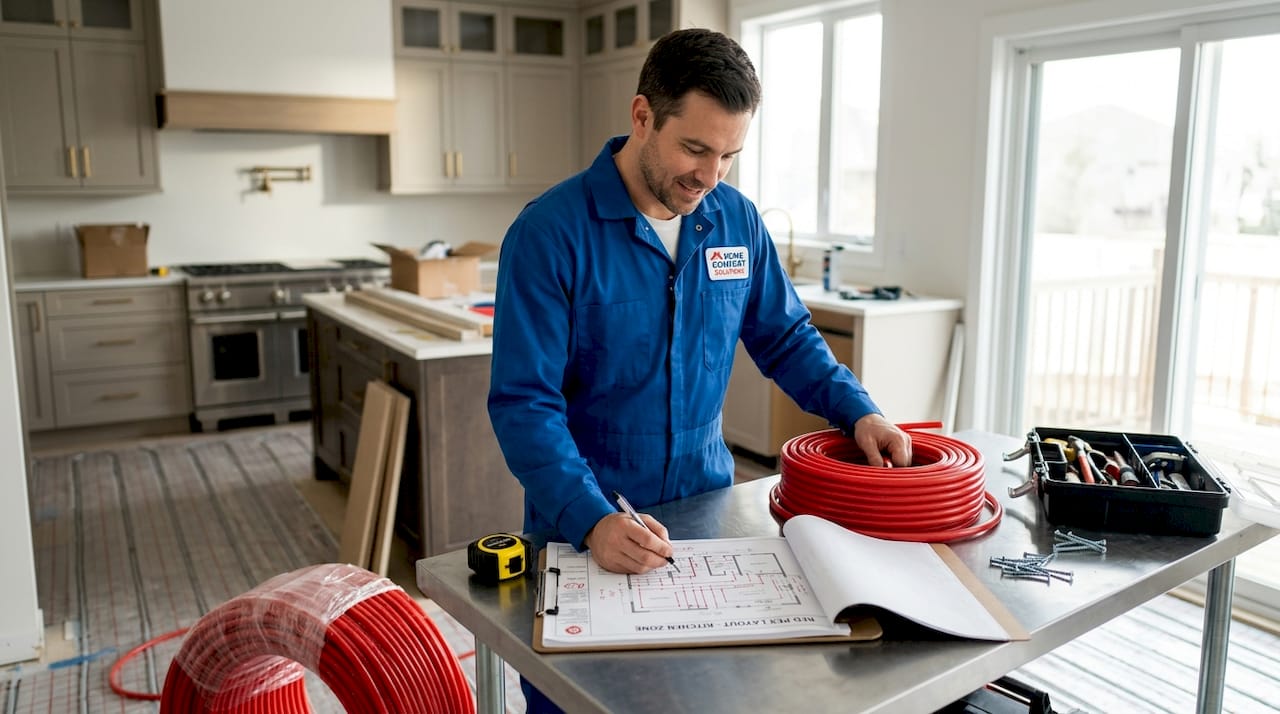
How to Choose the Right Heat Pump Installation Near Me

When people search for heat pump installation near me, they are usually not just asking who installs the equipment. They are really asking which system will keep the house comfortable without driving up utility costs or creating new problems.

System size matters more than most homeowners realize

Bigger is not always better. An oversized heat pump can cool the house too quickly without running long enough to manage humidity well. In Florida, that matters. A home can reach the thermostat setting and still feel damp or clammy. An undersized system can struggle during long summer afternoons and run constantly.

That is why we look at the home itself, not just the size of the old unit. Square footage is part of the picture, but so are insulation levels, window exposure, duct condition, ceiling height, and how the home actually feels room to room.

Efficiency should match your goals

Higher efficiency can lower operating costs, but the right choice depends on your budget, how long you plan to stay in the home, and the condition of the rest of the system. Some Tampa Bay homeowners want a straightforward replacement. Others want quieter performance, better dehumidification, and more control over comfort.

In many cases, Goodman can be a solid value choice, especially for homeowners who want dependable performance without moving into the highest pricing tier. Daikin is often selected by homeowners looking for more advanced features and a more premium system option. The right fit depends on the home, not just the brochure.

Brand matters, but installation matters more

Even a respected brand can disappoint if the installer skips airflow testing, ignores duct leakage, or fails to check refrigerant charge and static pressure. We see that in the field more often than homeowners expect. The system may be new, but the comfort problems never really go away because the root cause was never addressed.

That is one reason we often recommend ongoing AC maintenance in Tampa after installation. Regular service helps keep performance on track, protects air quality, and catches small issues before they turn into expensive ones.

Why Local Tampa Bay Experience Matters for Heat Pump Installation Near Me

Choosing a nearby installer is not just about convenience. It is about climate experience, code familiarity, and knowing what systems deal with in real homes around Tampa Bay, FL.

Homes in Tampa, St. Petersburg, Clearwater, Brandon, and Riverview often share a few common challenges. High humidity puts pressure on cooling equipment. Salt air can shorten the life of outdoor components in some coastal areas. Older homes may have undersized returns, aging ductwork, or electrical setups that need attention before a new system goes in. Newer homes sometimes have tighter envelopes that improve efficiency but change how airflow and humidity behave indoors.

A local team should know how to evaluate those conditions before recommending equipment. That includes checking whether the duct system can support the new heat pump, whether the drain setup is safe and up to standard, and whether indoor air quality upgrades would make sense while the system is being replaced. In some homes, pairing a new system with better filtration or indoor air quality improvements can make a noticeable difference in comfort.

We also believe local expertise shows up in how a company communicates. Homeowners in the greater Tampa area deserve clear explanations, realistic timelines, and a clean installation process. You should know what is being recommended, why it fits your home, and what to expect before work begins.

The Real Installation Process for Heat Pump Installation Near Me

When we arrive for a heat pump installation, the visit is not a mystery. We walk you through the process and explain what we are seeing in plain language. Here is what a typical professional installation looks like.

Step 1: Inspect the current system and home conditions

First, we evaluate the existing equipment, ductwork, electrical connections, drain line, thermostat setup, and equipment location. We pay attention to signs of wear that homeowners often notice too, like a musty smell near the air handler, rust around the drain pan, insulation that looks deteriorated, vibration noise at startup, or hot rooms that never seem to cool properly.

If the old system has been low on refrigerant, short cycling, or freezing up, we do not assume the new system alone will solve everything. We look for why those issues were happening.

Step 2: Confirm sizing and installation plan

Before any equipment is set, we confirm the system match and review the plan for airflow, transitions, electrical needs, and drainage. In some homes, the existing duct connection is too restrictive for the new unit. In others, the return is undersized, which can make the system noisy and reduce performance. This is where experience matters.

Step 3: Remove the old equipment carefully

We protect the work area, remove the old air handler and outdoor condenser, and keep the space as clean as possible. A careful removal helps prevent damage to flooring, walls, and existing lines that may still be usable if they pass inspection.

Step 4: Set and connect the new heat pump system

Next, we install the indoor and outdoor components, secure the equipment, connect refrigerant lines, verify the electrical setup, and make sure the drain system is routed correctly. In Florida, drain design matters. A poor drain setup can lead to water issues, safety switch trips, and frustrating shutdowns.

We also check pad stability outside, line insulation quality, and clearances around the condenser. If the old unit rattled or leaned, we correct that instead of repeating the same problem.

Step 5: Pressure test, evacuate, and start the system properly

This is one of the most important parts of the job. We pressure test the refrigerant circuit, evacuate the lines, and commission the system according to professional standards. Then we start the equipment and check how it is operating.

At this stage, a technician is listening for abnormal sounds, watching startup behavior, checking temperature split, reviewing airflow, and confirming that the thermostat is communicating correctly. If something sounds off, like a louder than normal fan motor or cabinet vibration, we address it before leaving.

Step 6: Test performance in real conditions

After startup, we verify that the system is cooling and heating properly, draining correctly, and responding as it should through a full cycle. We explain filter access, thermostat settings, maintenance recommendations, and what normal operation should sound and feel like.

Homeowners appreciate this part because it turns a big equipment purchase into something understandable. You should not be left guessing whether the system is acting normally.

If we find related issues during the installation, such as weak airflow caused by dirty duct interiors or leakage concerns, we may recommend future solutions like air duct cleaning or other corrective work when appropriate.

Comparing Local Services for Heat Pump Installation Near Me

When comparing companies, it helps to look beyond the headline price. A lower estimate may not include upgrades needed for proper performance, and a higher quote is not automatically better. The key is understanding what is actually included.

Here are a few questions worth asking any installer in Tampa Bay, FL:

  • Will you evaluate the duct system and airflow, or are you replacing equipment only?
  • Will you explain system sizing and why this unit fits my home?
  • Do you offer options at different efficiency levels?
  • Will you walk me through thermostat operation and maintenance after installation?
  • Are you local, licensed, and available for future service if needed?

At Home Therapist, we focus on clear communication and practical recommendations. We do not believe in pushing homeowners toward equipment that does not match their needs. If you need a new system, we help you compare options honestly. If another solution makes more sense, we will tell you that too.

For homeowners weighing replacement against repair, our AC repair services and installation guidance can help you make a decision based on condition, age, and reliability rather than guesswork.

Cost and Pricing Context for Tampa Bay Homeowners

Heat pump installation pricing in the Tampa Bay market can vary widely based on system size, efficiency level, brand, duct modifications, electrical work, thermostat upgrades, and accessibility of the equipment location. In most cases, homeowners should expect the final price to reflect more than just the equipment itself.

Higher-efficiency or variable-speed systems usually cost more upfront than basic single-stage equipment. Homes that need return air improvements, drain corrections, line set replacement, or electrical updates may also fall into a higher range. That is why we avoid giving exact pricing without seeing the home.

For service-related work, our minimum service labor cost is $249. If your visit involves diagnostics, repairs, or adjustments connected to the installation decision, we explain the scope and pricing clearly before moving forward. We believe homeowners in Clearwater, St. Petersburg, and the greater Tampa area deserve straightforward information, not vague estimates.

Pro Tips for Tampa Bay Homeowners Shopping for a Heat Pump

  • Ask how the installer addresses humidity, not just temperature. In Florida, comfort depends on both.
  • Replace filters on schedule and ask where the best filter rating is for your system. Too restrictive is not always better.
  • Have the ductwork inspected if certain rooms stay warm or stuffy. A new heat pump cannot fix weak airflow by itself.
  • Make sure the outdoor unit has room to breathe and stays clear of heavy vegetation and debris.
  • Consider surge protection and hurricane-season prep for major HVAC equipment in Tampa Bay, FL.
  • Schedule regular maintenance after installation so minor issues do not shorten the life of the system.

Frequently Asked Questions About Heat Pump Installation Near Me

Is a heat pump a good choice for homes in Tampa Bay, FL?

Yes, in many cases it is. Our climate is well suited to heat pump performance because winters are generally mild and cooling demand lasts much longer than heating demand. A properly installed heat pump can provide efficient year-round comfort.

How long does a heat pump installation usually take?

Many installations can be completed in a day, but the timeline depends on the home, equipment type, duct modifications, electrical needs, and any corrections required during the project. We explain the expected process before work starts.

What is the difference between a heat pump and a traditional AC system?

A traditional central AC system cools only and usually pairs with a separate heating method. A heat pump provides both cooling and heating in one system by reversing the refrigeration cycle.

Should I repair my old system or replace it with a heat pump?

That depends on the age of the equipment, the frequency of repairs, efficiency concerns, and overall condition. If the existing system has recurring problems or poor performance, replacement may be the better long-term value. We can inspect the system and explain the options clearly.

Do I need new ductwork with a heat pump installation?

Not always. Some homes can use the existing duct system, but it should still be evaluated. If the ductwork is leaking, undersized, or poorly designed, those issues can reduce comfort and efficiency even with new equipment.

How do I find a trustworthy local installer?

Look for licensing, clear communication, strong local reviews, and a company willing to inspect the full system rather than quote a replacement blindly. In Tampa Bay, experience with humidity, airflow, and Florida installation conditions matters.

Why Choose Home Therapist

Home Therapist Cooling, Heating, and Plumbing is built around doing the job the right way for Tampa Bay homeowners. Our technicians are licensed and insured, and we believe good service means more than getting the equipment running. It means showing up on time, communicating clearly before and after the job, protecting your home while we work, and focusing on long-term reliability instead of quick fixes. We hold HVAC License: CAC1819196 and Plumbing License: CFC1431159.

We are proud to serve homeowners across Tampa Bay, FL with clean, respectful workmanship and practical recommendations that fit real homes. If you want to see what local customers say about working with us, you can visit our Facebook, Instagram, and Google Business profiles. For additional trust and review information, you can also see our BBB profile and Google Reviews. With more than 1,100 five-star reviews from Tampa Bay homeowners, we work hard to earn that trust on every visit.

Schedule Heat Pump Installation with Home Therapist

If you are ready to talk through your options for a new heat pump, Home Therapist is here to help. We provide honest recommendations, professional installation, and responsive HVAC service in Tampa Bay, FL and surrounding communities. Whether you are in Tampa, Clearwater, St. Petersburg, Brandon, Riverview, or nearby areas, our team can evaluate your home and help you choose a system that fits your comfort goals and budget. Call (813) 343-2212 to schedule service or learn more about working with Home Therapist.

Ac Tune Up

AC Tune Up in Tampa Bay, FL: What Homeowners Should Expect

If you are wondering whether an ac tune up is really worth it, the short answer is yes, especially in Tampa Bay, FL where air conditioners run hard for much of the year. Between long cooling seasons, high humidity, salty coastal air in some areas, and older equipment in many homes, regular maintenance does more than keep your system clean. It helps your AC cool more efficiently, reduces wear on critical parts, and gives you a better chance of catching small problems before they turn into a no-cooling call on a hot afternoon. In this guide, we will walk through what an AC tune-up includes, the benefits, the warning signs to watch for, and why local service matters for homeowners in Tampa, St. Petersburg, Clearwater, and surrounding communities.

Quick Answer: AC Tune Up Basics

  • An ac tune up is a preventive maintenance visit that checks, cleans, tests, and adjusts your system for safe and efficient operation.
  • Most Tampa Bay systems benefit from regular tune-ups because heat and humidity put extra strain on airflow, electrical parts, and condensate drainage.
  • A good tune-up can improve efficiency, support more even cooling, and help extend equipment life.
  • Common signs you need service include weak airflow, musty odors, short cycling, odd noises, and rising electric bills.
  • If maintenance reveals a repair need, our minimum service labor cost starts at $249, with total pricing depending on the issue and parts involved.

What Is an AC Tune Up?

An ac tune up is a detailed maintenance service performed to evaluate how your cooling system is running and to correct routine issues that reduce performance. It is not just a quick filter check. A proper visit looks at the system as a whole, from electrical components and refrigerant performance to airflow and drainage.

In most Tampa Bay homes, the tune-up focuses on the parts that commonly suffer during long cooling seasons. That includes the outdoor condenser, the indoor evaporator section, the blower components, the thermostat, the drain line, and the safety controls. If your system is working but not quite cooling like it used to, a tune-up is often the right first step before assuming you need a major repair or full replacement.

What we typically check during an ac tune up

A thorough maintenance visit usually includes:

  • Inspecting and testing thermostat operation
  • Checking air filter condition and airflow restrictions
  • Cleaning condenser coils when needed
  • Inspecting the indoor coil area for dirt, biological growth, or ice history
  • Checking refrigerant performance for signs of undercharge or other issues
  • Inspecting electrical connections, contactors, capacitors, and wiring
  • Measuring system operation and temperature performance
  • Checking condensate drain flow and overflow safety devices
  • Inspecting blower components and visible duct leakage issues
  • Looking for signs of wear, corrosion, vibration, or abnormal noise

For homeowners who want ongoing prevention, regular AC maintenance in Tampa is one of the most practical ways to reduce surprise breakdowns.

Key Benefits of an AC Tune Up in Tampa Bay

The biggest benefit of an ac tune up is not just cleaner equipment. It is better overall system health. In Florida, AC systems often run long hours and may struggle quietly before a homeowner notices anything is wrong. Maintenance gives us a chance to spot those problems early.

Better efficiency

When coils are dirty, airflow is restricted, or electrical components are weakening, your air conditioner usually has to work longer to reach the thermostat setting. That can translate into higher energy use. A tune-up helps your system operate closer to the way it was designed to run.

Lower risk of repair calls

Routine visits often catch worn contactors, weak capacitors, clogged drain lines, and airflow problems before they lead to a shutdown. That matters in Tampa Bay, FL where a small issue can turn into a major comfort problem fast during peak summer weather.

Longer equipment life

Most systems last longer when motors, coils, and controls are not under constant strain. Maintenance cannot stop aging, but it can reduce the extra wear caused by neglected parts and poor airflow.

More consistent comfort

Many homeowners in Clearwater, St. Petersburg, and the greater Tampa area call for tune-ups because some rooms feel warmer than others, humidity feels sticky indoors, or the AC seems to run nonstop. Maintenance can help restore more balanced operation, especially when the issue is buildup, airflow restriction, or early component wear.

Helpful cost context

Every system is different, so we do not guess at exact tune-up or repair pricing online. In most cases, maintenance is far less expensive than emergency repair or premature replacement. If a tune-up uncovers a repair need, our minimum service labor cost starts at $249, and final pricing depends on the part, system condition, and time involved. If your system is already showing performance issues, it may also help to review our AC repair services in Tampa.

Signs You Need an AC Tune Up

Some systems are obviously struggling. Others show small signs that are easy to overlook until summer demand pushes them over the edge. If you notice any of the issues below, it is a smart time to schedule service.

  • Your home takes longer to cool than usual
  • Air coming from the vents feels weaker
  • Your electric bill climbs without a clear reason
  • The system starts and stops too often
  • You hear buzzing, rattling, or humming that was not there before
  • You notice musty odors when the AC turns on
  • Water appears near the indoor unit or drain line
  • Some rooms stay warm while others get too cold

In Tampa Bay homes, clogged condensate drains are especially common because of humidity. A homeowner may first notice a damp smell, a little water near the air handler, or the system shutting off because a float safety switch did its job. Those are the kinds of preventable issues a tune-up is designed to catch.

What Our Technician Actually Does During an AC Tune Up

When we arrive for an ac tune up, we do not just glance at the unit and leave. We walk through the system step by step so you understand what we are seeing and what needs attention.

Starting inside the home

First, we check the thermostat and ask about any comfort concerns you have noticed. Maybe the back bedroom is warm, the system is louder at night, or the house feels cool but still humid. Those details matter because they help us focus on real-world performance, not just a checklist.

Next, we inspect the indoor unit. We look at the filter, blower area, coil condition if accessible, drain assembly, and visible wiring. If a filter is heavily loaded with dust, pet hair, or construction debris, airflow may already be compromised. If the drain pan shows signs of standing water or slime buildup, that tells us moisture management needs attention.

Checking electrical and operating condition

Then we test electrical components and look for common wear. A failing capacitor often shows swelling or performance weakness before it fully gives out. A contactor may look pitted or burned from repeated cycling. Loose connections can create heat and unreliable operation. These are common findings in older systems across Hillsborough and Pinellas County.

We also listen to the equipment. A healthy system has a certain sound profile. When a condenser hums harder than normal, a blower wheel is out of balance, or a motor starts with strain, an experienced technician can often hear that something is changing before the system completely fails.

Moving to the outdoor unit

Outside, we inspect the condenser coil, fan, cabinet condition, and refrigerant performance. In Tampa Bay, outdoor units often collect grass clippings, cottonwood-like debris, dirt, and salt-related buildup depending on location. A dirty coil can trap heat and reduce efficiency. We clean and service what is appropriate during maintenance and note any signs that point to a deeper problem.

If refrigerant performance appears off, we do not jump straight to adding refrigerant without reason. Low refrigerant usually means there is a leak or another underlying issue. During a tune-up, we look for the signs, explain what they mean, and recommend next steps if repair is needed.

What homeowners often notice after service

After a solid tune-up, many homeowners notice steadier cooling, better airflow, less runtime, and fewer musty smells. If we find damage, severe coil contamination, refrigerant loss, or major wear, we explain it clearly so you can make an informed decision. In some cases, especially with aging systems, we may discuss whether continued repair makes sense or whether it is time to consider AC installation in Tampa.

Local Expertise Matters for AC Tune Up Service

Not every cooling system in Florida fails for the same reason it would in a milder climate. That is why local experience matters. Homes in Tampa, St. Petersburg, Clearwater, and nearby areas deal with long cooling seasons, moisture, attic heat, storm-related power issues, and heavy system run time. A local Tampa Bay technician knows how these conditions affect condensate drains, blower performance, corrosion, duct leakage, and overall system life.

We also see the differences between home types. An older block home with aging ductwork may have very different airflow issues than a newer home with a variable-speed system. Condo systems, heat pumps, straight cool systems, and air handlers in hot garages all present their own maintenance challenges.

That local perspective helps us do more than clean equipment. It helps us explain why your system behaves the way it does in a Florida home. If you want preventive care from a team that works in this climate every day, learn more about our AC maintenance service.

Common Myths About AC Tune Ups

My AC is cooling, so I do not need maintenance

A system can still cool while operating inefficiently or stressing parts that are close to failure. Many breakdowns happen after months of small warning signs.

Changing the filter is the same as a tune-up

Filter changes are important, but they are only one part of system care. They do not test electrical components, inspect the drain, evaluate refrigerant performance, or identify early wear.

Newer systems do not need tune-ups

Even newer units benefit from routine checks. Florida humidity, long runtimes, and installation-related issues can affect new and old systems alike.

Tune-ups are only about preventing breakdowns

Breakdown prevention matters, but maintenance also supports comfort, efficiency, humidity control, and cleaner operation. It is about how your system performs every day, not just whether it turns on.

FAQ: AC Tune Up Questions Homeowners Ask

How often should I schedule an ac tune up?

Most systems in Tampa Bay benefit from regular maintenance, typically before heavy cooling season and sometimes more often for older systems or homes with high run time, pets, or indoor air quality concerns.

How long does an AC tune-up take?

The exact time depends on system condition, accessibility, and whether any issues are found. In most cases, a proper tune-up takes enough time for a real inspection, cleaning, testing, and clear homeowner communication.

Will an ac tune up lower my electric bill?

It can help if your system is losing efficiency due to dirty coils, airflow restriction, or weak components. Savings vary by system condition, usage habits, and the age of the equipment.

Can a tune-up fix weak airflow?

Sometimes, yes. If the cause is a dirty filter, blower issue, coil buildup, or minor airflow restriction, maintenance may improve it. If the issue is undersized ductwork or a larger equipment problem, additional repair may be needed.

What if my system is too old for regular maintenance to help?

Even older systems can benefit from inspection and cleaning, but there comes a point when repair costs and reliability concerns make replacement the better long-term option. If that happens, we will explain your options clearly.

Why Choose Home Therapist

At Home Therapist, we believe homeowners should feel informed and comfortable before, during, and after service. Our technicians are licensed and insured, HVAC License: CAC1819196 | Plumbing License: CFC1431159, and we focus on long-term reliability rather than quick fixes. We communicate clearly about what we find, what it means, and what your options are. We also treat your home with respect, work cleanly, and keep the process as straightforward as possible.

We are proud to serve Tampa Bay, FL and surrounding communities with a professional, calm approach that has earned more than 1,100 five-star reviews from local homeowners. You can connect with us on Facebook, Instagram, and Google Business. For added trust, you can also review our profiles on the BBB and our Google Reviews. If your cooling concerns go beyond maintenance, we also provide full HVAC services across Tampa Bay.

Schedule Your AC Tune Up With Home Therapist

If your system is due for maintenance, showing signs of strain, or simply not cooling the way it should, Home Therapist is here to help. We provide trusted HVAC service in Tampa Bay, FL for homeowners throughout Tampa, Clearwater, St. Petersburg, and nearby communities. Call us at (813) 343-2212 to schedule your ac tune up and get clear, professional service focused on comfort, efficiency, and long-term performance.

Plenum Definition

Plenum Definition in Tampa Bay, FL: What It Means for Your HVAC

If you have been searching for a clear plenum definition, you are probably trying to make sense of how your HVAC system moves air through your home. In simple terms, a plenum is the main air distribution box connected to your heating and cooling system. It helps direct conditioned air out into your ductwork and pulls air back into the system to be heated or cooled again. For homeowners in Tampa Bay, FL, understanding this one part can make the rest of the system much easier to follow. In this guide, we will explain what a plenum is, why it matters, the difference between supply and return plenums, common problems we see in the field, and how proper plenum condition affects comfort, energy use, and indoor air quality.
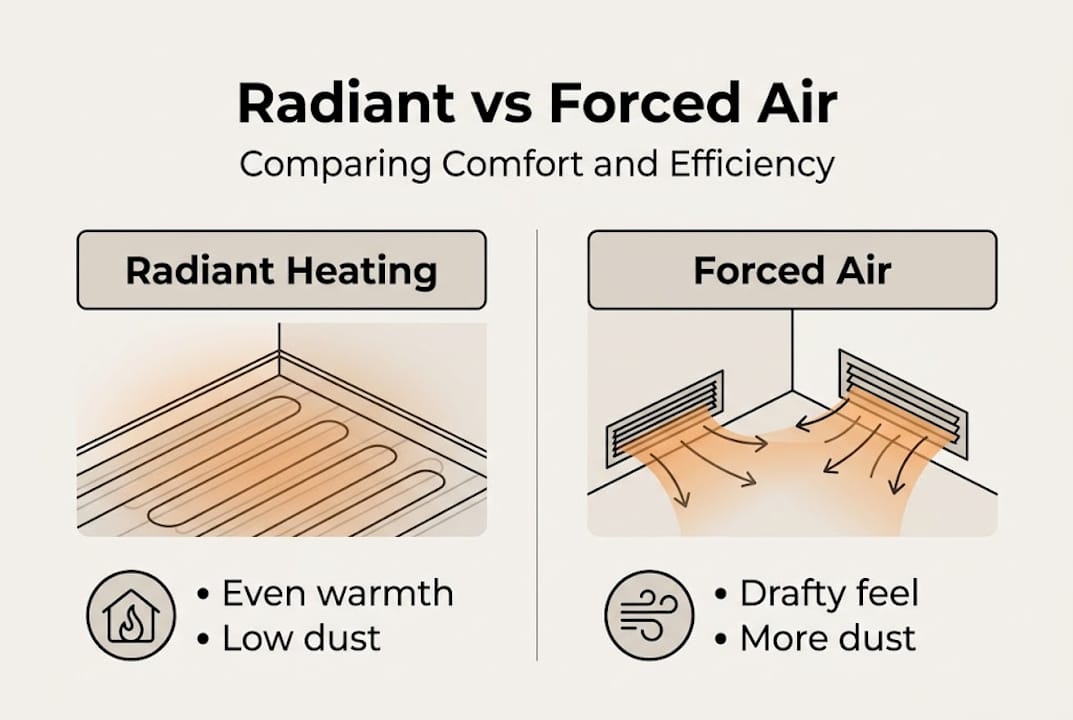
Quick Answer: Plenum Definition for Homeowners

  • A plenum is a chamber attached to your HVAC equipment that helps move air into or out of the duct system.
  • Most homes have a supply plenum, which sends cooled or heated air into the house, and a return plenum, which brings indoor air back to the system.
  • If a plenum leaks, pulls in attic air, or has poor insulation, your system can lose efficiency and struggle to keep rooms comfortable.
  • In Tampa Bay, FL, heat and humidity make sealed, properly sized plenums especially important.
  • When we inspect airflow issues, weak cooling, or dust complaints, the plenum is often one of the first areas we check.

Plenum Definition: What a Plenum Is in an HVAC System

A plenum is the air handling chamber that sits at a critical connection point between your HVAC unit and the ductwork. Think of it as the traffic director for your home’s air. Instead of air leaving the system in a scattered way, the plenum organizes that airflow so it can move through the ducts more evenly.

In most residential systems, the supply plenum is attached near the air handler or furnace where conditioned air leaves the equipment. The return plenum connects to the side where air comes back from the house. Together, these components help your system circulate air in a controlled loop.

That may sound simple, but the plenum has a big job. If it is too small, poorly sealed, damaged, or full of gaps, the entire system can suffer. Rooms may cool unevenly, energy use can rise, and humidity control may get worse. That is one reason homeowners in the greater Tampa area sometimes need more than a thermostat adjustment when comfort issues start showing up.

If your system is not cooling properly, the issue may involve the duct connection near the unit, not just the equipment itself. In cases like that, our AC repair team looks at the whole airflow path, including the plenum.

Why the Plenum Matters for Comfort and System Performance

Once you understand the plenum definition, the next question is usually, why does it matter so much? The answer is airflow. Heating and cooling equipment depends on the right volume of air moving through the system. If airflow gets disrupted at the plenum, the rest of the system cannot perform the way it should.

A well-built plenum helps distribute air evenly, supports proper static pressure, and reduces unnecessary strain on the blower. It also helps the system maintain stable temperatures from room to room. In a hot, humid region like Tampa Bay, FL, that matters even more because the air conditioner is not just cooling the home, it is also removing moisture.

When a plenum has gaps or poor insulation, several problems can follow:

  • Cool air can escape into attic or garage spaces before it reaches the rooms.
  • Hot, humid air can get pulled into the return side of the system.
  • The blower may work harder than necessary.
  • Some rooms may feel stuffy while others get too cold.
  • Dust and insulation particles may enter the airflow path.

These are not rare issues. In older homes in Tampa, St. Petersburg, and Clearwater, we often find airflow problems that trace back to aging duct transitions or poorly sealed plenums rather than a major equipment failure.

Plenum Definition and Types: Supply vs. Return Plenums

To make the term more useful, it helps to separate the two main types of plenums you may hear about during service.

Supply Plenum

The supply plenum carries conditioned air away from the HVAC system and into the ductwork that serves the home. If you picture your air handler producing cool air, the supply plenum is the first chamber that receives it and channels it outward.

When the supply plenum is in good shape, airflow tends to be more balanced. When it is damaged, disconnected, or undersized, you may notice weak airflow at vents, uneven cooling, or excess condensation near the unit.

Return Plenum

The return plenum gathers air coming back from inside the home and sends it to the system to be filtered and conditioned again. This side is just as important as the supply side. If the return plenum has leaks, it can pull in unconditioned air from attics, closets, garages, or wall cavities.

That can lead to higher humidity, extra dust, and more strain on the equipment. In Florida homes, return-side leakage can be especially noticeable because the system may pull in warm, damp air that makes the AC run longer.

Why the Difference Matters

If you hear a technician mention a supply issue versus a return issue, they are describing two different points in the airflow cycle. A supply leak wastes conditioned air. A return leak can contaminate or overheat the air entering the system. Both affect comfort, but the symptoms can look a little different.

Regular AC maintenance helps catch these problems before they start affecting your comfort in a major way.

What We Actually Check When We Inspect a Plenum

When we show up for an airflow or comfort complaint, we do not just glance at the equipment and guess. We walk through the system step by step. Here is what that process often looks like in a real Tampa Bay service visit.

Step 1: Talk Through the Symptoms

We start by asking what you have noticed. Maybe one side of the house feels warm in the afternoon. Maybe the AC runs for a long time but never quite feels comfortable. Sometimes homeowners mention a musty smell when the system starts up, or they hear a whistling noise near the air handler closet.

Step 2: Inspect the Equipment Area

Next, we look at the air handler and the plenum connections. We check whether the metal or duct board plenum is sealed properly, whether insulation is intact, and whether there are visible gaps, sagging sections, or signs of condensation. In some homes, you can actually see dark streaks where air has been escaping and pulling dust along the seams.

Step 3: Check Airflow and Temperatures

We take basic operating readings and compare airflow behavior at the return and supply sides. We listen for rattling panels, whistling at seams, and strained blower sound. If airflow seems restricted, we inspect the filter, evaporator area, and duct connections to figure out whether the plenum is contributing to the issue.

Step 4: Look for Moisture, Rust, or Biological Growth

Because of Florida humidity, we pay close attention to signs of sweating, water staining, rust, or damp insulation around the plenum. A return plenum pulling humid attic air can create conditions that support musty odors and poor air quality.

Step 5: Explain the Findings Clearly

If we find loose joints, torn insulation, disconnected duct takeoffs, or evidence of air leakage, we show you what we found and explain how it affects comfort and efficiency. Some repairs are straightforward sealing and insulation corrections. Other situations point to older duct design issues or a need for broader system improvements.

This is also where indoor air quality comes into the conversation. If the return side is drawing in dusty or humid air, it can affect more than temperature. Our indoor air quality services can help address those concerns when needed.

Common Plenum Problems and What They Cause

Plenums are not usually the most visible part of the system, so problems can go unnoticed for a long time. Here are some of the most common issues we see.

Air Leaks at Seams or Connections

This is one of the biggest problems. Leaks on the supply side let cooled air escape. Leaks on the return side pull unconditioned air into the system. Both can reduce performance.

Damaged or Missing Insulation

If insulation around the plenum is deteriorated, the system can lose energy and may develop condensation. In Tampa Bay’s climate, this can become more than an efficiency issue if moisture starts affecting surrounding materials.

Improper Sizing

A plenum that is too small or poorly designed can create airflow restrictions. That can mean noisy operation, reduced comfort, and more wear on the blower motor over time.

Dust and Debris Buildup

On the return side, buildup or contamination inside the plenum can affect air quality and overall system cleanliness. If a home has had renovation work, old ductboard damage, or long-term leakage, the plenum may need closer evaluation.

Loose Duct Connections

We sometimes find branch ducts separating from the plenum or leaking at takeoff points. That can leave individual rooms under-served and make homeowners think the problem is at the thermostat when it is really in the distribution system.

How Plenums Affect Energy Efficiency and Air Quality

A sound plenum helps your HVAC system do its job without wasting energy. Conditioned air moves where it is supposed to go, the blower operates under better conditions, and your home has a better chance of staying evenly comfortable.

That matters in Tampa Bay, FL, where cooling systems work hard for much of the year. If the return plenum pulls in hot attic air or humid outside air, the AC has to remove more heat and moisture than necessary. If the supply plenum leaks, some of the cooled air never reaches your living space. Either way, you pay for performance you do not fully receive.

There is also an indoor air quality side to this. A leaking return plenum can introduce dust, insulation fibers, and stale air from areas you do not want connected to your breathing space. That is one reason plenum condition matters for both comfort and cleanliness.

Local Tampa Bay Considerations for Plenums

Homes in Tampa, St. Petersburg, Clearwater, and nearby communities deal with a climate that puts extra pressure on HVAC systems. High humidity, long cooling seasons, salty coastal air in some locations, and hot attic conditions all make air sealing and insulation more important.

In many Florida homes, ductwork and plenums sit in attics where temperatures climb fast. Any gap or weak seam in that environment can waste cooled air and invite heat and moisture into the system. Older homes may also have retrofit ductwork that was pieced together over time, which can leave behind airflow imbalances.

That is why local HVAC service in Tampa Bay, FL should include attention to the air distribution system, not just the outdoor unit or thermostat. A plenum may not be the first part a homeowner thinks about, but it often plays a direct role in comfort complaints.

Cost and Pricing Context for Plenum-Related Service

The cost of plenum-related work depends on the actual problem. In most cases, Tampa Bay homeowners may see lower costs for minor sealing or insulation corrections and higher costs when fabrication, major duct modifications, or replacement work is needed. Pricing can also change based on accessibility, system design, and whether other duct issues are found at the same time.

For honest planning, it helps to know that our minimum service labor cost is $249. After inspection, we explain what we found and what options make sense before moving forward. We do not recommend major work unless the condition of the system supports it.

Pro Tips for Tampa Bay Homeowners

  • Change your HVAC filter on schedule, because restricted airflow can make existing plenum and duct problems more noticeable.
  • If you notice musty smells when the AC starts, ask for an inspection of the return side, especially in humid Florida weather.
  • Pay attention to uneven cooling between rooms, because that can point to plenum or duct leakage, not just an aging thermostat.
  • Have the system checked before the hottest part of summer, when weak airflow becomes more obvious and harder on the equipment.
  • If your air handler is in a garage, closet, or attic, keep an eye out for sweating insulation, water stains, or loose duct connections nearby.

Frequently Asked Questions About Plenum Definition

What is the simplest plenum definition?

The simplest plenum definition is an air chamber connected to your HVAC system that helps direct air into or out of the ductwork. It supports organized airflow through the home.

Is a plenum the same thing as ductwork?

No. A plenum is part of the overall air distribution system, but it is not the same as the branch ducts that carry air to individual rooms. It is the main chamber that connects the equipment to those ducts.

Can a bad plenum make my AC less efficient?

Yes. If the plenum leaks, is poorly insulated, or has design issues, your system can lose conditioned air or pull in hot, humid air. That makes the AC work harder and may raise energy use.

How do I know if my plenum has a problem?

Common signs include weak airflow, uneven room temperatures, whistling sounds, extra dust, musty odors, or visible gaps and damaged insulation near the air handler.

Do plenums need maintenance?

They do not need frequent attention from the homeowner, but they should be inspected as part of professional HVAC service. Seals, insulation, and duct connections can all wear down over time.

Why Choose Home Therapist

When you call Home Therapist, you are getting licensed and insured technicians who take the time to explain what is happening with your system before and after the job. Our HVAC License is CAC1819196 and our Plumbing License is CFC1431159. We work cleanly, protect your home, and focus on long-term reliability instead of quick fixes that leave the real problem behind.

We have earned more than 1,100 five-star reviews from Tampa Bay homeowners by showing up prepared, communicating clearly, and treating every home with respect. If you want to learn more about us, connect with us on Facebook, Instagram, and our Google Business profile. You can also see our standing with the BBB and read customer feedback on our Google Reviews page.

Schedule Service with Home Therapist

If you have questions about a plenum, uneven airflow, or AC performance in Tampa Bay, FL, we are here to help. Whether you need a system inspection, routine service, or a closer look at airflow issues, our team can walk you through it clearly and professionally. You can also visit our Home Therapist homepage to learn more about our services. Call Home Therapist at (813) 343-2212 to schedule service in Tampa, St. Petersburg, Clearwater, and surrounding communities.

Emergency Hvac Service

Emergency HVAC Service in Tampa Bay, FL: What to Do When Your System Fails Fast

When you need emergency hvac service, you usually do not have time to sort through conflicting advice. Your AC may have stopped in the middle of a humid Tampa Bay afternoon, your system may be blowing warm air at night, or you may have noticed a burning smell that makes it unsafe to keep running. In Tampa Bay, FL, fast action matters because heat, humidity, and indoor comfort problems can build quickly. In this guide, we will walk through what counts as an HVAC emergency, the most common urgent problems we see, what our response process looks like, and how regular service can help prevent stressful breakdowns.

Quick Answer: Emergency HVAC Service at a Glance

  • Emergency HVAC service is needed when your system stops cooling or heating, creates a safety concern, leaks refrigerant or water, or shows signs of electrical trouble.
  • In Tampa Bay, FL, a failed AC can become urgent quickly because indoor temperatures and humidity rise fast.
  • Common emergency issues include complete AC failure, frozen systems, electrical burning smells, tripped breakers, and sudden refrigerant problems.
  • Before calling, check your thermostat, air filter, and breaker, but do not keep resetting equipment or opening sealed components.
  • Most emergency repairs in Florida vary by problem and part availability, and our minimum service labor cost is $249.
  • Routine AC maintenance can catch many issues before they turn into after-hours problems.

What Counts as Emergency HVAC Service in Tampa Bay, FL?

Not every HVAC issue is an emergency, but some situations need professional attention right away. In homes across Clearwater, St. Petersburg, Tampa, Brandon, and surrounding areas, we usually treat a problem as urgent when comfort loss is immediate, system damage is getting worse, or there may be a safety risk.

Complete loss of cooling during hot weather

If your AC stops working completely during a Tampa Bay heat wave, that can become serious very quickly, especially for homes with infants, older adults, pets, or anyone with health conditions. A house that feels manageable in the morning can turn hot and sticky by afternoon.

Burning smells or electrical concerns

If you smell something burnt, hear buzzing from the air handler, or notice the breaker tripping repeatedly, turn the system off and call for service. Electrical problems are not good DIY projects. They need proper testing and safe repair.

Refrigerant leaks or frozen equipment

A refrigerant issue can show up as weak cooling, ice on the copper line, hissing sounds, or a system that runs but never gets the house comfortable. In Florida’s climate, frozen coils and low refrigerant often put a lot of strain on the compressor, which is why waiting too long can increase repair costs.

Water around the air handler

Sometimes the emergency is not just cooling loss. We also respond to systems leaking water into closets, garages, utility rooms, or ceilings. A clogged condensate drain line can shut a system down and may also cause property damage if ignored.

If your issue is not urgent but your system is showing warning signs, scheduling AC repair early is the best move. Small problems are almost always easier to handle before they become major failures.

Common Emergency HVAC Service Calls We See

Most emergency hvac service calls are not random. There are patterns, especially in Tampa Bay homes dealing with long cooling seasons, salty air, high humidity, and older equipment.

1. The AC is running, but the house is getting hotter

This is one of the most common calls we get in the greater Tampa area. Homeowners hear the system running, but the air from the vents feels warm or barely cool. Typical causes include a failed capacitor, low refrigerant, a dirty evaporator coil, a locked-up outdoor fan motor, or a compressor problem.

Sometimes the outdoor unit hums but the fan blade is not spinning. Other times the indoor coil has frozen into a block of ice because airflow dropped too low. In either case, the system cannot remove heat the way it should.

2. The system will not turn on at all

A completely dead system can point to a tripped breaker, a float switch shutoff from a clogged drain line, thermostat problems, wiring issues, or a failed control component. In older homes in Hillsborough and Pinellas County, we also occasionally find loose electrical connections or worn disconnects outside.

3. Burning, buzzing, or sharp chemical-type odors

Different smells tell us different things. A musty smell may point to moisture or microbial growth. A burnt plastic smell can mean overheating electrical parts or damaged wiring. A sharp odor around the system may suggest a component failure that needs immediate inspection. If anything smells unsafe, turn the equipment off and call.

4. Heating failure during a cold snap

Even in Florida, heating matters. When temperatures drop suddenly, a heater that will not start can feel like an emergency, especially overnight. Heat pump issues, thermostat malfunctions, control board problems, and failed contactors can all leave a home uncomfortable fast. If you need help beyond cooling, our team also handles heating repair.

5. Indoor air quality problems tied to HVAC operation

Some emergency calls begin with discomfort rather than full failure. A home may feel damp, stale, or hard to breathe in after the AC starts struggling. High humidity can make the house feel warmer than the thermostat reading suggests. If your system is running but not controlling moisture well, indoor comfort and air quality can suffer. That is where a broader look at indoor air quality can help.

Our Trusted Process for Emergency HVAC Service

When homeowners in Tampa Bay call us with an urgent HVAC problem, they usually want two things. They want clear answers, and they want someone to show up prepared. Here is what the service process typically looks like when we respond to an emergency call.

Step 1: We listen to what the system is doing

Before we arrive, we ask practical questions. Is the system completely off, or is it running without cooling? Do you hear clicking, buzzing, or humming? Is there water near the unit? Did the breaker trip? Is there a burning smell?

These details help us prepare and help you avoid doing anything that could make the problem worse.

Step 2: We inspect the thermostat, power, airflow, and safety controls

Once we arrive, we start with the basics because a clean diagnosis matters. We verify thermostat settings, check incoming power, inspect the breaker and disconnect, and look at the air filter and return airflow. We also check drain safety switches if the unit is not turning on.

It is common to find a packed air filter, standing water in the drain pan, or a float switch that shut the system off to prevent overflow.

Step 3: We test indoor and outdoor components

Next, we move deeper into the system. On a typical emergency cooling call, we inspect the indoor coil condition, blower operation, outdoor fan motor, capacitor, contactor, and visible wiring. We listen for unusual compressor sounds, look for signs of overheating, and check whether the outdoor unit is actually rejecting heat.

A worn capacitor often gives itself away in a real-world way. The outdoor unit may hum but fail to start properly. The top of the capacitor can appear swollen, or the fan may try to spin without fully taking off. If a contactor is failing, we may see pitting or charring on the contacts. If refrigerant is low, we often see oil residue near a leak point, weak cooling performance, and sometimes frost on the line set or coil.

Step 4: We explain what we found in plain English

We do not believe in vague explanations. If the problem is a failed capacitor, clogged drain line, blower issue, or refrigerant-related repair, we explain what the part does, why it failed, and what the next step is. If the system is repairable that day, we focus on restoring safe operation. If the equipment is older and the repair is significant, we talk through your options clearly.

Step 5: We complete the repair and confirm operation

After the repair, we do not just flip the system on and leave. We check that the equipment starts correctly, drains properly, moves air the way it should, and is cooling or heating as expected. We also let you know if there are maintenance concerns that could trigger another emergency later.

If the issue points to repeated breakdowns or aging equipment, we may recommend discussing AC installation options instead of putting money into short-term fixes.

Emergency HVAC Service Cost in Tampa Bay, FL

Cost is one of the first questions homeowners ask, and that makes sense. Emergency HVAC pricing depends on the type of failure, whether parts are needed, system accessibility, and how extensive the diagnosis and repair process becomes.

In most cases, smaller repairs such as a drain-related shutoff, capacitor replacement, or thermostat issue will cost less than compressor-related problems, blower motor failures, refrigerant leak diagnosis, or major electrical repairs. Typical repair costs in Florida range widely depending on the system and the root cause.

What we can say clearly is this: our minimum service labor cost is $249. After diagnosis, we explain what we found and what the repair involves before moving forward. That gives homeowners in Tampa Bay, FL a better understanding of whether a repair is the right value for the age and condition of the system.

If you are dealing with repeated emergency calls on an older unit, it may also be worth comparing repair history with replacement planning. In many homes, routine service and timely repairs extend equipment life, but there is a point where constant breakdowns stop making financial sense.

Preventive Measures That Help You Avoid Emergency HVAC Service

While some failures happen without warning, many emergency calls start as maintenance issues that slowly got worse. Florida systems work hard for much of the year, so prevention matters.

The most effective step is regular professional maintenance. During a tune-up, we can catch weak capacitors, drain problems, dirty coils, airflow restrictions, loose electrical connections, and performance issues before they leave you without cooling on the hottest day of the week.

For homeowners in St. Petersburg, Riverview, Clearwater, and the larger Tampa Bay area, a few simple habits also help:

  • Change the air filter on schedule so airflow stays strong.
  • Keep the area around the outdoor unit clear of debris and overgrowth.
  • Pay attention to new noises, longer run times, or rooms that suddenly feel more humid.
  • Schedule service before summer peak demand if your AC has been struggling.
  • Do not ignore water near the air handler or ceiling stains around HVAC components.

If your system has been unreliable lately, scheduling service through our Home Therapist team before the next heat wave can save a lot of stress.

Pro Tips for Tampa Bay Homeowners

  • Replace air filters more often during heavy cooling season, especially if you have pets, renovation dust, or allergy concerns.
  • Flush concerns early. A little water near an air handler in Florida can quickly turn into a clogged drain shutdown.
  • Set your thermostat consistently. Large temperature swings can increase system strain during extreme heat.
  • After storms, check for tripped breakers or debris around the outdoor unit before assuming the whole system has failed.
  • If the system smells burnt or keeps tripping the breaker, shut it off and call instead of restarting it over and over.
  • Have older systems evaluated before summer starts, especially in homes across Tampa Bay, FL with long daily run times.

FAQ About Emergency HVAC Service

What is considered an HVAC emergency?

An HVAC emergency usually means your system has stopped cooling or heating, created a possible electrical or safety concern, or started leaking in a way that could damage your home. In Tampa Bay, complete AC loss during very hot weather often needs fast attention.

Should I turn my AC off if it is not cooling?

Yes, in many cases that is the safest step, especially if the system is making unusual noises, icing over, or blowing warm air continuously. Running it longer can increase wear and may worsen the repair.

Can a clogged drain line cause an emergency HVAC shutdown?

Yes. Many systems have a safety float switch that shuts the unit off when the condensate line backs up. That prevents water damage, but it also leaves the home without cooling until the blockage is cleared and the system is checked.

How fast can indoor humidity rise after an AC failure in Florida?

In Florida, humidity can rise quickly after an AC stops working, especially in the summer. Even if the temperature is not extreme yet, the home can start feeling sticky and uncomfortable fast.

Is emergency HVAC repair always better than replacement?

Not always. If the problem is isolated and the system is otherwise in good condition, repair often makes sense. If the unit is older and the repair is major, replacement may be the smarter long-term option.

What should I check before calling for emergency HVAC service?

Check the thermostat settings, air filter, breaker, and whether water is present around the unit. If you notice ice, burning smells, or repeated breaker trips, turn the system off and call for professional service.

Why Choose Home Therapist

When your comfort is on the line, you need a team that communicates clearly and works with care inside your home. Home Therapist is family-owned, and we focus on real solutions for homeowners across Tampa Bay, FL. Our licensed and insured technicians handle HVAC and plumbing with professionalism, clean workmanship, and a long-term mindset, not quick patch jobs. HVAC License: CAC1819196 | Plumbing License: CFC1431159.

We explain what we find before and after every job, we respect your home while we work, and we aim for repairs and recommendations that support long-term reliability. That approach has helped us earn 1,100+ five-star reviews from Tampa Bay homeowners.

You can learn more about us and see what local homeowners are saying on Facebook, Instagram, and our Google Business profile. For added trust, you can also view our BBB profile and read our Google Reviews.

Be Prepared Before the Next Breakdown

Emergency HVAC problems are stressful, but a calm response makes a difference. If your system stops working in Tampa, Clearwater, St. Petersburg, Brandon, Riverview, or anywhere in the greater Tampa Bay area, Home Therapist is here to help you figure out what is happening and what to do next. If you need emergency hvac service, call (813) 343-2212 to schedule service with our team. You can also connect with us on Google Business as part of your emergency plan, so you have our information ready when you need it most.

Emergency Ac Repair

Emergency AC Repair in Tampa Bay, FL, What to Do When Cooling Stops Fast

When your system quits in the middle of a Florida heat wave, emergency ac repair becomes a real comfort and safety issue, not just an inconvenience. We see it every summer across Tampa Bay, FL, from Tampa to St. Petersburg, Clearwater, Brandon, and Riverview. A home can heat up quickly when the air conditioner stops, especially with high humidity and strong afternoon sun. In this guide, we will walk you through what usually causes an AC emergency, what you can safely check on your own, what happens when our technician arrives, and how to lower the chances of another sudden breakdown.

Emergency AC Repair, Quick Answers for Tampa Bay Homeowners

  • If your AC stops cooling, first check the thermostat, breaker, air filter, and condensate drain shutoff.
  • Common emergency ac repair calls involve electrical failures, frozen coils, clogged drains, bad capacitors, refrigerant issues, and worn compressor components.
  • If you smell burning, hear loud buzzing or grinding, or see water around the air handler, turn the system off and call for professional help.
  • Florida heat and humidity put heavy strain on systems, especially older units in Tampa Bay homes.
  • Regular tune-ups can catch many problems early. Our AC maintenance service helps reduce surprise failures.

Why Emergency AC Repair Happens So Often in Tampa Bay

Most systems in our area work harder and longer than they would in milder climates. In Tampa Bay, FL, your air conditioner is not just cooling the air. It is also pulling moisture out of the home day after day. That extra workload affects motors, capacitors, contactors, drain lines, blower assemblies, and outdoor components.

We also serve many homes with aging ductwork, older insulation, or systems that were never quite sized or maintained properly. During long stretches of summer heat, small issues can suddenly turn into emergency ac repair calls.

Common causes we find on urgent service calls

Failed capacitor or contactor: This is one of the most common reasons a unit stops starting properly. You may hear a humming sound from the outdoor unit, or the fan may struggle to spin.

Clogged condensate drain line: In Florida humidity, drain lines can clog with sludge or buildup. Many systems have a safety switch that shuts cooling down to prevent water damage.

Dirty filter and frozen evaporator coil: Restricted airflow can cause the indoor coil to ice over. Homeowners often notice weak airflow first, then warm air.

Electrical issues: Loose wiring, tripped breakers, damaged disconnects, and worn relays can all stop the system without much warning.

Refrigerant problems: Low refrigerant usually points to a leak, not normal use. Signs may include poor cooling, icing, or longer run times.

Compressor trouble: This can show up as hard starting, loud noises, clicking, or a system that runs but does not cool the way it should.

If your unit is blowing warm air or not turning on at all, our AC repair service in Tampa is designed to diagnose the issue clearly and get cooling restored as safely as possible.

What To Do Before Emergency AC Repair Service Arrives

There are a few simple checks you can make before calling, and these can save time once we get there. The key is to stay safe and avoid opening panels or touching electrical parts.

1. Check the thermostat

Make sure it is set to cool and the temperature setting is lower than the indoor temperature. If the screen is blank, the thermostat may have lost power or need new batteries.

2. Check the breaker

Look in your electrical panel for a tripped breaker related to the air handler or condensing unit. If it has tripped once, you can reset it one time. If it trips again, leave it off and call a professional. Repeated trips often point to a deeper electrical or mechanical problem.

3. Inspect the air filter

A heavily clogged filter can choke airflow and cause freezing. If the filter looks dark, packed with dust, or damp, replace it with the proper size and rating.

4. Look for ice or water

If you see ice on the refrigerant line or indoor unit, turn the system off at the thermostat and switch the fan to on if possible. If you see water near the air handler, the drain line may be blocked.

5. Listen and smell

A buzzing sound, clicking without startup, burning odor, or grinding noise helps us narrow down the problem. Share those details when you call.

Homeowners in Clearwater, St. Petersburg, and the greater Tampa area often ask if they should keep trying to run the system. If there is ice, a burning smell, or loud mechanical noise, the safer move is to shut it down and wait for service.

What Our Technician Does During an Emergency AC Repair Visit

When we arrive for an emergency ac repair call, we do not guess. We start with a full, practical diagnosis so we can explain what failed, what is still in good shape, and what your options are.

Step by step, here is what a real visit often looks like

First, we talk with you about what happened. We ask whether the system stopped all at once, whether it had been making noise, whether airflow changed, and whether you noticed water, ice, or a spike in humidity. Those details matter.

Next, we check the thermostat settings and verify whether the equipment is receiving power. We inspect the breaker, disconnect, and visible wiring connections. If the outdoor unit is silent, we often test the contactor and capacitor first because these are common failure points in hot weather.

At the indoor unit, we check the filter, blower operation, drain system, safety switches, and coil condition. On many calls, we find a drain pan with standing water or a float switch that shut the system down exactly as it was designed to do. In other homes, we remove the panel and find the evaporator coil iced over, often from restricted airflow or a refrigerant issue.

Then we move to the outdoor equipment. We listen for hard starting, fan motor strain, or compressor noises. A failing capacitor often shows itself through a swollen top, weak readings on the meter, or a fan that tries to start and then stalls. If a contactor is pitted or burnt, we can often see the wear right away. If refrigerant performance looks off, we continue with leak-related diagnostics and system performance checks.

We also pay attention to the things homeowners notice but may not connect to the AC. A musty smell near the air handler can point to moisture problems. A sharp electrical odor can suggest overheating insulation or a failing component. Uneven cooling from room to room may tell us the issue started before the emergency, even if the full breakdown just happened today.

Once we have the diagnosis, we explain it in plain language. If the repair is straightforward, we complete it as soon as possible. If we find a larger issue, we walk you through the condition of the system, the repair path, and whether it makes sense to keep repairing or start discussing AC installation options. Our goal is long-term reliability, not a rushed bandage fix.

Why Professional Emergency AC Repair Matters

Emergency problems are stressful, and it is tempting to search for a quick online fix. But AC systems combine electricity, moving parts, pressurized refrigerant, and water management. Even a problem that seems simple can have a bigger cause underneath it.

Professional repair matters because the visible symptom is not always the real failure. A tripped breaker may be caused by a failing motor. Ice on the line may be linked to airflow, refrigerant, or both. A system that restarts after cooling down may still have a worn electrical component ready to fail again on the next hot afternoon.

That is why Tampa Bay homeowners call us for thorough diagnosis and repair, not just a reset. We also look for related issues that can shorten equipment life, such as poor maintenance, clogged drains, dirty coils, and indoor air quality concerns. If humidity or airflow has been a recurring issue, our indoor air quality services can help improve overall comfort along with cooling performance.

Emergency AC Repair Cost in Tampa Bay, FL

Emergency ac repair costs vary based on what failed, how accessible the equipment is, whether parts are needed, and the age and condition of the system. In most cases, minor electrical or drainage issues cost less than major compressor or refrigerant-related repairs. Typical repair costs in Florida range widely, so we avoid giving exact quotes before diagnosis.

What we can tell you clearly is that our minimum service labor cost is $249. After we inspect the system, we explain the issue, the recommended repair, and the next step before moving forward. That way, you understand what you are paying for and why.

If your system is older and the emergency repair leads to a bigger conversation about reliability, we will give honest guidance. Sometimes a repair is absolutely the right call. Other times, repeated failures make replacement the smarter long-term investment.

Local Expertise Makes a Difference During an AC Emergency

Homes in Brandon, Riverview, Tampa, Clearwater, and St. Petersburg do not all fail in the same way, but the climate puts a similar strain on every cooling system. Salt air near the coast, long cooling seasons, heavy rain, and constant humidity all affect components over time.

Because we work in Tampa Bay, FL every day, we know what local systems deal with. We know how often condensate issues trigger shutdowns in summer. We know older air handlers in Florida garages and closets can hide moisture-related wear. We know when storm season causes electrical problems or power interruptions that leave equipment vulnerable.

That local experience helps us respond with practical solutions, not generic advice. It also helps us recommend maintenance steps that make sense for real Florida conditions.

How To Avoid Future Emergency AC Repair Calls

You cannot prevent every breakdown, but you can reduce the odds significantly with routine care and early attention to warning signs.

  • Change your air filter on a regular schedule. In homes with pets, renovation dust, or heavy usage, check it more often.
  • Keep the area around the outdoor unit clear so it can breathe properly.
  • Do not ignore short cycling, rising humidity, weak airflow, or new noises. These are often early warnings.
  • Flush or inspect the condensate line seasonally if your system is prone to clogs.
  • Schedule regular professional service. Our AC maintenance in Tampa helps catch worn parts, drainage issues, and airflow problems before they become urgent.

For many Tampa Bay households, maintenance is the difference between a planned repair and a weekend emergency.

FAQ About Emergency AC Repair

What counts as an AC emergency?

An AC emergency usually means the system has stopped cooling entirely, will not turn on, is leaking water into the home, smells like something is burning, or is making severe mechanical noise. In Tampa Bay heat, total cooling loss can become urgent quickly.

Should I turn my AC off if it is blowing warm air?

If it is blowing warm air without unusual noise or smell, you can do a few quick checks first. If you find ice, burning odor, repeated breaker trips, or loud buzzing or grinding, turn it off and call for service.

Can a clogged drain line shut down my air conditioner?

Yes. Many systems have a float switch or safety shutoff that stops cooling when the drain backs up. This is very common in humid Florida weather.

How fast can an AC coil freeze up?

It can happen faster than many people expect, especially with a dirty filter, low airflow, or refrigerant-related issue. You may first notice weak airflow, then warmer air and visible ice.

Is emergency ac repair always better than replacement?

No. If the system is otherwise in good shape, repair is often the right move. If the unit is older, has frequent breakdowns, or needs a major repair, replacement may offer better long-term value.

Why Choose Home Therapist for Emergency AC Repair

When you call Home Therapist, you get a team that believes clear communication matters as much as technical skill. Our technicians are licensed and insured, HVAC License: CAC1819196 | Plumbing License: CFC1431159. We explain what we find before and after the job, keep our work area clean, and focus on solutions that support long-term reliability instead of quick temporary fixes.

We are proud to serve homeowners across Tampa Bay with the kind of respectful, professional service we would want in our own homes. That approach has helped us earn 1,100+ five-star reviews from local homeowners.

You can learn more about us and hear from other customers on Facebook, Instagram, and our Google Business profile. For additional trust and review sources, visit our BBB profile and see what homeowners are saying on Google Reviews.

Schedule Emergency AC Repair in Tampa Bay, FL

If your air conditioner has stopped working and your home is heating up fast, we are here to help. Home Therapist provides professional emergency ac repair for Tampa Bay, FL and surrounding communities, with clear answers and practical repair options. Call us at (813) 343-2212 to schedule service. Whether you are dealing with a sudden breakdown in Tampa, Clearwater, St. Petersburg, Brandon, or Riverview, our team is ready to restore comfort with the care and professionalism your home deserves.

Ac Tune Up

AC Tune Up in Tampa Bay, FL: What Homeowners Should Expect

If your system seems to run longer, cool unevenly, or leave the house feeling sticky, an ac tune up may be the next smart step. In Tampa Bay, FL, air conditioners work hard for most of the year, and that constant demand shows up as dust on coils, wear on electrical parts, clogged drains, and reduced efficiency. In this guide, we will walk through what an AC tune-up includes, why it matters in our Florida climate, the signs your system may be overdue, and what you can expect when our team arrives at your home.

What Is an AC Tune Up?

An AC tune-up is a professional maintenance visit designed to keep your air conditioning system operating safely, efficiently, and reliably. It is not just a quick filter check. A proper tune-up looks at the system as a whole, including airflow, electrical components, cleanliness, drainage, and cooling performance.

For many homeowners in Clearwater, St. Petersburg, and the greater Tampa area, a tune-up is the service that helps catch small issues before they turn into a no-cool call in the middle of summer.

During an ac tune up, our technicians typically inspect and service items such as:

  • Air filter condition and airflow restrictions
  • Thermostat operation and temperature response
  • Evaporator and condenser coil condition
  • Electrical connections, capacitors, and contactors
  • Condensate drain line and drain pan
  • Blower components and outdoor fan performance
  • Refrigerant performance and overall cooling operation

If we find a repair concern during maintenance, we explain what we saw in plain language and let you know the next step. If your system needs a more involved fix, we may recommend professional AC repair in Tampa Bay. If your equipment is older and nearing the end of its service life, we may also talk through whether AC installation makes more sense long term.

Why an AC Tune Up Matters in Tampa Bay

Florida is not gentle on air conditioning equipment. Heat, humidity, salt air in some coastal areas, storm season, and heavy runtime all add stress to the system. Most systems in Tampa Bay homes run long enough each year that even small maintenance issues can affect comfort pretty quickly.

Better efficiency

When coils are dirty, filters are clogged, or components are not operating correctly, the system often has to run longer to do the same job. A tune-up helps restore normal performance, which may reduce wasted energy.

Longer equipment life

Routine maintenance does not make an air conditioner last forever, but it can reduce avoidable wear. Catching a weak capacitor, blocked drain, or loose electrical connection early can prevent extra strain on motors and compressors.

Fewer surprise breakdowns

Many no-cool calls start with a problem that had warning signs first. A tune-up gives us a chance to spot those signs while the system is still running.

Improved indoor comfort

In Tampa Bay, FL, comfort is not only about temperature. It is also about humidity control and airflow. A tuned system is more likely to cool evenly and remove moisture the way it should. If indoor comfort is a broader concern, homeowners sometimes pair maintenance with solutions for indoor air quality.

What Happens During Our AC Tune Up Visit

Homeowners often ask what we actually do during a maintenance visit. Here is what the process usually looks like when one of our technicians arrives.

We start with your concerns

Before we touch the equipment, we ask what you have noticed. Maybe the back bedroom feels warmer, the outdoor unit sounds louder than usual, or your utility bill climbed even though your thermostat settings have not changed. That conversation helps us know where to look first.

We inspect the thermostat and indoor airflow

We confirm the thermostat is responding correctly and calling for cooling. Then we check the air filter and look at airflow conditions around the indoor unit. A neglected filter is one of the most common issues we find. It may be packed with dust, pet hair, or renovation debris, which makes the blower work harder and reduces comfort through the house.

We examine the indoor components

At the air handler, we inspect accessible parts, look for signs of water around the cabinet, and check the condensate drain. In Florida, clogged drain lines are common because of algae and moisture buildup. If the drain is beginning to back up, you may notice musty odors, water stains, or intermittent system shutoffs from a safety switch.

We also look at the evaporator area for signs of dirt, restricted airflow, or other conditions that can interfere with cooling. In real homes, these problems often show up as ice buildup, damp insulation, or a system that sounds like it is running constantly without fully satisfying the thermostat.

We inspect the outdoor unit

Outside, we check the condenser coil, fan condition, electrical components, and overall operation. A worn contactor may show pitting or darkened surfaces. A weak capacitor may not show damage every time, but the system may hesitate at startup, hum briefly, or struggle to get the fan or compressor moving the way it should.

We also check for leaves, grass clippings, and dirt around the unit. In Tampa Bay neighborhoods with heavy landscaping, this is a common source of restricted airflow.

We test performance and explain what we found

Once inspection and cleaning steps are complete, we run the system and verify normal operation. If we find a concern, we explain it clearly. For example, we might tell you that the drain line was starting to clog, the outdoor coil was dirty, or an electrical part is showing wear and should be watched or replaced. Our goal is to give you a clear picture of your system, not pressure you into work you do not need.

If your unit is in decent shape, regular AC maintenance is often the simplest way to stay ahead of bigger issues.

Benefits of Regular AC Tune Ups for Florida Homes

Regular maintenance is one of the most practical ways to protect comfort in Hillsborough and Pinellas County. Here are the main benefits homeowners usually notice.

More reliable cooling during peak heat

When temperatures and humidity rise, weak components tend to fail faster. Tune-ups help reduce the chance of discovering a problem on the hottest day of the week.

Cleaner system operation

Dust, biological growth, and debris can collect over time in places homeowners rarely see. Cleaning and inspection help the system operate more normally and may support healthier indoor conditions.

Early warning on repair issues

A tune-up often uncovers problems while they are still manageable. That can mean the difference between a scheduled repair and a sudden emergency call.

Better comfort in older homes

Many older homes in Tampa Bay have duct layouts, insulation levels, or humidity challenges that make cooling less consistent. Maintenance cannot solve every design issue, but it can help confirm whether the AC itself is performing as it should.

Common Signs You May Need an AC Tune Up

If you are not sure whether it is time, these are some of the most common warning signs we see in homes across Tampa Bay, FL:

  • Your system runs longer than it used to
  • Some rooms feel warmer or more humid than others
  • You hear buzzing, humming, rattling, or louder startup sounds
  • Your utility bill has increased without a clear reason
  • The air feels cool, but the home still feels damp or sticky
  • You notice musty smells near vents or the indoor unit
  • It has been a year or longer since your last professional maintenance visit

These symptoms do not always mean a major repair is needed. In many cases, an ac tune up helps identify whether the issue is basic maintenance, a failing part, or a larger system concern.

Cost Context for an AC Tune Up in Tampa Bay

Pricing can vary depending on the system type, condition, accessibility, and whether repairs are needed during the visit. For Tampa Bay homeowners, tune-up and maintenance-related pricing will usually depend on what is found once the system is inspected.

When repair work is needed, costs can range based on the part, labor involved, and the age of the equipment. Our team always keeps communication clear before moving forward with any additional work. We also want homeowners to know that our minimum service labor cost is $249.

Because maintenance can uncover issues early, many homeowners find it helps them avoid more expensive repairs later. If your system is showing repeated trouble, we can also help you compare repair versus replacement options through our Home Therapist service team.

Choosing the Right Provider for an AC Tune Up

Not every maintenance visit is equally thorough. A good tune-up should leave you with a better understanding of your system, not just a receipt.

When comparing providers in Tampa, St. Petersburg, Clearwater, Brandon, or Riverview, look for a company that explains findings clearly, shows up on time, respects your home, and has the licensing to back up the work. It also helps when the same company can support you beyond maintenance, whether that means future AC repair or a planned upgrade.

We believe homeowners deserve straightforward answers. If the system looks good, we will tell you. If a part is worn, we will explain what it does, what happens if it fails, and whether it needs attention now or later.

What Local Homeowners Are Looking For

Many of the homeowners who call us from Brandon, Riverview, and nearby Tampa Bay communities want the same things. They want their house to feel comfortable again. They want clear communication. They want a technician who respects their time and leaves the work area clean.

That is one reason we focus on explaining what we are seeing during an ac tune up instead of turning the visit into a sales pitch. When people read our customer feedback, they often mention responsiveness, professionalism, and how comfortable they felt having our team in their home. If you want to see recent customer experiences directly, we encourage you to read our public review profiles linked below.

Pro Tips for Tampa Bay Homeowners

  • Change or check your air filter regularly, especially during the hottest months when the system runs most.
  • Keep the area around your outdoor unit clear of mulch, grass, weeds, and shrubs so it can breathe properly.
  • Pay attention to indoor humidity. If your home feels clammy even when cool, your system may need service.
  • Flush or inspect condensate drain concerns early. In Florida, small drain issues can turn into water problems fast.
  • Schedule maintenance before peak summer demand when possible, so you are not waiting until the first major heat wave.
  • After storms, glance at the outdoor unit for debris or physical damage and call if anything looks off.

FAQ About AC Tune Up Service

How often should I schedule an ac tune up?

For most homes in Tampa Bay, once a year is a smart baseline. Because Florida systems run heavily, some homeowners prefer maintenance before the hottest stretch of the year.

What is included in an AC tune-up?

A typical tune-up includes inspection of major components, cleaning of key areas, checking electrical parts, evaluating airflow, inspecting the drain system, and testing overall cooling performance.

Can an ac tune up lower my electric bill?

It can help if your system has been losing efficiency because of dirt buildup, airflow restrictions, or minor operating issues. Results vary based on the condition of the equipment and the home.

Will a tune-up fix my AC if it is not cooling at all?

Not always. If the system has a failed part or a larger repair issue, the tune-up may identify the cause, but additional repair work could be needed.

Is an AC tune-up worth it for an older system?

In many cases, yes. Maintenance can help you understand the current condition of the system and whether it is still a good candidate for repair and continued use.

Why Choose Home Therapist

At Home Therapist, we approach every ac tune up with the same goal, help you stay comfortable and informed. Our technicians are licensed and insured, HVAC License: CAC1819196 | Plumbing License: CFC1431159. We communicate clearly before and after every job, work neatly in your home, and focus on long-term reliability instead of quick fixes. That approach has helped us earn more than 1,100 five-star reviews from Tampa Bay homeowners.

If you want to learn more about our company or hear directly from local customers, you can find us on Facebook, Instagram, and our Google Business profile. You can also review our reputation through the BBB and browse customer feedback on Google Reviews.

Schedule Your AC Tune Up With Home Therapist

If your system is overdue for maintenance or you have noticed signs that it is not performing like it should, our team is here to help. We provide HVAC service in Tampa Bay, FL and surrounding communities, with clean, professional care you can feel good about. Call Home Therapist at (813) 343-2212 to schedule your ac tune up and keep your home comfortable through the Florida heat.

In-progress ductwork with insulation and sealant in ceiling, St. Petersburg, FL 33712.

Range Hood Exhaust Duct Installation in St. Petersburg, FL 33712

Kitchen ventilation problems can be frustrating, especially when you are preparing for a new range hood and want the exhaust system set up the right way from the start. For a homeowner in St. Petersburg, FL 33712, we were brought in to handle the ductwork portion of the job so the kitchen exhaust connection would be ready for the planned hood upgrade. After inspecting the existing setup, we found that the current duct size needed to be changed. We replaced the existing 8 inch duct with a 10 inch duct to match the planned ventilation needs, then verified the system was operating as expected.

What We Found at a Glance

  • Service performed: range hood exhaust duct installation and replacement
  • Location: St. Petersburg, FL 33712
  • Main issue: existing kitchen exhaust duct was undersized for the planned range hood
  • Key finding: the home had an 8 inch duct in place, and the planned hood called for a 10 inch duct connection
  • Work completed: removed the old duct path components as needed and installed the properly sized exhaust duct
  • Final result: we verified proper operation after the duct replacement was completed

What the Homeowner Was Dealing With

In this St. Petersburg, Florida home, the concern was not a mystery noise or a sudden breakdown. It was a planning and performance issue, which is just as important to get right. The homeowner was preparing for a new kitchen range hood with a much higher exhaust capacity than the existing duct setup was designed to handle. The notes on the job showed that the current exhaust duct was 8 inches, while the planned range hood was designed around a 10 inch duct connection.

That matters because a kitchen hood is only as effective as the ductwork attached to it. If the duct is too small, the hood can struggle to move air the way it is intended to. In real terms, that can mean cooking smoke lingering longer, odors hanging around the kitchen, and grease or humidity not being exhausted as efficiently as possible. For a homeowner making an appliance upgrade, it makes sense to correct the ductwork before the hood goes in rather than trying to work around a mismatch later.

Another important point in this job was scope. This service was for the duct installation itself, not for installing the appliance. That distinction helps homeowners understand exactly what is being addressed. In this case, our job was to make sure the exhaust path connected properly and was sized appropriately for the planned equipment.

How We Inspected the Duct Setup

Whenever we handle ventilation work like this, we start by looking at the existing path and confirming what is already in place. That means checking the current duct size, reviewing where the exhaust is meant to terminate, and making sure the layout supports the intended use of the kitchen hood.

For this project, the diagnostic path was straightforward, but it still mattered:

  • We confirmed the existing kitchen exhaust duct was 8 inches.
  • We reviewed the planned hood requirements noted for the job.
  • We compared the existing duct size to the intended exhaust connection size.
  • We evaluated the duct replacement as the proper correction so the ventilation system would be compatible with the new hood.

That step by step inspection is important because ductwork is not just a tube hidden in the wall or ceiling. It is part of the performance of the appliance. If the duct path, termination point, or duct size does not match the application, the system may not do the job the homeowner expects it to do.

In homes around St. Petersburg, FL 33712, ventilation details also matter because moisture control is a daily concern. Kitchens already produce heat, steam, and odors. In a Florida home, where humidity is often high to begin with, proper exhausting to the outside can make the space feel more comfortable and help keep indoor air moving in the right direction.

For homeowners interested in related airflow and duct topics, we also share examples from other projects such as our air handler and duct replacement work in St. Petersburg and our air duct repair, replacement, and cleaning project in Tampa.

How We Handled the Duct Replacement

Once we confirmed the sizing issue, the solution was to replace the existing 8 inch duct with a 10 inch duct for the kitchen exhaust connection. The goal was simple, make the ductwork fit the planned range hood application instead of forcing the new appliance to work through an undersized exhaust path.

Our process focused on the duct installation itself. That included setting up the correct duct path, connecting the exhaust run properly, and making sure the installation matched the intended kitchen ventilation layout. On jobs like this, the route can depend on the home and the available path to the exterior. In many cases, the preferred option is to terminate through a soffit or gable when feasible. If conditions ever leave roof venting as the only option, that requires extra care and should be reviewed appropriately because roof work carries its own considerations.

As we completed the replacement, each step had a purpose:

  • Removing the mismatch between the planned hood connection and the existing duct size
  • Creating a more appropriate path for kitchen exhaust to move outdoors
  • Supporting the intended airflow of the future range hood installation
  • Reducing the chance of performance problems tied to undersized ductwork

After the duct replacement was complete, we tested the system to ensure it was running as expected. That final check matters because good installation is not only about connecting parts. It is about confirming the finished setup operates properly.

Ventilation work often overlaps with broader comfort concerns in the home, which is why many homeowners also explore related resources like our dryer vent cleaning services in the Tampa Bay area and our airflow tips for seasonal HVAC maintenance.

Why the Size Change Matters

The reason this fix works comes down to airflow. Air needs enough space to move through a duct system. When the duct is smaller than the application calls for, the exhaust system can be restricted. In plain English, the fan is trying to push air through a path that may be tighter than it should be.

By replacing the 8 inch duct with a 10 inch duct for this kitchen exhaust setup, we aligned the ductwork with the planned hood connection noted for the job. That gives the exhaust system a better pathway to move cooking byproducts out of the home. For the homeowner, that supports more effective removal of smoke, odors, heat, and kitchen moisture once the range hood is installed.

This is one of those upgrades that people do not always see after the work is finished, but it has a direct effect on how the system performs. Properly matched ductwork helps the equipment do the job it was designed to do. It is the same principle we follow in many HVAC and ventilation projects across St. Petersburg and the Tampa Bay area. The visible appliance may get the attention, but the hidden airflow path is what often determines whether the result feels right in day to day use.

Helpful Tips for Homeowners in Florida

If you are planning kitchen ventilation work or a hood replacement in St. Petersburg, FL 33712 or nearby communities, a few practical steps can help the project go more smoothly:

  • Check the duct size before buying or installing a new hood. The hood and the exhaust path need to work together. If they do not match, correcting it early is usually easier.
  • Keep the vent path as direct as practical. A straightforward route helps support better airflow and easier long term maintenance.
  • Do not assume old ductwork is automatically good for new equipment. Even if the previous setup worked well enough, a different appliance may have different ventilation needs.
  • Remember that Florida kitchens deal with humidity too. Good exhaust is not only about cooking smells. It also helps move heat and moisture out of the space.
  • Clarify who is installing what. Duct installation and appliance installation are not always the same appointment or the same scope of work.
  • Ask about the exterior vent route. Soffit and gable routes are often preferred when possible, while roof routes need extra attention and appropriate follow up.

Frequently Asked Questions

Why did the duct need to be replaced instead of left as is?

The existing kitchen exhaust duct was 8 inches, while the planned range hood noted for the project called for a 10 inch duct connection. Replacing the duct addressed that size mismatch.

Was the range hood itself installed during this visit?

No. This service was for the exhaust duct installation and replacement only. It did not include installation of the appliance, range, or hood.

What was the main goal of this job?

The main goal was to prepare the kitchen exhaust connection properly so the planned hood would have a duct setup sized for its intended use.

How do you know the repair or installation was successful?

After completing the duct replacement, we verified proper operation. Final testing helps confirm the system is running as expected.

Does the vent always have to go through the roof?

No. When possible, venting through a soffit or gable is often preferred. If roof venting is the only available option, that situation should be handled carefully and reviewed appropriately because roof work has additional considerations.

Why is proper kitchen exhaust important in a Florida home?

Kitchens create heat, odors, and moisture during normal cooking. In a humid area like St. Petersburg, good exhaust helps move those byproducts outside so the space feels more comfortable.

Why Homeowners Across Tampa Bay Choose Home Therapist

At Home Therapist, we try to keep work simple and clear for homeowners. That means showing up ready to inspect the issue, explaining what we find in plain English, and doing the work with respect for the home. On a project like this, there is no benefit in overcomplicating the message. The existing duct size did not match the planned kitchen hood setup, so we replaced it with the correct size noted for the job and confirmed proper operation afterward.

That straightforward approach matters to homeowners throughout Tampa Bay. We believe in licensed, professional service, clean work habits, and recommendations tied to the actual condition in front of us. We also focus on long term reliability, because the right fix is not just about finishing the task today. It is about helping the system work the way it should once the project is complete.

If you want to learn more about our company and see where we stay connected with local homeowners, you can follow us on Pinterest and Reddit. You can also view independent business profiles through the Better Business Bureau and the Tampa Bay Chamber of Commerce.

Schedule Kitchen Ventilation Service in St. Petersburg

If you are planning a new hood, dealing with questionable kitchen exhaust ductwork, or want to make sure your ventilation setup is ready before installation day, Home Therapist can help. We provide careful ductwork and ventilation service for homeowners in St. Petersburg, FL 33712 and throughout the Tampa Bay area. When the duct path is properly matched to the application, the finished result is cleaner, more dependable, and easier to live with. Reach out to schedule service, and we will walk you through the next step with the same calm, practical approach we bring to every home.

In-progress water heater installation in Tampa, FL 33624. Partially open wall space.

Water Heater Leak Repair in Tampa, FL 33619

Water heater leak repair in Tampa, FL 33619 often starts with a problem that seems small at first. In this case, a homeowner noticed slow leaks around the water heater and wanted to understand whether the unit could be repaired instead of replaced. That is a very reasonable concern. Even a slow leak can be frustrating because it raises questions about safety, water damage, and how much work may actually be needed. When we inspected the water heater, we found two clear issues: an actively leaking temperature and pressure relief valve, often called a T&P valve, and mineral buildup around fittings that pointed to ongoing slow seepage. From there, our job was to explain what those findings meant in plain language and outline the repair-first path the homeowner preferred.

What we found at a glance

  • Service performed for a homeowner in Tampa, FL 33619.
  • Main concern was slow leaking around the water heater.
  • Inspection found an actively leaking T&P relief valve.
  • We also found mineral deposits around fittings, consistent with slow seepage over time.
  • The immediate recommendation was to replace the leaking safety valve and address seepage at the connections as needed.
  • We discussed repair options clearly, while being honest that overall water heater condition always matters when deciding next steps.

What the homeowner was experiencing

From the homeowner’s point of view, the issue was not a sudden failure or a full loss of hot water. It was a slower, more subtle plumbing problem. Water was leaking at the unit, and the homeowner was already aware of it. The biggest question was whether the water heater could be repaired rather than replaced right away.

That concern makes sense for many homes in Tampa, Florida 33619. A slow leak can feel manageable at first, especially if the water heater is still producing hot water. But leaks around a water heater are never something we want to dismiss. Even when the water flow is minor, the source of that leak matters. A failing connection, a leaking safety valve, or long-term mineral buildup can all point to different repair needs.

In this visit, the homeowner’s preference was clear. She wanted to explore repairs first. We respected that and focused on identifying what could be corrected safely, what should be handled first, and what signs might indicate the water heater’s broader condition needed closer attention later.

How we inspected and diagnosed the leak

When we diagnose a leaking water heater, we do not jump straight to replacement and we do not guess. We look at where the water is coming from, what parts are involved, and whether the signs point to an active failure or a slower issue that has been developing over time.
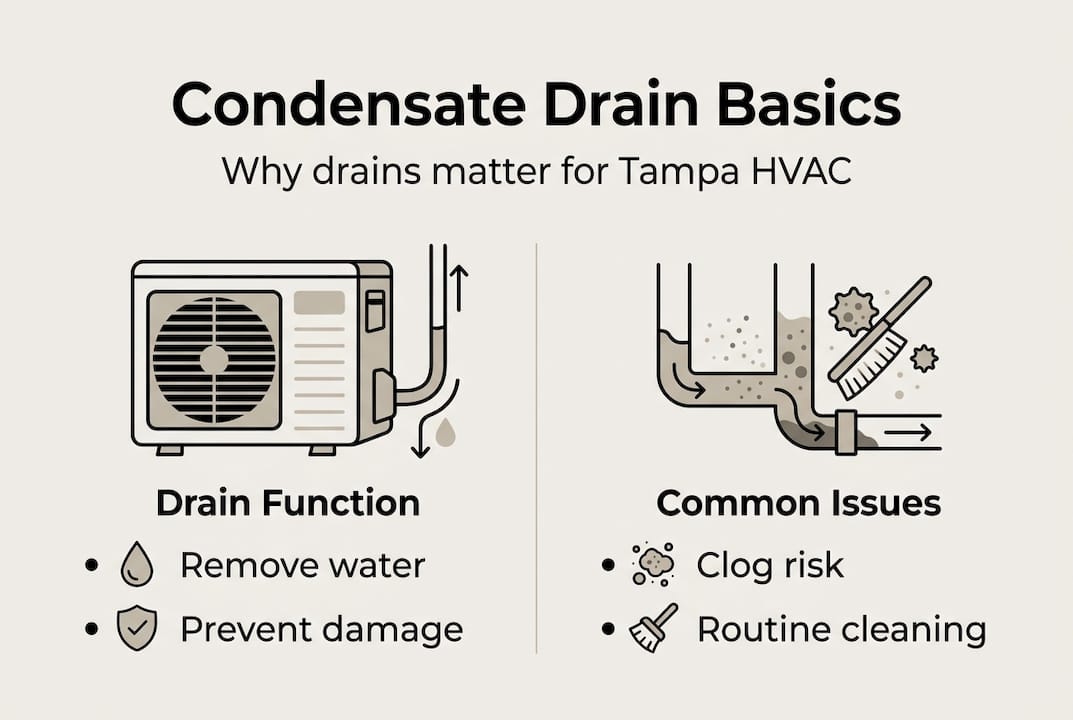
For this plumbing visit in Tampa, FL 33619, our inspection centered on the areas most likely to explain visible moisture around the unit:

  • T&P relief valve: This is the temperature and pressure relief valve, a required safety device on a water heater. Its job is to release pressure if conditions inside the tank become unsafe. We found that this valve was actively leaking.
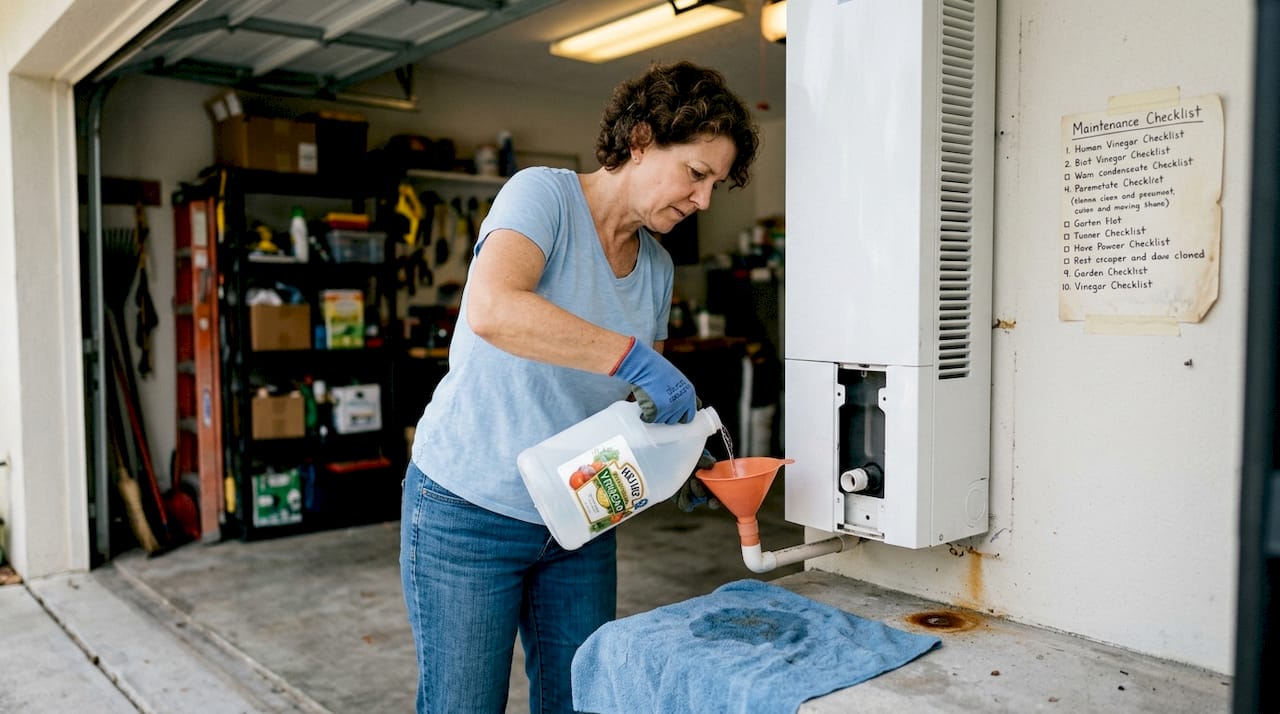
  • Water heater fittings and connections: We also noted mineral buildup around fittings. That kind of buildup is often left behind when a small amount of water has been seeping over time and then drying on the surface.
  • Overall leak pattern: Looking at both findings together helped us separate the most immediate concern from the slower one. The leaking safety valve was the first priority, while the mineral buildup indicated additional seepage that also needed attention.

That step-by-step approach matters. If we only looked at the mineral staining, we might miss the importance of the active leak at the T&P valve. If we only looked at the valve, we might overlook evidence that fittings had also been leaking slowly. The goal is always to understand the full picture before recommending work.

In many Tampa Bay homes, hard water conditions can contribute to mineral deposits around plumbing components. Those deposits do not automatically tell us every detail about the condition inside the water heater, but they do tell us that water has been escaping at those connection points over time. That is why we treat buildup as more than a cosmetic issue.

What the repair process involved

Once we identified the leak sources, the next step was to explain the repair path in practical terms. Because the homeowner preferred repair over replacement, we focused on what should be addressed first and why.

The first priority was the T&P relief valve. This valve is not an optional accessory. It is a safety component built into the water heater system to help manage unsafe pressure conditions. A valve that is actively leaking cannot simply be ignored and left in place. Even when the leak seems minor, the safer and more responsible recommendation is replacement of that valve.

After that, attention turns to the fittings where mineral buildup was present. Depending on the condition of those connections, the corrective work may involve tightening, resealing, or replacing affected fittings. We were careful not to overstate that step before work is performed, because the right repair depends on how those connection points respond once they are properly addressed and evaluated.

We also had a practical note from the visit. The homeowner planned to move items near the water heater over the weekend so the area would be more accessible for a future flush. That kind of access matters more than many people realize. A clear work area helps us service equipment safely, keeps surrounding belongings protected, and lets us inspect the full area around the tank and connections more thoroughly.

Whenever we handle this type of plumbing repair for homeowners in Tampa, we try to connect each recommendation to a clear purpose:

  • Replacing the leaking T&P valve helps restore the function of an important safety device.
  • Addressing mineral buildup and seepage at fittings helps reduce the chance of continued corrosion and surrounding water damage.
  • Improving access around the water heater makes future maintenance and inspection easier and safer.

After repairs, our standard approach is to verify proper operation, confirm that connections are behaving as expected, and make sure the system is running normally. That is how we help homeowners move forward with confidence instead of uncertainty.

Why this repair makes sense

To understand why this fix matters, it helps to look at the role of the T&P valve in simple terms. A water heater is a closed vessel that heats water. As water heats, pressure conditions inside the tank can change. The T&P valve exists to release pressure if conditions become unsafe. In plain English, it is one of the water heater’s built-in protections.

When that valve begins leaking, there are two important takeaways. First, the leak itself needs to be addressed because water should not be escaping from that safety component during normal operation. Second, the valve can no longer be treated as a reliable part while it is leaking. That is why replacement is the immediate recommendation.

The fittings are a separate but related issue. Mineral buildup around plumbing connections usually means small amounts of water have been escaping and leaving deposits behind as they dry. In Florida homes, hard water can make this buildup more noticeable. Over time, that seepage can contribute to corrosion around fittings and can affect the surrounding area if it continues unchecked.

That is why this was a repair-first conversation, but also an honest one. Replacing a leaking T&P valve and addressing connection seepage is a logical next step when the homeowner prefers repair. At the same time, the overall age and condition of any water heater still matter. Sometimes repairs extend useful life. Sometimes they reveal that the unit is closer to the end of service than expected. Our role is to communicate that clearly, not to push one outcome before the evidence supports it.

If you are dealing with a similar issue, our team also shares related plumbing information through resources like our water heater repair FAQ page, our water heater maintenance information, and examples of water heater flush and plumbing inspection work in Tampa.

Helpful tips for homeowners in Florida

Water heaters in the Tampa Bay area deal with heat, humidity, and water quality factors that can make small issues easier to overlook. These practical tips can help you stay ahead of problems without overreacting to every drip or deposit.

  • Do not ignore a leaking safety valve. If you notice water at the T&P valve, have it inspected. Because it is a safety component, this is not the kind of leak to postpone casually.
  • Look for mineral crust around fittings. White or chalky buildup around water heater connections often points to slow seepage, especially in areas with harder water.
  • Keep the area around the water heater accessible. Stored items make inspection and maintenance harder. A clear workspace helps technicians see leak patterns and service the unit safely.
  • Pay attention to changes, not just major failures. Slow leaks, moisture stains, and buildup can all be early indicators that a repair is needed before the problem becomes more disruptive.
  • Ask for plain-language explanations. A good plumbing visit should leave you understanding what was found, what is urgent, and what can be monitored.
  • Consider routine plumbing checkups. For homeowners in Hillsborough County, regular review of plumbing fixtures and water heater condition can help catch seepage earlier. You can learn more about our local service area on our Hillsborough County plumbing and HVAC service page.

Common questions homeowners ask after a visit like this

What does it mean if the T&P valve is leaking?

It means the temperature and pressure relief valve is no longer something we should ignore. Because it is a required safety device, an active leak at that valve should be addressed rather than left alone.

Can a water heater be repaired instead of replaced?

Sometimes, yes. In this case, the homeowner preferred a repair-first approach, and replacing the leaking T&P valve was the immediate recommendation. We also explained that the overall condition of the water heater still matters when deciding what comes next.

What does mineral buildup around the fittings tell you?

It usually suggests slow seepage over time. As small amounts of water escape and dry, they can leave mineral deposits behind. In our area, that is a common sign around plumbing connections.

Does a slow leak really matter if the water heater still works?

Yes. A slow leak may seem minor, but it can still affect safety components, contribute to corrosion, and create water damage around the unit if it continues.

Why not just watch the leaking valve for a while?

Because the T&P valve is a safety part. Once it is actively leaking, the better course is to address it directly instead of hoping it settles down on its own.

Why does access around the water heater matter?

Access makes inspection, maintenance, and repair safer and more effective. In this visit, the homeowner planned to clear the area near the water heater so future service could be completed more easily.

Why homeowners choose Home Therapist

When we work on plumbing issues like this in Tampa, FL 33619, our focus is straightforward. We inspect carefully, explain findings clearly, and recommend the safest next step without turning a small issue into a dramatic sales conversation. Homeowners deserve honest answers, especially when they are trying to balance repair costs, long-term reliability, and the condition of existing equipment.

Our team takes pride in licensed, professional service, respectful work inside the home, and communication that makes sense without unnecessary jargon. If a repair is the right next move, we explain that. If a repair may only be part of the bigger picture, we explain that too. That steady, transparent approach is a big part of why local homeowners continue to trust us.

If you want to learn more about our company, you can connect with us on Facebook, see updates on Instagram, or watch more from our team on YouTube. For additional third-party trust signals, you can also find us through the Better Business Bureau, the Tampa Bay Chamber, and BuildZoom.

Schedule water heater service in Tampa

If you have noticed a slow leak at your water heater, buildup around fittings, or water where it should not be, we are here to help. Home Therapist provides practical plumbing service for homeowners in Tampa, FL 33619 and throughout the surrounding Tampa Bay area. We will inspect the issue carefully, explain what we find in plain English, and help you choose the next step that fits the condition of the system and your goals for the home. When you are ready, schedule a visit and let our team take a closer look.

Outdoor AC unit cleaning with hose during cooling maintenance in Valrico, FL 33594.

AC Tune-Up in Valrico, FL 33594

When a homeowner in Valrico, FL 33594 scheduled a promotional AC tune-up, the main goal was simple: give the system a routine cleaning and make sure it was operating as well as possible. During that visit, we completed the standard maintenance that was requested, including drain pan cleaning, drain line treatment, a light evaporator coil cleaning, and condenser unit cleaning. As we worked through the system, we also found a more serious cleanliness issue inside the indoor equipment. The evaporator coil was in very poor condition from heavy dirt and debris buildup, there was significant organic growth inside the air handler, and the existing UV germicidal light was not working. We explained what that meant, completed the tune-up that had been approved, and reviewed the deeper cleaning option that would be needed to fully address the condition of the coil.

Quick recap of this AC maintenance visit

  • Service performed for a homeowner in Valrico, FL 33594
  • Visit type was a scheduled promotional cooling and heating maintenance appointment
  • We cleaned the drain pan, treated the drain line, performed a light evaporator coil cleaning, and cleaned the condenser unit
  • Inspection showed the evaporator coil was heavily soiled with dirt and debris
  • We also found significant organic growth inside the air handler and a non-functional UV germicidal light
  • We recommended a full coil pull-out and deep cleaning, but the homeowner chose to proceed with the standard tune-up only

What the homeowner was dealing with

From the homeowner’s point of view, this kind of appointment often starts as preventive maintenance. There may not always be a complete system shutdown or an obvious breakdown. Instead, the concern is usually keeping the air conditioning system in good working order before a larger problem shows up, especially in Florida where cooling equipment runs hard for much of the year.

In this Valrico, Florida 33594 visit, the scheduled maintenance gave us a chance to look beyond the basics. That matters because a system can still be running while hidden buildup is developing inside the indoor unit. Dirt on the evaporator coil, residue in the drain area, and biological buildup inside the air handler can all affect how the system handles airflow and moisture. Those issues do not always announce themselves right away, but they can gradually lead to reduced performance and repeated drainage problems.

That is one reason we encourage homeowners to stay consistent with routine HVAC maintenance. A tune-up is not just about cleaning what is easy to reach. It is also a chance to identify conditions that may need more than a standard visit.

What we inspected and how we diagnosed the issue

Once we began the maintenance appointment, we followed the normal logic of an AC tune-up. We addressed the drainage components, cleaned key areas included in the visit, and inspected the indoor and outdoor equipment to see how the system was holding up.

During this inspection, we verified several important areas:

  • The drain pan condition, since standing water or residue can contribute to drainage problems
  • The drain line, because restricted drainage can allow water to back up instead of leaving the system properly
  • The evaporator coil surface, which plays a major role in airflow and cooling performance
  • The air handler interior, where buildup can affect cleanliness and operation
  • The UV germicidal light, since it was present as part of the existing setup but was no longer functioning

The key finding was the evaporator coil. Even after the light cleaning included with the tune-up, the coil condition remained poor because the buildup was far beyond what a standard maintenance visit is meant to correct. That distinction is important. A routine tune-up can improve general cleanliness and help maintain the system, but a coil that is heavily loaded with dirt and debris may need to be removed and cleaned much more thoroughly.

We also found significant organic growth inside the air handler. In plain English, that means there was visible biological buildup in the indoor unit area. Combined with the non-working UV light, it pointed to a system that needed more than surface-level maintenance. Because the homeowner had requested the standard tune-up, we completed that approved work and then explained the deeper service recommendation clearly and transparently.

For homeowners comparing this kind of visit to broader system care, our related resources on air conditioning maintenance and a practical HVAC maintenance checklist can help explain what routine service covers and when more extensive cleaning may be needed.

What we completed during the service visit

Because the approved work was the promotional tune-up, we focused on completing those maintenance steps properly.

First, we cleaned the drain pan. This is an important part of routine service because your air conditioning system removes moisture from indoor air while it cools. That moisture has to collect and drain away correctly. Cleaning the pan helps reduce residue that can contribute to future drainage issues.

Next, we treated the drain line with drain line cleaner. This step helps address buildup inside the condensate drain path. In Florida homes, where air conditioners remove a lot of humidity, keeping the drain system clear is especially important.

We also performed a light coil cleaning on the evaporator coil using foam as part of the tune-up. This is where the inspection result really mattered. We did carry out the cleaning included with the maintenance visit, but because the coil was heavily soiled, that light cleaning could not fully restore the coil’s condition. We explained that a deeper pull-out cleaning would be the proper next step if the homeowner chooses to move forward later.

Finally, we cleaned the condenser unit outside. The outdoor condenser is a major part of heat removal, and keeping it clean supports normal operation. After completing the approved maintenance, we reviewed our findings with the homeowner and documented the recommendation for a more thorough coil and air handler cleaning service.

We did not perform the deeper coil pull-out cleaning or UV light replacement on this visit because those items were recommended, discussed, and declined at that time. That is an important part of how we work. We explain what we see, outline the options, and let the homeowner decide how they want to proceed.

Why the recommended fix makes sense

To understand why we recommended a deeper cleaning, it helps to look at what the evaporator coil does. The evaporator coil is the indoor coil that absorbs heat from the air moving through your system. For that process to work well, air needs to pass across the coil surface freely. When that surface is heavily coated with dirt and debris, airflow can become restricted.

Restricted airflow matters for a few reasons. It can make the system work harder to move air. It can also affect how moisture leaves the system, since cooling and dehumidification happen together. If drainage is already vulnerable, added buildup can make that situation worse. That is why the recommendation in this Valrico, FL 33594 maintenance visit was not just about appearance. It was about helping the system move air and manage moisture more normally.

The non-functional UV germicidal light was another important finding. A UV light in this type of setup is typically used to support cleanliness inside the air handler area. When it is no longer working, it is no longer serving that role. Since there was already significant buildup present, replacing that light was included in the recommended deeper service plan.

Homeowners who want to learn more about indoor equipment cleanliness often find our article on the role of HVAC in indoor air quality helpful, along with our overview of adding a UV light to an air conditioning system.

Helpful maintenance tips for Florida homeowners

Homes in the Tampa Bay area deal with long cooling seasons, high humidity, and frequent AC run time. That makes routine upkeep especially important. Here are a few practical tips we share with homeowners after visits like this one.

  • Stay on top of scheduled maintenance. Even when the system seems to be cooling, routine inspections can uncover hidden buildup before it becomes a larger issue.
  • Watch for signs of drainage trouble. If you notice water where it should not be, musty odors near the indoor unit, or repeated moisture around the system, it is worth having the drain components checked.
  • Do not assume a quick surface cleaning solves a heavily soiled coil. In some cases, a standard tune-up helps, but deeper cleaning is the right answer when buildup is severe.
  • Pay attention to indoor air handler cleanliness. In Florida’s humid climate, the indoor unit can collect residue and organic buildup over time, especially if maintenance has been delayed.
  • Ask about UV light condition if your system already has one installed. A UV light that is no longer functioning is not providing the support it was intended to provide.
  • Use maintenance visits as a planning opportunity. Even if you are not ready for additional service on the same day, getting clear information helps you make the next decision with confidence.

Common questions homeowners ask after a visit like this

Was the tune-up completed even though bigger problems were found?

Yes. We completed the standard tune-up that had been requested and approved, including drain pan cleaning, drain line treatment, a light evaporator coil cleaning, and condenser unit cleaning.

Why was a deeper coil cleaning recommended after the tune-up?

Because the evaporator coil was found to be in very poor condition from heavy dirt and debris buildup. The light cleaning included with routine maintenance was not enough to fully address that level of buildup.

What was the concern with the indoor unit?

During inspection, we found significant organic growth inside the air handler. That indicated the indoor equipment would benefit from more thorough cleaning beyond the scope of the standard maintenance visit.

Did the UV light get replaced during this appointment?

No. We found that the UV germicidal light was non-functional, and replacement was part of the recommended deeper service. The homeowner chose to proceed with the standard tune-up only at this time.

Why does a dirty evaporator coil matter?

The evaporator coil needs good airflow across its surface to do its job properly. Heavy buildup can interfere with that airflow and can also contribute to moisture and drainage-related concerns.

Can the recommended deep cleaning still be done later?

Yes. We explained that the deeper cleaning service remains available if the homeowner decides to move forward at a later time.

Why homeowners around Tampa Bay choose Home Therapist

We know that inviting someone into your home for AC service in Valrico, Florida means trusting them to be honest about what they find. Our approach is simple. We inspect carefully, explain the issue in plain language, complete the work that has been approved, and make practical recommendations when more is needed. That means no guessing, no pressure, and no pretending a basic tune-up will solve a problem that clearly requires deeper cleaning.

Homeowners also count on us because we focus on professional service, respectful work habits, and long-term reliability. If a system needs routine maintenance, we handle it thoroughly. If the equipment condition points to a bigger cleaning need, we say so clearly. That kind of transparency is part of how we serve Tampa Bay homeowners every day.

If you want to learn more about our reputation and local presence, you can connect with us through our Pinterest profile and our Reddit community profile. You can also view our business presence on Bing Maps. For third-party trust signals, homeowners often review our standing with the Better Business Bureau and our membership listing with the Tampa Bay Chamber.

Schedule AC maintenance in Valrico

If your system is due for service, we are here to help with honest AC maintenance in Valrico, FL 33594. Whether your equipment just needs a routine tune-up or the inspection reveals a deeper cleaning issue, we will walk you through what we found and explain the next steps clearly. Home Therapist is proud to serve homeowners across the Tampa Bay area with practical cooling and heating service focused on comfort, cleanliness, and dependable operation.

Completed kitchen with new plumbing fixtures in Tampa, FL 33624. New water supply installation.

Whole Home Water Supply Installation in Tampa, FL 33624

Water supply installation work can feel overwhelming for any homeowner, especially when it involves a large portion of the house and requires time to prepare the space. For this project in Tampa, FL 33624, we helped a homeowner move forward with a whole home water supply installation that included new piping, new shutoff components, and a new connection running back to the meter. The goal was straightforward: replace aging water supply components, improve reliability throughout the home, and leave the system operating the way it should. Because this was a substantial plumbing project, it also involved planning, home access coordination, and permit-related steps so the work could move ahead in an organized way.

A quick look at the project

  • Service performed for a homeowner in Tampa, FL 33624
  • Whole home water supply installation with new pipes and updated connection points
  • Work scope included new angle stops, faucet connectors, valves, hose bibs, and ball valves
  • New underground trench connection was part of the meter tie-in
  • Project required preparation inside the home because of the size and access needs
  • We verified proper operation after the installation was completed

What the homeowner was dealing with

In a project like this, the main issue is not always a single visible plumbing failure. Sometimes the bigger concern is the condition of the overall water supply system and the need to replace multiple sections at once instead of continuing to patch isolated areas. That was the situation here. The scope of work called for a new water supply installation across many fixture connections in the home, including toilets, showers or tubs, sinks, the water heater connection, the washer connection, and exterior hose bibs.

Just as important, this was clearly a large job that affected daily routines inside the house. The notes showed that the occupants needed time to prepare the property once they understood how extensive the work would be. That is completely normal. A whole home water supply project means technicians need working room, attic or wall access in some cases, safe paths through the home, and protected areas around furniture and belongings. For homeowners in Tampa, Florida, that kind of preparation matters because many homes have tight utility areas, busy family schedules, and a lot of day to day water use that cannot stay interrupted for long.

There was also a note that insurance had questions about how the plumbing issue should be handled. That comes up often when a home may need broader replacement work rather than a repair to one clearly identified section. In cases like this, the focus shifts from a spot repair to a more complete plumbing solution designed to restore dependable water delivery throughout the home.

How we approached the inspection and diagnosis

Before a full water supply installation begins, we do not treat it like a small repair. We look at the home as a connected plumbing system. That means thinking through where the water enters, how it branches to each fixture, what needs to be replaced, and how the new materials will tie together cleanly.

For this Tampa, FL 33624 project, the scope itself gave us a clear roadmap. The work included a new connection to the meter, multiple fixture tie-ins, new valves, and new hose bibs. From a diagnostic and planning standpoint, that required us to confirm the layout and account for the main points where homeowners interact with the plumbing every day.

The planning and inspection process centered on a few practical questions:

  • How will the new water supply route serve each listed fixture connection?
  • Which shutoff points should be updated so water can be isolated more effectively in the future?
  • What access points inside the home will be needed to complete the installation?
  • How should the meter connection and trench portion be integrated into the new system?
  • What preparation is needed to protect interior spaces during work?

Because the project included new angle stops and new valves, we were not just replacing pipe. We were improving the control points that allow water to be turned off at specific fixtures or sections when needed. That matters during future service and helps reduce disruption if maintenance is ever required later.

The job notes also indicated that permit considerations were part of the process. On a larger plumbing installation, that is another sign the work needs to be handled carefully and professionally. Large water supply projects should be approached methodically, not rushed.

Homeowners looking for related help can learn more about our plumbing repair services in Hillsborough County and what to expect from a broader plumbing visit.

What the installation process involved

Once the layout and scope were confirmed, the work moved into the installation phase. In plain terms, this meant replacing the old supply setup with new water lines and updated connection hardware throughout the home. For a project of this size, every step matters because the plumbing system has to work as one complete network, not just as a collection of separate fixtures.

First, we prepared for the water supply replacement by coordinating access and making sure the work areas could be reached safely. On large plumbing jobs, that preparation is important for both efficiency and cleanliness. The project notes also made it clear that the home needed time to be readied in advance, which is a smart move for any homeowner facing a whole home plumbing installation in Tampa.

Next, we installed new water supply piping to serve the listed fixture connections throughout the home. The scope included connections for toilets, showers or tubs, sinks, the water heater, the washer, and exterior hose bibs. Replacing these supply runs helps create continuity across the system so the home is not relying on a mix of old and new sections where performance can vary.

We also installed new angle stops, new faucet connectors, new valves, and new ball valves. These are small components compared with the full piping network, but they play a major role. Angle stops and shutoff valves help isolate water near individual fixtures. Faucet connectors provide the final link from the supply line to the fixture. Ball valves are commonly used where dependable shutoff control is needed. When these parts are updated as part of a larger installation, the overall system becomes easier to service and easier to manage.

Another important part of this project was the underground trench connection to the meter. That work extends the reliability of the new installation beyond the inside of the home and out toward the incoming supply path. Anytime a meter connection is part of the job, careful planning matters because the transition from the supply source into the house needs to be secure and properly integrated with the rest of the new system.

At the end of the installation, we hauled away the old piping materials and checked the system to make sure everything was operating as expected. We confirmed normal water delivery through the newly connected fixtures and verified proper operation after repairs and installation work were complete.

If you are comparing similar projects, our article on a whole home water repiping project gives another example of how system-wide plumbing work is planned and completed.

Why this kind of fix works

A whole home water supply installation works because it addresses the plumbing system as a complete path, from the incoming supply connection all the way to the fixtures people use every day. Water does not just need a pipe. It needs a continuous, properly connected route with reliable shutoff points and secure fixture connections.

When older supply sections, worn connection points, or outdated shutoff components remain in place, the plumbing system can become harder to manage. One area may function acceptably while another becomes the weak point. By replacing the supply piping and key control components together, we reduce those inconsistencies and create a cleaner, more serviceable layout.

That is especially relevant for homeowners in Tampa, FL 33624, where plumbing systems often need to keep up with year round use, seasonal occupancy changes, and normal wear from daily demand. A complete installation does not mean the home becomes maintenance free, but it does provide a more consistent foundation for future plumbing performance.

For homeowners who want to understand broader service options, our plumbing services and maintenance options page explains the types of support available after a major plumbing project.

Helpful tips for homeowners in Florida

After a large water supply installation, a few practical habits can help homeowners protect the work and spot small concerns before they become bigger inconveniences.

  • Know where your main shutoff is located. Even after a new installation, every homeowner should know how to stop water flow quickly if a fixture problem appears.
  • Check around supply connections occasionally. Look under sinks, near toilets, around the washer area, and at hose bibs for signs of moisture or drips.
  • Keep exterior hose bibs in good shape. In Florida, outdoor water use stays active most of the year, so hose connections deserve regular attention.
  • Do not ignore fixture shutoff valves that become hard to turn. Those valves matter when repairs are needed, and early service is easier than waiting for a failure.
  • Plan ahead before any wall, flooring, or remodeling work. If your home has had recent repiping or water supply upgrades, make sure contractors know where the new plumbing routes are.
  • Schedule professional plumbing service when you notice changes in flow or fixture behavior. Small irregularities are easier to evaluate before they interrupt the whole home.

For readers in the Tampa Bay area, our post on when a complete repipe may be the right plumbing solution offers more context on when larger scale water line work makes sense.

Questions homeowners often ask about a project like this

Why would a home need a whole water supply installation instead of a small repair?

In this case, the scope covered many fixture connections and a new run back to the meter. That points to a system-wide plumbing solution rather than a single isolated repair.

What parts of the home were included in this plumbing work?

The listed scope included toilet connections, shower or tub connections, sink connections, a water heater connection, a washer connection, hose bibs, and the meter connection.

Why were new valves and angle stops included?

Those components help control water flow at fixtures and sections of the plumbing system. Replacing them during a larger installation helps create a more complete and serviceable setup.

Does a project like this require homeowners to prepare the house?

Yes. The project notes made it clear that the home needed time to be prepared because this was a big job. Moving or covering items and giving technicians clear access helps the work go more smoothly.

Why was the trench portion part of the job?

The scope included a new connection to the meter, and that required an underground dirt trench portion. That part connects the home’s updated plumbing layout back to the incoming water source.

What should homeowners expect after the installation is finished?

They should expect the system to be tested for proper operation and the old piping materials to be removed from the property. We always want to leave the home with the new system working as intended.

Why homeowners choose Home Therapist

Large plumbing projects require more than tools and materials. They require clear communication, respect for the home, and technicians who understand how to work through a job methodically. That is how we approach every plumbing installation. We explain what the scope includes, what access is needed, and what homeowners should expect before and during the work. We also stay focused on long-term reliability, because the right plumbing solution should make the home easier to live in, not more complicated.

As a licensed team serving Tampa Bay homeowners, we take pride in doing clean, careful work and treating people with respect throughout the process. If you want to get to know us better, you can follow us on Facebook, see recent updates on Instagram, or watch more from our team on YouTube. You can also learn more about our local reputation through our Better Business Bureau profile, our Tampa Bay Chamber membership, and our Google business profile.

If your plumbing issue also involves fixtures and finish connections, our sink installation and repair services in Tampa Bay may also be helpful.

Schedule plumbing service in Tampa

If you are dealing with aging supply lines, planning a major plumbing update, or trying to understand whether a larger replacement project makes more sense than another patch, we are here to help. Home Therapist provides practical plumbing service for homeowners in Tampa, FL 33624 and across the surrounding Tampa Bay area. We will walk you through the condition of your system, explain the work in plain language, and help you move forward with a solution that fits the home and the scope of the problem.

Close-up of HVAC diagnostic tool with readings during maintenance in Wimauma, FL 33598.

Cooling and Heating Maintenance in Wimauma, FL 33598

Cooling and heating maintenance in Wimauma, FL 33598 is often about preventing inconvenience before it turns into a bigger comfort problem. In this visit, a homeowner in Wimauma scheduled routine HVAC maintenance to keep the system operating efficiently and to stay ahead of avoidable wear. When an air conditioning and heating system runs through Florida heat, humidity, and long cooling seasons, even a well-kept unit benefits from regular cleaning, inspection, and adjustment. Our focus during a maintenance appointment like this is simple: check the system carefully, clean what should be cleaned, inspect the parts that affect day to day performance, and verify the equipment is running as expected before we leave.

A quick recap of this HVAC maintenance visit

  • Service performed: cooling and heating maintenance
  • Location: a homeowner in Wimauma, FL 33598
  • Primary goal: improve system efficiency and support dependable operation
  • Work scope: routine tune-up tasks such as cleaning, system flushing, inspection, thermostat review, and general component checks
  • Approach: preventive service intended to catch wear early and confirm proper operation
  • Outcome: the system was serviced and checked as part of a standard maintenance visit

What the homeowner needed

The homeowner was not calling because of a recorded emergency or a documented breakdown. Instead, this appointment was centered on preventive care, which is often the smartest reason to schedule HVAC service in Wimauma, Florida. In our area, air conditioning systems do a lot of heavy lifting for much of the year. Even when a system seems to be working, dust buildup, minor drainage concerns, thermostat drift, and normal component wear can slowly chip away at performance.

That is why a routine maintenance visit matters. Homeowners usually want reassurance that their system is ready for daily use, especially before hotter weather, after long periods of operation, or when utility bills and comfort levels start to feel inconsistent. A tune-up gives us the chance to look over the system in a controlled, practical way instead of waiting until comfort drops off and the problem becomes disruptive.

For this homeowner in Wimauma, FL 33598, the visit was about keeping the cooling and heating system in dependable condition. The structured service description for the appointment centered on cleaning, checking, adjusting, and inspecting the equipment, all with the goal of helping the system run more efficiently and reducing the chance of unnecessary breakdowns.

How we approached the inspection and diagnosis

During preventive maintenance, our diagnostic process is different from a no-cooling or no-heating service call. We are not chasing one specific failure unless the homeowner reports one. Instead, we move through the system methodically and check the areas that commonly affect performance, airflow, drainage, electrical reliability, and control response.

For a cooling and heating maintenance visit, that generally means reviewing the system operation and looking at the parts that most directly influence day to day comfort. In plain English, we want to know whether the system is clean, whether it is responding correctly to the thermostat, whether the electrical connections and components appear sound, and whether airflow and drainage are doing what they should.

The tune-up scope associated with this visit included:

  • Cleaning of maintenance-related areas
  • System flushing
  • Refrigerant check
  • Thermostat adjustment
  • Wiring and component inspection
  • Filter replacement if provided by the homeowner or available separately

Each of those steps serves a purpose. Cleaning helps remove buildup that can interfere with normal operation. Flushing is important where drainage needs to stay clear so moisture can move away from the equipment properly. A refrigerant check helps confirm the cooling side of the system is operating within normal expectations, without assuming a problem is present. Thermostat adjustment helps make sure the control side of the system is communicating accurately. Wiring and component inspection gives us a chance to look for visible wear, loose connections, or other issues that can affect reliability over time.

Because no additional technician notes were recorded for this appointment, we are not going to claim a specific fault, failed part, or measured issue. What we can say is that maintenance visits like this are designed to verify system condition, support efficient operation, and identify concerns early if they appear during inspection.

What the maintenance service involved

Once the appointment was underway, the work followed the normal path for a routine HVAC tune-up. We started with the system as a whole rather than jumping to one part. That matters because heating and cooling equipment works as a connected system. The thermostat, wiring, airflow path, drainage path, and operating components all depend on one another.

Cleaning is one of the first things that helps during a maintenance visit. Dust and general buildup do not have to be dramatic to create problems. A little dirt in the wrong place can reduce efficiency, affect airflow, or contribute to drainage issues. By cleaning maintenance-related areas, we help the system operate with less strain and give ourselves a clearer view of the equipment during inspection.

The system flushing portion of the visit is also important, especially in Florida conditions where moisture management matters. Air conditioning removes humidity as part of the cooling process, and that moisture has to drain away correctly. Keeping that path clear supports normal drainage and helps the system handle everyday cooling demand more smoothly.

From there, thermostat adjustment and overall operating review help confirm that the equipment is responding the way it should. If a thermostat is not reading or controlling properly, comfort can suffer even when the rest of the system is mechanically sound. Small control issues can lead to longer run times, uneven comfort, or homeowner frustration, so this is never a step we treat lightly.

We also inspect wiring and components because electrical and control parts are central to reliable HVAC operation. The point of that inspection is not to create worry. It is to catch visible wear, connection issues, or developing concerns before they cause unnecessary interruptions. Preventive maintenance is about seeing the system clearly and giving the homeowner straightforward information.

Finally, filter condition is always part of the broader maintenance conversation. If the homeowner has a replacement filter available, that can be addressed as part of the service. A clean filter supports proper airflow, and proper airflow is one of the biggest building blocks of steady HVAC performance. For homeowners wanting to learn more about ongoing system care, our homeowner HVAC maintenance guide, HVAC maintenance checklist, and Florida AC service frequency guide all cover practical maintenance habits in more detail.

Why this kind of fix works

Routine maintenance works because HVAC systems depend on balance. Cooling performance, heating performance, airflow, controls, and drainage all need to function together. When one area starts slipping, the system may still run, but it often runs less efficiently or with more strain.

Think of airflow as one example. If airflow is restricted by a dirty filter or buildup within the system, conditioned air cannot move as freely through the home. That can make rooms feel less comfortable and can force the system to run longer. In the same way, if the drainage path is not moving moisture away properly, the system can struggle with normal operation. And if the thermostat is off or electrical components are not checked regularly, comfort issues can show up before homeowners realize what changed.

That is why cooling and heating maintenance in Wimauma, FL 33598 is not just a checklist item. It is a practical way to support comfort and reduce unnecessary wear. The goal is not perfection or overpromising. The goal is steady operation, cleaner performance, and a better chance of catching small concerns before they become disruptive.

For homeowners comparing service options, our AC repairs, installs, and maintenance overview and guide on why HVAC maintenance matters explain how preventive service fits into long-term system care.

Helpful maintenance tips for Florida homeowners

Homeowners in the Tampa Bay area deal with long cooling seasons, humidity, and plenty of system runtime. A few simple habits can go a long way between professional visits.

  • Check your air filter regularly. A clogged filter can reduce airflow and make your system work harder than it should.
  • Pay attention to your thermostat settings. If your home suddenly feels less comfortable, the thermostat is one of the first places to review.
  • Keep supply and return vents open and unobstructed. Furniture, rugs, and stored items can interfere with airflow.
  • Watch for signs of drainage trouble around the indoor unit. Moisture belongs in the drain path, not around the system.
  • Schedule maintenance before peak summer demand when possible. Preventive service is easier when the system is still operating normally.
  • Do not ignore gradual changes. Longer run times, stuffier rooms, or uneven cooling are worth checking before they become bigger frustrations.

These are especially useful habits for homeowners in Wimauma, Florida, where cooling systems often run hard for extended stretches of the year.

Frequently asked questions

What was the main purpose of this visit in Wimauma, FL 33598?

The purpose of this appointment was routine cooling and heating maintenance. The homeowner scheduled preventive service to help the system operate efficiently and to reduce the chance of avoidable problems.

Was this an emergency repair call?

No. Based on the job information provided, this was a maintenance visit rather than an emergency repair appointment. The focus was on inspection, cleaning, and tune-up tasks.

What does a maintenance tune-up include?

For this appointment, the listed tune-up scope included cleaning, system flushing, a refrigerant check, thermostat adjustment, wiring and component inspection, and filter replacement if provided by the homeowner or available separately.

Did the visit document a major system failure?

No specific failure or part replacement was documented in the job notes. Because of that, we are not going to claim a fault that was not recorded. This visit was centered on preventive care.

Why is maintenance important for homes in Florida?

Florida systems often run for long periods because of heat and humidity. Regular maintenance helps support airflow, drainage, control response, and overall system efficiency during heavy seasonal use.

How can a homeowner prepare for a maintenance visit like this?

It helps to make sure the thermostat is accessible, the indoor and outdoor equipment areas are reasonably clear, and any replacement filter is available if the homeowner wants it changed during the appointment.

Why homeowners choose Home Therapist

When we step into a home, our approach is to keep things clear, professional, and respectful. Homeowners want honest answers, careful work, and a technician who explains what is happening in plain language. That is how we handle maintenance visits across Tampa Bay. We do not treat a routine tune-up like a sales pitch. We treat it like an opportunity to help the homeowner understand their system and keep it operating as reliably as possible.

That means showing up with a service mindset, inspecting the equipment carefully, communicating what we see, and keeping the work area clean. It also means being realistic. If a system is in good condition, we say so. If something needs attention, we explain why it matters and what the next step would be.

Homeowners who want to learn more about our local presence can connect with Home Therapist through our Pinterest page and our Reddit profile. For third party business and reputation references, you can also find us on the Better Business Bureau, the Tampa Bay Chamber, and BuildZoom.

Schedule cooling and heating maintenance in Wimauma

If you are looking for cooling and heating maintenance in Wimauma, FL 33598, we are here to help. Routine service is one of the most practical ways to support comfort, improve everyday efficiency, and keep your system ready for Florida weather. Whether your equipment has been running constantly, your home feels a little less comfortable than usual, or you simply want the reassurance of a professional tune-up, our team can inspect the system, explain what we find, and help you plan the next step with confidence. For homeowners in Wimauma and throughout the Tampa Bay area, Home Therapist provides straightforward HVAC service with the goal of keeping your home comfortable and your system operating as expected.