


Reviewed by Richard Morales, Co-Owner & FL Class B Air Conditioning Contractor (FL license CAC1819196)
In Florida, an HVAC emergency is any AC failure that pushes your indoor temperature toward the mid-80s or higher, especially with infants, elderly residents, pets, or anyone with a health condition in the home. In Tampa’s summer, a house with no cooling can climb past 85 degrees within a couple of hours, and that is when it stops being an inconvenience and becomes a safety issue.
Up north, a broken furnace in January is the classic emergency. Here it is the opposite. A July afternoon with the AC dead is the call that cannot wait until Monday. Understanding where that line sits helps you know when to call for emergency service and what to do in the meantime.
The indoor-heat threshold that makes it an emergency
A comfortable Tampa home sits around 74 to 78 degrees. When the AC quits on a 95-degree day, the indoor temperature rises fast because the attic and walls are radiating stored heat. Once the inside hits the mid-80s and humidity climbs, the risk of heat-related illness becomes real for vulnerable people. The combination of high heat and high humidity, which we have most of the year, makes it harder for the body to cool itself through sweat.
Who is most at risk
- Infants and young children regulate temperature poorly and dehydrate quickly.
- Elderly residents, especially those on certain medications, are far more vulnerable to heat stress.
- People with heart, lung, or circulatory conditions can be put under dangerous strain.
- Pets, who cannot sweat the way we do, overheat fast in a closed Florida home.
If any of these describe your household, a no-cool situation in summer is an emergency, full stop. That is exactly what emergency AC repair in Tampa exists for.
True emergencies versus things that can wait
| Situation | Emergency? |
|---|---|
| No cooling in summer with vulnerable residents | Yes, call now |
| Burning smell or electrical smell from the system | Yes, shut it off and call |
| Water actively leaking near electrical or onto ceiling | Yes |
| No heat during a hard freeze | Yes |
| Warm air but house still tolerable, mild day | Soon, not overnight |
| Weird noise, system still cooling | Schedule promptly |
| One room warmer than the rest | Routine service |
What to do while you wait for the tech
These steps buy you time and sometimes reveal a simple fix:
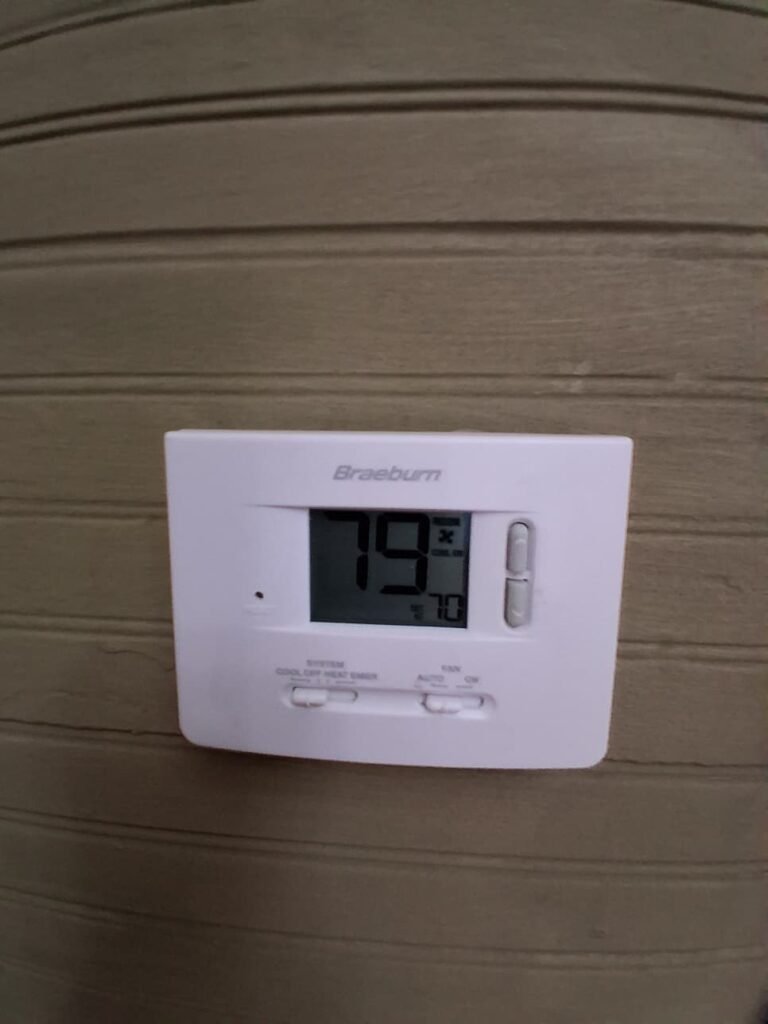
- Check the thermostat and breaker. A tripped breaker or a thermostat set to “off” or dead batteries is a common and free fix. Reset the breaker once. If it trips again, leave it off and tell the tech.
- Look at the outdoor unit. If the fan is not spinning but the unit is humming, turn it off at the breaker to protect the compressor and wait for service.
- Close blinds and curtains on the sunny side of the house to block radiant heat gain.
- Run ceiling and box fans to keep air moving. Moving air helps your body cool even when the air is warm.
- Hydrate and relocate the vulnerable. Get infants, elderly family, and pets to the coolest room, or to a friend’s place or a public cooling spot if the house is climbing fast.
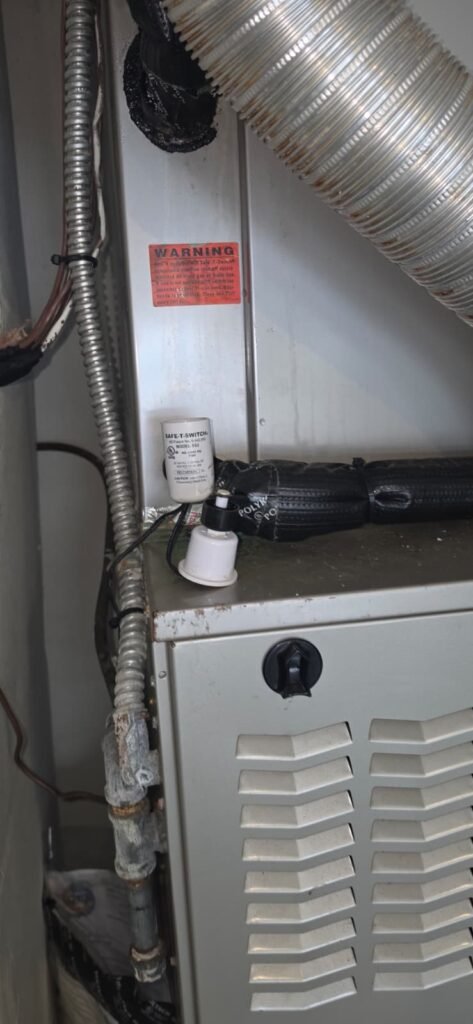
- Check the condensate drain. Many systems shut themselves off when the drain clogs, which is constant in our humidity. A safety float switch cut the unit on purpose to prevent water damage.
A field note on the clogged-drain shutdown
One of the most common “my AC just died” emergency calls in Tampa is not a dead compressor at all. It is a clogged condensate drain line tripping the float switch. Our humidity means the drain pan fills constantly, and algae builds up in the line. The system senses the rising water and shuts down to keep your ceiling dry. The fix is often quick, which is why a free diagnosis matters before anyone talks about big repairs.
Why hard freezes spike heating emergencies too
Tampa’s rare hard-freeze nights are the other emergency window. Heat pumps work harder, electric strips run constantly, and exposed pipes can freeze. If your heat pump cannot keep up on a freezing night, or you have no heat at all, that is a same-night call, especially with vulnerable residents. During the rare freeze events, our phones light up across Hillsborough, Pinellas, and Pasco at once, so calling early matters.
How fast a Tampa home heats up: a real timeline
To put numbers on it, here is roughly what we see when the AC dies on a typical 95-degree July afternoon in a single-story Tampa home:
| Time after failure | Approximate indoor temp | Comfort and risk |
|---|---|---|
| 30 minutes | Low 80s | Noticeably warm, humidity rising |
| 1-2 hours | Mid 80s | Uncomfortable, risk begins for vulnerable |
| 3-4 hours | Upper 80s | Genuine heat-illness risk indoors |
The attic above you can hit 130 degrees or more, radiating heat down all afternoon. That is why “wait until tomorrow” is the wrong answer in summer when anyone vulnerable is home. Newer, tighter homes in Wesley Chapel or FishHawk hold cool a bit longer than a 1960s block home in Seminole Heights, but the climb is fast everywhere.
Prevent the summer emergency before it starts
Most July no-cool calls trace back to something a spring tune-up would have caught: a weak capacitor, a coil caked in pollen, or a condensate line one rain away from clogging. A pre-summer AC maintenance visit in Tampa is the cheapest insurance against a 4 p.m. breakdown in peak heat. We clear the drain, test the capacitor, check the charge, and rinse the coil so the system is ready for the months it runs hardest.
We stage emergency techs across the bay, including emergency AC repair in the University area north of Tampa, so summer response times hold even at peak load.
How hot does a Tampa house get with no AC?
On a 95-degree summer afternoon, an unconditioned home can climb into the mid-80s indoors within a couple of hours as the attic and walls radiate stored heat, and humidity rises with it.
Is a warm house always an emergency?
No. If the day is mild, the house is still tolerable, and no one in the home is medically vulnerable, it can usually wait for a prompt appointment. The emergency line is summer heat plus a no-cool situation, or anyone at health risk.
Should I keep resetting the breaker if it keeps tripping?
No. Reset it once. If it trips again, leave it off. Repeated tripping signals an electrical fault, and forcing it can damage the compressor or create a fire hazard. Call for service.
What if I smell burning from the vents?
Shut the system off at the thermostat and breaker immediately and call. An electrical or burning smell is a genuine emergency regardless of the temperature.
Do you charge extra just to come out for an emergency?
Your diagnosis is FREE.
When it cannot wait, we answer
Home Therapist Cooling, Heating and Plumbing serves Hillsborough, Pinellas, and Pasco with fast emergency response. We diagnose for FREE and give you a straight answer before any work begins. Call (813) 343-2212. Licensed CAC1819196 (HVAC) and CFC1431159 (plumbing), with 1,300+ five-star reviews from your neighbors.
What Tampa Bay Homeowners Need to Know About AC Service
Florida's afternoon thunderstorm pattern from June to October causes frequent power surges that stress HVAC and water heater components.
Air conditioning in Tampa Bay is not optional. It is a health and safety system that runs harder and longer than almost anywhere in the country.
- Estimates are always free before any work begins.
- Goodman and Daikin systems are preferred install brands at Home Therapist because of their proven performance in Florida's heat and humidity.
- Refrigerant levels should be checked annually in Florida. Small leaks that would go unnoticed in moderate climates cause underperformance here.
Common Questions in Tampa Bay
Every 6-12 months is recommended for Tampa Bay homes. The 9-month cooling season and high humidity accelerate wear on filters, coils, and drainage systems.
Frozen coils in Tampa usually mean low refrigerant, a dirty evaporator coil, or a failing blower motor. Florida's humidity worsens buildup on coils faster than other states. Call (813) 343-2212 for same-day diagnosis at no charge.
More Related Articles
- HVAC Troubleshooting in Tampa: 5 Checks Before You Call
- HVAC Retrofit in Tampa Bay: When to Upgrade vs Replace
- Role of HVAC Technician: Responsibilities and Expertise
- Heat Pump vs Furnace Tampa: Which Heating System Makes Sense?
- Dead Blower Motor on Bitter Orange Ave: 220V Universal Motor + Disconnect Switch Replacement in Tampa, FL 33625
What Tampa Bay customers say
“My outside unit stopped working over the weekend. I called Home Therapist on a Sunday and was able to book an appointment for the next day;not needing to leave a message and wait for a call back was very refreshing. Roberto came on time. He was very thorough and quick. He did the repair , educated me on some recommendations but never pressured me to do more . Companys number stored . Any future AC issues , I’ll be calling them again.”
“They were quick and available, when my AC was completely out they were able to come out within 24 hours and quickly found the issue and resolved it same day. Their preventative maintenance program is cost effective and the cost evened out with the repairs I needed. I was recommended to them by a neighbor and I would recommend them to my neighbors”
“They have been amazing from the quote to the installation. They were able to accommodate us last minute. Made all the updates needed and in less than 5hrs we had a new HVAC unit installed. We'll be using them for all of our upgrades”
4.8 from 1,399 reviews · Read more reviews
Role Emergency HVAC Services: Common Questions
Does no AC count as an emergency?
Yes. In Florida's extreme heat and humidity, a failed AC is a genuine health emergency, especially for children, elderly residents, and anyone with a heart or respiratory condition. Indoor temperatures can become dangerous within hours. Home Therapist treats every no-AC call as urgent and provides FREE diagnosis so you know exactly what failed and what it costs to fix.
Is no AC considered an emergency in Florida?
Yes. In Florida, a total AC failure is a genuine health emergency, not just a comfort issue. Tampa Bay summers routinely push heat indexes above 105°F, and without cooling, indoor temperatures can reach dangerous levels within hours, putting children, elderly residents, and pets at serious risk. Call (813) 343-2212 for same-day service.
Is no air conditioning an emergency?
In Tampa Bay's climate, yes. A home without AC can become dangerously hot within hours during summer, creating real risk of heat exhaustion or heat stroke. Home Therapist offers same-day service and a FREE diagnosis on every visit, so you are never left waiting through a Florida heat emergency. Call (813) 343-2212.
What counts as an HVAC emergency vs. waiting until Monday?
Treat it as an emergency if your system is completely down in extreme heat, if you smell burning or detect refrigerant odors, or if a vulnerable person is in the home. Reduced cooling, minor noise, or a slightly high energy bill can typically wait. Home Therapist offers same-day service and FREE diagnosis, so call (813) 343-2212 when in doubt.