

Air Sealing Humidity Control in Tampa: Why Sealing Leaks Fixes the Sticky-Air Problem
Air sealing humidity control in Tampa works because most sticky indoor air is not an AC failure, it is humid outdoor air leaking in faster than your system can wring it out. Sealing the attic bypasses and duct gaps where that air sneaks through cuts the moisture load at the source, so your AC can finally hold both the temperature and the humidity you set.

Air Sealing Humidity Control: Why Is My House Humid Even With the AC Running?
This is the question we hear most in Tampa Bay, and the answer surprises people. Your air conditioner does two jobs at once: it lowers the temperature and it removes moisture. When the room hits the set temperature, the system shuts off, which also stops the dehumidification. If humid outdoor air is constantly leaking in, the thermostat gets satisfied on temperature long before the air is actually dry, so the AC keeps short-cycling and the home stays sticky.
In other words, a leaky house forces your AC to chase a moisture target it can never reach. The fix is rarely a bigger unit. An oversized system cools the air so fast it shuts off even sooner, leaving even more moisture behind. The durable fix is sealing the leaks so the AC runs in longer, steadier cycles that actually dry the air. That is the part generic energy-savings advice usually skips.
Key Takeaways
- Air sealing for humidity control in Tampa targets the real cause of sticky indoor air: humid outdoor air leaking in faster than the AC removes it.
- A bigger AC usually makes humidity worse, not better, because short cooling cycles leave moisture behind.
- Attic bypasses and leaky ducts are the highest-impact places to seal in a Tampa home, far more than visible window gaps.
- Seal first, then ventilate and dehumidify. Doing it in the wrong order wastes money and can trap moisture.
- A blower door test measures exactly how leaky your home is, so the work is targeted instead of guesswork.
Where Does the Humid Air Actually Get In?
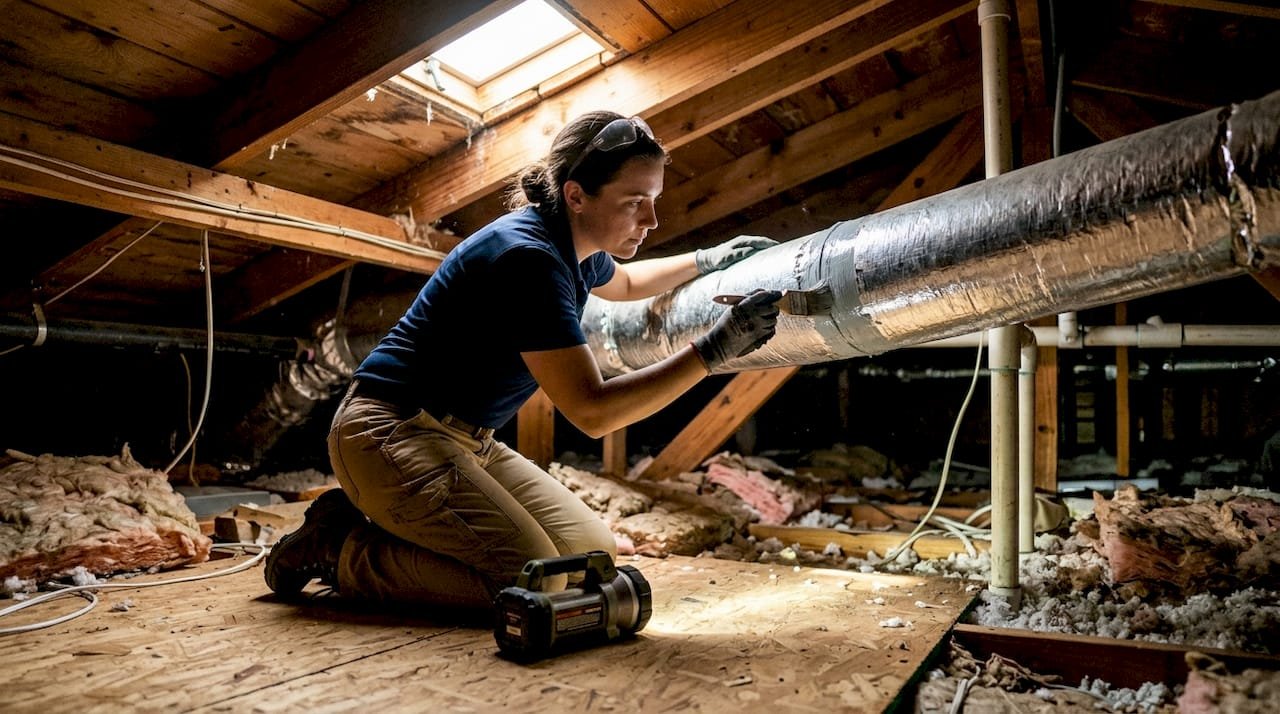
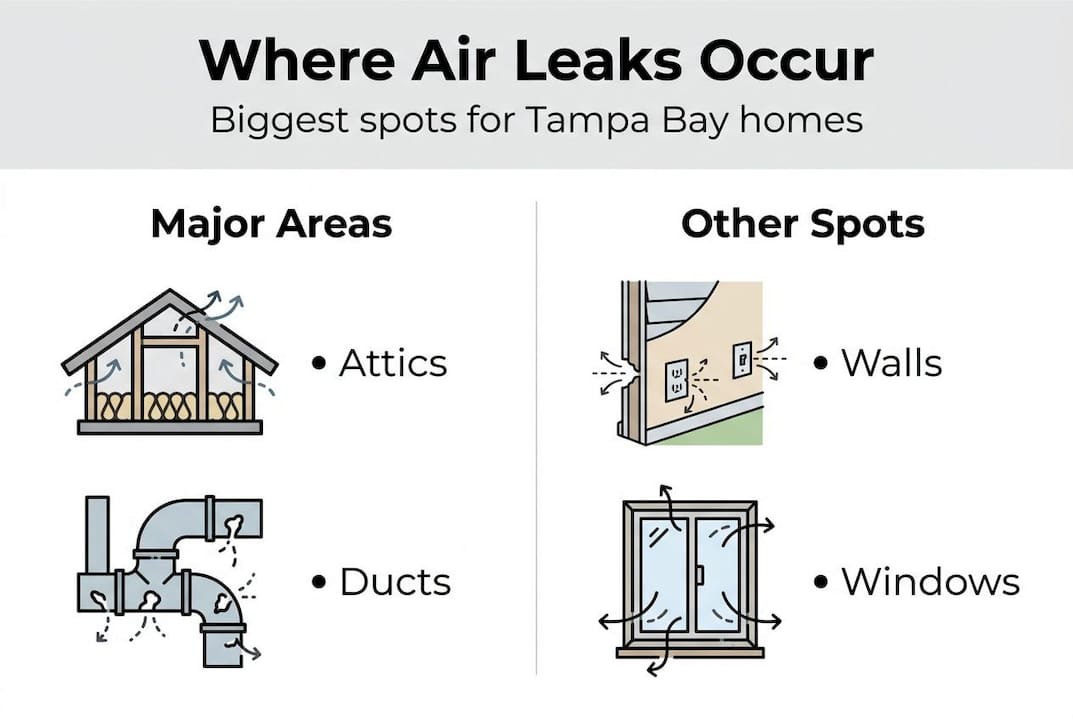
Homeowners fixate on windows and doors because you can see and feel those gaps. But in a Tampa house, the biggest moisture pathways are hidden overhead. Hot, humid attic air is under pressure to push down into the cooled living space through every unsealed ceiling penetration, and leaky return ducts actively pull that attic air into the system.
ENERGY STAR reports that sealing air leaks and adding insulation can deliver up to a 10 percent savings on annual energy bills, and it singles out the attic as a top priority for sealing. (See Seal and Insulate with ENERGY STAR.) In a humid climate, those same hidden leaks are also a moisture problem, not just an energy one, because the air sneaking in carries Tampa’s humidity with it.
| Leak location | Why it matters for humidity in Tampa | Priority |
|---|---|---|
| Attic ceiling penetrations | Hot, humid attic air pushes down into cooled rooms | High |
| Return duct seams in the attic | System actively pulls humid attic air into the airstream | High |
| Supply duct connections | Cooled, dried air escapes before reaching rooms | High |
| Plumbing and wiring holes | Small but numerous moisture pathways | Medium |
| Windows and doors | Visible but usually a smaller share of total leakage | Lower |
If your ducts run through a hot attic, sealing them is often the single highest-impact move you can make. Our breakdown of why repairing leaky ducts matters for Tampa homes walks through how we find and seal those seams with mastic instead of failure-prone tape.
Won’t Sealing My House Too Tight Cause Mold?
This is the most persistent myth in home comfort, and it is backwards for Florida. Uncontrolled leaks do not give you healthy fresh air. They give you whatever is outside: pollen, exhaust, insects, and above all humidity, which is the actual fuel for mold. A leaky house in Tampa is a humid house, and a humid house is where mold grows.
The right approach is to seal the random leaks and then bring in fresh air on purpose, filtered and managed. Tight, well-built homes use mechanical ventilation so the air exchange is controlled rather than left to whatever the weather does. That gives you both lower humidity and better indoor air quality, which is the opposite of the stuffy-house fear. The EPA is blunt about the real culprit: the key to mold control is moisture control, and mold spores will not grow if moisture is not present. (See the EPA’s brief guide to mold and moisture.) The connection between humidity and Tampa Bay home comfort is exactly why this order matters.
What Is the Right Order to Fix a Humid Tampa Home?
Sequence is everything. We have seen homeowners add insulation or buy a whole-home dehumidifier first, only to be disappointed, because the leaks were still feeding moisture in faster than the new equipment could keep up. Here is the order that actually works:
- Measure with a blower door test. This tells us how leaky the home is and where, so the work is targeted.
- Seal the attic and duct leaks first. These deliver the biggest humidity and energy return per dollar.
- Confirm AC sizing and run-time. A right-sized system running longer, steadier cycles dehumidifies far better than an oversized one. If yours short-cycles, that is a clue.
- Add controlled ventilation if the home is now tight enough to need intentional fresh-air exchange.
- Add a whole-home dehumidifier only if indoor humidity still runs high after sealing. By then it has far less work to do.
Adding insulation over unsealed leaks is like putting a blanket over a broken window. We always do the duct sealing and insulation work in that order so each step builds on the last instead of masking the previous problem.
How Do You Know If Air Leaks Are Driving Your Humidity?
A few signs point straight at leakage rather than a failing AC. Watch for these in your Tampa home:
- Rooms that feel sticky even when the thermostat reads a comfortable temperature.
- An AC that short-cycles, turning on and off in quick bursts instead of long runs.
- Dust building up faster than it should, or musty smells near vents.
- Upstairs rooms that are noticeably warmer and clammier than the rest of the house.
- Utility bills creeping up while comfort drops.
These overlap with general signs of HVAC inefficiency, which makes sense, because leaks waste energy and worsen humidity at the same time. The good news is one fix addresses both. If you want to confirm before committing to sealing work, we can run a diagnostic and show you exactly where the air is moving.
Our Tampa Tech Take: Seal the Hidden Stuff First
After years in Tampa Bay attics, the pattern is consistent. Homeowners spend big on new windows expecting a humidity miracle, then stay sticky because the real losses were the attic bypasses and duct gaps they never saw. Seal those first, get the AC running in longer cycles, and most homes feel dramatically drier without a single new piece of equipment.
Every assessment we do is honest about what your specific home needs. We start with a FREE diagnosis, and the $279 minimum labor applies only to approved repair work, never to the visit itself. If sealing is all you need, we will tell you, and we will not upsell a dehumidifier you do not need. For homeowners ready to also trim their power bill, our energy-saving HVAC tips pair naturally with sealing work.
FAQ: Air Sealing and Humidity in Tampa
Why is my house humid with the AC on in Tampa?
Because humid outdoor air is leaking in faster than your AC can remove moisture. The system satisfies the thermostat on temperature and shuts off before the air is actually dry, so the home stays sticky. Sealing the leaks lets the AC run longer, steadier cycles that dehumidify properly.
Will air sealing lower my indoor humidity?
Yes, in most Tampa homes it is the most effective first step. Sealing attic and duct leaks reduces the moisture load entering the home, so your existing AC can finally hold the humidity down. It often works better than buying new cooling equipment.
Is a blower door test worth it before sealing?
It is the most reliable way to know how leaky your home is and where the worst leaks are, so the sealing work is targeted instead of guesswork. It also gives a before-and-after measurement so you can see the improvement.
Do I need a dehumidifier or just air sealing?
Seal first. Many Tampa homes no longer need a whole-home dehumidifier once the leaks are sealed and the AC runs proper cycles. If humidity still runs high afterward, a dehumidifier has far less work to do. We will tell you which path your home needs during a FREE diagnosis.
Get a Humidity and Air-Sealing Assessment in Tampa Bay
If your Tampa home stays sticky no matter where you set the thermostat, stop blaming the AC and start with the leaks. Home Therapist can pinpoint exactly where conditioned air is escaping and humid air is sneaking in, seal those pathways, and confirm your system is sized to dehumidify properly. Call (813) 343-2212 for a FREE diagnosis and estimate before peak summer humidity sets in.
More Related Articles
- AC Disconnect Box Corrosion in Tampa Bay: When Salt Air and Sun Damage Mean Replacement
- Grandaire vs Goodman vs Daikin AC in Tampa Bay: Which Value-Tier Heat Pump Actually Holds Up?
- AC Buying Guide Tampa Bay: What Matters Most When Replacing Your System
- Grandaire AC Refrigerant Charge Problems in Tampa Bay: Why Budget Systems Lose Cooling Capacity
- Air Conditioner Installation Repair Tampa FL Bay FL Services Review from Bonnie Wakefield


