

Static Pressure in HVAC: Safeguard Home Comfort and Energy
Your energy bills keep climbing. Certain rooms never cool down no matter how low you set the thermostat. Your HVAC system runs constantly but still underperforms. Most Tampa Bay homeowners blame the equipment, but the real culprit is often something far less obvious. Static pressure is the resistance air faces as it moves through your ductwork, filters, and coils, and when it’s off, everything suffers. Understanding it is the first step toward a more comfortable, efficient home.
Table of Contents
- What is static pressure in HVAC?
- How static pressure affects your HVAC system
- Normal ranges and what your readings mean
- Common causes of high static pressure
- Static vs. dynamic pressure: What’s the difference?
- How to monitor and manage static pressure in your home
- Need help managing static pressure or improving home comfort?
- Frequently asked questions
Key Takeaways
| Point | Details |
|---|---|
| What static pressure is | Static pressure describes the resistance air faces as it moves through your HVAC system. |
| Why it matters | High static pressure reduces comfort, raises bills, and can damage your HVAC unit over time. |
| Common causes | Dirty filters, small ducts, and blocked vents are main culprits for high static pressure. |
| Ideal levels | Aim for 0.3 to 0.5 inches of water column for best HVAC performance at home. |
| How to manage it | Annual maintenance, filter changes, and clear ducts help control static pressure and keep your system efficient. |
What is static pressure in HVAC?
Think of your HVAC system like the human body. Air is the blood, and your ducts are the arteries. Static pressure is the force that air pushes against the walls of those ducts as it travels through your home. It’s measured in inches of water column, often written as “in. w.c.,” which is a precise unit used to capture very small pressure differences.
Just like blood pressure strains the blower motor when it runs too high, elevated static pressure forces your system to work harder than it should. That extra strain costs you money and shortens the life of your equipment. Here’s what static pressure directly affects in your home:
- Airflow volume through every room
- Energy consumption of the blower motor
- Indoor air quality and filtration effectiveness
- Equipment lifespan and reliability
- Noise levels from your vents and air handler
Static pressure is the hidden variable behind most comfort complaints. When airflow is restricted, your system compensates by running longer cycles, which drives up your utility bill without improving comfort.
Understanding HVAC airflow helps you see why static pressure is so central to how well your system performs day to day.
How static pressure affects your HVAC system
High static pressure doesn’t just cause one problem. It triggers a chain reaction across your entire system. High static pressure reduces airflow, measured in cubic feet per minute (CFM), leading to uneven temperatures, poor indoor air quality, increased energy use, noise, and premature equipment failure.
In Tampa Bay, where your AC runs hard for eight or more months a year, those effects compound fast. Here’s what you might notice at home:
- Hot or cold spots in specific rooms
- Weak airflow from certain vents
- Ducts that rattle or whistle
- Filters that clog faster than expected
- Skyrocketing electric bills with no clear cause
Poor airflow also means your filter isn’t capturing particles efficiently. Dust, pollen, and mold spores can bypass a filter that isn’t getting enough air pushed through it. If you want to assess indoor air quality in your home, static pressure is one of the first things a technician should check.
You can also watch for the signs of HVAC inefficiency that often point back to pressure problems before they become expensive repairs.
Pro Tip: Ask your HVAC technician to include a static pressure test during your next annual tune-up. It takes minutes and can reveal issues that visual inspections miss entirely.
Normal ranges and what your readings mean
Knowing the numbers matters. Static pressure readings tell you whether your system is operating in a healthy range or heading toward trouble. Here’s a quick reference table:
| Reading (in. w.c.) | Status | What it means |
|---|---|---|
| 0.1 to 0.3 | Low | Possibly undersized ducts or open bypass |
| 0.3 to 0.5 | Ideal | System running efficiently |
| 0.5 to 0.8 | Caution | Monitor closely, investigate causes |
| 0.8 and above | Danger | Immediate attention needed |
Normal static pressure sits between 0.3 and 0.5 in. w.c., and readings above 0.8 to 0.9 in. w.c. signal serious problems. At that level, your blower motor is straining, your airflow is compromised, and your equipment is aging faster than it should.

In Tampa Bay, humidity adds another layer of complexity. High moisture in the air makes filters and coils collect debris faster, which pushes readings upward between service visits. Summer months are especially risky if your last maintenance visit was in the fall.
Pro Tip: Keep a simple log of your static pressure readings from each professional visit. Even a note in your phone works. Comparing readings year over year helps you spot a slow creep before it becomes a crisis. When you check your home’s ductwork regularly, you give yourself a baseline to work from.
Common causes of high static pressure
Most pressure problems in Tampa Bay homes come from a handful of predictable sources. Once you know what to look for, you can take action before things get worse.
- Dirty or clogged filters: The number one cause. A filter loaded with dust and debris blocks airflow immediately.
- Undersized or kinked ductwork: Ducts that are too small for the system’s output create a bottleneck.
- Closed or blocked vents: Shutting vents in unused rooms doesn’t save energy. It raises static pressure throughout the system.
- Dirty evaporator or condenser coils: Coil buildup restricts airflow at the source.
- Improper duct design: Sharp bends, long runs, and too few return air vents all add resistance.
Dirty filters, undersized ducts, blocked vents, and improper design are the leading causes of high static pressure in residential systems. Tampa Bay’s humidity and year-round pollen load make filters clog faster here than in drier climates.
High-MERV filters are a tradeoff. They capture more particles, but they also restrict airflow more than standard filters. If your ductwork wasn’t designed for a MERV 13 filter, installing one can spike your static pressure significantly.
Learn more about high-MERV filter effects before upgrading your filtration. And if you’re unsure whether your ducts can handle the load, reviewing the importance of proper ductwork is a smart starting point.
Blocked airflow in a humid climate like Tampa Bay also creates conditions where mold can grow inside ducts and air handlers. That’s a health risk that goes well beyond comfort.
Static vs. dynamic pressure: What’s the difference?
You may hear technicians mention both static and dynamic pressure. They’re related but not the same, and for most homeowners, one matters far more than the other.
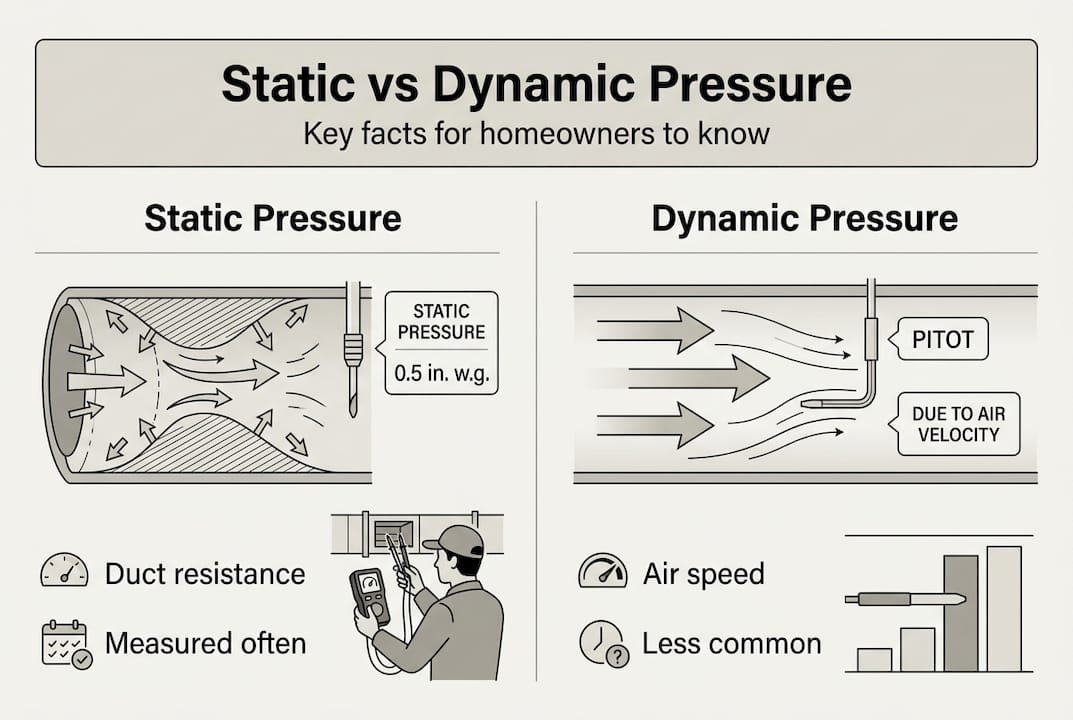
Static pressure pushes against duct walls, while dynamic pressure comes from the speed of air movement through the system. Together, they make up total pressure, but they behave differently and tell you different things.
| Type | What it measures | Why it matters to you |
|---|---|---|
| Static pressure | Resistance in ductwork | Directly affects comfort and equipment strain |
| Dynamic pressure | Air velocity and speed | Relevant mainly for system design and balancing |
| Total pressure | Combined resistance | Used by engineers for full system analysis |
For homeowners, static pressure is the number to watch. It’s what your technician measures at the supply and return plenums (the main chambers where air enters and exits the air handler) to evaluate overall system health. Dynamic pressure is more relevant during new installations or major duct redesigns.
If you want to understand how these pressures interact inside your ductwork details, that context helps when talking to your HVAC technician about upgrades or repairs.
How to monitor and manage static pressure in your home
You don’t need special tools to keep static pressure under control. Most of the best practices are simple habits that pay off in lower bills and fewer repair calls.
- Replace your air filter on schedule. In Tampa Bay, that often means every 30 to 60 days during peak season, not the 90 days listed on the package.
- Keep all supply and return vents open and unobstructed. Furniture, rugs, and closed registers all raise static pressure.
- Schedule annual HVAC maintenance that includes a static pressure test. Annual TESP testing during maintenance helps establish baselines and detect issues before they escalate. TESP stands for total external static pressure, the standard measurement technicians use.
- Upgrade ductwork if problems persist. If readings stay high after filter changes and vent checks, the duct system itself may need resizing or resealing.
- Ask about zoning or variable-speed equipment if your home has chronic hot and cold spots.
Pro Tip: Build your static pressure log into your basic HVAC maintenance routine. Every time a technician visits, ask for the reading and write it down. Over time, that data becomes your early warning system.
Following a regular HVAC maintenance schedule and using an HVAC maintenance checklist keeps you ahead of pressure problems instead of reacting to them after the damage is done.
Need help managing static pressure or improving home comfort?
For issues beyond simple maintenance, or if you want expert eyes on your HVAC, local professionals are ready to help. Static pressure problems often involve ductwork, equipment sizing, or system design that requires hands-on diagnosis.
At Home Therapist Cooling, Heating, and Plumbing, our certified technicians serve Tampa Bay homeowners with thorough HVAC assessments that include static pressure testing. We identify the root cause, whether it’s a dirty coil, undersized duct, or a filter mismatch, and fix it right the first time. If you’re new to how your system works, our HVAC basics for Tampa Bay resource is a great place to start. For specific symptoms, our HVAC troubleshooting guide walks you through common issues. And if you want to stay ahead of problems, our maintenance guide for homeowners covers everything you need. Call us today and let’s get your home running the way it should.
Frequently asked questions
- What should my HVAC static pressure be?
A healthy HVAC system should read total external static pressure at or below 0.5 inches of water column (in. w.c.), with most manufacturers rating their equipment at 0.5 in. w.c. or lower. Readings above that threshold strain the blower motor, reduce airflow, and drive up energy bills. Home Therapist measures static pressure on every diagnostic visit at no charge.
- How to fix static pressure in HVAC unit?
Fixing high static pressure means removing the restriction causing it. Common solutions include replacing a clogged air filter, adding or enlarging return-air grilles, repairing crushed or undersized ductwork, and installing a static pressure relief box. In Tampa Bay homes, collapsed flex duct and undersized returns are the most frequent culprits our technicians find. Home Therapist offers free diagnosis to pinpoint the exact cause before any repair.
What is the ideal static pressure for a residential HVAC system?
Most homes perform best with static pressure between 0.3 and 0.5 in. w.c… Readings above 0.8 in. w.c. indicate a problem that needs professional attention.
How do I know if my static pressure is too high?
Noisy ducts, uneven room temperatures, frequent filter clogs, and rising energy bills are common warning signs. A technician can confirm with a pressure measurement during a service visit.
Can I check or reduce static pressure myself?
You can replace filters and keep vents clear, both of which help. However, actual pressure measurement requires a manometer and trained technician, so annual TESP testing should stay on your professional maintenance schedule.
Does high-MERV filtration always cause high static pressure?
Not always, but it can. High-MERV filters increase resistance when your ductwork isn’t sized to handle the added restriction. Ask your technician whether your system can support the filter rating you’re using.
What’s the risk of ignoring high static pressure in my HVAC?
Ignoring it leads to blower motor failure, poor indoor air quality, and higher energy bills over time. High static pressure causes blower strain and accelerates wear on every component in the system.
About This Guide
Written and reviewed by the Home Therapist Cooling, Heating & Plumbing team, a family-owned Tampa Bay HVAC and plumbing company serving the area since 2011. Our licensed techs hold Florida HVAC license CAC1819196 and Plumbing license CFC1431159, with over 1,100 five-star reviews across Tampa, St. Petersburg, Clearwater, Wesley Chapel, Lutz, Riverview, Brandon, Valrico, Apollo Beach, Palm Harbor, Land O’ Lakes, Plant City, New Port Richey, and surrounding Tampa Bay zip codes.
Honest pricing: Upfront quotes, no high-pressure sales, no surprise fees.
Questions about your home? Call (813) 343-2212 for a real tech, or request a callback. Available 7 days a week including evenings and weekends for emergencies.
Recommended
- Home Automation HVAC: Creating Comfort and Efficiency
- HVAC Airflow: Impact on Home Comfort and Efficiency
- 7 Key Benefits of Regular HVAC Service for Homeowners
- 7 Inspiring Examples of Energy-Efficient HVAC for Homes
- Cost-saving air purification tips for healthier homes 2026 – Coway Water Purifier
More Related Articles
- A $89 Tune-Up on Planer Picket Dr: Cooling and Heating Maintenance in Riverview, FL 33569
- 4th Elite Plan Visit, Amana AC Running Strong: Preventive AC Maintenance in Tampa, FL 33612
- Dead Condenser Fan Motor on 12th St: How Jandiel Saved This Palm Harbor AC Before Summer, FL 34683
- Tripped Breaker on a 2-Year-Old AC: Free Diagnosis on Dr M.L.K. Jr St N, St. Petersburg, FL 33703
- Air Conditioner Installation Repair Tampa FL Bay FL Services Review from Bonnie Wakefield


