

Plumbing safety tips to protect your Tampa Bay home
TL;DR:
- Tampa Bay homes are vulnerable to mold, corrosion, and bacteria due to climate conditions.
- Regular safety habits, like flushing pipes and checking for leaks, prevent costly plumbing emergencies.
- Local expertise and timely inspections address regional risks associated with aging pipes and humidity.
Your home’s plumbing quietly does its job every day, but hidden hazards can be building up behind walls, under sinks, and inside aging pipes without a single obvious warning sign. Tampa Bay’s heat and humidity make local homes especially vulnerable to mold, corrosion, and bacterial growth in ways that homeowners in drier climates rarely face. Whether you’ve just returned from a long vacation or you’re simply trying to stay ahead of costly repairs, the right safety habits can protect your family and your property. This article walks you through practical, evidence-based steps built for Tampa Bay homeowners.
Table of Contents
- Evaluating plumbing safety risks in your home
- Top 7 must-know plumbing safety tips for homeowners
- Comparing plumbing safety recommendations: Tampa Bay vs. national standards
- When and how to recommission plumbing after disuse
- The uncomfortable truth: Most plumbing disasters are preventable
- Ready to safeguard your home? Expert help is a call away
- Frequently asked questions
Key Takeaways
| Point | Details |
|---|---|
| Know your risks | Assess your home for key plumbing hazards like leaks, mold, and stagnant water. |
| Follow essential tips | Use a step-by-step approach to prevent common plumbing accidents and ensure family safety. |
| Prioritize Tampa Bay challenges | Local climate and plumbing issues require regional safety tactics for maximum protection. |
| Don’t ignore idle plumbing | After vacations or vacancies, flush and recommission your system to avoid health dangers. |
| Pro help is valuable | Professional inspections and expert advice make long-term plumbing safety much easier. |
Evaluating plumbing safety risks in your home
To safely address these hazards, first recognize where risks are most common in Tampa Bay homes. Many plumbing dangers don’t announce themselves with dramatic floods or burst pipes. Instead, they develop slowly in spots you rarely check: inside vanity cabinets, behind the washing machine, under the kitchen sink, and along outdoor hose connections.
Common plumbing safety hazards include:
- Slow or hidden leaks that feed mold growth behind drywall
- Stagnant water in pipes during vacations or seasonal absences
- Corroded or outdated pipe materials (galvanized steel or polybutylene)
- Improperly vented drains that allow sewer gas into living spaces
- Leaking water heaters or pressure relief valves past their service life
Tampa Bay homeowners who leave for extended periods face a specific risk that most people overlook. [Stagnant water increases Legionella](https://www.cdc.gov/control-legionella/php/guidance/building-water-system.html#:~:text=Legionella and Legionnaires’ disease) and other biofilm-associated bacteria risks when plumbing systems have been unused or shut down for a prolonged time. Legionella is the bacteria behind Legionnaires’ disease, a serious form of pneumonia that spreads through water vapor and aerosols. This is not a rare, exotic concern. It’s a genuine risk tied to something as ordinary as a two-week beach trip.
Knowing your home’s plumbing age matters enormously here. Homes built before 1990 in the Tampa Bay area may still have galvanized pipes that corrode from the inside out, restricting flow and leaching rust. Homes built between the late 1970s and early 1990s might contain polybutylene pipes, which are known to fail suddenly. Understanding what’s running through your walls is step one in any safety plan. You can learn more about Tampa plumbing safety basics as a starting point.
Conduct a monthly walk-through of every fixture, connection, and appliance that uses water. Early detection consistently prevents the most expensive and dangerous outcomes.
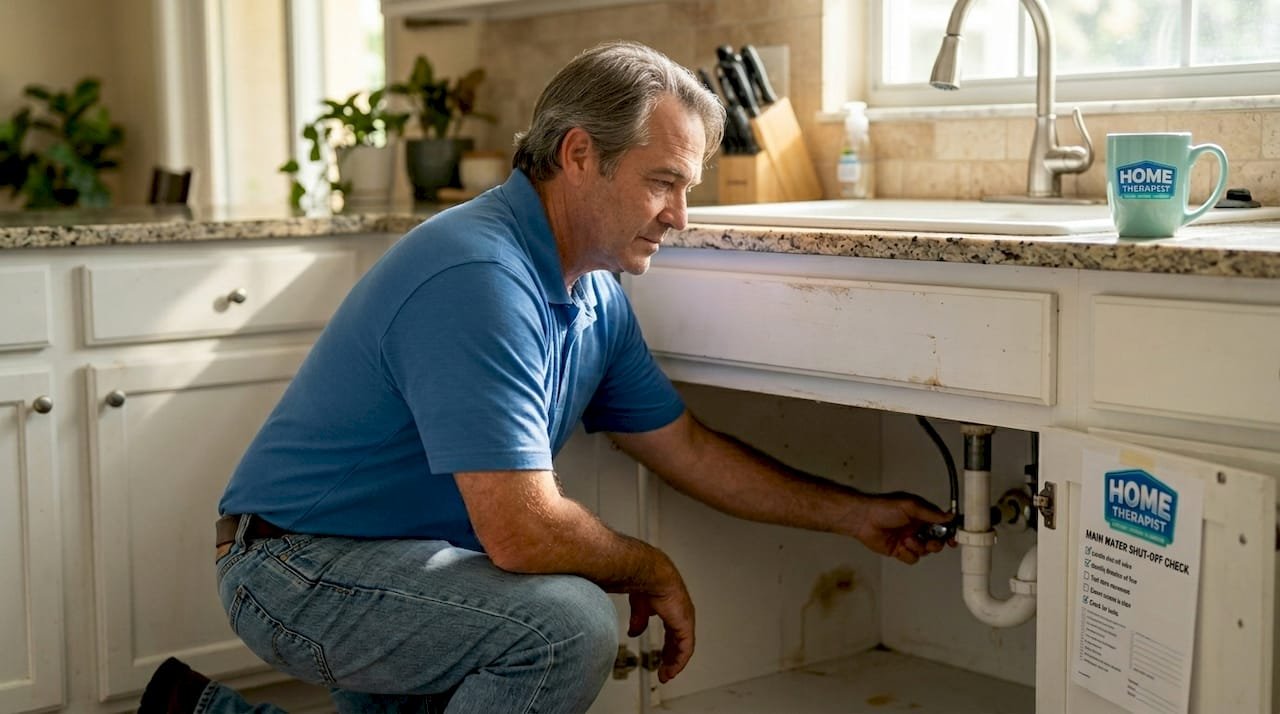
Pro Tip: Create a simple home plumbing checklist and tape it inside a kitchen cabinet. Include the location of your main shut-off valve, the age of your water heater, and the last time you flushed your pipes. You’ll thank yourself later.
Top 7 must-know plumbing safety tips for homeowners
With risk areas in mind, action steps make plumbing safety manageable and effective. These seven tips are ranked by impact, not complexity. Most of them take under an hour to implement and cost very little.
Turn off the main water supply before any DIY repair. Even a minor fix under the sink can turn into a flood if you don’t shut off the water first. Locate your main shut-off now, before you need it in a hurry.
Flush your pipes after any period of disuse. When returning from vacation, run every faucet, shower, and toilet for several minutes before resuming normal use. This clears stagnant water that may have built up bacterial growth.
Set your water heater to 140°F with scald prevention in place. The [CDC recommends maintaining](https://www.cdc.gov/control-legionella/php/guidance/building-water-system.html#:~:text=Legionella and Legionnaires’ disease) hot water at 140°F to kill Legionella bacteria, paired with anti-scald mixing valves at faucets and showers to keep water at a safe temperature at the point of use.
Install smart leak detectors in vulnerable areas. Place battery-powered sensors under sinks, near the water heater, and behind the washing machine. Devices from brands like Moen or Flo by Moen can alert your phone immediately and even shut off your water automatically if a serious leak is detected.
Routinely check for mold and mildew around fixtures. Look for dark spots, peeling paint, or musty odors near tubs, toilets, and under sinks. Tampa Bay’s humidity means mold can establish itself faster here than in almost any other part of the country.
Never mix chemical drain cleaners. Combining different chemical products can create toxic fumes or even violent reactions. If you use a drain cleaner at all, choose one product, follow the directions exactly, and consider enzyme-based alternatives that are far safer for your pipes and your family.
Label every shut-off valve and teach your household how to use them. Use waterproof labels and a black marker. Individual shut-offs under sinks and behind toilets can stop a leak in seconds if everyone in the house knows where they are.
Staying consistent with these habits is what separates safe homes from expensive emergencies. Browse our Tampa Bay plumbing tips for additional guidance, or explore our preventative plumbing tips for a longer-term maintenance roadmap.
Pro Tip: Most homeowners learn where their main shut-off valve is located for the first time during a plumbing emergency. Test it now by closing it and opening it fully. If it’s hard to turn or leaks around the handle, that’s a problem to fix before something goes wrong.
Comparing plumbing safety recommendations: Tampa Bay vs. national standards
Understanding the regional difference clarifies why some tips are especially relevant for Tampa Bay residents. National plumbing safety guidelines from organizations like the American Red Cross and the CDC offer a solid foundation, but they’re written for a broad national audience. Florida’s climate creates specific conditions that demand a more targeted approach.
| Safety measure | National recommendation | Tampa Bay recommendation |
|---|---|---|
| Pipe flushing after disuse | Flush after extended absence | Flush after any absence over 5 days |
| Water heater temperature | 120°F to reduce scalding risk | [140°F with scald prevention](https://www.cdc.gov/control-legionella/php/guidance/building-water-system.html#:~:text=Legionella and Legionnaires’ disease) to combat bacteria |
| Mold inspection frequency | Annually or when visible | Every 3 months due to humidity |
| Leak detector installation | Recommended | Strongly recommended given storm risk |
| Pipe material check | Every 10 to 15 years | Every 5 to 7 years due to corrosion |
| Chemical drain cleaner use | Use sparingly | Avoid when possible; enzyme cleaners preferred |
Florida’s high heat and humidity accelerate pipe corrosion and create near-perfect conditions for mold to colonize within 24 to 48 hours of a water intrusion. National standards weren’t written with Tampa Bay summers in mind.
Why local context matters so much:
- Saltwater proximity speeds up exterior pipe corrosion along coastal Tampa Bay communities
- Frequent tropical storms and heavy rain events can introduce groundwater into plumbing systems
- Year-round warmth means pests like cockroaches and tree roots are always active and can damage pipes
- High mineral content in Tampa-area water leads to faster scale buildup inside pipes and water heaters
Investing in professional plumbing services gives you local expertise that national guidelines simply cannot provide. A technician who works specifically in Tampa Bay understands which neighborhoods have older infrastructure and which local water conditions are most damaging to specific pipe materials. Explore common Tampa plumbing issues to see what your neighbors are dealing with and how to stay ahead of those same problems.
When and how to recommission plumbing after disuse
Finally, for homeowners returning from travel or dealing with vacant properties, plumbing safety requires special steps that go beyond just turning the water back on.
When water sits still in pipes for days or weeks, it loses its chlorine treatment, warms to room temperature, and becomes a breeding ground for bacteria. [CDC guidance on stagnant water](https://www.cdc.gov/control-legionella/php/guidance/building-water-system.html#:~:text=Legionella and Legionnaires’ disease) specifically addresses homes with prolonged reduced water use, including vacation properties, seasonal homes, and partially vacant buildings. Following a proper recommissioning process is not optional if you want to protect your family.
Step-by-step recommissioning process:
- Start at the water main. Open it slowly and check for any obvious signs of damage before pressurizing the whole system.
- Begin at the farthest fixture from the main supply line and work inward. This flushes the longest, most stagnant sections first.
- Run cold water at every faucet, shower, and tub for at least two full minutes each.
- Flush every toilet two to three times.
- Check your water heater’s temperature setting. Confirm it’s at 140°F before use.
- Run the dishwasher and washing machine on a short cycle before using them for laundry or dishes.
- Inspect every fixture visually for leaks, drips, or discoloration after flushing.
If your home has been vacant for more than two weeks, treat the recommissioning process as seriously as you would a post-storm inspection. The invisible risks are just as real.
| Absence duration | Recommended flush time per fixture | Temperature check needed | Full recommissioning required |
|---|---|---|---|
| 3 to 5 days | 1 minute | No | No |
| 5 to 14 days | 2 to 3 minutes | Yes | Partial |
| 14 days or more | 3 to 5 minutes | Yes | Full |
| Seasonal vacancy (months) | 5+ minutes, professional flush advised | Yes | Full, professional advised |
Water heater maintenance plays a critical role in this process. A water heater maintenance check should be part of every homeowner’s return routine after any extended absence. If your water heater has been sitting unused or at a reduced setting (many people turn theirs down before leaving), it needs time and attention before it’s safe to use. Scheduling annual water heater inspections is the single most reliable way to stay on top of this without having to remember it every time you travel.
The uncomfortable truth: Most plumbing disasters are preventable
Now that you have a full safety toolkit, consider what actually separates safe homes from risky ones. After years of serving Tampa Bay homeowners, the pattern is consistent. The homes that experience the worst plumbing problems are rarely the ones with the oldest pipes or the lowest budgets. They’re the ones where small warning signs were dismissed.
A drip under the sink gets ignored for three months. A water stain on the ceiling gets painted over instead of investigated. An unfamiliar sulfur smell gets attributed to something outside. These aren’t unusual stories. They’re the most common ones we hear.
Plumbing safety is not about having perfect pipes. It’s about building small, repeatable habits that catch problems before they grow. Labeling your shut-off valves costs nothing. A monthly walk-through of every water-using appliance takes about 15 minutes. Checking for mold under sink cabinets is a 30-second habit. These habits, practiced consistently, prevent the vast majority of serious plumbing emergencies.
Tampa Bay’s weather amplifies every risk. Humidity feeds mold faster than homeowners expect. Heat speeds up bacterial growth in stagnant water. Storm season can rattle connections and create stress fractures in older pipes. The “out of sight, out of mind” approach to plumbing is particularly dangerous here, where conditions are working against you year-round.
There’s also a financial argument that too many homeowners ignore. A single water damage claim from a burst pipe or prolonged leak can result in higher insurance premiums or dropped coverage. The average water damage repair from a slow, undetected leak runs into thousands of dollars by the time drywall, flooring, and mold remediation are included. Regular plumbing pipe inspections cost a fraction of what one preventable emergency will set you back.
The homeowners who get ahead of these problems share one mindset: they treat plumbing as an active responsibility, not a background system that handles itself.
Ready to safeguard your home? Expert help is a call away
If you’ve made it through this guide and feel ready to take your home’s plumbing safety seriously, you’re already ahead of most homeowners in Tampa Bay. Knowledge is the first step, but putting these practices into action with confidence is where the real protection happens.
At Home Therapist Cooling, Heating, and Plumbing, our certified technicians work specifically in the Tampa Bay area and understand the local conditions that make plumbing safety such an important priority here. Whether you need a professional leak inspection to track down a hidden moisture problem, or you want to understand your options through repiping services for an aging home, we’re here to help. As a family-owned business, we treat your home like our own. Contact us today and let’s keep your Tampa Bay home safe, efficient, and worry-free.
Frequently asked questions
What temperature should my water heater be set at for safety?
Set your water heater to [140°F to prevent Legionella](https://www.cdc.gov/control-legionella/php/guidance/building-water-system.html#:~:text=Legionella and Legionnaires’ disease) growth, and install anti-scald mixing valves at faucets and showers to keep the delivered water temperature safe for daily use.
How do I safely restart my plumbing after a long vacation?
[Flush every pipe and fixture](https://www.cdc.gov/control-legionella/php/guidance/building-water-system.html#:~:text=Legionella and Legionnaires’ disease) thoroughly in sequence from the farthest point of your home inward, confirm your water heater is at the correct temperature, and run appliances like the dishwasher on an empty cycle before normal use.
Are chemical drain cleaners safe to use in my home?
Chemical drain cleaners can damage older pipes and create dangerous fumes, especially if mixed accidentally; enzyme-based drain treatments are a safer and equally effective alternative for regular maintenance.
What warning signs indicate a plumbing safety issue?
Watch for mold growth, musty odors that linger after cleaning, unexplained water stains on walls or ceilings, visibly dripping fixtures, and sudden increases in your monthly water bill that don’t match your actual usage.
Recommended
- Preventative plumbing tips for Tampa Bay homeowners 2026
- Essential plumbing safety tips Tampa homeowners need
- 7 Plumbing Tips Every Homeowner in Tampa Bay Should Know
- Essential plumbing maintenance checklist for Tampa Bay
- Pool safety guide for Central Florida homeowners 2026
More Leak Detection Articles
- P-Trap Replacement on Marjory Ave: 85-Minute Sink Drain Plumbing Repair in Tampa, FL 33612
- Early Signs of Plumbing Problems Tampa Homeowners Must Know
- Customer-Supplied Faucet Was the Culprit: Free Plumbing Diagnosis on N Gunlock Ave, Tampa, FL 33614
- The Shutoff Valve Made This Toilet Repair Work: Plumbing Repair in New Port Richey, FL 34654
- Low on R-410A With No Obvious Leak: HVAC Refrigerant Recharge on W Fig St, Tampa, FL 33609


