

What Is HVAC Short Cycling and Its Impact
Over 30 percent of American homes struggle with HVAC short cycling, leading to rising energy bills and uncomfortable Florida summers. If your Tampa Bay house is constantly battling temperature swings or noisy cooling cycles, you are not alone. Unravel the hidden causes and common myths surrounding short cycling, so you can make smart decisions that protect your comfort and budget.
Table of Contents
- HVAC Short Cycling Defined And Common Myths
- Warning Signs And Symptoms In Your Home
- Main Causes Of HVAC Short Cycling Problems
- How Short Cycling Harms System Efficiency
- Costly Risks And What Homeowners Should Avoid
- Expert Repair Solutions And Prevention Tips
Key Takeaways
| Point | Details |
|---|---|
| Understanding HVAC Short Cycling | Short cycling indicates potential issues with your HVAC system, such as dirty filters or incorrect sizing, which lead to inefficiencies. |
| Recognizing Warning Signs | Symptoms like sudden temperature shifts and rising energy bills are crucial indicators that short cycling is occurring and may require professional inspection. |
| Preventative Maintenance Importance | Regular inspections and maintenance are essential to prevent costly repairs and ensure optimal system performance, helping to avoid short cycling issues. |
| Impact on Energy Efficiency | Frequent short cycling results in higher energy consumption and wear on components, which can substantially increase heating and cooling costs. |
HVAC short cycling defined and common myths
HVAC short cycling occurs when your air conditioning system turns on and off rapidly, disrupting normal cooling cycles. This phenomenon represents more than just an annoying operational quirk – it signals potential underlying problems with your home’s cooling system. Short cycling often results from system malfunctions that prevent consistent temperature regulation.
Understanding short cycling requires recognizing its primary causes. Dirty air filters, incorrect thermostat settings, refrigerant leaks, and oversized HVAC units can trigger frequent start-stop patterns. Contrary to popular belief, these rapid cycles do not save energy. In fact, they waste electricity and place unnecessary stress on your system’s mechanical components, potentially leading to premature equipment failure.
Common myths surrounding short cycling can mislead homeowners about appropriate system maintenance. Some believe that frequent cycling indicates a highly responsive cooling system, when in reality, it suggests significant operational inefficiencies. ASHRAE terminology defines short cycling as interruptions in normal operational cycles that contradict optimal steady-state performance. These interruptions can reduce overall system performance, increase energy consumption, and accelerate component wear.
Pro Tip: If you notice your air conditioner turning on and off every few minutes, immediately schedule a professional inspection to diagnose and resolve potential short cycling issues.
Warning signs and symptoms in your home
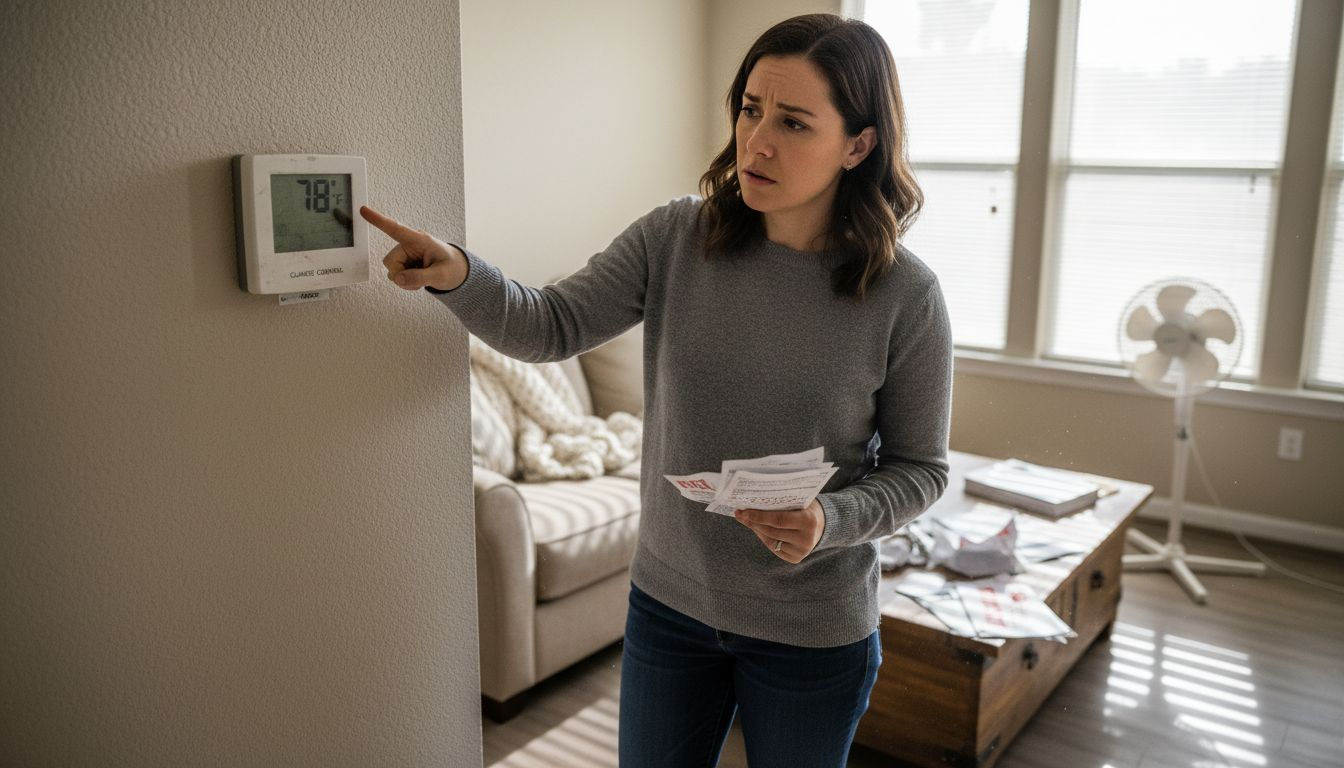
HVAC short cycling presents several critical warning signs that homeowners should recognize immediately. Unusual temperature fluctuations represent one of the most prominent indicators of system malfunction, signaling potential problems within your cooling infrastructure. When your air conditioning system cannot maintain a consistent temperature, it suggests underlying mechanical issues that demand professional attention.
Homeowners might observe multiple symptoms indicating short cycling. These include unexpected spikes in energy bills, warm air blowing from vents shortly after the system starts, frequent thermostat cycling, and strange mechanical noises. Indoor air quality can significantly deteriorate due to insufficient airflow and intermittent system operation, which means your home might feel muggy, uncomfortable, and less healthy than normal.
Additionally, short cycling creates substantial stress on your HVAC system’s components. Repeated rapid start-stop cycles cause accelerated wear, potentially leading to premature equipment failure. The constant strain can damage critical mechanical parts, reducing your system’s overall efficiency and potentially requiring expensive repairs or complete replacement much sooner than expected.
Here is a quick guide to the main warning signs of HVAC short cycling and what they may indicate:
| Warning Sign | Possible System Issue | Home Impact |
|---|---|---|
| Sudden temperature shifts | Thermostat or airflow problem | Discomfort, inefficiency |
| Rising energy bills | Mechanical or electrical fault | Financial strain |
| Warm air from vents soon after | Refrigerant, filter, or system lag | Inadequate cooling |
| Strange mechanical noises | Failing component or loose parts | Risk of damage |
| Frequent thermostat changes | System or control malfunction | Unstable climate control |
Pro Tip: Monitor your AC’s cycling patterns and keep a log of unusual behaviors to help HVAC technicians diagnose potential short cycling issues more quickly and accurately.
Main causes of HVAC short cycling problems
Air filter issues are one of the most prevalent triggers for HVAC short cycling. Restricted airflow from clogged or dirty filters can significantly disrupt your system’s normal cooling cycles, forcing your air conditioning unit to turn on and off rapidly. These obstructions prevent proper air circulation, causing the system to overheat and shut down prematurely, which creates a damaging continuous cycle of strain on your HVAC components.
Refrigerant problems and system design represent another critical set of short cycling causes. Low refrigerant levels or refrigerant leaks can cause your system to malfunction, creating temperature inconsistencies and forcing rapid cycling. Oversized air conditioning units are particularly problematic, as they cool spaces too quickly and shut down before completing a full cooling cycle. This rapid cooling and stopping not only wastes energy but also prevents proper humidity control and creates uneven temperature distribution throughout your home.
Electrical and thermostat malfunctions can also trigger short cycling behaviors. Faulty wiring, damaged control boards, or improperly calibrated thermostats can send incorrect signals to your HVAC system, causing it to start and stop erratically. These electrical issues might result from age, wear, power surges, or improper installation, and they require professional diagnostic expertise to accurately identify and resolve.
Pro Tip: Schedule professional HVAC maintenance annually to catch and prevent potential short cycling issues before they cause significant system damage.
The following table summarizes common causes of short cycling and effective prevention tips:
| Cause | Typical Source | Prevention Tip |
|---|---|---|
| Dirty air filter | Lack of routine maintenance | Replace filters every 1-3 months |
| Low refrigerant or leak | Refrigerant system failure | Schedule annual AC inspections |
| Oversized HVAC unit | Incorrect system design | Perform proper load calculation |
| Faulty thermostat or wiring | Aging or damaged controls | Check and recalibrate annually |
How short cycling harms system efficiency
Energy consumption becomes dramatically inefficient when HVAC systems experience short cycling. Frequent system startups consume significantly more electricity than continuous operation, creating substantial financial and mechanical strain. Each time your air conditioning unit turns on, it requires a massive burst of energy to initiate cooling, which means repeated cycling can increase your monthly electricity bills by 20 to 30 percent.
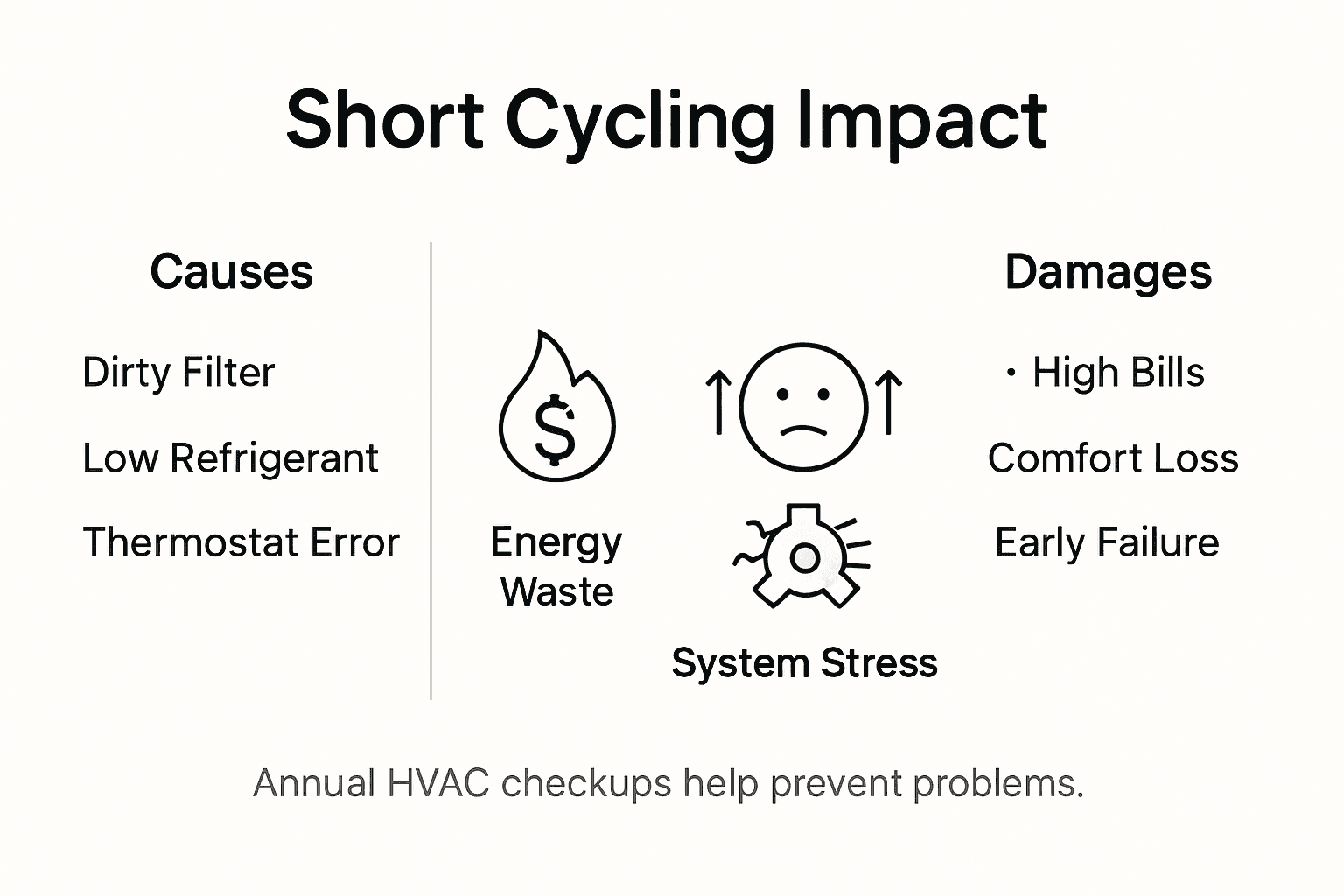
The mechanical components of your HVAC system suffer extensive damage from constant short cycling. Compressors, fans, and electrical connections experience accelerated wear because they are forced to start and stop repeatedly, rather than maintaining a steady operational rhythm. This constant stress reduces the expected lifespan of critical system components, potentially forcing premature replacement and leading to thousands of dollars in unexpected repair or installation costs.
Indoor comfort and environmental control are also compromised by short cycling. When your system cannot complete a full cooling cycle, it fails to properly regulate temperature and humidity levels. This results in uneven cooling, increased indoor moisture, and potential mold growth. HVAC systems experiencing frequent interruptions struggle to maintain consistent indoor environments, which can negatively impact both your living space’s comfort and your family’s overall health.
Pro Tip: Invest in a professional diagnostic evaluation if you suspect your HVAC system is short cycling, as early intervention can prevent costly long-term damage.
Costly risks and what homeowners should avoid
Financial consequences of neglecting HVAC short cycling can be devastating for homeowners. Ignoring maintenance and system performance issues can lead to dramatically higher energy expenses and unexpected repair costs, potentially draining thousands of dollars from your household budget. A seemingly minor issue like short cycling can transform into a major financial burden if left unaddressed, with potential repair or replacement costs ranging from $500 to $5,000 depending on the extent of system damage.
Homeowners must be vigilant about several critical risk factors that contribute to system deterioration. Oversized HVAC units, improperly placed thermostats, restricted airflow, and neglected maintenance schedules can accelerate system breakdown. Refrigerant leaks, electrical connection problems, and consistent filter blockages create cumulative stress on mechanical components, dramatically reducing the expected 10-15 year lifespan of your heating and cooling system.
Preventing costly risks requires proactive and strategic maintenance approaches. Regular professional inspections can identify potential short cycling issues before they escalate into major system failures, saving homeowners significant money in the long term. Understanding warning signs, maintaining consistent filter replacement, and scheduling annual professional evaluations are crucial steps in protecting your HVAC investment and ensuring optimal system performance.
Pro Tip: Create a digital maintenance calendar with reminders for filter changes and professional HVAC inspections to stay ahead of potential short cycling problems.
Expert repair solutions and prevention tips
Professional diagnostics are the first critical step in addressing HVAC short cycling. Comprehensive system evaluations help identify the root causes of rapid start-stop patterns, allowing technicians to develop targeted repair strategies. These assessments typically involve thorough inspections of air filters, refrigerant levels, electrical connections, and thermostat functionality to pinpoint precise issues causing system disruption.
Key repair solutions focus on addressing specific mechanical and electrical components that contribute to short cycling. Technicians may need to replace clogged air filters, recalibrate or install new thermostats, repair refrigerant leaks, clean frozen evaporator coils, and resolve electrical connection problems. Each intervention requires specialized knowledge and precise technical expertise to restore optimal system performance and prevent future operational issues.
Preventative maintenance represents the most effective long-term strategy for avoiding short cycling problems. Regular professional inspections can dramatically reduce the likelihood of unexpected system failures, ensuring consistent cooling performance and energy efficiency. Homeowners should prioritize annual maintenance checks, maintain clean air filters, ensure proper system sizing, and promptly address any unusual system behaviors to minimize the risk of costly repairs and premature equipment replacement.
Pro Tip: Keep a detailed maintenance log documenting all HVAC inspections, repairs, and filter changes to track your system’s health and anticipate potential issues.
Stop HVAC Short Cycling Before It Costs You More
Experiencing rapid on and off cycles from your air conditioning system is more than just inconvenient it is a sign of deeper issues like restricted airflow or refrigerant problems that can damage your HVAC unit and inflate energy bills. Don’t wait until frequent cycling leads to costly repairs or replacements. Our certified technicians at Home Therapist Cooling Heating and Plumbing understand how critical preventing short cycling is to maintain your system’s efficiency and your home’s comfort year-round.
Discover expert solutions designed to keep your HVAC system running smoothly with reliable repairs and thorough maintenance that catch problems early. Visit Home Therapist’s website now to schedule your professional diagnostic and ensure your cooling system operates efficiently and quietly. Protect your investment and enjoy peace of mind with service you can trust.
Frequently Asked Questions
- How long is considered short cycling?
Short cycling means your AC runs for less than 10 minutes before shutting off. A properly sized system in Tampa Bay's heat and humidity should run 15 to 20 minute cycles. Cycles shorter than 10 minutes signal a problem worth diagnosing before compressor wear or high humidity become serious issues.
- How to fix air compressor short cycling in Florida
Fix AC short cycling by having a licensed tech diagnose the root cause, which in Florida commonly includes an oversized unit, low refrigerant, a dirty coil, or a failing capacitor. Home Therapist offers free diagnosis on every visit. Call (813) 343-2212 for same-day service and 1,300+ five-star reviews backing our work.
- How to move a thermostat
Moving a thermostat requires rerouting low-voltage wiring and choosing a location away from vents, direct sunlight, and exterior walls. In Tampa Bay homes, poor thermostat placement is a common short-cycling trigger. Home Therapist handles thermostat relocation with free estimates, licensed technicians, and same-day availability at (813) 343-2212.
- Is AC short cycling dangerous?
Yes, short cycling is harmful. It strains the compressor, the most expensive AC component, and fails to dehumidify Tampa Bay's humid air, encouraging mold growth. Repeated hard starts also spike energy bills. Catching it early with a free diagnosis from Home Therapist at (813) 343-2212 prevents costly compressor replacement.
- What does short cycle mean?
Short cycling means your air conditioner turns on and off too quickly, completing only brief run cycles instead of reaching and holding your set temperature. In Tampa Bay's intense summer heat, short cycling usually signals an oversized system, refrigerant issue, or electrical fault that a licensed technician should diagnose promptly.
- Is AC short-cycling dangerous?
Yes, short-cycling is dangerous to your system and comfort. It strains the compressor, drives up energy bills, and leaves Tampa Bay homes humid and under-cooled during intense summer heat. Caught early, the fix is often simple. Home Therapist offers FREE diagnosis on every visit. Call (813) 343-2212.
What is HVAC short cycling?
HVAC short cycling is the rapid turning on and off of an air conditioning system, which disrupts normal cooling cycles and can indicate underlying problems with the system.
What causes short cycling in HVAC systems?
Common causes of HVAC short cycling include dirty air filters, low refrigerant levels or leaks, oversized HVAC units, and faulty electrical components or thermostats.
How does short cycling affect energy consumption?
Short cycling leads to increased energy consumption because the frequent startups consume more electricity than continuous operation, potentially raising energy bills by 20 to 30 percent.
What are the signs of short cycling in my HVAC system?
Signs of short cycling include unusual temperature fluctuations, unexpected spikes in energy bills, warm air blowing from vents shortly after starting, strange mechanical noises, and frequent thermostat cycling.
About This Guide
Written and reviewed by the Home Therapist Cooling, Heating & Plumbing team, a family-owned Tampa Bay HVAC and plumbing company serving the area since 2011. Our licensed techs hold Florida HVAC license CAC1819196 and Plumbing license CFC1431159, with over 1,100 five-star reviews across Tampa, St. Petersburg, Clearwater, Wesley Chapel, Lutz, Riverview, Brandon, Valrico, Apollo Beach, Palm Harbor, Land O’ Lakes, Plant City, New Port Richey, and surrounding Tampa Bay zip codes.
Honest pricing:. Upfront quotes, no high-pressure sales, no surprise fees.
Questions about your home? Call (813) 343-2212 for a real tech, or request a callback. Available 7 days a week including evenings and weekends for emergencies.
Recommended
- HVAC Retrofitting Explained: Enhancing Home Comfort – Home Therapist Cooling, Heating, and Plumbing
- Role of HVAC Technician: Responsibilities and Expertise – Home Therapist Cooling, Heating, and Plumbing
- Complete Guide to HVAC’s Role in Air Quality – Home Therapist Cooling, Heating, and Plumbing
- Complete Guide to HVAC’s Role in Air Quality – Home Therapist Cooling, Heating, and Plumbing
- Ecobee Smart Thermostat Premium Saves Energy Efficiently
More Related Articles
- Prepping HVAC for Summer: Homeowner’s Full Checklist
- Why Choose Energy Efficient HVAC Systems in Tampa
- Do HVAC Economizers Work in Tampa’s Humid Climate? What Homeowners Need to Know
- What a Clean Bill of Health Looks Like on a 3-Year-Old AC in Tampa, FL 33617: Full Tune-Up on E Linebaugh Ave
- Air Conditioner Installation Repair Tampa FL Bay FL Services Review from Bonnie Wakefield


