

HVAC Load Calculation: Maximizing Comfort and Savings
Most American homes waste up to 30 percent of energy on inefficient heating and cooling every year. Figuring out exactly what your Tampa Bay house needs for true comfort and lower utility bills can feel confusing. HVAC load calculations take out the guesswork by showing homeowners how to match their system perfectly to local climate and building details. Discover how simple math and science can create a more comfortable, energy-smart living space tailored for Florida’s unique conditions.
Table of Contents
- Defining HVAC Load Calculation Fundamentals
- Types of HVAC Loads and Their Differences
- Manual J and Other Common Methods
- Key Factors Affecting Load Results
- Why Accurate Calculations Prevent Common Problems
- Cost, Energy, and Comfort Implications
Key Takeaways
| Point | Details |
|---|---|
| Importance of HVAC Load Calculation | Load calculations ensure that HVAC systems are optimally sized for homes, enhancing comfort and energy efficiency. |
| Types of HVAC Loads | Understanding the distinctions between sensible, latent, external, and internal loads is crucial for system design. |
| Methodological Standards | Manual J is the recognized standard for accurate HVAC load calculations, essential for local climate conditions. |
| Consequences of Inaccuracy | Improper sizing can lead to excessive energy costs and inadequate temperature control, especially in challenging climates like Tampa Bay. |
Defining HVAC Load Calculation Fundamentals
HVAC load calculation represents a precise scientific approach to determining the precise heating and cooling requirements for a specific space. At its core, this process involves calculating the exact thermal energy needed to maintain optimal indoor comfort levels. Fundamental heat transfer principles guide professionals in understanding how different factors influence a building’s thermal performance.
The calculation process considers multiple critical variables that impact a home’s thermal dynamics. These include external temperature, insulation quality, window configurations, building orientation, occupant count, and internal heat-generating equipment. Engineers and HVAC technicians use sophisticated mathematical models to analyze how these elements interact, creating a comprehensive thermal profile that predicts exact heating and cooling demands.
Specifically for Tampa Bay homeowners, load calculations help optimize system sizing and efficiency. An undersized system will struggle to maintain comfortable temperatures, while an oversized system wastes energy and increases utility costs. Precise calculations ensure your HVAC system matches your home’s unique thermal characteristics, delivering consistent comfort and maximizing energy efficiency.
Pro tip: Request a professional load calculation from a certified HVAC technician who can provide precise measurements specific to your home’s unique architectural characteristics and local climate conditions.
Types of HVAC Loads and Their Differences
HVAC load calculations encompass several distinct types of thermal loads that collectively determine a building’s heating and cooling requirements. Cooling and heating load variations represent complex interactions between environmental conditions and building characteristics. Understanding these load types is crucial for designing efficient and effective climate control systems that maintain optimal indoor comfort.
The primary HVAC load categories include sensible loads, latent loads, external loads, and internal loads. Sensible loads relate to temperature changes without moisture content modification, directly impacting the air’s dry bulb temperature. Latent loads involve moisture content variations, affecting humidity levels and requiring additional energy for dehumidification or humidification. External loads originate from outside environmental factors like solar radiation, outdoor temperature, and wind, while internal loads emerge from occupants, electrical equipment, lighting, and other heat-generating sources inside the building.
For Tampa Bay homeowners, recognizing these load differences helps optimize HVAC system selection and performance. External loads in Florida’s humid climate are particularly significant, with intense solar radiation and high ambient temperatures creating substantial cooling challenges. Internal loads from electronics, appliances, and occupant activities further contribute to the total thermal energy that must be managed, making precise load calculations essential for maintaining comfortable and energy-efficient indoor environments.
Here’s a summary of the main HVAC load types and their impact on system design:
| Load Type | What It Affects | Example in Homes | Impact on System Design |
|---|---|---|---|
| Sensible Load | Temperature only | Sun heating a living room | Dictates cooling capacity |
| Latent Load | Humidity and moisture | Shower steam, cooking vapors | Requires dehumidification |
| External Load | Weather and climate | High outdoor temperatures | Drives insulation needs |
| Internal Load | People and appliances | TVs, computers, occupancy | May increase cooling demand |
Pro tip: Consult a professional HVAC technician to perform a detailed load calculation that accounts for your specific home’s unique thermal characteristics and local microclimate conditions.
Manual J and Other Common Methods
Manual J represents the gold standard for residential HVAC load calculations in the United States. Residential load calculation standards provide comprehensive guidelines for precisely determining heating and cooling requirements for homes of all sizes and configurations. This methodology offers a systematic approach that accounts for numerous variables affecting thermal performance.
Beyond Manual J, HVAC professionals use several alternative calculation methods. The heat balance method analyzes thermal energy transfers between interior and exterior environments, considering factors like solar radiation, building materials, and occupant activities. The radiant time series method focuses on tracking heat absorption and release through building surfaces, providing a more nuanced understanding of thermal dynamics. Other approaches include the cooling load temperature difference (CLTD) and cooling load factor (CLF) techniques, which help engineers develop more accurate system sizing recommendations.
For Tampa Bay homeowners, understanding these calculation methods is crucial for selecting the right HVAC system. Local climate conditions with high humidity and intense solar radiation demand precise load calculations. Each method offers unique insights, with Manual J being the most comprehensive approach recognized by building codes and industry standards. The goal remains consistent: designing an HVAC system that delivers optimal comfort while maintaining maximum energy efficiency.
Below is a comparison of common HVAC load calculation methods:
| Method | Main Focus | Level of Detail | Best Use Case |
|---|---|---|---|
| Manual J | Whole-home load calculation | Very comprehensive | Residential homes |
| Heat Balance Method | Energy transfer analysis | Highly detailed | Complex or large buildings |
| Radiant Time Series Method | Heat absorption/releases | Nuanced, time-based | Spaces with variable solar |
| CLTD/CLF Techniques | Cooling patterns | Moderate detail | Fast estimates, small homes |
Pro tip: Request documentation of the specific load calculation method used when consulting with HVAC professionals to ensure a thorough and accurate assessment of your home’s thermal requirements.
Key Factors Affecting Load Results
HVAC load calculations are intricate processes influenced by numerous critical variables. Building thermal performance factors determine the precision and effectiveness of heating and cooling system design. Understanding these complex interactions helps homeowners and HVAC professionals create more accurate and efficient climate control strategies.

The primary factors impacting load calculations include building orientation, construction materials, insulation quality, and window characteristics. Building orientation determines solar exposure and heat absorption patterns, with south and west-facing surfaces typically experiencing higher thermal gains. Construction materials like brick, wood, and concrete have unique thermal mass properties that affect heat retention and transfer. Insulation quality plays a crucial role in preventing heat transfer, with factors such as material type, thickness, and installation method significantly influencing overall thermal performance. Window types, including their size, glass composition, and shading, dramatically impact heat gain and loss.
For Tampa Bay homeowners, specific local factors become even more critical. The region’s intense solar radiation, high humidity, and frequent temperature fluctuations demand meticulous load calculations. Internal heat sources like appliances, lighting, and occupant activities further complicate thermal dynamics. Electronics, cooking equipment, and even the number of people in a space generate additional heat that must be precisely accounted for to ensure optimal HVAC system performance and energy efficiency.
Pro tip: Conduct a comprehensive home energy audit to identify specific thermal characteristics that could impact your HVAC load calculations and system performance.
Why Accurate Calculations Prevent Common Problems
Precise HVAC load calculations are the cornerstone of preventing potentially costly system failures and performance issues. Load calculation implications reveal critical consequences of improper system sizing that can dramatically impact home comfort and energy efficiency. Homeowners who overlook these calculations risk significant long-term financial and comfort challenges.
The two primary pitfalls of inaccurate load calculations are oversizing and undersizing HVAC systems. An oversized system cycles too frequently, causing rapid temperature shifts, increased energy consumption, and premature equipment wear. These systems fail to properly dehumidify spaces, leading to uncomfortable indoor environments with potential mold growth and reduced air quality. Conversely, an undersized system constantly struggles to maintain desired temperatures, running continuously and consuming excessive energy while providing inadequate cooling or heating.
For Tampa Bay residents, accurate load calculations become even more critical due to the region’s extreme heat and humidity. The local climate demands precise HVAC system design that can efficiently manage both temperature and moisture levels. Inaccurate calculations can result in systems that cannot effectively handle the unique thermal challenges of Florida’s subtropical environment, leading to increased energy bills, reduced system lifespan, and compromised indoor comfort. Professional load calculations consider specific local factors like solar radiation, building materials, and occupant behaviors to create truly optimized climate control solutions.
Pro tip: Request a detailed written report of your home’s load calculation, ensuring it includes comprehensive environmental and structural factors specific to your Tampa Bay residence.
Cost, Energy, and Comfort Implications
HVAC load calculations are far more than technical exercises. Equipment sizing economics directly impact homeowners’ financial and comfort outcomes. The precision of these calculations creates a critical intersection between initial investment, ongoing energy expenses, and daily living comfort.
The financial implications extend across multiple dimensions. An accurately sized system reduces upfront equipment costs by preventing overinvestment in unnecessarily large units. Energy consumption drops significantly with proper sizing, as the system operates more efficiently and cycles less frequently. For Tampa Bay homeowners, this means lower monthly utility bills and reduced strain on HVAC equipment. The long-term savings can be substantial, with efficient systems potentially reducing energy costs by 20-30% compared to improperly sized installations.
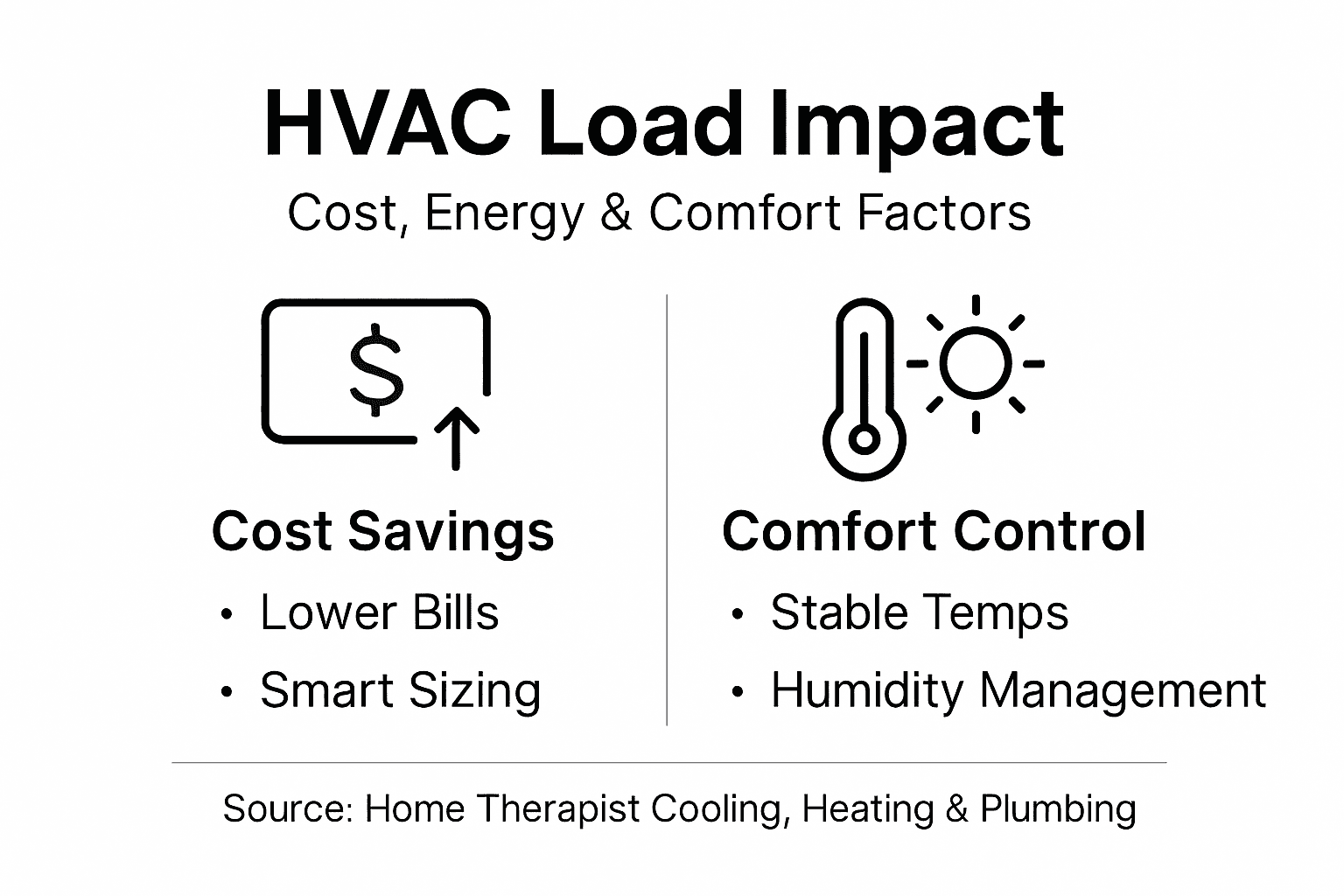
Comfort considerations are equally important. Precise load calculations ensure consistent indoor temperatures, balanced humidity levels, and improved air quality. An optimally sized system maintains more stable thermal environments, preventing the uncomfortable temperature fluctuations associated with oversized or undersized equipment. In Florida’s challenging climate, this becomes crucial, as the system must effectively manage both extreme heat and humidity while maintaining energy efficiency. The goal is not just temperature control, but creating a living space that feels consistently comfortable without excessive energy expenditure.
Pro tip: Schedule a professional energy audit to get a comprehensive assessment of your home’s specific thermal performance and potential HVAC efficiency improvements.
Ensure Your Tampa Bay Home’s HVAC System Matches Its Unique Needs
Accurate HVAC load calculations are key to preventing overpriced equipment, wasted energy, and uncomfortable indoor conditions in Tampa Bay homes. If you want to avoid the frustration of an oversized or undersized system, understanding your home’s specific thermal loads, including sensible and latent factors, is essential. Don’t let guesswork dictate your comfort and utility bills.

Trust the certified technicians at Home Therapist Cooling, Heating, and Plumbing to perform precise load calculations that factor in Florida’s intense solar exposure, high humidity, and your home’s construction details. We deliver tailored HVAC solutions to maximize your comfort and savings all year round. Act now to schedule your custom assessment and experience expert service that addresses your unique needs. Visit Home Therapist today and take the first step toward an efficient, reliable HVAC system.
Frequently Asked Questions
- How to calculate heat load for a house?
A proper residential heat load calculation uses Manual J, the ACCA industry standard. A licensed HVAC technician measures your home's square footage, ceiling height, insulation R-values, window area and orientation, local design temperatures, and occupant count. In Tampa Bay's hot, humid climate, infiltration and latent heat from moisture are especially significant inputs. The result determines the exact BTU capacity your system needs.
- What is the rule of thumb for heat load?
The common rule of thumb is roughly 400 to 600 square feet per ton of cooling capacity, but it is unreliable for Florida homes. Tampa Bay's high humidity, intense solar gain, and older construction with minimal insulation routinely push actual load well above that estimate. A full Manual J calculation is the only accurate method and is required for permitted system replacements in Florida.
- How many tons of cooling for a 2000 sq ft house?
A 2,000 sq ft Tampa Bay home typically requires 3 to 4 tons of cooling, but the correct answer depends on insulation, window area, duct condition, and ceiling height. Oversizing is a common and costly mistake: an oversized system short-cycles, fails to dehumidify properly, and wears out faster. Home Therapist performs a free Manual J load calculation before recommending any system size.
- What is the HVAC software for heat load calculation?
The most widely used residential HVAC load calculation software is Wrightsoft Right-Suite Universal and Elite RHVAC, both of which implement the ACCA Manual J protocol. Some contractors also use Carrier's HAP or Trane's TRACE. The software is only as accurate as the field measurements entered, which is why an on-site assessment by a licensed technician, not an online estimator, produces a reliable result.
What is HVAC load calculation?
HVAC load calculation is a scientific method used to determine the exact heating and cooling requirements for a specific space, ensuring optimal indoor comfort and energy efficiency.
Why is accurate load calculation important for HVAC systems?
Accurate load calculations prevent issues such as oversizing and undersizing HVAC systems, which can lead to uncomfortable temperatures, increased energy costs, and premature equipment wear.
What are the different types of HVAC loads?
The main types of HVAC loads include sensible loads (temperature changes), latent loads (moisture content variations), external loads (outside environmental factors), and internal loads (heat generated by occupants and equipment).
How does Manual J differ from other HVAC load calculation methods?
Manual J is the standard for residential HVAC load calculations, providing comprehensive guidelines that consider various factors affecting heating and cooling requirements, unlike other methods that may focus on specific aspects of thermal performance.
About This Guide
Written and reviewed by the Home Therapist Cooling, Heating & Plumbing team, a family-owned Tampa Bay HVAC and plumbing company serving the area since 2011. Our licensed techs hold Florida HVAC license CAC1819196 and Plumbing license CFC1431159, with over 1,100 five-star reviews across Tampa, St. Petersburg, Clearwater, Wesley Chapel, Lutz, Riverview, Brandon, Valrico, Apollo Beach, Palm Harbor, Land O’ Lakes, Plant City, New Port Richey, and surrounding Tampa Bay zip codes.
Honest pricing:. Upfront quotes, no high-pressure sales, no surprise fees.
Questions about your home? Call (813) 343-2212 for a real tech, or request a callback. Available 7 days a week including evenings and weekends for emergencies.
Recommended
- HVAC Retrofitting Explained: Enhancing Home Comfort – Home Therapist Cooling, Heating, and Plumbing
- 6 Types of HVAC Systems Every Tampa Bay Homeowner Should Know – Home Therapist Cooling, Heating, and Plumbing
- 7 Essential HVAC Maintenance Checklist Tips for Homeowners – Home Therapist Cooling, Heating, and Plumbing
- Role of Heating Systems, Comfort and Efficiency at Home
- HKLS-Modernisierung: Retrofit oder Neubau im Bestand?
More Related Articles
- HVAC Maintenance on a 4-Year-Old System in Wesley Chapel FL 33545: What Barbaro Found on Visit #3
- Condenser Fan Motor Replacement. Signs Symptoms and Why It Matters
- Odors, Organic Growth, and R22: What Jandiel Found During a Maintenance Visit on Landstar Way in Tampa, FL 33647
- Visit #10 on a 14-Year-Old AC Still Running Strong: Value Plan Maintenance on W Waters Ave, Tampa, FL 33615
- Air Conditioner Installation Repair Tampa FL Bay FL Services Review from Bonnie Wakefield


