
Reviewed by Richard Morales, Co-Owner & FL Class B Air Conditioning Contractor (FL license CAC1819196)
What It Is Why It Fails and How It Protects Your Air Conditioner
What does a condenser fan motor do? It spins the large fan on top of your outdoor AC unit. That fan pulls air across the condenser coil so the heat your system pulled out of the house can escape outside. If the motor stops, the heat has nowhere to go, refrigerant pressure climbs, and the compressor overheats. That is why an outdoor fan that is not spinning is a turn-it-off-now problem, not a wait-and-see one.
Signs of a bad condenser fan motor: the outdoor unit hums but the fan does not turn, the fan spins slowly, grinding or squealing from the top of the unit, warm air from the vents, or the system shutting off on hot afternoons. A failed capacitor causes several of the same symptoms (here is how to tell a bad capacitor from a bad fan motor), so a quick test tells you which part actually failed. We diagnose it for FREE.
A condenser fan motor replacement is one of the most common and most important air conditioning repairs in hot climates. In Florida this component works under extreme conditions for much of the year. When it fails cooling performance drops quickly and the risk of major system damage increases.
In this article Home Therapist Cooling Heating and Plumbing explains what a condenser fan motor does why it fails how to recognize the warning signs and why professional replacement matters. We also reference a real condenser fan motor replacement shown in our video so homeowners can better understand what this repair actually involves.
What a Condenser Fan Motor Does
The condenser fan motor is located in the outdoor unit of your air conditioning system. Its job is to move air through the condenser coil. This airflow allows heat absorbed from inside your home to be released outdoors.
Your air conditioner works by moving heat not by creating cold air. Refrigerant absorbs heat inside the home and carries it to the outdoor unit. The condenser coil releases that heat into the outside air. The condenser fan motor makes this process possible by pulling air across the coil.
When the condenser fan motor is operating correctly the outdoor unit will run smoothly the fan will spin steadily and warm air will be expelled from the top or side of the unit depending on design. This heat transfer is essential for proper cooling and system efficiency.
Why Condenser Fan Motors Commonly Fail
Condenser fan motors are exposed to some of the harshest conditions of any component in your HVAC system. They operate outdoors in direct sun rain humidity salt air and debris.
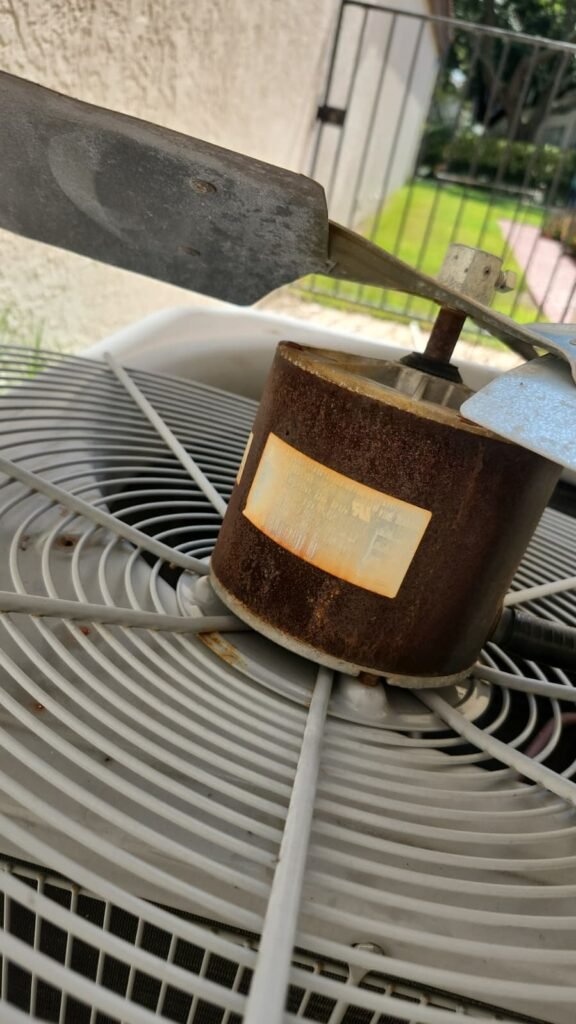
Heat is the number one enemy of condenser fan motors. In Florida systems often run for long cycles during extreme temperatures. Over time this constant operation causes bearings to wear windings to degrade and internal components to overheat.
Electrical issues also contribute to failure. Voltage fluctuations failing capacitors and electrical surges can weaken or damage the motor. In many cases a failing capacitor places extra strain on the motor causing it to draw higher amperage and overheat.
Age plays a role as well. Most condenser fan motors have a lifespan of ten to fifteen years depending on usage conditions and maintenance. Lack of regular maintenance such as dirty coils or blocked airflow accelerates failure.
Debris buildup around the outdoor unit can restrict airflow forcing the motor to work harder than designed. This added strain shortens the life of the motor and increases the likelihood of failure during peak heat.
Common Symptoms of a Bad Condenser Fan Motor
One of the most common signs of a failing condenser fan motor is the outdoor unit running but the fan not spinning. Homeowners may hear the system humming but see no fan movement. This is a serious condition that requires immediate attention.
Another symptom is warm air blowing from indoor vents even though the thermostat is set correctly. Without proper heat rejection the refrigerant cannot cool effectively.
Frequent system shutdowns are also common. Many modern systems shut off automatically when pressures rise too high. A failed condenser fan motor causes rapid pressure buildup which triggers safety controls.
Unusual noises such as grinding squealing or rattling from the outdoor unit can indicate worn bearings or internal motor damage.
Higher energy bills may occur as the system runs longer trying to achieve cooling without proper heat removal.
In some cases the system may cool during cooler morning hours but fail during the hottest part of the day. This pattern strongly points to condenser fan motor problems.
What Happens If You Keep Running the AC
Continuing to run an air conditioner with a failed condenser fan motor is one of the fastest ways to destroy a compressor.
Without airflow across the condenser coil heat builds rapidly. Refrigerant pressures rise. The compressor overheats. Internal compressor components break down.
Compressor replacement is one of the most expensive AC repairs. In many cases it makes more financial sense to replace the entire system rather than replace a failed compressor.
A condenser fan motor replacement is a relatively contained repair compared to compressor failure. Addressing the problem early protects the most valuable components of the system.
What a Proper Condenser Fan Motor Replacement Involves
Replacing a condenser fan motor is not a simple swap. The motor must be matched precisely to the system.
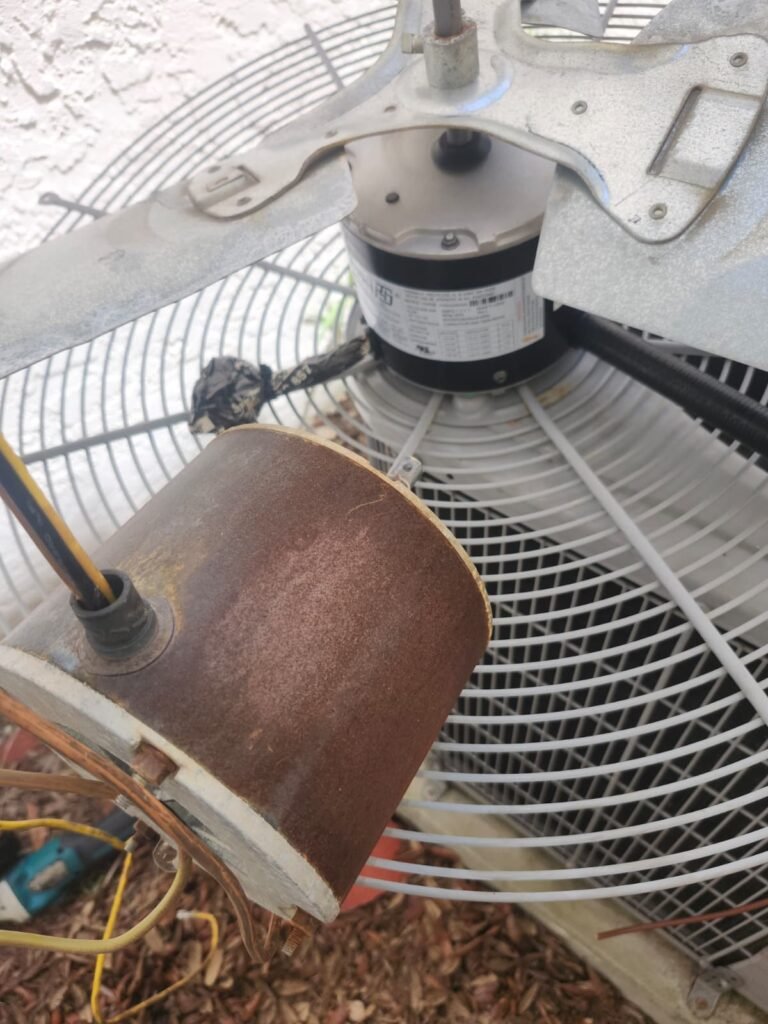
Key specifications include voltage horsepower RPM rotation direction shaft length mounting type and capacitor rating. Using an incorrect motor can lead to immediate failure poor airflow excessive noise or long term system damage.
In the video we show a real condenser fan motor replacement performed by a Home Therapist technician. The outdoor unit is opened the failed motor is removed and the correct replacement motor is installed.
The capacitor is evaluated and replaced if necessary. Wiring is connected according to manufacturer specifications. The fan blade is mounted and balanced correctly.
After installation the system is tested. Proper airflow is confirmed. Amp draw is measured to ensure the motor is operating within safe limits. Refrigerant pressures are monitored to verify normal operation.
This testing phase is critical. Skipping it can leave hidden issues unresolved.
Why Matching the Motor Matters
Every condenser fan motor is designed for a specific workload. Installing a motor with incorrect RPM or horsepower alters airflow across the condenser coil.
Too little airflow causes overheating. Too much airflow can reduce heat transfer efficiency and affect system pressures.
Incorrect rotation direction prevents proper airflow entirely. Incorrect capacitor sizing shortens motor life.
Professional technicians use manufacturer data and system information to select the correct motor. Guessing or installing a similar looking motor often leads to repeat failures.
Florida Climate and Condenser Fan Motor Stress
Florida systems face unique challenges. High ambient temperatures reduce heat rejection efficiency even under normal conditions. High humidity increases system run times. Salt air in coastal areas accelerates corrosion.
Because of this condenser fan motors in Florida tend to fail more frequently than in cooler climates. Preventive maintenance becomes especially important.
Regular coil cleaning proper airflow clearance and capacitor testing can extend motor life significantly.
When Replacement Is Better Than Repair
Condenser fan motors are sealed components. Internal bearing or winding failures cannot be repaired reliably.
In most cases replacement is the only viable option. Attempting temporary fixes often leads to sudden failure during peak demand.
Replacing the motor with a high quality properly rated component restores reliability and protects the system.
How This Repair Impacts Energy Efficiency
A properly functioning condenser fan motor improves system efficiency. Heat is rejected more effectively. Compressor run times decrease. Energy consumption stabilizes.
A failing motor forces the system to work harder and longer. This increases energy costs and accelerates wear on other components.
After replacement many homeowners notice more consistent cooling and reduced system strain.
Why Professional Diagnosis Matters
Several problems can mimic condenser fan motor failure. Failed capacitors control board issues contactor problems and wiring faults can all cause the fan not to run.
Professional diagnosis ensures the correct component is replaced. Replacing parts without proper testing wastes money and may not solve the problem.
In the video we demonstrate a confirmed condenser fan motor failure and proper replacement procedure.
When to Call for Service
If your outdoor fan is not spinning if your AC is running but not cooling or if the system shuts down during heat waves do not wait.
Turn the system off and call for professional service. Continued operation can cause irreversible damage.
Early intervention saves money and prevents system failure.
Watch the Condenser Fan Motor Replacement Video
You can watch the real condenser fan motor replacement shown in this article here
https://www.youtube.com/shorts/r3xaSQ4Btbo
This video shows why proper installation and testing matter and what homeowners should expect from a professional repair.
Professional AC Repair You Can Trust
Home Therapist Cooling Heating and Plumbing provides professional AC diagnostics and repairs performed by trained technicians. We match components correctly test systems thoroughly and focus on long term reliability not shortcuts.
If you suspect a condenser fan motor issue or your AC is not performing as it should professional inspection can prevent costly damage and restore comfort quickly.
Repair or replace? A failed condenser fan motor on a system that is under 10 years old typically justifies repair. On a 12-plus-year-old system in Tampa Bay heat, the motor, capacitor, and compressor often age together, replacing the motor buys time, but a second major component failure usually follows within one to three seasons. Our technicians will give you a straight repair-versus-replace assessment during any AC repair visit in Tampa, including what a new system costs and how long it realistically lasts in Florida. If replacement makes sense, see our AC installation in Tampa page for what the process looks like and what brands we carry. Licensed CAC1819196.
More AC Repair Articles
- Dual Float Switch Install Clearwater, FL: 27-Minute Primary and Secondary Protection on Wood Dr 33755
- What Is HVAC Short Cycling and Its Impact
- 220V Blower Motor, Capacitor, and Relay Replaced on 80th Ave N: Air Handler Repair in Seminole, FL 33776
- AC Control Board Replacement Cost in Tampa: What the N Oregon Ave Job Taught Us
- Dead Blower Motor on Bitter Orange Ave: 220V Universal Motor + Disconnect Switch Replacement in Tampa, FL 33625
What Tampa Bay customers say
“Excellent Service ! High Quality Workmanship, Very Efficient and Professional. Reasonably Priced. Would Highly Recommend AC Therapist. Great Company! Jandiel is a Great Technician. He is Honest, Knowledgeable, Kind and Professional!! I will request him with all my Service Needs!!”
“They have been amazing from the quote to the installation. They were able to accommodate us last minute. Made all the updates needed and in less than 5hrs we had a new HVAC unit installed. We'll be using them for all of our upgrades”
“We have been using The Home Therapist for eight years now. Richard and his crew are knowledgeable and professional. We will always call them with any issues.”
4.8 from 1,408 reviews · Read more reviews
Condenser Fan Motor Replacement Signs Symptoms And Why It Matters: Common Questions
What happens when a condenser fan motor goes bad?
When a condenser fan motor fails, the outdoor unit can no longer expel heat, causing refrigerant pressure to spike and the compressor to overheat. The AC will short-cycle, blow warm air, or shut down entirely on high-pressure lockout. Left unaddressed, compressor failure often follows, turning a motor repair into a far costlier replacement.
How do I check if my condenser fan motor is bad?
Stand near the outdoor unit while the AC is calling for cooling. A bad condenser fan motor typically shows one of three signs: the fan blade is completely still while the compressor hums, the blade spins slowly or wobbles, or the unit trips off within minutes of starting. A licensed technician can confirm the fault with a capacitor test and amp-draw reading during a FREE diagnosis visit.
Can you run AC without a condenser fan?
No. Running the AC without a working condenser fan will overheat the compressor within minutes. Most modern systems have a high-pressure safety switch that shuts the unit down before catastrophic damage occurs, but repeated trips stress the compressor. Turn the system off and call for service rather than forcing it to run.
How much does it cost to replace a condenser fan motor?
Condenser fan motor replacement cost varies based on the motor's horsepower, voltage, and brand compatibility. Home Therapist provides FREE estimates before any work begins so you know the exact price upfront. Call (813) 343-2212 or schedule online; our 1,300+ five-star reviews reflect straightforward, no-surprise pricing.
What does a bad condenser fan sound like?
A bad condenser fan typically produces grinding, rattling, or squealing noises from the outdoor unit. Grinding usually means worn bearings, rattling can indicate a loose or bent blade, and squealing often signals a failing motor. Tampa's salt-air humidity accelerates bearing corrosion, so coastal homeowners hear these symptoms sooner.
How to tell if AC condenser fan is bad
Your AC condenser fan is likely bad if the outdoor unit runs but the fan blade is not spinning, the unit trips the breaker repeatedly, or warm air blows indoors despite the system running. You may also notice the outdoor cabinet feels extremely hot. Home Therapist offers FREE diagnosis on every visit to confirm the fault.
How long do condenser fan motors last
Condenser fan motors wear out over time, and Tampa Bay's intense summer heat, high humidity, and coastal salt air can shorten that lifespan noticeably. Running the system year-round, as most Florida homeowners do, adds extra wear compared to seasonal climates.