

Sump Pump Installation Cost: 2026 Price Range & Factors
Sump pump installation costs $500 to $5,000 in 2026, and most homes land between $1,000 and $3,500 installed. The price swings on pump type (pedestal, submersible, or battery-backup), whether a pit and drainage already exist, and how far water must be routed. Replacing an existing pump is the cheap end; a first-time install during a renovation with new drainage tie-ins is the high end. Estimates are FREE.
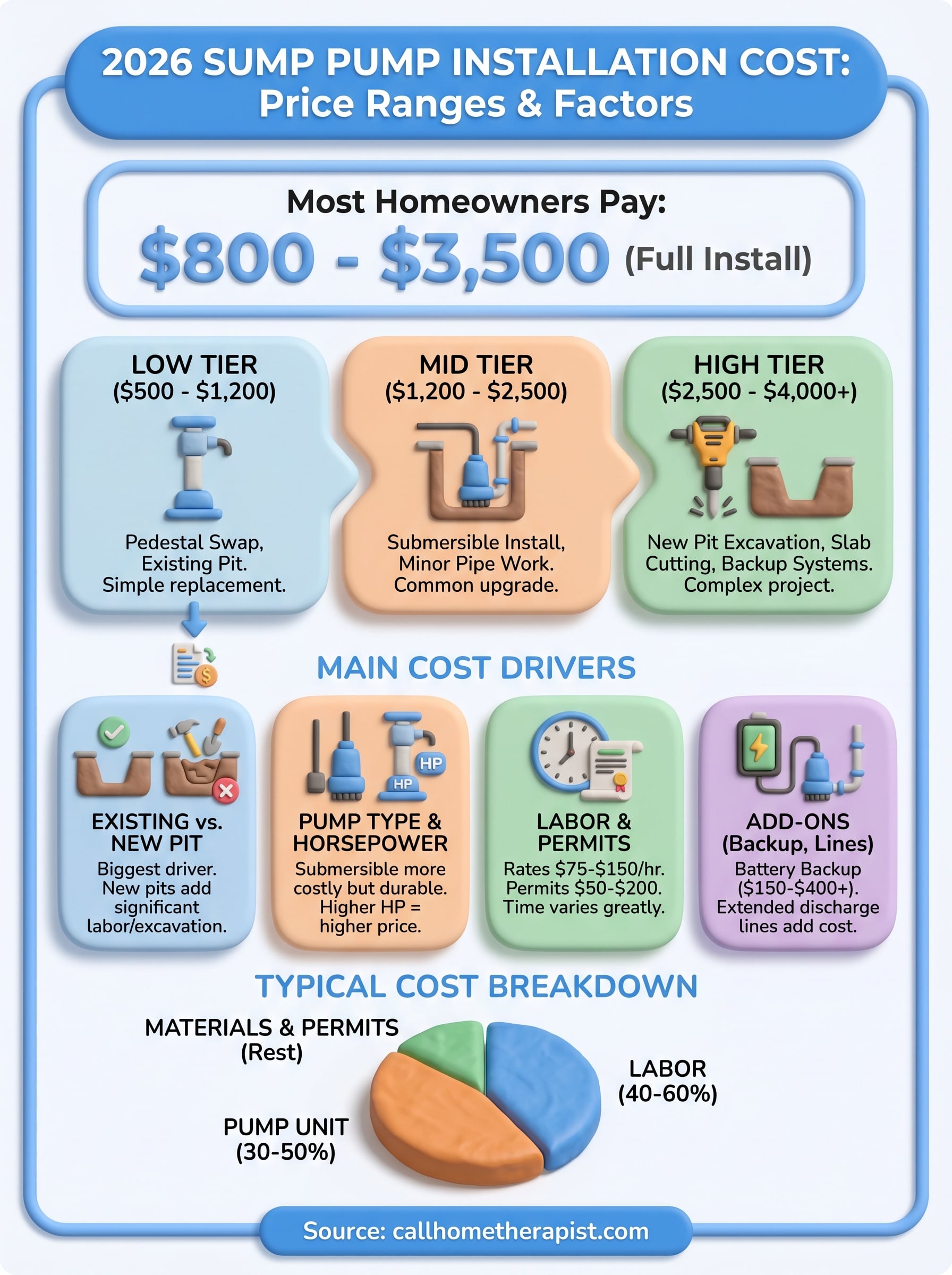
A flooded crawl space or waterlogged basement turns from minor nuisance to major property damage fast. If you’re researching sump pump installation cost, you’re probably trying to figure out whether this is a $500 fix or a $5,000 project, and the honest answer is that it depends. Most homeowners in 2026 pay somewhere between $800 and $3,500 for a full installation, but the final number swings based on your home’s layout, the type of pump you choose, and how much prep work the job requires.
That range is wide enough to make anyone uneasy, especially when you’re dealing with water intrusion that won’t wait for you to comparison-shop. Labor typically accounts for 40, 60% of the total bill, and costs shift depending on whether your home already has a sump pit or one needs to be excavated from scratch. The type of pump, pedestal, submersible, or battery backup, also changes the material cost significantly.
At Home Therapist, we’ve handled sump pump installations across the Greater Tampa Bay Area since 2011, and we know that upfront pricing matters when you’re staring at standing water. This guide breaks down every cost factor we see on real jobs, national averages, labor rates, pump types, and the extras that quietly add to your invoice, so you can set a realistic budget before picking up the phone.
Why sump pump costs vary so much
Sump pump installation cost doesn’t follow a simple formula because no two homes have the same foundation layout, soil conditions, or existing drainage infrastructure. A house with a pre-dug pit and an existing discharge line is a fundamentally different job than a slab-on-grade home that needs concrete cut, a pit excavated, and a new drain route created from scratch. Each variable stacks on top of the others, and that’s exactly why quotes from two different contractors for what sounds like the same job can differ by $1,000 or more.
Your home’s existing setup
The single biggest cost driver is whether your home already has a sump pit. If a pit exists, the installer focuses on fitting the correct pump, connecting the discharge line, and testing the system. If no pit exists, the contractor has to break through the floor or dig into the crawl space, which adds several hours of labor and disposal costs for concrete and debris. Homes built before 1980 are more likely to lack this infrastructure, especially in areas where sump pumps weren’t standard practice at the time of construction.
The presence or absence of an existing sump pit can shift your total installation bill by $500 to $1,500 on its own.
Your discharge line routing also matters. If water needs to travel a long distance to a drain or an exterior exit point, the additional pipe runs and fittings add both materials and labor time to the job.
Soil conditions and excavation depth
In Florida, soil composition varies from sandy coastal soils to clay-heavy inland areas, and that variation affects how difficult it is to dig a pit and how deep it needs to go. Sandy or loose soil moves quickly and is relatively easy to excavate, while compacted clay or rocky ground takes more time and can require specialized equipment. Contractors working in areas with high water tables may also need to set the pit at a specific depth to capture groundwater effectively, which increases excavation scope.
Crawl space installations add another layer of difficulty because workers have limited room to maneuver. Tight clearances slow the job down, and that time translates directly into higher labor costs on your invoice.
Pump type and horsepower
Not every home needs the same pump. Submersible pumps sit inside the pit and handle larger water volumes efficiently, but they cost more upfront than pedestal models that mount above the pit. Beyond the basic pump type, the horsepower rating you need depends on your home’s square footage, the depth of the pit, and how much water the system needs to move during a heavy rain event.
A 1/2 horsepower submersible pump handles most standard residential applications, but homes with large drainage areas or in flood-prone zones may require a 3/4 or 1 horsepower unit. Higher-capacity pumps carry higher price tags, and that difference shows up clearly in the materials portion of your bill.
Local labor rates and permit requirements
Labor rates for plumbers and drainage specialists in the Greater Tampa Bay Area reflect local market conditions, and rates in 2026 generally run between $75 and $150 per hour depending on the contractor’s experience and licensing tier. Some municipalities require permits for new pit excavations or major drainage modifications, and permit fees typically range from $50 to $200 depending on the scope of work and local ordinance requirements. Pulling the permit correctly protects you during future home inspections and ensures the work meets code.
2026 sump pump installation cost ranges
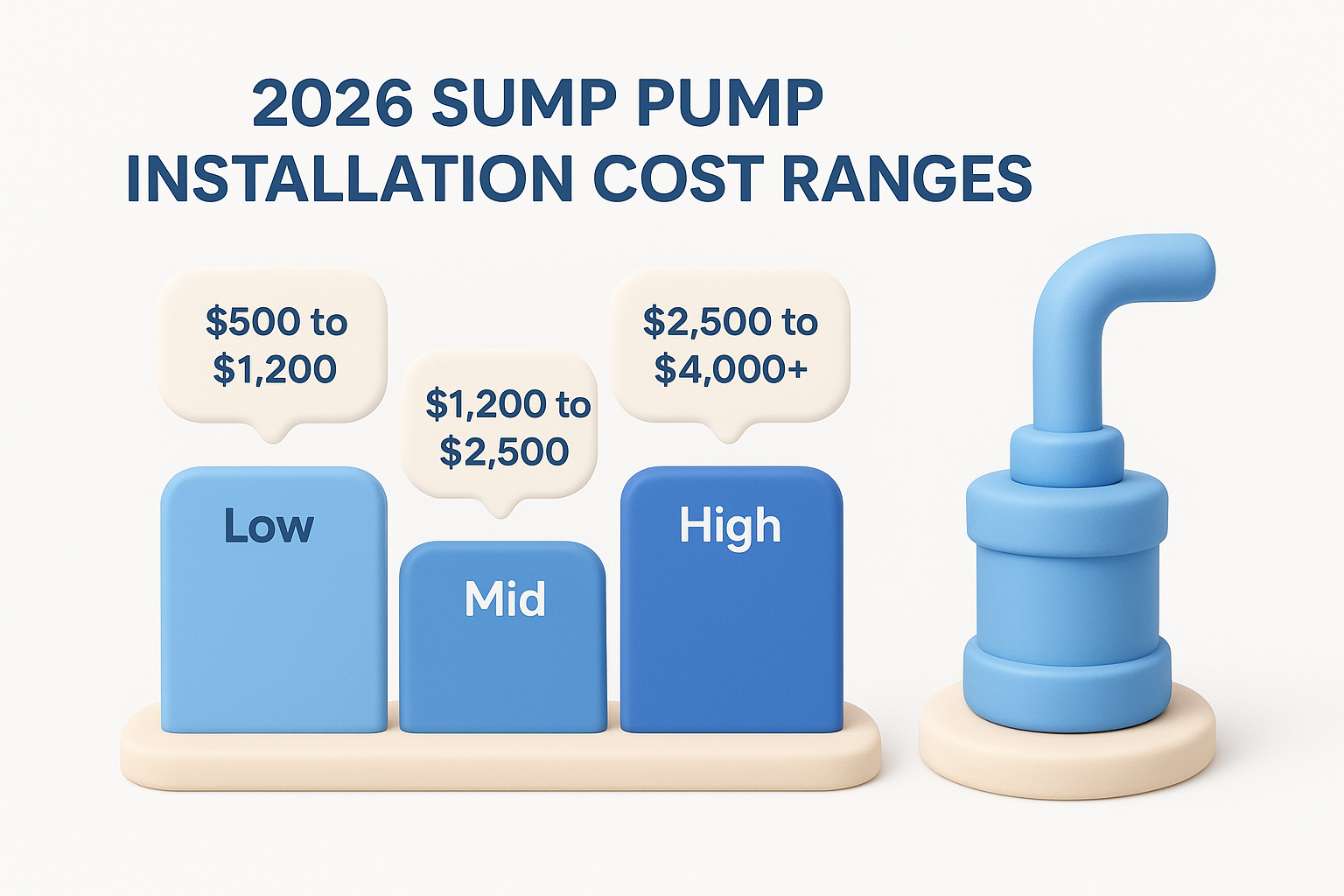
National data and real job invoices from licensed plumbing contractors paint a clear picture of where sump pump installation cost lands in 2026. The full price range runs roughly $500 to $4,000, with most homeowners ending up somewhere between $800 and $2,500 depending on whether they’re replacing an existing unit or building a system from scratch. Knowing which tier your project falls into helps you set a realistic budget before you call anyone.
| Cost Tier | Typical Range | Common Scenario |
|---|---|---|
| Low | $500 to $1,200 | Pedestal pump swap, existing pit |
| Mid | $1,200 to $2,500 | Submersible install, minor pipe work |
| High | $2,500 to $4,000+ | New pit, slab cutting, backup systems |
Low end: $500 to $1,200
Simple replacements drive the lowest costs. If you already have a working sump pit and a discharge line in place, swapping out an older pedestal pump for a new unit typically takes a licensed plumber two to three hours. Material costs stay low because no excavation, concrete work, or new piping runs are involved. This tier suits homeowners dealing with a failed pump in an otherwise functional system.
Mid-range: $1,200 to $2,500
This range covers new submersible pump installations in homes that have an existing pit but need updated discharge piping, new check valves, or modest changes to the drainage path. You’ll also land here if your pit cover needs replacement or the basin requires minor repairs before the new pump fits properly. Labor runs four to six hours on average for jobs in this tier, and it’s where the majority of Tampa Bay homeowners end up when refreshing an aging system.
Most homeowners replacing a submersible pump with moderate modifications should treat $1,500 to $2,000 as a reliable planning figure.
High end: $2,500 to $4,000 and above
Complex projects push costs into the upper tier fast. New pit excavations, concrete cutting on slab-on-grade foundations, long discharge line runs, and battery backup additions all stack onto the base price. If your home has never had a sump pump and you’re starting from nothing, combined labor and materials will typically fall between $2,500 and $4,000 or higher based on your foundation type and local soil conditions.
Cost breakdown: pump, labor, materials, permits
Understanding where your sump pump installation cost actually goes helps you read a contractor’s quote with confidence instead of guessing what each line item means. Most invoices split the total into four buckets: the pump unit itself, labor hours, ancillary materials, and any permit fees the job requires. Each one carries a different weight depending on your project’s complexity, and knowing the typical range for each piece lets you spot quotes that are out of line before you sign anything.
Pump and equipment costs
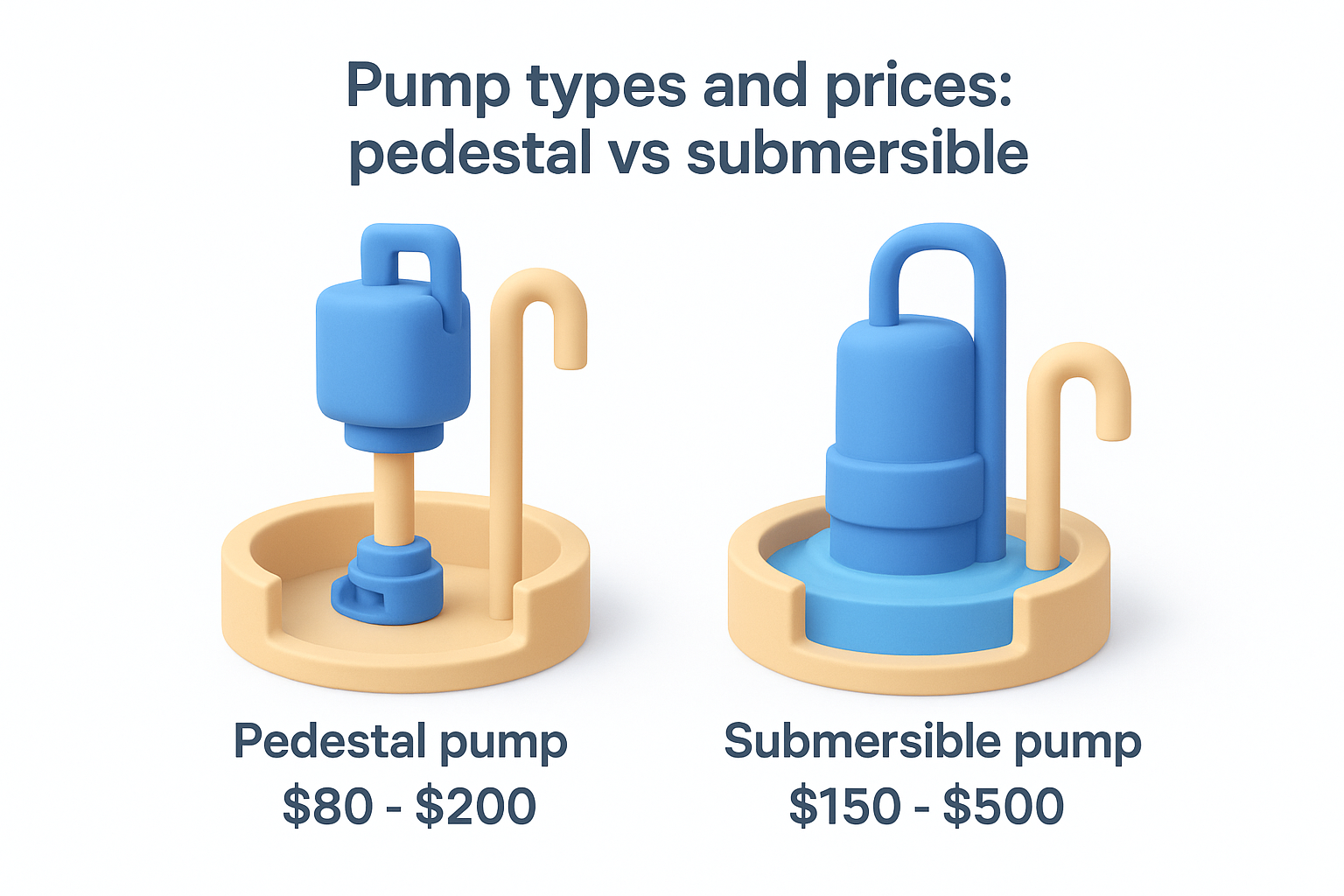
The pump unit usually represents 30 to 50 percent of your total bill. A basic pedestal pump runs $80 to $200 at most hardware retailers, while a quality submersible unit from brands like Zoeller or Wayne typically costs $150 to $500 depending on horsepower and build quality. Battery backup systems add another $150 to $400 on top of the primary pump. Keep in mind that contractors often source equipment at wholesale pricing, so the unit cost on your quote may differ from what you’d pay buying it yourself at retail.
Always ask your contractor to itemize the pump model on the quote so you can verify the specs match what your home actually needs.
Labor costs
Labor is where most of the variability lives. Licensed plumbers in the Tampa Bay area typically bill $75 to $150 per hour, and a straightforward pump swap takes two to four hours while a full pit excavation and new system install can run six to ten hours. The total labor charge on a mid-range job usually lands between $300 and $900, and that number climbs when workers deal with confined crawl spaces, concrete cutting, or difficult discharge line routing.
Materials, permits, and other line items
Beyond the pump, your invoice will include fittings, check valves, discharge pipe, and a pit liner or cover if any of those need replacement. These materials typically add $50 to $250 to the total depending on how much piping the job requires. Permit fees are less predictable but generally fall in the $50 to $200 range for new pit installations in Hillsborough and Pinellas counties. Some contractors bundle permit costs into a flat project price, so ask explicitly whether permits are included or billed separately to avoid a surprise charge after the work is done.
Pump types and prices: pedestal vs submersible
The pump you choose has a direct effect on your sump pump installation cost and on how well the system handles water over time. Two main designs dominate the residential market: pedestal pumps and submersible pumps. Each carries different price points, maintenance requirements, and performance characteristics, so picking the wrong one for your home’s conditions can mean more frequent replacements or inadequate water removal during heavy rains.
Pedestal pumps: lower upfront cost, easier access
Pedestal pumps mount the motor on a vertical shaft above the sump pit, keeping all electrical components out of the water entirely. The pump impeller sits at the bottom of the shaft inside the pit, but because the motor stays dry, it stays accessible for maintenance and tends to last longer when conditions are met.
Unit costs for pedestal pumps typically run $80 to $200, and installation labor stays on the lower end since the setup is relatively straightforward. The main trade-off is noise: the motor sits above the pit in your living space rather than submerged below it, so you’ll hear it run. These pumps also handle lower water volumes compared to most submersible models, which makes them better suited to homes with moderate water intrusion rather than serious flood exposure.
Submersible pumps: more power, quieter operation
Submersible pumps sit entirely inside the sump pit, sealed in a waterproof housing designed to operate continuously while submerged. The surrounding water actually helps cool the motor during long run cycles, which reduces wear and extends service life compared to exposed pedestal motors.
If your home sits in a low-lying area or deals with significant seasonal rain, a submersible pump almost always justifies the higher upfront price.
Quality submersible units from manufacturers like Zoeller or Wayne typically cost $150 to $500 depending on horsepower and build quality. These pumps move larger water volumes faster, making them the stronger choice for homes in flood-prone zones or areas with high water tables. Installation takes slightly longer since the unit drops into the pit and connects to discharge piping, but most licensed plumbers finish the work within two to four hours on a standard job.
Sizing your pump: horsepower and capacity
Picking the right pump size directly affects how well the system protects your home and how much you pay upfront. Undersized pumps run continuously, burn out faster, and leave water behind during heavy rain events, while oversized units cycle on and off too frequently and wear out sooner than they should. Getting the horsepower and flow rate right the first time keeps your sump pump installation cost in the right range and avoids a premature replacement bill a few years down the line.
Horsepower ratings explained
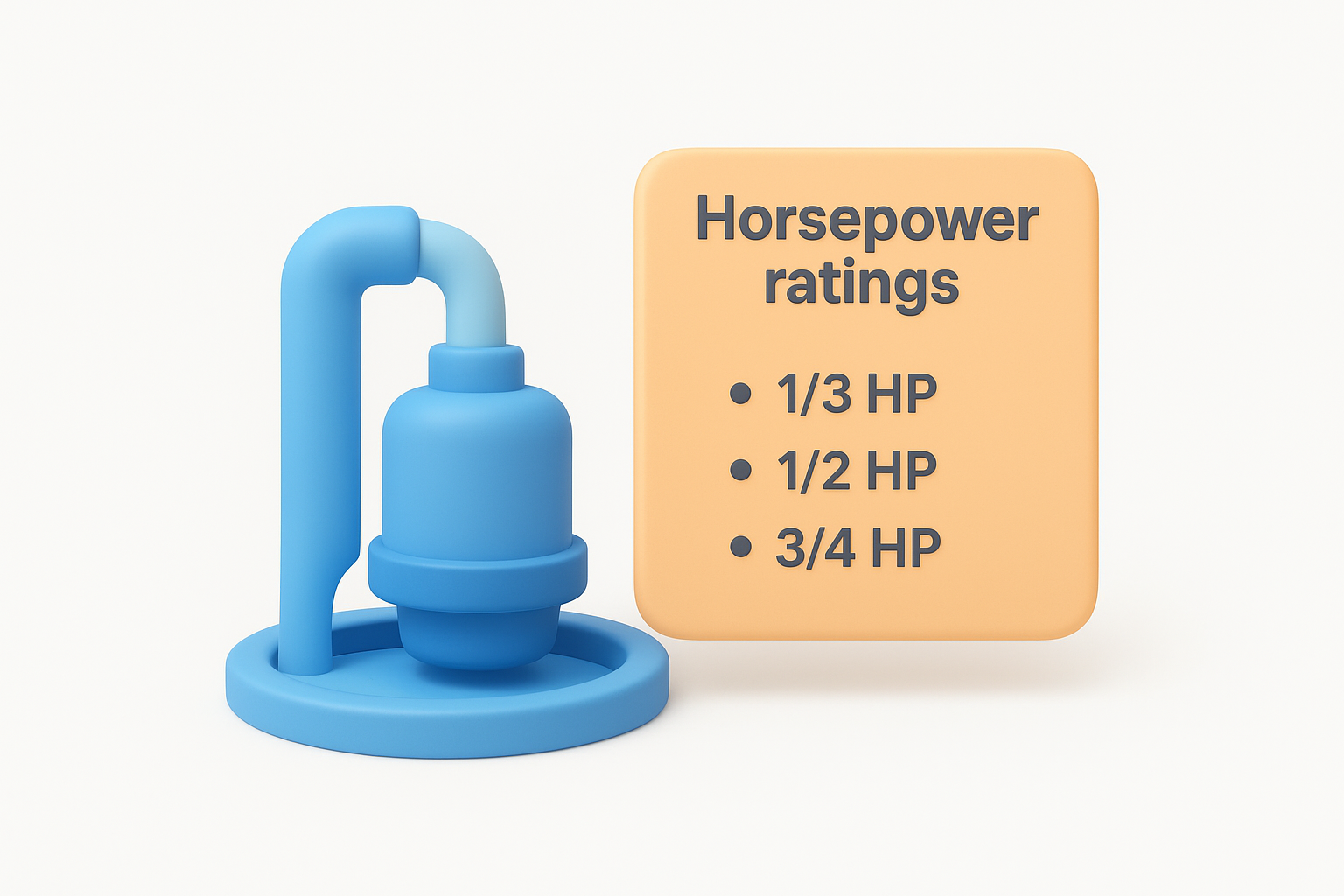
Residential sump pumps generally come in three common horsepower ratings: 1/3 HP, 1/2 HP, and 3/4 HP. A 1/3 HP unit works for smaller homes in areas with low to moderate water intrusion, typically handling around 2,000 to 2,500 gallons per hour at a standard lift height. For most single-family homes in the Tampa Bay area, a 1/2 HP submersible pump provides enough capacity to handle routine groundwater and seasonal rain without running nonstop.
Homes with large drainage areas, multiple entry points for groundwater, or low-lying lots typically need a 3/4 HP or even a 1 HP unit. Moving up in horsepower raises your material cost by $100 to $200 on average, but the added capacity prevents the system from falling behind during peak storm season. A pump that can’t keep up costs far more in water damage repairs than the upgrade would have.
How water volume and pit depth affect your choice
Pit depth and diameter both influence which pump fits your system. A standard pit runs about 18 to 24 inches deep and 18 inches wide, and most 1/2 HP submersible pumps fit this configuration well. Deeper pits require a pump with a higher vertical lift rating, measured in feet of head, because the motor has to push water further up through the discharge line before it exits the home.
A pump rated for 10 feet of head will lose significant flow capacity if your discharge line runs 15 feet or more vertically.
Flow rate, listed in gallons per hour on the product spec sheet, is the number you should match to your drainage area size rather than guessing based on horsepower alone. Your contractor should calculate the total drainage area in square feet and cross-reference that against the pump’s published flow curve to confirm the unit fits your specific conditions before installation begins.
New install vs replacement: what changes the price
Whether your project is a brand-new installation or a straightforward pump swap determines the largest share of your final bill. Replacement jobs cost less because the infrastructure is already in place, while new installs require excavation, concrete work, and longer labor hours that push the sump pump installation cost significantly higher. Understanding which category your project falls into helps you set the right budget from the start.
Starting from scratch: new installation costs
A new installation means your home has no existing sump pit, discharge line, or outlet connection. Your contractor has to excavate a pit in your basement floor or crawl space, cut through concrete if your home sits on a slab, and route an entirely new discharge pipe to an exterior exit point. This work adds three to six hours of labor beyond what a replacement job requires, and that time adds up fast at $75 to $150 per hour.
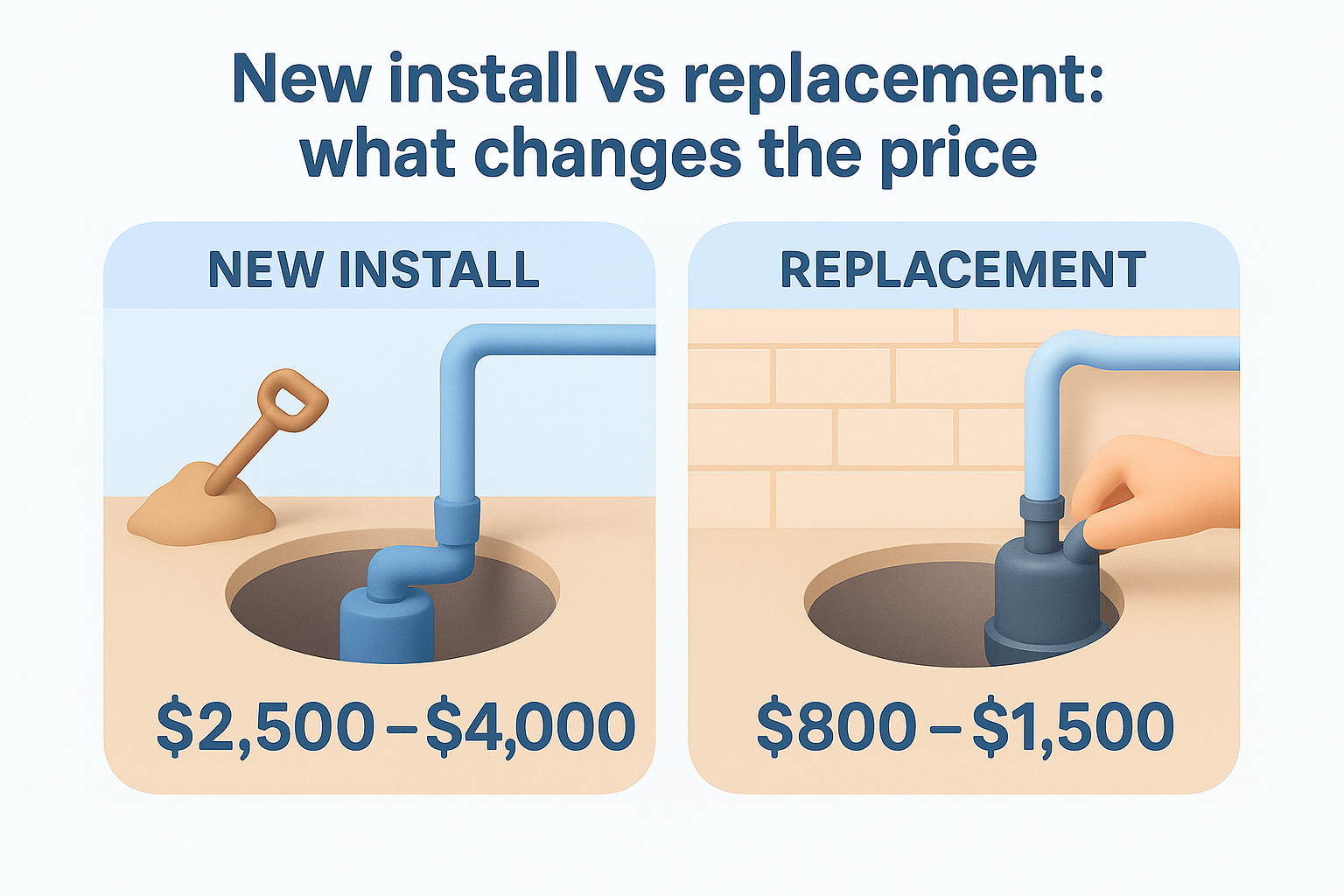
A full new installation on a slab-on-grade home typically runs $2,500 to $4,000, compared to $800 to $1,500 for a basic pump replacement in a home with an existing pit.
Permit requirements also apply more often to new pit excavations than to simple replacements. In Hillsborough and Pinellas counties, any work that alters drainage or breaks through a foundation usually triggers a permit review, which adds both cost and scheduling time to your project.
Replacing an existing pump
Replacement jobs move faster because your contractor works within an existing system. The pit is already dug, the discharge line is in place, and the primary task is pulling the old unit, fitting the new pump, and testing the system before leaving the job. Most replacements finish in two to three hours, which keeps labor costs in the $150 to $450 range for a standard submersible swap.
The main variables that raise replacement costs are pit condition and discharge line integrity. If the basin has cracked, the pit liner needs replacement, or the discharge pipe shows corrosion, your contractor will flag those issues before installation and add repair work to the scope. Catching those problems during a planned replacement is far cheaper than addressing them after a failure during heavy rain.
Add-ons that raise the total cost
The base sump pump installation cost covers the pump, labor, and the materials needed to connect your system. But several common additions push that number higher, and most of them come up during the job rather than in the initial quote. Knowing which upgrades are worth the extra spend, and which ones you can add later, helps you make informed decisions when your contractor walks through the options.
Battery backup systems
A battery backup pump gives your system a second line of defense when the power goes out during a storm, which is exactly when you need it most. Standard battery backup units add $150 to $400 to your total, depending on the brand and battery capacity, plus another one to two hours of labor to wire and test the secondary pump. If your area sees regular tropical storms or your home sits in a low-lying zone, this addition pays for itself the first time the power cuts out mid-downpour.
Skipping a battery backup to save $300 upfront is a reasonable trade-off for some homeowners, but those in flood-prone Tampa Bay neighborhoods should treat it as a near-essential addition rather than an optional upgrade.
Extended discharge lines and check valves
Standard installations assume a relatively short discharge run, typically under 20 feet, to an exterior exit point. If your home’s layout requires the pipe to travel further, around obstacles, or through a finished wall, your contractor will need additional pipe, fittings, and labor time to complete the run. Each extra 10 feet of pipe adds roughly $30 to $75 in materials and a noticeable bump in labor hours depending on how difficult the routing is.
Check valves prevent water from flowing back into the pit when the pump shuts off, and while most quality installations include at least one, older systems that need the component added during a replacement job will see a $25 to $75 charge for the part and the connection work.
Pit liners and covers
If your sump pit is cracked, deteriorating, or was never properly lined, your contractor may recommend installing a new pit liner before setting the pump. Liner replacement adds $100 to $300 to the project total. A sealed pit cover also reduces humidity and odors in your basement or crawl space, and most covers run $30 to $80 installed, making it one of the more affordable add-ons worth doing at the same time as a pump replacement.
DIY vs hiring a pro: costs, risks, warranties
Pulling up tutorial videos and handling your own sump pump installation looks attractive when you’re staring at a quote for $1,500 or more. The honest breakdown, though, shows that the gap between DIY savings and professional installation isn’t as large as it first appears once you factor in the full sump pump installation cost picture, including tools, materials, and what happens when something goes wrong.
What DIY actually saves you
A DIY pump swap on an existing pit realistically saves you $150 to $400 in labor costs on a simple replacement. You’ll buy the pump at retail, roughly $150 to $350 for a quality submersible unit, plus fittings, pipe, and a check valve. The savings narrow because you pay retail pricing rather than contractor wholesale rates, and you’ll need a wet/dry vacuum, pipe cutter, and PVC cement at minimum if those aren’t already in your garage.
DIY makes the most sense for a straightforward pump replacement in a well-maintained pit, not for new installations, pit excavations, or anything involving concrete work.
Risks that outweigh the savings
Incorrect pump sizing is the most common DIY mistake, and it’s an expensive one. Installing a 1/3 HP unit in a home that needs 1/2 HP capacity means the pump runs continuously, burns out early, and fails during the first serious rain event. Improper discharge line connections create backflow issues that let water re-enter the pit, defeating the entire system.
Electrical connections present a separate risk entirely. Submersible pump wiring must meet local electrical code, and a miswired installation near standing water creates a genuine safety hazard in addition to a failed system. Some municipalities also require permits for drainage modifications, and unpermitted work can create problems during future home inspections or insurance claims.
Warranties and what you lose without a pro
Most pump manufacturers offer warranties of two to five years, but many of those warranties require professional installation to remain valid. If you install the unit yourself and the motor fails within the warranty window, the manufacturer can deny the claim outright based on improper installation.
Licensed contractors also carry liability insurance that covers any damage caused during the job, so if a pipe connection fails and water damages your flooring, you have a clear path to coverage. A DIY installation leaves that risk entirely on your shoulders.
How to get an accurate estimate in Tampa Bay
Getting a reliable sump pump installation cost estimate in the Tampa Bay area starts before a contractor ever sets foot in your home. The more specific information you bring to the first conversation, the fewer surprises show up on your final invoice. Contractors who quote blindly over the phone are usually giving you a floor number that climbs once they see the actual job conditions.
What to tell a contractor before the visit
Before you schedule an estimate, gather a few key details about your home. Tell the contractor whether you already have an existing sump pit, and if you know it, the approximate pit diameter and depth. Share the general path your discharge line would need to travel to exit the home, and mention whether your home sits on a slab, has a basement, or has a crawl space. Giving this information upfront lets the contractor arrive with the right equipment and a realistic scope in mind rather than discovering complications during the estimate that delay the quote.
Contractors who receive complete information before the visit give more accurate quotes and waste less of your time.
Questions to ask when comparing quotes
When you receive written estimates from different contractors, ask each one the same set of questions so you’re comparing the same scope of work. First, confirm whether the quote includes permit fees or bills them separately, since that difference can add $50 to $200 to one quote but not another. Second, ask the contractor to specify the pump model and horsepower on the estimate so you can confirm the unit matches your home’s drainage needs. Finally, ask whether the labor rate is flat or hourly, because an hourly rate on a job with unknown complications can push your final bill well above the initial figure.
Red flags in a sump pump estimate
Some quotes look competitive for the wrong reasons. A contractor who skips the site visit entirely and quotes a firm price over the phone is either leaving room to add charges later or planning to use entry-level equipment. Watch for estimates that don’t list the pump model or brand by name, since a vague line item like "submersible pump" could describe a $90 builder-grade unit or a $350 professional-grade one. Licensed contractors in Hillsborough and Pinellas counties should also be able to confirm whether your project requires a permit and explain how they handle that process.
A simple plan to budget and book service
Now you have a complete picture of what drives sump pump installation cost and where your money goes. Start by identifying whether your home has an existing pit, then use the cost tiers in this guide to set a realistic budget range before you contact anyone. New installations typically land between $2,500 and $4,000, while pump replacements in homes with existing pits usually run $800 to $1,500. Factor in battery backup and discharge line extensions if your home sits in a low-lying neighborhood.
When you’re ready to move forward, get at least two written quotes that specify the pump model, labor rate, and permit handling. Comparing itemized estimates protects you from vague pricing and ensures the scope matches what your home actually needs. If you’re in the Greater Tampa Bay Area and want upfront pricing with no surprises, reach out to the Home Therapist team for a same-day estimate on your installation or replacement.
Sump Pump Cost During a Renovation or Remodel
Adding a sump pump while a crawl space, garage, or addition is already opened up is the cheapest time to do it. The pit excavation, drainage routing, and electrical run can share the renovation work that is already happening, which typically saves $300 to $800 versus a standalone retrofit. In Florida homes this usually means a crawl-space or stormwater application rather than a basement: the pump ties into perimeter drainage and discharges to grade per code. If you are planning a remodel in a flood-prone part of Tampa Bay, price the sump work into the renovation rather than after it.
Need a licensed plumber for your sump pump? Sump pump installation costs are one thing; knowing you have a reliable contractor on call for Tampa Bay’s June-through-September flood season is another. Home Therapist handles everything from new pit excavation and pump selection to battery backup wiring and discharge line routing. See our full guide to sump pump installation and repair in Tampa Bay for what the process looks like and what brands we carry. If your existing pump is acting up, our troubleshooting pages cover the most common issues: sump pump alarm going off, sump pump not working, and sump pump running constantly. FREE plumbing diagnosis, $279 on approved repair work. Licensed CFC1431159. (813) 343-2212.
More Drain Cleaning Articles
- Snake Through the Cleanout Fixed This S Habana Ave Bathroom Sink Backup: Drain Unclogging in Tampa, FL 33629
- 9 Best Sump Pump for Crawl Space Picks + Florida Costs
- What Is A Sump Pump? How It Works And When You Need One
- Visit #4 on a $5 Elite Plan: Plumbing Maintenance on Chatterly Dr in Wesley Chapel, FL 33543
- Shower Drain Relocation in Tampa Bay: Cost, Process, and Pipe Layout


