

7 Best Picks: Water Filtration System For Hard Water In 2026
If you live in the Tampa Bay area, you already know the signs: white buildup on your faucets, stiff laundry, soap that barely lathers, and water spots on everything. That’s hard water doing what it does best, slowly making life harder. Finding the right water filtration system for hard water isn’t just about taste or clarity. It’s about protecting your plumbing, your appliances, and your home’s long-term value.
Hard water contains high concentrations of dissolved minerals, mainly calcium and magnesium. Florida’s groundwater is loaded with both, which is why Tampa Bay consistently ranks among the hardest water regions in the country. Over time, those minerals form scale deposits inside your pipes, water heater, and fixtures, leading to reduced efficiency, costly repairs, and premature replacements. The right system stops that cycle before it starts.
At Home Therapist, we’ve been installing and servicing water filtration and softening systems across the Greater Tampa Bay Area since 2011. We’ve seen firsthand what works, what doesn’t, and what homeowners actually need versus what gets overhyped. That hands-on experience, thousands of residential installations and repairs, is exactly what shaped this list. We built it to help you make a smart, informed decision before you spend a dollar.
Below, we break down seven of the best water filtration systems for hard water in 2026, covering whole-home softeners, hybrid filtration units, and salt-free alternatives. Each pick includes what it does well, where it falls short, and who it’s best suited for. Whether you’re dealing with a minor annoyance or full-blown scale damage, there’s a match here for your situation and budget.
1. Home Therapist whole-home water treatment
When you call Home Therapist, you’re not picking a product off a shelf. You’re getting a custom-designed water treatment solution built specifically for your home’s water quality, plumbing layout, and daily usage needs.
What it is
Home Therapist installs whole-home water treatment systems that combine softening, filtration, and conditioning into a single integrated setup tailored to your property. Rather than guessing which unit fits, our licensed technicians start with a water test to identify exactly what’s in your supply, then recommend the right combination of equipment.
How it treats hard water
The system targets dissolved calcium and magnesium at the point of entry, before hard water reaches any fixture, appliance, or pipe in your home. Depending on your test results, we may pair a salt-based ion exchange softener with a carbon pre-filter, a sediment stage, or a conditioning unit for chlorine and organics. Every component is selected to deliver consistently soft, clean water throughout the entire house.
Treating water at the point of entry is the most effective way to prevent scale buildup inside your pipes and appliances before damage starts.
When it’s the best choice
This option is the right pick if you want a professionally sized and installed system without the guesswork of combining equipment yourself. It’s especially well-suited for Tampa Bay homeowners dealing with Florida’s notoriously hard groundwater, where a generic water filtration system for hard water often underperforms because it isn’t calibrated to local mineral concentrations.
Installation and upkeep
Our technicians handle every step of the installation, including plumbing connections, bypass valves, and system startup. Routine upkeep typically includes:
- Salt refills for the softener tank every 4 to 8 weeks
- Filter cartridge changes every 6 to 12 months
- An annual system check to confirm performance and catch any early issues
Typical cost in 2026
A whole-home treatment system installed by Home Therapist generally runs between $1,800 and $4,500, depending on the equipment combination and your home’s size. That range covers equipment, labor, and a follow-up water test to confirm the system is doing its job.
2. Salt-based metered water softener
A salt-based metered water softener is one of the most widely installed and proven options for treating hard water in residential homes. It connects to your main water line and treats all water entering the house before it reaches your fixtures and appliances.
What it is
Metered softeners use a demand-initiated regeneration cycle, meaning the unit only regenerates based on how much water you actually use rather than on a fixed schedule. That design makes it more efficient with both salt and water than older timer-based models.
How it treats hard water
The system runs your water through a resin tank packed with negatively charged resin beads. Those beads attract and hold the calcium and magnesium ions responsible for hardness, replacing them with sodium ions. The result is softened water delivered to every tap, pipe, and appliance in your home.
Ion exchange is one of the most effective methods for removing hard water minerals before they cause scale buildup inside your plumbing.
When it’s the best choice
This is a strong pick if your home has moderately to severely hard water and you want a reliable, well-understood solution. It works well as a standalone water filtration system for hard water when iron and sediment levels in your supply are low.
Installation and upkeep
A licensed plumber handles the installation, which typically takes two to three hours. Upkeep involves periodic salt refills and an occasional resin cleaning if iron levels creep up.
Typical cost in 2026
Expect to spend $800 to $2,000 installed, depending on the unit’s grain capacity and your local labor rates.
3. Dual-tank water softener
A dual-tank water softener solves one of the biggest limitations of a single-tank setup: downtime during regeneration. With two resin tanks working in rotation, your home always has uninterrupted access to softened water, even when one tank is cycling.
What it is
Dual-tank systems run two separate resin tanks connected to the same control head. While one tank actively softens your water, the other regenerates in the background and stands ready to take over without any gap in your water supply.
How it treats hard water
Like a standard single-tank softener, the system uses ion exchange resin to pull calcium and magnesium from your water and replace them with sodium ions. The key advantage is continuous availability: you never get a burst of hard water during peak usage hours, which is a real problem with single-tank units in high-demand homes.
If your household runs water heavily in the morning and evening, a dual-tank system prevents the hard water breakthrough that single-tank models can experience mid-cycle.
When it’s the best choice
This is the right water filtration system for hard water if you have a large household or run water-intensive appliances throughout the day. Families with high daily water demand benefit most from this setup.
Installation and upkeep
A licensed plumber should handle the install. Upkeep includes:
- Regular salt refills every 4 to 8 weeks
- Periodic resin cleaning if iron levels rise
- An annual inspection to confirm both tanks cycle correctly
Typical cost in 2026
Expect to spend $1,500 to $3,000 installed. That higher range reflects the added hardware and more complex plumbing connections compared to a single-tank unit.
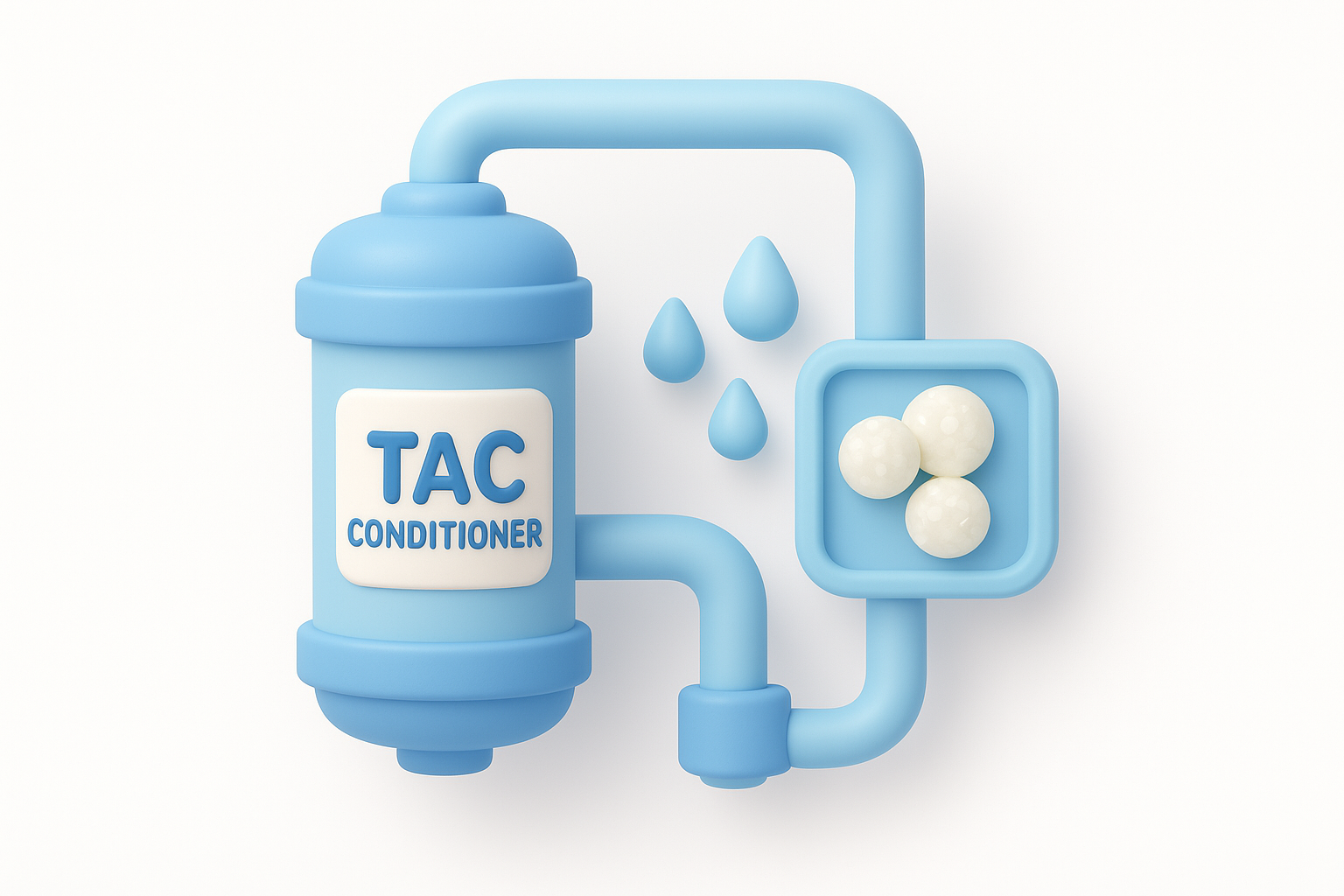
4. Salt-free TAC water conditioner
A salt-free TAC conditioner takes a different approach than ion exchange softeners. Rather than removing minerals from your water, it changes their physical structure so they can’t stick to your pipes or appliances.
What it is
TAC stands for Template Assisted Crystallization. The system uses polymer media with active nucleation sites to convert dissolved calcium and magnesium into stable microscopic crystals that travel harmlessly through your plumbing without bonding to any surface.
How it treats hard water
When water passes through the TAC media, the mineral ions crystallize and stay suspended in the flow rather than clinging to pipe walls or heating elements. This makes it a practical water filtration system for hard water in homes where scale prevention is the main priority, even though the minerals themselves remain in the water.
TAC conditioning does not soften water in the traditional sense, so you may still notice light spotting on glass and fixtures.
When it’s the best choice
This system works well for you if you want a salt-free, low-maintenance option and your main concern is scale buildup rather than the slick feel of traditionally softened water. It’s also a strong fit for homeowners on sodium-restricted diets who want to avoid adding salt to their supply.
Installation and upkeep
Installation is straightforward and typically takes one to two hours. The TAC media lasts up to five years with no salt, no backwashing, and no electricity required.
Typical cost in 2026
Expect to spend $500 to $1,500 installed, which makes it one of the more budget-friendly whole-home options on this list.
5. Whole-house carbon filter plus softener
A whole-house carbon filter paired with a softener addresses two separate problems in one combined setup. You get scale prevention from the softener and chemical removal from the carbon stage, which makes it a practical choice when your water has both hardness and taste or odor issues.
What it is
This system runs your water through two distinct treatment stages. The carbon pre-filter goes first, stripping out chlorine, chloramines, and organic compounds before the water ever reaches the resin tank. The softener stage then handles calcium and magnesium through standard ion exchange.
How it treats hard water
The softener removes hardness minerals using negatively charged resin beads, just like a standalone unit. The carbon stage upstream protects that resin from chlorine degradation, which extends the resin’s effective lifespan and keeps the softener performing at full capacity longer.
Chlorine exposure breaks down softener resin over time, so pairing a carbon pre-filter with your softener is one of the best ways to protect your investment.
When it’s the best choice
This is the right water filtration system for hard water when your supply also carries strong chlorine taste or odor, which is common in homes on municipal water in the Tampa Bay area.
Installation and upkeep
A licensed plumber should handle the two-stage install. Upkeep includes carbon cartridge replacements every 6 to 12 months and regular salt refills for the softener.
Typical cost in 2026
Expect to spend $1,200 to $2,800 installed, depending on system capacity and your home’s plumbing layout.
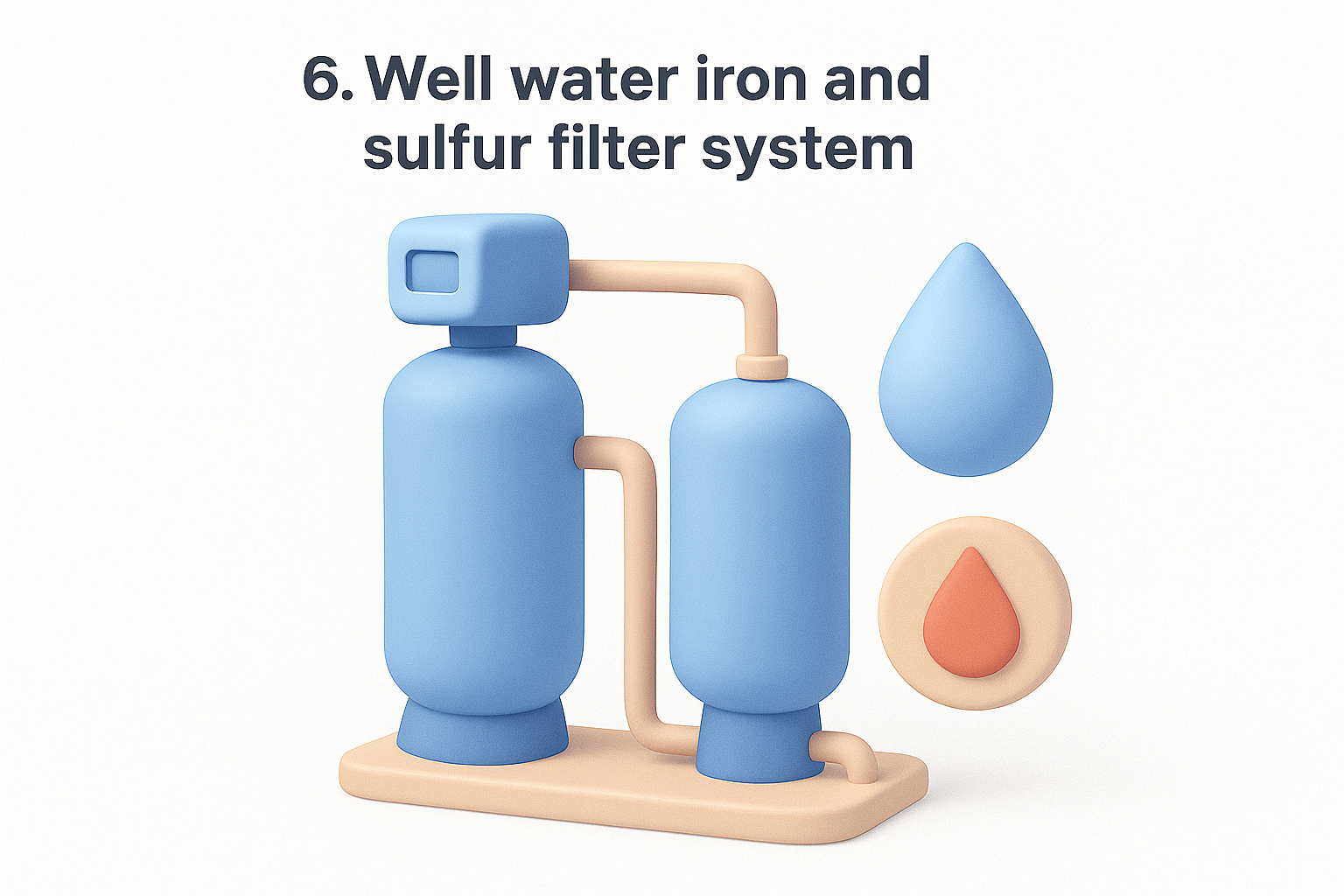
6. Well water iron and sulfur filter system
If your home runs on well water, hardness is rarely your only problem. Iron and hydrogen sulfide are common co-contaminants in Florida’s groundwater, and they demand dedicated treatment beyond what a standard softener handles.
What it is
A well water iron and sulfur filter is a multi-stage whole-home system designed specifically for the complex water chemistry found in private wells. It typically combines an oxidizing filter media with a sediment stage to tackle iron, manganese, and sulfur compounds before they reach your pipes.
How it treats hard water
The oxidizing media converts dissolved ferrous iron into solid particles that the filter then captures and flushes out during backwash cycles. Many systems pair this stage with a downstream softener to handle the calcium and magnesium that cause hardness, giving you full-spectrum treatment in one connected setup.
Skipping iron treatment before your softener will foul the resin bed quickly, cutting the softener’s lifespan and effectiveness.
When it’s the best choice
This is the right water filtration system for hard water if your well water smells like rotten eggs, leaves orange stains, or shows iron readings above 0.3 parts per million on a water test.
Installation and upkeep
A licensed plumber should handle the install and initial system programming. Upkeep includes periodic backwash cycles and media replacement every three to five years.
Typical cost in 2026
Expect to spend $1,500 to $3,500 installed, depending on iron concentration levels and system capacity.
7. Under-sink RO system for hard water
An under-sink reverse osmosis system doesn’t treat your whole home, but it delivers exceptionally pure water at the one point where most people care about quality most: their kitchen tap.
What it is
An RO system installs beneath your kitchen sink and connects to a dedicated faucet on the countertop. It runs water through multiple filtration stages, including a semi-permeable membrane that blocks dissolved minerals, contaminants, and impurities down to 0.0001 microns.
How it treats hard water
The RO membrane removes up to 99% of dissolved calcium and magnesium, along with other contaminants like nitrates, chlorine, and lead. Water is stored in a small pressurized holding tank under the sink and dispensed on demand through the dedicated faucet.
RO systems produce the most mineral-free drinking water of any residential option, but they treat only the water at one tap, not your pipes or appliances.
When it’s the best choice
This is the right water filtration system for hard water if your primary concern is drinking and cooking water quality rather than whole-home scale protection. Many homeowners pair an RO unit with a whole-home softener for complete coverage across every fixture and appliance.
Installation and upkeep
A licensed plumber handles the installation in one to two hours. Upkeep includes replacing pre-filters and the RO membrane every 6 to 36 months depending on your water quality and usage volume.
Typical cost in 2026
Expect to spend $300 to $800 installed, which makes it the most affordable entry point on this list.
Next steps
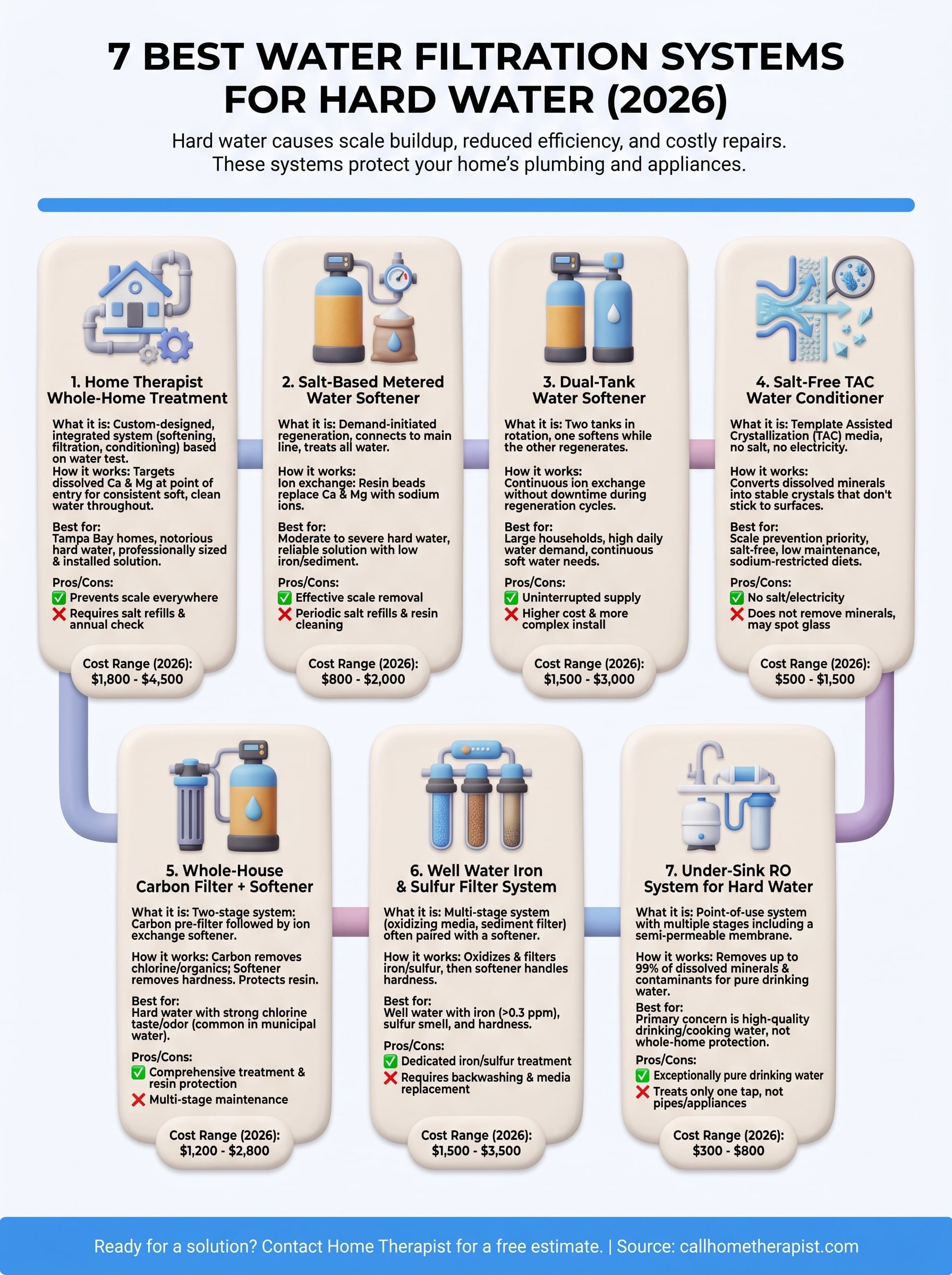
You now have seven concrete options for treating hard water in your home, from a professionally installed whole-home system down to a budget-friendly under-sink RO unit. The right choice depends on your water test results, your household size, and how far you want your protection to extend, whether that’s just your drinking water or every pipe and appliance in the house. If you’re still unsure which water filtration system for hard water fits your situation, a water test is the fastest way to get a clear answer.
Home Therapist has been helping Tampa Bay homeowners solve hard water problems since 2011, and we make the process straightforward. Our licensed technicians test your water, recommend the right system, and handle every step of the installation with upfront pricing and no surprises. If you’re ready to stop dealing with scale buildup and poor water quality, contact Home Therapist today and get a free estimate.


