

Water Softener Installation Cost:2026 Avg. Prices & Factors
Hard water is one of those problems that sneaks up on you, crusty faucets, dry skin, soap that won’t lather, and scale buildup quietly shortening the life of your water heater and pipes. If you’ve started researching solutions, you’ve probably landed on a water softener. The next question is obvious: what does water softener installation cost in 2026, and is that quote you got actually fair?
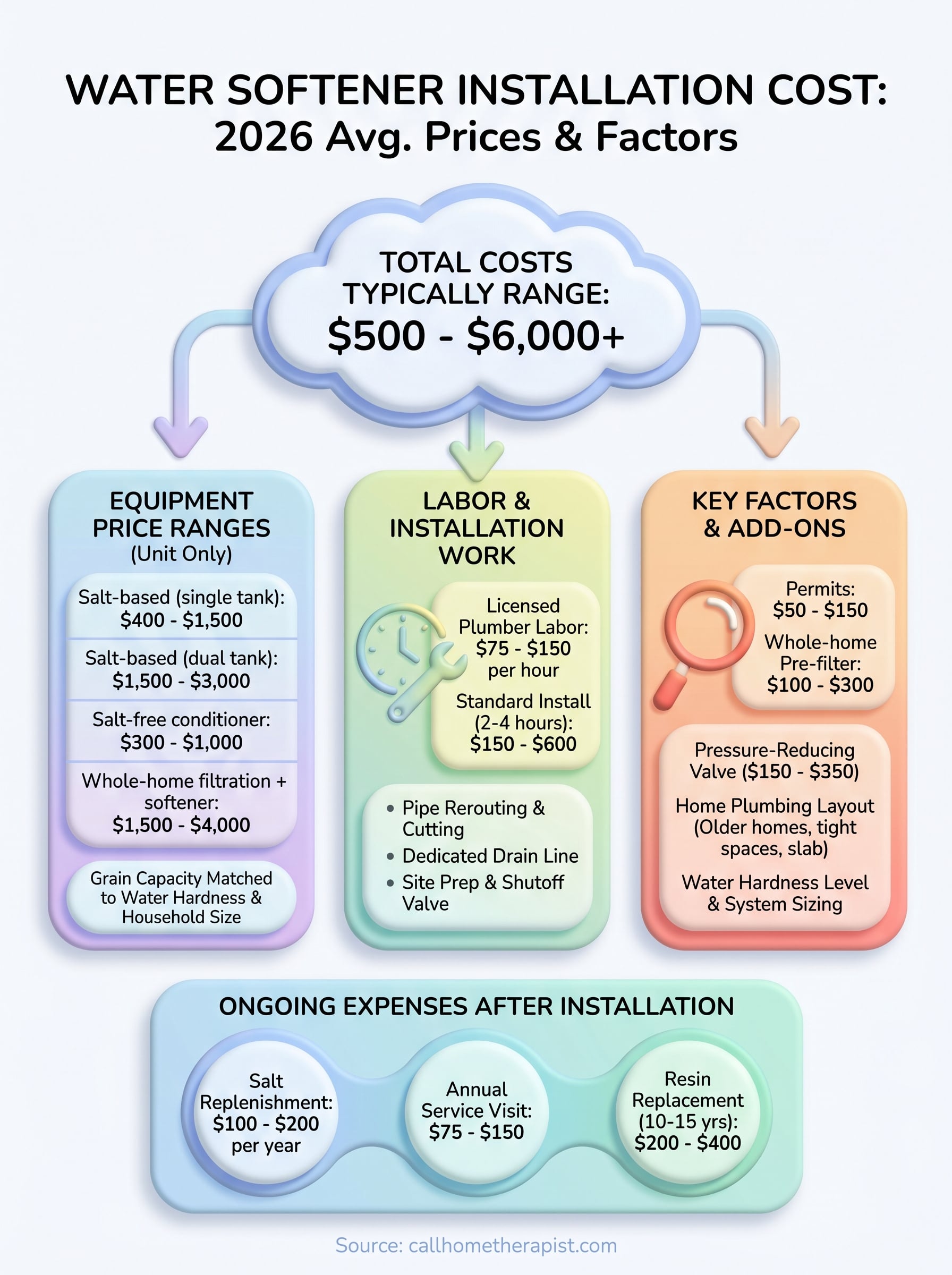
The answer isn’t one number. Total costs typically range from $500 to $6,000 or more, depending on the type of system, your home’s plumbing setup, and whether you need additional work like a new water line or electrical outlet. That’s a wide spread, and it’s exactly why understanding what drives the price matters before you commit.
At Home Therapist, we’ve been installing and servicing water softeners across the Greater Tampa Bay Area since 2011, and Tampa’s notoriously hard water keeps us busy. We built this guide to give you a transparent look at real pricing, what affects your bottom line, and how to tell whether a quote is reasonable. Below, you’ll find average equipment and labor costs, the key factors that push prices up or down, and what to expect from the installation process itself.
What "water softener installation cost" includes
When someone quotes you a water softener installation cost, that number covers more than just the unit sitting on a pallet at the supply house. The full project breaks into three main components: the softener itself, the labor to install it, and any site-specific preparation work your existing plumbing requires. Understanding what each part contributes lets you read a quote with confidence rather than just reacting to the total.
The equipment itself
Water softeners come in several types, and the unit price is almost always the largest single line item on your invoice. A basic salt-based ion exchange softener runs between $400 and $1,500 for the unit alone. Dual-tank systems designed for larger households push that range to $1,500 to $3,000. Salt-free conditioners and magnetic descalers sit at the lower end of the price spectrum but work differently – they condition water rather than physically removing minerals, which means they’re not the right solution for every hardness level or household demand.
The unit price also depends heavily on grain capacity, which measures how much hardness a system removes before it regenerates. A household of four dealing with moderately hard water generally needs a system rated between 32,000 and 48,000 grains. Size it too small and the system regenerates constantly, shortening its lifespan. Size it too large and you overpay upfront for capacity you never use. Tampa’s water hardness typically runs between 250 and 350 parts per million, which puts most local households squarely in that mid-range.
Matching grain capacity to your actual household size and local water hardness is one of the most consequential decisions in the buying process, and getting it wrong in either direction adds real cost over time.
Labor and installation work
Licensed plumber labor accounts for a significant share of what you’ll pay beyond equipment. Most water softener installations take two to four hours, and plumbers in the Greater Tampa Bay area typically charge $75 to $150 per hour, putting labor alone between $150 and $600 for a straightforward job. The actual time on site depends on how accessible your main shutoff is, whether the plumber needs to cut into existing pipe, and how much physical space exists in your utility room or garage.
Some jobs run longer when the plumber has to reconfigure piping to position the softener correctly in line before your water heater. Complex rerouting work can push labor costs above $600, particularly in older homes where the original pipe layout wasn’t designed with a softener in mind.
Permits and site preparation
Many Florida counties require a plumbing permit for water softener installation, typically adding $50 to $150 to your total. Beyond permits, your project may also include:
- A dedicated drain line for brine discharge during regeneration cycles
- A new electrical outlet if your control valve requires power
- Pipe repositioning or a new shutoff valve to create a logical install point
These prep items often explain the largest differences you’ll see between competing quotes, so ask each contractor to itemize them separately before you sign anything.
2026 average price ranges for systems and labor
Knowing the typical ranges for equipment and labor gives you a solid baseline before any contractor walks through your door. The numbers below reflect current market pricing in 2026 and apply directly to residential installations in the Greater Tampa Bay Area, where high water hardness means most homeowners end up mid-range or above.
Equipment price ranges by system type
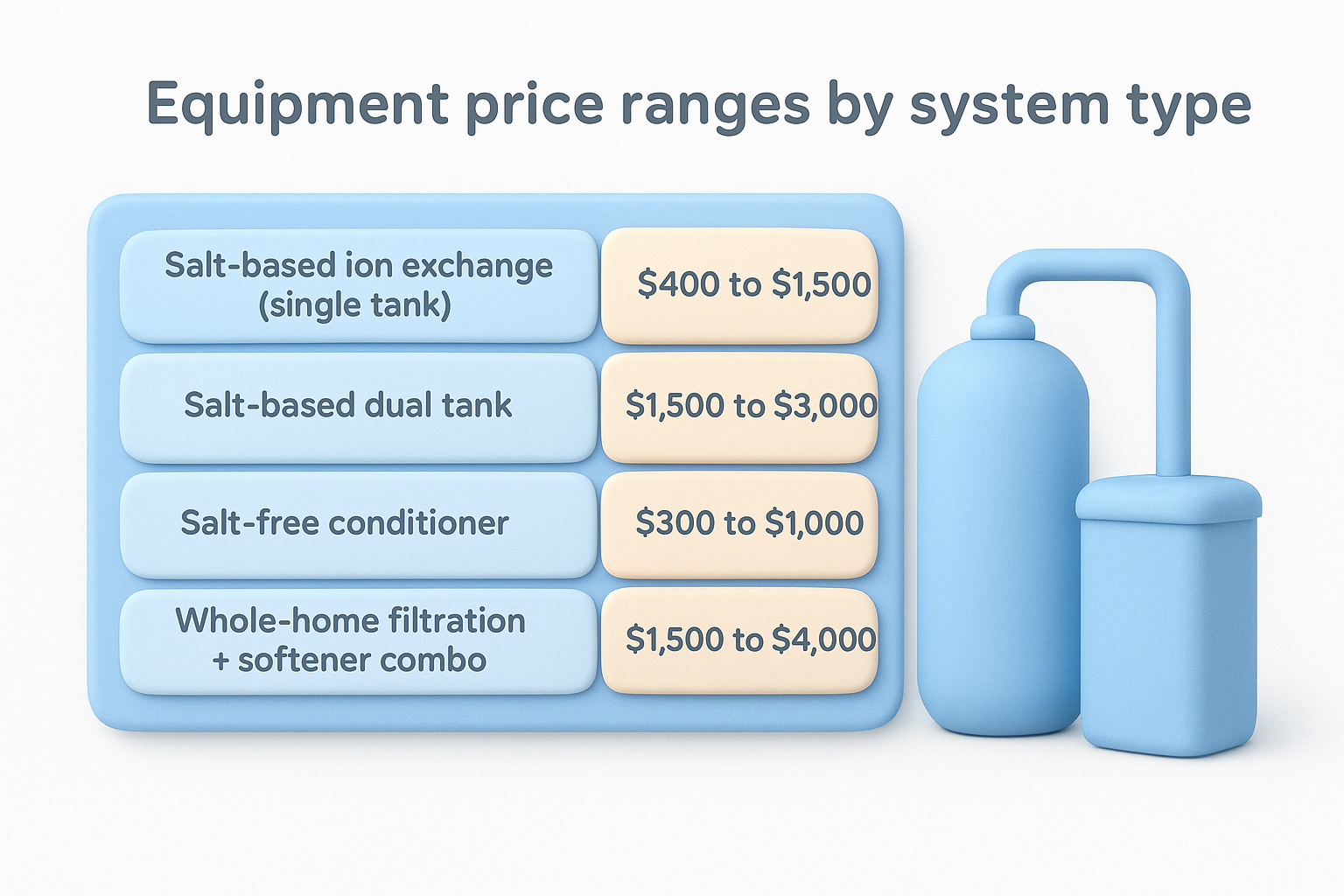
Your unit choice has the biggest single impact on total water softener installation cost. The table below breaks down typical equipment-only prices by system type so you can set a realistic budget for the hardware before adding labor.
| System Type | Unit Price Range | Best For |
|---|---|---|
| Salt-based ion exchange (single tank) | $400 to $1,500 | Most households, moderate to high hardness |
| Salt-based dual tank | $1,500 to $3,000 | Large households or continuous demand |
| Salt-free conditioner | $300 to $1,000 | Mild hardness, low-maintenance preference |
| Whole-home filtration + softener combo | $1,500 to $4,000 | Hardness plus sediment or chlorine concerns |
Salt-based ion exchange systems remain the most effective option for Tampa Bay’s water hardness levels, which typically run between 250 and 350 parts per million.
Salt-free options cost less upfront but don’t physically remove dissolved minerals the way ion exchange does, which matters when your hardness readings are high. If you’re unsure which system matches your water quality, a licensed plumber can pull a water hardness reading before recommending a specific unit.
What plumbers charge for installation
Labor costs in the Tampa Bay market currently run between $75 and $150 per hour, and most standard installations take two to four hours. That puts your labor estimate between $150 and $600 for a clean, straightforward job.
Projects that require pipe rerouting, a new dedicated drain, or an added electrical outlet push that number higher. Factor in $50 to $150 for any required permits, and your all-in installation total typically lands between $800 and $2,500 for a standard single-tank system in a properly plumbed utility area.
Cost factors that change your total price
Your final water softener installation cost doesn’t follow a fixed formula. Several variables specific to your home and water quality can push the number toward the lower or upper end of any range you’ve seen so far. Understanding which factors apply to your situation lets you anticipate the final bill before the plumber arrives.
Your home’s existing plumbing layout
The condition and configuration of your existing plumbing has a direct impact on labor time. Homes built after 2000 typically have accessible main lines and logical install points near the water heater, which keeps the job clean and fast. Older homes, particularly those built before the 1980s, often have galvanized or copper pipe layouts that require cutting, reconfiguring, or adding shutoff valves before the softener can go in.
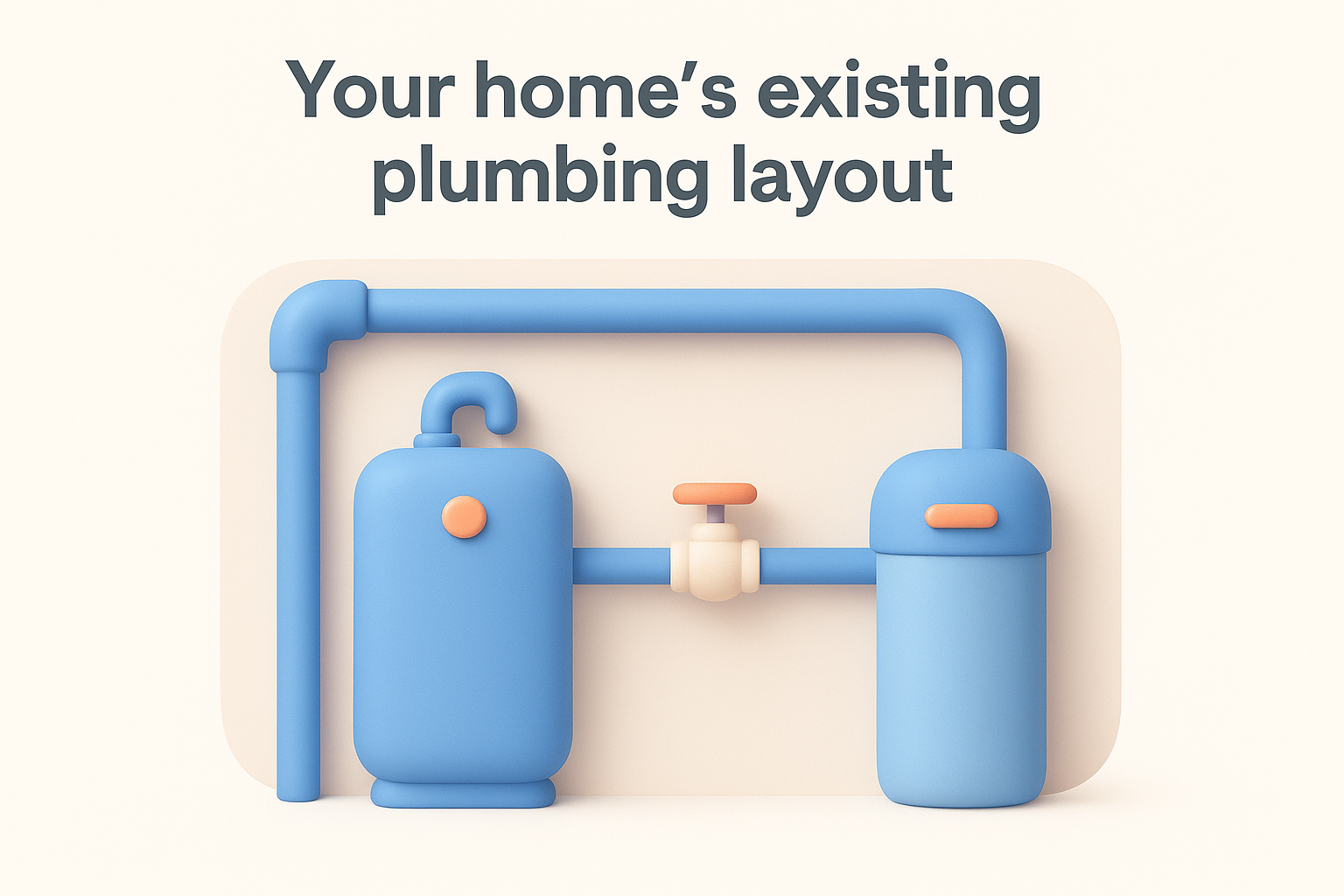
If your utility room is tight or your main shutoff sits in an awkward location, a plumber may need an extra hour or two just to create a workable install point.
A crawlspace or slab foundation also affects access. When the main line runs beneath a slab, any rerouting work becomes significantly more involved than in a home with an accessible utility closet.
Water hardness level and system sizing
Higher hardness levels require a system with more grain capacity, which directly raises your equipment cost. Tampa Bay water regularly tests between 250 and 350 parts per million, meaning most local homeowners need a mid-to-large capacity unit. If your well water or municipal supply reads above 400 parts per million, you may need a dual-tank system to keep up with household demand without over-cycling.
Your household size feeds into this as well. A two-person home uses far less water daily than a family of five, so their sizing needs and unit costs differ considerably. Getting a water hardness test before you shop prevents you from paying for capacity you don’t need or underbuying a system that burns out ahead of schedule.
Location and permit requirements
Local permit fees vary by county, and some municipalities require inspections that add scheduling time to your project. In the Greater Tampa Bay Area, permit costs typically run between $50 and $150, though complex installations that involve drain line modifications may trigger additional review requirements depending on the jurisdiction.
Common add-on costs and ongoing expenses
The water softener installation cost you see quoted often doesn’t include everything you’ll spend once the project is complete. Some add-ons appear on the original invoice because your plumber identifies them during the job. Others show up months later as routine maintenance costs that keep the system running efficiently year after year. Knowing both categories in advance protects your budget from surprises.
Add-ons that appear at installation
Your plumber may identify items during the job that weren’t visible during the initial walkthrough. Whole-home pre-filters are a common addition, particularly in homes where sediment in the supply line could damage the softener’s resin bed. These filters typically add $100 to $300 to your project total, including installation.
If your home has a reverse osmosis drinking water system, a plumber may recommend adding a dedicated bypass so softened water doesn’t run through the RO unit, which adds a small amount of pipe work but protects your filters.
Other common at-install additions include a pressure-reducing valve ($150 to $350 installed) if your incoming water pressure runs above 80 PSI, and a whole-home shut-off upgrade if your existing valve is corroded or unreliable. Both items add cost but also protect the softener from premature wear.
Ongoing expenses after installation
Salt replenishment is the most consistent recurring cost you’ll face. Most households use between 6 and 10 pounds of salt per regeneration cycle, and bags typically run $8 to $25 each depending on the type. A family of four in a high-hardness area like Tampa Bay can expect to spend $100 to $200 per year on salt alone.
Beyond salt, plan for an annual service visit from a licensed plumber to inspect the control valve, check resin bed performance, and test water hardness output. These visits typically run $75 to $150, and they catch small issues before they become expensive repairs. Resin replacement, which most systems need every 10 to 15 years, runs $200 to $400 when the time comes.
How to estimate your cost and compare quotes
You don’t need a contractor in your driveway to get a rough sense of your water softener installation cost before the first call. Start by pulling your local water quality report from your utility provider, which tells you your current hardness level in grains per gallon or parts per million. That single number drives most of your equipment sizing decision, which in turn sets the floor on your unit cost.
Knowing your water hardness level before you contact any contractor puts you in a stronger position to evaluate whether a recommended system matches your actual needs.
Build your own baseline estimate
With your hardness level in hand, you can sketch a working estimate using the ranges covered in this guide. Add the expected unit cost for the system type that fits your household size, then layer in a labor estimate based on your home’s age and plumbing layout. Factor in permit fees and any add-ons you already know about, such as a pre-filter or pressure-reducing valve.
Here’s a simple framework to get started:
- Unit cost: $400 to $3,000 depending on system type and grain capacity
- Labor: $150 to $600 for a standard two-to-four-hour install
- Permits: $50 to $150 depending on your county
- Add-ons: $100 to $350 for filters, valves, or drain work
Total that range and you have a defensible benchmark before any quotes arrive.
What a fair quote looks like
A legitimate quote from a licensed plumber should itemize the unit, labor, permit fees, and any prep work as separate line items. If you receive a single lump-sum number with no breakdown, ask the contractor to separate the costs before you agree to anything. That breakdown lets you compare quotes accurately instead of guessing what each contractor actually included.
Get at least two quotes for any installation above $1,500. Prices vary between contractors, and a detailed written quote protects you if the scope of work shifts once the job starts.
Next steps for budgeting your install
You now have a clear framework for understanding water softener installation cost from every angle: equipment pricing, labor rates, site-specific variables, and ongoing expenses. The most productive next step is getting your water hardness tested so you can match a system to your actual needs rather than guessing at grain capacity and paying for the wrong unit.
From there, collect at least two itemized quotes from licensed plumbers before committing to any work. Ask each contractor to separate equipment, labor, permits, and prep work as distinct line items. That breakdown gives you the confidence to make a well-informed decision instead of simply taking the lowest number.
If you’re in the Greater Tampa Bay Area and want transparent pricing with no hidden fees, the team at Home Therapist is ready to help. We’ve been handling water softener installations since 2011 and offer free estimates on every job.


