

PEX piping guide for Tampa Bay homeowners
TL;DR:
- Many Tampa Bay homeowners are switching from copper to PEX piping due to its cost, flexibility, and easier installation. Proper protection from UV exposure and correct fitting use are crucial for ensuring PEX’s long-term durability in Florida’s climate. When installed correctly, PEX can last 25 to 50 years, making it a reliable modern plumbing option for remodeling and repiping projects.
Most Tampa Bay homeowners have spent decades assuming copper was the only serious option for home plumbing. That assumption is quickly changing. PEX piping is a flexible plastic tubing designed for hot and cold water supply lines, used as a modern alternative to copper and other rigid materials in residential plumbing systems. Whether you’re replacing aging pipes in an older St. Pete bungalow or upgrading a newer Clearwater build, understanding PEX could save you thousands of dollars and a lot of headaches.
Table of Contents
- What is PEX piping and how does it work?
- Advantages of PEX piping over copper and other materials
- Potential downsides and important precautions for Tampa Bay homeowners
- How long does PEX piping last in Tampa’s climate?
- Is PEX right for your Tampa Bay home?
- Expert perspective: Why installation quality matters more than the pipe
- Connect with Tampa Bay’s plumbing and piping specialists
- Frequently asked questions
Key Takeaways
| Point | Details |
|---|---|
| PEX is highly flexible | PEX piping bends easily around obstacles and can make longer runs than copper. |
| Quick, cost-effective installation | Homeowners save on both labor and materials compared to traditional metal pipes. |
| Lifespan depends on care | Proper installation and avoidance of UV exposure are essential to maximize PEX’s decades-long lifespan. |
| Suitability varies by project | PEX is ideal for retrofits but not suited for all outdoor or high-sun locations. |
| Consult a pro for upgrades | Professional input ensures you choose and install the right piping for your Tampa Bay home’s unique needs. |
What is PEX piping and how does it work?
PEX stands for cross-linked polyethylene. “Cross-linked” refers to the molecular process that makes the plastic stronger and more heat resistant than standard polyethylene. During manufacturing, the polymer chains are chemically or physically bonded together, creating a material that holds its shape under pressure, bends without breaking, and handles both hot and cold water safely.
Unlike copper or rigid PVC pipes, PEX comes in long, flexible coils. That flexibility is a big deal for installation. According to Bob Vila, PEX is a flexible plastic pipe used as an alternative to copper in residential plumbing, produced in sizes suited to home water supply lines. It works in both hot and cold applications, making it versatile enough to handle your entire home’s water distribution system.
Here’s what sets PEX apart from older piping materials:
- Flexibility: PEX bends around corners, joists, and studs without needing elbow fittings at every turn.
- Variety: It comes in three main types (PEX-A, PEX-B, and PEX-C) with different flexibility levels and connection methods.
- Color coding: Red PEX is typically used for hot water lines, blue for cold, and white for either. This makes tracing and troubleshooting much easier.
- Range of sizes: Common residential sizes include 3/8 inch, 1/2 inch, and 3/4 inch, covering everything from fixture supply lines to main distribution runs.
- No soldering required: PEX connects with crimp rings, clamp fittings, or expansion fittings instead of a torch and solder.
“PEX is a flexible plastic plumbing pipe for hot and cold water lines, used as an alternative to copper in residential plumbing.” – Bob Vila
Pro Tip: PEX’s flexibility makes it ideal for remodeling older Tampa Bay homes where routing rigid copper through finished walls would mean cutting into drywall and tile. A single PEX run can snake through walls, floors, and tight spaces that rigid pipe simply cannot navigate.
Understanding the types of plumbing pipes used in Tampa Bay homes helps you compare your real options before any upgrade decision.
Advantages of PEX piping over copper and other materials
Knowing what PEX is only gets you halfway there. The more important question is why so many licensed plumbers and homeowners are choosing it over copper and CPVC (chlorinated polyvinyl chloride, a common rigid plastic pipe).
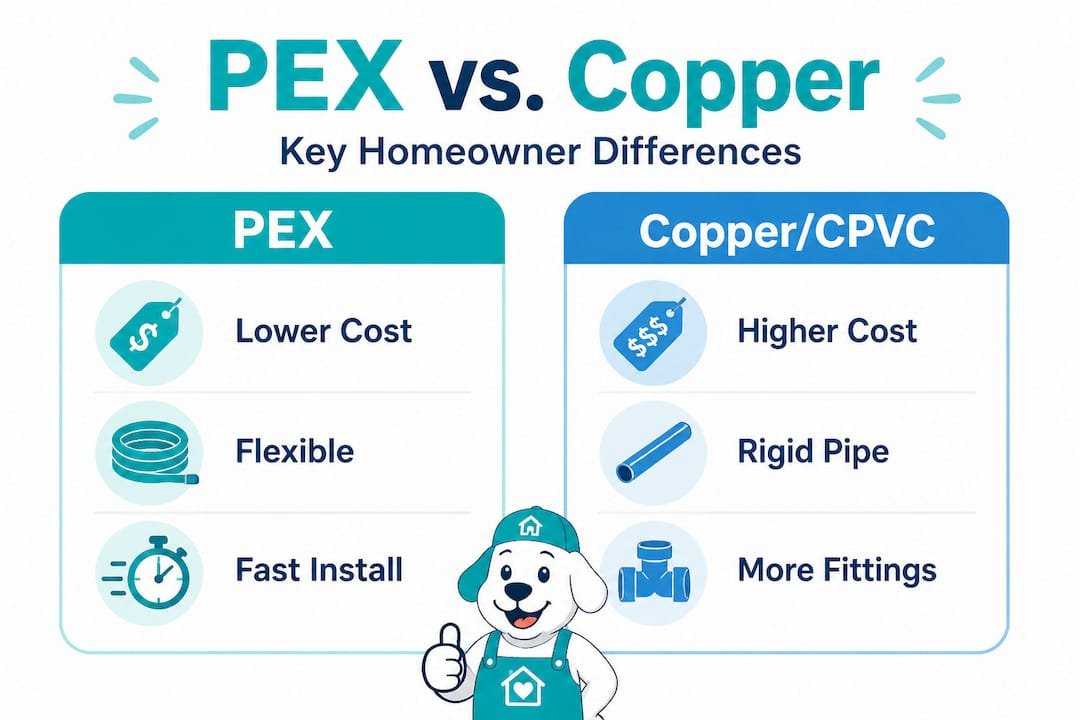
The answer comes down to cost, speed, and performance. PEX costs less than copper and installs much faster, especially in retrofits and remodeling projects where flexibility is a genuine advantage.
Here’s a quick breakdown of PEX’s biggest benefits:
- Lower material cost: PEX tubing typically costs significantly less per foot than copper, which has fluctuated at historically high prices.
- Faster installation: No soldering means a plumber can move through a job much quicker. Less labor time means lower overall project costs.
- Fewer fittings needed: Because PEX bends, you need fewer elbows and connectors. Fewer fittings means fewer potential leak points.
- Corrosion resistant: PEX won’t corrode from Tampa Bay’s hard water or mineral-heavy water supply the way copper can over time.
- Freeze resistance: PEX expands slightly rather than cracking under pressure if water freezes, reducing burst pipe risk.
- Quiet operation: PEX reduces the water hammer noise (banging sounds in pipes) that can happen with rigid metal piping.
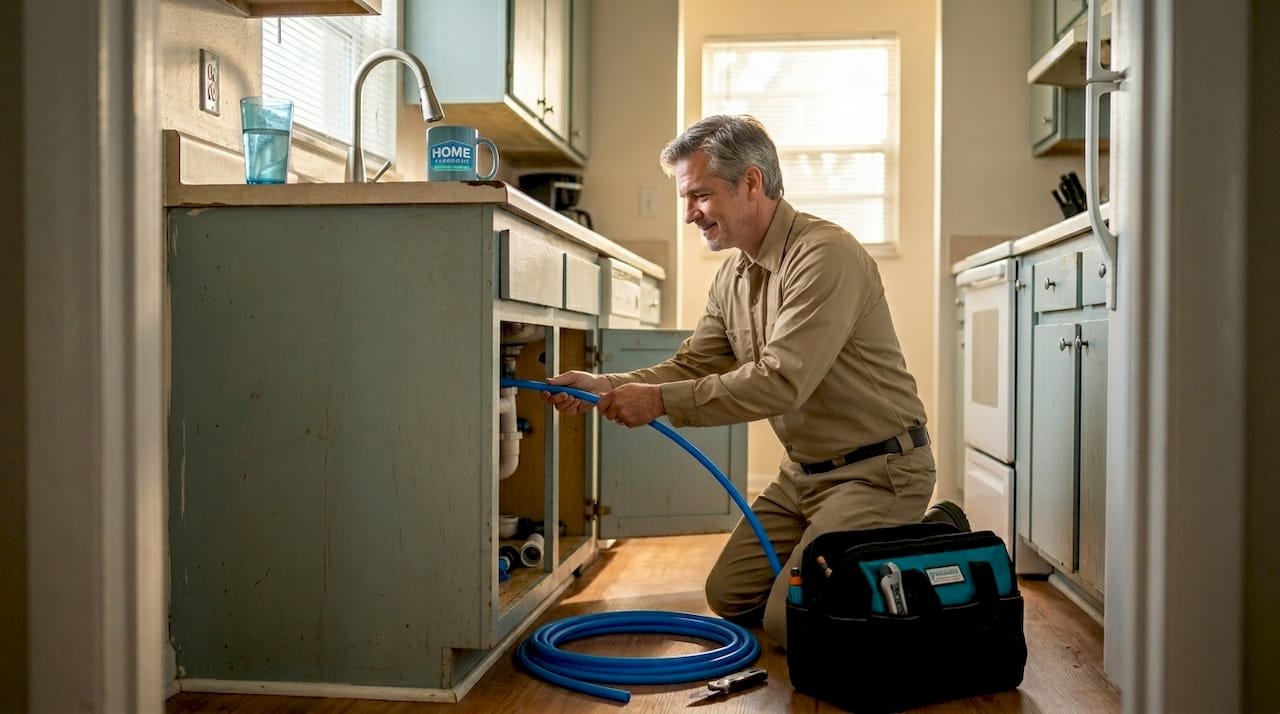
One of PEX’s biggest advantages for remodeling is its ability to run in longer, uninterrupted runs with fewer fittings connected directly to manifolds or fixtures, because its flexibility eliminates the need for soldering at every junction. This is a genuine game changer when you’re doing plumbing upgrades for older homes where the layout of old copper is complex and cramped.
| Feature | PEX | Copper | CPVC |
|---|---|---|---|
| Material cost | Low | High | Moderate |
| Installation speed | Fast | Slow (soldering) | Moderate |
| Flexibility | High | None | Low |
| Corrosion resistance | Excellent | Moderate | Good |
| UV resistance | Poor | Excellent | Moderate |
| Freeze resistance | Good | Poor | Moderate |
| Expected lifespan | 25 to 50+ years | 50 to 70+ years | 25 to 40 years |
For most Tampa Bay homeowners doing a remodel or full repipe, PEX offers the best combination of cost, speed, and long term reliability when installed correctly.
Potential downsides and important precautions for Tampa Bay homeowners
PEX is impressive, but it’s not without limitations. In fact, understanding its weaknesses is exactly what separates a smart upgrade from a costly mistake.
The biggest concern with PEX is UV sensitivity. UV radiation can degrade PEX relatively quickly, which is why it must be stored away from sunlight during construction and kept protected in any long term installation. This is especially relevant in Florida, where intense sunlight is not seasonal but year round.
Here are the top 3 mistakes Tampa Bay homeowners make with PEX:
- Leaving PEX exposed in unprotected attic spaces. Tampa attics bake in direct heat and, depending on the roof design, can receive significant UV exposure. PEX must be properly shielded, insulated, or routed away from exposure areas to avoid premature degradation.
- Using incompatible fittings or connection tools. Each type of PEX (A, B, or C) requires specific connectors and tools. A crimp ring designed for PEX-B does not reliably work on PEX-A. Mixing systems creates weak joints that fail over time.
- Skipping insulation on hot water lines. PEX handles heat well, but uninsulated hot water lines in unconditioned spaces (like crawlspaces or exterior walls) lose heat quickly, raising your water heating costs and reducing comfort.
Pro Tip: When a plumber installs PEX in your attic or crawlspace, ask specifically how they’re protecting it from UV exposure and heat. If they can’t give you a clear answer, that’s a red flag. Protecting the pipe adds very little cost but dramatically improves longevity.
Statistic callout: Plumbing failures attributed to improper installation, not material defects, account for a significant portion of service calls. Knowing the common plumbing issues specific to Tampa Bay can help you spot warning signs before they become expensive repairs.
Water chemistry is another important factor. Tampa Bay’s water supply contains minerals that can react with certain materials. While PEX itself is not affected by corrosion the way copper is, the brass fittings often used with PEX can be. Dezincification (the leaching of zinc from brass fittings in high chloride water) has been documented in Florida plumbing systems. Choosing dezincification resistant fittings is a smart precaution. A real world PEX repair example from our St. Petersburg service area illustrates exactly how fitting failures, not the pipe itself, are often the root cause of leaks.
How long does PEX piping last in Tampa’s climate?
This is one of the most common questions we get from Tampa Bay homeowners considering a repipe. The honest answer: it depends.
PEX lifespan is typically described in multi decade terms, with real world performance depending heavily on installation quality, UV protection, water chemistry, and temperature conditions. Most manufacturers rate PEX for 25 to 50 years under normal operating conditions, but “normal” looks very different in Florida compared to, say, Minnesota.
“Correct installation practices typically matter as much as the material choice.” – Bob Vila on PEX performance
The PEX piping lifespan in Tampa Bay homes can be shortened by UV exposure in unprotected attics, high heat in unconditioned spaces, and aggressive water chemistry. Here’s how PEX compares to other common options:
| Pipe material | Expected lifespan | Key maintenance needs |
|---|---|---|
| PEX | 25 to 50+ years | UV protection, quality fittings |
| Copper | 50 to 70+ years | Corrosion monitoring, joint inspection |
| CPVC | 25 to 40 years | Avoid harsh chemicals, check joints |
Key factors that directly influence how long your PEX piping lasts in Tampa’s climate:
- Attic and crawlspace conditions: High heat accelerates degradation if pipes are not insulated and protected.
- Water chlorine levels: Tampa Bay municipal water is chlorinated. High chlorine concentrations can slowly affect PEX material integrity over many years, especially at fittings.
- Installation skill: Correctly crimped and seated fittings maintain a watertight seal for decades. A poorly crimped connection can fail within months.
- UV protection: Even indirect, prolonged exposure to sunlight in unprotected areas shortens PEX’s lifespan noticeably.
Properly installed and protected PEX in a Tampa Bay home can absolutely outlast poorly maintained copper pipes, especially in older homes where copper has been corroding silently for decades. The material is not magic, but it’s very effective when handled correctly.
Is PEX right for your Tampa Bay home?
After understanding what PEX is, what it costs, its limitations, and how long it lasts, the real question becomes practical: is it the right fit for your specific home?
PEX is especially popular for retrofits and remodeling because it can be routed in longer continuous runs without soldering, reaching fixtures and manifolds efficiently through existing wall cavities. If you own an older Tampa Bay home with galvanized steel or original copper piping showing signs of age, PEX is often the most cost effective path to a full repipe.
Before making your decision, ask yourself these key questions:
- How old is my current plumbing? Homes built before 1980 in Tampa Bay often have galvanized steel, cast iron, or early copper that’s well past its service life.
- Are there visible signs of corrosion, discoloration, or low pressure? These are warnings that your current system is failing.
- Do I have exposed outdoor or sunlit pipe runs? If yes, PEX may not be the best solution without significant protective measures.
- What’s my budget for the project? PEX offers real savings on both material and labor compared to copper.
- Is my home a good candidate for a manifold based system? Modern PEX installs often use a central manifold (a distribution hub) that gives you zone control over every fixture.
Working with a licensed plumber who knows Tampa Bay’s local codes and climate conditions is the single most important step. You can also estimate your piping project online to get a realistic sense of budget before any work begins. For a broader look at how piping upgrades fit into a remodel, the remodeling and upgrades overview for Tampa area homes is a great starting point.
Expert perspective: Why installation quality matters more than the pipe
Here’s the uncomfortable truth we see every week in Tampa Bay homes: most PEX failures have nothing to do with the pipe itself. They happen because of how the pipe was installed.
We’ve walked into homes where PEX was run through unprotected attic spaces baking at 140 degrees Fahrenheit, where fittings from different manufacturer systems were mixed together, and where pipes were left sitting in sunlight for weeks during construction before walls were closed. In every one of those cases, the homeowner was sold on the material but never told that the material is only as good as the hands installing it.
The real world lesson from PEX water line repairs we’ve completed in St. Petersburg and across Tampa Bay is consistent: fitting failures and UV degradation from improper installation cause the vast majority of problems. The PEX itself, when protected and correctly connected, rarely fails.
Installation quality and material choice carry equal weight in determining long term performance. We’d argue that, in practice, installation quality tips the scale even further. A master plumber installing PEX correctly in a challenging space will outperform a careless install of the most expensive pipe on the market every single time.
Our advice to Tampa Bay homeowners is simple: don’t just ask what type of pipe a contractor plans to use. Ask how they plan to protect it, what fittings they’ll use, whether those fittings are rated for Tampa Bay’s water chemistry, and what their warranty covers. Those questions separate professionals from shortcuts.
Connect with Tampa Bay’s plumbing and piping specialists
If reading this guide has made you realize your home’s plumbing deserves a closer look, you’re already ahead of most homeowners in the Tampa Bay area. Making the right call on PEX, copper, or any piping material starts with talking to people who work in these homes every single day.
At Home Therapist Cooling, Heating, and Plumbing, our licensed plumbers know Tampa Bay’s unique climate challenges, local code requirements, and the specific water chemistry issues that affect pipe longevity in this region. Whether you’re ready to explore a full Tampa Bay repiping service, curious about modern manifold plumbing upgrades for your home, or want to understand what plumbing services warranty coverage actually means for your investment, we’re ready to help. Call us today or visit our website to connect with a specialist who puts your home first.
Frequently asked questions
Can PEX piping be used outdoors in Florida homes?
PEX should not be installed outdoors or in areas exposed to direct sunlight, because UV exposure degrades PEX quickly and significantly shortens its useful life. For outdoor plumbing applications in Florida, copper or UV resistant materials are more appropriate choices.
How does PEX handle Tampa Bay’s hot weather compared to copper?
PEX is rated for hot and cold water supply lines and handles high water temperatures well, but it must stay out of direct sunlight and protected in hot, unconditioned spaces like Tampa attics. Copper has the edge in high heat outdoor environments, but PEX performs reliably in properly protected indoor and in wall applications.
What are the most common problems Tampa Bay homeowners face when installing PEX?
The most common issues are improper UV protection, mismatched fittings from incompatible PEX types, and inadequate insulation in hot crawlspaces or attics. Getting a licensed plumber familiar with Tampa Bay conditions eliminates most of these risks from the start.
Does PEX piping increase my home’s value?
Yes, a professionally installed PEX repipe with proper documentation can boost your home’s resale value because buyers and inspectors respond positively to updated plumbing systems that are clean, modern, and clearly maintained.
Is PEX safe for drinking water?
Absolutely. PEX is designed for potable water supply lines and meets the safety standards required for residential drinking water systems across the United States, including Florida.
Recommended
- Whole Home Repiping Cost in Tampa Bay: Copper vs PEX | Home Therapist
- Repiping and Pipe Repair FAQ for Tampa Bay Homeowners | Home Therapist
- Why replace old piping in Tampa Bay homes in 2026
- Plumbing upgrades for older Tampa homes: top options 2026
- Plumbing installation process explained: A homeowner’s guide


