

Common Heating Problems and Solutions for Tampa Homeowners
Living in Tampa Bay means dealing with unique heating challenges that most homeowners across the country never face. The combination of high humidity, corrosive salt air, and frequent lightning strikes creates a perfect storm of stress on your heating system. Understanding these common problems and their practical solutions helps you maintain reliable comfort while avoiding expensive emergency repairs. This guide walks you through the typical heating issues Tampa Bay residents encounter, explains why they happen, and shows you exactly how to prevent or fix them before they turn into costly breakdowns.
Table of Contents
- Key takeaways
- Why Tampa Bay’s environment causes common heating problems
- Most common heating system problems Tampa homeowners face
- Effective solutions and maintenance to extend heating system life
- When to repair or replace your heating system: cost and lifespan benchmarks
- How Home Therapist can help solve your heating problems
- FAQ
Key Takeaways
| Point | Details |
|---|---|
| Coastal climate threats | Humidity, salt air, and lightning create corrosion that accelerates wear on coils and metal components. |
| Protective measures | Surge protectors guard against lightning damage, regular coil cleaning removes salt buildup, and epoxy coatings shield coils from humidity and salt air. |
| Lower failure risk | Preventive protections reduce heating system failures by 25 to 30 percent in coastal areas, extending equipment life and avoiding emergency repairs. |
| Common coil issues | Corrosion leads to reduced heating output and eventually refrigerant leaks that require repairs or coil replacement. |
| Replacement benchmarks | Track repair costs and compare against new unit prices to decide when replacement is more cost effective. |
Why Tampa Bay’s environment causes common heating problems
Tampa Bay’s climate creates three major threats to your heating system that you won’t find in most other parts of the country. The average humidity of 74% promotes rust and corrosion on metal components like coils, fins, and electrical connections. This constant moisture exposure means parts deteriorate faster than they would in drier climates.
Salt air poses an even bigger challenge for homes near the coast. The microscopic salt particles carried by ocean breezes settle on your outdoor unit and eat away at metal surfaces. Coils and fins degrade quickly without protective measures, reducing efficiency and leading to refrigerant leaks. Many Tampa Bay heating systems fail years earlier than the manufacturer’s expected lifespan simply because of this coastal exposure.
Lightning strikes represent the third environmental hazard unique to Florida. Tampa Bay experiences some of the highest lightning activity in the nation, and electrical surges from nearby strikes frequently damage heating system control boards, sensors, and compressors. These sudden failures can leave you without heat during the few cold snaps we experience each winter.
Protecting your system requires specific strategies tailored to Tampa’s conditions. Installing surge protectors guards against lightning damage, while regular coil cleaning removes salt buildup before it causes permanent harm. Applying epoxy-based protective coatings to coils creates a barrier against both humidity and salt air.
Pro Tip: Schedule quarterly outdoor unit rinsing if you live within five miles of the coast. A simple garden hose rinse removes salt deposits before they corrode metal surfaces. For maximum protection, invest in professional epoxy coil coatings that can withstand 1000 hours of salt spray exposure.
These preventive measures reduce heating system failures by 25-30% in coastal areas. The small investment in protection pays off by extending your equipment’s life and preventing expensive emergency repairs during the coldest nights of the year.
Most common heating system problems Tampa homeowners face
Corroded coils top the list of heating problems in Tampa Bay homes. The combination of humidity and salt air eats through the thin aluminum fins and copper tubing that transfer heat. You’ll notice reduced heating output, longer run times to reach your thermostat setting, and higher electric bills as efficiency drops. Severely corroded coils eventually develop refrigerant leaks that require expensive repairs or full coil replacement.
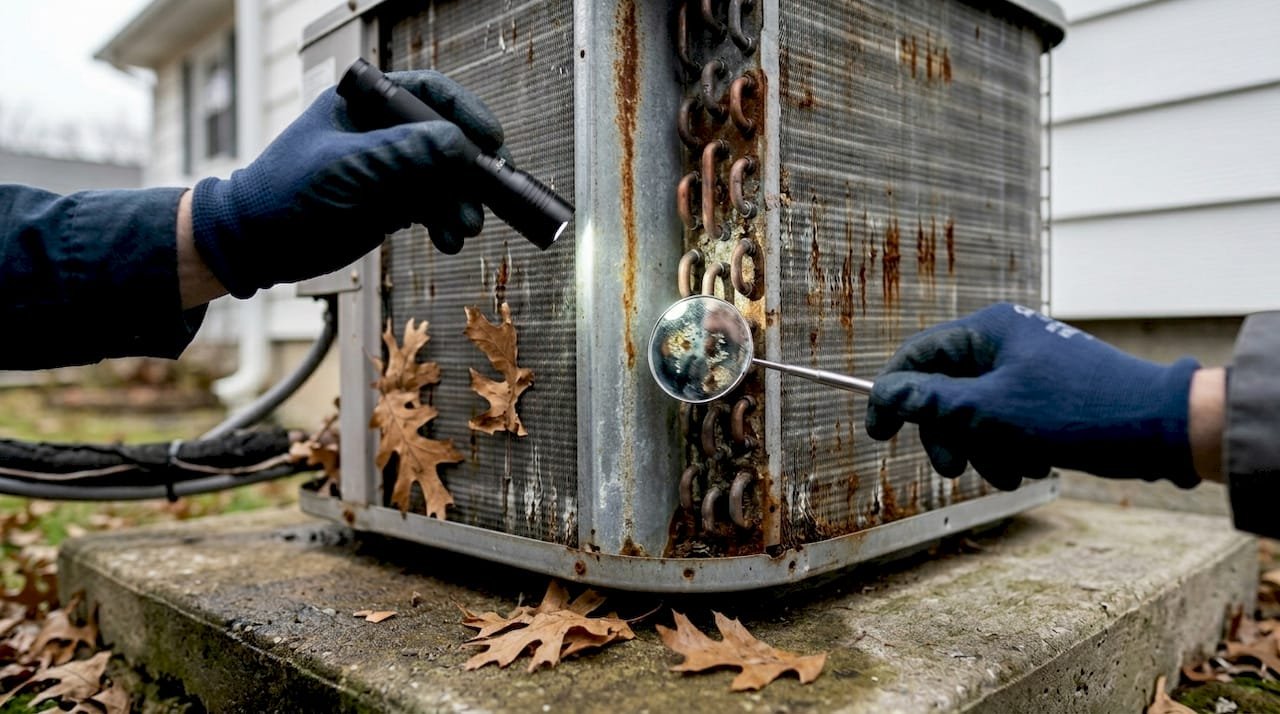
Low refrigerant levels create a cascade of problems that many homeowners mistake for other issues. When refrigerant runs low, your heat pump can’t absorb enough heat from outdoor air to warm your home effectively. Ice forms on the outdoor coil even during heating mode, and the system struggles to maintain temperature. Refrigerant leaks cause ice buildup and poor heat output that gets worse over time.
Reversing valve malfunctions plague heat pump systems in Tampa Bay. This critical component switches your system between heating and cooling modes. When the valve sticks or fails, your heat pump may blow cold air when you need heat or refuse to switch modes entirely. Salt air corrosion and electrical issues both contribute to reversing valve problems.
Electrical failures from lightning surges damage control boards, capacitors, and sensors without warning. Your system might stop working completely, display error codes, or behave erratically with random shutdowns. These surge-related problems often require replacing multiple components at once, making them among the most expensive repairs.
Other common issues include:
- Dirty air filters restricting airflow and forcing your system to work harder
- Corroded electrical connections causing intermittent operation or complete failure
- Thermostat malfunctions from humidity damage to internal components
- Ductwork leaks in attics where temperature extremes stress seals and joints
- Condensate drain clogs from algae growth in humid conditions
Regular professional inspections catch these problems early, before they cause complete system failure or expensive secondary damage. Most heating issues start small and gradually worsen, giving you time to address them if you stay alert to warning signs like unusual noises, reduced comfort, or rising energy bills.
Effective solutions and maintenance to extend heating system life
Biannual tune-ups extend system life by 70% and reduce energy consumption by 15% compared to neglected equipment. Schedule professional maintenance twice yearly, ideally in spring and fall, to prepare your system for peak heating and cooling seasons. During these visits, technicians clean components, check refrigerant levels, test electrical connections, calibrate thermostats, and identify developing problems before they cause failures.
Quarterly coil rinsing becomes essential for homes near the coast. Use a garden hose with a gentle spray to rinse your outdoor unit from top to bottom, removing salt deposits and dirt that accumulate between professional cleanings. Always rinse from inside out to avoid pushing debris deeper into the fins. For maximum protection, have professionals apply epoxy-based protective coatings that create a barrier against salt air corrosion.
Surge protection installation guards your heating system against Tampa Bay’s frequent lightning strikes. Whole-home surge protectors installed at your electrical panel provide the first line of defense, while point-of-use protectors at your outdoor disconnect offer additional protection for your HVAC equipment specifically. This two-layer approach reduces lightning damage risk significantly.
Follow these maintenance steps in order:
- Replace air filters monthly during heavy use periods and every three months during mild weather
- Clear debris from around your outdoor unit, maintaining at least two feet of clearance on all sides
- Check your thermostat batteries twice yearly and verify accurate temperature readings
- Inspect visible ductwork for gaps, tears, or disconnected sections that waste conditioned air
- Monitor your condensate drain line monthly, flushing it with a vinegar solution to prevent algae clogs
- Test your system’s heating and cooling modes at the start of each season to verify proper operation
Refrigerant level checks require professional equipment and certification, but you can watch for warning signs like ice formation, reduced heating output, or hissing sounds near refrigerant lines. Never attempt to add refrigerant yourself, as improper charging damages your compressor and voids warranties.
Reversing valve operation deserves attention in heat pump systems. Test your system’s mode switching capability before you need it urgently. If the valve hesitates, makes loud clicking sounds, or fails to switch modes, schedule professional service immediately.
Pro Tip: Track your heating system’s energy consumption and cycle times using your thermostat’s built-in monitoring or a smart home energy monitor. Sudden increases in runtime or energy use signal developing problems that need attention before they cause complete failure. Catching issues early through basic maintenance practices saves hundreds compared to emergency repairs.
Consider upgrading to a smart thermostat that alerts you to unusual system behavior and provides detailed performance data. These devices help you spot problems early while optimizing your heating schedule for maximum efficiency and comfort. Combined with regular professional maintenance and natural lifespan extension strategies, these practices keep your system running reliably for years.
When to repair or replace your heating system: cost and lifespan benchmarks
The age-times-100 rule provides a simple benchmark for replacement decisions. Multiply your system’s age by $100 and compare that number to your current repair estimate. If repairs exceed this threshold, replacement typically makes better financial sense. For example, a 12-year-old system hitting a $1,500 repair bill has crossed the replacement threshold, since 12 times $100 equals only $1,200.
The 50% rule offers another decision framework. When a single repair costs more than half the price of a new system, replacement usually delivers better value. New heating systems come with warranties, improved efficiency, and years of reliable service that old equipment can’t match. Sinking major money into aging equipment often leads to additional repairs within months.
Monitor your energy bills for efficiency decline signals. Compare your current heating costs to bills from previous years during similar weather conditions. A 20% or greater increase in heating costs, even with comparable usage patterns, indicates your system is losing efficiency. This decline accelerates as equipment ages, making replacement more economical than continued operation of inefficient equipment.
System cycle frequency reveals mechanical wear and declining performance. Healthy heating systems run in steady cycles that maintain consistent temperature. Short cycling, where your system turns on and off frequently, or extended run times that struggle to reach thermostat settings both indicate serious problems. These symptoms often precede complete failure.
| Scenario | Repair | Replace |
|---|---|---|
| System under 8 years old, minor repair under $500 | ✓ | |
| System 10-12 years old, repair costs $800-1,200 | ✓ | |
| System over 15 years old, any major component failure | ✓ | |
| Repair costs exceed 50% of new system price | ✓ | |
| Energy bills increased 20%+ despite similar usage | ✓ | |
| Multiple repairs needed in past 2 years | ✓ | |
| Single repair under age x $100 benchmark | ✓ |
Consider total ownership costs when making replacement decisions. New systems operate 15-20% more efficiently than models from just 10 years ago. The energy savings from a new system can offset monthly payment costs, making replacement cash-flow neutral or even positive. Factor in the peace of mind from warranty coverage and reduced repair frequency.
Timing your replacement strategically saves money and prevents emergency situations. Planning replacement during mild weather gives you time to research options, compare quotes, and potentially catch off-season pricing. Emergency replacements during cold snaps cost more and limit your choices. If your system shows multiple warning signs, start planning replacement before complete failure forces your hand.
The heating system repair process becomes less attractive as equipment ages and repair frequency increases. Track your repair history over the past three years. If you’re calling for service twice yearly or more, replacement typically costs less long-term than continued repairs on failing equipment.
How Home Therapist can help solve your heating problems
Your heating system deserves professional attention tailored to Tampa Bay’s unique challenges. When you’re facing efficiency losses, unexplained temperature swings, or concerning noises from your equipment, expert diagnosis prevents small issues from becoming expensive emergencies. Understanding what HVAC systems do in Tampa’s climate helps you make informed decisions about maintenance and repairs.
Home Therapist’s certified technicians specialize in the coastal corrosion, humidity damage, and lightning-related failures that plague Tampa Bay heating systems. We provide comprehensive tune-ups that include coil cleaning, protective treatment applications, and surge protection installations customized for local conditions. Our troubleshooting approach identifies root causes rather than just treating symptoms, saving you money on repeat service calls. Whether you need preventive maintenance through our beginner-friendly maintenance programs or emergency repairs, we deliver transparent pricing and reliable solutions that extend your system’s life.
FAQ
What causes my heating system to lose efficiency quickly?
Corrosion from Tampa’s humidity and salt air damages coils and fins, reducing your system’s ability to transfer heat effectively. Low refrigerant levels and dirty coils also force your equipment to work harder while delivering less warmth. Regular professional maintenance and quarterly coil cleaning preserve performance by addressing these issues before they cause significant efficiency losses.
How often should I schedule heating system maintenance in Tampa Bay?
Schedule at least two tune-ups yearly to protect against Tampa’s harsh humid and salty conditions. Spring and fall maintenance prepares your system for peak heating and cooling demands while catching developing problems early. Homes within five miles of the coast benefit from additional quarterly rinsing to remove salt deposits between professional service visits.
When is it better to replace my heating system instead of repairing it?
Replace if repair costs exceed $100 times your unit’s age or more than half the cost of new equipment. Systems over 15 years old with major component failures rarely justify expensive repairs, since additional breakdowns typically follow within months. Rising energy bills and frequent service calls also signal that replacement delivers better long-term value than continued repairs.
What can I do to protect my heating system from Tampa’s salty air?
Regular quarterly rinsing and epoxy coatings significantly reduce salt air corrosion on coils and fins. Use a garden hose to rinse your outdoor unit from inside out, removing salt deposits before they cause permanent damage. Installing whole-home and point-of-use surge protection prevents electrical damage from Tampa Bay’s frequent lightning strikes, addressing both major environmental threats to your equipment.
About This Guide
Written and reviewed by the Home Therapist Cooling, Heating & Plumbing team, a family-owned Tampa Bay HVAC and plumbing company serving the area since 2011. Our licensed techs hold Florida HVAC license CAC1819196 and Plumbing license CFC1431159, with over 1,100 five-star reviews across Tampa, St. Petersburg, Clearwater, Wesley Chapel, Lutz, Riverview, Brandon, Valrico, Apollo Beach, Palm Harbor, Land O’ Lakes, Plant City, New Port Richey, and surrounding Tampa Bay zip codes.
Honest pricing:. Upfront quotes, no high-pressure sales, no surprise fees.
Questions about your home? Call (813) 343-2212 for a real tech, or request a callback. Available 7 days a week including evenings and weekends for emergencies.
Recommended
- Cooling and Heating Maintenance in Tampa, FL 33613 | Home Therapist
- Top Heating Solutions Tampa, Expert Comparison 2025
- Hydronic Heating: Efficient Comfort for Tampa Homes
- AC and Heating Maintenance in Tampa, FL 33615
More Related Articles
- Visit #3, All Clear: Premium HVAC Maintenance on a 5-Year-Old Carrier System in Tampa, FL 33619
- Pre-Travel AC Tune-Up on Pleasant Lake Drive: Cooling & Heating Maintenance in Tampa, FL 33618
- 5-Year-Old AC Passes Every Check on Bardmoor Pl: Tune-Up and Coil Cleaning in Seminole, FL 33777
- Full System Overhaul on Busch Oaks St: Goodman Heat Pump, New Ductwork, and Ecobee Install in Tampa, FL 33617
- Air Conditioner Installation Repair Tampa FL Bay FL Services Review from Bonnie Wakefield


