

Heat Pump Vs Air Conditioner: Costs, Efficiency & Best Fit
If you’re replacing an aging system or installing one from scratch, the heat pump vs air conditioner debate is probably at the top of your list. Both can keep your home cool, but they work differently, cost differently, and perform differently depending on where you live. Choosing the wrong one can mean higher energy bills and a system that doesn’t pull its weight when you need it most.
Here in the Tampa Bay area, our team at Home Therapist installs and services both systems daily. We’ve seen firsthand how Florida’s climate affects performance and long-term costs for each option. That hands-on experience is exactly what shaped this guide.
Below, we break down how each system works, what you’ll spend upfront and over time, energy efficiency ratings to watch for, and which setup makes the most sense based on your home and budget. By the end, you’ll have a clear answer, not a sales pitch.
Heat pump vs air conditioner at a glance
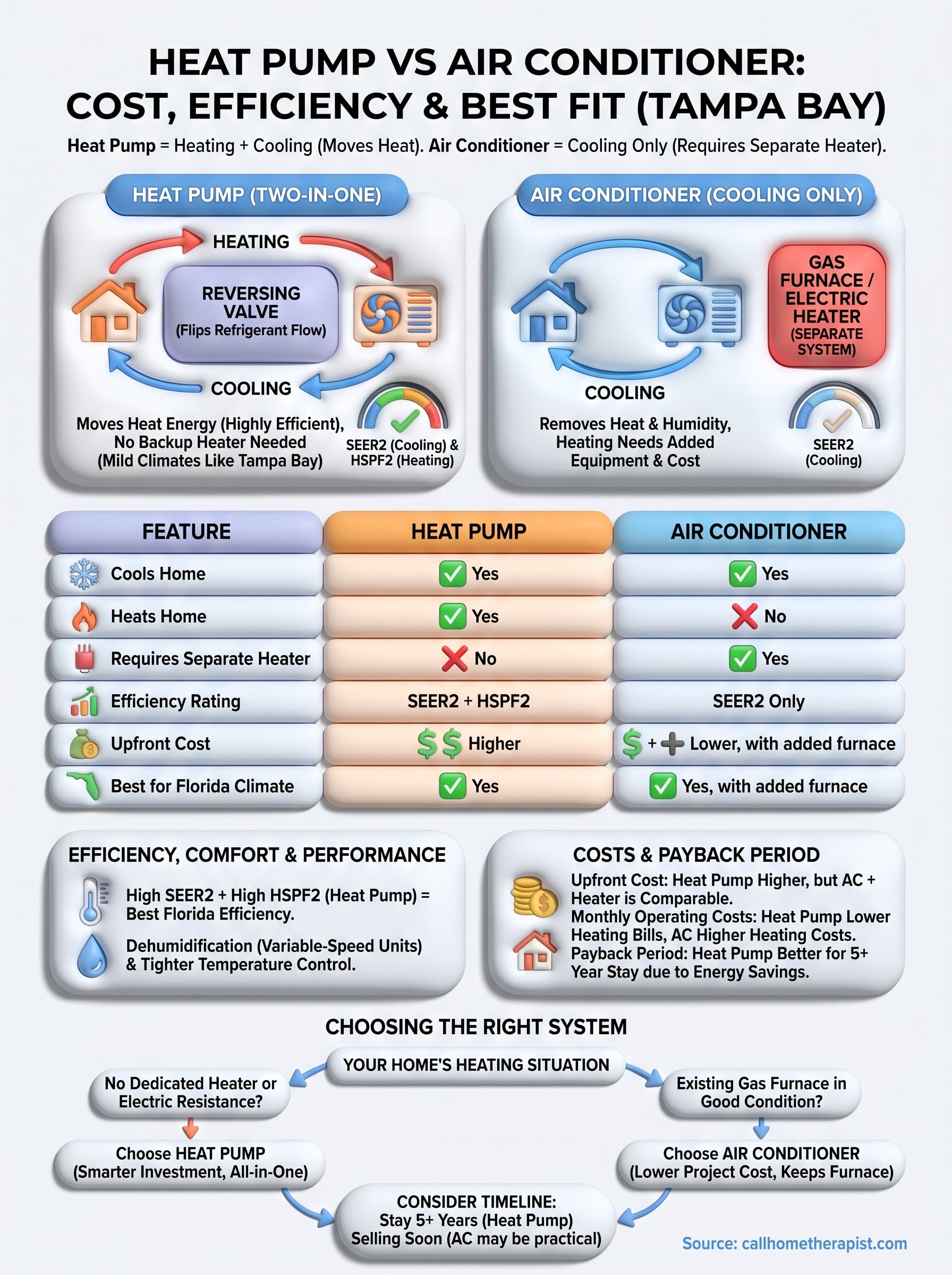
The core difference in the heat pump vs air conditioner debate comes down to one thing: a heat pump can both heat and cool your home, while a standard air conditioner only cools. Both systems move heat rather than generate it, but they handle winter very differently. That single distinction affects your upfront cost, monthly energy bills, and what other equipment you need to keep your home comfortable year-round.
What a heat pump does
A heat pump is a two-in-one HVAC system. During summer, it pulls heat from inside your home and releases it outdoors, cooling your space the same way an AC does. In winter, it reverses that process and extracts heat energy from outdoor air, even in cooler temperatures, and moves it inside. Because it moves heat rather than generates it, a heat pump can produce more usable energy than it consumes, which is the main reason efficiency ratings run so high.
One important detail for colder climates: a heat pump loses efficiency when outdoor temperatures drop significantly and may need backup heating like an electric strip heater or gas furnace. In Tampa Bay, that’s rarely an issue. Florida winters are mild enough that a heat pump handles both seasons without breaking a sweat.
In Florida’s climate, a heat pump covers heating and cooling without ever needing a backup system, which is a major reason local homeowners lean toward them.
What an air conditioner does
A standard central air conditioner runs in one direction only. It removes heat and humidity from your indoor air and pushes that heat outside through a condenser unit. For cooling, it performs just as well as a heat pump. The trade-off is that you need a separate heating system, typically a gas furnace or electric air handler, to cover the colder months.
For most Tampa Bay homeowners, this matters less than it would in northern states. Even so, January and February cold snaps are real, and you still need some form of heat on hand. That adds cost and equipment to your setup.
Quick comparison
The table below gives you a fast side-by-side look at how the two systems stack up across the factors that matter most when making your decision. Pay close attention to the efficiency ratings and heating capability rows, since those tend to drive the biggest differences in long-term cost for Florida homeowners.
| Feature | Heat Pump | Air Conditioner |
|---|---|---|
| Cools your home | Yes | Yes |
| Heats your home | Yes | No |
| Requires separate heater | No | Yes |
| Efficiency rating | SEER2 + HSPF2 | SEER2 only |
| Upfront cost | Higher | Lower |
| Best for Florida climate | Yes | Yes, with added furnace |
How each system works
Both systems rely on the same core technology: refrigerant that cycles through a series of coils to absorb and release heat. Understanding that shared foundation makes it much easier to follow the heat pump vs air conditioner comparison without getting lost in technical terminology.
The refrigerant loop
Refrigerant is the working fluid that makes cooling possible in both systems. In cooling mode, it absorbs heat from your indoor air as it passes through the evaporator coil inside your home, then travels to the outdoor condenser unit where it releases that heat outside. A compressor keeps the refrigerant moving through the loop continuously. The result is that your indoor air loses heat and humidity, which is exactly what you feel when your system kicks on during a Florida summer. Both a heat pump and a standard air conditioner follow this exact same process during the cooling season, which is why their cooling performance is essentially identical.
The reversing valve: what sets heat pumps apart
A standard air conditioner runs the refrigerant loop in one direction only, from inside to outside. A heat pump includes an additional component called a reversing valve, which flips the direction of refrigerant flow on demand. In winter, the outdoor coil acts as the evaporator, pulling heat energy from outdoor air and moving it inside your home. Even at 40 degrees Fahrenheit, there is still usable heat energy in outdoor air, and a heat pump extracts it efficiently.
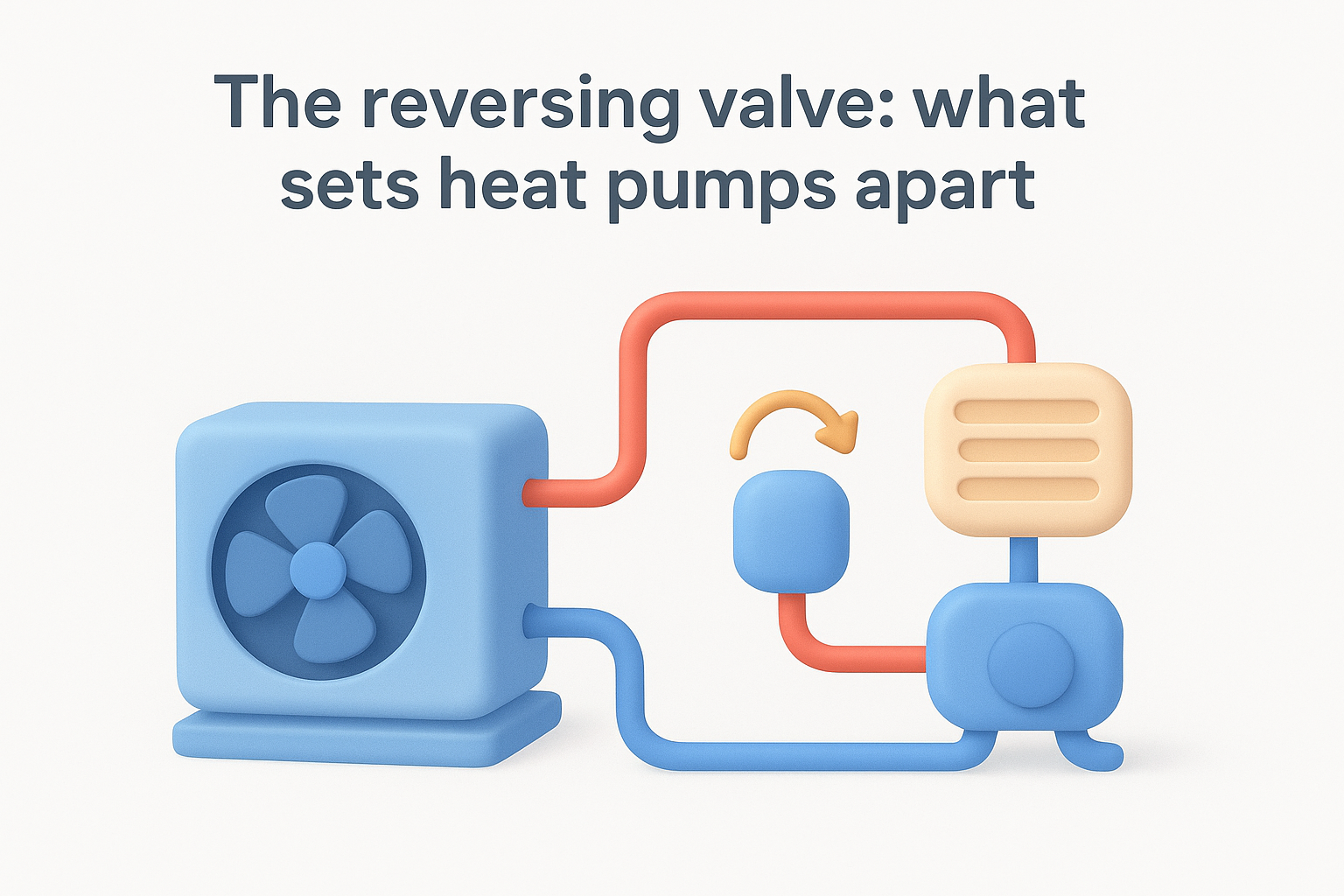
The reversing valve is a small component with a significant impact: it turns a single-purpose cooling unit into a year-round comfort system.
Because Tampa Bay winters rarely push temperatures low enough to strain a heat pump’s heating output, no backup heating system is typically required here. That keeps your overall equipment footprint smaller and your long-term operating costs lower compared to pairing a standard AC with a separate gas furnace or electric strip heater.
Costs to buy and operate in Tampa Bay
When comparing the heat pump vs air conditioner in terms of cost, you need to look at two separate numbers: what you pay upfront to install the system and what you pay each month to run it. In Tampa Bay, both numbers matter, but they don’t always favor the same system, so understanding the full picture helps you make a smarter long-term decision.
Upfront installation costs
Heat pumps typically cost $7,161 to $18,540 installed for a standard residential unit in Tampa Bay, depending on the size of your home and the efficiency tier you choose. A central air conditioner with a matching air handler or gas furnace runs $6,643 to $18,540 for the combined setup. On paper, the AC looks cheaper, but you’re often buying two pieces of equipment to match what one heat pump handles on its own.
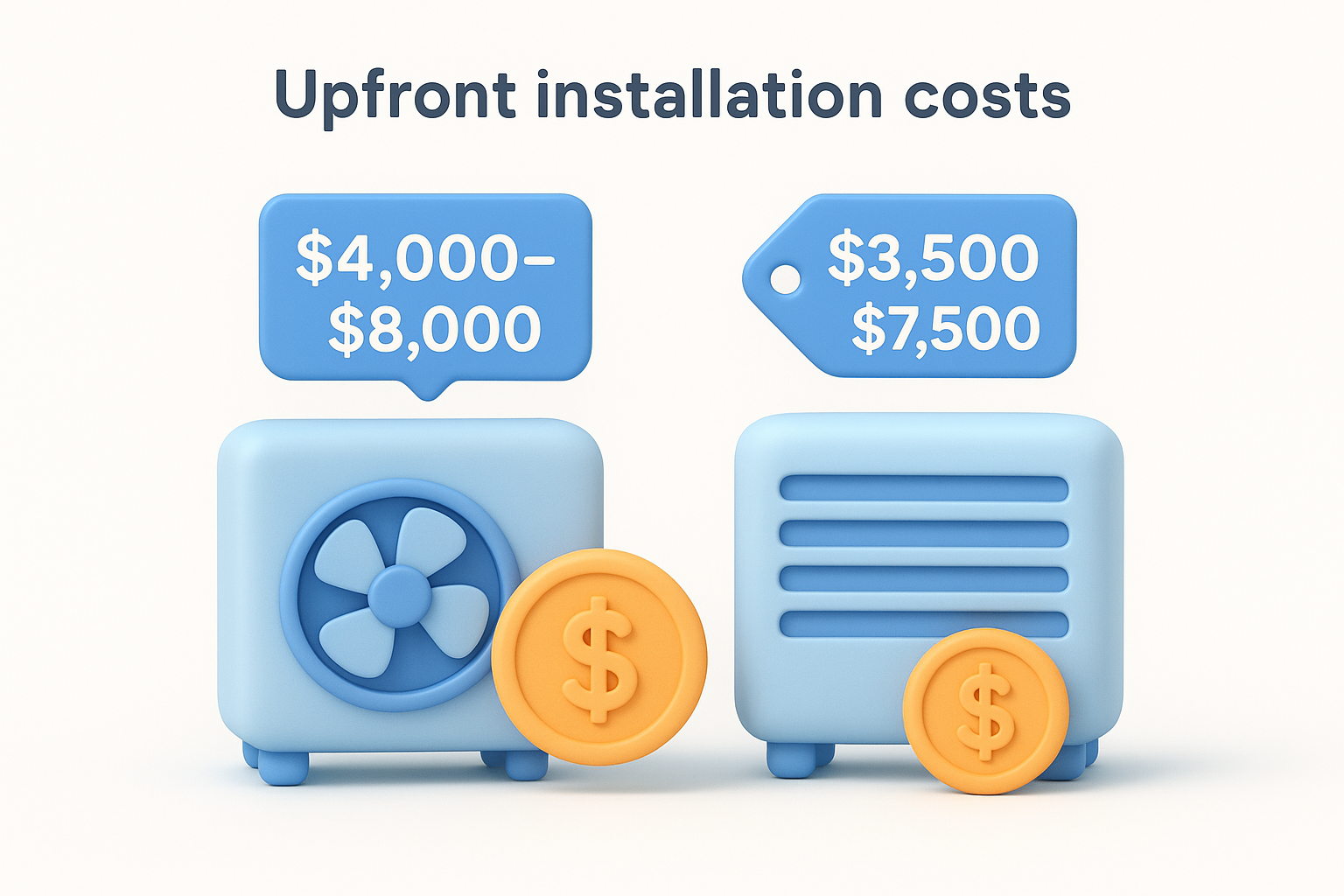
When you factor in the cost of a separate heating system, the price gap between a heat pump and an air conditioner shrinks significantly.
Monthly operating costs
Florida’s mild winters work in your favor if you own a heat pump. Because a heat pump moves heat rather than generating it, it can deliver two to three times more heating output per unit of electricity compared to a standard electric resistance heater. That translates directly to lower monthly bills during cooler months.
Your cooling costs stay roughly equivalent between the two systems since both handle cooling the same way. The real savings with a heat pump show up in winter, when you’re not burning through gas or running expensive electric resistance heat. Over a 10-year period, those monthly savings can easily offset the higher upfront cost of the heat pump, making it the stronger financial choice for most Tampa Bay homeowners.
Efficiency, comfort, and performance
When you compare the heat pump vs air conditioner on efficiency, both systems use SEER2 ratings (Seasonal Energy Efficiency Ratio) to measure cooling performance. A higher SEER2 score means lower electricity consumption for the same amount of cooling output. Florida regulations now require a minimum SEER2 of 14.3 for new systems, but you can find units rated 18 or higher that deliver real savings on your monthly utility bill over time.
Efficiency ratings explained
Heat pumps carry a second rating that standard air conditioners don’t: the HSPF2 (Heating Seasonal Performance Factor). This number measures how efficiently the system converts electricity into heat output. A higher HSPF2 means you spend less running the system during cooler months. Most quality heat pumps available today reach HSPF2 ratings between 7.5 and 10, which puts them far ahead of electric resistance heating in efficiency. When both ratings are strong, a heat pump outperforms a standalone AC setup over a full calendar year.
A heat pump with a high SEER2 and a strong HSPF2 covers both seasons efficiently, which matters more in Florida than in almost any other state.
Comfort and humidity control
Florida’s high humidity makes dehumidification performance a practical concern, not just a technical one. Both systems remove moisture from your indoor air during the cooling cycle, but how they handle it affects your day-to-day comfort. A heat pump running in variable-speed mode tends to run longer, lower-intensity cycles, which pulls more moisture out of the air compared to older single-stage units that cycle on and off quickly.
Your comfort also depends on how consistently the system holds your target temperature. Variable-speed systems maintain indoor temperatures within a tighter range, reducing those noticeable warm and cool swings between cycles. That steady airflow and reliable humidity control make a real difference on a muggy Tampa Bay afternoon when indoor comfort matters most.
How to choose the right system for your home
The heat pump vs air conditioner decision comes down to three factors: how much heat your home needs in winter, what you can spend upfront, and how long you plan to stay in the property. Getting clear on those points before you talk to a technician puts you in a stronger position when reviewing quotes and avoids costly system mismatches down the line.
Your heating situation
Tampa Bay winters are mild, but they’re not nonexistent. If your home currently runs on electric resistance heat or has no dedicated heating system at all, a heat pump is almost always the smarter switch. You eliminate one piece of equipment while gaining a far more efficient heating source without adding complexity to your setup.
If you’re starting fresh with no existing heating system, a heat pump handles both jobs efficiently and keeps your equipment costs lower from day one.
Homes that already have a gas furnace in good working condition are a different story. Replacing just the cooling side keeps costs down without giving up heating performance. Your technician can assess the age and condition of your furnace to tell you whether keeping it makes financial sense or whether a full heat pump upgrade is the better long-term move.
Budget and payback period
Upfront cost matters, but payback period matters more. If you plan to stay in your home for five or more years, a heat pump typically pays back its higher installation cost through lower monthly energy bills during cooler months.
If you’re renovating a property to sell within a year or two, a standard air conditioner with a basic air handler may be the more practical choice for keeping project costs in check. Talk through your specific timeline with your technician before committing to either system.
Next steps for your HVAC decision
You now have everything you need to make a confident call on the heat pump vs air conditioner question. If your home runs on electric resistance heat or has no dedicated heating system, a heat pump is almost certainly the smarter investment for Tampa Bay conditions. If you already have a functioning gas furnace and only need to replace the cooling side, a standard air conditioner may keep your project costs in check without sacrificing comfort.
Either way, the right system depends on your specific home, your current setup, and your long-term plans for the property. Getting a professional assessment before you buy prevents costly mismatches and gives you accurate numbers to work with. Our team at Home Therapist has been installing and servicing both systems across the Greater Tampa Bay Area since 2011. Contact Home Therapist to schedule a free estimate and get a clear recommendation built around your home.


